The Plains of Heaven by John Martin: Introduction
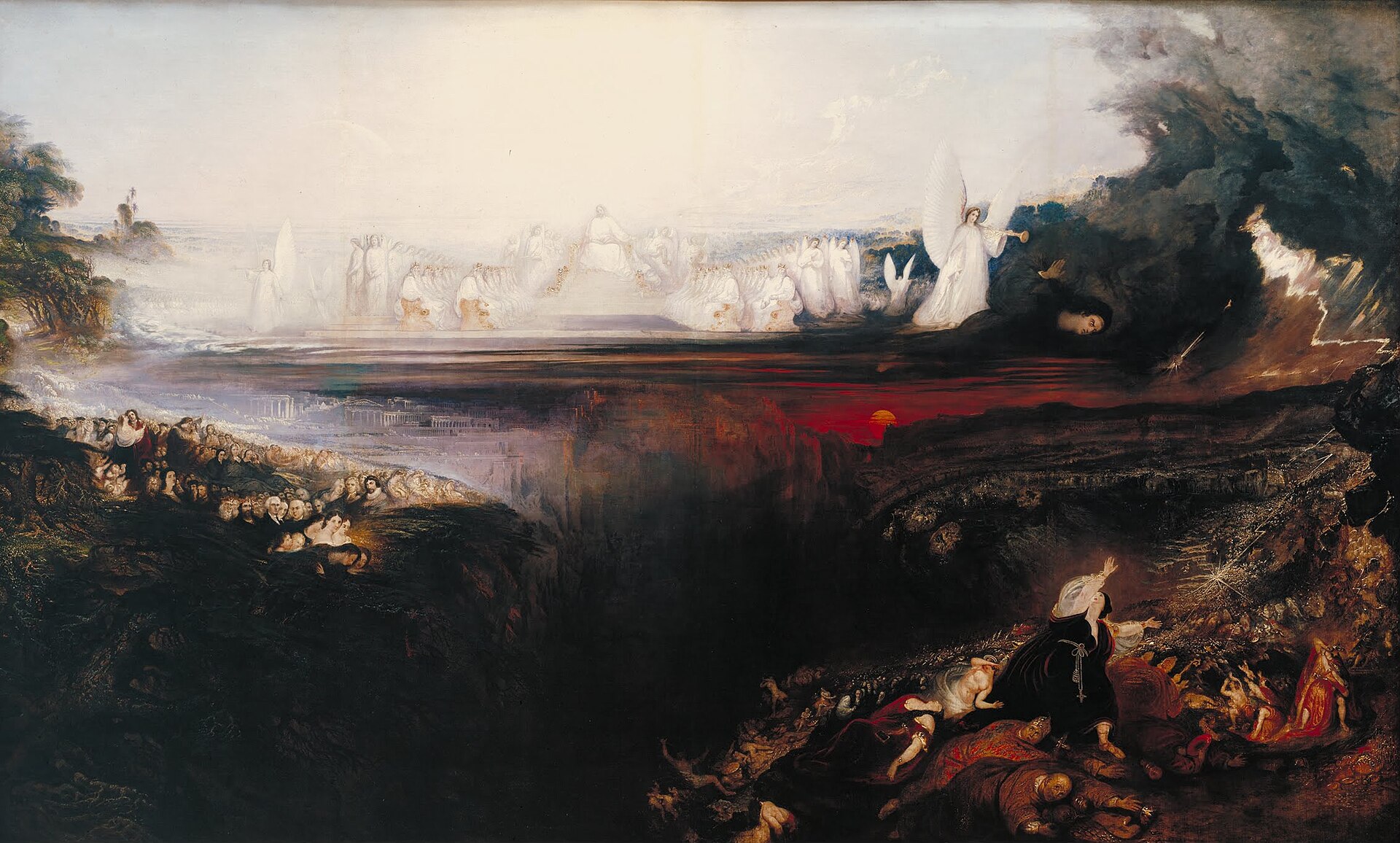
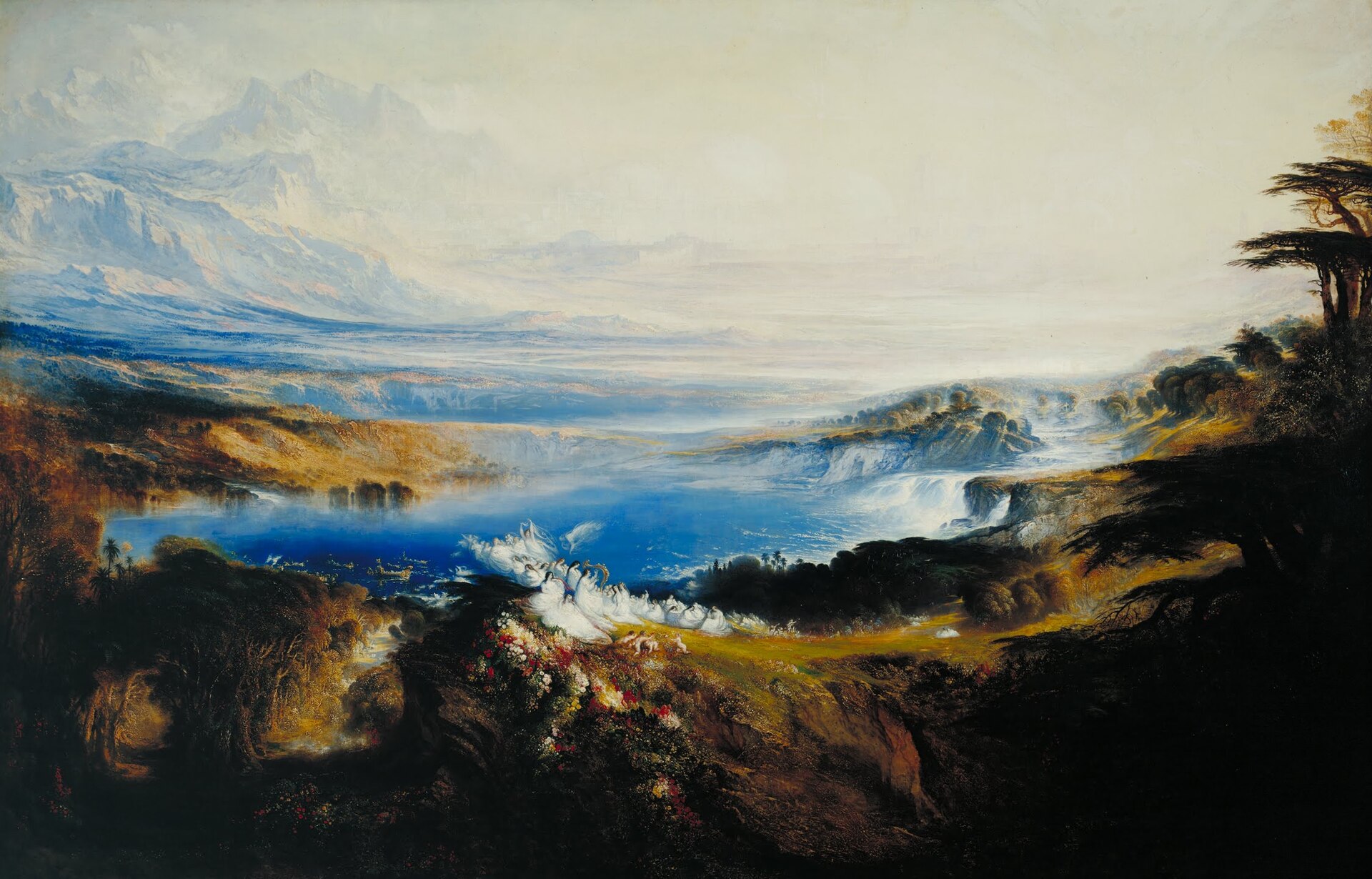
John Martin's The Plains of Heaven is the calmest painting in his late apocalyptic sequence, and its restraint gives it force. Painted around 1851 and now in Tate Britain, it offers a vision of salvation after the terror and division of the Last Judgement. Where The Great Day of His Wrath imagines the earth breaking apart, and The Last Judgement divides the good from the damned, The Plains of Heaven opens into distance, water, mountain air and blessed calm.
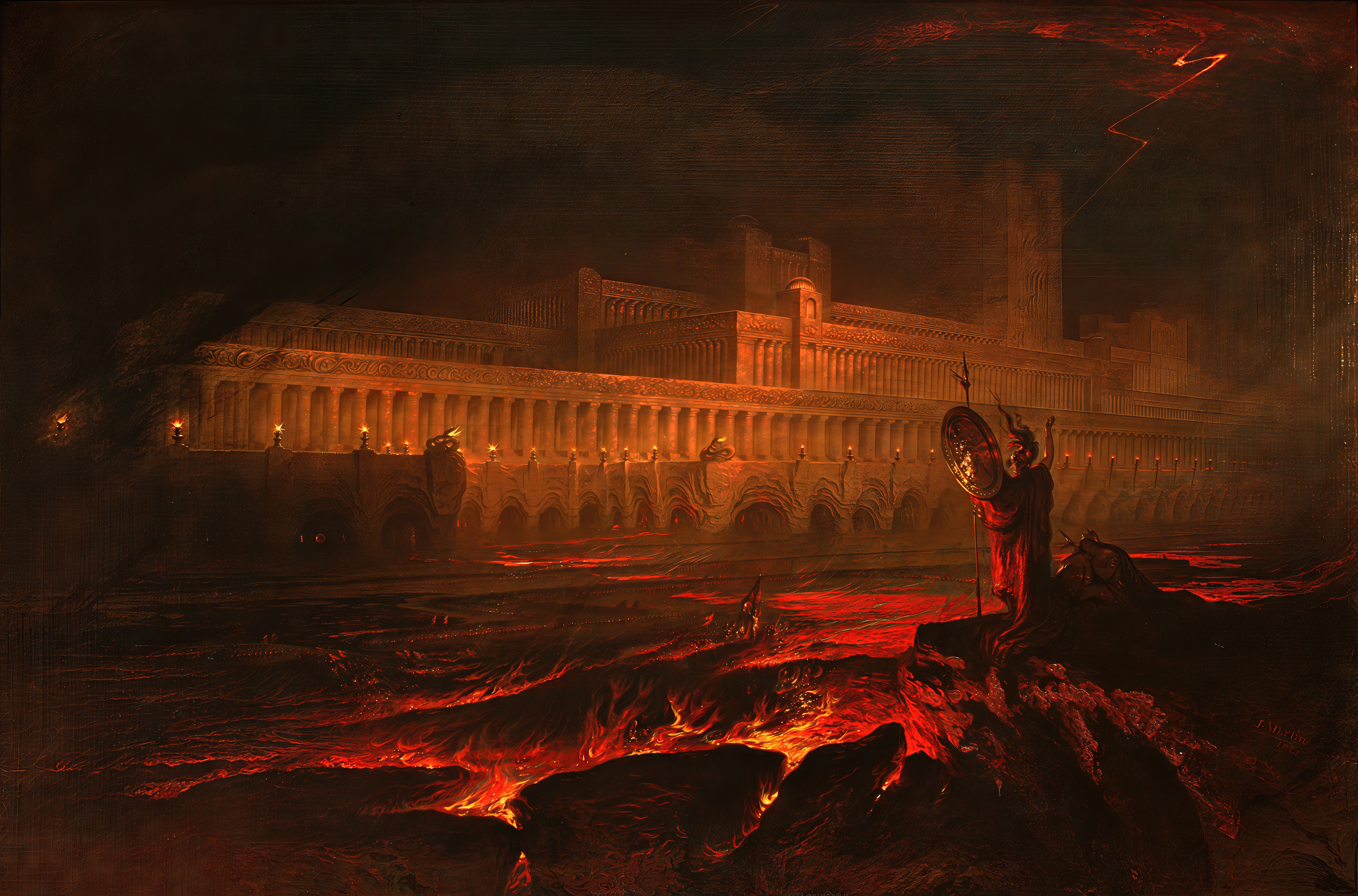
Seen beside Pandemonium, Martin's 1841 Louvre painting of Hell's capital rising from Milton's Paradise Lost, The Plains of Heaven matters for the opposite reason. It shows that Martin's imagination could picture peace as grandly as destruction.
At a Glance
- ArtistJohn Martin
- TitleThe Plains of Heaven
- Datearound 1851
- Mediumoil on canvas
- CollectionTate Britain, London
- AccessionT01928 in the Wikimedia/Tate reference trail
- Provenance notebequeathed by Charlotte Frank in memory of Robert Frank, 1974, in the Tate-linked Google Arts record
- Dimensions3067 mm wide by 1988 mm high in the Tate-linked Google Arts record
- Subjectthe saved in the heavenly landscape after judgement
- Related worksThe Last Judgement and The Great Day of His Wrath
Contents
- Introduction
- How to Read the Composition
- The Saved and the Artists
- Relationship to The Last Judgement
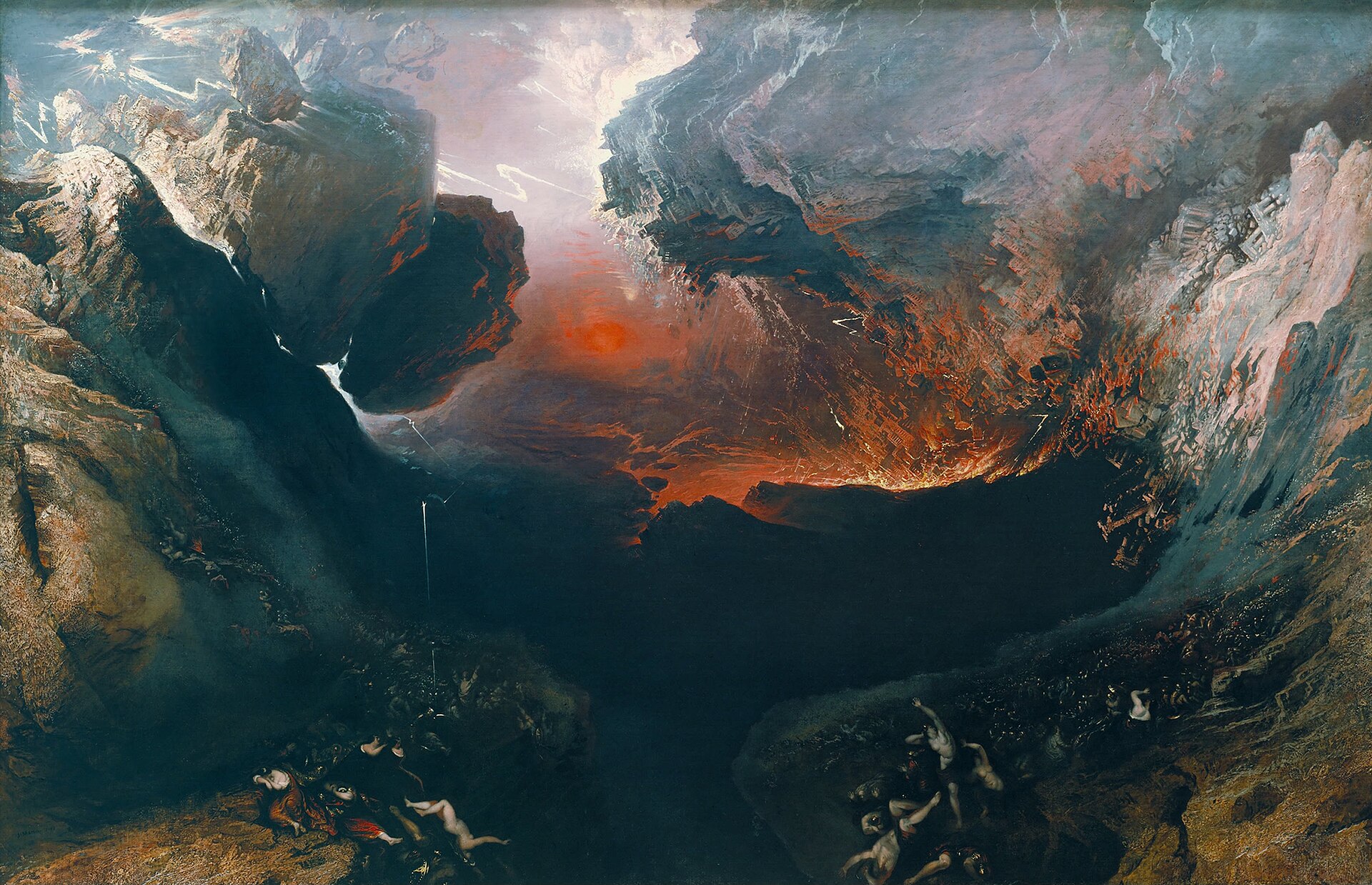
- Relationship to The Great Day of His Wrath
- Public Display and Print Afterlife
- Why the Painting Matters
What Is Happening in the Painting?
The Tate-linked Google Arts record describes The Plains of Heaven as the second picture in Martin's triptych. It continues the celestial landscape glimpsed in The Last Judgement, where the good assemble in "the plains of heaven" while awaiting the call before Christ's throne. In this companion painting, salvation becomes the whole world of the image.
The saved appear in white on the crest of a hill in the foreground. Among them, Martin included poets and artists, a detail that connects the painting directly to The Last Judgement, where the righteous are also partly identified through a published chart. Behind the figures stretches a deep blue heavenly lake, fed by distant falls and enclosed by majestic mountains.
The action is deliberately minimal. No city falls. No abyss tears open. No angelic tribunal dominates the scene. Instead, Martin gives salvation a geography. The blessed stand before a landscape that seems endless, luminous and ordered.
How to Read the Composition
Begin with the ridge in the foreground. The white-clad figures are small, but they are not helpless in the way Martin's figures often are. In The Great Day of His Wrath, small bodies measure catastrophe. In The Plains of Heaven, small bodies measure release. They stand at the threshold of a world that no longer threatens them.
Then look past them into the lake. The wide blue water gives the painting its emotional centre. It slows the eye. Martin's apocalyptic works often pull the viewer toward fire, lightning or collapse; here the eye is drawn outward into depth and calm.
The falls in the distance are important because they introduce movement without violence. Water descends, but it does not destroy. It feeds the heavenly landscape and gives the image a living rhythm. Martin's usual command of scale remains, but the scale has changed mood.
The mountains complete the scene. They are still vast, but they are not collapsing. They frame paradise rather than threatening it. This is one of the clearest ways Martin separates The Plains of Heaven from its companions: the same artist who could make rock behave like a wave of destruction could also make mountain distance feel stable and protective.
The Saved and the Artists
The presence of poets and artists among the saved is one of the painting's most revealing details. Martin does not picture heaven only as an abstract religious state. He imagines a blessed community that includes makers of art and literature.
That detail matters because it connects Martin's spiritual imagination to his sense of artistic calling. In The Last Judgement, artists and poets appear among the good in a crowd still awaiting judgement. In The Plains of Heaven, they are part of the redeemed landscape itself. Art, poetry and imaginative labour have a place in Martin's heaven.
The point should not be overstated into a private manifesto. The source record gives only a concise description. But the choice is meaningful within Martin's career. He spent his life turning literature, scripture and catastrophe into public spectacle. In this painting, those who make and imagine are placed among the blessed.
Relationship to The Last Judgement
The Plains of Heaven cannot be understood fully without The Last Judgement. The Google Arts record explicitly says the celestial landscape continues from the central judgement picture, where the good gather in the plains of heaven. That makes The Plains of Heaven less a separate paradise scene than an expansion of one side of the central panel.
In The Last Judgement, the viewer sees division: Christ above, the righteous to one side, the evil falling to the other. In The Plains of Heaven, the division has already resolved for the saved. The painting no longer asks who belongs where. It shows where the blessed have arrived.
This makes the two works emotionally different. The Last Judgement is crowded and declarative. The Plains of Heaven is spacious and contemplative. The movement from one to the other is one of Martin's most interesting late inventions: judgement opens into landscape.
Relationship to The Great Day of His Wrath
The contrast with The Great Day of His Wrath is even sharper. In that painting, the earth crashes inward under Revelation's signs of judgement. Mountains move, cities fall and human resistance becomes futile. In The Plains of Heaven, mountains and water are stable, not catastrophic.
Yet both paintings depend on Martin's gift for scale. The Great Day overwhelms the viewer through disaster. The Plains of Heaven overwhelms through breadth and serenity. Both make human beings small before a world larger than themselves, but the emotional meaning of smallness changes. One is helplessness; the other is belonging.
The sequence therefore needs all three works. Without The Great Day, the apocalyptic terror is weakened. Without The Last Judgement, the moral division is unclear. Without The Plains of Heaven, Martin's final vision would end in destruction rather than salvation.
Public Display and Print Afterlife
The Dictionary of National Biography records that Martin was working on The Last Judgement, The Great Day of His Wrath and The Plains of Heaven when he suffered paralysis in November 1853. After his death in February 1854, the three large apocalypse pictures were exhibited in London and other major English cities, drawing large crowds and subscribers for engravings made from them.
The National Gallery of Art preserves evidence of that print afterlife through an 1856 Plains of Heaven mezzotint with etching and engraving on chine colle, engraved by Charles Mottram after Martin and published by Thomas McLean. This print record shows how the tranquil side of Martin's apocalypse entered the same public circulation as the scenes of judgement and wrath.
That matters because The Plains of Heaven was not merely a soft conclusion for the sequence. It was part of the public spectacle too. Viewers and subscribers encountered salvation alongside destruction and judgement.
Why the Painting Matters
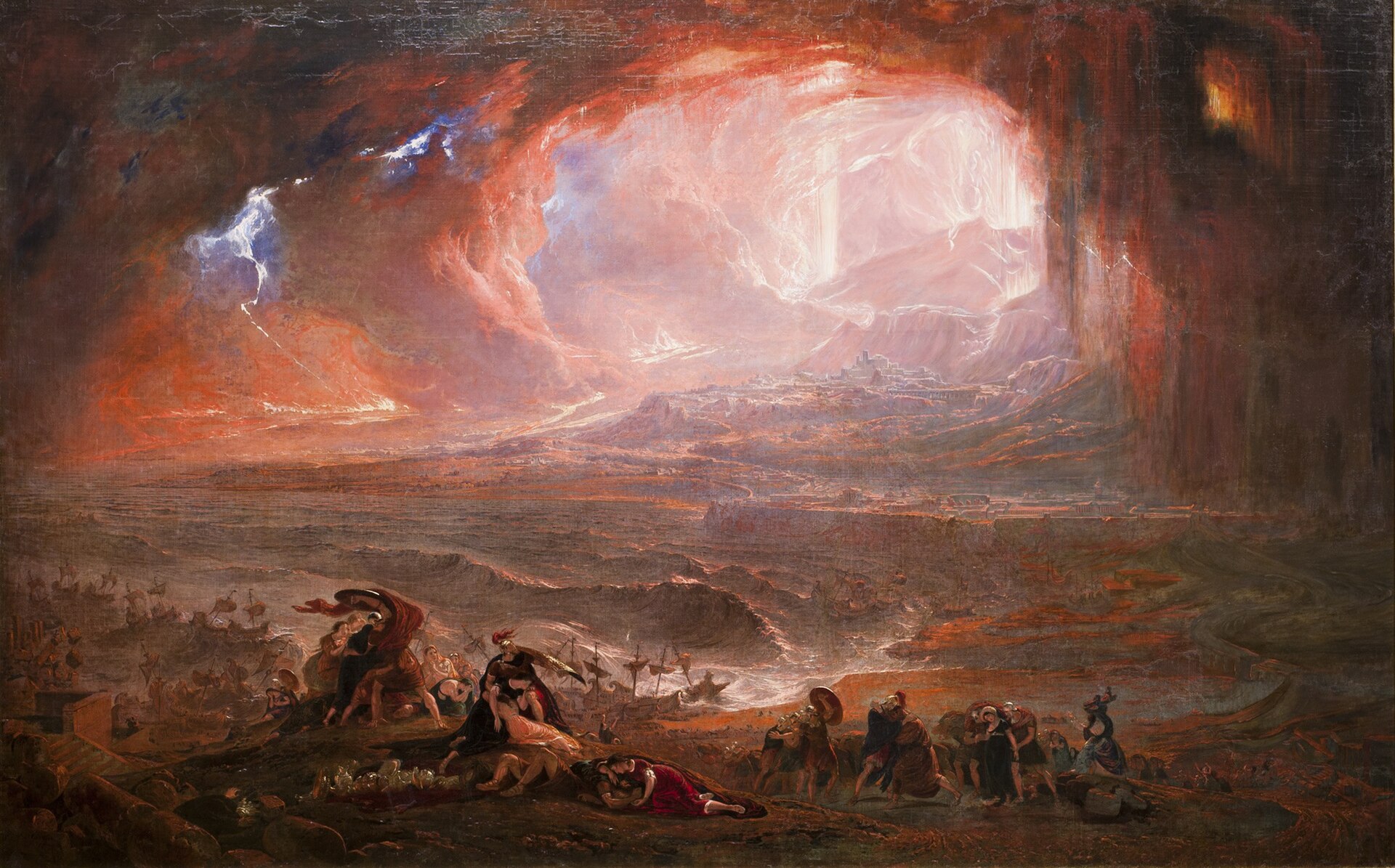
The Plains of Heaven matters because it complicates Martin's reputation. He is often remembered for catastrophe: falling cities, infernal palaces, volcanic skies and apocalyptic collapse. This painting shows that his grand manner could also serve stillness.
The work also shows how Martin imagined heaven as landscape rather than as a crowded throne room alone. Water, mountain, light and distance become the signs of salvation. The painting's serenity is not small or private. It is panoramic.
That makes it essential to the late sequence. The Plains of Heaven gives Martin's apocalypse its release. It lets the viewer leave the abyss, the falling city and the judgement crowd for a world in which scale no longer terrifies. In Martin's hands, heaven is not the absence of spectacle. It is spectacle purified into calm.
Frequently Asked Questions
Discussion
What detail in The Plains of Heaven changes how you read John Martin's use of scale, light or atmosphere?
Reader Insights
Which figure, architectural form or passage of light first anchors the scene for you?
How does the source story or subject change the emotional force of the image?
Where does this work feel closest to, or furthest from, Pandemonium?
Join the Conversation
Share your reading of The Plains of Heaven below.
References
- Google Arts & Culture, Tate Britain record for *The Plains of Heaven*: View Source, accessed 2 August 2026.
- Google Arts & Culture, Tate Britain record for *The Last Judgement*: View Source, accessed 2 August 2026.
- Google Arts & Culture, Tate Britain record for *The Great Day of His Wrath*: View Source, accessed 2 August 2026.
- National Gallery of Art, Charles Mottram after John Martin, *The Plains of Heaven*, 1856: View Source, accessed 2 August 2026.
- Wikimedia Commons, *John Martin - The Plains of Heaven - Google Art Project.jpg*: View Source, accessed 2 August 2026.
- Tate Shop, Martin Myrone, *John Martin - Sketches of My Life*: View Source, accessed 2 August 2026.
- Wikisource transcription of William Cosmo Monkhouse, "Martin, John (1789-1854)", *Dictionary of National Biography*, 1893: View Source, accessed 2 August 2026.