Macbeth by John Martin: Introduction
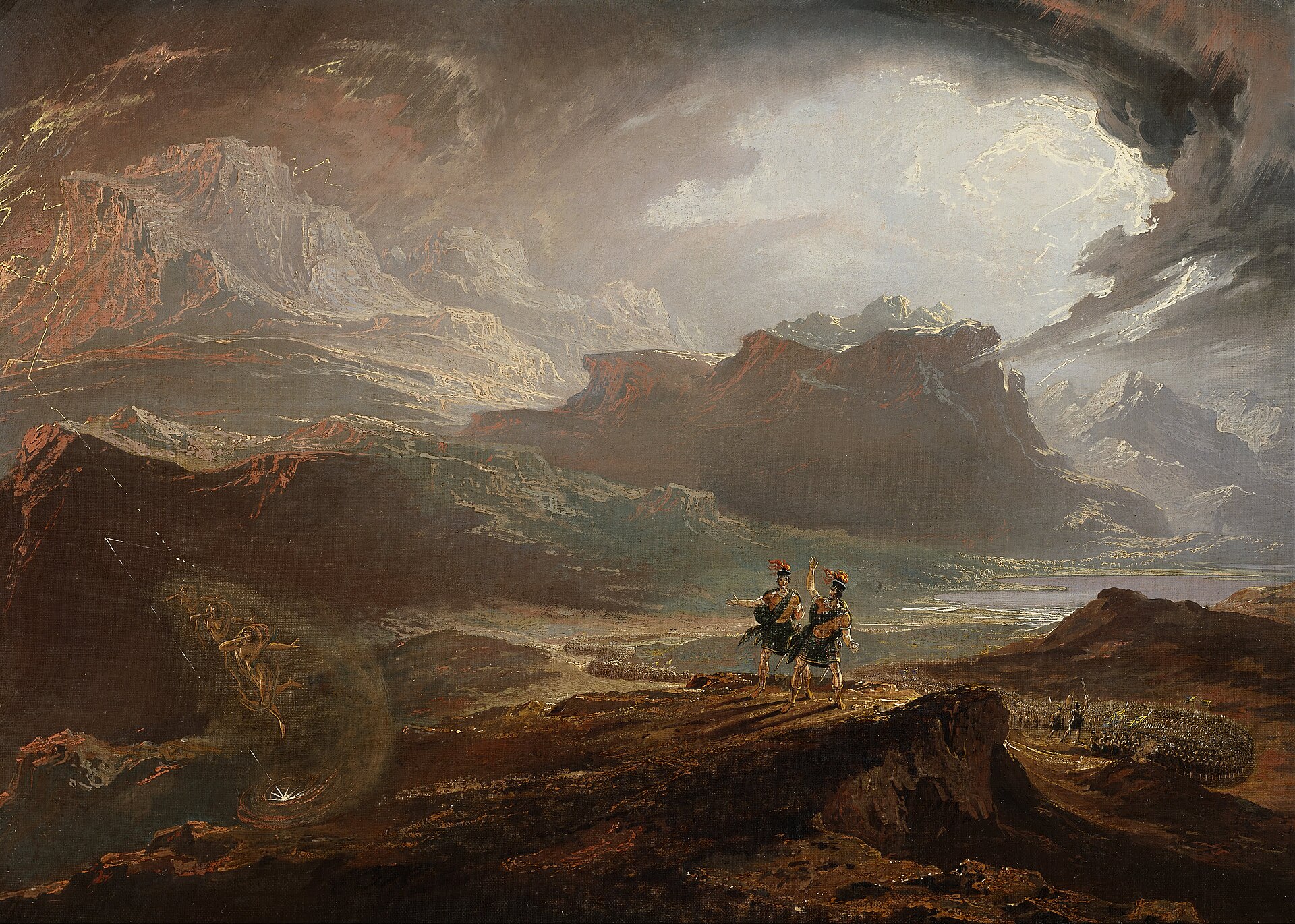
John Martin's Macbeth turns Shakespeare's tragedy into a landscape of prophecy. Painted about 1820, the oil painting is in the National Galleries of Scotland, where it is recorded as a canvas measuring 50.10 by 71.00 centimetres. The scene comes from the moment when Macbeth and Banquo meet the three witches, but Martin does not treat the encounter as ordinary theatre. He throws the figures into a wild Scottish landscape where mist, lightning and distance make the supernatural feel larger than the men who must answer it.
This is not one of Martin's vast apocalyptic canvases, and it is not the architectural inferno of Pandemonium. Its scale is more compressed. Yet the painting belongs unmistakably to the same imagination. A human drama is made to feel cosmic. Soldiers, prophecy and landscape all shrink before the forces released by the witches' words.
At a Glance
- ArtistJohn Martin
- TitleMacbeth
- Dateabout 1820
- MediumOil on canvas
- CollectionNational Galleries of Scotland, Scottish National Gallery
- Dimensions50.10 by 71.00 centimetres
- Accession numberNG 2115
- SubjectMacbeth and Banquo encountering the witches in Shakespeare's Macbeth
- Main visual ideaa Shakespearean turning point staged as storm, distance and supernatural revelation
Contents
- Introduction
- How to Read the Composition
- Shakespeare as Spectacle
- The Army and the Cosmic Stage
- Exhibition, Versions and Afterlife
- How Macbeth Fits Martin's Wider Art
- Why the Painting Matters
What Is Happening in the Painting?
The painting shows the famous encounter in Act 1, scene 3 of Macbeth. Macbeth and Banquo, returning from battle, meet three witches who greet Macbeth with titles that unsettle his future. They call him Thane of Glamis, Thane of Cawdor and future king. They also tell Banquo that his descendants will be kings. Soon after the witches vanish, messengers confirm that Macbeth has indeed been named Thane of Cawdor, making the prophecy feel dangerously possible.
Martin chooses the instant of shock. The National Galleries of Scotland describes the witches as supernatural figures flying out from a swirl of mist and lightning. Macbeth and Banquo react with startled gestures, while a large army winds into the far distance behind them. The human figures are present, but they are not secure. They stand inside weather, prophecy and fate.
That is the painting's central drama. Martin does not show Macbeth committing violence, ruling Scotland or facing his ruin. He shows the earlier moment when language changes the world. The witches' prophecy has not yet become action, but the painting already makes the consequences feel enormous.
How to Read the Composition
Begin with the contrast between foreground and distance. Macbeth and Banquo are near enough to read as active figures, yet they are small compared with the landscape around them. Their army trails away behind them, reduced to a winding procession in the mountainous setting. Military force looks suddenly fragile.
The witches break into the scene from mist and lightning. They do not behave like actors standing on a stage. They seem to form out of weather itself. The National Galleries of Scotland's account stresses this fusion of supernatural apparition and atmospheric disturbance, and it is the key to Martin's invention. The prophecy feels less like a conversation than like an event in the air.
The viewer's eye moves between the shocked men, the disappearing witches and the retreating army. That movement creates a triangle of meanings: human ambition, supernatural announcement and historical consequence. Macbeth's future is still undecided, but the landscape already seems to know that ordinary human scale will not be enough.
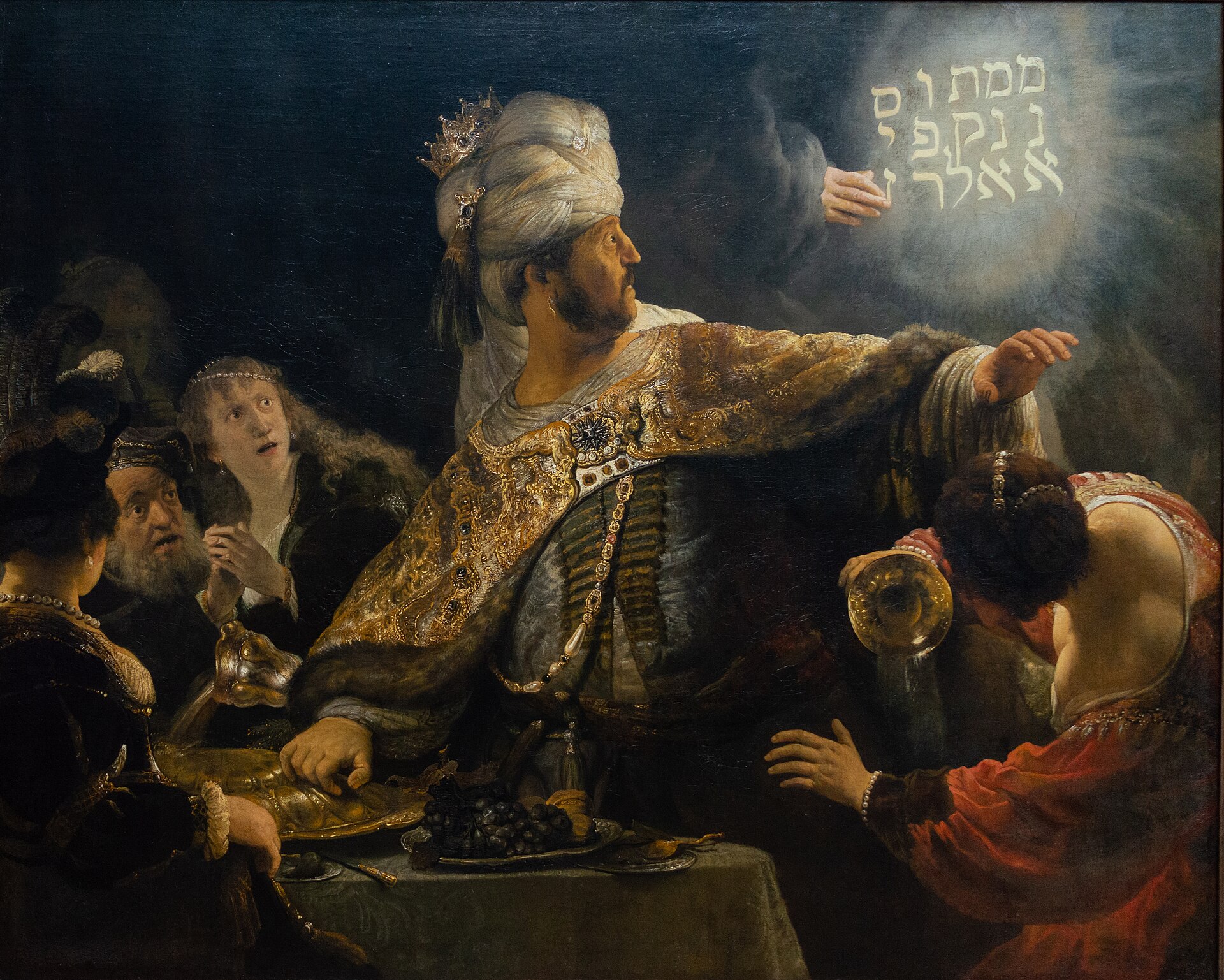
Martin also uses emptiness. The figures do not crowd the canvas in the way they do in Belshazzar's Feast, and there is no catastrophic multitude like the later Last Judgement paintings. Instead, space itself supplies the pressure. The mountains, sky and storm make the meeting feel exposed and irreversible.
Shakespeare as Spectacle
Martin admired subjects that could become visual events: biblical miracles, fallen cities, Miltonic architecture and moments of catastrophe. Macbeth gives him a different kind of drama. Shakespeare's scene is verbal, psychological and theatrical, but Martin translates it into landscape.
The witches' prophecy matters because it changes how Macbeth reads his own future. The Folger Shakespeare text places the encounter at the point where public victory begins to turn inward toward private ambition. Martin seizes that instability. Macbeth and Banquo have come from battle, but the real danger is no longer the enemy army. It is the thought that has entered Macbeth's mind.
That is why the painting's atmosphere is so important. Mist and lightning do more than decorate the scene. They make the supernatural visible. Martin's Highland setting becomes a dramatic instrument, turning prophecy into weather and moral danger into physical space.
The result is Shakespearean without being literal-minded. Martin does not simply illustrate a costume scene. He imagines the moment as a threshold between military success and tragic consequence.
The Army and the Cosmic Stage
One of the painting's most revealing details is the army in the distance. The National Galleries of Scotland notes that the soldiers melt into insignificance against the cosmic stage of the scene. That idea helps explain why this relatively small canvas still feels grand.
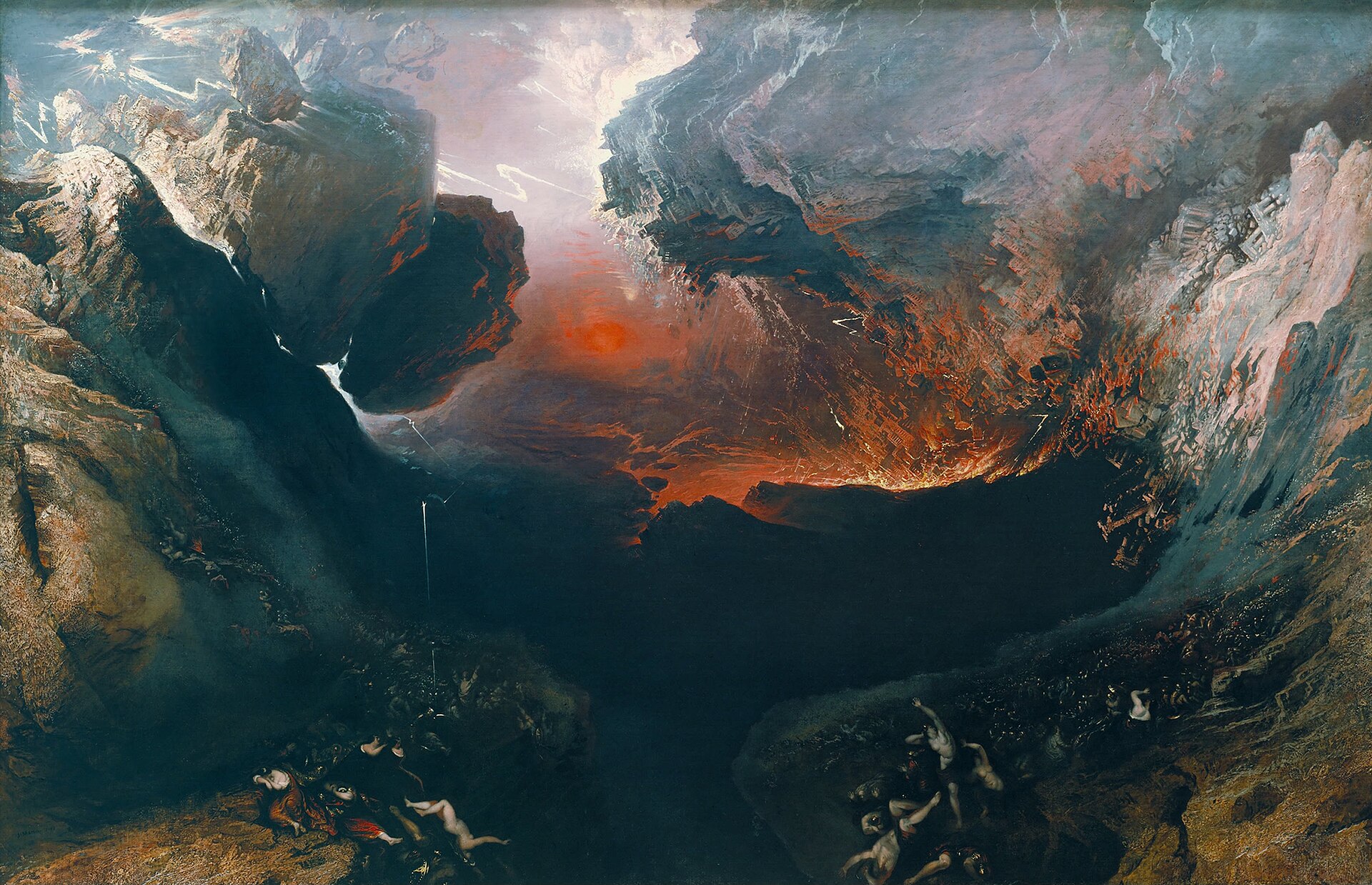
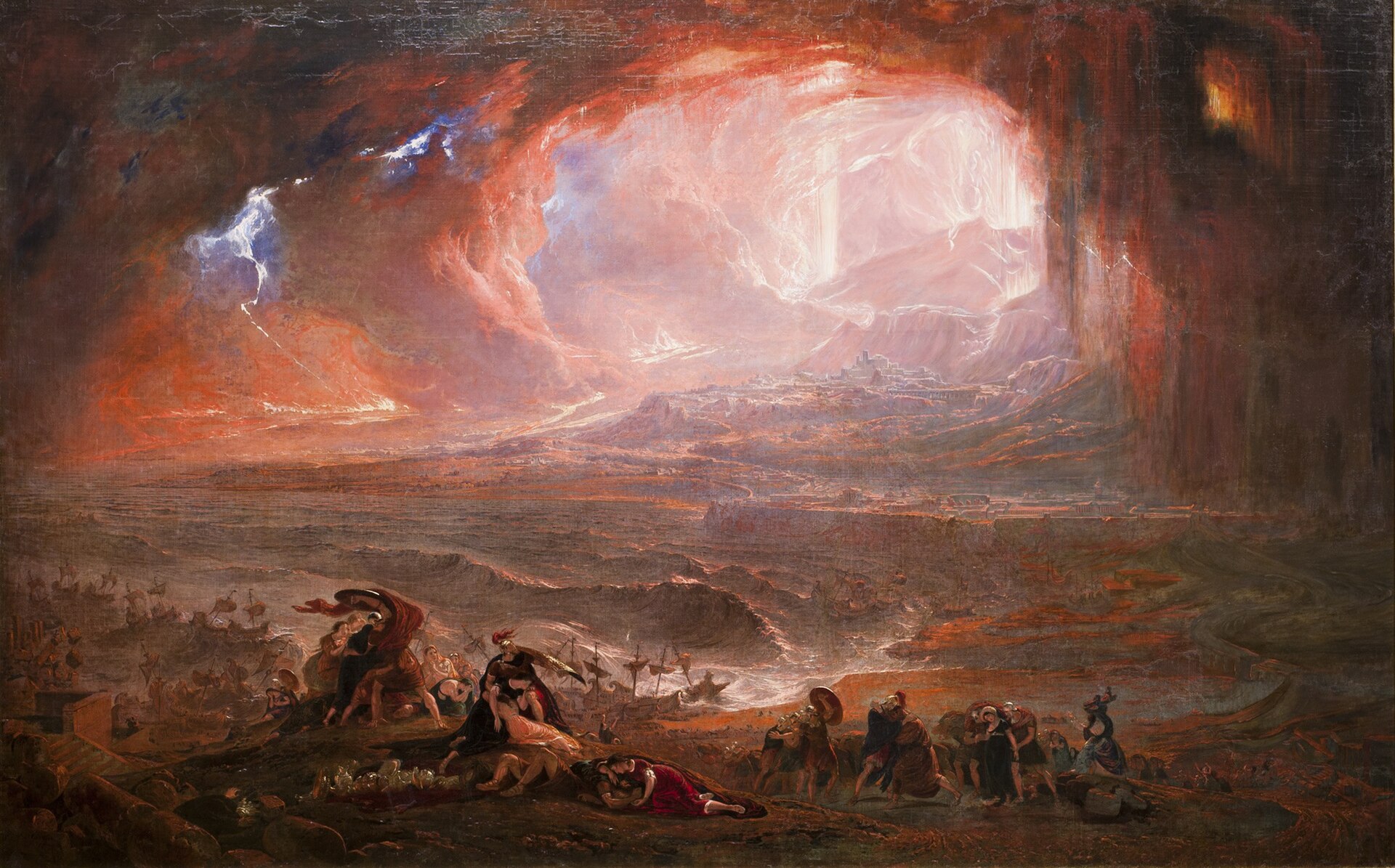
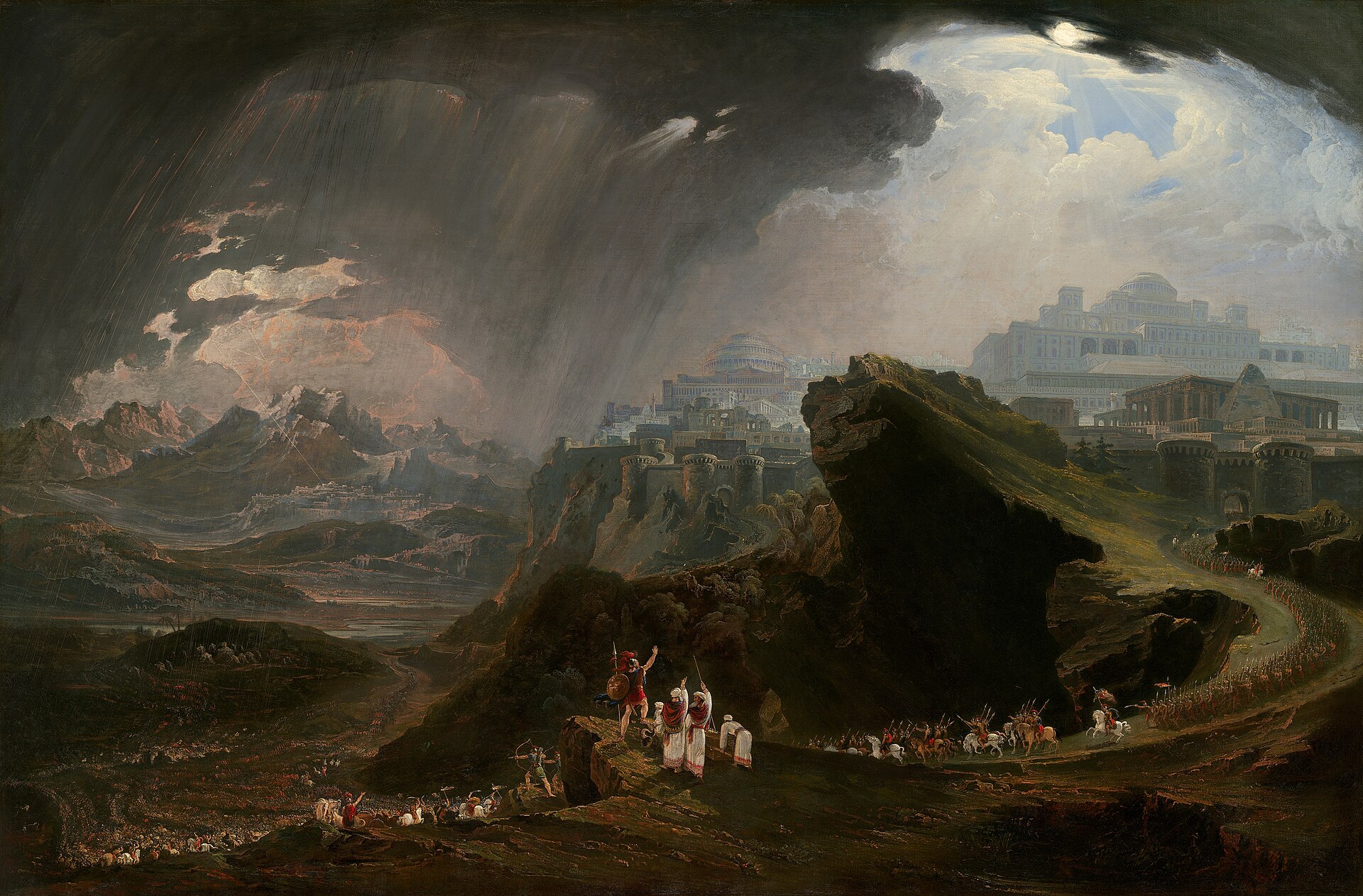
Martin often made crowds tiny in order to make events feel immense. In Joshua Commanding the Sun to Stand Still upon Gibeon, armies and mountains are swept into a miracle of cosmic command. In The Great Day of His Wrath, whole populations are overwhelmed by final destruction. In Macbeth, the same principle is quieter but still present. The army is there, but the prophecy is larger.
This makes the painting distinct from Martin's biblical battle subjects. No commander stops the sun. No palace receives divine writing. No volcano destroys a city. The threat is inward and anticipatory. The painting's grandeur comes from the feeling that history has just tilted, even before anyone else can see it.
Exhibition, Versions and Afterlife
The National Galleries of Scotland records an important early history. A larger version of Macbeth was exhibited at the British Institution in London in 1820, but it remained unsold. The same record notes that Sir Walter Scott later lamented that he could not afford the painting for Abbotsford. That anecdote is useful because it places Martin's Shakespearean subject inside the public exhibition world of early nineteenth-century Britain, where literary subjects, spectacle and reputation met.
The Scottish National Gallery painting is not the only Macbeth image associated with Martin. The Musee des Beaux-Arts de Bordeaux owns a small oil, Macbeth et les trois Sorcieres, dated about 1849-1851. Bordeaux presents it as a later treatment of the same subject and notes how Martin changed the arrangement of the figures from the earlier, now-unlocated 1820 version. In the later work, Macbeth and Banquo turn toward the witches, whose forms merge with clouds and storm light.
A related small oil on millboard, Macbeth and the Three Witches, has also been published by Lowell Libson & Jonny Yarker. That record connects the subject with the larger 1820 exhibition canvas, later scholarship on Martin and an engraving by R. Brandard for The Winter's Wreath in 1832. The print reference is best treated cautiously, but it shows that Martin's Macbeth invention circulated beyond a single oil painting.
Together, these records suggest a subject Martin returned to across decades. Macbeth offered him a compact way to combine literary prestige, supernatural spectacle and landscape drama.
How Macbeth Fits Martin's Wider Art
Within Martin's work, Macbeth sits beside the grander spectacles without becoming one of them. It shares their logic: small human figures are placed against a world that makes their decisions feel enormous. But its tone is different.
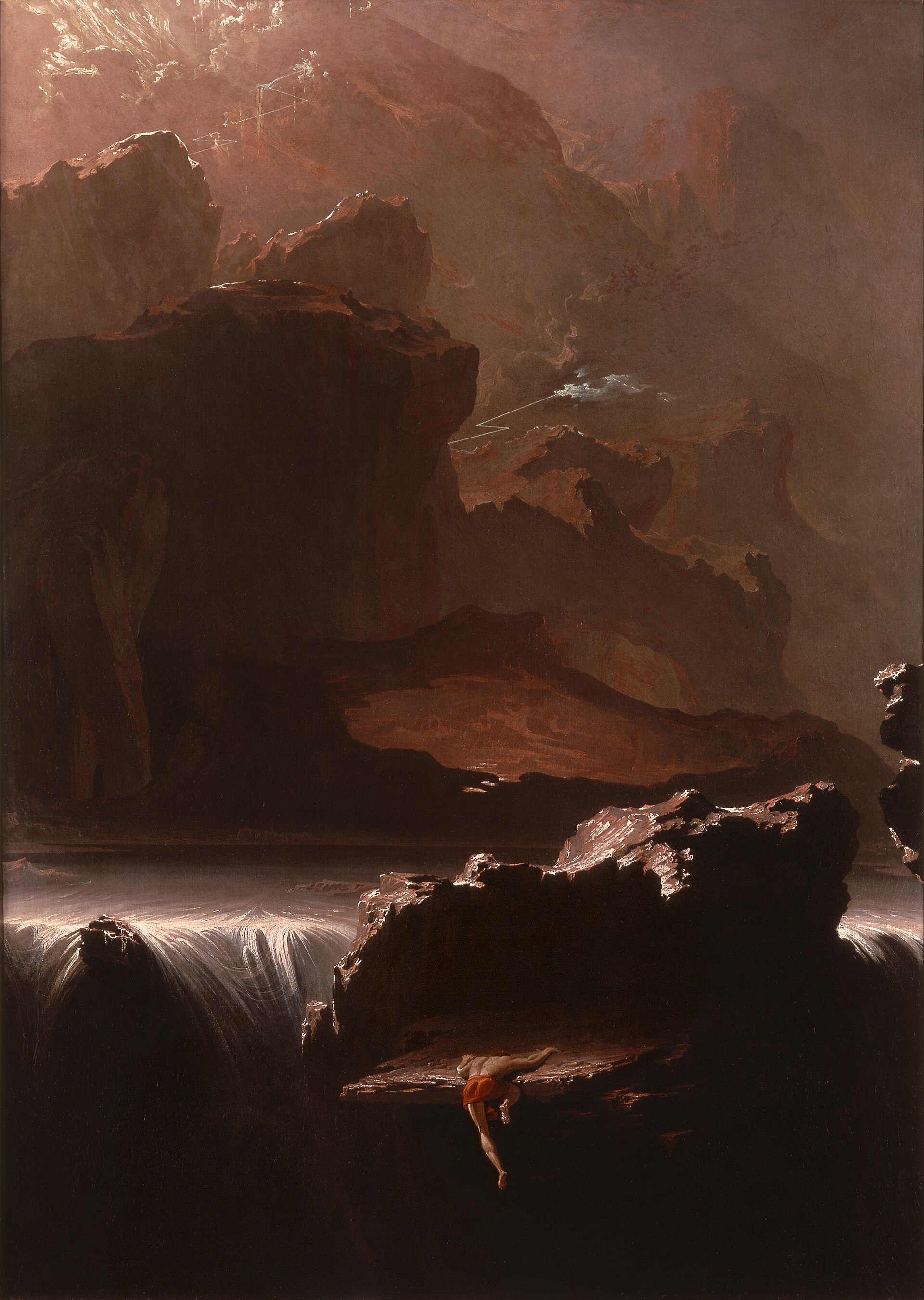
Compared with Sadak in Search of the Waters of Oblivion, Macbeth is less solitary. The men are accompanied by an army, and the source is Shakespeare rather than an oriental tale. Yet both paintings use landscape to test the human figure. In Sadak, the test is physical endurance. In Macbeth, it is moral and imaginative danger.
Compared with Belshazzar's Feast, the painting is less architectural and less crowded. Martin does not build a palace interior filled with witnesses. He places the crisis outdoors, where the world seems to tremble around a few figures.
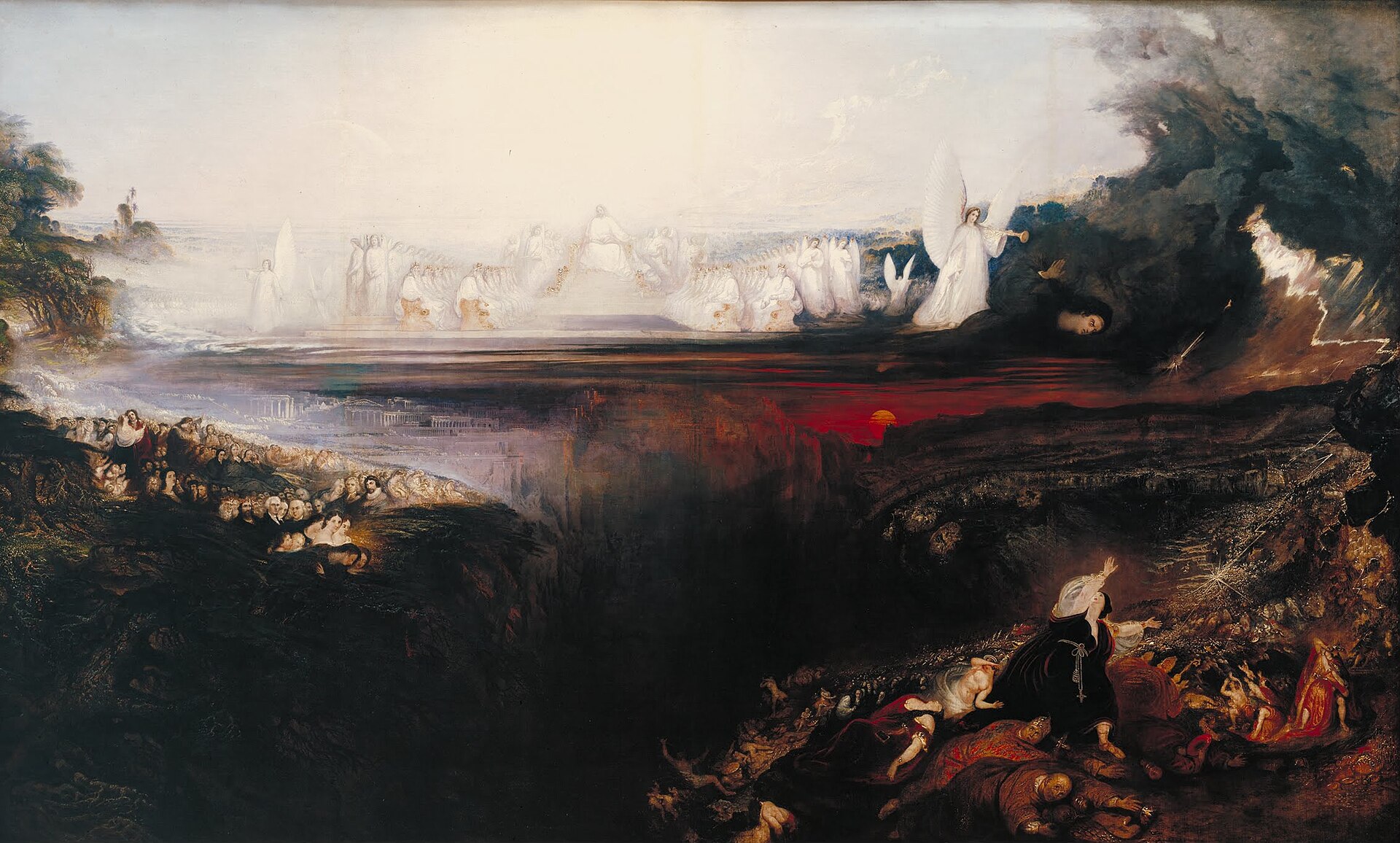
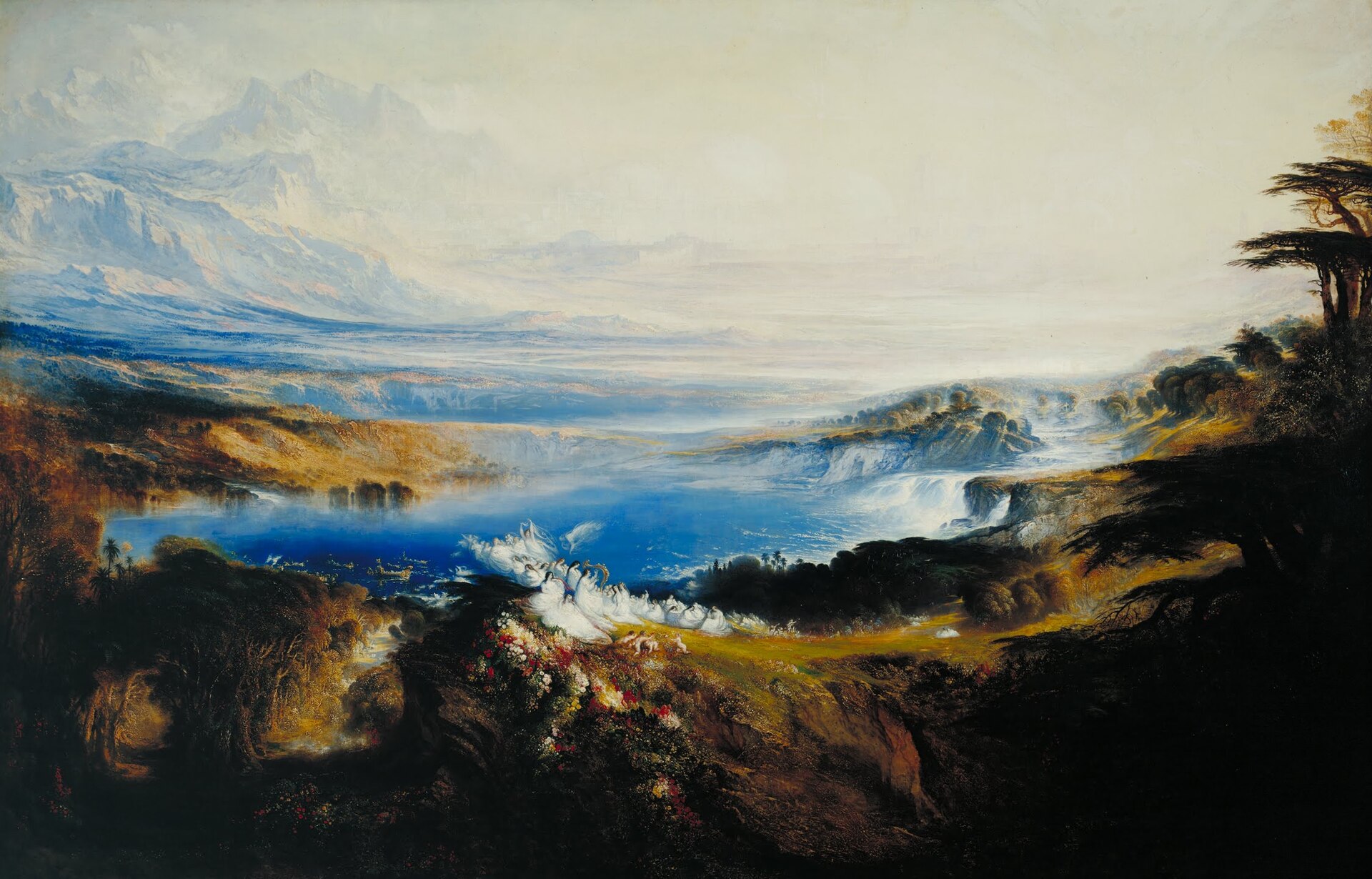
Compared with the Last Judgement sequence, Macbeth is not an apocalypse. It is the beginning of a tragedy. Still, Martin's treatment makes the first prophecy feel like a private apocalypse for Macbeth himself: an announcement that will reorder his sense of fate.
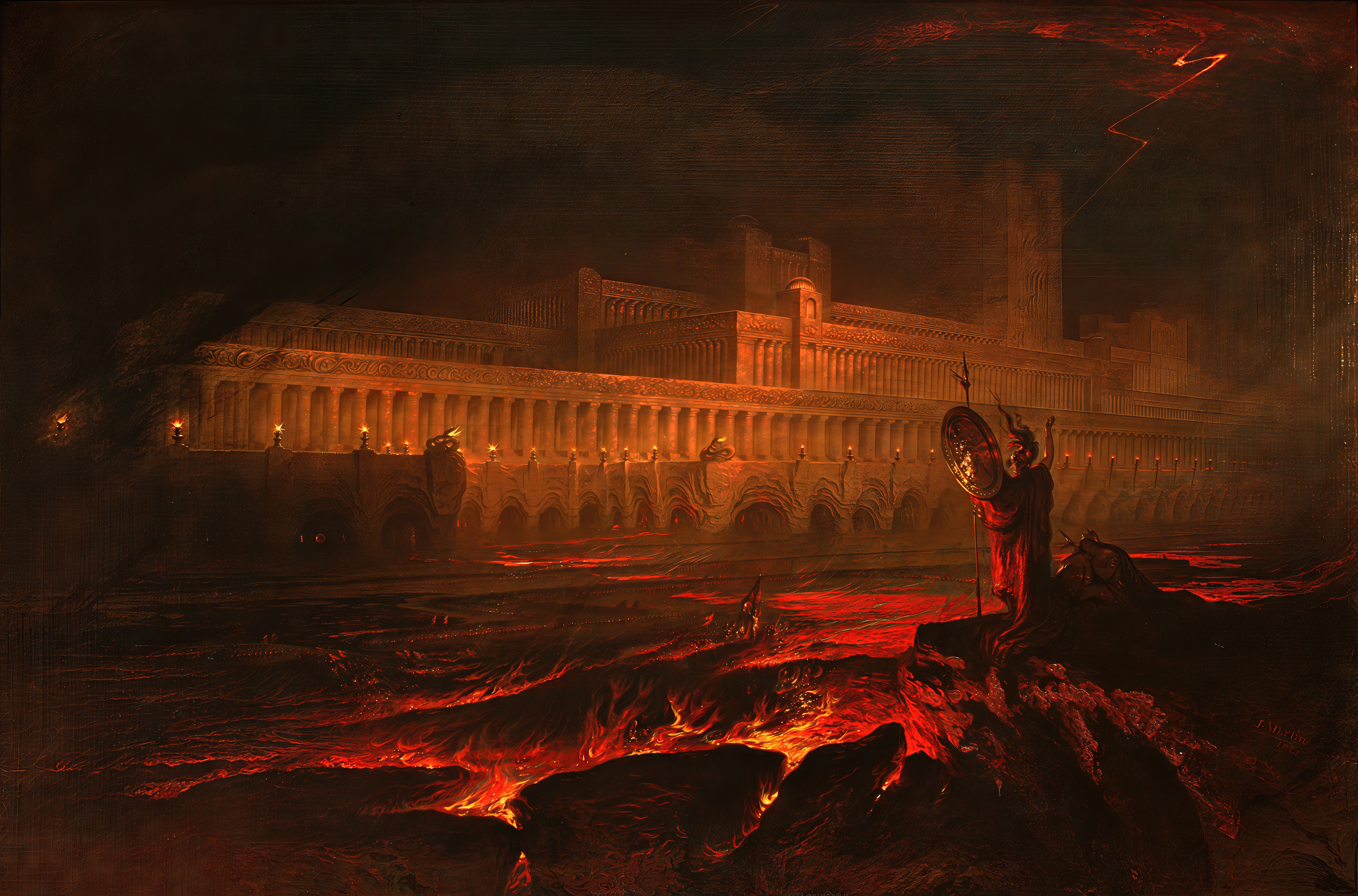
The closest link to Pandemonium is not subject but method. Both works turn literary material into a vast visual environment. Pandemonium gives Milton's fallen angels an architectural capital; Macbeth gives Shakespeare's witches a landscape of storm and ominous scale. One is Martin's major Miltonic vision of infernal grandeur. The other is a concentrated Shakespearean drama, full of weather, distance and dread.
Why the Painting Matters
Macbeth matters because it shows Martin applying his spectacular imagination to theatre. He does not need a collapsing city, a divine judgement or a palace crowd to create grandeur. A meeting on a mountain road is enough, provided the landscape can carry the weight of prophecy.
The painting also helps clarify Martin's range. He was not only a painter of biblical catastrophe or Miltonic architecture. He could take a Shakespearean scene and give it the same pressure of scale, light and consequence that shaped his better-known works.
For viewers, the painting offers a clear way into Martin's art. Look for the small figures first, then look at what surrounds them. The human story is never absent, but Martin asks the landscape to tell us how dangerous that story has become. In Macbeth, the storm is not background. It is the visual form of temptation, prophecy and fear.
Frequently Asked Questions
Discussion
What detail in Macbeth changes how you read John Martin's use of scale, light or atmosphere?
Reader Insights
Which figure, architectural form or passage of light first anchors the scene for you?
How does the source story or subject change the emotional force of the image?
Where does this work feel closest to, or furthest from, Pandemonium?
Join the Conversation
Share your reading of Macbeth below.
References
- National Galleries of Scotland, *Macbeth*, about 1820, NG 2115: View Source, accessed 2 August 2026.
- Folger Shakespeare Library, *Macbeth*, Act 1, scene 3: View Source, accessed 2 August 2026.
- Musee des Beaux-Arts de Bordeaux, *Macbeth et les trois Sorcieres*: View Source, accessed 2 August 2026.
- Lowell Libson & Jonny Yarker, *Macbeth and the Three Witches*: View Source, accessed 2 August 2026.
- Google Arts & Culture, *Macbeth*, John Martin: View Source, accessed 2 August 2026.
- Wikimedia Commons, *John Martin - Macbeth - Google Art Project.jpg*: View Source, accessed 2 August 2026.