by Tom Gurney
Tom Gurney BSc (Hons) is an art history expert with over 20 years experience
Published on June 19, 2020 / Updated on July 19, 2026
Email: tomgurney1@gmail.com / Phone: +44 7429 011000
John Singer Sargent Portraits: Introduction
John Singer Sargent's portraits are famous for elegance, but elegance is only the surface of the problem. His best portraits are not polite records of appearance. They are performances of identity under pressure: social, theatrical, artistic, familial, political, and psychological. A sitter in Sargent's hands becomes a body in light, a face under scrutiny, a garment turned into argument, a hand placed with precision, a personality made visible through pose and surface.
Sargent built his career through portraiture, but he never treated the genre as a single formula. He painted society women whose direct gazes could make viewers feel judged. He painted artists and writers with more intimacy and experiment than formal commissions allowed. He painted actors as roles, children as presences in difficult spaces, military men as images of authority, and friends as collaborators in style. His portraits range from the provocative severity of Madame X to the relaxed confidence of Lady Agnew of Lochnaw, from the theatrical green of Ellen Terry as Lady Macbeth to the eerie separation of The Daughters of Edward Darley Boit. [1], [2]
The result is a portrait practice that can seem effortless while being deeply calculated. Sargent's brushwork often feels swift, but the placement of the sitter, the selection of clothing, the management of light, and the pressure of the gaze are rarely casual. He could make a likeness shimmer into being through paint, but he could also make that likeness unstable: glamorous and exposed, intimate and guarded, public and private at once.
This is why Sargent's portraits still matter. They show how modern identity was made visible through dress, pose, reputation, and performance. They also show the cost of being seen. His sitters often appear to control the picture, but the viewer senses how much is at stake in that control.
The portraits are also the best entry point into Sargent's contradictions. He was cosmopolitan but often claimed as American. He was a painter of high society who longed for freedom from the studio. He was celebrated for speed but depended on discipline. He was a master of likeness who repeatedly turned likeness into theatre. To read the portraits well is to see all of those tensions moving at once.
Contents
- Introduction
- Training And Painterly Method
- Paris Ambition And Early Risk
- London Society Portraits
- Artists And Friends
- Costume, Textiles And Theatre
- Children And Family Portraits
- Political, Military And Public Sitters
- Technique And The Sitter Encounter
- Reputation And Retreat From Portraiture
- How To Read A Sargent Portrait
- Key Portraits And Where To Go Next
Training And Painterly Method
Sargent's portrait method began in Paris. In 1874, he entered the atelier of Carolus-Duran, a fashionable portraitist whose teaching encouraged direct painting, broad planes of wet pigment, and the freshness of the sketch inside a finished work. The Met's Heilbrunn essay emphasizes that Carolus-Duran urged students to paint immediately rather than build everything from careful preliminary drawing. That instruction mattered for Sargent's entire career. [3], [1]
The method was not loose in the careless sense. It required acute seeing. Sargent learned to place major tonal relations early, to let a head, sleeve, hand, or dress emerge from large decisions, and to preserve the vitality of first perception. In his finest portraits, one can often feel this balance: the structure is exact, but the surface breathes. [3], [1]
Carolus-Duran also directed Sargent toward the painterly tradition. The Met names Hals, Rembrandt, Van Dyck, Reynolds, and above all Velazquez as key models. This lineage helps explain why Sargent's portraits look both modern and old-masterly. He could use broad brushwork and daring simplification while still claiming the authority of grand portrait tradition. [3], [1]
Velazquez gave Sargent lessons in restraint, dark tonal design, and the power of a figure held against space. Hals offered vitality of touch. Van Dyck and Reynolds offered models for aristocratic image-making and full-length pose. Sargent did not simply imitate these painters. He learned from them how to make social presence out of paint. [4]
The Met's account also notes that, from his successful Paris Salon submissions as early as 1877, Sargent's work reflected both Carolus-Duran and the old masters of the painterly tradition. Portraiture was therefore not a fallback trade for him. It was the field in which his training could become public. [3], [1]
This training also explains why his portraits often feel fast without feeling shallow. The apparent speed is the visible trace of discipline. A dress may be made from sweeping strokes, but those strokes know exactly where the body is. A face may be handled with economy, but the likeness is held by tone, angle, and pressure. Sargent's brilliance lies in making command look spontaneous.
The old-master inheritance also helped Sargent adapt to different social worlds. Van Dyck could teach aristocratic elongation; Hals could teach living brushwork; Velazquez could teach restraint and the charged relation between figure and space. Sargent could carry these lessons into Paris, London, Boston, and New York because they were not recipes. They were tools for making a sitter feel socially present. [5]
That flexibility is why his portraits avoid a single house style. Some are severe and dark, others pale and atmospheric, others brilliant with costume or fabric. The shared link is not one look, but one intelligence: Sargent's ability to decide what kind of visibility each sitter needs.
Paris Ambition And Early Risk
Sargent's Paris years made him ambitious and vulnerable. The Met's Sargent and Paris material describes him as a young American art student who entered a rapidly changing capital in 1874 and moved among artists, writers, and patrons. Paris offered training, museums, avant-garde art, and the Salon stage. It also offered a public capable of making or wounding a reputation. [3], [1]
His early portraits were part of that rise. They did not merely record sitters; they advertised the painter's power. Dr. Pozzi at Home, painted in 1881, shows a Parisian doctor in a brilliant red robe, standing with elongated elegance and almost theatrical self-possession. The Hammer Museum object record gives the work's date, medium, scale, and public-domain status, but the image itself tells the larger story: Sargent could transform a modern professional man into a figure of sensuous authority. [5], [6]
Madame X pushed that ambition further. The painting's severity, profile pose, pale skin, black dress, and withheld identity created an image both stylish and dangerous. Its scandal at the 1884 Salon showed how portraiture could expose sitter and painter at once. Sargent had made an image so forceful that society could not agree whether it was admiration, insult, or provocation.
The Paris portrait problem was therefore double. Sargent needed sitters and public success, but the stronger the portrait, the more it could disturb the social world that produced it. His portrait art was not safe because it made likeness visible. It was risky because it made appearance too charged. [5]
The Met's Sargent and Paris exhibition frames these years as the launch of a painter whom later writers called the era's greatest contemporary portrait painter. That reputation began with daring, not merely polish. Sargent's early portraits prove that his society art was always connected to experiment. [3], [1]
Paris also taught Sargent that portraiture was public theatre. A portrait shown at the Salon was not a private object. It entered a room full of critics, rivals, clients, gossip, and ambition. The sitter's image could be discussed as fashion, morality, painting, likeness, and social signal all at once. Sargent learned quickly that a portrait could succeed as art and still cause social trouble. [5]
That lesson echoes across the career. His later London portraits are often more careful in social terms, but they retain the Parisian knowledge that a portrait is never just between painter and sitter. There is always an audience waiting. [5]
London Society Portraits
After the Paris difficulties around Madame X, London became crucial. By the 1890s, Sargent had become the portraitist many fashionable sitters wanted. Yet his London society portraits are not all of one kind. Some flatter; some challenge; some seem to do both at once. [5]
Lady Agnew of Lochnaw is one of the clearest examples. The National Galleries of Scotland describes the sitter's confident gaze and relaxed posture as unusual in contemporary portraiture, and notes that the painting's spontaneous feel was heightened by fluid, sweeping brushwork. When it was shown at the Royal Academy in 1893, it was an instant success, helping to secure Sargent's reputation in Britain and making Lady Agnew a public celebrity. [7]
The portrait's power lies in its balance between ease and control. Lady Agnew sits in a chair before Chinese silk drapery, wearing a white dress with lilac accents. Her posture is relaxed, but the gaze is direct and appraising. She does not appear as a passive ornament. She meets the viewer with a cool awareness that has become one of Sargent's signature effects.
The National Galleries record adds that the work may have been painted in only six sittings and that Sargent used studio props such as the Louis XVI chair and Chinese silk hanging. This tells us something about the construction of society portraiture. The sitter is real; the setting is staged. The effect is personal, but also made from props, fabric, pose, and performance.
Sargent's London success depended on this ability to make aristocratic or wealthy sitters feel alive within convention. He could give them beauty, status, and surface luxury, but also a spark of unease or wit. The portrait does not simply say "this person is important." It asks how importance behaves when watched.
That question made Sargent desirable. Sitters wanted his glamour, but his glamour carried risk. To be painted by Sargent was to be made vivid, and vividness could exceed comfort.
Society portraiture also depended on timing. A portrait could make a sitter more visible at the right moment: after marriage, inheritance, appointment, arrival in London, or entry into a particular circle. The Lady Agnew record makes this unusually clear because her portrait did not only reflect celebrity; it helped create it. Sargent's brushwork could turn a private commission into public social capital.
The studio props sharpen this point. A Chinese silk hanging, an elegant chair, a sash, a dress, or a robe might look like background luxury, but such elements let Sargent construct an image of ease that sitters could inhabit. The portrait became a controlled room in which social identity looked natural.
Artists And Friends
Sargent's portraits of artists and friends form one of the richest parts of his work because they often freed him from the strict demands of society commission. The Met's Sargent: Portraits of Artists and Friends exhibition page describes these portraits of artists, writers, actors, dancers, and musicians as often non-commissioned, intimate, witty, idiosyncratic, and more experimental than his formal portraiture. They record relationships, influences, aspirations, and allegiances. [3], [1]
The National Portrait Gallery London exhibition archive makes the same point from another angle. It calls Sargent the greatest portrait painter of his generation and emphasizes that his portraits of friends and contemporaries, including Auguste Rodin, Claude Monet, Robert Louis Stevenson, and Ellen Terry, allowed more daring and personal invention than formal portrait work. [1], [2]
These portraits matter because they show Sargent inside a creative network. He was not only painting clients; he was picturing the world that formed him. Monet, Rodin, Stevenson, Henry James, Ellen Terry, and other creative figures were not simply famous names. They were participants in a modern culture of art, theatre, literature, music, and travel. Sargent's portraits of them map that culture.
Friend portraits also loosen the rules of presentation. A formal sitter may expect grandeur, recognizability, and social advantage. A friend may allow awkwardness, intimacy, speed, humor, or experiment. This is why Sargent's portraits of creative figures can feel more probing than his most polished society images. They do not always need to protect rank.
Claude Monet Painting by the Edge of a Wood is especially useful as a portrait because it shows an artist at work rather than a sitter posing. Monet is represented through action: painting outdoors, focused on the canvas, embedded in landscape. The portrait becomes a statement about artistic method and friendship at once. [1], [2]
Portraits of writers and actors gave Sargent other possibilities. A writer can be pictured as restless intelligence; an actor can be pictured as role, costume, and transformation. The portrait of Ellen Terry as Lady Macbeth belongs here, even though it is also a theatre image. It shows how the portrait can absorb performance.
The artist-and-friend group also changes the reader's sense of Sargent's career. He was not merely serving elites. He was picturing his own intellectual and artistic world. In those portraits, likeness becomes social memory.
The range of creative sitters also let Sargent test different kinds of fame. A society sitter might be famous for beauty, marriage, rank, or wealth. A writer was famous for mind; an actor for transformation; a painter for vision; a sculptor for touch and form; a musician or dancer for performance. Sargent had to find a visual equivalent for each kind of reputation.
This is why the friend portraits often feel exploratory. They do not all aim for the same polished grandeur. Some emphasize eccentric pose, informal dress, unusual setting, or active making. The sitter is not only displayed; the sitter's form of creativity becomes part of the portrait's meaning.
The Met exhibition's ninety-two works also show how large this portrait network was. Sargent's circle stretched across media and cities. The portraits can be read almost as a social atlas of late nineteenth-century creativity: Paris studios, London theatres, Boston patrons, New York collectors, Italian gardens, French artistic friendships, and British literary circles. [3], [1]
Costume, Textiles And Theatre
Costume is one of Sargent's great portrait tools. The Met's essay "Sargent's Theatrics: Dressing His Friends" notes that he collected textiles during his travels, decorated his studio with them, and sometimes asked subjects to wear specific items he wanted to highlight. Clothing in his portraits is not an afterthought. It can set the mood, compete with likeness, and reveal the painter's own taste. [3], [1]
This is obvious in Ellen Terry as Lady Macbeth. Tate shop text explains that Sargent saw Terry perform in Macbeth at the Lyceum Theatre in London, was struck by her appearance, and persuaded her to sit in costume. He invented the pose, showing her raising Duncan's crown above her head. Terry later described the portrait as "the sensation of the year." [4]
The portrait is a painting of a person and a role at once. Ellen Terry is present, but so is Lady Macbeth, theatre, costume, Shakespeare, celebrity, and Victorian performance culture. Her green dress, raised arms, and commanding pose make identity inseparable from staging.
The National Portrait Gallery's record for Sargent's later replica after the Tate picture preserves the famous story of Oscar Wilde seeing Terry arrive at the Chelsea studio in full costume. The anecdote matters because it shows how the portrait began before the canvas: with spectacle in the street, costume in motion, and the theatre entering Sargent's workspace. [2], [4]
Sargent's costume practice also complicates the idea of authenticity. A portrait does not become false because clothing is chosen by the painter. It becomes a negotiated image. The sitter brings face, body, role, and reputation; Sargent brings fabric, pose, setting, and painted force. The portrait emerges from that exchange.
Fabric allowed him to make social identity visible through paint. White silk, black satin, red robe, green costume, lilac sash, Chinese hanging, pale taffeta, velvet, lace: these are not decorative labels. They are surfaces through which personality, rank, fantasy, and theatricality become visible.
The Met's costume essay is especially useful because it shows Sargent as an active director. He did not always accept the sitter's clothing as given. Sometimes he asked for particular garments, brought textiles with him, or used studio materials to shape the effect. This means that portrait clothing in Sargent should be read as a collaborative and sometimes painter-led decision. [3], [1]
Costume also allowed Sargent to blur categories. A society portrait could borrow from theatre; a theatre portrait could become almost a state image; a friend portrait could become a figure painting. The sitter's clothes help decide whether we see a person as private friend, public celebrity, role-player, beauty, intellectual, or spectacle. [4]
In this sense, Sargent's love of fabric is not only sensual. It is structural. Fabric gives the portrait scale, rhythm, color, and social code. A sweeping dress can enlarge the sitter's presence; a robe can turn a doctor into a modern cardinal of desire and knowledge; a stage costume can make an actor larger than herself.
Children And Family Portraits
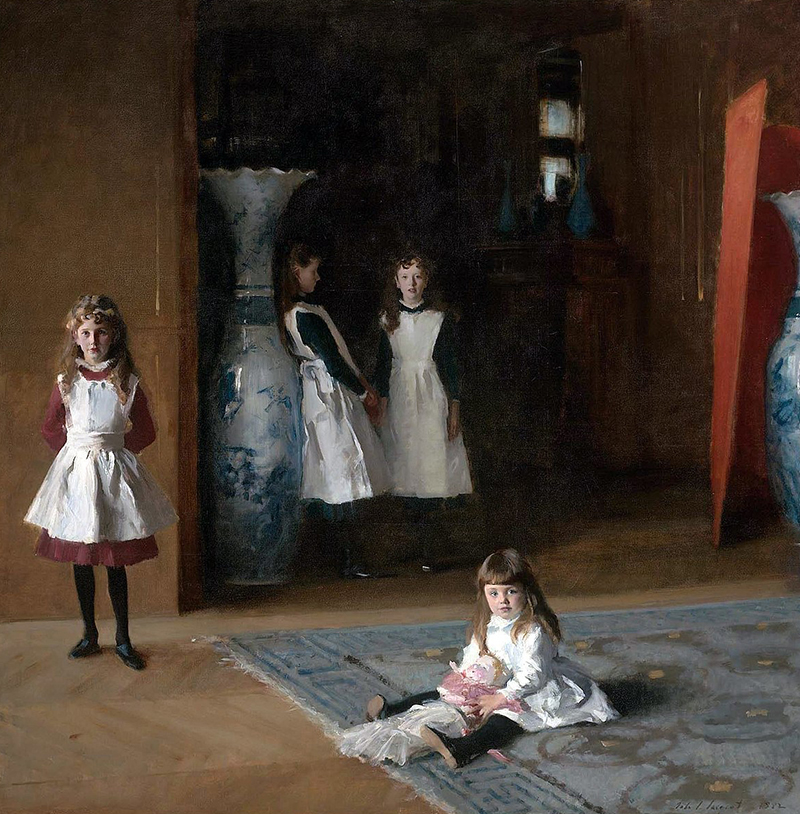
Sargent's child and family portraits are often less comfortable than they first appear. The Daughters of Edward Darley Boit is the strongest example. The four girls are present in a Paris apartment, but they are separated by space, age, light, and shadow. The work is a portrait, yet it behaves like an interior scene and psychological riddle. [5]
That painting shows how Sargent could resist sentimental family imagery. The sisters do not gather into a warm group. Julia sits near the front with her doll, Mary Louisa stands at the left, and the older girls recede into the darker interior. Their white dresses connect them visually, but their positions keep them apart.
The painting's force comes from distance. Sargent gives childhood dignity by refusing to make it transparent. He does not tell the viewer what each girl feels. He creates a room in which childhood appears as a series of thresholds: visible and hidden, near and far, young and older, direct and withheld.
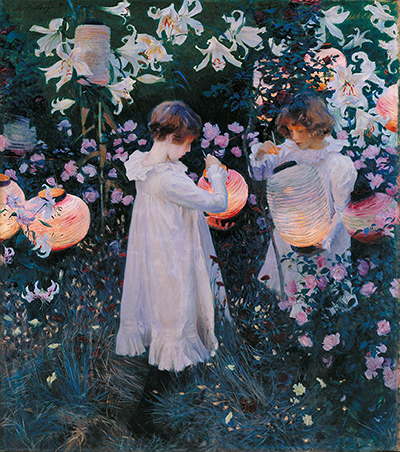
Other child portraits and garden scenes show different aspects of the same problem. Carnation, Lily, Lily, Rose is warmer and more poetic, but it too depends on concentration rather than simple sweetness. Dolly and Polly Barnard light paper lanterns in a garden, absorbed in action rather than turned outward for admiration.
For Sargent, children were not merely small sitters. They allowed him to test how identity forms before adult public roles become fixed. In the Boit painting, childhood is strange and spatial. In Carnation, Lily, Lily, Rose, it is linked to time, light, flowers, and the briefness of evening. Both are portraits of presence under changing conditions.
Family portraits also reveal how Sargent handled groups. Group portraiture can easily become a problem of arrangement: where to put each person, how to show relation, how to avoid stiffness. In The Daughters of Edward Darley Boit, he solves the problem by refusing conventional unity. In other family and child works, he often lets setting, age, and light carry the relationships rather than forcing overt affection.
This restraint matters because it distinguishes Sargent from the sweetest Victorian child imagery. He could paint beauty and youth, but he often kept a cool observational distance. That distance gives the child portraits their seriousness.
Political, Military And Public Sitters
Sargent's portrait practice also extended into public authority. Political and military portraits place different demands on a painter from society or friend portraits. They must hold likeness, status, and office without becoming stiff symbols.
The Theodore Roosevelt portrait is one important point of comparison. Sargent's image of Roosevelt belongs to the tradition of presidential likeness, where the sitter is both person and institution. The challenge is not only to record features but to convey command. Such portraits must manage energy, restraint, and public expectation. [5]
Military portraits, including pages such as Colonel Ian Hamilton and Brigadier Archibald Campbell Douglas, bring still another version of authority. Uniform can organize identity strongly, but it can also reduce individuality if handled mechanically. Sargent's task in military portraiture was to let rank and person coexist.
These public portraits matter for the hub because they show that Sargent's portrait art was not limited to drawing rooms. He painted bodies shaped by office, command, service, and public memory. A society portrait may ask how a person appears within fashion. A political or military portrait asks how a person appears within power.
The same formal questions remain: gaze, hands, posture, costume, setting, light. But their stakes change. In a presidential portrait, a hand may signal control; in a military portrait, uniform may carry institutional force; in a society portrait, a chair and fabric may create ease or hauteur. Sargent's gift was adapting the portrait grammar to each kind of sitter.
Public portraits are also a useful check on the idea that Sargent was interested only in charm. A president, officer, or patron cannot be handled only as decorative presence. The image has to carry authority. Sargent's society skills still matter, but they are redirected toward public confidence, command, and legibility.
Technique And The Sitter Encounter
Sargent's portraits depend on the encounter between painter and sitter. The finished image may look effortless, but the process required decisions about pose, clothing, background, lighting, and the emotional temperature of the sitting. The National Galleries of Scotland's Lady Agnew record notes that Sargent later recalled painting her in six sittings. Whether fast or prolonged, the sitting was a charged event. [7]
Speed was part of his legend, but speed alone does not explain the result. Sargent's brushwork could be sweeping, but it was not vague. He knew how to let a hand, collar, sash, or eye carry enough information to feel complete. His portraits often use sharp focus and looseness together. The viewer's eye is directed toward the face, hands, or key garment while surrounding passages remain alive with paint.
Hands are especially important. In Sargent portraits, hands can grip, rest, press, spread, lift, or hover. They reveal tension that the face may conceal. In Madame X, the hand at the table steadies the figure. In Dr. Pozzi at Home, long fingers and red fabric help turn the sitter into a theatrical presence. In Ellen Terry, raised arms transform the sitter into a role.
Gaze is equally decisive. Some sitters confront the viewer directly, as Lady Agnew does. Others withhold eye contact, as Madame X does in profile. Children may look outward, withdraw, or ignore the viewer. Sargent understood that a portrait's social drama often begins with the eyes: who looks, who refuses, who judges, who is exposed.
Backgrounds also matter. A Sargent background can be sparse, decorative, dark, architectural, or crowded with objects. It is never merely a place to put the sitter. The background decides what kind of social and emotional air surrounds the figure. Chinese silk behind Lady Agnew, the red interior around Dr. Pozzi, the theatrical darkness around Ellen Terry, and the foyer around the Boit sisters all create different kinds of portrait space.
The sitter encounter was therefore a collaboration and a contest. Sitters came with self-image and social need. Sargent came with artistic appetite and studio control. The finished portrait often preserves the friction between the two.
The best portraits do not hide this friction. They make it visible. A sitter may want elegance, but Sargent may introduce tension through a hand, a stare, a shadow, or an exposed neckline. A sitter may want status, but the painting may also reveal fatigue, wit, self-consciousness, or theatrical self-making. This is why the portraits reward repeat viewing. They are not stable compliments.
Sargent also understood omission. He did not need to describe every object in a room or every detail of a dress. He could let a few decisive marks stand for much more. This economy gives many portraits their nervous vitality. They appear complete because the important relations are complete, not because every inch is equally finished.
Reputation And Retreat From Portraiture
Sargent's portrait success eventually became burdensome. He was in great demand, and commissions could be lucrative, but the work also tied him to sittings, social expectation, and the need to satisfy patrons. Later in life he increasingly turned toward murals, watercolors, travel subjects, and other projects that gave him more freedom.
This shift should not be misread as simple rejection. Sargent did not stop being a portrait artist because he lacked success. He moved away from the pressure of being wanted too much. Portraiture had made his name, but it could also narrow what people expected from him.
The Met and National Portrait Gallery exhibitions on artists and friends help correct the stereotype. Sargent's portraiture was not a single commercial machine. It included commissioned society works, daring Salon images, friend portraits, theatre portraits, informal sketches, and images of creative peers. When he grew tired of formal portrait demand, that did not cancel the variety and achievement of the portraits he had already made. [3], [1]
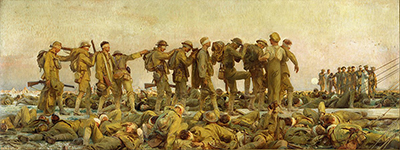
His later work also changes how we read the portraits. The murals show his desire for large public imagination. The watercolors show his delight in travel, light, architecture, and landscape. Gassed shows how his skills with bodies and arrangement could be turned toward war. Portraiture was the foundation, but not the whole house.
That tension is part of Sargent's modern appeal. He became famous for one kind of brilliance, then resisted being trapped inside it. His portraits remain central because they contain the problem of reputation: the more successful the image-maker, the more the world asks him to repeat himself.
The retreat from formal portraiture also makes the earlier portraits more interesting. They are not simply the products of a willing society specialist. They are the works of an artist who knew both the power and the confinement of the role. When a Sargent portrait seems to flicker between fascination and impatience, that may be part of the truth of the career.
How To Read A Sargent Portrait
Begin with the pose. Is the sitter upright, reclining, turning away, leaning, performing, or caught in action? Sargent rarely lets pose be neutral. It tells the viewer how the sitter wants to appear and how the painter wants that appearance to feel.
Then look at the gaze. A direct gaze can invite, challenge, or judge. A profile can withhold. A downward glance can create privacy. In Sargent's portraits, the gaze often decides the social relation between sitter and viewer before any background detail is noticed.
Next, look at the hands. They are among the most revealing parts of his portrait language. A hand may steady a body, betray tension, display elegance, carry costume, or complete a role. If the face is controlled, the hands may speak more freely.
Clothing deserves slow attention. Sargent's fabrics are not merely displays of skill. They shape identity. Ask whether the garment flatters, theatricalizes, conceals, exposes, or competes with the sitter. In many portraits, the fabric is almost another character.
The setting should be read as a psychological and social space. A dark background can isolate; a decorative hanging can stage class and taste; a room can create distance; an outdoor setting can loosen formality. Sargent's backgrounds tell the viewer what kind of world the sitter occupies.
Finally, notice the balance between finish and looseness. Where does Sargent sharpen? Where does he let paint remain open? The answer often reveals what he wants the viewer to remember. A face, hand, dress, or silhouette may hold the portrait's authority while other areas remain suggestive.
It is also useful to ask who seems to control the encounter. Does the sitter command the viewer, as Lady Agnew does? Does the sitter turn away, as Madame X does? Does costume seize control, as in Ellen Terry? Does space dominate the figures, as in the Boit sisters? Sargent's portraits are often battles over control, and the winning side may change as one looks.
Then ask what kind of performance is taking place. Some sitters perform rank, some beauty, some intellect, some artistic friendship, some theatrical role, some public office. Sargent's portraits are strongest when the performance feels both convincing and slightly exposed. [1], [2]
Key Portraits And Where To Go Next
Start with Madame X for Sargent's most famous case of portraiture as social risk. It shows how style, exposure, title, and reputation can turn a society image into a modern icon.
Move to Lady Agnew of Lochnaw for the London society portrait at its most dazzling and direct. The sitter's gaze, white dress, Chinese silk, and relaxed pose show how Sargent could make fashion feel psychologically alive.
Use Ellen Terry as Lady Macbeth for theatre, costume, and role. It is a portrait of an actor, but also a portrait of performance itself.
Use The Daughters of Edward Darley Boit for children, family, interior space, and the refusal of easy sentiment. It is one of Sargent's most complex group portraits.
Use Dr. Pozzi at Home for the early Paris portrait as theatrical provocation. Use Claude Monet Painting by the Edge of a Wood and Auguste Rodin for portraits of creative peers. Use Theodore Roosevelt, Colonel Ian Hamilton, and Brigadier Archibald Campbell Douglas for public and military identity. [5]
Together, these groups show that Sargent's portraits are not one genre repeated. They are a system of encounters between paint, sitter, audience, costume, reputation, and power.
Portrait Routes
These linked portraits show how Sargent adapted sitter presence to scandal, social ease, theatre, politics, artistic friendship and military rank.
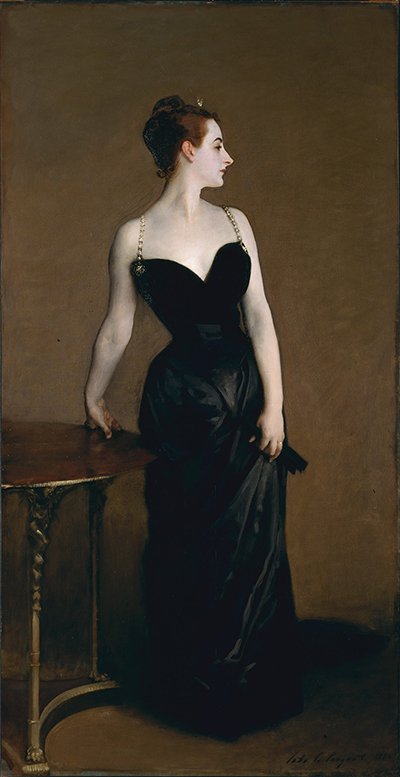
Portrait of Madame X
Portraiture as public risk.
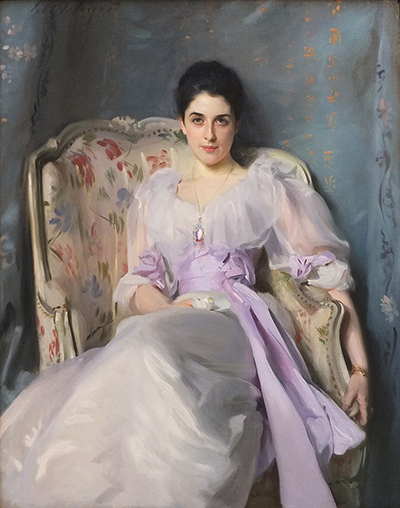
Lady Agnew of Lochnaw
Seated ease turned into aristocratic authority.
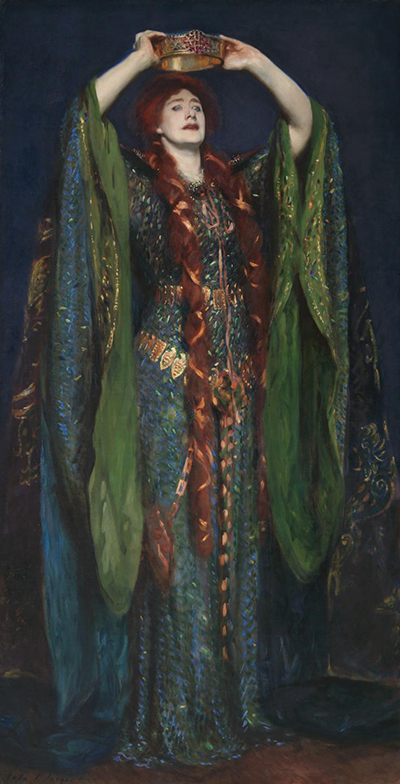
Ellen Terry as Lady Macbeth
Theatre, costume and role as public image.
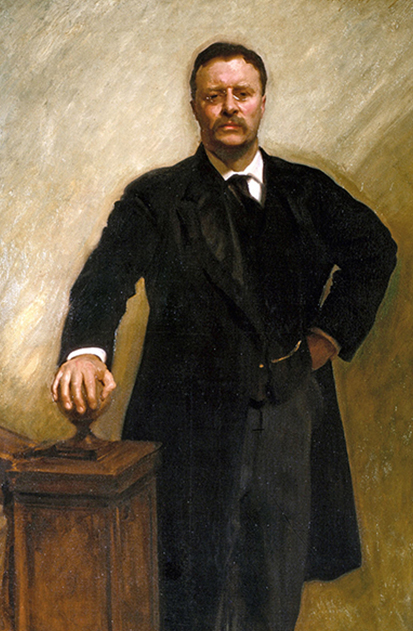
Theodore Roosevelt
Political force staged through body and setting.
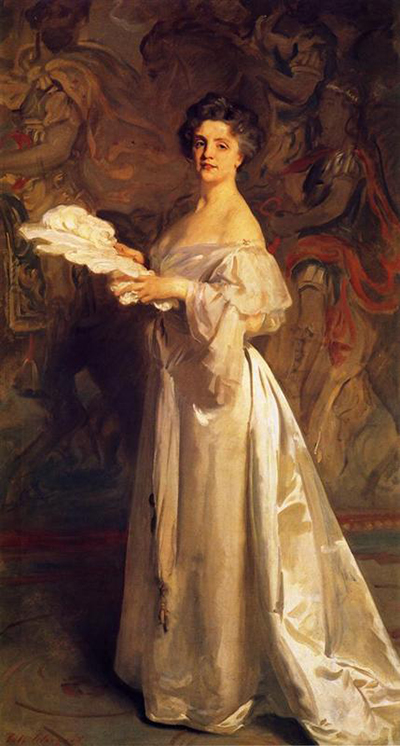
Ada Rehan
Performance identity beyond conventional society likeness.
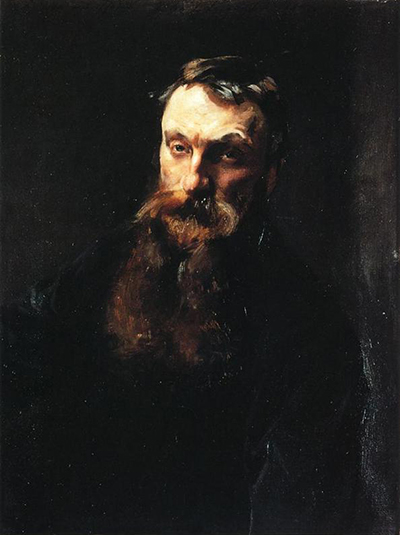
Auguste Rodin
A portrait of artistic authority.
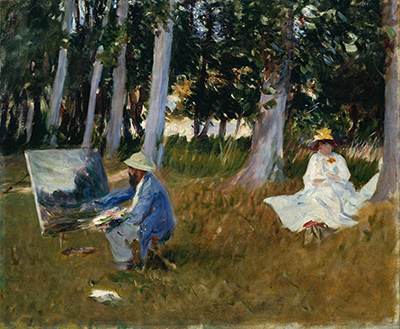
Claude Monet Painting
Friendship and outdoor practice in one image.
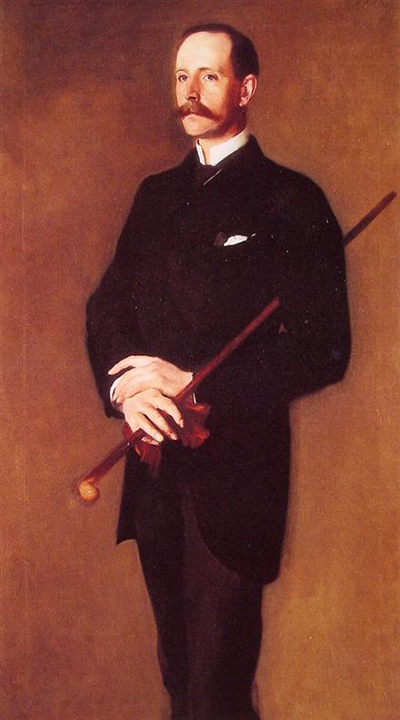
Brigadier Archibald Campbell Douglas
Military rank as public portrait presence.
Frequently Asked Questions
Sargent is famous for portraits because he combined strong likeness with dazzling paint handling, social intelligence, costume, pose, and psychological charge. His sitters often appear glamorous, but also alert to the pressure of being seen.
Sargent trained in Paris with Carolus-Duran, a fashionable portraitist who encouraged direct painting, broad handling, and freshness of execution. Sargent also learned from old masters such as Velazquez, Hals, Van Dyck, Reynolds, and Rembrandt. [5]
Madame X is usually his most famous portrait. Its 1884 Salon scandal, severe design, profile pose, black dress, and later Met history made it central to his reputation.
They look lively because Sargent combined accurate structure with fluid brushwork. He often sharpened the face, hands, or key garment while letting surrounding passages remain open and painterly.
No. Wealthy and aristocratic sitters were important to his career, but he also painted artists, writers, actors, musicians, children, friends, public figures, and military sitters. His friend portraits were often more experimental than formal commissions. [1], [2]
Sargent grew tired of the pressures of commissioned portraiture and increasingly preferred murals, watercolors, travel subjects, and other projects. He did not abandon portrait skill; he resisted being limited by demand for society likenesses.
Look at pose, gaze, hands, costume, setting, and the balance between precise finish and loose paint. These elements usually reveal how the sitter's public identity is being constructed.
Yes, even when they draw on old-master tradition. They are modern in their attention to performance, self-fashioning, celebrity, social exposure, and the instability of public identity.
Discussion
Sargent's portraits ask whether a painted likeness reveals a person or creates a role for that person to inhabit. The strongest works do both at once.
Reader Insights
What is the first detail that shapes your reading of John Singer Sargent Portraits: pose, setting, light, costume, brushwork or historical context?
Which small visual decision begins to matter more after a longer look, and how does it change the mood of the page?
Which comparison helps most: another Sargent portrait, a travel subject, a public commission, or a work by one of his contemporaries?
Join the Conversation
Share a thoughtful comment below about what you notice, question or compare when looking at this page.
References
- The Metropolitan Museum of Art, *Sargent: Portraits of Artists and Friends* https://www.metmuseum.org/exhibitions/listings/2015/sargent-portraits-of-artists-and-friends
- National Portrait Gallery, London, *Sargent: portraits of artists and friends* https://www.npg.org.uk/whatson/exhibitions/2014/sargent-portraits-of-artists-and-friends-aa
- H. Barbara Weinberg, "John Singer Sargent (1856-1925)" https://www.metmuseum.org/de/essays/john-singer-sargent-1856-1925
- *Ellen Terry as Lady Macbeth* https://shop.tate.org.uk/john-singer-sargent-ellen-terry-as-lady-macbeth/johsar002
- The Metropolitan Museum of Art, *Sargent and Paris* https://www.metmuseum.org/fr/exhibitions/sargent-and-paris/inside-the-exhibition
- *Dr. Pozzi at Home* https://collections.hammer.ucla.edu/artwork/AH.90.69
- *Gertrude Vernon, Lady Agnew of Lochnaw* https://www.nationalgalleries.org/art-and-artists/5396