 by Tom Gurney
Tom Gurney BSc (Hons) is an art history expert with over 20 years experience
Page Created on August 31, 2026 / Page Updated on November 6, 2026
Email: tomgurney1@gmail.com / Phone: +44 7429 011000
William Merritt Chase New York Park Scenes: Introduction
William Merritt Chase found one of his most modern subjects in New York’s public parks. Instead of treating landscape as a distant wilderness, he worked among paths, terraces, planted borders and passing figures. These compact views made colour, weather and city leisure part of the same experiment.
At a Glance
- Principal settingProspect Park in Brooklyn, alongside other New York park subjects
- Key periodchiefly the later 1880s, after Chase’s return to New York in 1878
- Characteristic formatsintimate oils and pastels suited to close observation
- Principal workTerrace, Prospect Park, c.1887, Smithsonian American Art Museum
- What to noticecropped viewpoints, designed paths, small figures and broken patches of light
- Why they matterthe pictures place cultivated outdoor leisure within Chase’s varied modern practice
Contents
- Introduction
- From Munich Back to New York
- A City Park as a Modern Subject
- Close Looking at Terrace, Prospect Park
- Why Pastel Changes the View
- Cropping, Paths and Movement
- Small Figures in Shared Space
- Lightness Without a Single Label
- From Brooklyn to Shinnecock
From Munich Back to New York
Chase returned to New York in 1878 after studying at the Royal Academy in Munich and working in Venice. Munich gave him a durable command of dark tonal structure, forceful handling and old-master display. His lighter outdoor subjects joined rather than replaced a practice spanning portraiture, still life, interiors and landscape in oil and pastel.[1]
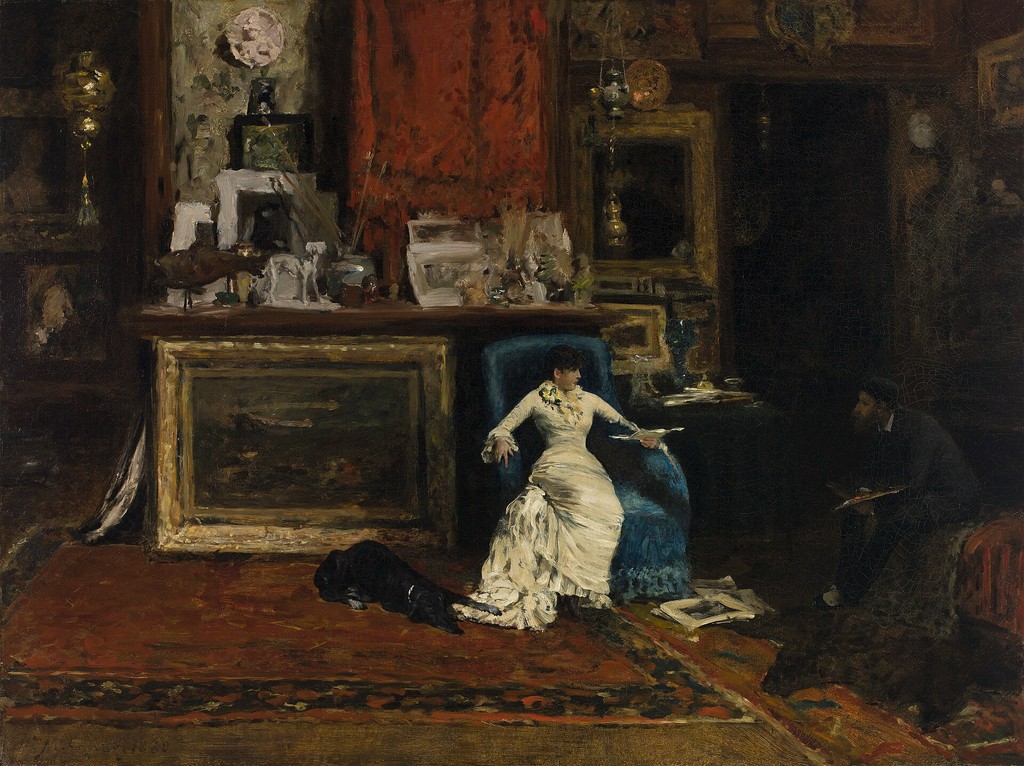
Chase began teaching at the Art Students League and occupied a large room in the Tenth Street Studio Building, where a furnished interior became part of his public identity. The journey from Munich to Tenth Street explains that darker, cosmopolitan setting. The brighter park pictures belong to the same artist and decade, not to a neat replacement of one style by another.
Urban green spaces let Chase observe New York outside the studio without leaving its social world. The Metropolitan Museum situates the park scenes within his expanding 1880s practice and engagement with contemporary European painting.[2] Open-air looking mattered, but so did selection and arrangement.
A City Park as a Modern Subject
A public park offers nature in a deliberately constructed form. Trees and lawns are organised by paths, stairs, terraces, railings and ornamental planting. Chase did not conceal those structures. They give his compositions direction and identify the landscape as metropolitan rather than remote.
That distinction changes the meaning of leisure. The people walk, pause or pass beyond easy recognition rather than undertaking an epic journey through sublime scenery. Their modest scale lets the park dominate while still registering human use. Foliage, weather and relative openness become part of a shared civic setting, modern even without a railway or crowd.
Prospect Park was in Brooklyn. Chase’s park scenes thus extended his attention beyond Tenth Street into another part of metropolitan life. The Smithsonian record for Terrace, Prospect Park identifies Brooklyn, the park, stairs and a vase among its subjects.[3] Those details secure a designed place rather than a generic pastoral ideal.
Close Looking at Terrace, Prospect Park
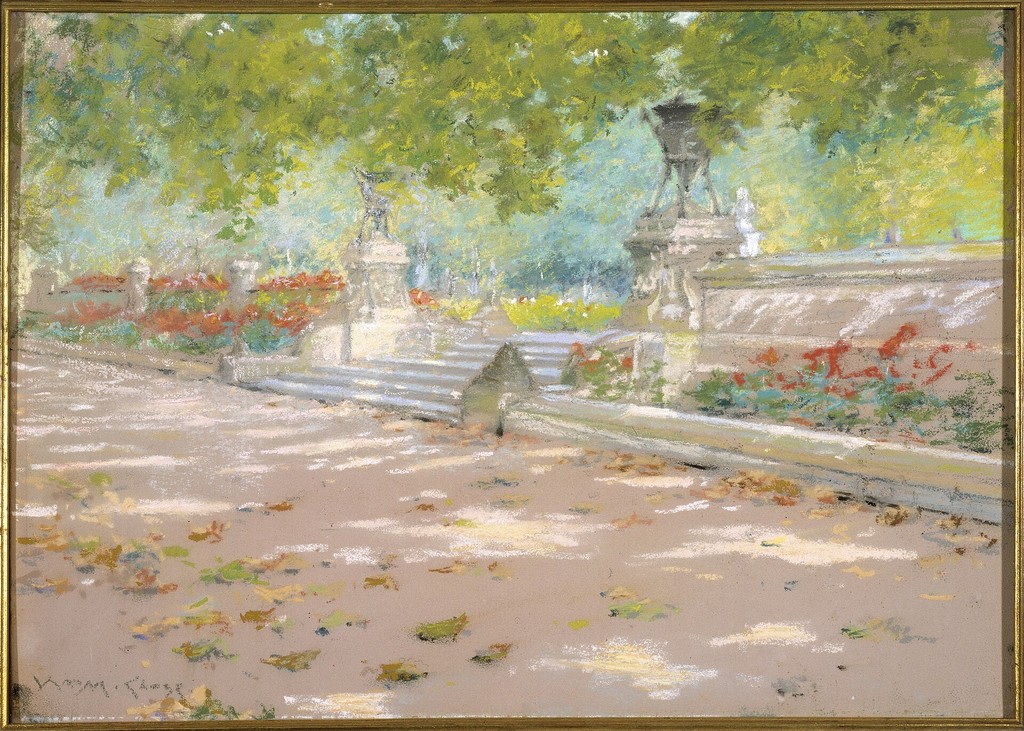
Terrace, Prospect Park, made about 1887, is a pastel measuring 23.3 by 35.2 centimetres. It belongs to the Smithsonian American Art Museum as accession 1929.6.12. The museum records the medium as pastel and places the object in its drawing classification.[3] “Drawing” here is a collection category, not a reason to recast the work as pencil study or preparation for an oil.
The view begins with a broad, pale foreground scattered by loose yellow, green, brown and white strokes. A low kerb runs obliquely towards central steps. Red flowers and light stonework form a narrow band before dense foliage closes the upper image. Architecture arrives in fragments: enough to establish the terrace before colour and atmosphere interrupt exact description.
A small dark figure approaches the steps. Other marks may suggest distant users, but their identities are not recoverable. Naming them as Chase’s family or assigning a social role would exceed the evidence. The central figure instead supplies scale and direction, drawing the eye from foreground to stair and planted boundary.
The framing feels caught within a continuing walk. The path enters from outside; stonework extends past the right edge; overhead leaves are cut by the top. Yet diagonals guide the gaze, red accents hold the middle distance, and the figure concentrates an otherwise dispersed surface.
Why Pastel Changes the View
Pastel suited a picture built from coloured touches, allowing rapid shifts between line, patch and rubbed tone. In Terrace, Prospect Park, pale marks indicate ground light while denser greens and yellows accumulate into foliage. Colour describes the scene and records the act of looking at once.
Portability made pastel practical outdoors, although the object does not prove precisely where or how long Chase worked. Its immediacy still depends upon decisions about scale, placement, pressure and contrast. A quick mark can be deliberate.
Chase treated pastel as a finished painterly medium rather than merely a preliminary stage. The pastels and works on paper place the park view beside his more concentrated figure studies and explain the medium’s wider role. In the park, its particular strength lies in joining transitory light to firm spatial cues without polishing away the energy of individual strokes.
Cropping, Paths and Movement
Chase’s park imagery often offers an incomplete encounter: a turn, a section of lawn, a terrace edge or a figure moving away. Cropping makes the painted field continuous with an environment that cannot be taken in all at once.
Paths are both compositional devices and evidence of designed circulation. A diagonal kerb or curving walk carries the eye as it carries bodies through the park. Steps divide levels; benches, borders and terraces make stopping and looking part of the plan.
The viewpoint is mobile without being uncontrolled. In Terrace, Prospect Park, the empty foreground is unexpectedly large and the principal architecture sits beyond it. This asymmetry gives the image an encountered pulse while repeated pale strokes hold its surface together.
Small Figures in Shared Space
Human presence prevents these scenes from becoming pure studies of vegetation. Small figures establish scale, suggest movement and show the park being used. Because they are often only lightly specified, they do not usually operate like named sitters in Chase’s portraiture. They belong to the spatial rhythm: a dark accent on a path, a pale shape against grass, a pause near a boundary.
It is reasonable to call this shared public space because the subject is a municipal park rather than a private studio or domestic garden. Beyond that, caution is necessary. A painted figure’s clothing, posture or location cannot by itself establish a complete history of class, gender or access. Nor does an inviting view prove that every New Yorker experienced the grounds equally. The image records selected users and visible design, not the full social conditions surrounding them.
The pictures make modernity legible through ordinary coexistence: planted nature, urban infrastructure and unheroic movement occupy one field. Chase need not turn each person into a story. Their partial anonymity helps the park appear traversed by lives beyond his circle.
Lightness Without a Single Label
Chase’s park scenes are often associated with Impressionism for understandable reasons. They attend to outdoor light, use high-keyed colour and preserve separate touches rather than smoothing every transition. The Metropolitan Museum also places this change within his contact with contemporary European art.[2] Yet “Impressionist” becomes misleading if it makes every picture seem interchangeable or suggests that his earlier training vanished.
The park works retain controlled tonal contrasts and conspicuous design. Their cropped arrangements can be as calculated as an interior, even though the marks appear more immediate. Compare the open ground and flickering foliage of the Prospect Park pastel with the densely furnished spaces explored in Chase’s paintings. Different subjects demanded different balances of finish, colour and depth.
Medium also prevents a blanket label. Pastel produces different edges and layers from oil, while a Brooklyn terrace supplies information unlike that of a studio or rural field. It is more useful to ask what Chase adjusted for each encounter than to force his practice into one movement.
From Brooklyn to Shinnecock
The New York park pictures prepared no automatic route to the landscapes Chase later made around Shinnecock. There are continuities: outdoor observation, small figures, changing light and a taste for views that seem casually found. There are also decisive differences. The park is organised by civic architecture and pedestrian circulation; the Shinnecock pictures open across grass, sandy tracks and broad horizons.
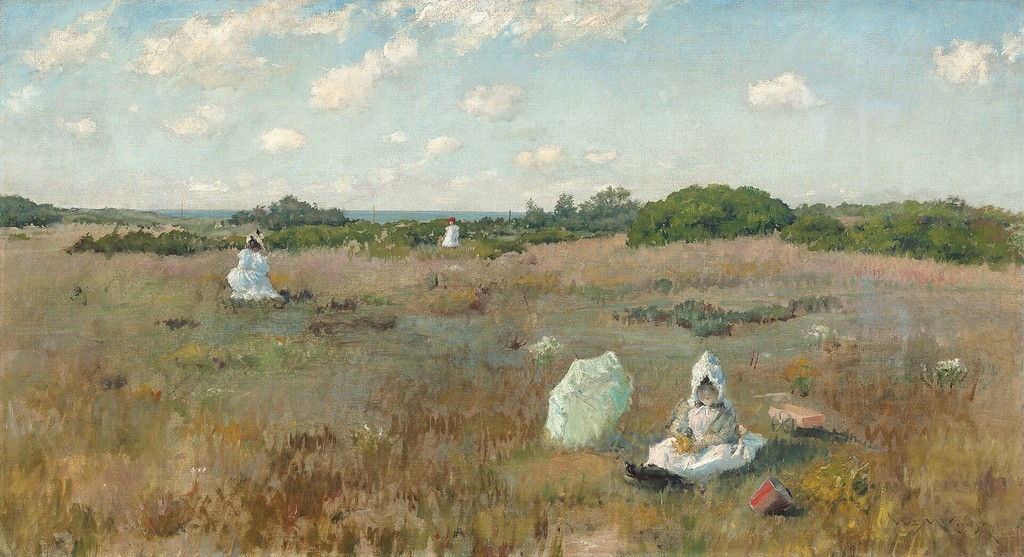
Gathering Autumn Flowers of 1894/95, an oil on canvas, spreads figures across a field beneath a large sky.[4] Its breadth and layered surface contrast with the leafy enclosure and direct coloured marks of the small Prospect Park pastel.
The comparison must retain the history of place. Chase’s summer school operated from 1891 to 1902 on ancestral and present Shinnecock land, within a growing summer-colony economy. The Shinnecock landscapes and teaching examine that context. Brooklyn’s park and Shinnecock’s fields are not versions of an empty outdoors: each was a socially organised environment with its own communities, uses and boundaries.
Together, the groups reveal Chase’s adaptability across medium, horizon and figure scale. The parks are best treated as a distinct investigation within the varied career introduced on the William Merritt Chase homepage, not as minor rehearsals for later landscapes.
Researched works directory
This searchable evidence census contains 208 distinct records assembled from public collection data and a reproducible Wikidata snapshot. It is not a catalogue raisonné, not a claim of complete oeuvre coverage, and it keeps works with repeated titles as separate objects.
| Name | Date | Medium |
|---|---|---|
| A City Park | 1887 | Painting |
| A Corner of My Studio | Date unknown | Painting |
| A Dutch Landscape | 1884 | Painting |
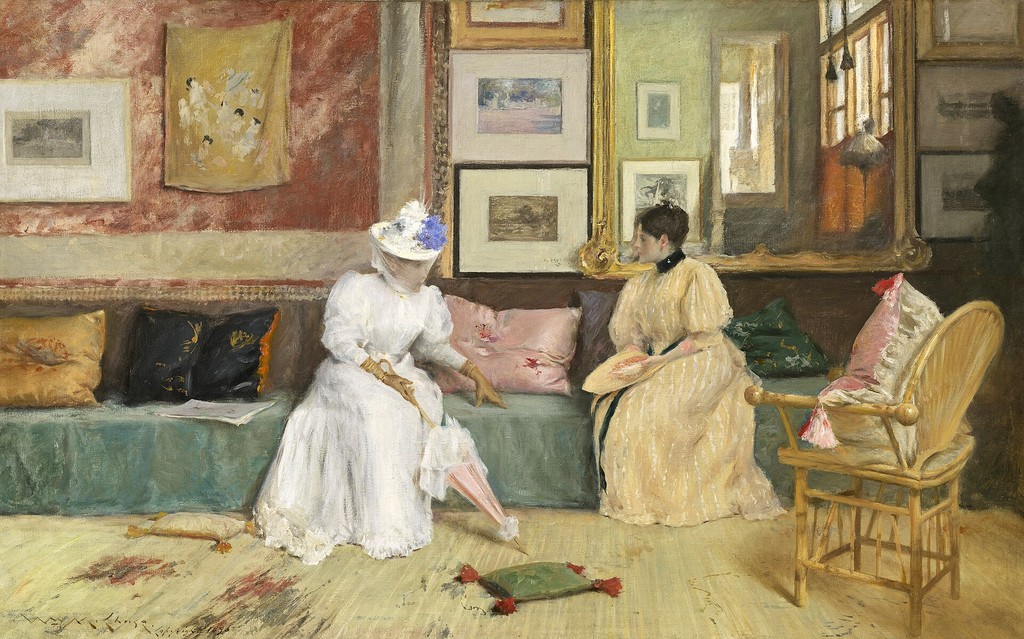
| A Friendly Call | 1895 | Painting |
| A Gray Day | 1886 | Painting |
| A Modern Magdalen | 1888 | Painting |
| A Spanish Gypsy | 1905 | Painting |
| Albert Harkness (1822–1907) | 1908 | Painting |
| Alice | 1892 | Painting |
| An Afternoon Stroll | 1895 | Painting |
| An English Cod | 1904 | Painting |
| At the Seaside | 1890 | Painting |
| August B. Loeb | 1905 | Painting |
| Baron Hugo von Habermann | 1875 | Painting |
| Beach | 1895 | Painting |
| Bessie Potter | 1895 | Painting |
| Big Copper Kettle and Fish (Fish) | Date unknown | Painting |
| Bildnis Hugo von Habermann | 1875 | Painting |
| Brass Kettle and Catfish | Date unknown | Painting |
| Carmencita | 1890 | Painting |
| Courtyard in Venice | 1877 | Painting |
| Crucifixion | 1875 | Painting |
| Der japanische Holzschnitt | 1888 | Painting |
| Dieudonnée | 1899 | Painting |
| Dorothy | 1902 | Painting |
| Dr. Eduardo San Giovanni | 1906 | Drawing |
| Duveneck Painting "The Turkish Page | 1876 | Painting |
| Edward Everett Hale (1822-1909) | 1884 | Painting |
| Edward Guthrie Kennedy | 1895 | Painting |
| Edward Steichen | 1903 | Painting |
| Female Figure Study (front view) | Date unknown | Painting |
| Female Figure Study (side view) | Date unknown | Painting |
| First Touch of Autumn | 1898 | Painting |
| Fish | 1910 | Painting |
| Fish and Still Life | 1906 | Painting |
| Fish and Still Life | 1908 | Painting |
| Florence | 1907 | Painting |
| For the Little One | 1896 | Painting |
| Garden of the Orphanage, Haarlem, Holland | 1883 | Painting |
| Gathering Autumn Flowers | 1894 | Painting |
| Gathering Flowers, Shinnecock, Long Island | 1897 | Drawing |
| Girl at a Bureau | Date unknown | Painting |
| Girl in a Japanese Costume | 1890 | Painting |
| Girl in Ciociaro costume | 1876 | Painting |
| Girl in White | 1890 | Painting |
| Girl with Doll | 1910 | Painting |
| Gray Day on the Bay | 1886 | Painting |
| Gray Day on the Lagoon | 1913 | Painting |
| Harbor Scene, Brooklyn Dock | 1886 | Painting |
| Harriet Hubbard Ayer | 1880 | Painting |
| Head of a Man | 1875 | Painting |
| Hide and Seek | 1888 | Painting |
| I Think I'm Ready Now | 1883 | Painting |
| Idle Hours | 1894 | Painting |
| In the Park (A By-path) | 1889 | Painting |
| In the Studio Corner | 1881 | Painting |
| In Venice | 1877 | Painting |
| James Abbott McNeill Whistler | 1885 | Painting |
| John Butler Talcott | 1900 | Painting |
| Just Onions (Onions; Still Life) | Date unknown | Painting |
| Keying Up" - The Court Jester | 1875 | Painting |
| Keying Up: The Court Jester | 1875 | |
| L'Éventail de plumes | Date unknown | Painting |
| Lady in Black | 1888 | Painting |
| Lady Playing Guitar | Date unknown | Painting |
| Landscape- Shinnecock, Long Island | 1896 | Painting |
| Long Island Landscape after a Shower of Rain (After the Shower) | 1889 | Painting |
| Lydia Field Emmet | 1892 | Painting |
| Man Wearing Gold Rimmed Glasses | 1892 | Painting |
| Marine | 1888 | Painting |
| Monkeying with Literature | 1877 | Painting |
| Moses Swaim | Date unknown | Painting |
| Mother and Child (The First Portrait) | 1887 | Painting |
| Mrs. Charles Scott | Date unknown | Painting |
| Mrs. Chase | 1890 | Painting |
| Mrs. Chase in Prospect Park | 1886 | Painting |
| Mrs. William Clark | 1915 | Painting |
| Mrs. William Merritt Chase | 1890 | Painting |
| My Little Daughter Dorothy | 1894 | Painting |
| My Palette | 1875 | Painting |
| Myra Reynolds | 1898 | Painting |
| Near the Beach, Shinnecock | 1895 | Painting |
| Near the Beach, Shinnecock | Date unknown | Painting |
| North River Shad | 1910 | Painting |
| Nude | 1901 | Painting |
| Open Air Breakfast | 1888 | Painting |
| Outskirts of Madrid | 1882 | Painting |
| Pablo de Sarasate: Portrait of a Violinist | 1875 | Painting |
| Park Bench | 1890 | Painting |
| Peace, Fort Hamilton | 1888 | Painting |
| Pink Azalea—Chinese Vase | 1885 | Painting |
| Portrait Head | 1882 | Painting |
| Portrait of a Boy in Van Dyck Costume | 1875 | Painting |
| Portrait of a Child | 1884 | Painting |
| Portrait of a Lady in Black | 1895 | Painting |
| Portrait of a Lady in Black (Annie Traquair Lang) | 1911 | Painting |
| Portrait of a Lady in Pink | Date unknown | Painting |
| Portrait of a Man | 1874 | Painting |
| Portrait of a Man | 1875 | Painting |
| Portrait of a Woman | Date unknown | Painting |
| Portrait of Artist Beck Wenzell | 1900 | Painting |
| Portrait of Baroness Ida-Gro van Dahlerup | 1907 | Painting |
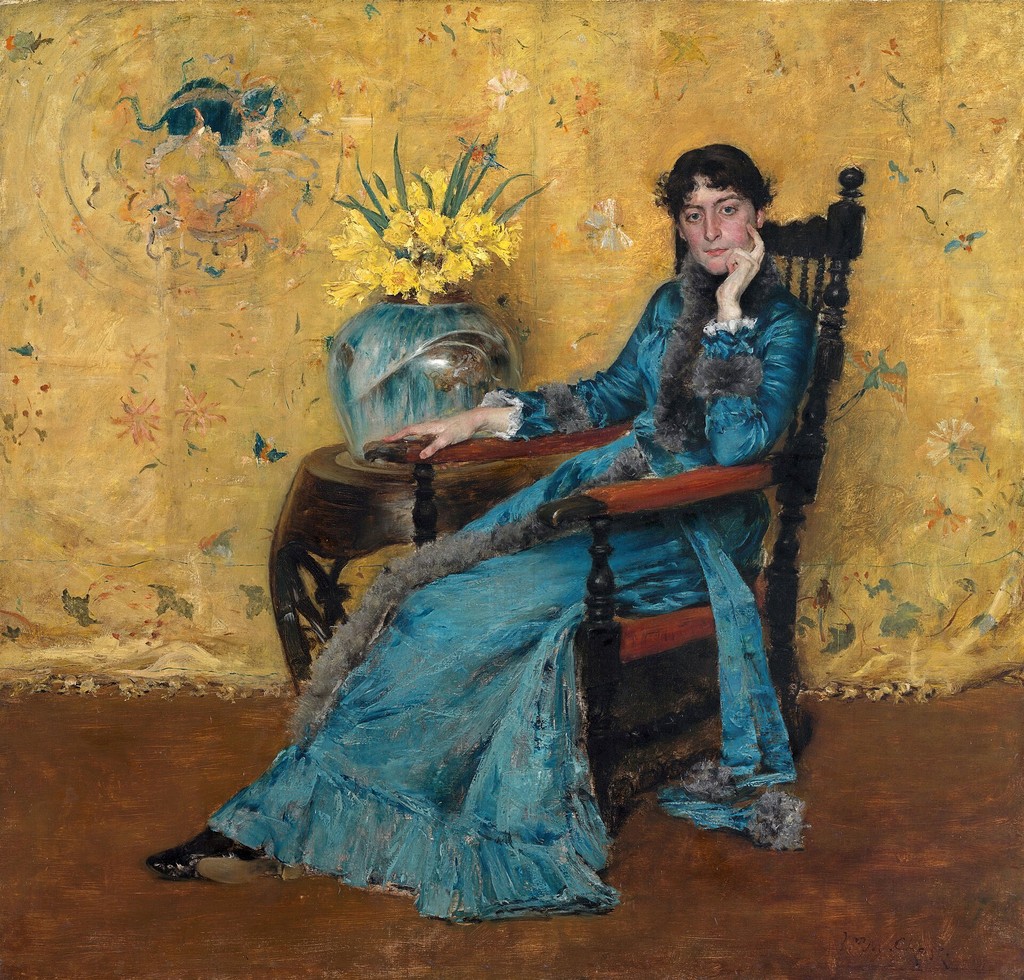
| Portrait of Dora Wheeler | 1882 | Painting |
| Portrait of Lavinia Borden Cook | Date unknown | Painting |
| Portrait of Louis Betts | Date unknown | Painting |
| Portrait of Master Otis Barton and his Grandfather | 1903 | Painting |
| Portrait of Miss D. | Date unknown | Painting |
| Portrait of Mrs. C. (Lady with a White Shawl) | 1893 | Painting |
| Portrait of Mrs. George B. Ely (Caroline Boies Ely) | Date unknown | Painting |
| Portrait of My Daughter Alice | 1895 | Painting |
| Portrait of My Father (David Hester Chase) | Date unknown | Painting |
| Portrait of My Mother (Sarah Swaim Chase) | 1892 | Painting |
| Portrait of William Francklyn Paris | Date unknown | Painting |
| Portrait of William Gurley Munson | 1868 | Painting |
| Ready for the Ride | 1877 | Painting |
| Red Snapper | Date unknown | Painting |
| Robert Frederick Blum | Date unknown | Painting |
| Roland | 1902 | Painting |
| Roses | 1883 | Drawing |
| Seaside Flowers | 1897 | Painting |
| Selbstbildnis | 1875 | Painting |
| Selbstporträt | 1915 | Painting |
| Self-Portrait | 1909 | Drawing |
| Self Portrait | 1914 | Painting |
| Self-Portrait | 1915 | Painting |
| Self-portrait dressed as Johan Claesz Loo by Frans Hals | 1903 | Painting |
| Seventeenth Century Lady | 1895 | Painting |
| Shell Beach at Shinnecock | 1892 | Painting |
| Shinnecock Hills | 1892 | Painting |
| Shinnecock Hills | 1893 | Painting |
| Shinnecock Hills | 1895 | Painting |
| Shinnecock Hills | 1895 | Painting |
| Shinnecock Hills Landscape | 1890 | Painting |
| Shinnecock Studio Interior | 1892 | Drawing |
| Sketch for a Picture--Columbus before the Council of Salamanca (A) (Christopher Columbus before the Council of Salamanca) | 1876 | Painting |
| Sketch for a Picture--Columbus before the Council of Salamanca (B) (Christopher Columbus before the Spanish Council) | 1876 | Painting |
| Sketch of a Child:Helen | 1898 | Painting |
| St. Jerome | 1875 | Painting |
| Still Life | 1912 | Painting |
| Still Life | Date unknown | Painting |
| Still Life | Date unknown | Painting |
| Still Life | Date unknown | Painting |
| Still Life (Brass Bowl) | Date unknown | Painting |
| Still Life (Brushes, Books and Pottery) | 1904 | Painting |
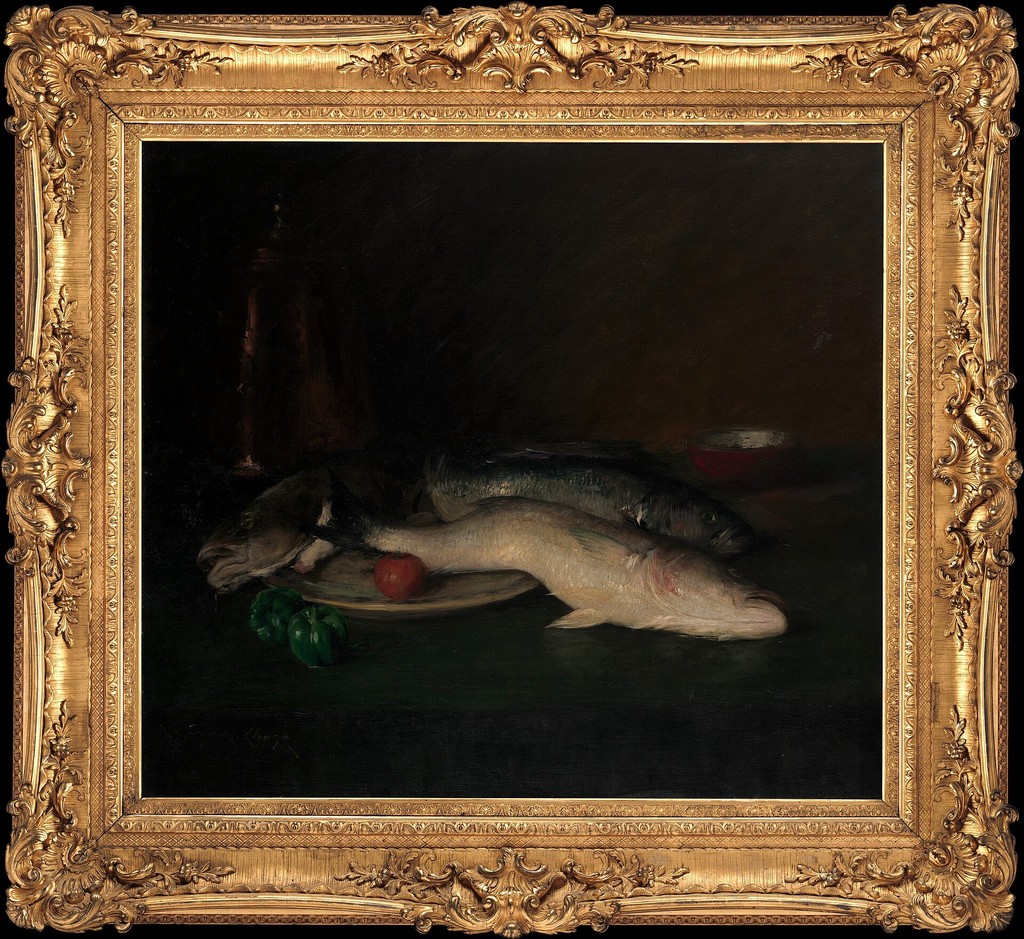
| Still Life: Fish | 1900 | Painting |
| Still Life: Fish | 1903 | Painting |
| Still Life: Fish | 1908 | Painting |
| Still Life: Fish | 1912 | Painting |
| Still-life: Fish and Bowl | 1895 | Painting |
| Still Life (Fruit and Copper Pot) | Date unknown | Painting |
| Still Life (Fruit and Pottery) | Date unknown | Painting |
| Still Life--Striped Bass | 1907 | Painting |
| Still Life with Fish | 1800 | Painting |
| Still Life with Fish | 1910 | Painting |
| Still Life with Fish | 1912 | Painting |
| Still Life with Fish | Date unknown | Painting |
| Still life with fruit | 1871 | Painting |
| Still Life with Hummingbird | 1870 | Painting |
| Still Life with Watermelon | 1869 | Painting |
| Studio Interior | 1882 | Painting |
| Study Head | Date unknown | Painting |
| Study of a Girl in Japanese Dress | 1895 | Painting |
| Study of a Young Woman | 1883 | Painting |
| Study of Flesh Color and Gold | 1888 | Drawing |
| Summer at Shinnecock Hills | 1891 | Painting |
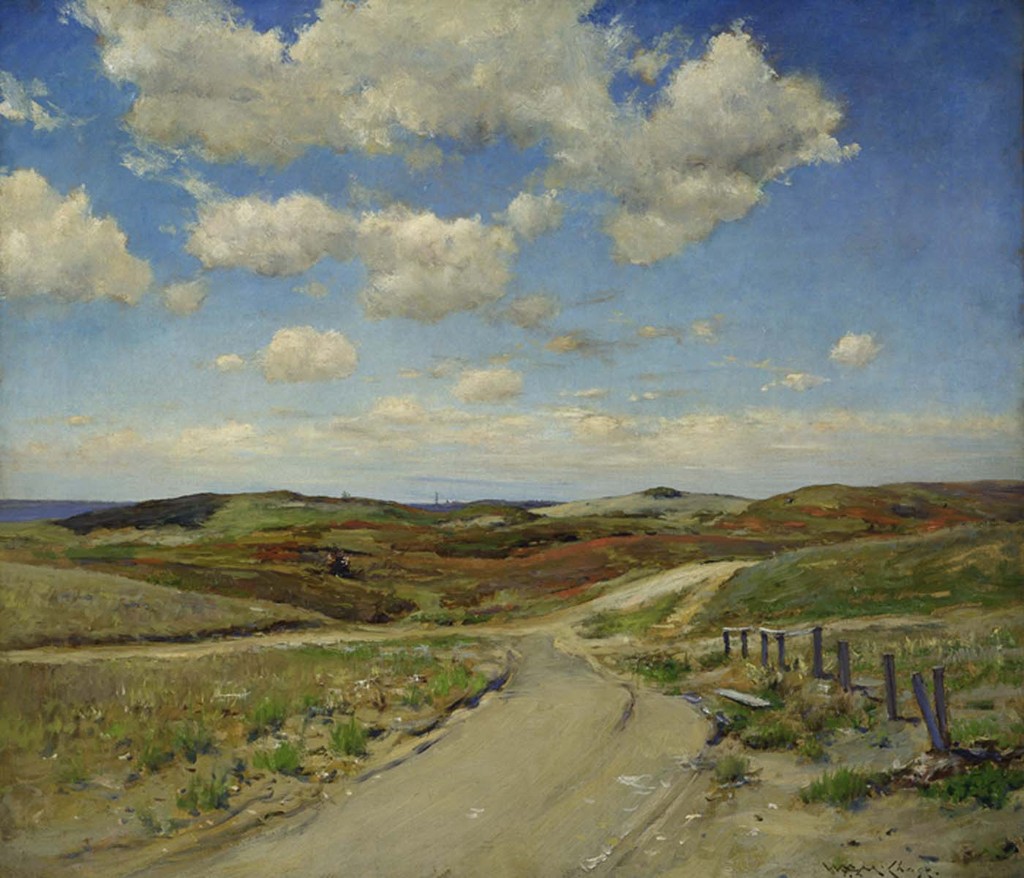
| Sunlight and Shadow, Shinnecock Hills | 1893 | Painting |
| Tenth Street Studio | 1880 | Painting |
| Terrace at the Mall | 1890 | Painting |
| Terrace, Prospect Park | 1887 | Drawing |
| The Antiquary Shop | 1879 | Painting |
| The Apprentice (Boy with Apple) | 1876 | Painting |
| The Big Brass Bowl | Date unknown | Painting |
| The Blue Kimono | 1915 | Painting |
| The Boat Harbor (Gowanus Pier) | 1888 | Painting |
| The Coast of Holland | 1884 | Painting |
| The Emerald Lady | Date unknown | Painting |
| The Family Cow (Calf's Head) | 1869 | Painting |
| The Keynote | 1915 | Painting |
| The Kimono | 1895 | Painting |
| The Mirror | 1900 | Painting |
| The Model | 1888 | Drawing |
| The Moorish Warrior | 1878 | Painting |
| The Old Road to the Sea | 1893 | Painting |
| The Patrician | 1875 | Painting |
| The Song | 1907 | Painting |
| The Stately Model | 1898 | Painting |
| The Tenth Street Studio | 1880 | Painting |
| The Tow Path | 1880 | Painting |
| The Turkish Page (Unexpected Intrusion) | 1876 | Painting |
| The Whistling Boy | 1875 | Painting |
| The Wounded Poacher | 1878 | Painting |
| The Yield of the Waters | 1878 | Painting |
| The Young Orphan | 1884 | Painting |
| Thomas E. Kirby | 1900 | Painting |
| Thomas Moran | Date unknown | Painting |
| Under a French Sky | 1882 | Painting |
| Venetian Lace Making | Date unknown | Drawing |
| View from Central Park | 1889 | Painting |
| View near Polling | 1875 | Painting |
| William A. Clark | 1915 | Painting |
| William Andrews Clark | 1915 | Painting |
| William Nimick Frew | 1915 | Painting |
| William Rockhill Nelson | 1907 | Painting |
| Wind-Swept Sands | 1894 | Painting |
| Woman in White | 1902 | Painting |
| Woman Seated | 1885 | Drawing |
| Woman Standing in a Landscape | Date unknown | Painting |
| Worthington Whittredge | 1890 | Painting |
Frequently Asked Questions
Prospect Park in Brooklyn is a major setting, and Terrace, Prospect Park provides the clearest exact-object study here. Chase also painted other New York green spaces, but the individual pictures should not be collapsed into one generic park series.[2][3]
No. Made in pastel about 1887, the sheet measures 23.3 × 35.2 centimetres. The Smithsonian museum places it within the drawing classification and gives the accession as 1929.6.12.[3]
Pastel was portable and responsive to changing light, making it useful for open-air observation. The surviving surface alone does not establish that every passage was completed on the spot or in one sitting, so the working sequence should remain open.
Not unless an authoritative object record identifies them. In Terrace, Prospect Park, the small figures are too indistinct to name. They can be discussed as elements of scale, movement and park use without assigning identities.
Their light colour, outdoor subject and separate touches invite that association, but the term does not account for their deliberate structure, varied media or Chase’s continuing Munich-trained command of tone. The pictures are better understood as one strand of a deliberately plural practice.[1][2]
Discussion
Use this evidence-led guide as a starting point for close looking rather than a final verdict.
Share an observation about William Merritt Chase New York Park Scenes or a source that adds useful context.
Reader Insights
Which work most clearly complicates the familiar label of American Impressionist?
Where do training, display, family, place or teaching most productively alter your reading?
Which source or surviving object would you investigate next?
Join the Conversation
Add your reading below, keeping observations specific and evidence clear.
References
- American Paintings of the Nineteenth Century, Part I — National Gallery of Art, accessed 31 August 2026, accessed 31 August 2026.
- William Merritt Chase (1849–1916) — Metropolitan Museum of Art, accessed 31 August 2026, accessed 31 August 2026.
- Terrace, Prospect Park — Smithsonian American Art Museum, accessed 31 August 2026, accessed 31 August 2026.
- Gathering Autumn Flowers — National Gallery of Art, accessed 31 August 2026, accessed 31 August 2026.