 by Tom Gurney
Tom Gurney BSc (Hons) is an art history expert with over 20 years experience
Page Created on August 31, 2026 / Page Updated on November 6, 2026
Email: tomgurney1@gmail.com / Phone: +44 7429 011000
Shinnecock Landscapes and Teaching: Introduction
William Merritt Chase’s Shinnecock years joined landscape painting, art instruction and family life in one summer setting. From 1891 through 1902 he directed the Shinnecock Hills Summer School of Art on Long Island, demonstrating his methods while making some of his lightest and most expansive paintings. Yet those works do not show the whole place. The school and the growing resort occupied ancestral and present Shinnecock land, beside the Shinnecock Reservation and within the continuing life of the Shinnecock Nation.
Looking closely therefore requires two kinds of attention. One concerns paint: broad fields, low horizons, quick changes of light, sandy tracks and figures dispersed across open ground. The other concerns history: the organised school, the summer-colony economy, the Chase household and the Shinnecock people whose presence and work cannot be reduced to picturesque scenery.
At a Glance
- SchoolChase directed the Shinnecock Hills Summer School of Art from 1891 through 1902.
- SettingThe school and summer colony developed on ancestral and present Shinnecock land near the Shinnecock Reservation.
- TeachingRegular activities included plein-air painting, demonstrations of portrait technique and critiques of students’ work.
- Landscape languageLow horizons, broad fields, roads, scattered structures and small figures made ordinary terrain pictorially active.
- Family lifeAlice Chase and the couple’s children shared the summer setting and appeared in outdoor and interior subjects.
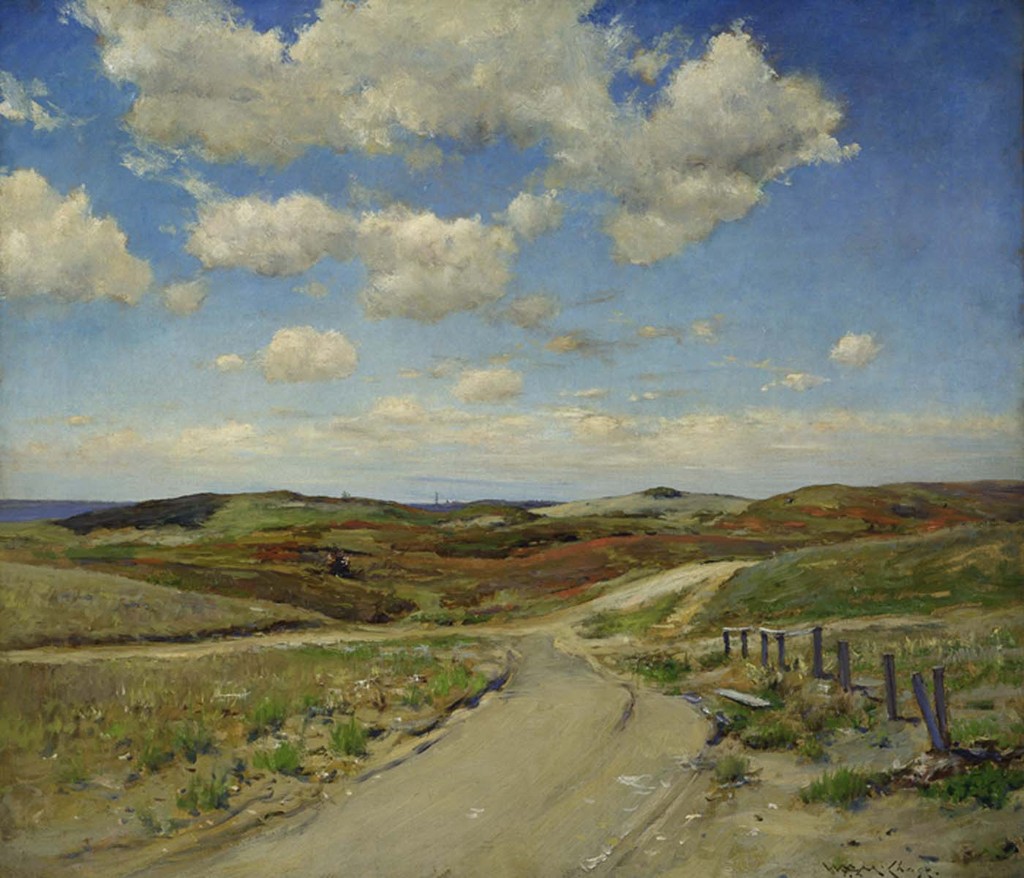
- Essential workShinnecock Hills, c.1895, is an oil painting in the Smithsonian American Art Museum, accession 1909.7.11.
Contents
- Introduction
- A School Inside a Developing Resort
- Shinnecock Land and Shinnecock Presence
- Teaching by Demonstration, Observation and Critique
- The Landscape as an Arrangement of Relations
- Fields, Figures and the Horizon
- Family, House and Studio
- Beyond the “American Impressionist” Label
- How to Look at the Shinnecock Works
A School Inside a Developing Resort
Chase first went to the Shinnecock Hills in 1891 at the invitation of Jane Ralston Hoyt. The Parrish Art Museum describes Hoyt’s proposed academy as an adaptation of European plein-air schools and also as part of a strategy to promote the area as a resort and advance her real-estate ventures. Chase’s Munich training, European travel and established teaching reputation made him a compelling founding director.[1]
The school was consequently both an educational venture and an element in a changing local economy. Collectors with nearby summer houses helped found it; an Art Village and purpose-built facilities followed. Chase taught two days each week, while his own house and studio stood roughly three miles from the school.[2] This timetable matters. Shinnecock was not merely a holiday during which paintings happened to be made, nor was it a retreat entirely apart from the art world. It was a structured working season in which teaching, painting, sociability and domestic routines continually overlapped.
The resort framework also shaped what students encountered. Their outdoor study took place amid roads, houses, cultivated and uncultivated ground, coast, labour and leisure. Even when Chase selected a sparse view, the surrounding landscape was being occupied, marketed and changed. His compositional restraint should not be mistaken for evidence that the place lacked inhabitants or history.
Shinnecock Land and Shinnecock Presence
The name Shinnecock identifies more than a picturesque style or a group of canvases. These were ancestral and present Shinnecock lands, and the Shinnecock Nation remained a living community beside the school and colony. Chase’s route between his family house and the Art Village passed the Shinnecock Reservation, which the Parrish account describes as an 800-acre peninsula in Shinnecock Bay.[1]
Recent Parrish research has drawn attention to relationships among the Chase family, other summer colonists and people of the Reservation. Its curatorial account records Shinnecock people selling produce, eggs and poultry to the seasonal community, undertaking domestic work, guiding hunting and fishing, and helping to build the golf course. It also discusses photographs of Nation members and identifies bonds that developed around the school and household.[3] These are the museum’s findings; they do not substitute for the Shinnecock Nation’s own voice or turn a complex history into a reassuring story of neighbourliness.
That distinction changes how the paintings are read. A broad field may look quiet, but quiet is a pictorial effect, not proof of vacancy. A road is both a line through a composition and a sign of movement through occupied land. Figures made small by distance still locate human activity within the view. Chase’s images disclose what he chose to frame; they cannot, by themselves, represent the complete social history of Shinnecock.
Teaching by Demonstration, Observation and Critique
The summer school’s routine brought several kinds of practice together. Parrish documentation describes Chase demonstrating portrait painting in the school’s Art Studio, leading plein-air work and critiquing students’ pictures.[1] The sequence joined example, independent looking and discussion. Instead of treating instruction as the delivery of a fixed recipe, it placed decisions about colour, proportion, emphasis and handling where students could see and test them.
Working outdoors made time part of the exercise. Clouds moved, shadows changed and distances altered colour relationships. The painter had to decide quickly which effects defined the scene and which details could be omitted. Chase’s own Shinnecock pictures suggest the value of that discipline: a few strong spatial divisions often organise many varied touches. Demonstration could make those selections visible, while critique could examine whether a student’s arrangement held together.
Portrait demonstrations kept the school from becoming exclusively a landscape workshop. They linked outdoor observation to Chase’s wider command of figure painting and tonal structure. His career moved between portraits, interiors, still lifes, parks and fields rather than following a single stylistic track; the broader paintings overview shows how those practices coexisted.[4] Teaching at Shinnecock is best understood through this range of activities, not through an inflated roll-call of famous pupils.
The Landscape as an Arrangement of Relations
In Shinnecock Hills, c.1895, sky occupies much of the canvas. A pale sandy road begins near the lower edge, bends between low rises and draws the eye towards a narrow distant band. Fence posts punctuate one side; broken greens, reds and earth colours move across the ground. The Smithsonian American Art Museum identifies the subjects as road, coast, Long Island and Shinnecock, and records the work as an oil on canvas measuring 86.6 × 100.4 cm, accession 1909.7.11.[5]
The painting’s scale permits the clouds to feel monumental while the land remains low and traversable. Its openness depends on carefully placed signs of use: the worn track, fence and small dark form in the middle distance. These elements prevent the view from becoming an abstract band of sky above untouched nature. Chase turned ordinary connective features into the picture’s structure.
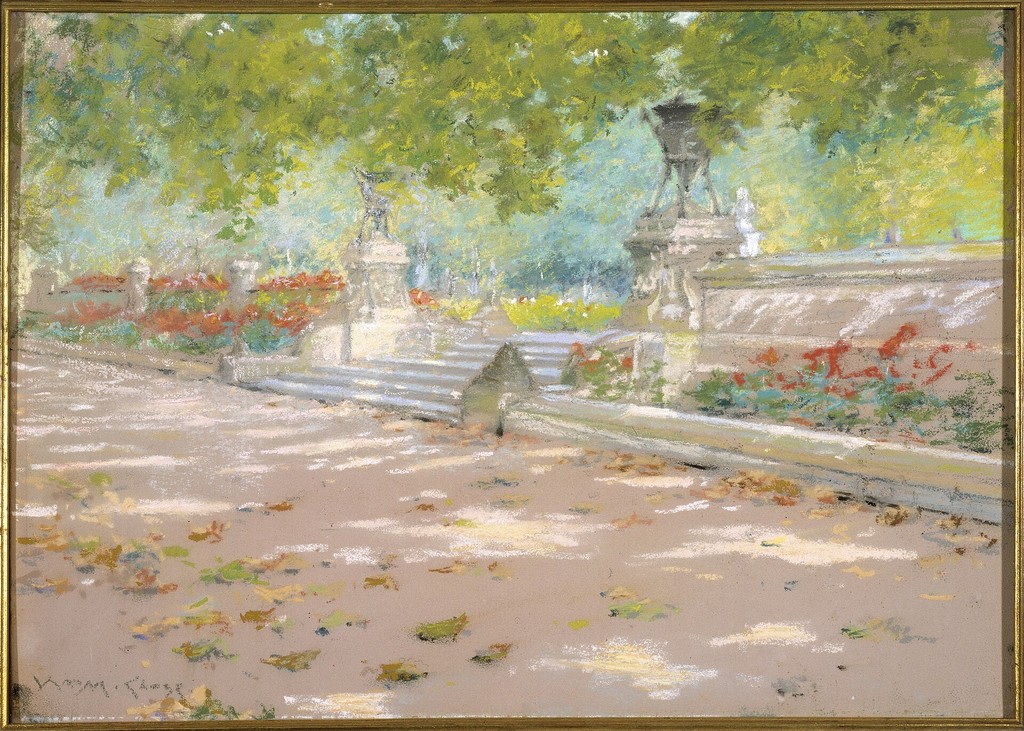
The road also offers a useful comparison with his New York park scenes. In both settings, a path can guide vision while suggesting how a landscape is organised for movement. The contexts differ: a designed urban park is not the same as Shinnecock land amid resort development. What carries across is Chase’s ability to make access, distance and human use legible without filling the scene with anecdote.
Fields, Figures and the Horizon
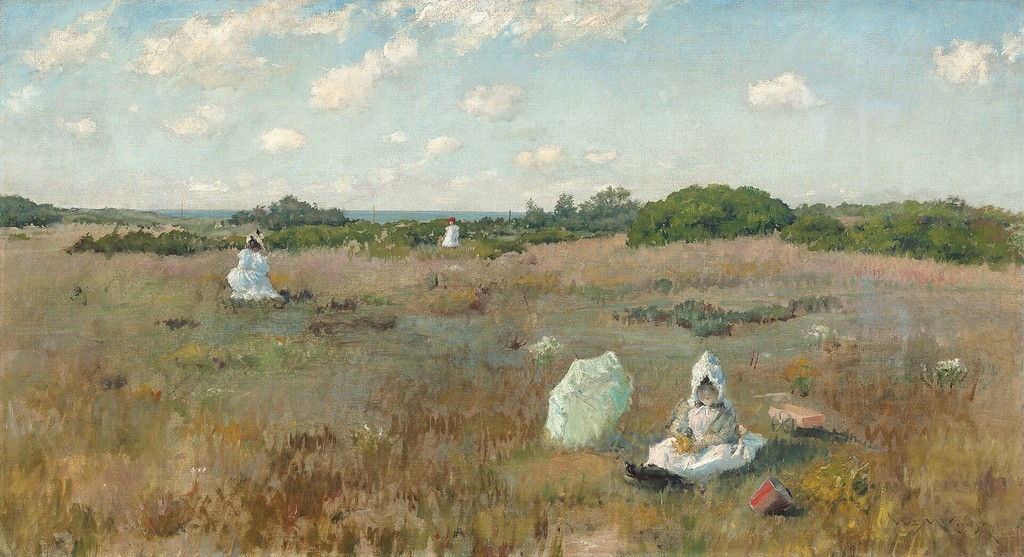
Gathering Autumn Flowers of 1894/95 offers another arrangement. The National Gallery of Art records an oil landscape in which the horizon is held low beneath a bright, clouded sky. Figures in white are dispersed through grasses and flowers; a seated child in the foreground is accompanied by a parasol, bucket and small cart, while two more figures occupy the middle distance.[6] Colour is spread in broken touches across the field rather than confined to sharply bounded objects.
Here human presence is not incidental. The nearest figure establishes scale, the farther figures mark recession, and their light clothes answer the clouds. At the same time, the painting leaves individual identities unstated. It is reasonable to place the work within Chase’s recurring imagery of family and summer leisure, but the visible evidence does not require every figure to be named. What the canvas clearly shows is an activity embedded in the field rather than a landscape purged of people.
Buildings appear differently across the Shinnecock works: sometimes as distant accents, sometimes as the enclosing subject of an interior, and sometimes not within the selected view at all. The choice affects tone, but absence from a particular frame should not be generalised into absence from the place. Broad fields and low horizons are formal devices that amplify light and weather; they are not neutral records of the entire district.
Family, House and Studio
Chase’s summer life extended indoors. The Terra Foundation’s Shinnecock Studio Interior is a pastel on paper mounted on canvas, dated 1892. It shows his eldest child, Alice, seated on the bare studio floor studying a book of Japanese prints. Behind her, a red-draped posing platform and chair refer to portrait practice, while an unframed landscape and other objects situate the child within a working environment.[7]
The image joins domestic and professional space. Alice is not presented as a formal sitter; her absorption in the book makes looking itself the action. A Parrish interpretation of the same subject notes how the landscape on an easel, decorative objects, a study after Velázquez and north-window light create a portrait of Chase’s creative life even though the artist is absent.[8] The studio was therefore neither solely classroom nor private refuge. It held family experience, collecting, observation and the material business of making pictures.
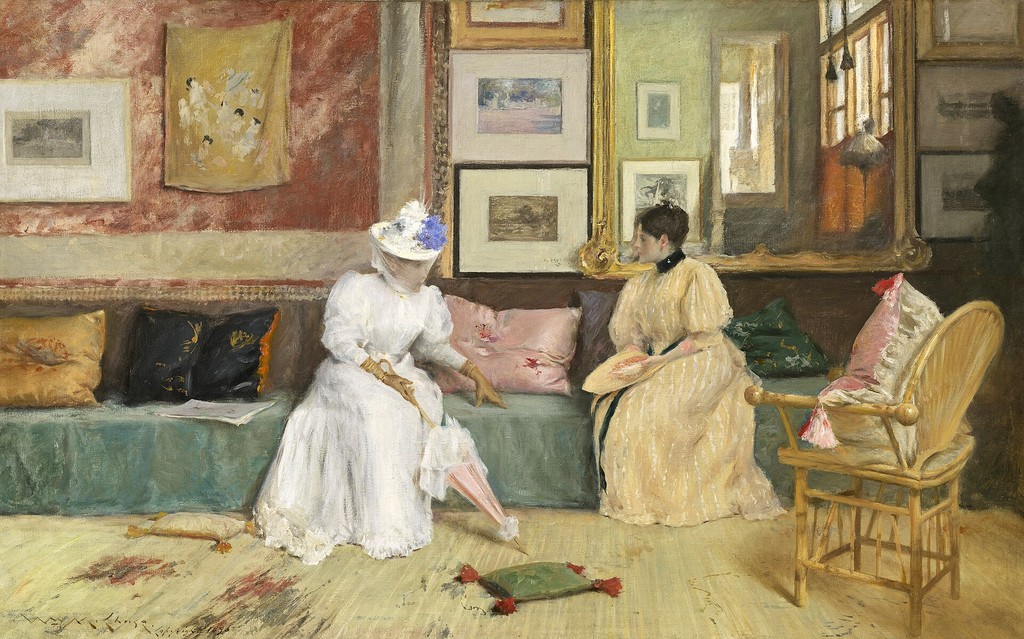
The 1895 A Friendly Call similarly locates social life inside the Shinnecock summer house. Two women converse on a long sofa amid textiles, framed pictures, cushions and a large mirror. The National Gallery identifies the setting as Chase’s summer home and records the painting as oil on canvas, accession 1943.1.2.[9] Unlike the open landscapes, this densely furnished room makes selection and arrangement conspicuous. Yet both interior and field reveal Chase organising relations among people, objects, light and space.
Beyond the “American Impressionist” Label
Shinnecock’s bright air and broken colour help explain why Chase is associated with American Impressionism, but the label alone is too narrow. His biography traces a practice formed through Munich training, old-master study, international exchange and long experience as a teacher. At Shinnecock, lighter outdoor colour did not erase the darker tonal resources he continued to use in portraits and still lifes.[2]
Nor did oil painting exhaust the experiment. Shinnecock Studio Interior shows pastel used for a complete, painterly statement rather than a subordinate sketch. That aspect of Chase’s work continues through pastels and works on paper. A major international retrospective likewise presented his technical range across oil and pastel, portraits, landscapes and interiors, emphasising eclecticism as an active method rather than an inability to choose.[4]
The Shinnecock years are most revealing when these strands remain connected. Open-air observation sharpened decisions about light and interval. Portrait demonstrations sustained attention to pose and tone. Family interiors tested how decoration and working materials could carry meaning. The school converted such decisions into teachable acts, while the paintings retained the particular choices of one artist.
How to Look at the Shinnecock Works
Begin with the horizon. Notice how much room Chase gives the sky and whether land rises gently or stays almost level. Then follow the routes through each composition: a road in Shinnecock Hills, a sequence of figures in Gathering Autumn Flowers, or the diagonal opened by a book of prints in Shinnecock Studio Interior. These devices turn apparently casual scenes into deliberate structures.
Next, ask what has been included and what remains beyond the frame. Fences, tracks, houses, clothing and studio objects are evidence of social use. Their sparseness does not authorise a story of untouched land. Reading form alongside the documented school, resort economy and Shinnecock presence makes the pictures more specific, not less beautiful. Chase’s achievement lies partly in the tension between immediacy and arrangement: the paintings feel responsive to a moment, yet every interval has been selected.
Researched works directory
This searchable evidence census contains 208 distinct records assembled from public collection data and a reproducible Wikidata snapshot. It is not a catalogue raisonné, not a claim of complete oeuvre coverage, and it keeps works with repeated titles as separate objects.
| Name | Date | Medium |
|---|---|---|
| A City Park | 1887 | Painting |
| A Corner of My Studio | Date unknown | Painting |
| A Dutch Landscape | 1884 | Painting |
| A Friendly Call | 1895 | Painting |
| A Gray Day | 1886 | Painting |
| A Modern Magdalen | 1888 | Painting |
| A Spanish Gypsy | 1905 | Painting |
| Albert Harkness (1822–1907) | 1908 | Painting |
| Alice | 1892 | Painting |
| An Afternoon Stroll | 1895 | Painting |
| An English Cod | 1904 | Painting |
| At the Seaside | 1890 | Painting |
| August B. Loeb | 1905 | Painting |
| Baron Hugo von Habermann | 1875 | Painting |
| Beach | 1895 | Painting |
| Bessie Potter | 1895 | Painting |
| Big Copper Kettle and Fish (Fish) | Date unknown | Painting |
| Bildnis Hugo von Habermann | 1875 | Painting |
| Brass Kettle and Catfish | Date unknown | Painting |
| Carmencita | 1890 | Painting |
| Courtyard in Venice | 1877 | Painting |
| Crucifixion | 1875 | Painting |
| Der japanische Holzschnitt | 1888 | Painting |
| Dieudonnée | 1899 | Painting |
| Dorothy | 1902 | Painting |
| Dr. Eduardo San Giovanni | 1906 | Drawing |
| Duveneck Painting "The Turkish Page | 1876 | Painting |
| Edward Everett Hale (1822-1909) | 1884 | Painting |
| Edward Guthrie Kennedy | 1895 | Painting |
| Edward Steichen | 1903 | Painting |
| Female Figure Study (front view) | Date unknown | Painting |
| Female Figure Study (side view) | Date unknown | Painting |
| First Touch of Autumn | 1898 | Painting |
| Fish | 1910 | Painting |
| Fish and Still Life | 1906 | Painting |
| Fish and Still Life | 1908 | Painting |
| Florence | 1907 | Painting |
| For the Little One | 1896 | Painting |
| Garden of the Orphanage, Haarlem, Holland | 1883 | Painting |
| Gathering Autumn Flowers | 1894 | Painting |
| Gathering Flowers, Shinnecock, Long Island | 1897 | Drawing |
| Girl at a Bureau | Date unknown | Painting |
| Girl in a Japanese Costume | 1890 | Painting |
| Girl in Ciociaro costume | 1876 | Painting |
| Girl in White | 1890 | Painting |
| Girl with Doll | 1910 | Painting |
| Gray Day on the Bay | 1886 | Painting |
| Gray Day on the Lagoon | 1913 | Painting |
| Harbor Scene, Brooklyn Dock | 1886 | Painting |
| Harriet Hubbard Ayer | 1880 | Painting |
| Head of a Man | 1875 | Painting |
| Hide and Seek | 1888 | Painting |
| I Think I'm Ready Now | 1883 | Painting |
| Idle Hours | 1894 | Painting |
| In the Park (A By-path) | 1889 | Painting |
| In the Studio Corner | 1881 | Painting |
| In Venice | 1877 | Painting |
| James Abbott McNeill Whistler | 1885 | Painting |
| John Butler Talcott | 1900 | Painting |
| Just Onions (Onions; Still Life) | Date unknown | Painting |
| Keying Up" - The Court Jester | 1875 | Painting |
| Keying Up: The Court Jester | 1875 | |
| L'Éventail de plumes | Date unknown | Painting |
| Lady in Black | 1888 | Painting |
| Lady Playing Guitar | Date unknown | Painting |
| Landscape- Shinnecock, Long Island | 1896 | Painting |
| Long Island Landscape after a Shower of Rain (After the Shower) | 1889 | Painting |
| Lydia Field Emmet | 1892 | Painting |
| Man Wearing Gold Rimmed Glasses | 1892 | Painting |
| Marine | 1888 | Painting |
| Monkeying with Literature | 1877 | Painting |
| Moses Swaim | Date unknown | Painting |
| Mother and Child (The First Portrait) | 1887 | Painting |
| Mrs. Charles Scott | Date unknown | Painting |
| Mrs. Chase | 1890 | Painting |
| Mrs. Chase in Prospect Park | 1886 | Painting |
| Mrs. William Clark | 1915 | Painting |
| Mrs. William Merritt Chase | 1890 | Painting |
| My Little Daughter Dorothy | 1894 | Painting |
| My Palette | 1875 | Painting |
| Myra Reynolds | 1898 | Painting |
| Near the Beach, Shinnecock | 1895 | Painting |
| Near the Beach, Shinnecock | Date unknown | Painting |
| North River Shad | 1910 | Painting |
| Nude | 1901 | Painting |
| Open Air Breakfast | 1888 | Painting |
| Outskirts of Madrid | 1882 | Painting |
| Pablo de Sarasate: Portrait of a Violinist | 1875 | Painting |
| Park Bench | 1890 | Painting |
| Peace, Fort Hamilton | 1888 | Painting |
| Pink Azalea—Chinese Vase | 1885 | Painting |
| Portrait Head | 1882 | Painting |
| Portrait of a Boy in Van Dyck Costume | 1875 | Painting |
| Portrait of a Child | 1884 | Painting |
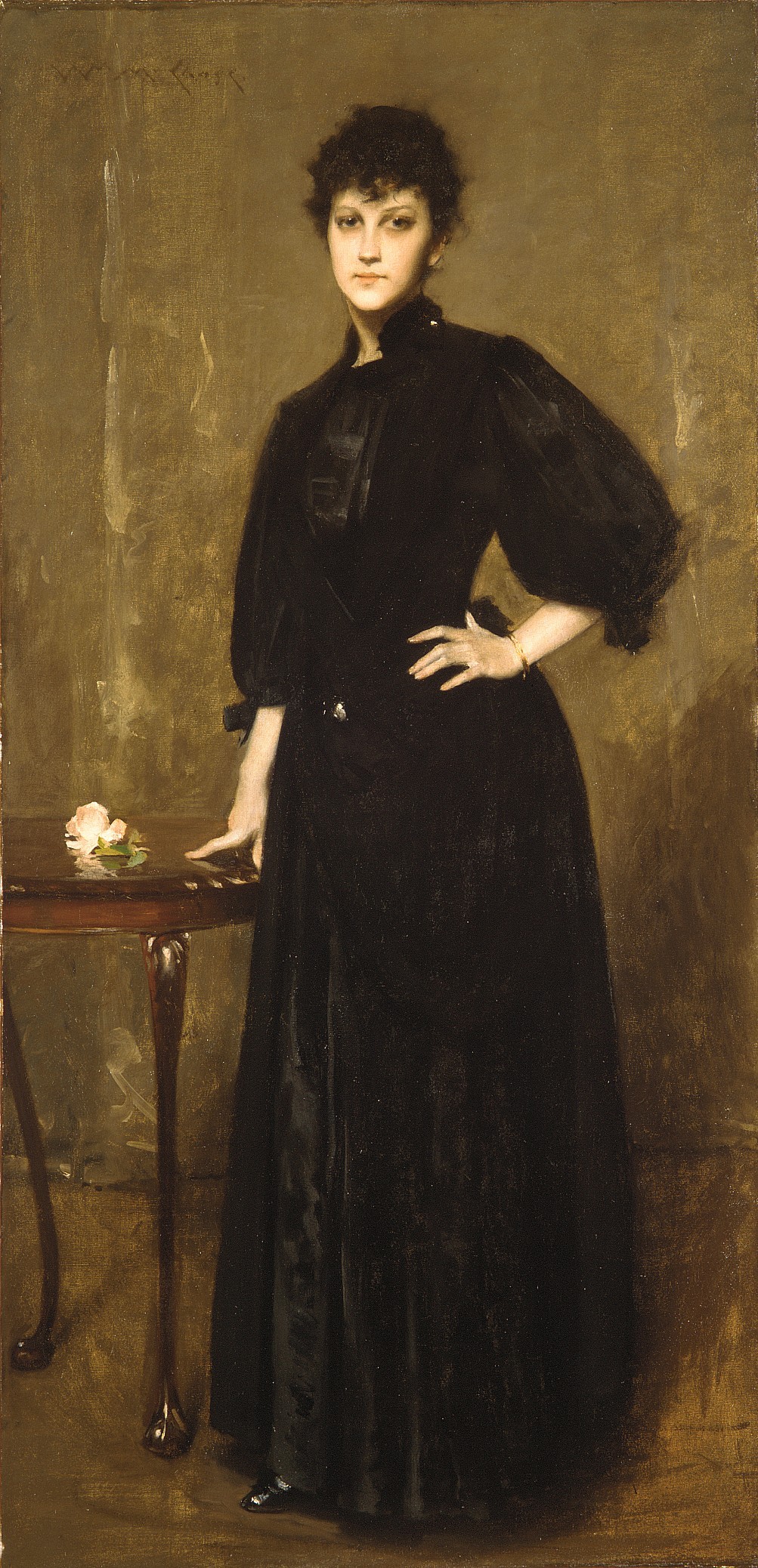
| Portrait of a Lady in Black | 1895 | Painting |
| Portrait of a Lady in Black (Annie Traquair Lang) | 1911 | Painting |
| Portrait of a Lady in Pink | Date unknown | Painting |
| Portrait of a Man | 1874 | Painting |
| Portrait of a Man | 1875 | Painting |
| Portrait of a Woman | Date unknown | Painting |
| Portrait of Artist Beck Wenzell | 1900 | Painting |
| Portrait of Baroness Ida-Gro van Dahlerup | 1907 | Painting |
| Portrait of Dora Wheeler | 1882 | Painting |
| Portrait of Lavinia Borden Cook | Date unknown | Painting |
| Portrait of Louis Betts | Date unknown | Painting |
| Portrait of Master Otis Barton and his Grandfather | 1903 | Painting |
| Portrait of Miss D. | Date unknown | Painting |
| Portrait of Mrs. C. (Lady with a White Shawl) | 1893 | Painting |
| Portrait of Mrs. George B. Ely (Caroline Boies Ely) | Date unknown | Painting |
| Portrait of My Daughter Alice | 1895 | Painting |
| Portrait of My Father (David Hester Chase) | Date unknown | Painting |
| Portrait of My Mother (Sarah Swaim Chase) | 1892 | Painting |
| Portrait of William Francklyn Paris | Date unknown | Painting |
| Portrait of William Gurley Munson | 1868 | Painting |
| Ready for the Ride | 1877 | Painting |
| Red Snapper | Date unknown | Painting |
| Robert Frederick Blum | Date unknown | Painting |
| Roland | 1902 | Painting |
| Roses | 1883 | Drawing |
| Seaside Flowers | 1897 | Painting |
| Selbstbildnis | 1875 | Painting |
| Selbstporträt | 1915 | Painting |
| Self-Portrait | 1909 | Drawing |
| Self Portrait | 1914 | Painting |
| Self-Portrait | 1915 | Painting |
| Self-portrait dressed as Johan Claesz Loo by Frans Hals | 1903 | Painting |
| Seventeenth Century Lady | 1895 | Painting |
| Shell Beach at Shinnecock | 1892 | Painting |
| Shinnecock Hills | 1892 | Painting |
| Shinnecock Hills | 1893 | Painting |
| Shinnecock Hills | 1895 | Painting |
| Shinnecock Hills | 1895 | Painting |
| Shinnecock Hills Landscape | 1890 | Painting |
| Shinnecock Studio Interior | 1892 | Drawing |
| Sketch for a Picture--Columbus before the Council of Salamanca (A) (Christopher Columbus before the Council of Salamanca) | 1876 | Painting |
| Sketch for a Picture--Columbus before the Council of Salamanca (B) (Christopher Columbus before the Spanish Council) | 1876 | Painting |
| Sketch of a Child:Helen | 1898 | Painting |
| St. Jerome | 1875 | Painting |
| Still Life | 1912 | Painting |
| Still Life | Date unknown | Painting |
| Still Life | Date unknown | Painting |
| Still Life | Date unknown | Painting |
| Still Life (Brass Bowl) | Date unknown | Painting |
| Still Life (Brushes, Books and Pottery) | 1904 | Painting |
| Still Life: Fish | 1900 | Painting |
| Still Life: Fish | 1903 | Painting |
| Still Life: Fish | 1908 | Painting |
| Still Life: Fish | 1912 | Painting |
| Still-life: Fish and Bowl | 1895 | Painting |
| Still Life (Fruit and Copper Pot) | Date unknown | Painting |
| Still Life (Fruit and Pottery) | Date unknown | Painting |
| Still Life--Striped Bass | 1907 | Painting |
| Still Life with Fish | 1800 | Painting |
| Still Life with Fish | 1910 | Painting |
| Still Life with Fish | 1912 | Painting |
| Still Life with Fish | Date unknown | Painting |
| Still life with fruit | 1871 | Painting |
| Still Life with Hummingbird | 1870 | Painting |
| Still Life with Watermelon | 1869 | Painting |
| Studio Interior | 1882 | Painting |
| Study Head | Date unknown | Painting |
| Study of a Girl in Japanese Dress | 1895 | Painting |
| Study of a Young Woman | 1883 | Painting |
| Study of Flesh Color and Gold | 1888 | Drawing |
| Summer at Shinnecock Hills | 1891 | Painting |
| Sunlight and Shadow, Shinnecock Hills | 1893 | Painting |
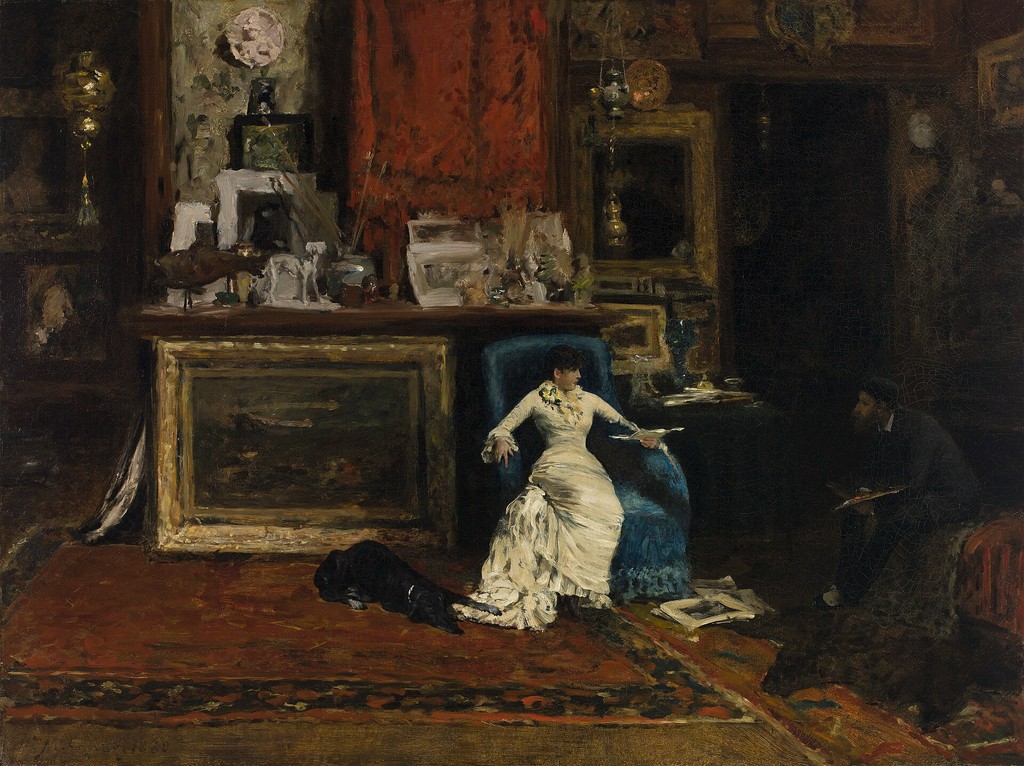
| Tenth Street Studio | 1880 | Painting |
| Terrace at the Mall | 1890 | Painting |
| Terrace, Prospect Park | 1887 | Drawing |
| The Antiquary Shop | 1879 | Painting |
| The Apprentice (Boy with Apple) | 1876 | Painting |
| The Big Brass Bowl | Date unknown | Painting |
| The Blue Kimono | 1915 | Painting |
| The Boat Harbor (Gowanus Pier) | 1888 | Painting |
| The Coast of Holland | 1884 | Painting |
| The Emerald Lady | Date unknown | Painting |
| The Family Cow (Calf's Head) | 1869 | Painting |
| The Keynote | 1915 | Painting |
| The Kimono | 1895 | Painting |
| The Mirror | 1900 | Painting |
| The Model | 1888 | Drawing |
| The Moorish Warrior | 1878 | Painting |
| The Old Road to the Sea | 1893 | Painting |
| The Patrician | 1875 | Painting |
| The Song | 1907 | Painting |
| The Stately Model | 1898 | Painting |
| The Tenth Street Studio | 1880 | Painting |
| The Tow Path | 1880 | Painting |
| The Turkish Page (Unexpected Intrusion) | 1876 | Painting |
| The Whistling Boy | 1875 | Painting |
| The Wounded Poacher | 1878 | Painting |
| The Yield of the Waters | 1878 | Painting |
| The Young Orphan | 1884 | Painting |
| Thomas E. Kirby | 1900 | Painting |
| Thomas Moran | Date unknown | Painting |
| Under a French Sky | 1882 | Painting |
| Venetian Lace Making | Date unknown | Drawing |
| View from Central Park | 1889 | Painting |
| View near Polling | 1875 | Painting |
| William A. Clark | 1915 | Painting |
| William Andrews Clark | 1915 | Painting |
| William Nimick Frew | 1915 | Painting |
| William Rockhill Nelson | 1907 | Painting |
| Wind-Swept Sands | 1894 | Painting |
| Woman in White | 1902 | Painting |
| Woman Seated | 1885 | Drawing |
| Woman Standing in a Landscape | Date unknown | Painting |
| Worthington Whittredge | 1890 | Painting |
Frequently Asked Questions
He directed the school from 1891 through 1902. During those summers, teaching occupied part of each week and was combined with work in his own studio and time with his family.[1][2]
Students worked outdoors, watched Chase demonstrate portrait technique and received his criticism of their pictures. This mixture connected rapid open-air decisions with sustained attention to figures, composition and handling.[1]
The school and colony stood on ancestral and present Shinnecock land near the Reservation. Parrish research documents relationships and economic exchanges between the seasonal community and Shinnecock people, while remaining an institutional account rather than the Nation speaking for itself.[1][3]
No. The apparent quiet results from framing, scale and the sparseness of selected motifs. Roads, fences, figures and documented local relationships establish an occupied landscape whose history extends beyond what any single painting depicts.
Discussion
Use this evidence-led guide as a starting point for close looking rather than a final verdict.
Share an observation about Shinnecock Landscapes and Teaching or a source that adds useful context.
Reader Insights
Which work most clearly complicates the familiar label of American Impressionist?
Where do training, display, family, place or teaching most productively alter your reading?
Which source or surviving object would you investigate next?
Join the Conversation
Add your reading below, keeping observations specific and evidence clear.
References
- William Merritt Chase: The Shinnecock Years — Parrish Art Museum, accessed 31 August 2026, accessed 31 August 2026.
- William Merritt Chase (1849–1916) — Metropolitan Museum of Art, accessed 31 August 2026, accessed 31 August 2026.
- William Merritt Chase and His Neighbors — Parrish Art Museum, accessed 31 August 2026, accessed 31 August 2026.
- William Merritt Chase: A Modern Master — Terra Foundation for American Art, accessed 31 August 2026, accessed 31 August 2026.
- Shinnecock Hills — Smithsonian American Art Museum, accessed 31 August 2026, accessed 31 August 2026.
- Gathering Autumn Flowers — National Gallery of Art, accessed 31 August 2026, accessed 31 August 2026.
- Shinnecock Studio Interior — Terra Foundation for American Art, accessed 31 August 2026, accessed 31 August 2026.
- Pictures in Pictures — Parrish Art Museum, accessed 31 August 2026, accessed 31 August 2026.
- A Friendly Call — National Gallery of Art, accessed 31 August 2026, accessed 31 August 2026.