 by Tom Gurney
Tom Gurney BSc (Hons) is an art history expert with over 20 years experience
Page Created on August 31, 2026 / Page Updated on November 6, 2026
Email: tomgurney1@gmail.com / Phone: +44 7429 011000
Shinnecock Hills: Introduction
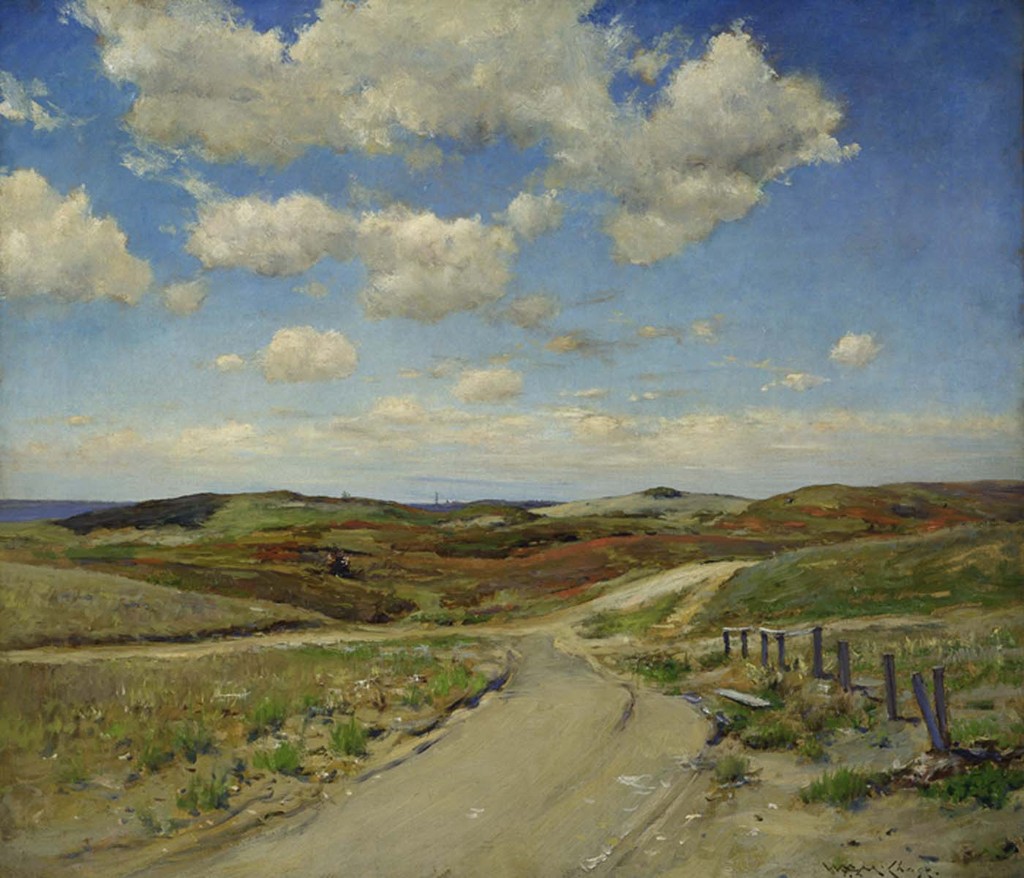
William Merritt Chase’s Shinnecock Hills turns a sandy road, low scrub and a cloud-filled sky into an encounter with movement and scale. The road offers entry, but the view resists a single destination: it bends among the rises while light and weather command most of the canvas.
Painted during Chase’s years as director of a nearby summer art school, the landscape requires historical care. Its sparse signs do not erase people or prior claims. This is ancestral and present Shinnecock land, seen beside the Shinnecock Nation during the growth of a resort colony.
At a Glance
- ArtistWilliam Merritt Chase
- Datec.1895
- MediumOil on canvas
- Dimensions86.6 × 100.4 cm
- CollectionSmithsonian American Art Museum, accession 1909.7.11
- SubjectA road crossing the low hills of Shinnecock, Long Island
William Merritt Chase in context
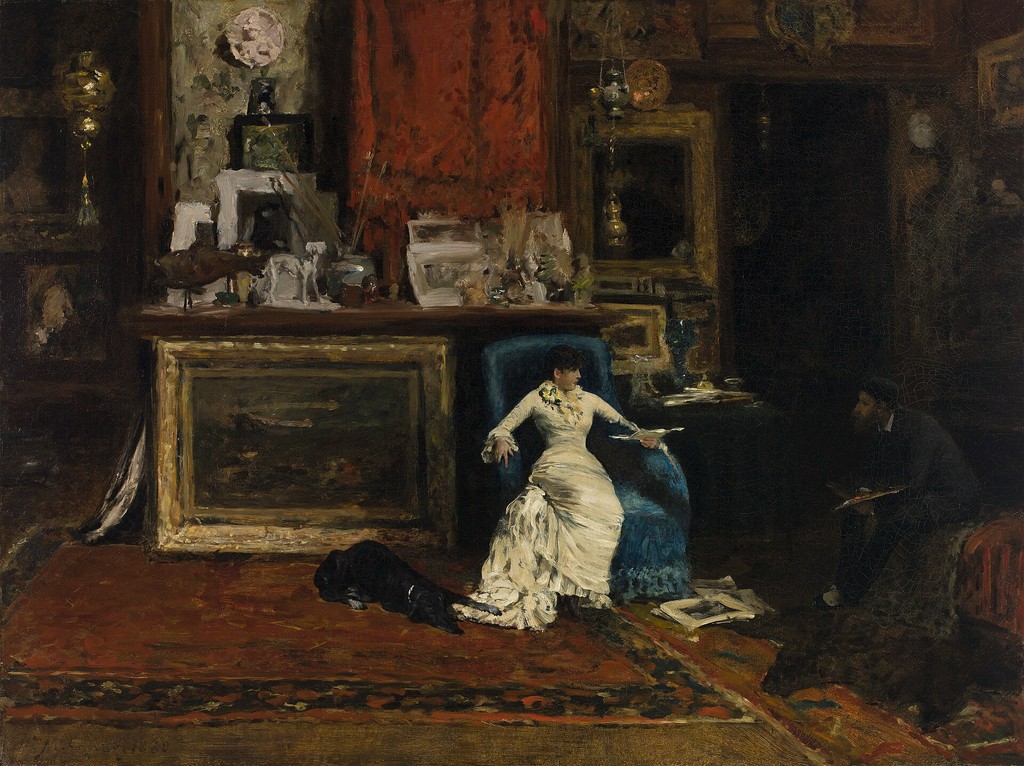
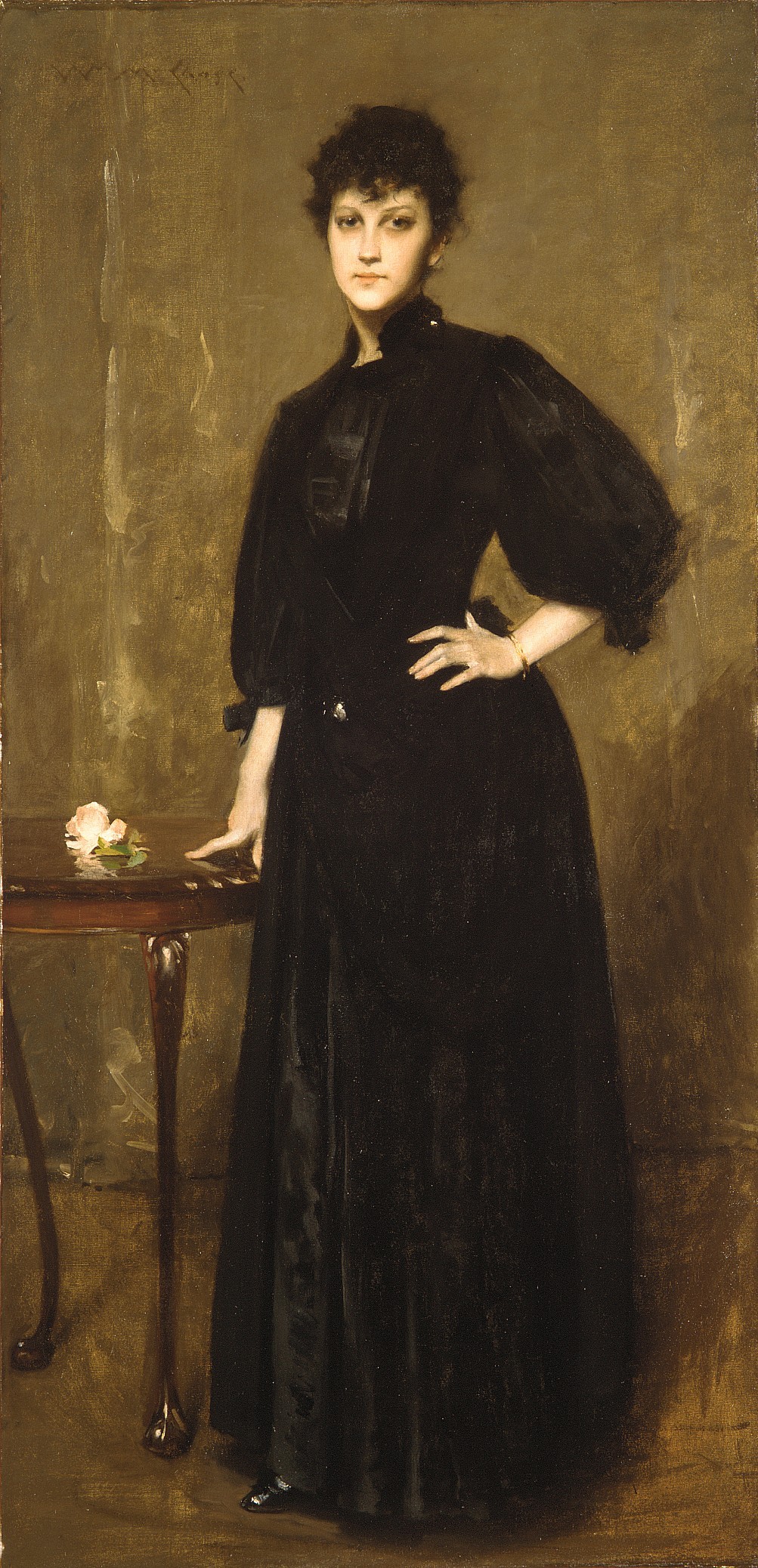
Keying Up – The Court Jester
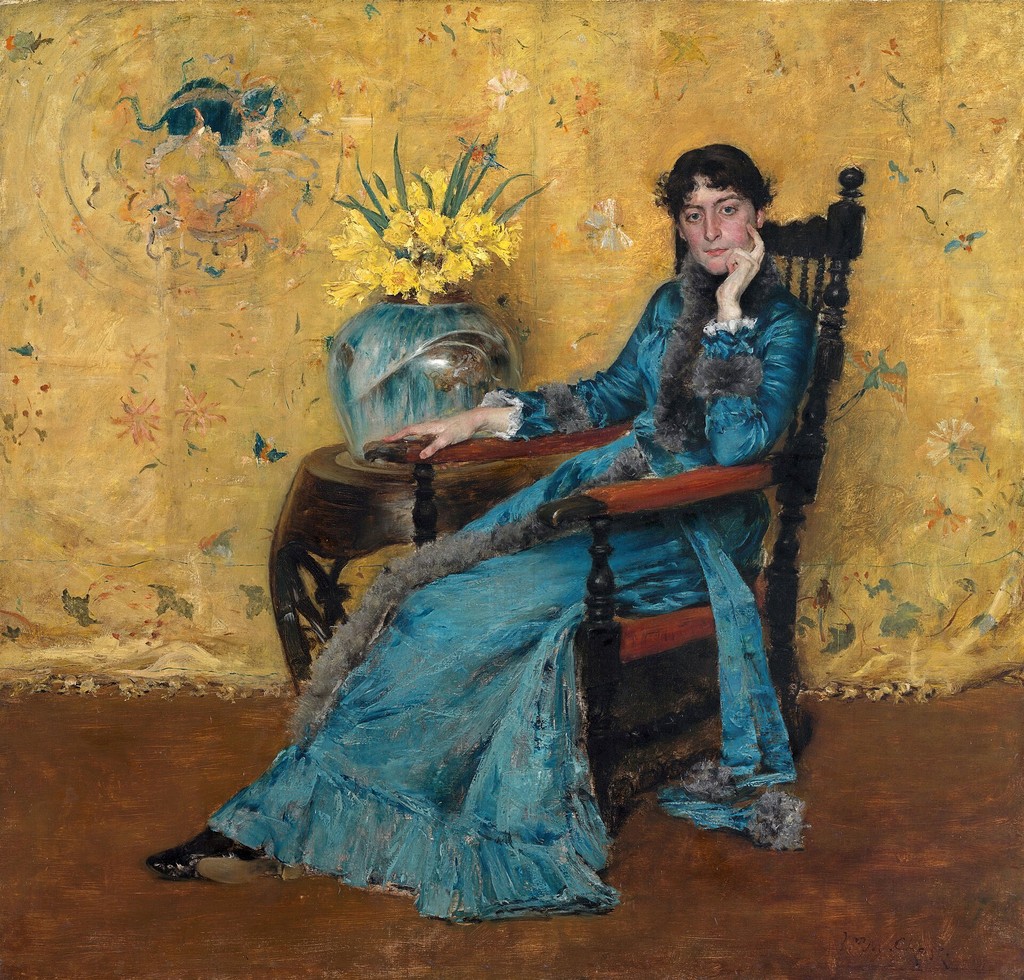
1875Portrait of Dora Wheeler
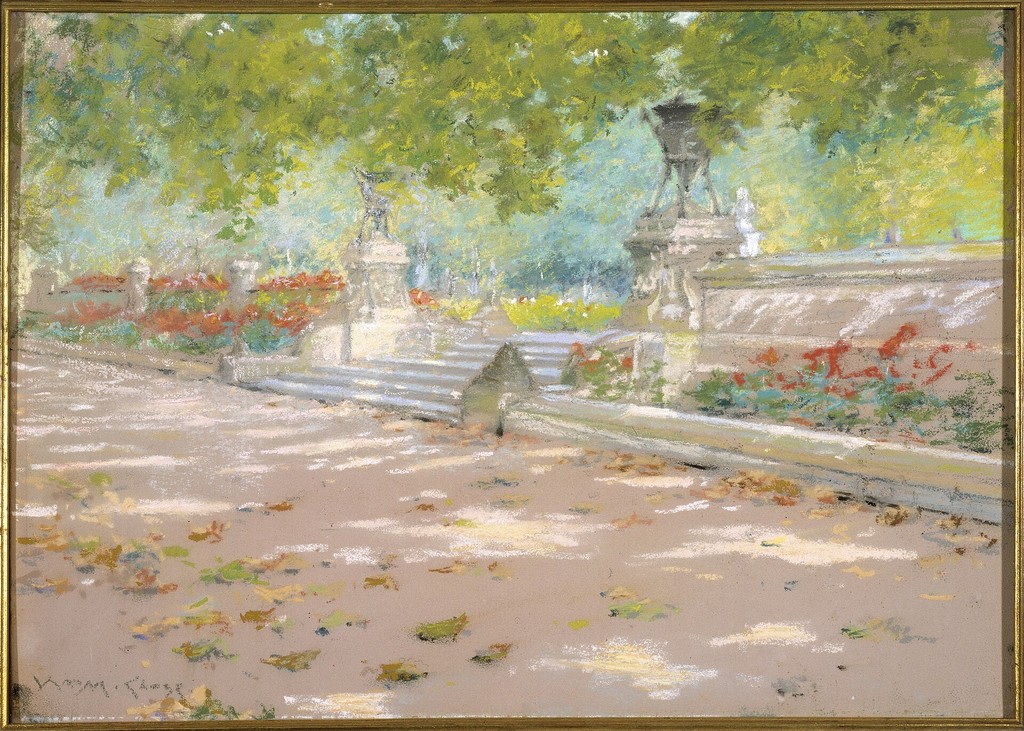
1882–83Terrace, Prospect Park
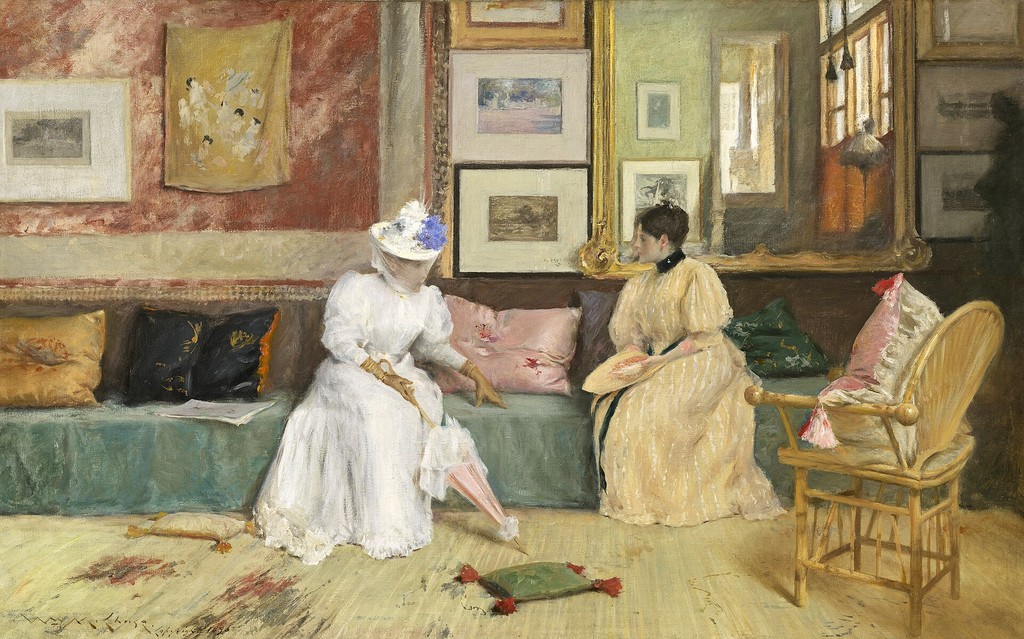
c. 1887A Friendly Call
1895Shinnecock Hills
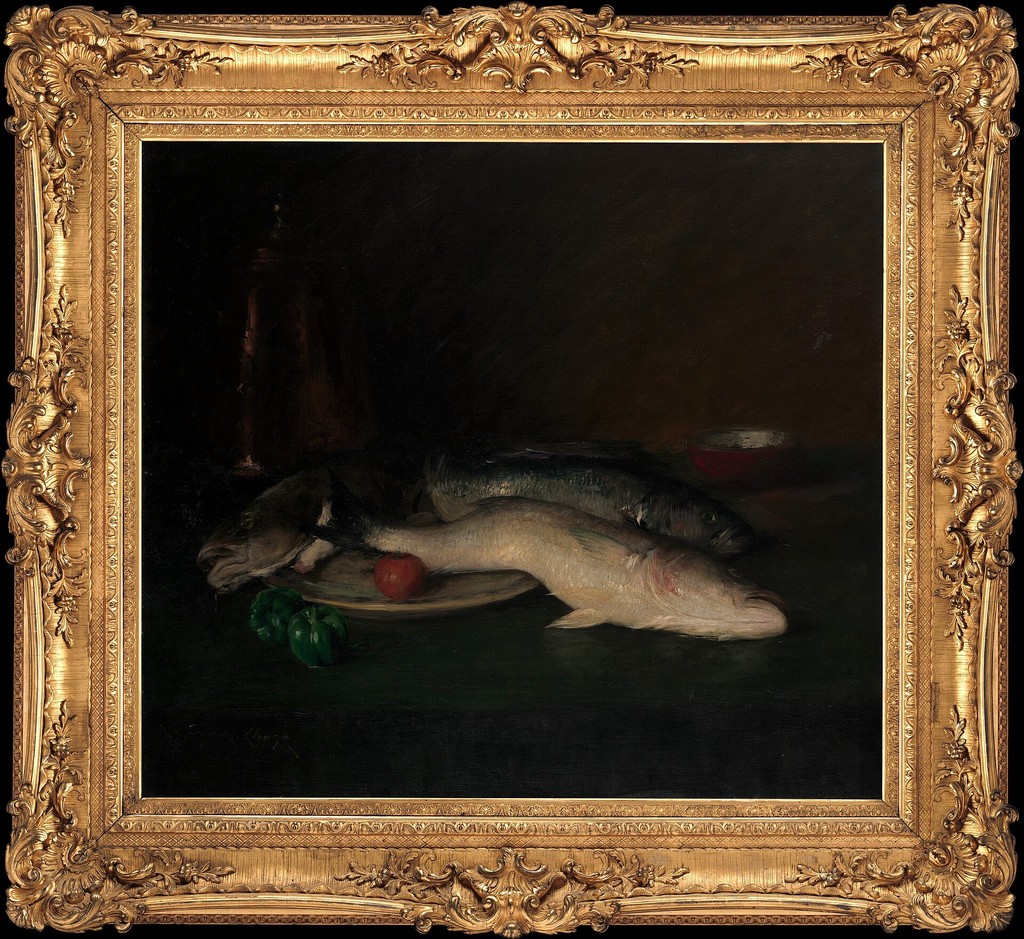
c. 1895Still Life: Fish
by 1908Contents
- Introduction
- The Exact Painting and Its First Effect
- A Road That Opens and Withholds the View
- Low Horizon, High Weather
- Economy: Hills, Fences and Human Scale
- Painting During the Shinnecock School Years
- Shinnecock Land, Community and Pictorial Omission
- A Comparison with Gathering Autumn Flowers
- From the Road to A Friendly Call
- Why the Painting Still Holds Attention
The Exact Painting and Its First Effect
The Smithsonian American Art Museum identifies this Shinnecock Hills as an oil on canvas of about 1895, measuring 86.6 × 100.4 cm and carrying accession number 1909.7.11.[1] Those details matter because Chase made several landscapes with the same title. This discussion concerns that museum object alone, not another version attached to a repeated name.
The first impression is breadth. Land occupies less than half the height, while blue sky and substantial cream-grey clouds expand above it. No single figure or building governs the view. Instead, the eye takes in a sequence of horizontal bands: near sand and grass, an irregular middle distance of russet and green, a narrow dark horizon, then air. Chase’s broad design makes a modest local motif feel spatially generous without turning it into a theatrical panorama.
This balance belongs within Chase’s paintings, yet it does not make him simply an Impressionist. As in his New York park scenes, lighter outdoor colour coexists with deliberate organisation. Active marks remain controlled by road, horizon and clouds.
A Road That Opens and Withholds the View
The pale road begins as a wide wedge at the lower edge. It narrows rapidly, swerves slightly left, then slips between undulating banks. That change of width gives the strongest cue to depth. Viewers seem placed on the route rather than stationed at an elevated lookout, and the bend promises continuation without revealing where it leads.
Blue-grey strokes cool the road’s edges; ochre and cream describe its dry centre; tufts blur track and verge. On the right, dark fence posts recede at uneven intervals. A small incident farther back—readable as human presence but too compressed for confident identification—interrupts the land.
The road is both subject and visual instrument: infrastructure, depth cue and sign of routine passage. Its curve prevents the view from becoming a diagram. Chase offers motion through the scene rather than possession of it.
Low Horizon, High Weather
The horizon sits unusually low, releasing much of the square-ish canvas to the sky. Large clouds spread across the upper register in broken masses, their warm off-whites set against blues that deepen towards the top. Smaller clouds gather nearer the horizon, where the colour becomes paler and more silvery. The graded blue supplies distance without a mechanically smooth recession.
Clouds also establish a second kind of movement. The road pulls inward from below, but the sky carries attention laterally across the surface. Some cloud edges dissolve through loose scumbling; others are reinforced with creamy weight. These differences make the atmosphere change from moment to moment while the land remains comparatively anchored.
Light is dispersed rather than attached to a visible sun. Sand brightens, green slopes turn softly and reddish vegetation flickers across the middle ground. The pale palette does not eliminate the tonal discipline traced in Chase’s biography: dark posts and distant accents hold the airy colours together.
Economy: Hills, Fences and Human Scale
Chase reduces architectural detail to a few restrained signs. There is no grand house to announce the summer colony, and distant constructions barely rise above the land. The fence is more legible than any building. Its posts mark division and use, although the painting alone cannot explain who established that boundary or what legal and social histories it carried.
The same restraint governs the figures. The tiny dark cluster in the middle distance is absorbed into the road and vegetation rather than enlarged into narrative actors. At that scale, people register as participants in the terrain, not as masters standing over it. Visible evidence supports the presence of passage and bounded ground; it does not identify the travellers or establish a complete account of local life.
Painting During the Shinnecock School Years
Jane Ralston Hoyt invited Chase to paint at Shinnecock in 1891. The Parrish Art Museum explains that her proposed academy followed European plein-air schools and advanced resort and real-estate ambitions.[2] Chase became its founding director and led the Shinnecock Hills Summer School of Art until 1902.
His teaching combined outdoor painting, portrait demonstrations and critiques. The school’s setting made landscape both a subject and a classroom. Chase could model rapid decisions in front of a motif: how much description to retain, where a dark accent could stabilise pale colour, and how a familiar route might organise an entire canvas. Shinnecock Hills can be read alongside the broader account of Shinnecock landscapes and teaching, but it should not be treated as a literal record of a lesson.
Chase had returned to New York in 1878 after Munich study, then worked across dark interiors, portraits, still lifes, parks and light-filled landscapes.[3] Shinnecock colour extended that range rather than replacing its tonal contrasts.
Shinnecock Land, Community and Pictorial Omission
The scene was made on ancestral and present Shinnecock land. The Shinnecock Nation is not incidental context added from outside the painting: the nearby reservation, community labour and social relationships formed part of the world in which Chase’s family and the school operated. Parrish research notes that his route between the family house and the Art Village passed the Shinnecock Reservation, and documents relationships between school society and Nation members who farmed, laundered, fished and guided.[2]
The canvas gives few cues to that history. Distant human marks, subdued construction and dominant weather select one visual experience from a complex place. Pictorial omission is not evidence that relationships, livelihoods or claims were absent; the road does not become neutral because anecdote is suppressed.
Chase’s economy remains formally compelling, but its omissions become questions rather than answers. The canvas cannot settle who travelled these roads or how boundaries and resort growth altered access and work. Historical sources prevent its narrowed vision from becoming the full history of Shinnecock.
A Comparison with Gathering Autumn Flowers
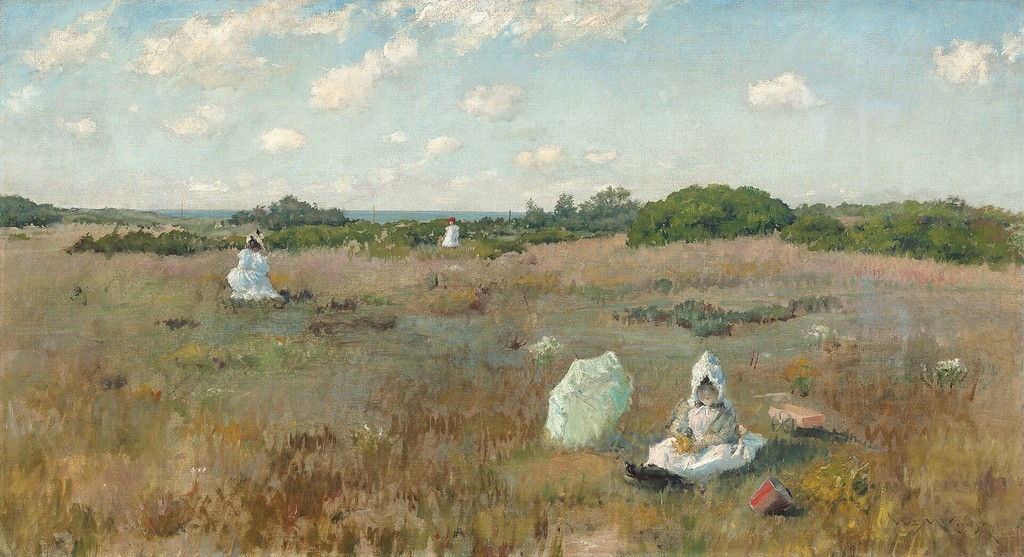
Gathering Autumn Flowers of 1894/95 provides a useful outdoor comparison. The National Gallery of Art describes women and a child distributed across a golden field, with small objects—a parasol, bucket and cart—making family activity plainly legible.[4] Its loose strokes, low vegetation, distant water and expansive light connect it to Chase’s Shinnecock practice.
In Shinnecock Hills, people are much harder to resolve. The road carries the implication of movement, while the family-scale incident remains subordinate to terrain and cloud. In Gathering Autumn Flowers, separate figures punctuate the field and convert seasonal colour into a scene of leisure and care. One work allows domestic life to animate an outdoor expanse; the other makes human activity a brief, uncertain accent.
The contrast reveals purposeful selection. Chase could make family action explicit without sacrificing open-air colour, or reduce it until road and weather carried nearly all the expressive work. Here he chose reduction.
From the Road to A Friendly Call
The comparison with A Friendly Call is more dramatic because the 1895 interior belongs to the same Shinnecock period. The National Gallery identifies its setting as Chase’s summer house and its figures as Alice Chase and a visiting woman.[5] Rectangular pictures, wall hangings, furniture and a mirror organise social exchange within a carefully appointed room.
Outside, fence posts and track replace textiles, frames and polished surfaces. Yet both paintings direct movement. The road conducts the eye through bending ground; the interior’s floor, couch and wall patterns lead attention between seated women. Each converts a lived setting into exact intervals.
Terra Foundation’s 1892 Shinnecock Studio Interior shows Chase’s daughter Alice looking at Japanese prints on a studio floor, with a landscape behind her.[6] Landscape, studio and household were interdependent parts of Chase’s summer practice. The road painting is spare by choice, not because Shinnecock stood outside domestic, educational or economic life.
Why the Painting Still Holds Attention
Shinnecock Hills makes looking mobile. Its foreground is accessible, its destination withheld and its sky too active to become mere background. Pale colour joins air and sand, while dark accents prevent the composition from dispersing.
The strongest reading holds formal pleasure together with historical specificity. Chase distilled the visible motif, but viewers need not reproduce that narrowing when thinking about the place. On the William Merritt Chase overview, the work stands as a lucid example of his outdoor method: economical, structurally alert and inseparable from the particular land and communities around its making.
Researched works directory
This searchable evidence census contains 208 distinct records assembled from public collection data and a reproducible Wikidata snapshot. It is not a catalogue raisonné, not a claim of complete oeuvre coverage, and it keeps works with repeated titles as separate objects.
| Name | Date | Medium |
|---|---|---|
| A City Park | 1887 | Painting |
| A Corner of My Studio | Date unknown | Painting |
| A Dutch Landscape | 1884 | Painting |
| A Friendly Call | 1895 | Painting |
| A Gray Day | 1886 | Painting |
| A Modern Magdalen | 1888 | Painting |
| A Spanish Gypsy | 1905 | Painting |
| Albert Harkness (1822–1907) | 1908 | Painting |
| Alice | 1892 | Painting |
| An Afternoon Stroll | 1895 | Painting |
| An English Cod | 1904 | Painting |
| At the Seaside | 1890 | Painting |
| August B. Loeb | 1905 | Painting |
| Baron Hugo von Habermann | 1875 | Painting |
| Beach | 1895 | Painting |
| Bessie Potter | 1895 | Painting |
| Big Copper Kettle and Fish (Fish) | Date unknown | Painting |
| Bildnis Hugo von Habermann | 1875 | Painting |
| Brass Kettle and Catfish | Date unknown | Painting |
| Carmencita | 1890 | Painting |
| Courtyard in Venice | 1877 | Painting |
| Crucifixion | 1875 | Painting |
| Der japanische Holzschnitt | 1888 | Painting |
| Dieudonnée | 1899 | Painting |
| Dorothy | 1902 | Painting |
| Dr. Eduardo San Giovanni | 1906 | Drawing |
| Duveneck Painting "The Turkish Page | 1876 | Painting |
| Edward Everett Hale (1822-1909) | 1884 | Painting |
| Edward Guthrie Kennedy | 1895 | Painting |
| Edward Steichen | 1903 | Painting |
| Female Figure Study (front view) | Date unknown | Painting |
| Female Figure Study (side view) | Date unknown | Painting |
| First Touch of Autumn | 1898 | Painting |
| Fish | 1910 | Painting |
| Fish and Still Life | 1906 | Painting |
| Fish and Still Life | 1908 | Painting |
| Florence | 1907 | Painting |
| For the Little One | 1896 | Painting |
| Garden of the Orphanage, Haarlem, Holland | 1883 | Painting |
| Gathering Autumn Flowers | 1894 | Painting |
| Gathering Flowers, Shinnecock, Long Island | 1897 | Drawing |
| Girl at a Bureau | Date unknown | Painting |
| Girl in a Japanese Costume | 1890 | Painting |
| Girl in Ciociaro costume | 1876 | Painting |
| Girl in White | 1890 | Painting |
| Girl with Doll | 1910 | Painting |
| Gray Day on the Bay | 1886 | Painting |
| Gray Day on the Lagoon | 1913 | Painting |
| Harbor Scene, Brooklyn Dock | 1886 | Painting |
| Harriet Hubbard Ayer | 1880 | Painting |
| Head of a Man | 1875 | Painting |
| Hide and Seek | 1888 | Painting |
| I Think I'm Ready Now | 1883 | Painting |
| Idle Hours | 1894 | Painting |
| In the Park (A By-path) | 1889 | Painting |
| In the Studio Corner | 1881 | Painting |
| In Venice | 1877 | Painting |
| James Abbott McNeill Whistler | 1885 | Painting |
| John Butler Talcott | 1900 | Painting |
| Just Onions (Onions; Still Life) | Date unknown | Painting |
| Keying Up" - The Court Jester | 1875 | Painting |
| Keying Up: The Court Jester | 1875 | |
| L'Éventail de plumes | Date unknown | Painting |
| Lady in Black | 1888 | Painting |
| Lady Playing Guitar | Date unknown | Painting |
| Landscape- Shinnecock, Long Island | 1896 | Painting |
| Long Island Landscape after a Shower of Rain (After the Shower) | 1889 | Painting |
| Lydia Field Emmet | 1892 | Painting |
| Man Wearing Gold Rimmed Glasses | 1892 | Painting |
| Marine | 1888 | Painting |
| Monkeying with Literature | 1877 | Painting |
| Moses Swaim | Date unknown | Painting |
| Mother and Child (The First Portrait) | 1887 | Painting |
| Mrs. Charles Scott | Date unknown | Painting |
| Mrs. Chase | 1890 | Painting |
| Mrs. Chase in Prospect Park | 1886 | Painting |
| Mrs. William Clark | 1915 | Painting |
| Mrs. William Merritt Chase | 1890 | Painting |
| My Little Daughter Dorothy | 1894 | Painting |
| My Palette | 1875 | Painting |
| Myra Reynolds | 1898 | Painting |
| Near the Beach, Shinnecock | 1895 | Painting |
| Near the Beach, Shinnecock | Date unknown | Painting |
| North River Shad | 1910 | Painting |
| Nude | 1901 | Painting |
| Open Air Breakfast | 1888 | Painting |
| Outskirts of Madrid | 1882 | Painting |
| Pablo de Sarasate: Portrait of a Violinist | 1875 | Painting |
| Park Bench | 1890 | Painting |
| Peace, Fort Hamilton | 1888 | Painting |
| Pink Azalea—Chinese Vase | 1885 | Painting |
| Portrait Head | 1882 | Painting |
| Portrait of a Boy in Van Dyck Costume | 1875 | Painting |
| Portrait of a Child | 1884 | Painting |
| Portrait of a Lady in Black | 1895 | Painting |
| Portrait of a Lady in Black (Annie Traquair Lang) | 1911 | Painting |
| Portrait of a Lady in Pink | Date unknown | Painting |
| Portrait of a Man | 1874 | Painting |
| Portrait of a Man | 1875 | Painting |
| Portrait of a Woman | Date unknown | Painting |
| Portrait of Artist Beck Wenzell | 1900 | Painting |
| Portrait of Baroness Ida-Gro van Dahlerup | 1907 | Painting |
| Portrait of Dora Wheeler | 1882 | Painting |
| Portrait of Lavinia Borden Cook | Date unknown | Painting |
| Portrait of Louis Betts | Date unknown | Painting |
| Portrait of Master Otis Barton and his Grandfather | 1903 | Painting |
| Portrait of Miss D. | Date unknown | Painting |
| Portrait of Mrs. C. (Lady with a White Shawl) | 1893 | Painting |
| Portrait of Mrs. George B. Ely (Caroline Boies Ely) | Date unknown | Painting |
| Portrait of My Daughter Alice | 1895 | Painting |
| Portrait of My Father (David Hester Chase) | Date unknown | Painting |
| Portrait of My Mother (Sarah Swaim Chase) | 1892 | Painting |
| Portrait of William Francklyn Paris | Date unknown | Painting |
| Portrait of William Gurley Munson | 1868 | Painting |
| Ready for the Ride | 1877 | Painting |
| Red Snapper | Date unknown | Painting |
| Robert Frederick Blum | Date unknown | Painting |
| Roland | 1902 | Painting |
| Roses | 1883 | Drawing |
| Seaside Flowers | 1897 | Painting |
| Selbstbildnis | 1875 | Painting |
| Selbstporträt | 1915 | Painting |
| Self-Portrait | 1909 | Drawing |
| Self Portrait | 1914 | Painting |
| Self-Portrait | 1915 | Painting |
| Self-portrait dressed as Johan Claesz Loo by Frans Hals | 1903 | Painting |
| Seventeenth Century Lady | 1895 | Painting |
| Shell Beach at Shinnecock | 1892 | Painting |
| Shinnecock Hills | 1892 | Painting |
| Shinnecock Hills | 1893 | Painting |
| Shinnecock Hills | 1895 | Painting |
| Shinnecock Hills | 1895 | Painting |
| Shinnecock Hills Landscape | 1890 | Painting |
| Shinnecock Studio Interior | 1892 | Drawing |
| Sketch for a Picture--Columbus before the Council of Salamanca (A) (Christopher Columbus before the Council of Salamanca) | 1876 | Painting |
| Sketch for a Picture--Columbus before the Council of Salamanca (B) (Christopher Columbus before the Spanish Council) | 1876 | Painting |
| Sketch of a Child:Helen | 1898 | Painting |
| St. Jerome | 1875 | Painting |
| Still Life | 1912 | Painting |
| Still Life | Date unknown | Painting |
| Still Life | Date unknown | Painting |
| Still Life | Date unknown | Painting |
| Still Life (Brass Bowl) | Date unknown | Painting |
| Still Life (Brushes, Books and Pottery) | 1904 | Painting |
| Still Life: Fish | 1900 | Painting |
| Still Life: Fish | 1903 | Painting |
| Still Life: Fish | 1908 | Painting |
| Still Life: Fish | 1912 | Painting |
| Still-life: Fish and Bowl | 1895 | Painting |
| Still Life (Fruit and Copper Pot) | Date unknown | Painting |
| Still Life (Fruit and Pottery) | Date unknown | Painting |
| Still Life--Striped Bass | 1907 | Painting |
| Still Life with Fish | 1800 | Painting |
| Still Life with Fish | 1910 | Painting |
| Still Life with Fish | 1912 | Painting |
| Still Life with Fish | Date unknown | Painting |
| Still life with fruit | 1871 | Painting |
| Still Life with Hummingbird | 1870 | Painting |
| Still Life with Watermelon | 1869 | Painting |
| Studio Interior | 1882 | Painting |
| Study Head | Date unknown | Painting |
| Study of a Girl in Japanese Dress | 1895 | Painting |
| Study of a Young Woman | 1883 | Painting |
| Study of Flesh Color and Gold | 1888 | Drawing |
| Summer at Shinnecock Hills | 1891 | Painting |
| Sunlight and Shadow, Shinnecock Hills | 1893 | Painting |
| Tenth Street Studio | 1880 | Painting |
| Terrace at the Mall | 1890 | Painting |
| Terrace, Prospect Park | 1887 | Drawing |
| The Antiquary Shop | 1879 | Painting |
| The Apprentice (Boy with Apple) | 1876 | Painting |
| The Big Brass Bowl | Date unknown | Painting |
| The Blue Kimono | 1915 | Painting |
| The Boat Harbor (Gowanus Pier) | 1888 | Painting |
| The Coast of Holland | 1884 | Painting |
| The Emerald Lady | Date unknown | Painting |
| The Family Cow (Calf's Head) | 1869 | Painting |
| The Keynote | 1915 | Painting |
| The Kimono | 1895 | Painting |
| The Mirror | 1900 | Painting |
| The Model | 1888 | Drawing |
| The Moorish Warrior | 1878 | Painting |
| The Old Road to the Sea | 1893 | Painting |
| The Patrician | 1875 | Painting |
| The Song | 1907 | Painting |
| The Stately Model | 1898 | Painting |
| The Tenth Street Studio | 1880 | Painting |
| The Tow Path | 1880 | Painting |
| The Turkish Page (Unexpected Intrusion) | 1876 | Painting |
| The Whistling Boy | 1875 | Painting |
| The Wounded Poacher | 1878 | Painting |
| The Yield of the Waters | 1878 | Painting |
| The Young Orphan | 1884 | Painting |
| Thomas E. Kirby | 1900 | Painting |
| Thomas Moran | Date unknown | Painting |
| Under a French Sky | 1882 | Painting |
| Venetian Lace Making | Date unknown | Drawing |
| View from Central Park | 1889 | Painting |
| View near Polling | 1875 | Painting |
| William A. Clark | 1915 | Painting |
| William Andrews Clark | 1915 | Painting |
| William Nimick Frew | 1915 | Painting |
| William Rockhill Nelson | 1907 | Painting |
| Wind-Swept Sands | 1894 | Painting |
| Woman in White | 1902 | Painting |
| Woman Seated | 1885 | Drawing |
| Woman Standing in a Landscape | Date unknown | Painting |
| Worthington Whittredge | 1890 | Painting |
Frequently Asked Questions
It is the c.1895 oil on canvas in the Smithsonian American Art Museum, accession 1909.7.11. Chase made other works titled Shinnecock Hills, and they remain distinct objects.
The broad foreground road supplies depth and entry. Its narrowing bend works with the receding fence posts, while the low horizon allows clouds and blue air to dominate the upper field.
No firm identities can be established from the visible marks. A small dark presence appears in the middle distance, but the figures are too compressed to support a more exact narrative.
It dates from his 1891–1902 directorship of the Shinnecock Hills Summer School of Art. Its economy and outdoor light illuminate the choices he could demonstrate, although it is not evidence of a particular class session.
The painting was made on ancestral and present Shinnecock land, near a living community whose members had social and working relationships with the school and Chase family. The limited activity shown on the canvas cannot replace that history.
Discussion
Use this evidence-led guide as a starting point for close looking rather than a final verdict.
Share an observation about Shinnecock Hills or a source that adds useful context.
Reader Insights
Which visible detail most changes your reading of Shinnecock Hills?
How do medium, scale, setting and current museum evidence shape the encounter?
What remains uncertain once documented fact is separated from visual inference?
Join the Conversation
Add your reading below, keeping observations specific and evidence clear.
References
- Shinnecock Hills — Smithsonian American Art Museum, accessed 31 August 2026, accessed 31 August 2026.
- William Merritt Chase: The Shinnecock Years — Parrish Art Museum, accessed 31 August 2026, accessed 31 August 2026.
- William Merritt Chase (1849–1916) — Metropolitan Museum of Art, accessed 31 August 2026, accessed 31 August 2026.
- Gathering Autumn Flowers — National Gallery of Art, accessed 31 August 2026, accessed 31 August 2026.
- A Friendly Call — National Gallery of Art, accessed 31 August 2026, accessed 31 August 2026.
- Shinnecock Studio Interior — Terra Foundation for American Art, accessed 31 August 2026, accessed 31 August 2026.