 by Tom Gurney
Tom Gurney BSc (Hons) is an art history expert with over 20 years experience
Page Created on August 31, 2026 / Page Updated on November 6, 2026
Email: tomgurney1@gmail.com / Phone: +44 7429 011000
William Merritt Chase Pastels and Works on Paper: Introduction
William Merritt Chase used pastel to think in colour at the speed of drawing. Its dry marks could remain crisp, merge into hazy tone or accumulate into a dense surface, giving him a range that was neither secondary to oil nor confined to private experiment. Figure studies and park scenes reveal how he made the medium answer different subjects while preserving the evidence of touch.
At a Glance
- ArtistWilliam Merritt Chase (1849–1916)
- Principal focusPastel as an independent, finished art
- Featured workStudy of Flesh Color and Gold, 1888
- Medium and supportPastel on prepared paper
- CollectionNational Gallery of Art, accession 2007.94.2
- Related workTerrace, Prospect Park, c.1887, Smithsonian American Art Museum
Contents
- Introduction
- More Than a Preliminary Medium
- Colour That Sits on the Surface
- Looking at Study of Flesh Color and Gold
- A Figure Study Without an Invented Sitter
- From the Figure to Prospect Park
- Portability, Observation and Decision
- Giving Pastel a Public Standing
- How Pastel Enlarged Chase’s Practice
More Than a Preliminary Medium
The word “drawing” can suggest a first idea destined to disappear beneath paint. That hierarchy does not fit Chase’s pastel practice. He exploited a material that could describe, revise and colour at once, then allowed its strokes, rubbed passages and exposed support to remain part of the completed image. The result may look spontaneous, but visible speed is not the same as incompleteness.
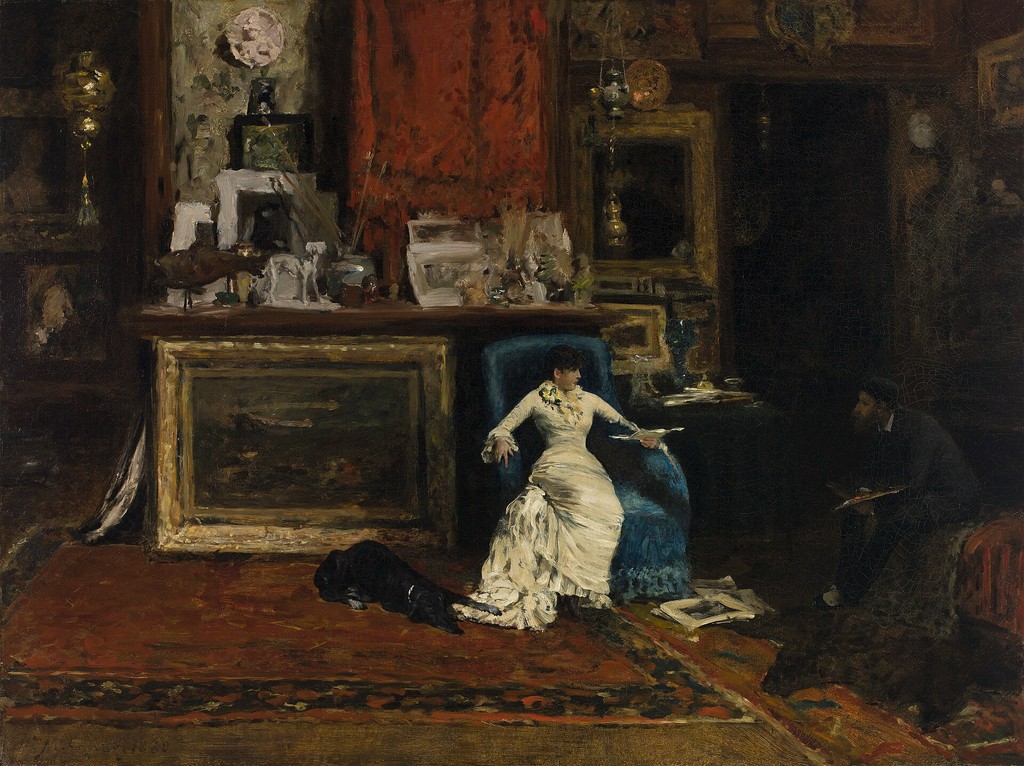
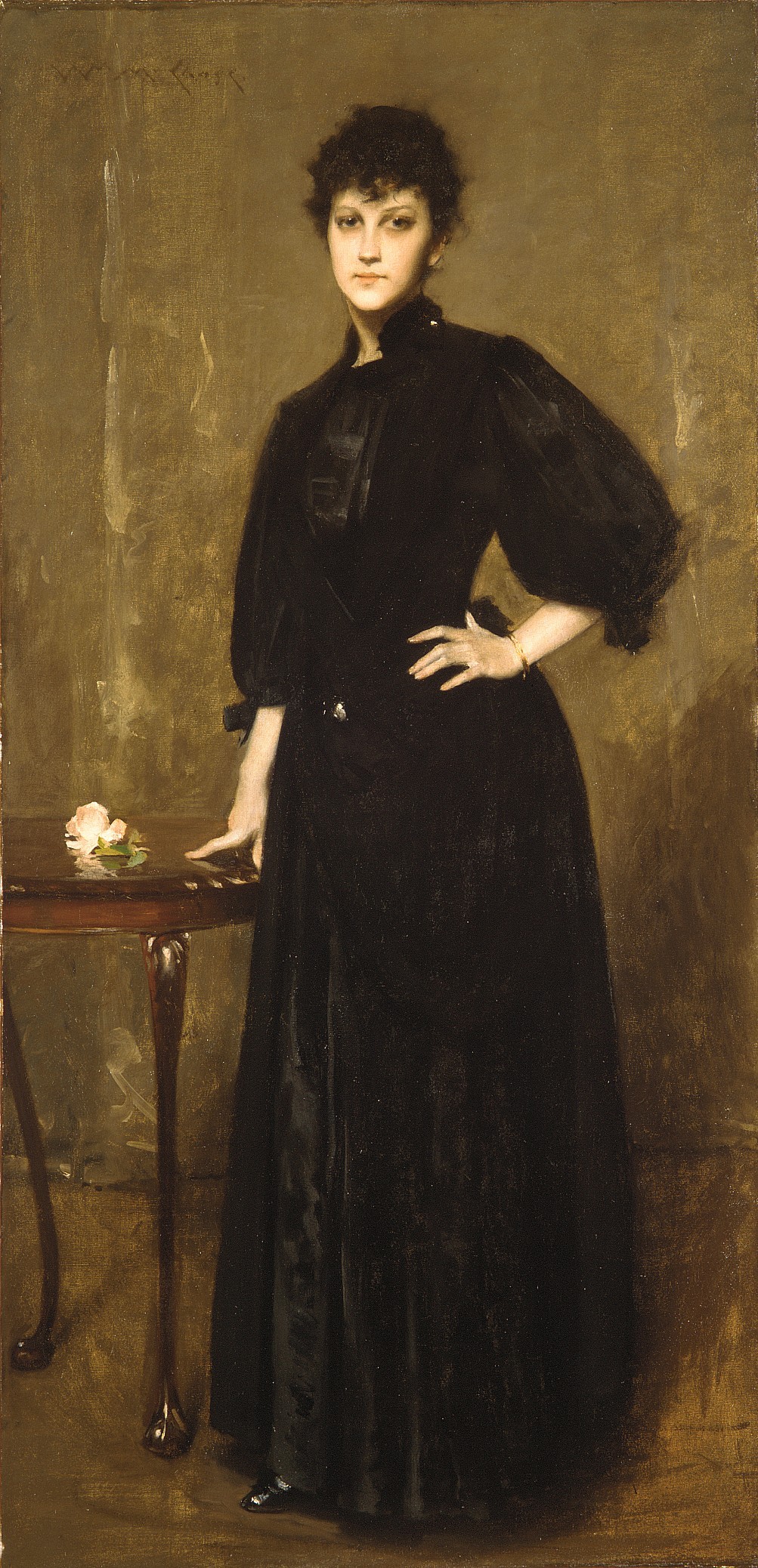
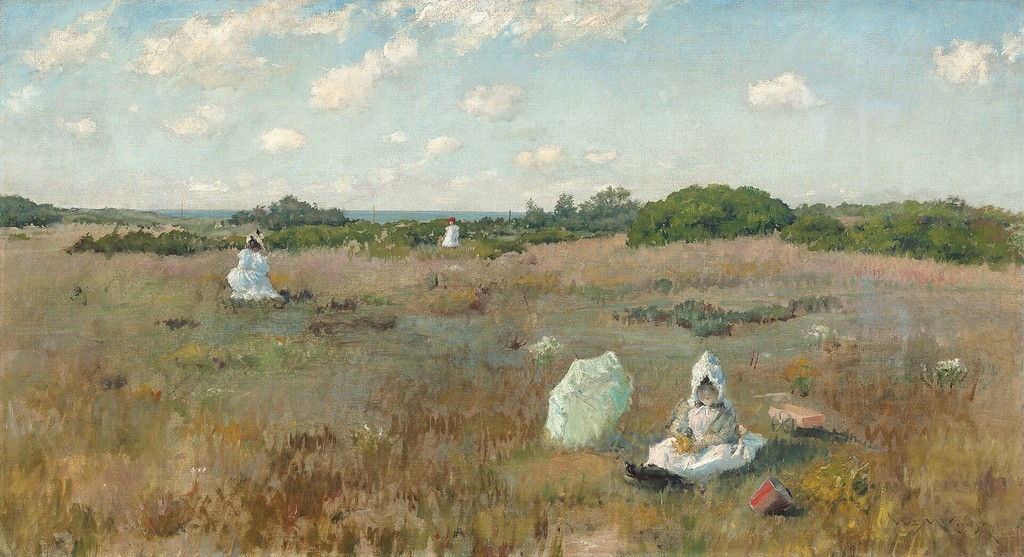
Chase’s wider career helps explain this freedom. He worked across portraits, still lifes, interiors and landscapes, maintaining Munich-trained tonal control while adopting lighter palettes for some outdoor subjects. Pastel gave this plural practice another register rather than a single transitional step.[1] His paintings and artworks show comparable shifts of subject and manner, but the physical behaviour of dry colour makes the works on paper distinct.
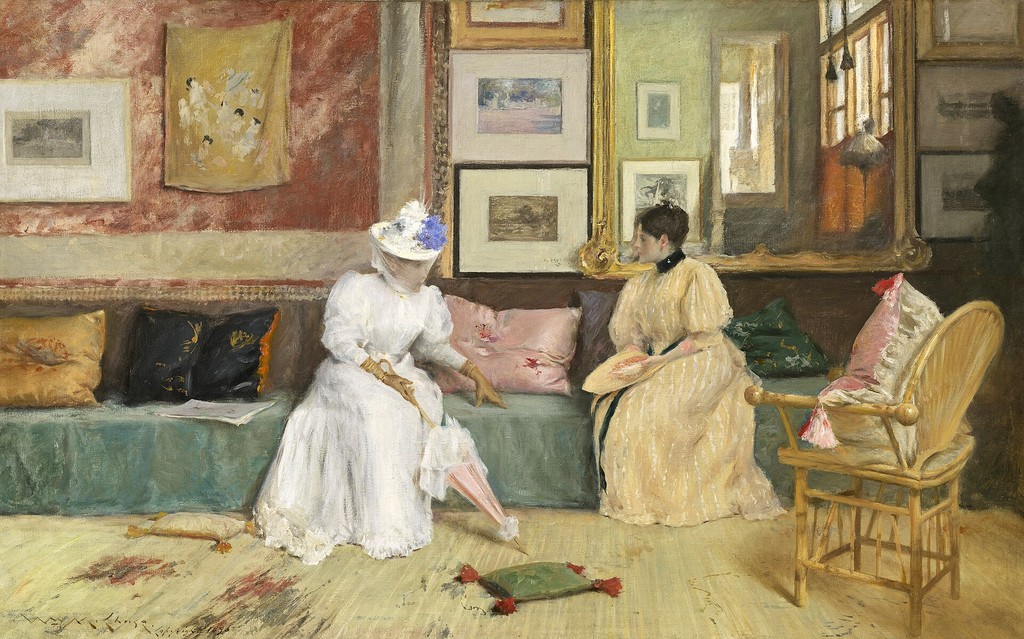
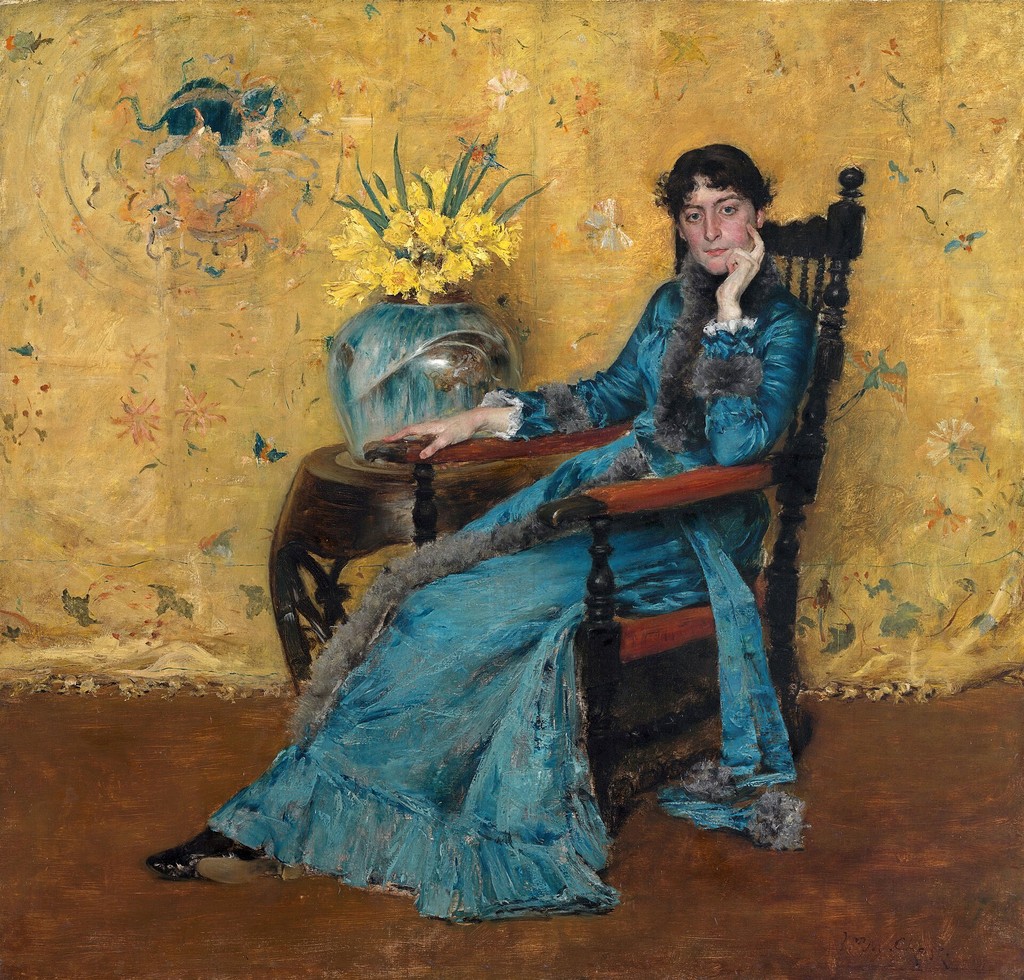
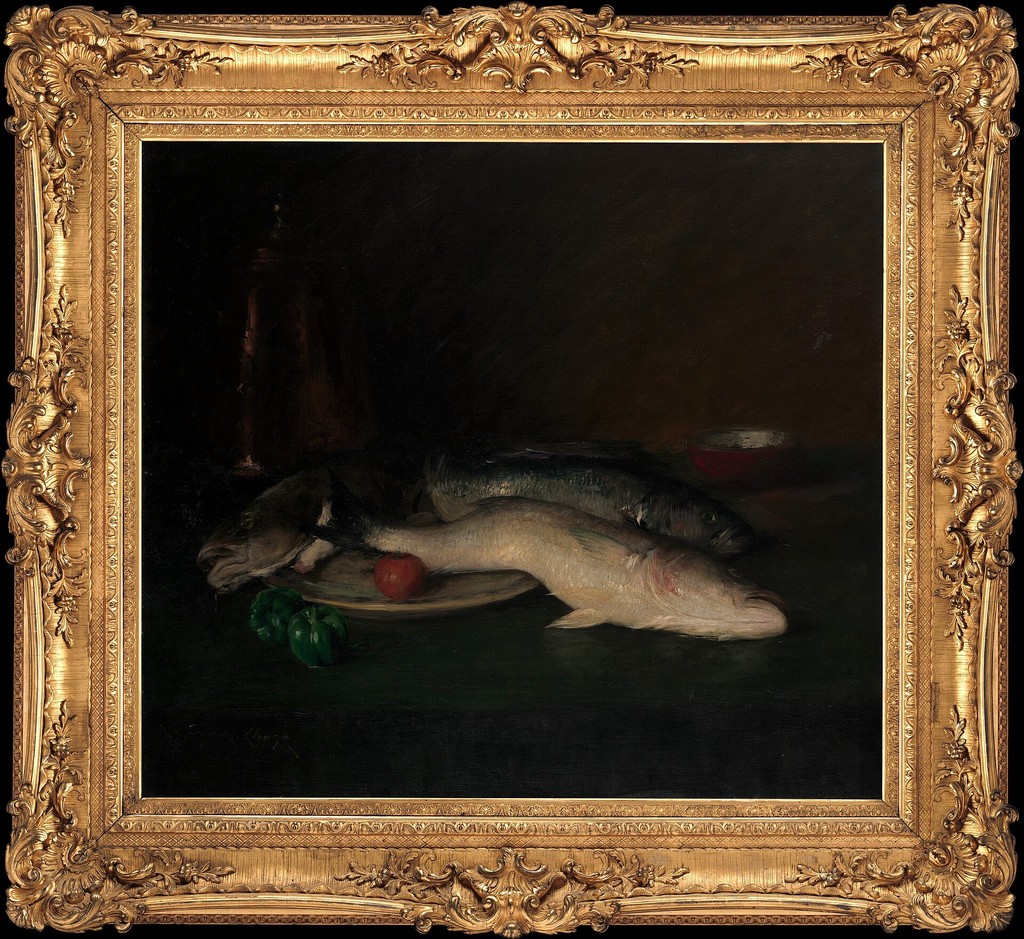
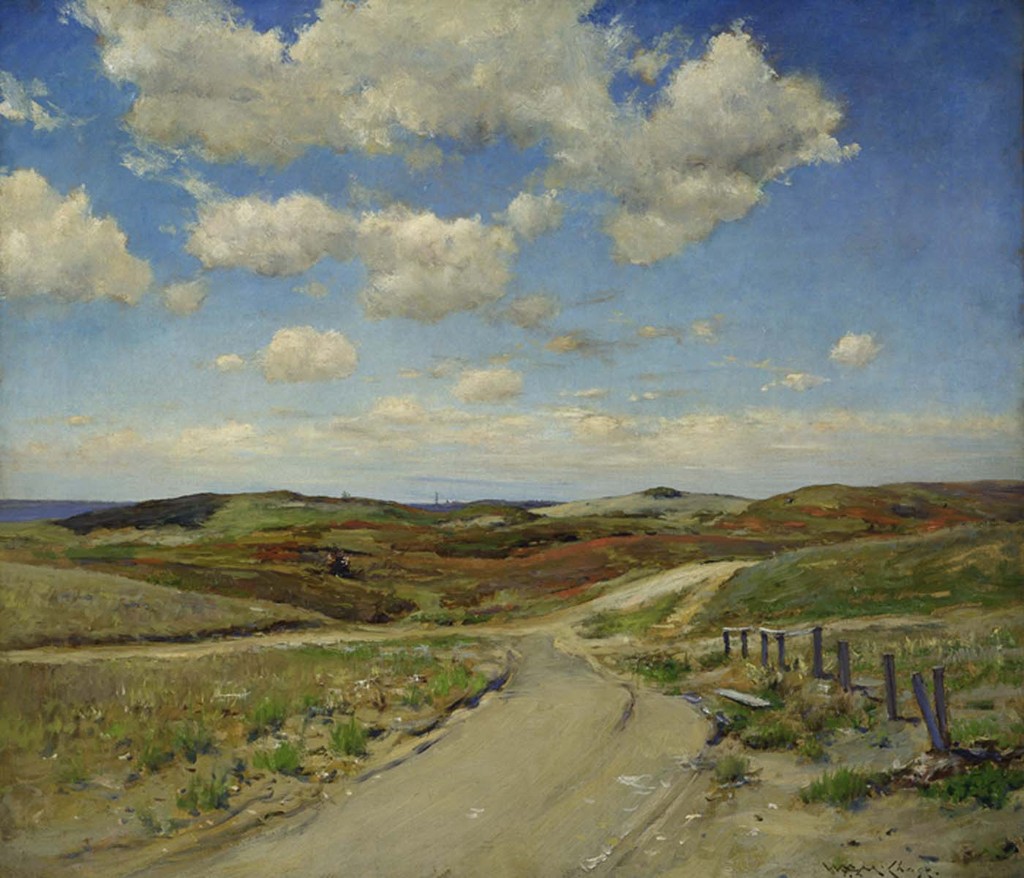
That distinction matters when a museum classifies an object as a drawing. The category identifies a broad collection area; it does not decide whether the object is an exercise. A pastel can be planned for viewing and exhibition, and its open marks can be deliberate features of its finish.
Selected William Merritt Chase work on paper
Colour That Sits on the Surface
Pastel deposits dry colour directly onto a support. Pressure can produce a forceful stroke, the side of a stick can spread a wider patch, and rubbing can soften separate particles into an atmospheric film. Because those options can coexist on one sheet, the viewer sees colour operating as line, mass and veil. The National Gallery of Art’s account of the medium’s history places Chase among artists who used pastel with painterly ambition, not simply as an adjunct to another technique.[2]
Prepared paper gives the colour a receptive ground. Its texture catches pigment, while its existing tone can participate in the image instead of being covered from edge to edge. Chase could build opacity in one passage and let a thinner application breathe elsewhere. Closely spaced strokes create volume; isolated accents retain the energy of individual contact.
This surface is especially sensitive to light. A pale pastel does not behave exactly like white oil paint suspended in a glossy binder, and a dark stroke may look velvety rather than reflective. The contrast between powdery bloom and compact colour gives Chase’s sheets much of their visual tension. Reproduction can communicate the overall design, but close looking remains important because pressure, grain and overlap carry meaning.
Looking at Study of Flesh Color and Gold
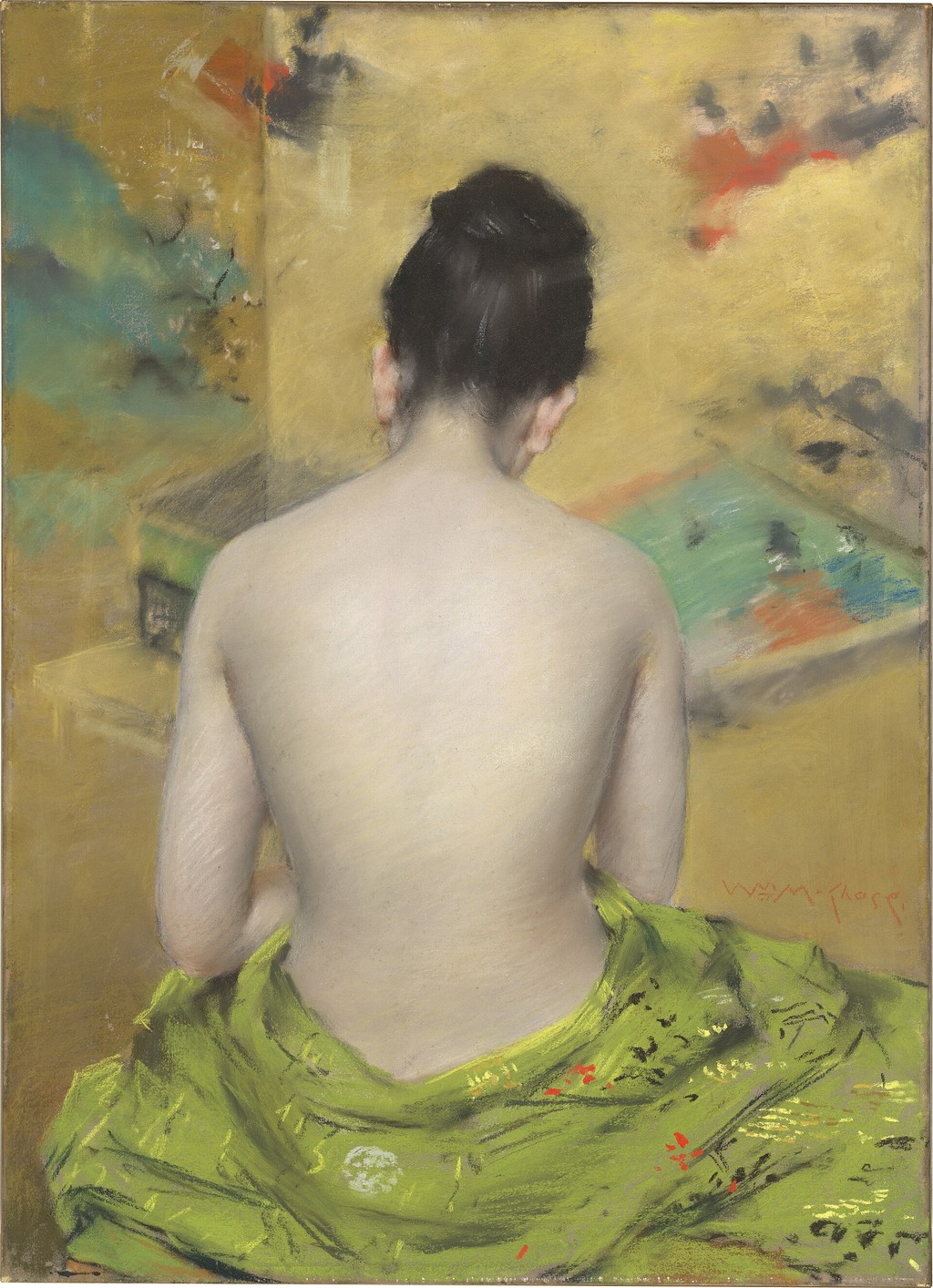
The National Gallery records Study of Flesh Color and Gold as an 1888 pastel on prepared paper, accession 2007.94.2.[3] Chase places a seated figure with a bare back at the centre. Dark hair forms a compact mass above pale shoulders, while vivid green fabric gathers around the lower body. The surrounding field is dominated by muted gold, interrupted by turquoise, orange, red, black and chalky light marks.
Different modes of handling separate and join these parts. The back is modelled through gradual tonal changes, with cooler shadows along the shoulders and spine. Hair is broader and darker. The green cloth is more openly articulated: creases run as emphatic lines, and small red or pale accents break its expanse. Behind the figure, coloured passages hover between setting and surface. They suggest decorated surroundings without requiring every form to become a named object.
The title directs attention to a relationship rather than a biography. Flesh colour and gold are not isolated swatches; each modifies the other. The warm ground makes the back’s cooler half-tones legible, while the green wrap intensifies both. Chase’s signature sits within the lower-right field, reinforcing the sheet’s status as an authored work rather than an abandoned exercise.
A Figure Study Without an Invented Sitter
The work has the concentration of portraiture without supplying the information expected from a named portrait. The figure turns away, and the institutional record does not identify the sitter. It is therefore safest to discuss the pose, body, dress and spatial construction rather than attaching a speculative name or story.
That restraint clarifies what the image actually offers. A lowered head draws the eye towards the dark-to-light transition at the neck. The arms close the silhouette at either side, and the green cloth establishes a broad base. Instead of meeting a face, the viewer follows adjustments of temperature and value across skin. “Study” in the title identifies sustained attention to this problem; it does not automatically mean preparation for a surviving oil.
The sheet also tests the border between likeness and arrangement. Chase preserves anatomical specificity while organising the sitter within large zones of black, cream, gold and green. The individual remains present, but colour structure becomes an equal subject.
From the Figure to Prospect Park
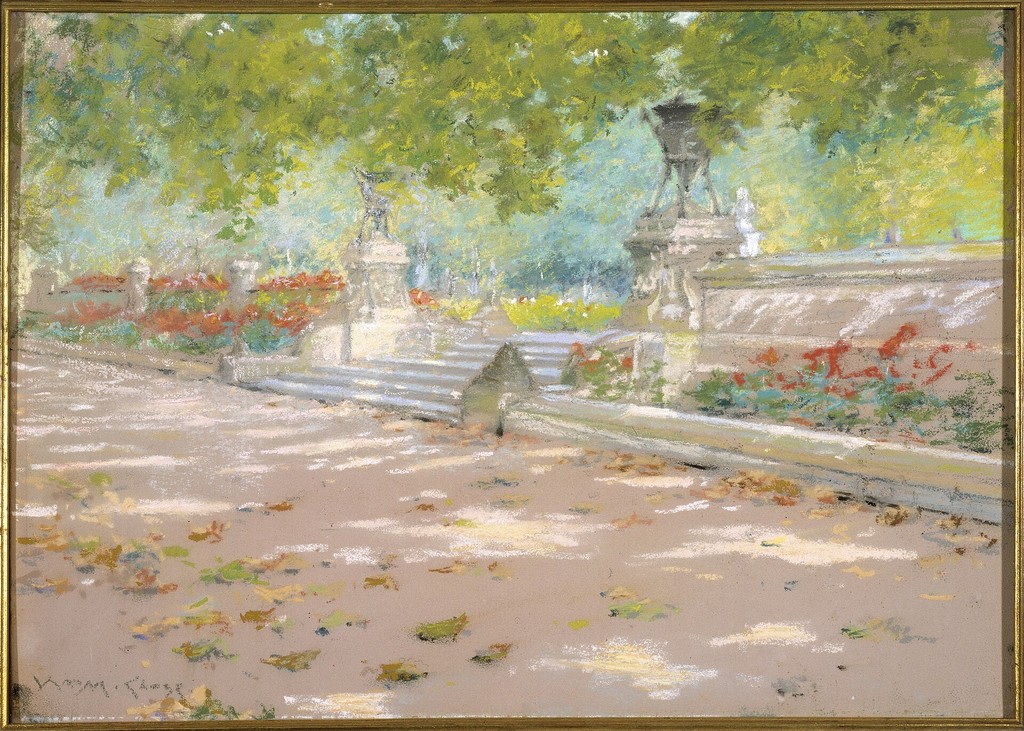
Terrace, Prospect Park, made about 1887, demonstrates a sharply different use of pastel. Measuring 23.3 × 35.2 centimetres, it is listed by the Smithsonian American Art Museum as a pastel in the drawing collection, with accession 1929.6.12.[4] Its compact horizontal field holds a broad foreground, terrace architecture, steps, vegetation and small figures.
Where the NGA figure fills a vertical sheet, the park view sends attention laterally and into depth. Pale strokes scatter across the ground like shifting illumination. Greens cluster overhead, and stronger red notes animate the planting and architecture. Short marks remain legible, yet repeated angles and bands keep the terrace from dissolving into an undifferentiated shimmer.
The comparison reveals no single “pastel look”. Study of Flesh Color and Gold uses gradual modelling to make skin feel continuous against a broken setting. Terrace, Prospect Park distributes interruptions across the whole scene, converting foliage, paving and light into a rhythm of touches. One invites sustained scrutiny of a nearby body; the other opens a momentary view across public space. Both are complete pictorial propositions.
The New York park scenes place the terrace within Chase’s broader response to metropolitan green space. They also show why a work’s apparent immediacy must be separated from an undocumented claim that every passage was executed outdoors in one sitting.
Portability, Observation and Decision
Pastel is comparatively portable: sticks, paper and a support can travel without the full equipment required for oil painting. That practical advantage suited subjects involving transient light and changing surroundings. It could encourage rapid-looking notation, especially when a figure moved or a shadow shifted.
Portability, however, tells us what was possible rather than proving a complete working sequence. The finished sheet may include decisions made across more than one interval, and later adjustment need not erase immediacy. In the Prospect Park pastel, a cropped view and widely spaced accents create freshness, but structure is equally evident in the steps, balustrade and carefully weighted foreground.
Chase’s journey from Munich to Tenth Street helps set these choices in context. The dark tonal resources of his training remained available even as he explored more open colour. Pastel let him move between the two: the NGA figure depends on a dark central anchor, while the surrounding gold and green prevent that anchor from controlling the entire key.
Giving Pastel a Public Standing
Chase did not pursue the medium in isolation. The Smithsonian American Art Museum records that he and Robert Frederick Blum helped found the Society of Painters in Pastel.[5] That limited fact supports an important point: Chase’s commitment extended beyond occasional private use to collective advocacy for pastel as an exhibiting medium.
It does not justify turning the society into a larger history without evidence. The surviving works make the artistic case directly. They ask to be judged through scale, colour, surface and composition, not by their presumed relationship to oil. Their public standing grew from what artists could make pastel do and from the structures through which such work could be shown.
How Pastel Enlarged Chase’s Practice
Pastel joined several qualities that mattered throughout Chase’s art: conspicuous handling, responsiveness to setting, tonal discipline and colour as a form of display. On prepared paper he could bring these qualities into close contact without smoothing away the history of each mark. A model’s back, folded cloth, park paving and foliage could receive radically different treatment within the same broad medium.
This range also resists the habit of describing Chase simply as an Impressionist. The park pastel’s broken light may invite that association, while the central silhouette and controlled modelling of Study of Flesh Color and Gold draw upon other habits. Chase did not need to choose permanently between them. His art gained force from keeping multiple methods active.
Begin exploring William Merritt Chase by moving between media rather than ranking them. Compare the park sheet with an oil landscape, or the unnamed figure with a formal portrait. The questions change from “What painting did this prepare?” to “What can dry colour achieve here?” That shift restores pastel to the ambitious, independent place Chase gave it.
Researched works directory
This searchable evidence census contains 208 distinct records assembled from public collection data and a reproducible Wikidata snapshot. It is not a catalogue raisonné, not a claim of complete oeuvre coverage, and it keeps works with repeated titles as separate objects.
| Name | Date | Medium |
|---|---|---|
| A City Park | 1887 | Painting |
| A Corner of My Studio | Date unknown | Painting |
| A Dutch Landscape | 1884 | Painting |
| A Friendly Call | 1895 | Painting |
| A Gray Day | 1886 | Painting |
| A Modern Magdalen | 1888 | Painting |
| A Spanish Gypsy | 1905 | Painting |
| Albert Harkness (1822–1907) | 1908 | Painting |
| Alice | 1892 | Painting |
| An Afternoon Stroll | 1895 | Painting |
| An English Cod | 1904 | Painting |
| At the Seaside | 1890 | Painting |
| August B. Loeb | 1905 | Painting |
| Baron Hugo von Habermann | 1875 | Painting |
| Beach | 1895 | Painting |
| Bessie Potter | 1895 | Painting |
| Big Copper Kettle and Fish (Fish) | Date unknown | Painting |
| Bildnis Hugo von Habermann | 1875 | Painting |
| Brass Kettle and Catfish | Date unknown | Painting |
| Carmencita | 1890 | Painting |
| Courtyard in Venice | 1877 | Painting |
| Crucifixion | 1875 | Painting |
| Der japanische Holzschnitt | 1888 | Painting |
| Dieudonnée | 1899 | Painting |
| Dorothy | 1902 | Painting |
| Dr. Eduardo San Giovanni | 1906 | Drawing |
| Duveneck Painting "The Turkish Page | 1876 | Painting |
| Edward Everett Hale (1822-1909) | 1884 | Painting |
| Edward Guthrie Kennedy | 1895 | Painting |
| Edward Steichen | 1903 | Painting |
| Female Figure Study (front view) | Date unknown | Painting |
| Female Figure Study (side view) | Date unknown | Painting |
| First Touch of Autumn | 1898 | Painting |
| Fish | 1910 | Painting |
| Fish and Still Life | 1906 | Painting |
| Fish and Still Life | 1908 | Painting |
| Florence | 1907 | Painting |
| For the Little One | 1896 | Painting |
| Garden of the Orphanage, Haarlem, Holland | 1883 | Painting |
| Gathering Autumn Flowers | 1894 | Painting |
| Gathering Flowers, Shinnecock, Long Island | 1897 | Drawing |
| Girl at a Bureau | Date unknown | Painting |
| Girl in a Japanese Costume | 1890 | Painting |
| Girl in Ciociaro costume | 1876 | Painting |
| Girl in White | 1890 | Painting |
| Girl with Doll | 1910 | Painting |
| Gray Day on the Bay | 1886 | Painting |
| Gray Day on the Lagoon | 1913 | Painting |
| Harbor Scene, Brooklyn Dock | 1886 | Painting |
| Harriet Hubbard Ayer | 1880 | Painting |
| Head of a Man | 1875 | Painting |
| Hide and Seek | 1888 | Painting |
| I Think I'm Ready Now | 1883 | Painting |
| Idle Hours | 1894 | Painting |
| In the Park (A By-path) | 1889 | Painting |
| In the Studio Corner | 1881 | Painting |
| In Venice | 1877 | Painting |
| James Abbott McNeill Whistler | 1885 | Painting |
| John Butler Talcott | 1900 | Painting |
| Just Onions (Onions; Still Life) | Date unknown | Painting |
| Keying Up" - The Court Jester | 1875 | Painting |
| Keying Up: The Court Jester | 1875 | |
| L'Éventail de plumes | Date unknown | Painting |
| Lady in Black | 1888 | Painting |
| Lady Playing Guitar | Date unknown | Painting |
| Landscape- Shinnecock, Long Island | 1896 | Painting |
| Long Island Landscape after a Shower of Rain (After the Shower) | 1889 | Painting |
| Lydia Field Emmet | 1892 | Painting |
| Man Wearing Gold Rimmed Glasses | 1892 | Painting |
| Marine | 1888 | Painting |
| Monkeying with Literature | 1877 | Painting |
| Moses Swaim | Date unknown | Painting |
| Mother and Child (The First Portrait) | 1887 | Painting |
| Mrs. Charles Scott | Date unknown | Painting |
| Mrs. Chase | 1890 | Painting |
| Mrs. Chase in Prospect Park | 1886 | Painting |
| Mrs. William Clark | 1915 | Painting |
| Mrs. William Merritt Chase | 1890 | Painting |
| My Little Daughter Dorothy | 1894 | Painting |
| My Palette | 1875 | Painting |
| Myra Reynolds | 1898 | Painting |
| Near the Beach, Shinnecock | 1895 | Painting |
| Near the Beach, Shinnecock | Date unknown | Painting |
| North River Shad | 1910 | Painting |
| Nude | 1901 | Painting |
| Open Air Breakfast | 1888 | Painting |
| Outskirts of Madrid | 1882 | Painting |
| Pablo de Sarasate: Portrait of a Violinist | 1875 | Painting |
| Park Bench | 1890 | Painting |
| Peace, Fort Hamilton | 1888 | Painting |
| Pink Azalea—Chinese Vase | 1885 | Painting |
| Portrait Head | 1882 | Painting |
| Portrait of a Boy in Van Dyck Costume | 1875 | Painting |
| Portrait of a Child | 1884 | Painting |
| Portrait of a Lady in Black | 1895 | Painting |
| Portrait of a Lady in Black (Annie Traquair Lang) | 1911 | Painting |
| Portrait of a Lady in Pink | Date unknown | Painting |
| Portrait of a Man | 1874 | Painting |
| Portrait of a Man | 1875 | Painting |
| Portrait of a Woman | Date unknown | Painting |
| Portrait of Artist Beck Wenzell | 1900 | Painting |
| Portrait of Baroness Ida-Gro van Dahlerup | 1907 | Painting |
| Portrait of Dora Wheeler | 1882 | Painting |
| Portrait of Lavinia Borden Cook | Date unknown | Painting |
| Portrait of Louis Betts | Date unknown | Painting |
| Portrait of Master Otis Barton and his Grandfather | 1903 | Painting |
| Portrait of Miss D. | Date unknown | Painting |
| Portrait of Mrs. C. (Lady with a White Shawl) | 1893 | Painting |
| Portrait of Mrs. George B. Ely (Caroline Boies Ely) | Date unknown | Painting |
| Portrait of My Daughter Alice | 1895 | Painting |
| Portrait of My Father (David Hester Chase) | Date unknown | Painting |
| Portrait of My Mother (Sarah Swaim Chase) | 1892 | Painting |
| Portrait of William Francklyn Paris | Date unknown | Painting |
| Portrait of William Gurley Munson | 1868 | Painting |
| Ready for the Ride | 1877 | Painting |
| Red Snapper | Date unknown | Painting |
| Robert Frederick Blum | Date unknown | Painting |
| Roland | 1902 | Painting |
| Roses | 1883 | Drawing |
| Seaside Flowers | 1897 | Painting |
| Selbstbildnis | 1875 | Painting |
| Selbstporträt | 1915 | Painting |
| Self-Portrait | 1909 | Drawing |
| Self Portrait | 1914 | Painting |
| Self-Portrait | 1915 | Painting |
| Self-portrait dressed as Johan Claesz Loo by Frans Hals | 1903 | Painting |
| Seventeenth Century Lady | 1895 | Painting |
| Shell Beach at Shinnecock | 1892 | Painting |
| Shinnecock Hills | 1892 | Painting |
| Shinnecock Hills | 1893 | Painting |
| Shinnecock Hills | 1895 | Painting |
| Shinnecock Hills | 1895 | Painting |
| Shinnecock Hills Landscape | 1890 | Painting |
| Shinnecock Studio Interior | 1892 | Drawing |
| Sketch for a Picture--Columbus before the Council of Salamanca (A) (Christopher Columbus before the Council of Salamanca) | 1876 | Painting |
| Sketch for a Picture--Columbus before the Council of Salamanca (B) (Christopher Columbus before the Spanish Council) | 1876 | Painting |
| Sketch of a Child:Helen | 1898 | Painting |
| St. Jerome | 1875 | Painting |
| Still Life | 1912 | Painting |
| Still Life | Date unknown | Painting |
| Still Life | Date unknown | Painting |
| Still Life | Date unknown | Painting |
| Still Life (Brass Bowl) | Date unknown | Painting |
| Still Life (Brushes, Books and Pottery) | 1904 | Painting |
| Still Life: Fish | 1900 | Painting |
| Still Life: Fish | 1903 | Painting |
| Still Life: Fish | 1908 | Painting |
| Still Life: Fish | 1912 | Painting |
| Still-life: Fish and Bowl | 1895 | Painting |
| Still Life (Fruit and Copper Pot) | Date unknown | Painting |
| Still Life (Fruit and Pottery) | Date unknown | Painting |
| Still Life--Striped Bass | 1907 | Painting |
| Still Life with Fish | 1800 | Painting |
| Still Life with Fish | 1910 | Painting |
| Still Life with Fish | 1912 | Painting |
| Still Life with Fish | Date unknown | Painting |
| Still life with fruit | 1871 | Painting |
| Still Life with Hummingbird | 1870 | Painting |
| Still Life with Watermelon | 1869 | Painting |
| Studio Interior | 1882 | Painting |
| Study Head | Date unknown | Painting |
| Study of a Girl in Japanese Dress | 1895 | Painting |
| Study of a Young Woman | 1883 | Painting |
| Study of Flesh Color and Gold | 1888 | Drawing |
| Summer at Shinnecock Hills | 1891 | Painting |
| Sunlight and Shadow, Shinnecock Hills | 1893 | Painting |
| Tenth Street Studio | 1880 | Painting |
| Terrace at the Mall | 1890 | Painting |
| Terrace, Prospect Park | 1887 | Drawing |
| The Antiquary Shop | 1879 | Painting |
| The Apprentice (Boy with Apple) | 1876 | Painting |
| The Big Brass Bowl | Date unknown | Painting |
| The Blue Kimono | 1915 | Painting |
| The Boat Harbor (Gowanus Pier) | 1888 | Painting |
| The Coast of Holland | 1884 | Painting |
| The Emerald Lady | Date unknown | Painting |
| The Family Cow (Calf's Head) | 1869 | Painting |
| The Keynote | 1915 | Painting |
| The Kimono | 1895 | Painting |
| The Mirror | 1900 | Painting |
| The Model | 1888 | Drawing |
| The Moorish Warrior | 1878 | Painting |
| The Old Road to the Sea | 1893 | Painting |
| The Patrician | 1875 | Painting |
| The Song | 1907 | Painting |
| The Stately Model | 1898 | Painting |
| The Tenth Street Studio | 1880 | Painting |
| The Tow Path | 1880 | Painting |
| The Turkish Page (Unexpected Intrusion) | 1876 | Painting |
| The Whistling Boy | 1875 | Painting |
| The Wounded Poacher | 1878 | Painting |
| The Yield of the Waters | 1878 | Painting |
| The Young Orphan | 1884 | Painting |
| Thomas E. Kirby | 1900 | Painting |
| Thomas Moran | Date unknown | Painting |
| Under a French Sky | 1882 | Painting |
| Venetian Lace Making | Date unknown | Drawing |
| View from Central Park | 1889 | Painting |
| View near Polling | 1875 | Painting |
| William A. Clark | 1915 | Painting |
| William Andrews Clark | 1915 | Painting |
| William Nimick Frew | 1915 | Painting |
| William Rockhill Nelson | 1907 | Painting |
| Wind-Swept Sands | 1894 | Painting |
| Woman in White | 1902 | Painting |
| Woman Seated | 1885 | Drawing |
| Woman Standing in a Landscape | Date unknown | Painting |
| Worthington Whittredge | 1890 | Painting |
Frequently Asked Questions
No. His pastels include resolved works intended to stand on their own. Open strokes and exposed prepared paper are parts of their visual language, not proof that an oil painting was meant to follow.
It is pastel on prepared paper, dated 1888. The National Gallery of Art holds it under accession 2007.94.2.[3]
The consulted institutional record does not identify the sitter. The figure can be described as an unnamed model seen from behind, but a specific identity should not be inferred.
Drawing is the museum’s collection classification for the object. Its stated medium remains pastel, and that category does not make the picture merely preparatory.[4]
Dry pigment lets line, rubbed tone and exposed paper coexist with unusual directness. Oil offers different possibilities of binder, layering and sheen; Chase selected each medium according to the surface and pictorial effect he wanted.
Discussion
Use this evidence-led guide as a starting point for close looking rather than a final verdict.
Share an observation about William Merritt Chase Pastels and Works on Paper or a source that adds useful context.
Reader Insights
Which comparison best reveals the range of Chase's painting and works on paper?
Where do tonal structure and open-air colour coexist rather than replace one another?
Which object would you add to the selected group, and what would it change?
Join the Conversation
Add your reading below, keeping observations specific and evidence clear.
References
- William Merritt Chase (1849–1916) — Metropolitan Museum of Art, accessed 31 August 2026, accessed 31 August 2026.
- The Touch of Color: Pastels at the National Gallery of Art — National Gallery of Art, accessed 31 August 2026, accessed 31 August 2026.
- Study of Flesh Color and Gold — National Gallery of Art, accessed 31 August 2026, accessed 31 August 2026.
- Terrace, Prospect Park — Smithsonian American Art Museum, accessed 31 August 2026, accessed 31 August 2026.
- Robert Frederick Blum — Smithsonian American Art Museum, accessed 31 August 2026, accessed 31 August 2026.