 by Tom Gurney
Tom Gurney BSc (Hons) is an art history expert with over 20 years experience
Page Created on August 31, 2026 / Page Updated on November 6, 2026
Email: tomgurney1@gmail.com / Phone: +44 7429 011000
The Tenth Street Studio: Introduction
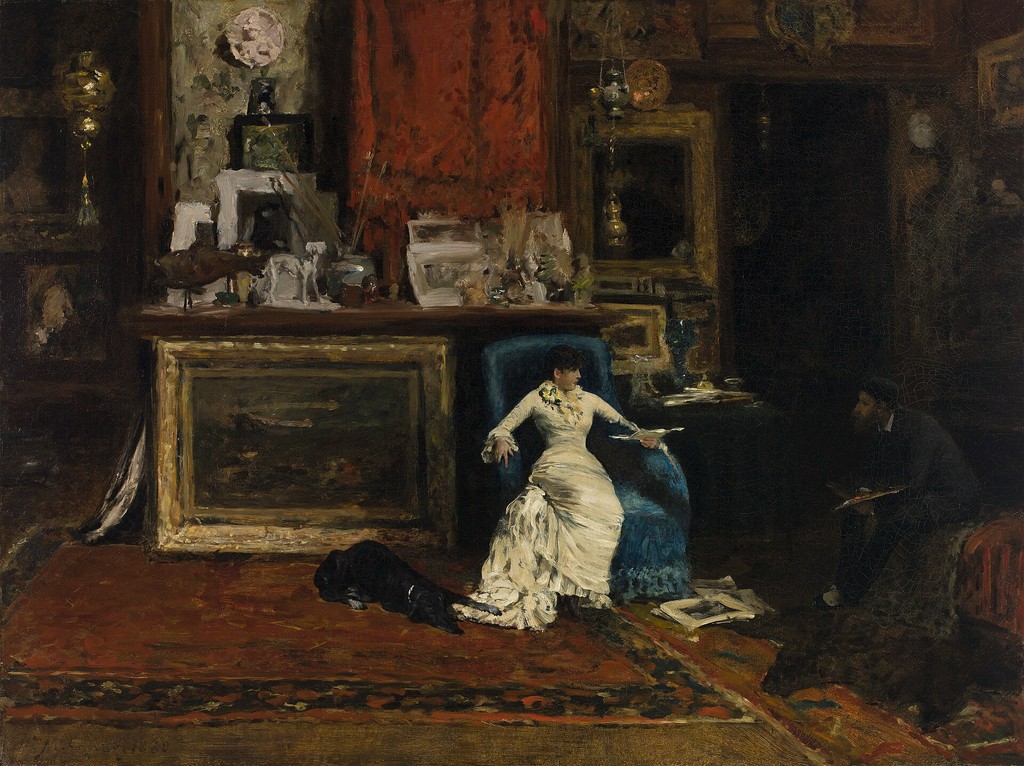
William Merritt Chase’s The Tenth Street Studio invites the eye into a room that first appears almost inexhaustible. Pictures, textiles, furniture, vessels, a reclining dog and human figures occupy a deep, dim interior. Yet the 1880 painting is not a neutral record of everything Chase owned. Strong colour fields, obscured passages and precisely spaced highlights turn abundance into design. The studio emerges at once as a place of labour, a setting for display and a stage on which cultivated looking becomes a social act.[1]
At a Glance
- ArtistWilliam Merritt Chase (1849–1916)
- Date1880
- MediumOil on canvas
- Dimensions92.1 × 122.6 cm
- CollectionSaint Louis Art Museum, accession 48:1933
- SubjectChase’s working and reception space in New York’s Tenth Street Studio Building
William Merritt Chase in context
Keying Up – The Court Jester
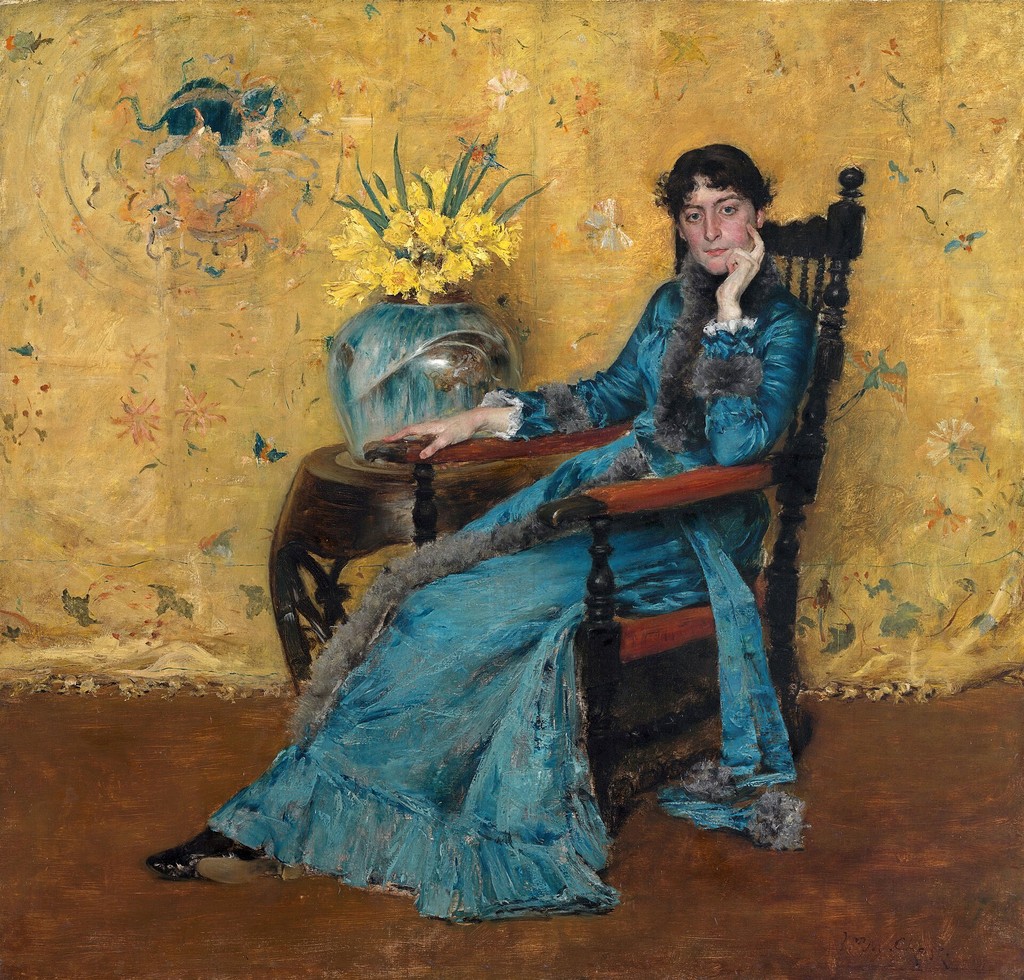
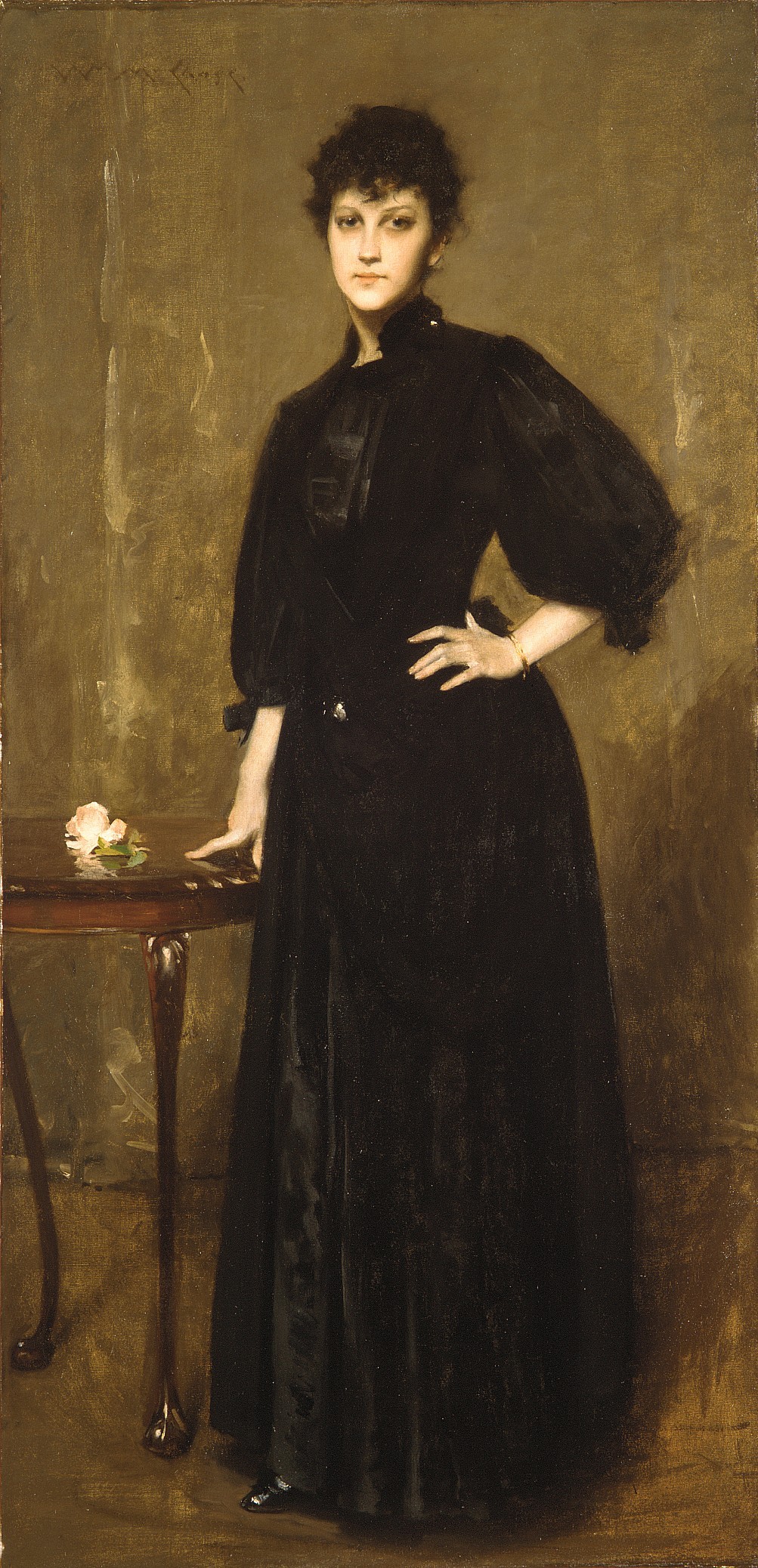
1875Portrait of Dora Wheeler
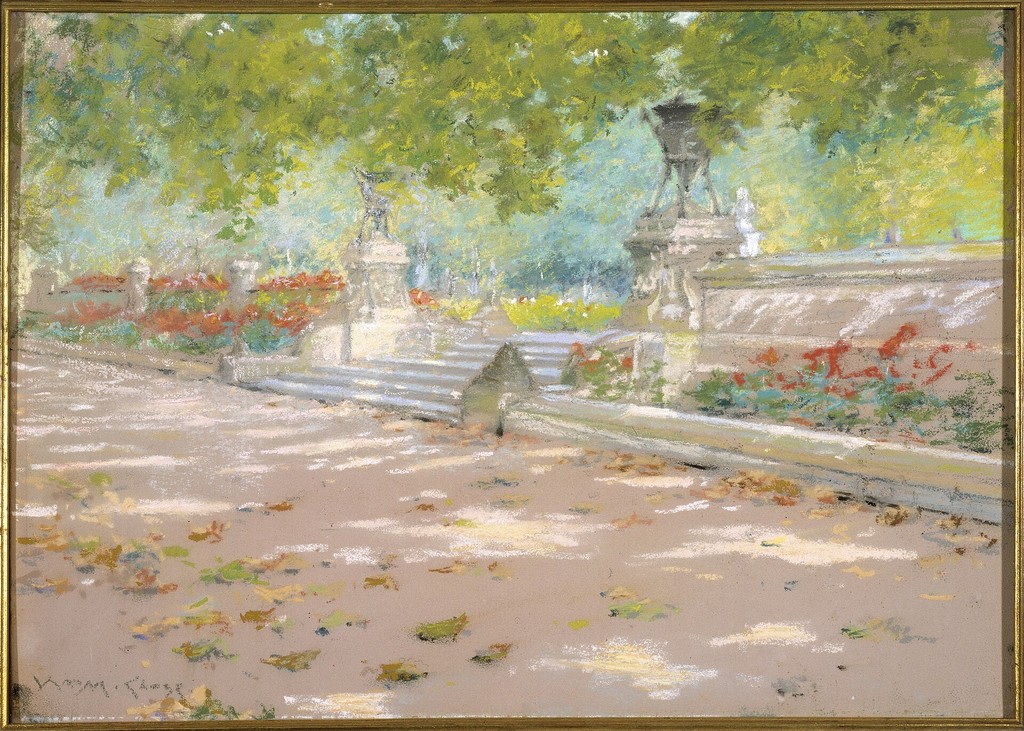
1882–83Terrace, Prospect Park
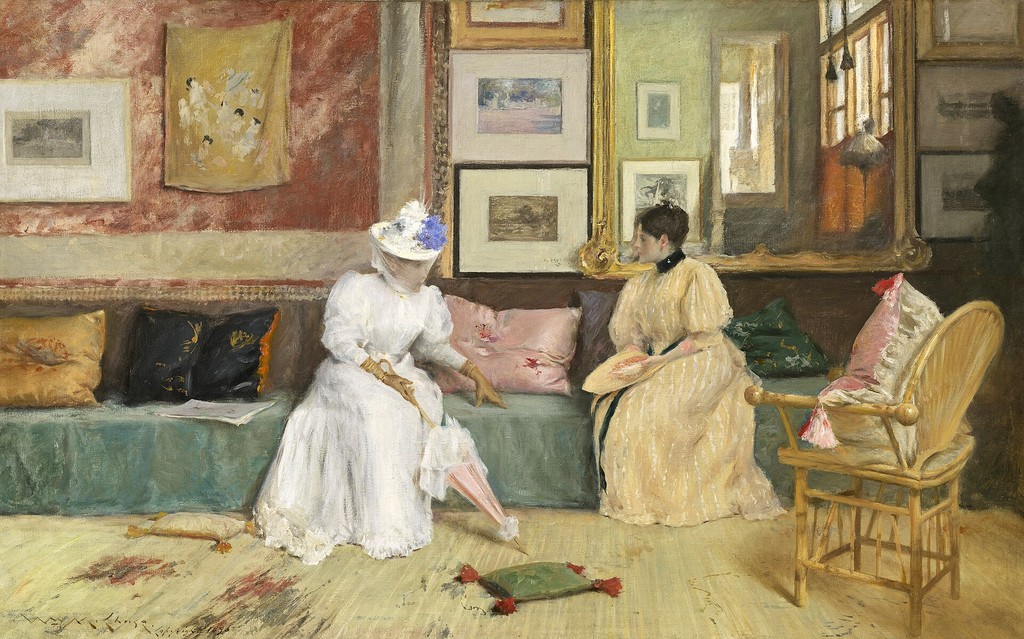
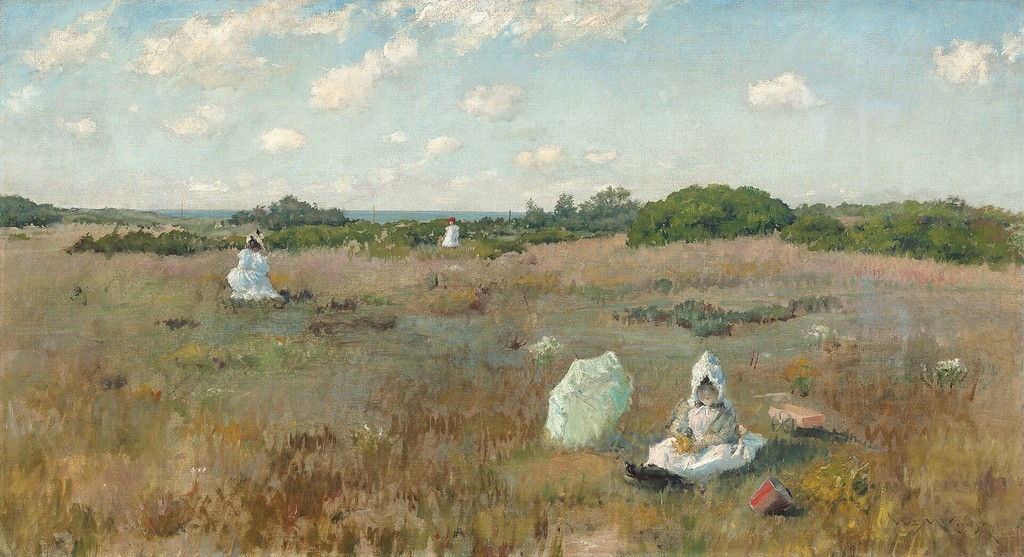
c. 1887A Friendly Call
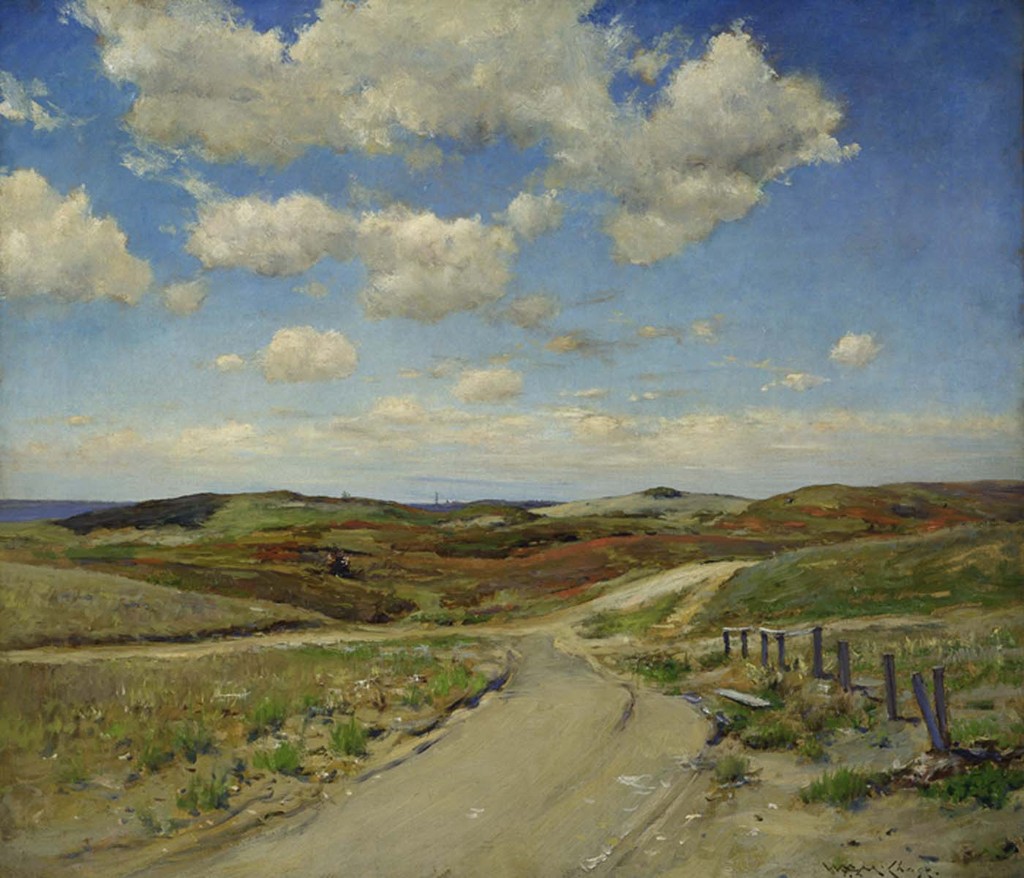
1895Shinnecock Hills
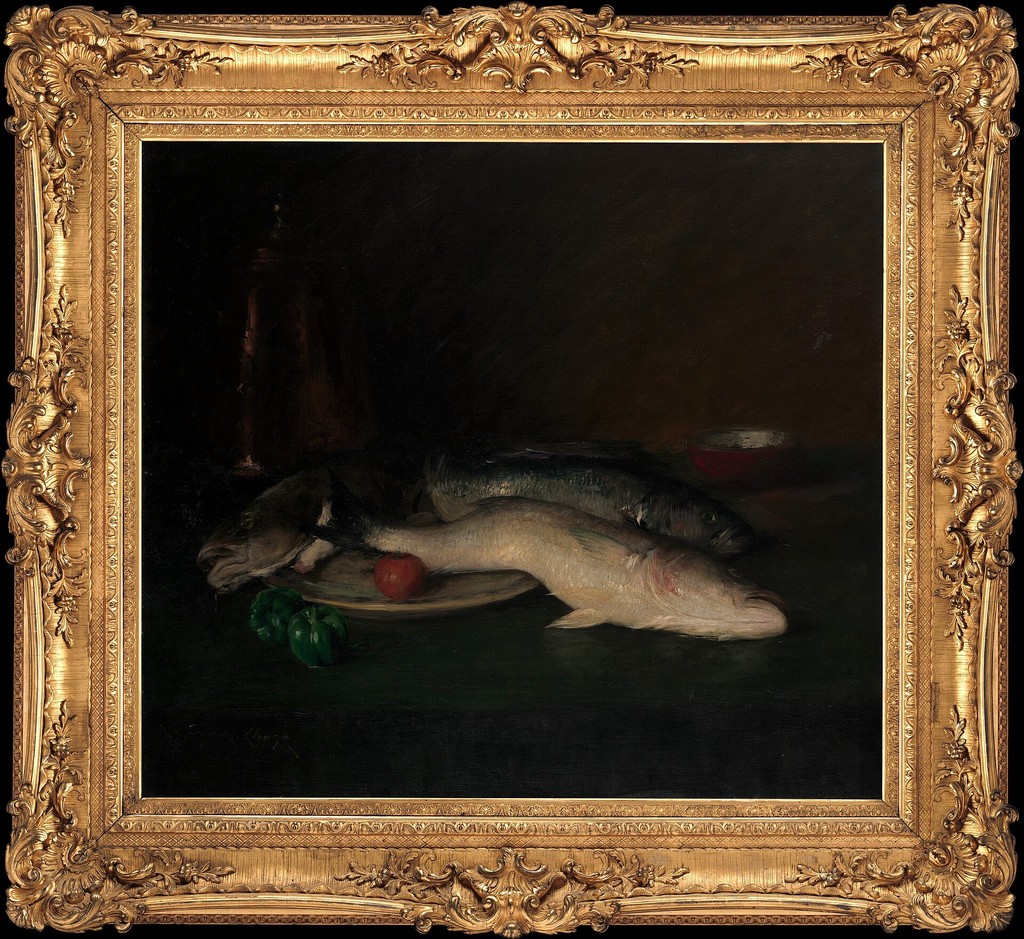
c. 1895Still Life: Fish
by 1908Contents
- Introduction
- A Dense Room with a Clear Design
- The Exact Painting
- From Munich to Tenth Street
- Workplace, Exhibition and Social Stage
- Colour, Intervals and Directed Looking
- Collecting and Cosmopolitan Self-Presentation
- Figures, Dog and the Life of the Room
- The Studio within Chase’s Career
A Dense Room with a Clear Design
The room gathers many kinds of visual claim. Framed paintings stand on the floor or overlap other objects. Fabric hangs vertically and spreads across the foreground. Metal, ceramic and glass-like surfaces catch small points of illumination. A woman in white sits in a saturated blue-green chair, while a dark dog extends across the carpet near her dress. Another human presence is partly absorbed by the shadow at the right. The painting supplies enough specificity to suggest a lived environment, but it withholds the even clarity expected from an inventory.[1][2]
Chase instead regulates what can be seen. The seated woman’s pale dress is the largest concentrated light; the chair behind her gives that light a cool chromatic boundary. A red hanging above and to the left establishes a second broad colour field. Between them, brown-black recesses slow the eye, while gilt edges and polished objects make brief, scattered flashes. Apparent crowding is held together by intervals of darkness.
The arrangement rewards movement between near and far. The carpet presses towards the viewer, but the leaning frame interrupts easy entry. Above it, stacked and suspended objects create a shallow wall of display. The scene’s people do not explain this collection; their different directions of attention make looking itself the subject. One can survey the whole, then repeatedly lose and recover individual forms.
The Exact Painting
The Saint Louis Art Museum records The Tenth Street Studio as an oil on canvas made in 1880, measuring 92.1 × 122.6 centimetres and carrying accession number 48:1933.[1] These details separate it from Chase’s other views of artistic interiors. In the Studio, A Corner of My Studio and later interiors associated with Shinnecock are distinct works, not alternate titles for this canvas.
Chase returned to the studio as a subject in changing circumstances, so a shared word in several titles does not establish a shared building or date. This canvas belongs specifically to the early New York phase following his European education.
The museum’s object record is the firm basis for identity, material and size. Identifying every pictured vessel, frame or textile would require different evidence. Some forms are deliberately abbreviated by low light and loose handling. It is safer—and more faithful to the painting—to describe their visible effects than to assign undocumented ownership histories to them.
From Munich to Tenth Street
Chase returned to New York in 1878 after training at the Munich Royal Academy and working in Venice. His European experience had developed a command of dark tonal organisation, emphatic brushwork and old-master models. Back in New York he began teaching at the Art Students League and occupied space in the Tenth Street Studio Building.[3][4] The broader journey from Munich to Tenth Street shows how those methods entered his public career.
The 1880 interior converts that history into pictorial atmosphere without illustrating it literally. Dense shadows recall the tonal resources Chase had sharpened in Munich, while the objects imply broad curiosity and international awareness. Neither feature proves a simple chain of influence. The studio offered a New York setting in which acquired techniques and cosmopolitan ambition could be presented together.
The correct return date is important. In 1878, not 1898, Chase resumed his career in New York; the chronology of his teaching and his Tenth Street occupancy confirms it.[3][4] The biography places the room within the longer sequence of his travel, institutions, family life and later work at Shinnecock.
Workplace, Exhibition and Social Stage
A studio is easily imagined as private space, but Chase’s room crossed several boundaries. He could work there, arrange completed pictures, meet sitters and students, receive other artists and host visitors. The Saint Louis Art Museum connects the display of fine objects with the social value placed on artistic taste among artists and patrons.[1] Its account of the dog also places the animal within the studio’s hospitable, inhabited character rather than treating it as incidental decoration.[2]
Display was part of professional work. How a picture was hung, its surroundings and a host’s direction of attention could all shape judgement. New canvases appeared beside older models, textiles beside painted colour, and crafted objects beside the painter’s own handling.
The canvas therefore stages sociability without becoming a group portrait. Conversation is implied rather than narrated. No dramatic gesture joins the figures, and the dog’s stillness lowers the temperature of the scene. The room holds the possibility of exchange while allowing each person to remain optically separate. Chase presents reception as a refined practice of occupying and viewing space.
Colour, Intervals and Directed Looking
The pale dress immediately attracts attention, but it does not dominate alone. Its creamy strokes are edged by the turquoise chair, then echoed more weakly in paper, ceramic and frame highlights elsewhere. Red spreads across the hanging and carpet in unequal densities. Gold catches along frames and vessels. These repeated notes make distant objects answer the central figure.
Darkness performs an equally active role. The right side does not simply lack illumination; its deep values create a pause between the brilliant chair and the half-visible figure. Above, the upper wall compresses objects into a band of subdued marks. Chase varies legibility so that recognising the room becomes a timed experience. A surface may first appear as colour, then resolve into furniture or a displayed picture.
The brushwork reinforces that rhythm. The dress is constructed with broad, twisting strokes, while small bright accents seem quickly placed. Edges sharpen where contrast is useful and dissolve where forms enter shadow. This economy belongs to Chase’s painterly control, also evident in his still-life paintings. In both settings, selective detail makes material presence more persuasive than exhaustive description would.
Collecting and Cosmopolitan Self-Presentation
The studio’s range of pictures, fabrics and crafted objects supports an interpretation of cultivated collecting. Chase positions the artist as someone who makes images and also knows how to select, compare and display them. That claim would have mattered in a city where artists competed for students, commissions, exhibition attention and patronage. The room turns taste into something spatial: it surrounds visitor and painter alike.[1][3]
Yet “self-presentation” should not imply that the interior is false, or that every object is a coded autobiography. The canvas gives a composed view, and composition always excludes as well as includes. We can see categories of things and the relationships Chase created among them; we cannot establish a complete list of his possessions from these painted marks.
A documentary inventory would stabilise each item. Chase allows objects to hover between recognition and sensation, so their cumulative effect exceeds their individual names. Cosmopolitanism is communicated through variety, arrangement and visual fluency rather than a claim dependent on one exotic object.
Figures, Dog and the Life of the Room
The seated woman is visually prominent but not presented as an isolated portrait sitter. Her light dress, relaxed posture and extended arm bind her to the chair, floor and nearby table. She appears to look across the room rather than out towards the spectator. The shadowed standing figure at right is much less legible and should not be assigned a name without secure institutional evidence. Chase makes unequal visibility part of the encounter.
The dog supplies another kind of presence. Its dark body rests horizontally across the warm foreground, bridging the carpet and the hem of the dress. The museum’s discussion of pets draws attention to the animal within this sociable setting.[2] Visually, its low shape also steadies the busy verticals of hanging fabric, frames and standing bodies. Rest is given a compositional function.
Human and animal attention create different tempos. The dog is settled; the seated figure turns; the person in shadow seems suspended at the room’s edge. None provides a single explanatory narrative. Their coexistence makes the studio feel temporarily occupied, as though an interval within a reception or working day has been selected. That open situation differs from the concentrated exchange in A Friendly Call, where two women and a quieter domestic interior shape a more intimate social geometry.
The Studio within Chase’s Career
Chase continued to explore how people, art and decorated interiors define one another. In the Portrait of Dora Wheeler, sitter and textile meet with a different balance: Wheeler’s professional identity as a designer makes decorative pattern especially meaningful. The Tenth Street Studio spreads such interplay across an entire room and distributes agency among objects, viewers and painter.
The Tenth Street space did not last indefinitely. Chase relinquished the costly studio in 1895.[3][4] That endpoint prevents the 1880 painting from standing for every phase of his life. His domestic settings, Shinnecock studios and outdoor work brought new practical and visual conditions. Even so, the earlier interior established a durable question: how could the environment of art-making become part of art’s public meaning?
Across William Merritt Chase’s paintings, the answer changes with medium and place. Here, it rests on orchestration. Colour guides the gaze through material profusion; obscurity limits certainty; figures demonstrate different modes of attention. Chase made the studio visible not merely as the place behind a finished picture, but as a cultural instrument in its own right.
Researched works directory
This searchable evidence census contains 208 distinct records assembled from public collection data and a reproducible Wikidata snapshot. It is not a catalogue raisonné, not a claim of complete oeuvre coverage, and it keeps works with repeated titles as separate objects.
| Name | Date | Medium |
|---|---|---|
| A City Park | 1887 | Painting |
| A Corner of My Studio | Date unknown | Painting |
| A Dutch Landscape | 1884 | Painting |
| A Friendly Call | 1895 | Painting |
| A Gray Day | 1886 | Painting |
| A Modern Magdalen | 1888 | Painting |
| A Spanish Gypsy | 1905 | Painting |
| Albert Harkness (1822–1907) | 1908 | Painting |
| Alice | 1892 | Painting |
| An Afternoon Stroll | 1895 | Painting |
| An English Cod | 1904 | Painting |
| At the Seaside | 1890 | Painting |
| August B. Loeb | 1905 | Painting |
| Baron Hugo von Habermann | 1875 | Painting |
| Beach | 1895 | Painting |
| Bessie Potter | 1895 | Painting |
| Big Copper Kettle and Fish (Fish) | Date unknown | Painting |
| Bildnis Hugo von Habermann | 1875 | Painting |
| Brass Kettle and Catfish | Date unknown | Painting |
| Carmencita | 1890 | Painting |
| Courtyard in Venice | 1877 | Painting |
| Crucifixion | 1875 | Painting |
| Der japanische Holzschnitt | 1888 | Painting |
| Dieudonnée | 1899 | Painting |
| Dorothy | 1902 | Painting |
| Dr. Eduardo San Giovanni | 1906 | Drawing |
| Duveneck Painting "The Turkish Page | 1876 | Painting |
| Edward Everett Hale (1822-1909) | 1884 | Painting |
| Edward Guthrie Kennedy | 1895 | Painting |
| Edward Steichen | 1903 | Painting |
| Female Figure Study (front view) | Date unknown | Painting |
| Female Figure Study (side view) | Date unknown | Painting |
| First Touch of Autumn | 1898 | Painting |
| Fish | 1910 | Painting |
| Fish and Still Life | 1906 | Painting |
| Fish and Still Life | 1908 | Painting |
| Florence | 1907 | Painting |
| For the Little One | 1896 | Painting |
| Garden of the Orphanage, Haarlem, Holland | 1883 | Painting |
| Gathering Autumn Flowers | 1894 | Painting |
| Gathering Flowers, Shinnecock, Long Island | 1897 | Drawing |
| Girl at a Bureau | Date unknown | Painting |
| Girl in a Japanese Costume | 1890 | Painting |
| Girl in Ciociaro costume | 1876 | Painting |
| Girl in White | 1890 | Painting |
| Girl with Doll | 1910 | Painting |
| Gray Day on the Bay | 1886 | Painting |
| Gray Day on the Lagoon | 1913 | Painting |
| Harbor Scene, Brooklyn Dock | 1886 | Painting |
| Harriet Hubbard Ayer | 1880 | Painting |
| Head of a Man | 1875 | Painting |
| Hide and Seek | 1888 | Painting |
| I Think I'm Ready Now | 1883 | Painting |
| Idle Hours | 1894 | Painting |
| In the Park (A By-path) | 1889 | Painting |
| In the Studio Corner | 1881 | Painting |
| In Venice | 1877 | Painting |
| James Abbott McNeill Whistler | 1885 | Painting |
| John Butler Talcott | 1900 | Painting |
| Just Onions (Onions; Still Life) | Date unknown | Painting |
| Keying Up" - The Court Jester | 1875 | Painting |
| Keying Up: The Court Jester | 1875 | |
| L'Éventail de plumes | Date unknown | Painting |
| Lady in Black | 1888 | Painting |
| Lady Playing Guitar | Date unknown | Painting |
| Landscape- Shinnecock, Long Island | 1896 | Painting |
| Long Island Landscape after a Shower of Rain (After the Shower) | 1889 | Painting |
| Lydia Field Emmet | 1892 | Painting |
| Man Wearing Gold Rimmed Glasses | 1892 | Painting |
| Marine | 1888 | Painting |
| Monkeying with Literature | 1877 | Painting |
| Moses Swaim | Date unknown | Painting |
| Mother and Child (The First Portrait) | 1887 | Painting |
| Mrs. Charles Scott | Date unknown | Painting |
| Mrs. Chase | 1890 | Painting |
| Mrs. Chase in Prospect Park | 1886 | Painting |
| Mrs. William Clark | 1915 | Painting |
| Mrs. William Merritt Chase | 1890 | Painting |
| My Little Daughter Dorothy | 1894 | Painting |
| My Palette | 1875 | Painting |
| Myra Reynolds | 1898 | Painting |
| Near the Beach, Shinnecock | 1895 | Painting |
| Near the Beach, Shinnecock | Date unknown | Painting |
| North River Shad | 1910 | Painting |
| Nude | 1901 | Painting |
| Open Air Breakfast | 1888 | Painting |
| Outskirts of Madrid | 1882 | Painting |
| Pablo de Sarasate: Portrait of a Violinist | 1875 | Painting |
| Park Bench | 1890 | Painting |
| Peace, Fort Hamilton | 1888 | Painting |
| Pink Azalea—Chinese Vase | 1885 | Painting |
| Portrait Head | 1882 | Painting |
| Portrait of a Boy in Van Dyck Costume | 1875 | Painting |
| Portrait of a Child | 1884 | Painting |
| Portrait of a Lady in Black | 1895 | Painting |
| Portrait of a Lady in Black (Annie Traquair Lang) | 1911 | Painting |
| Portrait of a Lady in Pink | Date unknown | Painting |
| Portrait of a Man | 1874 | Painting |
| Portrait of a Man | 1875 | Painting |
| Portrait of a Woman | Date unknown | Painting |
| Portrait of Artist Beck Wenzell | 1900 | Painting |
| Portrait of Baroness Ida-Gro van Dahlerup | 1907 | Painting |
| Portrait of Dora Wheeler | 1882 | Painting |
| Portrait of Lavinia Borden Cook | Date unknown | Painting |
| Portrait of Louis Betts | Date unknown | Painting |
| Portrait of Master Otis Barton and his Grandfather | 1903 | Painting |
| Portrait of Miss D. | Date unknown | Painting |
| Portrait of Mrs. C. (Lady with a White Shawl) | 1893 | Painting |
| Portrait of Mrs. George B. Ely (Caroline Boies Ely) | Date unknown | Painting |
| Portrait of My Daughter Alice | 1895 | Painting |
| Portrait of My Father (David Hester Chase) | Date unknown | Painting |
| Portrait of My Mother (Sarah Swaim Chase) | 1892 | Painting |
| Portrait of William Francklyn Paris | Date unknown | Painting |
| Portrait of William Gurley Munson | 1868 | Painting |
| Ready for the Ride | 1877 | Painting |
| Red Snapper | Date unknown | Painting |
| Robert Frederick Blum | Date unknown | Painting |
| Roland | 1902 | Painting |
| Roses | 1883 | Drawing |
| Seaside Flowers | 1897 | Painting |
| Selbstbildnis | 1875 | Painting |
| Selbstporträt | 1915 | Painting |
| Self-Portrait | 1909 | Drawing |
| Self Portrait | 1914 | Painting |
| Self-Portrait | 1915 | Painting |
| Self-portrait dressed as Johan Claesz Loo by Frans Hals | 1903 | Painting |
| Seventeenth Century Lady | 1895 | Painting |
| Shell Beach at Shinnecock | 1892 | Painting |
| Shinnecock Hills | 1892 | Painting |
| Shinnecock Hills | 1893 | Painting |
| Shinnecock Hills | 1895 | Painting |
| Shinnecock Hills | 1895 | Painting |
| Shinnecock Hills Landscape | 1890 | Painting |
| Shinnecock Studio Interior | 1892 | Drawing |
| Sketch for a Picture--Columbus before the Council of Salamanca (A) (Christopher Columbus before the Council of Salamanca) | 1876 | Painting |
| Sketch for a Picture--Columbus before the Council of Salamanca (B) (Christopher Columbus before the Spanish Council) | 1876 | Painting |
| Sketch of a Child:Helen | 1898 | Painting |
| St. Jerome | 1875 | Painting |
| Still Life | 1912 | Painting |
| Still Life | Date unknown | Painting |
| Still Life | Date unknown | Painting |
| Still Life | Date unknown | Painting |
| Still Life (Brass Bowl) | Date unknown | Painting |
| Still Life (Brushes, Books and Pottery) | 1904 | Painting |
| Still Life: Fish | 1900 | Painting |
| Still Life: Fish | 1903 | Painting |
| Still Life: Fish | 1908 | Painting |
| Still Life: Fish | 1912 | Painting |
| Still-life: Fish and Bowl | 1895 | Painting |
| Still Life (Fruit and Copper Pot) | Date unknown | Painting |
| Still Life (Fruit and Pottery) | Date unknown | Painting |
| Still Life--Striped Bass | 1907 | Painting |
| Still Life with Fish | 1800 | Painting |
| Still Life with Fish | 1910 | Painting |
| Still Life with Fish | 1912 | Painting |
| Still Life with Fish | Date unknown | Painting |
| Still life with fruit | 1871 | Painting |
| Still Life with Hummingbird | 1870 | Painting |
| Still Life with Watermelon | 1869 | Painting |
| Studio Interior | 1882 | Painting |
| Study Head | Date unknown | Painting |
| Study of a Girl in Japanese Dress | 1895 | Painting |
| Study of a Young Woman | 1883 | Painting |
| Study of Flesh Color and Gold | 1888 | Drawing |
| Summer at Shinnecock Hills | 1891 | Painting |
| Sunlight and Shadow, Shinnecock Hills | 1893 | Painting |
| Tenth Street Studio | 1880 | Painting |
| Terrace at the Mall | 1890 | Painting |
| Terrace, Prospect Park | 1887 | Drawing |
| The Antiquary Shop | 1879 | Painting |
| The Apprentice (Boy with Apple) | 1876 | Painting |
| The Big Brass Bowl | Date unknown | Painting |
| The Blue Kimono | 1915 | Painting |
| The Boat Harbor (Gowanus Pier) | 1888 | Painting |
| The Coast of Holland | 1884 | Painting |
| The Emerald Lady | Date unknown | Painting |
| The Family Cow (Calf's Head) | 1869 | Painting |
| The Keynote | 1915 | Painting |
| The Kimono | 1895 | Painting |
| The Mirror | 1900 | Painting |
| The Model | 1888 | Drawing |
| The Moorish Warrior | 1878 | Painting |
| The Old Road to the Sea | 1893 | Painting |
| The Patrician | 1875 | Painting |
| The Song | 1907 | Painting |
| The Stately Model | 1898 | Painting |
| The Tenth Street Studio | 1880 | Painting |
| The Tow Path | 1880 | Painting |
| The Turkish Page (Unexpected Intrusion) | 1876 | Painting |
| The Whistling Boy | 1875 | Painting |
| The Wounded Poacher | 1878 | Painting |
| The Yield of the Waters | 1878 | Painting |
| The Young Orphan | 1884 | Painting |
| Thomas E. Kirby | 1900 | Painting |
| Thomas Moran | Date unknown | Painting |
| Under a French Sky | 1882 | Painting |
| Venetian Lace Making | Date unknown | Drawing |
| View from Central Park | 1889 | Painting |
| View near Polling | 1875 | Painting |
| William A. Clark | 1915 | Painting |
| William Andrews Clark | 1915 | Painting |
| William Nimick Frew | 1915 | Painting |
| William Rockhill Nelson | 1907 | Painting |
| Wind-Swept Sands | 1894 | Painting |
| Woman in White | 1902 | Painting |
| Woman Seated | 1885 | Drawing |
| Woman Standing in a Landscape | Date unknown | Painting |
| Worthington Whittredge | 1890 | Painting |
Frequently Asked Questions
He painted it in 1880, two years after his documented 1878 return to New York. It belongs to the early period of his occupancy in the Tenth Street Studio Building.[1][3]
The painting is in the Saint Louis Art Museum. Its accession number is 48:1933.[1]
It is an oil painting on canvas measuring 92.1 × 122.6 centimetres.[1]
No. It represents his studio through selection, compression and painterly abbreviation. The objects support institutional interpretations of cultivated display, but the canvas cannot authenticate every item as a documented personal possession.[1]
Discussion
Use this evidence-led guide as a starting point for close looking rather than a final verdict.
Share an observation about The Tenth Street Studio or a source that adds useful context.
Reader Insights
Which visible detail most changes your reading of The Tenth Street Studio?
How do medium, scale, setting and current museum evidence shape the encounter?
What remains uncertain once documented fact is separated from visual inference?
Join the Conversation
Add your reading below, keeping observations specific and evidence clear.
References
- The Tenth Street Studio — Saint Louis Art Museum, accessed 31 August 2026, accessed 31 August 2026.
- Pets of the Past — Saint Louis Art Museum, accessed 31 August 2026, accessed 31 August 2026.
- William Merritt Chase (1849–1916) — Metropolitan Museum of Art, accessed 31 August 2026, accessed 31 August 2026.
- American Paintings of the Nineteenth Century, Part I — National Gallery of Art, accessed 31 August 2026, accessed 31 August 2026.