 by Tom Gurney
Tom Gurney BSc (Hons) is an art history expert with over 20 years experience
Published on July 28, 2026 / Updated on October 16, 2026
Email: tomgurney1@gmail.com / Phone: +44 7429 011000
Gustave Dore and Dante's Divine Comedy
Gustave Dore's illustrations for Dante's Divine Comedy are one of the great nineteenth-century attempts to turn a literary world into a visual one. They are not merely decorations for a famous poem. They are a complete journey in black and white: a descent through Hell, an ascent through purification and a final movement toward Paradise. Dore made Dante's afterlife architectural, crowded, atmospheric and unforgettable.
The project began with Inferno, published by Hachette in Paris in 1861. Cornell University Library describes the edition as an expensive and ambitious folio project that Hachette first declined, leaving Dore to finance the first limited edition himself. The success of that edition led Hachette to reprint Inferno and later publish the second volume, containing Purgatorio and Paradiso, in 1868. Cornell also notes that the illustrated Dante volumes appeared in multiple European languages and became international best-sellers.
That history matters because it shows Dore taking a risk. He was already famous, but the Dante project asked for a different scale of commitment. Inferno was not a small illustrated gift book. It was a costly large-format undertaking, built around whole-page images and the authority of one of European literature's central poems. Dore's decision to pursue it helped define his reputation as the illustrator of major classics.
The British Museum records the 1861 Hachette Inferno volume as containing seventy-five whole-page wood engravings after Dore, with a frontispiece portrait of Dante and plates accompanied by verse and chapter information. The Morgan Library records the same Paris Hachette Inferno with seventy-five leaves of plates and a portrait. The Met's 1866 English Vision of Hell record shows how the imagery moved into English-language publishing through Henry Francis Cary's translation and Cassell, Petter and Galpin in London. Together, these sources show a project that began in Paris and quickly became international.
Dore's Dante belongs beside his Bible, Milton, Don Quixote, Perrault, La Fontaine and London projects as a major Series. It is also distinct from them. The Bible gave him sacred history; Milton gave him epic rebellion; London gave him the modern city; Dante gave him a mapped afterlife. The Divine Comedy is a poem of movement through spaces, and Dore answered it by making those spaces feel immense.
At a Glance
- First volumeInferno, Paris, Hachette, 1861
- Publication storyDoré helped finance the first Inferno edition before later Hachette editions expanded the project
- Plate structureLarge full-page wood engravings after Doré's designs
- Internal anchorPortrait of Dante Alighieri
- Series roleDoré's clearest visual journey through moral space
Contents
- Why Dante Was a Breakthrough for Dore
- Inferno as Architecture
- Dante and Virgil as Recurring Figures
- The Wood of the Suicides and the Romantic Forest
- Paolo, Francesca and the Problem of Pity
- Purgatorio and the Turn Toward Ascent
- Paradiso and the Limits of Illustration
- Wood Engraving, Engravers and Reproduction
- The Divine Comedy Among Dore's Series
- Text, Plate and Reader
- The International Dante
- From Printed Inferno to Salon Painting
Why Dante Was a Breakthrough for Dore
Dore's Dante was a breakthrough because it joined personal ambition to a text that already carried enormous cultural authority. Inferno had been illustrated before. Dante's poem had a long visual history stretching from manuscript illumination and early printed editions to Romantic painters and nineteenth-century book culture. Dore entered that history with a modern illustrated volume whose scale, darkness and theatricality suited both the poem and the age of reproductive print.
Musee d'Orsay places Dore at the forefront of the Parisian art scene in 1861 through his Dante's Inferno illustrations and the related monumental painting Dante and Virgil. That pairing is important. Dore was not treating Dante only as a book commission. He was using Dante to declare himself across media: printed illustration on one side, large-scale painting on the other. The project let him claim literary, graphic and painterly ambition at once.
Cornell's account makes the risk clear. Dore approached Hachette with an expensive Inferno proposal, but the publisher initially refused. Dore paid for the first limited edition himself. The edition succeeded, and Hachette followed with wider publication. This story explains why the Dante series became so central to Dore's public identity. It was not simply assigned to him. He pursued it.
The format also mattered. A folio Dante with whole-page plates invited readers to pause before images as major events. Dore was not sprinkling small vignettes through text. He was creating large visual stations along the journey. That structure suited Inferno especially well. Hell in Dante is already a series of places, punishments and encounters. Dore could turn each plate into a threshold: a wood, a gate, a circle, a river, a pit, a cliff, a frozen lake.
The result placed Dore's imagination in the service of one of the most visual poems in European literature. Dante writes in precise images: dark wood, steep mountain, entrances, winds, tombs, rivers of blood, burning sands, fraudulent pits, giants, ice, stars. Dore did not need to invent the poem's visuality from nothing. His achievement was to make it coherent in the language of nineteenth-century wood engraving.
Inferno as Architecture
Dore's Inferno works because it treats Hell as architecture. The poem is not a loose set of frightening scenes. It is a structured descent through circles, thresholds and moral geography. Dore understood that. His plates often make space feel as important as the figures within it.
In Inferno, Dante and Virgil move through a world that must be crossed. Dore repeatedly places the two figures small within enormous settings: a wood, a cliff, a gate, a crowd, a river, a cavern, an icy field. This compositional habit gives the viewer a sense of scale. The pilgrim and guide are necessary, but Hell is larger than them. They are witnesses inside a system.
The British Museum record emphasizes the book's whole-page wood engravings and the use of guard sheets with verse and chapter information. That structure reinforces the sense of stations. Each plate belongs to a textual moment, but the image asks to be seen as a world. Readers move from passage to plate, from verse to visual space, and then onward through the poem.
Dore's architectural imagination is not limited to buildings. Even natural forms become structures of judgement. Trees in the Wood of the Suicides twist into a dark net. Rocks become moral cliffs. Rivers divide territories. Flames, winds and ice organize bodies. In Dore's Inferno, punishment is not only something that happens to figures; it is built into the place around them.
This is one reason the series became so influential. It gave readers a spatial memory for Dante. One may not remember every canto, but Dore's Hell feels mapped: steep, dark, crowded, vertical and immense. He makes the afterlife legible as a sequence of environments.
Dante and Virgil as Recurring Figures
Dante and Virgil are the series' thread. Without them, the plates might become a gallery of punishments. With them, the reader sees the journey continue. Dore often uses the two figures to anchor scenes that would otherwise overwhelm the eye.
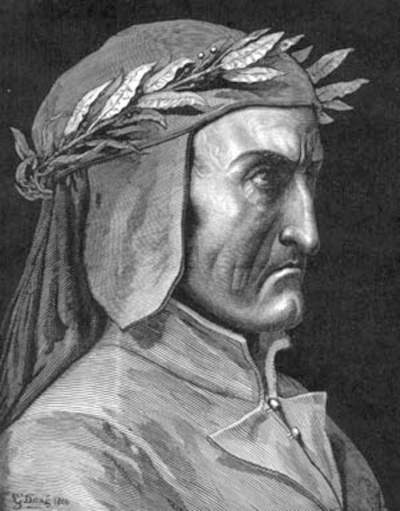
The existing Portrait of Dante Alighieri page introduces the author before the journey begins. Cornell identifies that portrait as the frontispiece to Dore's 1861 illustrated Inferno and describes its laurel crown, medieval cap and upward gaze. The portrait is not an episode. It is a threshold image. It gives the reader Dante as poetic authority before the pilgrim Dante enters the poem's world.
Inside the narrative plates, Dante and Virgil are usually smaller, mobile and exposed. They stand, lean, recoil, gesture or watch. Their scale against the surrounding scene tells us how large the afterlife is. Their gestures tell us how to read the event emotionally. Virgil often steadies the journey; Dante often responds with fear, pity or astonishment.
The BnF record for the Inferno plate known by its line from Canto II identifies the image as an 1861 wood engraving after Dore, engraved by Heliodore Pisan, and gives the illustration-table title Virgile et Dante. That title is plain, but it captures a structural truth. The two travellers are not incidental. They are the visual grammar of the journey.
Dore's repeated use of the pair also gives the series rhythm. Plate after plate, the viewer looks for the travellers and measures the scene through them. Sometimes they are near the foreground; sometimes they are almost lost in the environment. Their presence turns Hell from spectacle into pilgrimage. We are not merely looking at horrors. We are following a path through them.
The Wood of the Suicides and the Romantic Forest
Cornell's Visions of Dante exhibition gives a vivid object example from Dore's series: Inferno, Canto 13, The Wood of the Suicides, in a Dutch edition from 1877. Cornell describes the image as a wood engraving and explains how the forest becomes a supernatural site. The souls who committed violence against themselves have been transformed into trees, and Harpies feed among the branches.
The subject was ideal for Dore. It allowed him to combine literary horror, forest darkness and bodily transformation. The image is not simply a landscape. It is a moral condition turned into vegetation. The trees are not passive scenery. They are punished bodies.
This is where Dore's Dante overlaps with Romantic and Gothic visual habits. Cornell notes the nineteenth-century revival of the medieval forest as a place of supernatural occurrence. Dore's forest does not invite picturesque wandering. It traps the eye. Branches twist, darkness thickens and organic forms become unsettling. The landscape becomes a psychological and moral space.
The Wood of the Suicides also shows why Dore's black-and-white medium was so effective. A colour image might make the forest strange through hue; Dore makes it strange through line, density and silhouette. Black branches cross the page like a net. Space becomes tangled. The viewer feels the pressure of the scene before fully parsing the story.
This ability to turn environment into emotion runs throughout the Dante series. Dore's Hell is not a neutral setting filled with episodes. Each place feels designed to express a moral state. The forest punishes through rootedness and distortion. The winds punish through motion. The ice punishes through stillness. The architecture of Hell is also the psychology of Hell.
Paolo, Francesca and the Problem of Pity
Dore's Dante is not only terrifying. It is also deeply concerned with pity. Few Inferno subjects test that more powerfully than Paolo and Francesca, the lovers swept by the winds of the second circle. The British Museum records a mid-nineteenth-century wood engraving after Dore showing Paolo and Francesca in the inferno with Dante beneath them. The subject became one of the best-known emotional moments in Dante illustration.
The episode matters because it complicates the viewer's response. Inferno is a place of judgement, but Dante the pilgrim repeatedly feels pity for the damned. In the Paolo and Francesca episode, that pity becomes almost overwhelming. The lovers' story is beautiful, tragic and morally dangerous at once.
Dore's visual challenge is to show motion and sympathy without dissolving the scene into sentimental romance. The lovers are not simply embracing in a neutral space. They are caught in a punitive atmosphere. The wind carries them. Dante below becomes the witness whose compassion threatens to overcome him.
This is one of Dore's great strengths as an illustrator: he can hold contradictory responses in one image. The viewer may feel tenderness toward the lovers, dread at the surrounding space, and awareness that the poem is not asking for simple approval. Dore's composition gives emotional access without erasing the structure of Hell.
The Paolo and Francesca subject also shows how Dore's Dante could travel beyond the book. It offered later readers and viewers a memorable visual shorthand for tragic love, punishment and pity. Like the Bible illustrations, the Dante plates could be reproduced, excerpted and remembered as individual images while still belonging to a larger sequence.
Purgatorio and the Turn Toward Ascent
If Inferno made Dore famous, the full Divine Comedy required more than darkness. Purgatorio and Paradiso demanded a different visual language: ascent, cleansing, instruction, memory, repentance and increasing light. Cornell records that Hachette followed the Inferno success with an 1868 volume containing Purgatorio and Paradiso. The second volume changed the visual problem.
Purgatorio is still dramatic, but it is not Hell. It is a mountain, a process of purification, a place where suffering is directed toward healing. Dore had to make spiritual progress visible. The movement is upward rather than downward. The bodies still suffer, but their suffering belongs to hope.
Cornell's object entry for Purgatorio, Canto 31, Dante Baptized a Second Time, gives a useful example. The image belongs to Le Purgatoire et le Paradis de Dante Alighieri, published by Hachette in Paris in 1868. Cornell explains the scene as part of Beatrice's complex role: chastisement, forgiveness and ritual transformation through the waters of Lethe.
That subject shows how different Purgatorio is from Inferno. The emotional centre is not only terror or pity but purification. Water matters differently from the rivers and marshes of Hell. It becomes a medium of forgetting, renewal and transition. Dore's challenge is to make the scene solemn without making it inert.
Purgatorio also gives Beatrice a stronger visual presence. Virgil has guided Dante through Hell, but Beatrice belongs to the higher movement of the poem. She is not just a beloved woman. She is connected to grace, memory, rebuke and salvation. Dore's Purgatorio images have to negotiate that theological and emotional complexity.
This guide makes room for this turn. Dore's Dante cannot be reduced to Inferno, even though Inferno is the most famous and visually forceful part of the project. The full achievement lies in the journey from darkness toward light.
Paradiso and the Limits of Illustration
Paradiso posed the hardest challenge. Hell offers bodies, punishments, monsters, landscapes and architecture. Purgatory offers a mountain, souls, rituals and Beatrice. Paradise asks for increasing degrees of light, theology and vision. It becomes less obviously pictorial as the poem rises.
Dore's strength as an illustrator came from making invisible states visible. In Paradiso, that strength is tested. The subject is no longer simply a place to be crossed or a punishment to be witnessed. It is a vision of spiritual order that approaches the limits of representation. The illustrator has to decide how much to show, how much to suggest, and how to keep the reader oriented as the poem becomes more luminous and abstract.
This is why the Dante series belongs with Dore's Bible and Milton projects. All three ask him to picture what cannot be directly seen: creation, heaven, hell, angels, divine judgement, spiritual ascent. But each does so differently. The Bible gives sacred history in episodes. Milton gives epic cosmic narrative. Dante gives a guided journey through moral and theological space.
Paradiso also shows the usefulness of Dore's habit of placing small figures against vast settings. Dante and Beatrice can become points of human scale inside a larger order of light. The viewer understands that the figures are not mastering the space; they are being admitted into it.
The danger is spectacle without clarity. Dore avoids that danger most effectively when he keeps the journey legible: figures, direction, light and spatial hierarchy. The result may be less immediately dramatic than Inferno, but it completes the series' arc. Without Paradiso, Dore's Dante would be only darkness. With it, the project becomes a journey from confusion toward vision.
Wood Engraving, Engravers and Reproduction
Dore's Dante reached the public through wood engraving. That fact is essential. The British Museum records the 1861 Inferno as wood engraving and names multiple printmakers associated with the volume, including Heliodore Pisan, Francois Pannemaker, Ernest Boetzel, Louis Dumont and others. The Met's English Vision of Hell record identifies Heliodore-Joseph Pisan as engraver for one Inferno plate, and notes Dore's practice of using tonal designs on wood blocks that engravers interpreted into lines and dots.
This production chain shaped the look of the series. Dore supplied the designs, but the printed image depended on translation. Darkness, mist, rock, flesh, water, flame, clouds and crowd textures all had to become engraved marks. The success of the Dante illustrations rests on this collaboration between imagination and craft.
The process also helps explain why the images circulated so widely. A painting can be seen by those who visit it; a book engraving can travel through editions, languages and markets. Cornell notes the international publication history of the Dante illustrations, and the Met record situates Dore among illustrated classics reproduced across European cities. The Dante images became famous because they were reproducible.
The engravers' role is especially important in Inferno. Dore's Hell depends on a wide tonal vocabulary. Some scenes need deep blackness; others need mist, flames, icy light or crowded movement. The engraver had to preserve the drama while making the image printable. Too much black and the scene would close; too much clarity and Hell would lose its pressure. The best plates hold that balance.
This is why Dante's Divine Comedy belongs with the Engravings page. The Series is literary, but its public form is also technical. Readers encountered Dore through printed surfaces, not only through the idea of his drawings. Understanding the series means understanding the page as a made object.
The Divine Comedy Among Dore's Series
Dante's Divine Comedy sits between Dore's Bible and Milton in the larger architecture of his career. It shares the Bible's concern with judgement, vision and the afterlife, but it is a literary journey rather than a scriptural sequence. It shares Milton's epic scale, but it is more tightly organized around pilgrimage, moral geography and encounters with named souls.
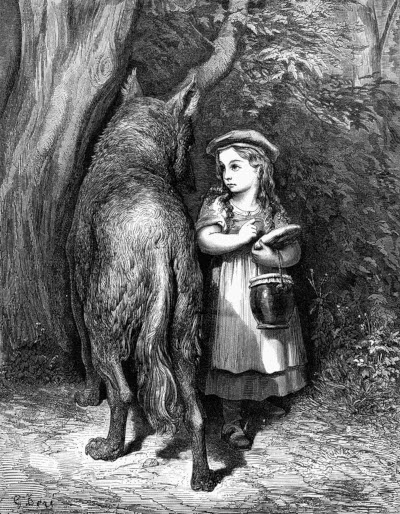
The project also differs from Don Quixote, Perrault, La Fontaine and London. Don Quixote gave Dore comic delusion, travel and social theatre. Perrault gave him fairy-tale danger and childhood memory. La Fontaine gave him fable, animals and moral compression. London gave him modern crowds and documentary social contrast. Dante gave him a complete otherworld whose spaces already carried moral meaning.
Dore's genius was to adapt his visual language to each world. The same artist could draw a flooded earth, a London street, a fairy-tale chamber and Dante beneath the winds of Hell, but he did not make them interchangeable. In Dante, the recurring problem is the relation between body, soul and place. A person is punished, purified or blessed in a space that reveals spiritual truth.
That is why a Dante series guide is necessary. The existing Portrait of Dante Alighieri page is useful, but it is a doorway. It cannot carry the full account of Inferno, Purgatorio, Paradiso, publication history, engraving, reception and internal connections. The flagship guide gives that larger map, then sends readers to the portrait and later individual plates.
Text, Plate and Reader
The British Museum's description of the 1861 Inferno volume notes that each plate was preceded by a thin sheet with verse and chapter information. That is a small bibliographic detail with a large interpretive effect. It tells us that Dore's images were not floating freely beside Dante's poem. They were framed as responses to specific passages.
This matters because the Divine Comedy is an unusually structured poem. Every canto belongs to a moral and spatial order. A plate attached to Canto II does not do the same work as a plate attached to Canto XIII or Canto XXXIV. The image is a point in a journey, and the reader understands it through its placement.
Dore's genius was to make those points memorable while preserving the sense of motion. A plate can be studied alone, but it also sends the reader onward. The figures of Dante and Virgil help maintain continuity, but the format of the illustrated book does another kind of work. Verse, chapter indication and full-page image create a rhythm: read, pause, see, continue.
This rhythm is different from a museum gallery, where images may be arranged as independent objects. It is also different from a modern online image search, where plates are often detached from canto, edition and sequence. The original illustrated-book structure keeps Dore's Dante close to Dante's text. It turns illustration into a form of guided reading.
The BnF Canto II plate is useful here. It records a specific line from the French text and identifies the illustration-table title as Virgile et Dante. The title may sound modest, but the verse placement gives it force. The plate belongs to the early stage of the journey, when evening comes on and the pilgrim's ordinary world begins to give way. Dore is already teaching the reader to see the poem as movement through darkness.
The International Dante
Dore's Dante became international quickly because the project was built for translation and reissue. Cornell records editions in multiple European languages in the Fiske Dante Collection, including Dutch, French, German, Italian, Portuguese, Russian, Spanish and Swedish. The Met's English Vision of Hell record places the images in a London publication with Henry Francis Cary's translation. Yale's record for an 1866 Dante's Inferno similarly shows an English-language Cassell edition with Dore's designs.
That international circulation changed the status of the images. They were no longer only French illustrations for an Italian poem. They became a shared visual edition of Dante for readers across languages. A Dutch reader, an English reader and a French reader might meet different translations, but they could still encounter Dore's visual sequence.
The situation is typical of Dore's larger career. The Met describes Dore's illustrated classics as being duplicated for simultaneous publication across major cities, and Orsay emphasizes the unprecedented dissemination of his work in Europe and the United States. Dore's Dante fits that pattern exactly. His images travelled through the same publishing culture that made his Bible, Don Quixote and other classics so visible.
The importance of this circulation is not merely commercial. It affected interpretation. Once Dore's plates became attached to Dante in many editions, they began to shape what readers expected the poem to look like. Hell became steep, crowded and densely shadowed in Dore's manner. Dante and Virgil became small figures passing through monumental scenes. The poem remained Dante's, but many readers' visual memory of it passed through Dore.
This is why the series remains so present. Dore's images do not replace the poem, and they are not the final word on Dante. But they are one of the most powerful nineteenth-century lenses through which the poem entered modern popular imagination.
From Printed Inferno to Salon Painting
Musee d'Orsay's account of Dore in 1861 is valuable because it links the Inferno illustrations to a monumental painting, Dante and Virgil. That connection clarifies Dore's ambition. The illustrated book was not a lesser commercial sideline separate from serious art. Dante allowed Dore to move between print and painting.
This movement matters for the way we read the illustrations. Dore's plates often feel larger than the page because he thinks with painterly scale. His scenes are composed as if they could expand into canvases: figures arranged in depth, strong contrasts of light and dark, dramatic landscape, and theatrical grouping. The printed page contains the image, but the imagination behind it is monumental.
At the same time, Dore's Dante painting depends on the reputation of the illustrated project. The book made his Dante vision public. The painting made that vision visible in another arena. Together they show an artist trying to escape narrow categories. Dore was a book illustrator, but he wanted the prestige of painting; he was a painter, but his fame depended heavily on reproducible images.
The tension followed him throughout his career. Critics could undervalue his facility and popularity, while the public remembered his images with extraordinary force. Dante sits at the centre of that tension. It is both a prestigious literary project and a mass-circulating illustrated book. It belongs to fine art, publishing and popular memory at once.
This is also why the Dante page belongs beside Dore's painting pages, though not under them. The main story is the illustrated Divine Comedy, but the Salon painting proves that Dore used Dante as a broader artistic platform. The subject let him move from book to exhibition wall and back again.
Darkness, Bodies and Moral Distance
Dore's Dante is famous for darkness, but the darkness is rarely empty. It presses against bodies. It hides distances. It breaks around flames, water or exposed skin. It makes the afterlife feel visible and unknowable at the same time.
Bodies are central to that effect. Inferno is a poem about souls after death, but Dore repeatedly gives those souls bodies under pressure: twisted, driven, buried, lifted, frozen, pursued or crowded together. The body becomes the way the viewer understands moral consequence. Punishment is not abstract doctrine. It has weight, posture and movement.
This physicality links Dore to older art, including Michelangelo's muscular bodies and Romantic traditions of sublime landscape, both noted in Cornell's discussion of his Dante illustrations. But Dore's bodies are filtered through wood engraving and mass publication. They are dramatic, repeatable and immediately legible.
Moral distance is just as important. Dante the pilgrim often stands apart from the punished, but he is not indifferent. He watches, questions, recoils, listens and sometimes feels pity. Dore uses that distance visually. The pilgrim may be placed below airborne lovers, at the edge of a forest, before a crowd or beside Virgil. The viewer shares his position: near enough to see, far enough to judge and be unsettled.
That balance gives the series its staying power. A purely sensational Hell would become theatrical excess. A purely theological Hell might become stiff. Dore's Inferno stays vivid because it makes the viewer feel the pull between spectacle, pity and moral structure.
What the Series Needs Next
The Dante group is ready for a flagship guide because it already has a strong internal doorway and a rich external record. Portrait of Dante Alighieri gives the frontispiece. Cornell gives the project history and object examples. The British Museum and Morgan Library give the 1861 Inferno book record. The Met gives English-edition and print-process context. BnF gives plate-level documentation.
The next level of depth will come from individual plate pages. Inferno has many candidates, but they need careful selection. The strongest first candidates are not necessarily the most dramatic in isolation; they are the ones with clear institutional records, strong images, and good relation to the existing Dore network.
The Wood of the Suicides is a strong candidate because Cornell already gives interpretive context and the image shows Dore's handling of forest, body and punishment. Paolo and Francesca is strong because it tests pity, motion and emotional memory. Virgile et Dante is useful because it gives a BnF-documented early journey image. A Purgatorio page centered on Beatrice or Lethe would keep the series from becoming Inferno-only.
That expansion can happen without losing focus. The flagship page gives the map; individual pages give close readings. Together they let Dore's Dante appear as a full project rather than as one portrait and a few scattered references.
Existing Dante Links in This Dore Section
The current internal anchor is Portrait of Dante Alighieri. That page introduces the series through the frontispiece portrait rather than through a narrative episode. It is valuable because it shows Dante as poetic authority before the visual journey begins. The portrait also gives the Dante group a clear image for navigation and related-pages modules.
The Illustrations page already explains Dore through connected series, and Dante belongs there beside the Bible, Milton, Don Quixote, Perrault, La Fontaine and London. The Engravings page explains the medium and collaborative print process that carried the Dante images into public life. Both pages are essential support surfaces.
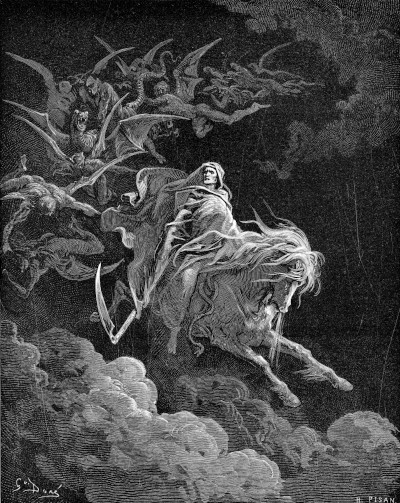
Plate No. 26 Book VI belongs to Milton, not Dante, but it sits nearby as part of the literary-classics corridor. It helps readers compare Dore's treatment of Dante's journey with Milton's epic war in heaven. The Vision of Death and The Fall of the Rebel Angels also sit nearby as visionary and religious-literary companions, but their links need careful wording. They help explain Dore's larger imagination without turning every dark or supernatural image into a Dante image.
Future Dante artwork pages could draw from verified Inferno, Purgatorio and Paradiso plates. Strong candidates include the Wood of the Suicides, Paolo and Francesca, Dante and Virgil at thresholds, and Purgatorio scenes involving Beatrice and Lethe. Each future page needs exact object matching, local image review and source confirmation before publication.
How to Read Dore's Dante
A reader can begin with three questions. First, where are Dante and Virgil? Their position often explains the scene. Are they high above the damned, beneath them, at the edge of a river, inside a forest, or nearly lost in the crowd? Their scale and placement tell the viewer how the journey is unfolding.
Second, what kind of space is Dore building? Inferno is not just dark; it is organized. Purgatorio is not just lighter; it is upward and transitional. Paradiso is not just bright; it is increasingly abstract and hierarchical. Dore's spaces carry meaning before the figures are fully understood.
Third, how does the engraving handle darkness and light? In Dore's Dante, line is emotion. Dense marks can create fear, pressure or obscurity. Clearer light can reveal, separate or promise ascent. The viewer reads the moral world through tonal structure.
These questions help keep the series from becoming only a catalogue of dramatic images. Dore's Dante is a journey, and every image belongs somewhere within that journey. The best way to see the series is to move between the literary structure and the visual structure: canto and plate, text and space, pilgrim and world.
Why Dore's Divine Comedy Still Matters
Dore's Divine Comedy still matters because it gave modern readers a powerful visual memory of Dante. His images are not the only way to picture the poem, and they are not neutral translations. They are nineteenth-century interpretations shaped by Romantic landscape, theatrical darkness, reproductive print and Dore's own appetite for scale. But they remain among the most influential visual responses to Dante.
The series also matters because it shows Dore at a decisive moment in his career. In 1861 he was not only illustrating a text. He was asserting that illustrated books could rival large art in ambition. The Inferno volume helped place him at the centre of Parisian visual culture, and the later Purgatorio and Paradiso volume completed the project as a full Divine Comedy.
For visitors coming through Dore's broader work, Dante explains a key part of his imagination. It shows his love of thresholds, abysses, crowds, bodies in extremity, supernatural scale and the movement from darkness to light. It also shows how he could make a poem spatial. Dante's words already create a world; Dore gave many readers a way to see it.
The best starting point here is Portrait of Dante Alighieri, because it gives the threshold image. From there, the reader can move into the larger Series: Inferno as architecture, Dante and Virgil as guides, Purgatorio as ascent, Paradiso as the limit of vision, and wood engraving as the medium that carried the journey across Europe and beyond.
Dore's Dante is a world of black ink and moral space. Its paths descend, turn, climb and brighten. Its figures suffer, witness, guide, remember and hope. That is why the series deserves flagship treatment. It is not simply one more illustrated classic in Dore's career. It is one of the projects that made his career legible: a complete visual pilgrimage through the afterlife.
Related Dante and Literary Pages
Use these pages to place Doré's Dante beside the existing literary and religious routes in this section.
FAQ
Discussion
Which Doré Dante image or episode best captures the poem's journey from darkness toward vision?
Reader Insights
Watch how Doré turns Hell into architecture: cliffs, rivers, forests, pits, crowds and thresholds.
Follow Dante and Virgil as small recurring figures whose scale keeps the journey legible.
Notice how engraved darkness, mist and light carry the poem into reproducible black-and-white form.
Join the Conversation
Share your reading of Doré's Dante illustrations below.
References
- Cornell University Library, Visions of Dante: Gustave Dore, accessed 28 July 2026.
- British Museum, L'Inferno di Dante Alighieri, colle figure di G. Dore, accessed 28 July 2026.
- The Morgan Library & Museum, L'Inferno / di Dante Alighieri ; colle figure di G. Dore, accessed 28 July 2026.
- The Metropolitan Museum of Art, The Vision of Hell (Inferno), accessed 28 July 2026.
- Bibliotheque nationale de France, Ch. II, v. 1-3 : Le jour s'en allait..., accessed 28 July 2026.
- Omeka TNAH / Site Gustave Dore, BnF-derived Dante item, accessed 28 July 2026.
- Musee d'Orsay, Gustave Dore (1832-1883): Master of Imagination, accessed 28 July 2026.