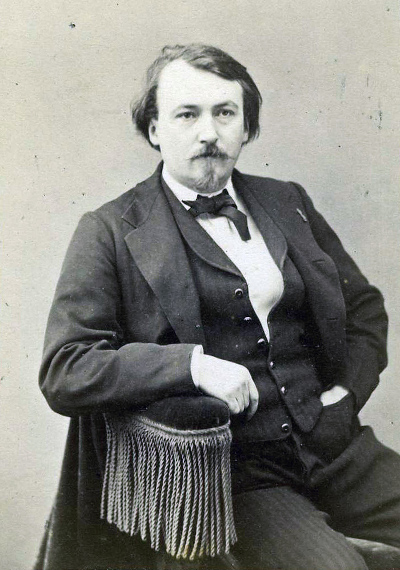
 by Tom Gurney
Tom Gurney BSc (Hons) is an art history expert with over 20 years experience
Published on July 28, 2026 / Updated on October 16, 2026
Email: tomgurney1@gmail.com / Phone: +44 7429 011000
Gustave Doré Series
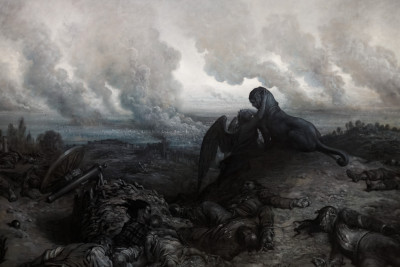
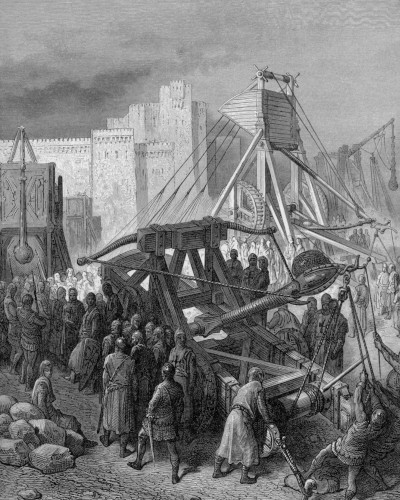
Gustave Doré is easiest to understand through series. His reputation was not built only through isolated pictures, but through large illustrated worlds: scripture, epic poetry, comic travel, fairy tale, fable and the modern city. Each project asked him to solve a different visual problem, from the opening of Genesis to Dante's mapped afterlife, Milton's cosmic rebellion, Cervantes' wandering comedy, Perrault's suspenseful interiors, La Fontaine's animal theatre and the crowds of Victorian London.
This hub gathers the flagship Doré series pages now available in the cluster. Use it as the central route into the dropdown: each summary below links to the full series guide, and where the site already has individual artwork pages they are linked as close-reading anchors.
At a Glance
- PurposeCentral guide to Doré's major illustrated-book and social-documentary series
- Flagship pagesBible, Dante, Milton, London, Cervantes, Perrault and La Fontaine
- Best starting pointBible Illustrations for Doré at his largest public scale
- Literary arcDante, Milton, Cervantes, Perrault and La Fontaine show different kinds of narrative image-making
- Modern-life arcLondon: A Pilgrimage carries the series method into the nineteenth-century city
Contents
Series Guides
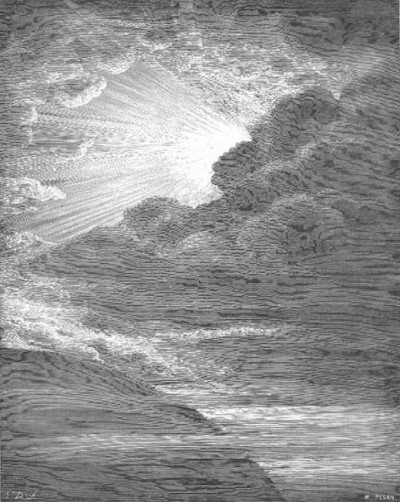
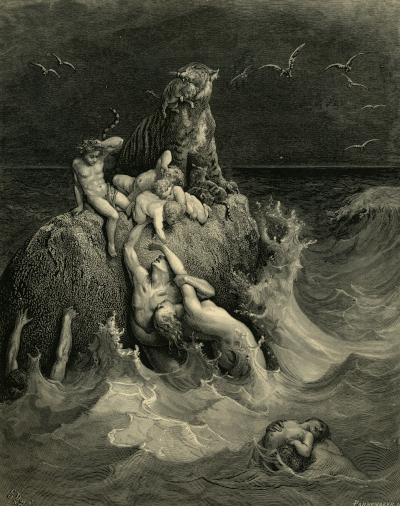
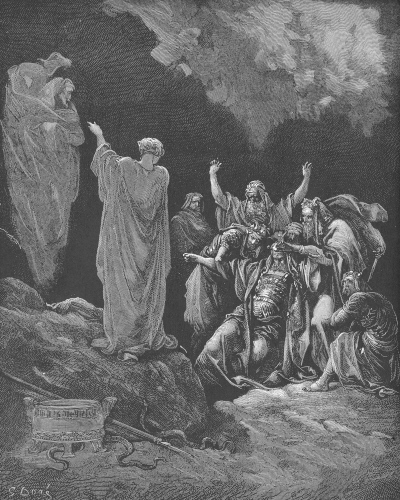
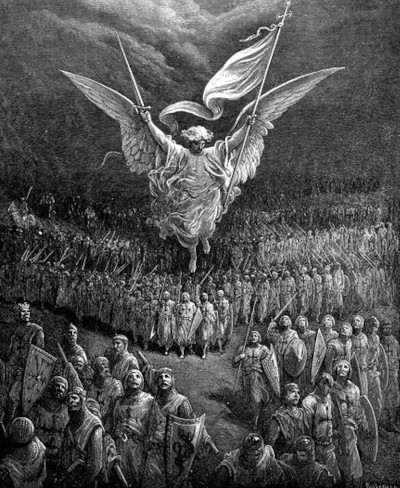
Bible Illustrations
Doré's largest sacred image-world, moving from Genesis and catastrophe through kings, prophets, Christ's ministry and apocalyptic vision.
Linked artwork pages: Creation of Light, The Deluge, Saul and the Witch of Endor, Burial of Sarah, Fall of the Rebel Angels.
Dante's Divine Comedy
The afterlife as a journey through architecture, darkness, bodies and ascent, beginning with the 1861 Inferno and expanding through Purgatorio and Paradiso.
Linked artwork pages: Portrait of Dante Alighieri.
Milton's Paradise Lost
Doré's epic route into rebellion, angelic war, cosmic scale and the visual problem of making Milton's unseen spaces legible.
Linked artwork pages: Fall of the Rebel Angels.
London: A Pilgrimage
The great modern-city counterweight to Doré's sacred and literary series, made with Blanchard Jerrold around crowds, poverty, work, entertainment and spectacle.
Cervantes' Don Quixote
A comic and humane road-book series in which Doré converts Cervantes' shifts between fantasy, satire and physical travel into a sustained visual world.
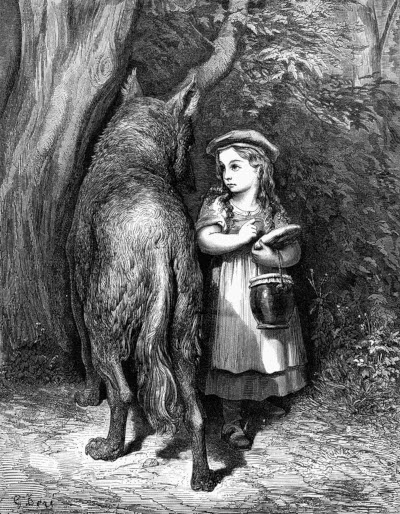
Perrault's Fairy Tales
The fairy-tale series where Doré turns childhood stories into suspenseful interiors, forests, thresholds and scenes of danger.
Linked artwork pages: Little Red Riding Hood, Bluebeard.
La Fontaine's Fables
The fable series where animals, social types and moral reversals become compact scenes of wit, anxiety and judgement.
Linked artwork pages: The Hare and the Frogs.
How the Series Fit Together
The Bible, Dante and Milton form the strongest sublime corridor: creation, judgement, descent, ascent, rebellion and divine scale. Cervantes, Perrault and La Fontaine pull Doré toward more worldly kinds of storytelling, where gesture, irony, danger and moral reversal matter as much as grandeur. London: A Pilgrimage then turns the same serial imagination toward a living city.
That breadth is the point of treating the series pages as flagships. They give the Doré cluster its architecture. The artwork pages provide close readings; the medium pages explain illustration, engraving, lithography, painting and sculpture; this Series hub shows how the major image-cycles connect.
Where to Start
Start with Bible Illustrations for Doré's widest public impact, then move to Dante's Divine Comedy and Milton's Paradise Lost for the epic and visionary side of his imagination. From there, Don Quixote, Perrault's Fairy Tales and La Fontaine's Fables show Doré working with comedy, danger and moral storytelling. London: A Pilgrimage is the essential modern-life counterpart.
Discussion
Which Doré series gives the strongest route into his imagination: the Bible, Dante, Milton, London, Cervantes, Perrault or La Fontaine?
Reader Insights
The Bible, Dante and Milton show Doré building worlds around creation, judgement, rebellion and ascent.
Cervantes, Perrault and La Fontaine show comedy, danger and moral reversal in tighter narrative forms.
London: A Pilgrimage turns Doré's serial method toward crowds, labour, poverty and spectacle.
Join the Conversation
Share your reading of Doré's major series below.