 by Tom Gurney
Tom Gurney BSc (Hons) is an art history expert with over 20 years experience
Published on July 28, 2026 / Updated on October 16, 2026
Email: tomgurney1@gmail.com / Phone: +44 7429 011000
Gustave Dore and London: A Pilgrimage
London: A Pilgrimage is one of Gustave Dore's most important series because it moves his art from legendary and sacred worlds into the modern city. The Bible, Dante, Milton, Cervantes, Perrault and La Fontaine gave him inherited texts full of myth, doctrine, satire, ordeal and wonder. London gave him something different: a living metropolis, industrial wealth, poverty, crowds, night streets, entertainments, labour, social spectacle and urban fear. The book turns Victorian London into a monumental subject, and it deserves to stand beside Dore's major literary series rather than sit quietly under general illustration.
Published in London by Grant & Co. in 1872, London: A Pilgrimage joined Dore's images with text by the journalist Blanchard Jerrold. The Yale Center for British Art records the work as London: A Pilgrimage, by Gustave Dore and Blanchard Jerrold, with a large physical format, 191 pages and 52 leaves of plates. The National Gallery of Art describes its copy as a bound volume with wood-engraved illustrations, including a half-title, a frontispiece, 52 full-page plates and 146 text illustrations and initials. The British Museum describes the book as a travel diary through the city, with special attention to the darkest and most wretched districts as well as glamorous high life.
That range is the heart of the project. Dore does not present London as a guidebook sequence of monuments. He makes it a city of extremes. Public ceremony appears beside hunger. Wealth appears beside exhaustion. The racecourse and the night street belong to the same urban organism. The reader is invited to move through London as if the city were a vast illustrated epic, but the epic is no longer ancient. It is industrial, crowded and morally unsettled.
The title matters. A pilgrimage is usually a journey toward a sacred place, or at least a journey given inward purpose by movement. London: A Pilgrimage adapts that idea to a secular capital. Dore and Jerrold travel through streets, districts, entertainments and social spaces, but the book's real destination is understanding. It asks what a modern city looks like when its splendour and suffering are seen together.
At a Glance
- PublicationLondon: A Pilgrimage, with Blanchard Jerrold, 1872
- SubjectModern London rather than a classical, sacred or fairy-tale text
- Visual rangeStreet crowds, labour, poverty, leisure and urban spectacle
- Cluster roleThe social-documentary flagship inside Doré's series architecture
- Why it mattersIt proves Doré could make modern life as theatrical as scripture or epic poetry
Contents
- A Modern City as a Dore Series
- Dore and Blanchard Jerrold
- The 1872 Grant & Co. Volume
- The Pilgrimage Form
- High Life and Low Life
- Poverty, Labour and the Industrial City
- Night, Gaslight and the City of Shadows
- The Spectacle of Crowds
- Wood Engraving and Urban Reportage
- Observation and Imagination
- London Beside Dante, Milton and the Bible
- Legacy and Afterlife
A Modern City as a Dore Series
Dore's greatest series are not only groups of pictures. They are visual systems. Dante's Divine Comedy becomes a route through Hell, Purgatory and Paradise. The Bible becomes sacred history across creation, flood, patriarchs, kings, prophets and the life of Christ. Milton's Paradise Lost becomes a cosmic drama of rebellion and fall. London: A Pilgrimage gives Dore a comparable structure, but its world is not supplied by an ancient poem or scripture. Its world is the modern capital.
This makes the book unusually bold. London was not an imaginary kingdom that could be shaped freely. It was a real city, familiar to many British readers and politically charged for foreign observers. Its wealth, empire, traffic, theatres, markets, clubs, slums, riverside labour and public rituals were not neutral subjects. To make a Dore series from London meant turning immediate social reality into spectacle without losing the pressure of fact.
Musee d'Orsay notes that London occupied a special place in the nineteenth-century European imagination as a leading industrial and capitalist metropolis where the social divide was widening. It also describes Dore visiting the city as a kind of reporter and making a French perspective that mingled observation and imagination. That dual character is essential. London: A Pilgrimage is not documentary in the narrow photographic sense. It is visual interpretation, shaped by Dore's eye for darkness, crowds, scale and theatrical contrast.
The book therefore occupies a hinge point in Dore's career. It connects his illustrated classics with modern social imagery. It also links his work as illustrator to his ambition as painter and public artist. The same artist who built infernal caverns for Dante and heavenly battlegrounds for Milton now builds alleys, streets, processions and crowded interiors. The subject changes, but the visual force remains unmistakable.
As a Series page, London: A Pilgrimage needs to be read at that scale. It is not only a famous Victorian illustrated book. It is Dore's attempt to make modern London into an image-world large enough to rival the great textual worlds he had already illustrated.
Dore and Blanchard Jerrold
The partnership between Dore and Blanchard Jerrold gave London: A Pilgrimage its double authority. Dore supplied the drawings that became wood engravings; Jerrold supplied the text and journalistic voice. Yale records Jerrold as creator in its catalogue entry and gives the title as a work by Gustave Dore and Blanchard Jerrold. The British Museum identifies Jerrold as the journalist whose 1872 work was illustrated after Dore's drawings.
Jerrold mattered because London was not Dore's native city. Dore had already worked extensively for British audiences, and Musee d'Orsay notes his London presence around the Dore Gallery in New Bond Street, but London: A Pilgrimage required local knowledge, access and narrative framing. Jerrold gave the book a British textual companion for Dore's French visual imagination.
The result is neither a detached survey nor a purely personal travel sketch. It is a conducted journey. The reader follows an itinerary through metropolitan contrasts. The text and images combine to make London legible as a social drama: not a single scene, but a sequence of encounters. That structure makes the book a true series rather than a portfolio of urban views.
Dore's role is equally complex. He is not simply recording facades or costumes. He repeatedly heightens atmosphere: gaslight against darkness, crowds pressed into narrow streets, figures dwarfed by architecture, labouring bodies seen with theatrical force, affluent leisure set against deprivation. His drawings ask the viewer to feel the city's pressure. They make London seem immense, alive and morally divided.
Jerrold's presence also helps explain the book's title. A pilgrimage has a guide, a path and a sequence of stations. The city is not presented all at once. It is approached through movement. Dore's plates and smaller illustrations work like visual stations in that journey: places where the reader pauses, looks, judges and continues.
This partnership gives the book its lasting interest. Without Jerrold, Dore's images might have seemed like foreign impressions. Without Dore, Jerrold's text would not have acquired the same visual afterlife. Together, they made a book that still defines how many readers imagine Victorian London.
The 1872 Grant & Co. Volume
The physical form of London: A Pilgrimage is central to its meaning. Yale records the book as published in London by Grant & Co. in 1872, with [14], xii, 191, [1] pages and 52 leaves of plates in a large 42 cm format. Yale also notes that it was originally issued in 13 parts and included an added engraved title page. The Morgan Library records the same London publisher and 1872 date, with an engraved title page and the note that the work appeared in volume form after being issued in 13 parts.
The National Gallery of Art gives the most compact visual inventory: a bound volume with a half-title, frontispiece, 52 full-page plates and 146 text illustrations and initials. The British Museum states that its copy contains title page, frontispiece and all 180 illustrations, with the separate-page images catalogued individually. These records together show a book conceived as an immersive illustrated object, not as a thin text with occasional plates.
That density matters. London is everywhere in the book. The reader does not move for long without some visual encounter: a full-page plate, a smaller text illustration, an initial, a frontispiece, a title image. Dore's London surrounds the text instead of merely decorating it.
The engraving network also matters. Yale's record names several French wood engravers, including Adolphe Francois Pannemaker, Paul Pacel Jonnard, Albert Bellenger and Henri Theophile Hildibrand, after Dore. The British Museum's frontispiece record identifies Francois Pannemaker and Albert Doms as printmakers after Dore. London: A Pilgrimage was therefore a collaborative print enterprise. Dore's drawings depended on skilled wood engravers to translate line, tone, atmosphere and crowding into reproducible images.
That process shaped the public reach of the work. Wood engraving made the images printable in books and serial forms. A large modern city could be disseminated through modern illustration technology. The form suited the subject: an industrial metropolis pictured by an industrial print culture.
The book's format also explains why individual plates can feel powerful even when separated from the volume. They were designed for a sequence, but many have independent force: a dark alley, a mass of people, a figure in shadow, a crowd at leisure, a city seen from above or below. A future page can link these single images to the larger series without treating them as isolated curiosities.
The Pilgrimage Form
London: A Pilgrimage is not called London: Views or London: Scenes. Its title gives the journey a moral and imaginative shape. A pilgrimage suggests movement through places that matter. The term does not make London holy in a simple sense. It makes the act of looking serious.
The book asks readers to pass through the city rather than stand outside it. This is one reason the British Museum's phrase "travel diary through the city" is so useful. The volume is built around movement from place to place, class to class, light to darkness, spectacle to distress. The reader is guided through a metropolis that cannot be reduced to a postcard view.
Dore was well suited to this kind of structure because his major series often depend on journeys. Dante and Virgil move through the afterlife. Don Quixote and Sancho Panza move through Spain. The Bible moves from creation to apocalypse through a long chain of events. London: A Pilgrimage moves through the modern city. In each case, Dore builds meaning through sequence.
The pilgrimage form also gives the reader a moral task. London appears as a city of unequal visibility. Some parts are designed to be seen: public entertainments, fashionable spaces, grand streets, ceremonies. Other parts are hidden, ignored or visited only by outsiders, officials and the poor themselves. The book brings those hidden spaces into the same visual order as the city's proud public life.
That act can be troubling. Dore's images are often beautiful even when the subjects are painful. The book risks turning suffering into spectacle, but it also refuses to leave suffering unseen. The power of London: A Pilgrimage lies in that unresolved tension. It is both art and social document, both theatrical and observant, both fascinated by the city and disturbed by it.
High Life and Low Life
The British Museum's curator comments give a clear account of the book's social structure. London: A Pilgrimage contrasts the lives of rich and poor, sometimes in moments where classes meet, such as national celebrations and Derby Day, and sometimes by placing wealthy diversions against the desperate living and working conditions of the poor. Musee d'Orsay describes the work as striving to represent the extremes of London social life, from a murky underworld to bright racecourses where high society relaxed.
This contrast is not a decorative theme. It is the engine of the book. Dore's London is not one city but several cities occupying the same space. One London consumes pleasure. Another survives hardship. One appears in brightness, motion and display. Another appears in alleys, lodging rooms, work spaces and night scenes. The reader has to hold them together.
The contrast also changes the meaning of Dore's theatricality. In Dante or Milton, darkness and light belong to cosmic structures. In London, darkness and light are social. Gaslight, shadow, crowded interiors and night streets become ways of thinking about visibility and neglect. Public brilliance does not erase private misery; it makes the distance sharper.
Dore's strength was never small sociological notation. He worked through emphasis: dense crowds, dramatic scale, heightened shadow, charged silhouettes, bodies arranged like scenes from an epic. In London: A Pilgrimage, that emphasis turns class contrast into an image system. The poor are not made invisible background figures. They often occupy the visual centre. The rich, too, are not merely condemned; they are shown as participants in a city structured by spectacle.
This is why the book was controversial. The British Museum notes that some contemporaries criticized it for focusing heavily on the lives of London's poor and that the overall impression is bleak. That criticism is part of the book's history. London: A Pilgrimage did not flatter the city as a simple imperial capital. It made poverty part of the city's image.
Poverty, Labour and the Industrial City
London: A Pilgrimage is inseparable from industrial modernity. Musee d'Orsay describes London as a leading industrial and capitalist metropolis in which the social divide was widening. The British Museum connects the book to growing awareness of the terrible social impact of the Industrial Revolution. These institutional readings place Dore's London in a wider nineteenth-century debate about wealth, urbanization and social responsibility.
Dore's images often make poverty visible through bodies under pressure. People crouch, wait, gather, sleep, work, carry, sell, watch or endure. The city is not empty architecture; it is human density. In the National Gallery of Art's visual description of London: A Pilgrimage, a dimly lit street scene includes figures gathered around a cart, children under blankets, people huddled into corners and a sign reading Harrow Alley. The description captures the kind of urban intimacy Dore could build: a street as both stage and shelter.
Labour is equally important. London was a city of trade, transport, markets, docks, services, performance, manufacture and informal survival. Dore's interest in labour links the book to his broader fascination with crowded human systems. He repeatedly pictures not only isolated suffering but the structures that produce urban life: circulation, work, entertainment, policing, transport and exchange.
The book's social imagery also has a Dickensian atmosphere. The British Museum notes that the influence of Charles Dickens is clear and often stated in the text. That comparison helps modern readers place the work. Like Dickens's London, Dore's city is full of contrast, theatrical encounter, moral pressure, sentiment, danger and social observation. Yet Dore's medium changes the experience. Where Dickens builds voice and character, Dore builds image, mass and shadow.
The most responsible reading of London: A Pilgrimage avoids two extremes. It is not neutral evidence of Victorian poverty, as if Dore's dramatic style were transparent fact. It is also not mere fantasy. The book is a constructed visual response to real social conditions, shaped by theatrical composition and by the period's appetite for illustrated urban exploration. Its truth lies in the pressure between observation and imagination.
Night, Gaslight and the City of Shadows
Some of Dore's most memorable London images depend on darkness. Night allows him to make the city mysterious, threatening, compassionate or theatrical. Streets narrow. Lamps isolate figures. Corners deepen. Crowds become masses. A small gesture can become dramatic because the surrounding space is heavy with shadow.
Musee d'Orsay notes that Dore visited disreputable districts by night with a police escort. That detail matters because it frames the night scenes as both observation and mediated access. Dore was not simply wandering as an invisible witness. He moved through spaces shaped by class difference, danger, curiosity and institutional control. The images that emerge from those spaces carry that tension.
Night also links London: A Pilgrimage to Dore's other worlds. His Dante illustrations use darkness to give the Inferno weight. His Milton images use darkness to picture defeat, rebellion and cosmic distance. In London, darkness becomes urban. The infernal is no longer under the earth; it is in the modern city after sunset. That does not mean London is Hell. It means Dore uses a visual language forged in epic and religious illustration to describe contemporary life.
Gaslight is part of that transformation. It creates islands of visibility rather than full illumination. A figure under a lamp is seen and not seen. A street can feel both public and hidden. Dore's London often depends on this partial revelation. The viewer sees enough to be drawn in, but not enough to feel at ease.
The result is one reason the book had such a long afterlife in visual culture. Musee d'Orsay notes that films dealing with Victorian London, from directors including David Lean, Roman Polanski and Tim Burton, draw on visions in London: A Pilgrimage for their sets. Dore's city became a visual grammar: fog, shadow, cramped streets, crowded misery, theatrical light and the sense that modern London contained secret worlds inside its public face.
The Spectacle of Crowds
Dore was one of the great crowd artists of the nineteenth century, and London offered him a subject as crowded as any epic. Unlike the angelic hosts of Milton or the damned masses of Dante, London's crowds are historical and social. They gather for work, leisure, celebration, watching, waiting and survival.
Crowds let Dore show the city as a living machine. A single figure can carry emotion, but a crowd carries scale. London: A Pilgrimage is full of scale: the scale of population, class contrast, public ritual, urban appetite and social distance. Dore's crowds often look like waves or compressed bodies, and that compression is part of the message. Modern life presses people together without making them equal.
The book's Derby Day and high-society scenes, as described by the British Museum and Musee d'Orsay, show crowding from one side of the social spectrum. Fashionable leisure depends on display, movement and being seen. The book's darker scenes show crowding from another side: shelter, hunger, work, exposure. Both kinds of crowd belong to the same city.
This is where London: A Pilgrimage differs from a simple reform tract. Dore is not only showing misery to provoke pity. He is showing an entire social theater. London becomes a set of stages where class, labour, entertainment and survival are performed. The viewer is implicated as spectator, just as the book's original readers were spectators of a city they may have inhabited yet not fully seen.
The danger of spectacle remains real. Dore's images can make poverty visually compelling in ways that modern readers need to examine critically. But the images also insist that poverty is part of the public image of the city. They refuse a London made only of power, commerce, elegance and imperial confidence.
Wood Engraving and Urban Reportage
London: A Pilgrimage is one of the great examples of nineteenth-century wood-engraved book illustration. The British Museum identifies the frontispiece as a wood engraving, and Yale's catalogue lists wood engravings as the form and names several engravers after Dore. The National Gallery of Art describes the bound volume as filled with wood-engraved illustrations.
This matters because wood engraving made Dore's London reproducible. Drawings could be translated into blocks, printed with text and circulated in parts and bound volumes. The city became portable. Readers who had never entered Harrow Alley, a night refuge, a racecourse or a particular working district could encounter a Dore version of those spaces in a book.
The process also shaped Dore's style. Wood engraving rewards strong tonal contrasts, decisive line and carefully organized detail. Dore's London images often feel dense because the medium can carry crowds, textures, architecture and shadow together. The engravers' labour converted his drawings into printable surfaces that retained theatrical power.
Yale's list of engravers reminds us that the printed Dore image is collaborative. Pannemaker, Jonnard, Bellenger, Hildibrand and others helped produce the visual field through which readers knew Dore. The public often speaks of Dore's engravings, but the technical reality is more precise: images after Dore, engraved by specialist printmakers, published in a large illustrated volume.
That distinction enriches the page rather than weakening it. London: A Pilgrimage is not only Dore's personal vision. It is also a product of international print culture: a French artist, a British journalist, French engravers, a London publisher and a city whose image circulated across borders.
Observation and Imagination
Musee d'Orsay's reading of London: A Pilgrimage is especially valuable because it avoids a false choice between documentary and fantasy. It says Dore's perspective alternates between what he actually saw and what he imagined. That is exactly how the book works. It is grounded in London, but it is never only London as a neutral survey.
Dore's imagination organizes what he sees. A street becomes a stage. A crowd becomes a moral composition. A light source becomes a symbolic force. A contrast between rich and poor becomes a sequence of images that the reader cannot easily forget. His London is persuasive because it feels observed and composed at the same time.
This dual nature also explains why the book influenced later visions of Victorian London. A purely documentary survey might have dated as urban conditions changed. A purely imaginary London might have floated away from history. Dore's London remains powerful because it is both specific and archetypal. It gives names, streets, social types and scenes, but it also gives a visual myth of the modern metropolis.
That myth is not simple. It includes pity, melodrama, fascination, class distance, social conscience, foreign curiosity and artistic ambition. Dore is not an innocent eye. He brings habits from Dante, Milton, the Bible and romantic spectacle. He sees London through those habits, and the resulting images are stronger because they are not plain reportage.
For a modern reader, the best approach is to read London: A Pilgrimage as a major illustrated interpretation of urban life. It belongs to the history of London, the history of social illustration, the history of the illustrated book and the history of Dore's ambition to make whole worlds visible.
London Beside Dante, Milton and the Bible
London: A Pilgrimage can seem like an outlier among Dore's major series because it is not based on a canonical poem or sacred text. In fact, it clarifies what made those projects successful. Dore's gift was world-making. He needed subjects large enough to sustain sequences of image, movement and contrast. London gave him exactly that.
The Bible series moves through sacred history. Dante moves through the afterlife. Milton moves through cosmic revolt and human fall. London moves through modern society. Each world has its own laws, but each asks Dore to organize enormity. He translates huge subjects into visible stages.
The London project also sharpens Dore's relation to modernity. Musee d'Orsay presents him as a protean artist whose work moved across illustration, painting, sculpture and popular visual culture. London: A Pilgrimage shows that range in social form. Dore was not only the illustrator of medieval and biblical imagination. He could also turn the nineteenth-century metropolis into a dramatic visual text.
This matters for internal navigation. London deserves placement in a Series section because it gives readers a different way into Dore. Some arrive through religious images, some through Dante, some through fairy tales, some through paintings. London offers the social and urban Dore: the artist of crowds, class contrast, night, journalism and modern print.
The guide links naturally to Illustrations and Engravings because the book is a triumph of illustrated print culture. It can also link to the other Series flagships because it belongs to the same ambitious pattern. A reader who understands London: A Pilgrimage will understand Dore's scale better across the whole site.
Legacy and Afterlife
The afterlife of London: A Pilgrimage is unusually broad. Musee d'Orsay states that films dealing with Victorian London have drawn on the visions in the book for their sets. That claim is important because it shows how Dore's illustrated London became part of a larger visual memory. Even viewers who have never opened the 1872 volume may know a city shaped by Dore: dark alleys, theatrical gaslight, crowded poverty, public spectacle and social unease.
The book's influence also comes from its contradictions. It is admired as art, used as social document, criticized for bleakness, read through Dickens, and studied as a major illustrated book. Those uses do not cancel one another. They show the work's complexity.
Dore's London is not the whole of Victorian London. It is a forceful image of Victorian London, filtered through collaboration, print technology, class tension and dramatic imagination. Its power lies in the way it helped fix a visual idea of the city: grand and miserable, modern and archaic, entertaining and frightening, prosperous and wounded.
That idea had consequences. Later stage, book, film and illustration traditions repeatedly returned to similar contrasts when imagining nineteenth-century London. Dore did not invent every element, but he gave the city a visual density that proved hard to escape.
For the Dore series, London: A Pilgrimage is therefore a flagship in two senses. It is a major work from his own career, and it is a major source for later visual culture. It belongs near the Bible, Dante, Milton, Don Quixote, Perrault and La Fontaine because it shows how Dore's imagination could reshape not only inherited books but modern urban memory.
Key Images and Themes
Several institutional anchors show how the series can be read visually. The British Museum frontispiece shows a boy seated beside a dirt track on a hill leading toward the city skyline, a threshold image for the entire journey. The National Gallery of Art's London: A Pilgrimage record reproduces a dimly lit Harrow Alley scene and identifies the book as public-domain media. Yale provides a public-domain copy with IIIF access and full bibliographic metadata.
These sources point readers toward several central image types. The frontispiece can introduce the idea of entering London. A dark street or alley image can introduce the social and night-world themes. A plate or detail involving leisure, crowds or high society can balance the page so that London is not reduced to poverty alone. A balanced reading respects the book's range: underworld and racecourse, street and spectacle, text illustration and full-page plate.
Existing internal pages support this guide while dedicated London artwork pages remain a later possibility. The Illustrations page can explain Dore's broader illustrated-book practice. The Engravings page can explain the print medium and the collaborative role of wood engravers. The Paintings page can clarify that Dore sought public artistic status beyond book illustration. The Series section can link London beside Bible Illustrations, Dante's Divine Comedy, Milton's Paradise Lost, Don Quixote, Perrault's Fairy Tales and La Fontaine's Fables.
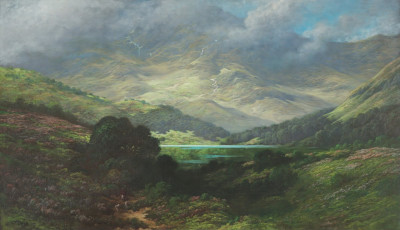
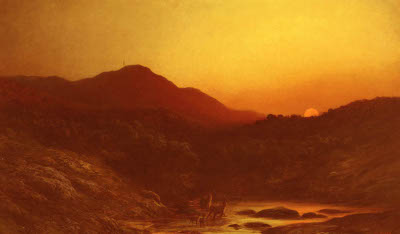
The guide also benefits from restrained cross-links to Dore's British landscape material, including Scottish Highlands and A Souvenir from Scotland. Those works are not part of London: A Pilgrimage, but they show Dore engaging British subjects beyond the London volume. The connection works best as a supporting link, not as a substitute for the London series itself.
Why the Series Page Matters
A dedicated London: A Pilgrimage guide solves a real problem. Without it, Dore's urban work risks disappearing into general Illustration or Engraving categories. That makes the book seem smaller than it is. The 1872 volume is a large, structured, heavily illustrated, socially ambitious project with a distinct place in Dore's career and in Victorian visual culture.
The guide also helps readers understand Dore beyond the familiar Bible and Dante images. Those works remain central, but they can make Dore look like an artist only of supernatural grandeur. London reveals the same grandeur applied to daily life. It shows Dore using epic scale to confront a modern city.
This is also valuable for the wider Series section. Bible Illustrations, Dante's Divine Comedy and Milton's Paradise Lost explain Dore's sacred and literary imagination. Don Quixote explains comic travel, satire and Spanish romance. Perrault and La Fontaine explain fairy tale, fable and popular narrative. London explains modern social spectacle. Together, the series guides show Dore as an artist of whole visual worlds.
London: A Pilgrimage is one of the clearest proofs that Dore's art cannot be contained by medium alone. It is illustration, print, social observation, travel narrative, urban myth and Victorian memory at once. A flagship page lets those identities remain connected.
Related London and Print Pages
Use these pages to place London: A Pilgrimage beside Doré's print practice, wider illustration work and British subjects already active in this section.
FAQ
Discussion
Does Doré's London feel more like reportage, theatre, social critique or an urban epic?
Reader Insights
Read London as Doré's modern counterpart to the vast worlds of Dante, Milton and the Bible.
Notice how crowds make class contrast and urban scale visible across the book.
Follow how wood engraving carries night streets, gaslight, labour and spectacle into reproducible form.
Join the Conversation
Share your reading of Doré's London below.
References
- Yale Center for British Art, London: A Pilgrimage, accessed 28 July 2026.
- British Museum, London: A Pilgrimage frontispiece, accessed 28 July 2026.
- National Gallery of Art, London. A Pilgrimage, accessed 28 July 2026.
- The Morgan Library & Museum, London: A Pilgrimage, accessed 28 July 2026.
- Musee d'Orsay, Gustave Dore (1832-1883): Master of Imagination, accessed 28 July 2026.