


 by Tom Gurney
Tom Gurney BSc (Hons) is an art history expert with over 20 years experience
Published on June 19, 2020 / Updated on August 2, 2026
Email: tomgurney1@gmail.com / Phone: +44 7429 011000
Contents
- Introduction
- Drawing And Illustration
- Observation Before Finish
- Drawing, Watercolor And Paper
- Drawing Across The Career
- How To Use This Work
Introduction
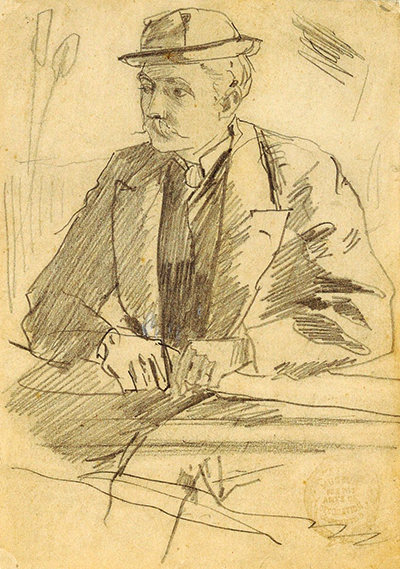
Winslow Homer's drawings belong at the center of his career, even when they are less familiar than the oils and watercolors. Drawing was not a separate side practice for him. It was part of the way he learned to see, report, test and remember. The same habits that made his paintings feel sharply observed also came from graphic work: quick decisions about pose, silhouette, spacing, weather, labor and the exact moment before a scene resolves. [1]
This article guides readers through drawing as a working route into Homer rather than as a complete catalogue of individual sheets. The strongest source frame is the artist's whole practice: commercial illustration, Harper's Weekly, Civil War observation, travel, watercolors, prints and the preparatory thinking behind major works. Homer moved across paper, print, oil and watercolor throughout his career. Drawing helps connect those media. [2]
Drawing And Illustration
Homer began in the world of commercial image-making before he became known as a painter. The artist-spine packets record his early work as a lithographer and illustrator, his move to New York in 1859, and his association with Harper's Weekly. That background matters for a drawings page because drawing was tied to speed, clarity and publication. It trained Homer to organize a scene so that a reader could grasp figure, action and setting without decorative excess. [3]
The illustration route also explains why Homer's later art so often feels concise. He did not need a crowd of details to make an image intelligible. A hand, a slanting body, the interval between two people, a boat's angle or the shape of a horizon could carry narrative pressure. Those habits can be seen across the cluster: Civil War subjects such as Prisoners from the Front, fishing works such as The Herring Net, and marine-danger pages such as The Fog Warning and The Life Line. [4]
The drawings hub therefore connect strongly to Prints. Prints and drawings are not identical, but they share Homer's early graphic discipline. Wood engraving and illustrated reportage helped establish the visual economy that later appears in painted and watercolor scenes. [5]
Observation Before Finish
Drawing is often where Homer's art feels closest to observation. That does not mean every drawing is a documentary record, or that every finished painting is best traced back to a single sketch. The safer and more useful claim is broader: drawing helped Homer study how people and places behave before they become finished public images. [6]
That distinction matters because Homer's finished works often hold a scene in suspense. A fisherman turns toward weather. A veteran works a field after war. A rescue line cuts through spray. Children run at the edge of losing balance. These images feel convincing partly because Homer understood posture and timing. Drawing gives the cluster a way to talk about that understanding without overloading every artwork page with process language. [7]
Drawing, Watercolor And Paper
The local medium-hub packets are especially useful for connecting drawings to watercolor. Homer began making watercolors in the 1870s, and the success of that medium helped change the shape of his career. The Art Institute of Chicago watercolor material, as summarized in the local packets, supports the idea that watercolor became a major field of experimentation for color, composition, material, optics, style and technique. [8]
Drawing belongs inside that story because many works on paper depend on more than one kind of mark. Graphite can establish structure. Wash can carry tone, light or atmosphere. Opaque watercolor or gouache can strengthen a passage. The drawings hub does not need to turn into a technical glossary, but it helps readers see that paper practice is a continuum: line, tone, wash, revision, travel observation and finished watercolor are often adjacent. [9]
That is why Watercolours is a required related hub. The canonical URL keeps the British spelling, while public copy can use "watercolor" when that is clearer for readers and source language. The drawings guide also links to Cullercoats and Tynemouth material when those pages are rebuilt or source-tested. Three Fisher Girls, Tynemouth and The Green Hill are active URL routes with source-test value, but their final image and build handling remain separate decisions. [10]
Drawing Across The Career
Homer's drawing practice does not need to be confined to one phase. It supports the early illustrator, the Civil War observer, the painter of postwar rural and childhood scenes, the watercolor traveler, the Cullercoats figure observer and the late artist of marine force. The medium changes, but the underlying attention remains consistent. [1]
In the Civil War and Reconstruction corridor, drawing and illustration help readers understand how Homer approached public history through observed detail rather than spectacle. Prisoners from the Front, The Veteran in a New Field, A Visit from the Old Mistress, The Cotton Pickers and Dressing for the Carnival is best linked carefully where the final source packets support the relationship. [2]
In the marine corridor, drawing supports the study of work, risk and weather. A dory, a net, a rescue line, a distant vessel or the edge of fog can become the structure of a whole picture. That makes the drawings hub useful to readers moving among The Herring Net, The Fog Warning, The Life Line, Undertow, Lost on the Grand Banks, After the Hurricane, Bahamas, Northeaster and The Gulf Stream. [3]
For the late Prouts Neck works, drawing also gives readers a way to think about reduction. Homer could make a wave, rock, bird, boat or body feel exact without explaining everything. The late paintings often look simple in subject but severe in structure. That severity is part of his graphic intelligence. [4]
How To Use This Work
Use the drawings page as a connector. Start with Biography if you want the career chronology. Move to Prints if you want the illustration and publication route. Move to Watercolours if you want paper, wash, travel and color. Move to Paintings if you want the finished exhibition works that often carry Homer's largest public reputation. [5]
For a five-minute route, follow this sequence: biography, prints, drawings, watercolours, then one major artwork. Prisoners from the Front shows how observation enters public history. The Herring Net and The Fog Warning show how figure, boat and weather become structure. The Life Line shows process-related issues around rescue technology and related media that require page-level sourcing. The Gulf Stream shows how late Homer can concentrate figure, sea, travel and historical pressure into a single image. [6]
The article should avoid pretending that the drawings archive is already fully resolved. It should instead make a useful promise: if readers learn to see Homer graphically, the whole cluster becomes clearer. His drawings help explain why the paintings can feel so direct, why the watercolors can feel so alive, and why his strongest scenes often turn on the smallest adjustment of pose, pressure or space. [7]
Discussion
Winslow Homer rewards close looking because his strongest images rarely close down into one easy meaning. Use the prompts below to test how the work changes as you move between subject, place, medium and history.
Reader Insights
First Look
What detail in Drawings changes how the whole work feels?
Homer's Method
Where do you see Homer's balance between clear observation and unresolved meaning?
Cluster Context
Which related Homer work helps you read this page more carefully?
Join the Conversation
Share a thoughtful observation below, especially if a detail, source connection or related Homer page changed the way you read the work.
References
- National Gallery of Art artist record: https://www.nga.gov/artists/1401-winslow-homer
- National Gallery of Art, Winslow Homer publication: https://www.nga.gov/research/publications/winslow-homer
- Smithsonian American Art Museum artist record: https://americanart.si.edu/artist/winslow-homer-2283
- Archives of American Art, Winslow Homer collection biographical note: https://www.aaa.si.edu/collections/winslow-homer-collection-6714/biographical-note
- Metropolitan Museum of Art Timeline essay, Winslow Homer: https://www.metmuseum.org/essays/winslow-homer-1836-1910
- National Gallery, London, Force of Nature introduction: https://www.nationalgallery.org.uk/exhibitions/past/winslow-homer-force-of-nature/introduction-to-winslow-homer
- Art Institute of Chicago, Watercolors by Winslow Homer: The Color of Light overview: https://archive.artic.edu/homer_exhb/overview/
- Art Institute of Chicago, Color of Light about page: https://archive.artic.edu/homer/about/
- Art Institute of Chicago, Color of Light exhibition themes: https://archive.artic.edu/homer_exhb/exhibthemes/
- Local Winslow Homer Phase 1 and Phase 1A planning packets, ledgers and image-policy notes dated 2026-07-20.