by Tom Gurney
Tom Gurney BSc (Hons) is an art history expert with over 20 years experience
Page Created on / Page Updated on
Email: tomgurney1@gmail.com / Phone: +44 7429 011000
Ten Czech Artists: A Guide Across Periods
The art of the Czech lands cannot be reduced to one style or a single “most famous” ranking. This guide keeps ten artists named on the inherited page and gives each a sourced reason to explore further. It moves from Baroque painting through nineteenth- and twentieth-century print and design to contemporary installation. Alphonse Mucha is one of those paths, and this site has individual pages for many of his works.[1][3]
At a Glance
- Scopeten selected artists; a starting guide, not a popularity ranking
- PeriodsBaroque to contemporary art
- Mediapainting, prints, posters, illustration, design and installation
- Mucha routeParis posters, decorative work and the Slav Epic[3]
Contents
- Baroque painting in Bohemia
- A wider modern language
- Illustration and the image in daily life
- Art in the present and under persecution
- Where to go next
Baroque painting in Bohemia
Karel Škréta, Jan Kryštof Liška and Petr Brandl form a useful opening group. The National Gallery Prague's Old Masters collection names all three among artists represented in its Central European and Bohemian holdings.[1] This is a collection-based connection, not a claim that they shared one studio or produced the same kind of painting.
Škréta, Liška and Brandl invite a reader into the religious, portrait and dramatic painting traditions of the seventeenth and early eighteenth centuries. The National Gallery's Brandl exhibition treats him as a substantial figure in that history.[1] Starting with them also guards against the impression that Czech art began with Art Nouveau.
There are concrete differences within this group. A National Gallery account of Baroque commissions identifies Liška as Michael Leopold Willmann’s stepson and artistic successor, whose opportunities included commissions from Cistercian communities.[9] The Gallery’s Brandl exhibition material, meanwhile, treats Škréta as a predecessor and singles out Brandl’s portraiture, unusual genre scenes and handling of paint.[10] These are paths into networks of patrons, workshops and changing pictorial techniques, rather than three interchangeable examples of one national style.
Their work belongs to changing political and cultural territories rather than to a modern nation-state with fixed borders. On this page “Czech artists” is a practical heading for exploring artists connected to the Czech lands, while the institution's “Bohemian” and “Central European” terms remain useful for the earlier periods.[1]
The artists’ prominence also has a history. The Czech Academy of Sciences’ exhibition database documents a Prague sequence that presented Josef Navrátil in 1909, Škréta in 1910 and Brandl in 1911 as “old Czech painters.” Its study of the Škréta exhibition records 49 paintings then attributed to him, while saying that only 33 of those are accepted as authentic today.[14] That change is a useful reminder that museum display and scholarly attribution help shape a canon over time. It is a reason to follow current collection records rather than copy an old list of “greatest” names uncritically.
A wider modern language
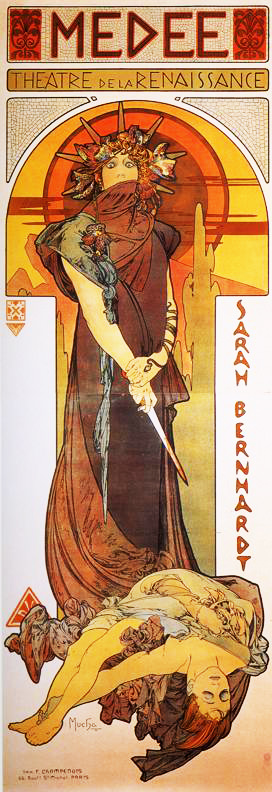
Alphonse Mucha links the group to posters, illustrated books and monumental historical painting. His work for Sarah Bernhardt made his Paris theatre designs highly visible; later he developed the twenty-canvas Slav Epic.[3] Begin with Gismonda for the theatre poster and then compare the cycle hub to see how his subject, scale and purpose changed.
Max Švabinský offers another way into the period. The National Gallery places him with Mucha in its account of Symbolism in the Bohemian lands, while the British Museum catalogues him as a painter and printmaker.[4] Their proximity in an exhibition theme does not make their work interchangeable. It invites comparison between different uses of figure, mood and reproduction around the turn of the century.
The British Museum’s holdings make Švabinský’s printmaking tangible. Its Paradise Sonata is recorded as a four-print wood-engraving series from roughly 1918–20; one sheet, catalogued as 1929,0209.12, shows a man and woman amid oversized fruit and foliage. The museum records its set as purchased from the artist in 1928 and acquired in 1929.[11] This is a later, specifically catalogued print project, not an unnamed example inferred from his general reputation.
Vlastislav Hofman crosses media even more explicitly. The National Gallery describes him as an architect, urban planner, stage designer, painter and graphic artist working out of a Czech Cubist milieu.[2] His career is a reminder that a list of “painters” would miss substantial Czech work in public space, performance and design.
The Gallery’s Hofman exhibition centred on work from 1917–23. It records his bridge-design work for Prague, unrealised architectural concepts, prints for Umělecký měsíčník, Der Sturm and Červen, and watercolour landscapes.[2] These examples show why an architectural idea, a magazine page and a stage design can belong in the same artist’s account: Hofman used drawing across planned structures, printed culture and performance.
Illustration and the image in daily life
Josef Lada is a route into pictures made for a broad audience. The National Gallery uses his work to discuss the visual character of Czech Christmas in an exhibition on seasonal imagery.[5] This is a different public setting from Mucha's street posters, but both show how images circulate outside a narrowly defined painting gallery.
A specific Lada painting prevents “Christmas imagery” from becoming a shorthand for nostalgia. The National Gallery catalogues Štědrovečerní noc (Christmas Eve) as a 1936 tempera work, signed “Jos. Lada 36,” in its modern-art collection, inventory O 13027. Curator Eva Skopalová interprets its night watchman calling people to midnight mass as a sign of communal hope amid a period of deepening crisis.[12] That historical reading belongs to the curator; it shows how a familiar seasonal subject can carry more than cheerful decoration.
Adolf Born appears in the National Gallery's exhibition on Poe and art in the Czech lands, among artists responding to literary subjects.[6] The guide names him here as a further print and illustration direction without assigning a specific work or publication that the exhibition source does not establish. A reader interested in narrative images can follow that institution's exhibition record.
Born’s graphic art has an independently catalogued example in Washington: the National Gallery of Art holds his 1997 colour lithograph Velký kunst historik se skupinou kritiků (The Grand Art Historian with a Group of Critics), accession 2000.166.21.[13] That title points toward wit and commentary about the art world, giving readers a different entry from the Poe exhibition’s literary theme. Born’s work can be followed through prints as well as illustration.
Together these examples widen the route beyond oil painting. A museum exhibition, a printed page and a public poster may be encountered in different places, yet each can shape a shared visual culture. The point is not to collapse their purposes, but to keep those different forms visible in a short guide.
Art in the present and under persecution
František Skála brings the list into contemporary practice. The National Gallery's exhibition account describes assemblages of materials, light installations and works integrated with the exhibition site.[7] He belongs here because his art makes the space around the object part of the encounter, rather than because he continues any single Mucha-era style.
Malva Schalek (Malvína Schalková) requires a different kind of attention. Yad Vashem records that she was born in Prague, painted portraits and scenes of daily life in the Theresienstadt ghetto and was murdered in Auschwitz-Birkenau in 1944.[8] Her surviving art bears witness to persecution and imprisonment. It should be approached through that documented history, not used as a decorative endpoint to a list of styles.
Yad Vashem catalogues one work, Rest, as pencil and watercolour on paper made in Theresienstadt in 1942–44. Its exhibition text describes a woman attempting to rest in a space without privacy and records that about 140 works by Schalek were found behind a double wall after the war.[8] A named surviving sheet and its preservation history let this guide point to evidence of her practice, while the circumstances of its making remain central to understanding it.
These last two artists demonstrate why “famous” is not a sound ordering principle. The value of their work rests on different questions: materials, experience, testimony and historical setting. A responsible guide lets those differences remain clear rather than forcing all ten into one contest.
Where to go next
For this site's detailed object pages, start with Mucha's biography, posters or the Slav Epic. The artwork directory below can take you to individual Mucha pages. For the other nine artists, the linked museum and collection records above provide the next reliable starting points.[1][2][4][5][6][7][8]
This is a selected map, not a settled canon. It begins with artists already named on this route and tests each against an institutional source. From there, a reader can choose an era or medium and follow the work itself.
Watch: Alphonse Mucha
Follow Mucha’s work from Art Nouveau Paris to his later Czech projects.
Alphonse Mucha: Plongez dans l’Art nouveau !
A French museum introduction to Mucha’s Art Nouveau years, poster work and decorative language.
Watch on YouTubeArtworks directory
| Name | Date | Medium |
|---|---|---|
| 'Accept Love and Enthusiasm from Your Son, Mother of the Holy Nation': study for the mural 'By Own Strength III' at the Lord Mayor's Hall, Obecní Dům, Prague | 1910-1911 | Pencil and charcoal on canvas |
| 'By force towards freedom, with love towards unity!': study for the mural 'By Own Strength II' at the Lord Mayor's Hall, Obecní Dům, Prague | 1910-1911 | Pencil and charcoal on canvas |
| 'The Passing Wind Takes Youth Away': design for a fan and the façade of the 'Pavilion of Man' (unrealised) | 1899 | Colour lithograph |
| 'Through humiliated and tortured, you will live again, my country!': study for the mural 'By Own Strength II' at the Lord Mayor's Hall, Obecní Dům, Prague | 1910-1911 | Pencil and charcoal on canvas |
| 1918-1928: Poster for the 10th Anniversary of the Independence of the Republic of Czechoslovakia | 1928 | Colour lithograph |
| 6th Sokol Festival | 1912 | Colour lithograph |
| 8th Sokol Festival | 1925 | Colour lithograph |
| After the Battle of Grunwald | 1924 | egg tempera on canvas |
| After the Battle of Vitkov Hill | 1923 | egg tempera on canvas |
| Age of Love | 1936–1938 | |
| Age of Reason | 1936–1938 | |
| Age of Wisdom | 1936–1938 | |
| Amants | 1895 | Colour lithograph |
| Apotheosis of the Slavs | 1926 | Egg tempera on canvas |
| As Hamlet | 1899 | colour lithograph |
| Au Quartier Latin | 1898 | Magazine cover |
| Banknotes of Czechoslovakia, designed by Mucha: 500 crown; 50 Crown; 10 Crown | 1929 | Banknotes |
| Bieres de la Meuse | 1897 | Colour lithograph |
| Biscuits Champagne Lefevre Utile | 1896 | Colour lithograph |
| Biscuits Lefevre Utile | 1896 design for 1897 calendar; Foundation object/Carnavalet 1897 | Colour lithograph |
| Blessed are the Pure in Heart | 1906 | Printed magazine illustration |
| Bleu Deschamps | 1903 (deposit) | Colour lithograph |
| Bosnia & Herzegovina Pavilion - illustration featured in 'Le Figaro Illustré' (1 March 1900) | 1900 | Reproduction from Le Figaro Illustré after watercolour original |
| Bosnia-Herzegovina Pavilion: cartoon for the mural 'The Roman Period and the Arrival of the Slavs' | 1899-1900 | ink and crayon on paper |
| Bosnia-Herzegovina Pavilion: fragment of the upper frieze featuring Ivo and Anica, characters from Bosnian legends | 1899-1900 | tempera and watercolour on canvas |
| Bosnian Legends: Death of Hasanaga's Bride | 1899 | Charcoal on paper |
| Bosnian Legends: Murcia - The Plague Lady | 1899 | Charcoal on paper |
| Bosnian Pavilion Restaurant at the Paris Exhibition 1900: design for the menu | 1900 | Pencil and watercolour on paper |
| Boutique Fouquet (interior design) | 1901 | Shop interior design |
| Boutique Fouquet: sketches of the shop's signboard and decorative details | c.1900 | Pencil, ink and watercolour on paper |
| Box for Lefèvre-Utile biscuits: Gaufrettes Vanille | c.1900 | Tin box covered with lithographed label |
| Box for Lefèvre-Utile biscuits: Madère | c.1900 | Tin box covered with lithographed label |
| Brightness of the Day | 1899 | Colour lithograph |
| Broach with Pendant | 1900 | Gold, ivory, mother-of-pearl and semi-precious stones |
| Byzantine Head - The Blonde | 1897 | Colour lithograph |
| Byzantine Heads (pair) | 1897 | Colour lithograph |
| Byzantine Heads: Brunette | 1897 | Colour lithograph |
| Bénédictine | 1898 (BnF deposit); Hamburg 1899; MNAC 1896 or 1898 | Colour lithograph |
| Champagne Ruinart | 1896 | Colour lithograph |
| Chocolat Ideal | before or in 1897 (catalogue conflict) | Colour lithograph |
| Chocolat Masson (1897 calendar) | 1896–1897 | Colour lithograph |
| Choirboys at Petrov Church, Brno | 1905 | Watercolour on cardboard |
| Cloches de Noel | 1900 | Illustrated book |
| Comedy: study for a mural for the German Theatre, New York | 1908 | Oil on canvas |
| Cours Mucha: poster advertising Mucha's art classes held at the Académie Colarossi, Paris | 1900 | colour lithograph |
| Creative Force - Jan z Pernštýna: study for a pendentive of the Lord Mayor’s Hall, Obecní Dům, Prague | 1910-1911 | Oil on canvas |
| Crucifixion | c.1868 | Pencil, crayon and watercolour on paper |
| Cycles Perfecta | 1897 or 1902 (catalogue conflict) | Colour lithograph |
| Dance | 1898 | Colour lithograph |
| Dead Couple - Abandoned | c.1899-1900 | Charcoal and pastel on blue paper |
| Defense of Sziget against the Turks by Nicholas Zrinsky | 1914 | egg tempera on canvas |
| Design for a champagne poster | c. 1896 | Charcoal and pastel on paper |
| Design for a display stand at the Paris Exhibition 1900 | c.1899-1900 | Pencil and wash on paper |
| Design for Champagne Ruinart | c. 1896 | Pencil, watercolour and gold leaf on paper |
| Design for the cover of the magazine 'Fantaz' | 1882 | Ink and watercolour on paper |
| Design for the heading of the cover of the magazine 'Krokodil' | 1885 | Pen and ink on cardboard |
| Design for the poster for the Mucha Exhibition at the Brooklyn Museum, New York, January-February 1921 | 1920 | Pen and ink and watercolour on paper |
| Designs for cutlery | c.1900 | Charcoal and white on card |
| Designs for tableware | c.1900 | Charcoal, coloured pencil and white on card |
| Diadem for 'La princesse lointaine' | 1895 | metal and pearls |
| Diploma of Ivančice: Mock diploma honouring a local celebrity, with illustration of the first line of 'May', a poem by Karel Hynek Mácha | 1882 | Pen and ink and watercolour on paper |
| Documents décoratifs: designs for a watch and accessories (unused) | 1901-1902 | Pencil, ink and white on paper |
| Documents décoratifs: final study for Plate 25, featuring studies of lily | 1901-1902 | Pencil on paper |
| Documents décoratifs: final study for Plate 43 | 1901-1902 | Pencil, ink and wash, heightened with white on paper |
| Documents décoratifs: final study for Plate 49 | 1901-1902 | Pencil and white on paper |
| Documents décoratifs: final study for Plate 50 | 1901-1902 | Pencil and white on paper |
| Documents décoratifs: final study for Plate 60 | 1901-1902 | Pencil, ink and wash, heightened with white on paper |
| Documents décoratifs: final study for Plate 63 | 1901-1902 | Pencil and white on paper |
| Documents décoratifs: final study for Plate 67 | 1901-1902 | Pencil and white on paper |
| Documents décoratifs: final study for Plate 71 | 1901-1902 | Pencil and white on paper |
| Documents décoratifs: final study for Plate 72 | 1901-1902 | Pencil and wash, heightened with white on paper |
| Documents décoratifs: line drawing for Plate 33, featuring lily motifs | 1901-1902 | Pencil, pen and ink on paper |
| Documents décoratifs: Plate 54 | 1902 | Lithograph |
| Dreaming of Freedom: study for a Panel of the Small Reception Room at the Lord Mayor’s Hall, Obecní Dům, Prague | 1910-1911 | Pen and ink and watercolour on paper |
| Dusk | 1899 | Colour lithograph |
| Evening | 1899 | Colour lithograph |
| F. Champenois (Rêverie imprint) | 1898 | Colour lithograph |
| F. Guillot-Pelletier calendar (1898) | 1897–1898 | Colour lithograph |
| Feather | 1899 | Colour lithograph |
| Figures décoratives: final study for Plate 2 | 1904-1905 | Pencil and white on paper |
| Figures décoratives: final study for Plate 3 | 1904-1905 | Pencil and white on paper |
| Figures décoratives: final study for Plate14 | 1904-1905 | Pencil with white on paper |
| Figures décoratives: sketch study for Plate14 | 1904-1905 | Blue pencil on paper |
| Flirt Lefevre Utile | 1899 (Foundation design); BnF legal deposit 1900 | Colour lithograph |
| Flower | 1897 | Colour lithograph |
| Flower: final study for decorative panel | 1897 | Pencil, ink and watercolour on paper |
| France Embraces Bohemia | 1918 | oil on canvas |
| Fruit | 1897 | Colour lithograph |
| Georges Fouquet (1858-1929), Paris, after design by Mucha: Ornamental Chain with pendants | 1900 | Gold, enamel, fresh-water pearls, mother of pearl and semi-precious stones |
| Georges Fouquet (1858-1929), Paris, after Mucha design: 'Peacock' Ring (Exhibited at the Paris Exhibition 1900) | 1900 | Opal and gold |
| Girl Weeping | c.1899-1900 | Black chalk and pastel on paper |
| Girl with Loose Hair and Tulips | 1920 | Oil on canvas |
| Gismonda | 1894 | Colour lithograph |
| Head of a Girl, statue for the stand of the Houbigant Perfumery at the Paris Exhibition 1900 | 1900 | Bronze, silver and parcel gilt |
| Head of Sarah Bernhardt: Study for 'Lorenzaccio' | 1896 | Pencil on paper |
| Heather from Coastal Cliffs | 1902 | Colour lithograph |
| Heidsieck & Co | 1901 | Colour lithograph |
| Holy Mount Athos | 1926 | Egg tempera on canvas |
| Ilsée, Princesse de Tripoli | 1897 | Illustrated book |
| In the Desert: Study for an illustration for the Světozor magazine | 1889 | Pencil, watercolour and gouache on paper |
| Incantation (Salammbô) | 1897 | Lithograph |
| Independence - Jiří z Poděbrad: study for a pendentive of the Lord Mayor’s Hall, Obecní Dům, Prague | 1910-1911 | Oil on canvas |
| Interior and furniture designs | c.1900 | Pencil on paper |
| Interior of Boutique Fouquet: design for a wall-mounted display cabinet with statuette and mirror | c.1900 | Pencil on paper |
| Interior of Boutique Fouquet: design for the fireplace with statuettes, mirror, and the ornamental details of the wall | c.1900 | Pencil and watercolour on cardboard |
| Interior of Boutique Fouquet: sketches of the fireplace with statue, mirror, display cabinet, and the ornamental details of the wall | c.1900 | Pencil, pen and ink on paper |
| Ivy | 1901 | Colour lithograph |
| Jan Milic of Kromeriz | 1916 | egg tempera on canvas |
| Jaroslava and Jiří, the Artist’s Children | 1918 | Oil on canvas |
| JOB poster | 1896 | Colour lithograph |
| Judgement of Paris (calendar for Vieillemard printing company) | 1895 | Colour lithograph |
| Justice - Master Jan Hus: study for a pendentive of the Lord Mayor's Hall, Obecní dům, Prague | 1910-1911 | Oil on canvas |
| L'Annee Qui Vient | 1897 | red chalk on paper |
| L'Illustration magazine - cover for Christmas 1896/1897 | 1896 | Magazine cover |
| L'Illustré Soleil du Dimanche | 1897 | Magazine cover |
| La Dame aux Camélias: designs for cover and interior of special programme | 1896 | Pencil and watercolour on paper |
| La Nature | 1899-1900 | Bronze and amethyst |
| La Plume | 1897 | Magazine cover |
| La Samaritaine | 1897 | colour lithograph |
| Lance Parfum Rodo | 1896; Albertina print c. 1900 | Colour lithograph |
| Laurel | 1901 | Colour lithograph |
| Le Monde Illustré | 1900 | Magazine cover |
| Le Pater | 1899 | Illustrated book |
| Le Pater: early study for the 1st allegorical scene 'Our Father who art in Heaven' (1899) (Mucha Foundation object 300) | 1899 | Pencil on paper |
| Le Pater: early study for the 1st allegorical scene 'Our Father who art in Heaven' (1899) (Mucha Foundation object 302) | 1899 | Pastel on paper |
| Le Pater: study for the 6th allegorical scene 'Forgive us our debts, as we forgive our debtors' | 1899 | Charcoal and ink wash on paper |
| Lefevre Utile | 1904 | Advertisement |
| Leslie Carter | 1908 | Colour lithograph |
| Letem Českým Světem | 1898 | Printed book |
| Lorenzaccio | 1896 | Colour lithograph |
| Luchon poster (attributed to Mucha) | 1895 | Colour lithograph |
| Madonna of the Lilies | 1905 | Tempera on canvas |
| Master Jan Hus Preaching at the Bethlehem Chapel | 1916 | egg tempera on canvas |
| Maude Adams | 1908 | Lithograph, hand-coloured in watercolour and gouache |
| Maude Adams as Joan of Arc | 1909 | Oil on canvas |
| Medea | 1898 | Colour lithograph |
| Menu for the Bosnian Pavilion Restaurant at the Paris Exhibition 1900 | 1900 | Colour lithograph |
| Militancy - Jan Žižka: study for a pendentive of the Lord Mayor's Hall, Obecní dům, Prague | 1910-1911 | Oil on canvas |
| Military Camp in Winter, near a City on Fire | c.1899-1900 | Pastel on paper |
| Moet et Chandon | 1899 | Colour lithograph |
| Monaco Monte Carlo | 1897 | Colour lithograph |
| Moon | 1902 | |
| Moravian Teachers' Choir | 1911 | Colour lithograph |
| Morning Alphonse Mucha Painting / AlphonseMucha.org | 1899 | Colour lithograph |
| Morning Star | 1902 | Colour lithograph |
| Moët & Chandon White Star | 1899 | Colour lithograph |
| Mrs Mucha’s Necklace | 1906 | gold, enamel and semi-precious stones |
| Mural for the Bosnia-Herzegovina Pavilion: The Roman Period and the Arrival of the Slavs | 1900 | tempera and watercolour on canvas |
| Murals by Mucha in the Lord Mayor's Hall, Obecní Dům (Municipal House), Prague (1910-1911) | ||
| Music | 1898 | Colour lithograph |
| Nativity | c. 1934 | oil on canvas |
| Nestle's Food for Infants | 1897 | Colour lithograph |
| Night | 1899 | Colour lithograph |
| Nude on a Rock | 1898-1899 | Bronze |
| Official Banquet of the Paris Exhibition 1900: design for the menu featuring a fashionable woman wearing a Mucha-style jewellery | 1900 | Pencil, gouache and wash on grey paper |
| Ornamental motifs designed for 'Combinaisons Ornementales se Multipliant à l'Infini à l'Aide du Miroir' (1901) | c.1900-1901 | Blue and red pencil on paper |
| Packaging for 'Savon Mucha Violette' | 1906 | Colour lithograph |
| Packaging for Lefèvre-Utile biscuits: Boudoir | 1901 | Colour lithograph |
| Page's Costume: study for an illustration for 'Le Costume au Théâtre' | 1890 | Pencil and watercolour on cardboard |
| Painting | 1898 | Colour lithograph |
| Peonies | 1897–1898 | Ink and watercolour |
| Petr Chelcicky at Vodnany | 1918 | egg tempera on canvas |
| Poetry | 1898 | Colour lithograph |
| Portrait of Jaroslava | c.1927-1935 | Oil on canvas |
| Portrait of Josephine Crane Bradley as Slavia | 1908 | Oil and tempera on canvas |
| Portrait of Marie Chytilová (Maruška), Mucha's Future Wife | 1903 | pastel on paper |
| Portrait of Mucha's Sister, Angela | c.1880 | Oil on canvas |
| Portrait of Mucha's Sister, Anna | c.1885 | Oil on canvas |
| Portrait of Mucha's Son, Jiří | 1925 | Oil on canvas |
| Portrait of Mucha's Wife, Maruška | 1908/17 | Oil on canvas |
| Portrait of Woman | c. mid 1910s - 1925 | Blue pastel on grey paper |
| Poster for 'Hommage Respectueux de Nestlé' (the Nestlé Company's tribute to Queen Victoria's 60th Jubilee) | 1897 | Colour lithograph |
| Poster for 'Imprimerie Cassan Fils' | 1896 | Colour lithograph |
| JOB poster (1898) | 1898 | Colour lithograph |
| Poster for 'La Dame aux Camélias' | 1896 | Colour lithograph |
| Poster for 'La Tosca' | 1899 | Colour lithograph |
| Poster for 'Regional Exhibition at Ivančice 1913' | 1912 | Colour lithograph |
| Poster for 'The Slav Epic Exhibition, Brno, 1930' | 1928-1930 | Colour lithograph |
| Poster for 'Waverley Cycles' | 1898 | Colour lithograph |
| Poster for the 'Lottery of the Union of Southwestern Moravia' | 1912 | Colour lithograph |
| Poster for the Austrian Pavilion at the Paris Exhibition 1900 | 1900 | Colour lithograph |
| Prague Subjugated: study for a Panel of the Small Reception Room at the Lord Mayor’s Hall, Obecní Dům, Prague | 1910-1911 | Pen and ink and watercolour on paper |
| Primrose | 1899 | Colour lithograph |
| Primrose and Feather (paired image) | 1899 | Colour lithographs (paired image) |
| Princess Hyacinth (Princezna Hyacinta) | 1911 | Colour lithograph |
| Print proof for the Biscuits Lefèvre-Utile tin | 1899 | Lithograph |
| Reverie | 1898 | Colour lithograph |
| Russia Restituenda [Russia Must Recover] | 1922 | Colour lithograph |
| Salome | 1897 | Colour lithograph |
| Salon des Cent | 1896 | Colour lithograph |
| Salon of the Hundred | 1897 | Colour lithograph |
| Sarah Bernhardt - La Princesse Lointaine - Lefevre Utile | 1903 | Colour lithograph |
| Sarah Bernhardt as La Princesse Lointaine: poster for 'La Plume' magazine | 1897 | Colour lithograph |
| Sarah Bernhardt in the role of the Duc de Reichstadt in L’Aiglon | 1900 | Pencil on paper |
| Sarah Bernhardt: study of her full-standing figure | c.1896 | Pen and ink on paper |
| Savonnerie de Bagnolet calendar | 1898 (calendar) | Printed advertising calendar |
| Self-portrait (1899) | 1899 | Oil on board |
| Self-portrait (1907) | 1907 | Blue and white crayon on blue Ingres paper |
| Self-portrait, sketching in his apartment, Paris | late 1880s | oil on canvas |
| Sketches of flowers for Documents décoratifs | c.1900-1901 | Pen and ink on paper |
| Slavia insurance poster | 1907 | Poster |
| Slavs in their Original Homeland | 1912 | Egg tempera on canvas |
| Snake Bracelet with a Ring | 1899 | Gold, enamel, opal, ruby and diamond |
| Société Populaire des Beaux Arts | 1897 | Colour lithograph |
| Song of Bohemia | 1918 | oil on canvas |
| St. Vitus Cathedral Stained-glass Window, Prague: final design for the central panels, featuring SS Cyril and Methodius | 1931 | Ink and watercolour on paper |
| St. Vitus Cathedral Stained-glass Window, Prague: final design for the central panels, featuring St. Ludmila | 1931 | Ink and watercolour on paper |
| St. Vitus Cathedral Stained-glass Window, Prague: final design for the central panels, featuring St. Wenceslas (Duke of Bohemia) kneeling next to his Grandmother, St. Ludmila | 1931 | Ink and watercolour on paper |
| St.Vitus Cathedral Stained-glass Window, Prague: final design for the bottom left panels | 1931 | Ink and watercolour on paper |
| St.Vitus Cathedral Stained-glass Window, Prague: final design for the bottom right panels | 1931 | Ink and watercolour on paper |
| Stained-glass Window designed by Mucha at St. Vitus Cathedral, Prague | Early 1930s | N/A |
| Study for 'The Age of Reason' | 1936-1938 | Pencil and watercolour on paper |
| Study for 'The Slav Epic cycle' No.19: The Abolition of Serfdom in Russia | 1913-1914 | Watercolour and gouache on paper |
| Study for 'The Slav Epic' cycle No.14: The Sacrifice at Szigetvár by Nikola Zrinski | c.1913-1914 | Photographed drawings stuck together, tinted with watercolour and gouache |
| Study for 'The Slav Epic' cycle No.17: The Holy Mount Athos (1926) | c.1925-26 | Charcoal heightened with white on cardboard |
| Study for 'The Slav Epic' cycle No.18: The Oath of Omladina under the Slavic Linden Tree | c.1925-1926 | Pencil and watercolour on paper |
| Study for 'The Slav Epic' cycle No.1: The Slavs in Their Original Homeland (1912) | c.1910-1912 | Oil on canvas |
| Study for 'The Slav Epic' cycle No.2: The Celebration of Svantovít | c.1910-1912 | Oil on canvas |
| Study for 'The Slav Epic' cycle No.7: Jan Milíč of Kroměříž | c.1915-1916 | Oil on canvas |
| Study for 'The Slav Epic' cycle No.9: Master Jan Hus Preaching at the Bethlehem Chapel. The Magic of the Word: Truth Prevails (1412). | c.1915-1916 | Oil on canvas |
| Study for 'The Three Ages' triptych: Reason, Wisdom and Love [unfinished project] | 1936-1938 | Pencil and watercolour on paper |
| Study for 'Woman in the Wilderness' (c. 1922-1923) (Mucha Foundation object 315) | c. 1922-1923 | oil on canvas |
| Study for 'Woman in the Wilderness' (c. 1922-1923) (Mucha Foundation object 316) | c. 1922-1923 | oil on canvas |
| Study for Savon Notre Dame | c. 1896 | pencil and watercolour on paper |
| Study for the poster 'Russia Restituenda [Russia Must Recover]' | 1922 | Pen and ink and watercolour on paper |
| Study of a Male Nude | 1885-1887 | Oil on canvas |
| The Abolition of Serfdom in Russia | 1914 | Egg tempera on canvas |
| The Arts (series) | 1898 | Colour lithograph |
| The Arts: study for 'Dance' | 1898 | Pencil and watercolour on paper |
| The Arts: study for 'Music' | 1898 | Pencil and watercolour on paper |
| The Arts: study for 'Painting' | 1898 | Pencil and watercolour on paper |
| The Arts: study for 'Poetry' | 1898 | Pencil and watercolour on paper |
| The Bohemian King Premysl Otakar II | 1924 | egg tempera on canvas |
| The Bulgarian Tsar Simeon | 1923 | egg tempera on canvas |
| The Burr McIntosh Monthly, 1907 | 1907 | Magazine cover |
| The Celebration of Svantovit | 1912 | egg tempera on canvas |
| The Coronation of the Serbian Tsar Stefan Dusan as East Roman Emperor | 1923 | egg tempera on canvas |
| The Devil and Mr Twardowsky: study for an illustration for 'The Tale of Pan Twardowsky' (a variation of 'Faust') | c.1887-1888 | Charcoal on paper |
| The Flowers (series) | 1898 | Colour lithographs |
| The Flowers: Carnation | 1898 | Colour lithograph |
| The Flowers: Iris | 1898 | Colour lithograph |
| The Flowers: Lily | 1898 | Colour lithograph |
| The Flowers: Rose | 1898 | Colour lithograph |
| The Hussite King Jiri of Podebrady | 1923 | Egg tempera on canvas |
| The Introduction of the Slavonic Liturgy | 1912 | egg tempera on canvas |
| The Last Days of Jan Amos Komensky (Comenius) in Naarden | 1918 | Egg tempera on canvas |
| The Light of Hope | 1933 | Oil on canvas |
| The Meeting at Krizky | 1916 | egg tempera on canvas |
| The Months (January-June) | 1899 | Colour lithograph |
| The Months (July-December) | 1899 | Colour lithograph |
| The Moon and the Stars (four-panel montage) | 1902 | Colour lithographs (four-panel montage) |
| The Moon and the Stars (series) | 1902 | Colour lithograph |
| The Moon and the Stars: study for 'The Evening Star' | 1902 | Ink and watercolour on paper |
| The Moon and the Stars: study for 'The Pole Star' | 1902 | Ink and watercolour on paper |
| The New York Daily News art supplement | 1904 | Printed art supplement |
| The Oath of Concord of the Slavs (unfinished) | 1939 | oil on canvas |
| The Oath of Omladina under the Slavic Linden Tree | 1926, unfinished | Egg tempera on canvas |
| The Precious Stones (four-panel montage) | 1900 | Colour lithographs (four-panel montage) |
| The Precious Stones (series) | 1900 | Colour lithograph |
| The Precious Stones: Amethyst | 1900 | Colour lithograph |
| The Precious Stones: Emerald | 1900 | Colour lithograph |
| The Precious Stones: Ruby | 1900 | Colour lithograph |
| The Printing of the Bible of Kralice in Ivancice | 1914 | egg tempera on canvas |
| The Seasons (series) | 1896 | Colour lithograph |
| The Seasons (series) (1900) | 1900 | Colour lithograph |
| The Seasons (variation in screen format) | 1896 | Colour lithograph |
| The Seasons: Autumn (1896) | 1896 | Colour lithograph |
| The Seasons: Autumn (1900) | 1900 | Colour lithograph |
| The Seasons: Spring | 1900 | Colour lithograph |
| The Seasons: Spring (1896) | 1896 | Colour lithograph |
| The Seasons: Summer | 1900 | Colour lithograph |
| The Seasons: Summer (1896) | 1896 | Colour lithograph |
| The Seasons: Winter | 1900 | Colour lithograph |
| The Seasons: Winter (1896) | 1896 | Colour lithograph |
| The Slavonic Concord: study for the ceiling painting for the Lord Mayor's Hall, Obecní Dům, Prague | 1910-1911 | Oil on canvas |
| The Threat | 1912 | Colour lithograph |
| The Times of the Day (series) | 1899 | Colour lithograph |
| The West End Review | 1897 (Foundation); 1898 promotional cover | Colour lithograph |
| Thistle from the Sands | 1902 | Colour lithograph |
| Théâtre de la Renaissance: design for poster advertising Sarah Bernhardt's theatre | c.1895 | Pen and ink on paper |
| Tin for Lefèvre-Utile biscuits | 1899 | Circular tin with lid and handle; colour print on metal |
| Topaz | 1900 | Colour lithograph |
| Tragedy - study for a mural for the German theatre New York | 1908 | Oil and tempera on canvas |
| Trappistine Liquors | 1897 | colour lithograph |
| Wiener Chic | 1905 | Magazine cover |
| Woman in the Wilderness | 1923 | Oil on canvas |
| Woman masked in white head-scarf - study for the illustration of the Bosnia & Herzegovina Pavilion featured in 'Le Figaro Illustré' (1 March 1900) | 1899 | Pencil and wash heightened with white on paper |
| Woman with a Daisy - textile designed by Mucha | 1900 | Printed upholstery fabric |
| Zdenka Cerny | 1913 | Colour lithograph |
| Zodiac (La Plume calendar) | 1896–97 | Colour lithograph |
| Zodiac (textless decorative panel) | 1896 | Colour lithograph |
| ‘At the sight of the two storks the owl rose.’ Study for an illustration for Contes de Grand-mères | 1891 | Watercolour and gouache on paper |
Frequently Asked Questions
Are these the ten most famous Czech artists?
Why include designers and illustrators?
Where can I explore individual Mucha works?
Discussion
The ten artists span several centuries and different media.
A museum collection or exhibition can lead to a more precise work-level question.
Reader Insights
Which period would you explore first?
How does design change your idea of an artist list?
Which linked institution offers the next work you want to see?
Join the Conversation
Share the artist or work that drew your attention and why.
References
- National Gallery Prague, Collection of Old Masters and Petr Brandl exhibition, including Škréta, Liška and Brandl. Collection; Brandl exhibition.
- National Gallery Prague, “Vlastislav Hofman: Architect or Painter?”, media and Czech Cubist context. Exhibition.
- Mucha Foundation, Sarah Bernhardt and Slav Epic thematic catalogues. Bernhardt theme; Slav Epic theme.
- National Gallery Prague, Symbolism in Bohemian lands, with Švabinský and Mucha; British Museum, Švabinský artist record. Exhibition; Museum record.
- National Gallery Prague, “Holy Night: Christmas in Fine Arts,” Josef Lada in Czech seasonal imagery. Exhibition.
- National Gallery Prague, “A Dream within a Dream: Edgar Allan Poe and Art in the Czech Lands,” exhibiting Adolf Born. Exhibition.
- National Gallery Prague, František Skála exhibition, materials and light installations. Exhibition.
- Yad Vashem, Art in the Holocaust, Malva Schalek biography and Theresienstadt work. Exhibition PDF.
- National Gallery Prague, Czech account of Baroque painting and sculpture, including Jan Kryštof Liška’s relationship to Michael Leopold Willmann and Cistercian commissions. Gallery account.
- National Gallery Prague, Petr Brandl: Painter and Bohemian educational guide, on Škréta as predecessor and Brandl’s portraits, genre paintings and technique. Exhibition guide.
- British Museum, The Paradise Sonata, sheet 1929,0209.12 and four-print series description. Collection record.
- National Gallery Prague, Josef Lada, Štědrovečerní noc, inventory O 13027, with Eva Skopalová’s 2023 collection interpretation. Object record.
- National Gallery of Art, Washington, Adolf Born, The Grand Art Historian with a Group of Critics, 1997 colour lithograph, accession 2000.166.21. Artist and work record.
- Institute of Art History, Czech Academy of Sciences, research entry on the 1910 Škréta exhibition, its place in the Prague series and later revisions of attributions. Exhibition database.