 by Tom Gurney
Tom Gurney BSc (Hons) is an art history expert with over 20 years experience
Published on February 1, 2026 / Updated on May 19, 2026
Email: tomgurney1@gmail.com / Phone: +44 7429 011000
Claude Monet Chronological Timeline (1840-1926)
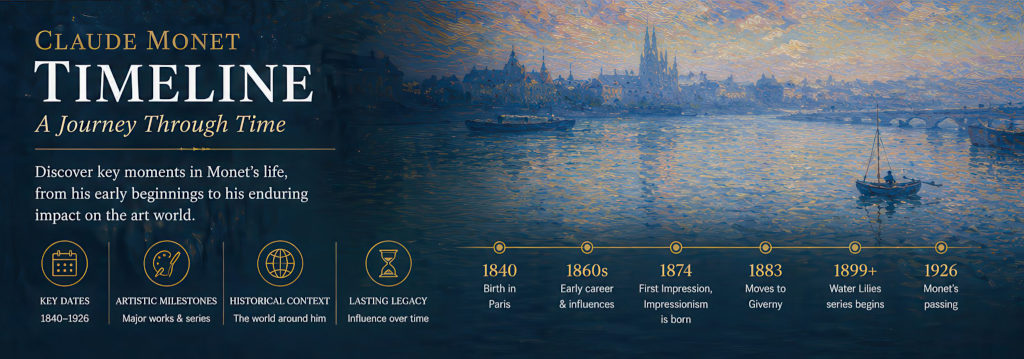
The life of Claude Monet (1840-1926) spans one of the most transformative periods in the history of modern art. As a founding figure of Impressionism, Monet revolutionised landscape painting through his study of light, atmosphere, and colour.
His artistic journey unfolded across numerous locations, from the Normandy coast of his youth to the riverside towns of the Seine and the gardens he later created at Giverny. Along the way he experienced financial hardship, personal tragedy, and growing international recognition.
This chronological timeline traces the major events in Monet's life year by year, highlighting the travels, exhibitions, artistic breakthroughs, and personal moments that shaped his career and ultimately led to the creation of some of the most famous paintings in the world. A broader Claude Monet biography can be found here.
Year-by-Year Analysis of Claude Monet's Life
1840
Claude Monet is born on 14 November in Paris. His parents, Claude Adolphe Monet and Louise Justine Aubrée Monet, belong to the lower middle class. Although born in the French capital, Monet's life will soon be shaped by the landscapes of Normandy.
1845
The Monet family moves to the port city of Le Havre in Normandy, where Monet spends most of his childhood. The harbour, sea, and constantly changing coastal weather will leave a lasting impression on the young artist.
1851
Monet begins attending the Le Havre secondary school of the arts. However, he shows little interest in formal academic study and prefers drawing independently.
1856
As a teenager Monet becomes locally known for his caricatures of teachers and townspeople. These humorous drawings are displayed and sold in a local stationery shop, providing Monet with his first income as an artist.
1857
Monet’s mother dies when he is sixteen. The loss affects him deeply, and he soon goes to live with his aunt Marie-Jeanne Lecadre, who is supportive of his artistic ambitions.
1858
Monet meets the landscape painter Eugène Boudin in Le Havre. Boudin encourages him to paint outdoors directly from nature, introducing Monet to plein-air painting. Monet later credits Boudin with opening his eyes to the beauty of natural light.
1859
Monet travels to Paris to pursue a career as an artist. He visits the Louvre regularly but becomes frustrated with copying old masters and instead sketches people and scenes around him.
1861
Monet is drafted into the French army and sent to Algeria. During his military service he experiences the intense Mediterranean light that later influences his interest in colour and atmosphere.
1862
After illness ends his military service, Monet returns to Paris. He studies in the studio of Charles Gleyre, where he meets Pierre-Auguste Renoir, Alfred Sisley, and Frédéric Bazille. These friendships will form the core of the future Impressionist movement.
1863
Monet and his fellow artists begin experimenting with painting outdoors in the forests around Paris, particularly the Forest of Fontainebleau. Their approach challenges traditional academic painting methods.
1864
Monet spends time painting in Honfleur with Eugène Boudin and Johan Barthold Jongkind. Jongkind’s loose brushwork and attention to atmospheric effects strongly influence Monet’s evolving style.
1865
Two of Monet’s seascapes are accepted by the Paris Salon, giving the young artist his first official recognition within the French art establishment.
1866
Monet achieves major success at the Salon with Woman in the Green Dress, a portrait of Camille Doncieux. The painting receives critical praise and establishes Monet as a promising young artist.
1867
Camille Doncieux gives birth to Monet’s first son, Jean. Monet struggles financially during this period and often relies on the support of friends such as Frédéric Bazille.
1868
Facing severe financial hardship and rejection by the Salon, Monet falls into despair and reportedly attempts suicide by jumping into the River Seine. He survives and gradually regains stability.
1869
Monet and Renoir paint together at the riverside resort of La Grenouillère near Paris. Their lively depictions of leisure and reflections on water demonstrate the early development of Impressionist techniques.
1870
Monet marries Camille Doncieux shortly before the outbreak of the Franco-Prussian War. To avoid military service and the conflict in France, the couple travel to London.
1871
While living in London, Monet studies the works of J. M. W. Turner and John Constable. He also meets the art dealer Paul Durand-Ruel, who begins purchasing Impressionist paintings.
1872
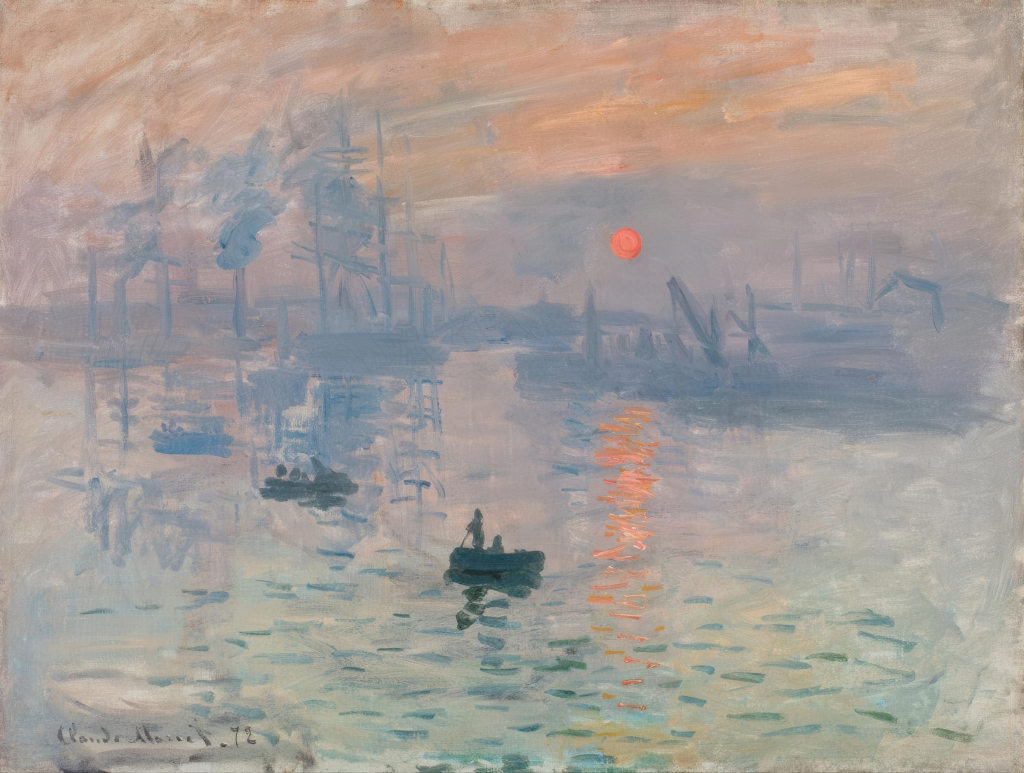
Monet returns to France and settles in Argenteuil along the River Seine. During this period he paints Impression, Sunrise, depicting the harbour of Le Havre.
1873
Monet helps organise an independent exhibition with fellow artists dissatisfied with the Paris Salon. The group plans to exhibit their work outside official institutions.
1874
The first Impressionist exhibition is held in Paris. Monet’s painting Impression, Sunrise inspires the critic Louis Leroy to mockingly label the artists “Impressionists.”
1875
Monet continues painting scenes along the Seine near Argenteuil. His works increasingly focus on modern leisure activities such as boating, gardens, and suburban life.
1876
Monet exhibits several paintings in the second Impressionist exhibition. Despite growing recognition among artists, the movement continues to face criticism from conservative critics.
1877
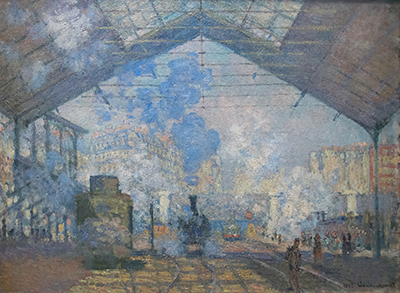
Monet paints a series of views of the Gare Saint-Lazare railway station in Paris, exploring the effects of steam, light, and industrial modernity.
1878
Financial difficulties force Monet and his family to leave Argenteuil. They move to Vétheuil, a small village along the Seine.
1879
Camille Monet dies after a prolonged illness. Her death marks one of the most tragic moments in Monet’s life and profoundly affects his emotional state.
1880
Monet gradually resumes painting after Camille’s death. He begins focusing increasingly on landscapes rather than portraits.
1881
Monet travels throughout Normandy searching for new subjects, painting dramatic coastal cliffs and seascapes.
1882
He paints several works depicting the rugged cliffs at Étretat, capturing the dramatic geological formations and shifting coastal light.
1883
Monet moves to the village of Giverny in Normandy. The rural surroundings provide an ideal environment for painting landscapes.
1884
Monet travels to the Mediterranean coast, visiting locations such as Bordighera and Menton. The brilliant southern light inspires a new palette of vivid colours.
1885
He continues painting Mediterranean landscapes and begins developing the idea of returning to the same subject repeatedly under different conditions.
1886
Durand-Ruel organises an Impressionist exhibition in New York, helping introduce Monet’s work to American collectors.
1887
Monet continues painting around Giverny and nearby villages, refining his method of studying changing light throughout the day.
1888
He travels to the Brittany coast and paints dramatic seascapes influenced by the region’s rugged landscapes.
1889
Monet exhibits works alongside Auguste Rodin in a major exhibition in Paris, solidifying his reputation as one of France’s leading painters.
1890
Monet purchases the house and land at Giverny. Ownership allows him to transform the property into an elaborate garden.
1891
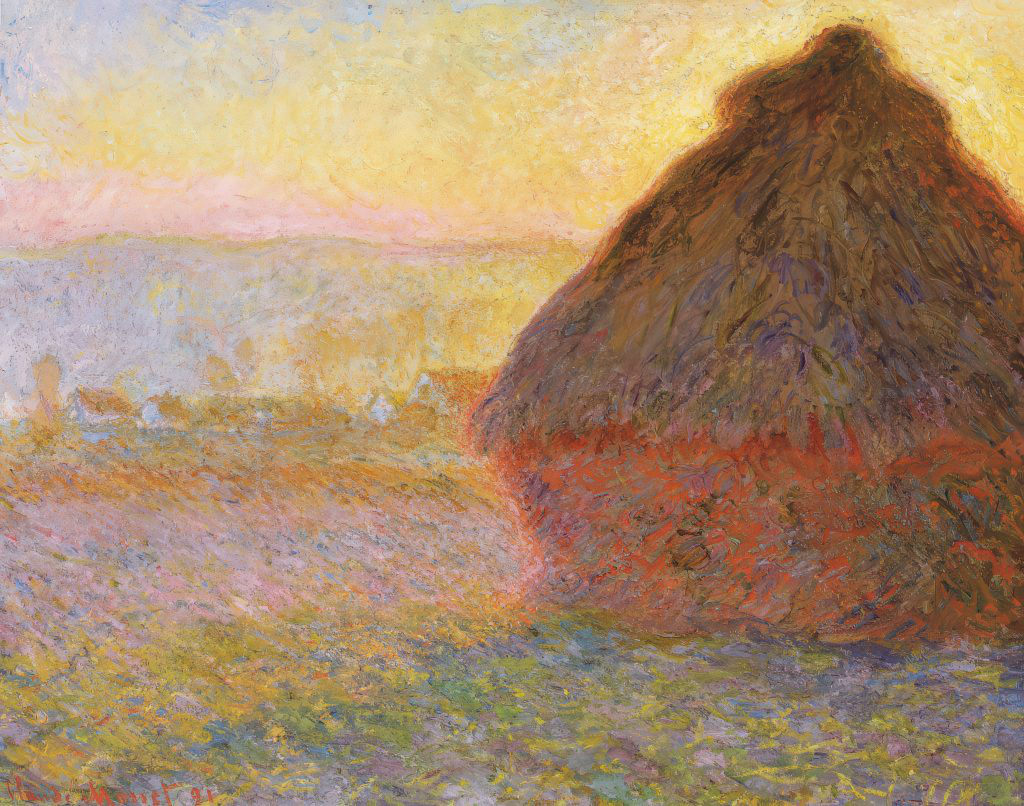
The Haystacks series is exhibited and becomes Monet’s first major commercial success. The paintings show the same rural subject under different light and seasonal conditions.
1892
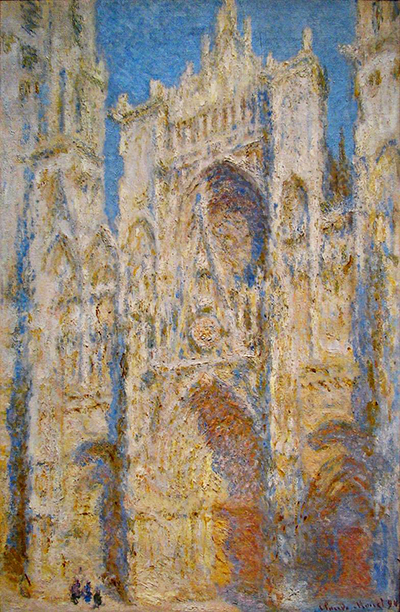
Monet begins painting the Rouen Cathedral series, studying the façade at different times of day to capture subtle variations of light.
1893
He expands the Giverny property by purchasing land across the road where he creates the famous water garden and lily pond.
1894
Monet marries Alice Hoschedé, who had been caring for his household and children for many years.
1895
The Rouen Cathedral series is exhibited to great acclaim in Paris, further establishing Monet’s international reputation.
1896
Monet continues developing the gardens at Giverny and begins focusing increasingly on subjects found within the property.
1897
He experiments with new compositions centred on reflections in water, anticipating the later Water Lilies series.
1898
Monet prepares for new painting campaigns outside France, particularly in London.
1899
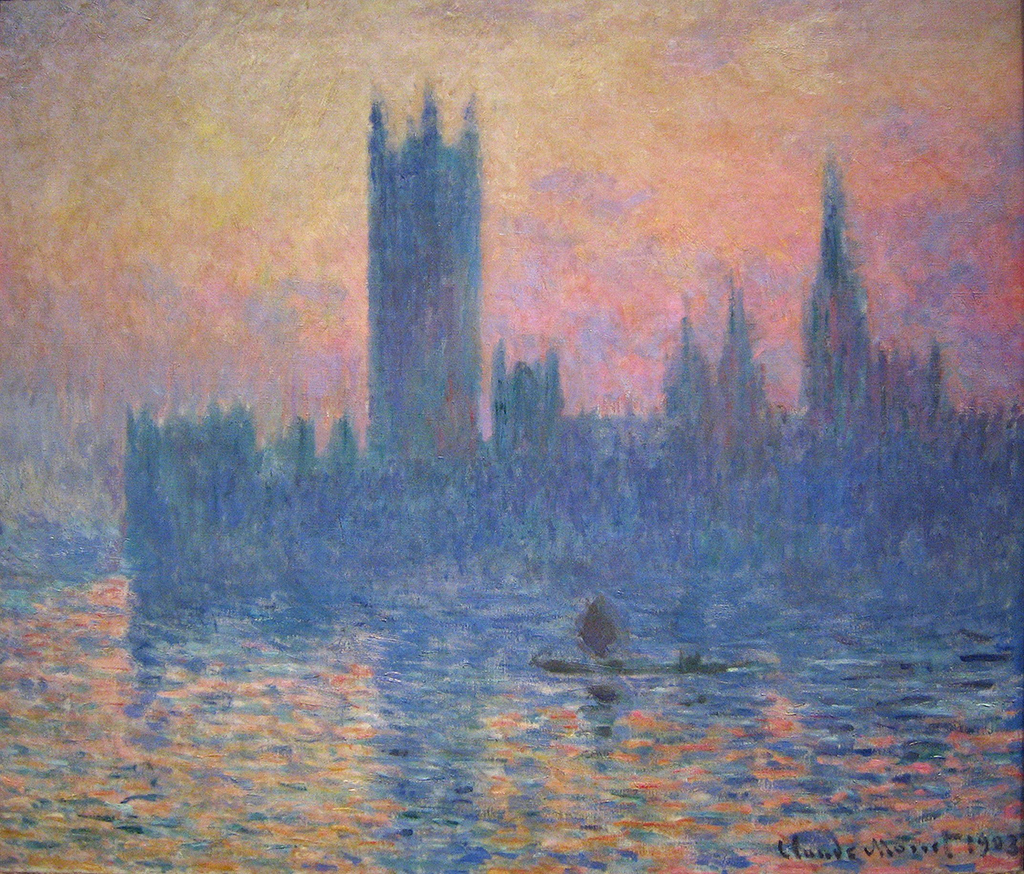
Monet travels to London and begins painting views of the River Thames, including Waterloo Bridge and the Houses of Parliament.
1900
He continues working in London, fascinated by the city’s fog and atmospheric effects that soften architectural forms.
1901
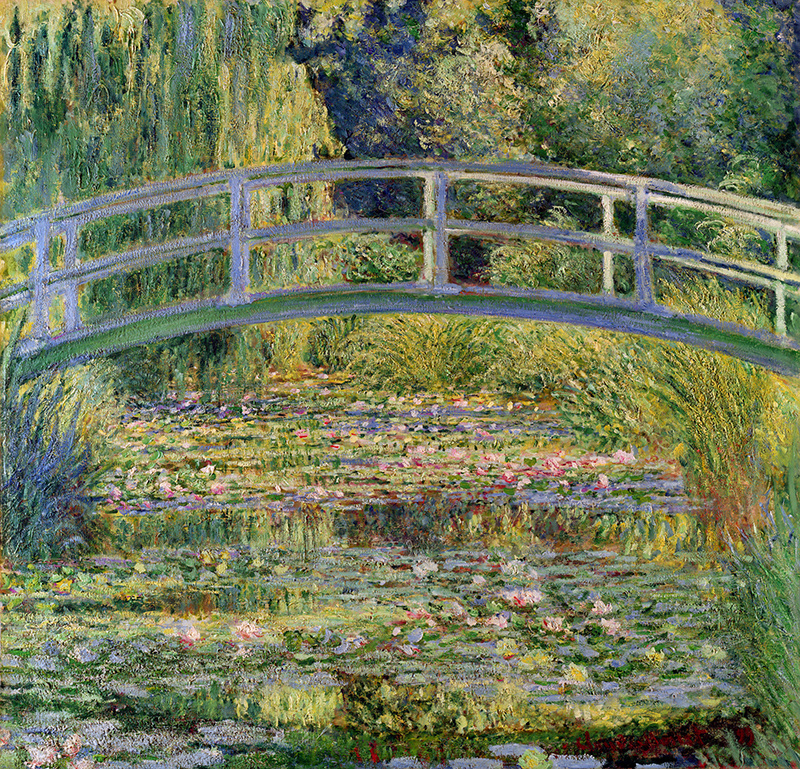
Monet returns to Giverny and begins painting the Japanese bridge and lily pond in his garden.
1902
The water garden becomes Monet’s primary subject. He paints numerous studies exploring reflections and surface patterns.
1903
Monet exhibits many of his London paintings, demonstrating how atmospheric conditions transform familiar landmarks.
1904
A major exhibition of the Thames series is held in Paris, attracting significant public attention.
1905
Monet continues painting in Giverny while his reputation grows internationally among collectors and museums.
1906
His work becomes increasingly experimental, with compositions focusing on colour relationships rather than traditional perspective.
1907
Monet prepares for travel to Italy and seeks new artistic inspiration outside France.
1908
He travels to Venice and produces a celebrated group of paintings depicting canals, palaces, and reflections on water.
1909
Monet exhibits a large group of Water Lilies paintings in Paris, marking the beginning of the series’ international fame.
1910
He continues painting increasingly immersive views of the lily pond, often eliminating the horizon line.
1911
Alice Monet dies after a long illness, leaving Monet devastated.
1912
Monet’s eyesight begins deteriorating due to cataracts, affecting his ability to perceive colour accurately.
1913
Despite vision problems, Monet continues painting in his garden at Giverny.
1914
Monet begins planning the monumental Water Lilies murals intended as a gift to the French nation.
1915
A large studio is built at Giverny to accommodate the enormous canvas panels required for the mural project.
1916
Monet devotes most of his time to working on the vast decorative Water Lilies compositions.
1917
The scale and ambition of the mural project continue to grow as Monet refines the compositions.
1918
At the end of the First World War, Monet formally donates the Water Lilies murals to the French state.
1919
He continues painting variations of the lily pond while supervising preparations for the mural installation.
1920
Monet struggles with worsening eyesight but remains determined to complete his artistic projects.
1921
The French government begins planning the installation of Monet’s murals at the Musée de l’Orangerie in Paris.
1922
Monet finalises many of the large panels that will later be displayed in the museum.
1923
Monet undergoes cataract surgery that partially restores his vision and allows him to continue painting.
1924
He resumes work on the Water Lilies series, refining colour relationships after his improved eyesight.
1925
Monet continues painting quietly at Giverny while overseeing the final arrangements for the mural installation.
1926
Claude Monet dies at his home in Giverny on 5 December at the age of eighty-six. His Water Lilies murals are installed shortly afterward at the Musée de l’Orangerie, becoming one of the most celebrated artistic environments in the world.