by Tom Gurney
Tom Gurney BSc (Hons) is an art history expert with over 20 years experience
Published on October 6, 2016 / Updated on February 12, 2026
Email: tomgurney1@gmail.com / Phone: +44 7429 011000
Claude Monet's Sunset in Venice, also known as San Giorgio Maggiore at Dusk, is one of thirty-seven paintings produced during a trip to Venice in 1908.
Introduction
Although originally simply intended as a trip for Monet and his wife to spend time together and with friends, the 68-year-old was so inspired by his first visit to Venice that he began painting the city as soon as his materials, which he was uncertain he would need, arrived.
Also known by the titles, Dusk in Venice and San Giorgio Maggiore by Twilight, this oil on canvas is one of a series of paintings by Monet capturing the view of the island and monastery of San Giorgio Maggiore from Venice. Also visible in the scene are the dome of the Basilica of Santa Maria Salute and the entrance of the Grand Canal.
Venice Series, 1908
Having remarked that Venice was in fact too beautiful to translate into a painting, Monet nonetheless set about painting the scenes he so admired simply to create souvenirs of the city for himself. In fact, the paintings would be exhibited in Paris four years after the Monets made the trip to Venice, and the exhibition at Bernheim-Jeune gallery would prove to be a resounding success.
Although the subject of the painting is ostensibly the island of San Giorgio Maggiore, the painting is all about capturing the beauty of the light at sunset. Typical of impressionist painting in general, Sunset in Venice conveys the changing qualities of light and sense of movement visible in the water.
Technique
Monet used thin, visible brush strokes and mixed pure colours in juxtaposition to create a sense of movement. Light brush strokes of red, orange, purple and yellow give vibrancy to the sky and its reflection in the gently moving water.
In contrast to the warm colours of the sunset, the silhouettes of the buildings are painted in dark blues, purples, and violets. Notably, even the shadows and silhouettes are composed of colours as Monet did not use black paint after 1886. Likewise, he shunned brown and earth tones.
Working Outdoors
Monet painted Sunset in Venice outdoors which was typical of the impressionist painters but was a break from the tradition of painting in a studio. At times he painted from the edge of the canal and at others, from the window of the hotel. However, like many of his works from Venice, he did not complete the painting while in the city.
Completing his Venice Series in France
It was not until four years later, shortly after the death of his wife in 1911, that Monet would complete Sunset in Venice at his home in Giverny. In addition to the view of San Giorgio Maggiore, Monet captured other Venice landmarks during his only trip to the city, including The Doge's Palace, The Grand Canal, and the Palazzo da Mula Morosini.
In all his Venetian paintings the canals play a central role in their reflection and movement of the changing light.
Provenance
Painting Exhibited in 1912
Sunset in Venice was purchased at the Paris exhibition of his Venetian Scenes at the Bernheim-Jeune gallery in 1912 by the Welsh philanthropist and art collector, Gwendoline Davies.
Bequethed to the National Museum Cardiff
The painting was subsequently bequeathed to the National Museum Cardiff, which is the national art gallery of Wales. Despite appearing in the 1999 art heist film, The Thomas Crown Affair, in which the painting, referred to as San Giorgio Maggiore at Dusk, is stolen from the Metropolitan Museum of Art in New York City, the painting has, in fact, remained in the National Museum of Cardiff.
The Metropolitan Museum of Art does, however, possess another of Monet's Venice paintings, The Doge's Palace Seen from San Giorgio Maggiore.
Turbulent Period for the Artist
Shortly after completing his Venice series of paintings and not long after suffering the loss of his wife, Monet's eldest son died and around this time the artist began to develop cataracts which impaired his vision.
Although he would undergo surgery in 1923 to remove the cataracts, it may be that his perception of colour was permanently altered. The great founder of Impressionism, died in 1926 at the age of 86. Today, his home and gardens at Giverny are open to the public, having been bequeathed by his younger son Michel to the French Academy of Fine Arts.
Legacy of this Painting and the Series
Monet Sunset paintings are amongst the most popular from this influential French artist who starred in the 19th and 20th century impressionist movement which itself remains highly respected in the modern day.
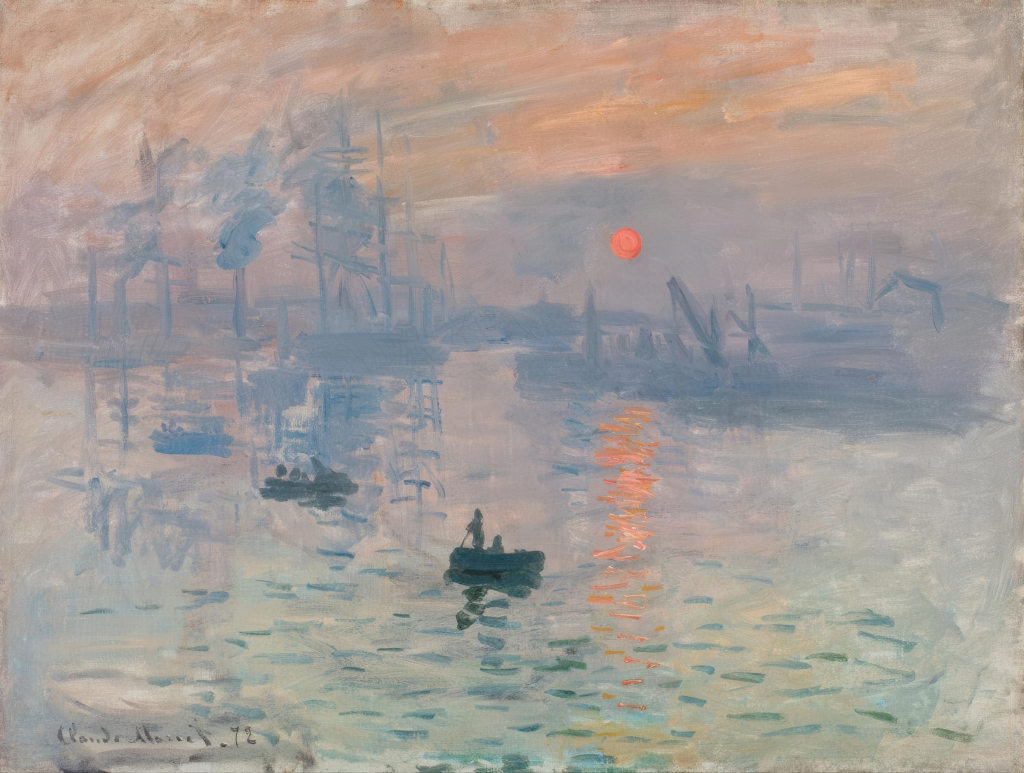
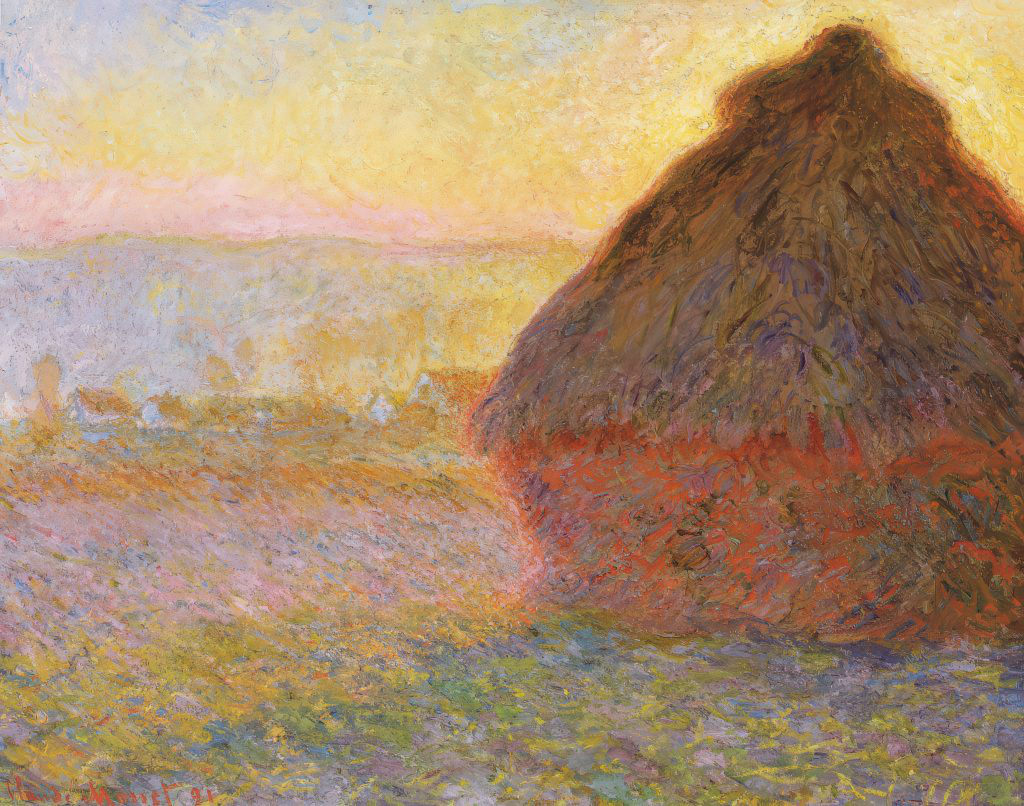
This section brings you all the very best Claude Monet paintings that included either a sunset or sunrise plus a few others with similarly interesting effects across the landscape's sky. Impression, Sunrise is clearly the most influential of all within this website as was the painting from which the term impressionism was originally coined.
Inspiration
Monet sunrise above is his best known work featuring an actual sunrise and was produced in the highly artistic and beautiful city of Venice in Italy.
It was one of a number of paintings that the artist produced here having been inspired by this truly unique setting as had so many others who came before him, such as Romanticist JMW Turner who created a similar look with watercolours which is believed to have inspired some of the later impressionists.
Claude Monet has become one of the most respected landscape artists of all time and many like to study his career in detail, often concentrating on a specific elements such as the sunsets and sunrises here, or alternatively his experiments with light and seasons.
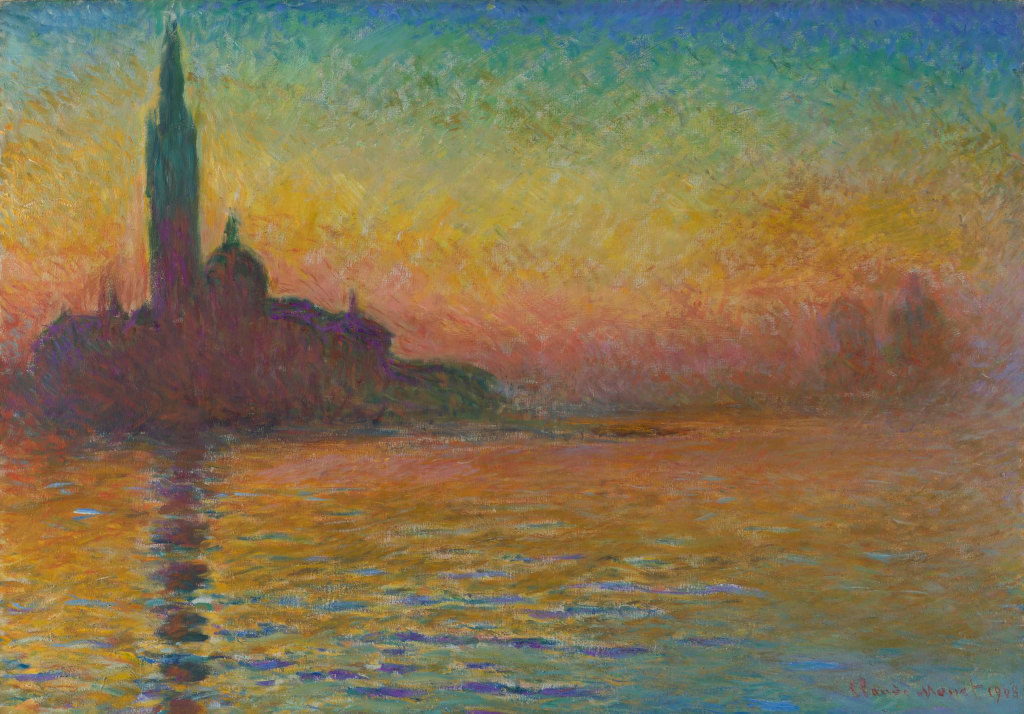
Sunset in Venice (San Giorgio Maggiore at Dusk), Claude Monet