 by Tom Gurney
Tom Gurney BSc (Hons) is an art history expert with over 20 years experience
Published on July 7, 2026 / Updated on July 7, 2026
Email: tomgurney1@gmail.com / Phone: +44 7429 011000
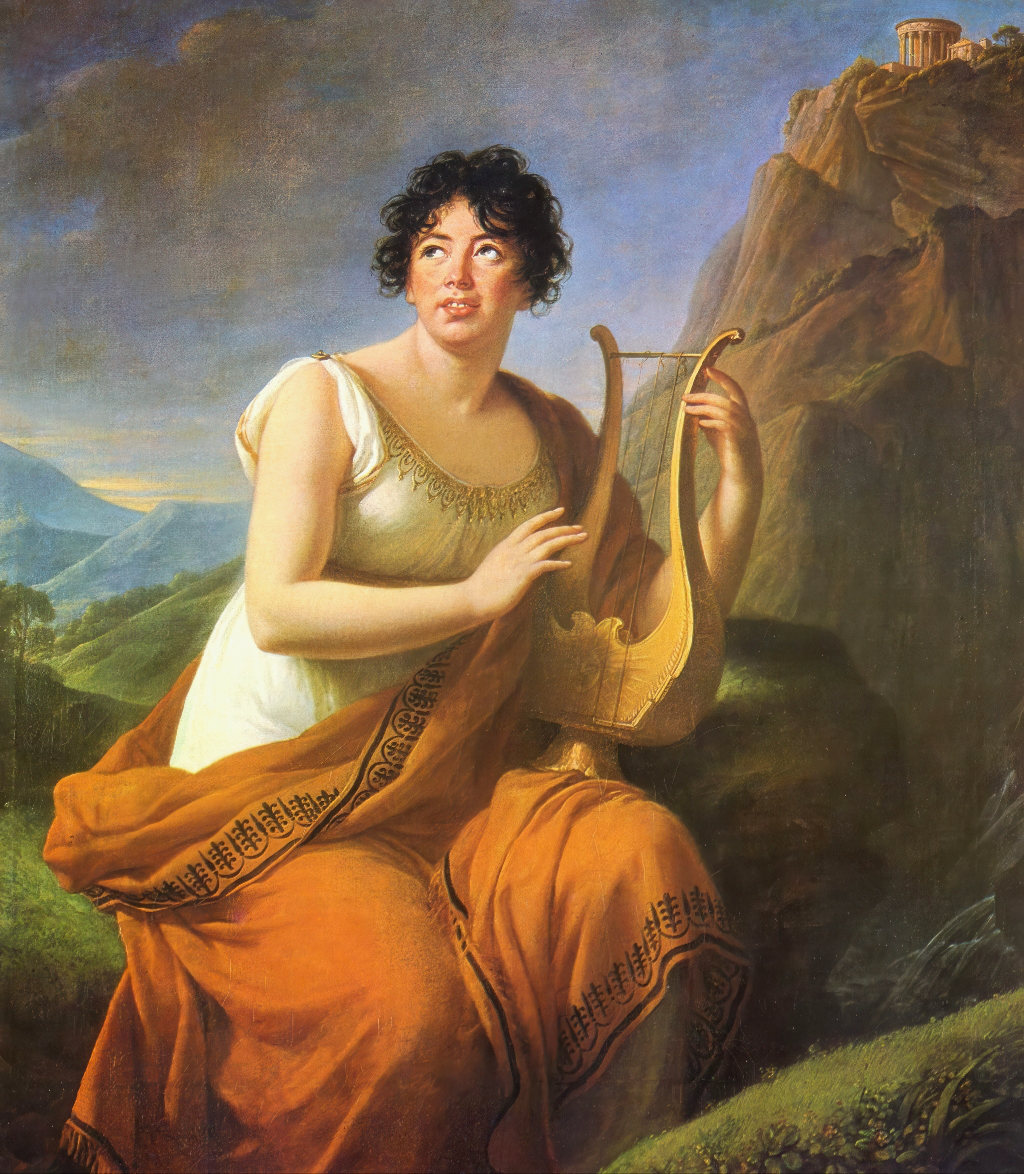
Madame de Staël as Corinne by Élisabeth Vigée Le Brun
Élisabeth Vigée Le Brun's Madame de Staël as Corinne at Cape Miseno is one of her most literary portraits. The Met's 2016 exhibition catalogue records the painting as an oil on canvas of 1807-1809, measuring 140 x 118 cm, in the Musée d'Art et d'Histoire de la Ville de Genève, where it entered as a gift of Madame Necker-de Saussure in 1841. [1]
The work matters because it joins portraiture, literature and exile. Madame de Staël is not presented only as a sitter, but in the role of Corinne, the inspired poet from her own novel Corinne, or Italy.
The painting is valuable precisely because it is not an easy success story. It attempts a sophisticated fusion of sitter, author and fictional heroine, but the sitter was dissatisfied. That tension makes the page richer: it shows portraiture as a negotiation that could fail even when the concept was intellectually powerful.
At a Glance
- Artist:Élisabeth Louise Vigée Le Brun [1]
- Title:Madame de Staël as Corinne at Cape Miseno [1]
- Date:1807-1809 [1]
- Medium:Oil on canvas [1]
- Dimensions:140 x 118 cm [1]
- Collection:Musée d'Art et d'Histoire, Geneva [1]
- Accession:1841-0003 [1]
Contents
- At a Glance
- Why It Matters
- Madame de Staël and Corinne
- Looking Carefully
- Inspiration and Performance
- Reception and Dissatisfaction
- Timeline
- Comparison Works
Why It Matters
The portrait matters because it is not a straightforward likeness. Vigée Le Brun depicts Germaine de Staël through the fictional identity of Corinne, the poet and heroine of de Staël's novel. The sitter becomes author, character and performer at once. [1]
This makes the painting one of the strongest late-career pages in the cluster. It shows Vigée Le Brun after the court world, still making portraits that negotiate public identity, emotion and cultural role.
It also shows how the artist's portrait language changed after the Revolution. The question is no longer how to make a queen seem defensible or an aristocrat seem graceful. Here the problem is how to represent a famous woman of letters through inspiration, exile and literary selfhood.
Madame de Staël and Corinne
The Met catalogue explains that Madame de Staël had been banished from French territory by Napoleon and was living near Lake Geneva. Before arriving at Coppet, Vigée Le Brun read Corinne, or Italy, and proposed to represent de Staël as the heroine of that novel. [1]
That choice matters because Corinne was not a neutral costume role. The novel opened a debate about women's condition and imagined an educated, independent woman artist struggling for recognition and emotional freedom. [1]
The portrait therefore has a self-reflexive quality. Madame de Staël is represented through a heroine she created, while Vigée Le Brun translates that literary persona into paint. The sitter brings authorship; the painter brings pictorial performance. The result is a portrait about identity being mediated through art.
Looking Carefully
The lyre identifies de Staël with poetic inspiration. The painting is less concerned with everyday appearance than with the dramatized state of inspiration: a writer performing herself through a fictional alter ego.
The setting also matters. The catalogue notes that de Staël requested the substitution of the Temple of Tivoli and waterfalls for Cape Miseno, changing the literary geography of the scene. [1]
Inspiration and Performance
Vigée Le Brun's memoirs give the portrait a vivid studio detail. The catalogue records that she asked Madame de Staël to recite tragic verses in order to sustain the inspired expression she wanted to paint. [1]
This detail is valuable because it shows portraiture as collaboration and performance. De Staël does not simply sit still; she performs inspiration while Vigée Le Brun translates it into image.
That makes the portrait unusually theatrical for a writer. The lyre, landscape and inspired expression do not just decorate the sitter. They ask the viewer to imagine her in the act of poetic creation. The painting tries to show intellect as performance, not merely as status.
Reception and Dissatisfaction
The portrait's afterlife was not simple. The Met catalogue states that de Staël was clearly displeased with the painting, declined to exhibit it at the Salon, and chose not to have it engraved, despite maintaining polite correspondence with the artist. [1]
That dissatisfaction makes the painting more interesting, not less. It reminds readers that portraits are negotiations: between sitter and artist, self-image and public image, ambition and result.
It also prevents a too-simple reading of Vigée Le Brun's flattery. Her portraits often succeed because they align beauty, role and public identity. Here, the alignment was contested. De Staël's refusal to exhibit or engrave the work suggests that the portrait did not match her own desired self-image, even though it remains one of the most conceptually ambitious works in this cluster. [1]
Timeline
- 1807: Madame de Staël's novel Corinne, or Italy shapes the portrait's subject. [1]
- 1807-1809: Vigée Le Brun paints Madame de Staël as Corinne at Cape Miseno. [1]
- 1809: The painting is completed in Paris and sent to Switzerland in July. [1]
- 1841: It enters the Geneva museum as a gift of Madame Necker-de Saussure. [1]
Comparison Works
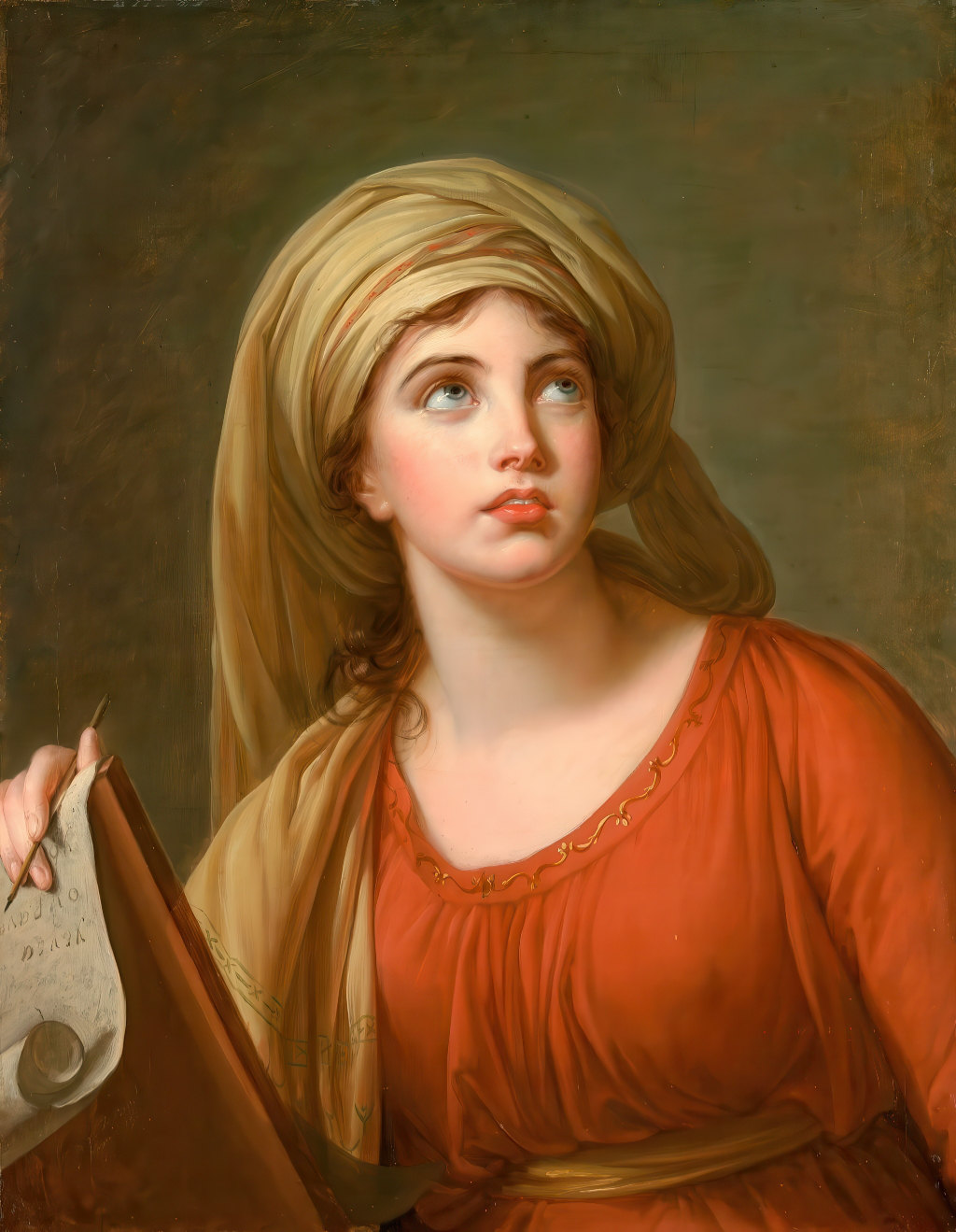
Compare this painting with Lady Hamilton as the Cumaean Sibyl. Both use an inspired female role to transform portraiture into performance. One sitter becomes Corinne, the poet; the other becomes a Sibyl, the prophetic figure from antiquity. [1]
FAQs
The Met catalogue records it in the Musée d'Art et d'Histoire de la Ville de Genève. [1]
Corinne was the heroine of de Staël's novel Corinne, or Italy, and Vigée Le Brun proposed the role after reading the book. [1]
The Met catalogue states that Madame de Staël was clearly displeased and declined to exhibit or engrave it. [1]
References
Discussion
What stands out to you about Élisabeth Vigée Le Brun? Share an observation, question or interpretation with other readers.
Reader Insights
Which visual detail changes how you read the sitter, the artist or the page's central theme?
Which related Vigée Le Brun page helps you understand this work or topic more clearly?
Join the Conversation
Thoughtful comments and questions are welcome.