 by Tom Gurney
Tom Gurney BSc (Hons) is an art history expert with over 20 years experience
Published on July 7, 2026 / Updated on July 7, 2026
Email: tomgurney1@gmail.com / Phone: +44 7429 011000
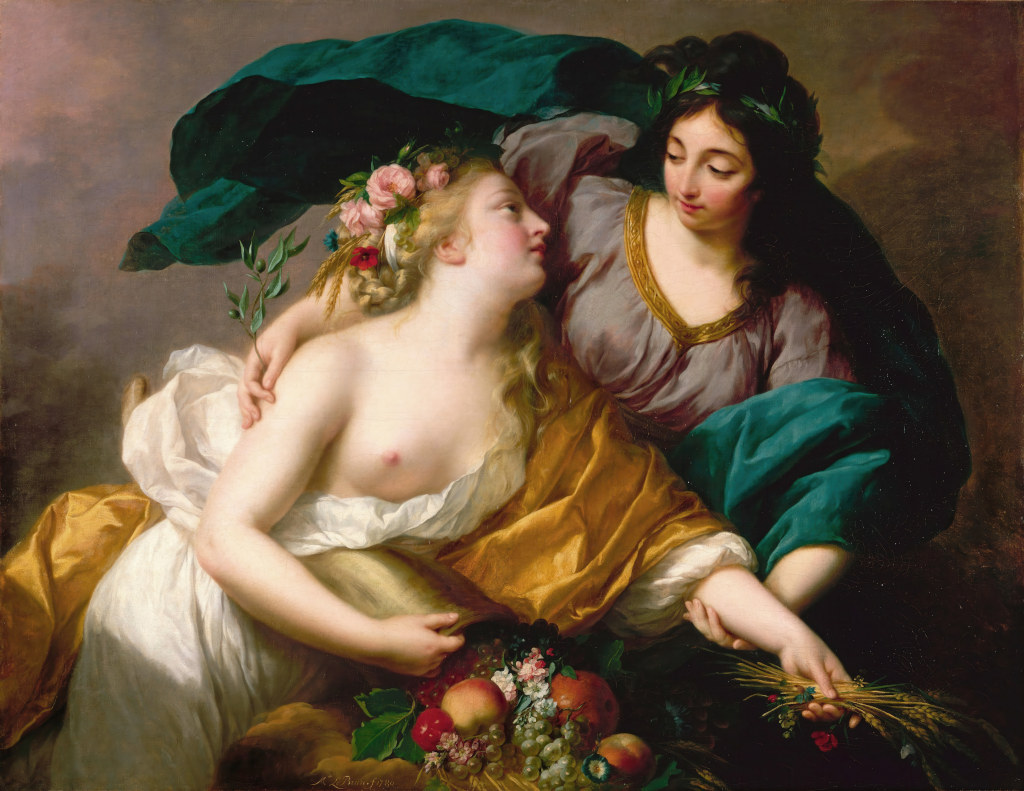
Peace Bringing Back Abundance by Élisabeth Vigée Le Brun
Peace Bringing Back Abundance is a crucial painting in Élisabeth Vigée Le Brun's career because it shows her reaching beyond portraiture. The Met's 2016 exhibition catalogue records the work as an oil on canvas of 1780, signed and dated by the artist, measuring 103 x 133 cm, and held by the Louvre's Department of Paintings. [1]
The painting matters because it was bound up with ambition, Académie membership and the hierarchy of genres. For a woman famous as a portraitist, an allegorical history painting was a strategic claim to higher artistic status.
This page is important because it keeps the cluster from becoming only a portrait cluster. Vigée Le Brun's reputation rests mainly on portraits, but Peace Bringing Back Abundance shows her thinking about genre, institution and public ambition. It asks readers to see her not just as a fashionable likeness-maker, but as an artist aware of the hierarchy that shaped academic art.
At a Glance
- Artist:Élisabeth Louise Vigée Le Brun [1]
- Title:Peace Bringing Back Abundance [1]
- Date:1780 [1]
- Medium:Oil on canvas [1]
- Dimensions:103 x 133 cm [1]
- Collection:Musée du Louvre, Paris [1]
- Salon:Paris Salon, 1783, no. 115 [1]
Contents
- At a Glance
- Why It Matters
- Académie Ambition
- Allegory and Public Meaning
- Looking Carefully
- Reception
- Timeline
- Comparison Works
Why It Matters
The painting matters because it complicates the idea that Vigée Le Brun was simply a fashionable portraitist. The Met catalogue explains that history painting was the most important genre and that Peace Bringing Back Abundance was tied to her ambition to enter the Académie royale. [1]
That makes the work a hinge in the cluster. The portraits show how she shaped public identity for sitters; this allegory shows how she shaped artistic identity for herself.
The distinction matters. Portraiture could make Vigée Le Brun famous, but history painting carried a different kind of institutional prestige. By working through allegory, she entered a language associated with public meaning, ideal bodies and elevated subjects.
Académie Ambition
Admission to the Académie mattered because it gave legitimacy and Salon access. The Met catalogue states that Vigée Le Brun sought admission through history painting and later offered Peace Bringing Back Abundance in connection with that campaign. [1]
The context was difficult. Women could become visible artists, but their institutional position remained limited. The Met's essay on women painters notes the success of women artists in this period while also stressing restrictions within the Académie and artistic training. [2]
That context makes the painting more than an exercise. It is an institutional argument. Vigée Le Brun demonstrates that she can handle allegorical bodies and public meaning at a moment when women artists' ambitions were scrutinized and constrained. [2]
Allegory and Public Meaning
The subject was timely. The Met catalogue connects the painting's reception to France's involvement in the American War of Independence and to the treaty signed in 1783. Peace and abundance were not merely decorative abstractions; they spoke to public hopes attached to war, diplomacy and prosperity. [1]
This public dimension distinguishes the work from many of the portrait pages in the cluster. The figures are not sitters with names and biographies. They are personifications, and their meaning depends on the viewer recognizing a shared political and moral vocabulary. Vigée Le Brun is not only arranging beauty; she is arranging an idea.
Looking Carefully
Unlike the portrait pages in this cluster, this painting should be read through personification. Peace and Abundance are not individuals in the ordinary portrait sense. They are bodies turned into ideas, and their arrangement makes political and artistic claims at the same time.
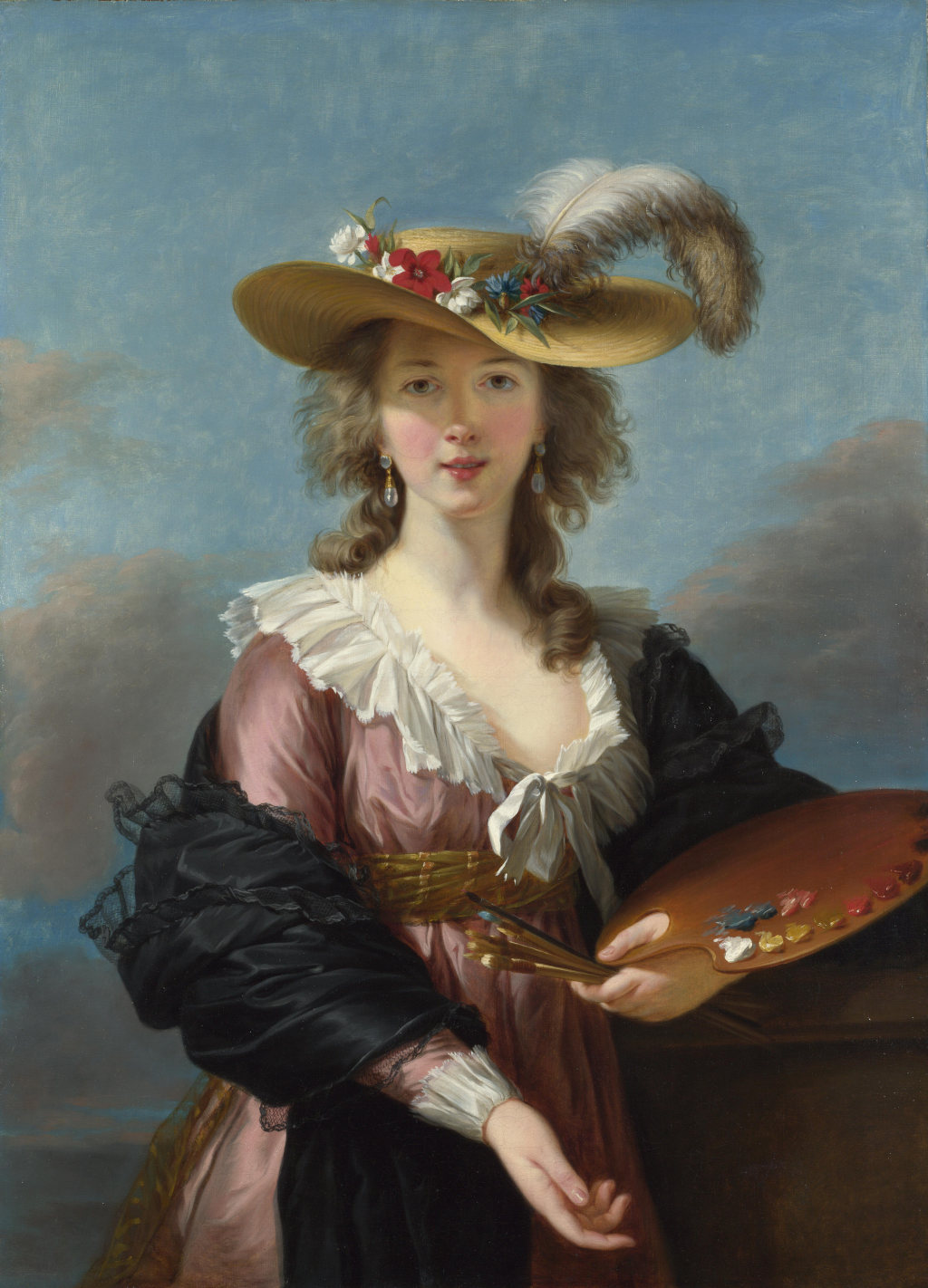
That makes the work especially useful beside Vigée Le Brun's self-portraits. In Self Portrait in a Straw Hat, she claims the identity of painter through palette and old-master reference. In Peace Bringing Back Abundance, she claims the right to work in a prestigious allegorical mode. [3]
Reception
The Met catalogue records that the painting elicited favourable reviews at the Salon of 1783, although it also notes that some critics suspected borrowing or imitation from earlier painters. The important point is not that the criticism disappeared, but that the work was serious enough to be judged within the competitive language of history painting. [1]
That mixed reception is valuable. Praise showed that the work could succeed in public; suspicion showed that women artists could still be judged through a lens of doubt. The painting's importance lies partly in that tension. It is a successful claim to ambition made inside a culture that did not grant women ambition without friction.
Timeline
- 1780: Vigée Le Brun paints and signs Peace Bringing Back Abundance. [1]
- 1783: She and Adélaïde Labille-Guiard are admitted to the Académie royale. [2]
- 1783: The painting is shown at the Paris Salon as no. 115. [1]
- 1783: The treaty ending the American War of Independence gives the allegorical subject added relevance. [1]
Comparison Works
The best internal comparison is with Women Artists in 18th-Century France, because the painting reveals how genre, training and institutional recognition shaped women's artistic possibilities. It also belongs beside Vigée Le Brun's style and technique, where the artist's painterly ambition can be seen beyond portrait charm.
FAQs
The Met catalogue records it in the Musée du Louvre, Paris, Department of Paintings. [1]
It shows Vigée Le Brun working in allegorical history painting, the most prestigious genre, while seeking Académie recognition. [1]
Yes. The catalogue records it at the Paris Salon of 1783 as no. 115. [1]
References
- Joseph Baillio, Katharine Baetjer and Paul Lang, Vigée Le Brun, The Metropolitan Museum of Art, 2016, cat. 9.
- The Metropolitan Museum of Art, Eighteenth-Century Women Painters in France.
- National Gallery, London, Self Portrait in a Straw Hat.
Discussion
What stands out to you about Élisabeth Vigée Le Brun? Share an observation, question or interpretation with other readers.
Reader Insights
Which visual detail changes how you read the sitter, the artist or the page's central theme?
Which related Vigée Le Brun page helps you understand this work or topic more clearly?
Join the Conversation
Thoughtful comments and questions are welcome.