 by Tom Gurney
Tom Gurney BSc (Hons) is an art history expert with over 20 years experience
Published on July 7, 2026 / Updated on July 7, 2026
Email: tomgurney1@gmail.com / Phone: +44 7429 011000
Marie Antoinette and Her Children by Élisabeth Vigée Le Brun
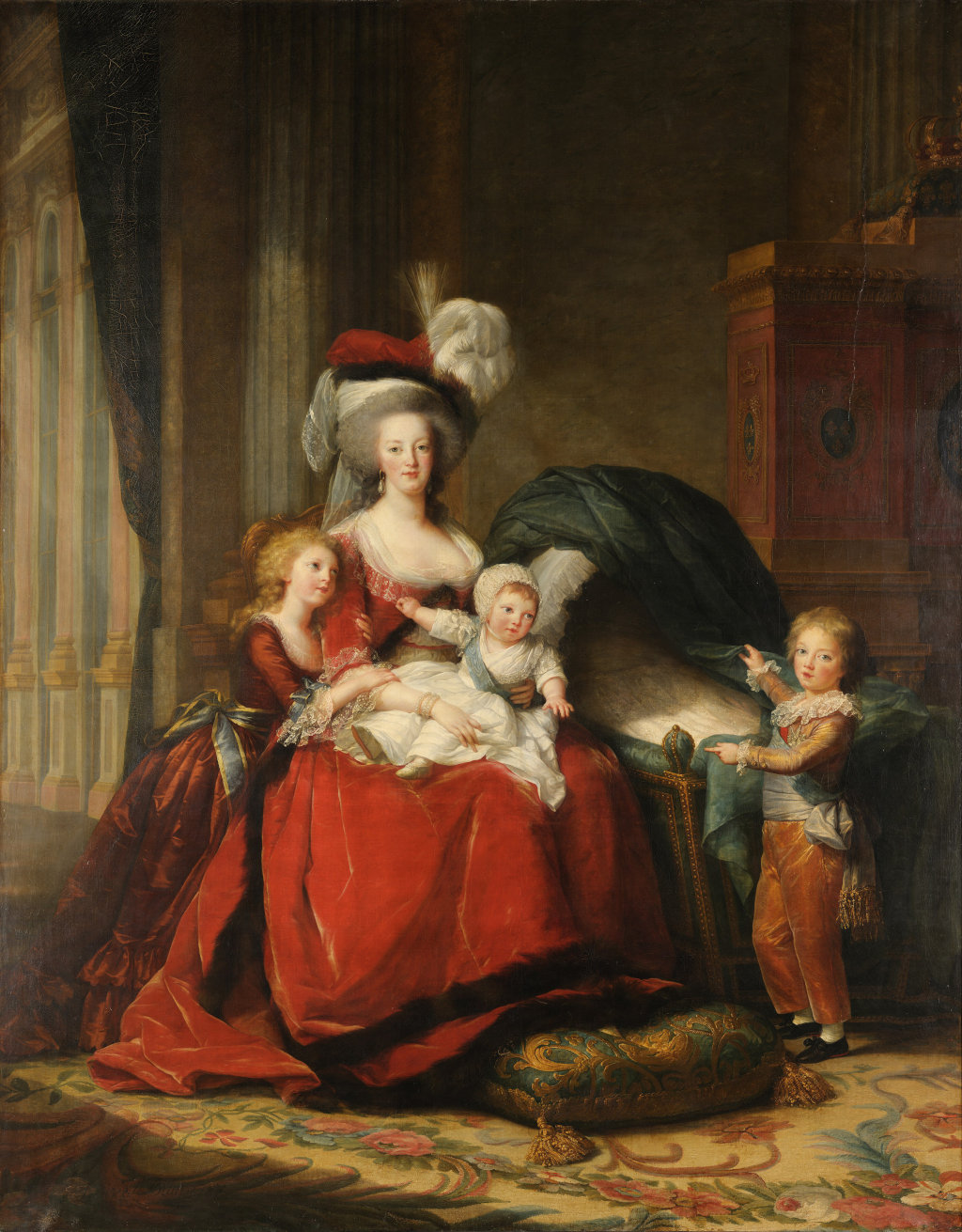
Marie Antoinette and Her Children is the most ambitious official portrait in Élisabeth Vigée Le Brun's Marie Antoinette sequence. Histoire par l'image records the work as a 1787 oil on canvas at Versailles, measuring 275.2 by 216.5 cm. It presents the queen not primarily as a figure of fashion, but as mother of the royal children. [1]
The painting matters because it turns motherhood into public image-making. Tenderness, dynasty and political repair all meet inside one large court portrait.
The painting should not be mistaken for a private domestic scene. Its scale, setting and dynastic subject make it an official image, even though it borrows the emotional language of family. That tension is the key to the work: Vigée Le Brun uses motherhood to humanize monarchy, but the painting never stops being a portrait of power.
At a Glance
- Artist:Élisabeth Louise Vigée Le Brun [1]
- Title:Marie Antoinette and Her Children [1]
- Date:1787 [1]
- Medium:Oil on canvas [1]
- Dimensions:275.2 x 216.5 cm [1]
- Collection:Musée national du château de Versailles [1]
- Inventory no.:MV 4520 [1]
Contents
- At a Glance
- Why It Matters
- Museum Perspective
- A Political Family Image
- Looking Carefully
- Interpretation
- Timeline
- Comparison Works
Why It Matters
The painting matters because it tries to solve a political problem through family feeling. Marie Antoinette's public reputation had been damaged by criticism and scandal, and this image shifts attention toward maternal virtue and dynastic continuity. [1]
That strategy was not accidental. The queen is not merely surrounded by children; she is presented as the emotional and dynastic centre of the royal family.
The image therefore asks the viewer to shift categories. Instead of judging Marie Antoinette through luxury, fashion or scandal, it asks her to be read through duty, maternity and succession. Histoire par l'image's account of the queen's damaged public image makes this shift crucial. The painting belongs to a broader attempt to redirect feeling toward a deeply unpopular figure. [1]
Museum Perspective
Histoire par l'image places the painting within a sequence of Marie Antoinette images by Vigée Le Brun and identifies it as a major Versailles work. Its essay emphasizes the queen's maternal role and the importance of the dauphin within the image's meaning. [1]
The same source also links the portrait to the wider difficulty of representing Marie Antoinette at a moment when public hostility toward the queen was increasing. [1]
That museum perspective is important because it prevents a purely sentimental reading. The picture is moving because it uses family feeling, but the feeling has a public function. The queen's tenderness is not only personal; it is made visible as a reason to see her differently. In this sense the portrait is emotional, dynastic and political at the same time.
A Political Family Image
The children soften the queen, but they also make a political argument: monarchy is presented as a family line. The image asks the viewer to see Marie Antoinette not through luxury or fashion, but through motherhood and succession. [1]
The scale makes this argument official. At more than two metres high, the work is far from a private domestic scene. It brings family feeling into the language of state portraiture. [1]
This is one reason the painting feels more ambitious than the smaller corrective portraits of the queen. It does not only adjust costume or pose. It proposes an entire public identity: Marie Antoinette as the mother through whom the royal family can be imagined as tender, continuous and morally serious.
Looking Carefully
The most important thing to notice is the relationship between tenderness and display. The children bring emotional warmth, while the architectural setting, scale and carefully arranged grouping keep the image within courtly decorum.
The empty cradle-like space often attracts attention because it introduces absence into an image of family continuity. It gives the painting a visual pause and makes the maternal theme feel less simple than an ordinary celebration of children.
That absence deepens the painting's emotional strategy. The portrait presents continuity, but it also acknowledges loss. The queen is not only displayed with heirs; she is placed in a scene where maternal feeling includes vulnerability. That vulnerability is exactly what the image needs if it is to soften a hostile public reading of Marie Antoinette.
Interpretation
The safest interpretation is that Marie Antoinette and Her Children is a maternal image built for public persuasion. It does not abandon monarchy's ceremonial language, but it tries to humanize that language through family feeling.
This makes the painting more complex than propaganda alone. It is sincere in its emotional vocabulary and strategic in its public function. Vigée Le Brun's skill lies in making those two things work together.
The painting's failure or success cannot be measured only by whether it changed public opinion. Its historical importance lies in what it attempted. It shows how far court portraiture had to move in order to defend monarchy: not toward greater splendour, but toward family feeling, loss and moral persuasion.
Timeline
- 1783: Marie Antoinette with a Rose repairs the controversy surrounding the chemise portrait. [1]
- 1785: The queen's reputation is further damaged by the political atmosphere around the court and the diamond-necklace affair. [1]
- 1787: Vigée Le Brun paints Marie Antoinette and Her Children. [1]
- 1789: Vigée Le Brun leaves Paris during the Revolution. [2]
Comparison Works
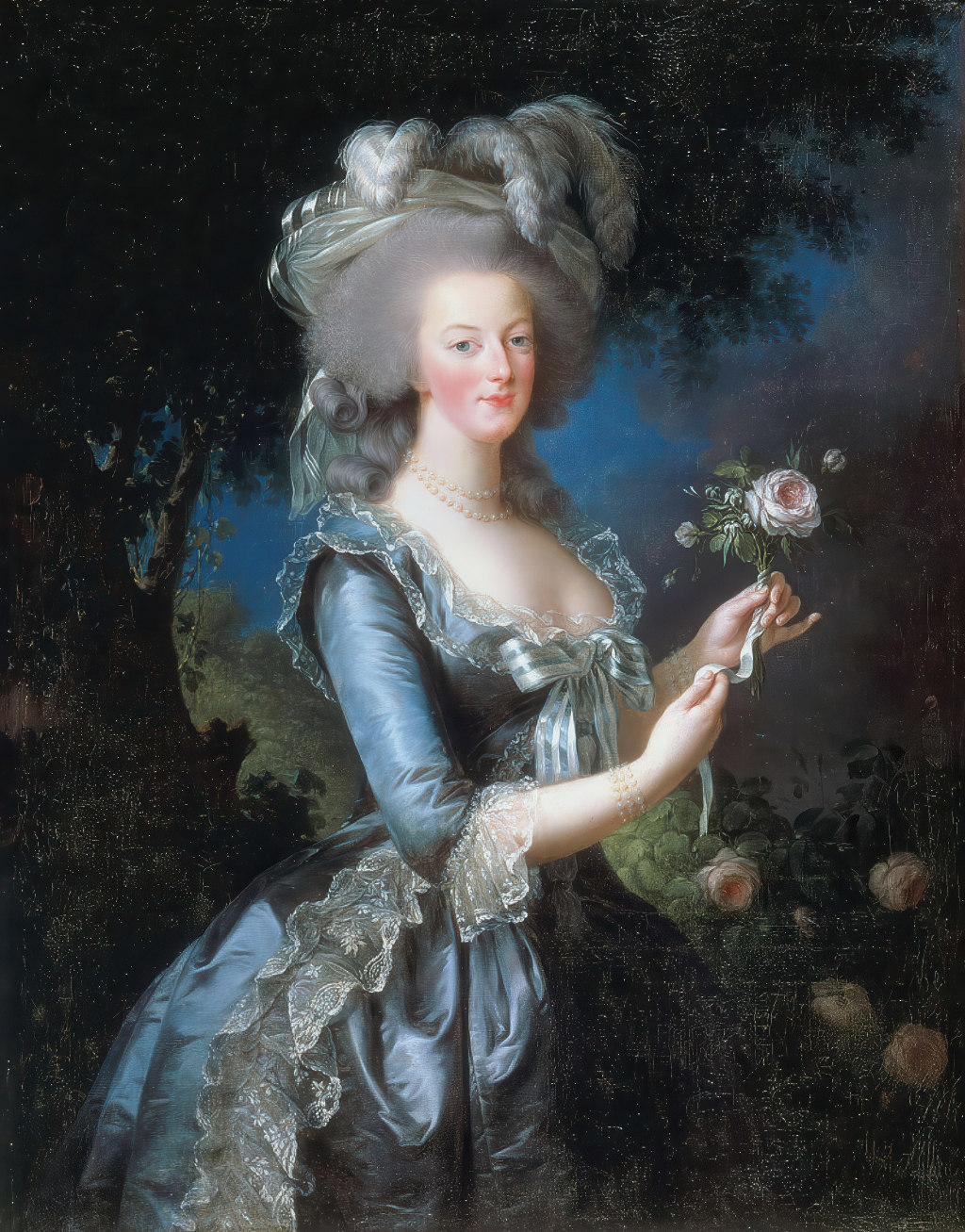
Compare this painting with Marie Antoinette with a Rose. The rose portrait repairs costume and decorum; the family portrait repairs reputation through motherhood and dynasty. Both are acts of royal image-making. [1]
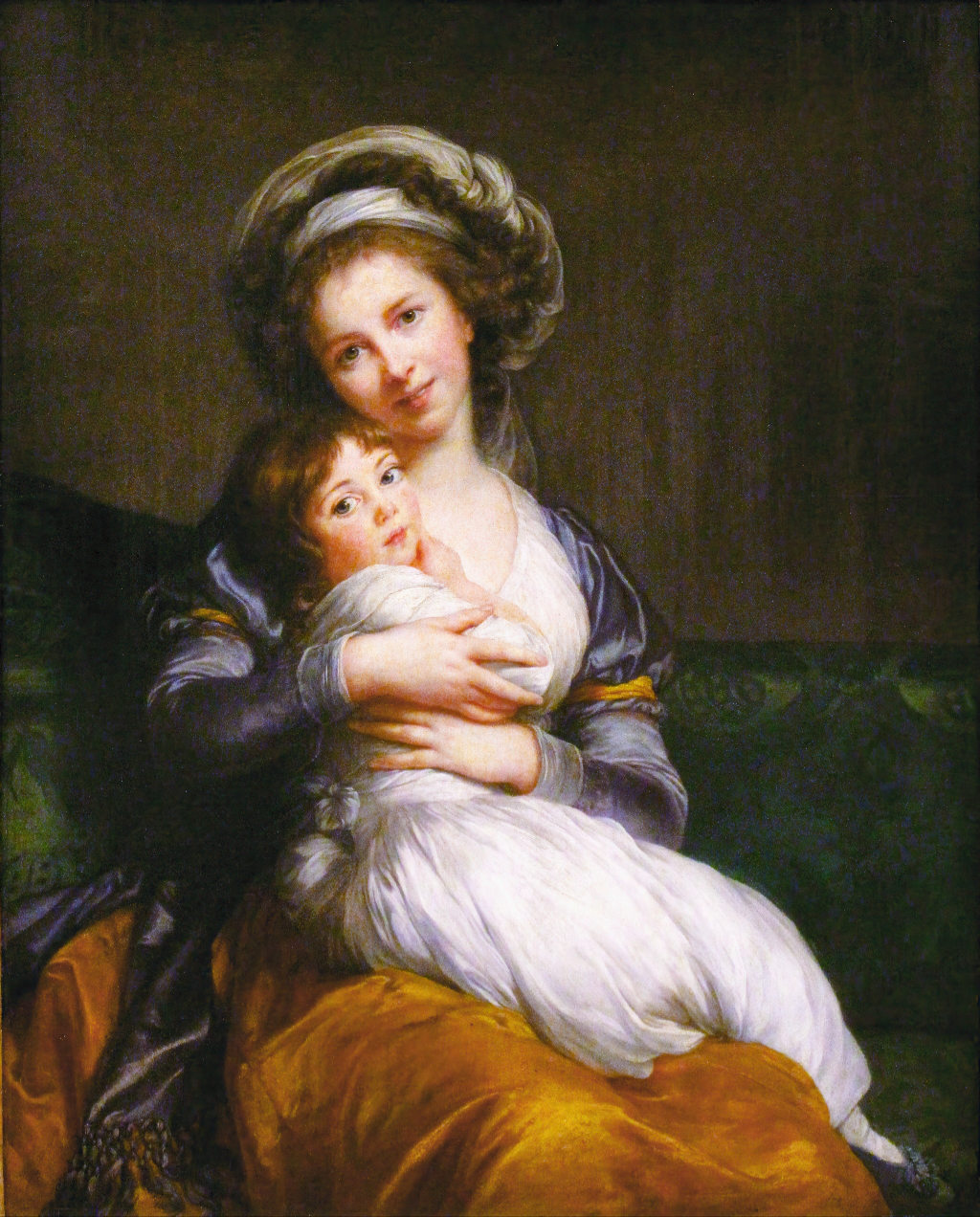
It also belongs beside Self-Portrait with Julie. Both use motherhood, but one is dynastic and official while the other is intimate and self-fashioning. [3]
The contrast is revealing. In the self-portrait, maternity helps Vigée Le Brun claim tenderness as part of her own public identity. In the queen's portrait, maternity is asked to carry the burden of royal reputation. Same theme, different stakes.
FAQs
It is recorded in the Musée national du château de Versailles collection, with inventory number MV 4520. [1]
It presented Marie Antoinette as mother of the royal children, using family imagery to support a damaged public image. [1]
The rose portrait is an individual image of restored decorum; the family portrait is larger, dynastic and more explicitly maternal. [1]
References
- Histoire par l'image, Marie-Antoinette, la mal-aimée (in French).
- National Gallery, London, Self Portrait in a Straw Hat.
- Histoire par l'image, Le nouveau visage de l'amour maternel (in French).
Discussion
What stands out to you about Élisabeth Vigée Le Brun? Share an observation, question or interpretation with other readers.
Reader Insights
Which visual detail changes how you read the sitter, the artist or the page's central theme?
Which related Vigée Le Brun page helps you understand this work or topic more clearly?
Join the Conversation
Thoughtful comments and questions are welcome.