 by Tom Gurney
Tom Gurney BSc (Hons) is an art history expert with over 20 years experience
Published on July 7, 2026 / Updated on July 7, 2026
Email: tomgurney1@gmail.com / Phone: +44 7429 011000
Self-Portrait with Julie by Élisabeth Vigée Le Brun
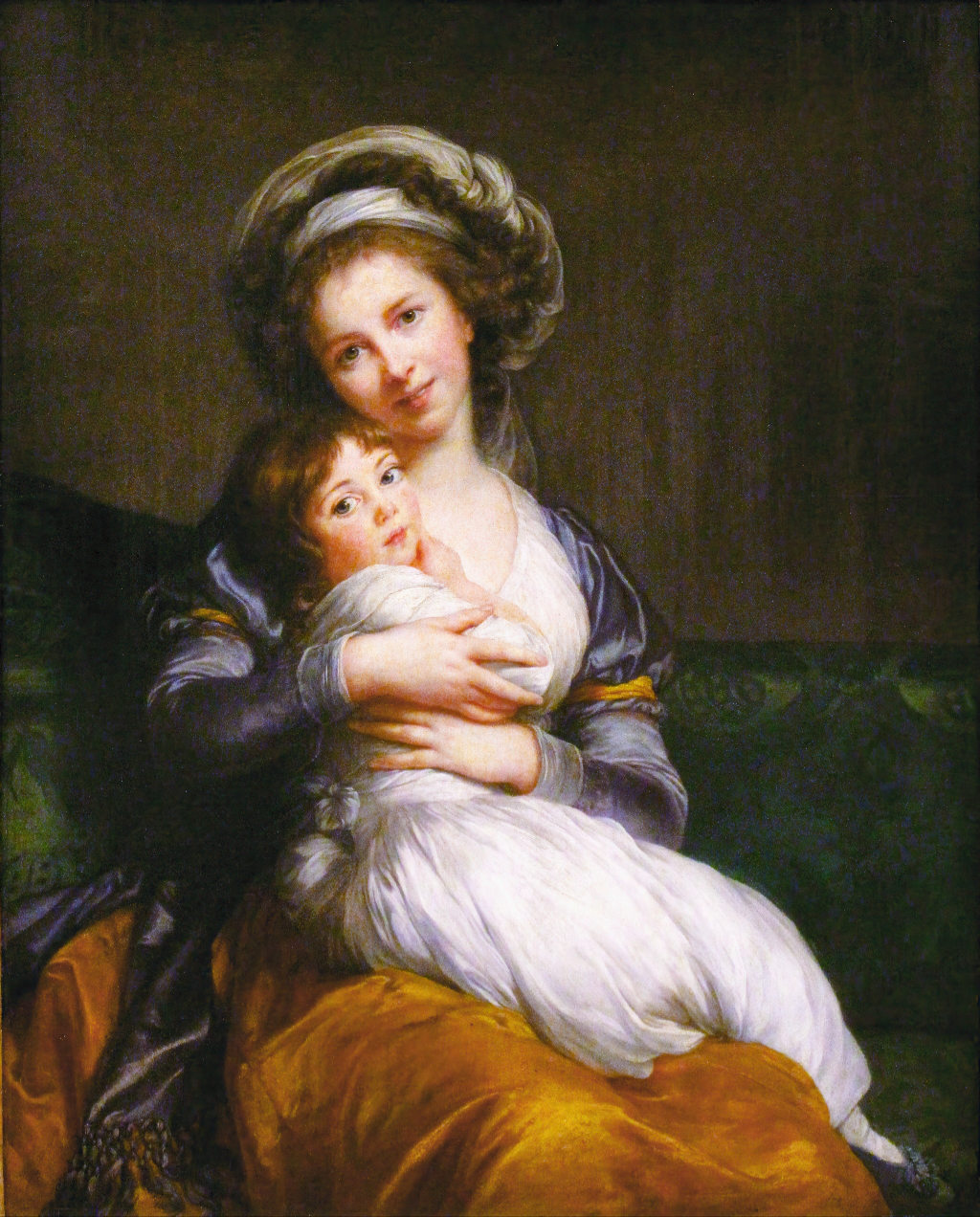
Self-Portrait with Julie is one of Élisabeth Vigée Le Brun's most affecting images of motherhood. This page focuses on the 1789 Louvre version recorded by Histoire par l'image as Madame Vigée Le Brun et sa fille, Jeanne-Lucie-Louise, dite Julie. It shows the artist embracing her daughter in a tender double portrait. [1]
The painting matters because it turns an intimate family bond into a public statement of identity: Vigée Le Brun appears as artist, mother and self-fashioning professional at once.
The most important thing to avoid is reading the picture as merely private. It presents tenderness, but it presents tenderness for public view. Vigée Le Brun turns the embrace into a composed image of feeling, using motherhood as part of her own public identity rather than withdrawing from the professional world into domesticity.
At a Glance
- Artist:Élisabeth Louise Vigée Le Brun [1]
- Title:Madame Vigée Le Brun et sa fille, Jeanne-Lucie-Louise, dite Julie [1]
- Date:1789 [1]
- Medium:Oil on wood [1]
- Dimensions:130 x 94 cm [1]
- Collection:Musée du Louvre, Paris [1]
- Inventory no.:INV 3068 / MR 1947 [1]
Contents
- At a Glance
- Why It Matters
- Museum Perspective
- Motherhood and Feeling
- Looking Carefully
- Interpretation
- Timeline
- Comparison Works
Why It Matters
The painting matters because it makes motherhood part of artistic self-presentation. Vigée Le Brun appears not as a neutral recorder of family feeling, but as a painter deciding how motherhood, femininity and professional self-command should be seen. [1]
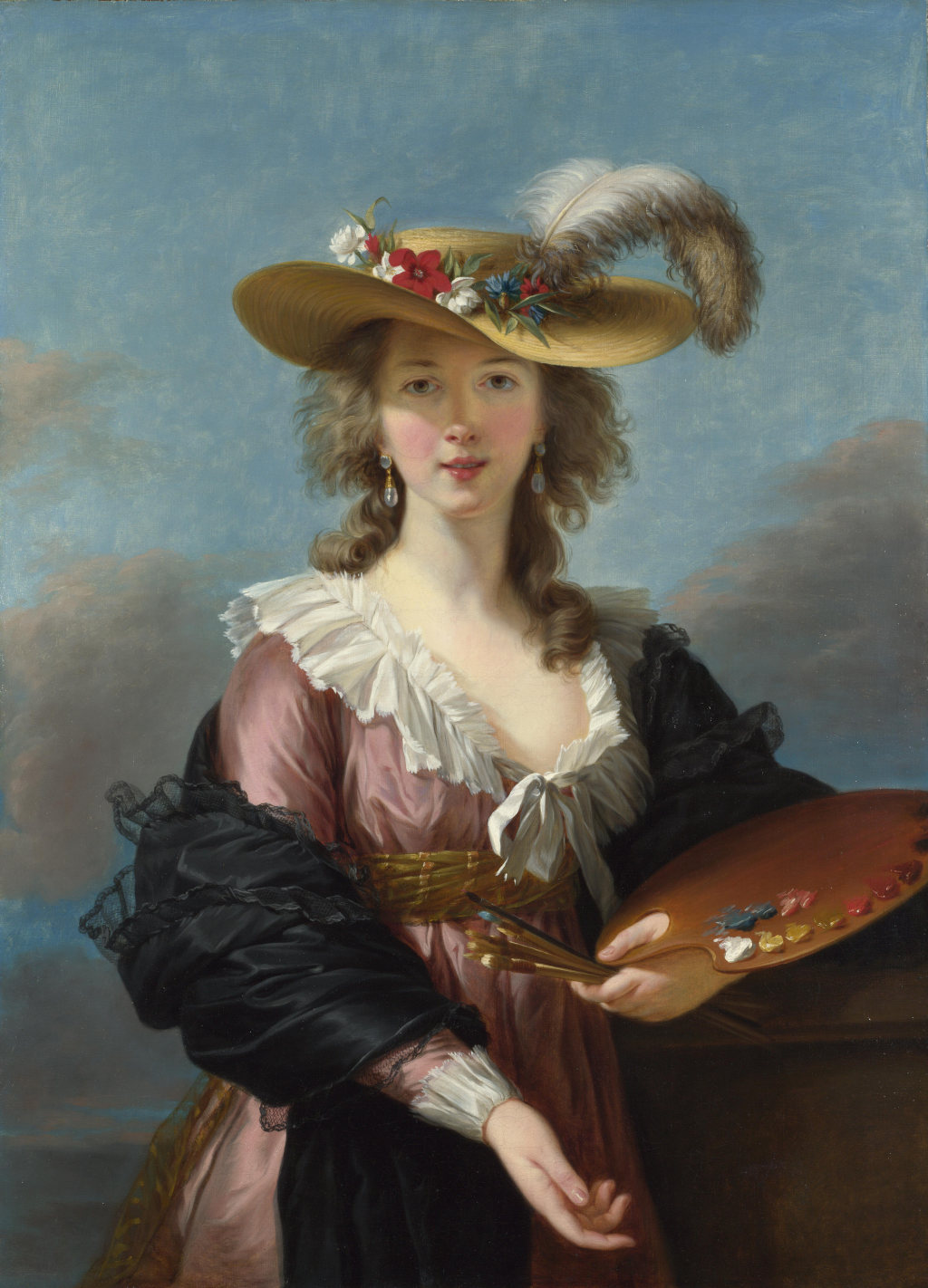
This is why the painting belongs beside Self Portrait in a Straw Hat. One self-portrait foregrounds the tools of painting; the other foregrounds maternal feeling. Both are public identities.
That pairing is especially useful because it shows the flexibility of self-portraiture. Vigée Le Brun could show herself as a painter with palette and brushes, or as a mother holding her child, without giving up authorship in either case. The subject changes, but the act of self-fashioning remains central.
Museum Perspective
Histoire par l'image records two Louvre mother-and-daughter works by Vigée Le Brun: the 1786 version and the 1789 variant. It identifies the 1789 painting as oil on wood, 130 by 94 cm, with Louvre inventory references. [1]
The same essay connects the images to changing eighteenth-century attitudes toward maternal affection, childhood and the public value of feeling. [1]
Motherhood and Feeling
The affectionate embrace looks private, but it was made for public viewing. Histoire par l'image argues that these portraits helped crystallize a wider change in the cultural meaning of motherhood. [1]
That makes the work more interesting than a simple sentimental image. It shows how maternal tenderness could be elevated, idealized and used as part of a woman's public identity.
The painting belongs to a wider eighteenth-century shift in which childhood and maternal feeling gained new cultural weight. Histoire par l'image connects the mother-and-daughter images to this changing view of affection. [1] Vigée Le Brun's achievement is to make that cultural shift serve a self-portrait: she is not simply recording feeling, but placing herself at the centre of its visual language.
Looking Carefully
The composition concentrates attention on the embrace. The figures fill the field, the background is reduced and the viewer is drawn toward touch, gaze and closeness. The image is staged, but its emotional force depends on looking unforced.
The costume also matters. Histoire par l'image notes the Greek-style dress in the 1789 version and connects it to neoclassical taste. The clothing gives the affectionate image a classical, elevated language rather than a purely domestic one. [1]
That classical language is important. It prevents the image from feeling like an informal family snapshot before its time. The embrace may look natural, but the dress, arrangement and scale of the figures give the scene dignity. Vigée Le Brun makes maternal affection look both immediate and culturally elevated.
Interpretation
The safest interpretation is that the painting fuses tenderness and self-fashioning. Vigée Le Brun represents herself as a loving mother, but also as an artist capable of turning private affection into a composed public image.
This does not reduce the emotion. It deepens it. The painting's tenderness is real as image, but it is also crafted, displayed and elevated through composition and costume.
Timeline
- 1786: Vigée Le Brun paints the first Louvre mother-and-daughter self-portrait, later nicknamed La Tendresse maternelle. [1]
- 1787: The 1786 version is shown at the Salon. [1]
- 1789: Vigée Le Brun paints the Greek-costume variant with Julie. [1]
- 1789: Vigée Le Brun leaves France during the Revolution. [2]
Comparison Works
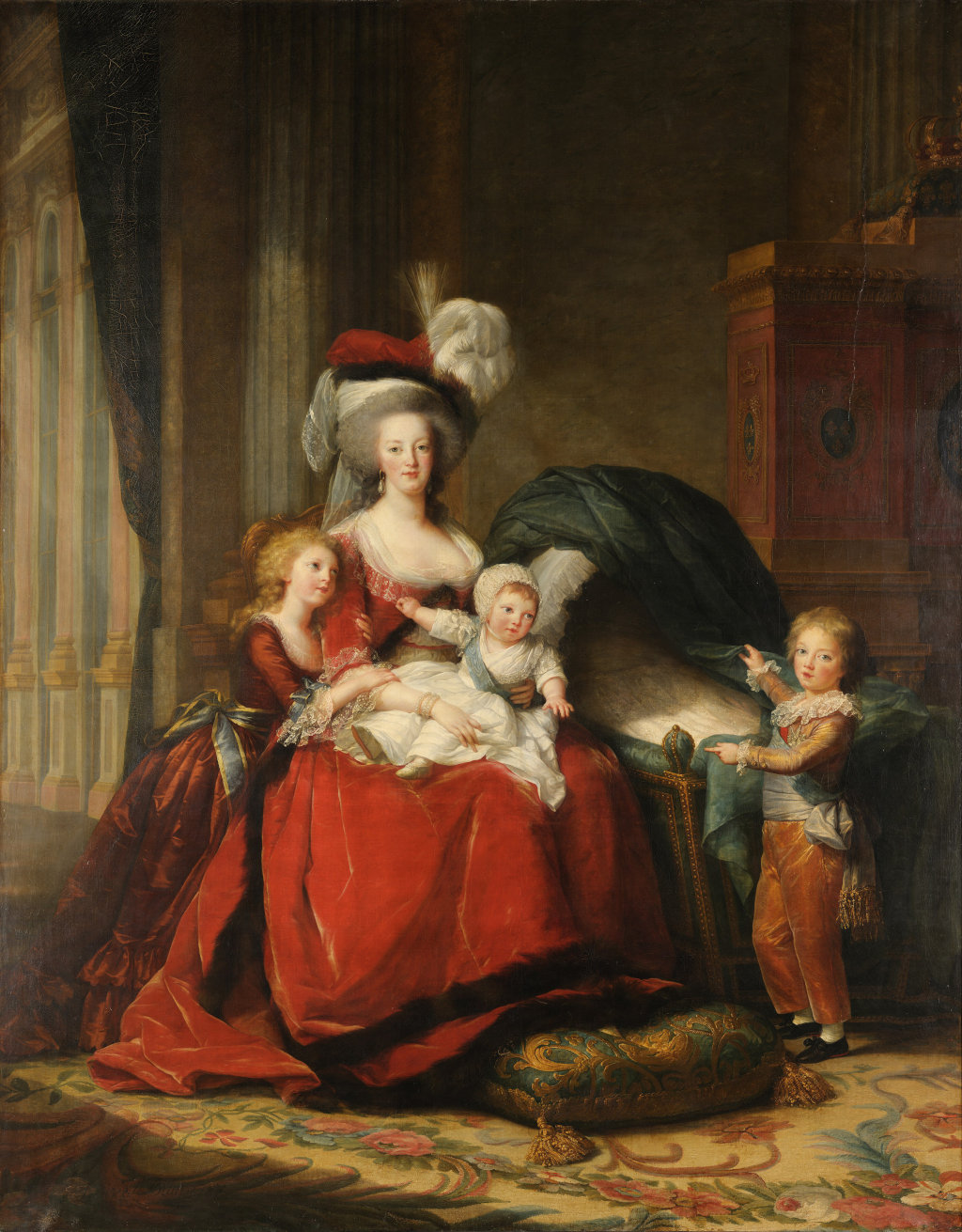
Compare the painting with Marie Antoinette and Her Children. Both use motherhood, but the queen's portrait is dynastic and political, while the Julie portrait is intimate and self-defining. [1] [3]
The other key comparison is Self Portrait in a Straw Hat. One image says "I am a painter"; the other says "I am a painter and a mother".
This comparison also explains why the Julie portrait matters beyond biography. It shows Vigée Le Brun expanding the public vocabulary available to a woman artist. She can claim professional skill, maternal tenderness, fashionable grace and compositional control without treating those identities as contradictions.
FAQs
The 1789 version discussed here is recorded as a Louvre work, with inventory references INV 3068 / MR 1947. [1]
It turns motherhood into part of Vigée Le Brun's public self-image, combining tenderness, neoclassical taste and professional self-presentation. [1]
Both use motherhood, but one is personal and self-fashioning while the other is official and dynastic. [3]
References
- Histoire par l'image, Le nouveau visage de l'amour maternel (in French).
- National Gallery, London, Self Portrait in a Straw Hat.
- Histoire par l'image, Marie-Antoinette, la mal-aimée (in French).
Discussion
What stands out to you about Élisabeth Vigée Le Brun? Share an observation, question or interpretation with other readers.
Reader Insights
Which visual detail changes how you read the sitter, the artist or the page's central theme?
Which related Vigée Le Brun page helps you understand this work or topic more clearly?
Join the Conversation
Thoughtful comments and questions are welcome.