 by Tom Gurney
Tom Gurney BSc (Hons) is an art history expert with over 20 years experience
Published on July 7, 2026 / Updated on July 7, 2026
Email: tomgurney1@gmail.com / Phone: +44 7429 011000
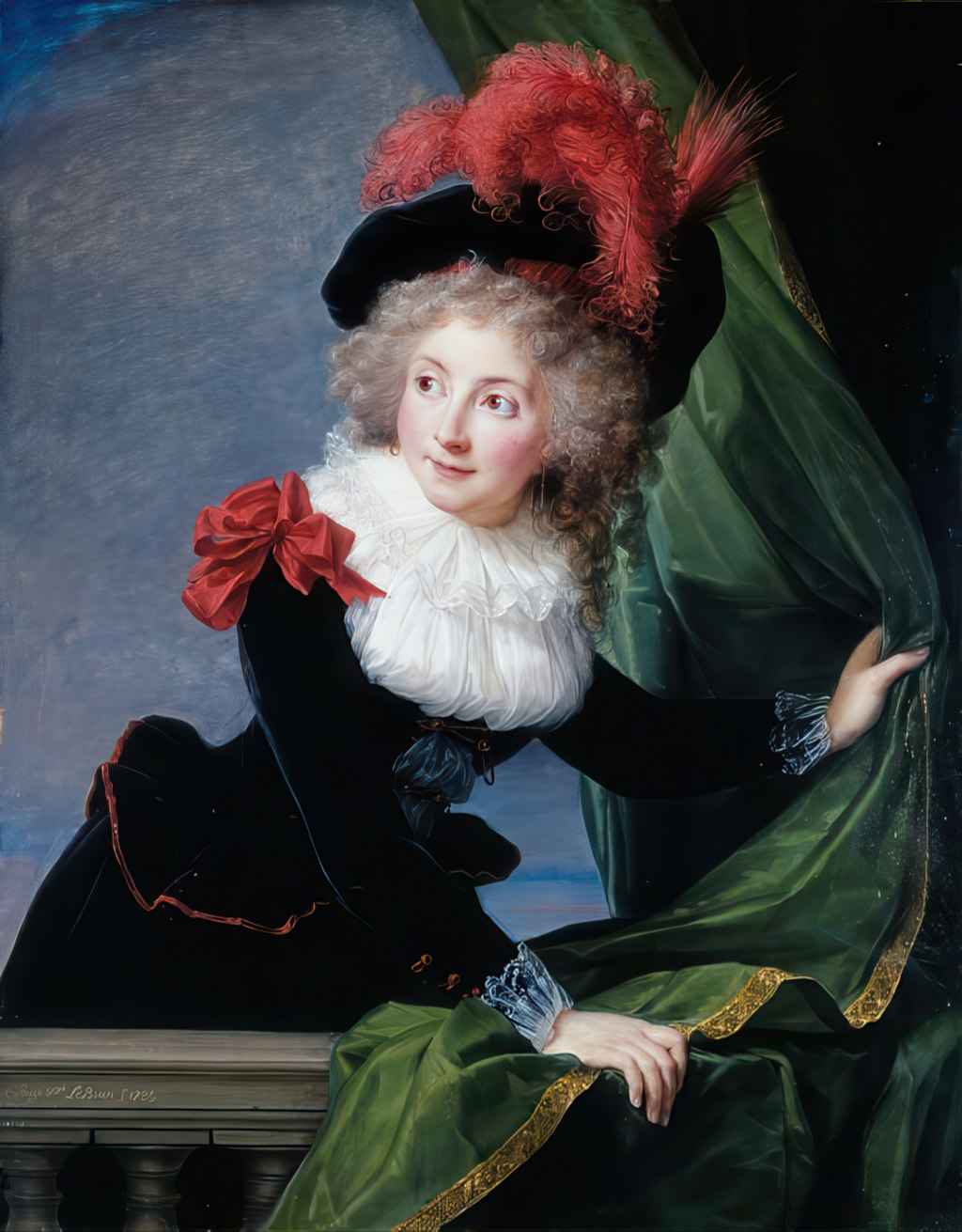
Madame Perregaux by Élisabeth Vigée Le Brun
Élisabeth Vigée Le Brun's Madame Perregaux is one of the last portraits she painted before leaving France in 1789. The Wallace Collection records the work as an oil on oak panel, dated 1789, measuring 99.6 x 78.5 cm, with inventory number P457. [1]
The painting is useful inside the Vigée Le Brun cluster because it brings together glamour, finance, Rubens-inspired costume and revolutionary timing. It is a society portrait made at the edge of political rupture.
The portrait is especially useful because it connects several strands of the cluster at once. It belongs to the late-1780s society world, it shows Vigée Le Brun's continuing interest in Rubens and Netherlandish painting, and it links portraiture to money, collecting and professional networks through the Perregaux connection. [1]
At a Glance
- Artist:Élisabeth Louise Vigée Le Brun [1]
- Title:Madame Perregaux [1]
- Date:1789 [1]
- Medium:Oil on oak panel [1]
- Image size:99.6 x 78.5 cm [1]
- Collection:The Wallace Collection, London [1]
- Inventory no.:P457 [1]
Contents
- At a Glance
- Why It Matters
- Museum Perspective
- Who Was Madame Perregaux?
- Looking Carefully
- Rubens and the Panel Support
- Timeline
- Comparison Works
Why It Matters
The painting matters because it shows Vigée Le Brun's society portraiture at a particularly charged moment. The Wallace Collection describes it as one of the last portraits she painted before emigrating in 1789, and notes that her husband later sent it to the Salon of 1791 after she had already left Paris. [1]
That timing matters. Like Comtesse de la Châtre, the portrait belongs to a world of elegance and privilege just before, and during, revolutionary upheaval.
The later Salon history makes this timing sharper. The Wallace Collection notes that the portrait was sent to the Salon of 1791 by Jean-Baptiste-Pierre Le Brun after the artist had emigrated. [1] The picture therefore entered public view in Paris when its maker was already absent, which gives the work an unusually charged place in her career.
Museum Perspective
The Wallace Collection's commentary is unusually helpful. It identifies the sitter as Adélaïde de Praël, who married the banker Jean-François Perregaux in 1779, and explains that her husband was a notable art collector and banker to the Le Bruns. [1]
The museum also frames the painting as typical of the glamorous, flattering portraits of female sitters on which Vigée Le Brun's fame chiefly rests. That museum judgement helps keep interpretation grounded: the glamour is not incidental; it is central to the portrait's social function. [1]
Who Was Madame Perregaux?
Madame Perregaux was Adélaïde de Praël, wife of the banker Jean-François Perregaux. The Wallace Collection's note that Perregaux was banker to the Le Bruns is important because it gives the portrait a network context: sitter, artist, finance, collecting and art dealing all overlap. [1]
This is not a royal portrait, but it still belongs to elite social image-making. The sitter's status comes through beauty, dress, pose and the cultural orbit around banking and collecting.
That network context matters because Vigée Le Brun's success depended on more than isolated patronage. Dealers, collectors, financiers, sitters and Salon audiences formed the world through which portraits circulated. Madame Perregaux makes that network unusually visible.
Looking Carefully
Look at the theatricality of the costume. The Wallace Collection notes that the sitter's dress was called "Spanish" in 1791 and connects it to the age of Rubens. This is not simply fancy dress. It creates historical flavour, painterly richness and visual drama. [1]
The portrait also depends on animation. The Wallace commentary says that through costume and pose, Vigée Le Brun added interest and life to the portrait of a conventional sitter. That phrase is useful because it names a central skill: she makes social portraiture feel alive. [1]
That animation separates the painting from a merely descriptive likeness. Costume, gesture and painterly reference create drama around a sitter who might otherwise seem socially conventional. Vigée Le Brun's method is to use style as energy: she turns elite portraiture into an event of looking.
Rubens and the Panel Support
The Wallace Collection suggests that Vigée Le Brun's decision to paint the portrait on panel may reflect her admiration for Netherlandish works and Rubens in particular. [1]
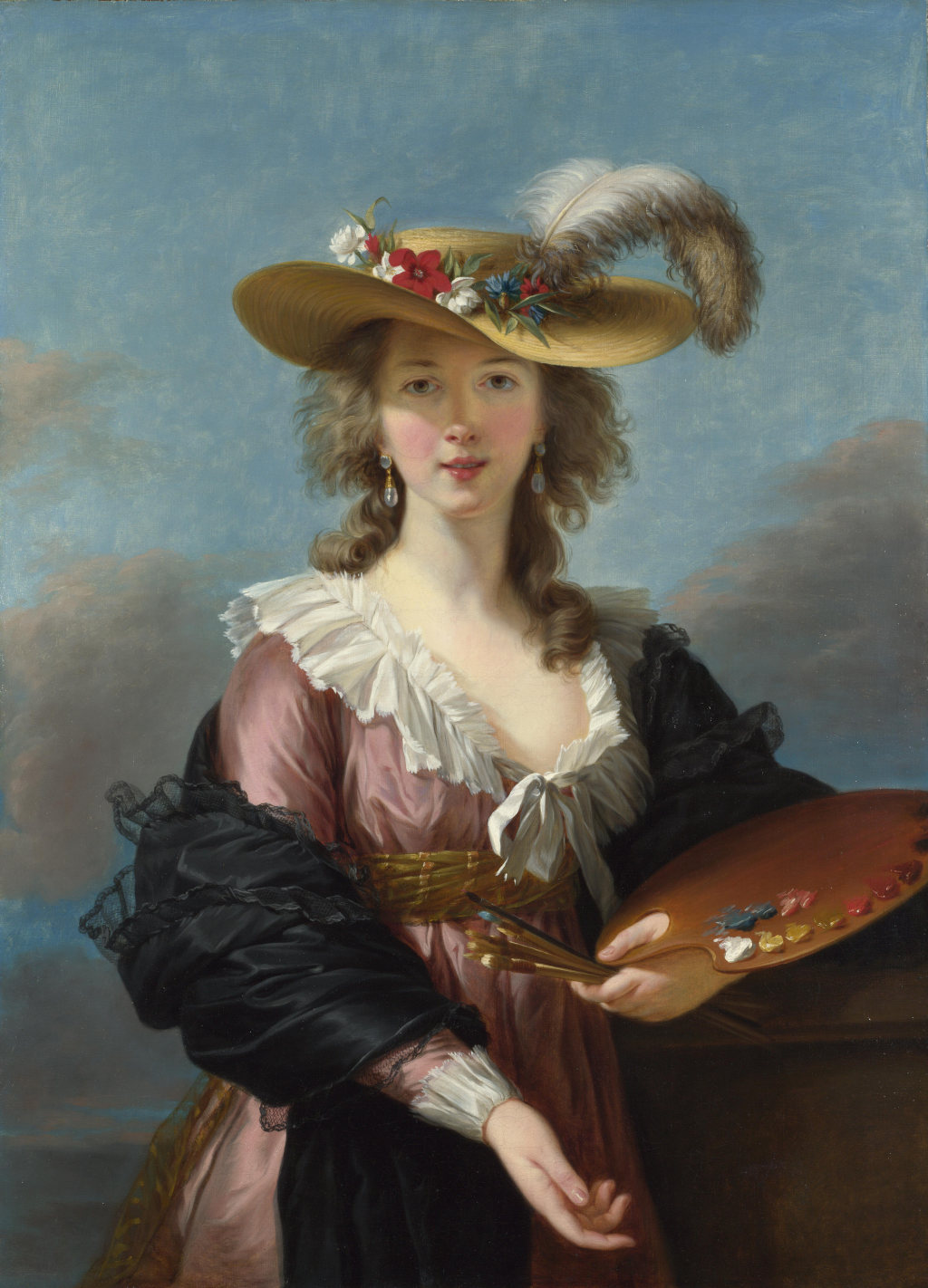
This links the painting back to Self Portrait in a Straw Hat, where the National Gallery also emphasizes the artist's engagement with Rubens. In both cases, Rubens is not a casual name-drop. He helps explain light, support, costume and painterly ambition. [2]
Timeline
- 1758: Adélaïde de Praël is born. [1]
- 1779: She marries the banker Jean-François Perregaux. [1]
- 1789: Vigée Le Brun paints Madame Perregaux and leaves France during the Revolution. [1] [2]
- 1791: The painting is sent to the Salon by Jean-Baptiste-Pierre Le Brun after the artist has emigrated. [1]
- c.1863: The work is acquired by the Marquess of Hertford, according to the later collection history summarized for the painting. [3]
Comparison Works
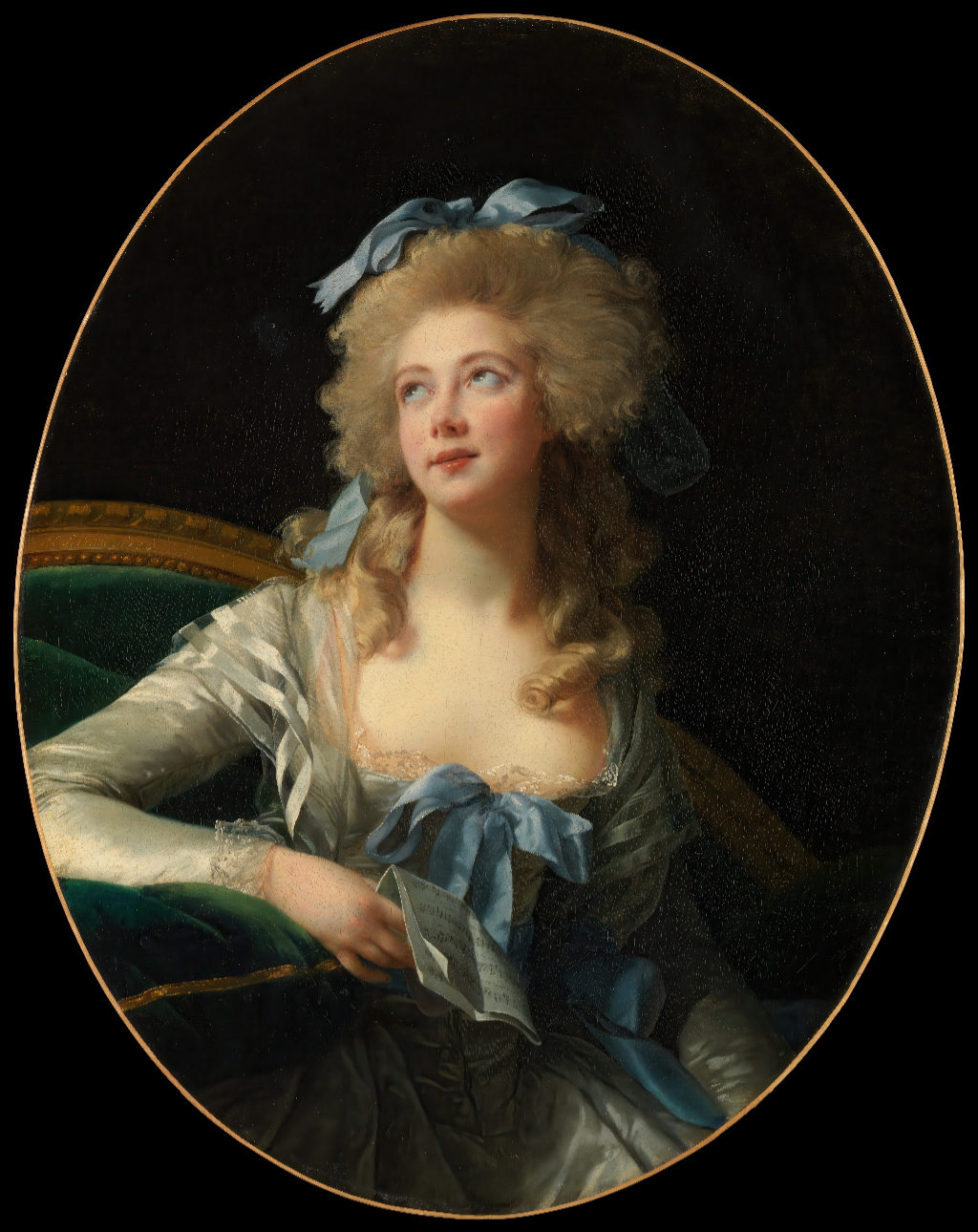
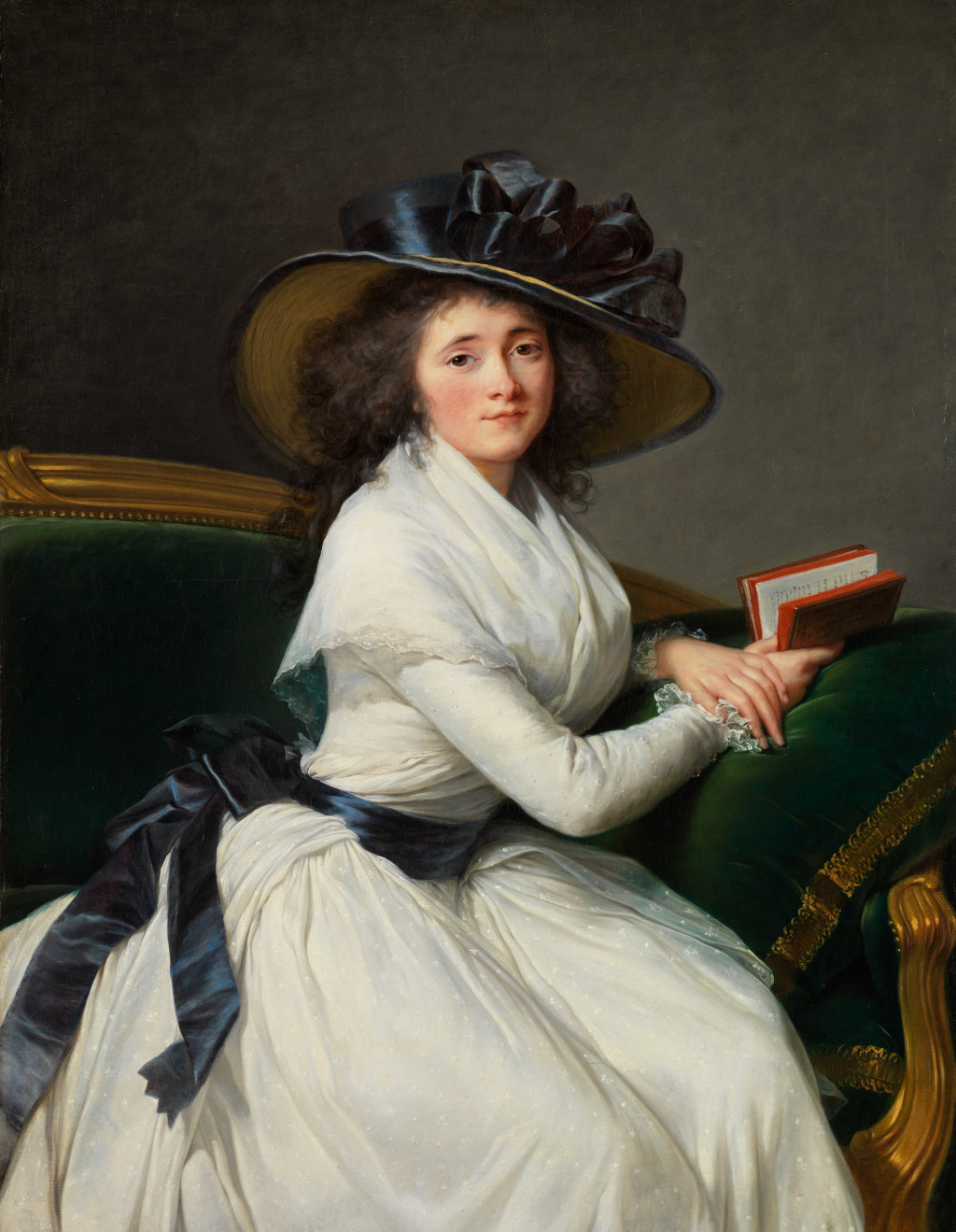
Compare Madame Perregaux with Madame Grand and Comtesse de la Châtre. All three are society portraits, but each produces status differently: music and sensual display in Madame Grand, outdoor aristocratic ease in Comtesse de la Châtre, and Rubens-inflected costume drama in Madame Perregaux. [1] [4] [5]
FAQs
It is in The Wallace Collection, London, with inventory number P457. [1]
She was Adélaïde de Praël, wife of the banker Jean-François Perregaux. [1]
The Wallace Collection connects the panel support and costume language to Vigée Le Brun's admiration for Netherlandish painting and Rubens in particular. [1]
References
- The Wallace Collection, Madame Perregaux.
- National Gallery, London, Self Portrait in a Straw Hat.
- Art UK, Madame Perregaux.
- The Metropolitan Museum of Art, Madame Grand.
- The Metropolitan Museum of Art, Comtesse de la Châtre.
Discussion
What stands out to you about Élisabeth Vigée Le Brun? Share an observation, question or interpretation with other readers.
Reader Insights
Which visual detail changes how you read the sitter, the artist or the page's central theme?
Which related Vigée Le Brun page helps you understand this work or topic more clearly?
Join the Conversation
Thoughtful comments and questions are welcome.