 by Tom Gurney
Tom Gurney BSc (Hons) is an art history expert with over 20 years experience
Published on June 19, 2020 / Updated on October 2, 2026
Email: tomgurney1@gmail.com / Phone: +44 7429 011000
Fra Filippo Lippi's Prato Cathedral Frescoes
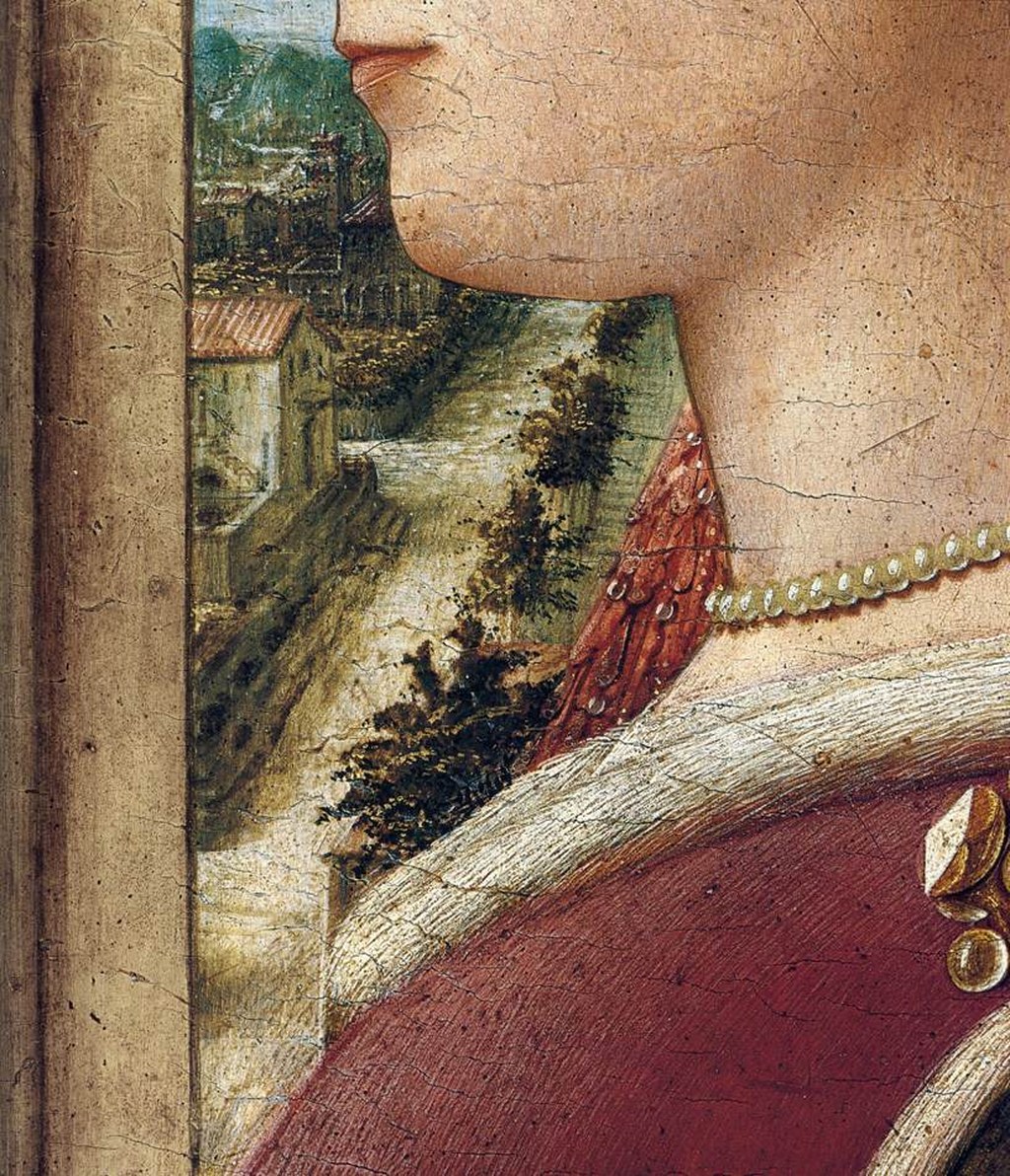
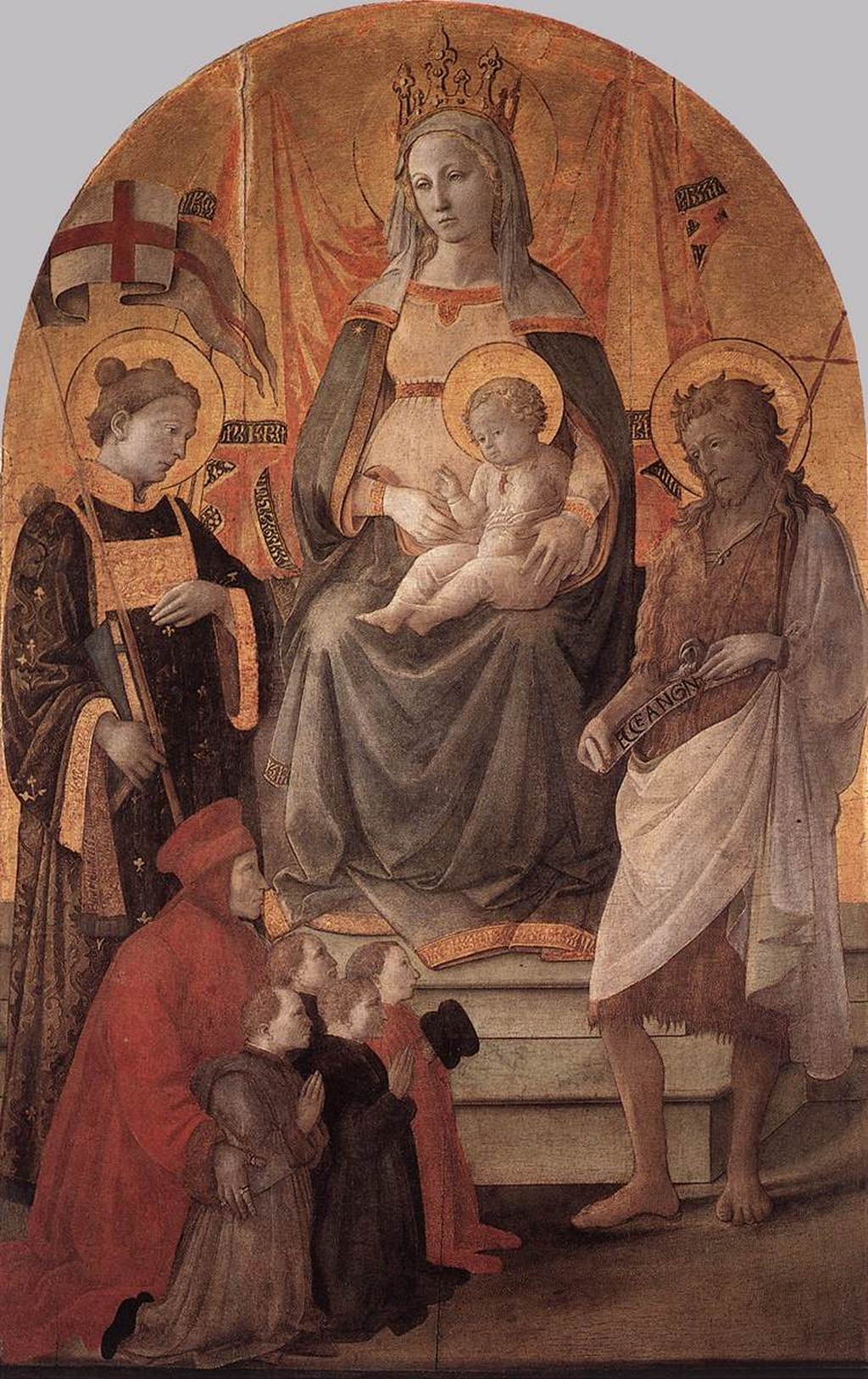
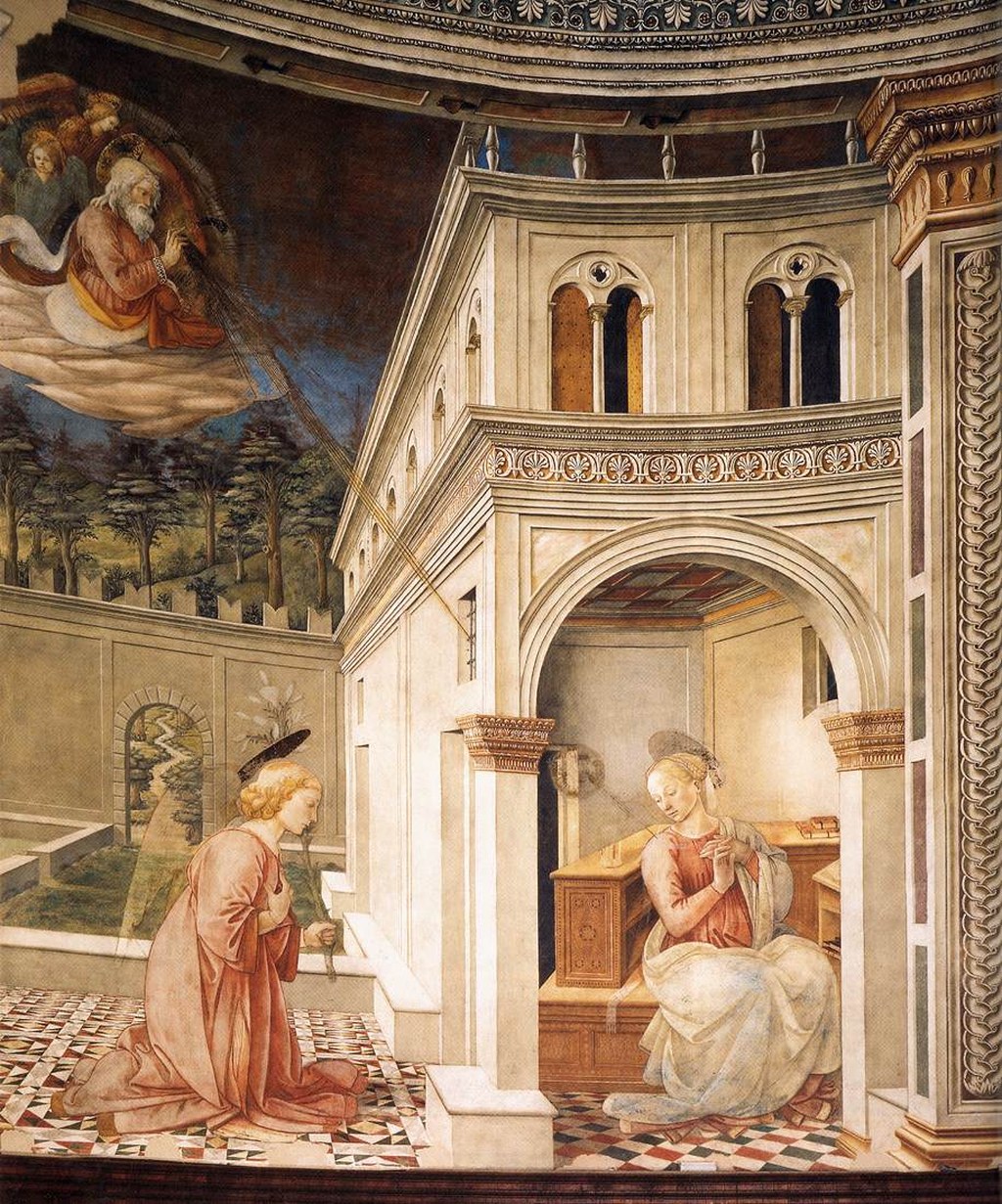
The frescoes painted by Fra Filippo Lippi and his workshop in the main chapel of Prato Cathedral are among the defining achievements of his career. Begun after Lippi received the commission in 1452 and brought to completion in the mid-1460s, the cycle tells stories from the lives of Saint Stephen and Saint John the Baptist, the two saints whose identities were deeply connected with Prato and Florence. The project demanded more than the translation of panel-painting skills to a larger scale. Lippi had to turn walls into narrative fields, manage assistants and materials over many years, and coordinate perspective, architecture, gesture and colour across an entire sacred interior.[1]
The result is also unusually well suited to modern research. Documentary sources illuminate payments and collaborators; restoration has revealed aspects of the original technique; and individual scenes such as The Feast of Herod have attracted specialist studies of perspective and spatial construction. The chapel therefore allows us to study not only what Lippi painted but how a major Renaissance fresco commission actually worked.
Contents
- The commission
- A workshop enterprise
- Fresco and a secco
- Perspective as a flexible tool
- The Feast of Herod
- The stories of Saint Stephen
- Colour, dress and ornament
- Completion and payment
- The Cappella Maggiore as a complete programme
- The economics of the commission
- A-secco additions
- The Birth and Naming of Saint John the Baptist
- Costume as social information
- Prato versus Spoleto
- Reading the two saint cycles together
- The Feast of Herod and the problem of beauty
- The practical experience of scaffolding
- FAQs
- References
The commission
In 1452 the authorities in Prato sought a painter for the main chapel of the church of Santo Stefano, now Prato Cathedral. Fra Angelico had declined the undertaking, and the commission passed to Fra Filippo Lippi, then at the height of his reputation. Lippi was already an experienced painter of ambitious panels and altarpieces, but Prato gave him an opportunity to work on a civic and monumental scale.
The commission was not a brief interruption in his Florentine career. It became a defining commitment, continuing through delays and interruptions until the mid-1460s. Lippi established strong ties with Prato, produced other works for local patrons and institutions, and developed the personal relationship with Lucrezia Buti that would become central to later accounts of his life.
The frescoes were therefore created within an extended local network rather than by an artist who simply arrived, painted and departed. Patrons, cathedral authorities, assistants, religious communities and civic institutions all formed part of the project's history.
Why Saint Stephen and Saint John the Baptist? The cycle is divided between stories of Saint Stephen and Saint John the Baptist. Their presence was not arbitrary. Stephen was the patron saint of the cathedral, while John the Baptist was the patron of Florence and a saint of exceptional importance throughout the region. For a fifteenth-century viewer, these narratives carried civic as well as religious meaning. The lives of saints could speak to local identity, institutional authority and communal memory. A cathedral fresco cycle therefore functioned at several levels: scriptural narrative, devotional instruction, visual magnificence and civic self-definition.
Lippi's task was to make those stories legible across a large architectural setting. He did so not by reducing each wall to a single isolated scene but by creating complex narrative environments in which multiple episodes could coexist.
A workshop enterprise
The Prato cycle cannot responsibly be described as the unaided work of Fra Filippo's hand. Surviving evidence identifies assistants, above all Fra Diamante, and a project of this scale necessarily required organised workshop labour. Preparing walls, laying plaster, transferring designs, grinding pigments, painting secondary passages and completing decorative elements demanded collaboration. This is not a qualification that diminishes Lippi. Workshop management was part of a master's professional achievement. The important question is how the project preserved a coherent artistic identity while being executed by several people over an extended period.
Differences in handling across the cycle can be studied alongside documentary evidence rather than explained away. They remind us that Renaissance authorship often operated as a hierarchy of invention and execution rather than a modern ideal of one artist personally touching every surface.
Fresco and a secco
The word “fresco” can make the process sound more uniform than it was. True fresco requires pigment to be applied to fresh plaster so that colour becomes bound into the wall as the plaster cures. The working day is constrained by the amount of fresh plaster—often called a giornata—that can be prepared and painted before it dries.
Lippi's Prato cycle also made considerable use of a-secco finishing: passages applied after the plaster had dried. This allowed greater flexibility, finer detail and the use of materials less suited to wet plaster. But these additions are more vulnerable because they sit on the surface rather than becoming chemically integrated with the plaster. Modern condition research therefore explains why some passages have survived better than others. Historic cleaning could remove or weaken surface additions that were integral to the fifteenth-century appearance. What now reads as restraint or simplification may partly be the result of material loss.
Gold also formed part of the original visual effect. Institutional research in Prato describes dark lines and remnants associated with wax-based applications that once supported gold leaf on hems, halos and ornaments. The chapel must therefore have shimmered differently when new. The paintings were not conceived as matte walls of earth colour; sacred and courtly surfaces could catch changing light.
Perspective as a flexible tool
One of the most interesting aspects of the cycle is Lippi's use of perspective. Early Renaissance painting is often narrated as a steady progression toward mathematically unified one-point space. Prato complicates that account. Lippi knew how to construct convincing architectural depth, but he did not always submit narrative needs to a single rigid vanishing point. Institutional analysis of the frescoes notes shifting or multiple perspective systems, while specialist geometric work on The Feast of Herod has explored how the painted architecture can be reconstructed.
This flexibility makes sense when the purpose of the wall is considered. A fresco cycle has to be read by viewers standing in a real chapel and looking from changing positions. Important characters need to remain visible. Separate moments in a story may have to coexist. Architecture must organise attention rather than merely demonstrate geometry. Lippi's perspective is therefore best understood as rhetorical. It persuades the eye that spaces are coherent enough to inhabit while allowing those spaces to bend in the service of narrative.
The Feast of Herod
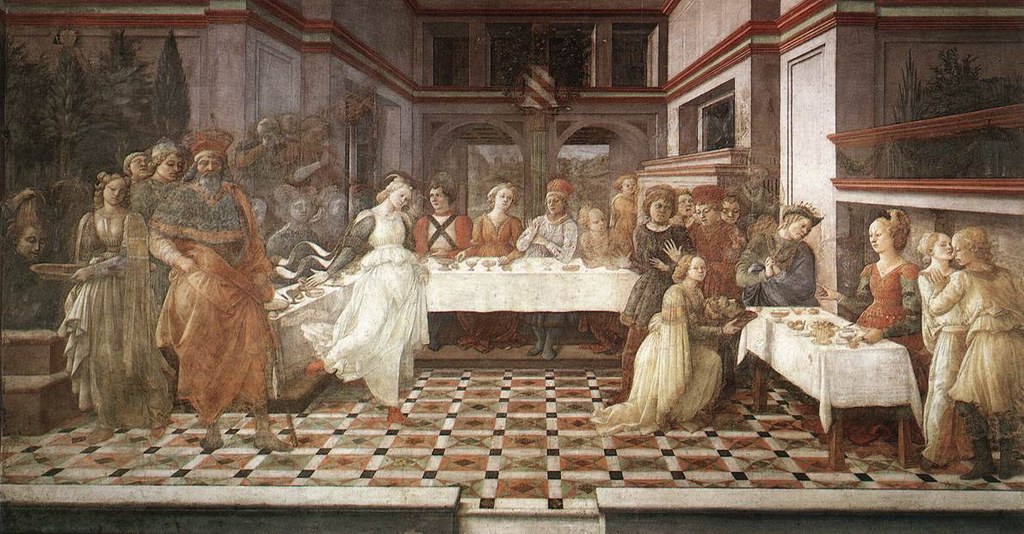
The most famous scene in the cycle is The Feast of Herod. Its subject comes from the death of John the Baptist. Salome dances before Herod; as a reward she is granted a request; prompted by Herodias, she asks for John's head. Lippi presents the story through several moments within one broad architectural setting. At the feast, Salome's dancing body becomes a visual focus. Elsewhere the execution is represented, and the severed head is brought into the social space of the banquet. Rather than isolating these incidents into separate frames, Lippi allows the viewer's gaze to travel between them.
Architecture performs much of the narrative work. Openings, walls, floor patterns and groups of spectators divide the field without breaking it apart. The space feels continuous while time is discontinuous. A viewer can understand “before” and “after” by moving across the same painted world. The effect is particularly striking because the biblical story is clothed in the visual culture of Lippi's own century. Costumes, gestures and courtly behaviour make the feast resemble an elite Renaissance gathering. This does not simply modernise scripture for convenience. It encourages viewers to recognise moral drama within forms of social display familiar to them.
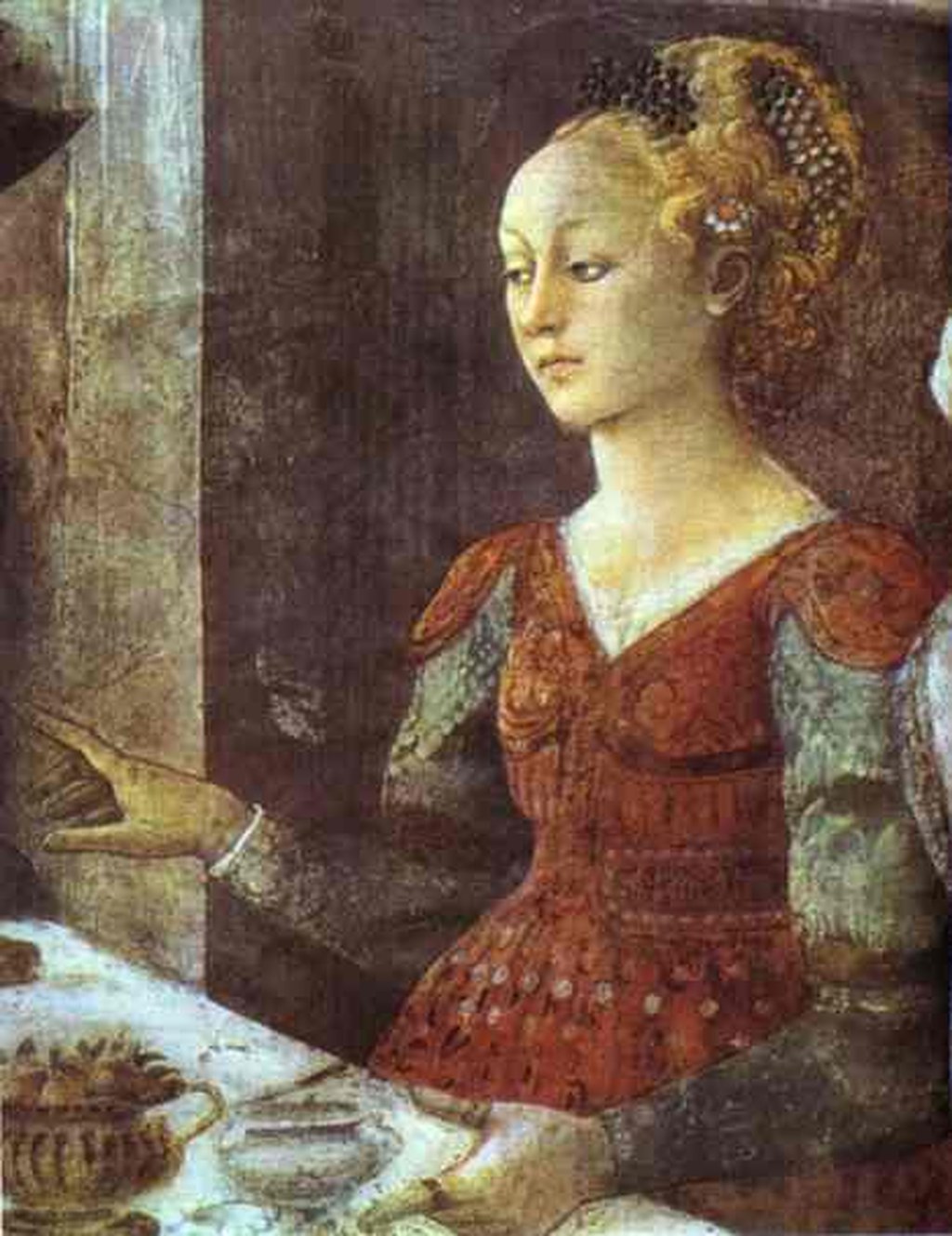
Salome. Salome has inevitably attracted biographical speculation. She is sometimes identified with Lucrezia Buti, just as Lucrezia has been proposed as the model for some of Lippi's Madonnas. Such claims should be treated cautiously. No secure documentary evidence establishes Lucrezia as the sitter for Salome. The temptation tells us something important, however. Lippi's female figures often seem sufficiently individual to invite portrait identification. Their elaborate hairstyles, clothing and profiles appear observed rather than generic. Modern viewers therefore look for biographies behind them.
A stronger analysis begins with what the fresco itself makes visible: Salome's role as an elegant moving body within a structured court. Her beauty and grace are narratively dangerous because they help set violence in motion. Lippi turns formal elegance into dramatic ambiguity.
The stories of Saint Stephen
The opposite side of the programme follows Saint Stephen, Christianity's first martyr. These scenes culminate in episodes of death, mourning and communal response, giving Lippi opportunities quite different from the courtly spectacle of Herod's feast. The Funeral of Saint Stephen is particularly important. Ceremony, grief and architectural order combine in a scene that can be read both as sacred history and as an image informed by contemporary ritual. Groups of mourners react differently, allowing Lippi to construct emotion through variation rather than one repeated gesture. Such scenes show why Cristoforo Landino's later praise of Lippi's “variety” is useful. Variety was not ornamental abundance alone. It included the ability to populate a narrative with differentiated bodies, expressions and social roles.
Birth and Naming of Saint John the Baptist. Another major scene is the Birth and Naming of Saint John the Baptist. Domestic space becomes the setting for sacred history. Women attend the mother and child; Zacharias participates in the naming narrative; household activity surrounds the miraculous birth. Lippi was exceptionally well suited to this subject because he repeatedly made domestic detail part of religious imagery. Beds, textiles, furniture and servants do not distract from the sacred event. They allow viewers to imagine holiness occurring within the rhythms of human life. The same strategy appears in his panel paintings, especially Marian works. Prato expands it to mural scale and places household intimacy within a civic cathedral.
Architecture and social space. Across the chapel, painted architecture is populated architecture. Lippi is interested in what people do inside rooms, courts and streets. They gather, witness, converse, mourn, process and watch. This makes his frescoes valuable evidence for the social imagination of Renaissance Florence and Prato even when the settings are not literal records of contemporary buildings. The spaces express assumptions about hierarchy and visibility: important figures occupy focal positions; attendants cluster at edges; processions organise status through sequence.
The architecture can also control emotion. Enclosed interiors intensify intimacy, while broad ceremonial halls create distance and spectacle. Lippi uses built space almost as a stage designer uses scenery, but the result remains convincingly pictorial rather than theatrical in a modern sense.
Colour, dress and ornament
Lippi's reputation for ornament is fully visible in Prato, despite losses. Dress identifies social types, creates colour rhythms and makes the biblical stories materially attractive. Patterns and gilded details once intensified the surfaces beyond what survives today. This richness should not be dismissed as decoration layered over serious structure. In fifteenth-century visual culture, costly appearance could signify honour, sacred importance and patronal magnificence. Fine clothing also allowed biblical figures to be imagined through contemporary codes of status.
At the same time, Lippi could use simplicity strategically. Saintly austerity gains force when placed against courtly abundance. The contrast between John the Baptist's ascetic identity and Herod's feast is therefore both narrative and material.
Prato, the artist and Lucrezia Buti. The years of the cathedral commission overlap with the most famous personal episode in Lippi's biography: his relationship with Lucrezia Buti, associated with the convent of Santa Margherita in Prato. Their son Filippino would become a major painter. The documentary core of the relationship should be distinguished from later storytelling. Vasari and subsequent writers turned the affair into a vivid narrative of desire and disregard for monastic discipline. Later tradition then attached Lucrezia's face to specific paintings.
For the cathedral frescoes, this history is relevant because Prato was not simply a workplace. It became a sustained personal environment. But the frescoes should not be reduced to autobiography. The artistic and institutional problems of the chapel remain substantial whether or not individual female figures can be linked to Lucrezia.
Completion and payment
The project extended far beyond its initial commissioning year. Interruptions, competing obligations and workshop organisation prolonged the work, with completion in the mid-1460s and final payments following. Prato's institutional research preserves unusually specific financial information, including expenditure on materials and scaffolding. Such records help correct a romantic model of Renaissance creativity. Monumental painting depended on infrastructure. Timber had to support scaffolds; plaster and pigments had to be supplied; assistants had to work; patrons had to release funds. Artistic ambition was inseparable from project management. The long timescale also means that the chapel records Lippi's development across many years rather than capturing a single stylistic moment.
Restoration and what survives. Every Renaissance fresco is also a history of survival. Water, dust, structural change, cleaning and restoration alter the surface. In Prato, the vulnerability of a-secco additions is especially important because some of Lippi's finest finishing touches did not share the durability of true fresco. Modern restoration can recover legibility, stabilise materials and sometimes reveal aspects of the technique, but it cannot simply return the chapel to 1465. The surviving cycle is a historical object with accumulated losses and interventions.
This makes close condition analysis essential. A passage that looks sketchy may once have possessed additional modelling; an apparently dark ornamental line may be the remnant of gilding; differences in finish may reflect preservation as much as original intention.
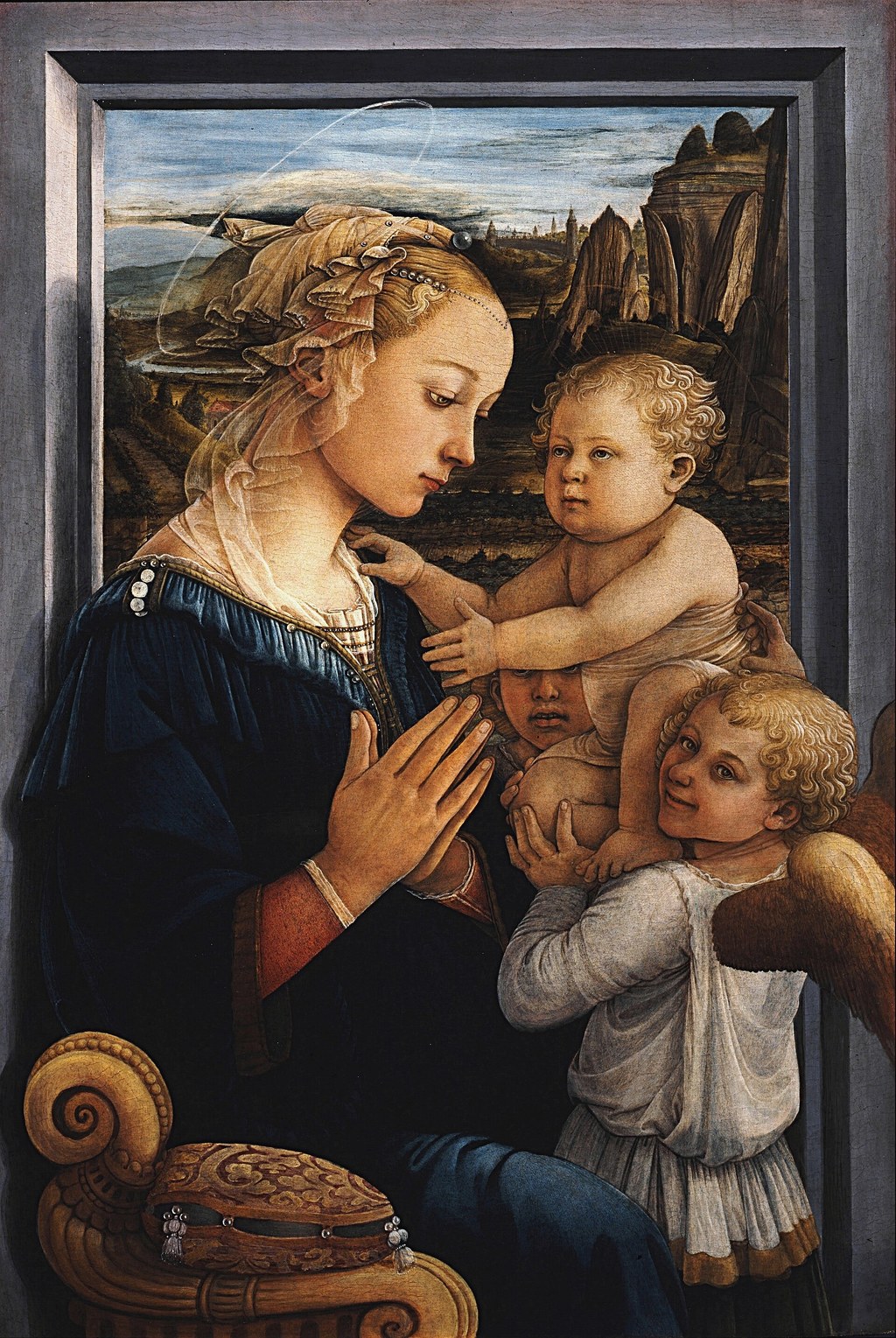
Relationship to Lippi's panel paintings. The Prato frescoes help us see Lippi's panel paintings differently. His interest in contemporary interiors, graceful profiles and varied groups becomes a monumental narrative system. Conversely, the frescoes show that the intimacy of the Madonnas was not a limitation. The same painter could orchestrate large crowds and complex architecture. The cycle also strengthens comparisons with Botticelli. Botticelli inherited Lippi's contour, beauty types and devotional intimacy, but he also worked within a Florentine culture in which large narrative programmes demanded clear grouping and expressive gesture.
The Cappella Maggiore as a complete programme
The Prato frescoes are best understood as one architectural programme rather than a sequence of famous fragments. Stories of Saint Stephen occupy one side, stories of Saint John the Baptist the other, and the chapel's liturgical function binds them together. The saints were not selected simply because Lippi liked their biographies. Stephen was central to the cathedral's identity, while John the Baptist carried strong Florentine significance. Their paired cycles therefore joined local and regional religious geography. A viewer entering the chapel encountered two models of sanctity whose lives unfold through preaching, miracle, public confrontation and martyrdom.
The commission after Fra Angelico declined. Prato's diocesan museum records that the city turned to Fra Filippo in 1452 after Fra Angelico had declined the commission. That detail shows the prestige of the project. The commissioners sought leading painters rather than a routine local workshop. Lippi arrived at the peak of his fame and the chapel became the most sustained monumental enterprise of his career. The choice also invites comparison between two artists with very different narrative temperaments. Fra Angelico's devotional clarity and Lippi's social animation offered alternative possibilities for the same space.
More than a decade of work. The cycle was painted from 1452 to 1465 with substantial interruptions. That long duration matters because the frescoes are not the product of one uninterrupted burst of inspiration. Lippi balanced the cathedral with other commissions, workshop obligations and personal complications. The final work therefore contains decisions made across changing circumstances. A long campaign can also produce stylistic differences between early and late passages without requiring a change of attribution.
The economics of the commission
Prato's institutional chronology records a final total of 1,962 florins including materials and scaffolding, with the balance paid in January 1466. The figure demonstrates the scale of the undertaking. Fresco required far more than pigment and artistic labour. Scaffolding, plaster, gold, assistants and practical infrastructure all cost money. The commission can therefore be used to explain monumental art as a civic investment. The cathedral did not simply buy images. It funded years of organised production.
Fra Diamante. Fra Diamante is the only collaborator specifically named in surviving documents for the main cycle, according to the Prato museum's summary. His presence corrects the romantic image of Lippi working alone on the scaffold. The master designed and supervised, but a project of this scale required additional hands. Where scholars disagree over individual passages, uncertainty is preferable to assigning every figure confidently to one painter.
Designing on the wall. Prato conservation research suggests that Lippi's working method could be flexible and improvisatory. Perspective systems change, figures were added and some details were completed after the main fresco plaster had dried. This is important because Renaissance perspective is often taught as though painters first solved a perfect geometry and then executed it mechanically. Lippi's wall tells a different story. Rules were tools. He could adjust them while looking at the actual chapel. The result is visually convincing without always being mathematically uniform.
Giornate and the pace of fresco. True fresco requires pigment to be applied to fresh plaster. The amount that can be painted in one working period forms a giornata. These sections impose a practical rhythm on production. A painter cannot revise indefinitely once plaster has dried. Large scenes therefore had to be planned in sequences of manageable areas. The structure of giornate is valuable to explain because it makes the physical difficulty of monumental painting understandable. Lippi's later a-secco additions then show how he worked around those limits.
A-secco additions
Paint applied to dry plaster allowed additional detail and revision after the fresco stage. The Feast of Herod contains especially important evidence. Restoration scholarship identifies additional guest figures executed a secco, several of which are now extremely faint. This reveals a composition still evolving after the principal plaster sections were complete. It also explains why some areas have aged differently. The technique offered flexibility at the cost of long-term durability.
Wax and gold. Prato conservation research has identified dark surviving lines associated with wax used to attach gold leaf to hems, halos and ornaments. The chapel therefore looked richer in the fifteenth century than its present surface suggests. Real gold would have responded to changing light within the cathedral. This is an important corrective to modern assumptions based on faded photographs. The surviving fresco is materially diminished compared with Lippi's original visual effect.
Continuous narrative. Lippi repeatedly represents different moments of a story within one coherent environment. The Feast of Herod is the most famous example because Salome appears at successive stages. Continuous narrative turns the viewer into an active reader. The eye must recognise repeated protagonists and translate spatial movement into temporal sequence. This technique has medieval precedents, but Lippi combines it with Renaissance architecture and perspective to create unusually convincing theatrical space.
The Feast of Herod as culmination. Modern scholarship places the Feast of Herod near the end of the campaign, probably in 1465. That chronology helps explain its ambition. Lippi had spent years solving the chapel's problems by the time he reached the great banquet. The scene combines courtly dress, broad architecture, repeated Salome figures, emotional reactions and complex perspective. It can therefore be read as a culmination of the workshop's experience in the chapel.
The Birth and Naming of Saint John the Baptist
This episode demonstrates Lippi's ability to translate sacred biography into contemporary social observation. Birth takes place within a recognisable household world. Attendants, architecture and domestic activity make the saint's life immediate to Renaissance viewers. The scene is useful for comparison with the Saint Anne tondo, where childbirth and female domestic space also become important. Across media, Lippi repeatedly used sacred history to observe contemporary life.
The Funeral of Saint Stephen. The funeral scene provides a very different emotional register. Where the Feast of Herod is full of movement and courtly spectacle, mourning depends on collective grief and ritual. Lippi's skill lies in differentiating responses within a group. The scene also demonstrates why the Stephen cycle deserves equal attention rather than allowing Salome to dominate modern discussion of the chapel.
Preaching and public crowds. The lives of both saints include acts of public speech. This allows Lippi to paint listeners, civic space and varied social types. Crowds are not anonymous filler. They help visualise persuasion, resistance and witness. The painter repeatedly turns theology into social encounter. That quality connects the frescoes with Landino's later praise of Lippi's variety and composition.
Renaissance architecture as stage. Architecture across the cycle does several jobs at once. It establishes depth. It divides episodes.
It identifies social status. It directs movement. And it gives biblical history a recognisably fifteenth-century setting. The phrase “stage” is useful because figures perform within these structures, but the architecture is not merely theatrical decoration. It is one of the principal narrative tools.
Costume as social information
Lippi dresses ancient figures in clothing familiar to his own viewers. Rich textiles mark status. Headwear differentiates individuals. Courtly dress intensifies the worldly luxury of Herod's banquet. This translation makes scripture contemporary. The frescoes therefore preserve evidence about fifteenth-century ideals of dress even though they are not documentary records of one literal event.
Lucrezia Buti and the chapel. Lippi's relationship with Lucrezia unfolded during the same years as the cathedral project. That overlap explains why later biographies and popular interpretation repeatedly connect her with figures in the frescoes, especially Salome. The identification is not securely documented and should not be stated as fact. What is historically significant is that workshop, cathedral and household histories were all unfolding in Prato simultaneously.
The chapel as a record of workshop evolution. Because the project lasted so long, it preserves more than one phase of Lippi's mature practice. Assistants learned and changed. Techniques shifted. The master could revise solutions as experience accumulated. This makes the cycle unusually useful for studying process across years rather than one finished moment. A future technical timeline could map documented payments and major scenes against the long campaign.
Restoration and historical appearance. Modern conservation is central to interpretation because a-secco passages and gilded details have suffered unevenly. Cleaning in earlier periods also affected vulnerable surface layers. The chapel visible today is therefore not a neutral survival of 1465. Those losses can change the apparent composition and mood, so the surviving surface must be read with conservation history in mind. Conservation history becomes part of reading the art.
Prato versus Spoleto
The later Spoleto cycle provides the best monumental comparison. Prato is expansive, biographical and socially crowded. Spoleto condenses Marian history into a smaller number of large episodes and culminates vertically in the Coronation. The comparison shows how Lippi adapted fresco design to different programmes rather than repeating one formula. It also gives the site two strong pillar pages connected by chronology and medium.
Why Prato Is Central to Lippi’s Career. No other single commission touches so many parts of Lippi's story. Prato links biography, workshop, Lucrezia Buti, Filippino, perspective, conservation, civic patronage, fresco technique and the Feast of Herod. The cathedral cycle therefore brings together biography, workshop practice, civic patronage, fresco technique, perspective, conservation and the artist’s Prato years in a single surviving commission.
Why the cycle matters. Fra Filippo Lippi's Prato frescoes matter because they reveal an artist thinking at architectural scale. They are not merely enlarged panel paintings. Walls force time, viewpoint, collaboration and physical labour into the creative process. They also preserve a rare intersection of art and documentation. We know enough about the commission, collaborators and techniques to move beyond stylistic description. The chapel can be studied as an image system, a civic project, a workshop enterprise and a material object.
Most importantly, the frescoes demonstrate Lippi's narrative intelligence. He could make several moments coexist without confusion, use perspective without becoming imprisoned by it, and turn contemporary costume and architecture into vehicles for sacred history. The Feast of Herod is the most celebrated example, but its power becomes clearer when returned to the larger programme of Saint Stephen and Saint John the Baptist.
Reading the two saint cycles together
The pairing of Stephen and John produces a deeper structure than two independent biographies. Both saints are witnesses whose public commitment leads eventually to martyrdom. Both interact with political or religious authority. Both generate communities of followers and spectators around them. Lippi can therefore vary individual episodes while maintaining thematic unity. Preaching scenes emphasise speech and response. Miracle scenes emphasise belief. Death scenes turn public action into collective memory.
The two walls effectively converse across the chapel. A visitor can compare martyrdom with martyrdom, crowd with crowd and architecture with architecture. This cross-wall reading is one reason the parent article needs enough length to treat the chapel spatially rather than simply list scenes.
Saint Stephen as more than the “other wall”. Modern popularity of the Feast of Herod can distort the cycle by making John the Baptist seem like the main subject and Stephen secondary. In the cathedral's devotional programme, that imbalance is misleading. Stephen was central to the identity of the church itself, so his preaching, disputes, martyrdom and funeral help explain why an entire side of the main chapel was devoted to his story. The Funeral of Saint Stephen is particularly important because it translates civic and religious mourning into social observation. The saint's death becomes an event experienced by a community rather than a private end.
John the Baptist and Florence. John's presence brings Florence into Prato. As patron saint of Florence, his imagery carried civic associations that Lippi and many viewers knew intimately. His childhood, preaching and martyrdom also allowed a wider range of narrative settings than one isolated sacred episode. Domestic birth scenes can sit within the same cycle as wilderness, court and execution. This range helps explain why Lippi's handling of John became such a rich laboratory for narrative design.
The Feast of Herod and the problem of beauty
The Feast is beautiful, elegant and morally horrifying. That contradiction should be made explicit. Salome's movement, rich costume and architectural setting attract the eye. The story culminates in the severed head of a prophet. Lippi does not make evil visually ugly from the beginning; he allows courtly splendour to become the setting of moral failure. That strategy is more psychologically complex than a simple good-versus-evil diagram. The viewer experiences the seduction of spectacle before confronting its consequence.
Perspective as social organisation. Perspective in the cycle does not only make buildings look deep. It arranges people socially. A ruler can occupy the privileged centre of a hall. Witnesses can cluster along edges. A preacher can stand before an audience. Architectural openings can separate one class of participant from another. Space therefore helps express power relationships. This is especially useful in the Feast of Herod, where the organisation of courtly space reinforces Herod's authority even as the narrative reveals his moral weakness.
The workshop as a learning environment. A long fresco campaign would also have trained assistants. Working repeatedly with Lippi's designs, colour systems and figures created a local workshop culture in Prato. That culture matters for attribution of related panels and for the later development of artists around him. It also gives context to Filippino's childhood: the son was born into an environment saturated with active artistic production. The cathedral was therefore not only a finished monument. During the 1450s and 1460s it was a working school of practice.
The practical experience of scaffolding
Scaffolding physically changes how an artist sees a wall. Painters work close to surfaces that viewers later encounter from the floor. They must repeatedly descend or move back to judge the total effect. The documented inclusion of scaffolding in the project cost reminds us that this temporary architecture was essential to production. It also helps explain why adjustments during execution were inevitable. What works at arm's length can look different from several metres away. Lippi's flexible perspective and later additions can be understood partly through that practical cycle of close work and distant assessment.
Why restoration photographs matter. Conservation photographs can reveal evidence that finished views alone may conceal, including lost a-secco figures, gilding traces, plaster divisions and changes in the condition of the wall. Such evidence makes the technical history of the frescoes easier to understand than a finished view alone can do. The frescoes are material objects under continuous historical change, not timeless images printed onto masonry.
FAQs
Discussion
What stands out to you most about Prato Cathedral Frescoes in relation to Filippo Lippi's wider career?
Reader Insights
Notice how the page connects close visual detail with patronage, workshop practice and the wider Renaissance setting.
Which comparison elsewhere in the cluster helps clarify this work or theme most strongly?
Join the Conversation
Have a thought or observation about Prato Cathedral Frescoes? Share it below. Thoughtful responses may be added to this section.
References
- Musei Diocesani di Prato, institutional research on Fra Filippo Lippi and the Cappella Maggiore frescoes. View Source.
- Eve Borsook, “Fra Filippo Lippi and the Murals for Prato Cathedral,” Mitteilungen des Kunsthistorischen Institutes in Florenz 19 (1975), pp. 1–148.
- Officina Pratese: tecnica, stile, storia, studies of the Prato frescoes and their restoration, 2014.
- Barbara Ansaldi, “Inside The Feast of Herod by Filippo Lippi: Geometric Analysis and Perspective Restitution of the Painted Space,” 2020, DOI 10.3280/oa-548.160.
- Jeffrey Ruda, Fra Filippo Lippi: Life and Work with a Complete Catalogue, 1993.
- Megan Holmes, Fra Filippo Lippi: The Carmelite Painter, Yale University Press, 1999.