 by Tom Gurney
Tom Gurney BSc (Hons) is an art history expert with over 20 years experience
Published on June 19, 2020 / Updated on October 2, 2026
Email: tomgurney1@gmail.com / Phone: +44 7429 011000
Fra Filippo Lippi and the Medici
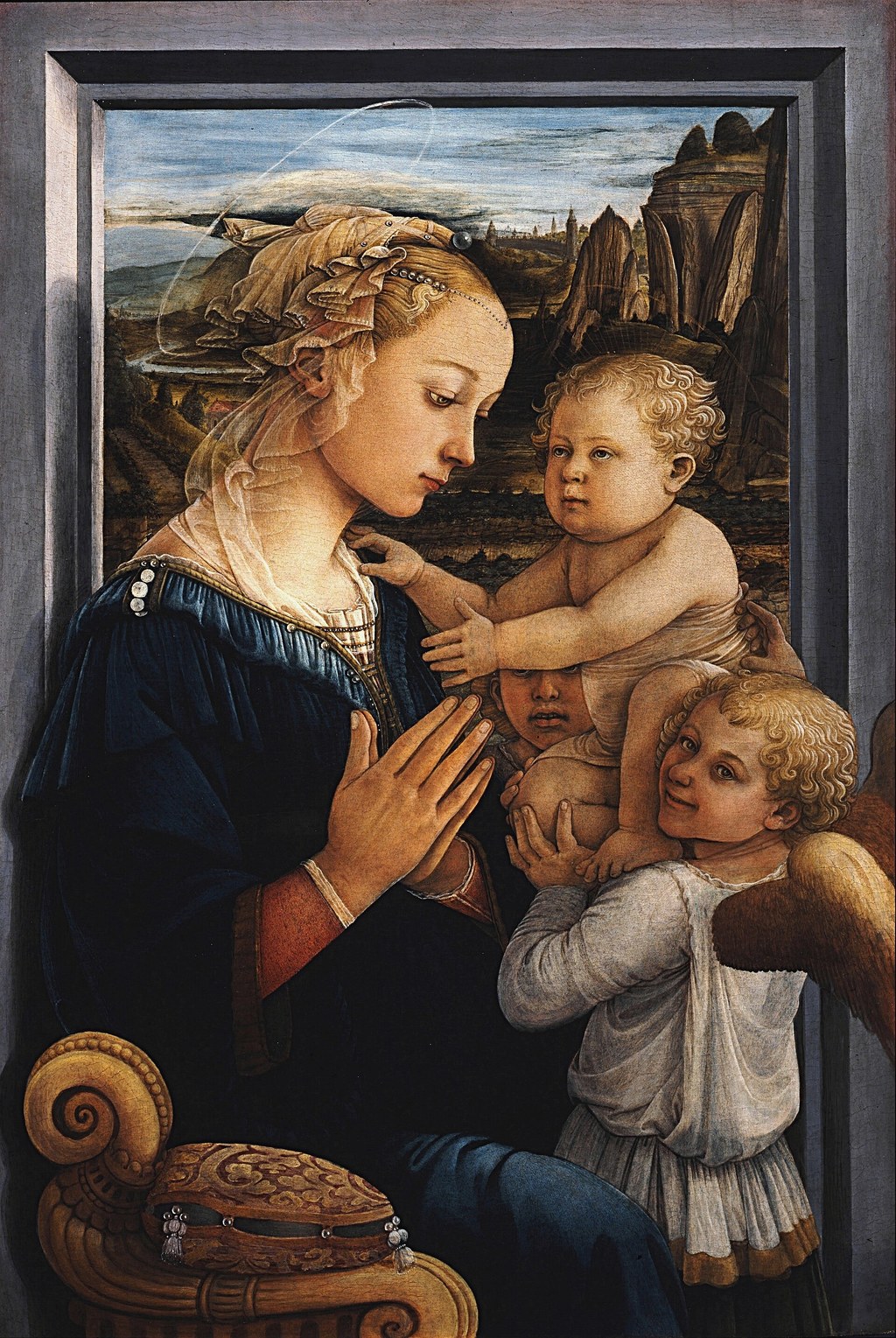
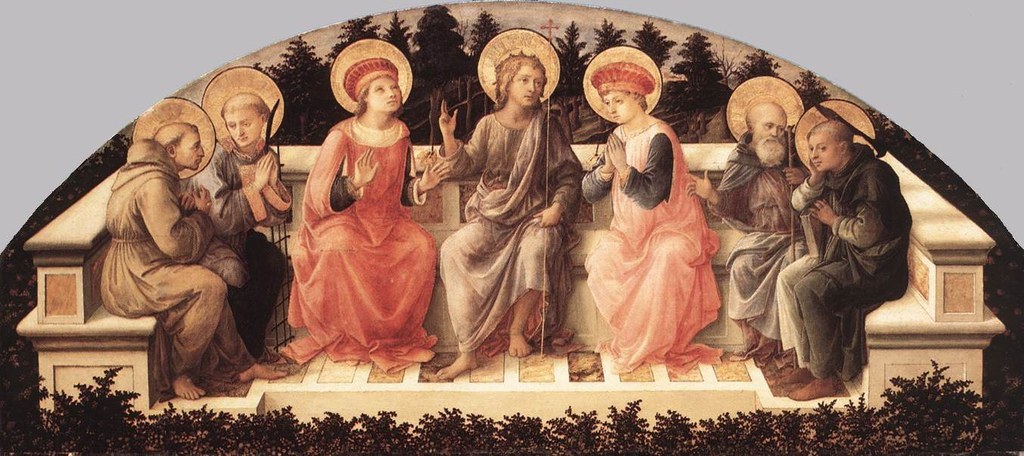
Fra Filippo Lippi's career is inseparable from Medici Florence. The relationship was not limited to one famous commission or a later anecdote about Cosimo de' Medici protecting an unruly friar-painter. Surviving works connect Lippi repeatedly with Medici palaces, family patron saints, private chapels and devotional programmes. The strongest evidence comes from objects. The National Gallery's Annunciation and Seven Saints were commissioned for a Medici residence. The Berlin Adoration in the Forest was made for the private Magi Chapel in Palazzo Medici. Uffizi documentation records another Adoration made for a chamber at Camaldoli created for Piero de' Medici and marked originally with the arms of Piero and Lucrezia Tornabuoni. The Washington Adoration of the Magi, begun by Fra Angelico and completed by Lippi, is also probably connected with Medici patronage and may be the great tondo recorded in Lorenzo de' Medici's collection.[1]
Together these works show a painter trusted with unusually personal forms of elite devotion. Lippi did not merely supply public church images financed by the family. He helped shape the sacred environments through which the Medici understood themselves.
At a Glance
- Key Medici patrons/connectionsCosimo de' Medici, Piero de' Medici, Lucrezia Tornabuoni and wider family network
- Palazzo Medici worksAnnunciation and Seven Saints; Adoration in the Forest for the Magi Chapel
- Camaldoli connectionAdoration of the Child with Saints John the Baptist and Romuald, associated with a chamber built for Piero de' Medici in 1463
- Probable Medici workWashington Adoration of the Magi
- Key themesPrivate devotion, patron saints, Magi imagery, family identity, palace decoration and artistic protection
- Broader impactMedici patronage helped place Lippi at the centre of Florentine artistic networks and indirectly shaped the environment in which Botticelli was trained
Contents
- Why the Medici Matter
- Seven Saints as Medici Genealogy
- Medici Devotion to the Magi
- Washington Adoration of the Magi
- Protection and Reputation
- Private Chapels and Household Religion
- Piero de' Medici
- Why Lippi's Forest Was Appropriate
- The Family Residence as a Semi-Public Stage
- Banking, Charity and Religious Art
- A Network Rather Than a Court
- FAQs
- References
Why the Medici Matter
The Medici were bankers, political powerbrokers and major patrons in fifteenth-century Florence. Their authority did not depend on a formal hereditary throne in the period of Cosimo the Elder. That made cultural and religious patronage especially useful. Art could demonstrate piety, learning, civic commitment and prestige without always appearing as overt princely propaganda. Lippi's work entered precisely this environment.
Cosimo de' Medici. Cosimo the Elder was one of the central patrons of mid-fifteenth-century Florence. Institutional sources in Prato repeatedly connect his benevolence with Fra Filippo during periods when the friar's personal conduct created difficulties. These stories need to be separated into documentary evidence and later embellishment.
What matters securely is that Lippi enjoyed Medici support and produced important works for the family. That support had professional consequences. A painter trusted by the Medici carried exceptional prestige.
Patronage as Relationship, Not One Payment. It is misleading to imagine patronage as a sequence of isolated purchases. Elite patrons could support artists across years through commissions, introductions, protection and access to networks. Lippi's Medici connection seems to have had this broader character. His works appear in several family environments and across different branches of devotional life. The relationship was therefore sustained.
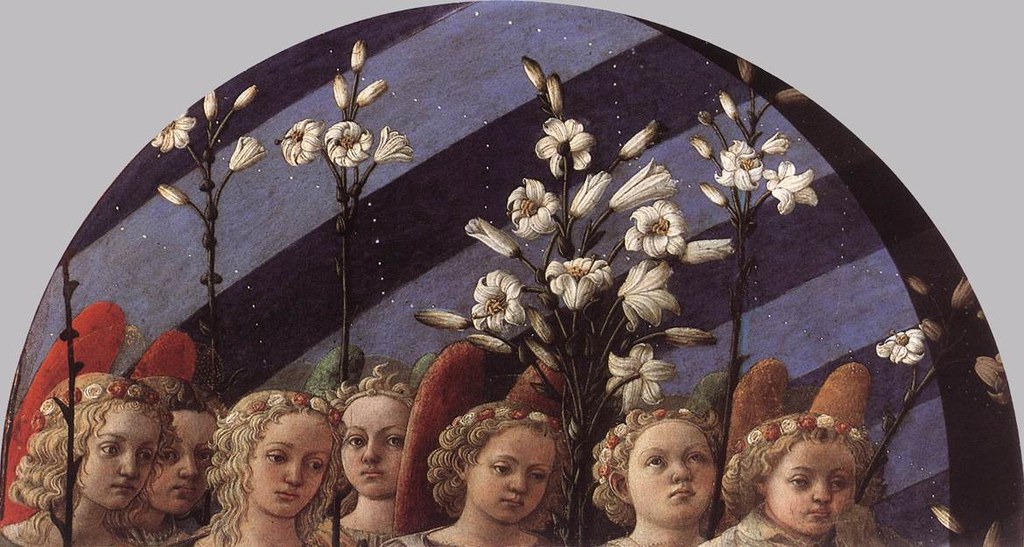
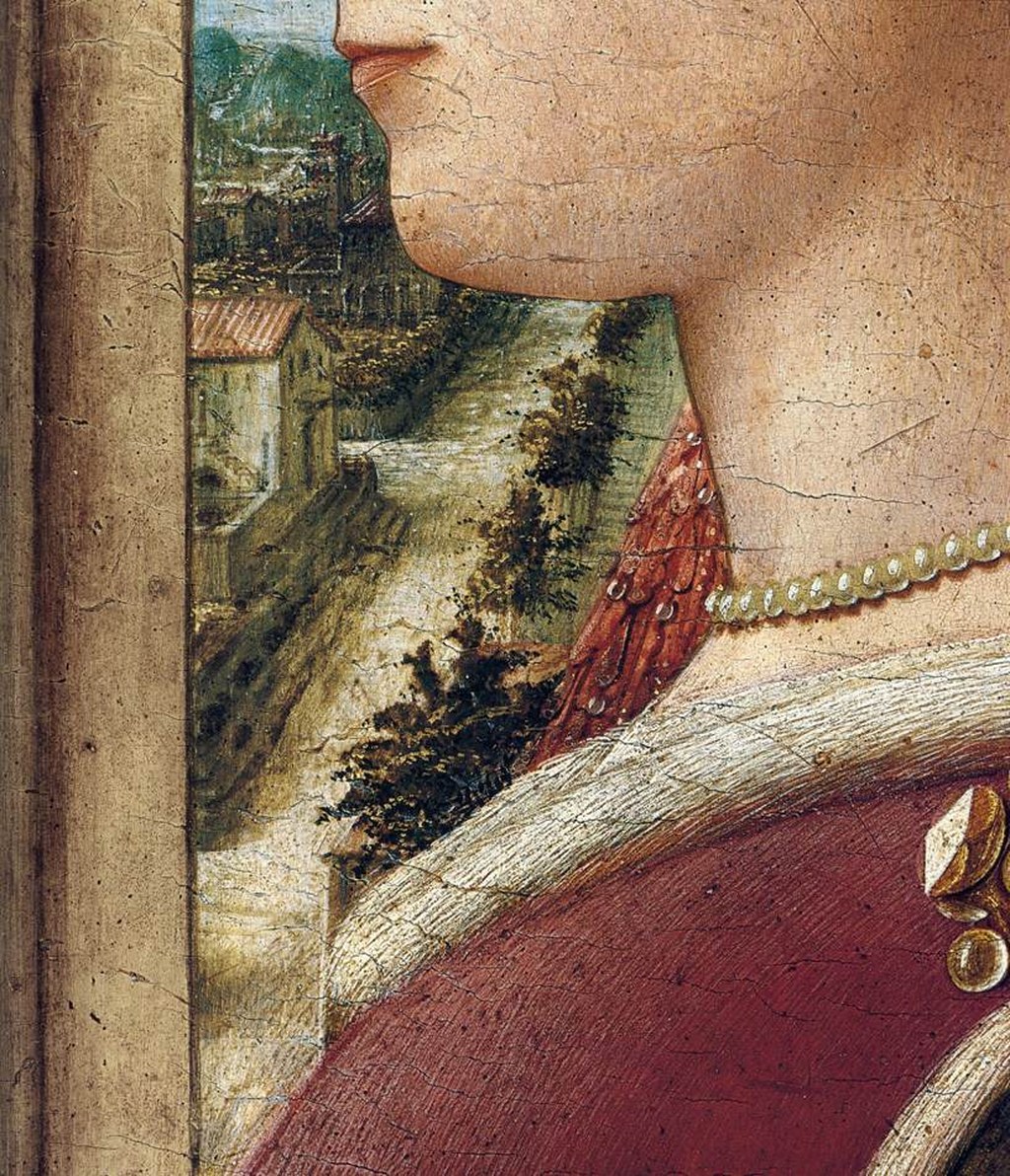
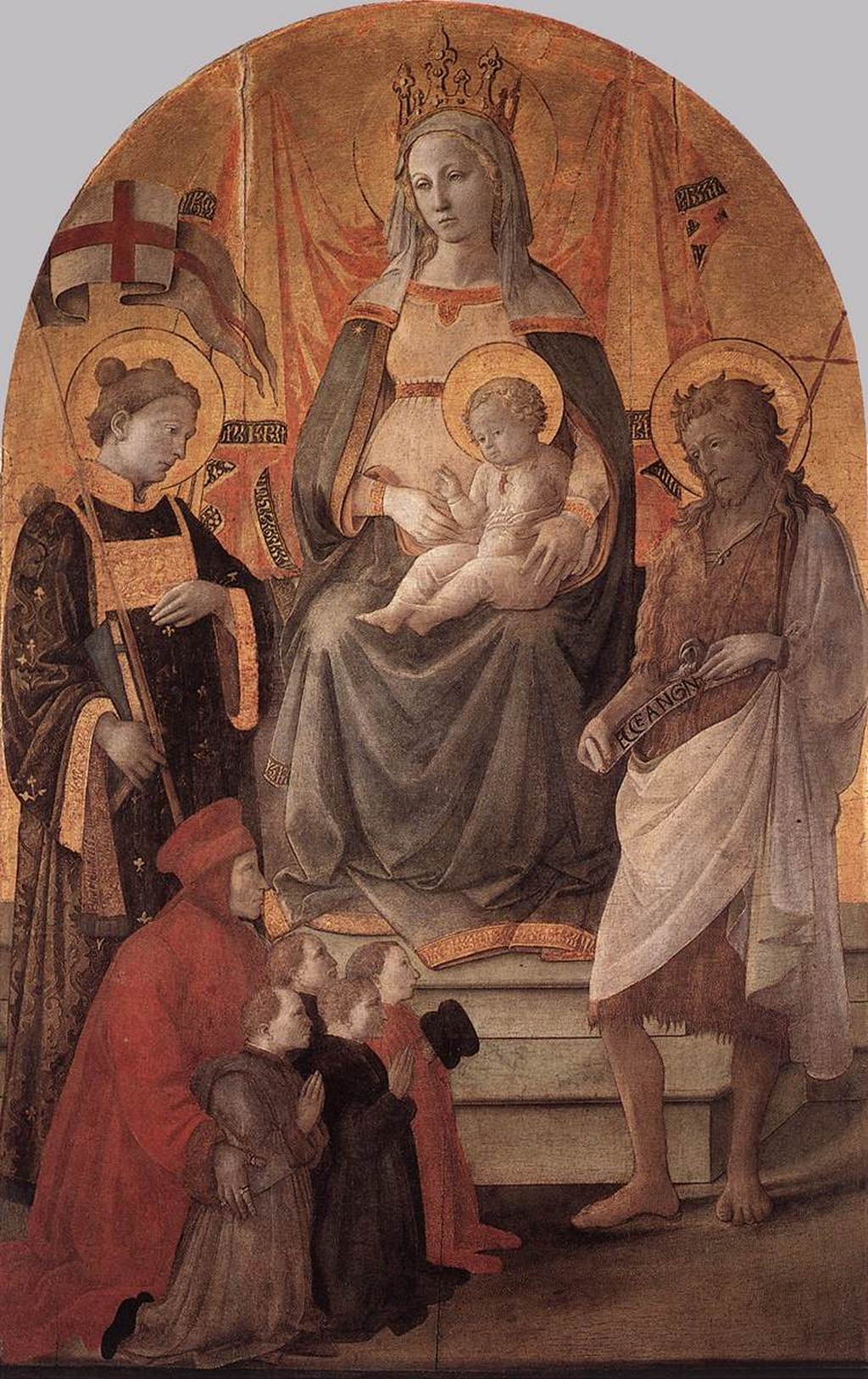
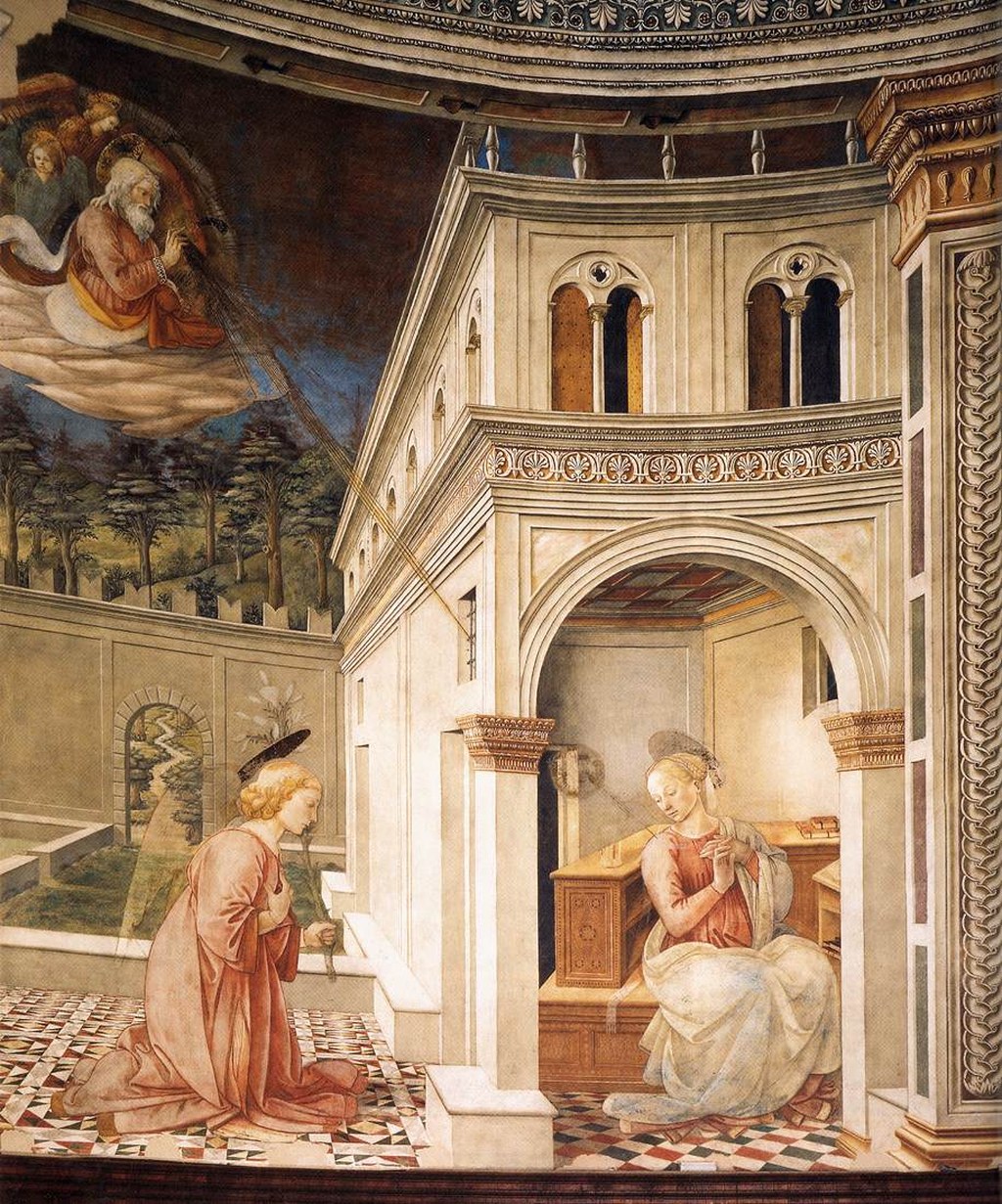
The Medici Overdoor Panels. The National Gallery's Annunciation and Seven Saints are among the clearest pieces of evidence.[1] Dillian Gordon's catalogue states that they were almost certainly pendants commissioned by a Medici family member for one of the family's Florentine dwellings. The Annunciation contains a Medici device of three feathers within a diamond ring. The Seven Saints is saturated with family patron-saint references. Together they create a dynastic devotional programme without using literal Medici portraits.
Seven Saints as Medici Genealogy
The saints correspond to family names and protectors. Cosmas and Damian are especially prominent because they were physicians and Medici means doctors. The panel therefore converts wordplay and naming into visual genealogy. The family is present symbolically. This is a more subtle form of self-representation than donor portraiture.
The Annunciation and Family Identity. The companion Annunciation provides the central Christian event of Incarnation. Its Medici device identifies the patronal world. Placed with Seven Saints, the panel situates family devotion within universal sacred history. The family is neither the subject nor absent. It occupies the interpretive framework.
Palazzo Medici. Palazzo Medici was both home and political theatre. Family members lived there, but clients, allies and visitors also entered. Art inside the palace therefore crossed modern categories of private and public. A sacred panel could support household prayer while also demonstrating refinement to visitors. Lippi's ability to work effectively in that environment helps explain his importance to the family.
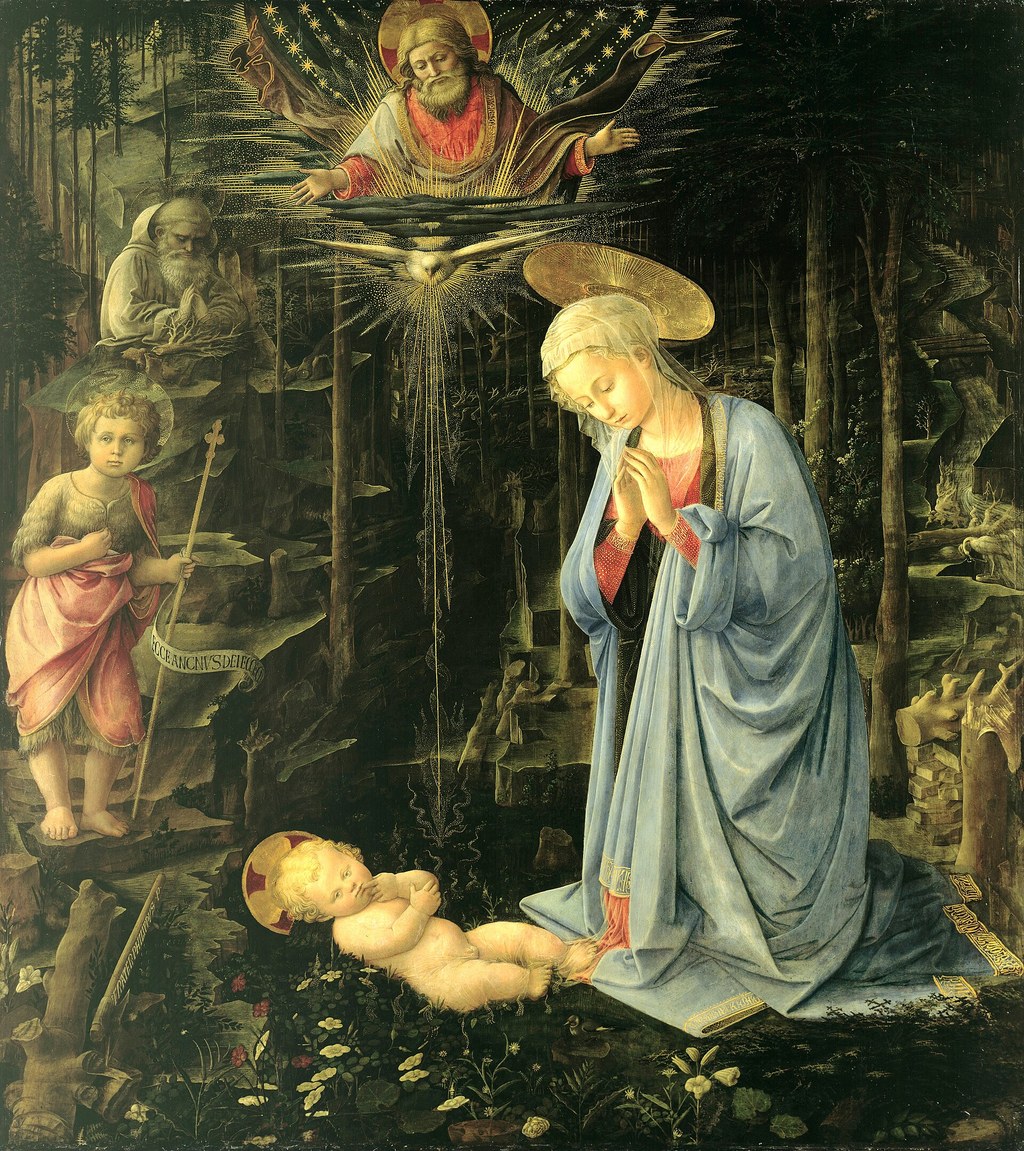
The Magi Chapel. The strongest surviving Medici-Lippi ensemble was the Magi Chapel. Fra Filippo's Adoration in the Forest formed the altar focus while Benozzo Gozzoli's procession of the Magi covered the walls. The Berlin Gemäldegalerie emphasises that these works were conceived in dialogue.[2] The procession moves visually towards Lippi's image. The chapel therefore functioned as an integrated programme rather than a collection of independent masterpieces.
Medici Devotion to the Magi
The Magi offered the Medici an ideal devotional subject. They were powerful, wealthy travellers who ultimately knelt before Christ. Their story allowed magnificence and humility to coexist.
Florence also had a strong civic tradition of Magi processions. Medici association with the subject therefore joined family identity with wider urban culture. Lippi's chapel panel participated directly in that symbolic world.
Adoration in the Forest and Elite Humility. The Berlin painting is strikingly austere for such a wealthy setting. Christ lies naked on the ground in a dark forest. Mary kneels.
The scene includes John the Baptist, monastic contemplation and signs of penitence. The contrast with the magnificence of Palazzo Medici and Gozzoli's procession is deliberate in effect even if we cannot reduce it to one documented statement of patronal intent. Rich patrons arrive at an image of humility.
Camaldoli and Piero de' Medici. Uffizi documentation records Lippi's Adoration of the Baby Jesus with Saints John the Baptist and Bernard/Romuald in connection with the Camaldoli monastery.[3] The work once stood above the altar of a chamber dedicated to John the Baptist and built in 1463 for use by Piero de' Medici and the family. The coats of arms of Piero and his wife Lucrezia Tornabuoni originally adorned the altarpiece. This is extremely strong evidence because original family identity was physically built into the object.
Lucrezia Tornabuoni and John the Baptist. The Uffizi notes Lucrezia Tornabuoni's particular devotion to John the Baptist and that she wrote a poem about him.[3] This gives the commission unusual personal specificity. The saint was patron of Florence, but devotion was also individual. Lippi's imagery could therefore serve city, family and person simultaneously.
Washington Adoration of the Magi
The National Gallery of Art regards the great Washington tondo as probably commissioned by a Medici family member.[4] Its provenance may connect it with a large Magi tondo recorded in Lorenzo de' Medici's palace after his death. Because the identification is probable rather than absolute, that qualification matters. Even so, the work fits strongly within the family's repeated Magi patronage.
Lorenzo de' Medici's Inventory. The inventory evidence is valuable because it records how art functioned inside a residence after decades of collecting. A large tondo attributed to Fra Angelico appeared in Lorenzo's ground-floor bedroom and was valued highly. Modern scholarship connects that description plausibly with the Washington painting begun by Angelico and completed by Lippi. If correct, the object remained a valued Medici possession across generations.
Religious Patronage and Political Power. It is tempting to describe every Medici religious commission as propaganda. That word can obscure more than it clarifies. Fifteenth-century patrons did not necessarily separate sincere devotion from family prestige and political identity.
A chapel could be genuinely used for prayer and still communicate status. A saint could be genuinely venerated and simultaneously serve as a family namesake. The dual function is historically normal.
Lippi as a Suitable Medici Painter. Why did the family value Lippi? His art offered several useful qualities. He could create monumental sacred authority without severe abstraction.
He could humanise Mary and Christ. He could render fashionable beauty and expensive surfaces. He could organise complex programmes and work with assistants. He could also adapt style to site, from quiet palace panels to a mystical chapel altarpiece. That versatility made him especially useful to patrons with varied needs.
Protection and Reputation
Prato's institutional biography presents Cosimo's admiration for Lippi's art as an important source of protection during the painter's personal difficulties. The exact details of every intervention require cautious source handling. But the broader point is credible and supported by Lippi's continuing access to major patronage. Artistic value could create social leverage. A gifted painter was not outside ordinary moral and legal systems, but powerful patrons could influence consequences.
Medici Networks Beyond the Family. The Munich Murate Annunciation was commissioned by Giovanni de' Benci, whose wealth came through the Medici bank. This should not be mislabelled a direct Medici commission. It demonstrates something broader: the family economic network created other wealthy patrons. Medici cultural influence therefore radiated through associates as well as household members. Lippi operated inside that larger ecosystem.
Lippi, Botticelli and Medici Florence. Botticelli trained in Lippi's studio and later became one of the artists most associated with Medici Florence. This creates continuity between patronage and workshop transmission. The same cultural environment that valued Lippi also helped sustain the pupil who transformed his style. Again, this should not be reduced to a simple planned succession. It is a network effect.
Family Saints, Devices and Arms. Medici commissions used multiple forms of identity. Seven Saints works through patron saints. The London Annunciation contains a family device.
The Camaldoli altarpiece originally carried the arms of Piero and Lucrezia Tornabuoni. The Magi Chapel uses subject and architecture. Together, these objects show that Renaissance family branding was sophisticated long before the modern word existed.
Private Chapels and Household Religion
Elite domestic religion was not simply a scaled-down version of church worship. A private chapel allowed a family to create intensely specific devotional programmes. Saints could reflect personal names.
Feast days could matter to the household. Art could be viewed repeatedly by a small community with shared family knowledge. Lippi's Medici works make this private specificity unusually visible.
The Medici as a Research Hub. These surviving works together make the Medici relationship visible across palace decoration, private devotion and family networks. The Medici are therefore not merely a contextual paragraph. They are one of the principal organising networks in Lippi’s career.
The Medici Were Not a Single Patron. “The Medici” were a family across generations, not one commissioning mind. Cosimo, Piero, Lucrezia Tornabuoni, Lorenzo and other relatives had different devotional interests and domestic needs. A work associated with Piero should not automatically be described as Cosimo's commission. This matters because family patronage can become vague when famous surnames replace actual individuals. The surviving Lippi works allow us to be more precise.
Cosimo's Cultural Strategy. Cosimo's patronage operated within the delicate politics of republican Florence. He possessed enormous influence but avoided presenting himself straightforwardly as a prince. Religious foundations, convents, churches and household devotion offered culturally acceptable ways to demonstrate generosity and leadership. Lippi's religious art fitted naturally within that environment. The painter could produce splendour without requiring overt political iconography.
Piero de' Medici
Piero's connections are particularly important because the Uffizi preserves direct evidence around the Camaldoli commission.[3] A chamber dedicated to John the Baptist was built for family use in 1463. Lippi's painting stood above its altar and originally included the arms of Piero and Lucrezia Tornabuoni. This is unusually concrete patronage evidence: person, place, date, devotion and heraldry converge. It should therefore receive more weight than broad anecdotes about Medici favour.
Lucrezia Tornabuoni as Patronal Presence. Lucrezia Tornabuoni was not simply “Piero's wife” in cultural history. The Uffizi notes her special devotion to John the Baptist and that she wrote a poem about him.[3] That textual evidence gives the saint's presence in the Camaldoli image a more personal resonance. A woman in the Medici household could participate actively in devotional culture through writing, patronage and selection of saints. This broadens the history beyond a male political dynasty.
The Magi as Medici Self-Understanding. The family's repeated interest in the Magi deserves a dedicated section because it operates at several levels. The kings were wealthy travellers. They possessed worldly rank.
Yet they recognised Christ and offered their wealth to him. For an elite banking family, the image offered an ideal model of power correctly subordinated to sacred authority. The subject also belonged to Florentine public ritual, allowing family and civic identity to overlap.
The Magi Chapel as Total Environment. The Medici chapel is one of the best examples of Renaissance art functioning as an environment rather than isolated object. Architecture, Gozzoli's frescoes, Lippi's altarpiece, candlelight and family ritual worked together. The modern separation of the original Lippi panel to Berlin breaks that unity physically. The dispersed or altered context can nevertheless be reconstructed conceptually from the surviving objects and documentary evidence. This is one of the clearest visual explanations of the patronage network.
Why Lippi's Forest Was Appropriate
The austerity of the Adoration in the Forest becomes more meaningful when placed against Medici magnificence. The family did not commission only flattering images of wealth. Private devotion required confrontation with humility, penitence and the Incarnation. The forest's cut trees, John the Baptist and monastic figure create a moral atmosphere quite different from courtly portraiture. That range helps show why patronage cannot be reduced to self-celebration.
Family Devices. Renaissance imprese allowed patrons to communicate identity through symbols more flexible than formal coats of arms. The three feathers within a diamond ring in the London Annunciation is one example. Such devices could carry personal or family associations understood by insiders. Their inclusion in religious imagery makes the patronal presence visible without disrupting the sacred narrative with a donor portrait.
Arms and Ownership. Heraldic arms served a related but more formal function. The original arms of Piero and Lucrezia on the Camaldoli altarpiece would have made ownership and patronage unmistakable. Their later loss is therefore more than decorative damage. It removes a layer of historical identification. Museum and archival records help restore what the surviving surface no longer displays.
Patron Saints as Personal Identity. Seven Saints demonstrates another system entirely. Instead of device or arms, living family members are evoked through their namesakes. This is devotional identity rather than heraldic identity. The Medici could therefore inhabit sacred art through several codes at once. Understanding those codes makes the family programme far more sophisticated than a simple collection of expensive pictures.
The Family Residence as a Semi-Public Stage
Palazzo Medici was a home, but elite homes were political spaces. Visitors waited, negotiated, dined and moved through rooms in which art communicated the culture of the household. A Medici devotional panel could therefore be viewed by family members in prayer and by outsiders as evidence of taste and piety. The distinction between private religion and public reputation becomes porous.
Patronage and Access to Artists. Powerful patrons could attract sought-after masters and secure their time for specialised commissions. Lippi's willingness to produce unusually tailored works suggests a relationship of trust. For the artist, association with the Medici could lead to reputation, protection and further opportunities. For the patrons, a distinctive master allowed the family to create imagery not available as generic workshop stock. Patronage was reciprocal in benefit even when unequal in power.
Art and Protection. The stories of Cosimo intervening on Lippi's behalf are often repeated because they dramatise the idea that genius receives licence. That romantic formula obscures the institutional and financial character of patronage. More historically, elite protection could mediate an individual's position within legal and ecclesiastical networks.
Lippi's value as an artist gave him relationships that mattered socially. That does not mean he was free from rules. It means rules operated inside patronage structures.
The Medici and Prato. The family connection did not end at Florence's walls. Prato's institutional account repeatedly invokes Cosimo's support during Lippi's years in the city. The artist's local work therefore unfolded while he retained links to Florentine power. This helps explain why the Prato period should not be treated as exile from the centre of Renaissance culture. Lippi remained networked.
Banking, Charity and Religious Art
The Medici commissions also provide a useful contrast with the Madonna del Ceppo. Both arise from wealth but through different institutional channels. Medici banking supported dynastic household patronage. Datini's merchant wealth was transformed posthumously into charitable foundation patronage. Comparing the two helps readers see that Renaissance art could be funded by multiple economic structures.
The Washington Tondo and Collecting. If the Washington Adoration of the Magi is indeed the large tondo in Lorenzo's inventory, it also shows the family as collectors across generations. An object initiated by Fra Angelico and completed by Lippi could remain valued decades later. The painting's high inventory valuation suggests prestige inside the household. This is patronage as inheritance rather than one-time commission.
From Cosimo to Lorenzo. The chronology of Lippi's career overlaps several Medici generations. This continuity matters because it places the artist within a family culture rather than one personal friendship. By the time Lorenzo inherited the leading position in the family, Lippi's paintings could already form part of the visual environment inherited from older relatives. Art became part of dynastic memory.
Botticelli as the Next Medici Painter. Botticelli's training with Lippi and later Medici associations create an important transition. The family did not simply replace one artist with another, but workshop transmission meant that qualities they had encountered in Lippi could persist and change in the younger painter. This continuity helps explain why Lippi’s relationship with Botticelli cannot be separated entirely from the Medici environment in which both careers developed.
A Network Rather Than a Court
Florence under the early Medici was not organised exactly like a princely court such as Ferrara or Mantua. The family exercised influence through republican institutions, banking, alliances and household culture. Artists therefore moved through a network rather than a formal royal academy. Lippi's career is an excellent example of how that network could nevertheless provide sustained elite patronage.
Why Object-Based Evidence Matters. The safest way to tell the Medici story is to begin from surviving paintings and documented settings. The London pair, Berlin panel and Camaldoli altarpiece provide harder evidence than colourful later anecdotes. Once those anchors are established, biography and political context can be added around them. An object-first approach prevents general claims about Medici patronage from outrunning the surviving evidence.
Patronage versus Ownership. A work commissioned by a Medici should be distinguished from one merely recorded later in Medici ownership. The London pair and Berlin chapel panel have strong commission contexts; the Washington tondo’s Medici connection is more probabilistic and partly based on later inventory evidence. These are related but not identical histories.
Why Fra Filippo Lippi and the Medici Matters. Fra Filippo Lippi and the Medici matter together because their relationship reveals how art operated inside Renaissance power. The surviving works show commissions embedded in palace rooms, private chapels, monastic retreats and family saint programmes. They demonstrate that patronage could be intimate, dynastic, religious and political at the same time.
They also help explain Lippi's professional position. He was trusted by Florence's most influential family with images closely tied to household identity. That trust placed his workshop within networks that would also shape Botticelli and the next generation of Florentine painting. The Medici relationship is therefore a major part of Lippi’s career rather than a patronage footnote.
FAQs
Discussion
What stands out to you most about Filippo Lippi and the Medici in relation to Filippo Lippi's wider career?
Reader Insights
Notice how the page connects close visual detail with patronage, workshop practice and the wider Renaissance setting.
Which comparison elsewhere in the cluster helps clarify this work or theme most strongly?
Join the Conversation
Have a thought or observation about Filippo Lippi and the Medici? Share it below. Thoughtful responses may be added to this section.
References
- National Gallery, London, “Medici (Overdoor?) Panels,” Dillian Gordon catalogue.
- Gemäldegalerie, Berlin, Adoration in the Forest collection and conservation documentation. View Source
- Uffizi Galleries, “The Saint who baptized Christ,” including Lippi's Camaldoli Adoration and Medici context.
- National Gallery of Art, Washington, Adoration of the Magi, provenance and catalogue history. View Source
- Musei Diocesani di Prato, Fra Filippo Lippi biography. View Source
- Jeffrey Ruda, Fra Filippo Lippi: Life and Work with a Complete Catalogue, 1993.
- Megan Holmes, Fra Filippo Lippi: The Carmelite Painter, 1999.