 by Tom Gurney
Tom Gurney BSc (Hons) is an art history expert with over 20 years experience
Published on June 19, 2020 / Updated on October 2, 2026
Email: tomgurney1@gmail.com / Phone: +44 7429 011000
Fra Filippo Lippi and Botticelli
Fra Filippo Lippi's influence on Sandro Botticelli is one of the most important teacher-pupil relationships in fifteenth-century Florentine painting. The Uffizi states directly that Botticelli completed his painting apprenticeship in Lippi's studio and left the workshop around 1467, when Lippi moved to Spoleto. That documentary and institutional consensus gives the relationship a much firmer foundation than the vague claims of “influence” often repeated between Renaissance artists.[1]
The connection is visible across Botticelli's early Madonnas, figure types, veils, angels, linear contours and treatment of devotional intimacy. Yet Botticelli should not be described as a copyist. He absorbed Lippi's visual language and transformed it, intensifying line, rhythm and emotional delicacy until the inherited forms became unmistakably his own. The relationship also extends beyond two careers. Lippi's son Filippino later entered Botticelli's orbit after Fra Filippo's death, creating an extraordinary circle in which the father's pupil became an important master for the son. The Lippi-Botticelli connection offers an unusually clear way to see how workshop training transmitted style without reducing artistic development to simple imitation.
At a Glance
- TeacherFra Filippo Lippi
- PupilSandro Botticelli
- Uffizi evidenceBotticelli completed his painting apprenticeship in Lippi's studio
- Approximate separationc. 1467, when Lippi moved to Spoleto
- Key inherited qualitiesGraceful Madonna types, fine contour, transparent veils, youthful angels, delicate hands, devotional intimacy and ornamental detail
- Botticelli's transformationGreater emphasis on linear rhythm, elongated elegance and psychologically charged contour
- Later family connectionFilippino Lippi, Fra Filippo's son, later worked in Botticelli's circle
Contents
- Botticelli in Lippi's Workshop
- The Lippina as a Model
- Faces
- Landscape and Flowers
- Verrocchio and the Next Stage
- Comparison: Lippi's Lippina and Botticelli's Early Madonnas
- Workshop Apprenticeship as a Social Relationship
- The Madonna della Loggia as a Transition Work
- Beauty and Contemporary Fashion
- Fra Filippo as a Missing Link in Popular Renaissance History
- The Limits of Chronology
- Why the Relationship Matters for Filippino
- FAQs
- References
Botticelli in Lippi's Workshop
The Uffizi's account of Botticelli's early Madonna della Loggia states that he completed his apprenticeship in Fra Filippo Lippi's studio.[1] This is the crucial factual starting point. A workshop was not simply a school in the modern sense.
It was a production environment. Young painters learned by preparing materials, copying designs, assisting with secondary passages and absorbing the master's habits through repeated work. Botticelli therefore encountered Lippi's art as practice rather than as distant admiration.
What Could Botticelli Learn There? Lippi's workshop offered several kinds of training. There was figure design. There was tempera technique.
There was the translation of drawings into panel compositions. There was management of sacred subjects for different patrons. There was also the practical problem of maintaining recognisable workshop quality across works involving multiple hands. Botticelli learned inside a professional system. That context helps explain why his earliest paintings can sit so close to Lippi's visual world.
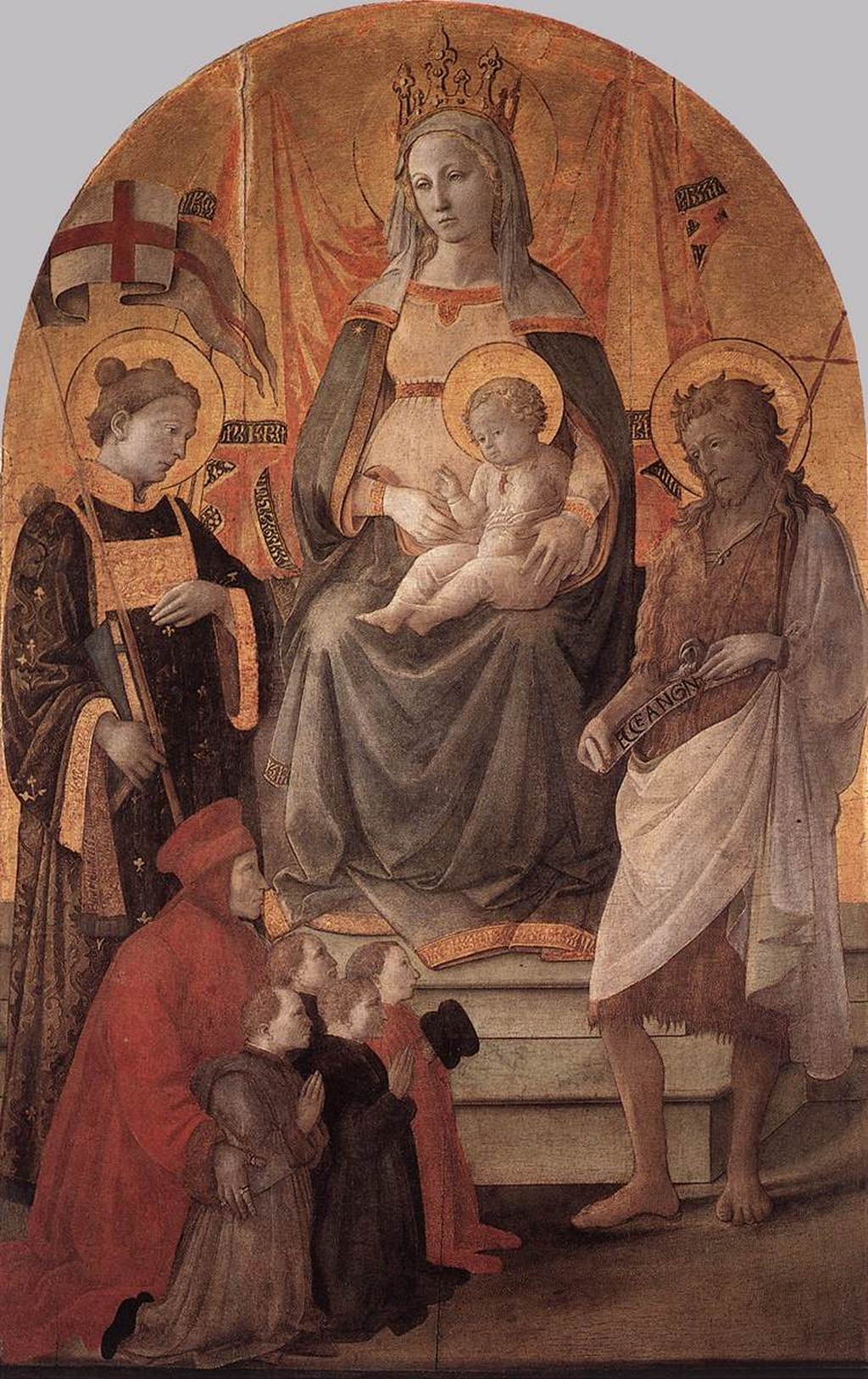
The Madonna as a Shared Laboratory. The Virgin and Child was one of the most important subjects through which influence passed from Lippi to Botticelli. Fra Filippo had spent decades refining the type. He could make Mary monumental, domestic, melancholy, fashionable or tender depending on the commission.
Botticelli inherited an already sophisticated repertoire. His early Madonnas often retain Lippi's graceful female profiles, delicate veils, youthful attendants and close emotional relation between mother and child. The subject became a laboratory for transformation rather than repetition.
The Lippina as a Model
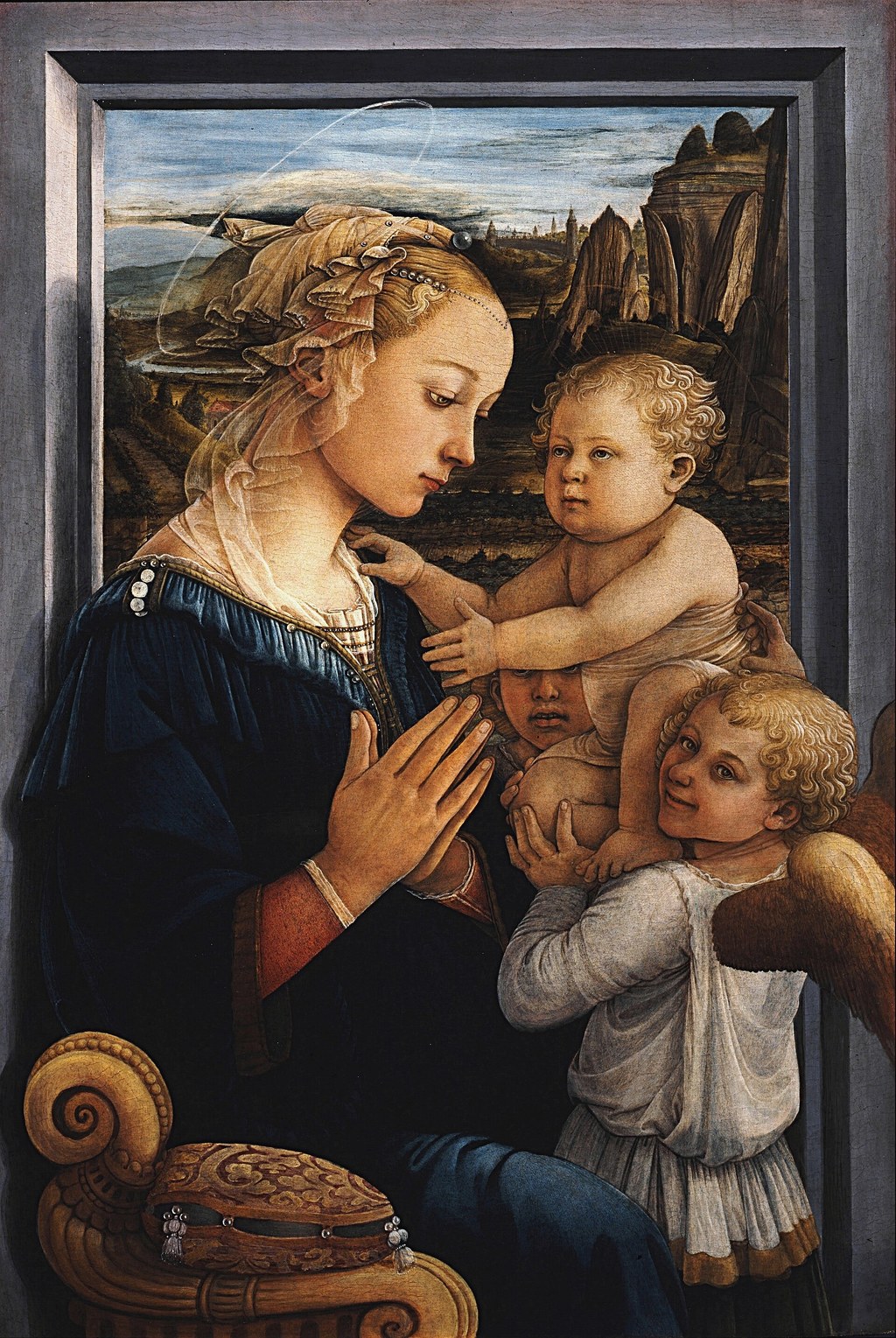
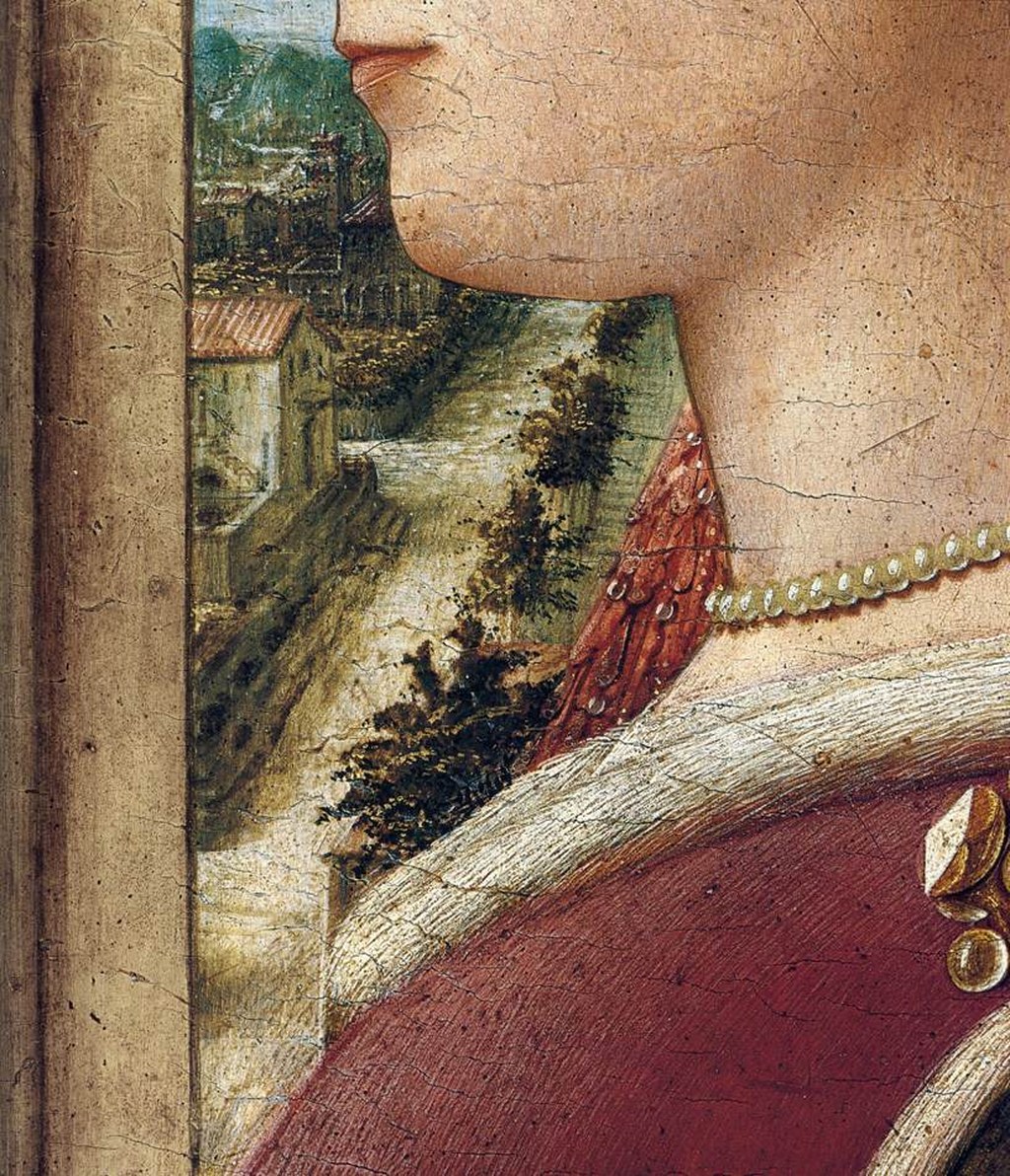
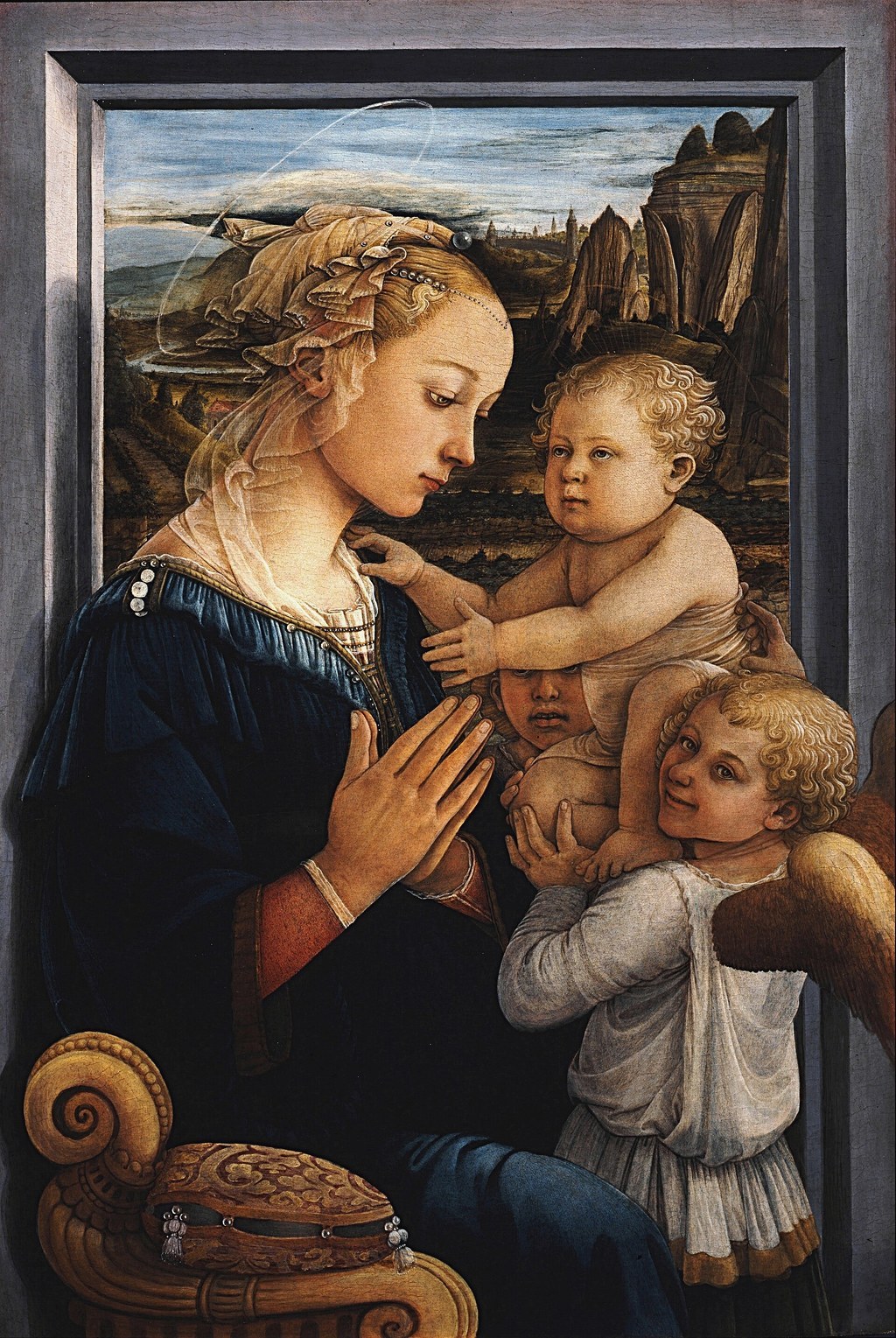
The Uffizi explicitly states that Fra Filippo's Madonna and Child with Two Angels became a model for later artists including Botticelli.[1] This makes the painting one of the most direct objects through which to demonstrate influence. The Virgin's refined profile, transparent headdress and elegant hands all belong to a visual language Botticelli would develop further. The smiling foreground angel also shows Lippi's willingness to humanise sacred attendants. Botticelli inherited that freedom to make holy figures psychologically alive.
Madonna della Loggia. The Uffizi dates Botticelli's Madonna della Loggia to the period when he was leaving Lippi's studio around 1467.[1] That makes it especially valuable for comparison. The young Botticelli still speaks a strongly Lippesque language.
The Virgin and Child are intimate. The contours are controlled and graceful. The figures inhabit an architectural setting that frames rather than overwhelms them. Yet Botticelli's own preference for linear rhythm is already emerging.
Line. Line is perhaps the most important bridge between the two painters. Lippi used contour to soften the monumentality inherited from Masaccio. Faces, veils, hands and drapery often depend upon elegant edge rather than heavy modelling alone.
Botticelli made that principle even more central. In his mature work, contour can seem to generate movement almost independently of physical volume. Hair, fabric and limbs flow through rhythmic curves. The inheritance therefore becomes amplification.
From Volume to Rhythm. Fra Filippo never abandoned bodily weight. The influence of Masaccio remained important in his sense of physical presence. Botticelli often reduces that weight in favour of pattern and movement.
This is not a failure of naturalism. It is a different priority. The comparison helps explain artistic succession accurately: Botticelli does not simply become “more advanced”. He chooses a different balance between mass and line.
Faces
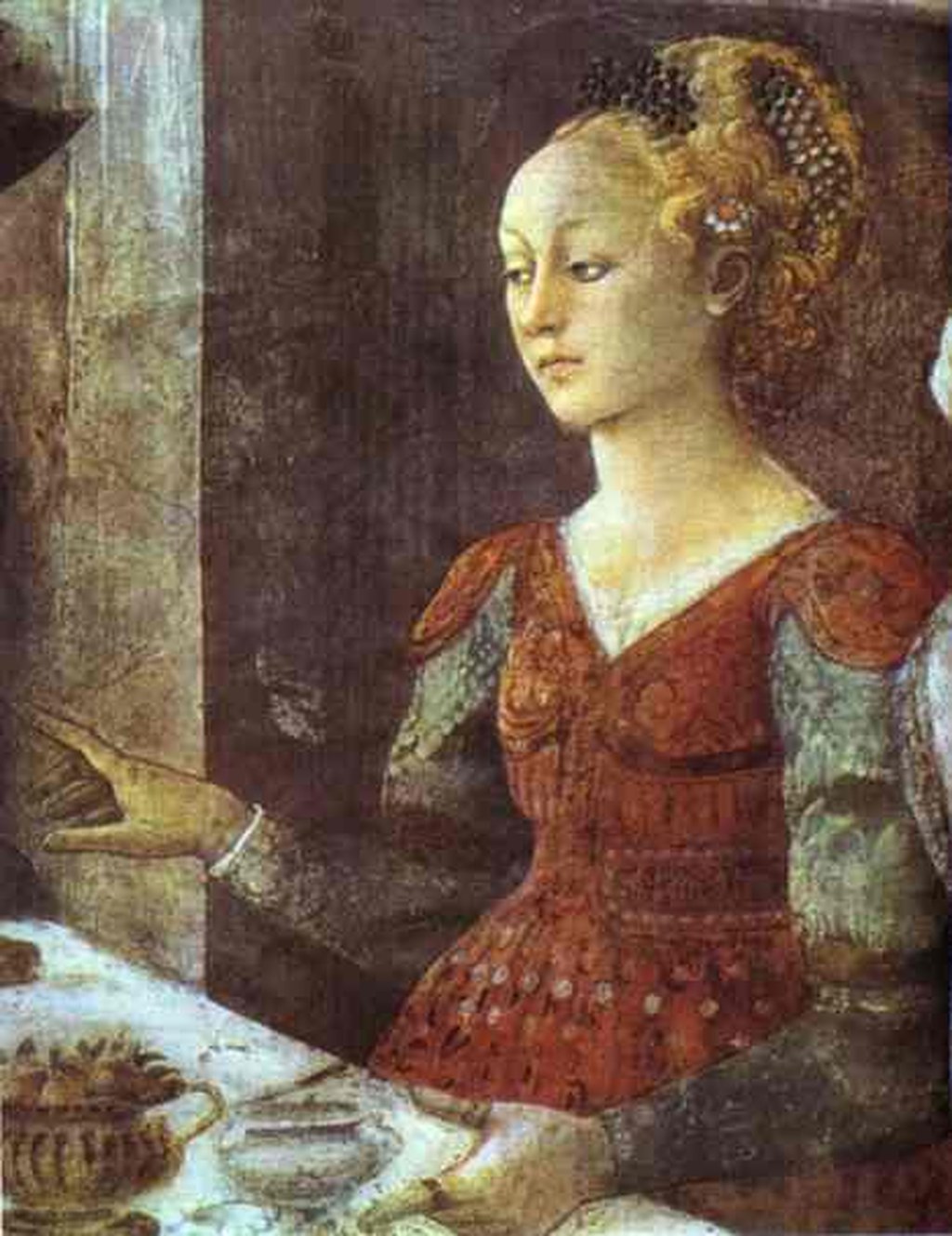
Lippi's ideal female faces often feature high foreheads, fine noses, pale complexions and controlled profiles. Similar types appear in Botticelli's early work. That resemblance has sometimes encouraged careless claims that both artists repeatedly painted the same real women.
Workshop style offers a better explanation. Artists developed preferred types that could cross sacred and secular subjects. Botticelli inherited and modified Lippi's ideal vocabulary.
Veils and Hair. Transparent veils are particularly useful for comparison because they combine technical delicacy with ideal beauty. In the Lippina, the Virgin's veil, pearls and arranged hair create a sophisticated Florentine type. Botticelli repeatedly uses equally delicate hair and translucent fabrics. These details allow line to remain visible even where material is meant to appear light or transparent. They also connect sacred beauty with contemporary elite fashion.
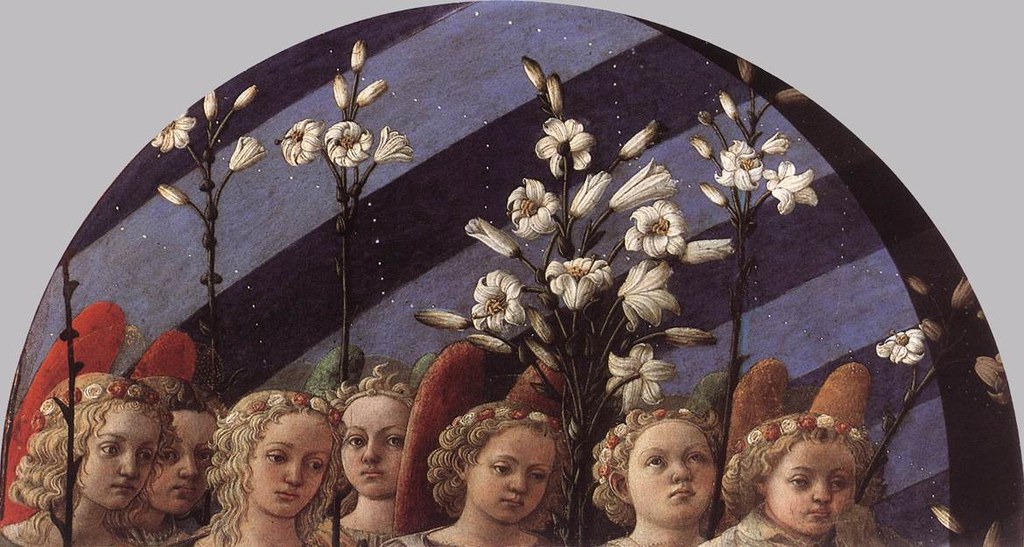
Angels. Lippi's angels frequently possess youthful vitality. They smile, support Christ, move through compositions and sometimes engage the viewer directly. Botticelli's angels inherit the same capacity for personality.
They are not neutral winged furniture. This liveliness helps sacred imagery remain emotionally accessible. The connection is especially clear in early Madonna compositions where angels gather close around mother and child.
Hands. Hands carry meaning in both artists. Lippi uses prayer, touch, support and pointing to organise emotional relationships. Botticelli becomes famous for long, expressive fingers whose gestures can seem almost choreographed. The later painter intensifies something already important in his master's art. Gesture becomes part of line.
Landscape and Flowers
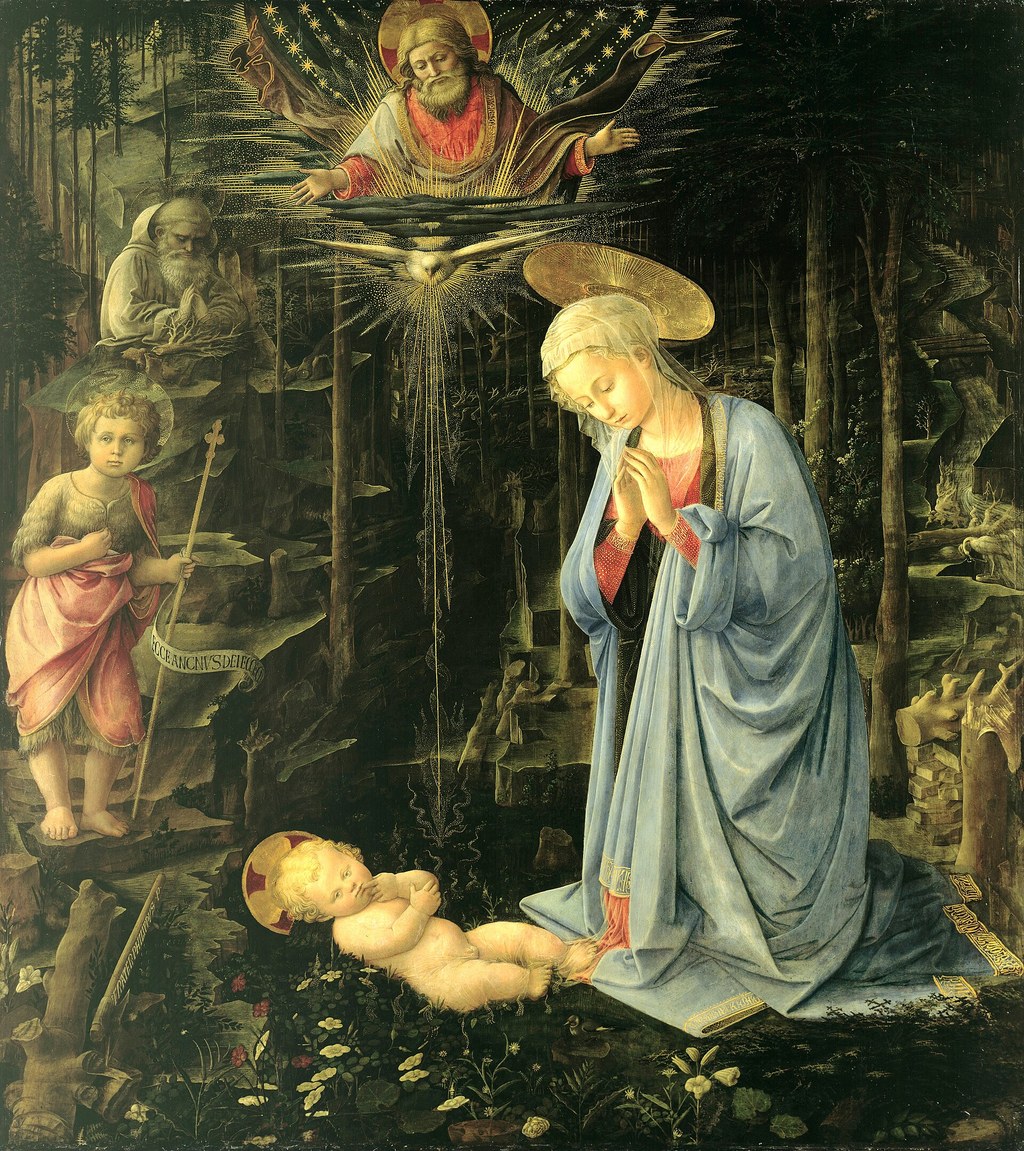
The Gemäldegalerie notes that the detailed flowers in Lippi's Adoration in the Forest are thought to have influenced Botticelli.[3] This is a particularly interesting connection because botanical detail later becomes one of the celebrated features of Botticelli's Primavera. A one-to-one derivation would be too strong. Both artists participated in a wider Florentine culture of natural observation. But Lippi's workshop gave Botticelli direct exposure to a painter who treated flowers as meaningful visual detail.
Devotional Intimacy. Fra Filippo repeatedly brought sacred events into close emotional proximity. The Lippina feels almost domestic. The Saint Anne tondo turns holy genealogy into household life.
Botticelli continued this capacity to make devotional imagery graceful and emotionally legible. The difference is often one of tone. Botticelli can introduce a more nervous or melancholy linear intensity. Lippi tends towards warmer physical presence.
Workshop Drawings and Reuse. Renaissance workshops relied heavily on drawings and reusable designs. A successful head, hand or drapery arrangement could migrate across compositions. A pupil learned not just broad principles but specific patterns. This helps explain close similarities between early Botticelli and Lippi without requiring literal copying from finished paintings every time. Shared workshop drawings could preserve forms before independent careers diverged.
Leaving the Workshop Around 1467. The Uffizi places Botticelli's departure from Lippi around 1467, when Fra Filippo moved to Spoleto.[1] The timing is important. The separation was partly geographical.
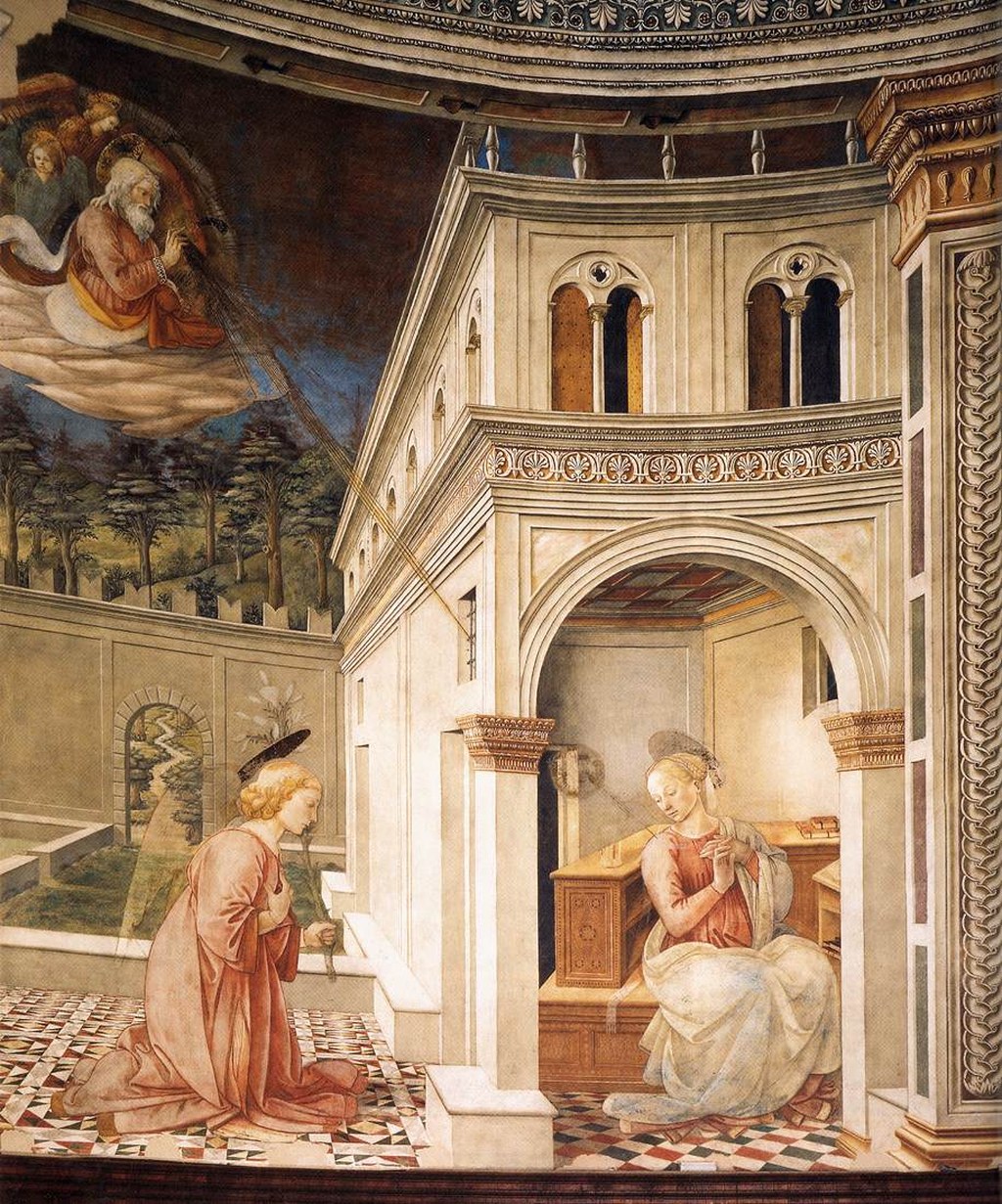
Lippi's final major commission took him away from Florence. Botticelli, meanwhile, moved into other artistic networks and probably drew closer to Verrocchio. His training therefore did not end with Lippi. The mature Botticelli emerged from several influences.
Verrocchio and the Next Stage
The Uffizi notes Botticelli's probable closeness to Andrea del Verrocchio after leaving Lippi.[1] This matters because artistic formation was cumulative. A pupil could absorb one master's line and devotional types, then encounter another workshop's interest in sculpture, movement and design. The result was not a pure lineage. Florentine art developed through overlapping networks.
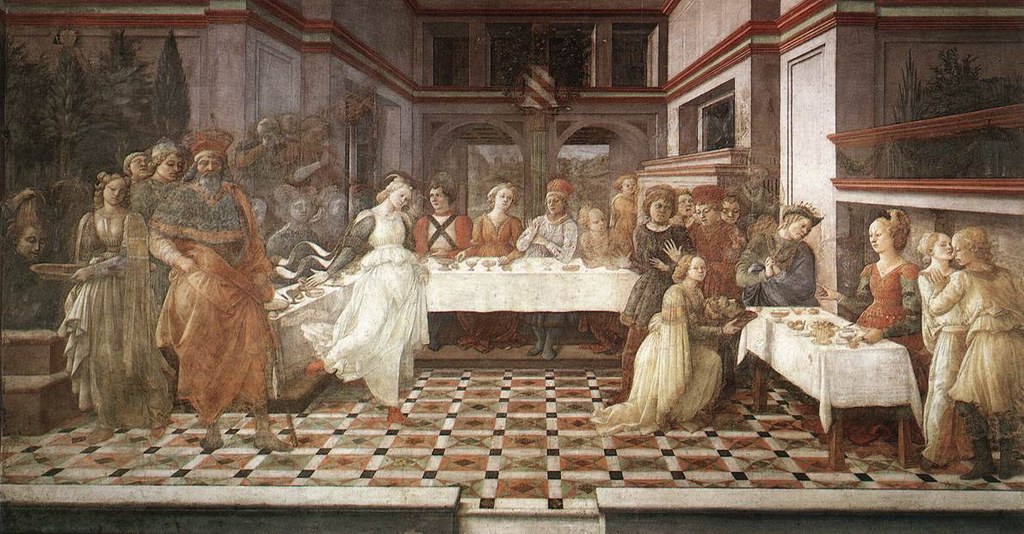
Medici Patronage Across Generations. Both Lippi and Botticelli worked within Medici cultural networks. Fra Filippo produced Medici palace panels and the Adoration in the Forest. Botticelli later became deeply associated with Medici Florence.
This continuity helped style and patronage reinforce one another. A family familiar with Lippi's visual language could recognise and value qualities in the younger painter who had trained under him. That is a contextual inference rather than evidence of one explicit commissioning strategy, but the network is historically important.
Filippino Lippi. Fra Filippo's son Filippino was born during the Prato years. After his father's death in 1469, Filippino later entered Botticelli's workshop or circle. The NGA describes Botticelli as exerting a profound influence on the younger Lippi.
This creates an extraordinary artistic loop. Fra Filippo teaches Botticelli. Botticelli later helps form Filippino. The father's visual language passes through a pupil and returns to the son transformed.
Why This Is More Than a Family Anecdote. The loop demonstrates how Renaissance style moved socially. Artistic inheritance was not genetic. Filippino did not simply paint like his father because he was his son.
His formation passed through another workshop. Botticelli acted as a mediator between generations. That makes the relationship an ideal example of why workshop networks matter more than family trees alone.
Comparison: Lippi's Lippina and Botticelli's Early Madonnas
A future visual comparison should focus on a small number of concrete elements: - female profile; - veil and hair; - hands; - Christ's bodily relationship to Mary; - angel types; - landscape or architectural opening; - contour around face and drapery. This would allow visitors to see influence rather than merely read about it.
What Botticelli Changed. The most important part of the story is transformation. Botticelli makes contour more rhythmic. Bodies can become more elongated.
Emotion often feels less physically grounded and more lyrical or tense. Decorative pattern grows more autonomous. The mature Botticelli therefore cannot be reduced to “Lippi plus time”. He converts inherited language into a new system.
What Lippi Gains from the Comparison. Botticelli's fame can sometimes overshadow his teacher. The comparison actually strengthens Fra Filippo's historical importance. Many qualities modern audiences celebrate in Botticelli did not appear from nowhere. Lippi had already developed a Florentine language of grace, intimate devotion, elegant female types, expressive angels and lyrical line. Recognising that foundation helps position him more accurately within the Renaissance.
Influence Without Oversimplification. Three common errors distort the relationship. First, do not claim every similarity proves direct copying. Second, do not treat Botticelli as merely derivative.
Third, do not make the teacher-pupil chain exclusive, because Botticelli encountered other artists and traditions. Influence is strongest when defined through documented workshop contact plus visible formal relationships. Here we have both.
Workshop Apprenticeship as a Social Relationship
Apprenticeship involved more than technique. A young painter entered a master's professional world. He encountered patrons, suppliers, assistants and the expectations attached to particular subjects. For Botticelli, Lippi's studio offered access to a mature Florentine network already producing for major religious and elite clients. That environment taught how paintings functioned socially. A Madonna for domestic use required different scale and intimacy from a cathedral fresco or palace panel. Botticelli's later adaptability across devotional pictures, mythological subjects and large commissions grew from a workshop culture in which function mattered.
Copying as Training. Modern audiences sometimes hear “copying” as lack of originality. In Renaissance workshops, copying was a basic method of learning. A pupil repeated heads, hands and drapery to understand how the master solved problems. This is why early works can hover between attribution to master, pupil and workshop.
The ambiguity itself can be evidence of successful training. If a young Botticelli could produce a Madonna close enough to Lippi to confuse later scholars, the workshop had transmitted its language effectively. Originality emerged gradually from competence.
Early Botticelli and Attribution Problems. Museum catalogues preserve works whose early attribution histories shift between Botticelli, Lippi and followers. These debates should not be used to blur every authorship question, but they demonstrate how close the young painter could remain to Lippesque models. Attribution becomes especially difficult where a pupil is intentionally working within a master's established type. The problem is therefore historical rather than merely connoisseurial: how do we define individuality inside a workshop designed to reproduce continuity?
The Madonna della Loggia as a Transition Work
The Uffizi's Madonna della Loggia is exceptionally useful because the museum places it around the moment Botticelli left Lippi's studio.[1] It can therefore function almost like a snapshot of separation. Lippi's influence remains visible, but the younger painter is no longer simply a trainee. A future comparison should avoid asking readers to choose “who is better”. The meaningful question is which elements remain inherited and which begin to diverge.
Contour as Emotional Language. In both painters, line is not only descriptive. It can express feeling. A lowered eyelid, a curved wrist or the edge of a veil can establish melancholy, tenderness or hesitation. Botticelli develops this potential further until contour can carry an almost musical rhythm across the composition. Understanding that development helps explain why the teacher-pupil relationship matters even when the final results look very different. The principle survives after the appearance changes.
The Humanised Sacred Figure. Fra Filippo's religious figures often feel approachable. The foreground angel in the Lippina smiles at us. Mary can resemble a contemporary Florentine woman.
Children move with believable weight. Botticelli inherited the permission to make sacred figures psychologically present. His own figures may become more idealised or ethereal, but they still depend upon recognisable emotion. That humanisation is one of Lippi's most important legacies.
Drapery. Drapery offers another useful comparison. Lippi's folds describe bodies and create graceful movement without losing much sense of weight. Botticelli increasingly lets fabric participate in larger linear patterns. Robes can flow beyond simple anatomical necessity, helping organise the entire surface. The progression from Lippi to Botticelli is therefore visible even in something as apparently secondary as cloth.
Beauty and Contemporary Fashion
Both painters translate sacred beauty through contemporary Florentine ideals. Hair, pearls, veils and dress connect holy women with elite visual culture. This does not necessarily secularise the figures. Beauty could signify virtue, dignity and ideal order. Botticelli inherits this fusion and develops it into one of the most recognisable forms of late-fifteenth-century Florentine elegance.
The Role of Sculpture. Lippi's art had absorbed sculptural lessons from Donatello and the broader Florentine environment. Botticelli's later contact with Verrocchio brought him into another workshop where sculpture and painting interacted intensely. This helps explain why the lineage cannot be represented as a straight line from Lippi alone. The younger painter's style emerged from crossing influences. Lippi is foundational, not exclusive.
Botticelli's Independence. By the 1470s, Botticelli had developed an independent reputation and workshop. At this stage the teacher-pupil relationship becomes historical background rather than immediate stylistic dependence. Mature works such as Primavera or the Birth of Venus belong to intellectual and patronage contexts Lippi never encountered in the same way. Yet the underlying fluency of line and ideal figure can still be connected to the earlier apprenticeship. Influence survives below obvious subject difference.
From Sacred Madonnas to Mythological Figures. One of Botticelli's greatest transformations was applying a line-centred language formed partly in sacred painting to classical and poetic subjects. The elegant female body no longer had to be Mary. Graceful motion could become Venus, Flora or a mythological attendant. This is not evidence that Lippi somehow “invented” Botticelli's mythology. It shows how formal training can migrate into subjects the teacher never assigned.
Fra Filippo as a Missing Link in Popular Renaissance History
Popular narratives often jump from Masaccio and Fra Angelico directly to Botticelli and Leonardo. Fra Filippo helps explain what happened between those generations. He absorbed early Renaissance monumentality and made it more graceful, intimate and decorative. Botticelli then pushed that grace towards line and poetry. Seeing Lippi in the middle makes Florentine development look less like a sequence of isolated geniuses and more like transmission.
Filippino Completes the Circle. Filippino's later career makes the network unusually visible. He inherited his father's name and some workshop legacy, but after Fra Filippo's death he entered Botticelli's environment. That means Botticelli transmitted back to the son a visual language that had itself been shaped by the father. Filippino then transformed it again through his own interest in expressive complexity, antiquity and elaborate ornament. The chain is therefore recursive rather than linear.
Comparing Specific Works Rather Than General “Influence”. The relationship is clearest in actual paintings: the Uffizi Lippina beside Botticelli's early Madonna della Loggia, the Berlin Adoration in the Forest beside Botticelli's later botanical richness, and Lippi's profile women beside Botticelli's early female types.[1] This object-to-object method prevents influence from becoming vague. It also allows readers to decide what they can genuinely see.
A future comparison module could use cropped details rather than full paintings: one veil, one angel, one hand, one profile and one patch of flowers. Small visual correspondences often make workshop transmission clearer than broad side-by-side thumbnails.
The Limits of Chronology
Dates help, but influence does not move in perfect annual stages. Works may be dated approximately, workshop participation can blur authorship, and a pupil can retain an older design years after leaving a studio. Claims such as “in 1468 Botticelli stopped painting like Lippi” impose a false precision on a gradual process of artistic independence. The c. 1467 separation is useful as a biographical marker, not a stylistic switch.
Lippi's Influence on Botticelli's Emotional Register. One of the less obvious inheritances is emotional restraint. Lippi's figures often communicate through slight turns, lowered eyes and small gestures rather than theatrical expression. Botticelli later pushes emotion into more fragile, melancholy territory, but the preference for subtle signals has precedent in his master's devotional art. This is particularly visible in Madonnas where sadness about Christ's future Passion is implied rather than dramatized.
Why Teacher-Pupil Relationships Are Easy to Misread. Art history sometimes treats influence like ownership: if Lippi invented a motif first, Botticelli's use must be derivative. That is not how workshops functioned. Shared forms were the normal vocabulary through which a young painter became competent. Originality consisted in what happened next. Botticelli's achievement is therefore not diminished by identifying Lippi's contribution. Conversely, Lippi's importance does not depend on claiming that every Botticelli innovation was already latent in his work. A careful comparison protects both artists from that zero-sum model.
A Florentine Chain from Masaccio to Botticelli. The teacher-pupil relationship also places Lippi in a larger historical chain. Masaccio's monumental naturalism was present in the Brancacci Chapel environment of Lippi's youth. Lippi absorbed that bodily and spatial revolution but softened it through grace, line and ornament. Botticelli then inherited the softened language and pushed line still further. This sequence is useful so long as it remains flexible. Donatello, Fra Angelico, Verrocchio and northern painting all complicate it. The value of the chain is explanatory, not exclusive.
Why the Relationship Matters for Filippino
Filippino’s formation is difficult to explain without both men, because his father’s legacy and Botticelli’s workshop both shaped his early artistic environment. His father created the first visual inheritance. Botticelli became an important later master. The son's style therefore belongs to a network already visible in the relationship between Fra Filippo and Botticelli. The teacher-pupil relationship therefore also provides an essential historical bridge to Filippino Lippi.
Why Fra Filippo Lippi and Botticelli Matters. This relationship matters because it explains artistic transmission at the level of workshop, image and generation. The Uffizi provides the factual anchor: Botticelli trained in Lippi's studio and left around 1467.[1] The paintings provide the visual evidence: Madonnas, veils, angels, contours and flowers reveal continuity.
Botticelli's mature art provides the transformation: inherited grace becomes a more intensely linear and rhythmic style. Filippino then extends the network into another generation. The relationship deserves more than a brief influence label because specific works and workshop chronology show how Renaissance style could be learned and changed.
FAQs
Discussion
What stands out to you most about Filippo Lippi and Botticelli in relation to Filippo Lippi's wider career?
Reader Insights
Notice how the page connects close visual detail with patronage, workshop practice and the wider Renaissance setting.
Which comparison elsewhere in the cluster helps clarify this work or theme most strongly?
Join the Conversation
Have a thought or observation about Filippo Lippi and Botticelli? Share it below. Thoughtful responses may be added to this section.
References
- Uffizi Galleries, Sandro Botticelli, Madonna della Loggia.
- Uffizi Galleries, Fra Filippo Lippi, Madonna and Child with Two Angels. View Source
- Gemäldegalerie, Berlin, Adoration in the Forest and conservation/collection documentation. View Source
- National Gallery of Art, Washington, Filippino Lippi artist and object records.
- Jeffrey Ruda, Fra Filippo Lippi: Life and Work with a Complete Catalogue, 1993.
- Megan Holmes, Fra Filippo Lippi: The Carmelite Painter, 1999.