 by Tom Gurney
Tom Gurney BSc (Hons) is an art history expert with over 20 years experience
Page Created on August 31, 2026 / Page Updated on November 6, 2026
Email: tomgurney1@gmail.com / Phone: +44 7429 011000
Paul Nash: Photography, Design and Prints: Introduction
Paul Nash did not reserve his serious ideas for oil painting. Wood engraving sharpened his control of black and white; lithography carried wartime images to wider audiences; photography isolated discoveries in the landscape; books, textiles, ceramics, theatre and interiors tested how forms worked in use. Together, these activities reveal one connected visual practice rather than a group of peripheral hobbies.[1][2]
At a Glance
- MediaPhotography, lithography, wood engraving, illustration, jackets, posters, textiles, ceramics, stage work and interior design.[1][2]
- Archive scaleTate preserves 1,267 negatives made by Nash between 1930 and 1946.[3]
- CameraA No. 1A Pocket Kodak Series 2 supported close looking outdoors and the rapid recording of found forms.[3]
- Print formsWood engraving served books and small-scale graphic work; lithography was especially important to his wartime imagery.[2][4]
- Design fieldsPublishing, fabric, ceramic, theatre and room design brought modern art into everyday settings.[1][2]
- Institutional holdingsTate holds the principal archive and photographic negatives; the V&A documents significant book and design work.[1][3][4]
Contents
- One Visual Practice, Not Several Side Careers
- Wood Engraving and the Art of the Book
- Lithography and Wartime Translation
- The Pocket Kodak and a Photographic Eye
- Romney Marsh and the “Object Poem”
- Jackets, Ephemera and Graphic Circulation
- Textiles, Ceramics, Theatre and Interiors
- Art, Industry and Public Responsibility
- Motifs Moving between Media and Wars
- Archives and the Shape of the Evidence
One Visual Practice, Not Several Side Careers
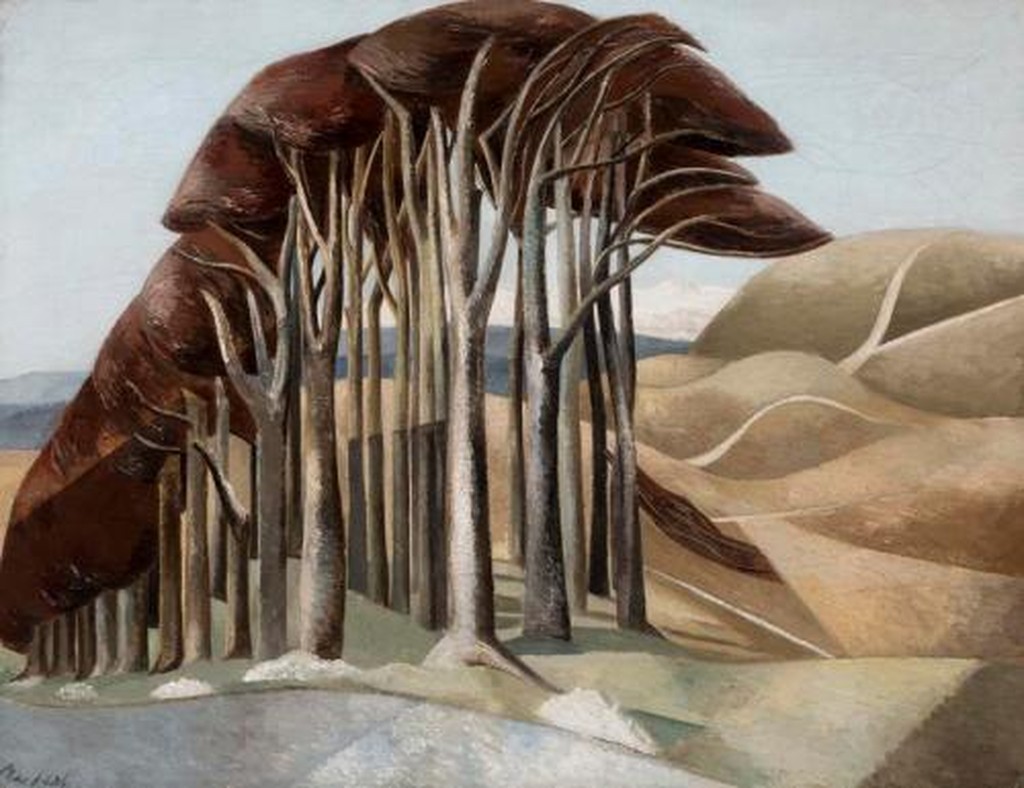
The Paintings and Artworks survey shows how often Nash’s subjects cross boundaries of medium. A tree first drawn for its outline might become a dark printed shape. A photographed stone could return as a painted presence. The geometry developed for a jacket or textile could clarify the organisation of a landscape. Each process imposed different constraints, but the movement of ideas between them was productive.[1][2]
This continuity is visible across Nash’s biography. His publishing and applied work grew during the 1920s, photography became substantial in the 1930s, and gathered visual material continued to matter during the Second World War. Painting remained important without becoming the sole measure of his achievement.
Wood Engraving and the Art of the Book
Wood engraving suited Nash’s preference for decisive silhouettes, compact spaces and strong contrasts. A small printed block could turn branches, clouds or architectural edges into a rhythm that remained legible on the book page. The restricted format encouraged selection: unnecessary detail disappeared, while the interval between black and untouched paper became active.
The V&A’s account of Nash’s book work follows illustration and jacket design as his graphic language changed through wartime experience and contact with newer art.[4] Books offered more than a surface for a single image. Cover, title, type, margins and repeated illustrations created a sequence in which pictures met reading.
The British Council’s The Soul Visiting the Mansions of the Dead records a design connected with Sir Thomas Browne’s Urne-Buriall and The Garden of Cyrus.[5] Its subject belongs to Nash’s interest in burial, transformation and unseen relations, but its function as illustration also required it to converse with an existing text. The same concern with ancient matter appears elsewhere in his Megaliths and Ancient Landscape work, although the objects and commissions remain distinct.
Lithography and Wartime Translation
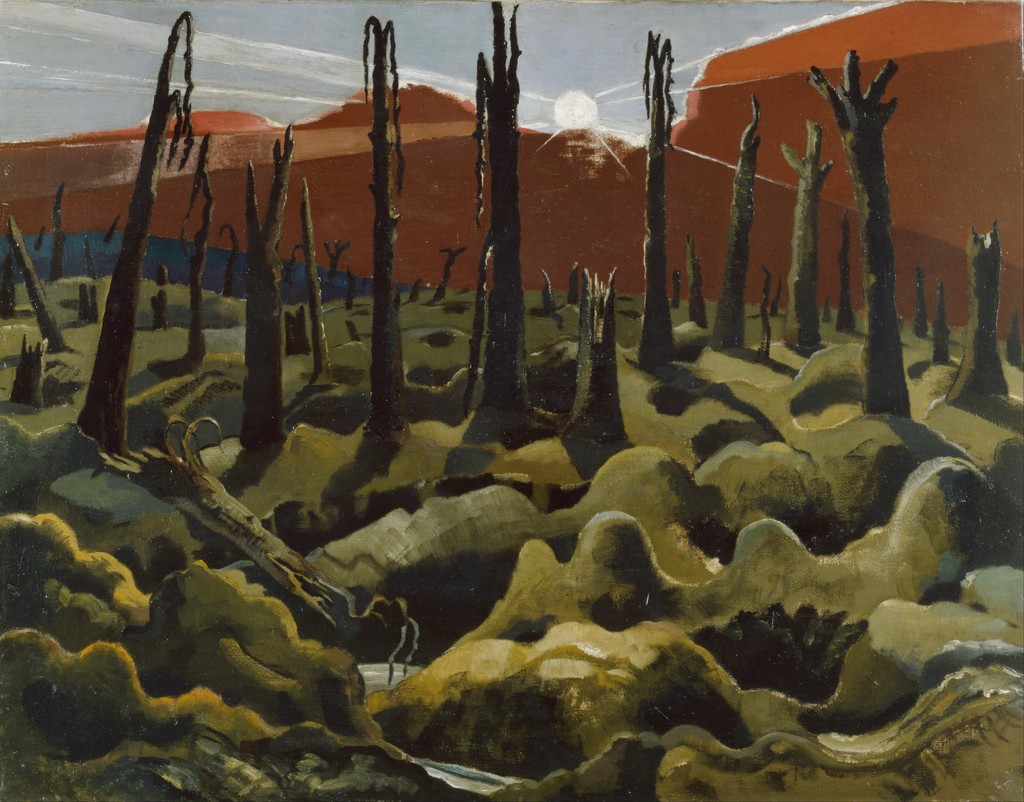
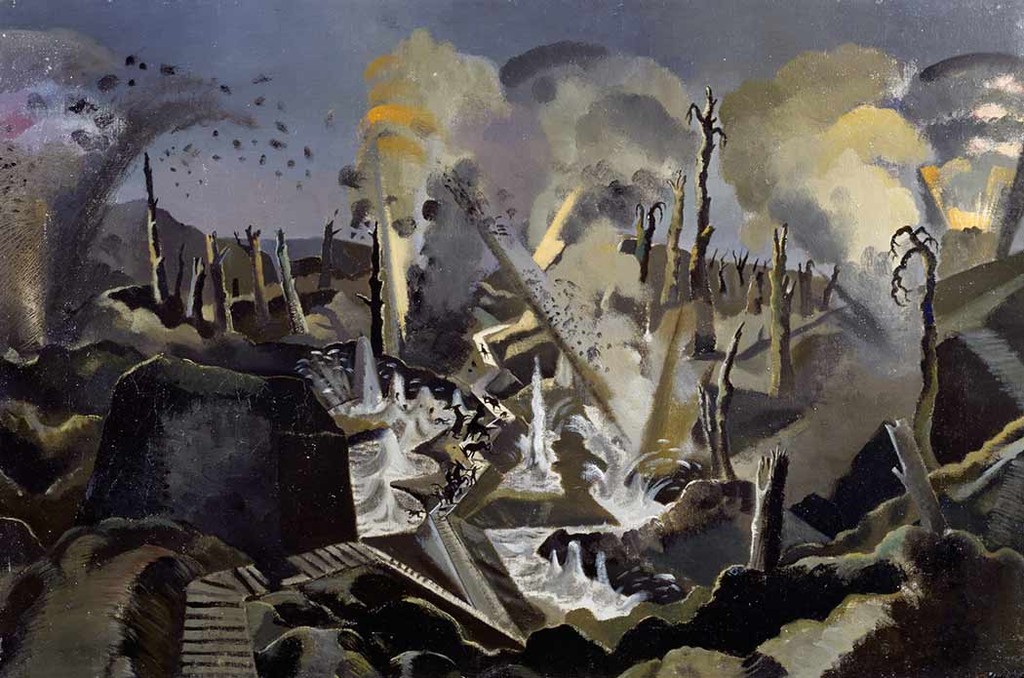
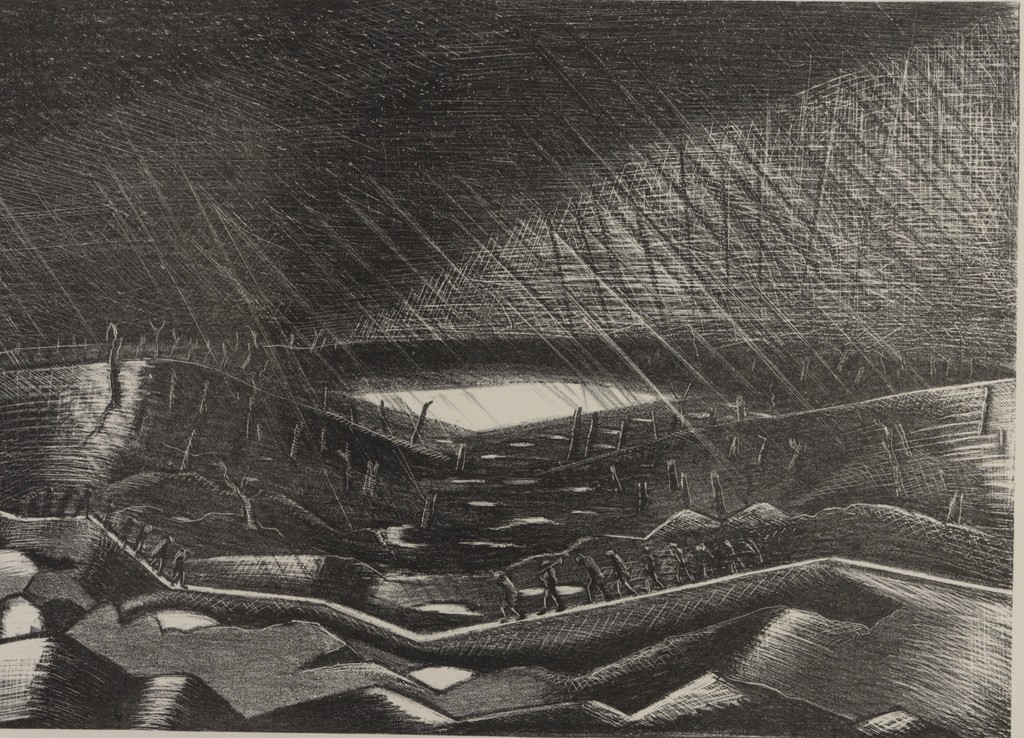
Lithography enabled Nash to rethink drawings for circulation. During the First World War, field observations of ruined trees, blockhouses, roads and shell-damaged ground were simplified into forceful tonal structures. Printing was not a neutral reproduction step: scale, contrast and the behaviour of the lithographic medium altered how a motif reached the viewer.[2]
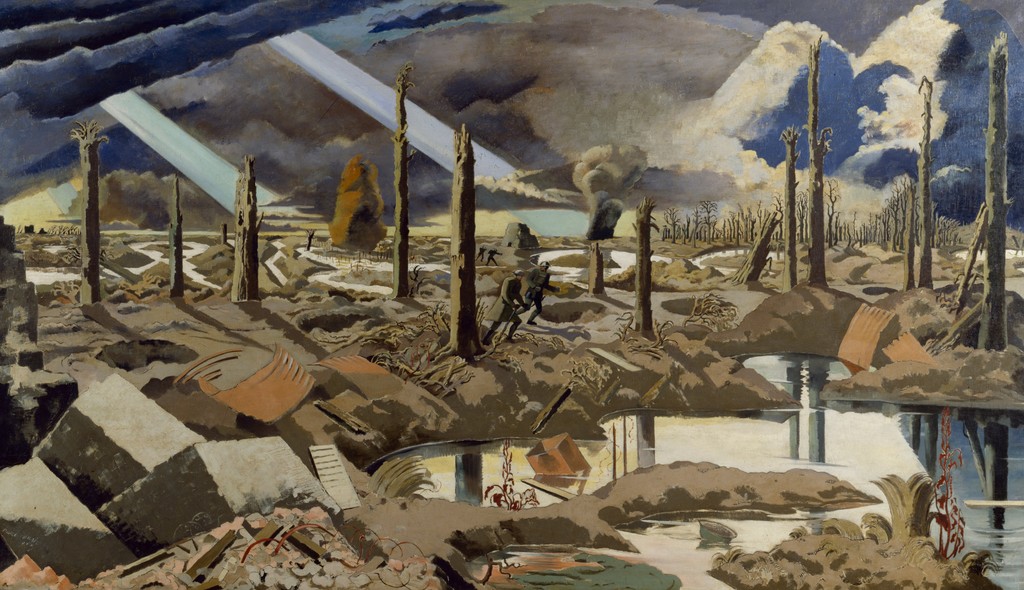
The First World War Art guide follows this movement from direct observation to drawings, prints and major canvases. The Mule Track, an oil of 1918 held by Imperial War Museums as ART 1153, offers a useful comparison with the prints. Its compressed convoy and bombardment use colour and a painted surface, while Nash’s lithographs depend more heavily on the pressure of dark and light.[6]
The comparison prevents a simple hierarchy. A print was not merely a lesser painting, and a large oil was not an enlarged print. Each medium reorganised evidence according to its own material possibilities and audience.
The Pocket Kodak and a Photographic Eye
Nash’s surviving photographic archive is too large to describe as casual note-taking. Tate’s 1,267 negatives span 1930–46 and include landscapes, objects and arrangements seen through his own framing.[3] The Pocket Kodak was portable enough to accompany walks and quick enough to secure an encounter before weather, light or position changed.
A photograph could perform several jobs. It might document a place, isolate an object from distracting surroundings, compare possible angles or retain a configuration for later use. None of those purposes automatically makes every negative a finished exhibition object. They do, however, establish photography as a sustained method of looking.
The album annotated by Paul and Margaret Nash adds valuable links among photographs, dates and works such as Harbour and Room, Voyages of the Moon and Landscape of the Megaliths.[7] Its catalogue description supports relationships and chronology without proving that every painting began as a photograph. The direction of influence could vary: the camera might follow an existing motif, precede a picture or simply preserve a parallel investigation.
Romney Marsh and the “Object Poem”
Romney Marsh gave Nash low horizons, water, banks, dead trees and weathered matter. Through the camera, a fragment of wood or an unusual meeting of forms could be separated from the continuous landscape and made newly conspicuous. The Landscape and Place guide considers the geography; photography shows how his attention moved within it.[3]
The phrase “object poem” is useful for these encounters when it describes a suggestive relation rather than a fixed code. A stone, branch, root or manufactured fragment can seem animate because of framing, proximity or scale. Its material identity is not erased. That balance—ordinary substance made strange without becoming unrecognisable—also informs Nash’s Modernism and Surrealism.
Photographic isolation could therefore intensify a discovery without explaining it away. The viewer is invited to notice shape and relation before deciding what an object might signify.
Jackets, Ephemera and Graphic Circulation
Nash’s graphic work extended beyond illustrated books. A Bodleian catalogue identifies a small Paul and John Nash folder containing three book jackets, festival cards, broadsides, rhyme sheets and publicity material.[8] The folder is not digitised, so its catalogue establishes categories and titles rather than permitting detailed visual claims about every item.
These formats placed modern graphic decisions in short-lived or practical objects. A jacket had to attract attention while naming a book; a card or broadside joined image, lettering and occasion. Their scale demanded economy, and their circulation reached viewers who might never encounter a gallery painting. Such work belongs to the history of Nash’s visual language even when the surviving documentation is modest.
Textiles, Ceramics, Theatre and Interiors
Applied design allowed Nash to work with repetition, surface, movement and physical setting. Institutional records connect him with textiles, ceramics, posters, scenery and costume.[1][2] A motif designed for cloth behaves differently from one enclosed by a frame: repeat creates rhythm across a larger field, while colour must respond to material and use. Ceramic design bends an image around an object rather than presenting it as a flat view.
The V&A documents Nash’s stage design for J. M. Barrie’s The Truth about the Russian Dancers, around 1922.[9] Theatre made image, costume, performer and changing viewpoint interdependent. The museum’s account of Edward James’s Surrealist interiors also identifies Nash’s design for Tilly Losch’s sharply geometric bathroom, where mirrors, electric light and fitted surfaces turned a room into an orchestrated visual environment.[10]
These commissions were not simply paintings transferred to products. They required Nash to think about bodies, repetition, scale and use—problems that could return to his fine art in altered form.
Art, Industry and Public Responsibility
Nash’s institutional roles confirm that applied work was a considered part of his career. He became president of the Society of Industrial Artists in 1932 and joined the Council for Art and Industry in 1933.[1] Both positions placed artistic judgement in conversation with manufacture, commerce and public life.
That context complicates the idea of a solitary landscape painter. Nash wanted modern form to operate in books, objects and shared interiors as well as exhibitions. Unit One, founded in 1933, pursued modern painting, sculpture and architecture; his design activity addressed the parallel question of how those values might enter daily experience.[1][2]
Motifs Moving between Media and Wars
Cross-media movement did not follow a single route. Drawing could precede a print, but a photograph could also preserve an object after it had already entered a painting. An illustrated commission might awaken an older landscape motif; the compression learned from engraving could help organise a later oil. The annotated album is especially useful because it records neighbouring investigations without forcing them into one sequence.[7]
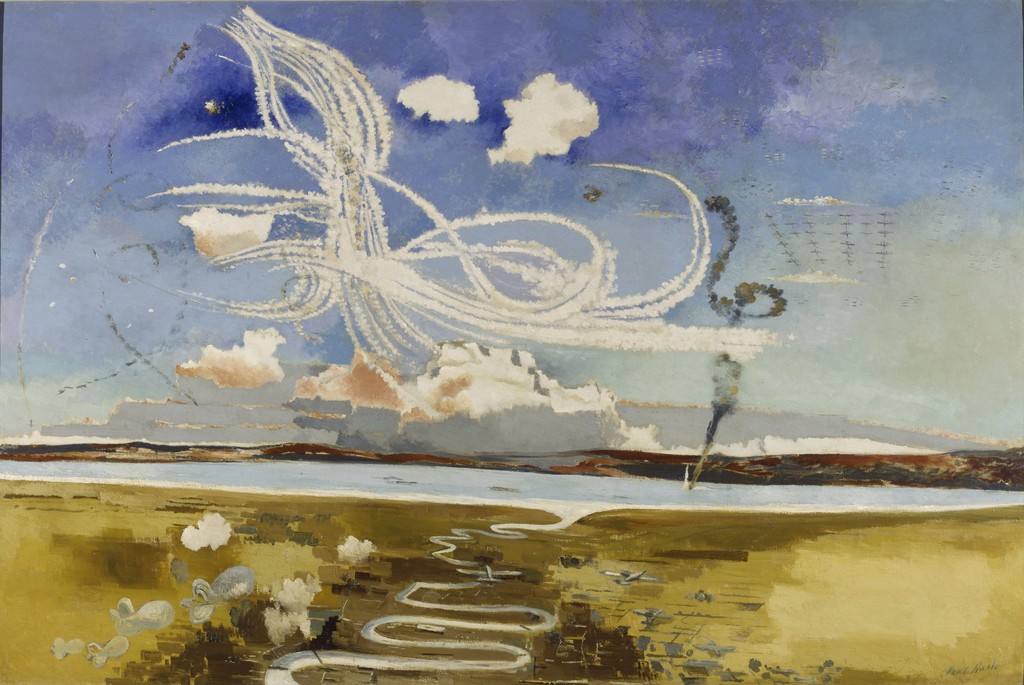
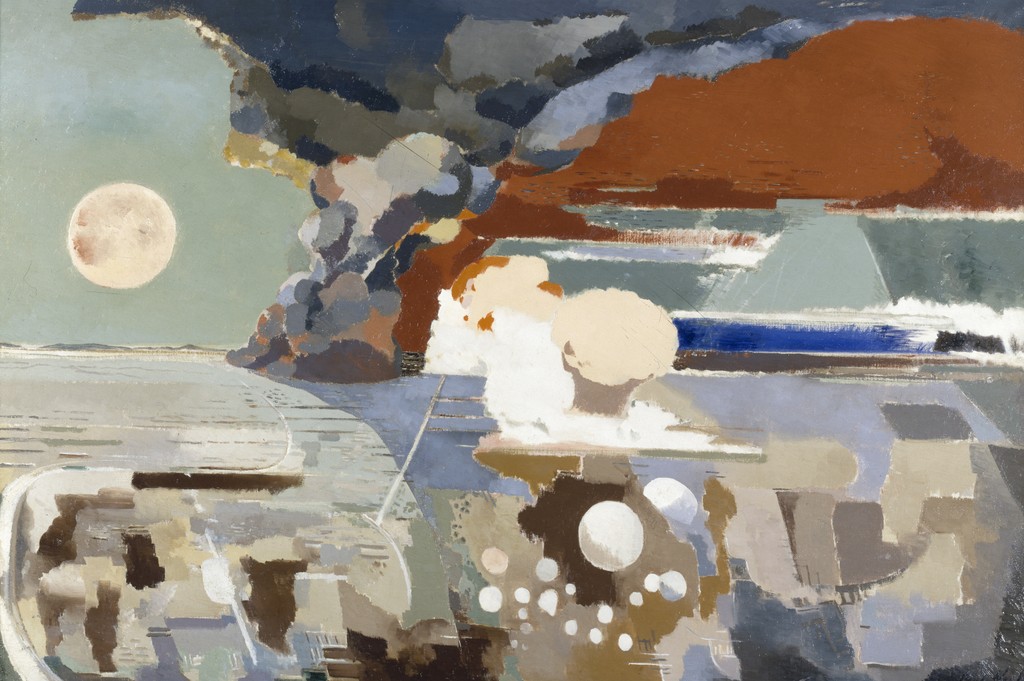
War made this flexibility urgent. First World War observation moved through portable drawing, lithographic publication and studio painting. During the Second World War, photographs, research and collected visual information helped Nash construct images beyond any one witnessed viewpoint.[1][3] The Second World War Art section shows how aircraft, trails, wreckage, coast and cloud could be combined into a new spatial language.
This was continuity under changed conditions. The tools differed, but Nash still selected forms, tested relationships and asked a medium to make scattered evidence coherent.
Archives and the Shape of the Evidence
Tate’s main Nash archive brings together writings, artworks, correspondence, photographs and ephemera from 1907 to 1960, while its separate negative group gives the photographic practice unusual depth.[1][3] The Ashmolean’s British Drawings project places works on paper within a wider study of British modernism.[11] Somerville College’s Percy Withers archive adds correspondence and original art connected with Paul and John Nash.[12]
These holdings preserve different kinds of knowledge. An object record establishes medium and ownership; a letter may clarify a relationship; an annotated photograph may secure a date or title. No one archive turns every cross-media connection into certainty, but together they reveal how broadly Nash worked.
About this directory: These 129 entries form a reproducible researched online works census assembled from current public records. It is not a catalogue raisonné and does not claim absolute completeness.
Artworks directory
| Name | Date | Medium |
|---|---|---|
| A Christmas Card to Arthur and Madeline Clifton, 1926 | 1926 | |
| A German Double Pill Box | 1918 | |
| A Howitzer Firing | 1914 | Painting |
| A Night Bombardment | 1919 | Painting |
| A Shell Crater | 1918 | Drawing |
| Battle of Britain | 1941 | Painting |
| Battle of Germany | 1944 | Painting |
| Beeches in the Wind by Paul Nash - Paul Nash | 1918 | Artwork |
| Behind the Inn | 1920 | Painting |
| Berkshire Downs | 1922 | Painting |
| Blue House on the Shore | 1930 | Painting |
| Bouquet | Date unknown | Painting |
| Bouquet - Paul Nash | 1927 | Artwork |
| Buckinghamshire Landscape | 1927 | Painting |
| Cactus | 1928 | Painting |
| Chestnut Waters | Date unknown | Painting |
| Circle of the Monoliths | 1937 | Painting |
| Cliffs | Date unknown | Drawing |
| Cloudscape (recto) | 1939 | Painting |
| Composition (Design for Today) | 1934 | Painting |
| Coronilla | 1929 | Painting |
| Cotswold Hills | 1920 | Painting |
| Day Fighter | 1940 | Painting |
| Dead Spring | 1929 | Painting |
| Defence of Albion | 1942 | Painting |
| Design for a bookplate for Kenneth Fitzpatrick Mackenzie | 1909 | Drawing |
| Division of the Light from the Darkness | 1924 | |
| Druid Landscape | 1938 | Painting |
| Dunbarton Lakes | 1910 | Drawing |
| Dymchurch, Kent | Date unknown | Painting |
| Dymchurch Steps | Date unknown | Painting |
| Dymchurch - The Strange Coast | 1920 | |
| Eclipse of the Sunflower | 1945 | Painting |
| Edge of the marsh | 1925 | Painting |
| Equivalents for the Megaliths | 1935 | Painting |
| Event on the Downs | 1934 | Painting |
| Flight of the Magnolia | 1944 | Painting |
| Footballers Prefer Shell | 1935 | Painting |
| Fruits and Vegetables | 1930 | |
| Granary | 1922 | Painting |
| Graveyard in a Ruined Orchard near Vimy | 1917 | Drawing |
| Grotto in the Snow | 1939 | Painting |
| Harbour and Room | 1934 | Painting |
| Iver Heath, Buckinghamshire, Snow | 1927 | Painting |
| Kinetic Feature | 1931 | Painting |
| Landscape | 1926 | Painting |
| Landscape at Iden | 1929 | Painting |
| Landscape Composition (Objects in Relation) | 1934 | Painting |
| Landscape from a Dream | 1937 | Painting |
| Landscape of Bleached Objects | 1934 | Painting |
| Landscape of the Bagley Woods | 1943 | Painting |
| Landscape of the Brown Fungus | 1943 | Painting |
| Landscape of the Malvern Distance | 1943 | Painting |
| Landscape of the Megaliths | 1934 | Painting |
| Landscape of the Moon's First Quarter | 1943 | Painting |
| Landscape of the Moon's Last Phase | 1944 | Painting |
| Landscape of the summer solstice | Date unknown | Painting |
| Landscape of the Vernal Equinox (III) | 1944 | Painting |
| Landscape (verso) | 1939 | Painting |
| Landscape with Megaliths - Paul Nash | 1936 | |
| Landscape - Year of Our Lord, 1917 | 1910 | Drawing |
| Lares | 1929 | Painting |
| March Landscape | 1944 | Painting |
| Men Marching at Night | 1918 | |
| Metamorphosis | 1938 | Painting |
| Michaelmas Landscape | 1943 | Painting |
| Mimosa Wood | 1926 | Painting |
| Mineral Object | 1935 | Painting |
| 'Modern Textiles' (shop sign board) | 1926 | Painting |
| Monument to Fallen Canadians on Vimy Ridge | 1917 | Drawing |
| Nest of the Siren | 1930 | Painting |
| Night Fighter | 1940 | Painting |
| Nocturnal Landscape | 1938 | Painting |
| Northern Adventure | 1929 | Painting |
| Nostalgic Landscape | 1930 | Painting |
| November Moon | 1942 | Painting |
| Oxenbridge Pond | 1927 | Painting |
| Oxford During the War | 1942 | Painting |
| Pillar and Moon | 1937 | Painting |
| Pink Hyacinth | 1921 | Painting |
| Plage | 1928 | Painting |
| Riviera Landscape | 1926 | Painting |
| Riviera Window, Cros-de-Cagnes | 1926 | Painting |
| Sandling Park, Kent | 1924 | Painting |
| Sluice | 1920 | |
| Solstice of the Sunflower | 1945 | Painting |
| Souvenir of Florence | 1929 | Painting |
| Spring in the Trenches, Ridge Wood, 1917 | 1918 | Painting |
| St Pancras Lilies | 1927 | Painting |
| St Pancras, London | 1927 | Painting |
| Still Life I - Paul Nash | 1924 | Artwork |
| Still Life with Bog Cotton | 1927 | Painting |
| Strange Coast | 1920 | |
| Study of Mrs. Nash | 1916 | Drawing |
| Sunflower and sun | 1942 | Painting |
| Sunrise, Inverness Copse | 1918 | Painting |
| Telecommunications | 1934 | Painting |
| The Archer | Date unknown | Painting |
| The Diving Stage | 1928 | Painting |
| The Edge of the Wood | 1919 | Painting |
| The Menin Road | 1919 | Painting |
| The Mule Track | 1918 | Painting |
| The Pond at Souldern | 1926 | Painting |
| The Raider on the Moors | 1940 | |
| The Rye Marshes, East Sussex | 1932 | Painting |
| The Sea | 1923 | Painting |
| The Sea Wall | 1920 | |
| The Shore | 1923 | Painting |
| The Stackyard | 1925 | Painting |
| The Window, Iver Heath | Date unknown | Painting |
| The Ypres Salient at Night | 1918 | Painting |
| Through a Window, Riviera | 1927 | Painting |
| Tide at Dymchurch | 1920 | |
| Token [verso: Tree in a Landscape (unfinished)] | 1929 | Painting |
| Totes Meer (Dead Sea) | 1940 | Painting |
| Vale of the White Blackbird | 1942 | Painting |
| View from a Window, Nice | 1934 | Painting |
| View R | 1940 | Painting |
| Void | 1918 | Painting |
| Voyages of the Moon | 1935 | Painting |
| We Are Making a New World | 1918 | Painting |
| Whiteleaf Cross | 1931 | Painting |
| Winter, Hampden | Date unknown | |
| Winter Sea | 1931 | Painting |
| Wittenham Clumps | 1943 | Painting |
| Wood on the Downs | 1929 | Painting |
| Wooded Landscape | 1942 | Painting |
| Worth Matravers, Dorset | 1936 | Drawing |
| Wounded, Passchendaele | Date unknown | Painting |
Frequently Asked Questions
Yes. Tate holds 1,267 negatives he made between 1930 and 1946. Some served documentary or exploratory purposes, while others demonstrate deliberate framing of landscape and found objects. The size and coherence of the archive make photography an integral part of his practice.[3]
Nash illustrated and designed numerous books and jackets. One securely documented contribution was made for a volume of writings by Sir Thomas Browne.[5] The V&A surveys his broader book practice, while the Bodleian catalogue identifies additional jackets and ephemera without supplying digitised object views.[4][8]
Yes, although institutional accounts often describe his book prints more precisely as wood engravings. The medium suited compact images, emphatic outlines and strong black-white relationships. Individual records should govern the terminology for a particular print.[2][4]
Yes. He worked on books, textiles, ceramics, posters, theatre and interiors, and held leadership roles connecting art with industry. These commissions required responses to manufacture, use, audience and setting rather than the repetition of an easel painting.[1][2][9][10]
They share motifs and methods rather than a fixed order of dependence. Photography could isolate an object or retain an arrangement; printmaking could simplify a form and strengthen contrast; painting could recombine such discoveries through colour and scale. Archive evidence supports exchange among media but not a single formula for every work.[3][7]
Discussion
What should readers notice when looking closely at Paul Nash: Photography, Design and Prints?
Reader Insights
Look for motifs that cross from photographs and prints into paintings and designs.
Treat applied work as part of the practice rather than a lesser parallel career.
How does the camera change Nash’s sense of an object’s personality?
Join the Conversation
Share your reading below, keeping observations specific and evidence clear.
References
- Paul Nash fonds TGA 769 — Tate Archive, accessed 31 August 2026.
- Paul Nash artist record — British Council Collection, accessed 31 August 2026.
- Negatives of 1,267 photographs taken by Paul Nash — Tate Archive, accessed 31 August 2026.
- Paul Nash and the Art of the Book — Victoria and Albert Museum, accessed 31 August 2026.
- The Soul Visiting the Mansions of the Dead — British Council Collection, accessed 31 August 2026.
- The Mule Track, ART 1153 — Imperial War Museums, accessed 31 August 2026.
- Album annotated by Paul and Margaret Nash, 1933 onward — Tate Archive, accessed 31 August 2026.
- John Johnson Collection Nash ephemera guide — Bodleian Libraries, accessed 31 August 2026.
- Assistant Curator Talk on Nash stage design — Victoria and Albert Museum, accessed 31 August 2026.
- Edward James’s Surrealist world — Victoria and Albert Museum, accessed 31 August 2026.
- British Drawings project: Paul Nash context — Ashmolean Museum, accessed 31 August 2026.
- Percy Withers archive and Paul Nash — Somerville College Library, accessed 31 August 2026.