 by Tom Gurney
Tom Gurney BSc (Hons) is an art history expert with over 20 years experience
Published on June 19, 2020 / Updated on August 9, 2026
Email: tomgurney1@gmail.com / Phone: +44 7429 011000
Rembrandt Etchings: Introduction
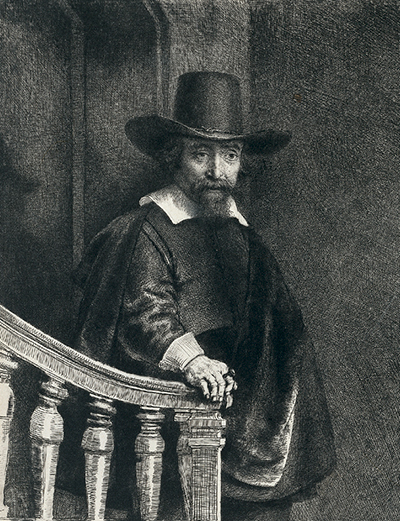
Rembrandt's etchings are not smaller versions of his paintings. They are a separate part of his art, made from copper, acid, ink, paper and pressure, and they reward a different kind of looking. A painted Rembrandt may gather attention through colour, scale and surface. An etching can pull the viewer close to a line, a shadow, a wiped plate, a changed state or a sheet of paper chosen for a particular effect.
That intimacy helped make Rembrandt famous far beyond Amsterdam. Paintings were expensive, fixed to collections and often seen by a limited audience. Etchings could travel. They could be bought, exchanged, copied, studied and kept in albums. They carried Rembrandt's inventions through Europe while he was alive, and they have remained central to his reputation ever since.
This page is the main guide to Rembrandt's etchings: how they were made, why states and impressions matter, how paper changes the result, and why major prints such as The Hundred Guilder Print, The Three Trees and Christ Presented to the People need to be read as printed objects rather than as single fixed images.
Contents
- Introduction
- Why Etching Became Central To Rembrandt
- What Etching Is
- Drypoint, Burr and Engraving
- Plate, State and Impression
- Etching Plates and the Life of Copper
- Etchings and the Broader World of Prints
- Paper, Japanese Paper and Watermarks
- Plate Tone, Wiping and Variation
- The Hundred Guilder Print
Why Etching Became Central To Rembrandt
Rembrandt was a painter, draughtsman and printmaker, but etching gave him something the other media could not. It allowed him to work with line as freely as a drawing, to revise a composition by returning to the copper plate, and to send multiple impressions into the world. The result was a medium that suited both experiment and circulation.
Museum Boijmans Van Beuningen describes Rembrandt's graphic work as unusually varied, with landscapes, portraits, self-portraits, biblical scenes and classical subjects all present in its holdings. The same collection account stresses how widely prints could spread his fame because they reached a larger audience than paintings or drawings. That point matters. Rembrandt's prints were not a secondary sideline. They were one of the ways his art entered collections, workshops and conversations across borders.
The Museum Rembrandthuis is an especially important anchor for this subject because its collection and research material treat etchings, plates and drawings together. Rembrandt's house was not only a domestic setting. It was a place where images, tools, pupils, collectors and commerce met. Etching belongs to that world of making and selling, but it also belongs to Rembrandt's private restlessness as an inventor.
His prints show the same range found in his paintings and drawings: beggars, scholars, self-portraits, saints, landscapes, biblical crowds, dramatic light and sudden quiet. What changes is the means. In an etching, light can be made from the untouched paper. Darkness can be built from networks of line, drypoint burr, plate tone or dense reworking. Space can appear through pressure and omission as much as through description.
What Etching Is
Etching is an intaglio process. The artist works on a metal plate, usually copper. The plate is covered with an acid-resistant ground, and the artist draws through that ground with a needle. Acid bites the exposed lines into the metal. When the plate is inked and wiped, ink remains in the bitten lines. Damp paper is pressed against the plate, and the pressure pulls the ink out of those lines to make an impression.
The process helps explain why Rembrandt's etchings can feel close to drawings while still behaving like prints. The needle can move with speed and freedom. It can describe a cheek, a hat, a crowd or a bank of cloud with a changing rhythm of lines. But the image is not simply a drawing on paper. It is a printed result from a worked plate.
This distinction matters for every serious Rembrandt print page. The plate is the worked metal surface. The state is a stage in that plate's development. The impression is one printed sheet made from the plate at a particular moment, on particular paper, with particular inking and wiping. A museum record may describe one impression very precisely, but that does not mean all impressions of the same print look the same.
Rembrandt exploited that difference. He did not treat etching as a mechanical way to repeat one image without change. He could return to a plate, strengthen passages, scrape or alter areas, add drypoint, vary the wiping, or print on different papers. A Rembrandt etching is therefore both an image and an event: a decision about plate, ink, pressure and paper at the moment that sheet was made.
Drypoint, Burr and Engraving
Rembrandt's print records often mention etching together with drypoint and engraving. These words are not decorative labels. They describe different ways of making marks in the plate.
Drypoint is made by scratching directly into the copper with a hard point. Unlike etched lines, which are bitten by acid, drypoint lines are cut by the tool itself. The action raises a fragile ridge of metal along the line, called burr. When ink catches in and around that burr, the printed line can look rich, dark and velvety. The effect is beautiful, but it is also delicate. Burr can wear down as the plate is printed, which is one reason early impressions with fresh drypoint effects can be highly prized.
Engraving works differently again. It uses a burin to cut a clean line into the plate. Rembrandt was not an engraver in the strict sense in the way Albrecht Durer had been, but object records for several Rembrandt prints include engraving or burin work alongside etching and drypoint. The Three Trees, for example, is described by the Rijksmuseum as etching, drypoint and burin, while the Met describes its impression as etching, engraving and drypoint. The Hundred Guilder Print is also recorded by the Met as etching, engraving and drypoint.
The important point for readers is not to turn each print into a technical checklist. It is to see why Rembrandt's printed line can behave so differently from one passage to another. Some lines are bitten and wiry. Some are dark and soft because of drypoint burr. Some areas are strengthened by more decisive cutting. The image gains its life from the combination.
Plate, State and Impression
The words plate, state and impression are essential for Rembrandt.
The plate is the copper surface on which the image was made. It could be worked, altered, worn, reworked, cut up or printed long after the artist's first handling of it. When scholars speak about Rembrandt's changes, they are often speaking about changes to the plate.
A state is a stage of that plate. If Rembrandt added figures, deepened shadows, removed areas or made other visible changes, the next group of impressions may belong to a new state. Christ Presented to the People is a famous case because surviving museum records distinguish multiple states, and the later state looks different from earlier ones in ways that matter to the composition.
An impression is an individual printed sheet. Two impressions from the same state may still differ because of inking, wiping, plate tone, paper and condition. One may be on Japanese paper; another may be on laid paper. One may hold rich tone on the surface of the plate; another may be wiped more cleanly. One may preserve fresh drypoint burr; another may show a worn plate.
This is why Rembrandt print scholarship often sounds exacting. It has to be. A statement about the Met's second-state impression of Christ Presented to the People is not automatically a statement about the Rijksmuseum's third-state impression or the Met's eighth-state impression. A statement about the Art Institute of Chicago's Hundred Guilder Print on Japanese paper is not automatically a statement about every impression of the print.
For the ordinary viewer, this precision does not make the subject colder. It makes it more interesting. It means each surviving sheet carries evidence of an artistic and material decision.
Etching Plates and the Life of Copper
The copper plate is easy to forget because the museum visitor usually sees the printed sheet, not the metal surface that made it. Yet the plate is the hidden centre of the whole process. Rembrandt's lines existed first as marks in copper, whether bitten by acid, scratched directly in drypoint or strengthened with a burin. Every impression begins with that worked surface.
The Museum Rembrandthuis is useful here because its collection context includes not only etchings but also etching plates. That combination helps readers understand the medium physically. A plate was a durable tool, but not an unchanging one. It could wear through printing. It could be reworked. Drypoint burr could lose its richness. Later hands could alter a plate after Rembrandt. A plate might continue to produce impressions beyond the circumstances in which the artist first made it.
This is one reason old Rembrandt print records can seem so careful. They are not merely naming a picture. They are trying to place a sheet in relation to a plate's history. Was the plate still fresh? Had Rembrandt already changed the composition? Was the burr still strong? Was the impression made during his lifetime, or was it pulled later from a surviving plate? These questions affect how a print looks and how it should be described.
The point is not that only the earliest or rarest sheet is worth looking at. Later impressions can be historically revealing. Worn lines, weaker burr, different paper and altered tone all show how an image moved through time. But the viewer should know what kind of evidence is being considered. A Rembrandt etching is not a disembodied design. It is a relationship between a plate, a moment of printing and a surviving sheet.
Etchings and the Broader World of Prints
Rembrandt's etchings belong inside the larger history of prints, but the two subjects are not identical. Etching is the medium and method at the centre of Rembrandt's original printed work. Prints more broadly can include impressions, later reprints, copies, reproductions, print collecting, albums, market history and works made after Rembrandt by other hands.
That distinction protects the reader from two common mistakes. The first is to treat an etching as if it were simply a black-and-white reproduction of a painting. Rembrandt's etchings are original works made through copper plates and printing decisions. They often have no painted equivalent, and when they do connect to a painted or drawn subject, they solve the problem differently.
The second mistake is to treat every printed image associated with Rembrandt as the same kind of object. A lifetime impression by Rembrandt, a posthumous impression from a Rembrandt plate, a later reprint, a copy and a reproduction all belong to print history, but they do not carry the same evidence. Boijmans is valuable precisely because it names that range within its holdings. The breadth helps explain Rembrandt's afterlife, while the etchings themselves show his original command of the medium.
This page therefore keeps its attention on etching: plate work, drypoint, burr, engraving when relevant, states, impressions, paper, plate tone and watermark evidence. The broader print culture around Rembrandt is essential, but it works best as a related subject rather than a substitute for close attention to the etched image.
Paper, Japanese Paper and Watermarks
Paper is not just a support for Rembrandt's etchings. It is part of the effect and part of the evidence.
Japanese paper appears in several important Rembrandt print records. It is often valued for the warmth, softness and absorbency it can bring to an impression. Rijksmuseum records Christ Presented to the People as drypoint with plate tone, printed on Japanese paper. The Met records its second-state impression of the same subject as drypoint on Japanese paper. The Art Institute of Chicago records a Hundred Guilder Print on tan Japanese paper. These are not incidental details. They help explain why the same print can feel different from one collection to another.
Laid paper, with its chain and laid lines from the papermaking process, also matters. The National Gallery of Art records its impression of The Three Trees as etching with drypoint and burin on laid paper, and it notes a Strasbourg lily watermark. Such information can help scholars compare paper batches, date impressions and study printing history.
Watermark research has become especially important for Rembrandt. CODART's account of the WIRE project explains how watermark and twinmark evidence can help identify paper relationships, date impressions, narrow the time span for changes to a plate, identify reprinting of older plates and distinguish lifetime from posthumous impressions. The JHNA article on decision trees for watermark identification describes the scholarly method more technically and links it to Erik Hinterding's study of Rembrandt's papers.
The key point is simple: paper can tell a history that the image alone cannot. A watermark, a twinmark or a paper type can connect one sheet to another and can help place an impression in time. For Rembrandt, that matters because plates could have long lives, and not every impression of a Rembrandt plate was printed under the same circumstances.
Plate Tone, Wiping and Variation
Plate tone is the ink left on the surface of the plate after wiping. In a cleanly wiped impression, the paper may stay bright except where the engraved or etched lines print. In an impression with plate tone, a thin film of ink can create atmosphere, shadow or warmth across wider areas.
Rembrandt used plate tone and wiping as expressive tools. A plate could be inked and wiped so that a scene felt lighter, darker, softer or more dramatic. In some prints, this variation is subtle. In others, it changes the emotional temperature of the sheet.
Wiping also sits between technique and judgment. Too much ink left on the surface can flatten a passage; too little can make an impression feel dry or overly bare. A controlled film of tone can bind the sheet together. It can make sky, shadow or interior space feel continuous rather than assembled only from lines. In Rembrandt's hands, wiping was not a neutral step after the artwork was finished. It was one of the last chances to shape the printed image.
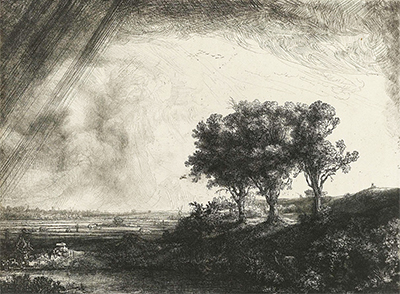
The Three Trees is a useful example because it depends so strongly on weather, light and tone. Rijksmuseum describes its impression as printed with light plate tone and calls the print Rembrandt's largest and most painterly etched landscape. The Met emphasizes the combination of drypoint, engraving, varied depths of etched line and speckled tone in creating a sense of nature in flux. In plain terms, the stormy sky, open light and dark land are not only a subject. They are printmaking.
Plate tone also reminds us that an impression is never only a transfer from metal to paper. It is the result of touch. Someone inked the plate, wiped it, placed the paper and pulled the impression. Rembrandt's reputation as a printmaker depends partly on how much art he found in those seemingly practical choices.
This is also why a comparison between impressions can be so rewarding. A viewer may notice that one sheet feels stormier, warmer, more transparent or more severe than another. The difference may come from state, paper, wear, inking, wiping, plate tone or condition. Instead of asking which sheet is the real one, it is better to ask what each impression reveals about the plate and the act of printing.
The Hundred Guilder Print
The Hundred Guilder Print, also known as Christ Healing the Sick, is one of Rembrandt's greatest achievements in print. It is large, complex and deeply worked, bringing together episodes from the Gospel of Matthew around Christ's presence among the sick, the poor, the questioning and the devout.
The Met records its impression as etching, engraving and drypoint, second state of two, dated 1648, with a plate size of 28 x 39.3 cm. The museum notes that Rembrandt continued repositioning details after first etching the plate, with traces around Christ's eyes, hands and feet. That observation is important because it shows the print as a made and revised object, not a perfectly settled design that appeared all at once.
The Art Institute of Chicago provides another strong institutional route, recording an impression on tan Japanese paper. LACMA also identifies the work as known in two states and discusses Rembrandt's experimentation with inking and paper types. The British Museum's first-state route is valuable for scholars because it helps separate the early plate history from later reworking and later treatment of the plate.
The title itself carries market history. The phrase Hundred Guilder Print points to the print's exceptional value and later legend, not to a title Rembrandt necessarily placed on the plate. That makes it useful but slightly slippery. The safest way to use the title is to explain that it is the famous historical name for the print while grounding the discussion in object records and state evidence.
As a work of art, the print shows why Rembrandt's line could rival painting without imitating paint. Christ is luminous partly because the surrounding crowd is made from so many kinds of darkness, pressure and broken line. Bodies gather, lean, pause and ask. The image is theological, social and technical at once.
The Three Trees
The Three Trees is one of the most powerful landscape prints in European art. It is not dramatic because it shows a famous event. It is dramatic because weather itself becomes the subject: rain clearing, light opening, land darkening and the three trees standing like witnesses in the distance.
Rijksmuseum records the print as etching, drypoint and burin, printed with light plate tone, and gives the object as 213 x 279 mm. The museum calls it Rembrandt's largest and most painterly etched landscape. The Met records a related impression as etching, engraving and drypoint, while the Art Institute of Chicago and the National Gallery of Art also provide open or public-domain routes for other impressions.
The word painterly can be misleading if it makes the print seem like a small monochrome painting. The Three Trees is painterly because Rembrandt uses printmaking to achieve effects associated with atmosphere, light and mass. He does not need colour to make weather visible. The density of the marks, the openness of the paper and the handling of tone do much of the work.
This print also connects strongly to Rembrandt's drawings and paintings. The drawings show his habit of looking at roads, trees, bridges, cottages and skies. The paintings show his ability to build mood through light and shadow. The Three Trees brings those habits into etching. It turns a Dutch landscape into a printed world that feels both observed and imagined.
For later individual study, The Three Trees deserves its own close attention. On this hub page, its larger role is to show how Rembrandt made landscape into a printmaking problem: how much can be done with line, burr, tone, paper and the untouched brightness of the sheet?
Christ Presented to the People
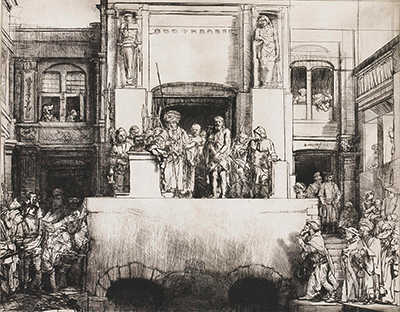
Christ Presented to the People, or Ecce Homo, is one of Rembrandt's great drypoint works. It also gives one of the clearest lessons in state discipline.
Rijksmuseum records its impression as drypoint with plate tone, printed on Japanese paper, and identifies it through Bartsch, Hollstein and New Hollstein references as a third state of eight. The museum explains that Rembrandt created the large scene entirely in drypoint, scratching directly into the copper plate. The Met records a second-state impression on Japanese paper and also has an eighth-state route. Those records must not be blended loosely. The second, third and eighth states are part of one plate history, but they are not the same visual object.
The scale of the work is striking. Drypoint is often associated with rich but fragile line, and Christ Presented to the People pushes that language into a large public scene. The print presents Christ before the crowd, but it also stages the crowd's looking, judging and hesitation. Architecture, platform, bodies and empty spaces all change force as the plate changes.
Plate tone and Japanese paper deepen the subject. A sheet printed with tone can feel different from a cleaner impression. Japanese paper can soften and warm the printed line. In a subject about exposure, judgment and public display, those material choices are not neutral. They shape how the image breathes.
Christ Presented to the People is therefore more than a famous biblical print. It is a lesson in how Rembrandt used drypoint, revision and paper to make a large scene unstable in the best sense: open to change, close study and comparison.
Self-Portraits, Portraits and Biblical Prints
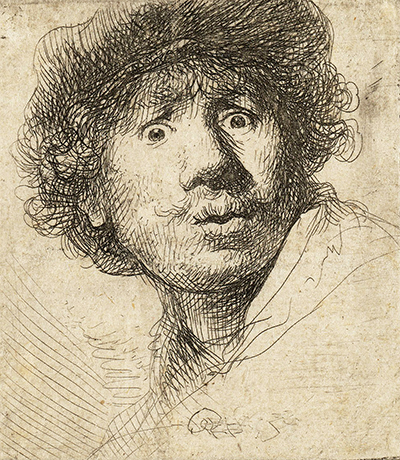
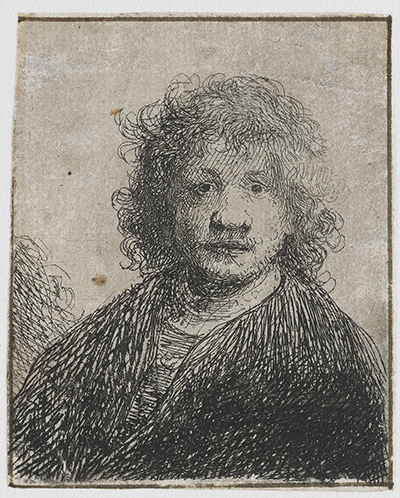
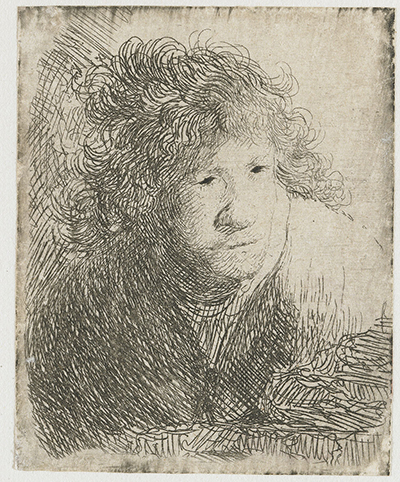
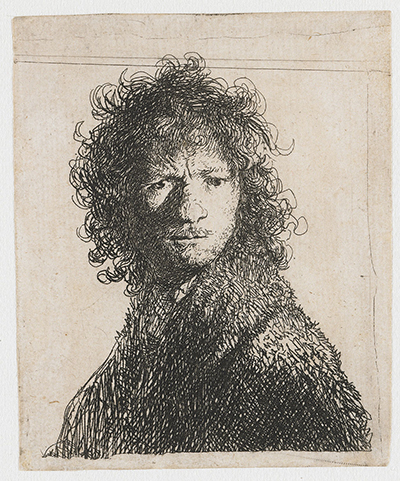
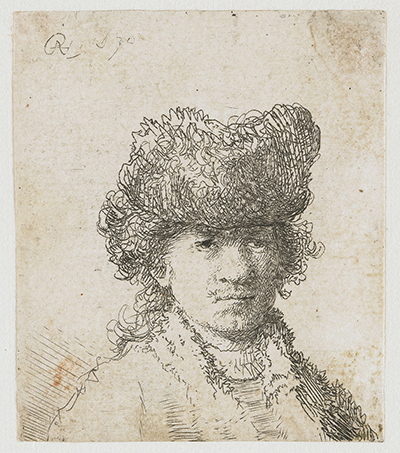
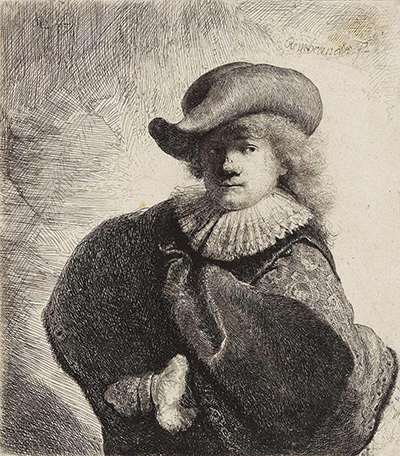
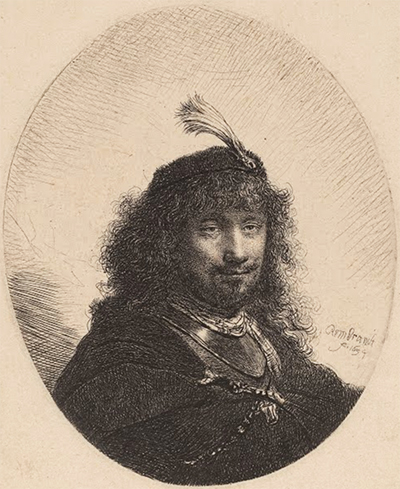
Rembrandt's etchings cover far more than the three famous examples above. His printed self-portraits are central to the story. They allowed him to test facial expression, costume, identity and artistic persona in a repeatable medium. A painted self-portrait might remain with one owner; an etched self-portrait could travel through many collections and could make Rembrandt's face familiar as an artistic signature.
The Art Institute of Chicago's Self-Portrait Etching at a Window is one useful example for later study because it connects the self-portrait topic with printmaking and open-access image potential. It should not be confused with painted self-portrait pages, but it belongs near the self-portrait hub because Rembrandt's image of himself changed across media.
Portrait etchings also connect to the page on Jan Six. The painted Portrait of Jan Six is the main expectation for that artwork page, but Rembrandt's etched Jan Six remains important as a related work. It shows how portraiture could move between paint and print without becoming a simple copy.
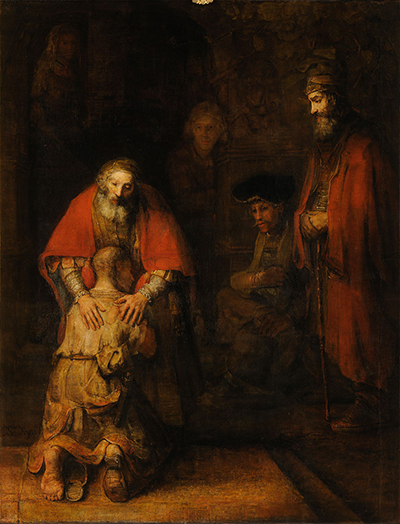
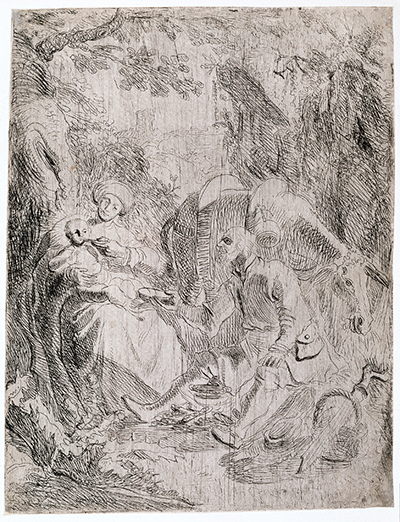
Biblical subjects gave Rembrandt a field for narrative testing. The Hundred Guilder Print, Christ Presented to the People and other religious prints connect with paintings such as The Return of the Prodigal Son and The Raising of Lazarus, but they do not merely illustrate the same themes. In print, Rembrandt could use crowding, emptiness, broken light and delicate line to find another kind of spiritual drama.
That is why etchings belong beside the drawings and the style-and-technique page. They reveal a maker who did not separate media into tidy boxes. A subject could be drawn, painted, etched, rethought and collected in different forms, each with its own kind of truth.
Collectors, Catalogues and Later Reprints
Rembrandt etchings have a long collector history. This is part of their fascination, but also part of their difficulty.
A painting usually exists as one physical object, even when its condition and attribution history are complicated. A print exists through many impressions, and those impressions may be dispersed across museums and private collections. Some were printed during Rembrandt's lifetime. Some were printed later from surviving plates. Some plates were reworked after him. Some images were copied or reproduced. A collection may therefore contain not only lifetime impressions but also posthumous impressions, later reprints, copies and reproductions.
Boijmans makes this range explicit in its Rembrandt etchings catalogue, noting a collection of more than 200 sheets that includes lifetime impressions, posthumous prints, later reprints, copies and reproductions. That kind of collection is a gift to readers because it shows the whole afterlife of Rembrandt's printmaking, not only the most beautiful early impressions.
Catalogues help bring order to this complexity. Bartsch, Hollstein, Hind, White and Boon, New Hollstein, Erik Hinterding and Jaco Rutgers all belong to the scholarly tradition around Rembrandt prints. Museum records often cite these systems when identifying a state or object. The citations may look technical, but they protect readers from vague claims.
Collector history also helps explain value. Early impressions, rare states, unusual papers and strong burr can matter greatly. But value should not be reduced to market price. A later impression can still be historically interesting. A copy can teach us about Rembrandt's reputation. A reprint can show how plates and images lived on after the artist.
Collectors also shaped the language by which Rembrandt's prints are known. Titles, rarity stories, old album arrangements and catalogue numbers can all influence how a viewer approaches a sheet. The Hundred Guilder Print is the clearest example: the name is inseparable from value and collecting memory, but the object still needs to be read through state, medium and subject. A famous title can bring readers in; a good print record keeps them honest.
Modern catalogues and museum databases continue that work in a more transparent way. They place an impression in relation to earlier scholarship, identify paper where possible, and name whether a sheet is an etching, drypoint, engraving or some combination. They also make visible the difference between a museum's object and the broader work. That difference is the heart of Rembrandt print study.
How Etchings Connect to Drawings, Paintings and Style
Rembrandt's etchings are best understood with his drawings and paintings nearby.
The drawings show how quickly he could find a pose, a head, a gesture or a landscape structure. Etching carries some of that immediacy into a medium that can be printed more than once. The connection is especially clear in lively figure groups and in landscapes where a few marks suggest a whole atmosphere.
The paintings bring another kind of comparison. Rembrandt's use of light and dark in painting is often described through chiaroscuro, but the etchings show that he did not need colour or thick paint to think dramatically. In prints, dark can be built from bitten line, drypoint burr, plate tone and wiped ink. Light can be the paper itself.
The broader cross-media discussion belongs with Rembrandt's style and technique: paint surfaces, grounds, underpainting, drawings, ink, drypoint, plate tone and paper evidence. The etchings discussion has a narrower task. It explains the printed medium deeply enough that readers understand why Rembrandt's prints are not interchangeable reproductions of other works.
The prints also connect to later artists. Van Gogh admired Rembrandt deeply and made works after Rembrandt. Goya's graphic imagination belongs to a later world, but careful comparison can help readers understand why Rembrandt's printed darkness remained so powerful. Durer offers an earlier Northern European printmaking precedent. These comparisons should be used sparingly, but they show Rembrandt's place in a much longer graphic tradition.
How to Look at a Rembrandt Etching
Start by asking what you are seeing: a print, a state and an impression. The title may name the image, but the museum record tells you which sheet is in front of you.
Look for the medium line. Does the record say etching, drypoint, engraving, burin or some combination? If drypoint is present, look for darker, softer passages where burr may have enriched the line. If plate tone is mentioned, look for ink that seems to sit like atmosphere across the paper rather than only inside the lines.
Read the state information. A second state of two, a third state of eight and an eighth state of eight are not just catalogue details. They tell you where the impression stands in the plate's development. If another museum has a different state, compare carefully rather than assuming one is a better photograph of the other.
Notice the paper. Japanese paper, laid paper and watermark evidence can change both appearance and meaning. Warm paper may soften the image. A watermark may help place an impression in relation to other sheets. Paper is part of the print's history.
Finally, look at what Rembrandt leaves open. In paintings, viewers often search for thick paint and glowing colour. In etchings, the untouched paper can be just as active. Silence, light and air may be made from what Rembrandt chose not to mark.
Frequently Asked Questions About Rembrandt Etchings
In etching, acid bites lines into a prepared metal plate. In drypoint, the artist scratches directly into the plate with a hard point. Drypoint can raise burr, which may print as rich, soft, dark line.
A state is a stage in the development of the plate. If the plate is visibly changed, impressions printed after that change may belong to a new state.
An impression is an individual printed sheet pulled from the plate. Impressions from the same state can still differ because of inking, wiping, plate tone, paper, wear and condition.
Yes. Several major museum records identify Rembrandt impressions on Japanese paper, including examples of The Hundred Guilder Print and Christ Presented to the People. The paper choice can affect tone, warmth and surface.
No. Collections can include lifetime impressions, posthumous impressions, later reprints, copies and reproductions. Museum records and catalogue references are essential for identifying what kind of sheet is being discussed.
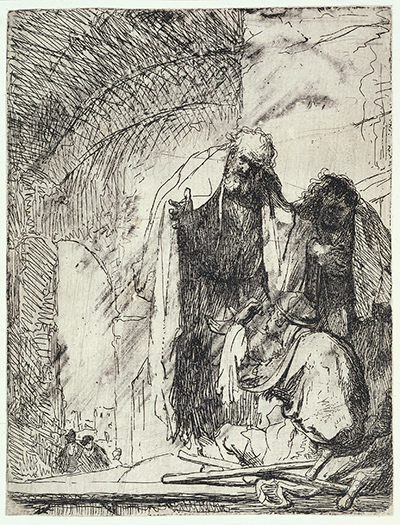
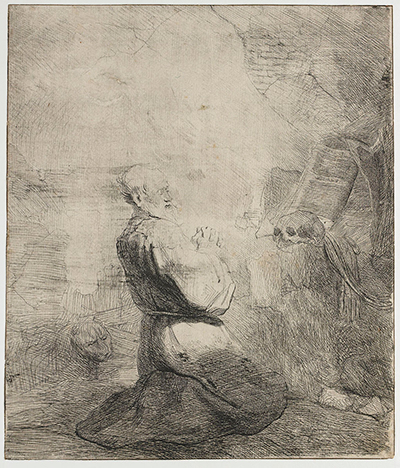
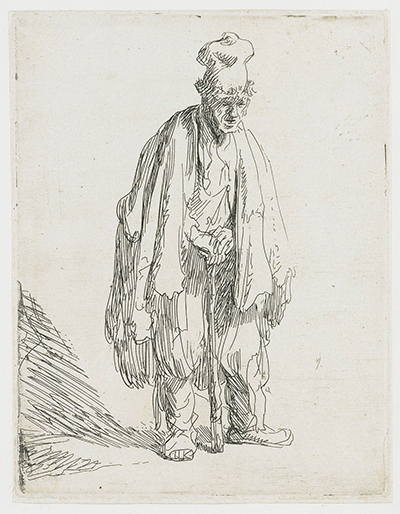
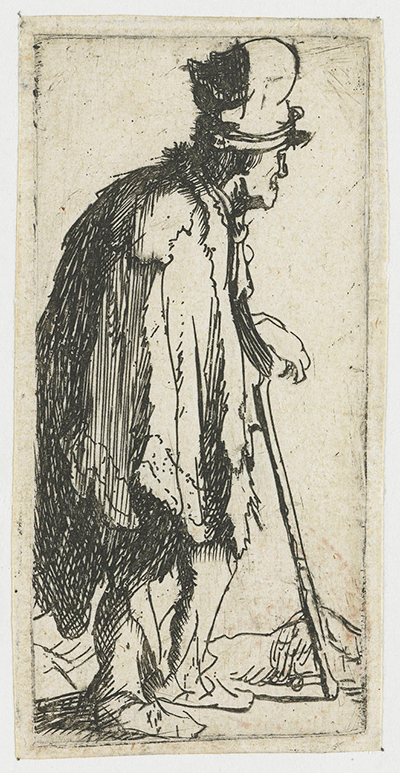
Rembrandt Etchings with Images
 Rembrandt.jpg)
 Rembrandt.jpg)
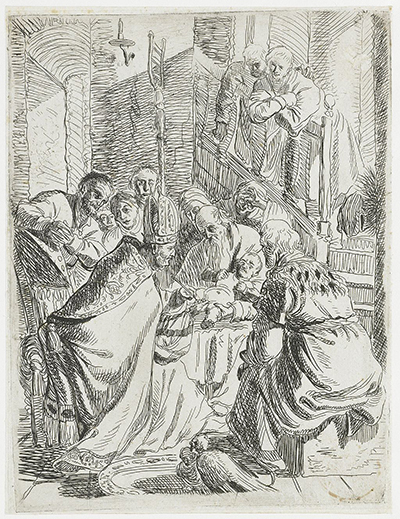
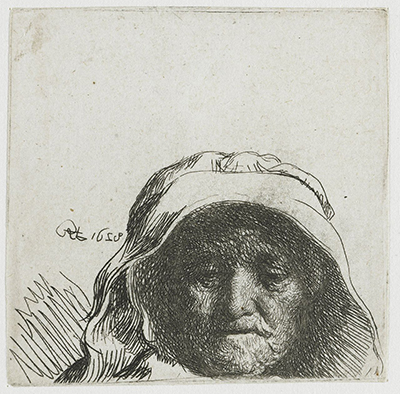
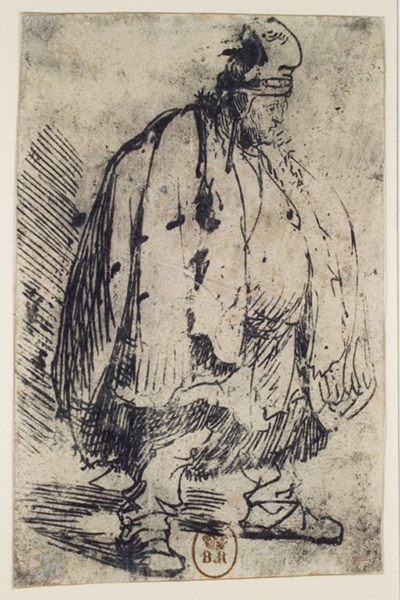
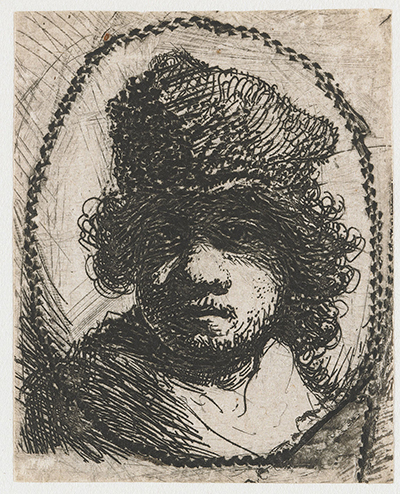
Discussion
What is the best way into Rembrandt Etchings: materials, workshop practice, subject matter, collecting history, or comparison with one closely studied work?
Reader Insights
Use Rembrandt Etchings to notice how Rembrandt changed his effects when the medium changed.
Set one famous work beside a quieter example and ask whether the same habits of light, touch and observation remain visible.
Which technical choice makes the page feel most alive: line, paint handling, paper, surface, revision or light?
Join the Conversation
Have a thought or observation about Rembrandt Etchings? Share it below. Thoughtful responses may be added to this section as the Rembrandt pages develop.
References
- Museum Rembrandthuis, collection overview: https://www.rembrandthuis.nl/en/find-out-more/collection/
- Museum Rembrandthuis, science portal: https://www.rembrandthuis.nl/en/find-out-more/science-portal/
- Museum Boijmans Van Beuningen, Rembrandt etchings from the museum's collection: https://www.boijmans.nl/en/collection/research/rembrandt-etchings-from-the-museum-s-collection
- Rijksmuseum, The Three Trees, object RP-P-OB-444: https://www.rijksmuseum.nl/en/collection/object/De%2Bdrie%2Bbomen--4c0c780d82c4055bfd186ad2c117239e
- The Metropolitan Museum of Art, The Three Trees, object 29.107.31: https://www.metmuseum.org/art/collection/search/354633
- Art Institute of Chicago, The Three Trees, reference no. 1938.1811: https://www.artic.edu/artworks/29271/the-three-trees
- National Gallery of Art, The Three Trees, accession 1955.6.10: https://www.nga.gov/artworks/43418-three-trees
- The Metropolitan Museum of Art, The Hundred Guilder Print, object 29.107.35: https://www.metmuseum.org/art/collection/search/371732
- Art Institute of Chicago, The Hundred Guilder Print, reference no. 1924.617: https://www.artic.edu/artworks/13094/the-hundred-guilder-print
- British Museum, The Hundred Guilder Print, museum no. F,4.154: https://www.britishmuseum.org/collection/object/P_F-4-154
- LACMA, Christ Healing the Sick ("The Hundred Guilder Print"): https://collections.lacma.org/object/31589
- Rijksmuseum, Christ Presented to the People (Ecce Homo), object RP-P-1975-1: https://www.rijksmuseum.nl/en/collection/object/Christ-Presented-to-the-People-Ecce-Homo--cb3a54189cf597446fe26248d57bb9d2
- The Metropolitan Museum of Art, Christ Presented to the People, second state, object 41.1.34: https://www.metmuseum.org/art/collection/search/343142
- The Metropolitan Museum of Art, Christ Presented to the People, eighth state, object 41.1.36: https://www.metmuseum.org/art/collection/search/356476
- CODART, The Watermark Identification in Rembrandt's Etchings (WIRE) Project: https://www.codart.nl/feature/curators-project/the-watermark-identification-in-rembrandts-etchings-wire-project/
- Journal of Historians of Netherlandish Art, Decision Trees for Watermark Identification in Rembrandt's Etchings: https://jhna.org/articles/decision-trees-for-watermark-identification-in-rembrandts-etchings/
- Frick Collection, The WIRE Project at Cornell: https://www.frick.org/interact/wire_project_cornell
- Art Institute of Chicago, Self-Portrait Etching at a Window: https://www.artic.edu/artworks/181616/self-portrait-etching-at-a-window