


 by Tom Gurney
Tom Gurney BSc (Hons) is an art history expert with over 20 years experience
Published on October 6, 2016 / Updated on February 11, 2026
Email: tomgurney1@gmail.com / Phone: +44 7429 011000
Claude Monet's The Magpie is widely regarded as one of the most important winter landscapes in the development of Impressionism.
Monet painted this snowy scene during the severe winter of 1868-1869 close to his home at the time, near Etretat, Normandy. He had gone to live there with his girlfriend and new-born son.
While there the local artist Eugene Boudin influenced the painter to begin painting on-site, outside and The Magpie became one of approximately 140 winter paintings that Monet created "en plein air" (the French term for painting in the open air).
Introduction
Monet's The Magpie represented a move away from the earlier style of the late 18th to early 19th century. Previously others had concentrated on precision, detail and structure. Prior to The Magpie academic artisans had favoured using black to illustrate shadow.
The painting captures a quiet rural gate blanketed in snow, illuminated by pale sunlight and animated by the presence of a single perched bird, giving the work its title.
Today, The Magpie stands not only as a masterpiece of winter painting but also as an early manifesto of Impressionist vision — a study of atmosphere, perception, and fleeting natural light. In this article, we examine the painting in full, its historical context, its preparation and execution, and also its initial reception by the salon.
Table of Contents
- Introduction
- Description
- Close-up Details
- Historical Context
- Technique
- Main Content
- Preparation Sketches
- Exhibition History
- Provenance
- Location
- Large Image of The Magpie
- FAQs
- References
Description
At first glance, the composition appears modest: a winter field, a wooden gate, a scattering of sunlight across untouched snow, and a single bird perched in stillness. A truly charming scene, yes, but at first it is hard to discern the great significance that this painting holds within the oeuvre of Claude Monet.
Whilst the items featured in this scene are kept to a minimum, it is the artist's use of light and colour which make it so special. A single black magpie is perched on an unstable, fragile looking gate, which itself is formed into a traditional wattle fence. The fence itself runs horizontally, providing structure to the scene, whilst the Magpie quietly attracts our eye.
A row of trees run between the fence and the houses behind, with some chimneys just appearing above. Snow is draped over everything, allowing Monet full freedom to impact light effects throughout. A snow-covered field is then shown in the far distance, though without dominating the painting.
In the very foreground, at the bottom of the painting we find tranquility. A suggestion of footprints lead up to the gate, but otherwise this section is purely devoted to shadow effects, as light from the top left over the fence.
- TitleThe Magpie
- ArtistClaude Monet
- Datecirca 1868-1869
- MediumOil on canvas
- Dimensions89 x 130 cm
- MovementImpressionism
- LocationMusée d'Orsay, Paris
- SeriesSnow Scenes / Winter Landscapes
- CatalogueWildenstein W133
Close-up Details
Surface inspection reveals Monet's layered paint handling. Snow is built through translucent glazes and opaque impasto highlights.
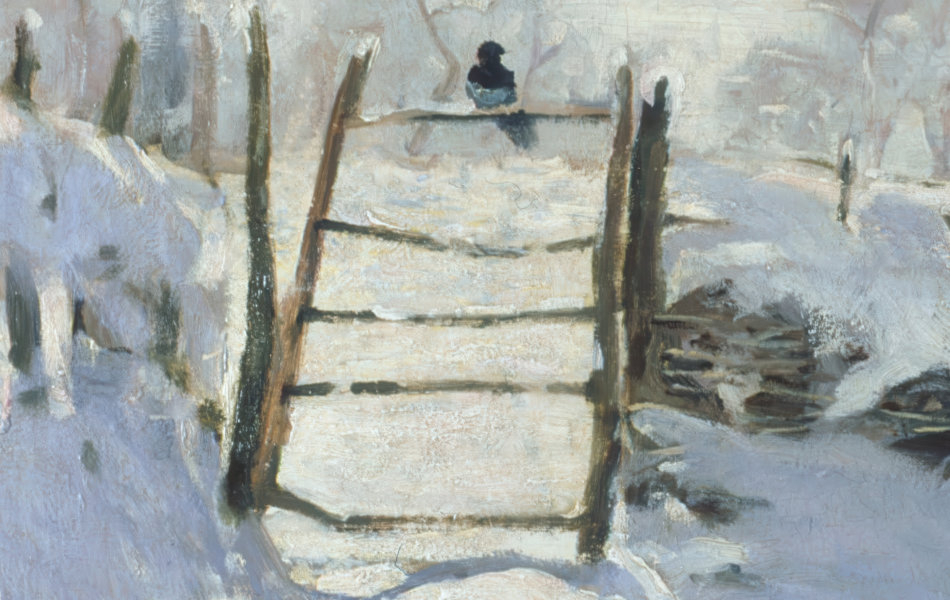
Magpie Sitting on Wooden Gate - Fence shadows modulate from ultramarine to violet, The magpie is rendered with minimal strokes
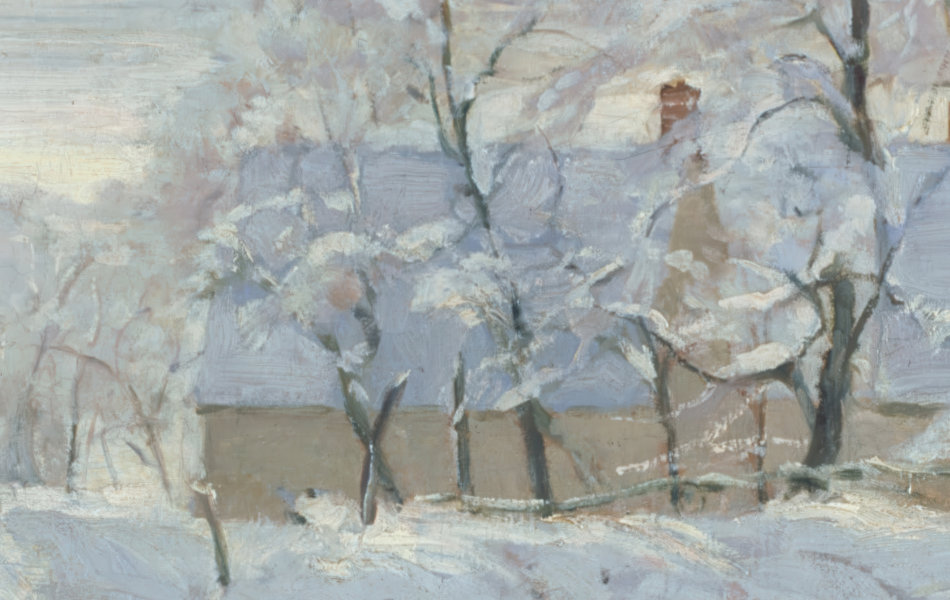
House in Background with Chimney
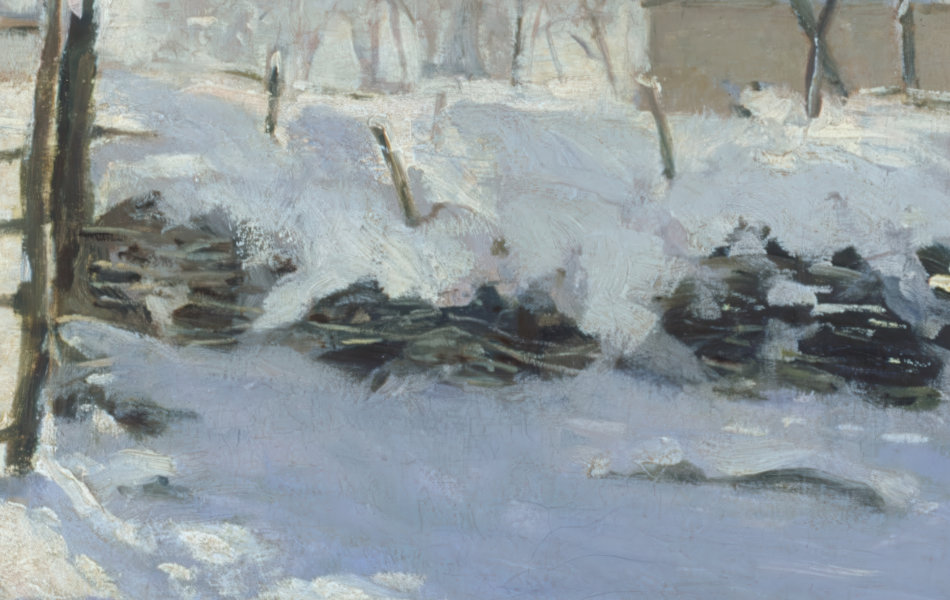
Fence with Coloured Shadow
Historical Context
Louis Joachim Gaudibert, one of the artist's patrons, arranged for a house in Étretat, Normandy for Monet's girlfriend Camille Doncieux and their newborn son, Jean. Claude Monet felt comfortable here and wrote in a number of letters to fellow artists about how happy he was at this time.
He loved having them around, but would normally work alone. The heavy winter would have placed pressure on the three, but Monet continued to experiment and explore his artistic ideals. With so much snow around for extended periods, it made total sense to incorporate this into his work.
Monet was not financially comfortable at this point in his life. He continued to struggle for artistic recognition, and The Magpie itself would fail to impress the critics. It was for this reason that he called upon the help of his patron to organise accomodation through the winter months in Étretat.
Technique
The most striking feature of The Magpie is the use of colour. In this painting Monet chose to highlight the multiple shades that he observed in the snowscape and so the shadows are cast in pale blue and yellow tones.
This new technique of adding colour can be compared and contrasted with an earlier example of Monet's painting A Cart on the Snowy Road at Honfleur. This work was Monet's first snowscape and he used the more traditional methods of utilising a black and grey palette to depict the wintery scene.
Colour Innovation
The use of colour to illustrate shadows became a defining characteristic of the Impressionist movement. Monet managed to capture the evanescence of the light. There is a luminous quality to the whole painting. The reds, yellows and blues in the sky bring a warmth to the scene. The whole effect is of a realistic, almost photographic, illustration.
The painting's defining feature, from a technical sense, is its innovative shadow system. The fence casts elongated blue shadows across the snow, contrasting with sunlit passages rendered in creams and pale yellows.
This approach aligned with emerging optical science, particularly colour contrast theory. Monet painted what the eye perceived rather than what tradition prescribed and would adjust his methods for producing shadow across his career, including when incorporating snow into his winter scenes. In summary, his approach at this time was as follows:
- Cool shadows reflect sky light
- Warm highlights suggest low winter sun
- Broken brushwork creates atmospheric vibration
Snow has colour — it is not white.
What was Innovative about this Painting?
Academic painters traditionally rendered snow using neutral greys. Monet instead observed that shadows across snow absorbed colour from sky and atmosphere — appearing blue, violet, or even rose-toned depending on sunlight. His time spent in this snow-covered landscape for weeks at a time helped him to go beyond how others had previously worked, and really concentrate on his handling of winter colour.
Composition
The rustic wooden gate divides the canvas horizontally while its diagonal braces create structural rhythm. This geometry guides the viewer's eye toward the magpie — the only animate presence, and was carefully planned by the artist.
The distant farmhouse and trees dissolve into winter haze, reinforcing depth and stillness. The snow helps to merge everything closely together, impacting the tonal balance across the scene.
Creating an Atmosphere of Rural Silence
However, on closer inspection Monet has used short, rapid brushstrokes and finer details are eluded to, rather than precisely copied. This sort of style gave Impressionism it's name.
Monet captures the atmosphere beautifully in The Magpie. The painting exudes qualities of stillness and silence yet conveys the passage of time concurrently. The solitary bird perched on the gate provides a focal point to the snowy landscape. Its presence is the only existence of a true jet black shade in the entire piece. The lone magpie also serves the purpose of accentuating the transient nature of life itself.
The shadow of the magpie is not a true reflection of how it's silhouette should have been represented. This may further signify the momentariness of nature. It may have served to highlight the Impressionist intent of capturing a snapshot of moving time rather than the still-life static of the previous photographic style of art.
This artwork, The Magpie, was a pioneering piece of art at it's time and this invited a lot of criticism. It was rebuffed by The Salon for the official art exhibition in Paris in 1869.
However, winter scenes became extremely prevalent among Impressionists with similar art being created by other artists such as Sisley and Pissarro. The Magpie has now become one of Monet's most popular pieces and modern day critics have claimed it is one of Monet's best snowscapes. The original artwork can be found in the Musee d'Orsay, Left Bank, Paris.
Where was the Magpie Painted?
Claude Monet painted The Magpie (1868-1869) in Étretat, Normandy, France. More precisely, the work was created in the rural landscape surrounding Étretat, a coastal village on the Alabaster Coast in northern France, within the historic region of Normandy.
Monet stayed in Étretat during the winter of 1868-69, a difficult but pivotal period in his life:
- He was facing severe financial hardship
- Dealers had not yet secured his income
- His partner Camille and their child required support
- He relied on loans from friends and patrons
The rural calm of Normandy offered:
- Cheap living conditions
- Family refuge
- Motivating winter scenery
Map of Étretat, Normandy
Main Content
Preparation Sketches
Exhibition History
Provenance
The Magpie was acquired by the French National Museums for the Musée d'Orsay in 1984 and has remained in its permanent collection ever since.
- Collection of Thor Carlander, Paris
- Collection of Durand-Ruel, Paris
- Circa 1957, in the collection of Guerlain, Paris
- 1984, acquired by the French National Museums for the Musée d'Orsay (committee decision of 08/11/1984, council approval of 14/11/1984, acquisition decree dated 14/12/1984)
- 1984, attributed to the Musée du Louvre, Paris
- 1984, assigned to the Musée d'Orsay, Paris
Location
The Magpie is held in the permanent collection of the Musée d'Orsay, Paris. It is displayed among Monet's early works and winter landscapes, normally on the upper level (Level 5), which is predominantly focused on Impressionist art.
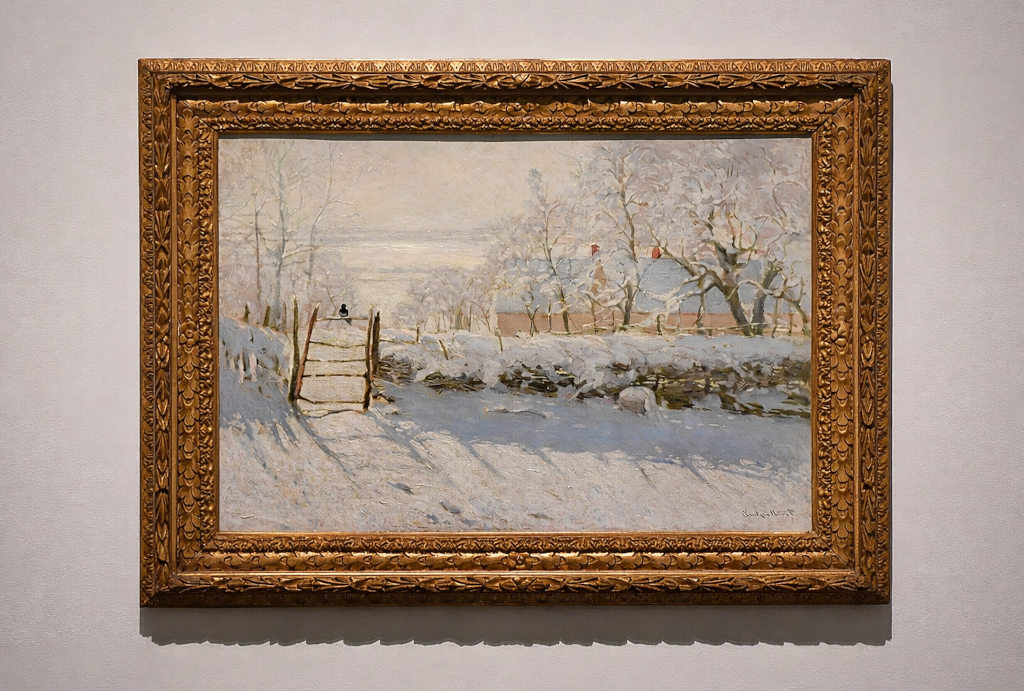
The Magpie on display at the Musée d'Orsay, Paris
Large Image of The Magpie
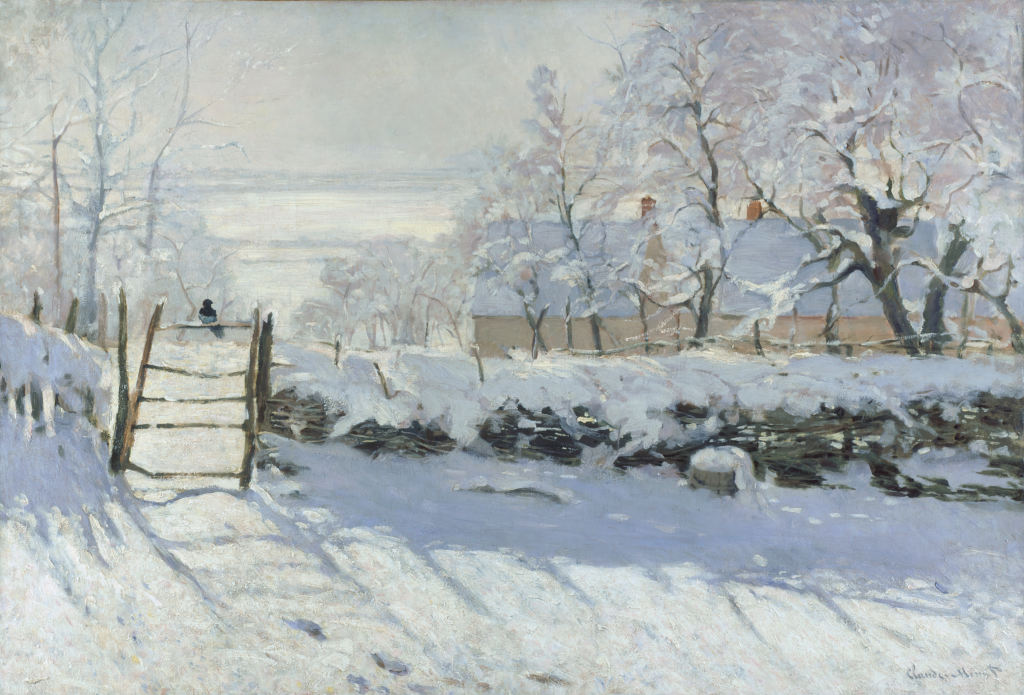
The Magpie, 1868-1869, Claude Monet, Oil on canvas, Musée d'Orsay, Paris
FAQs
References
Key Scholarly Books on Claude Monet
Readers seeking deeper insight into Monet's technique, exhibition history and critical reception may wish to consult the following authoritative studies, widely regarded as essential references within Impressionist scholarship.
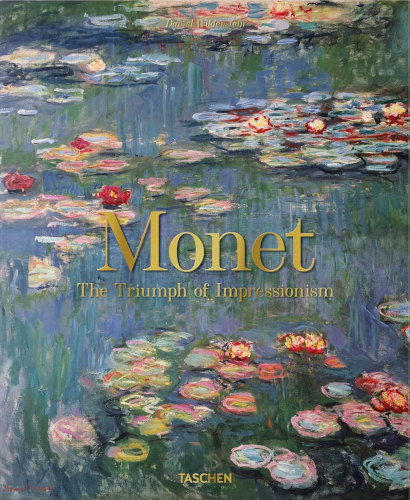 Monet. The Triumph of Impressionism, Daniel Wildenstein, Taschen, 2022
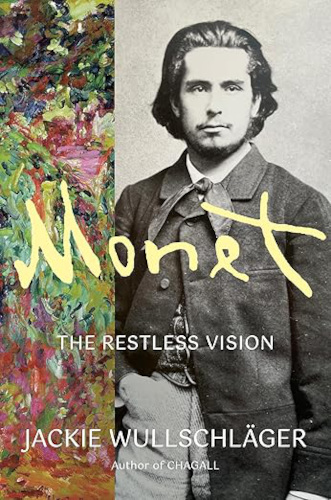 Monet: The Restless Vision, Jackie Wullschläger, Allen Lane, 2023
Additional Sources
- The Magpie on Google Arts and Culture
- The Magpie on Wikipedia
- The Magpie () at the Musée d'Orsay, Paris
Discussion
Monets The Magpie continues to captivate viewers today, not only for its quiet winter atmosphere, but for the subtle way it captures light on snow. The painting often sparks discussion about its simplicity, its composition, and its place in the development of Impressionism.
The strong response to this work on social media reflects its lasting appeal. What do you notice when you look closely at the scene?
Reader Insights
Light & Colour: Monet avoids pure white in the snow, instead using blues, violets, and soft shadows. This gives the scene a sense of depth and atmosphere that feels incredibly modern.
Question: Do you think the painting is more about the bird, or about the winter light itself?
Join the Conversation
Have a thought or observation about The Magpie? Share it below — selected insights may be featured on this page.

Observation: The magpie itself is so small compared to the landscape — it almost feels like an afterthought, yet it anchors the entire composition.