by Tom Gurney
Tom Gurney BSc (Hons) is an art history expert with over 20 years experience
Published on May 6, 2026 / Updated on May 6, 2026
Email: tomgurney1@gmail.com / Phone: +44 7429 011000
Monet's Garden at Giverny
Claude Monet's garden at Giverny was one of the most important creations of his life. It was not merely a place to live, but a living artwork that provided him with colour, atmosphere and motifs for the final decades of his career.
Monet arrives at Giverny
Monet moved to Giverny in 1883 and remained there until his death in 1926. Over more than forty years, he transformed the property into a carefully designed environment of flowers, paths, trees, water, reflections and seasonal colour and Monet's Japanese-inspired garden.
The two parts of the garden
| Garden area | Description | Artistic role |
|---|---|---|
| Clos Normand | The flower garden near the house | Provided colour, seasonal rhythm and decorative planting. |
| Water garden | The pond, bridge, lilies, willows and reflections | Inspired the Water Lilies and Japanese bridge paintings. |
The creation of the water garden
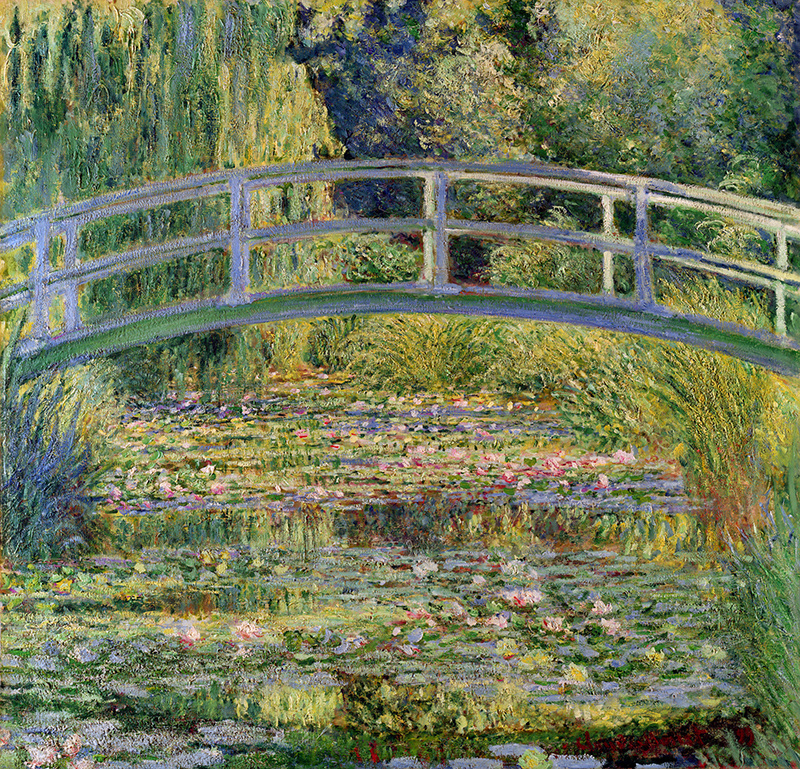
In 1893, Monet acquired land near his property and began creating the water garden. He enlarged the pond, planted water lilies and added a Japanese-style bridge. This was the setting that would become the source of the Water Lilies series.
The project was not without opposition. Local neighbours reportedly feared that the exotic plants might damage the water supply. Monet persisted, and the pond became one of the most famous sites in the history of modern art.
The Japanese bridge
The Japanese bridge gave the early water garden paintings a clear structure. In works from 1899 and 1900, the bridge arches across the pond, framed by dense foliage and reflected greenery. Later, Monet moved closer to the pond surface and the bridge disappeared from view.
For more on this subject, see Monet's Japanese Bridge paintings.
Water lilies and reflections
The pond allowed Monet to paint several things at once: flowers floating on the surface, trees reflected in the water, sky appearing beneath the lilies, and changing light passing across the whole scene. This made the garden an ideal subject for an artist fascinated by perception.
Monet's garden as an artwork
Giverny should be understood as part of Monet's art. He arranged colours, plants and viewpoints with the eye of a painter. The garden was both subject and studio: a place he made, studied and transformed into painting.
Visiting Monet's garden today
Visitors to Giverny can still see Monet's house, flower garden, water garden, Japanese bridge and lily pond. For many people, visiting Giverny gives a new understanding of the Water Lilies, because it reveals the living source behind the paintings.
Continue to Claude Monet's Water Lilies.