 by Tom Gurney
Tom Gurney BSc (Hons) is an art history expert with over 20 years experience
Published on August 14, 2026 / Updated on August 14, 2026
Email: tomgurney1@gmail.com / Phone: +44 7429 011000
Introduction
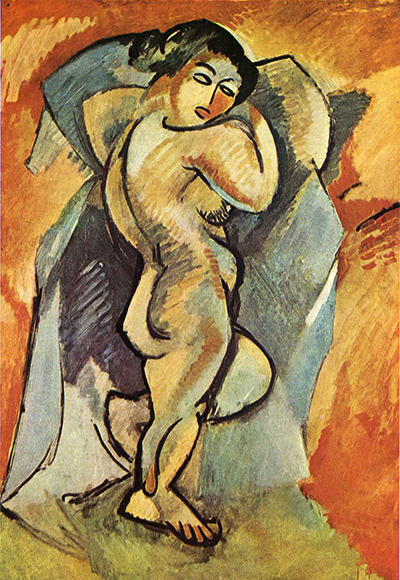
Georges Braque’s work beyond painting is best understood as a series of crossings. A shape conceived on paper could become a bronze relief. A drawing could enter the theatre and acquire scale, movement and music. A painted sign could pass into clay or precious metal through collaboration with a specialist maker. Each crossing altered the work’s substance, duration and authorship.
This breadth had a practical foundation. Braque trained as a decorative painter while growing up in Le Havre, long before the Paris avant-garde made him famous.[1] That background offers useful craft context for his alertness to surface and material. His later objects still arose at different moments and under different conditions. Together they reveal a painter who repeatedly tested what happened when an image entered the space occupied by things.
The crossings also challenge a narrow idea of authorship. A painter can work directly on a canvas from beginning to end. Bronze, ballet, ceramics and jewellery often distribute creation across designs, models, foundries, workshops, technical partners and performers. Braque’s activity in these fields becomes clearer when every participant and stage keeps its proper name. Collaboration then appears as a means of giving an idea a form unavailable to one medium or one pair of hands.
At a Glance
- ArtistGeorges Braque
- GuideSculpture and Decorative Arts
- FocusBraque’s three-dimensional and applied practice across bronze, ceramics, jewellery, theatre and decorative training.
- Key topicsFrom craft knowledge to constructed space; Bronze around 1940; The Chariot and the distance between idea and cast; Designs that entered the theatre
- OverviewGeorges Braque’s work beyond painting is best understood as a series of crossings.
Contents
- Introduction
- From craft knowledge to constructed space
- Bronze around 1940
- The Chariot and the distance between idea and cast
- Designs that entered the theatre
- Clay and another kind of expertise
- Héméra: designing in precious materials
- Maquette, object and edition
- What material translation changed
From craft knowledge to constructed space
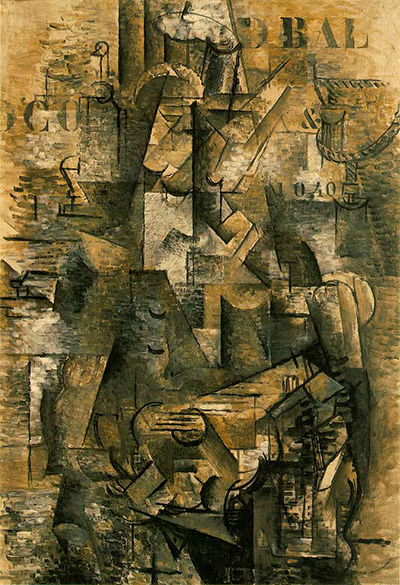
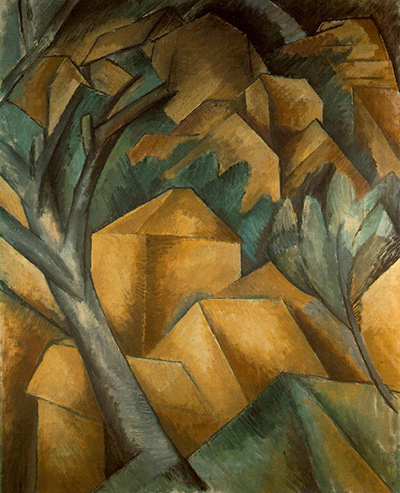
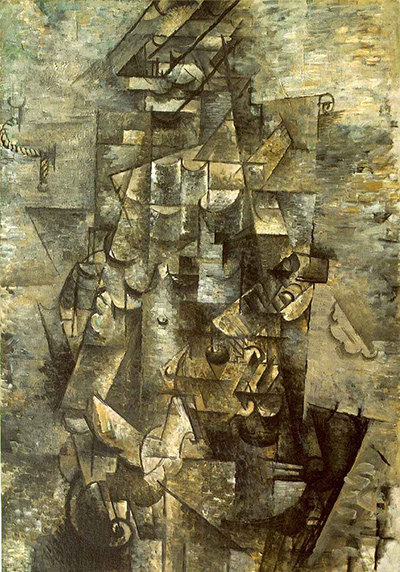
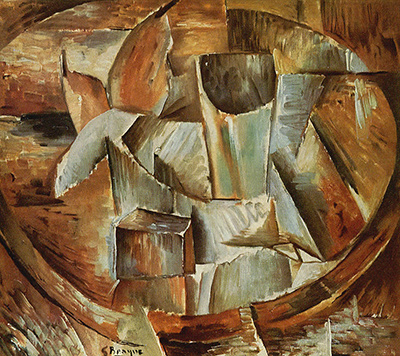
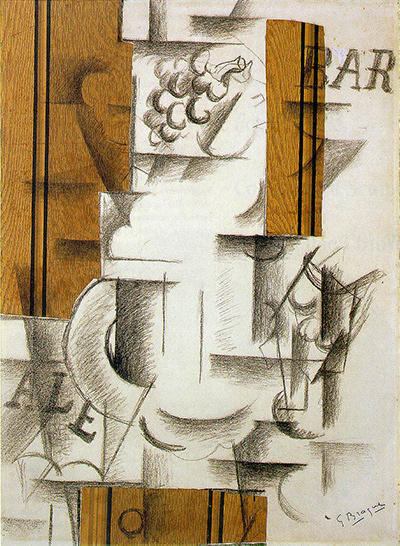
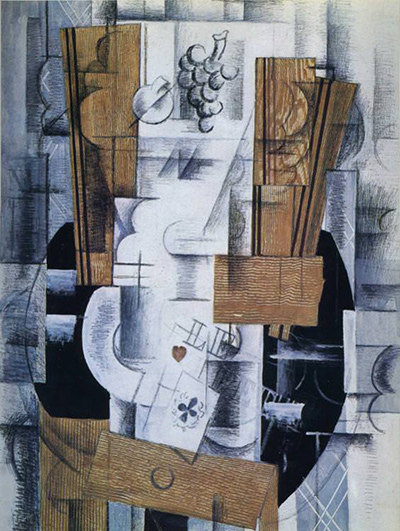
Braque’s earliest decisive move towards three dimensions emerged within Cubism. The Museum of Modern Art’s account of its 1989 Picasso and Braque: Pioneering Cubism exhibition attributes the first Cubist construction sculptures to Braque as early as 1911. It describes painted-cardboard reliefs, followed by versions in wood, assembled from cut elements through a method distinct from carving or modelling a traditional solid.[2]
These constructions changed the status of pictorial space. A painted plane could imply depth; an assembled plane possessed depth. Edges, overlaps and intervals became physical relations, placing the Cubist problem directly in the viewer’s surroundings. Braque’s trained familiarity with decorative processes may have made such material experiment feel available, although the constructions belonged to the radical logic of his work with Picasso.
Their fragility now defines how they can be discussed. MoMA states that none of Braque’s construction reliefs appears to have survived his absence during the First World War.[2] Their importance lies in the shift they mark, while their forms resist modern reconstruction. They establish an early threshold between picture and object, followed decades later by sculptures whose dates, materials and histories remain tangible.
Bronze around 1940
Two bronzes in the Centre Pompidou make that later material presence unusually clear. Vase, dated 1940, measures 30 by 21 by 15 centimetres and was produced at Braque’s studio in the rue du Parc-Montsouris in Paris. The Centre identifies C. Robecchi as founder and records the bronze as a unique example. Mme Georges Braque gave it to the museum in 1965.[3]
Its title occupies the border between sculpture and an object associated with use. The unique designation gives this particular bronze a singular status, while the named founder reveals a making history already shared across artistic conception and specialist casting. Braque’s authorship remains central, yet the finished object belongs to a chain of material decisions extending beyond an idea alone.
Bronze gives several dates to one work. Conception precedes the foundry; casting produces a durable state; acquisition brings that state into a collection. In Vase, the 1940 date and the 1965 gift describe separate events. C. Robecchi’s presence adds another distinction: the artist’s design and the founder’s technical contribution converge in one object, while each retains its own function within the process.
Tête de cheval, circa 1941–42, changes the scale. The bronze measures 42 by 91 by 17.5 centimetres, almost a metre across. Braque donated it in 1949.[4] That transfer date belongs to the object’s later history.
The paired records reveal two ways a title can direct attention. Vase names a form close to the decorative arts, while Tête de cheval names a living subject translated into bronze. Their documented dimensions distinguish intimate concentration from broader extension. The shared material links them, though each retains its own date, scale, provenance and production history.
These bronzes also complicate the idea of sculpture as a secondary echo of painting. Metal introduces weight, resistance and permanence. It makes contour occupy actual space and allows a compact sign to exist as an object viewed over time. Braque’s economy of form survives the change of medium, while bronze gives that economy a different physical consequence.
The Chariot and the distance between idea and cast
The Metropolitan Museum of Art’s The Chariot makes chronology part of the object’s meaning. Braque designed it in 1934; the bronze was cast in 1953. The Met describes a bronze relief mounted on a stone base, measuring 21.3 by 26.5 by 1.3 centimetres, and identifies its place in the edition as 1/6.[5]
One sculpture therefore holds two moments nineteen years apart. The design belongs to the mid-1930s, while the specific material object belongs to the early 1950s. The cast renews an earlier conception without moving its origin forward in time. Equally, the 1934 date cannot serve as the making date of the Met’s bronze.
Edition changes the situation again. Centre Pompidou records Vase as unique; the Met situates The Chariot within a sequence. Repetition here belongs to a controlled sculptural process, with each cast taking a numbered position in relation to a model. The work carries both the singular history of this example and the larger structure of an edition.
The stone support further declares the object as relief. Its shallow bronze field occupies a zone between an image and a free-standing mass. That intermediary status connects it to the older Cubist interest in constructed planes, while its mythic title and later casting place it in another phase of Braque’s career. Continuity survives through a spatial question while the technique changes.
The interval between design and cast also gives sculpture a kind of delayed present. A conception can remain available for renewed material attention years later. Once cast, it belongs simultaneously to its original imaginative moment, its later manufacture and its position within an edition. The Chariot makes all three layers visible through its compact catalogue line.
Designs that entered the theatre
Theatre gave Braque another way to move beyond the self-contained picture. In 1924 he designed sets and costumes for Salade, presented at La Cigale in Paris on 17 May. Darius Milhaud composed the music and Léonide Massine supplied the choreography. A surviving Centre Pompidou sheet, made in graphite and gouache, preserves Braque’s costume studies for the production.[6]
The drawing and the performance occupied different worlds. The sheet fixed proposals on paper. On stage, design entered an event organised by dancers, music, lighting, fabric, scenery and the dimensions of a theatre. Braque’s contribution gained motion through Massine’s choreography and duration through Milhaud’s score. Applied design became an art of coordinated parts.
A year later, Braque created sets and costumes for Serge Diaghilev’s Ballets Russes production of Zéphyr et Flore. It opened at the London Coliseum on 12 November 1925, with choreography by Massine, music by Vladimir Dukelsky and a scenario by Boris Kochno. Centre Pompidou holds a graphite-and-gouache design associated with this production.[7]
The museum also holds a second Zéphyr et Flore study, a separate graphite drawing with its own dimensions and accession.[8] The pair matters because a theatrical project generated multiple acts of preparation. A study could explore one component within a larger ensemble, while the realised production drew those components into a temporary whole.
Paper served here as a working space between imagination and event. A line could propose scale, placement or relation before scenery and costume acquired physical form. The drawing remained portable and durable after the evening of performance had passed. It preserves Braque’s act of design while also pointing beyond itself, towards a collective work that existed in motion.
Braque’s role in these ballets was substantial and bounded. He shaped the environment and clothing through which the action became visible. Other artists shaped sound, movement and story, while workshops and performers converted proposals into stage experience. Theatre made collaboration inseparable from the work’s final public form.
Clay and another kind of expertise
Ceramics brought a comparable dependence on shared knowledge. An account from the Musée d’Art moderne de Céret places Braque working with the Catalan ceramicist Josep Llorens Artigas in the south of France in 1949.[9] The statement secures a collaboration at a moment when several modern painters were exploring clay with experienced ceramic practitioners.
That partnership is significant in itself. Clay responds through modelling, drying, glazing and firing, stages whose physical and chemical demands differ sharply from oil paint or drawing. Work with Artigas placed Braque’s formal vocabulary inside a process shaped by specialist command of the medium. Artist and ceramicist met within the object’s production, even when their individual decisions cannot be divided into a simple formula.
The collaboration also clarifies the scale of Braque’s activity in this field. Ceramics formed one focused extension of a practice already moving among paper, canvas, stage and bronze. Its value comes from the different intelligence of the material and the encounter between makers, with quantity offering only a partial measure of significance.
Ceramic making changes an image through stages that continue after the initial mark. Moist clay yields to pressure, then drying and heat fix decisions in forms that can still shift during firing. Glaze develops through chemistry as well as touch. Working with Artigas placed Braque’s designs inside this sequence of transformation, where material behaviour becomes an active partner in completion.
Héméra: designing in precious materials
Jewellery brought authorship into especially sharp focus. The Musée des Arts Décoratifs identifies the circa-1962 clip Héméra with Braque as designer and Heger de Löwenfeld responsible for its realisation. Measuring 4.1 by 5.2 centimetres, it combines a bird in brilliant-cut diamonds, a fire opal and a cloud in gold.[10]
Those roles belong together. Braque supplied the design; Löwenfeld transformed it into a wearable object through the specialised work of jewellery. Precious stones and gold introduced their own technical demands, while the clip’s small dimensions required concentration. A recurring Braque bird entered an intimate scale and a social function very different from those of a painting or monumental decoration.
Material makes the translation more than a change of format. A diamond returns actual light, an opal carries colour within the stone, and gold supplies both support and setting. The bird sign therefore acquires properties produced by matter itself. Löwenfeld’s realisation gives Braque’s drawn conception a structure capable of being handled and worn, bringing artistic image, skilled fabrication and bodily movement into one small object.
The object also entered public view during Braque’s lifetime. At André Malraux’s request, Héméra was exhibited at the Musée des Arts Décoratifs in 1963.[10] Its museum presentation gave the collaboration institutional visibility while the designer could still encounter its reception.
Here, execution by another hand forms part of the work’s identity. The distinction carries no loss of artistic seriousness. It explains how an image becomes a jewel: conception passes through another maker’s knowledge of setting, metal and stone. The completed clip records the meeting of those competencies.
Maquette, object and edition
Later documentation expands that collaborative history. A Smithsonian Libraries account of the 1971 catalogue Sculptures précieuses et bijoux de Braque describes Braque and Löwenfeld’s work together and records 110 gouache maquettes. It also notes a translated contract limiting the jeweller’s production of each sculpture to 75 pieces.[11]
The two numbers describe different things. One counts designs on paper; the other sets a ceiling for production. A maquette could guide a realised object, while a contractual maximum defined potential multiplicity. The existence of a model never guarantees a finished counterpart, and a production cap gives no automatic count of objects actually made.
This layered history helps explain why sculpture and jewellery demand precise language. Design precedes making. A model mediates between idea and object. Casting or fabrication gives the object its material state. An edition sets it in relation to possible companions. Each stage can involve a different date and a different participant.
The term Métamorphoses later gathered many such crossings into a broad retrospective frame. In 2018 the Panasonic Shiodome Museum of Art presented it as a group of late adaptations from Braque’s paintings across sculpture, ceramics, jewellery and other three-dimensional forms.[12] The exhibition’s framing captures the movement between media, while individual objects retain their own histories of design and realisation.
What material translation changed
Across these works, Braque’s motifs and spatial ideas proved portable. Construction turned planes into assembled relief. Bronze gave contour weight and endurance. Stage drawings entered movement and collective performance. Ceramics brought clay and firing into collaboration. Jewellery compressed an image into gold, stone and bodily scale.
Portability never meant sameness. Vase is a unique bronze; The Chariot joins a 1934 design to a 1953 cast and an edition; the ballet sheets remain preparatory works connected to vanished performances; the Artigas partnership belongs to ceramic practice; Héméra joins Braque’s design to Löwenfeld’s realisation. Each case carries its own division of labour and time.
Braque’s achievement across these fields lies in the changes he allowed. A sign could keep its identity while accepting another substance. An idea could survive a long interval before casting. A drawing could surrender autonomy to music and dance. A design could reach completion through another maker’s hand. His three-dimensional and applied work enlarges the meaning of authorship by showing it as a material passage: conceived by one intelligence, transformed through process, and completed in the resistant world of objects.
Related Pages
Frequently Asked Questions
Georges Braque’s work beyond painting is best understood as a series of crossings.
Braque’s earliest decisive move towards three dimensions emerged within Cubism.
Braque’s achievement across these fields lies in the changes he allowed.
Discussion
Georges Braque’s work beyond painting is best understood as a series of crossings.
Reader Insights
Georges Braque’s work beyond painting is best understood as a series of crossings.
A year later, Braque created sets and costumes for Serge Diaghilev’s Ballets Russes production of Zéphyr et Flore.
Braque’s achievement across these fields lies in the changes he allowed.
Join the Conversation
Share the visible detail or source that most changed your reading.
References
- Kunstsammlung Nordrhein-Westfalen, “Georges Braque.”
- Museum of Modern Art, “Picasso and Braque: Pioneering Cubism.”
- Centre Pompidou, “Vase.”
- Centre Pompidou, “Tête de cheval.”
- Metropolitan Museum of Art, “The Chariot.”
- Centre Pompidou, “Etudes de costume pour le ballet ‘Salade’.”
- Centre Pompidou, “Etude de décor pour le ballet ‘Zéphyr et Flore’,” AM 2018-200.
- Centre Pompidou, “Etude de décor pour le ballet ‘Zéphyr et Flore’,” AM 2018-202.
- Musée d’Art moderne de Céret, “Marc Chagall: La terre est si lumineuse.”
- Musée des Arts Décoratifs, “Clip [Héméra].”
- Smithsonian Libraries, “Sculptures précieuses et bijoux de Braque.”
- Panasonic Shiodome Museum of Art, “Georges Braque Métamorphoses.”