Giotto.jpg)
 by Tom Gurney
Tom Gurney BSc (Hons) is an art history expert with over 20 years experience
Published on June 19, 2020 / Updated on November 1, 2026
Email: tomgurney1@gmail.com / Phone: +44 7429 011000
Giotto di Bondone Quotes: Introduction
A correction before reading: the five sayings attributed to Giotto below have no identified early source in the evidence examined here. The older introduction's claim that they can be confidently attributed to him is unsupported. The passage labelled Pablo Picasso is also misleading: it comes from Giovanni Papini's fictional portrayal of Picasso, rather than a reliable confession by the painter. The inherited collection is retained with source notes beside it. A separate discussion below turns to identifiable early texts: Dante's poetry, Cennino Cennini's workshop testimony, Boccaccio's storytelling, later biographies and a disputed poem attributed to Giotto. [1] [2]
There are several different ways in which words can belong to an artist's history. An inscription can name the maker of a painting. A writer can report a painter's reputation, or invent dialogue for him. A critic can use his name centuries later as a measure of achievement. Each answers a different question. For Giotto, the distinction is especially rewarding: some of the most vivid surviving voices are those of people trying to explain what his pictures had changed.
It is surprising that so many Giotto quotes have survived to the present day when considering just how long ago his artistic achievements took hold
We have around five quotes, listed below, that can be confidently attributed to the artist. Some others are also available, but cannot be entirely verified. Several famous artists who arrived centuries after Giotto have even less quotes available, so this can be considered relatively good.
Source correction: the confidence expressed in the preceding paragraph is withdrawn. No original Italian text, early manuscript, dated publication or reliably identified translation has been established for any of the following five sayings. They are circulating attributions, and should not be cited as Giotto's documented speech. The absence of an identified witness leaves authorship unresolved; it does not establish who composed them.
The impact of Giotto's paintings is discussed elsewhere in this website, but with such a significant career there will always be opinions from others who choose to study his work and learn from his achievements. There is a collection of significant comments on his work below, including the exceptional 20th century talent of Pablo Picasso.
The Picasso attribution mentioned above is corrected immediately before and after that passage. The other modern names also require individual treatment: some can be traced to an author's publication or an artist's interview, while others remain incompletely sourced.
At a Glance
- Attributed sayingsThe five sayings attributed to Giotto have no identified early source in the evidence examined. [1] [2]
- Picasso passageThe supposed confession derives from Giovanni Papini’s fictional portrayal. [1] [2]
- Early testimonyDante’s poetry and Cennini’s workshop writing are identifiable texts discussed alongside later stories. [1] [2]
Contents
- Famous Quotes by Giotto di Bondone
- Quotes on Giotto di Bondone
- Dante: Giotto's name within a poem about fame
- Cennino Cennini: a painter explaining his inheritance
- Boccaccio: the wit of a literary Giotto
- Ghiberti and Vasari: stories that explain artistic ability
- The poverty poem: an attribution worth taking seriously, with limits
- A name written on a painting
Famous Quotes by Giotto di Bondone
Status of all five sayings in this section: untraced. The phrases about friendship, Rome, painting, dreams and the heart remain below for continuity, with no claim that Giotto wrote or spoke them. Their English wording cannot be checked against an identified early text.
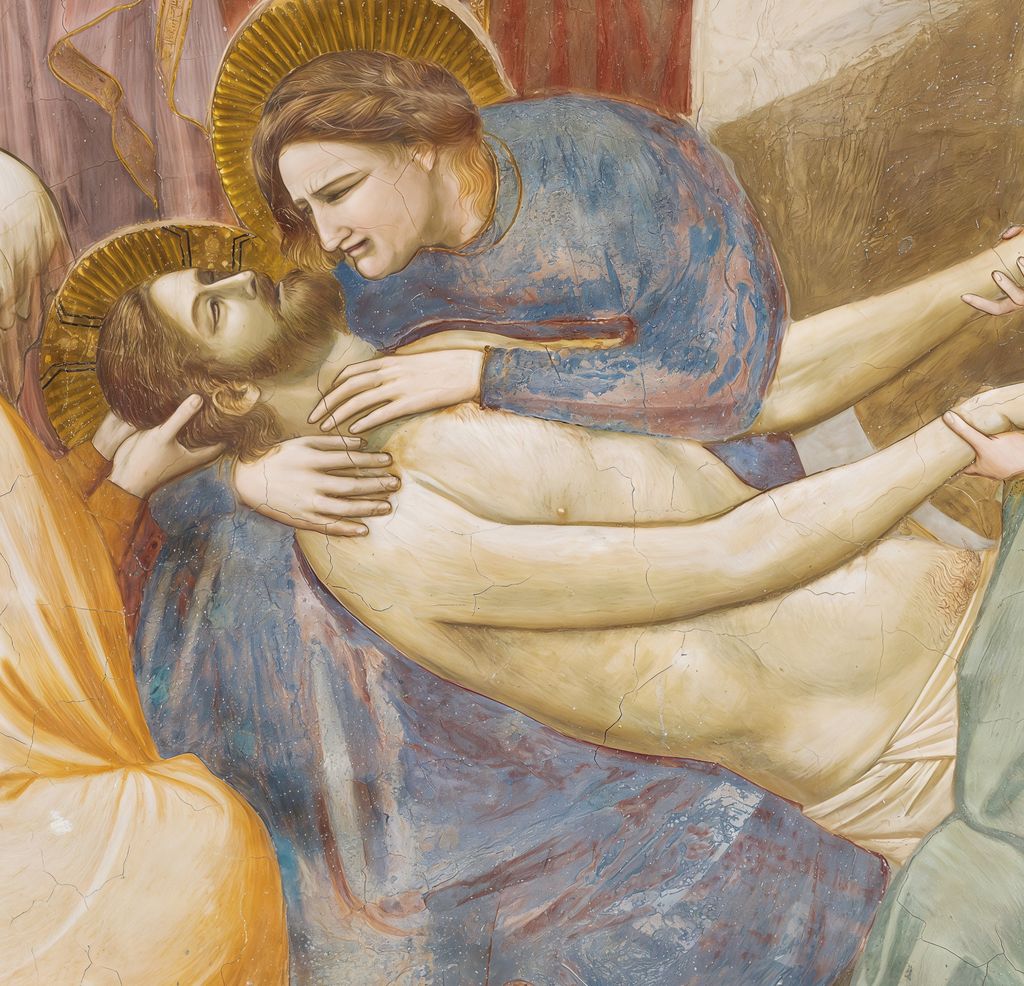
Mary and Christ in a detail of the Padua Lamentation.
The sincere friends of this world are as ship lights in the stormiest of nights.
Rome is the city of echoes, the city of illusions, and the city of yearning.
Every painting is a voyage into a sacred harbour.
Take pleasure in your dreams; relish your principles and drape your purest feelings on the heart of a precious lover.
The human heart is as a frail craft on which we wish to reach the stars.
These sayings are appealing partly because they can travel independently of a particular painting or historical occasion. Ships, stars and harbours furnish a flexible language of consolation and aspiration. That is a reason to enjoy them as language; it supplies no evidence for their attribution. In particular, a remark about Rome cannot establish Giotto's experience of the city, and the sacred-harbour image cannot serve as his explanation of his religious paintings. Their source-status matters whenever they are used to infer an artistic intention.
Quotes on Giotto di Bondone
Correction to the Picasso attribution: the following passage belongs to the tradition of Papini's invented interview in Il libro nero: Nuovo diario di Gog (1951). It should be read as fictional speech assigned to Picasso. Garson O'Toole's investigation traces its later circulation and corrections; the English wording varies between versions. [1]
But when I am alone, I do not have the effrontery to consider myself an artist at all, not in the grand old meaning of the word: Giotto, Titian, Rembrandt, Goya were great painters. I am only a public clown-a mountebank. I have understood my time and have exploited the imbecility, the vanity, the greed of my contemporaries. It is a bitter confession, this confession of mine, more painful than it may seem. But at least and at last it does have the merit of being honest. Pablo Picasso
The list of older masters serves a polemic about modern art within that fiction. It cannot establish Picasso's private estimate of Giotto, his own painting or his audience. O'Toole also identifies published repudiations, including a LIFE correction of January 1969. Those historical leads are reported here through his investigation, rather than presented as independently inspected original magazine copies. [1]
The Oresteia, King Lear, Dostoevsky's 'The Devils' no less than the art of Giotto or the 'Passions' of Bach, inquire into, dramatize, the relations of man and woman to the existence of the gods or of God. George Steiner
Source status: attribution retained, exact primary passage unverified here. This sentence is associated in quotation references with George Steiner's Real Presences (1989), part III, chapter 6. Without inspecting that passage in an authorised edition, its punctuation and precise context should remain provisional. As printed here, it places Giotto among makers whose works confront religious existence; it offers a reader's philosophical interpretation rather than information about Giotto's own words or beliefs.
In my opinion painters owe to Giotto, the Florentine painter, exactly the same debt they owe to nature, which constantly serves them as a model and whose finest and most beautiful aspects they are always striving to imitate and reproduce. Giorgio Vasari
Source status: the underlying Vasari passage is identifiable. This is an English rendering of the opening of the Giotto life in the 1568 Lives. The Italian describes the debt painters owe to nature and then extends that debt to Giotto. The particular translator of this inherited English wording has not been identified. Vasari's own argument can be checked in the original passage reproduced in the critical source collection Giottus Pictor. [3]
Now that I think about it, it seems to me that’s what Idiocy is: the ability to be enthusiastic all the time about anything you like, so that a drawing on the wall does not have to be diminished by the memory of the frescoes of Giotto in Padua. Julio Cortazar
Source status: attribution and English translation unverified here. Quotation references associate the Cortázar sentence with Around the Day in Eighty Worlds, but the corresponding passage and translator have not been checked in an accessible authorised text. Read cautiously, the sentence concerns the freedom to enjoy an ordinary drawing even after seeing a celebrated fresco cycle. It does not diminish the Padua paintings; it resists turning their prestige into an obstacle to other pleasures.
It is not possible to overstate the influence of Paul Cezanne on twentieth-century art. He's the modern Giotto, someone who shattered one kind of picture-making and invented a new one that the world followed. Jerry Saltz
Source status: verified in the author's published review. Saltz opens his New York article “Three of a Kind,” dated 10 February 2011, with this comparison while reviewing Cézanne's Card Players. The inherited text omits the accents in Cézanne's name. Here Giotto functions as a comparison for a painter's power to change the pictorial possibilities available to others, rather than as a claim of direct contact between two remote periods. [4]
The traveller who has gone to Italy to study the tactile values of Giotto, or the corruption of the Papacy, may return remembering nothing but the blue sky and the men and women who live under it. E. M. Forster
Source status: verified in the novel. This is the narrator's observation near the beginning of chapter II of Forster's A Room with a View (1908). Lucy is looking out at Florence: street traffic, soldiers, children and the river compete with the cultural programme expected of a visitor. Later in the chapter her uncertainty about what to admire in Santa Croce makes the point sharper. Forster's humour allows the human life outside an art lesson to become part of the traveller's experience. [5]
Whenever I give a talk about my work I am invariably asked who my influences are. Not what my influences are, but who.. As if the gutter, misunderstandings, memories, sex, dreams, and books matter less than forebears do. After all, in terms of influences, it is as much the guy who mugged me on Tenth Street, or my beloved dog who passed away much too early, as it was Giotto or Diane Arbus. Robert Gober
Source status: verified in a gallery publication carrying Gober's name. Fraenkel Gallery printed the statement at the head of its release for the 2010 Diane Arbus exhibition selected by Gober. The wording supports a broad account of influence in which daily experience and relationships matter alongside admired artists. Giotto and Arbus appear within that larger field. The statement does not describe a particular Giotto painting or establish which works Gober had studied. [6]
To an art historian a Giotto is a 14th Century painting. To an artist it was painted yesterday. We free ourselves from the past when we see it freshly. Walter Darby Bannard
Source status: attribution retained, original publication unlocated here. The Bannard sentence survives in quotation collections, but an author-controlled essay, dated interview or other original witness for this exact wording has not been established. Its opposition between historical distance and artistic immediacy is intelligible on its own terms. It invites a fresh encounter with a picture, while its own authorship still calls for a source. Repetition of the attribution cannot settle that separate question.
When I was taking art history I was always angry that we would skip certain chapters because "it wasn't important." Like, "Let's skip over the Japanese. Let's just get to Giotto, because that's where everything begins." It's like, no. Everything is relevant to me. Ali Banisadr
Source status: verified in an interview preserved on the artist's website. Banisadr makes this observation in Emily McDermott's “How Ali Banisadr Holds Memory,” in a discussion of how viewers and makers bring different cultural experiences to art. The interview's surrounding examples include literature, film and Persian miniature painting. His objection concerns an education that excludes whole traditions in order to hurry towards a preferred European starting point. It is a criticism of that selective teaching, rather than an attack on Giotto's paintings. [7]
Dante: Giotto's name within a poem about fame
One of the most consequential early references to Giotto occurs in Purgatorio, canto XI. The speaker is Oderisi of Gubbio, a manuscript illuminator whom Dante encounters among those being purged of pride. Oderisi has learnt to acknowledge that another illuminator, Franco of Bologna, now enjoys the greater reputation. He then brings painting into the argument: Cimabue once thought he held the field, but Giotto now possesses the acclaim, obscuring the older painter's fame. The Italian phrase is or ha Giotto il grido; the force of grido is public renown, the name people are calling out. [8]
The setting changes what those famous lines mean. Oderisi immediately turns to poets, and then compares worldly reputation to a shifting breath of wind. Giotto's success is one instance in a meditation on how quickly success passes from one person to another. The passage can bear witness to his prominence while also questioning the value of prominence itself. Its energy would be lost if it were reduced to a complimentary testimonial.
The speaker matters. These are words written by Dante for a speaking character, rather than a statement by Giotto. The verses say nothing explicit about an apprenticeship to Cimabue. They also do not document a meeting or friendship between painter and poet. Those larger claims require other evidence. The distinction leaves the poetry free to tell us something both narrower and more interesting: Giotto's name was recognisable enough to make a comparison about fame immediately intelligible to readers. Schwarz and Theis examine that distinction between literary role and historical inference in their discussion of the passage. [8]
A translation introduces another small choice. English versions may use fame, cry, acclaim or renown for grido. Each colours the movement between a publicly repeated name and the wind into which such repetition dissolves. When quoting the passage, it is therefore useful to name the translator. When explaining it, the short Italian phrase preserves the hinge on which the comparison turns without pretending that one English word exhausts it.
Cennino Cennini: a painter explaining his inheritance
Cennino Cennini's Libro dell'arte, generally placed around 1400, speaks from within the practice of painting. Its opening chapter traces a professional genealogy: Cennino learnt from Agnolo Gaddi, Agnolo from his father Taddeo, and Taddeo from Giotto. In that setting Cennino says that Giotto changed painting di greco in latino and brought it into the modern manner. This is Cennino describing a transformation; it is not a saying spoken by Giotto. [9]
The language is culturally charged. Greek and Latin name ways of painting through a comparison with languages. Cennino places his own craft within the tradition that he regards as current and authoritative. Treating the sentence as a neutral verdict that one culture simply replaced an inferior one would flatten its historical purpose. Its claims form part of a working painter's account of where his knowledge comes from, and why a reader should trust it.
The professional connection becomes more tangible in chapter 67. Explaining the painting of a youthful face in fresco, Cennino again invokes a method transmitted through Giotto and the Gaddi family. The passage describes the placement of colour on lips and cheeks and the use of successive flesh tones. The transition from a broad historical claim to the handling of a face is revealing. Authority lives in procedures that can be taught, adapted and carried forward through hands and materials. [9]
Cennino also distinguishes Agnolo's colour from Taddeo's, rather than imagining inheritance as perfect repetition. His genealogy therefore gives an account of continuity with change. For a reader looking for Giotto's ideas, this is valuable evidence of what a later practitioner understood his legacy to be. It still cannot be turned into Giotto's own treatise or a transcript of his studio instructions. The author who supplies the account must remain visible.
Boccaccio: the wit of a literary Giotto
Boccaccio gives Giotto a voice in the fifth story of the sixth day of the Decameron. The tale joins the painter and the lawyer Forese da Rabatta on a journey back to Florence from the Mugello. Caught in rain, they borrow worn cloaks and hats and continue on their shabby mounts. Mud and wet clothes make both men look far less distinguished than their professional reputations would suggest. [10]
Forese asks whether a stranger seeing Giotto in that state could believe him to be the world's finest painter. Giotto answers by turning the question back upon the lawyer: the stranger would believe it when he believed Forese knew his alphabet. This is a paraphrase of the exchange, whose pleasure depends on the speed and symmetry of the retort. Forese recognises that his own appearance has exposed him to precisely the judgement he tried to apply to his companion.
The comedy has a carefully prepared frame. Before the journey begins, the narrator contrasts the men's unprepossessing bodies with their exceptional intelligence. Giotto's power to imitate nature receives substantial praise. Then the story lets the painter defeat an attempt to judge intelligence by its outward covering. The clothes are temporary and borrowed; the ability to answer is immediately his. The result is a memorable literary image of artistic intelligence in conversation.
Boccaccio wrote within the fourteenth century, much closer to Giotto than Vasari did. Proximity makes his representation important without making the dialogue a recorded conversation. The tale has a narrator, a setting and an argumentative design. It is safe to say that Boccaccio presents Giotto as witty; it is a further and unsupported step to guarantee that the historical painter uttered these exact words on a particular rainy afternoon. Such attributed literary speech has a traceable home and a recoverable purpose, both of which distinguish it from the five untraced aphorisms above. [10]
Ghiberti and Vasari: stories that explain artistic ability
In the mid-fifteenth century, Lorenzo Ghiberti's second Commentary supplied the famous discovery scene: Cimabue passes a child drawing a sheep on a stone, recognises his ability and takes him into training. Ghiberti places a few identifying words in the boy's mouth. The encounter makes natural talent visible before formal teaching begins. Its vivid economy helps explain why the story became so durable. [11]
The later date matters. Ghiberti is a witness to the story's presence in Renaissance accounts of Giotto, not an eyewitness to Giotto's childhood. His account also contains a substantial list of works and comments from an artist's perspective. These different kinds of material should be considered individually. The interest of his work list cannot automatically certify the opening childhood scene, just as doubts about an anecdote do not erase the value of everything else he recorded.
Vasari developed the tradition in the Lives, first published in 1550 and enlarged in 1568. His circle story offers another demonstration of ability. Asked for a drawing to send to the pope, Giotto makes a circle with a brush dipped in red, holding his arm against his side. The messenger initially mistakes the economical response for mockery; discerning viewers recognise its virtuosity. Vasari also explains a Tuscan expression built on the ambiguity of tondo, which can refer to roundness or to dullness of understanding. [3]
The scene binds technical command to social judgement: the messenger cannot immediately recognise the skill he has been sent to assess. It resembles Boccaccio's reversal in giving Giotto the stronger understanding. Yet its historical distance, and Vasari's larger story of painting's revival, remain part of how it should be read. The retorts belong securely to Vasari's narrative. They are much less secure as the exact speech of a fourteenth-century artist. Vasari's opening praise, preserved above, similarly reveals his own historical ambition: he casts Giotto as a restorer of painting whose importance parallels that of nature as a teacher.
The poverty poem: an attribution worth taking seriously, with limits
A longer text offers a different problem. The canzone beginning Molti son que' lodan povertate challenges praise of poverty. In the critical account by Schwarz and Theis, three manuscript copies survive; the two older Florentine witnesses, dated around 1400, name Giotto, while the somewhat later Vatican copy supplies no author. One manuscript heading identifies a song of Giotto, painter of Florence. That is a real early attribution, although it is not a surviving autograph. [12]
The poem distinguishes poverty suffered unwillingly from poverty apparently chosen. It examines the moral damage deprivation can produce and questions the consistency of people who praise a condition they work hard to escape. Its argument turns upon judgement, conduct and hypocrisy. The building image in the opening stanza insists upon laying sound foundations, but a single metaphor does not prove that its author practised architecture or painting. Its transmission, language and context all matter.
Schwarz and Theis argue for Giotto's authorship while acknowledging doubts. Their defence should be reported as a scholarly position. The poem's early manuscript attribution is stronger evidence than an anonymous modern quotation card, yet disputed authorship remains disputed. Its objections to poverty should therefore not be presented as Giotto's certain personal confession, or used to settle his private attitude towards Franciscan patrons. A poem can adopt a forceful argumentative voice without supplying an uncomplicated record of its author's everyday conduct. [12]
Translation adds another question. The modern German rendering printed in the critical biography is a translation of the Italian poem, with its own decisions about awkward sentences and poetic movement. English paraphrase must not silently become a quotation from Giotto. Naming the disputed text and explaining its argument offers the reader something substantial while preserving the difference between a manuscript attribution, a modern editor's conclusion and a translated voice.
A name written on a painting
The signatures associated with three panels give a concise material contrast. The Louvre's Saint Francis Receiving the Stigmata bears Opus Iocti florentini. The Baroncelli altarpiece has Opus magistri Iocti, distributed across seventeen medallions along its lower border. The Bologna polyptych carries the fuller Opus magistri Iocti de Florentia on the Virgin's throne step. The critical source collection transcribes all three and identifies their positions; the Louvre also records its panel's inscription. [13]
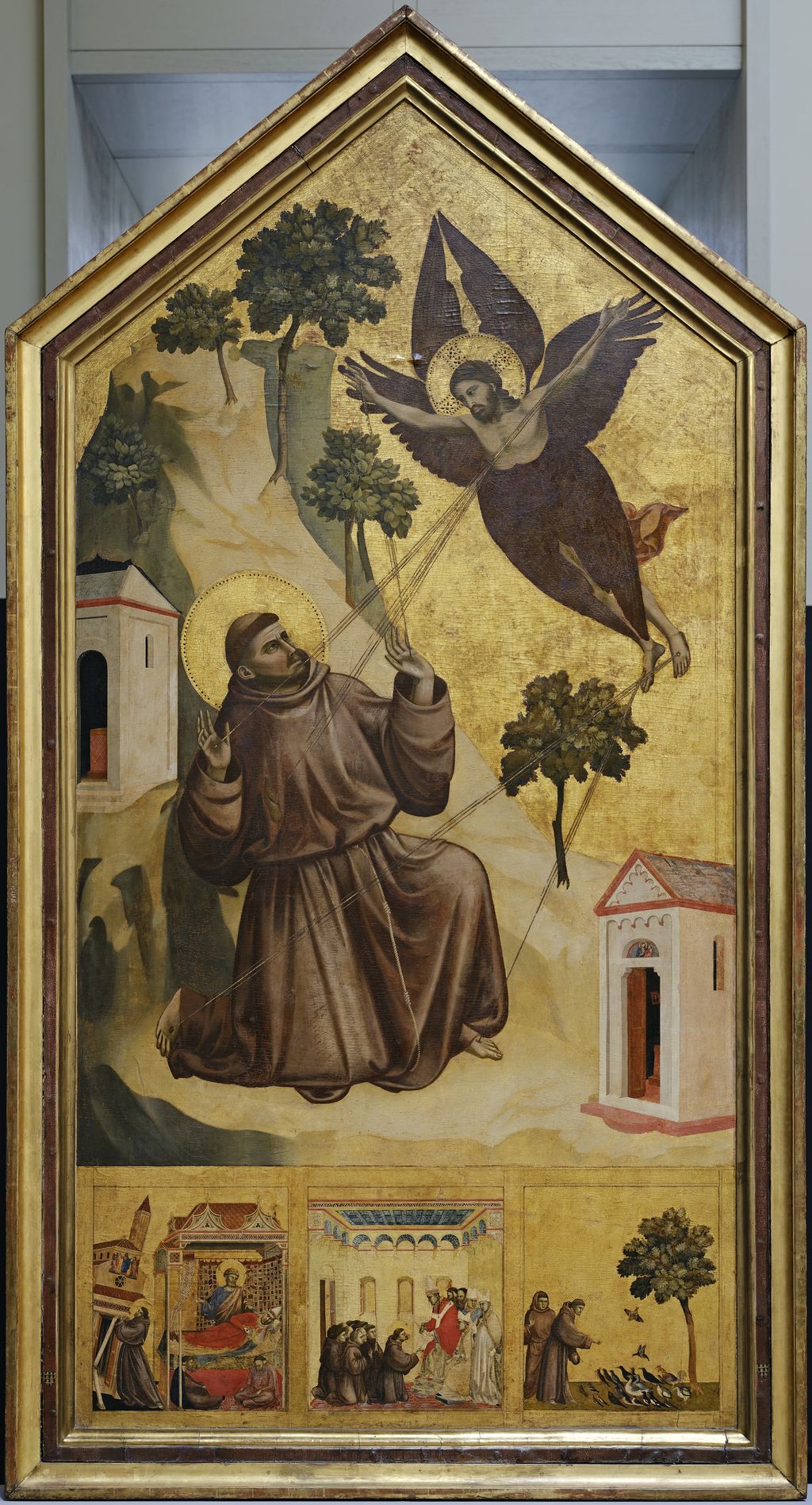
The signed Louvre Saint Francis panel, retaining its painted frame and predella. Shonagon / Wikimedia Commons / Public Domain Mark1.0. Image source. Public domain. Proportionally reduced reproduction; no colour or content enhancement.

Bologna Polyptych
These formulas identify a work with Giotto's name, sometimes adding master or Florentine. They do not speak about dreams, love, fame or sacred harbours. Their restraint is useful. A signature can establish a historical act of naming without becoming a diary, a personal declaration or proof that every painted passage was executed by one hand. Questions of workshop participation require the object and its scholarship as well as its lettering.
Read beside the literary witnesses, those short inscriptions show how varied the surviving evidence is. Dante gives a publicly resounding name; Cennino gives a professional ancestry; Boccaccio gives an intelligence tested in conversation; Ghiberti and Vasari give exemplary narratives of talent. The disputed canzone introduces a sustained argument with an early attribution. Together they allow a richer encounter with Giotto's reputation than a handful of unsupported maxims can provide, while keeping each speaker and each kind of evidence in view.
Artworks directory
This directory brings together 209 records for paintings, ensembles, individual scenes and components, architectural work, an associated disputed design, and reported or lost projects connected with Giotto. Ensembles and their parts appear separately, so 209 is a count of records rather than independent paintings or commissions. Attributions and dates remain qualified where disputed; inclusion does not establish Giotto’s own hand throughout.
| Name | Date | Medium, attribution and status |
|---|---|---|
| Expulsion of Joachim from the Temple — Scrovegni Chapel, Padua | c.1303–05 (chapel campaign) | Fresco / wall painting. Giotto and workshop. Scene within a cycle. Padova Musei. Chapel overview. |
| Joachim among the Shepherds — Scrovegni Chapel, Padua | c.1303–05 (chapel campaign) | Fresco / wall painting. Giotto and workshop. Scene within a cycle. Padova Musei. Chapel overview. |
| Annunciation to Saint Anne — Scrovegni Chapel, Padua | c.1303–05 (chapel campaign) | Fresco / wall painting. Giotto and workshop. Scene within a cycle. Padova Musei. Chapel overview. |
| Sacrifice of Joachim — Scrovegni Chapel, Padua | c.1303–05 (chapel campaign) | Fresco / wall painting. Giotto and workshop. Scene within a cycle. Padova Musei. Chapel overview. |
| Joachim’s Dream — Scrovegni Chapel, Padua | c.1303–05 (chapel campaign) | Fresco / wall painting. Giotto and workshop. Scene within a cycle. Padova Musei. Padova Musei. Chapel overview. |
| Meeting at the Golden Gate — Scrovegni Chapel, Padua | c.1303–05 (chapel campaign) | Fresco / wall painting. Giotto and workshop. Scene within a cycle. Padova Musei. Chapel overview. |
| Birth of the Virgin — Scrovegni Chapel, Padua | c.1303–05 (chapel campaign) | Fresco / wall painting. Giotto and workshop. Scene within a cycle. Padova Musei. Padova Musei. Chapel overview. |
| Presentation of the Virgin in the Temple — Scrovegni Chapel, Padua | c.1303–05 (chapel campaign) | Fresco / wall painting. Giotto and workshop. Scene within a cycle. Padova Musei. Chapel overview. |
| Delivery of the Rods — Scrovegni Chapel, Padua | c.1303–05 (chapel campaign) | Fresco / wall painting. Giotto and workshop. Scene within a cycle. Padova Musei. Chapel overview. |
| Prayer of Joseph and the Suitors — Scrovegni Chapel, Padua | c.1303–05 (chapel campaign) | Fresco / wall painting. Giotto and workshop. Scene within a cycle. Padova Musei. Chapel overview. |
| Marriage of the Virgin — Scrovegni Chapel, Padua | c.1303–05 (chapel campaign) | Fresco / wall painting. Giotto and workshop. Scene within a cycle. Padova Musei. Chapel overview. |
| Wedding Procession of Mary — Scrovegni Chapel, Padua | c.1303–05 (chapel campaign) | Fresco / wall painting. Giotto and workshop. Scene within a cycle. Padova Musei. Chapel overview. |
| Annunciation on the triumphal arch — complete ensemble (Scrovegni Chapel, Padua) | c.1303–05 (chapel campaign) | Wall painting with a central painted wooden panel. Giotto and workshop. Ensemble. Includes the Mission of Gabriel and the lower Annunciation pair; the original central wooden panel is in the Musei Civici agli Eremitani, with a conservation copy in the chapel. Padova Musei. Padova Musei. Scholarly study. Chapel overview. |
| Visitation — Scrovegni Chapel, Padua | c.1303–05 (chapel campaign) | Fresco / wall painting. Giotto and workshop. Scene within a cycle. Padova Musei. Chapel overview. |
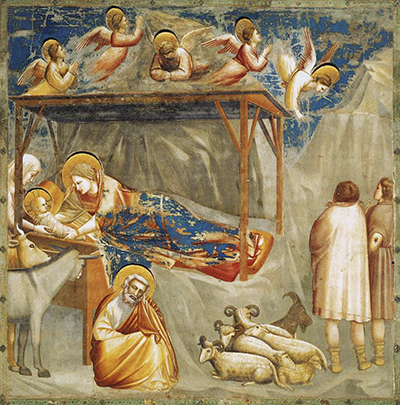
| Nativity — Scrovegni Chapel, Padua | c.1303–05 (chapel campaign) | Fresco / wall painting. Giotto and workshop. Scene within a cycle. Padova Musei. Chapel overview. |
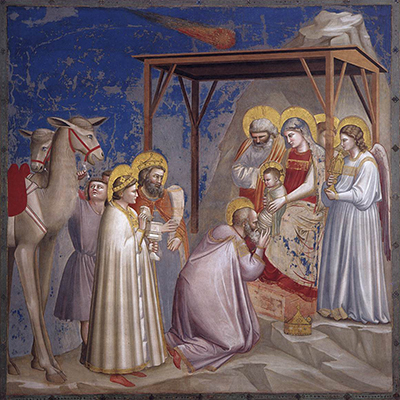
| Adoration of the Magi — Scrovegni Chapel, Padua | c.1303–05 (chapel campaign) | Fresco / wall painting. Giotto and workshop. Scene within a cycle. Padova Musei. Chapel overview. |
| Presentation of Christ at the Temple — Scrovegni Chapel, Padua | c.1303–05 (chapel campaign) | Fresco / wall painting. Giotto and workshop. Scene within a cycle. Padova Musei. Chapel overview. |
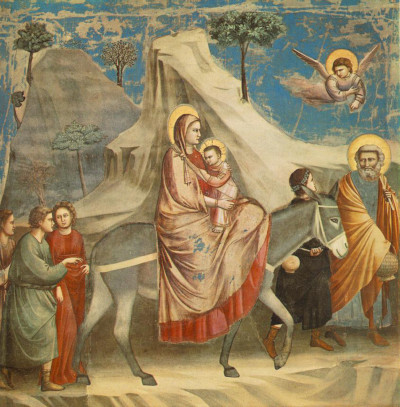
| Flight into Egypt — Scrovegni Chapel, Padua | c.1303–05 (chapel campaign) | Fresco / wall painting. Giotto and workshop. Scene within a cycle. Padova Musei. Chapel overview. |
| Massacre of the Innocents — Scrovegni Chapel, Padua | c.1303–05 (chapel campaign) | Fresco / wall painting. Giotto and workshop. Scene within a cycle. Padova Musei. Chapel overview. |
| Christ among the Doctors — Scrovegni Chapel, Padua | c.1303–05 (chapel campaign) | Fresco / wall painting. Giotto and workshop. Scene within a cycle. Padova Musei. Chapel overview. |
| Baptism of Christ — Scrovegni Chapel, Padua | c.1303–05 (chapel campaign) | Fresco / wall painting. Giotto and workshop. Scene within a cycle. Padova Musei. Chapel overview. |
| Marriage at Cana — Scrovegni Chapel, Padua | c.1303–05 (chapel campaign) | Fresco / wall painting. Giotto and workshop. Scene within a cycle. Padova Musei. Padova Musei. Chapel overview. |
| Raising of Lazarus — Scrovegni Chapel, Padua | c.1303–05 (chapel campaign) | Fresco / wall painting. Giotto and workshop. Scene within a cycle. Padova Musei. Chapel overview. |
| Entry into Jerusalem — Scrovegni Chapel, Padua | c.1303–05 (chapel campaign) | Fresco / wall painting. Giotto and workshop. Scene within a cycle. Padova Musei. Chapel overview. |
| Expulsion of the Money Changers — Scrovegni Chapel, Padua | c.1303–05 (chapel campaign) | Fresco / wall painting. Giotto and workshop. Scene within a cycle. Padova Musei. Padova Musei. Chapel overview. |
| Judas Receiving the Payment — Scrovegni Chapel, Padua | c.1303–05 (chapel campaign) | Fresco / wall painting. Giotto and workshop. Scene within a cycle. Padova Musei. Chapel overview. |
| Last Supper — Scrovegni Chapel, Padua | c.1303–05 (chapel campaign) | Fresco / wall painting. Giotto and workshop. Scene within a cycle. Padova Musei. Chapel overview. |
| Washing of the Feet — Scrovegni Chapel, Padua | c.1303–05 (chapel campaign) | Fresco / wall painting. Giotto and workshop. Scene within a cycle. Padova Musei. Chapel overview. |
| Arrest of Christ — Scrovegni Chapel, Padua | c.1303–05 (chapel campaign) | Fresco / wall painting. Giotto and workshop. Scene within a cycle. Padova Musei. Chapel overview. |
| Christ before Annas and Caiaphas — Scrovegni Chapel, Padua | c.1303–05 (chapel campaign) | Fresco / wall painting. Giotto and workshop. Scene within a cycle. Padova Musei. Chapel overview. |
| Mocking of Christ and Flagellation — Scrovegni Chapel, Padua | c.1303–05 (chapel campaign) | Fresco / wall painting. Giotto and workshop. Scene within a cycle. Padova Musei. Chapel overview. |
| Road to Calvary — Scrovegni Chapel, Padua | c.1303–05 (chapel campaign) | Fresco / wall painting. Giotto and workshop. Scene within a cycle. Padova Musei. Chapel overview. |
| Crucifixion — Scrovegni Chapel, Padua | c.1303–05 (chapel campaign) | Fresco / wall painting. Giotto and workshop. Scene within a cycle. Padova Musei. Chapel overview. |
| Lamentation — Scrovegni Chapel, Padua | c.1303–05 (chapel campaign) | Fresco / wall painting. Giotto and workshop. Scene within a cycle. Padova Musei. Chapel overview. |
| Resurrection / Noli me tangere — Scrovegni Chapel, Padua | c.1303–05 (chapel campaign) | Fresco / wall painting. Giotto and workshop. Scene within a cycle. Padova Musei. Chapel overview. |
| Ascension — Scrovegni Chapel, Padua | c.1303–05 (chapel campaign) | Fresco / wall painting. Giotto and workshop. Scene within a cycle. Padova Musei. Chapel overview. |
| Pentecost — Scrovegni Chapel, Padua | c.1303–05 (chapel campaign) | Fresco / wall painting. Giotto and workshop. Scene within a cycle. Padova Musei. Padova Musei. Chapel overview. |
| Coretto — right painted recess (Scrovegni Chapel, Padua) | c.1303–05 (chapel campaign) | Fresco / painted fictive architecture. Giotto and workshop. Ensemble component. Padova Musei. Padova Musei. Scholarly study. Chapel overview. |
| Coretto — left painted recess (Scrovegni Chapel, Padua) | c.1303–05 (chapel campaign) | Fresco / painted fictive architecture. Giotto and workshop. Ensemble component. Padova Musei. Padova Musei. Scholarly study. Chapel overview. |
| Envy — Scrovegni Chapel, Padua | c.1303–05 (chapel campaign) | Grisaille fresco / wall painting. Giotto and workshop. Ensemble component. Padova Musei. Chapel overview. Scholarly study. Padova Musei. |
| Despair — Scrovegni Chapel, Padua | c.1303–05 (chapel campaign) | Grisaille fresco / wall painting. Giotto and workshop. Ensemble component. Padova Musei. Chapel overview. Scholarly study. Padova Musei. |
| Prudence — Scrovegni Chapel, Padua | c.1303–05 (chapel campaign) | Grisaille fresco / wall painting. Giotto and workshop. Ensemble component. Padova Musei. Chapel overview. Scholarly study. Padova Musei. |
| Fortitude — Scrovegni Chapel, Padua | c.1303–05 (chapel campaign) | Grisaille fresco / wall painting. Giotto and workshop. Ensemble component. Padova Musei. Chapel overview. Scholarly study. Padova Musei. |
| Temperance — Scrovegni Chapel, Padua | c.1303–05 (chapel campaign) | Grisaille fresco / wall painting. Giotto and workshop. Ensemble component. Padova Musei. Chapel overview. Scholarly study. Padova Musei. |
| Justice — Scrovegni Chapel, Padua | c.1303–05 (chapel campaign) | Grisaille fresco / wall painting. Giotto and workshop. Ensemble component. Padova Musei. Chapel overview. Scholarly study. Padova Musei. |
| Faith — Scrovegni Chapel, Padua | c.1303–05 (chapel campaign) | Grisaille fresco / wall painting. Giotto and workshop. Ensemble component. Padova Musei. Chapel overview. Scholarly study. Padova Musei. |
| Charity — Scrovegni Chapel, Padua | c.1303–05 (chapel campaign) | Grisaille fresco / wall painting. Giotto and workshop. Ensemble component. Padova Musei. Chapel overview. Scholarly study. Padova Musei. |
| Hope — Scrovegni Chapel, Padua | c.1303–05 (chapel campaign) | Grisaille fresco / wall painting. Giotto and workshop. Ensemble component. Padova Musei. Chapel overview. Scholarly study. Padova Musei. |
| Folly — Scrovegni Chapel, Padua | c.1303–05 (chapel campaign) | Grisaille fresco / wall painting. Giotto and workshop. Ensemble component. Padova Musei. Chapel overview. Scholarly study. Padova Musei. |
| Inconstancy — Scrovegni Chapel, Padua | c.1303–05 (chapel campaign) | Grisaille fresco / wall painting. Giotto and workshop. Ensemble component. Padova Musei. Chapel overview. Scholarly study. Padova Musei. |
| Wrath — Scrovegni Chapel, Padua | c.1303–05 (chapel campaign) | Grisaille fresco / wall painting. Giotto and workshop. Ensemble component. Padova Musei. Chapel overview. Scholarly study. Padova Musei. |
| Injustice — Scrovegni Chapel, Padua | c.1303–05 (chapel campaign) | Grisaille fresco / wall painting. Giotto and workshop. Ensemble component. Padova Musei. Chapel overview. Scholarly study. Padova Musei. |
| Infidelity / Idolatry — Scrovegni Chapel, Padua | c.1303–05 (chapel campaign) | Grisaille fresco / wall painting. Giotto and workshop. Ensemble component. Padova Musei. Chapel overview. Scholarly study. Padova Musei. |
| Starry vault — complete ensemble (Scrovegni Chapel, Padua) | c.1303–05 (chapel campaign) | Vault painting. Giotto and workshop. Ensemble. Padova Musei. Padova Musei. Chapel overview. |
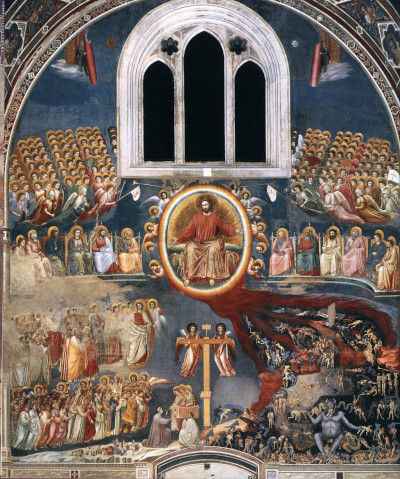
| Last Judgement — Scrovegni Chapel, Padua | c.1303–05 (chapel campaign) | Fresco / wall painting. Giotto and workshop. Scene within a cycle. Padova Musei. Padova Musei. Chapel overview. Padova Musei. |
| Prophet Malachi — vault medallion — Scrovegni Chapel, Padua | c.1303–05 (chapel campaign) | Fresco / wall painting. Giotto and workshop. Ensemble component. Padova Musei. Padova Musei. Chapel overview. Padova Musei. |
| Prophet Baruch — vault medallion — Scrovegni Chapel, Padua | c.1303–05 (chapel campaign) | Fresco / wall painting. Giotto and workshop. Ensemble component. Padova Musei. Padova Musei. Chapel overview. Padova Musei. |
| Prophet Isaiah — vault medallion — Scrovegni Chapel, Padua | c.1303–05 (chapel campaign) | Fresco / wall painting. Giotto and workshop. Ensemble component. Padova Musei. Padova Musei. Chapel overview. Padova Musei. |
| Prophet Daniel — vault medallion — Scrovegni Chapel, Padua | c.1303–05 (chapel campaign) | Fresco / wall painting. Giotto and workshop. Ensemble component. Padova Musei. Padova Musei. Chapel overview. Padova Musei. |
| Christ Pantocrator — vault medallion — Scrovegni Chapel, Padua | c.1303–05 (chapel campaign) | Fresco / wall painting. Giotto and workshop. Ensemble component. Padova Musei. Padova Musei. Chapel overview. Padova Musei. |
| Virgin and Child — vault medallion — Scrovegni Chapel, Padua | c.1303–05 (chapel campaign) | Fresco / wall painting. Giotto and workshop. Ensemble component. Padova Musei. Padova Musei. Chapel overview. Padova Musei. |
| Prophet Ezekiel — vault medallion — Scrovegni Chapel, Padua | c.1303–05 (chapel campaign) | Fresco / wall painting. Giotto and workshop. Ensemble component. Padova Musei. Padova Musei. Chapel overview. Padova Musei. |
| Prophet Micah — vault medallion — Scrovegni Chapel, Padua | c.1303–05 (chapel campaign) | Fresco / wall painting. Giotto and workshop. Ensemble component. Padova Musei. Padova Musei. Chapel overview. Padova Musei. |
| Saint John the Baptist — vault medallion — Scrovegni Chapel, Padua | c.1303–05 (chapel campaign) | Fresco / wall painting. Giotto and workshop. Ensemble component. Padova Musei. Padova Musei. Chapel overview. Padova Musei. |
| Scrovegni Chapel — painted decoration | c.1303–05 (chapel campaign) | Fresco / wall painting, with a painted wooden panel. Giotto and workshop (painted decoration). Ensemble. Includes separately listed scenes and components. The original central God the Father panel is in the Musei Civici agli Eremitani; a conservation copy is in the chapel. Chapel overview. Padova Musei. Padova Musei. Source. Source. Source. Padova Musei. Scholarly study. |
| Vices and Virtues — complete fourteen-figure programme | c.1303–05 (chapel campaign) | Grisaille fresco / wall painting. Giotto and workshop. Ensemble. Fourteen figures: seven virtues and seven opposed vices. Padova Musei. Chapel overview. Scholarly study. |
| Coretti — paired fictive chapels | c.1303–05 (chapel campaign) | Fresco / painted fictive architecture. Giotto and workshop. Ensemble. Two separate painted recesses, also listed individually. Padova Musei. Padova Musei. Scholarly study. |
| Mission of Gabriel — heavenly assembly | c.1303–05 (chapel campaign) | Wall painting with central painted wooden image. Giotto and workshop. Ensemble component. Central wooden God the Father panel preserved at the Musei Civici agli Eremitani; conservation copy in the chapel. Chapel overview. Padova Musei. Scholarly study. Padova Musei. |
| Annunciation — Gabriel and Mary in facing chambers | c.1303–05 (chapel campaign) | Fresco / wall painting. Giotto and workshop. Ensemble component. Chapel overview. Scholarly study. Padova Musei. |
| God the Father — central wooden panel of the Mission of Gabriel | c.1303–05 (chapel campaign) | Painting on wood. Associated with Giotto. Ensemble component. Original at the Musei Civici agli Eremitani, Padua; conservation copy in the Scrovegni Chapel. Padova Musei. Padova Musei. Scholarly study. Source. |
| Life of Saint Francis — Upper Church cycle, Assisi | Late 13th–early 14th century; dating disputed | Fresco / wall-painting cycle. Traditionally associated with Giotto; Giotto, Roman-school and other attributions disputed. Ensemble. Twenty-eight-scene nave cycle; scenes also listed individually. Basilica catalogue. Scholarly study. Basilica catalogue. Source. Source. |
| Homage of a Simple Man — Upper Church, Assisi | Late 13th–early 14th century; dating disputed | Wall painting. Traditionally associated with Giotto; authorship and dating disputed. Scene within a cycle. Source. Scholarly study. Source. Source. Source. |
| Gift of the Mantle — Upper Church, Assisi | Late 13th–early 14th century; dating disputed | Wall painting. Traditionally associated with Giotto; authorship and dating disputed. Scene within a cycle. Basilica catalogue. Scholarly study. Source. Source. Source. |
| Dream of the Palace Full of Arms — Upper Church, Assisi | Late 13th–early 14th century; dating disputed | Wall painting. Traditionally associated with Giotto; authorship and dating disputed. Scene within a cycle. Basilica catalogue. Source. Scholarly study. Source. Source. Source. |
| Prayer before the Crucifix at San Damiano — Upper Church, Assisi | Late 13th–early 14th century; dating disputed | Wall painting. Traditionally associated with Giotto; authorship and dating disputed. Scene within a cycle. Source. Source. Source. Scholarly study. Source. Source. |
| Renunciation of Worldly Goods — Upper Church, Assisi | Late 13th–early 14th century; dating disputed | Wall painting. Traditionally associated with Giotto; authorship and dating disputed. Scene within a cycle. Source. Scholarly study. Source. Source. |
| Dream of Innocent III — Upper Church, Assisi | Late 13th–early 14th century; dating disputed | Wall painting. Traditionally associated with Giotto; authorship and dating disputed. Scene within a cycle. Source. Source. Scholarly study. Source. Source. |
| Confirmation of the Rule — Upper Church, Assisi | Late 13th–early 14th century; dating disputed | Wall painting. Traditionally associated with Giotto; authorship and dating disputed. Scene within a cycle. Source. Scholarly study. Source. Source. |
| Vision of the Flaming Chariot — Upper Church, Assisi | Late 13th–early 14th century; dating disputed | Wall painting. Traditionally associated with Giotto; authorship and dating disputed. Scene within a cycle. Source. Source. Scholarly study. Source. Source. |
| Vision of the Thrones — Upper Church, Assisi | Late 13th–early 14th century; dating disputed | Wall painting. Traditionally associated with Giotto; authorship and dating disputed. Scene within a cycle. Basilica catalogue. Scholarly study. Source. Source. Source. |
| Expulsion of Devils from Arezzo — Upper Church, Assisi | Late 13th–early 14th century; dating disputed | Wall painting. Traditionally associated with Giotto; authorship and dating disputed. Scene within a cycle. Source. Source. Scholarly study. Source. Source. Source. |
| Trial by Fire before the Sultan — Upper Church, Assisi | Late 13th–early 14th century; dating disputed | Wall painting. Traditionally associated with Giotto; authorship and dating disputed. Scene within a cycle. Source. Source. Scholarly study. Source. Source. |
| Ecstasy of Saint Francis — Upper Church, Assisi | Late 13th–early 14th century; dating disputed | Wall painting. Traditionally associated with Giotto; authorship and dating disputed. Scene within a cycle. Source. Source. Source. Scholarly study. Source. Source. |
| Nativity at Greccio — Upper Church, Assisi | Late 13th–early 14th century; dating disputed | Wall painting. Traditionally associated with Giotto; authorship and dating disputed. Scene within a cycle. Basilica catalogue. Scholarly study. Source. Source. Source. |
| Miracle of the Spring — Upper Church, Assisi | Late 13th–early 14th century; dating disputed | Wall painting. Traditionally associated with Giotto; authorship and dating disputed. Scene within a cycle. Source. Scholarly study. Source. Source. Source. |
| Sermon to the Birds — Upper Church, Assisi | Late 13th–early 14th century; dating disputed | Wall painting. Traditionally associated with Giotto; authorship and dating disputed. Scene within a cycle. Basilica catalogue. Scholarly study. Source. Source. Source. |
| Death of the Knight of Celano — Upper Church, Assisi | Late 13th–early 14th century; dating disputed | Wall painting. Traditionally associated with Giotto; authorship and dating disputed. Scene within a cycle. Source. Source. Scholarly study. Source. Source. |
| Sermon before Pope Honorius III — Upper Church, Assisi | Late 13th–early 14th century; dating disputed | Wall painting. Traditionally associated with Giotto; authorship and dating disputed. Scene within a cycle. Source. Source. Scholarly study. Source. |
| Apparition at the Chapter of Arles — Upper Church, Assisi | Late 13th–early 14th century; dating disputed | Wall painting. Traditionally associated with Giotto; authorship and dating disputed. Scene within a cycle. Basilica catalogue. Scholarly study. Source. Source. Source. |
| Stigmatisation — Upper Church, Assisi | Late 13th–early 14th century; dating disputed | Wall painting. Traditionally associated with Giotto; authorship and dating disputed. Scene within a cycle. Source. Scholarly study. Source. Source. |
| Death and Ascension of Saint Francis — Upper Church, Assisi | Late 13th–early 14th century; dating disputed | Wall painting. Traditionally associated with Giotto; authorship and dating disputed. Scene within a cycle. Basilica catalogue. Scholarly study. Source. Source. Source. |
| Apparition to Brother Augustine and Bishop Guido — Upper Church, Assisi | Late 13th–early 14th century; dating disputed | Wall painting. Traditionally associated with Giotto; authorship and dating disputed. Scene within a cycle. Zeri catalogue. Scholarly study. Source. Source. Source. |
| Verification of the Stigmata — Upper Church, Assisi | Late 13th–early 14th century; dating disputed | Wall painting. Traditionally associated with Giotto; authorship and dating disputed. Scene within a cycle. Source. Source. Scholarly study. Source. Source. |
| Mourning of the Poor Clares — Upper Church, Assisi | Late 13th–early 14th century; dating disputed | Wall painting. Traditionally associated with Giotto; authorship and dating disputed. Scene within a cycle. Basilica catalogue. Source. Scholarly study. Source. Source. |
| Canonisation of Saint Francis — Upper Church, Assisi | Late 13th–early 14th century; dating disputed | Wall painting. Traditionally associated with Giotto; authorship and dating disputed. Scene within a cycle. Source. Source. Scholarly study. Source. Source. Source. |
| Apparition to Pope Gregory IX — Upper Church, Assisi | Late 13th–early 14th century; dating disputed | Wall painting. Traditionally associated with Giotto; authorship and dating disputed. Scene within a cycle. Zeri catalogue. Scholarly study. Source. Source. Source. |
| Healing of John of Lerida — Upper Church, Assisi | Late 13th–early 14th century; dating disputed | Wall painting. Traditionally associated with Giotto; authorship and dating disputed. Scene within a cycle. Source. Source. Scholarly study. Source. Source. |
| Resurrection of a Woman — Upper Church, Assisi | Late 13th–early 14th century; dating disputed | Wall painting. Traditionally associated with Giotto; authorship and dating disputed. Scene within a cycle. Source. Scholarly study. Source. Source. Source. |
| Liberation of the Prisoner Peter — Upper Church, Assisi | Late 13th–early 14th century; dating disputed | Wall painting. Traditionally associated with Giotto; authorship and dating disputed. Scene within a cycle. Source. Source. Scholarly study. Source. Source. Source. |
| Santa Maria Novella Crucifix | Late 13th century; c.1288–89 or 1298–1301; disputed | Tempera and gold on a shaped wooden cross. Giotto. Source. |
| Death of the Virgin / Dormition — Berlin | c.1310 | Tempera and gold on poplar; gabled dossal. Giotto. Source. Source. |
| Peruzzi Altarpiece | c.1311–1315 (North Carolina Museum of Art) | Tempera and gold on panel. Giotto and workshop. Ensemble. Source. |
| Bologna Polyptych | c.1330 | Tempera and gold on panel. Giotto and workshop. Ensemble. Source. |
| Death of Saint Francis, Bardi Chapel | After 1317, usually the 1320s; disputed | Wall painting with wet-plaster and dry-applied passages. Giotto. Scene within a cycle. Source. |
| Bardi Chapel — painted decoration | After 1317, usually the 1320s; disputed | Wall painting with wet-plaster and dry-applied passages. Giotto and workshop / Giottesque painters; individual hands disputed. Ensemble. Scholarly study. Source. |
| Badia Polyptych | c.1300; proposed dates include 1295–1300 and 1301–02 | Tempera and gold on panel; five cusped compartments. Giotto. Ensemble. Scholarly study. Source. Source. |
| Baroncelli Polyptych | After 1328; detached pinnacle c.1328–35 | Tempera and gold on panel; later altered framing. Giotto and workshop. Ensemble. Detached central pinnacle in San Diego. Santa Croce. |
| Adoration of the Magi / Epiphany — Metropolitan Museum panel | Possibly c.1320; c.1310–18 also proposed for the group | Tempera and gold on wood. Giotto. Part of the dispersed seven-scene board; original function disputed. Met catalogue. Source. |
| Franciscan Allegories | Early 14th century, often c.1315; disputed | Vault wall painting. Giotto and workshop / Giottesque painters; individual hands disputed. Ensemble. Basilica catalogue. |
| Navicella — lost / reworked original mosaic | Late 13th–early 14th century; date disputed | Mosaic. Original attributed to Giotto. Original lost / reworked; fragments and later remakes survive. Scholarly study. |
| Pentecost — London panel | Possibly c.1310–18 (Gordon) | Egg tempera on poplar. Giotto and workshop. Part of the dispersed seven-scene board; original function disputed. National Gallery. Source. |
| Saint Stephen — Horne panel | c.1330–1335 (Museo Horne) | Tempera and gold on panel. Giotto. Proposed association with the Washington and Chaalis panels remains hypothetical. Source. |
| Saint Francis Receiving the Stigmata — Louvre altarpiece | 1300–25 (Louvre) | Tempera and gold on poplar. Giotto. Louvre catalogue. |
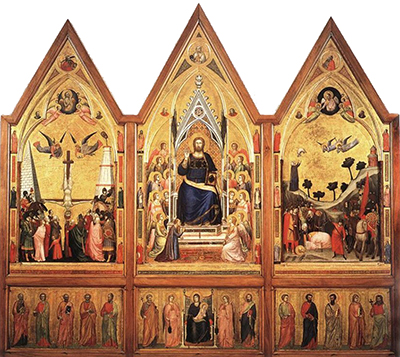
| Stefaneschi Triptych | c.1320; 1315–20 (Vatican Museums) | Tempera and gold on panel; painted on both sides. Giotto and workshop. Ensemble. Vatican Museums. |
| Crucifixion, Berlin | c.1315–1320 | Tempera and gold on poplar. Giotto. Source. |
| Madonna and Child — Washington / Goldman Madonna | c.1310–1315 (National Gallery of Art) | Tempera and gold on poplar. Giotto. Washington panel, distinct from San Giorgio alla Costa; proposed Horne/Chaalis companions remain hypothetical. NGA catalogue. |
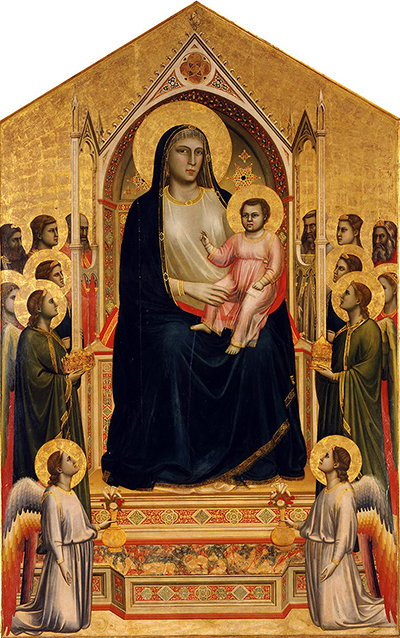
| Ognissanti Madonna | c.1300–05 (Uffizi); c.1310 also proposed | Tempera and gold on panel. Giotto. Uffizi. |
| Madonna of Borgo San Lorenzo | c.1290–95; dating and attribution debated | Tempera and gold on a fragment of a wooden panel. Giotto. Fragmentary. Source. |
| Madonna of San Giorgio alla Costa | c.1288–95 (Opera del Duomo); later dates also proposed | Tempera and gold on panel; cut edges. Giotto. Damaged in 1993 and treated in 1995. Source. |
| Magdalene Chapel — painted decoration | c.1307–08 (basilica); disputed | Wall painting with wet-plaster and dry-applied passages. Giotto and workshop / Giottesque painters; individual hands disputed. Ensemble. Basilica catalogue. |
| Ognissanti Crucifix | c.1315–1320 (Opificio) | Painting on a shaped wooden cross. Giotto and workshop. Workshop participation and alternative attributions debated. Source. |
| Padua Crucifix | c.1303–05 (Zeri catalogue) | Tempera and gold on a shaped wooden cross. Giotto. Zeri catalogue. |
| Peruzzi Chapel — painted decoration | c.1310–11 (Santa Croce); 1334–36 proposed by Schwarz | Wall painting with substantial dry-applied work and loss. Giotto and workshop / Giottesque painters; individual hands disputed. Ensemble. Santa Croce. |
| Rimini Crucifix | c.1300; late 13th century also proposed | Tempera and gold on a shaped wooden cross. Giotto. Source. |
| Giotto’s Campanile — Florence Cathedral bell tower | Begun 1334; completed 1359 under successors | Marble-clad masonry bell tower. Begun under Giotto; continued by Andrea Pisano and Francesco Talenti. Successive building and sculptural campaigns. Source. Scholarly study. Scholarly study. |
| Tower elevation on parchment, Siena — disputed relation to Giotto | 14th century; date and design context disputed | Brown ink and coloured washes over incised construction on three parchment skins. Attribution disputed; possibly a Giotto design transmitted through another hand. Associated design; autograph attribution unestablished. Alternative attributions include Lando di Pietro. Scholarly study. Source. Source. |
| Seven scenes of Christ — dispersed painted board | Possibly c.1310–18 (Gordon); component dates vary | Tempera and gold on a single wooden board, subsequently divided. Giotto and workshop; individual attributions vary. Reconstructed dispersed ensemble. Common board supported by matching wood grain; predella or dossal function disputed. Source. Source. |
| Presentation of Christ at the Temple — Boston panel | Possibly c.1310–18 (Gordon’s group dating) | Tempera and gold on wood. Giotto and workshop; individual attribution varies within the group. Ensemble component. Source. Source. |
| Last Supper — Munich panel | Possibly c.1310–18 (Gordon’s group dating) | Tempera and gold on wood. Giotto and workshop; individual attribution varies within the group. Ensemble component. Source. Source. Source. |
| Crucifixion — Munich panel | Possibly c.1310–18 (Gordon’s group dating) | Tempera and gold on wood. Giotto and workshop; individual attribution varies within the group. Ensemble component. Source. Source. Source. |
| Descent into Limbo — Munich panel | Possibly c.1310–18 (Gordon’s group dating) | Tempera and gold on wood. Giotto and workshop; individual attribution varies within the group. Ensemble component. Source. Source. Source. |
| Entombment — Villa I Tatti panel | Possibly c.1310–18 (Gordon’s group dating) | Tempera and gold on wood. Giotto and workshop; individual attribution varies within the group. Ensemble component. Source. Source. |
| God the Father with Angels — detached Baroncelli pinnacle | c.1328–1335 (San Diego Museum of Art) | Tempera and gold on wood. Giotto and workshop. Ensemble component. Detached in later remodelling; collection home in San Diego. Source. Source. |
| Saint John the Evangelist — Chaalis panel | c.1320 (INHA/RETIF) | Painting on wood. Giotto (INHA/RETIF attribution). Collection: Musée Jacquemart-André, Fontaine-Chaalis. Chantilly’s exhibition announcement, as of 1 November 2026, gives temporary display from 24 January 2026 with no end date. Association with the Washington/Horne altarpiece remains hypothetical. NGA catalogue. Source. Source. Source. Source. |
| Saint Lawrence — Chaalis panel | c.1320 (INHA/RETIF) | Painting on poplar. Giotto; possible execution by a collaborator (INHA/RETIF). Collection: Musée Jacquemart-André, Fontaine-Chaalis. Chantilly’s exhibition announcement, as of 1 November 2026, gives temporary display from 24 January 2026 with no end date. Association with the Washington/Horne altarpiece remains hypothetical. NGA catalogue. Source. Source. Source. Source. |
| Allegory of Poverty — Lower Church crossing vault, Assisi | Early 14th century, often c.1315; disputed | Vault wall painting. Giotto’s workshop / Giottesque painters; alternatives include Stefano. Ensemble component. Basilica catalogue. Source. Scholarly study. |
| Allegory of Chastity — Lower Church crossing vault, Assisi | Early 14th century, often c.1315; disputed | Vault wall painting. Giotto’s workshop / Giottesque painters; alternatives include Stefano. Ensemble component. Basilica catalogue. Source. Scholarly study. |
| Allegory of Obedience — Lower Church crossing vault, Assisi | Early 14th century, often c.1315; disputed | Vault wall painting. Giotto’s workshop / Giottesque painters; alternatives include Stefano. Ensemble component. Basilica catalogue. Source. Scholarly study. |
| Saint Francis in Glory — Lower Church crossing vault, Assisi | Early 14th century, often c.1315; disputed | Vault wall painting. Giotto’s workshop / Giottesque painters; alternatives include Stefano. Ensemble component. Basilica catalogue. Source. Scholarly study. |
| Renunciation of Worldly Goods — Bardi Chapel, Florence | After 1317, usually the 1320s; disputed | Wall painting: fresco with extensive dry-applied passages. Giotto and workshop; individual hands uncertain. Scene within a cycle. Source. Santa Croce. Scholarly study. Source. |
| Confirmation of the Rule — Bardi Chapel, Florence | After 1317, usually the 1320s; disputed | Wall painting: fresco with extensive dry-applied passages. Giotto and workshop; individual hands uncertain. Scene within a cycle. Source. Santa Croce. Scholarly study. Source. |
| Apparition at the Chapter of Arles — Bardi Chapel, Florence | After 1317, usually the 1320s; disputed | Wall painting: fresco with extensive dry-applied passages. Giotto and workshop; individual hands uncertain. Scene within a cycle. Source. Santa Croce. Scholarly study. Source. |
| Trial by Fire before the Sultan — Bardi Chapel, Florence | After 1317, usually the 1320s; disputed | Wall painting: fresco with extensive dry-applied passages. Giotto and workshop; individual hands uncertain. Scene within a cycle. Source. Santa Croce. Scholarly study. Source. |
| Apparitions to Brother Augustine and Bishop Guido — Bardi Chapel, Florence | After 1317, usually the 1320s; disputed | Wall painting: fresco with extensive dry-applied passages. Giotto and workshop; individual hands uncertain. Scene within a cycle. Source. Santa Croce. Scholarly study. Source. |
| Saint Francis Receiving the Stigmata — Bardi Chapel, Florence | After 1317, usually the 1320s; disputed | Wall painting: fresco with extensive dry-applied passages. Giotto and workshop; individual hands uncertain. Scene within a cycle. Source. Santa Croce. Scholarly study. Source. |
| Saint Louis of Toulouse — Bardi Chapel niche | After 1317; campaign date disputed | Wall painting. Giotto and workshop. Ensemble component. Source. Scholarly study. |
| Saint Clare — Bardi Chapel niche | After 1317; campaign date disputed | Wall painting. Giotto and workshop. Ensemble component. Source. Scholarly study. |
| Saint Elizabeth of Hungary — Bardi Chapel niche | After 1317; campaign date disputed | Wall painting. Giotto and workshop. Ensemble component. Source. Scholarly study. |
| Franciscan virtues — Bardi Chapel vault programme | After 1317; campaign date disputed | Vault wall painting. Giotto and workshop. Group of ensemble components. Santa Croce. Source. |
| Annunciation to Zacharias — Peruzzi Chapel, Florence | c.1310–11 (Santa Croce); 1334–36 proposed by Schwarz | Wall painting with substantial dry-applied work. Giotto and workshop. Scene within a cycle. Santa Croce. Scholarly study. Santa Croce. |
| Birth and Naming of John the Baptist — Peruzzi Chapel, Florence | c.1310–11 (Santa Croce); 1334–36 proposed by Schwarz | Wall painting with substantial dry-applied work. Giotto and workshop. Scene within a cycle. Santa Croce. Scholarly study. Santa Croce. |
| Feast of Herod — Peruzzi Chapel, Florence | c.1310–11 (Santa Croce); 1334–36 proposed by Schwarz | Wall painting with substantial dry-applied work. Giotto and workshop. Scene within a cycle. Santa Croce. Scholarly study. Santa Croce. |
| Vision of John on Patmos — Peruzzi Chapel, Florence | c.1310–11 (Santa Croce); 1334–36 proposed by Schwarz | Wall painting with substantial dry-applied work. Giotto and workshop. Scene within a cycle. Santa Croce. Scholarly study. Santa Croce. |
| Raising of Drusiana — Peruzzi Chapel, Florence | c.1310–11 (Santa Croce); 1334–36 proposed by Schwarz | Wall painting with substantial dry-applied work. Giotto and workshop. Scene within a cycle. Santa Croce. Scholarly study. Santa Croce. |
| Death and Ascension of John the Evangelist — Peruzzi Chapel, Florence | c.1310–11 (Santa Croce); 1334–36 proposed by Schwarz | Wall painting with substantial dry-applied work. Giotto and workshop. Scene within a cycle. Santa Croce. Scholarly study. Santa Croce. |
| Evangelist symbols — Peruzzi Chapel vault | c.1310–11 (Santa Croce); 1334–36 proposed by Schwarz | Wall painting. Giotto and workshop. Group of ensemble components. Santa Croce. |
| Eight prophets — Peruzzi Chapel entrance arch | c.1310–11 (Santa Croce); 1334–36 proposed by Schwarz | Wall painting. Giotto and workshop. Group of ensemble components. Santa Croce. |
| Mystic Lamb — Peruzzi Chapel fragment | c.1310–11 (Santa Croce); 1334–36 proposed by Schwarz | Wall painting. Giotto and workshop. Ensemble component; fragmentary. Santa Croce. |
| Meal in the Pharisee’s House — Magdalene Chapel, Assisi | c.1307–08 (basilica); disputed | Fresco / wall painting. Giotto and workshop; individual hands debated. Scene within a cycle. Basilica catalogue. Scholarly study. |
| Raising of Lazarus — Magdalene Chapel, Assisi | c.1307–08 (basilica); disputed | Fresco / wall painting. Giotto and workshop; individual hands debated. Scene within a cycle. Basilica catalogue. Scholarly study. |
| Noli me tangere — Magdalene Chapel, Assisi | c.1307–08 (basilica); disputed | Fresco / wall painting. Giotto and workshop; individual hands debated. Scene within a cycle. Basilica catalogue. Scholarly study. |
| Miracle of the Ruler of Marseille — Magdalene Chapel, Assisi | c.1307–08 (basilica); disputed | Fresco / wall painting. Giotto and workshop; individual hands debated. Scene within a cycle. Basilica catalogue. Scholarly study. |
| Angelic Elevation of Mary Magdalene — Magdalene Chapel, Assisi | c.1307–08 (basilica); disputed | Fresco / wall painting. Giotto and workshop; individual hands debated. Scene within a cycle. Basilica catalogue. Scholarly study. |
| Mary Magdalene Clothed by a Hermit — Magdalene Chapel, Assisi | c.1307–08 (basilica); disputed | Fresco / wall painting. Giotto and workshop; individual hands debated. Scene within a cycle. Basilica catalogue. Scholarly study. |
| Last Communion and Ascent of the Magdalene’s Soul — Magdalene Chapel, Assisi | c.1307–08 (basilica); disputed | Fresco / wall painting. Giotto and workshop; individual hands debated. Scene within a cycle. Basilica catalogue. Scholarly study. |
| Christ — Magdalene Chapel vault medallion | c.1307–08 (basilica); disputed | Vault wall painting. Giotto and workshop. Ensemble component. Basilica catalogue. Scholarly study. |
| Mary Magdalene — Magdalene Chapel vault medallion | c.1307–08 (basilica); disputed | Vault wall painting. Giotto and workshop. Ensemble component. Basilica catalogue. Scholarly study. |
| Martha — Magdalene Chapel vault medallion | c.1307–08 (basilica); disputed | Vault wall painting. Giotto and workshop. Ensemble component. Basilica catalogue. Scholarly study. |
| Lazarus — Magdalene Chapel vault medallion | c.1307–08 (basilica); disputed | Vault wall painting. Giotto and workshop. Ensemble component. Basilica catalogue. Scholarly study. |
| Teobaldo Pontano before Saint Rufinus — Magdalene Chapel donor image | c.1307–08 (chapel campaign) | Wall painting. Giotto and workshop; donor identified by Schwarz. Ensemble component. Scholarly study. |
| Teobaldo Pontano before Mary Magdalene — Magdalene Chapel donor image | c.1307–08 (chapel campaign) | Wall painting. Giotto and workshop; donor identified by Schwarz. Ensemble component. Scholarly study. |
| Penitential saints — Magdalene Chapel entrance programme | Early 14th century; associated with the c.1307–08 campaign | Wall painting. Giotto and workshop / associated chapel programme. Group of ensemble components. Scholarly study. |
| Life of Mary Magdalene — stained-glass window | Early 14th century; exact date uncertain | Stained glass. Associated chapel programme; designer and maker uncertain. Associated programme. Eleven-episode stained-glass window, distinct from the wall paintings. Basilica catalogue. Scholarly study. |
| Childhood of Christ and Franciscan miracles — Lower Church north transept | Early 14th century, often c.1315; disputed | Fresco / wall painting. Giotto and workshop; Stefano proposed by Schwarz; individual hands disputed. Ensemble. Basilica catalogue. Scholarly study. Source. |
| Flight into Egypt — Lower Church north transept, Assisi | Early 14th century; c.1308–11 (Zeri); disputed | Fresco / wall painting. Giotto’s workshop / Giottesque painters; Stefano proposed by Schwarz. Scene within a cycle. Basilica catalogue. Scholarly study. Source. Zeri catalogue. |
| Adoration of the Magi — Lower Church north transept, Assisi | Early 14th century; c.1308–11 (Zeri); disputed | Fresco / wall painting. Giotto’s workshop / Giottesque painters; Stefano proposed by Schwarz. Scene within a cycle. Basilica catalogue. Scholarly study. Source. Zeri catalogue. |
| Angel medallion from the Navicella — Vatican | Late 13th–early 14th-century original; later restoration | Mosaic. Associated with Giotto’s Navicella; medieval material and later restoration. Fragmentary and restored. Scholarly study. |
| Angel medallion from the Navicella — Boville Ernica | Late 13th–early 14th-century original; later restoration | Mosaic. Associated with Giotto’s Navicella; medieval material and later restoration. Fragmentary and restored. Scholarly study. |
| Dream of Innocent III — Louvre Stigmatisation predella | 1300–25 (Louvre’s dating of the altarpiece) | Tempera and gold on wood. Part of the signed Giotto altarpiece; individual hand uncertain. Ensemble component. Louvre catalogue. Louvre catalogue. |
| Approval of the Rule — Louvre Stigmatisation predella | 1300–25 (Louvre’s dating of the altarpiece) | Tempera and gold on wood. Part of the signed Giotto altarpiece; individual hand uncertain. Ensemble component. Louvre catalogue. Louvre catalogue. |
| Saint Francis Preaching to the Birds — Louvre Stigmatisation predella | 1300–25 (Louvre’s dating of the altarpiece) | Tempera and gold on wood. Part of the signed Giotto altarpiece; individual hand uncertain. Ensemble component. Louvre catalogue. Louvre catalogue. |
| Possible wall decoration at San Francesco, Rimini — lost | c.1300; exact date uncertain | Possibly fresco / wall painting. Possible association with Giotto. Possible lost commission. Programme and extent unknown. Source. Scholarly study. |
| Works at the Basilica of Saint Anthony, Padua — reported, lost | By c.1313 (reported activity); exact date unknown | Painting; wall or panel support uncertain. Giotto’s activity reported by Riccobaldo. Lost works reported in historical accounts. Scholarly study. Scholarly study. |
| Painted heaven / celestial decoration, Palazzo della Ragione — lost | Early 14th century (Giovanni da Nono’s account) | Painting; wooden-vault tempera or wall fresco disputed. Associated with Giotto in historical accounts. Lost. Wooden-vault interpretation proposed by Schwarz; present astrological murals follow the 1420 fire. Scholarly study. |
| Great chapel decoration, Castel Nuovo — disputed / largely lost | Documented 20 May 1331; Neapolitan service 1328–33 | Wall painting with metal decoration and mixed materials. Giotto-led documented commission. Largely lost; attribution of fragments disputed. Other masters participated; surviving window fragments leave the programme uncertain. Scholarly study. Source. |
| Private chapel decoration, Castel Nuovo — documented, lost | Documented 20 May 1331; execution dates unknown | Wall painting / chapel decoration; technique uncertain. Giotto. Documented commission; lost. Separate from the great chapel; programme unknown. Scholarly study. |
| Royal cona made in Giotto’s house, Naples — documented, lost | Recorded 20 May 1331 | Panel painting (cona); exact technique uncertain. Documented in Giotto’s house. Documented object; lost. Movable panel; subject, dimensions and composition unknown. Scholarly study. |
| Calvary and Lamentation / decoration — Santa Chiara, disputed fragments | Late 1320s–early 1330s; exact date uncertain | Wall painting and painted architectural furnishings. Associated with Giotto and collaborators; individual attributions disputed. Fragmentary programme. Extent of surviving decoration disputed. Source. Scholarly study. |
| Apocalypse paintings, Naples — reported, lost | Undated; associated in later accounts with Naples | Painting; support unknown. Attributed to Giotto in later accounts. Lost works reported in historical accounts. Programme uncertain. Source. Scholarly study. |
| Gloria mondana / Worldly Glory — disputed identification | Undated; proposed Milanese context disputed | Painting; support and format unknown. Association with Giotto and identity disputed. Lost; identity and location disputed. Scholarly study. Source. Scholarly study. |
| Marian cycle, Tosinghi-Spinelli Chapel — lost interior | Undated; reported by Ghiberti and Vasari | Wall painting. Attributed to Giotto by Ghiberti and Vasari. Lost cycle reported in historical accounts. Interior cycle distinct from the damaged entrance Assumption. Scholarly study. Scholarly study. |
| Assumption of the Virgin — Tosinghi-Spinelli entrance, badly preserved | Undated; associated with the Santa Croce decoration | Wall painting. Associated with Giotto in scholarship; attribution uncertain. Badly preserved trace reported in scholarship. Trace distinguished from the lost interior cycle by Schwarz and Theis. Scholarly study. Scholarly study. |
| Apostolic histories, Giugni Chapel — reported, lost | Undated; described by Vasari | Wall painting. Attributed to Giotto by Vasari. Lost cycle reported in historical accounts. Scholarly study. |
| Life of John the Baptist, Santa Maria del Carmine — reported, lost | Undated; attributed by Vasari | Wall painting. Attributed to Giotto by Vasari. Lost cycle reported in historical accounts. Scholarly study. |
| Marian wall decoration — Badia Fiorentina, disputed fragments | Undated; attribution disputed | Wall painting. Association with Giotto disputed. Fragmentary programme. Separate from the Badia Polyptych. Source. Scholarly study. |
| Allegory of the Commune Being Robbed — reported, lost | Undated; reported by Ghiberti | Wall painting / civic allegory. Attributed to Giotto by Ghiberti. Lost work reported in historical accounts. Composition uncertain. Scholarly study. Source. |
| Chapel decoration, Castello di Galliera, Bologna — reported, lost | Before 1334; chapel traces reported in 1560 | Wall painting. Associated with Giotto in historical accounts. Lost cycle reported in historical accounts. The chapel survived the fortress’s 1334 demolition; traces reported in 1560; date of final loss unknown. Scholarly study. Source. |
| Crucifixion — Lower Church north transept, Assisi | Early 14th century; c.1308–11 (Zeri); disputed | Fresco / wall painting. Giotto’s workshop (Zeri); alternative attributions disputed. Scene within a cycle. Zeri catalogue. |
| Young Man of Sessa Recovered from the Ruins — Lower Church north transept, Assisi | Early 14th century; c.1308–11 (Zeri); disputed | Fresco / wall painting. Giotto’s workshop (Zeri); alternative attributions disputed. Scene within a cycle. Separate scene from the Resurrection of the Young Man of Sessa. Zeri catalogue. Source. |
| Saint Francis Revives a Child Fallen from a Palace Window — Lower Church north transept, Assisi | Early 14th century; c.1308–11 (Zeri); disputed | Fresco / wall painting. Giotto’s workshop (Zeri); alternative attributions disputed. Scene within a cycle. Revival in Zeri’s title; the child’s identity and alternative harmless-fall interpretation remain disputed. Zeri catalogue. |
| Resurrection of the Young Man of Sessa — Lower Church north transept, Assisi | Early 14th century; c.1308–11 (Zeri); disputed | Fresco / wall painting. Giotto’s workshop (Zeri); alternative attributions disputed. Scene within a cycle. Separate scene from the Recovery of the Young Man of Sessa from the Ruins. Zeri catalogue. Source. |
| Saint Francis with Death — Lower Church north transept, Assisi | Early 14th century; c.1308–11 (Zeri); disputed | Fresco / wall painting. Giotto’s workshop (Zeri); alternative attributions disputed. Ensemble component. Zeri catalogue. |
| Visitation — Lower Church north transept, Assisi | Early 14th century; c.1308–11 (Zeri); disputed | Fresco / wall painting. Giotto’s workshop (Zeri); alternative attributions disputed. Scene within a cycle. Zeri catalogue. |
| Nativity — Lower Church north transept, Assisi | Early 14th century; c.1308–11 (Zeri); disputed | Fresco / wall painting. Giotto’s workshop (Zeri); alternative attributions disputed. Scene within a cycle. Zeri catalogue. |
| Presentation of Christ at the Temple — Lower Church north transept, Assisi | Early 14th century; c.1308–11 (Zeri); disputed | Fresco / wall painting. Giotto’s workshop (Zeri); alternative attributions disputed. Scene within a cycle. Zeri catalogue. |
| Massacre of the Innocents — Lower Church north transept, Assisi | Early 14th century; c.1308–11 (Zeri); disputed | Fresco / wall painting. Giotto’s workshop (Zeri); alternative attributions disputed. Scene within a cycle. Zeri catalogue. |
| Return of the Holy Family after the Temple Episode — Lower Church north transept, Assisi | Early 14th century; c.1308–11 (Zeri); disputed | Fresco / wall painting. Giotto’s workshop (Zeri); alternative attributions disputed. Scene within a cycle. Also titled Return to Bethlehem or Return to Nazareth; one physical painting. Zeri catalogue. |
| Annunciation — Lower Church north transept, Assisi | c.1310 (basilica); disputed | Fresco / wall painting. Collaborator of Giotto (basilica attribution). Scene within a cycle. Basilica catalogue. Scholarly study. |
| Christ among the Doctors — Lower Church north transept, Assisi | Early 14th century; disputed | Fresco / wall painting. Giottesque workshop; Stefano proposed by Schwarz. Scene within a cycle. Scholarly study. |
Discussion
Look again at the images and ideas explored in Giotto di Bondone Quotes. These editorial prompts invite your observations.
Reader Insights
How does Dante’s use of Giotto’s name differ from a saying attributed to the painter himself?
What kind of evidence would make you trust a reported quotation?
Join the Conversation
Share a detail, comparison or question about Giotto di Bondone Quotes below.
References
- Garson O'Toole, “Quote Origin: I Am Only a Public Entertainer Who Has Understood His Times,” Quote Investigator, 8 September 2016, updated 21 April 2025, especially the discussion of Giovanni Papini, Il libro nero: Nuovo diario di Gog (Florence: Vallecchi, 1951), and notes 10–12 on the later repudiations. Full investigation. The investigation was read; the original Arts in Society and LIFE scans are not claimed as independently inspected here. View source.
- Michael Viktor Schwarz and Pia Theis, Giottus Pictor I: Giottos Leben (Vienna: Böhlau, 2004), selected literary witnesses and self-testimonies, pp. 270–274, 291–293, 310–314, 336–337, 348–351 and 359–360. Open-access critical collection. These texts provide identifiable witnesses; they do not identify sources for the five circulating aphorisms. View source. (in German).
- Giorgio Vasari, Le vite de' più eccellenti pittori, scultori e architettori, 1568, “Vita di Giotto,” opening and circle episode, original edition vol. I, pp. 119 and 123; reproduced in Schwarz and Theis, Giottus Pictor I (2004), pp. 310 and 314. The 1550 circle episode is also reproduced, p. 305. Critical source collection. View source. (in German).
- Jerry Saltz, “Three of a Kind,” New York, 10 February 2011, opening paragraph and review of Cézanne's Card Players. Author's published review. View source.
- E. M. Forster, A Room with a View (1908), chapter II, “In Santa Croce with No Baedeker,” opening street scene and subsequent visit to the church. Project Gutenberg text. View source.
- Fraenkel Gallery, Diane Arbus: Christ in a lobby and Other Unknown or Almost Known Works, Selected by Robert Gober, exhibition press release, 7 January–6 March 2010, p. 1, opening statement attributed to Gober. Gallery publication. View source.
- Emily McDermott, “How Ali Banisadr Holds Memory,” Interview, interview preserved on Ali Banisadr's official website, pp. 2–3, exchange about cultural backgrounds and art-history teaching. Artist-hosted interview. View source.
- Dante Alighieri, Purgatorio, canto XI, lines 79–102, especially 94–99; Italian text reproduced in Schwarz and Theis, Giottus Pictor I (2004), p. 359, with source-critical discussion pp. 45–47. Text and commentary. English explanations here are paraphrases, not quotations from a modern translator. View source. (in German).
- Cennino Cennini, Il libro dell'arte, chapters I and LXVII, Italian passages and apparatus in Schwarz and Theis, Giottus Pictor I (2004), pp. 336–337, following Franco Brunello's edition (Vicenza, 1982), pp. 4–5 and 78–79. Critical source collection. View source. (in German).
- Giovanni Boccaccio, Decameron, day VI, novella 5, Italian text and apparatus in Schwarz and Theis, Giottus Pictor I (2004), pp. 348–351, following Vittore Branca's edition (Turin, 1980), pp. 736–740. Critical source collection. View source. (in German).
- Lorenzo Ghiberti, I commentarii, book II, mid-fifteenth century, Giotto section; text and apparatus in Schwarz and Theis, Giottus Pictor I (2004), pp. 291–294, following Lorenzo Bartoli's edition (Florence, 1998), pp. 83–86. Critical source collection. View source. (in German).
- “Chancon Giotti pintori de Florentia,” Italian text and manuscript apparatus in Schwarz and Theis, Giottus Pictor I (2004), pp. 270–273; discussion of attribution and German translation, pp. 63–69. Witnesses include Florence, Biblioteca Medicea Laurenziana, Plut. 90 inf. 47, fols. 36v–37r; Florence, Biblioteca Riccardiana, cod. 1717; Vatican Library, Urb. lat. 687, fols. 18r–19v. Critical text and argument. View source. (in German).
- Schwarz and Theis, Giottus Pictor I (2004), pp. 273–274, “Signaturen,” transcribing the Bologna, Baroncelli and Louvre inscriptions. Critical transcriptions. See also Musée du Louvre, Saint François d'Assise recevant les stigmates, INV 309, inscription field. Museum object record. View source 1. View source 2. (in German).
- Splash image, The Arrest of Christ, or Kiss of Judas, in the Scrovegni Chapel, Padua.
 Giotto.jpg)