 by Tom Gurney
Tom Gurney BSc (Hons) is an art history expert with over 20 years experience
Email: tomgurney1@gmail.com / Phone: +44 7429 011000
Where to See Giotto: Introduction
Padua, Florence and Assisi offer three different ways of seeing Giotto. Padua brings you inside the concentrated painted world of the Scrovegni Chapel. Florence sets chapel paintings beside great wooden crosses, gold-ground altarpieces and the cathedral bell tower. Assisi presents an immense shared undertaking, where works associated with Giotto and his workshop belong to a church decorated by several generations of painters. Beyond these centres, paintings in Rome, Bologna, Rimini and museums across Europe and America reveal how widely his work has travelled.
The most useful choice is between experiences. For an encompassing narrative interior, begin with Padua. For the widest range of formats within one city, concentrate on Florence. For Franciscan storytelling, the relationship between painting and pilgrimage, and the questions surrounding Giotto's workshop, look to Assisi. An individual museum panel can be just as absorbing: it makes a hand, a small architectural enclosure or the edge of a wooden support available to sustained attention.
Locations below identify the institutions or churches responsible for the works. They do not guarantee that every movable painting will be displayed on a particular day. Museum loans, conservation and changes to visitor routes can intervene. Before making a visit around one object, follow its official collection record and the custodian's visitor notices. A painting's original destination, its present ownership and its availability to visitors are three separate pieces of information.
At a Glance
- PaduaThe Scrovegni Chapel preserves a whole painted interior from the campaign of 1303–05. [1]
- FlorenceSanta Croce’s Bardi stories concern Francis; the neighbouring Peruzzi stories concern the two Johns. [2] [3]
- Beyond ItalyThe Louvre’s signed Saint Francis Receiving the Stigmata is a wooden panel from Pisa. [4]
- Original and copyThe wooden God the Father panel is held in Padua’s Musei Civici agli Eremitani; the chapel displays a conservation copy. [5]
Contents
- Padua: a painted interior and its displaced cross
- Florence: chapels, crosses and altarpieces
- Assisi: seeing the basilica as a shared undertaking
- Rome and the Vatican: a two-sided altarpiece and a remade mosaic
- Bologna, Rimini and the Mugello
- Panels beyond Italy
- Looking across places
Padua: a painted interior and its displaced cross
The Scrovegni Chapel
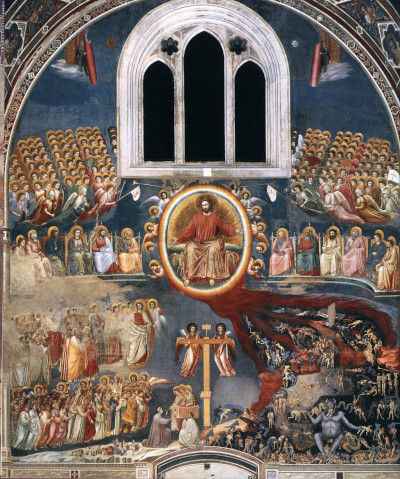
The Scrovegni Chapel, also called the Arena Chapel, is the essential place to understand how Giotto could organise a whole interior. The official account dates its principal painting campaign to 1303–05. Stories of Mary and Christ occupy the walls and triumphal arch, while the Vices and Virtues below lead towards the Last Judgement on the entrance wall. The blue vault belongs to this encompassing design. Looking only for the famous individual scenes misses the way these different levels address someone standing inside the building. [1]
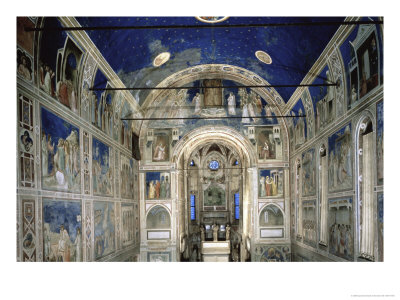
The Scrovegni Chapel interior, looking towards the sanctuary.
Prepare for two scales of attention. First take in the length of the room, the divisions between stories and the way the painted borders hold neighbouring scenes apart. Then choose a few images to look at closely. The great advantage of being there is the ability to move between a single human encounter and its place in a much larger account. A reproduction gives you an unobstructed view of one scene; the chapel makes you turn, look up, compare and remember.
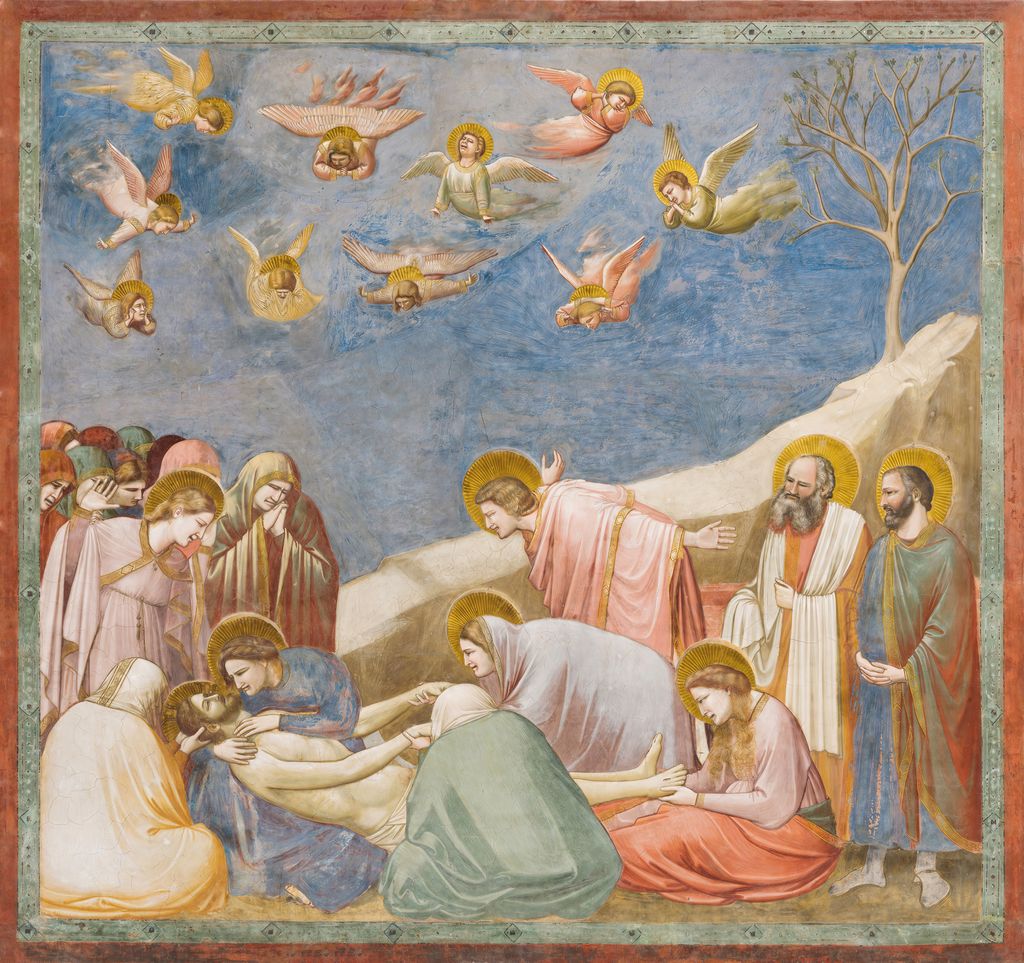
The Lamentation is especially useful for this. Its descending rocky ridge carries the eye towards the group around Christ, while angels crowd the open sky above. Two seated mourners turn their backs towards us, their broad cloaks forming substantial shapes in the foreground. The closely gathered heads below and the scattered airborne figures above make different kinds of grief visible. Look at how much of the composition is occupied by bodies, then at the open blue interval separating earth from heaven. The picture has a forceful shape before every figure has been identified.
Afterwards, return your attention to the lower walls. The apparently sculptural personifications occupy a different visual register from the coloured stories above. Seeing them as a continuous sequence makes their relation to the Judgement more legible than viewing separate photographs of isolated figures. Finally turn towards the entrance wall itself. That change of direction matters: the image behind the entering visitor becomes a vast concluding prospect when one faces back through the chapel. [1]
The triumphal arch also rewards a change of focus. Its painted architecture and narrative surround a central image of God the Father that is a wooden panel, rather than another compartment of fresco. The distinction reminds us that this interior combined different materials. It also prevents the attractive but inaccurate assumption that everything now visible inside the chapel was painted directly onto its walls. [6]
The panel now seen in the chapel is a conservation copy. The original is held in the Musei Civici agli Eremitani, according to Padua’s museum account. [5]
The practical preparation is unusually important here. Consult the chapel's official visiting arrangements before choosing a date. The custodian uses controlled admission and a compensating chamber as part of the building's environmental protection. Read the current instructions for reservations, arrival and belongings; leave those details to the institution rather than relying on an old account of someone else's visit. [7] A little familiarity with the programme beforehand lets the available viewing time serve the paintings.
The Eremitani museum and Palazzo della Ragione
Padua's Musei Civici agli Eremitani hold the wooden Cross associated with the chapel. The current museum record identifies a tempera painting measuring 223 by 164 centimetres and dates it to the same years as the frescoes. It is painted on both sides. The severely damaged reverse retains the scheme of a central Lamb and four Evangelist symbols; the front presents Christ with separate figures and imagery at the terminals. [8]
This is a valuable companion to the chapel because it restores a category of object that photographs of the wall paintings tend to omit. Ask how a freestanding cross would interrupt a sightline, address different groups of viewers and relate to the altar. The museum records several proposals for its original support and position. Its documented nineteenth-century hanging above Enrico Scrovegni's tomb does not settle where it stood in the fourteenth century. Looking at the cross and chapel together opens the question without requiring a speculative reconstruction to become fact. [8]
Palazzo della Ragione offers a different sort of connection. The great hall's earlier decoration was associated with Giotto, but the fire of 1420 destroyed that campaign. The extensive astrological paintings seen there belong to the subsequent rebuilding and repainting, including work by Nicolò Miretto and Stefano da Ferrara. [9] The palace can deepen an interest in Padua's civic imagery and Giotto's remembered importance. It should be approached with a clear expectation: its surviving interior is not an intact second Giotto chapel.
Florence: chapels, crosses and altarpieces
Florence is the place to compare the greatest range of surviving objects. It helps to think in groups: Santa Croce for mural cycles and an altarpiece, the Uffizi for displaced church paintings, Santa Maria Novella and Ognissanti for monumental crosses, and the cathedral complex for a Madonna and the bell tower. These groups answer different questions and need not be squeezed into one exhaustive circuit.
Santa Croce: Bardi, Peruzzi and Baroncelli
At Santa Croce, distinguish the Bardi Chapel from the neighbouring Peruzzi Chapel before looking at individual subjects. Their conditions and programmes differ. The Bardi paintings narrate episodes from the life of Saint Francis; the Peruzzi paintings concern John the Baptist and John the Evangelist. Similar-looking chapel openings can conceal quite different viewing experiences. [2] [3]
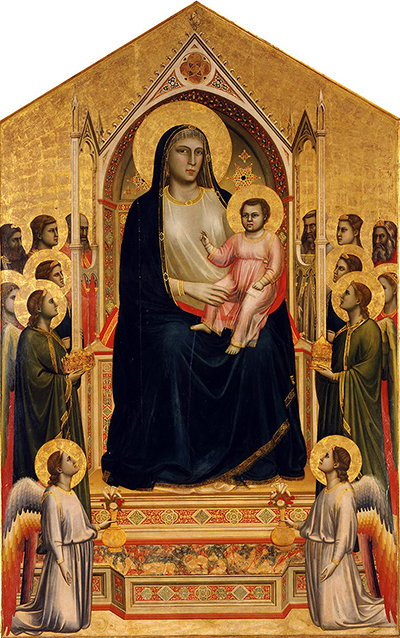
The Ognissanti Madonna in the Uffizi, a monumental movable panel.
The Bardi Chapel's recent restoration is a significant change for anyone using an older guide. On 11 September 2026, the Opera di Santa Croce announced the completion of the four-year project and the renewed visibility of the cycle. Its account stresses both the participation of several painters under Giotto's direction and the importance of work on dry plaster alongside the fresco base. The treatment sought greater continuity while retaining evidence of the paintings' damaged history. [2]
Look for the painted architectural framework connecting the scenes. In the Renunciation, the separation of the two groups makes Francis's position between family and bishop immediately readable. In the Apparition at Arles, the repeated openings of the painted building bind the assembled friars into a shared space. Seen on the wall, these arrangements have a relationship to the real chapel's width, height and arched top that a rectangular book illustration can flatten. A photograph made before the recent treatment is useful for understanding composition, but it should not determine expectations of the restored surface.
The Peruzzi Chapel requires greater patience with loss. Its two facing walls place the two Johns in parallel sequences. The institution describes murals executed predominantly on dry plaster, damaged by whitewashing, uncovering and successive restorations. Areas that seem faint today once carried more complete modelling and detail. [3] Give the architecture and large groupings time to emerge rather than demanding the immediate clarity of a modern colour illustration.
The art historian Michael Viktor Schwarz draws attention to the restricted, often oblique viewing positions in the Peruzzi Chapel. He argues that the painted buildings can seem to open towards the real space of the spectator. [10] This is a useful prompt to compare views from the accessible approach, within the permitted visitor route. A front-on photograph does not reproduce every spatial effect of a narrow chapel. It also helps explain why an apparently awkward projection on a page can become more persuasive when seen in relation to a real wall.
Diagnostic images made with ultraviolet light have contributed to the study of damaged painting; they are not a promise that an ordinary visit includes a UV presentation. Likewise, the completion of the Bardi treatment says nothing by itself about a special viewing arrangement for Peruzzi. Use Santa Croce's visitor information and notices for the accessible route and any temporary changes. Its access guidance is particularly relevant to the raised chapels in the transept. [11]
The Baroncelli Polyptych, a signed ensemble representing the Coronation of the Virgin with attendant saints and angels, introduces another mode of looking within the same church. The signature belongs to a work whose execution is discussed in relation to Giotto's workshop, including Taddeo Gaddi. The surrounding Baroncelli Chapel murals are associated with Taddeo, so the chapel's name should not turn every painted surface into an autograph Giotto. [12] This is a good place to think about the relationship between a portable altarpiece, a family chapel and collaborators who could carry a master's visual language forward.
The Uffizi: Ognissanti and Badia
At the Uffizi, the Ognissanti Madonna gives an immediate lesson in scale. The official record measures the gold-ground tempera panel at 325 by 204 centimetres. It was made for the Florentine church of Ognissanti, but its precise original position there remains uncertain. The gallery currently dates it about 1300–05; other publications use different approximate dates. [13] There is no need to resolve every chronological argument before looking closely at this immense, enthroned figure.
Begin with Mary's broad silhouette, then notice how the sides of the throne divide and partly conceal the surrounding company. The small heads at its sides and the kneeling angels below make the central mother and child feel still larger. The picture contains depth through overlap, steps, the throne's projecting structure and the disposition of bodies. Its gold ground continues to declare a precious sacred image even as those bodies claim substantial space.
This makes an instructive comparison with a chapel scene. In Padua, the eye moves between narrative compartments; here it returns repeatedly to the central presence. The differences in support, scale and function matter as much as changes in style. The Ognissanti Madonna also begins a geographical thread that can be followed to the cross still associated with its church and the Dormition now in Berlin.
The Uffizi's Badia Polyptych presents Mary and the child among four saints in five pointed compartments. The Uffizi-supplied collection account traces it to the Badia Fiorentina. Its present museum home should therefore be distinguished from the church named in its title. [14] Looking across the surviving ensemble makes the relations between separate saints tangible: the repeated outlines create a rhythm while the differing vestments, books and attributes prevent the arrangement becoming monotonous.
The Badia and Ognissanti paintings reward comparison as two solutions for a sacred panel. One gathers a company around a central throne; the other aligns figures through a sequence of compartments. Neither needs to be forced into a simple competition for which looks more modern. Their shapes organise different kinds of attention. For changing display information, the Uffizi maintains a dedicated list of works temporarily absent, explaining that transport and conservation can extend an absence beyond an exhibition's published dates. [15]
Santa Maria Novella and Ognissanti: two great crosses
Santa Maria Novella's Crucifix belongs to the experience of a large church interior. The church's own account places it high in the nave. Its present suspension recalls its relationship to the historic division between lay congregation and religious community, although the object has occupied several positions over the centuries. [16] Approach it with the height and distance in mind. The bodily image must remain legible to someone who cannot stand face to face with its painted surface.

Giotto's Crucifix in Santa Maria Novella
That situation changes the questions to ask. How does the whole figure register across the nave? How clearly can the separate mourners be distinguished? How does the cross divide the view towards the eastern end of the church? A close reproduction can supplement what is difficult to inspect at height, while the church supplies the spatial experience the reproduction lacks. Consult Santa Maria Novella's official site for the current visitor arrangements.
Ognissanti has a separate, monumental wooden cross. The Opificio delle Pietre Dure's conservation record gives its present dimensions as 467 by 376 centimetres and records the major treatment of 2002–10. It identifies the cross as the surviving Giotto work remaining in the church, while the Maestà and Dormition are now elsewhere. [17] This is an especially clear instance of one medieval setting becoming several modern destinations.
The connection can guide a comparison without requiring a journey to every surviving component. Hold the Uffizi Madonna's scale in mind when considering a cross made to command a church interior. Then look at a reproduction of Berlin's low, broad Dormition. These works do not share one standard format: their proportions reveal different tasks. The Ognissanti cross and the Santa Maria Novella cross are also distinct objects, with different histories; seeing one does not mean that the other has been encountered under another name.
The cathedral complex and Museo Horne
The Madonna of San Giorgio alla Costa is now on deposit at the Museo dell'Opera del Duomo from the collections of the Archdiocese of Florence. Its current institutional record places it in the Sala dei Frammenti. Older references to the Diocesan Museum describe an earlier arrangement and should not be used as present directions. The panel was cut down in 1705 and suffered damage in the Georgofili bombing of 1993. The museum notes a fragment deliberately retained in the angel on the viewer's right as a witness to that attack. [18]
Here the museum context provides an illuminating comparison: the custodian relates the painting's substantial Madonna and inlaid throne to Arnolfo di Cambio's sculpture and the medieval cathedral façade. This does not make the panel a cathedral commission; its original destination was San Giorgio alla Costa. [18] It does allow painting and sculpture to be considered together. A museum transfer can remove an original setting while creating a productive new encounter.
Outside, the bell tower carries Giotto's name, but its full present height belongs to a longer building history. He received responsibility in 1334 and began the project; Andrea Pisano and Francesco Talenti continued it after his death. Original sculptures from its exterior are preserved in the cathedral museum, with copies on the tower. [19] Look at the tower and museum together if the relationship between architecture and carved decoration interests you. The official bell-tower page also carries restoration and access notices, so its name should not be treated as a guarantee of an unrestricted view or a suitable climb for every visitor.
Museo Horne offers a more concentrated encounter through Saint Stephen, a surviving compartment from an altarpiece. The museum describes the deacon's rich vestment and the stones identifying his martyrdom, and treats a connection with a Santa Croce polyptych as a possibility. [20] Its value here is the chance to consider one saint at a different scale from the great public interiors. Check the Horne's visit page directly: membership of its collection does not establish unrestricted access throughout the week.
Assisi: seeing the basilica as a shared undertaking
Assisi requires an early distinction between its Upper and Lower Churches. The celebrated twenty-eight stories of Saint Francis run around the lower narrative register of the Upper Church's nave. The basilica itself acknowledges disagreement over their authorship: some scholars associate them with Giotto, others with a Roman school. Other painted zones belong to further artists, including Cimabue and Jacopo Torriti. [21] A visit becomes more rewarding when the different zones retain their identities.
Begin with the architecture and the placement of the Francis cycle below the higher biblical stories. These paintings ask the viewer to follow successive episodes around a real church. Even if attention settles on a single scene, its neighbours remain part of the experience. Choose a small group whose subjects can be recognised beforehand, then look for changes in the handling of crowds, buildings and empty ground. Those differences are worth noticing without converting an immediate impression into a firm allocation of individual hands.
The Assisi frescoes can also be compared with the Bardi Chapel's much more selective treatment of Francis. The same saint's life becomes a different pictorial undertaking when organised across a nave or compressed into the walls of a family chapel. Assisi gives the sequence a breadth that is difficult to communicate through a row of separate online images. Santa Croce draws attention towards the relationship between a few large scenes and a confined architectural setting.
The 1997 earthquake belongs to the basilica's modern history, but familiar photographs of the disaster can distort expectations. The Italian conservation institute records the destruction of paintings on two vault sections and part of the entrance arch. This was a devastating loss followed by major conservation work; it was not the collapse of the entire twenty-eight-scene Francis cycle. [22] Distinguishing the damaged zones from the surviving narrative is essential when looking up inside the Upper Church.
In the Lower Church, seek the Magdalene Chapel as a separate ensemble associated with Giotto and his workshop. Its narratives belong to Mary Magdalene's Christian legendary and devotional traditions. The painted borders, window, arches and stacked scenes form a small interior within the larger church. They offer a useful comparison with Padua's more continuous rectangular room: here the real architecture repeatedly interrupts and shapes the painted fields. [23]
The lower transept and crossing add further distinctions. The basilica identifies the northern transept's infancy imagery with Giotto and workshop, while the vault above the high altar shows the Franciscan vows and Francis in glory. Pietro Lorenzetti's Passion paintings belong to a separate contribution in the Lower Church. [23] Following a general Giotto label from one part of the building into every adjoining surface obscures precisely the artistic variety that makes Assisi exceptional.
This is also a place where viewing and worship share space. The basilica publishes separate information for its churches, crypt, services and guided visits. Use its official access information to understand the arrangements applying to your visit. A doorway or chapel visible in an old photograph need not form part of every permitted route. Plan around the areas actually accessible, and let a few carefully chosen comparisons stand in place of an attempt to inspect everything at once.
Rome and the Vatican: a two-sided altarpiece and a remade mosaic
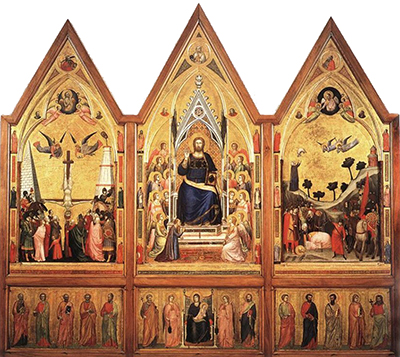
The Vatican Pinacoteca's Stefaneschi Triptych is the strongest surviving panel ensemble for a visit focused on Giotto in Rome. The Vatican Museums' attribution explicitly includes assistants. Painted for Old Saint Peter's, it has imagery on both sides: Christ enthroned with the martyrdoms of Peter and Paul on one face, and Saint Peter enthroned with attendant saints on the other. Cardinal Jacopo Stefaneschi appears as donor, including with a model of the triptych. [24]
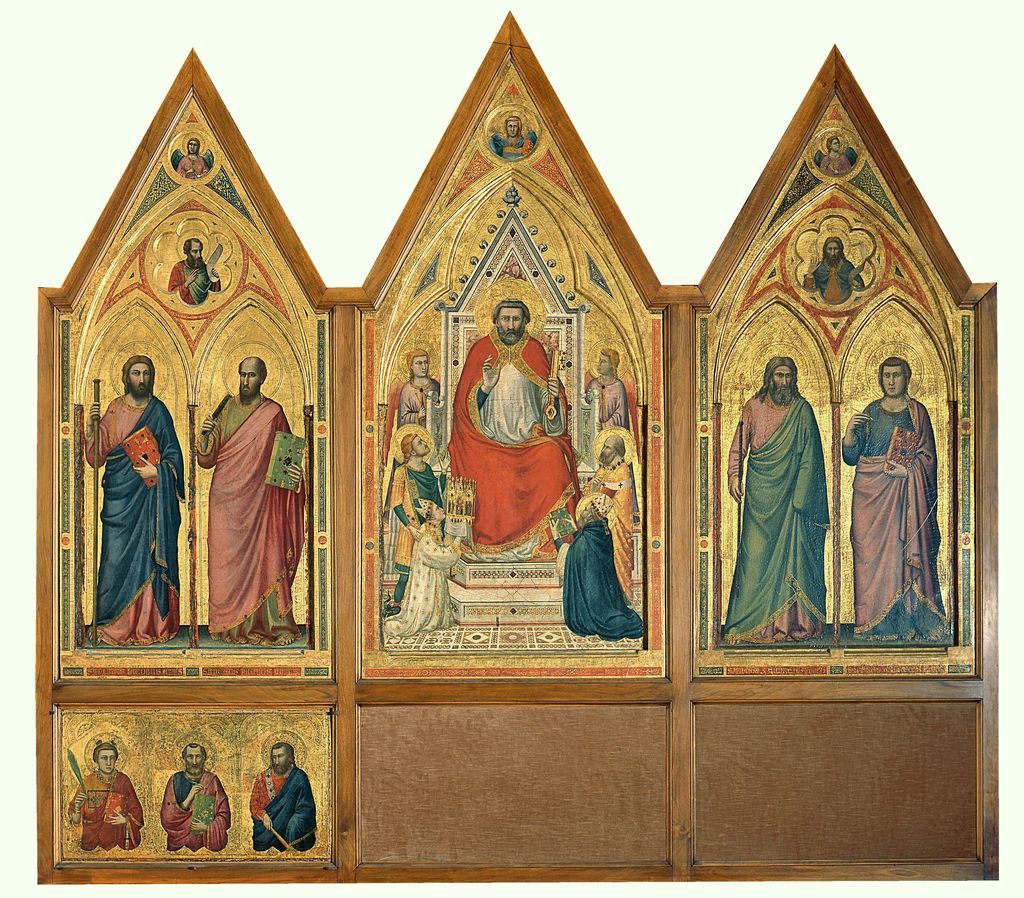
The Peter and donor face of the Stefaneschi Triptych, by Giotto and assistants. Self-scanned reproduction, Commons uploader Eugene a. Image source. Public domain. Proportionally reduced reproduction; no colour or content enhancement.
The two faces are central to its interest. A freestanding liturgical object could address different groups looking towards it from different directions. Think of the contrast with an altarpiece now shown against a wall: a museum photograph of one face can make a deliberately double-sided object seem single. Use the Vatican's record to distinguish its recto and verso and to understand why the donor's miniature painted altarpiece is such an informative detail. Consult the Vatican Museums' visit information for the current route to the Pinacoteca.
Saint Peter's portico has another celebrated Giotto connection, the Navicella. The mosaic there is a seventeenth-century remaking of the medieval design, whose original belonged to the old basilica's atrium. The Vatican's historical account locates the mosaic above the central entrance of the portico; its modern digital history identifies the later remake. [25] It remains an important witness to the survival of Giotto's reputation through the rebuilding of Saint Peter's. It does not offer an untouched expanse of medieval tesserae.
The basilica and the Vatican Museums are separate visitor destinations. A plan to see the triptych should therefore be checked against the museums' arrangements, while a visit to the portico follows Saint Peter's own official visitor information. Keeping the two apart prevents a famous place-name from concealing two quite different experiences: an extant painted ensemble and a later monumental transmission of a lost work.
Bologna, Rimini and the Mugello
Bologna's Pinacoteca Nazionale holds a signed polyptych of the Virgin and saints. The current museum account attributes its production to Giotto and his workshop, probably in Florence, and associates its original destination with the papal palace near Porta Galliera. [26] The association with Bologna need not mean the object was painted there. That distinction is worth retaining when considering the movement of finished paintings as well as the movement of painters.
The polyptych provides a focused alternative to a mural cycle. Its signature connects the ensemble to Giotto's public name, while the museum's workshop attribution leaves room for collaborative execution. Those two facts can coexist. Consult the Pinacoteca's official site and object record for changing access and display information; the painting's present museum home is distinct from the palace setting described in its history.
In Rimini, the principal surviving work is the painted Crucifix in the Tempio Malatestiano, the transformed church formerly dedicated to Saint Francis. The municipality identifies it in the basilica's apse. [27] This is a useful destination for thinking about survival through architectural change. A medieval wooden painting now belongs to a church whose later identity and appearance can dominate a first impression.
Rimini also allows Giotto's presence to be considered alongside a local school with its own character. The city's related paintings should retain their individual attributions; a work influenced by Giotto does not thereby become a second original. The crucifix has lost parts of its original outline. The church's official municipal visitor record is the appropriate starting point for current access.
At Borgo San Lorenzo in the Mugello, the Pieve di San Lorenzo preserves a fragmentary Madonna and Child attributed to the young Giotto. The municipal tourism record identifies the work in the church. Cristina Acidini Luchinat's scholarly account traces it from the oratory of Sant'Omobono and explains that it belonged to a larger, pointed altarpiece. [28] The present fragment must not be mistaken for a complete small Maestà.
Its narrow surviving shape concentrates attention on Mary's face and the small hands at its lower edge. That intimacy is also a result of loss: the remainder of the original composition cannot be recovered simply by looking harder at the surviving image. For someone already interested in Giotto's early paintings, the fragment gives the regional connection a specific object. A visit to the Mugello's commemorative places has a different purpose from an encounter with surviving paint; the distinction keeps the landscape's associations from becoming a catalogue of originals.
Panels beyond Italy
Paris and Berlin: large works far from their original churches
The Louvre's Saint Francis Receiving the Stigmata, inventory INV 309, is a signed gold-ground painting on wood from Pisa. It is not a fresco removed from Assisi. The museum traces its successive Pisan locations and its arrival in Paris through Napoleonic seizure in 1813. [4] The object's history connects two cities even though its subject naturally brings Assisi to mind.
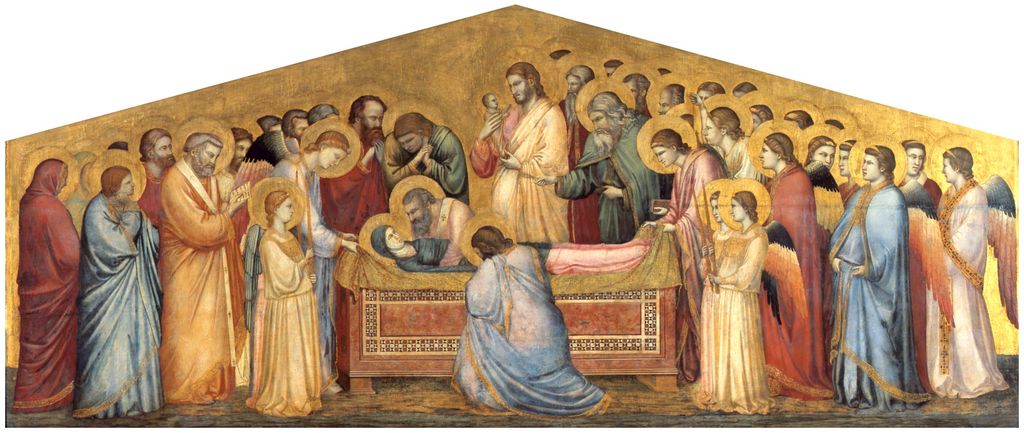
Berlin’s Death of the Virgin, a wide panel associated with Ognissanti. Image source. Public domain. Proportionally reduced reproduction; no colour or content enhancement.
Its pointed outline encloses a large scene above three small narratives. Francis kneels below the winged crucified figure, with thin lines crossing the intervening space. The predella condenses the Dream of Innocent III, confirmation of the Rule and Sermon to the Birds. Looking between the large apparition and these smaller episodes reveals how one altarpiece can combine an intense central encounter with a concise institutional story. Compare it with the Assisi Stigmatisation or Bardi's version as separate compositions, rather than searching for one image under three location names.
Berlin's Gemäldegalerie holds the Dormition of the Virgin, inventory 1884, associated with Ognissanti in Florence. It is a wide, low painting on poplar, quite different in proportions from the Louvre panel. The museum's catalogue discusses its relationship to funeral and memorial ritual. [29] Mary's extended body gives the foreground a strong horizontal axis, while the packed standing company rises behind it. Christ, holding the small figure of her soul, occupies the centre. The format gathers a community around a body instead of stacking successive episodes.
Berlin also holds the much smaller Crucifixion, inventory 1074A. Its current record names Giotto; the catalogue recounts earlier doubts and alternative attributions. [30] That history should not cause an outdated workshop label to replace the museum's present one. Nor should the small panel be confused with the Dormition or with Munich's separate Crucifixion. Follow the Gemäldegalerie's official visitor information and each object record when checking availability.
London, Munich and New York: parts of one narrative board
London's National Gallery owns Pentecost, NG5360, catalogued as Giotto and Workshop. This is the small panel discussed on the Pentecost page; the Scrovegni Pentecost is a different painting on a wall in Padua. Dillian Gordon's catalogue explains the material link between the London panel and six companion scenes: their wood grain establishes that they once belonged to one long board. [31]
This connection gives a special purpose to looking at an apparently self-contained square. Imagine the image as the conclusion to a horizontal sequence. Its cut edges now mark the boundary of a museum object, while originally a neighbouring scene stood immediately beside it. The visible panel is also an altered surface: technical examination identified remains of original gilded-tin rays distinct from the later painted and gilded rays. [31] Small scale does not mean simple history.
The Alte Pinakothek in Munich holds three companions: The Last Supper (643), The Crucifixion (667) and Christ in Limbo (5295). Its current account describes the seven scenes as a long narrative altarpiece and proposes a Rimini origin. The National Gallery treats the original location as uncertain. [32] Their shared physical origin is firmer evidence than a precise reconstruction of the first commission. The Pinakothek's own information and collection records should guide a visit, rather than assuming that every scene will always hang together.
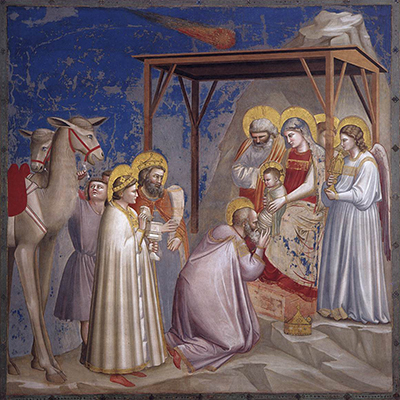
New York's Metropolitan Museum holds the series' opening image, The Adoration of the Magi, 11.126.1, currently dated “possibly ca. 1320.” It is the painting on the Epiphany page, distinct from the Padua fresco. [33] Here the sharply pitched shelter divides the gold upper field from Mary's reclining figure and the kings below. The kneeling king draws the child towards him; a removed crown rests on the ground. The compact composition rewards close inspection of how several events and gestures fit around one shelter.
These dispersed panels offer a way to compare across collections without planning an implausibly comprehensive tour. Seeing one original, then consulting the others' reproductions, can restore a sense of sequence. The museums' different dates and qualifications are also useful reminders that a single original object can generate several scholarly reconstructions. Current on-view labels at the National Gallery and Met remain more useful for a prospective visit than a historic exhibition checklist.
Washington and Raleigh: the surviving altarpiece as a clue
Washington's National Gallery of Art owns the Madonna and Child, 1939.1.256, the rose Madonna. Its current record dates it about 1310/15 and identifies it as the centre of a five-part altarpiece. [34] Mary's broad blue mantle, the pale child and the delicately held rose form a remarkably concentrated image. The child's reaching hand directs attention towards the flower, while Mary's supporting hand makes his weight tangible. The close exchange is quite unlike the public enthronement of the Ognissanti Madonna.
A surviving central compartment can appear complete because its figures form a coherent group. Thinking of missing neighbours changes that impression. Saints once extended the sacred company laterally. The panel now permits an intimate encounter while also pointing towards a larger lost arrangement. Use the gallery's visit information and object record when checking its availability.
The North Carolina Museum of Art in Raleigh holds the Peruzzi Altarpiece, GL.60.17.7, with Christ, Mary, the two Johns and Francis. Its own label explains that these saints suggest a commission for the Peruzzi Chapel at Santa Croce. [35] That is a proposed provenance based on the ensemble's identity and associations, rather than a surviving contract naming the destination. It can be considered alongside the Florentine murals without presenting a hypothesis as a documented reunion.
Raleigh is consequently an especially useful comparison for readers interested in how chapel decoration might work across different media. The present altarpiece is a substantial surviving ensemble; the Florence chapel retains mural painting but has undergone changes to its furnishings. Neither location alone restores the medieval setting intact. The museum's official site and collection record supply the changing visitor and display information.
Looking across places
A satisfying encounter with Giotto does not depend on accumulating cities. It depends on remembering what each setting makes visible. A chapel lets painted architecture answer real architecture. A high cross demands a body readable from a distance. A museum panel offers closeness while asking us to reconstruct missing neighbours. A rebuilt monument can preserve a celebrated name even where the medieval material has largely disappeared.
Choose a small number of comparisons to carry between places: the weight of a child in a Madonna's arms, the arrangement of mourners, the way a building gathers figures, or the distance between a viewer and a sacred body. Look at an original's entire shape before moving towards details. Then ask what lies outside its present edges, whether another painted face exists on the reverse, and how its location has changed. Those questions can make one panel an absorbing visit and a whole painted church far more than a collection of famous pictures.
Watch: Explore Giotto’s Art
Choose an overview or a closer look at three major works. These films provide wider Giotto context alongside this article.
Artworks directory
This directory brings together 209 records for paintings, ensembles, individual scenes and components, architectural work, an associated disputed design, and reported or lost projects connected with Giotto. Ensembles and their parts appear separately, so 209 is a count of records rather than independent paintings or commissions. Attributions and dates remain qualified where disputed; inclusion does not establish Giotto’s own hand throughout.
| Name | Date | Medium, attribution and status |
|---|---|---|
| Expulsion of Joachim from the Temple — Scrovegni Chapel, Padua | c.1303–05 (chapel campaign) | Fresco / wall painting. Giotto and workshop. Scene within a cycle. Padova Musei. Chapel overview. |
| Joachim among the Shepherds — Scrovegni Chapel, Padua | c.1303–05 (chapel campaign) | Fresco / wall painting. Giotto and workshop. Scene within a cycle. Padova Musei. Chapel overview. |
| Annunciation to Saint Anne — Scrovegni Chapel, Padua | c.1303–05 (chapel campaign) | Fresco / wall painting. Giotto and workshop. Scene within a cycle. Padova Musei. Chapel overview. |
| Sacrifice of Joachim — Scrovegni Chapel, Padua | c.1303–05 (chapel campaign) | Fresco / wall painting. Giotto and workshop. Scene within a cycle. Padova Musei. Chapel overview. |
| Joachim’s Dream — Scrovegni Chapel, Padua | c.1303–05 (chapel campaign) | Fresco / wall painting. Giotto and workshop. Scene within a cycle. Padova Musei. Padova Musei. Chapel overview. |
| Meeting at the Golden Gate — Scrovegni Chapel, Padua | c.1303–05 (chapel campaign) | Fresco / wall painting. Giotto and workshop. Scene within a cycle. Padova Musei. Chapel overview. |
| Birth of the Virgin — Scrovegni Chapel, Padua | c.1303–05 (chapel campaign) | Fresco / wall painting. Giotto and workshop. Scene within a cycle. Padova Musei. Padova Musei. Chapel overview. |
| Presentation of the Virgin in the Temple — Scrovegni Chapel, Padua | c.1303–05 (chapel campaign) | Fresco / wall painting. Giotto and workshop. Scene within a cycle. Padova Musei. Chapel overview. |
| Delivery of the Rods — Scrovegni Chapel, Padua | c.1303–05 (chapel campaign) | Fresco / wall painting. Giotto and workshop. Scene within a cycle. Padova Musei. Chapel overview. |
| Prayer of Joseph and the Suitors — Scrovegni Chapel, Padua | c.1303–05 (chapel campaign) | Fresco / wall painting. Giotto and workshop. Scene within a cycle. Padova Musei. Chapel overview. |
| Marriage of the Virgin — Scrovegni Chapel, Padua | c.1303–05 (chapel campaign) | Fresco / wall painting. Giotto and workshop. Scene within a cycle. Padova Musei. Chapel overview. |
| Wedding Procession of Mary — Scrovegni Chapel, Padua | c.1303–05 (chapel campaign) | Fresco / wall painting. Giotto and workshop. Scene within a cycle. Padova Musei. Chapel overview. |
| Annunciation on the triumphal arch — complete ensemble (Scrovegni Chapel, Padua) | c.1303–05 (chapel campaign) | Wall painting with a central painted wooden panel. Giotto and workshop. Ensemble. Includes the Mission of Gabriel and the lower Annunciation pair; the original central wooden panel is in the Musei Civici agli Eremitani, with a conservation copy in the chapel. Padova Musei. Padova Musei. Scholarly study. Chapel overview. |
| Visitation — Scrovegni Chapel, Padua | c.1303–05 (chapel campaign) | Fresco / wall painting. Giotto and workshop. Scene within a cycle. Padova Musei. Chapel overview. |
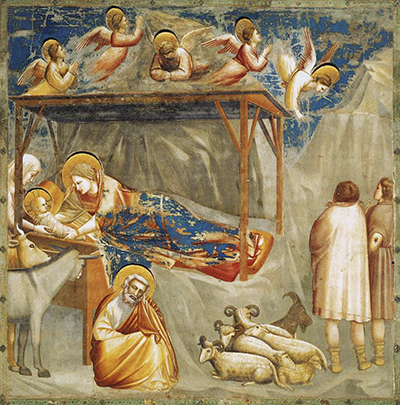
| Nativity — Scrovegni Chapel, Padua | c.1303–05 (chapel campaign) | Fresco / wall painting. Giotto and workshop. Scene within a cycle. Padova Musei. Chapel overview. |
| Adoration of the Magi — Scrovegni Chapel, Padua | c.1303–05 (chapel campaign) | Fresco / wall painting. Giotto and workshop. Scene within a cycle. Padova Musei. Chapel overview. |
| Presentation of Christ at the Temple — Scrovegni Chapel, Padua | c.1303–05 (chapel campaign) | Fresco / wall painting. Giotto and workshop. Scene within a cycle. Padova Musei. Chapel overview. |
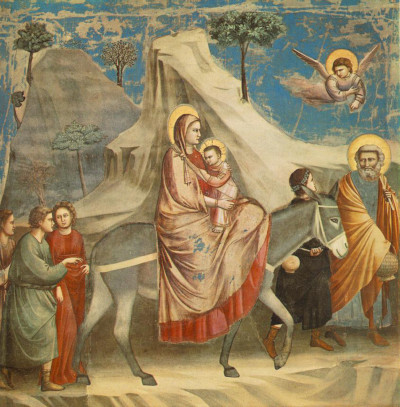
| Flight into Egypt — Scrovegni Chapel, Padua | c.1303–05 (chapel campaign) | Fresco / wall painting. Giotto and workshop. Scene within a cycle. Padova Musei. Chapel overview. |
| Massacre of the Innocents — Scrovegni Chapel, Padua | c.1303–05 (chapel campaign) | Fresco / wall painting. Giotto and workshop. Scene within a cycle. Padova Musei. Chapel overview. |
| Christ among the Doctors — Scrovegni Chapel, Padua | c.1303–05 (chapel campaign) | Fresco / wall painting. Giotto and workshop. Scene within a cycle. Padova Musei. Chapel overview. |
| Baptism of Christ — Scrovegni Chapel, Padua | c.1303–05 (chapel campaign) | Fresco / wall painting. Giotto and workshop. Scene within a cycle. Padova Musei. Chapel overview. |
| Marriage at Cana — Scrovegni Chapel, Padua | c.1303–05 (chapel campaign) | Fresco / wall painting. Giotto and workshop. Scene within a cycle. Padova Musei. Padova Musei. Chapel overview. |
| Raising of Lazarus — Scrovegni Chapel, Padua | c.1303–05 (chapel campaign) | Fresco / wall painting. Giotto and workshop. Scene within a cycle. Padova Musei. Chapel overview. |
| Entry into Jerusalem — Scrovegni Chapel, Padua | c.1303–05 (chapel campaign) | Fresco / wall painting. Giotto and workshop. Scene within a cycle. Padova Musei. Chapel overview. |
| Expulsion of the Money Changers — Scrovegni Chapel, Padua | c.1303–05 (chapel campaign) | Fresco / wall painting. Giotto and workshop. Scene within a cycle. Padova Musei. Padova Musei. Chapel overview. |
| Judas Receiving the Payment — Scrovegni Chapel, Padua | c.1303–05 (chapel campaign) | Fresco / wall painting. Giotto and workshop. Scene within a cycle. Padova Musei. Chapel overview. |
| Last Supper — Scrovegni Chapel, Padua | c.1303–05 (chapel campaign) | Fresco / wall painting. Giotto and workshop. Scene within a cycle. Padova Musei. Chapel overview. |
| Washing of the Feet — Scrovegni Chapel, Padua | c.1303–05 (chapel campaign) | Fresco / wall painting. Giotto and workshop. Scene within a cycle. Padova Musei. Chapel overview. |
| Arrest of Christ — Scrovegni Chapel, Padua | c.1303–05 (chapel campaign) | Fresco / wall painting. Giotto and workshop. Scene within a cycle. Padova Musei. Chapel overview. |
| Christ before Annas and Caiaphas — Scrovegni Chapel, Padua | c.1303–05 (chapel campaign) | Fresco / wall painting. Giotto and workshop. Scene within a cycle. Padova Musei. Chapel overview. |
| Mocking of Christ and Flagellation — Scrovegni Chapel, Padua | c.1303–05 (chapel campaign) | Fresco / wall painting. Giotto and workshop. Scene within a cycle. Padova Musei. Chapel overview. |
| Road to Calvary — Scrovegni Chapel, Padua | c.1303–05 (chapel campaign) | Fresco / wall painting. Giotto and workshop. Scene within a cycle. Padova Musei. Chapel overview. |
| Crucifixion — Scrovegni Chapel, Padua | c.1303–05 (chapel campaign) | Fresco / wall painting. Giotto and workshop. Scene within a cycle. Padova Musei. Chapel overview. |
| Lamentation — Scrovegni Chapel, Padua | c.1303–05 (chapel campaign) | Fresco / wall painting. Giotto and workshop. Scene within a cycle. Padova Musei. Chapel overview. |
| Resurrection / Noli me tangere — Scrovegni Chapel, Padua | c.1303–05 (chapel campaign) | Fresco / wall painting. Giotto and workshop. Scene within a cycle. Padova Musei. Chapel overview. |
| Ascension — Scrovegni Chapel, Padua | c.1303–05 (chapel campaign) | Fresco / wall painting. Giotto and workshop. Scene within a cycle. Padova Musei. Chapel overview. |
| Pentecost — Scrovegni Chapel, Padua | c.1303–05 (chapel campaign) | Fresco / wall painting. Giotto and workshop. Scene within a cycle. Padova Musei. Padova Musei. Chapel overview. |
| Coretto — right painted recess (Scrovegni Chapel, Padua) | c.1303–05 (chapel campaign) | Fresco / painted fictive architecture. Giotto and workshop. Ensemble component. Padova Musei. Padova Musei. Scholarly study. Chapel overview. |
| Coretto — left painted recess (Scrovegni Chapel, Padua) | c.1303–05 (chapel campaign) | Fresco / painted fictive architecture. Giotto and workshop. Ensemble component. Padova Musei. Padova Musei. Scholarly study. Chapel overview. |
| Envy — Scrovegni Chapel, Padua | c.1303–05 (chapel campaign) | Grisaille fresco / wall painting. Giotto and workshop. Ensemble component. Padova Musei. Chapel overview. Scholarly study. Padova Musei. |
| Despair — Scrovegni Chapel, Padua | c.1303–05 (chapel campaign) | Grisaille fresco / wall painting. Giotto and workshop. Ensemble component. Padova Musei. Chapel overview. Scholarly study. Padova Musei. |
| Prudence — Scrovegni Chapel, Padua | c.1303–05 (chapel campaign) | Grisaille fresco / wall painting. Giotto and workshop. Ensemble component. Padova Musei. Chapel overview. Scholarly study. Padova Musei. |
| Fortitude — Scrovegni Chapel, Padua | c.1303–05 (chapel campaign) | Grisaille fresco / wall painting. Giotto and workshop. Ensemble component. Padova Musei. Chapel overview. Scholarly study. Padova Musei. |
| Temperance — Scrovegni Chapel, Padua | c.1303–05 (chapel campaign) | Grisaille fresco / wall painting. Giotto and workshop. Ensemble component. Padova Musei. Chapel overview. Scholarly study. Padova Musei. |
| Justice — Scrovegni Chapel, Padua | c.1303–05 (chapel campaign) | Grisaille fresco / wall painting. Giotto and workshop. Ensemble component. Padova Musei. Chapel overview. Scholarly study. Padova Musei. |
| Faith — Scrovegni Chapel, Padua | c.1303–05 (chapel campaign) | Grisaille fresco / wall painting. Giotto and workshop. Ensemble component. Padova Musei. Chapel overview. Scholarly study. Padova Musei. |
| Charity — Scrovegni Chapel, Padua | c.1303–05 (chapel campaign) | Grisaille fresco / wall painting. Giotto and workshop. Ensemble component. Padova Musei. Chapel overview. Scholarly study. Padova Musei. |
| Hope — Scrovegni Chapel, Padua | c.1303–05 (chapel campaign) | Grisaille fresco / wall painting. Giotto and workshop. Ensemble component. Padova Musei. Chapel overview. Scholarly study. Padova Musei. |
| Folly — Scrovegni Chapel, Padua | c.1303–05 (chapel campaign) | Grisaille fresco / wall painting. Giotto and workshop. Ensemble component. Padova Musei. Chapel overview. Scholarly study. Padova Musei. |
| Inconstancy — Scrovegni Chapel, Padua | c.1303–05 (chapel campaign) | Grisaille fresco / wall painting. Giotto and workshop. Ensemble component. Padova Musei. Chapel overview. Scholarly study. Padova Musei. |
| Wrath — Scrovegni Chapel, Padua | c.1303–05 (chapel campaign) | Grisaille fresco / wall painting. Giotto and workshop. Ensemble component. Padova Musei. Chapel overview. Scholarly study. Padova Musei. |
| Injustice — Scrovegni Chapel, Padua | c.1303–05 (chapel campaign) | Grisaille fresco / wall painting. Giotto and workshop. Ensemble component. Padova Musei. Chapel overview. Scholarly study. Padova Musei. |
| Infidelity / Idolatry — Scrovegni Chapel, Padua | c.1303–05 (chapel campaign) | Grisaille fresco / wall painting. Giotto and workshop. Ensemble component. Padova Musei. Chapel overview. Scholarly study. Padova Musei. |
| Starry vault — complete ensemble (Scrovegni Chapel, Padua) | c.1303–05 (chapel campaign) | Vault painting. Giotto and workshop. Ensemble. Padova Musei. Padova Musei. Chapel overview. |
| Last Judgement — Scrovegni Chapel, Padua | c.1303–05 (chapel campaign) | Fresco / wall painting. Giotto and workshop. Scene within a cycle. Padova Musei. Padova Musei. Chapel overview. Padova Musei. |
| Prophet Malachi — vault medallion — Scrovegni Chapel, Padua | c.1303–05 (chapel campaign) | Fresco / wall painting. Giotto and workshop. Ensemble component. Padova Musei. Padova Musei. Chapel overview. Padova Musei. |
| Prophet Baruch — vault medallion — Scrovegni Chapel, Padua | c.1303–05 (chapel campaign) | Fresco / wall painting. Giotto and workshop. Ensemble component. Padova Musei. Padova Musei. Chapel overview. Padova Musei. |
| Prophet Isaiah — vault medallion — Scrovegni Chapel, Padua | c.1303–05 (chapel campaign) | Fresco / wall painting. Giotto and workshop. Ensemble component. Padova Musei. Padova Musei. Chapel overview. Padova Musei. |
| Prophet Daniel — vault medallion — Scrovegni Chapel, Padua | c.1303–05 (chapel campaign) | Fresco / wall painting. Giotto and workshop. Ensemble component. Padova Musei. Padova Musei. Chapel overview. Padova Musei. |
| Christ Pantocrator — vault medallion — Scrovegni Chapel, Padua | c.1303–05 (chapel campaign) | Fresco / wall painting. Giotto and workshop. Ensemble component. Padova Musei. Padova Musei. Chapel overview. Padova Musei. |
| Virgin and Child — vault medallion — Scrovegni Chapel, Padua | c.1303–05 (chapel campaign) | Fresco / wall painting. Giotto and workshop. Ensemble component. Padova Musei. Padova Musei. Chapel overview. Padova Musei. |
| Prophet Ezekiel — vault medallion — Scrovegni Chapel, Padua | c.1303–05 (chapel campaign) | Fresco / wall painting. Giotto and workshop. Ensemble component. Padova Musei. Padova Musei. Chapel overview. Padova Musei. |
| Prophet Micah — vault medallion — Scrovegni Chapel, Padua | c.1303–05 (chapel campaign) | Fresco / wall painting. Giotto and workshop. Ensemble component. Padova Musei. Padova Musei. Chapel overview. Padova Musei. |
| Saint John the Baptist — vault medallion — Scrovegni Chapel, Padua | c.1303–05 (chapel campaign) | Fresco / wall painting. Giotto and workshop. Ensemble component. Padova Musei. Padova Musei. Chapel overview. Padova Musei. |
| Scrovegni Chapel — painted decoration | c.1303–05 (chapel campaign) | Fresco / wall painting, with a painted wooden panel. Giotto and workshop (painted decoration). Ensemble. Includes separately listed scenes and components. The original central God the Father panel is in the Musei Civici agli Eremitani; a conservation copy is in the chapel. Chapel overview. Padova Musei. Padova Musei. Source. Source. Source. Padova Musei. Scholarly study. |
| Vices and Virtues — complete fourteen-figure programme | c.1303–05 (chapel campaign) | Grisaille fresco / wall painting. Giotto and workshop. Ensemble. Fourteen figures: seven virtues and seven opposed vices. Padova Musei. Chapel overview. Scholarly study. |
| Coretti — paired fictive chapels | c.1303–05 (chapel campaign) | Fresco / painted fictive architecture. Giotto and workshop. Ensemble. Two separate painted recesses, also listed individually. Padova Musei. Padova Musei. Scholarly study. |
| Mission of Gabriel — heavenly assembly | c.1303–05 (chapel campaign) | Wall painting with central painted wooden image. Giotto and workshop. Ensemble component. Central wooden God the Father panel preserved at the Musei Civici agli Eremitani; conservation copy in the chapel. Chapel overview. Padova Musei. Scholarly study. Padova Musei. |
| Annunciation — Gabriel and Mary in facing chambers | c.1303–05 (chapel campaign) | Fresco / wall painting. Giotto and workshop. Ensemble component. Chapel overview. Scholarly study. Padova Musei. |
| God the Father — central wooden panel of the Mission of Gabriel | c.1303–05 (chapel campaign) | Painting on wood. Associated with Giotto. Ensemble component. Original at the Musei Civici agli Eremitani, Padua; conservation copy in the Scrovegni Chapel. Padova Musei. Padova Musei. Scholarly study. Source. |
| Life of Saint Francis — Upper Church cycle, Assisi | Late 13th–early 14th century; dating disputed | Fresco / wall-painting cycle. Traditionally associated with Giotto; Giotto, Roman-school and other attributions disputed. Ensemble. Twenty-eight-scene nave cycle; scenes also listed individually. Basilica catalogue. Scholarly study. Basilica catalogue. Source. Source. |
| Homage of a Simple Man — Upper Church, Assisi | Late 13th–early 14th century; dating disputed | Wall painting. Traditionally associated with Giotto; authorship and dating disputed. Scene within a cycle. Source. Scholarly study. Source. Source. Source. |
| Gift of the Mantle — Upper Church, Assisi | Late 13th–early 14th century; dating disputed | Wall painting. Traditionally associated with Giotto; authorship and dating disputed. Scene within a cycle. Basilica catalogue. Scholarly study. Source. Source. Source. |
| Dream of the Palace Full of Arms — Upper Church, Assisi | Late 13th–early 14th century; dating disputed | Wall painting. Traditionally associated with Giotto; authorship and dating disputed. Scene within a cycle. Basilica catalogue. Source. Scholarly study. Source. Source. Source. |
| Prayer before the Crucifix at San Damiano — Upper Church, Assisi | Late 13th–early 14th century; dating disputed | Wall painting. Traditionally associated with Giotto; authorship and dating disputed. Scene within a cycle. Source. Source. Source. Scholarly study. Source. Source. |
| Renunciation of Worldly Goods — Upper Church, Assisi | Late 13th–early 14th century; dating disputed | Wall painting. Traditionally associated with Giotto; authorship and dating disputed. Scene within a cycle. Source. Scholarly study. Source. Source. |
| Dream of Innocent III — Upper Church, Assisi | Late 13th–early 14th century; dating disputed | Wall painting. Traditionally associated with Giotto; authorship and dating disputed. Scene within a cycle. Source. Source. Scholarly study. Source. Source. |
| Confirmation of the Rule — Upper Church, Assisi | Late 13th–early 14th century; dating disputed | Wall painting. Traditionally associated with Giotto; authorship and dating disputed. Scene within a cycle. Source. Scholarly study. Source. Source. |
| Vision of the Flaming Chariot — Upper Church, Assisi | Late 13th–early 14th century; dating disputed | Wall painting. Traditionally associated with Giotto; authorship and dating disputed. Scene within a cycle. Source. Source. Scholarly study. Source. Source. |
| Vision of the Thrones — Upper Church, Assisi | Late 13th–early 14th century; dating disputed | Wall painting. Traditionally associated with Giotto; authorship and dating disputed. Scene within a cycle. Basilica catalogue. Scholarly study. Source. Source. Source. |
| Expulsion of Devils from Arezzo — Upper Church, Assisi | Late 13th–early 14th century; dating disputed | Wall painting. Traditionally associated with Giotto; authorship and dating disputed. Scene within a cycle. Source. Source. Scholarly study. Source. Source. Source. |
| Trial by Fire before the Sultan — Upper Church, Assisi | Late 13th–early 14th century; dating disputed | Wall painting. Traditionally associated with Giotto; authorship and dating disputed. Scene within a cycle. Source. Source. Scholarly study. Source. Source. |
| Ecstasy of Saint Francis — Upper Church, Assisi | Late 13th–early 14th century; dating disputed | Wall painting. Traditionally associated with Giotto; authorship and dating disputed. Scene within a cycle. Source. Source. Source. Scholarly study. Source. Source. |
| Nativity at Greccio — Upper Church, Assisi | Late 13th–early 14th century; dating disputed | Wall painting. Traditionally associated with Giotto; authorship and dating disputed. Scene within a cycle. Basilica catalogue. Scholarly study. Source. Source. Source. |
| Miracle of the Spring — Upper Church, Assisi | Late 13th–early 14th century; dating disputed | Wall painting. Traditionally associated with Giotto; authorship and dating disputed. Scene within a cycle. Source. Scholarly study. Source. Source. Source. |
| Sermon to the Birds — Upper Church, Assisi | Late 13th–early 14th century; dating disputed | Wall painting. Traditionally associated with Giotto; authorship and dating disputed. Scene within a cycle. Basilica catalogue. Scholarly study. Source. Source. Source. |
| Death of the Knight of Celano — Upper Church, Assisi | Late 13th–early 14th century; dating disputed | Wall painting. Traditionally associated with Giotto; authorship and dating disputed. Scene within a cycle. Source. Source. Scholarly study. Source. Source. |
| Sermon before Pope Honorius III — Upper Church, Assisi | Late 13th–early 14th century; dating disputed | Wall painting. Traditionally associated with Giotto; authorship and dating disputed. Scene within a cycle. Source. Source. Scholarly study. Source. |
| Apparition at the Chapter of Arles — Upper Church, Assisi | Late 13th–early 14th century; dating disputed | Wall painting. Traditionally associated with Giotto; authorship and dating disputed. Scene within a cycle. Basilica catalogue. Scholarly study. Source. Source. Source. |
| Stigmatisation — Upper Church, Assisi | Late 13th–early 14th century; dating disputed | Wall painting. Traditionally associated with Giotto; authorship and dating disputed. Scene within a cycle. Source. Scholarly study. Source. Source. |
| Death and Ascension of Saint Francis — Upper Church, Assisi | Late 13th–early 14th century; dating disputed | Wall painting. Traditionally associated with Giotto; authorship and dating disputed. Scene within a cycle. Basilica catalogue. Scholarly study. Source. Source. Source. |
| Apparition to Brother Augustine and Bishop Guido — Upper Church, Assisi | Late 13th–early 14th century; dating disputed | Wall painting. Traditionally associated with Giotto; authorship and dating disputed. Scene within a cycle. Zeri catalogue. Scholarly study. Source. Source. Source. |
| Verification of the Stigmata — Upper Church, Assisi | Late 13th–early 14th century; dating disputed | Wall painting. Traditionally associated with Giotto; authorship and dating disputed. Scene within a cycle. Source. Source. Scholarly study. Source. Source. |
| Mourning of the Poor Clares — Upper Church, Assisi | Late 13th–early 14th century; dating disputed | Wall painting. Traditionally associated with Giotto; authorship and dating disputed. Scene within a cycle. Basilica catalogue. Source. Scholarly study. Source. Source. |
| Canonisation of Saint Francis — Upper Church, Assisi | Late 13th–early 14th century; dating disputed | Wall painting. Traditionally associated with Giotto; authorship and dating disputed. Scene within a cycle. Source. Source. Scholarly study. Source. Source. Source. |
| Apparition to Pope Gregory IX — Upper Church, Assisi | Late 13th–early 14th century; dating disputed | Wall painting. Traditionally associated with Giotto; authorship and dating disputed. Scene within a cycle. Zeri catalogue. Scholarly study. Source. Source. Source. |
| Healing of John of Lerida — Upper Church, Assisi | Late 13th–early 14th century; dating disputed | Wall painting. Traditionally associated with Giotto; authorship and dating disputed. Scene within a cycle. Source. Source. Scholarly study. Source. Source. |
| Resurrection of a Woman — Upper Church, Assisi | Late 13th–early 14th century; dating disputed | Wall painting. Traditionally associated with Giotto; authorship and dating disputed. Scene within a cycle. Source. Scholarly study. Source. Source. Source. |
| Liberation of the Prisoner Peter — Upper Church, Assisi | Late 13th–early 14th century; dating disputed | Wall painting. Traditionally associated with Giotto; authorship and dating disputed. Scene within a cycle. Source. Source. Scholarly study. Source. Source. Source. |
| Santa Maria Novella Crucifix | Late 13th century; c.1288–89 or 1298–1301; disputed | Tempera and gold on a shaped wooden cross. Giotto. Source. |
| Death of the Virgin / Dormition — Berlin | c.1310 | Tempera and gold on poplar; gabled dossal. Giotto. Source. Source. |
| Peruzzi Altarpiece | c.1311–1315 (North Carolina Museum of Art) | Tempera and gold on panel. Giotto and workshop. Ensemble. Source. |
| Bologna Polyptych | c.1330 | Tempera and gold on panel. Giotto and workshop. Ensemble. Source. |
| Death of Saint Francis, Bardi Chapel | After 1317, usually the 1320s; disputed | Wall painting with wet-plaster and dry-applied passages. Giotto. Scene within a cycle. Source. |
| Bardi Chapel — painted decoration | After 1317, usually the 1320s; disputed | Wall painting with wet-plaster and dry-applied passages. Giotto and workshop / Giottesque painters; individual hands disputed. Ensemble. Scholarly study. Source. |
| Badia Polyptych | c.1300; proposed dates include 1295–1300 and 1301–02 | Tempera and gold on panel; five cusped compartments. Giotto. Ensemble. Scholarly study. Source. Source. |
| Baroncelli Polyptych | After 1328; detached pinnacle c.1328–35 | Tempera and gold on panel; later altered framing. Giotto and workshop. Ensemble. Detached central pinnacle in San Diego. Santa Croce. |
| Adoration of the Magi / Epiphany — Metropolitan Museum panel | Possibly c.1320; c.1310–18 also proposed for the group | Tempera and gold on wood. Giotto. Part of the dispersed seven-scene board; original function disputed. Met catalogue. Source. |
| Franciscan Allegories | Early 14th century, often c.1315; disputed | Vault wall painting. Giotto and workshop / Giottesque painters; individual hands disputed. Ensemble. Basilica catalogue. |
| Navicella — lost / reworked original mosaic | Late 13th–early 14th century; date disputed | Mosaic. Original attributed to Giotto. Original lost / reworked; fragments and later remakes survive. Scholarly study. |
| Pentecost — London panel | Possibly c.1310–18 (Gordon) | Egg tempera on poplar. Giotto and workshop. Part of the dispersed seven-scene board; original function disputed. National Gallery. Source. |
| Saint Stephen — Horne panel | c.1330–1335 (Museo Horne) | Tempera and gold on panel. Giotto. Proposed association with the Washington and Chaalis panels remains hypothetical. Source. |
| Saint Francis Receiving the Stigmata — Louvre altarpiece | 1300–25 (Louvre) | Tempera and gold on poplar. Giotto. Louvre catalogue. |
| Stefaneschi Triptych | c.1320; 1315–20 (Vatican Museums) | Tempera and gold on panel; painted on both sides. Giotto and workshop. Ensemble. Vatican Museums. |
| Crucifixion, Berlin | c.1315–1320 | Tempera and gold on poplar. Giotto. Source. |
| Madonna and Child — Washington / Goldman Madonna | c.1310–1315 (National Gallery of Art) | Tempera and gold on poplar. Giotto. Washington panel, distinct from San Giorgio alla Costa; proposed Horne/Chaalis companions remain hypothetical. NGA catalogue. |
| Ognissanti Madonna | c.1300–05 (Uffizi); c.1310 also proposed | Tempera and gold on panel. Giotto. Uffizi. |
| Madonna of Borgo San Lorenzo | c.1290–95; dating and attribution debated | Tempera and gold on a fragment of a wooden panel. Giotto. Fragmentary. Source. |
| Madonna of San Giorgio alla Costa | c.1288–95 (Opera del Duomo); later dates also proposed | Tempera and gold on panel; cut edges. Giotto. Damaged in 1993 and treated in 1995. Source. |
| Magdalene Chapel — painted decoration | c.1307–08 (basilica); disputed | Wall painting with wet-plaster and dry-applied passages. Giotto and workshop / Giottesque painters; individual hands disputed. Ensemble. Basilica catalogue. |
| Ognissanti Crucifix | c.1315–1320 (Opificio) | Painting on a shaped wooden cross. Giotto and workshop. Workshop participation and alternative attributions debated. Source. |
| Padua Crucifix | c.1303–05 (Zeri catalogue) | Tempera and gold on a shaped wooden cross. Giotto. Zeri catalogue. |
| Peruzzi Chapel — painted decoration | c.1310–11 (Santa Croce); 1334–36 proposed by Schwarz | Wall painting with substantial dry-applied work and loss. Giotto and workshop / Giottesque painters; individual hands disputed. Ensemble. Santa Croce. |
| Rimini Crucifix | c.1300; late 13th century also proposed | Tempera and gold on a shaped wooden cross. Giotto. Source. |
| Giotto’s Campanile — Florence Cathedral bell tower | Begun 1334; completed 1359 under successors | Marble-clad masonry bell tower. Begun under Giotto; continued by Andrea Pisano and Francesco Talenti. Successive building and sculptural campaigns. Source. Scholarly study. Scholarly study. |
| Tower elevation on parchment, Siena — disputed relation to Giotto | 14th century; date and design context disputed | Brown ink and coloured washes over incised construction on three parchment skins. Attribution disputed; possibly a Giotto design transmitted through another hand. Associated design; autograph attribution unestablished. Alternative attributions include Lando di Pietro. Scholarly study. Source. Source. |
| Seven scenes of Christ — dispersed painted board | Possibly c.1310–18 (Gordon); component dates vary | Tempera and gold on a single wooden board, subsequently divided. Giotto and workshop; individual attributions vary. Reconstructed dispersed ensemble. Common board supported by matching wood grain; predella or dossal function disputed. Source. Source. |
| Presentation of Christ at the Temple — Boston panel | Possibly c.1310–18 (Gordon’s group dating) | Tempera and gold on wood. Giotto and workshop; individual attribution varies within the group. Ensemble component. Source. Source. |
| Last Supper — Munich panel | Possibly c.1310–18 (Gordon’s group dating) | Tempera and gold on wood. Giotto and workshop; individual attribution varies within the group. Ensemble component. Source. Source. Source. |
| Crucifixion — Munich panel | Possibly c.1310–18 (Gordon’s group dating) | Tempera and gold on wood. Giotto and workshop; individual attribution varies within the group. Ensemble component. Source. Source. Source. |
| Descent into Limbo — Munich panel | Possibly c.1310–18 (Gordon’s group dating) | Tempera and gold on wood. Giotto and workshop; individual attribution varies within the group. Ensemble component. Source. Source. Source. |
| Entombment — Villa I Tatti panel | Possibly c.1310–18 (Gordon’s group dating) | Tempera and gold on wood. Giotto and workshop; individual attribution varies within the group. Ensemble component. Source. Source. |
| God the Father with Angels — detached Baroncelli pinnacle | c.1328–1335 (San Diego Museum of Art) | Tempera and gold on wood. Giotto and workshop. Ensemble component. Detached in later remodelling; collection home in San Diego. Source. Source. |
| Saint John the Evangelist — Chaalis panel | c.1320 (INHA/RETIF) | Painting on wood. Giotto (INHA/RETIF attribution). Collection: Musée Jacquemart-André, Fontaine-Chaalis. Chantilly’s exhibition announcement, as of 1 November 2026, gives temporary display from 24 January 2026 with no end date. Association with the Washington/Horne altarpiece remains hypothetical. NGA catalogue. Source. Source. Source. Source. |
| Saint Lawrence — Chaalis panel | c.1320 (INHA/RETIF) | Painting on poplar. Giotto; possible execution by a collaborator (INHA/RETIF). Collection: Musée Jacquemart-André, Fontaine-Chaalis. Chantilly’s exhibition announcement, as of 1 November 2026, gives temporary display from 24 January 2026 with no end date. Association with the Washington/Horne altarpiece remains hypothetical. NGA catalogue. Source. Source. Source. Source. |
| Allegory of Poverty — Lower Church crossing vault, Assisi | Early 14th century, often c.1315; disputed | Vault wall painting. Giotto’s workshop / Giottesque painters; alternatives include Stefano. Ensemble component. Basilica catalogue. Source. Scholarly study. |
| Allegory of Chastity — Lower Church crossing vault, Assisi | Early 14th century, often c.1315; disputed | Vault wall painting. Giotto’s workshop / Giottesque painters; alternatives include Stefano. Ensemble component. Basilica catalogue. Source. Scholarly study. |
| Allegory of Obedience — Lower Church crossing vault, Assisi | Early 14th century, often c.1315; disputed | Vault wall painting. Giotto’s workshop / Giottesque painters; alternatives include Stefano. Ensemble component. Basilica catalogue. Source. Scholarly study. |
| Saint Francis in Glory — Lower Church crossing vault, Assisi | Early 14th century, often c.1315; disputed | Vault wall painting. Giotto’s workshop / Giottesque painters; alternatives include Stefano. Ensemble component. Basilica catalogue. Source. Scholarly study. |
| Renunciation of Worldly Goods — Bardi Chapel, Florence | After 1317, usually the 1320s; disputed | Wall painting: fresco with extensive dry-applied passages. Giotto and workshop; individual hands uncertain. Scene within a cycle. Source. Santa Croce. Scholarly study. Source. |
| Confirmation of the Rule — Bardi Chapel, Florence | After 1317, usually the 1320s; disputed | Wall painting: fresco with extensive dry-applied passages. Giotto and workshop; individual hands uncertain. Scene within a cycle. Source. Santa Croce. Scholarly study. Source. |
| Apparition at the Chapter of Arles — Bardi Chapel, Florence | After 1317, usually the 1320s; disputed | Wall painting: fresco with extensive dry-applied passages. Giotto and workshop; individual hands uncertain. Scene within a cycle. Source. Santa Croce. Scholarly study. Source. |
| Trial by Fire before the Sultan — Bardi Chapel, Florence | After 1317, usually the 1320s; disputed | Wall painting: fresco with extensive dry-applied passages. Giotto and workshop; individual hands uncertain. Scene within a cycle. Source. Santa Croce. Scholarly study. Source. |
| Apparitions to Brother Augustine and Bishop Guido — Bardi Chapel, Florence | After 1317, usually the 1320s; disputed | Wall painting: fresco with extensive dry-applied passages. Giotto and workshop; individual hands uncertain. Scene within a cycle. Source. Santa Croce. Scholarly study. Source. |
| Saint Francis Receiving the Stigmata — Bardi Chapel, Florence | After 1317, usually the 1320s; disputed | Wall painting: fresco with extensive dry-applied passages. Giotto and workshop; individual hands uncertain. Scene within a cycle. Source. Santa Croce. Scholarly study. Source. |
| Saint Louis of Toulouse — Bardi Chapel niche | After 1317; campaign date disputed | Wall painting. Giotto and workshop. Ensemble component. Source. Scholarly study. |
| Saint Clare — Bardi Chapel niche | After 1317; campaign date disputed | Wall painting. Giotto and workshop. Ensemble component. Source. Scholarly study. |
| Saint Elizabeth of Hungary — Bardi Chapel niche | After 1317; campaign date disputed | Wall painting. Giotto and workshop. Ensemble component. Source. Scholarly study. |
| Franciscan virtues — Bardi Chapel vault programme | After 1317; campaign date disputed | Vault wall painting. Giotto and workshop. Group of ensemble components. Santa Croce. Source. |
| Annunciation to Zacharias — Peruzzi Chapel, Florence | c.1310–11 (Santa Croce); 1334–36 proposed by Schwarz | Wall painting with substantial dry-applied work. Giotto and workshop. Scene within a cycle. Santa Croce. Scholarly study. Santa Croce. |
| Birth and Naming of John the Baptist — Peruzzi Chapel, Florence | c.1310–11 (Santa Croce); 1334–36 proposed by Schwarz | Wall painting with substantial dry-applied work. Giotto and workshop. Scene within a cycle. Santa Croce. Scholarly study. Santa Croce. |
| Feast of Herod — Peruzzi Chapel, Florence | c.1310–11 (Santa Croce); 1334–36 proposed by Schwarz | Wall painting with substantial dry-applied work. Giotto and workshop. Scene within a cycle. Santa Croce. Scholarly study. Santa Croce. |
| Vision of John on Patmos — Peruzzi Chapel, Florence | c.1310–11 (Santa Croce); 1334–36 proposed by Schwarz | Wall painting with substantial dry-applied work. Giotto and workshop. Scene within a cycle. Santa Croce. Scholarly study. Santa Croce. |
| Raising of Drusiana — Peruzzi Chapel, Florence | c.1310–11 (Santa Croce); 1334–36 proposed by Schwarz | Wall painting with substantial dry-applied work. Giotto and workshop. Scene within a cycle. Santa Croce. Scholarly study. Santa Croce. |
| Death and Ascension of John the Evangelist — Peruzzi Chapel, Florence | c.1310–11 (Santa Croce); 1334–36 proposed by Schwarz | Wall painting with substantial dry-applied work. Giotto and workshop. Scene within a cycle. Santa Croce. Scholarly study. Santa Croce. |
| Evangelist symbols — Peruzzi Chapel vault | c.1310–11 (Santa Croce); 1334–36 proposed by Schwarz | Wall painting. Giotto and workshop. Group of ensemble components. Santa Croce. |
| Eight prophets — Peruzzi Chapel entrance arch | c.1310–11 (Santa Croce); 1334–36 proposed by Schwarz | Wall painting. Giotto and workshop. Group of ensemble components. Santa Croce. |
| Mystic Lamb — Peruzzi Chapel fragment | c.1310–11 (Santa Croce); 1334–36 proposed by Schwarz | Wall painting. Giotto and workshop. Ensemble component; fragmentary. Santa Croce. |
| Meal in the Pharisee’s House — Magdalene Chapel, Assisi | c.1307–08 (basilica); disputed | Fresco / wall painting. Giotto and workshop; individual hands debated. Scene within a cycle. Basilica catalogue. Scholarly study. |
| Raising of Lazarus — Magdalene Chapel, Assisi | c.1307–08 (basilica); disputed | Fresco / wall painting. Giotto and workshop; individual hands debated. Scene within a cycle. Basilica catalogue. Scholarly study. |
| Noli me tangere — Magdalene Chapel, Assisi | c.1307–08 (basilica); disputed | Fresco / wall painting. Giotto and workshop; individual hands debated. Scene within a cycle. Basilica catalogue. Scholarly study. |
| Miracle of the Ruler of Marseille — Magdalene Chapel, Assisi | c.1307–08 (basilica); disputed | Fresco / wall painting. Giotto and workshop; individual hands debated. Scene within a cycle. Basilica catalogue. Scholarly study. |
| Angelic Elevation of Mary Magdalene — Magdalene Chapel, Assisi | c.1307–08 (basilica); disputed | Fresco / wall painting. Giotto and workshop; individual hands debated. Scene within a cycle. Basilica catalogue. Scholarly study. |
| Mary Magdalene Clothed by a Hermit — Magdalene Chapel, Assisi | c.1307–08 (basilica); disputed | Fresco / wall painting. Giotto and workshop; individual hands debated. Scene within a cycle. Basilica catalogue. Scholarly study. |
| Last Communion and Ascent of the Magdalene’s Soul — Magdalene Chapel, Assisi | c.1307–08 (basilica); disputed | Fresco / wall painting. Giotto and workshop; individual hands debated. Scene within a cycle. Basilica catalogue. Scholarly study. |
| Christ — Magdalene Chapel vault medallion | c.1307–08 (basilica); disputed | Vault wall painting. Giotto and workshop. Ensemble component. Basilica catalogue. Scholarly study. |
| Mary Magdalene — Magdalene Chapel vault medallion | c.1307–08 (basilica); disputed | Vault wall painting. Giotto and workshop. Ensemble component. Basilica catalogue. Scholarly study. |
| Martha — Magdalene Chapel vault medallion | c.1307–08 (basilica); disputed | Vault wall painting. Giotto and workshop. Ensemble component. Basilica catalogue. Scholarly study. |
| Lazarus — Magdalene Chapel vault medallion | c.1307–08 (basilica); disputed | Vault wall painting. Giotto and workshop. Ensemble component. Basilica catalogue. Scholarly study. |
| Teobaldo Pontano before Saint Rufinus — Magdalene Chapel donor image | c.1307–08 (chapel campaign) | Wall painting. Giotto and workshop; donor identified by Schwarz. Ensemble component. Scholarly study. |
| Teobaldo Pontano before Mary Magdalene — Magdalene Chapel donor image | c.1307–08 (chapel campaign) | Wall painting. Giotto and workshop; donor identified by Schwarz. Ensemble component. Scholarly study. |
| Penitential saints — Magdalene Chapel entrance programme | Early 14th century; associated with the c.1307–08 campaign | Wall painting. Giotto and workshop / associated chapel programme. Group of ensemble components. Scholarly study. |
| Life of Mary Magdalene — stained-glass window | Early 14th century; exact date uncertain | Stained glass. Associated chapel programme; designer and maker uncertain. Associated programme. Eleven-episode stained-glass window, distinct from the wall paintings. Basilica catalogue. Scholarly study. |
| Childhood of Christ and Franciscan miracles — Lower Church north transept | Early 14th century, often c.1315; disputed | Fresco / wall painting. Giotto and workshop; Stefano proposed by Schwarz; individual hands disputed. Ensemble. Basilica catalogue. Scholarly study. Source. |
| Flight into Egypt — Lower Church north transept, Assisi | Early 14th century; c.1308–11 (Zeri); disputed | Fresco / wall painting. Giotto’s workshop / Giottesque painters; Stefano proposed by Schwarz. Scene within a cycle. Basilica catalogue. Scholarly study. Source. Zeri catalogue. |
| Adoration of the Magi — Lower Church north transept, Assisi | Early 14th century; c.1308–11 (Zeri); disputed | Fresco / wall painting. Giotto’s workshop / Giottesque painters; Stefano proposed by Schwarz. Scene within a cycle. Basilica catalogue. Scholarly study. Source. Zeri catalogue. |
| Angel medallion from the Navicella — Vatican | Late 13th–early 14th-century original; later restoration | Mosaic. Associated with Giotto’s Navicella; medieval material and later restoration. Fragmentary and restored. Scholarly study. |
| Angel medallion from the Navicella — Boville Ernica | Late 13th–early 14th-century original; later restoration | Mosaic. Associated with Giotto’s Navicella; medieval material and later restoration. Fragmentary and restored. Scholarly study. |
| Dream of Innocent III — Louvre Stigmatisation predella | 1300–25 (Louvre’s dating of the altarpiece) | Tempera and gold on wood. Part of the signed Giotto altarpiece; individual hand uncertain. Ensemble component. Louvre catalogue. Louvre catalogue. |
| Approval of the Rule — Louvre Stigmatisation predella | 1300–25 (Louvre’s dating of the altarpiece) | Tempera and gold on wood. Part of the signed Giotto altarpiece; individual hand uncertain. Ensemble component. Louvre catalogue. Louvre catalogue. |
| Saint Francis Preaching to the Birds — Louvre Stigmatisation predella | 1300–25 (Louvre’s dating of the altarpiece) | Tempera and gold on wood. Part of the signed Giotto altarpiece; individual hand uncertain. Ensemble component. Louvre catalogue. Louvre catalogue. |
| Possible wall decoration at San Francesco, Rimini — lost | c.1300; exact date uncertain | Possibly fresco / wall painting. Possible association with Giotto. Possible lost commission. Programme and extent unknown. Source. Scholarly study. |
| Works at the Basilica of Saint Anthony, Padua — reported, lost | By c.1313 (reported activity); exact date unknown | Painting; wall or panel support uncertain. Giotto’s activity reported by Riccobaldo. Lost works reported in historical accounts. Scholarly study. Scholarly study. |
| Painted heaven / celestial decoration, Palazzo della Ragione — lost | Early 14th century (Giovanni da Nono’s account) | Painting; wooden-vault tempera or wall fresco disputed. Associated with Giotto in historical accounts. Lost. Wooden-vault interpretation proposed by Schwarz; present astrological murals follow the 1420 fire. Scholarly study. |
| Great chapel decoration, Castel Nuovo — disputed / largely lost | Documented 20 May 1331; Neapolitan service 1328–33 | Wall painting with metal decoration and mixed materials. Giotto-led documented commission. Largely lost; attribution of fragments disputed. Other masters participated; surviving window fragments leave the programme uncertain. Scholarly study. Source. |
| Private chapel decoration, Castel Nuovo — documented, lost | Documented 20 May 1331; execution dates unknown | Wall painting / chapel decoration; technique uncertain. Giotto. Documented commission; lost. Separate from the great chapel; programme unknown. Scholarly study. |
| Royal cona made in Giotto’s house, Naples — documented, lost | Recorded 20 May 1331 | Panel painting (cona); exact technique uncertain. Documented in Giotto’s house. Documented object; lost. Movable panel; subject, dimensions and composition unknown. Scholarly study. |
| Calvary and Lamentation / decoration — Santa Chiara, disputed fragments | Late 1320s–early 1330s; exact date uncertain | Wall painting and painted architectural furnishings. Associated with Giotto and collaborators; individual attributions disputed. Fragmentary programme. Extent of surviving decoration disputed. Source. Scholarly study. |
| Apocalypse paintings, Naples — reported, lost | Undated; associated in later accounts with Naples | Painting; support unknown. Attributed to Giotto in later accounts. Lost works reported in historical accounts. Programme uncertain. Source. Scholarly study. |
| Gloria mondana / Worldly Glory — disputed identification | Undated; proposed Milanese context disputed | Painting; support and format unknown. Association with Giotto and identity disputed. Lost; identity and location disputed. Scholarly study. Source. Scholarly study. |
| Marian cycle, Tosinghi-Spinelli Chapel — lost interior | Undated; reported by Ghiberti and Vasari | Wall painting. Attributed to Giotto by Ghiberti and Vasari. Lost cycle reported in historical accounts. Interior cycle distinct from the damaged entrance Assumption. Scholarly study. Scholarly study. |
| Assumption of the Virgin — Tosinghi-Spinelli entrance, badly preserved | Undated; associated with the Santa Croce decoration | Wall painting. Associated with Giotto in scholarship; attribution uncertain. Badly preserved trace reported in scholarship. Trace distinguished from the lost interior cycle by Schwarz and Theis. Scholarly study. Scholarly study. |
| Apostolic histories, Giugni Chapel — reported, lost | Undated; described by Vasari | Wall painting. Attributed to Giotto by Vasari. Lost cycle reported in historical accounts. Scholarly study. |
| Life of John the Baptist, Santa Maria del Carmine — reported, lost | Undated; attributed by Vasari | Wall painting. Attributed to Giotto by Vasari. Lost cycle reported in historical accounts. Scholarly study. |
| Marian wall decoration — Badia Fiorentina, disputed fragments | Undated; attribution disputed | Wall painting. Association with Giotto disputed. Fragmentary programme. Separate from the Badia Polyptych. Source. Scholarly study. |
| Allegory of the Commune Being Robbed — reported, lost | Undated; reported by Ghiberti | Wall painting / civic allegory. Attributed to Giotto by Ghiberti. Lost work reported in historical accounts. Composition uncertain. Scholarly study. Source. |
| Chapel decoration, Castello di Galliera, Bologna — reported, lost | Before 1334; chapel traces reported in 1560 | Wall painting. Associated with Giotto in historical accounts. Lost cycle reported in historical accounts. The chapel survived the fortress’s 1334 demolition; traces reported in 1560; date of final loss unknown. Scholarly study. Source. |
| Crucifixion — Lower Church north transept, Assisi | Early 14th century; c.1308–11 (Zeri); disputed | Fresco / wall painting. Giotto’s workshop (Zeri); alternative attributions disputed. Scene within a cycle. Zeri catalogue. |
| Young Man of Sessa Recovered from the Ruins — Lower Church north transept, Assisi | Early 14th century; c.1308–11 (Zeri); disputed | Fresco / wall painting. Giotto’s workshop (Zeri); alternative attributions disputed. Scene within a cycle. Separate scene from the Resurrection of the Young Man of Sessa. Zeri catalogue. Source. |
| Saint Francis Revives a Child Fallen from a Palace Window — Lower Church north transept, Assisi | Early 14th century; c.1308–11 (Zeri); disputed | Fresco / wall painting. Giotto’s workshop (Zeri); alternative attributions disputed. Scene within a cycle. Revival in Zeri’s title; the child’s identity and alternative harmless-fall interpretation remain disputed. Zeri catalogue. |
| Resurrection of the Young Man of Sessa — Lower Church north transept, Assisi | Early 14th century; c.1308–11 (Zeri); disputed | Fresco / wall painting. Giotto’s workshop (Zeri); alternative attributions disputed. Scene within a cycle. Separate scene from the Recovery of the Young Man of Sessa from the Ruins. Zeri catalogue. Source. |
| Saint Francis with Death — Lower Church north transept, Assisi | Early 14th century; c.1308–11 (Zeri); disputed | Fresco / wall painting. Giotto’s workshop (Zeri); alternative attributions disputed. Ensemble component. Zeri catalogue. |
| Visitation — Lower Church north transept, Assisi | Early 14th century; c.1308–11 (Zeri); disputed | Fresco / wall painting. Giotto’s workshop (Zeri); alternative attributions disputed. Scene within a cycle. Zeri catalogue. |
| Nativity — Lower Church north transept, Assisi | Early 14th century; c.1308–11 (Zeri); disputed | Fresco / wall painting. Giotto’s workshop (Zeri); alternative attributions disputed. Scene within a cycle. Zeri catalogue. |
| Presentation of Christ at the Temple — Lower Church north transept, Assisi | Early 14th century; c.1308–11 (Zeri); disputed | Fresco / wall painting. Giotto’s workshop (Zeri); alternative attributions disputed. Scene within a cycle. Zeri catalogue. |
| Massacre of the Innocents — Lower Church north transept, Assisi | Early 14th century; c.1308–11 (Zeri); disputed | Fresco / wall painting. Giotto’s workshop (Zeri); alternative attributions disputed. Scene within a cycle. Zeri catalogue. |
| Return of the Holy Family after the Temple Episode — Lower Church north transept, Assisi | Early 14th century; c.1308–11 (Zeri); disputed | Fresco / wall painting. Giotto’s workshop (Zeri); alternative attributions disputed. Scene within a cycle. Also titled Return to Bethlehem or Return to Nazareth; one physical painting. Zeri catalogue. |
| Annunciation — Lower Church north transept, Assisi | c.1310 (basilica); disputed | Fresco / wall painting. Collaborator of Giotto (basilica attribution). Scene within a cycle. Basilica catalogue. Scholarly study. |
| Christ among the Doctors — Lower Church north transept, Assisi | Early 14th century; disputed | Fresco / wall painting. Giottesque workshop; Stefano proposed by Schwarz. Scene within a cycle. Scholarly study. |
Discussion
Look again at the images and ideas explored in Where to See Giotto. These editorial prompts invite your observations.
Reader Insights
How would seeing an entire chapel change what you seek in a museum panel?
Which city offers the most useful contrast of formats for the questions you want to explore?
Join the Conversation
Share a detail, comparison or question about Where to See Giotto below.
References
- Cappella degli Scrovegni, “La Cappella di Giotto”, institutional overview, paragraphs on the 1303–05 campaign, narrative and moral programmes, and vault; consulted 1 November 2026. View source. (in Italian).
- Opera di Santa Croce, “Giotto Returns to the Bardi Chapel: Restoration of the Stories of Saint Francis Completed”, 11 September 2026, especially “Francis through the eyes of Giotto,” “Four years of research and conservation,” and “Giotto's revolution in space”; consulted 1 November 2026. View source.
- Opera di Santa Croce, “Peruzzi Chapel”, paragraphs on the two Johns, dry-ground technique and treatment history; consulted 1 November 2026. Its approximate chronology is not universally accepted. See also Cecilia Frosinini, “The Peruzzi Chapel in Santa Croce: Giotto under the UV fluorescence,” MUHBA Documents 9 (2014), pp. 7–17, especially pp. 9–10 and 14, on technique and ultraviolet investigation; open proceedings. View source 1. View source 2. (in Catalan/English).
- Musée du Louvre, “Saint François d'Assise recevant les stigmates”, INV 309 / MR 253, description, inscription, material and history; consulted 1 November 2026. View source.
- Padova Musei Civici, “La Vita di Cristo”, opening paragraph: the original wooden God the Father panel is held in the Musei Civici agli Eremitani and replaced in the chapel by a conservation copy; current institutional account checked 1 November 2026. View source. (in Italian).
- Padova Musei Civici, Scrovegni Chapel catalogue, “Dio Padre incarica l'arcangelo Gabriele di dare l'annuncio a Maria”, paragraph distinguishing the central wooden panel from the surrounding mural ensemble; consulted 1 November 2026. View source. (in Italian).
- Cappella degli Scrovegni, “Modalità operative”, sections “La prevendita è obbligatoria” and “Svolgimento della visita”; consulted 1 November 2026. Consult the current page for arrangements rather than treating them as permanent. View source. (in Italian).
- Padova Musei Civici, “Croce,” node 379, full object description, original-placement hypotheses, reverse and dimensions; consulted 1 November 2026. View source. (in Italian).
- Padova Musei Civici, “Il Palazzo della Ragione”, paragraphs on the original campaign, fire of 1420 and repainting by Miretto and Stefano da Ferrara; consulted 1 November 2026. View source. (in Italian).
- Michael Viktor Schwarz, with Michaela Zöschg, Giottus Pictor II: Giottos Werke (Vienna, Cologne and Weimar: Böhlau, 2008), pp. 555–57, especially p. 556 on oblique approaches and painted architecture; open scholarly edition. View source. (in German).
- Opera di Santa Croce, “Organise your visit”, “Accessibility,” and “Notices”, consulted 1 November 2026. No ordinary ultraviolet viewing arrangement is established by these visitor pages. View source 1. View source 2.
- Opera di Santa Croce, “Incoronazione della Vergine tra angeli e santi (Polittico Baroncelli), Giotto”, object text on the signature, Coronation and workshop/Taddeo Gaddi question; consulted 1 November 2026. View source. (in Italian).
- Daniela Parenti, Uffizi Galleries, “Madonna col Bambino in trono, angeli e santi (Maestà di Ognissanti)”, inventory 1890 no. 8344, metadata and paragraphs on original location; consulted 1 November 2026. View source. (in Italian).
- Uffizi Galleries, “Badia Polyptych”, institutional partner record on Google Arts & Culture, description and object details; consulted 1 November 2026. View source. (in English/Italian).
- Uffizi Galleries, “Opere in trasferta – Opere temporaneamente non esposte al pubblico”, explanation of temporary absences and collection-specific lists; consulted 1 November 2026. View source. (in Italian).
- Opera per Santa Maria Novella, “Il crocifisso di Giotto”, opening paragraphs on present suspension and historical movements; consulted 1 November 2026. The guide does not adopt the page's wider claims about art's historical priority. View source.
- Opificio delle Pietre Dure, “Giotto, Croce, 1315–1320 ca., Chiesa di San Salvatore a Ognissanti, Firenze”, object data and historical description, treatment 2002–10; current indexed institutional text consulted 1 November 2026. View source. (in Italian).
- Opera di Santa Maria del Fiore, “Giotto, Madonna di San Giorgio alla Costa”, metadata, deposit, 1705 cutting, Arnolfo comparison and bomb-damage paragraphs; and “Un capolavoro di Giotto accolto al Museo dell’Opera del Duomo”, 10 February 2018, account of the 1993 damage and museum transfer; consulted 1 November 2026. View source 1. View source 2. (in Italian).
- Opera di Santa Maria del Fiore, “Giotto's Bell Tower”, paragraphs on the 1334 appointment, successors, museum originals and current restoration/access notice; consulted 1 November 2026. View source.
- Museo Horne, “Giotto, Santo Stefano, 1330–1335 ca., tempera su tavola”, object text, particularly the conditional Santa Croce connection; “Visita”, consulted 1 November 2026. View source 1. View source 2. (in Italian).
- Custodia Generale del Sacro Convento di San Francesco, “Chiesa Superiore”, nave and attribution paragraph; consulted 1 November 2026. View source. (in Italian).
- Ministero della Cultura / Istituto Centrale per il Restauro, “#iorestoacasa. Giotto ad Assisi”, 2020, description of 1941 and later treatments, 1997 damage to two vault sections and entrance arch, and separate Magdalene treatments; current indexed text consulted 1 November 2026. View source. (in Italian).
- Custodia Generale del Sacro Convento di San Francesco, “Chiesa Inferiore”, paragraphs on the vault and Magdalene Chapel, and the linked Adoration preview identifying the north-transept Giotto/workshop cycle; consulted 1 November 2026. See also the ICR account in note 20 for workshop attribution and conservation; Elvio Lunghi, “Con lo sguardo verso l’alto, le immagini della Risurrezione”, San Francesco, section identifying Pietro Lorenzetti's Passion cycle in the southern transept, current indexed text consulted 1 November 2026. View source 1. View source 2. (in Italian).
- Vatican Museums, “Giotto di Bondone and assistants, Stefaneschi triptych”, Room II, full object description of both faces, donor and original destination; consulted 1 November 2026. View source.
- Vatican, “Il Braccio di Carlo Magno,” section “L'atrio”, portico location; Fabbrica di San Pietro, “Digital Experience of St. Peter's Basilica: history”, label identifying the seventeenth-century mosaic from Giotto's original; current indexed text consulted 1 November 2026. View source 1. View source 2. (in Italian).
- Pinacoteca Nazionale di Bologna, “Polittico”, inventory 284, current object text, signature and proposed Florentine manufacture for the papal palace; current indexed text consulted 1 November 2026. Earlier catalogues give a different original-destination account; the museum's present interpretation is identified here as such. View source. (in Italian).
- Comune di Rimini, “Crocifisso di Giotto”, dedicated object record, and “Un viaggio alla scoperta del Trecento riminese”, Tempio section on missing extremities; current indexed texts consulted 1 November 2026. View source 1. View source 2. (in Italian).
- Comune e Città Metropolitana di Firenze, FeelFlorence, “Pieve di San Lorenzo”, church and attributed Madonna; consulted 1 November 2026. Cristina Acidini Luchinat, “Sulle tracce dell'arte rinascimentale in Mugello,” in Barbara Tosti, ed., Giotto, Beato Angelico, Donatello e i Medici: Mugello culla del Rinascimento (Florence: Polistampa, 2008), pp. 42–43, fig. 3; open catalogue. Selected passage and exact illustration consulted. View source 1. View source 2. (in Italian, Italian/English).
- Stephan Weppelmann, “Mariä Entschlafung,” in 200 Meisterwerke der europäischen Malerei: Gemäldegalerie Berlin (2019), reproduced in the Staatliche Museen zu Berlin record for inventory 1884, especially object data and the interpretation of funerary/memorial ritual; consulted 1 November 2026. View source. (in German).
- Staatliche Museen zu Berlin, Gemäldegalerie, “Die Kreuzigung Christi,” inventory 1074A, attribution, dimensions and object-history text; record updated 29 July 2026, consulted 1 November 2026. View source. (in German).
- Dillian Gordon, “Pentecost,” NG5360, in The Italian Paintings before 1400 (London: National Gallery Company and Yale University Press, 2011), sections “Painting condition and technique,” “Companion Panels” and “Function,” notes 7 and 10–14; the current object record retains the Giotto and Workshop attribution. Consulted 1 November 2026. View source 1. View source 2.
- Bayerische Staatsgemäldesammlungen, “Letztes Abendmahl,” inventory 643, collection metadata and “Über das Werk,” including companion inventories 667 and 5295 and proposed Rimini origin; record updated 8 January 2026, consulted 1 November 2026. Compare Gordon, note 30, “Original Location,” for uncertainty. View source.
- Metropolitan Museum of Art, “The Adoration of the Magi,” 11.126.1, current heading, object details and series description; consulted 1 November 2026. The museum's current date is qualified as possibly about 1320. View source.
- National Gallery of Art, Washington, “Madonna and Child,” 1939.1.256, current metadata and account of its place in a five-part polyptych; consulted 1 November 2026. View source.
- North Carolina Museum of Art, “Christ Blessing with Saint John the Evangelist, the Virgin Mary, Saint John the Baptist, and Saint Francis (known as The Peruzzi Altarpiece),” GL.60.17.7, object metadata and label explaining the proposed Peruzzi commission; current indexed institutional text consulted 1 November 2026. The original-destination claim is explicitly qualified by the museum. View source.
- Splash image, Complete painting and its painted border
 Giotto.jpg)
 Giotto.jpg)