 by Tom Gurney
Tom Gurney BSc (Hons) is an art history expert with over 20 years experience
Published on November 5, 2026 / Page Updated on November 5, 2026
Email: tomgurney1@gmail.com / Phone: +44 7429 011000
Introduction
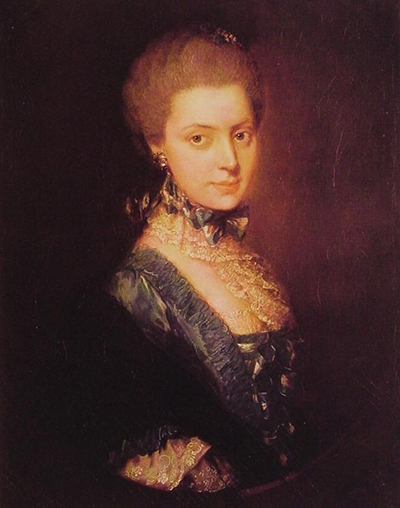
Thomas Gainsborough became one of the defining portrait painters of eighteenth-century Britain because he could satisfy the public demands of likeness and status while making those demands feel unusually alive. His portraits do not simply record faces. They stage people inside air, fabric, music, landscape, inheritance, marriage, ambition and display. A sitter may stand in Van Dyck costume, lean against a tree, walk beside a future spouse, sit among clouds and foliage, hold military identity in uniform or appear through a version whose authorship and history require careful reading. The portrait is the place where Gainsborough's professional world, social intelligence and painterly freedom meet.
Portraiture was also the practical engine of his career. Gainsborough's path ran from Sudbury and London training through Ipswich, Bath and the capital, with each place changing the scale of his patrons and ambitions. Gainsborough's House describes the move from local patronage to more cosmopolitan and aristocratic clients, while noting that portraiture remained the more lucrative branch even as landscape continued to matter deeply to him.[1] The National Gallery similarly places him beside Joshua Reynolds as a leading portrait painter of later eighteenth-century England, while stressing the mature brushwork, colour and fashionable contemporary dress that made his portraits endure.[2] Those statements matter because they keep two truths together: Gainsborough depended on portraits, and he transformed them.
This account looks at Gainsborough's portraits as a field rather than as a list of celebrated names. It asks how portraiture changed between Suffolk, Ipswich, Bath and London; how sitters used costume, pose and setting; how Van Dyck and full-length elegance entered Gainsborough's language; how women, men, musicians, naval figures and couples require different kinds of attention; and why the most famous works should not flatten the rest. The Blue Boy and Mr and Mrs Andrews are central, but they are not enough on their own. Gainsborough's portrait art is richer when the glamorous images, the uncertain records and the quieter likenesses are allowed to complicate one another.
At a Glance
- Career enginePortraiture supplied Gainsborough's principal public market and income [1]
- Working centresSuffolk, Ipswich, Bath and London [1][2]
- FormatsHead-and-shoulders, half-length, full-length, couple and conversation portraits
- Major influenceAnthony van Dyck and the full-length aristocratic ideal [4]
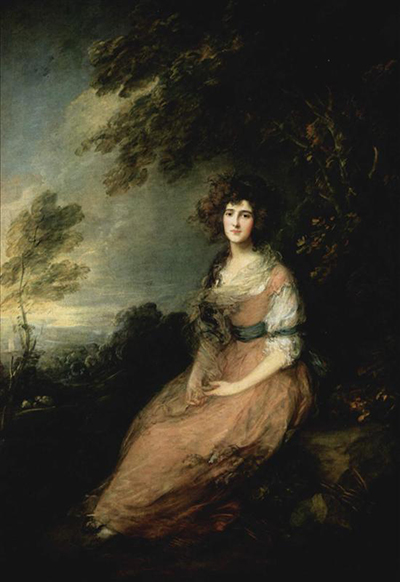
- Women sittersThe Honourable Mrs Graham and Mrs Richard Brinsley Sheridan [6][7]
- Men and public roleNaval, musical, aristocratic and professional identities [13][15][16]
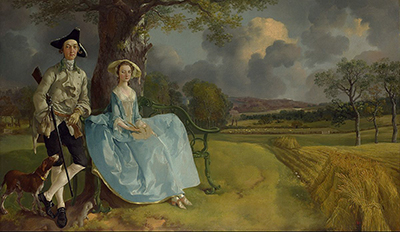
- CouplesMr and Mrs Andrews, A Couple in a Landscape and The Morning Walk [8][11][12]
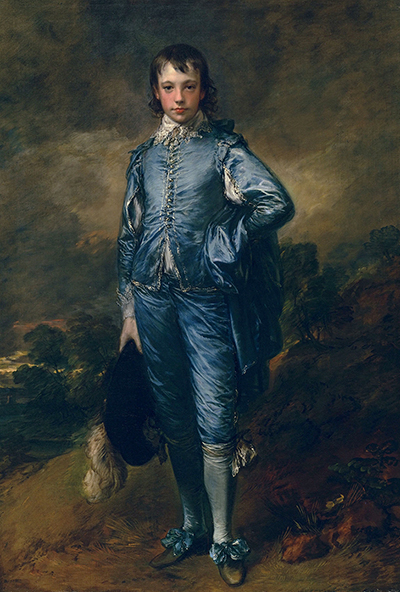
- Most famous portraitThe Blue Boy [9][10]
- SurfaceFeathery brushwork, rich colour, air and animated fabric [2]
- Linked portrait selection18 works spanning full-lengths, couples, musicians, family images and public figures
Contents
- Introduction
- Portraiture as Career Structure
- Likeness, Performance and Social Identity
- Format, Scale and the Body
- Van Dyck and the Full-Length Ideal
- Women, Fashion and Intelligence
- Men, Rank and Public Role
- Couples, Marriage and Landscape
- The Blue Boy and Portrait Fame
- Browse Thomas Gainsborough Portraits
Portraiture as Career Structure
Gainsborough's portrait practice developed through changing markets. In Suffolk and Ipswich he worked for local gentry, merchants and professional sitters. These early commissions did not yet carry the full theatre of his later Bath and London portraits, but they mattered because they taught him how likeness could be made in relation to local identity, property, family and landscape. The National Portrait Gallery's record of Gainsborough as a portrait and landscape painter, associated with a large body of portraits, shows how deeply his name is embedded in British portrait culture rather than only in a handful of masterpieces.[3]
Bath altered the scale. The spa town supplied fashionable clients who wanted more than a competent likeness. They wanted presence, refinement, polish, ease and social legibility. Gainsborough's House notes that after moving to Bath he began attracting more cosmopolitan and aristocratic clientele, and the portraits of the Bath and post-Bath years show why that change mattered.[1] A portrait now had to negotiate the sitter's public self: not only who the person was, but how that person wished to appear among family, rank, conversation, marriage and taste.
London intensified the same problem. Gainsborough entered a larger exhibition culture, royal attention and sharper comparison with Reynolds. The National Gallery records him as a founder member of the Royal Academy and later as an artist who quarrelled with it over the hanging of his pictures.[2] That detail is not just biography. Portraits were made to be seen. Their size, lighting, costume, finish and placement all belonged to the social life of art. An eighteenth-century portrait did not end in the studio. It moved into houses, exhibitions, engravings, collections and reputations.
The result is a career in which portraiture is never merely commercial background. It is the arena in which Gainsborough repeatedly solved pictorial problems: how to make rank look relaxed, how to keep fashion from becoming stiff, how to connect a figure to landscape without losing likeness, how to give a surface speed without sacrificing dignity, how to paint women without reducing them to ornament, and how to make men of rank, music, war or public service visually distinct.
Likeness, Performance and Social Identity
Every portrait begins with likeness, but likeness in Gainsborough is rarely a bare record. The sitter's face, body, clothing, surroundings and handling work together. A head may be carefully described while the costume loosens into flickering strokes. A landscape may be less exact place than atmosphere or social suggestion. A hand, dog, hat, instrument, gun, baton or ribbon can carry identity without turning into a simple emblem.
This is why Gainsborough's portraits often feel mobile. The sitter is placed, but not frozen. Hair seems lifted by air; satin catches light; foliage opens or darkens; a body turns rather than merely occupies a pose. The effect can be charming, but charm is not the end of the matter. Charm is one of the means by which a person becomes socially persuasive. It can soften rank, disguise effort, create intimacy, suggest refinement or make privilege appear natural.
The portrait therefore needs to be read as a negotiation among sitter, artist and audience. A family wanted likeness, but also memory and inheritance. A public figure wanted recognition, but also authority. A fashionable woman might be admired for beauty, but the painting could also stage rank, taste, intelligence, vulnerability or theatrical self-presentation. A musician required a different register from a naval commander; a couple in a landscape required a different register from a solitary full-length figure.
Gainsborough's skill lies in making these negotiations look effortless. The paint often appears light and quick, but the social construction is precise. His mature portraits do not shout their meanings. They let a sleeve, a posture, a glimpse of landscape or a trembling edge of costume carry the pressure.
Format, Scale and the Body
The format of a portrait changes its social meaning. A head-and-shoulders likeness asks for one kind of attention: face, expression, age, temperament and the immediate authority of recognition. A half-length portrait begins to involve hands, clothing and the space around the body. A full-length portrait is more declarative. It allows the sitter to occupy a world of dress, ground, architecture, trees, columns, sky, dogs, instruments or insignia. Gainsborough understood these differences and moved between them with unusual sensitivity.
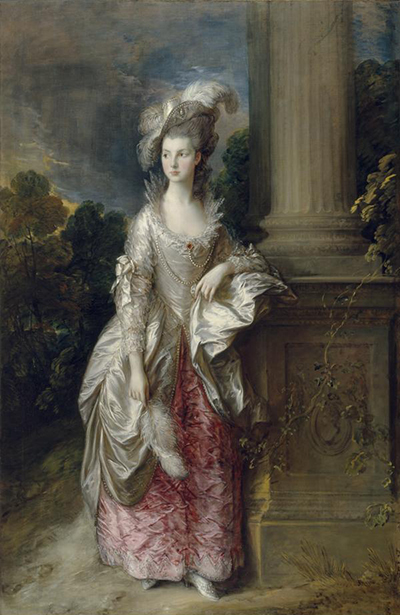
Full-length portraiture mattered because it could make status visible without spelling it out. A standing figure has height, extension and command. Clothing falls through the whole composition. The body can lean, turn, advance or appear suspended in cultivated ease. In The Honourable Mrs Graham, the full-length format allows costume, feathered hat, column and landscape to work together.[6] The sitter's identity is not confined to the face. It is distributed through the whole painted body and the space that body claims.
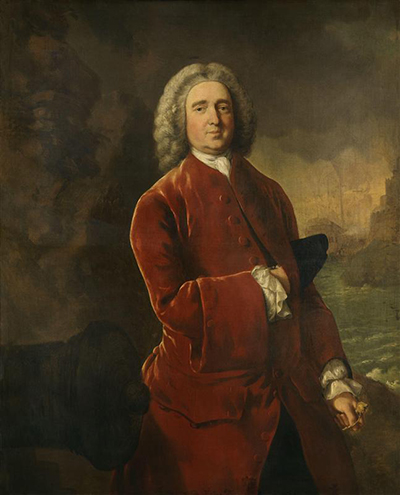
Smaller or more concentrated portraits can be just as complex. The NPG portrait of Edward Vernon is not a grand society full-length, but it joins likeness to naval identity, setting and public reputation.[13] The difference of scale changes the kind of authority the painting seeks. Vernon's portrait depends on recognition, military history and a compact arrangement of costume, background and character. Gainsborough did not need one fixed format because sitters did not bring one fixed social problem.
The body in Gainsborough is rarely inert. Even in posed images, it often seems caught in a moment of adjustment. A shoulder turns, a hand relaxes, a garment shifts, a foot or arm opens the figure into surrounding space. That movement helps distinguish Gainsborough from more rigid forms of ceremony. He could respect rank while making the sitter seem less like a statue than a person passing through a social role.
Van Dyck and the Full-Length Ideal
Van Dyck gave Gainsborough a language of elegance, extension and aristocratic ease. The National Galleries of Scotland notes the importance of Van Dyck in relation to Gainsborough's portrait practice, and the link becomes especially visible in long forms, sweeping costume, high style and the desire to make a modern sitter inherit something of seventeenth-century courtly glamour.[4] Gainsborough did not simply copy Van Dyck. He used that model as a way of making eighteenth-century sitters appear graceful without becoming heavy.
The Honourable Mrs Graham shows how powerful that inheritance could be. The National Galleries of Scotland identifies the sitter as Mary Cathcart Graham and describes the portrait as one of Gainsborough's finest full-lengths, with costume and accessories evoking the age of Charles I and the portraits of Van Dyck.[6] The painting was exhibited at the Royal Academy in 1777 and later entered the Scottish national collection under a bequest condition that it should not leave the Scottish National Gallery building.[6] These facts matter because they show a portrait operating on several levels at once: fashionable image, aristocratic construction, exhibition success, private memorial and national treasure.
Van Dyck influence also helps explain why costume in Gainsborough is never only clothing. It may be contemporary, historical, theatrical or deliberately suspended between periods. A sitter can be made to look modern and old-masterly at once. The costume may distance the figure from everyday life, but it can also intensify individuality by giving the sitter a role to inhabit. In Gainsborough's hands, dressing up does not always mean falsifying; it can reveal the social performance that portraiture already requires.
The danger is to use “Van Dyck” as decoration. The term should do real work. It should explain format, elegance, costume, pose, aristocratic memory and surface, not merely serve as a grand label. Gainsborough's debt to Van Dyck becomes most useful when it helps the reader see how an eighteenth-century portrait borrows an older language of courtly presence and then reanimates it through lighter touch, open air and modern sensibility.
That older courtly language also gave Gainsborough a way to manage modernity. Many of his sitters belonged to eighteenth-century Britain, with its exhibition culture, changing public taste, imperial wealth, provincial patrons and metropolitan ambition. Van Dyck costume could lift them out of ordinary time, but the paint pulls them back into Gainsborough's own century. This tension is one reason the portraits remain lively. They do not simply pretend the sitter belongs to the Stuart court. They make historical style into a modern performance.
Women, Fashion and Intelligence
Gainsborough's portraits of women are among his most admired works, but admiration can become a trap. It is easy to praise beauty, dress and charm while missing the structure of the image. A woman in a Gainsborough portrait is not simply an occasion for satin, hair and atmosphere. She is a historical sitter shaped by family, marriage, class, performance, collection history and the particular decisions of the painter.
The Honourable Mrs Graham is a case in point. Mary Cathcart Graham appears in a costume of extraordinary elegance, but the portrait should not be reduced to prettiness. Its full-length scale, Van Dyck-style dress, imagined landscape setting and later story of storage and bequest all affect how it is read.[6] The painting became attached to romantic memory after her early death, but the visual intelligence of the portrait remains in the made image: vertical form, luminous costume, aloofness, vulnerability and public brilliance held together.
Mrs Richard Brinsley Sheridan offers another kind of presence. The National Gallery of Art identifies the sitter as Elizabeth Linley Sheridan and dates the painting to 1785-1787.[7] The portrait places her in a landscape setting, with the body turned and the head meeting the viewer more quietly than the surrounding movement might suggest. The painting invites biography because Elizabeth Linley Sheridan was famous beyond the portrait, yet the first responsibility is visual: pose, costume, colour, air, expression and handling.
These works show why Gainsborough's female portraits need measured interpretation. Fashion matters, but fashion is not emptiness. Beauty matters, but beauty is not the whole subject. The sitter may be presented through ideals of grace and refinement, but the painting can still make social intelligence visible. A turned head, a distant gaze or a shimmering dress may participate in a system of gendered expectation while also producing an individual presence that resists simple summary.
Men, Rank and Public Role
Gainsborough's male portraits are equally varied. Some sitters belong to aristocratic display, some to military or naval service, some to music, some to local professional culture and some to family or studio networks. The challenge is not to treat them all as versions of the same masculine authority. A naval sitter, a musician and a duke do not ask for the same kind of image.
Edward Vernon, for example, belongs to an early portrait field with strong public identity. The National Portrait Gallery records Gainsborough's Edward Vernon as an oil on canvas from about 1753, showing Admiral Edward “Old Grog” Vernon, and notes that the portrait is on display at Gainsborough's House.[13] Its extended catalogue entry also preserves uncertainty around versions and earlier attribution views, while recording later scholarly support for the NPG work.[14] This is the kind of portrait that warns against smooth certainty. It is historically vivid, but its object history is part of its meaning.
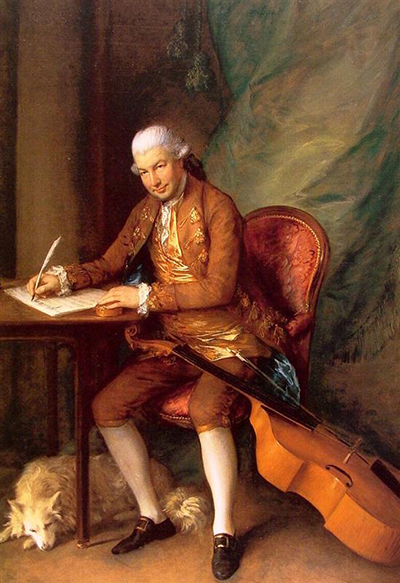
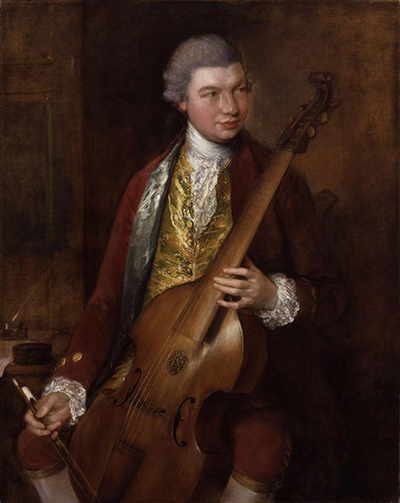
Karl Friedrich Abel opens a different register. The Huntington's record identifies Abel as the sitter and places the portrait within Gainsborough's London world of music and performance.[15] Abel was not a landed grandee in the same sense as some aristocratic sitters. His portrait matters because it brings artistic friendship, music and cultural sociability into the portrait field. Gainsborough's own devotion to music, also noted by the National Portrait Gallery, makes such works feel close to the texture of his life without turning them into simple autobiography.[3]
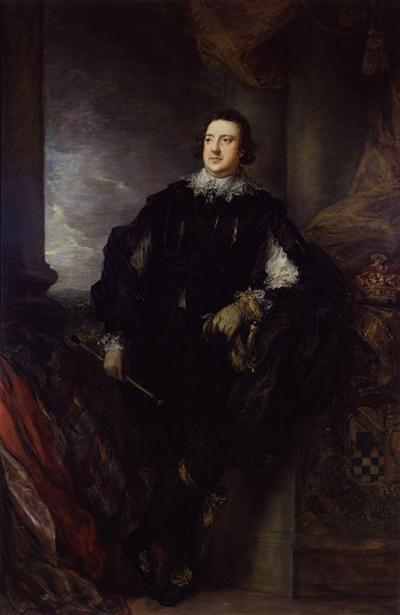
Late aristocratic portraiture could be more ceremonial, but not necessarily simpler. The National Portrait Gallery's extended record for Charles Howard, 11th Duke of Norfolk describes a work begun before the sitter succeeded as duke and later altered with robes, baton, coronet and arms.[16] That is a portrait in which status changed while the image was being made. Costume and insignia are not afterthoughts; they become the visible evidence of rank, timing and political identity.
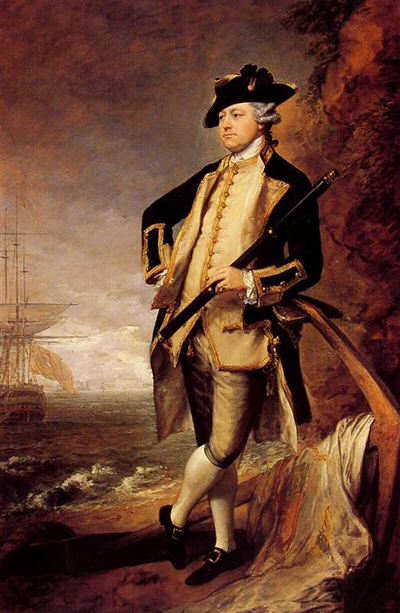
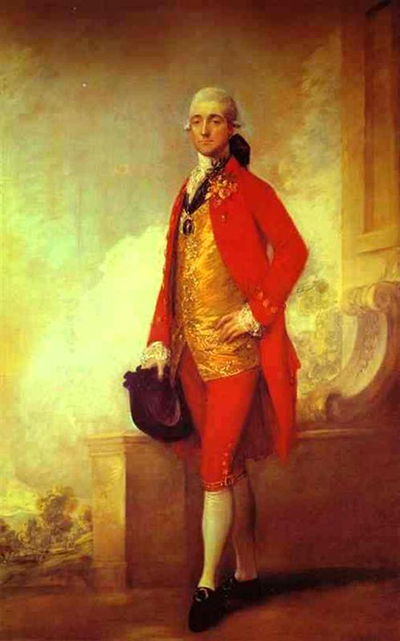
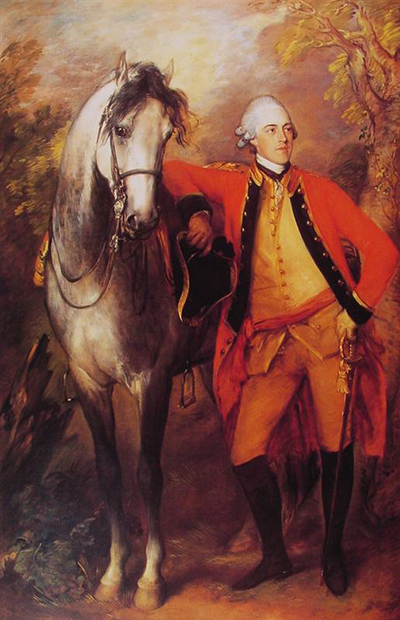
Gainsborough's male sitters also remind us that public identity could be built from service rather than only lineage. Naval and military portraits use uniform, pose and contextual detail to make professional life visible. Augustus Hervey's National Trust title preserves naval promotion and later earldom in a single institutional wording, while Captain William Wade's public-collection trail ties him to Bath's social world and the ceremonial office of Master of Ceremonies.[17][19] These sitters are not interchangeable examples of masculinity. One belongs to aristocratic naval status; another to the social theatre of Bath; another to music; another to hereditary rank. Gainsborough's portraiture stretches because British public life itself was not one thing.
The painter's task was to make each kind of role legible without deadening the person. That is where handling matters. A uniform can become stiff if treated only as information. A courtly costume can become empty if treated only as glamour. A musician can become generic if the portrait does not suggest a specific culture of performance. Gainsborough's best male portraits keep public role and painterly animation in contact.
Couples, Marriage and Landscape
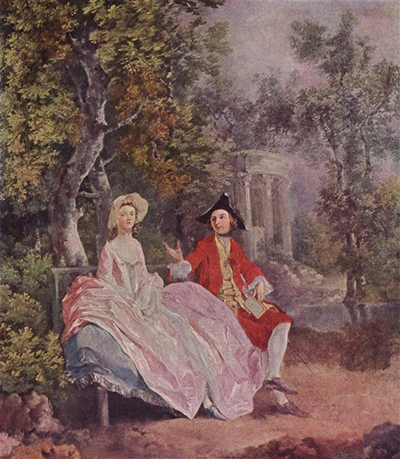
Gainsborough repeatedly explored the portrait in relation to landscape. Sometimes this meant a single sitter placed against trees, sky or distant ground. Sometimes it meant a couple whose social identity depended on the space around them. An outdoor setting may look natural, but it is rarely neutral. It can express leisure, property, marital identity, cultivated taste, poetic distance or social control.
Mr and Mrs Andrews is the most famous example and deserves its special status. The National Gallery identifies Robert Andrews and Frances Andrews as the sitters and emphasises the relation between the couple and their estate landscape.[11] The painting is often read as a union of portraiture and land, and the unfinished area on Frances Andrews's lap remains one of its enduring interpretive problems.[11] For a broad account of portraiture, the key point is that Gainsborough made marriage, property and outdoor setting inseparable very early in his career.
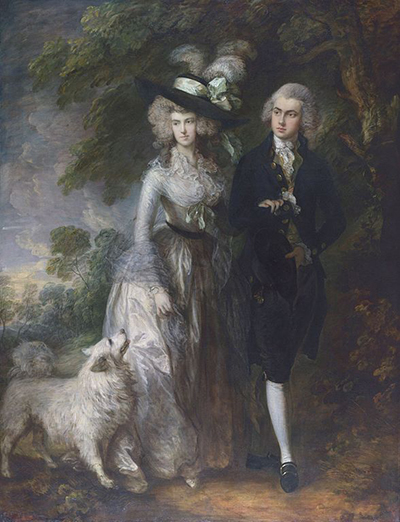
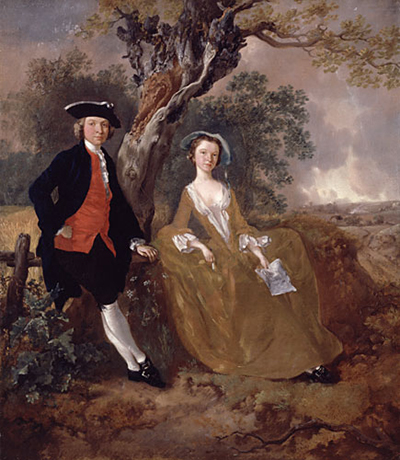
Yet Mr and Mrs Andrews should not become the model for every couple. Dulwich Picture Gallery's A Couple in a Landscape belongs to a related but distinct conversation-piece field, with its own date, format and x-ray evidence of a reused canvas.[12] The National Gallery's Mr and Mrs William Hallett, usually known as The Morning Walk, belongs to the late society portrait world; it shows William Hallett and Elizabeth Stephen in the period just before their 1785 wedding, moving together outdoors with their dog.[8] One early double portrait makes land and ownership explicit. Another late pair turns marriage, movement and fashion into a refined outdoor performance.
The comparison clarifies Gainsborough's range. Landscape can serve property, courtship, ease, poetic atmosphere or pictorial rhythm. It can make a sitter seem more natural, but it can also make status more persuasive. Gainsborough's genius was not that he simply placed people outdoors. It was that he understood how setting could become part of identity.
The Blue Boy and Portrait Fame
The Blue Boy is unavoidable in any account of Gainsborough's portraits, but it must be handled with restraint because its fame can overwhelm everything around it. The Huntington's object record identifies the work as The Blue Boy, gives its date around 1770, and records the sitter as Jonathan Buttall while wider Project Blue Boy material discusses sitter uncertainty and later hypotheses.[9][10] That double condition is essential: the object has a recorded identity, and the modern interpretive history remains more complicated than a simple label.
The painting matters here because it shows portraiture becoming theatre. The costume looks back to Van Dyck and seventeenth-century aristocratic style; the pose is confident; the blue satin commands the eye; the landscape darkens the drama. Yet the painting is not only a costume performance. It is also a statement about painterly ambition. Gainsborough takes a portrait and makes it operate as colour, history, rivalry, display and later myth.
The afterlife of The Blue Boy belongs to a fuller account of that work, but the portrait field needs to register what made such an afterlife possible. The image is memorable because its visual language is clear enough to become iconic and complex enough to survive scrutiny. It is a likeness, a performance and a painting about painting. It makes costume into a historical argument and colour into public identity.
Portraiture, Empire and Uneasy Evidence
Gainsborough's portrait world belonged to a society shaped by wealth, rank and colonial power. The National Gallery records ongoing research into the artist's relationship to the enslavement of people, including sitter and patron contexts such as The Byam Family and the portrait of Ignatius Sancho.[2] This evidence should be neither ignored nor inflated into a single explanation for every portrait.
The right approach is case by case. Some families, patrons and sitters carry direct evidence that changes how a portrait should be read. Others do not. A broad portrait account can name the issue and insist on attention, but it should not attach the same paragraph to every sitter. The point is not to make Gainsborough into an emblem of innocence or guilt. It is to recognise that portraiture often naturalised social power, and that modern interpretation must ask where that power came from when the sources allow the question to be answered.
This is especially important because Gainsborough's surfaces can be seductive. Grace, lightness and beauty can make a world look effortless. But the society behind the image was not effortless for everyone. A portrait can be visually delicate and socially forceful at the same time. Good interpretation should preserve that tension rather than flattening it into either admiration or accusation.
Collections and the Modern Portrait Field
Gainsborough's portraits now live through collections as much as through eighteenth-century patronage. The National Gallery, National Portrait Gallery, National Galleries of Scotland, National Gallery of Art, Huntington, National Trust, National Gallery of Victoria and other institutions each preserve a different part of the portrait field. The National Gallery of Art's record helps place Gainsborough within a broad institutional frame of works, bibliography and collecting history rather than isolating him as a maker of one or two famous images.[5]
Collections change how portraits are read. A painting that once belonged to a family house may become a national object. A sitter once known through local reputation may become visible through a public catalogue. A portrait may move from private inheritance into a museum, where its title, provenance, display history and conservation record become part of the way people meet it. The portrait still represents an eighteenth-century person, but it also represents the later history of collecting and interpretation.
This is one reason Gainsborough's portraiture cannot be reduced to a single English story. His works now sit in Edinburgh, London, Washington, San Marino, Melbourne and many other locations. That dispersal is not incidental. It shows how eighteenth-century British portraiture became a modern international field, sustained by collecting, exhibitions, reproductions, conservation and scholarship. A portrait such as The Blue Boy has a modern American history as well as an eighteenth-century British one.[9] A portrait such as Elizabeth Wrottesley requires attention to a current Australian collection record before it can be discussed responsibly.[20]
The modern record also corrects inherited habits. It can clarify a sitter, preserve a longer title, separate an original from an “after” work, or expose uncertainty that a familiar label conceals. That may seem dry, but it is essential. Portraiture depends on names. If the name, status, version or holder is wrong, the interpretation begins in the wrong place.
Surface, Finish and Restraint
Gainsborough's portraits are often praised for feathery brushwork, but that phrase can become lazy if it is not connected to visual purpose. In a portrait, touch has social meaning. A face may be worked more carefully than surrounding costume, allowing the sitter's identity to emerge from a more fluid environment. A sleeve may dissolve into light, making fashion feel animated rather than rigid. Trees or clouds may be brushed with less definition so that the figure appears inside atmosphere rather than in front of scenery.
The National Gallery points to the feathery brushwork and rich colour of Gainsborough's mature work as part of the enduring popularity of his portraits.[2] That popularity is understandable, but the handling should not be treated as mere prettiness. Loose or airy paint can suggest movement, but it can also create distance. It may flatter the sitter by softening social signs, or it may unsettle the apparent solidity of rank. The surface is where Gainsborough's social art becomes painterly.
Restraint is just as important as freedom. Gainsborough rarely explains a sitter too heavily. He does not usually burden the portrait with a dense programme of symbols. Compared with Reynolds's more theoretical grand manner, Gainsborough's art often trusts costume, air, colour and pose to do the work.[2] That does not make the portraits intellectually empty. It gives them a different kind of intelligence: responsive, atmospheric and alert to the pressure of appearance.
This restraint can be mistaken for simplicity. A viewer may see a beautiful woman, an elegant man, a young couple or a blue costume and think the painting is immediately readable. Gainsborough's portraits reward a slower look. The more closely one attends to the surface, the more the image opens into questions of identity, display, desire, uncertainty, class and later memory.
Versions, Attributions and Title Discipline
Portraits often survive with complicated histories: versions, copies, later engravings, changed titles, uncertain sitters, old attributions and collection transfers. Gainsborough's portrait corpus is no exception. The National Portrait Gallery record for Edward Vernon is useful because it does not hide complexity. It notes the likely existence of two versions and preserves earlier doubts while also giving the accepted object record.[14] That kind of evidence should change how readers approach the portrait. Uncertainty is not a weakness if it is made clear.
The same discipline applies to inherited or familiar titles. A local or popular name may not match the current collection record. The portrait associated with Augustus Hervey, for example, should be controlled by the National Trust's title: Commodore the Hon. Augustus Hervey, later Vice-Admiral, and 3rd Earl of Bristol.[17] A shorter inherited wording may be convenient, but the fuller institutional title protects identity, rank and later life.
Current holder records also keep narrow works from becoming vague general illustrations. Edward, Viscount (later Earl) Ligonier is anchored by the Huntington's object record.[18] Elizabeth Wrottesley is anchored by the National Gallery of Victoria.[20] Captain William Wade has a public-collection trail through Art UK and Bath/Victoria material, with additional Bath Assembly Rooms context from National Portrait Gallery frame research.[19] These records do not all carry the same depth, but they share the same function: they make each portrait accountable to a named object rather than to a loose title.
How to Look at a Gainsborough Portrait
A useful way into a Gainsborough portrait is to begin with the sitter but not stop there. Ask who is represented, how securely the identity is known and what the collection record says. Then ask how the sitter is placed. Standing, seated, walking, turning, leaning, looking aside or meeting the viewer directly are all different forms of social behaviour.
Next, look at costume. Is it contemporary fashion, Van Dyck dress, military or naval uniform, walking attire, performance clothing or something more ambiguous? Costume is where the body becomes public. It can record rank, taste, marriage, profession, gender expectation or historical fantasy. In Gainsborough, fabric also becomes paint: satin, lace, ribbon and hair often dissolve into touch.
Then look at the setting. A landscape background may be an estate, a park, an invented scene, a poetic atmosphere or a social stage. Trees, clouds and distant ground can soften the figure, but they can also intensify status. Finally, look at finish. Gainsborough's lightness can be descriptive, atmospheric, experimental or strategic. Loose handling should not be praised automatically. It should be connected to what the portrait is doing.
Why the Portraits Still Matter
Gainsborough's portraits still matter because they make social identity feel unstable and alive. They belong to a world of rank, fashion, patronage and display, but they rarely feel merely stiff. Their beauty is not outside history. It is one of the ways history enters the image. A gown, a dog, a tree, a military detail, a musician's presence or an aristocratic costume can hold class, gender, profession, memory and ambition in a single visual field.
The portraits also matter because they keep Gainsborough's art from dividing too neatly into commerce and freedom. Portraits paid, landscapes pulled at his imagination, and the two practices continually affected each other. His finest portraits often borrow landscape's air, movement and uncertainty. His outdoor portraits make setting part of identity. His full-length portraits make costume and colour feel as active as likeness.
That is why Gainsborough cannot be understood only through a few famous images, even when those images deserve their fame. The Blue Boy gives portraiture theatrical force. Mr and Mrs Andrews joins likeness to land. The Honourable Mrs Graham turns Van Dyck elegance into Georgian presence. Mrs Richard Brinsley Sheridan gives fashion and atmosphere a quieter inwardness. The Morning Walk makes marriage and movement look easy while carefully staging both. Around them are musicians, naval figures, aristocrats, family members, uncertain versions and quieter sitters whose records keep the larger field honest.
Taken together, the portraits show an artist who understood society without being swallowed by it. Gainsborough gave his sitters what they wanted: likeness, status, elegance, remembrance and display. He also gave the portrait a surface that breathed, shifted and sometimes unsettled the very world it seemed to flatter.
Browse Thomas Gainsborough Portraits
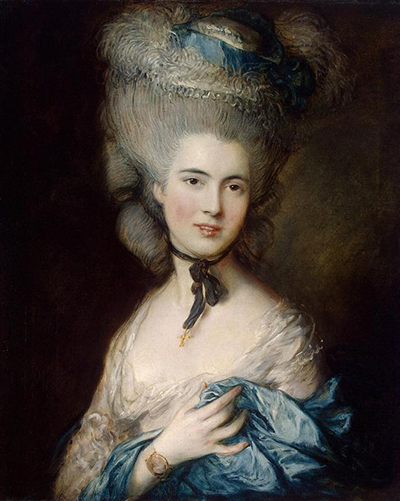
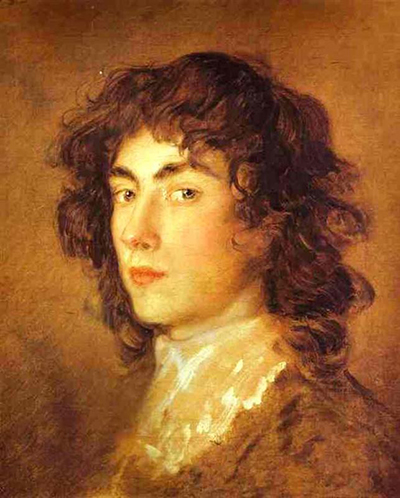
These eighteen linked works span full-length sitters, couples, musicians, family images, naval and aristocratic portraits, and conversation pieces.
Frequently Asked Questions
Discussion
Which Gainsborough portrait most clearly turns social identity into painterly performance?
Reader Insights
Where does clothing clarify identity, and where does it turn the sitter into a historical performance?
How does landscape make rank, marriage or cultivated ease appear natural?
Which loose edge, changed title or attribution question most alters your reading?
Join the Conversation
Share your reading below.
References
- Gainsborough's House, “About Thomas Gainsborough.” View source.
- National Gallery, London, “Thomas Gainsborough.” View source.
- National Portrait Gallery, London, “Thomas Gainsborough.” View source.
- National Galleries of Scotland, “Thomas Gainsborough.” View source.
- National Gallery of Art, Washington, “Thomas Gainsborough, 1727–1788.” View source.
- National Galleries of Scotland, “The Honourable Mrs Graham.” View source.
- National Gallery of Art, Washington, “Mrs. Richard Brinsley Sheridan.” View source.
- National Gallery, London, “Mr and Mrs William Hallett (‘The Morning Walk’).” View source.
- The Huntington, “The Blue Boy.” View source.
- The Huntington, “Project Blue Boy: History.” View source.
- National Gallery, London, “Mr and Mrs Andrews.” View source.
- Dulwich Picture Gallery, “A Couple in a Landscape.” View source.
- National Portrait Gallery, London, “Edward Vernon.” View source.
- National Portrait Gallery, London, “Edward Vernon,” extended catalogue entry. View source.
- The Huntington, “Karl Friedrich Abel.” View source.
- National Portrait Gallery, London, “Charles Howard, 11th Duke of Norfolk,” extended catalogue entry. View source.
- National Trust Collections, “Commodore the Hon. Augustus Hervey, later Vice-Admiral, and 3rd Earl of Bristol.” View source.
- The Huntington, “Edward, Viscount (later Earl) Ligonier.” View source.
- Art UK, “Captain William Wade”; Bath in Time, “Captain William Wade”; National Portrait Gallery, Gainsborough frame research. Art UK; Bath in Time; NPG research.
- National Gallery of Victoria, “Elizabeth Wrottesley.” View source.