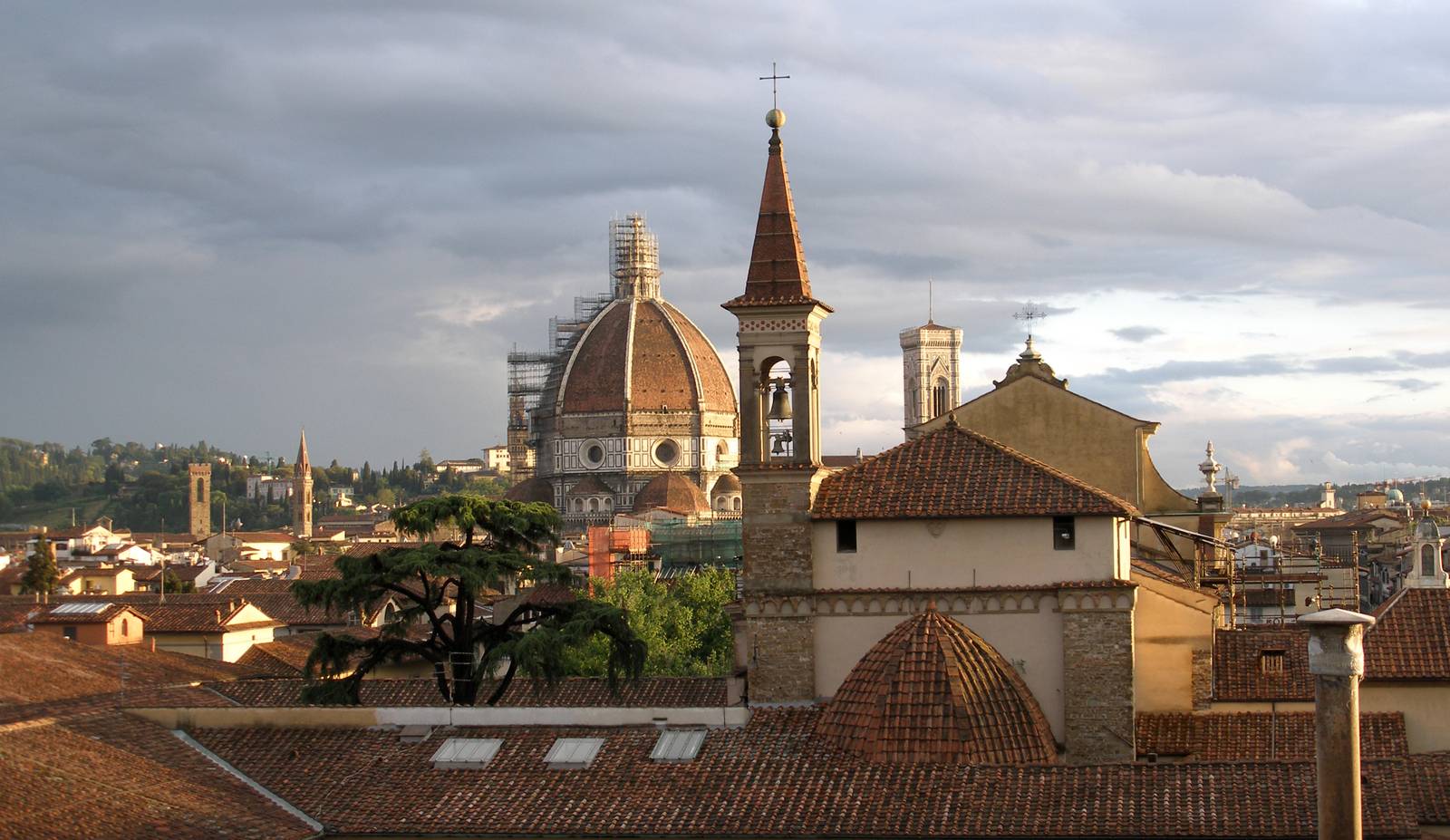
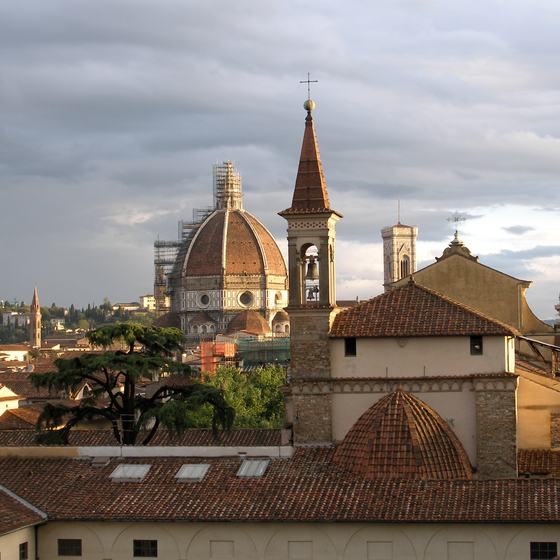
Image reference: Brunelleschi’s dome above Florence.
At a Glance
- Core periodc. 1400–1530, with Trecento roots and later Mannerist continuities
- Principal centreFlorence and its surrounding territory
- Known forlinear perspective · civic sculpture · fresco cycles · architectural proportion · workshop culture · classical revival
- Key artistsBrunelleschi · Ghiberti · Donatello · Masaccio · Fra Angelico · Botticelli · Leonardo · Michelangelo
- Key institutionsguilds · cathedral works · confraternities · religious houses · republican government · Medici patronage
- Best understood asa city-centred artistic culture shaped by institutions, workshops, materials and exchange—not a single unified style
Contents
- Where the Florentine Renaissance fits
- A city of guilds and sacred institutions
- Workshops, contracts and materials
- The 1401 competition
- Brunelleschi’s dome
- Perspective and constructed vision
- Masaccio and the Brancacci Chapel
- Botticelli and interpretation
- Leonardo and Michelangelo
- Artists and architects to know
Where the Florentine Renaissance fits
Giotto
Principal careerFilippo Brunelleschi
Principal careerLorenzo Ghiberti
Principal careerDonatello
Principal careerMasaccio
Principal careerFra Angelico
Principal careerPaolo Uccello
Principal careerFilippo Lippi
Principal careerAndrea del Verrocchio
Principal careerSandro Botticelli
Principal careerDomenico Ghirlandaio
Principal careerLeonardo da Vinci
Principal careerMichelangelo
Principal careerThe Florentine Renaissance was not made by a handful of geniuses waking suddenly from the Middle Ages. It grew through a city of merchants, friars, nuns, guild officials, bankers, humanists, stonecutters, founders, carpenters, painters and patrons. Between about 1400 and 1530, Florence became one of Europe's most influential artistic centres. Its workshops gave new force to bodily presence, measured space, classical architecture, public sculpture and the expressive possibilities of drawing. Yet its art remained deeply connected to worship, corporate identity, household ritual and political rivalry.[1] [17]
The familiar names deserve their prominence. Filippo Brunelleschi transformed the city's skyline; Donatello tested what sculpture could communicate; Masaccio made sacred figures occupy painted space with startling weight; Fra Angelico joined luminous beauty to Dominican devotion; Sandro Botticelli created images whose poetry still resists a single explanation; Leonardo da Vinci and Michelangelo carried Florentine training into mobile careers. None worked alone. Their achievements depended on institutions that raised money, supplied materials, approved designs, organised labour and decided where works would stand.
Nor did Florence possess one style. Ghiberti's courtly grace, Donatello's rough intensity, Paolo Uccello's spatial puzzles and Botticelli's linear elegance can look radically unlike one another. “Florentine Renaissance” is therefore best understood as a place-based artistic culture: competitive, collaborative, devotional, commercial and politically unstable. Its greatest invention may be less a uniform visual language than an unusually productive environment for argument through images.
The name combines geography with a period label, which is why it can be confusing. The Renaissance took place across many Italian and European centres. Florence was one of its most consequential environments, not a border around everything innovative. Artists and objects travelled between Florence and Siena, Venice, Rome, Naples, Milan, Ferrara, Urbino and the Low Countries. The city's achievements make more sense within those exchanges than as a miracle of local isolation.[16] [20]
Its roots extend well before 1400. Giotto gave Florentine and Tuscan painting a new authority through figures that appear to share physical and emotional space. The cathedral, Baptistery and civic buildings were already long-running enterprises. Workshops such as Pacino di Bonaguida's produced manuscripts and panels through coordinated labour in the early fourteenth century, revealing a mature system of design, repetition and specialisation before the conventional Renaissance starting line.[6] [48]
“Proto-Renaissance” usually describes selected thirteenth- and fourteenth-century developments associated with figures including Nicola Pisano, Cimabue, Giotto and the Sienese masters. “Early Renaissance” is a broader fifteenth-century category that includes Florence but also many other places. “High Renaissance” normally describes an especially concentrated phase around 1490–1520, associated with ambitious synthesis in the work of Leonardo, Michelangelo, Raphael and others, much of it produced in Milan and Rome. Florentine Renaissance crosses these categories because it names a city and its networks rather than one phase.
A practical range of about 1400 to 1530 is useful. The competition for a new Baptistery door in 1401 brings artistic rivalry, guild patronage and public judgement into a single memorable episode. The siege and fall of the last Florentine republic in 1530 provides a political endpoint, followed by the establishment of a hereditary Medici duchy in 1532. Neither date acts as a switch. Gothic traditions continued after 1401, and Renaissance practices survived far beyond 1530.[2] [44]
This long view also corrects the idea that Renaissance means simple secularisation. Many of Florence's most experimental works were made for altars, chapels, convent cells, churches, hospitals and confraternities. Humanist study of ancient texts expanded the available languages of art, but Christian worship remained a dominant purpose. Classical columns could organise a hospital arcade; mathematically described space could stage a miracle; a nude body could carry biblical, civic and ancient associations at once.
A city of guilds, republic and sacred institutions
Fifteenth-century Florence called itself a republic, though political participation was restricted and powerful families competed to control its offices. Its major guilds were not modern trade associations. They regulated professions, organised religious observance, exercised political power and commissioned public art. The Arte di Calimala, associated with cloth merchants and finishers, supervised the Baptistery. The Arte della Lana, the wool guild, was connected to the cathedral works. Painters belonged to the Arte dei Medici e Speziali, the guild of doctors and apothecaries, in part because apothecaries handled pigments.[21] [46]
Orsanmichele makes this corporate city visible. The building had developed from a grain market into a church, and its exterior niches were assigned to guilds. Over decades, those bodies commissioned monumental patron saints from artists including Ghiberti, Nanni di Banco, Donatello and later Andrea del Verrocchio. The figures were devotional protectors, corporate emblems and public claims to prestige. They also created an open-air comparison between different conceptions of the standing body, drapery, gaze and architectural setting.[7] [8]
Donatello's Saint Mark appears alert and self-possessed within its niche; the weight of the body is understood beneath cloth. His Saint George presents a younger, more concentrated energy, ready rather than theatrically active. Nanni di Banco's Four Crowned Martyrs turns the niche into a gathering of sculpted colleagues, fitting patrons associated with stone and wood. Ghiberti's bronzes assert the technical and financial power of casting. The originals have been moved for preservation, but their first meaning depended on their positions in a busy street among worshippers, workers, processions and political traffic.[7] [9]
The cathedral complex joined civic pride to sacred obligation on an even larger scale. Its buildings and decoration accumulated over centuries under the Opera di Santa Maria del Fiore. The institution supervised contracts, funds, materials and labour; guild officials and cathedral administrators made decisions that are often compressed into an artist's biography. Donatello and Luca della Robbia carved rival singing galleries. Ghiberti made doors for the Baptistery. Architects, glassmakers and painters contributed to a place through which Florence imagined itself as a Christian city.[6]
Convents, confraternities and hospitals formed another commissioning system. San Marco connected Dominican observance with Cosimo de' Medici's patronage. The Ospedale degli Innocenti joined care for abandoned children to a highly visible civic architecture. Family chapels allowed merchants to combine prayer, burial, memory and status. These motives did not remain neatly separate. A work could be an offering, a political performance, an act of commemoration and a demonstration of wealth at the same time.[12] [26]
Workshops, contracts and materials
Florentine art emerged from the bottega, a workshop that could be school, shop, studio and business. A master found patrons, negotiated contracts, supplied designs and accepted legal responsibility. Apprentices ground colours, prepared panels, copied drawings and learned specialised procedures. Experienced assistants might execute substantial passages. Carpenters, gilders, metalworkers, masons and other contractors entered for particular tasks. The name attached to a work can remain meaningful without implying that one hand performed every operation.[11] [15]
Verrocchio's workshop is a defining example. Trained in a culture of metalwork and sculpture, he worked across bronze, marble, painting and design. Leonardo, Botticelli, Lorenzo di Credi and Domenico Ghirlandaio are linked to his wider workshop environment. Technical study shows how questions of attribution depend on supports, underdrawing, pigments, casting and collaboration as well as visual resemblance. The workshop encouraged skills to migrate between media: a painter could learn from relief, a sculptor from drawing and both from temporary festival designs.[15]
Filippo Lippi's workshop likewise connected Florence to other centres. Artists trained around him carried habits of drawing, figure design and colour into the Marche and Urbino. Such movement disrupts the simple picture of a finished Florentine style exported intact to passive regions. Travelling artists changed through contact, and local patrons selected what was useful to them.[16]
Materials belonged to this social system. A panel might begin with joined poplar boards, covered with textile and gesso before drawing, gilding and paint. Fresco required teams to prepare plaster in daily sections. Bronze demanded models, moulds, furnaces, metal supplies and risky casting. Contracts could specify expensive pigments. Technical analysis of late fifteenth-century Florentine panels finds a relatively concentrated palette used with workshop-specific habits rather than an unlimited spectrum.[37]
Ultramarine offers a vivid reminder that Florentine colour was global. Its source stone, lapis lazuli, travelled from Afghanistan through long commercial chains before becoming one of a painter's costliest blues. Azurite could provide a cheaper alternative or underlayer. Gold, dyes, timber, metals and luxury textiles similarly connected the city's workshops to distant labour and trade. A radiant Virgin's mantle was therefore at once colour, devotion, expense and geography.[38]
Essential works
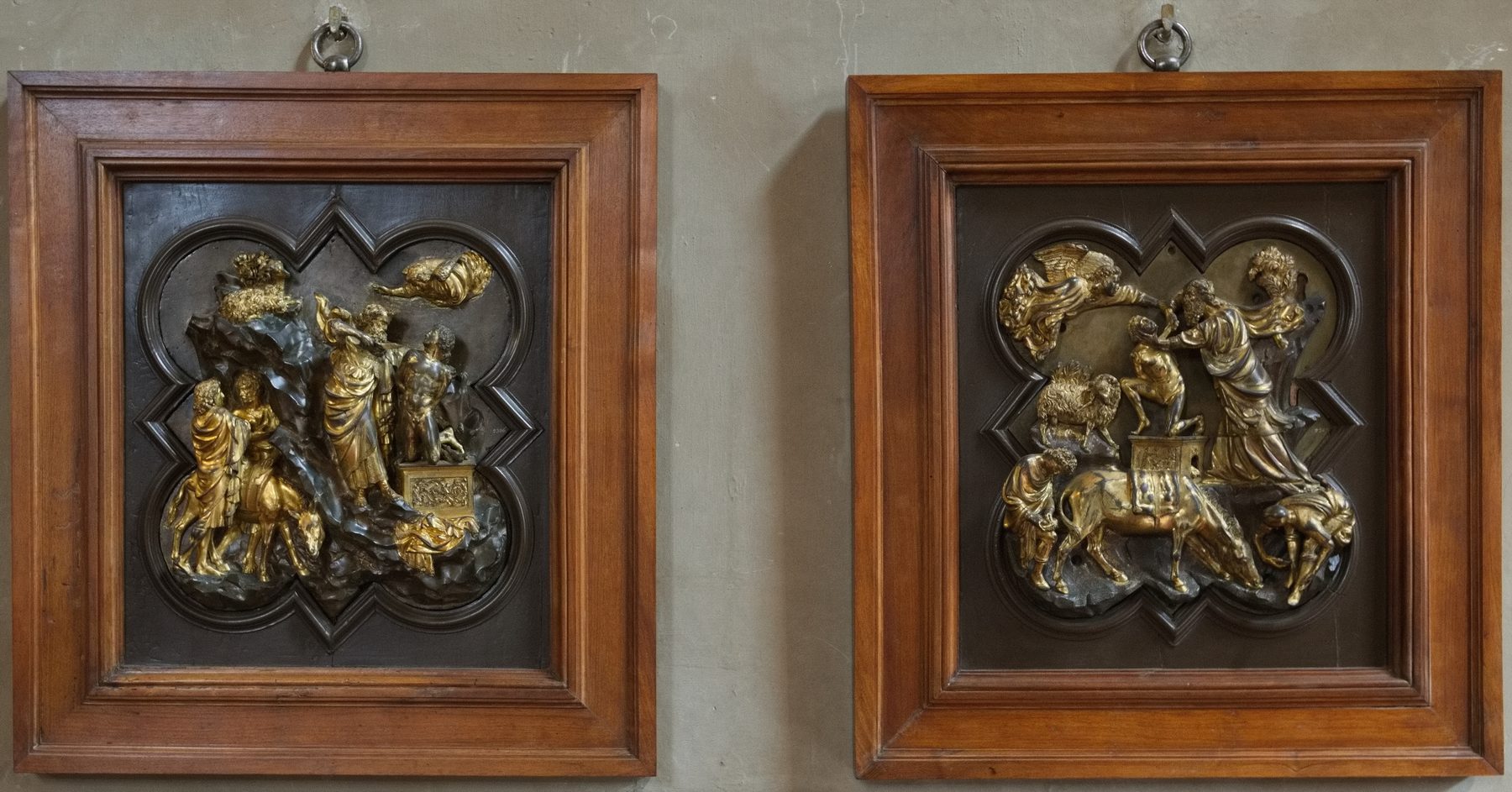
Sacrifice of Isaac competition reliefs
Lorenzo Ghiberti and Filippo Brunelleschi, 1401–02
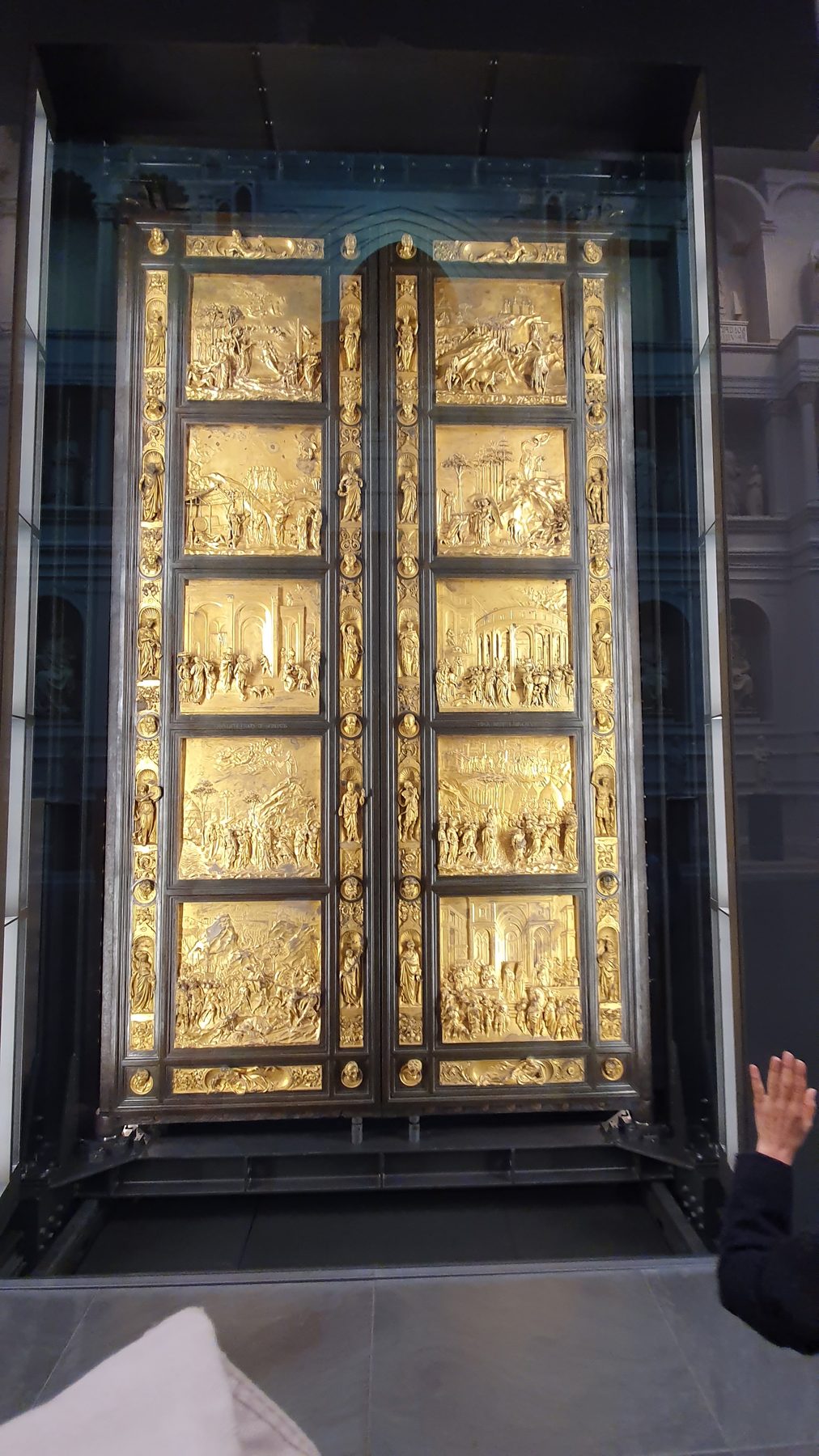
Gates of Paradise
Lorenzo Ghiberti and workshop, 1425–52
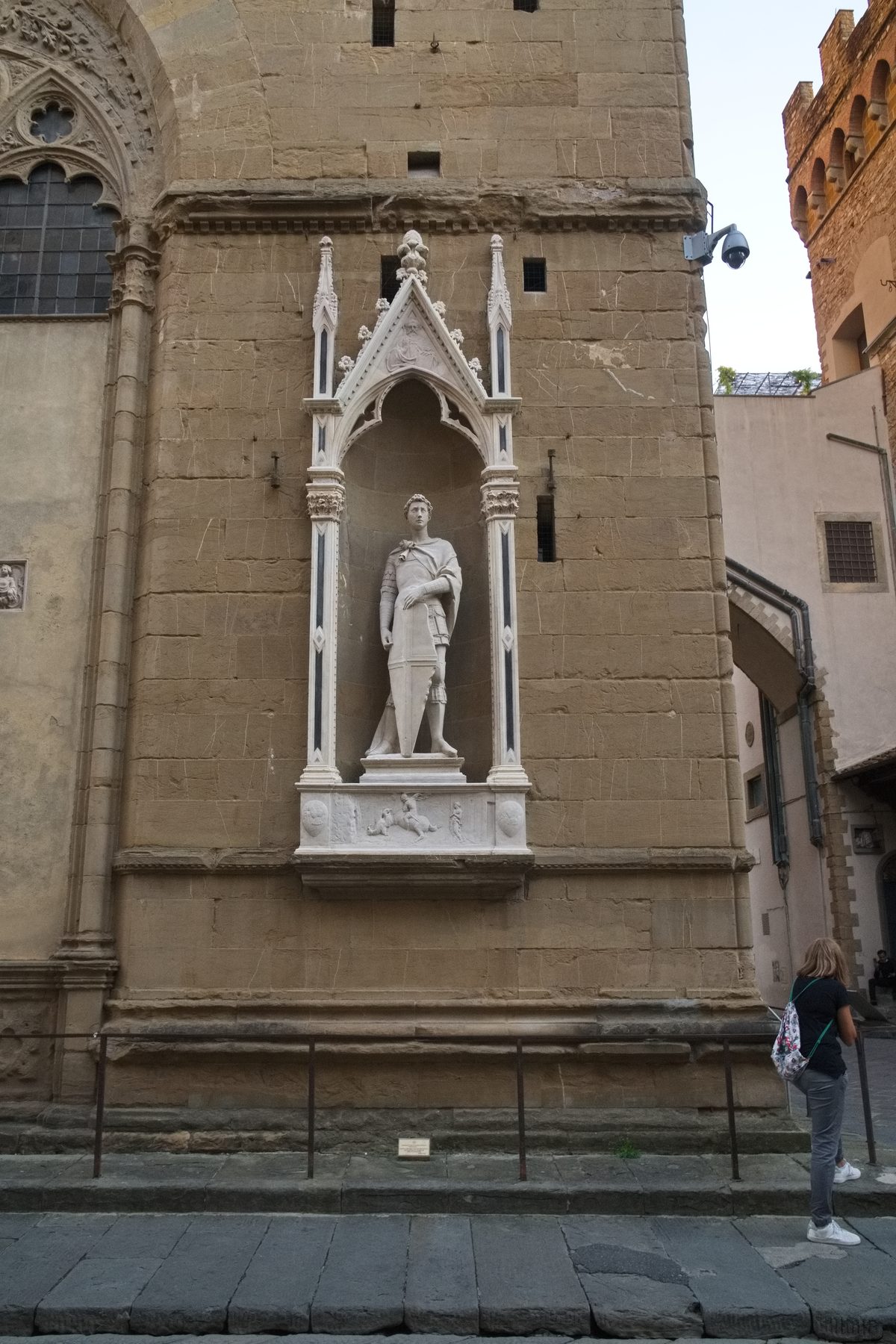
Saint George
Donatello, c. 1415–17
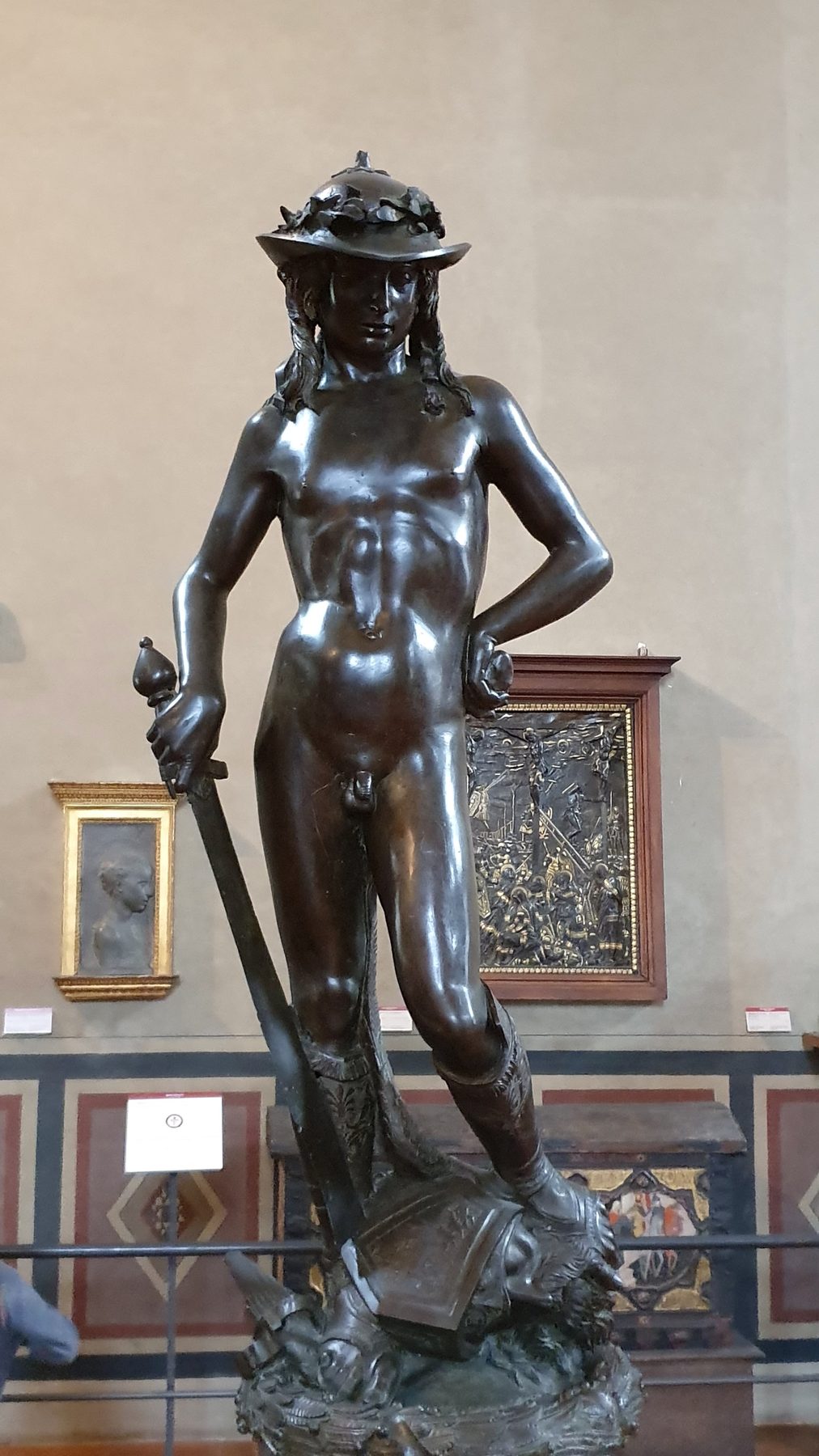
David
Donatello, c. 1435–40
Dome of Florence Cathedral
Filippo Brunelleschi and workforce, 1420–36
The 1401 competition and public sculpture
In 1401 the Arte di Calimala organised a competition for a new bronze door for the Baptistery. Competitors produced reliefs of the Sacrifice of Isaac within a prescribed quatrefoil shape. Lorenzo Ghiberti won; Brunelleschi and Jacopo della Quercia were among the artists associated with the contest. The surviving reliefs by Ghiberti and Brunelleschi invite close comparison, but the event should not be treated as a duel that invented the Renaissance in a morning.[2]
Ghiberti's version is poised and continuous. Isaac's idealised torso turns classical nudity into the centre of a flowing arrangement; the angel interrupts Abraham without breaking the relief's elegance. Brunelleschi makes the crisis sharper. Bodies press against the frame, the angel physically arrests the knife and separate episodes collide. Later history often converts this difference into graceful Ghiberti versus revolutionary Brunelleschi. Yet judges assessed technical feasibility, bronze economy, finish and the reliability of workshops as well as the drama modern viewers perceive.
Ghiberti spent roughly two decades on the North Doors, completed in 1424, then received the commission for the east doors now called the Gates of Paradise. Produced from 1425 to 1452, their ten large gilded panels compress multiple Old Testament episodes into deep and shallow space. Architecture and landscape guide the eye while figures change scale with distance. The doors unite goldsmith precision, monumental casting, classical vocabulary and new spatial experiment.[3] [6]
They are also collective objects. The documented authorship of Ghiberti does not erase a workshop that included his son Vittorio and other assistants. Eight tonnes of bronze and gold could not be transformed through inspiration alone. The Calimala supplied institutional continuity over decades. The Baptistery determined the doors' religious themes and ritual setting. Their fame rests on the coordination of patron, designer, workshop and place.
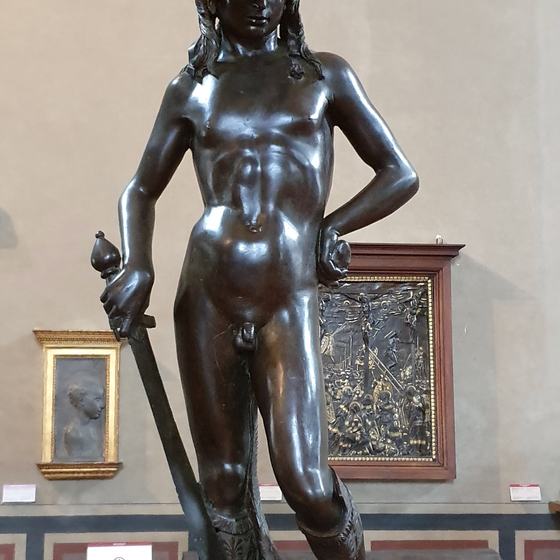
Donatello pursued a more disruptive range. In shallow relief—often described through the term schiacciato—he could make minute differences of depth suggest large spaces and moving air. In carved prophets and saints he allowed age, grief, tension and unfinished-looking surfaces to carry meaning. His bronze David, probably made for a Medici setting at an uncertain date somewhere within the broad middle decades of the century, is both graceful and strange: a youthful nude stands over Goliath's head with an inward expression and an elaborate hat and boots. Claims that it was simply the first freestanding nude since antiquity conceal both dating disputes and the work's unusual mixture of biblical victory, sensual surface and private display.[8] [9]
Luca della Robbia expanded sculpture through a different invention. Around 1430 he developed a tin-glazed terracotta whose opaque surface could carry brilliant blue, white, green and yellow. The method was durable, relatively reproducible and especially effective in architectural settings. Luca's family workshop turned it toward reliefs for churches, façades, hospitals and homes. A glazed ceiling of the Labours of the Months, made about 1450 for Piero de' Medici's studiolo, shows that the medium could be intimate, learned and luxurious as well as publicly devotional.[14]
Brunelleschi's dome and Renaissance architecture
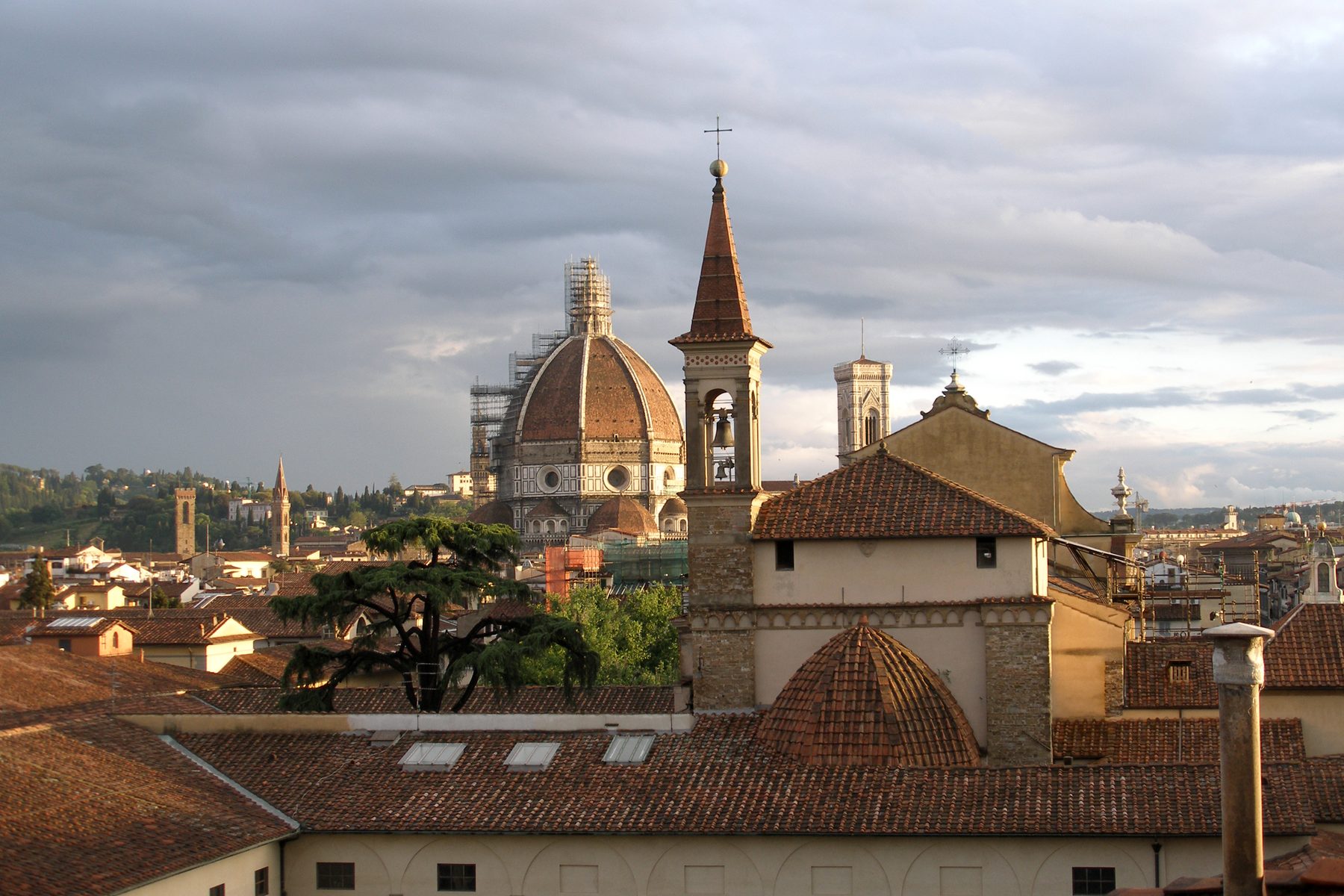
The dome of Florence Cathedral is the city's most visible Renaissance claim, but the building beneath it had medieval foundations and a vast crossing planned before Brunelleschi was born. By 1418, the challenge was how to close an opening about forty-five metres wide at great height without the full wooden centring conventionally used to support a masonry vault. Brunelleschi did not dream up an independent monument; he solved a problem inherited from generations of civic ambition.[4]
Construction began in 1420. The initial supervisory arrangement included Brunelleschi, Ghiberti and the master mason Battista d'Antonio. Brunelleschi increasingly dominated the enterprise, designing machines and directing complex procedures, but the Opera's records preserve the institutional and labouring framework around him. Bricklayers, quarry workers, stonecutters, carpenters, smiths, rope makers, suppliers and administrators translated design into structure over sixteen years.[5]
The dome has inner and outer shells tied by ribs and horizontal elements. Eight major ribs register its octagonal form, with additional ribs embedded between them. The bricks were laid in changing patterns, including herringbone arrangements, as the masonry rose. Work proceeded without a complete ground-supported timber framework, although temporary platforms, templates and supports still mattered. Scholars continue to debate exactly how geometry, brick patterns and construction stages controlled the shell. Wonder is better served by acknowledging those open questions than by reducing the building to one recovered secret.[4] [5]
From the street, the dome is both mass and direction. White ribs draw the eye upward across red tiles, translating hidden structure into visible order. Its octagonal form responds to the crossing and the Baptistery; the later lantern tightens the ascent. Inside, the scale exceeds any single viewpoint. The architecture turns the collective resources of the republic into a horizon visible far beyond its walls.
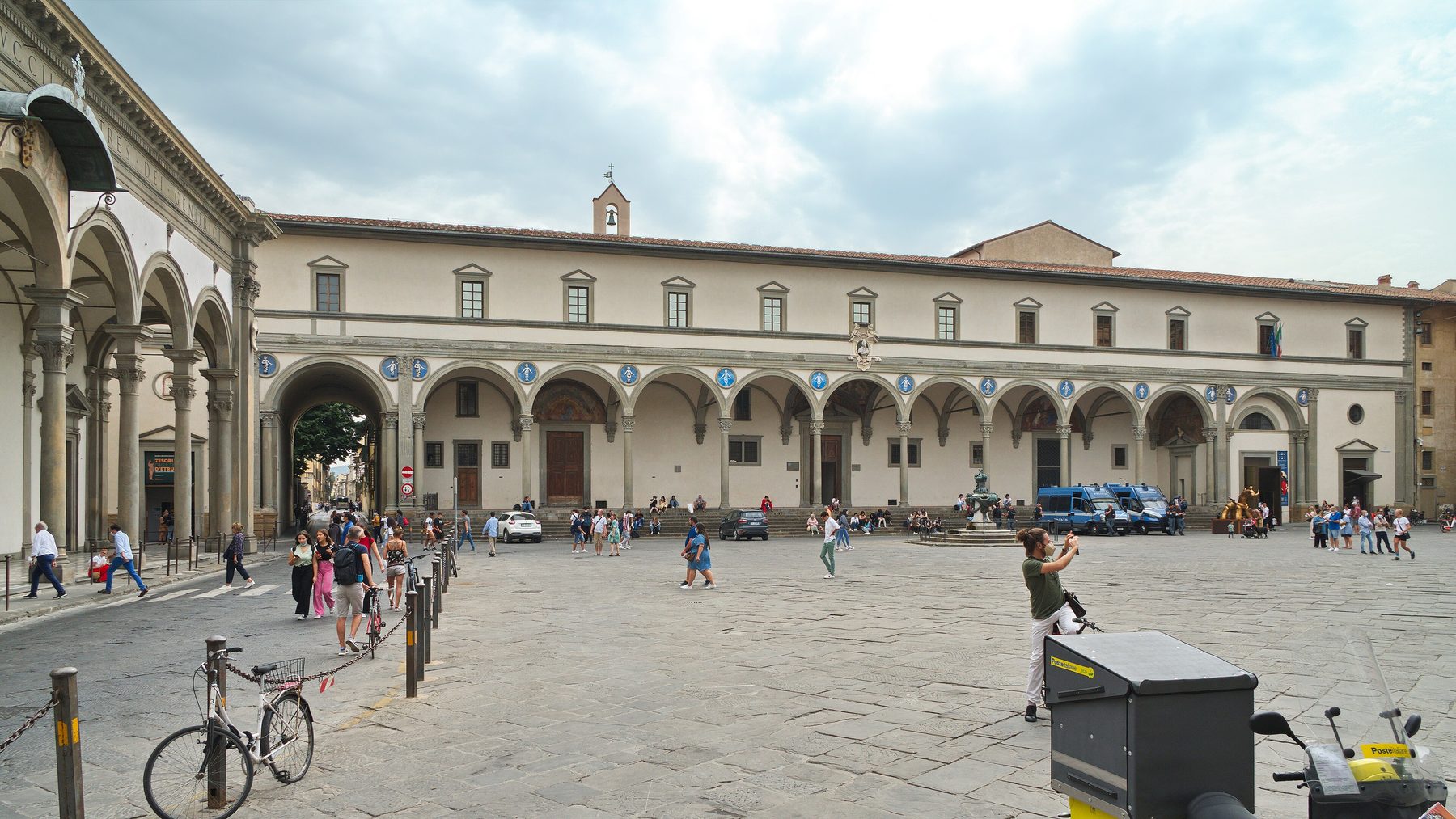
Brunelleschi also changed smaller buildings. The Ospedale degli Innocenti, begun in 1419, uses a repeated arcade, slender columns and clear proportional intervals to give a charitable institution a calm civic face. At San Lorenzo and its Old Sacristy, grey stone members articulate pale walls into intelligible bays. The Pazzi Chapel similarly makes geometry available to movement and ritual. These spaces do not copy an ancient building. They select classical forms and measured ratios for new Christian and urban purposes.[20]
Leon Battista Alberti brought a different combination of practice and theory. His Palazzo Rucellai façade orders a merchant family's city residence through superimposed classical pilasters and a controlled grid. At Santa Maria Novella, he designed a façade that reconciles a pre-existing lower level with a classically proportioned upper composition. Architecture here is negotiation: between old fabric and new surface, family display and public street, antiquity and Christian use.[20] [27]
Florentine architecture therefore cannot be reduced to visual serenity. The Innocenti sheltered vulnerable children; San Lorenzo held Medici memory; family palaces managed access and status; churches belonged to changing communities. Proportion shaped social relations as well as façades.
Perspective as a constructed way of seeing
Brunelleschi is traditionally credited with demonstrating linear perspective through painted panels around the 1420s. The panels do not survive. Our most detailed description comes from Antonio Manetti later in the century and concerns an image of the Baptistery viewed through a small hole and reflected in a mirror. Modern reconstructions can clarify the principle, but they cannot turn later testimony into an untouched laboratory report.[18]
The principle is that parallel lines perpendicular to the picture plane appear to converge toward a point, allowing a gridded floor or building to organise recession mathematically. Alberti explained a geometrical method in his Latin De pictura of 1435 and its Italian version of 1436. His treatise also discussed light, colour, figure grouping and istoria—the meaningful arrangement of actions. Perspective was part of a larger account of painting, not its sole purpose.[19]
It was neither natural vision itself nor an invention without ancestors. Ancient painting, optics and medieval images supplied precedents for spatial construction. Fifteenth-century artists continued to use aerial change, overlap, scale, colour and expressive distortion alongside geometry. Uccello could make perspective conspicuous and almost playful; Fra Angelico could subordinate it to devotional focus; Botticelli could flatten space to intensify line. The system mattered because artists could choose how fully to obey it.
Follow the Florentine Renaissance through four stages
–1425
Public competition and construction
The Baptistery competition, cathedral works and new civic commissions make artistic invention visible through bronze, marble and architecture.
–1460
Perspective, fresco and sculpture
Brunelleschian space, Masaccio’s frescoes and Donatello’s sculpture turn bodily presence and constructed vision into public arguments.
–1494
Workshops and Medici culture
Large workshops link panels, fresco cycles, sculpture, luxury objects and architectural settings across devotional, civic and domestic commissions.
–1530
Republic, High Renaissance and transformation
Political crisis and the mobility of Leonardo and Michelangelo reshape Florence’s artistic authority as Renaissance experiment moves toward the High Renaissance and Mannerism.
Masaccio and the Brancacci Chapel
The Brancacci Chapel in Santa Maria del Carmine was commissioned by the merchant Felice Brancacci. Masolino and Masaccio painted its Saint Peter cycle in the 1420s; the work was interrupted and Filippino Lippi completed parts decades later. It is not a sealed demonstration by a single artist. Its walls preserve collaboration, political disruption, stylistic change and later repair.[10]
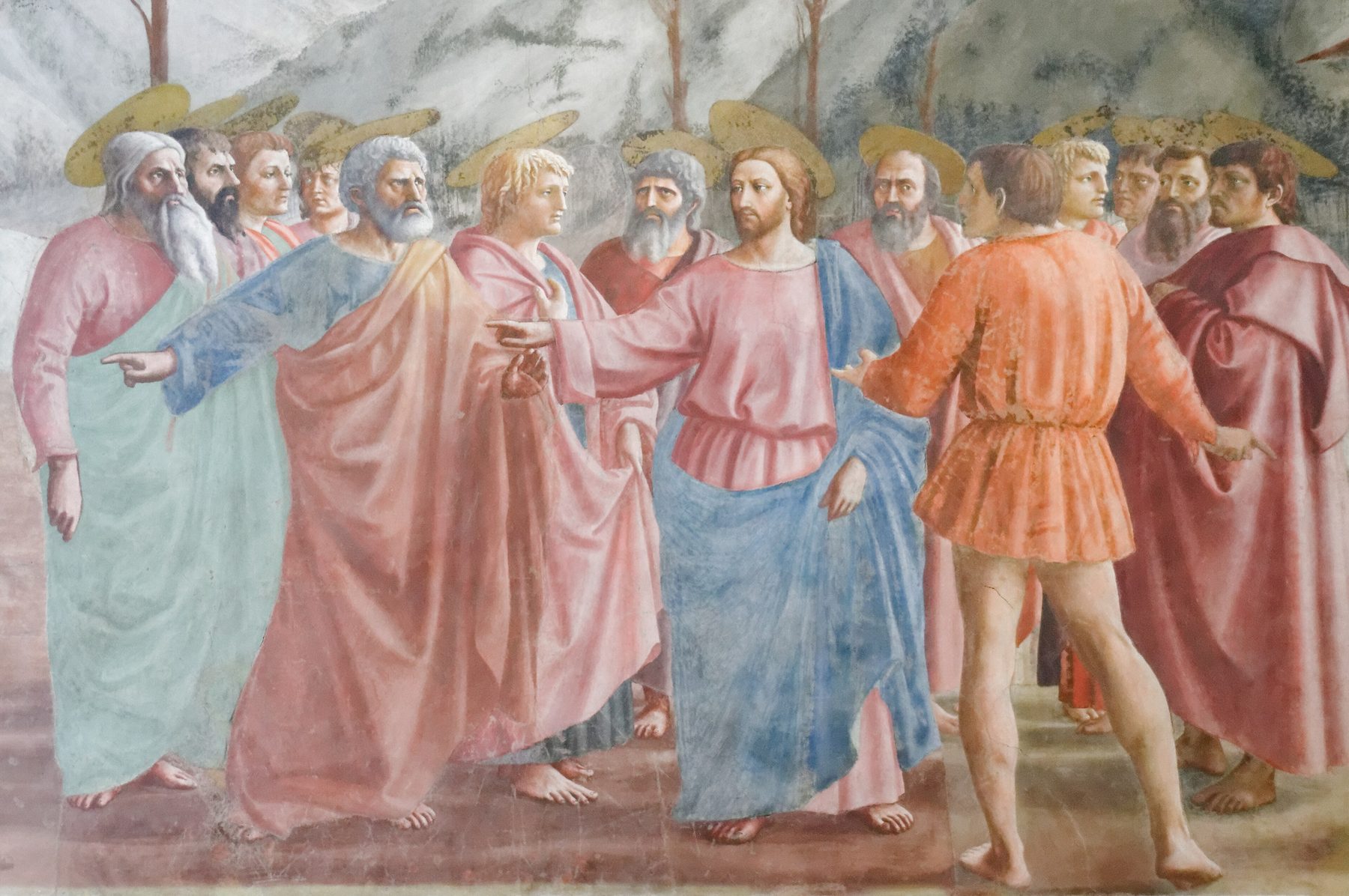
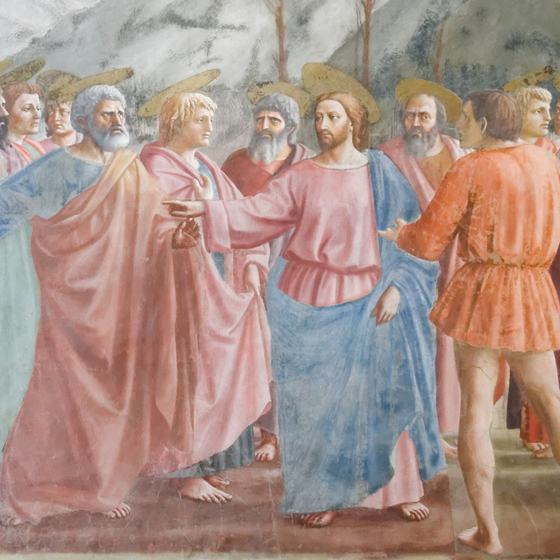
Masaccio's Tribute Money brings several moments of one story into a continuous landscape. Christ and the apostles form a tight central group. Their bodies occupy space through weight, shadow and directional gesture. Peter appears again at the water's edge and at the tax collector's side. Light seems to enter the painted scene from the chapel window, making the imagined event answer the actual room. Perspective helps organise the architecture, but the painting's force comes equally from human concentration and the rhythm of commands.
In the Expulsion from Eden, Adam covers his face while Eve cries upward. Their bodies are not ideal displays; they carry shame through stride, gesture and open mouth. The gate compresses them toward the viewer. Later alterations once covered their nudity, and restoration changed how modern audiences encounter the fresco. Its emotional directness is the result of formal decisions, not proof that the figures are simply more “real” than everything before them.
Masaccio's Holy Trinity at Santa Maria Novella stages another relationship between painted and actual architecture. A coffered barrel vault appears to recede behind the wall; donors kneel outside the sacred group; a skeleton and inscription below confront the living viewer with death. The geometrical construction does not secularise the image. It makes doctrine spatial. The viewer stands before a painted chapel where bodily mortality, intercession and divine order align.
The Pisa altarpiece, now dispersed, reveals a different scale of practice. In the National Gallery's Virgin and Child, light defines Mary's volume while the Christ Child eats grapes that anticipate the Eucharist and Passion. The low viewpoint corresponds to an object placed above an altar. Gold remains active even as spatial and bodily effects change. Technical and documentary research reconnects the panel to a workshop, carpentry, payments and an original ensemble rather than treating it as an isolated “first modern painting”.[11]
Masaccio died in 1428 at about twenty-six. His short career became a powerful part of Florence's story because later artists studied the Brancacci frescoes. Influence, however, does not equal solitary invention. Masolino, Brunelleschi, Donatello and many unnamed practitioners belonged to the same transforming field.
Fra Angelico and sacred modernity
Fra Angelico proves how poorly “medieval faith” and “Renaissance innovation” work as opposites. A Dominican friar and professional painter, he retained brilliant colour, gold and an exquisite delicacy associated with late Gothic art while learning from Masaccio's bodies, architecture and light. His pictures make visual order serve contemplation.[13]
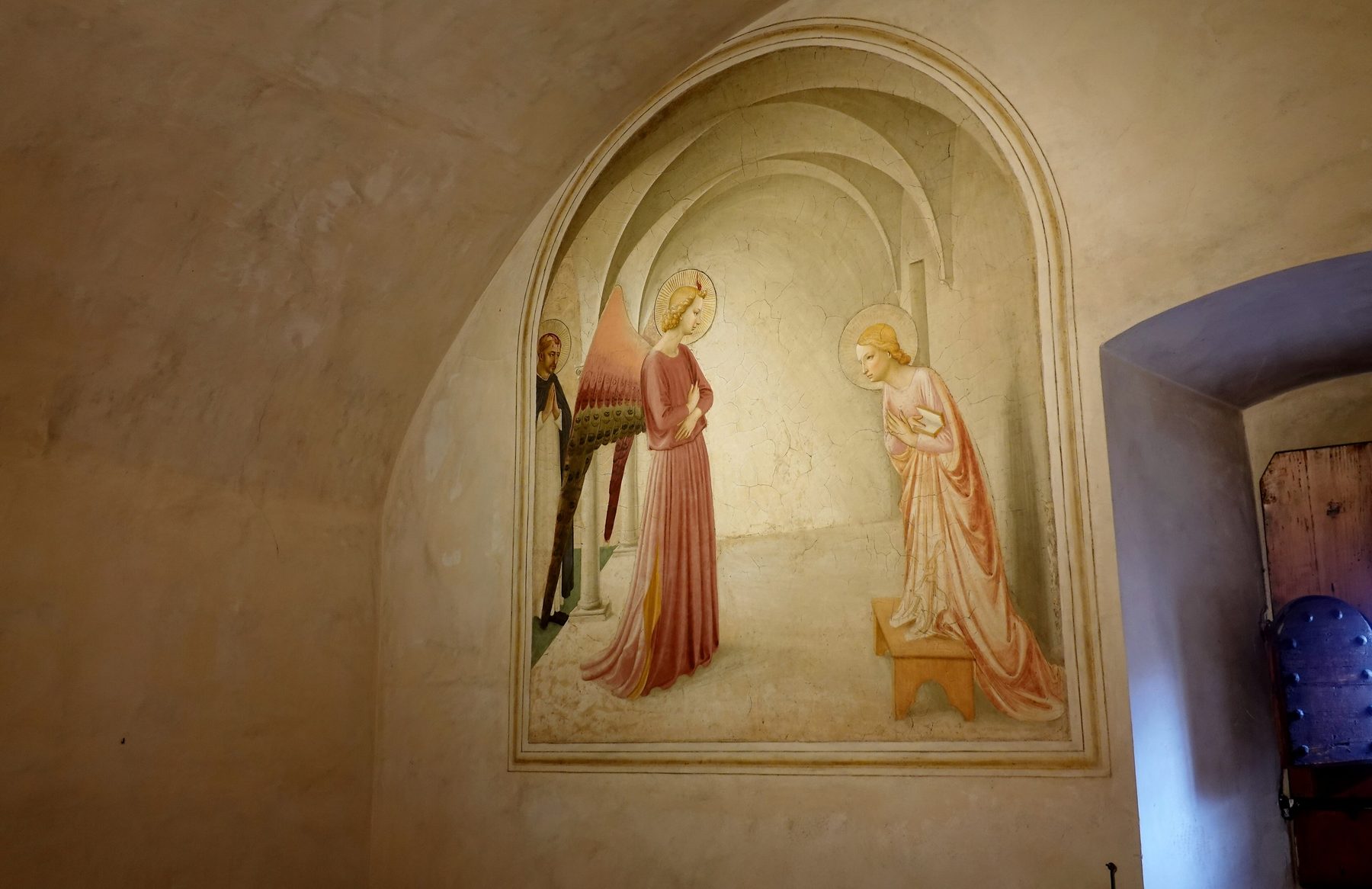
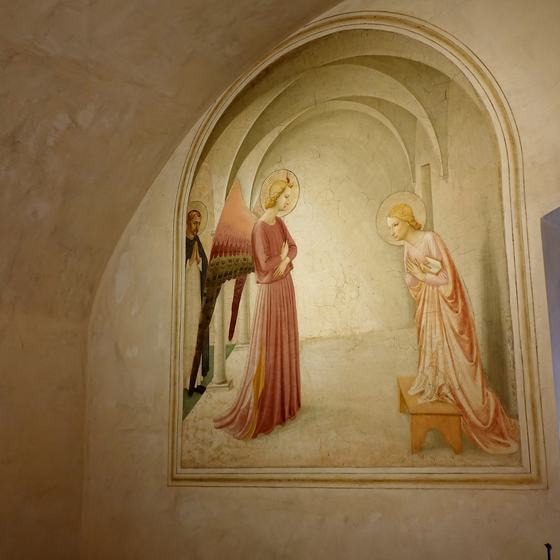
At San Marco, the convent rebuilt by Michelozzo between 1437 and 1443 at Cosimo de' Medici's wish, Fra Angelico and his workshop painted public corridors and private cells. The cell frescoes are often restrained: a small number of figures, pale ground, spare architecture and gestures calibrated for slow devotional attention. They were not museum pictures made for unrestricted looking. Their first audience lived within a rule of prayer, study and communal discipline.[12]
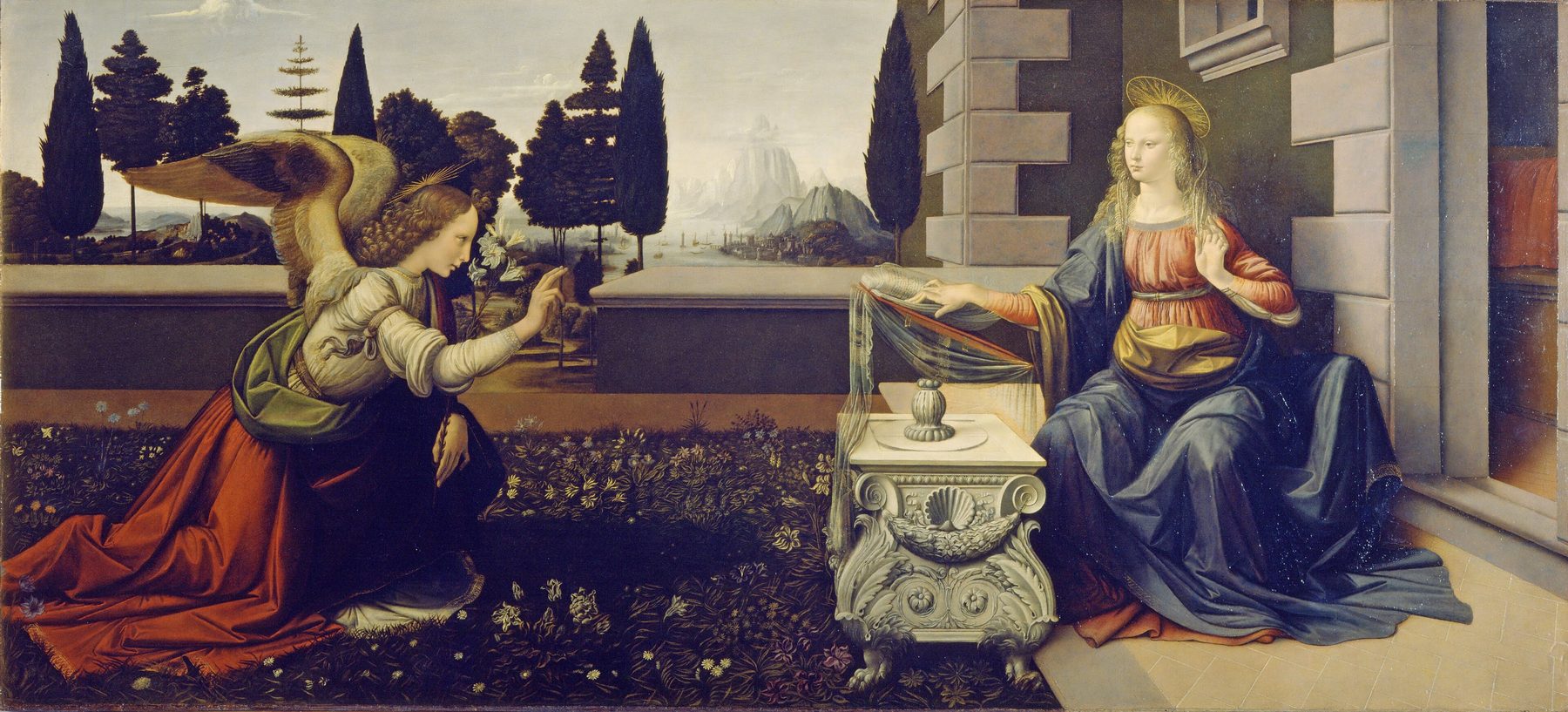
The Annunciation at the top of the stairs joins a lucid arcade to an encounter defined by silence. Columns establish rhythm, but the garden, wings, crossed hands and empty interval between Gabriel and Mary carry as much meaning as geometry. Perspective offers a habitable sacred space; it does not explain the mystery away.
A plural fifteenth century
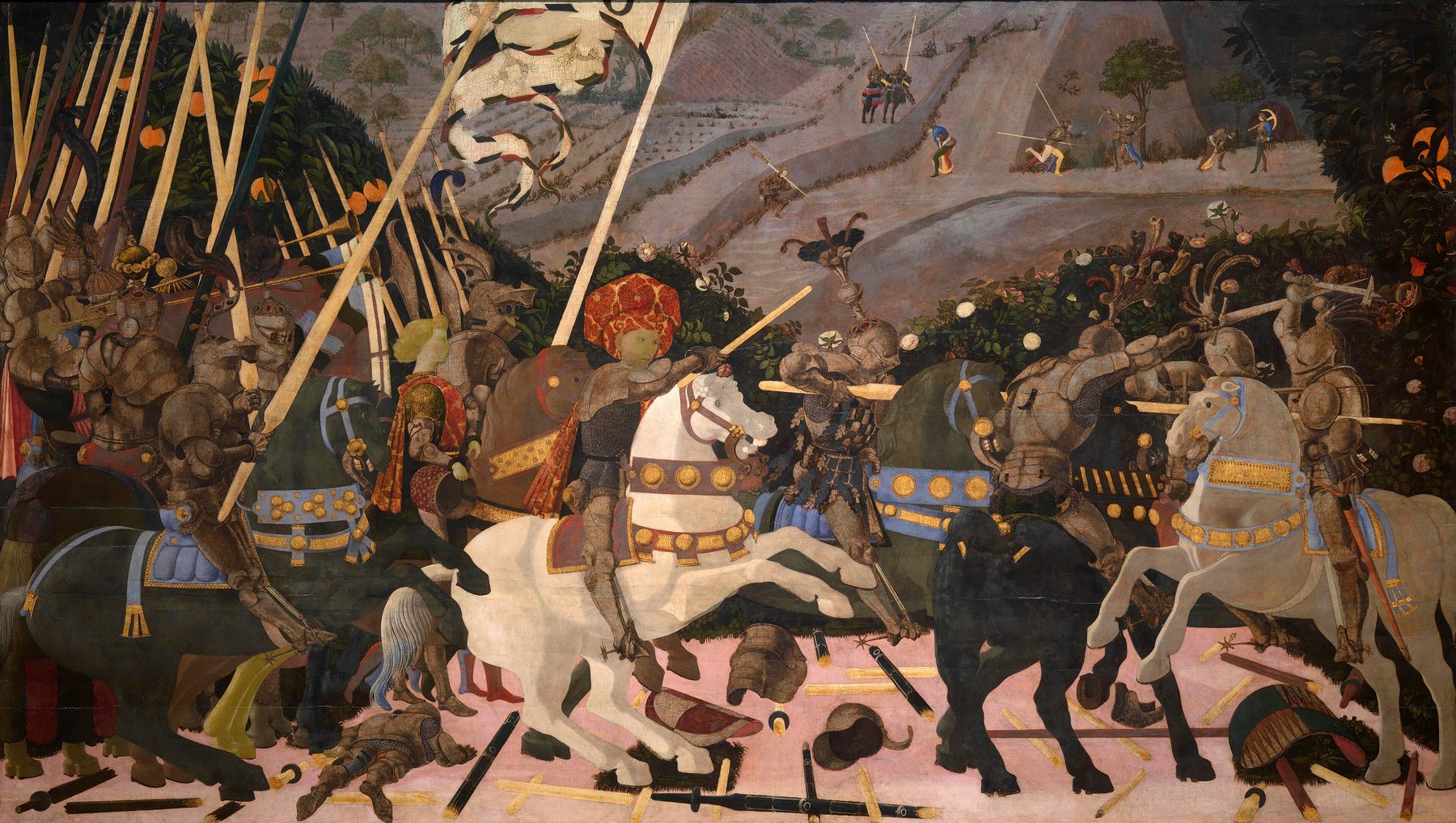
Florentine painting after Masaccio did not advance along a single track. Uccello became fascinated by armour, foreshortening and constructed space. In the three panels of the Battle of San Romano, lances, fallen weapons and bodies generate a scaffold of recession, yet ornamental horses and hedges resist ordinary depth. The result is both calculated and unreal. It warns against equating perspective with straightforward naturalism.
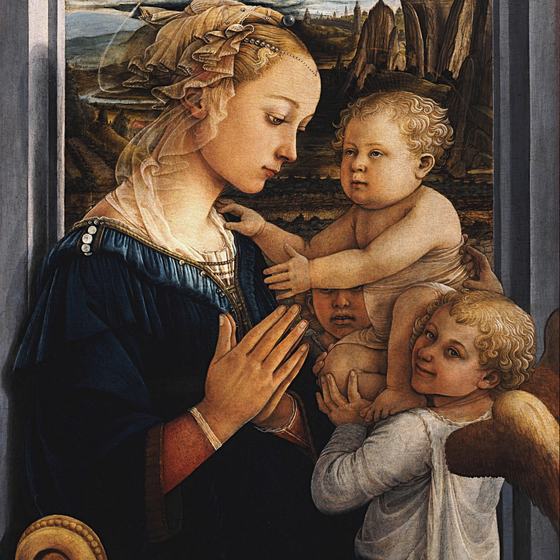
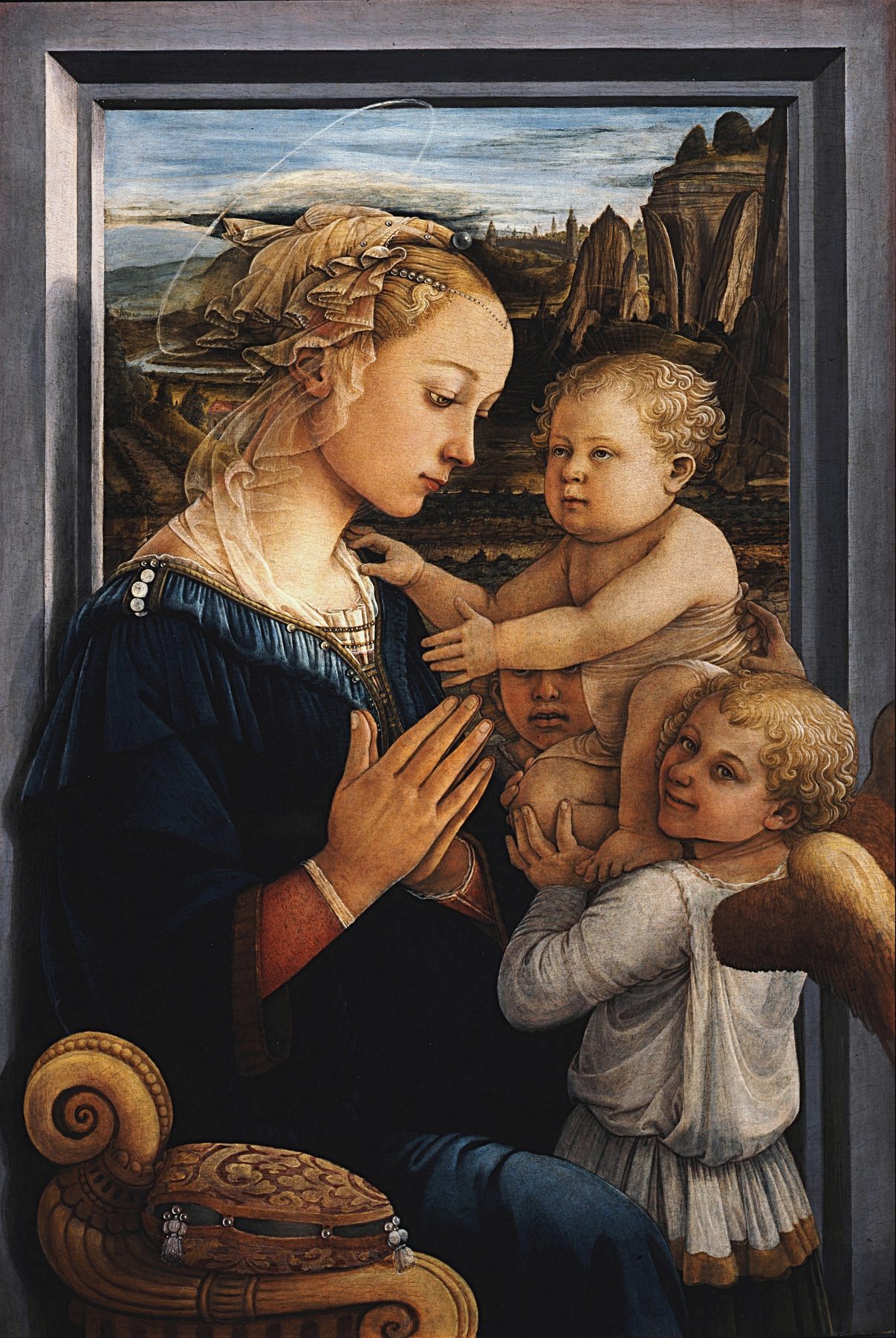
Filippo Lippi brought a more intimate and sensuous approach to sacred figures. His Virgins can appear close to contemporary Florentine women, set near windows, veils and carefully observed children. Narrative frescoes unfold through elegant crowds and architectural transitions. His workshop helped train Botticelli, but influence did not prevent the younger artist from developing a more emphatic line and different emotional temperature.[16]
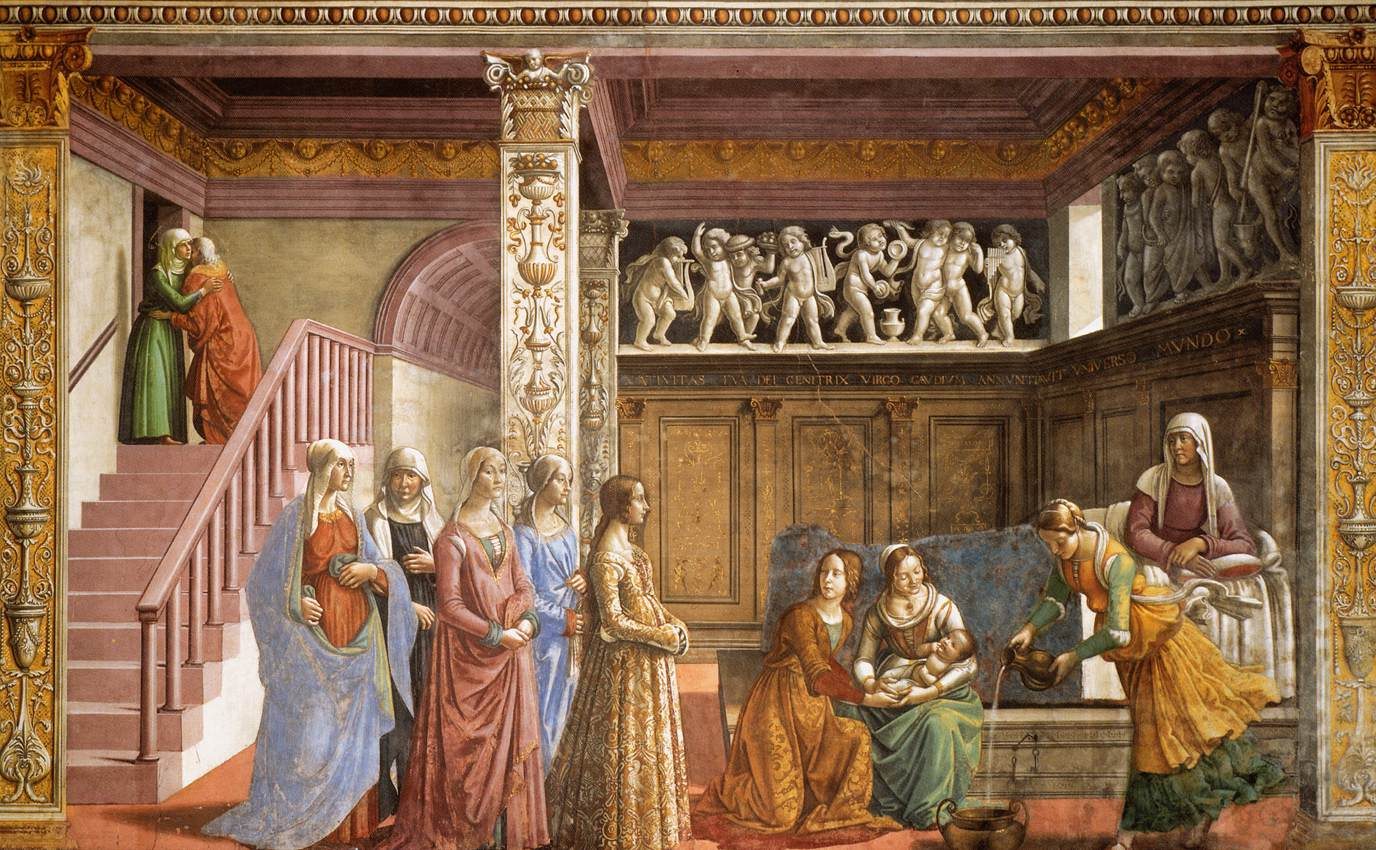
Domenico Veneziano used pale light and unusually delicate colour. Andrea del Castagno favoured forceful figures and sharp sculptural definition. Antonio and Piero del Pollaiuolo studied bodies in strain, translating movement between painting, engraving, embroidery, metalwork and sculpture. Ghirlandaio placed sacred stories among expansive portraits, fashionable clothing and recognisable Florentine interiors. His fresco cycles show how a family chapel could become an archive of urban society.
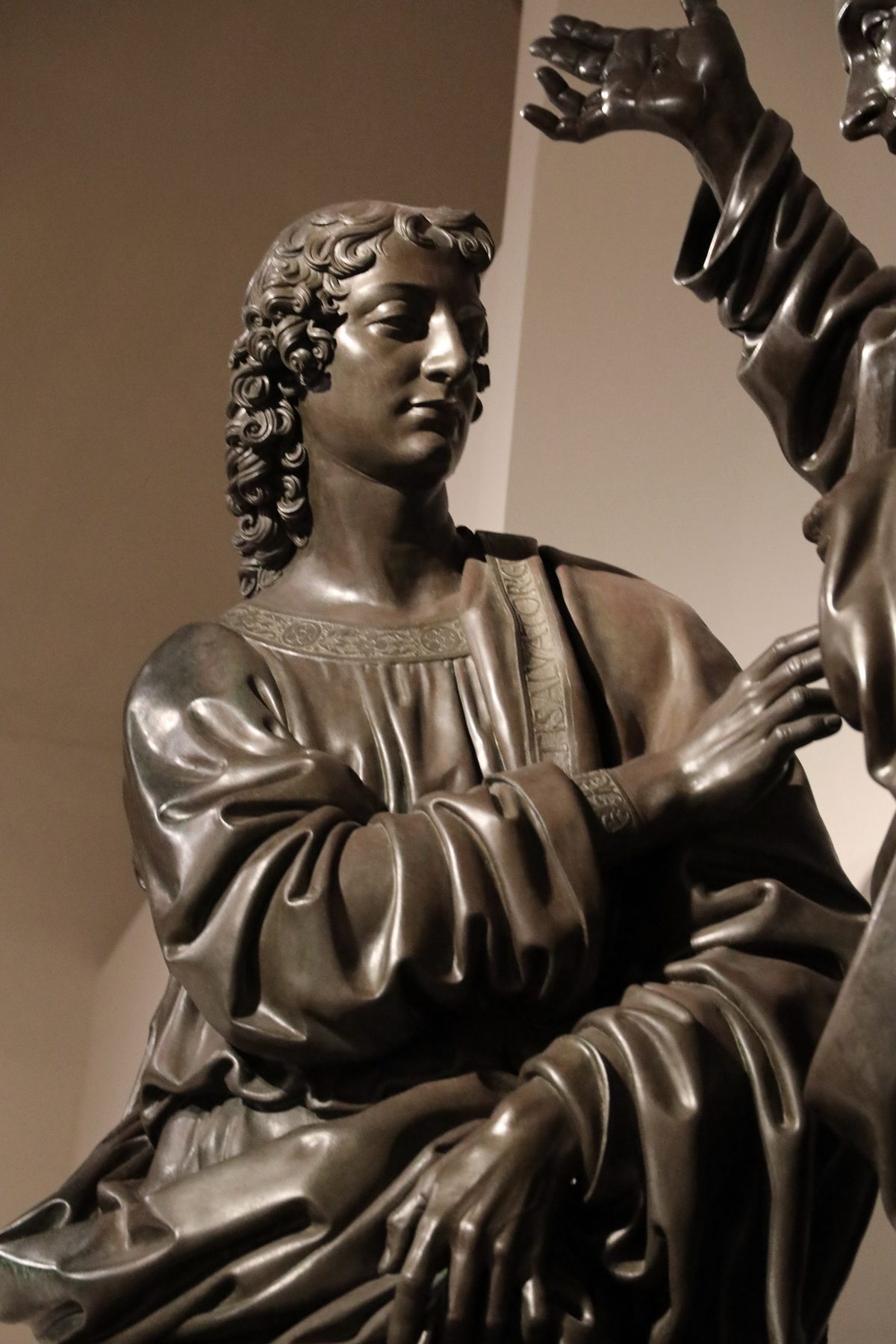
Verrocchio binds many of these routes. His bronze Christ and Saint Thomas for Orsanmichele turns a niche into an encounter: Thomas reaches, Christ reveals his wound and the figures negotiate the limited threshold between public street and sacred drama. The work is technically daring because two monumental bodies share a space designed for one. Its emotional argument depends on architecture and casting as much as expression.[7] [15]
This plurality is central. Florentine artists could choose hard contour or softened light, archaeological classicism or contemporary dress, deep recession or patterned surface. The city's culture encouraged comparison without enforcing consensus.
Humanism and Medici culture
Florentine humanism began as practices of reading, writing, teaching and political speech. Coluccio Salutati, Leonardo Bruni, Niccolò Niccoli and Poggio Bracciolini sought manuscripts, studied Latin and Greek, translated texts and used ancient models in public rhetoric. Bruni's history and praise of Florentine liberty connected classical language to the republic's self-image. The modern phrase “civic humanism” captures part of this connection, but it should not make a diverse intellectual culture seem like one official programme.[22] [23]
Marsilio Ficino translated Plato and other Greek authors under Medici patronage. Poets and scholars including Angelo Poliziano moved within related circles. The “Platonic Academy of Florence” is often imagined as a formal institution with defined members and meetings. Treccani's historical account stresses that the group had no statutes or offices comparable to a later academy. It is safer to speak of a changing network around Ficino, Careggi, study and conversation.[24]
Humanism affected art through texts, inscriptions, antiquarian objects, subjects and habits of interpretation. It also shaped the social image of the artist. Yet a painter did not need to become a Latin scholar before using an ancient pose, and patrons did not translate philosophy directly into pictures. Workshop tradition, poetry, sermons, festivals, devotional literature and conversation all mediated ideas.
The Medici were the most durable family in this culture, but not its only engine. Cosimo de' Medici returned from exile in 1434 and exercised extraordinary influence while republican institutions formally continued. Loans, marriages, alliances, charitable acts and building projects created a political network that was powerful partly because it was not openly called a principality. Piero and Lorenzo extended it under changing pressures.[25] [26]
Michelozzo's Palazzo Medici gave the family a commanding but carefully graduated urban residence: rough stone at street level, increasingly refined masonry above, a controlled entrance and an arcaded courtyard. Inside, the chapel painted by Benozzo Gozzoli in 1459 surrounds worshippers with the journey of the Magi. Piero de' Medici commissioned the frescoes. Rich textiles, animals, landscapes and a procession of recognisable or plausibly identified contemporaries connect Epiphany, family presence and diplomatic spectacle.[28]
The chapel is sometimes read as a literal group portrait of the Council of Florence of 1439. Its imagery does recall international visitors and Medici diplomacy, but individual identifications are not all certain. The procession converts sacred travel into a flexible structure for memory and display rather than a documentary photograph.
Lorenzo “the Magnificent” became ruler in effect after 1469. He was a poet, collector and political broker whose cultural patronage extended strongly to literature, manuscripts and relationships. Later storytelling assigns him almost every beautiful object produced in Florence during his lifetime. Scholarly biography offers a more discriminating picture: Lorenzo supported artists and supplied opportunities, but his direct artistic commissions were fewer and differently documented than legend implies.[25]
Medici influence is best seen alongside other systems. The cathedral guild commissioned Michelangelo's David. Gaspare del Lama commissioned Botticelli's Adoration. Confraternities, convents, merchant families and republican councils made major works. An artist might include Medici faces or symbols without the family being the contractual patron. Political culture operated through visibility, affiliation and hoped-for favour as well as payment.
Botticelli and the problem of interpretation
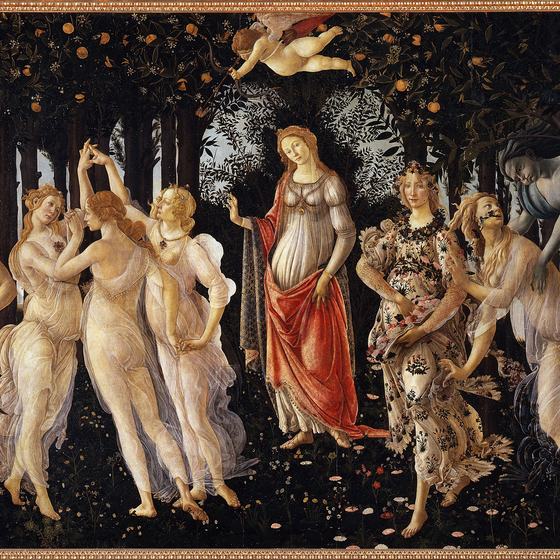
Botticelli's art has become the visual shorthand for Lorenzo's Florence, yet his major paintings resist that simplicity. His line can make a body feel less like solid mass than a current passing through hair, fabric and gesture. Space is often intelligible but deliberately shallow. Faces hold emotions that are neither easily narrative nor simply decorative.
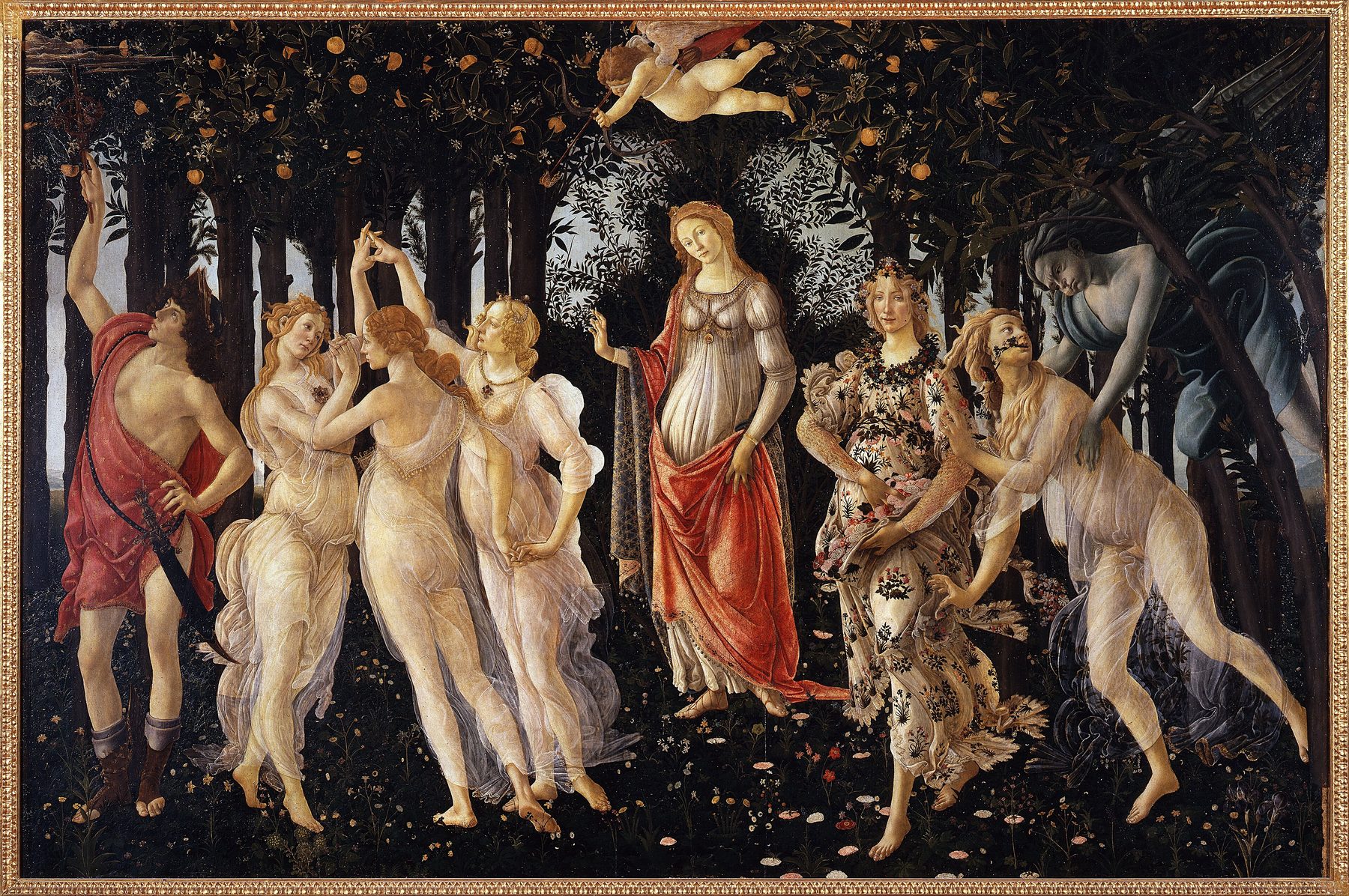
The Primavera, probably painted around 1480, gathers nine mythological figures in an orange grove. On the right, Zephyrus pursues Chloris, from whose mouth flowers emerge as she becomes Flora. Venus occupies the centre; above, Cupid aims blindly; the Three Graces dance; Mercury turns toward the clouds. More than forty plant species can be distinguished. The elements invite literary, philosophical, seasonal, marriage and political readings, but no surviving document fixes one programme.[29]
By the late fifteenth century the painting was in the Via Larga house of Lorenzo di Pierfrancesco de' Medici, displayed above a lettuccio, a substantial domestic bench or daybed. That setting matters. The work belonged to an inhabited interior before it became an icon in a museum. Its association with a younger Medici branch is secure enough to frame interpretation; claims about one exact wedding commission or a coded lesson dictated by Ficino go beyond the evidence.
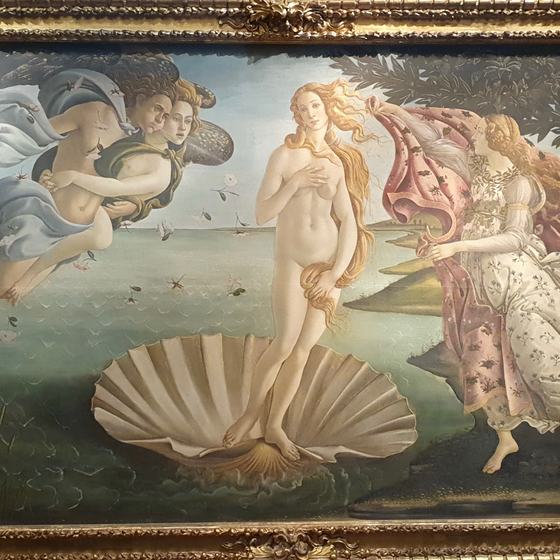
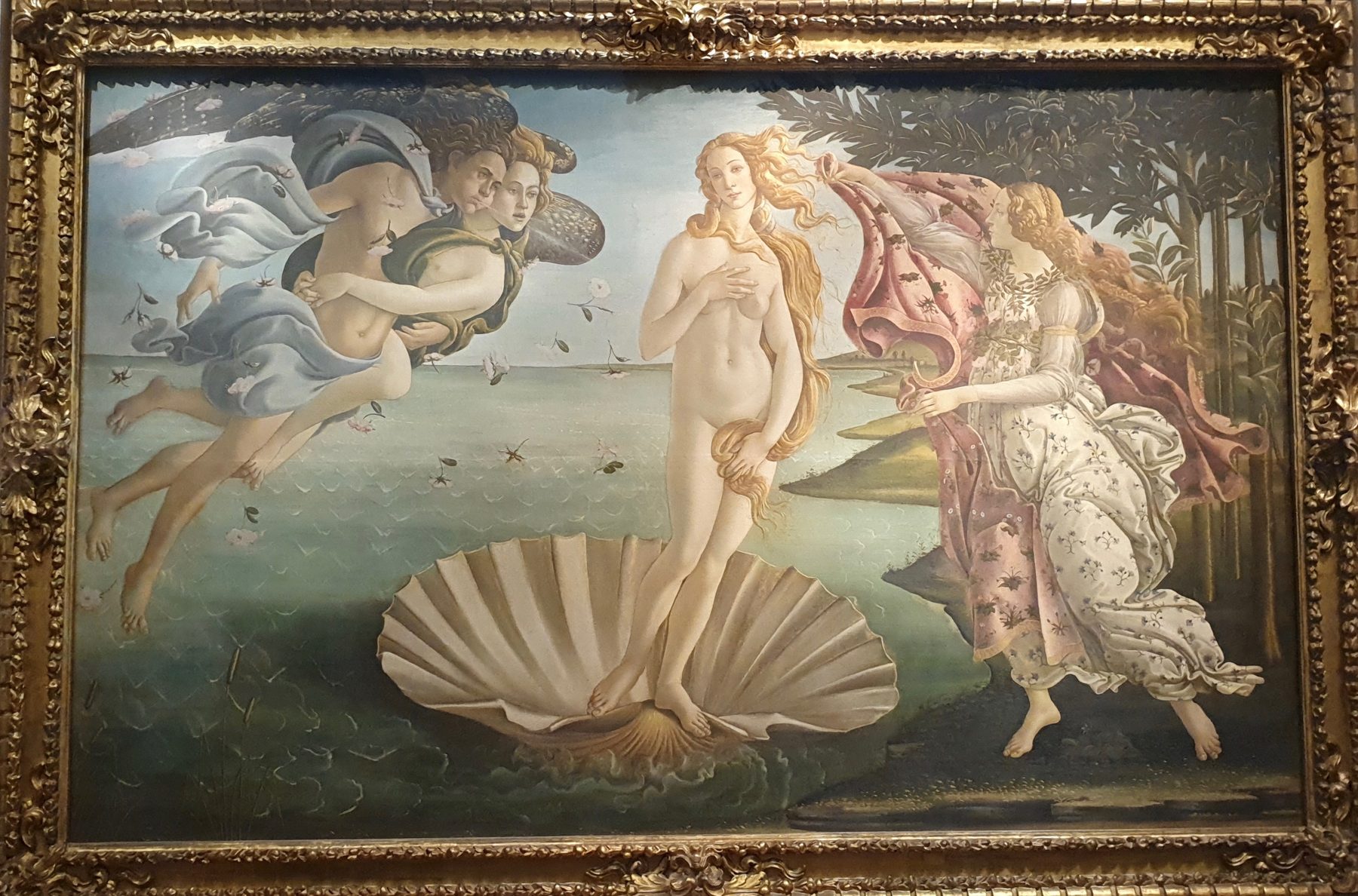
The Birth of Venus, painted on canvas around the mid-1480s, stages the nude goddess arriving across the sea on a shell while winds drive her toward a waiting figure. The surface is governed by contour, pale flesh, patterned waves and hair that behaves more like ornament than gravity. Classical literary sources help explain the subject. Its original commission does not survive, and the painting is not documented until Vasari mentioned it at the Medici villa of Castello in 1550. “Made for the Medici” should therefore remain a qualified connection, not an invoice we possess.[30]
Botticelli's Adoration of the Magi exposes the dangers of family shorthand. Gaspare del Lama, a money broker seeking status, commissioned it for a chapel at Santa Maria Novella. Members of the Medici family are probably represented among the worshippers, while Botticelli may appear at the edge. The image can express deference, ambition and affiliation even though a Medici did not commission it. Patronage and political imagery overlap without becoming identical.[31]
Smaller devotional paintings add another Botticelli. A work such as the Madonna della Loggia condenses tender contact, architectural enclosure and artistic memories of Lippi, Ghiberti and Donatello. Uffizi research also notes connections with Netherlandish painting. Such objects remind us that his career was not divided neatly between pagan myth and later religious anxiety.[32]
Women, households and devotion
Most documents name male masters and male representatives of institutions, but Florentine art entered spaces structured by women. Marriage chests held textiles and travelled in wedding rituals; their painted panels connected family alliance to stories of virtue, danger, love or triumph. Birth trays were presented around childbirth and could carry protective, celebratory or exemplary imagery. Inventories show that deschi da parto circulated beyond the highest elite, though their materials and splendour varied.[33] [34]
These objects belonged to a world in which pregnancy and birth were dangerous, lineage was politically important and women's rooms were centres of household exchange. They should not be treated as minor decoration beside “public” masterpieces. They joined painting to the life cycle, bodily risk and family memory.
Women also commissioned art, maintained chapels, managed estates, embroidered, worked within households and shaped devotional environments. Female religious communities could act collectively as patrons and viewers, choosing objects that served their own liturgical and institutional needs. Surviving evidence varies, and anonymity should not be replaced with invented biographies. The broader system is visible even when individual labour is difficult to name.[35]
Plautilla Nelli belongs at the edge of this chronology. Born in 1524 and later a Dominican nun at Santa Caterina da Siena, she led a productive convent workshop and received recognition from Vasari. Her career belongs more to the movement's afterlife than its fifteenth-century core, but it demonstrates that Florentine artistic professionalism did not end at male guild doors.[36]
Florence in exchange
Florence's wealth rested substantially on wool, silk, banking and commercial networks. Those systems were unequal and vulnerable, but they made large commissions possible and moved objects over long distances. The imported lapis in a blue mantle, classical manuscripts recovered or copied across regions and Netherlandish paintings admired in Italian collections all complicate the image of self-sufficient local genius.[21] [38]
Artists moved too. Lippi's workshop influenced painters who worked toward Urbino. Leonardo left for Milan in the early 1480s. Florentine sculptors took commissions in Padua, Siena, Rome and Naples; non-Florentine artists worked in Tuscany. Alberti wrote and built across Italian courts. Exchange was not a one-way diffusion of Florentine advances. Encounters generated different local syntheses.[16] [20]
The word “Renaissance” can disguise these dependencies by making ancient Rome and modern Florence the only partners in conversation. Materials came through Asia and the Mediterranean. Northern oil painting and portraiture offered compelling models. The city remained locally distinctive precisely because its workshops knew how to absorb and transform things that were not local.
Crisis, republic and Savonarola
Lorenzo de' Medici died in 1492. Two years later, as the French king Charles VIII entered Italy, the Medici were expelled and a new republican order emerged. The Dominican preacher Girolamo Savonarola became an influential voice in a city attempting political and moral renewal. He did not rule alone, and Florentine factions disagreed fiercely over the form of government, relations with Rome and the preacher's authority.[42]
The bonfires of 1497 and 1498 gathered objects condemned as vanities: luxury goods, cosmetics, games, books and images could be swept into campaigns of penitence. The event has encouraged a durable story that Botticelli burned his own mythological paintings. There is no firm evidence for that dramatic act. Contemporary and later testimony links Fra Bartolomeo and Lorenzo di Credi more securely to destroying or renouncing certain works or studies. Botticelli may have responded deeply to Savonarolan preaching, but the degree and visual consequences remain debated.[43]
Savonarola was excommunicated, arrested, tried and executed in the Piazza della Signoria on 23 May 1498. His rise and fall affected patronage, preaching, imagery and the emotional atmosphere of the republic. It cannot explain every angular line or sorrowful face made in the 1490s. Political crisis entered art through institutions and individual choices, not as a uniform style.[42] [43]
The period also reveals why “Lorenzo's golden age” is inadequate. Florence continued to produce ambitious art after his death, but under different forms of republican and Medici power. Conflict was not the opposite of cultural creation; it changed its audiences and stakes.
Leonardo, Michelangelo and the mobile High Renaissance
Leonardo learned in Verrocchio's cross-media environment, but he spent much of his mature career outside Florence. His move to Milan in the early 1480s gave him courtly, engineering and monumental opportunities that a local biography cannot contain. When he returned to Florence around 1500, he brought experience formed elsewhere.[15] [39]
In 1504 the republic commissioned Leonardo to paint the Battle of Anghiari in the great council hall of the Palazzo Vecchio. Michelangelo received the facing Battle of Cascina. The projects recalled Florentine military history while setting two exceptional artists into public competition. Neither mural was completed, and the surviving evidence consists of copies, studies and later descriptions. Their cartoons nevertheless became celebrated academies of movement for younger artists.[39] [41]
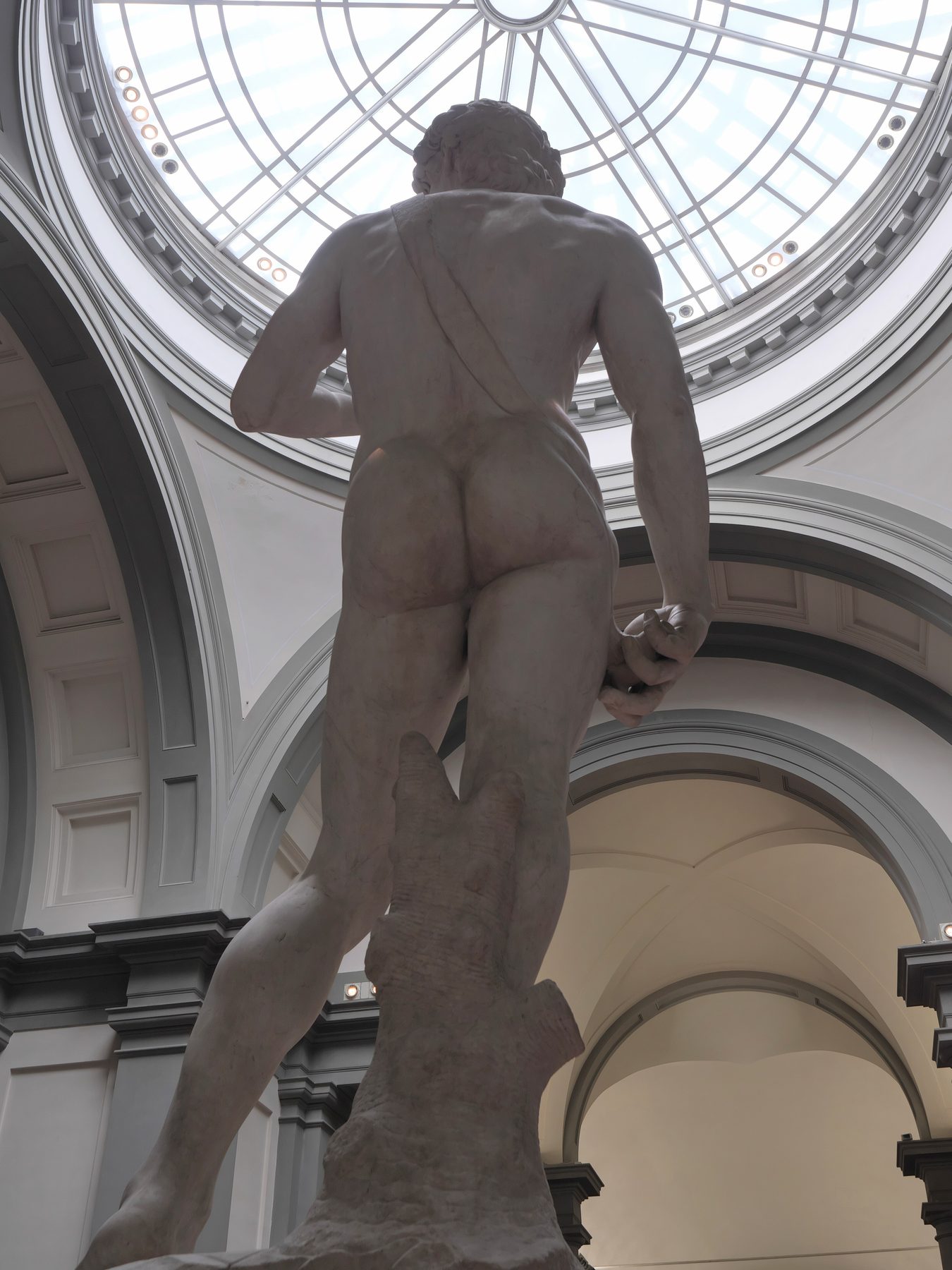
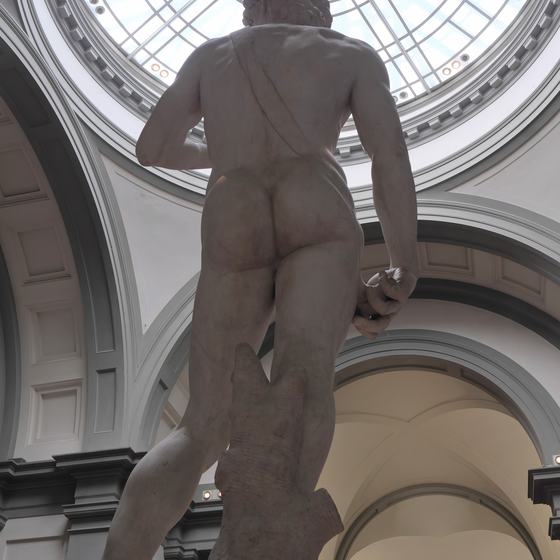
Michelangelo's David had a different route into civic meaning. The Opera del Duomo commissioned it in 1501 from a huge marble block that earlier sculptors had begun and abandoned. When it was finished in 1504, a committee debated its location and chose the entrance of the Palazzo Vecchio rather than the cathedral. The biblical victor now stood before the seat of government. Its concentrated gaze, enlarged hands and exposed body could embody vigilance and the republic's claim to defend its freedom.[40]
The sculpture's transformation was institutional. Michelangelo made the figure, but cathedral administrators owned the block, officials convened the placement committee, workers transported the enormous marble and a political site changed its public associations. Even this supreme emblem of individual authorship confirms the collective conditions of Florentine art.
Raphael came to Florence during these years, according to Vasari, and absorbed lessons from Leonardo, Michelangelo and Fra Bartolomeo before his Roman career. Michelangelo also moved repeatedly between Florence, Bologna and Rome. The High Renaissance was not Florence's final local style. It was a network of mobile artists, patrons and large-scale commissions in which Florentine formation remained important.[39]
From republic to duchy and Mannerism
The Medici returned in 1512. A republic was restored in 1527, then defeated after the siege of 1529–1530. In 1532 Alessandro de' Medici became hereditary duke. These political changes altered the relationship between art and authority: courtly representation, dynastic continuity and control of civic space became increasingly explicit.[44]
Style did not wait for constitutional dates. Andrea del Sarto pursued soft colour, poised figures and complex balance. Pontormo and Rosso Fiorentino made bodies, spaces and emotions more unstable. Bronzino developed a hard, controlled elegance within the Medici court. Their work is often grouped under Mannerism, but it grew from close knowledge of the Florentine achievements it reconfigured. Elongation, unusual colour or compressed space were not symptoms of simple decline after a perfect High Renaissance; they were new answers to inherited problems.
Vasari, Burckhardt and the invention of a canon
Florence's dominance in Renaissance history was itself made. Giorgio Vasari's Lives of the Most Excellent Painters, Sculptors and Architects, first published in 1550 and expanded in 1568, arranged art as a recovery from decline through successive stages. Giotto initiates renewal; fifteenth-century Tuscan artists advance knowledge; Leonardo, Raphael and especially Michelangelo bring the arts toward perfection. Vasari preserved indispensable information and unforgettable criticism, but his structure privileged Tuscany, disegno and exemplary male masters.[45] [46]
In 1563 Vasari helped establish Florence's Accademia del Disegno under ducal patronage. Drawing became both a shared intellectual foundation of painting, sculpture and architecture and a claim for elevated professional status. The academy institutionalised a lineage the Lives narrated.[46]
Jacob Burckhardt's German-language Die Cultur der Renaissance in Italien of 1860 later presented Renaissance Italy as a decisive emergence of modern individuality, sharply distinguished from medieval collective life. That interpretation shaped museums, education and tourism far beyond Florence. It helped viewers recognise the period's importance while making its boundary with the Middle Ages appear cleaner than current scholarship accepts.[47]
To question this canon is not to diminish Florence. It makes the city's achievement more substantial. The dome becomes more impressive when its workers return; Botticelli becomes more interesting when one symbolic key fails; Masaccio's innovations become more intelligible among collaborators; the Medici become historically sharper when other patrons remain visible.
Artists and architects to know
Filippo Brunelleschi
Brunelleschi united design, construction, machines, geometry and classical study. The cathedral dome made him a civic hero, while the Innocenti, San Lorenzo and Old Sacristy transformed the experience of measured architecture. His career should always be read with the Opera, patrons and building trades that realised it.[4] [5] [20]
Fra Angelico
Fra Angelico joined Dominican life to professional workshop practice. At San Marco, controlled space, pale light and economical gesture create environments for contemplation. His art exposes the false choice between spiritual purpose and formal experiment.[12] [13]
Sandro Botticelli
Botticelli made line carry beauty, violence, transformation and grief. His mythologies belong to domestic Medici-associated settings but retain unsettled meanings. His altarpieces and devotional works reveal a much broader career than Primavera and The Birth of Venus alone.[29] [30] [31]
Leonardo da Vinci and Michelangelo
Leonardo and Michelangelo emerged from Florentine systems and then exceeded any regional boundary. Their unfinished battle projects made republican history a theatre of artistic rivalry; Michelangelo's David became a civic emblem through relocation. Their mobility is the key to understanding Florence's place within the High Renaissance.[39] [40] [41]
Further artists and architects
Giotto
Giotto belongs to the Trecento roots of the Florentine Renaissance. His bodily figures, architectural settings and emotional narratives gave later writers a persuasive origin for artistic renewal. That influence matters, but the collaborative world of fourteenth-century Florentine workshops prevents him from becoming a solitary founder.[48]
Lorenzo Ghiberti
Ghiberti's Baptistery doors occupied nearly half a century of his career. Their graceful figures, changing relief depth, narrative compression and technical ambition make him central to any account of early Florentine sculpture. His workshop and Calimala patronage are equally central.[2] [3]
Paolo Uccello
Uccello made perspective strange. His battles and nocturnal scenes turn foreshortening, pattern and colour into an imaginative system rather than a transparent window. He is a useful correction to the belief that Florentine geometry produced only calm realism.
Filippo Lippi
Lippi brought intimate human relation, delicate line and worldly observation into sacred painting. His workshop shaped Botticelli and linked Florence with other courts and regions. The movement of his pupils demonstrates how styles were remade through travel.[16]
Andrea del Verrocchio
Verrocchio was a sculptor, painter, metalworker, designer and teacher. His workshop brought together skills now separated by museum departments. Christ and Saint Thomas shows his ability to make architectural constraint generate bodily and spiritual drama.[7] [15]
Domenico Ghirlandaio
Ghirlandaio's large fresco workshops translated sacred history into expansive Florentine society. Portraits, costume, architecture and ceremonial groups made family chapels into devotional and social archives. Michelangelo's early connection with his workshop also links the fifteenth and sixteenth centuries.
Major artists directory
| Name | Nationality | Key Works |
|---|---|---|
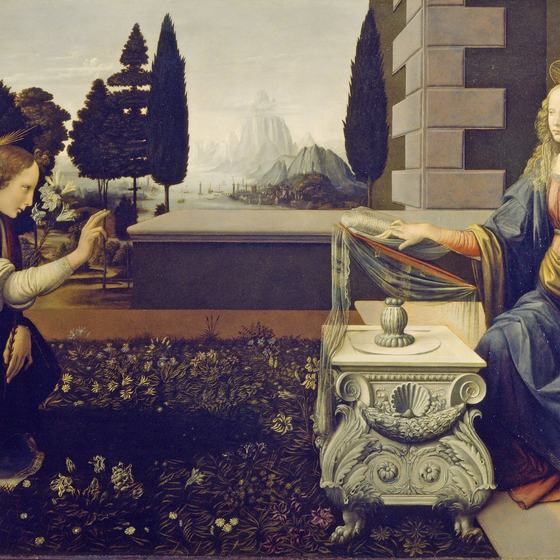
| Andrea del Verrocchio | Italian | Christ and Saint Thomas, Annunciation |
| Domenico Ghirlandaio | Italian | Birth of the Virgin |
| Donatello | Italian | Saint George, David |
| Filippo Brunelleschi | Italian | Sacrifice of Isaac competition reliefs, Dome of Florence Cathedral, Ospedale degli Innocenti |
| Filippo Lippi | Italian | Madonna and Child with Two Angels |
| Fra Angelico | Italian | Annunciation, San Marco |
| Giotto | Italian | |
| Leonardo da Vinci | Italian | Annunciation |
| Lorenzo Ghiberti | Italian | Sacrifice of Isaac competition reliefs, Gates of Paradise |
| Masaccio | Italian | The Tribute Money |
| Michelangelo | Italian | David |
| Paolo Uccello | Italian | The Battle of San Romano |
| Sandro Botticelli | Italian | Primavera, The Birth of Venus |
How to look at Florentine Renaissance art
Begin with location. Ask whether the work was made for an altar, street niche, palace chamber, convent cell, council hall or domestic chest. A museum can preserve the object while removing the height, lighting, ritual and neighbouring images that first shaped it.
Then look for the institution behind the name. A guild emblem, patron saint, coat of arms or donor portrait may reveal who paid and what the work needed to accomplish. Distinguish commission from later ownership and political association.
Follow the material. In bronze, notice casting seams, gilding and changes of relief depth. In glazed terracotta, watch how colour and reflectivity answer architecture. On a panel, compare gold, opaque tempera and transparent passages. In fresco, look for daily divisions and for light painted to correspond with a real window.
Test the space rather than merely admiring “perspective”. Where do orthogonals lead? Does scale decrease consistently? Does the artist flatten a figure or object for expressive effect? A constructed space can be accurate in one area, ornamental in another and impossible overall.
Watch the body. Florentine artists used stance, weight, hand, gaze and drapery to turn still figures into agents. Compare Ghiberti's elegance with Donatello's tension, Masaccio's gravity with Botticelli's current-like contour.
Finally, look for multiplicity. A sacred image may also preserve family ambition; a classical nude may serve biblical and political meanings; a palace can be a home and instrument of controlled access. Florentine art rarely becomes clearer when reduced to one function.
Frequently Asked Questions
It was the artistic culture that developed in Florence and its networks, especially from about 1400 to 1530. It included painting, sculpture, architecture and decorative arts supported by guilds, civic offices, religious institutions and households. The phrase does not describe a formal group or one consistent style.
The Baptistery door competition brought Ghiberti, Brunelleschi, guild patronage and a prestigious public commission together. It makes an effective landmark, but artistic change was already underway in Trecento workshops, and Gothic practices continued throughout the fifteenth century. It is a symbolic threshold rather than a clean beginning.[2] [48]
He is credited with a highly influential demonstration of geometrical perspective, known through later testimony because his panels are lost. Alberti published a method in 1435–1436. Ancient, optical and medieval precedents existed, and Renaissance artists used many spatial devices besides linear perspective.[18] [19]
No. He supplied decisive designs, machines and direction, but the Opera commissioned and supervised the project, Ghiberti initially shared responsibility, and a large skilled workforce quarried, transported, lifted, cut and laid the materials. The building is both an individual design achievement and an institutional labour history.[4] [5]
No. They were exceptionally influential patrons, collectors and political brokers, but guilds, the republic, churches, convents, confraternities, hospitals and other families commissioned major works. Michelangelo's David began as a cathedral commission, and Gaspare del Lama commissioned Botticelli's Adoration of the Magi.[31] [40]
Neoplatonic interpretation is one important possibility, but no surviving programme settles the work's meaning. Literary, seasonal, marriage, political and poetic readings all illuminate parts of it. Its documented late fifteenth-century location in Lorenzo di Pierfrancesco's home provides context without supplying a complete key.[29]
There is no secure evidence that Botticelli destroyed his own paintings in the bonfires of the vanities. His later art may reflect the period's religious and political tension, but the scale of Savonarola's influence on him remains disputed. Evidence for acts of destruction or renunciation is stronger in relation to Fra Bartolomeo and Lorenzo di Credi.[43]
Women acted as patrons, nuns, household managers, textile makers, viewers and participants in domestic and religious image cultures. Marriage chests and birth trays place art within women's life cycles and household spaces. Plautilla Nelli's later convent workshop shows female professional practice, although the surviving record remains uneven.[33] [35] [36]
It did not end in one moment. Artist mobility shifted major ambition toward Milan and Rome; the republic and Medici government alternated; the siege ended the last republic in 1530; and a duchy was established in 1532. Artists now called Mannerists transformed Florentine traditions rather than abandoning them.[39] [44]
Discussion
Florence is often explained through inventions and famous names. Which work changes most when you restore its original institution, workforce, material or location—and does that wider story diminish individual artistry, or make it more remarkable?
Reader Insights
Begin with the work’s original altar, niche, chapel, convent cell, palace room or civic site.
Ask which guild, confraternity, religious house, civic body, household or ruler commissioned and used the work.
Trace the stone, pigments, timber and metals—and the workshop labour and trade networks—that made artistic invention possible.
Join the Conversation
Which Florentine work changes most when you restore its original institution, workforce, material or location? Share your view below.
References
- Gallerie degli Uffizi, “Rinascimento”, uffizi.it. View Source
- Opera di Santa Maria del Fiore, “Concorso del 1401”, catalogo.duomo.firenze.it. View Source
- Opera di Santa Maria del Fiore, “Lorenzo Ghiberti, Porta del Paradiso”, duomo.firenze.it. View Source
- Opera di Santa Maria del Fiore, “Cupola di Brunelleschi”, duomo.firenze.it. View Source
- Opera di Santa Maria del Fiore, “Il 7 agosto 1420 iniziavano i lavori di costruzione della Cupola”, duomo.firenze.it. View Source
- Opera di Santa Maria del Fiore, “Il Patrimonio dell'Opera”, duomo.firenze.it. View Source
- Ministero della Cultura, “Chiesa e Museo di Orsanmichele”, cultura.gov.it. View Source
- Musei del Bargello, “Overview”, bargellomusei.it. View Source
- Fondazione Palazzo Strozzi, Donatello, the Renaissance, palazzostrozzi.org. View Source
- MUS.E, “Cappella Brancacci”, musefirenze.it. View Source
- National Gallery, “The Virgin and Child by Masaccio”, nationalgallery.org.uk. View Source
- Direzione regionale Musei nazionali Toscana, “Museo di San Marco”, museitoscana.cultura.gov.it. View Source
- Metropolitan Museum of Art, “The Crucifixion by Fra Angelico”, metmuseum.org. View Source
- Victoria and Albert Museum, “Labours of the Months, Florence, c. 1450”, vam.ac.uk. View Source
- National Gallery of Art, Verrocchio: Sculptor and Painter of Renaissance Florence, nga.gov. View Source
- Metropolitan Museum of Art, “From Filippo Lippi to Piero della Francesca”, metmuseum.org. View Source
- Metropolitan Museum of Art, “Florence and Central Italy, 1400–1600 A.D.”, 82nd-and-fifth.metmuseum.org. View Source
- Smarthistory, “Linear Perspective: Brunelleschi's Experiment”, smarthistory.org. View Source
- Smarthistory, “Alberti's Revolution in Painting”, smarthistory.org. View Source
- Metropolitan Museum of Art, “Architecture in Renaissance Italy”, metmuseum.org. View Source
- Treccani, “Arti maggiori”, treccani.it. View Source
- Treccani, “Umanesimo”, treccani.it. View Source
- Treccani, “Leonardo Bruni”, treccani.it. View Source
- Treccani, “Accademia platonica fiorentina”, treccani.it. View Source
- Treccani, “Lorenzo de' Medici”, treccani.it. View Source
- Cambridge University Press, Artistic Centers of the Italian Renaissance: Florence, assets.cambridge.org. View Source
- Cambridge University Press, Renaissance Florence: A Social History, assets.cambridge.org. View Source
- Museo Benozzo Gozzoli, “Il corteo dei Magi”, museobenozzogozzoli.it. View Source
- Gallerie degli Uffizi, “La Primavera di Botticelli”, uffizi.it. View Source
- Gallerie degli Uffizi, “La nascita di Venere di Botticelli”, uffizi.it. View Source
- Gallerie degli Uffizi, “Adorazione dei Magi di Botticelli”, uffizi.it. View Source
- Gallerie degli Uffizi, “Madonna della Loggia di Botticelli”, uffizi.it. View Source
- Metropolitan Museum Journal, “The Medici-Tornabuoni Desco da Parto in Context”, resources.metmuseum.org. View Source
- Metropolitan Museum of Art, “Cassone”, metmuseum.org. View Source
- Cambridge University Press, Art and Piety in Female Religious Communities in Renaissance Italy, assets.cambridge.org. View Source
- Advancing Women Artists, “Plautilla Nelli”, advancingwomenartists.org. View Source
- National Gallery, “The Materials of a Group of Late Fifteenth-Century Florentine Panel Paintings”, nationalgallery.org.uk. View Source
- National Gallery, “Studying Raphael: Pigments and Medium”, nationalgallery.org.uk. View Source
- Gallerie degli Uffizi, “La nuova sala di Leonardo”, uffizi.it. View Source
- Galleria dell'Accademia di Firenze, “David by Michelangelo”, galleriaaccademiafirenze.it. View Source
- Gallerie degli Uffizi, “Anghiari: storia”, uffizi.it. View Source
- Treccani, “Girolamo Savonarola”, treccani.it. View Source
- Treccani, “Firenze alla fine del Quattrocento”, treccani.it. View Source
- Treccani, “Toscana”, treccani.it. View Source
- Gallerie degli Uffizi, “Le vite de' più eccellenti pittori, scultori e architettori”, uffizi.it. View Source
- National Gallery of Art, Italian and Northern European Renaissance, nga.gov. View Source
- Jacob Burckhardt, Die Cultur der Renaissance in Italien, 1860, digi.ub.uni-heidelberg.de. View Source
- J. Paul Getty Museum, “Florence at the Dawn of the Renaissance: Pacino di Bonaguida's Workshop”, getty.edu. View Source
- Image references 49–64: open-access reproductions and institutional collection records.
View 16 image sources
01 · commons.wikimedia.org02 · commons.wikimedia.org03 · commons.wikimedia.org04 · commons.wikimedia.org05 · commons.wikimedia.org06 · commons.wikimedia.org07 · commons.wikimedia.org08 · commons.wikimedia.org09 · commons.wikimedia.org10 · commons.wikimedia.org11 · commons.wikimedia.org12 · commons.wikimedia.org13 · commons.wikimedia.org14 · commons.wikimedia.org15 · commons.wikimedia.org16 · commons.wikimedia.org