 by Tom Gurney
Tom Gurney BSc (Hons) is an art history expert with over 20 years experience
Published on June 19, 2020 / Updated on October 2, 2026
Email: tomgurney1@gmail.com / Phone: +44 7429 011000
Fra Filippo Lippi and Lucrezia Buti
The story of Fra Filippo Lippi and Lucrezia Buti is one of the most famous biographies in Renaissance art, but it is also one of the easiest to turn into romance at the expense of evidence. The documented core is remarkable enough: during Lippi's years in Prato, the Carmelite friar formed a relationship with Lucrezia Buti, a young woman associated with the convent of Santa Margherita. They had children, including the future painter Filippino Lippi.
Around that core grew a much more colourful story. Later writers described abduction, seduction, scandal, papal intervention and Lucrezia posing repeatedly for Lippi's Madonnas and Salome figures. Some of these claims may preserve elements of real events; others are later narrative constructions or hypotheses unsupported by surviving documentation. The story is best understood through levels of certainty: what Prato records document, what later biographies claim, which paintings have traditionally been identified with Lucrezia, and where museums explicitly warn that those identifications cannot be proved.
Handled carefully, the story becomes more interesting than the legend. It reveals the constrained lives of women in convents, the ambiguous religious status of both partners, the social networks surrounding Lippi's household and the beginnings of Filippino Lippi's life.
At a Glance
- Fra Filippo LippiCarmelite friar and painter
- Lucrezia ButiYoung woman associated with the convent of Santa Margherita in Prato
- RelationshipEstablished during Lippi's Prato period
- ChildrenIncluded Filippino Lippi, later a major painter
- Documentary evidencePrato institutional records include legal/social reports concerning Lippi's household and children
- Traditional storyOften described as an abduction or romantic escape from the convent
- Important cautionDetails of abduction, papal dispensation and marriage vary across sources
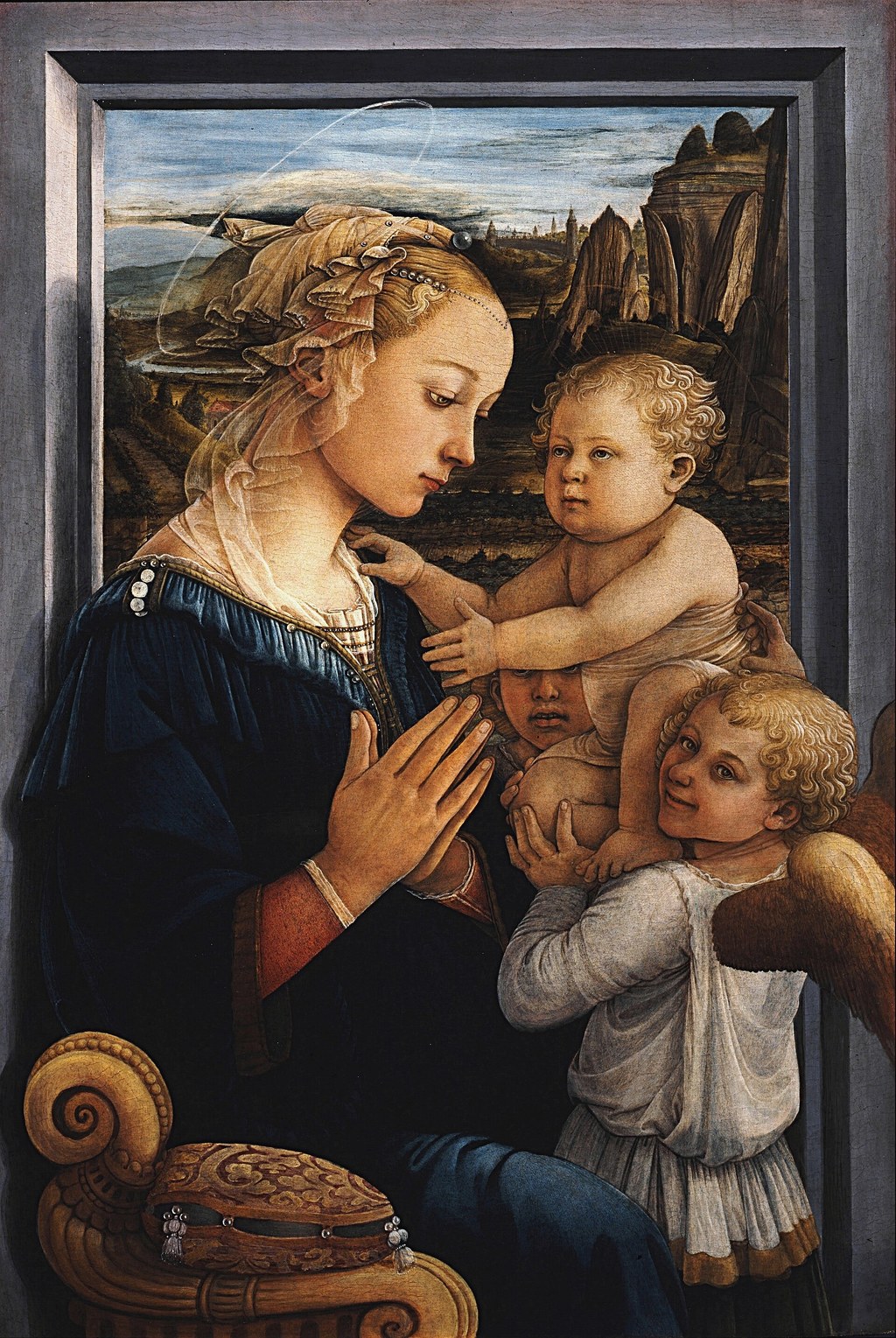
- Portrait cautionLucrezia's identification as the Virgin in the Uffizi Lippina is unproven; the Uffizi explicitly says there is no confirming evidence
Contents
- Lucrezia Buti in Prato
- How Did They Meet?
- Cosimo de' Medici
- Did Lucrezia Model for Lippi?
- Vasari and the Construction of Lippi's Character
- Prato as the Setting
- The Problem with the Word “Nun”
- Lippi's Household in Prato
- Lucrezia and the Female Type in Lippi's Art
- Lucrezia and the Lippina as Reception History
- Lucrezia Beyond Fra Filippo
- FAQs
- References
Lucrezia Buti in Prato
Lucrezia's story belongs to Fra Filippo's long Prato period. He had been commissioned in 1452 to fresco the cathedral's main chapel. Prato became both a major professional centre and the setting of his most complicated personal relationships.
Lucrezia was connected with the convent of Santa Margherita. Prato's diocesan research places her life within a wider problem: young women could be committed to convents for family and economic reasons rather than personal vocation. That context matters.
Women and Convent Life. It is misleading to imagine every Renaissance nun as someone who freely chose a religious career after an individual calling. Families could place daughters in convents because marriage dowries were expensive, because of inheritance strategies or because options were limited. The Prato museum explicitly presents Lucrezia's case within this broader social problem. That makes her story more than romantic rebellion. It belongs to the history of female agency under constrained circumstances.
Fra Filippo's Own Religious Status. The parallel with Lippi is striking. Prato's institutional biography notes that he too had entered the Carmelite environment as an impoverished orphan rather than through a simple story of early spiritual vocation. He nevertheless became a friar.
The relationship between a friar and a convent-associated woman was therefore scandalous within church discipline, but both lives had been shaped by religious institutions from youth. That context complicates the popular idea of a libertine artist simply invading a convent from outside.
How Did They Meet?
Later biographies connect their meeting with Lippi's work for the convent and with Lucrezia modelling for a religious painting. This narrative has become famous. The exact sequence needs caution.
The relationship certainly belongs to the Prato years, but the highly detailed romantic scenario comes largely from later storytelling rather than a surviving contemporary diary. The story therefore requires a clear distinction between what tradition says and what documents show.
The Abduction Story. Giorgio Vasari's biography helped popularise an image of Lippi as a man whose appetites repeatedly overcame religious discipline. Lucrezia's story fits that literary character perfectly. She is often said to have been carried away from the convent during a religious procession or event.
The dramatic language makes excellent biography but difficult evidence. Where modern institutional evidence conflicts with Vasari, the institutional evidence carries greater weight. The safest approach is to describe the alleged abduction as a later narrative tradition around a real relationship.
A Relationship That Produced a Household. Whatever the exact beginning, the relationship was not a fleeting anecdote. Children were born. Filippino Lippi became the most famous.
Prato records cited by the diocesan museum refer to a son already living in his father's house by 1461. This gives the household a documentary reality that romance alone cannot provide. Lippi was maintaining a family life while still carrying the identity of a friar and major professional painter.
The 1461 Anonymous Report. The Musei Diocesani di Prato discusses an anonymous denunciation dated 8 May 1461.[1] Such denunciations, or tamburazioni, were a feature of the period. The report referred to Fra Filippo having a son already grown enough to be living in his father's house.
It also described another cleric connected with the convent having a child with one of the nuns. This wider context is revealing. The Lippi-Buti case was scandalous, but not uniquely unimaginable within the social reality of religious institutions.
Cosimo de' Medici
The Prato account says the situation was again eased by the benevolence of Cosimo the Elder and his admiration for Lippi's art. This is best treated as institutional interpretation rather than expanded into unsupported dialogue or courtroom drama. It nevertheless reinforces the wider evidence that Medici protection mattered in Lippi's career. Talent had social value.
Filippino Lippi. Filippino was born around 1457. He would become one of the most important Florentine painters of the next generation. His existence gives the relationship immense art-historical consequence.
After Fra Filippo's death, Filippino entered Botticelli's artistic orbit. That created the remarkable chain in which Fra Filippo's pupil became an important teacher for Fra Filippo's son. Lucrezia therefore stands at the biological centre of a major artistic network, even though she was not herself the painter.
Were Fra Filippo and Lucrezia Married? This is one of the areas where sources often become confused. Popular biographies sometimes state confidently that Pope Pius II released both partners from vows and allowed them to marry. Other scholarly discussions distinguish permission from actual marriage or question details and dates.
The issue therefore requires caution. The Musei Diocesani di Prato state that Pope Pius II released Lippi and Lucrezia from their vows so that they were free to marry, but also state that the marriage did not in fact take place. The Uffizi’s current collection text, by contrast, refers to Lucrezia as having become Lippi’s wife. Because the institutional sources themselves are inconsistent, the safest conclusion is that release from vows is part of the documented tradition, while an actual marriage should not be asserted as settled fact.[3]
Did Lucrezia Model for Lippi?
This is the most popular visual claim. Lucrezia is repeatedly identified as the beautiful woman behind Lippi's mature Madonnas. The idea is plausible in a general human sense: artists did use models and Lippi knew Lucrezia personally.
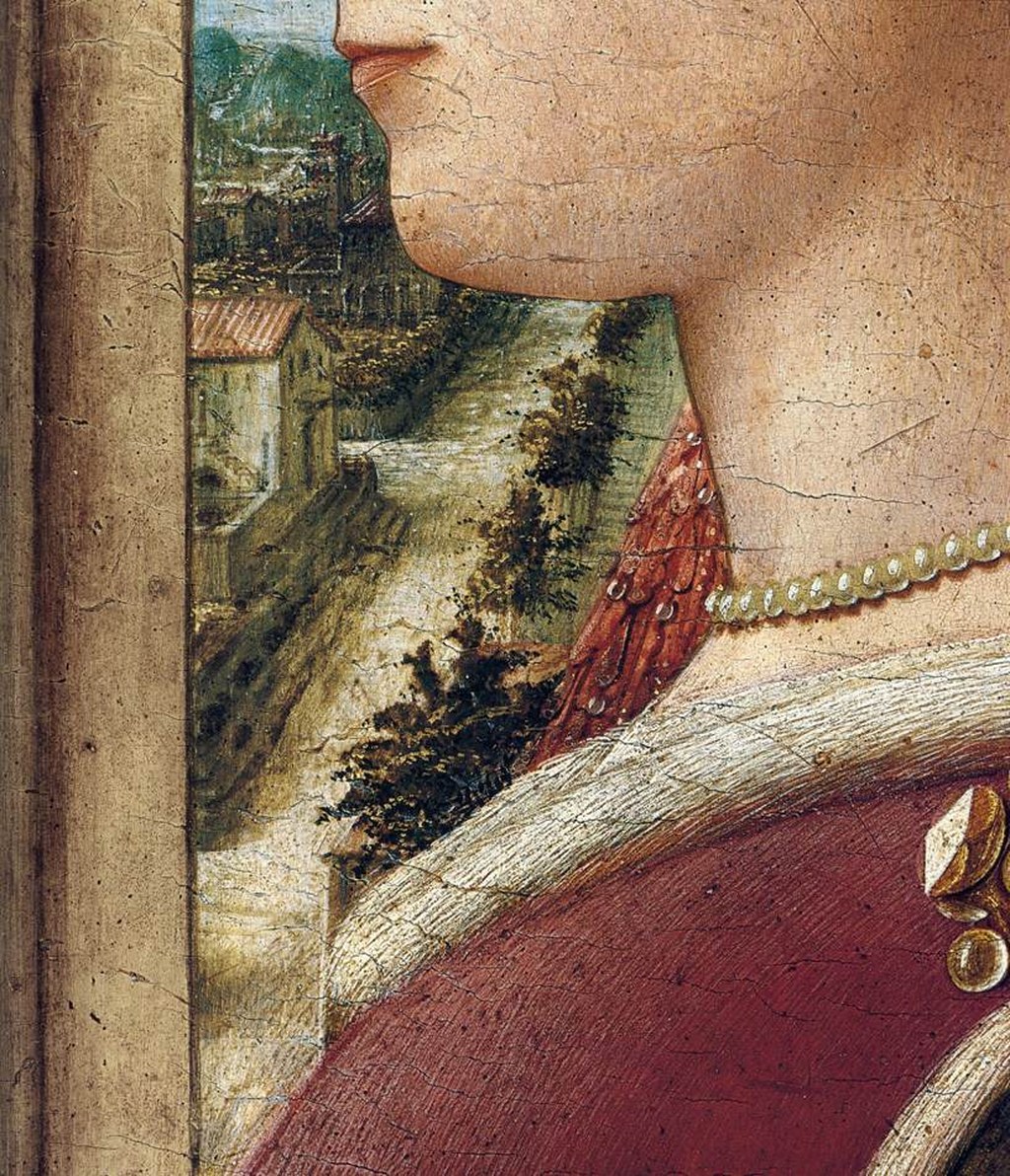
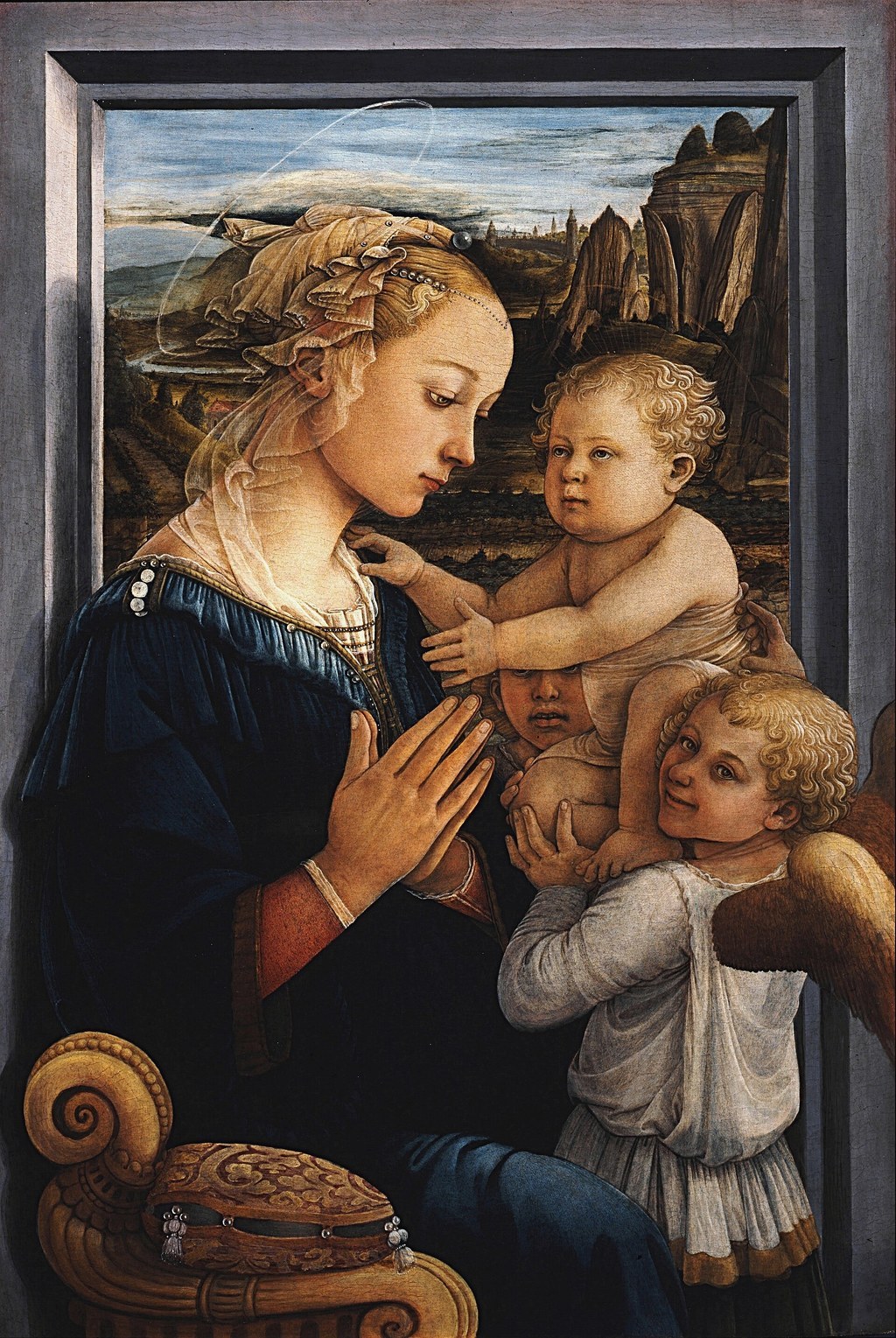
But plausibility is not evidence for one specific face. The Uffizi explicitly states that nothing confirms the suggestion that the Virgin in Madonna and Child with Two Angels is Lucrezia Buti.[3] That museum caution should govern any identification of the sitter.
The Lippina. The Uffizi Madonna and Child with Two Angels has become the painting most often linked with Lucrezia.[3] Its Virgin is a refined Florentine beauty shown in profile. Because the work dates to the mature phase of Lippi's career and the artist's relationship was well known, later viewers naturally connected the two.
Yet no secure document identifies the sitter. Wording such as “traditionally identified”, “sometimes proposed” or “long associated with” reflects the actual level of evidence. It should never present the identification as fact.
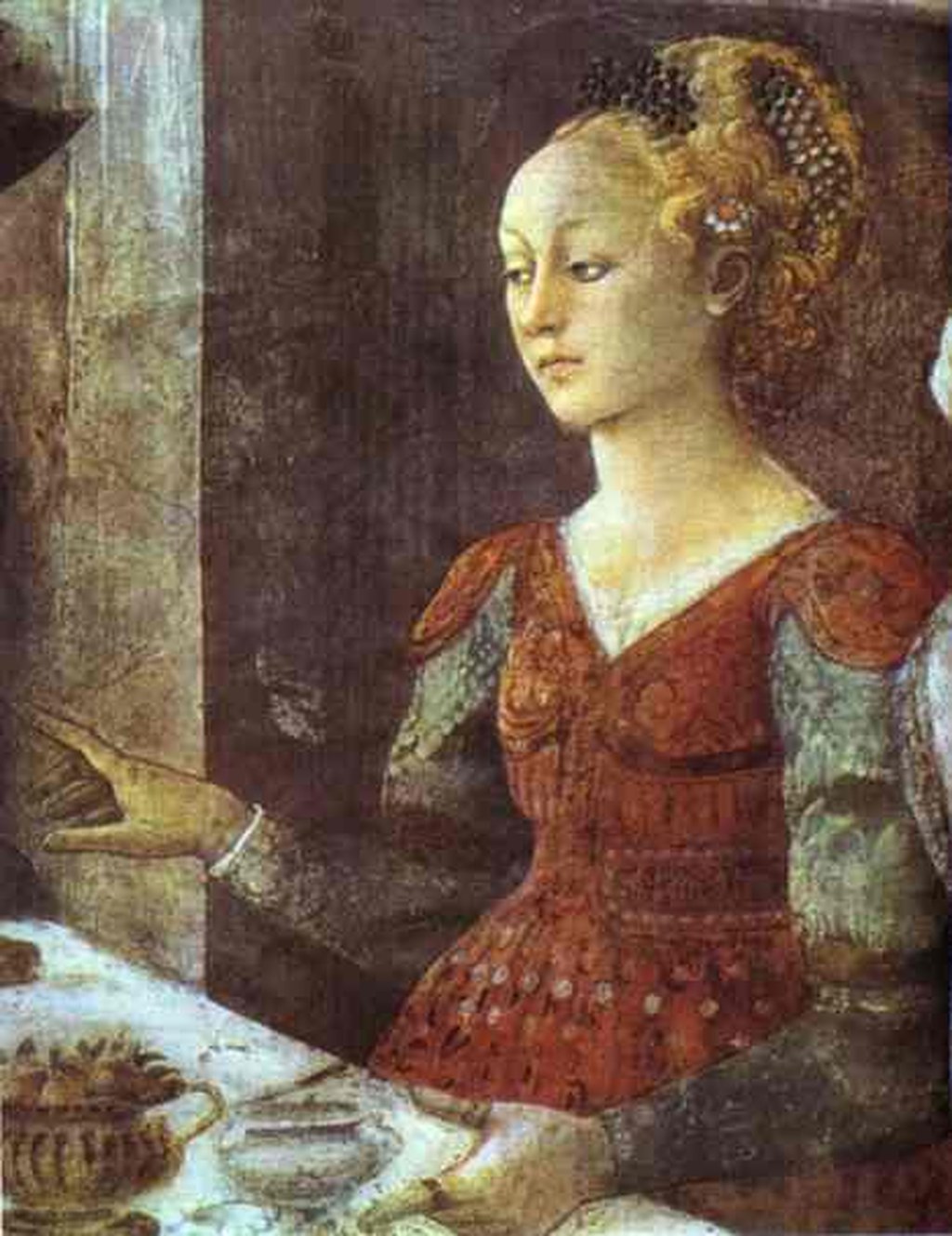
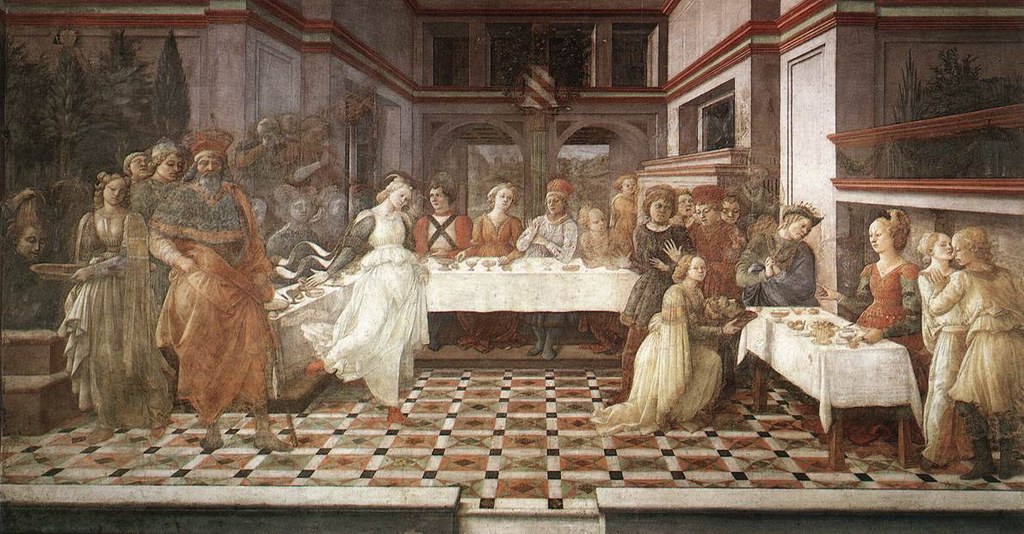
Salome in the Feast of Herod. Lucrezia has also been proposed as the model for Salome in the Prato Cathedral Feast of Herod. Again, the association is attractive. The fresco was painted in the city where the relationship unfolded, and Salome is represented as a graceful young woman. But stylistic resemblance between idealised female figures does not establish portrait identity. The claim remains hypothetical.
Why Artists Reuse Facial Types. The repeated-Lucrezia theory often underestimates workshop practice. Painters develop preferred facial types. Drawings, cartoons and habits of proportion can produce similar women across unrelated works.
A high forehead, fine nose and pale complexion might represent an ideal of beauty rather than one sitter. This is especially important in Lippi, whose sacred and secular female figures often share stylistic traits. Similarity is evidence of style before it is evidence of portraiture.
Vasari and the Construction of Lippi's Character
Vasari's Lives is indispensable but not neutral. He wrote decades after Lippi's death and shaped artists into memorable personalities. Fra Filippo becomes a gifted painter whose earthly appetites repeatedly complicate religious identity.
The Lucrezia story fits that character beautifully. That literary coherence is itself a reason to be cautious. A good story can become more polished through retelling.
Romance Versus Social History. Modern retellings often market Fra Filippo and Lucrezia as a Renaissance love story. There may indeed have been enduring affection. But the romantic frame can hide more difficult questions.
What choices did Lucrezia actually possess? What did leaving or living outside convent discipline mean legally and economically? How were children of such a relationship treated? Who controlled housing and income? The surviving evidence cannot answer every question, but asking them produces a more serious history.
Lucrezia as a Historical Person. One risk in artist biography is allowing a woman to exist only as “muse”. Lucrezia's significance is often reduced to whether her face appears in a Madonna. Her actual life is more important.
She inhabited a female religious institution, formed a household with a famous friar-painter and became mother of Filippino. Those facts give her historical agency and consequence even if no surviving painting can be proven to depict her.
The Children. Filippino is the best-known child, but records around the household indicate a broader family situation. Secondary biographies vary in names and dates, so the exact genealogy requires specialist-source caution. An uncertain family tree would add more confidence than the surviving evidence allows. It is to establish that the relationship produced a continuing household rather than one scandalous episode.
Prato as the Setting
The geography matters. Lippi's relationship with Lucrezia unfolded while he was painting the cathedral frescoes that became his greatest monumental achievement. Personal and professional histories therefore overlap spatially.
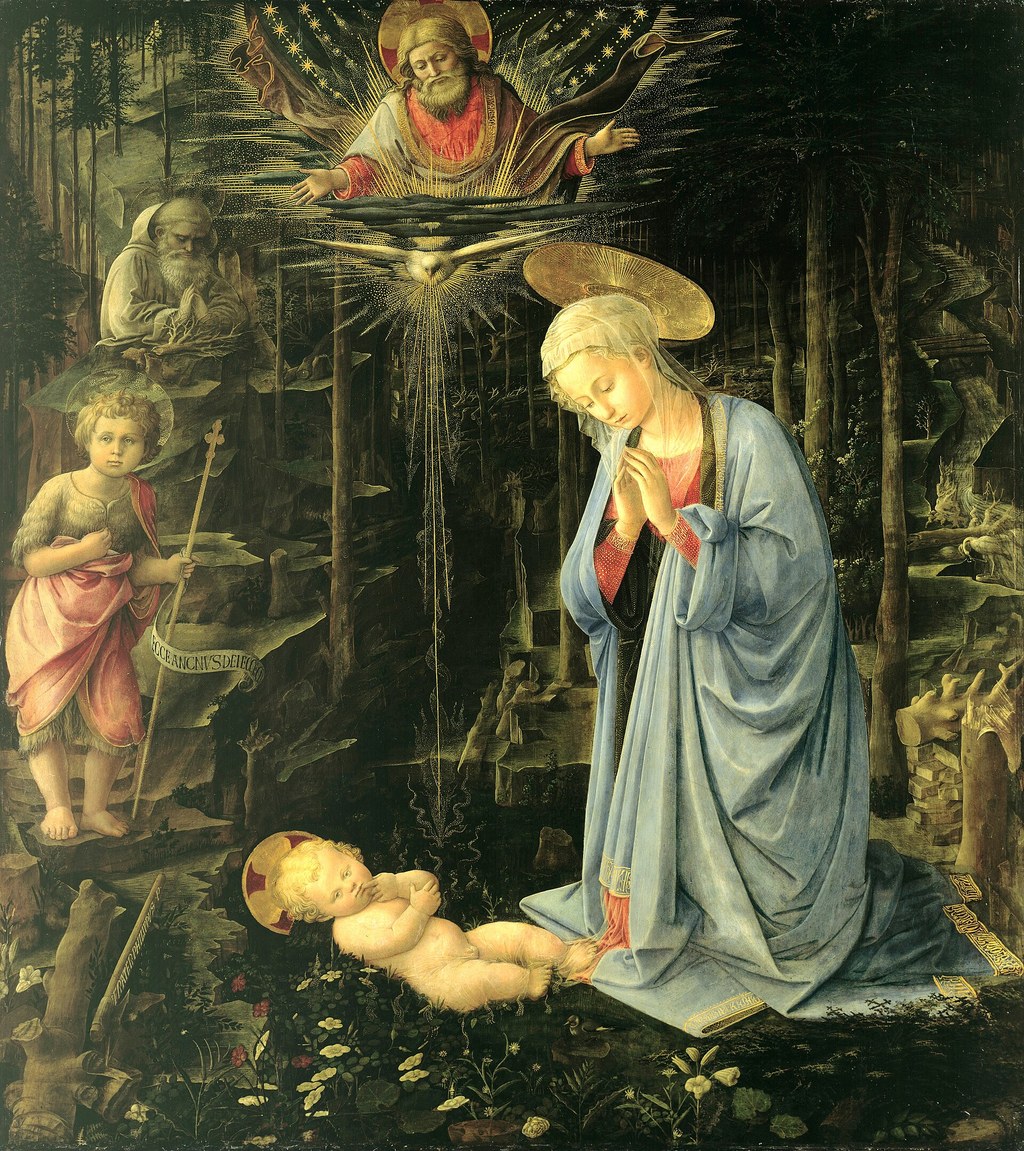
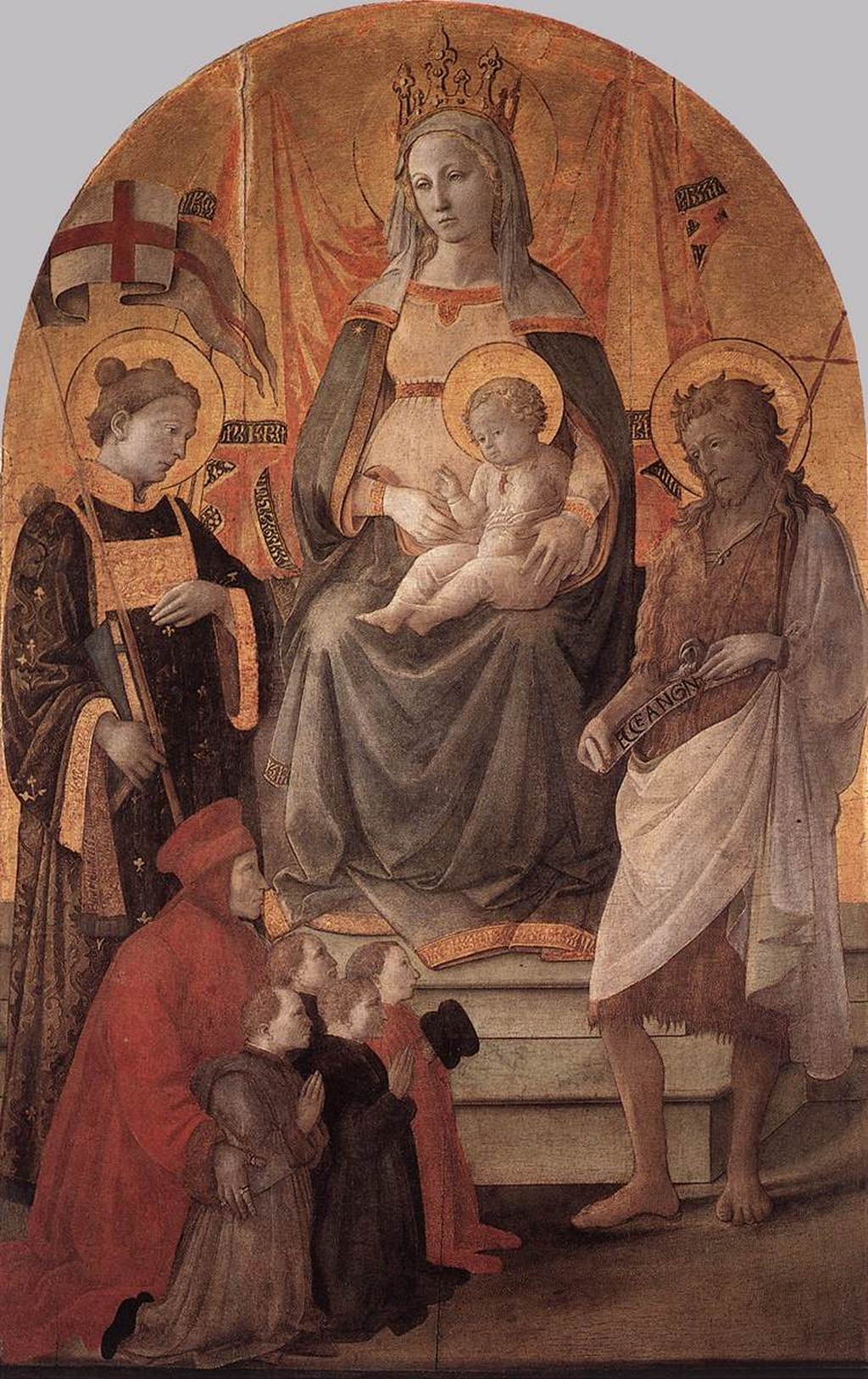
Prato is not just the backdrop to scandal. It is the city where Lippi's mature career and family life developed together. Lucrezia’s story naturally connects Lippi’s biography with the cathedral frescoes, Feast of Herod, Madonna del Ceppo and Filippino.
The Myth of the Artist and the Model. The idea of a great male artist discovering a beautiful woman and turning her into sacred beauty has enormous cultural appeal. It simplifies artistic production into romance. In reality, Renaissance workshops relied on drawings, apprentices, repeated types and compositional traditions. One personal model may matter, but rarely explains an entire style. The Lucrezia legend therefore tells us as much about later expectations of artists as about Lippi himself.
Why the Uncertainty Is Valuable. Historical authority is not weakened by admitting uncertainty. The story is a particularly clear example of how historical knowledge is built from uneven evidence. Documents can establish a relationship.
Museum records can reject certainty about a portrait. Later writers can preserve stories that remain culturally important without becoming verified facts. Presenting those layers clearly teaches source criticism while still telling an engaging story.
Filippino and the Afterlife of the Relationship. The most durable outcome was Filippino's career. His later success meant that Fra Filippo and Lucrezia's relationship affected Florentine art far beyond private biography. Filippino completed the Brancacci Chapel begun by Masaccio and Masolino, worked for major patrons and developed a highly individual late Quattrocento style. Through him, the personal history in Prato becomes part of a much larger artistic history.
The Problem with the Word “Nun”
Popular accounts routinely call Lucrezia a nun, which may be broadly understandable but can flatten important distinctions in status, vows and convent residence. Women associated with religious houses could occupy different legal and devotional positions. The precise terminology used in the Prato records is preferable to forcing a modern label. This matters because the moral and legal implications of the relationship depend partly on status. The uncertainty is part of the history and should not be hidden.
Family Strategy and Convent Placement. The Prato museum's discussion of involuntary or economically motivated convent placement opens a larger social history. Marriage required dowries. Families with several daughters faced financial decisions.
A religious house could provide an alternative path that preserved family resources and status. The system did not mean every woman was simply imprisoned, but it did mean individual vocation and family strategy could conflict. Lucrezia's story should be understood within that structural tension.
Agency Without Romantic Projection. A modern writer can easily overcorrect in either direction. One version turns Lucrezia into a passive victim abducted by a charismatic artist. Another turns her into a modern romantic heroine escaping oppressive institutions for love.
The evidence supports neither complete script with confidence. A better approach is to recognise that she participated in a relationship and household while acknowledging that her choices were made inside restrictive social systems. Agency does not require pretending those restrictions did not exist.
Lippi's Household in Prato
The 1461 denunciation gives an unusually concrete glimpse of domestic reality. A son was living with his father. That statement places Fra Filippo in a household role very different from the isolated friar of conventional religious biography.
His home had become part workshop, part family residence and part source of public scandal. The overlap between professional and domestic space is especially important for an artist whose assistants and commissions also centred on Prato.
Children and Legitimacy. Children born outside conventional marriage structures could face questions of status, inheritance and social recognition. Filippino's later success demonstrates that such origins did not prevent an important artistic career. His position was helped by powerful artistic and patronage networks. Later Victorian assumptions about “illegitimacy” should not be imposed without explaining Renaissance legal context, but family status still mattered. This is another area where the sources require caution.
Papal Dispensation Stories. The papal-dispensation narrative is attractive because it gives the romance a tidy ending: church authority recognises love, vows disappear and the couple marry. Historical lives are often less neat. Different sources compress distinct questions - release from vows, permission to marry, actual marriage, clerical status - into one sentence. Those questions should remain separate unless documentation resolves them. This distinction is one of the most important factual issues in the story.
Why Marriage Status Matters. The issue is not pedantic. Whether the couple married affects how we understand household legitimacy, Lucrezia's legal position and later retellings of Fra Filippo as friar. A confident but incorrect statement would then propagate into the Filippino biography. This is a case where one uncertain fact affects several interpretations, so the distinction deserves especially careful treatment.
Lucrezia and the Female Type in Lippi's Art
The temptation to identify Lucrezia visually arises because Lippi's mature women can appear highly individual. A profile such as the Lippina feels portrait-like. But portrait-like is not the same as portrait.
Lippi worked within ideals of beauty that favoured high foreheads, pale skin, fine noses and elaborate hair. Repeated use of those traits can produce an impression of one woman even when several models or drawings were involved.
The Model Question and Workshop Practice. A Renaissance painter could use living models at some stages and still transform them heavily in finished work. Drawings could be reused. Assistants could repeat master's types.
Features could be idealised to fit sacred decorum. Therefore even proof that Lucrezia sat for Lippi at some point would not automatically identify every similar face as hers. That methodological distinction is important.
The Uffizi's Caution. The Uffizi's wording on the Lippina is exemplary because it acknowledges the famous tradition while stating that nothing confirms it.[3] The same evidential discipline applies to the wider Lucrezia tradition. The history becomes more reliable, not less engaging, when the limits of certainty are stated. In fact, the contrast between famous story and museum caution is itself engaging. It creates a genuine research problem.
Salome and the Attraction of Biography. The Feast of Herod association shows how biography can colonise interpretation. Once viewers know Lippi loved a woman in Prato, every beautiful young female figure painted there becomes a candidate for Lucrezia. That can distract from the figure's narrative function, costume and compositional role. Salome matters as Salome even if her model is unknown. The painting is more than an illustration of the painter's love life.
Lucrezia and the Lippina as Reception History
Even though the identification is unproven, it still belongs to the painting’s reception history because generations of viewers have believed or repeated it. That makes the association part of reception history. Museums, novels, travel writing and popular biographies have helped turn the Virgin's face into Lucrezia in public imagination. The distinction is simple but important: a claim can be historically influential without being historically verified.
Vasari's Narrative Needs. Vasari wanted memorable lives as well as artistic evaluation. Stories of character make painters distinguishable. Fra Filippo's combination of friar's habit and sexual appetite created a compelling moral and comic figure.
The Lucrezia episode therefore served literary structure. Recognising that does not mean dismissing Vasari. It means reading him as a sixteenth-century author with purposes, sources and storytelling habits.
Bandello and Other Retellings. Later Renaissance literary culture also circulated stories about Lippi's life. Such accounts are most useful when identified by date and genre. A novella or moral anecdote is evidence for reputation and storytelling, not automatically for a factual event decades earlier. This distinction helps explain how the legend grew.
Gendered Double Standards. Artist biography often celebrates male sexual transgression as evidence of passion or genius while reducing the woman involved to beauty. A modern historical account can correct that imbalance by keeping Lucrezia visible as a historical person rather than only as an adjunct to the painter. Fra Filippo had a major career, powerful patrons and freedom of movement.
Lucrezia's social options were structurally narrower. That asymmetry can be acknowledged without turning the history into present-day moral judgement. Historical context is enough.
Lucrezia Beyond Fra Filippo
The surviving record is inevitably dominated by the famous painter and son. That makes it difficult to reconstruct Lucrezia independently. That limitation should be stated directly. Absence of documentation is not evidence that she lacked personality or influence; it reflects whose activities institutions recorded and whose careers later scholars prioritised. This is a useful lesson in archival visibility.
Filippino's Childhood. Filippino grew up within the artistic world created by his father's workshop and relationships. The exact details of his early residence and training require careful chronology, but the 1461 record locating a son in Fra Filippo's house is important evidence of household integration. When Filippino later became an artist, his family origin was not detached from workshop culture. Home and art were intertwined.
After Fra Filippo's Death. Fra Filippo died in Spoleto in 1469. Filippino's later connection with Botticelli helped secure the next stage of artistic formation. Lucrezia's role in the family story continues beyond the romantic episode usually told about the 1450s. She was mother of a child whose career extended the Lippi name into the next generation. This is a more significant legacy than any unproven sitter identification.
Why Fra Filippo Lippi and Lucrezia Buti Matters. The Lippi-Buti story matters because it sits at the intersection of documented history and Renaissance myth. The relationship and household are real. Filippino is real.
The social constraints of convent life are real. The specific claims that Lucrezia was abducted exactly as later writers describe, that she married Lippi under a simple papal dispensation story, or that her face can be identified securely in individual paintings require much more caution. Treating those differences honestly produces a more accurate history.
Rather than a disposable romance, the story becomes a study of gender, religious institutions, patronage, family and the construction of artistic legend. The story is substantial enough without becoming sensational at the expense of evidence.
FAQs
Discussion
What stands out to you most about Filippo Lippi and Lucrezia Buti in relation to Filippo Lippi's wider career?
Reader Insights
Notice how the page connects close visual detail with patronage, workshop practice and the wider Renaissance setting.
Which comparison elsewhere in the cluster helps clarify this work or theme most strongly?
Join the Conversation
Have a thought or observation about Filippo Lippi and Lucrezia Buti? Share it below. Thoughtful responses may be added to this section.
References
- Musei Diocesani di Prato, “Lucrezia Buti.”. View Source
- Musei Diocesani di Prato, biography of Fra Filippo Lippi. View Source
- Uffizi Galleries, Madonna and Child with Two Angels, collection entry. View Source
- Jeffrey Ruda, Fra Filippo Lippi: Life and Work with a Complete Catalogue, 1993.
- Megan Holmes, Fra Filippo Lippi: The Carmelite Painter, Yale University Press, 1999.
- Giorgio Vasari, Lives of the Artists, used as a later biographical source rather than contemporary documentation.