 by
Tom Gurney
Tom Gurney BSc (Hons) is an art history expert with over 20 years experience
Email:
tomgurney1@gmail.com
/ Phone:
+44 7429 011000
Canvassing for a Vote: Introduction
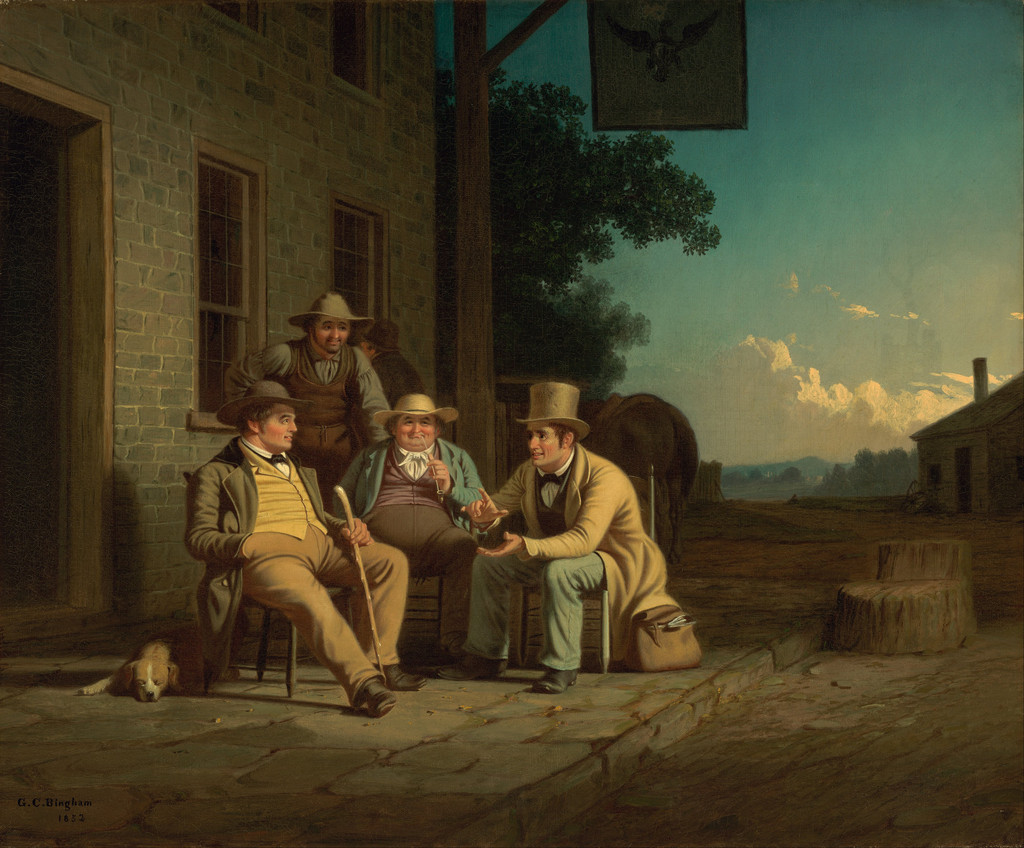
A man in a pale coat leans towards a small group outside a brick tavern. His hands open as he makes his case. Opposite him, a well-dressed listener sits back with a walking stick, while a pipe smoker and a standing man complete the principal gathering. George Caleb Bingham’s Canvassing for a Vote brings electoral politics down to the scale of a face-to-face conversation.
The painting is signed and dated 1852 at the lower left. It belongs to the Nelson-Atkins Museum of Art, which identifies the setting as Arrow Rock, Missouri. The oil on canvas measures 64.14 × 77.47 cm. Its modest dimensions suit a scene in which the direction of a glance or the position of a hand can change our understanding of the encounter. [1]
The subject was a development of an earlier painting, Country Politician , made in 1849. Curator Margaret C. Conrads describes the later canvas as a reconfiguration of that scene, with an outdoor setting and a different kind of listener at the left. A related drawing, Potential Voter , preserves revisions made while Bingham considered that new figure. [2]
At a Glance
- Artist George Caleb Bingham.
- Date 1852, signed and dated lower left.
- Medium Oil on canvas.
- Dimensions 64.14 × 77.47 cm.
- Setting Arrow Rock, Missouri.
- Collection Nelson-Atkins Museum of Art, Kansas City.
- Collection credit Purchase: William Rockhill Nelson Trust.
- Object number 54-9. [1]
This work across George Caleb Bingham’s career
The Jolly Flatboatmen
1846; NGA canvasThe County Election
1851–52 original; 1852 replica illustratedCanvassing for a Vote (current article)
1852; signed canvasStump Speaking
1853–54The Verdict of the People
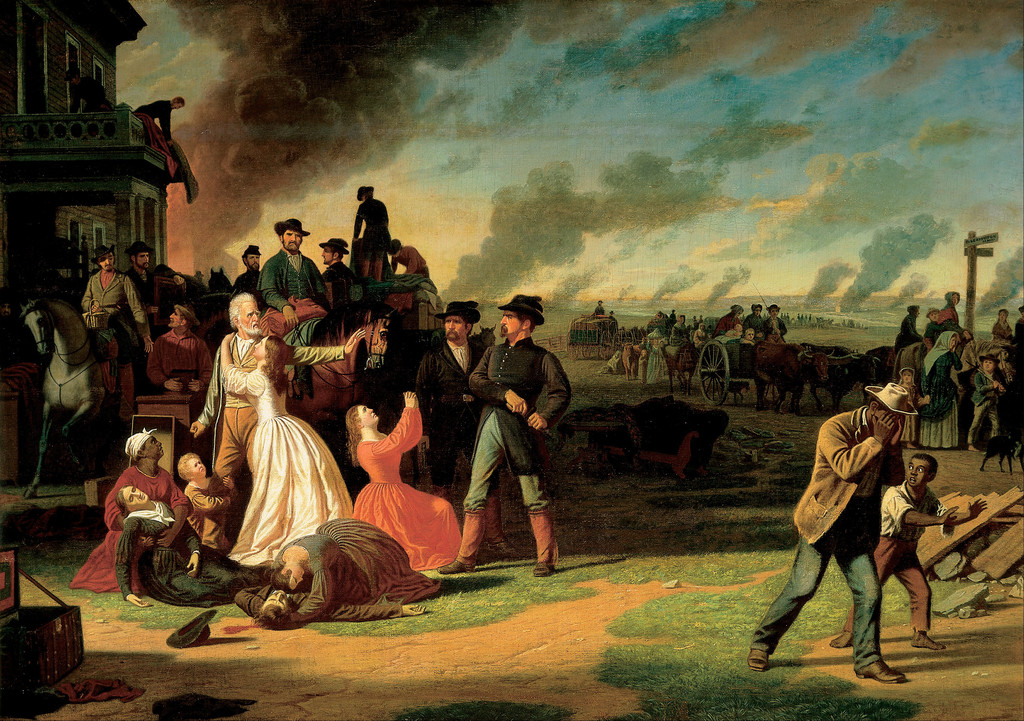
1854–55Order No. 11: Martial Law
1865–68; Cincinnati originalNotes and sources
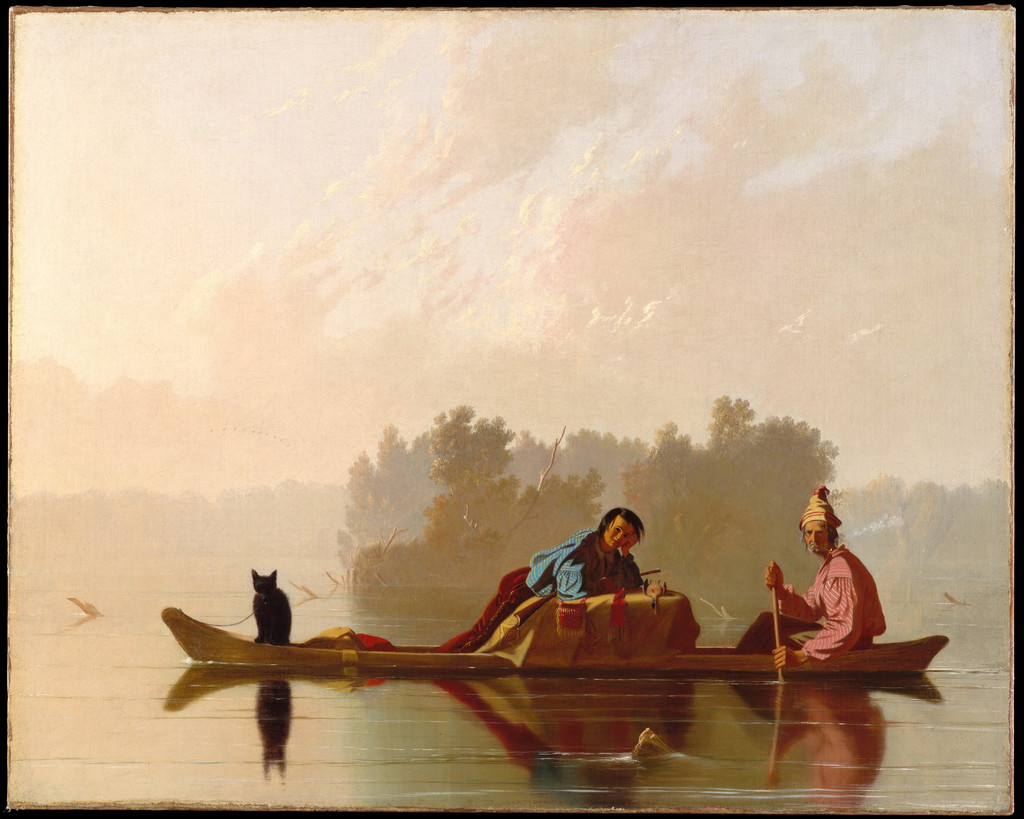
Fur Traders Descending the Missouri. Dates identify the canvas discussed in the article. [3]
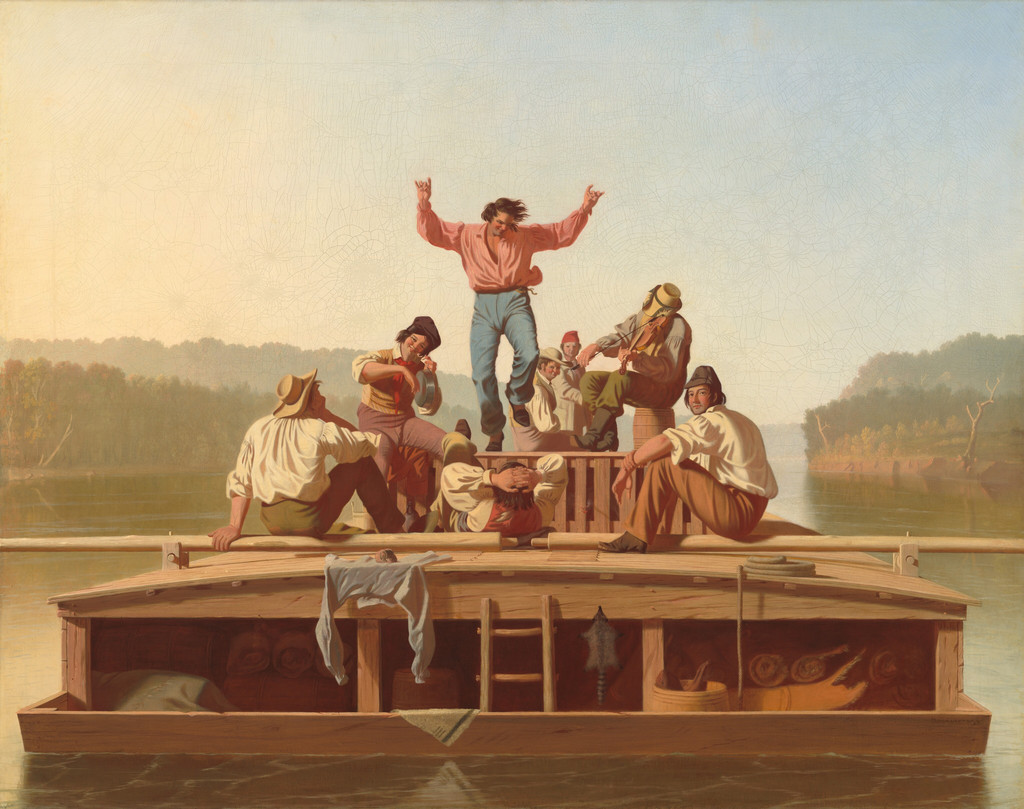
The Jolly Flatboatmen. Dates identify the canvas discussed in the article. [4]
Raftsmen Playing Cards. Dates identify the canvas discussed in the article. [5]
Mississippi Boatman. Dates identify the canvas discussed in the article. [6]
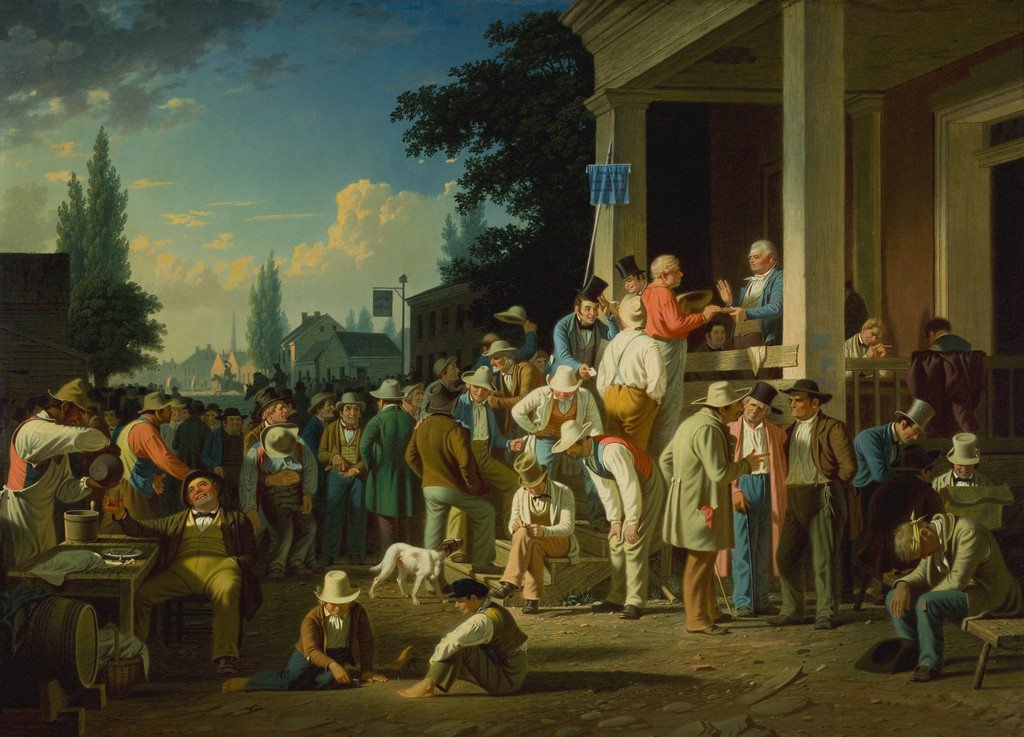
The County Election. The original is 124:1944; the illustrated 1852 replica is 44:2001. Their dimensions and acquisition histories differ. [7] [8]
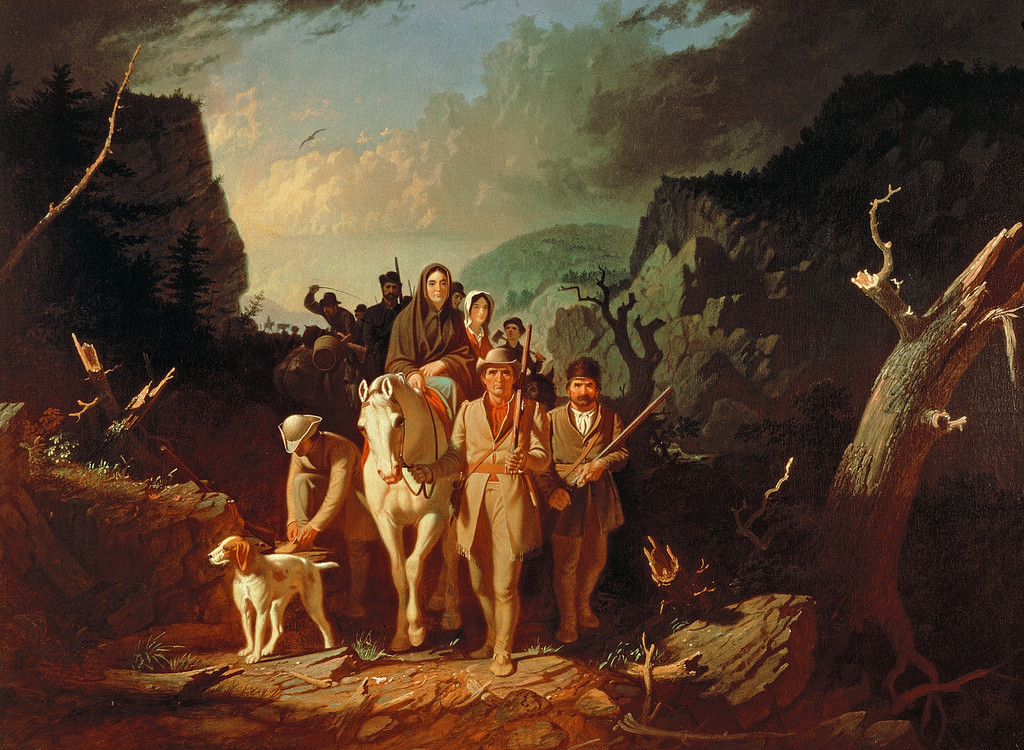
Daniel Boone Escorting Settlers through the Cumberland Gap. Dates identify the canvas discussed in the article. [9]
Canvassing for a Vote (current article). Dates identify the canvas discussed in the article. [1]
Stump Speaking. Dates identify the canvas discussed in the article. [10]
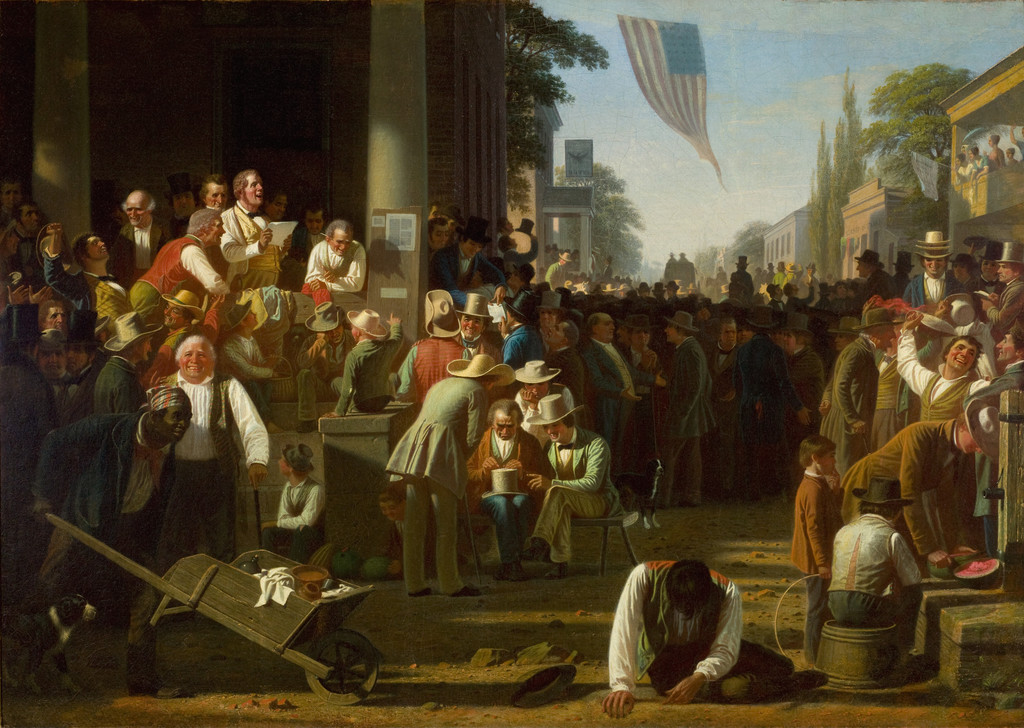
The Verdict of the People. Dates identify the canvas discussed in the article. [11]
Jolly Flatboatmen in Port. Dates identify the canvas discussed in the article. [12]
Order No. 11: Martial Law. Dates identify the canvas discussed in the article. [13]
Contents
- A conversation outside the tavern
- Listening without surrendering a decision
- Politics beside an ordinary doorway
- From Country Politician to Canvassing for a Vote
- Potential Voter and the evidence of revision
- Satire at the edges of the scene
- A small encounter among larger election subjects
- Annotated details
A conversation outside the tavern
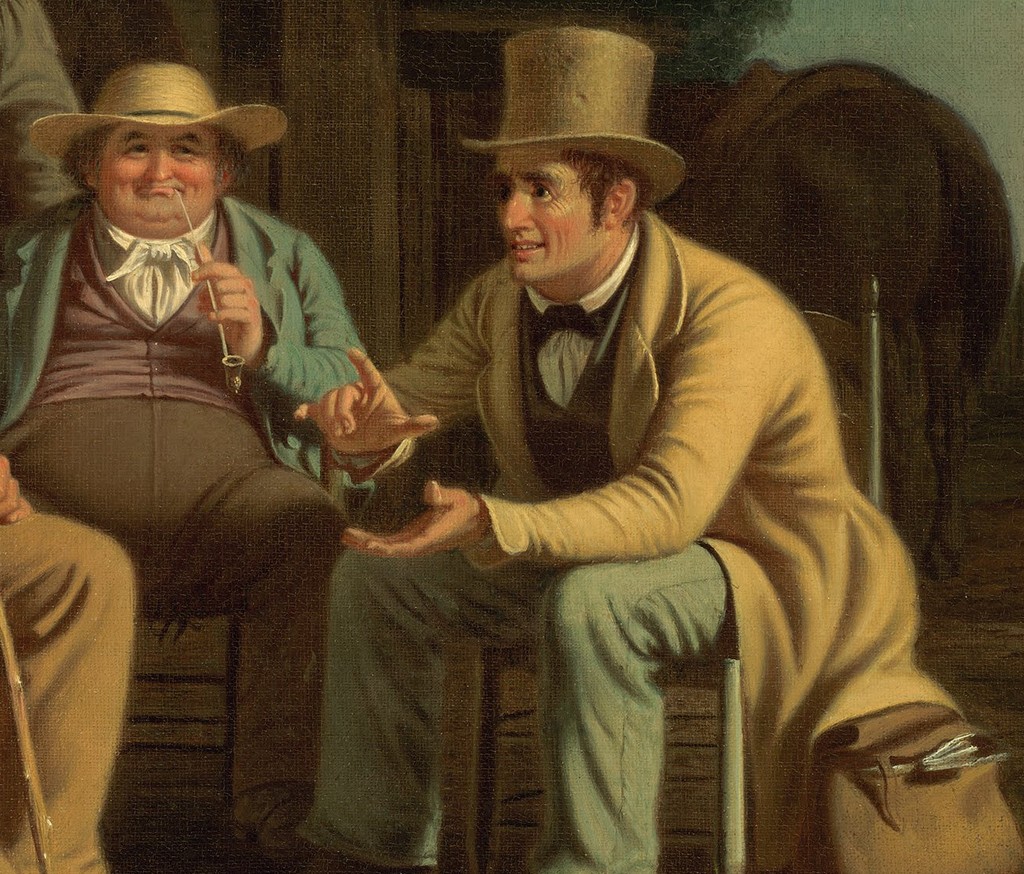
The canvasser occupies the right side of the group, facing towards the seated men. His pale coat catches the light across the shoulder and sleeve. The torso inclines forwards, bringing his head closer to the people he hopes to persuade. One hand is held low and open while the other turns upwards, giving the exchange a visible rhythm even though its words remain unknown.
The man at the left is arranged quite differently. His back rests against his seat, his legs extend forwards and a stick lies within his grasp. A yellow waistcoat and dark coat distinguish him from the speaker’s more uniformly pale clothing. His face turns towards the appeal, but his body does not imitate the canvasser’s forward urgency.
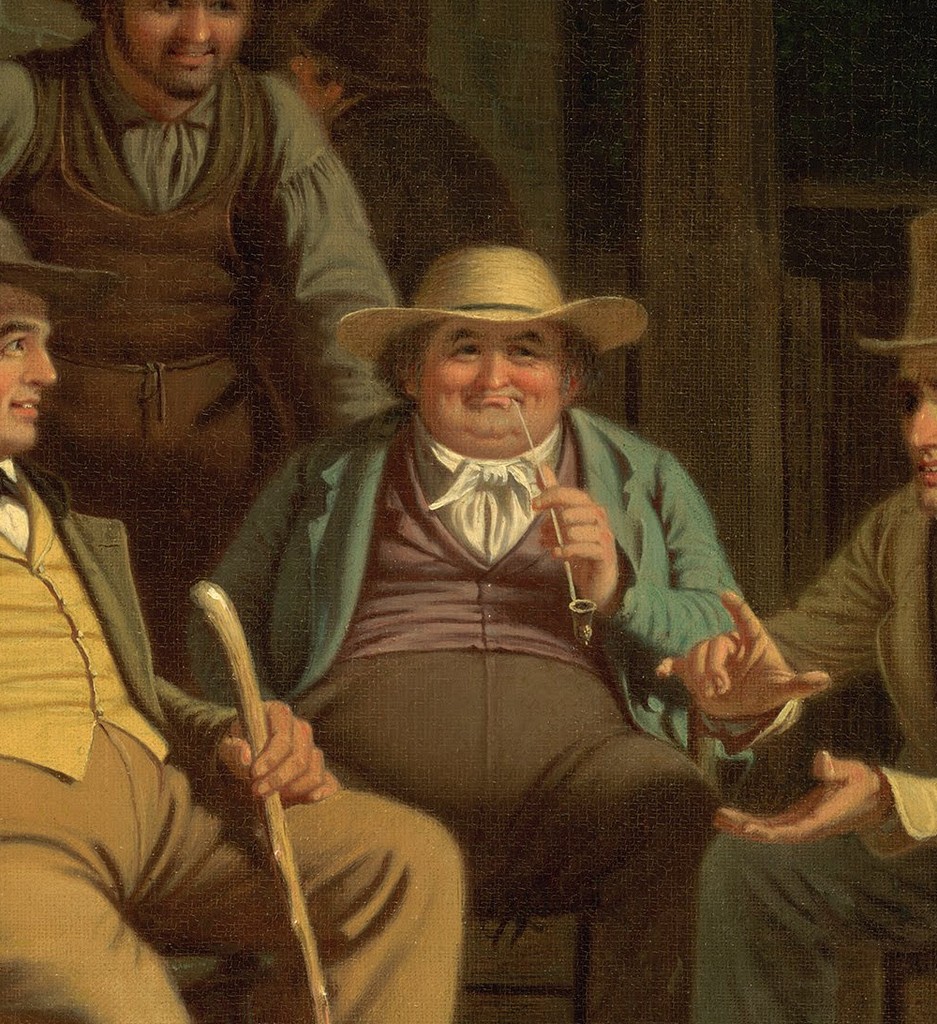
Between them sits a fuller figure with a pipe, a light hat and a blue-green coat. His position helps join the two sides of the group while also complicating the exchange. We see more than a simple pair of speaker and listener: a third person can observe the appeal and give it a social audience.
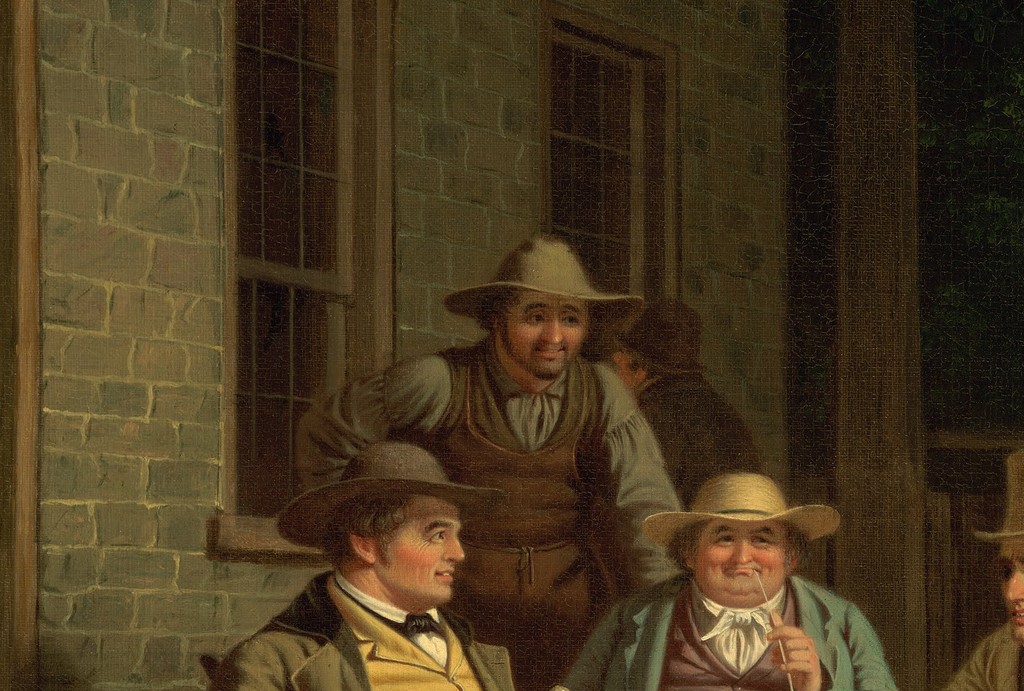
Behind the left-hand listener, a man stands near the window, looking towards the seated figures. His height completes the main grouping above their heads. A further figure is partly visible in the tavern window. That small glimpse extends the social setting beyond the bodies most clearly presented in front.
The wall and window form a dark, firm background on the left. To the right, the scene opens to a road, a small building, trees and a low horizon. Bingham places the conversation at the meeting point of shelter and open space. The group feels settled beside a familiar building, while the road suggests the wider locality in which the canvasser seeks support.
Near the doorway, a dog lies on the ground with its head low. A horse stands behind the politician, partly obscured by his figure. A hanging sign occupies the upper area of the picture. These details give the encounter a plausible tavern setting while also providing elements that have attracted more pointed political interpretations. [1]
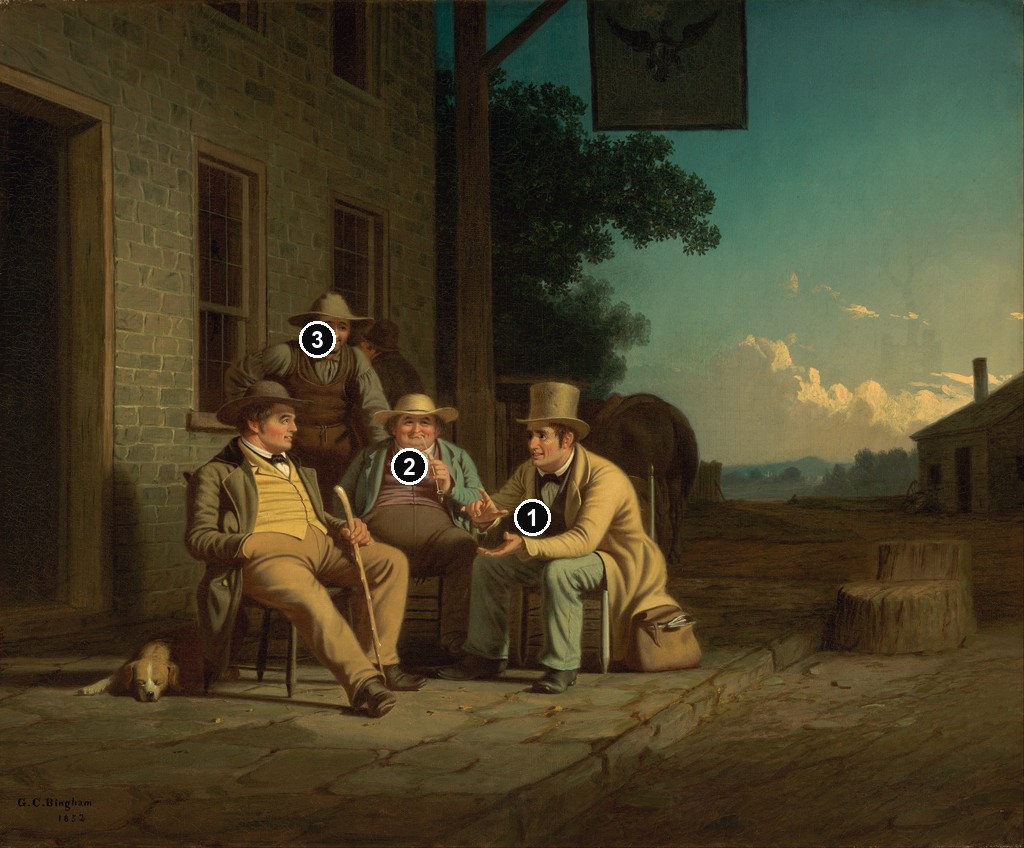
Annotated Details from Canvassing for a Vote
The numbered points identify visible features discussed in this article. Return from each detail to the whole composition. The captions keep each work’s identity, date and medium separate.
Canvassing for a Vote, 1852
George Caleb Bingham, Canvassing for a Vote, 1852. Oil on canvas, 64.14 × 77.47 cm. The Nelson-Atkins Museum of Art, Purchase: William Rockhill Nelson Trust, 54-9. Image source. Public domain. Numbers added to a separate overview. Detail images are crops of the source reproduction.
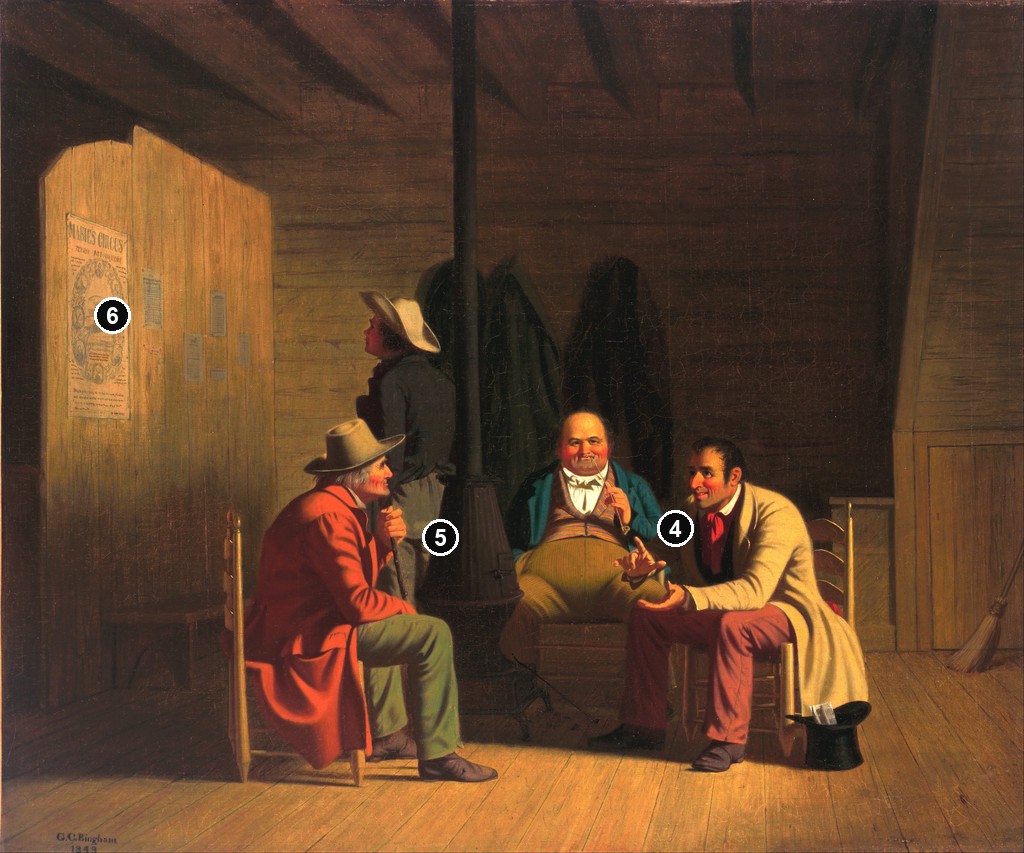
Country Politician, 1849
George Caleb Bingham, Country Politician, 1849. Oil on canvas, 51.8 × 61 cm. Fine Arts Museums of San Francisco, Gift of Mr. and Mrs. John D. Rockefeller 3rd, 1979.7.16. Image source. Public domain. Numbers added to a separate overview. Detail images are crops of the source reproduction.
Details from CANVASSING FOR A VOTE
Compare the cropped details with the complete images above. Notice how their colours, shapes and positions contribute to the larger compositions.
Canvassing for a Vote, 1852
An argument carried by the hands
The speaker’s upturned hands project into the space between the seated men. His leaning torso and turned face give the small encounter its forward movement, while the others remain differently placed around him.
The pipe and the frontal sitter
The pipe and the hand held close to the chest keep the central sitter’s movement compact. His frontal body differs from the two side figures who turn into the conversation, giving the group more than one rhythm.
The onlooker and the doorway
The standing figure leans close to the group from a higher position. Brickwork, window and upright post enclose the people at the tavern’s edge, placing the conversation within an ordinary setting.
Country Politician, 1849
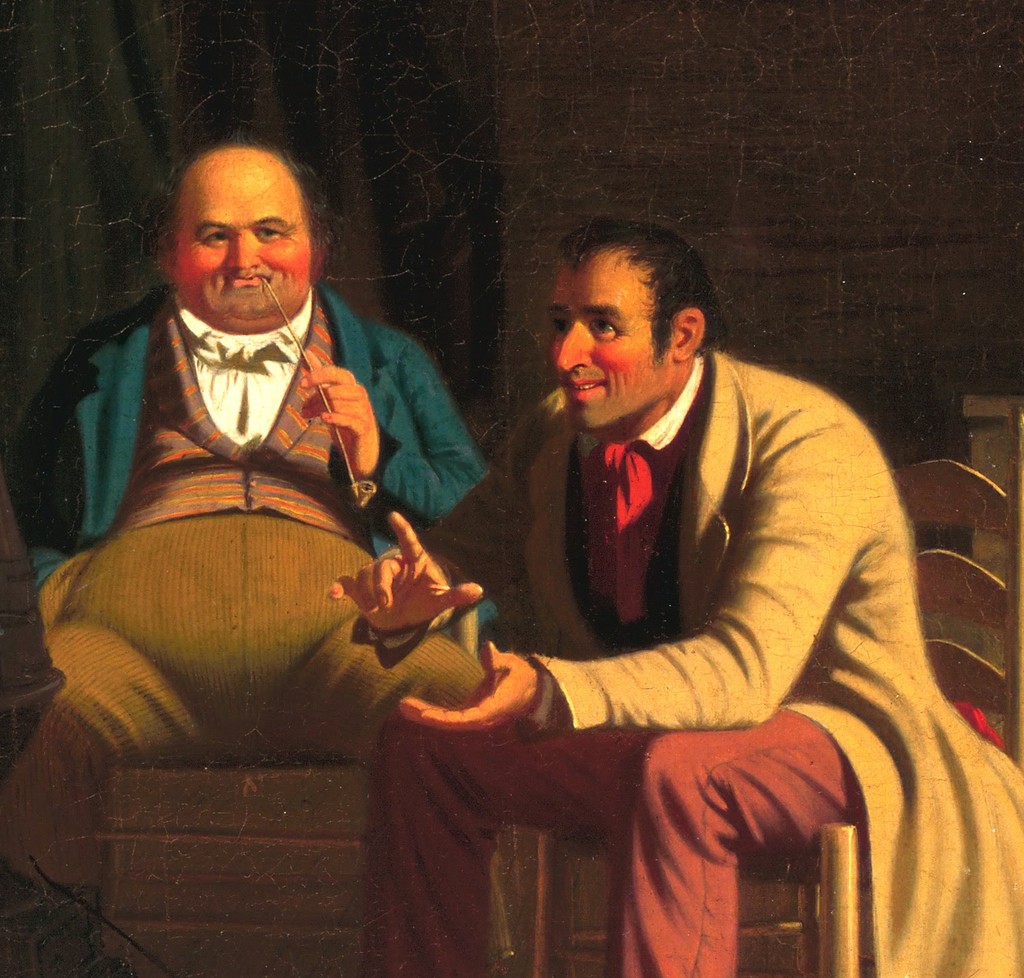
Open hands in the earlier interior
The pale coat and open palms give the speaker a clear shape against the dark room. His forward lean turns the space between the chairs into the centre of an argument, anticipating the later outdoor arrangement.
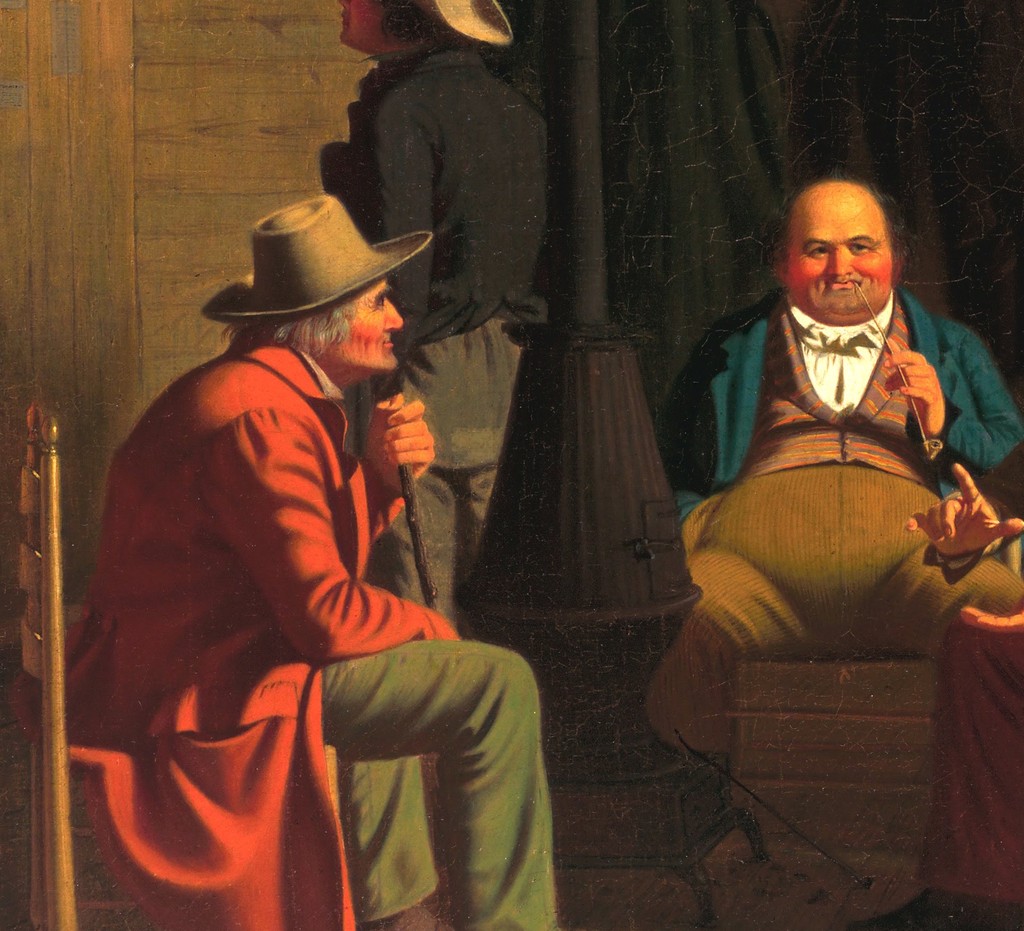
Two seated listeners
The left figure turns in profile while the broad central sitter faces more directly outwards. Their compact hands and different inclinations of the head allow listening to take more than one visible form.
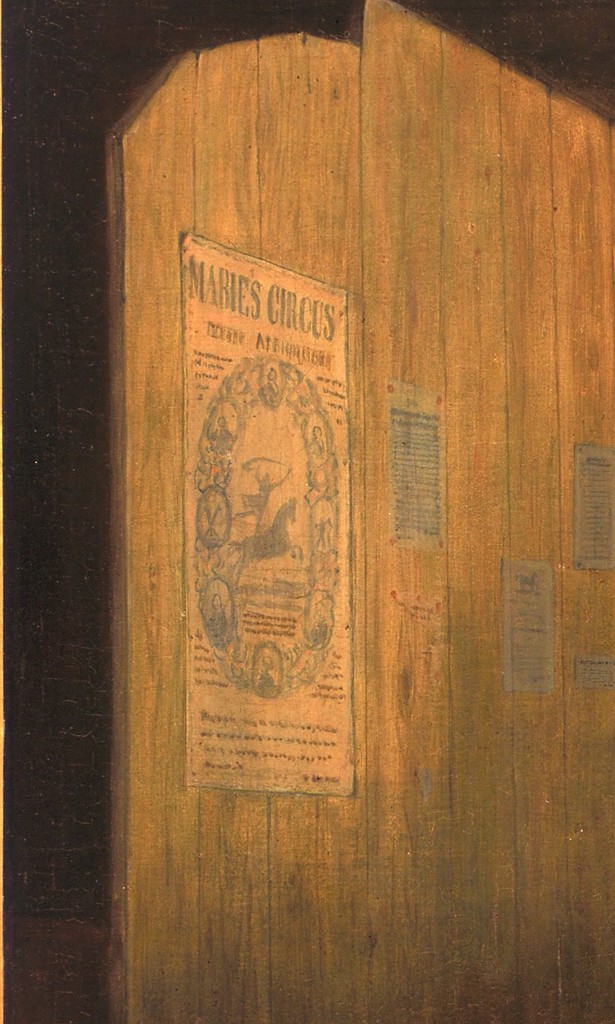
The notice on the open door
The large printed notice catches the light on the open door. Its rectangles place ordinary announcements beside the political conversation, while smaller notices repeat the format on the surrounding woodwork.
Listening without surrendering a decision
The canvasser appears energetic, but the painting does not reveal whether he succeeds. His hands and smile can be described; the contents of his promise cannot. The listener’s relaxed posture likewise allows more than one response. He might be considering the case, withholding agreement or simply allowing the speaker to continue.
That uncertainty gives the small scene its force. A political appeal requires another person’s attention, yet attention is not the same as consent. Bingham makes the exchange legible without showing a handshake, a written pledge or a vote. The decision towards which the title points remains outside the completed action of the picture.
The faces are close enough to be compared, while the bodies remain distinct. The canvasser’s arms push into the space between him and his listeners. The stick and extended legs at the left establish a different kind of occupation of that same space. Clothing, props and posture make differences in attitude visible before we attempt to assign any exact thought to a face.
The Nelson-Atkins label describes the composition as a stable pyramid. This organization keeps an animated exchange from appearing unsettled. The people can differ in response because the arrangement holds them together. Bingham’s political subject therefore depends as much on the construction of a group as on the expressive gestures of its most active member. [1]
Politics beside an ordinary doorway
The building gives the conversation a social setting without turning it into a formal assembly. There is no raised platform between canvasser and listener. Their heads remain close to the same level, and the appeal takes place within the reach of the speaker’s hands. Compared with a speech delivered above a crowd, this arrangement makes the listener’s physical independence especially apparent.
The window adds another kind of boundary. Someone inside can look towards what happens outside, while the seated figures occupy the pavement beside the wall. The gathering is small, yet its edges remain open to observation. Bingham makes a private-seeming exchange visible within a place where other people can notice it.
The horse and the road extend that openness in another direction. They suggest movement beyond the seated group, even while its principal participants remain still. A saddlebag beside the canvasser gives another practical detail to the encounter. The museum’s description identifies it in the foreground, but neither the bag nor the horse establishes a particular itinerary for the man. Their role in our reading is to connect the conversation with a setting through which people can pass. [1]
From Country Politician to Canvassing for a Vote
Country Politician of 1849, in the Fine Arts Museums of San Francisco, presents a related appeal in an interior. Its participants gather near a stove, and the older listener sits at the left. The owning museum identifies the younger man as seeking the farmer’s support and treats the other seated listener’s possible role as a political powerbroker tentatively. [14]
Looking between the paintings makes the changed setting immediately clear. In the earlier work, the stove and wooden walls enclose the conversation. The standing man turns towards notices on the wall, and dark clothing hangs in the background. The bright patch of light across the floor gives the figures a stage within the room. In 1852, the brick exterior and distant road replace that enclosure with a more open world.
Conrads emphasizes a change in the left-hand listener as well. The earlier older man, leaning into the discussion, gives way to a prosperous farmer in a more relaxed position. She relates this choice to the growing importance of such men within the electorate. It is an interpretation of the figure’s social characterization, rather than an identification of a particular farmer who can be named from the painting. [2]
The earlier listener’s red coat and forward inclination make him a more visibly active partner in the exchange. In Canvassing for a Vote , the corresponding figure’s dark coat, yellow waistcoat and settled posture create a cooler response to the canvasser’s effort. The politician now has to reach across a space occupied by someone who appears less physically drawn into his performance.
The pipe smoker remains an important point of comparison. In both pictures, a seated, rounded figure helps mediate between the man who speaks and the person he addresses. The repetition preserves a recognizable social arrangement while allowing the most consequential relationship to change. Bingham develops a familiar subject through a new balance of activity and reserve.
These are separate paintings, not competing titles for one canvas. The 1849 work belongs to the Fine Arts Museums of San Francisco; the signed 1852 canvas belongs to the Nelson-Atkins. Keeping those identities clear allows the comparison to show an artist revising his choices over time. [1] [14]
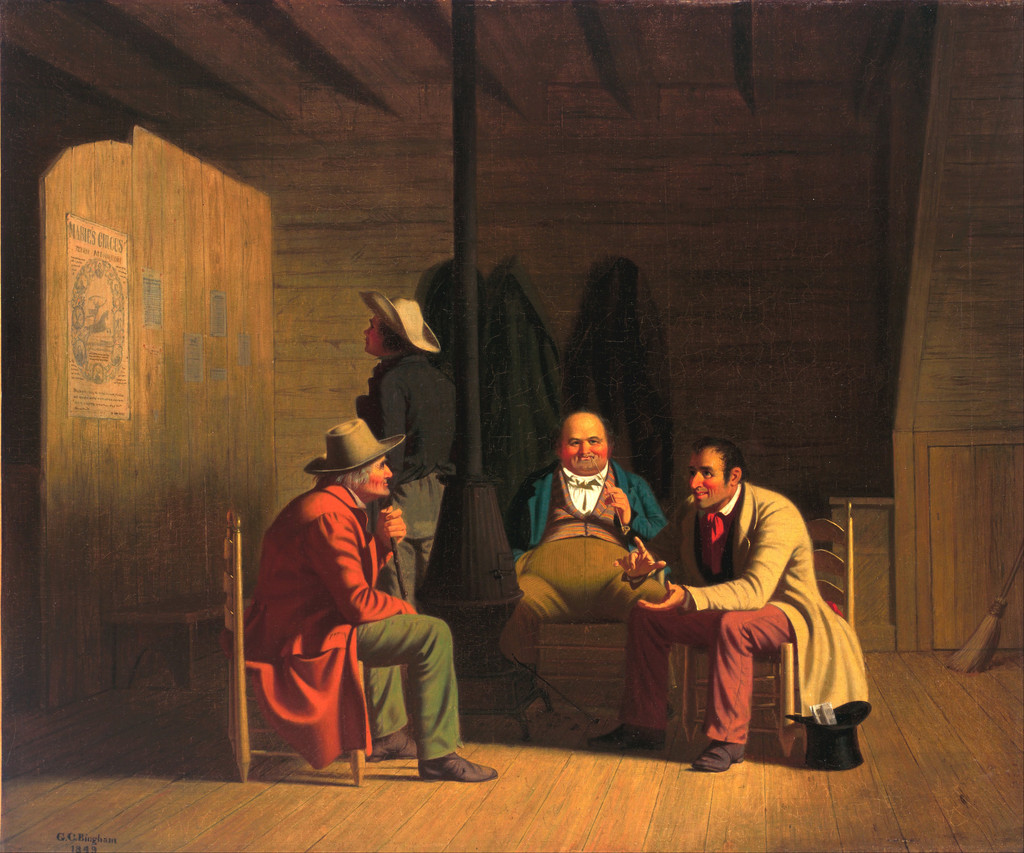
George Caleb Bingham, Country Politician, 1849. Oil on canvas, 51.8 × 61 cm. Fine Arts Museums of San Francisco, Gift of Mr. and Mrs. John D. Rockefeller 3rd, 1979.7.16.
Image source
.
Public domain
.
Watch: George Caleb Bingham
Choose a film to explore the artist’s work, its interpretation and its wider setting.
Navigating the West: George Caleb Bingham and the River at the Amon Carter Museum of American Art
The Amon Carter Museum introduces an exhibition devoted to Bingham’s river paintings.
Watch on YouTubePotential Voter and the evidence of revision
The drawing called Potential Voter provides a more detailed view of that development. Conrads describes visible erasures around its hat, left arm and walking stick. These traces show Bingham considering the figure’s appearance and posture rather than accepting an initial outline unchanged. The prosperous listener in the painting emerged through revision. [2]
Each of those areas affects how the figure addresses the conversation. A hat frames the face and establishes a silhouette; an arm can close the body or open it towards another person; a walking stick connects a hand with a seated posture. Changes to these parts can alter the impression of ease or attention without requiring a wholly different subject.
The distinction between drawing and finished picture is useful here. In the painting, the pose appears settled and the clothes carry a convincing weight. In the study, adjustments preserve evidence that the eventual position was a choice among alternatives. A finished expression of confidence can be the result of work that was exploratory and uncertain.
Conrads places the drawing among Bingham’s repeated returns to narrative subjects. His drawings and prints show that figures could be reconsidered, moved or adapted as a composition changed. Potential Voter is especially valuable because its revisions concern the person who must receive the political appeal, rather than only the politician who makes it. [2]
Satire at the edges of the scene
The horse and dog have encouraged readings of the picture beyond its literal conversation. Both the Nelson-Atkins label and Conrads suggest that the sleeping dog and the turned-away figure may evoke disinterest or exclusion from political participation. They also propose that the horse’s rump, positioned near the canvasser’s head, may offer a joke about the quality of some politicians. These are interpretive possibilities, expressed conditionally in the sources. [1] [2]
The joke, if accepted, works because the horse still belongs naturally in the setting. Bingham does not need to interrupt the tavern scene with a separate caricature. A plausible background animal can be placed so that it comments on the nearby human action. The same object can contribute to the scene’s credibility and to its humour.
The dog invites a similar movement between observation and interpretation. We can see a resting animal near an entrance. Connecting that rest to political disengagement takes a further step, supplied by the museum and curator. Keeping the two stages distinct allows the reading to remain suggestive without turning every incidental detail into a fixed allegorical sign.
A small encounter among larger election subjects
In Stump Speaking , painted in 1853–54, a candidate addresses a much larger public. The museum’s interpretation treats the man behind him as an opponent preparing to reply. That composition gives political persuasion the form of an outdoor contest before a crowd. The tavern scene instead tests the appeal at close quarters, where a few faces and gestures carry most of the drama. [10]
The County Election , dated 1851–52 in the original painting’s museum record, follows a different part of the process. It gathers people around the act of voting and includes attempts to influence them near the polling place. Comparing the works shifts attention from persuasion to participation, and from an intimate encounter to a crowded procedure. [7]
The smaller Canvassing for a Vote does not need the scale of those paintings to make a political question visible. Its narrow interval between two seated figures is enough to hold the difference between asking for support and receiving it. The canvasser makes his appeal; the listener retains the space in which to consider an answer.
The Nelson-Atkins acquired the canvas in 1954. Its signature and date identify the work discussed here, while the museum’s record keeps it within a longer history of Bingham’s political painting. Seen closely, its most revealing evidence remains modest in scale: open palms, a pipe, a stick and a body that does not lean forward simply because another one does. [1]
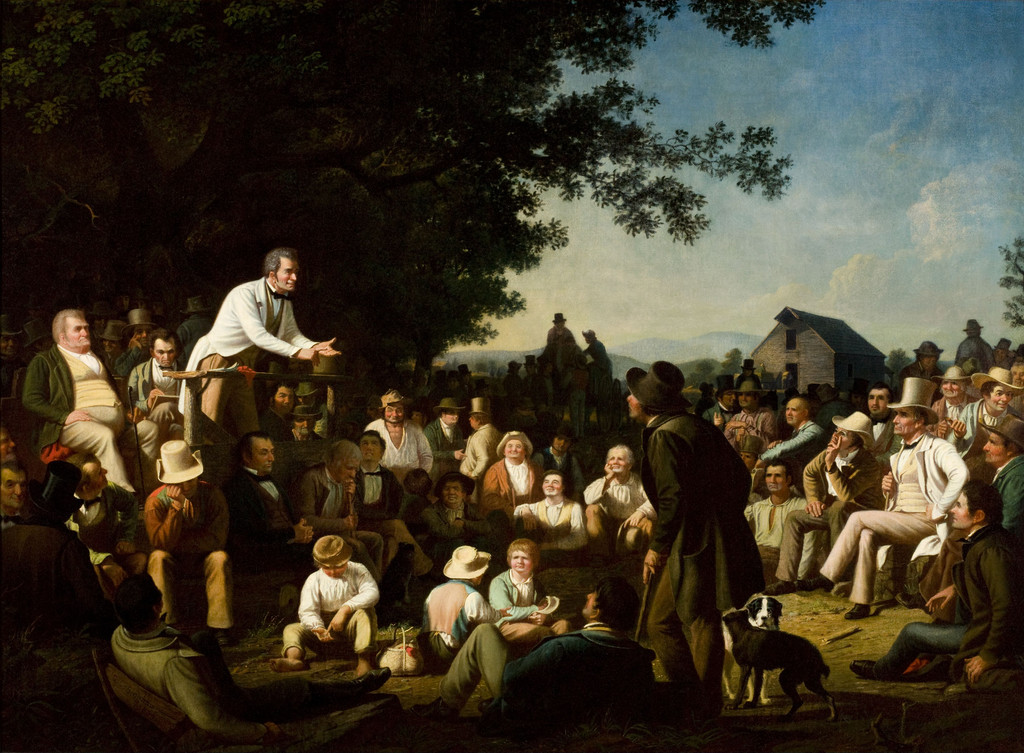
George Caleb Bingham, Stump Speaking, 1853–54. Oil on canvas. Saint Louis Art Museum, Gift of Bank of America, 43:2001.
Image source
.
Public domain
.
Artworks directory
A documented selection discussed across these articles, including separate canvases, figure studies and reproductive impressions. Dates identify the particular object or study; collection and title distinctions follow museum records and the 2015 exhibition checklist. This is not a catalogue raisonné. Prints are grouped with works on paper in the Drawing filter.
| Name | Date | Medium |
|---|---|---|
| Fur Traders Descending the Missouri | 1845 | Painting — oil on canvas |
| The Jolly Flatboatmen | 1846; NGA canvas | Painting — oil on canvas |
| The County Election (original) | 1851–52 | Painting — oil on canvas |
| Stump Speaking | 1853–54 | Painting — oil on canvas |
| The Verdict of the People | 1854–55 | Painting — oil on canvas |
| Order No. 11: Martial Law | 1865–68; Cincinnati original | Painting — oil on canvas |
| Daniel Boone Escorting Settlers through the Cumberland Gap | 1851–52 | Painting — oil on canvas |
| Canvassing for a Vote | 1852; signed canvas | Painting — oil on canvas |
| Raftsmen Playing Cards | 1847 | Painting — oil on canvas |
| Mississippi Boatman | 1850 | Painting — oil on canvas |
| Jolly Flatboatmen in Port | 1857 | Painting — oil on canvas |
| The County Election (replica illustrated here) | 1852 | Painting — oil on canvas |
| Martial Law or Order No. 11 (Missouri replica) | 1870 | Painting — oil on canvas |
| The Jolly Flatboatmen (Terra canvas) | 1877–78 | Painting — oil on canvas |
| John Quincy Adams (later version) | about 1850, after an 1844 original | Painting — oil on canvas |
| Country Politician | 1849 | Painting — oil on canvas |
| The Trappers’ Return | 1851 | Painting — oil on canvas |
| The Concealed Enemy | 1845 | Painting — oil on canvas |
| The Wood-boat | 1850 | Painting — oil on canvas mounted on board |
| Lighter Relieving a Steamboat Aground | 1847 | Painting — oil on canvas |
| Watching the Cargo | 1849 | Painting — oil on canvas |
| In a Quandary | 1851 | Painting — oil on canvas |
| Boatmen on the Missouri | 1846 | Painting — oil on canvas |
| Self-Portrait (Saint Louis) | 1834–35 | Painting — oil on canvas |
| Self-Portrait (Nelson-Atkins) | about 1877 | Painting — oil on canvas |
| Mrs. David Steele Lamme and Son William Wirt | 1837 | Painting — oil on canvas |
| Portrait of Leonidas Wetmore | 1839–40 | Painting — oil on canvas |
| Fur Trader (study for Fur Traders Descending the Missouri) | 1845 | Drawing — brush, ink and wash over pencil |
| Skillet-beater (study for The Jolly Flatboatmen) | 1846 | Drawing — brush, ink and wash over pencil |
| Young Wood-boatman (study for The Wood-boat) | 1850 | Drawing — brush, ink and wash over pencil |
| Thomas Doney after Bingham: The Jolly Flat Boat Men (Met impression) | 1847 | Print — mezzotint and engraving with etching |
| Thomas Doney after Bingham: The Jolly Flat Boat Men (coloured Carter impression) | 1847 | Print — intaglio with applied watercolour |
| The Verdict of the People (lithographic proof) | ca. 1858–59 | Print — lithographic proof |
| Gautier after Bingham: Stump Speaking | 1856 | Print — etching and aquatint |
| Claude Regnier after Bingham: In a Quandary, Mississippi Raftsmen Playing Cards | 1852 | Print — hand-coloured lithograph |
Frequently Asked Questions
The painting is signed and dated 1852 at the lower left. The Nelson-Atkins Museum of Art holds it as object 54-9. [1]
The museum identifies it as the Arrow Rock tavern setting in Missouri. Bingham places the principal exchange outside the brick building. [1]
Discussion
Look again at the images and ideas explored in Canvassing for a Vote. These editorial prompts invite your observations.
Which figure has the greater control of the conversation: the animated canvasser or the relaxed listener? Begin with their hands and posture rather than imagining words for them.
Reader Insights
Which gesture suggests listening without promising agreement?
How does the tavern doorway organise this small political encounter?
What changes when you compare Country Politician with the later group?
Join the Conversation
Share a detail, comparison or question about Canvassing for a Vote below.
References
- Nelson-Atkins Museum of Art , Canvassing for a Vote , 54-9. Current object facts, signature, description, gallery label and provenance. View source
- Margaret C. Conrads , “Bingham@200: A Bicentennial Celebration,” Antiques & Fine Art , Spring 2011, pp. 193–199. Particularly p. 198, on Potential Voter , the revised composition and possible political humour. View source
- Metropolitan Museum of Art, Fur Traders Descending the Missouri. View source
- National Gallery of Art, The Jolly Flatboatmen. View source
- Saint Louis Art Museum, Raftsmen Playing Cards. View source
- National Gallery of Art, Mississippi Boatman. View source
- Saint Louis Art Museum , The County Election , 1851–52, 124:1944. Current record for the original canvas and polling scene. View source
- Saint Louis Art Museum, The County Election, 1852 replica, 44:2001. View source
- Kemper Art Museum, Washington University, Daniel Boone Escorting Settlers through the Cumberland Gap. View source
- Saint Louis Art Museum , Stump Speaking , 1853–54, 43:2001. Current object record and interpretation of speaker and opponent. View source
- Saint Louis Art Museum, The Verdict of the People. View source
- Saint Louis Art Museum, Jolly Flatboatmen in Port. View source
- Cincinnati Art Museum, Order No.11 / Martial Law. View source
- Fine Arts Museums of San Francisco , Country Politician , 1849, 1979.7.16. Object identity and the interior scene’s participants. View source
- Splash image source.
George Caleb Bingham, Canvassing for a Vote, 1852. Oil on canvas, 64.14 × 77.47 cm. The Nelson-Atkins Museum of Art, Purchase: William Rockhill Nelson Trust, 54-9. Public domain .
View source