 by
Tom Gurney
Tom Gurney BSc (Hons) is an art history expert with over 20 years experience
Email:
tomgurney1@gmail.com
/ Phone:
+44 7429 011000
George Caleb Bingham’s Style and Technique: Introduction
George Caleb Bingham often gives ordinary activity an unusually deliberate shape. People sit, dance or wait beside a river, yet their bodies form clear arrangements against boats, cargo and landscape. Franklin Kelly’s catalogue account relates that order to Bingham’s interest in classical art and to the organisation of solid forms. A scene can feel informal in subject while remaining highly controlled in design. [1]
The finished paintings reveal only part of that work. Drawings preserve poses and revisions, impressions in paper disclose transfer, and infrared examination has made some underdrawing visible. These forms of evidence help explain how Bingham assembled an encounter rather than simply recording a complete scene as he found it.
At a Glance
- Composition Clear arrangements of figures and solid forms [1]
- Preparation Studies and revisions precede the finished paintings [2]
- Technical evidence Transfer marks and infrared examination reveal selected stages of work [3]
- Limits An undetected line does not establish that no underdrawing exists [3]
Contents
- Giving a group a clear structure
- Clothing, volume and shortened limbs
- Changing a figure by changing the composition
- Lines beneath the painted surface
- Light, atmosphere and an open river
- Colour and the definition of a body
- Classical gravity in an ordinary subject
- When ordered groups become dramatic
- What examination can reveal
Giving a group a clear structure
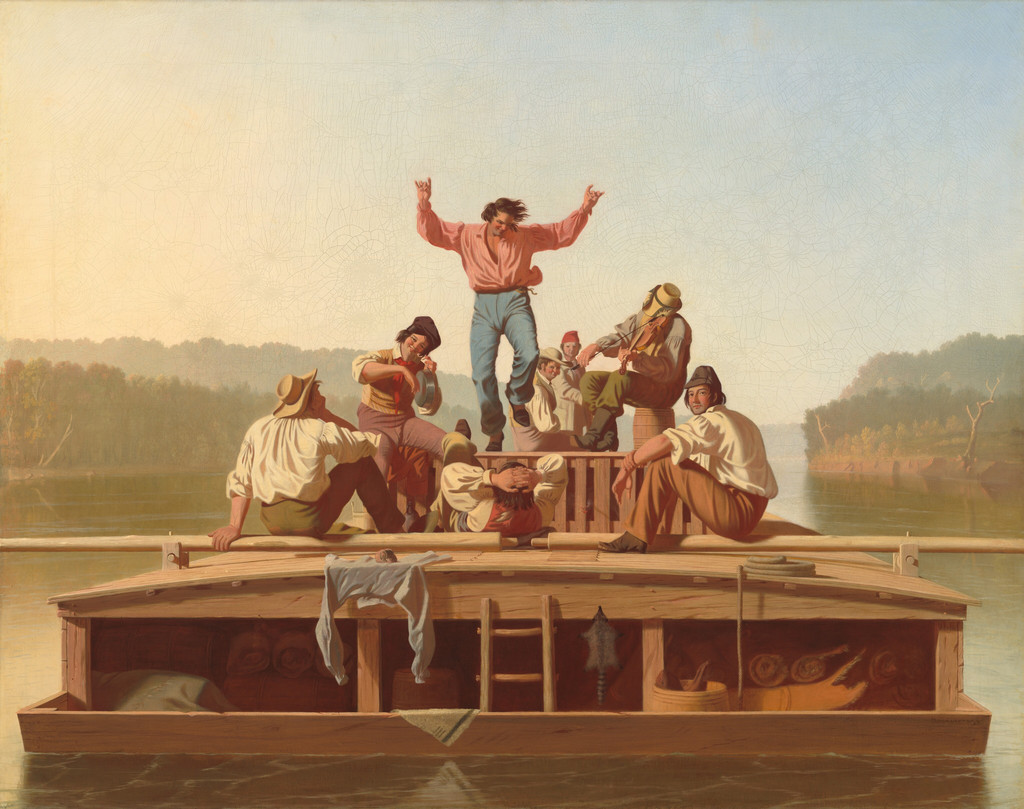
In The Jolly Flatboatmen , painted in 1846, a dancer rises above the seated company. His height makes him the most immediate focus, while the musicians and watchers spread towards either side. The boat supplies a broad horizontal support. The current NGA record identifies this as the original canvas, distinct from Bingham’s later versions. [4]
The arrangement remains clear even when attention moves away from the dancer. An upright musician, a reclining man and a figure turning towards the viewer offer different bodily directions. Spaces between heads and arms let each person remain distinguishable. Variety operates within an overall structure, rather than dissolving the group into a crowd of equally insistent gestures.
Kelly discusses Bingham’s use of geometrical order through John Wilmerding’s account of horizontals, triangular arrangements and solid volumes. This does not mean that each painting should be reduced to a diagram. The larger shapes explain how several figures can retain a shared centre while possessing individual postures and expressions. [1]
The objects help establish that order. A barrel has a circular end and a curved body; a crate presents flat planes; an oar extends a long line across space. Human limbs turn, bend and overlap among them. Their differences allow a viewer to read where a person sits and how the body is supported.
The effect is especially noticeable in moments of rest. A seated worker need not perform a conspicuous task to occupy a convincing place. The relation of a bent arm to a barrel or of a foot to a platform can make a body feel settled within its surroundings. Such connections give apparent leisure a carefully built physical setting.
Clothing, volume and shortened limbs
Separate figure studies helped Bingham solve those bodily relationships. Margaret Conrads discusses his attention to compact poses and foreshortening , in which parts of a body appear shortened because they extend towards or away from the viewer. A convincing folded leg requires more than an outline of its familiar shape. Its direction has to be understood through overlapping forms, light and shadow. [2]
Clothing provides a particularly useful means of describing that direction. In The Jolly Flatboatmen , pale sleeves bend around elbows, trousers swell over knees and folds run down from a seated waist. The garments give the body volume while keeping the figures distinct through different colours and silhouettes.
The same close attention can animate a relatively still person. Conrads points to the fiddler’s boot and the space beneath it in the related study as a suggestion of another beat. Bingham’s visual rhythm is distributed through small bodily accents as well as through the dancer’s more emphatic gesture. [2]
A study need not preserve a figure’s final character. The older trader in Fur Traders Descending the Missouri develops from a drawing in which the model appears younger. Conrads describes changes to the face that make the painted trader more weathered. Clothes, age and expression can be adjusted while a useful position of the body survives. [2]
This practice links description with invention. Bingham could study the particulars of a model without promising an identifiable portrait of that person within a river scene. Individuality in the finished face may be an artistic achievement as well as evidence of observation.
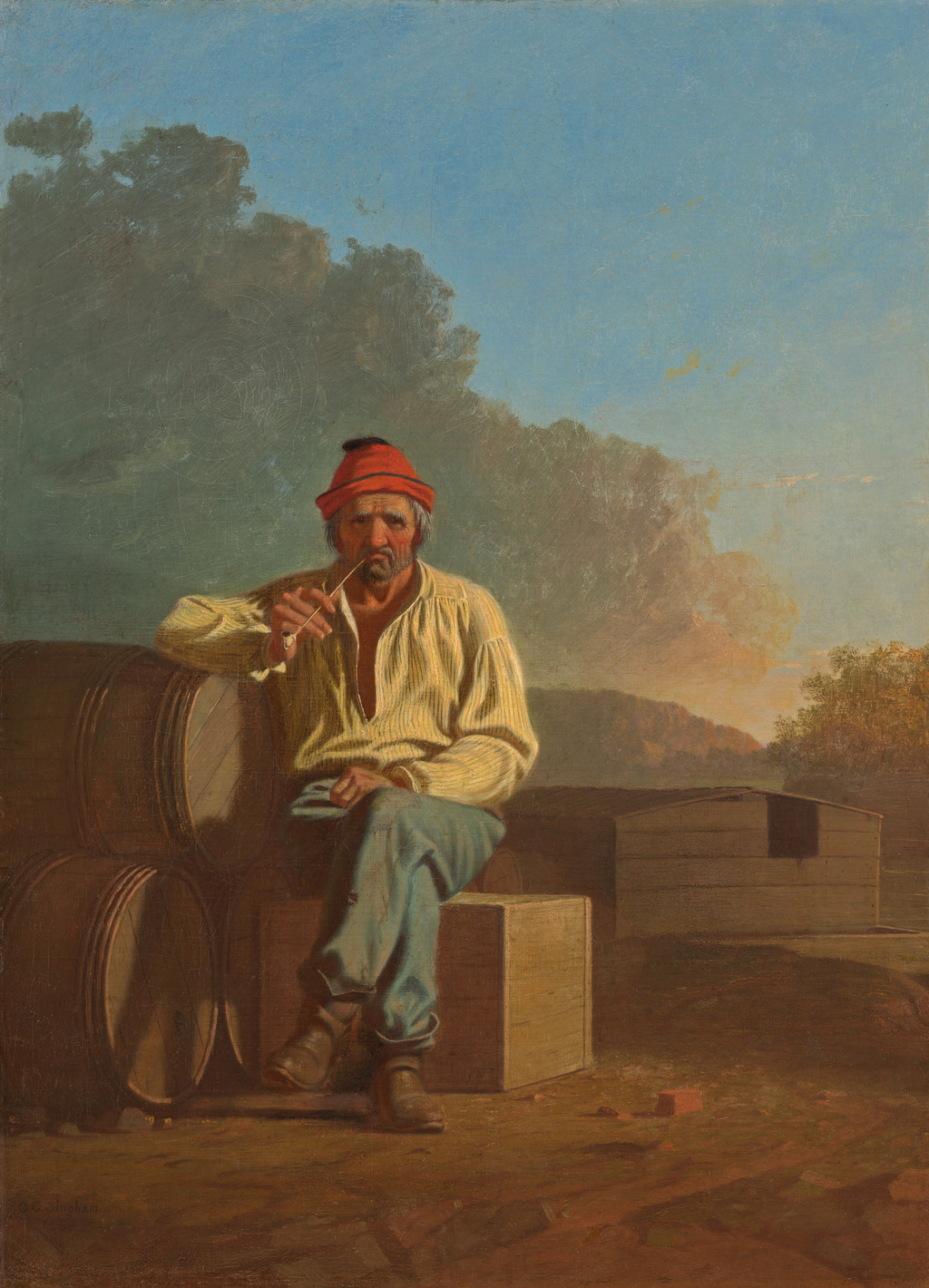
George Caleb Bingham, Mississippi Boatman, 1850. Oil on canvas. National Gallery of Art, Washington, John Wilmerding Collection, 2004.66.1.
Image source
.
Public domain
.
Changing a figure by changing the composition
Mississippi Boatman , dated 1850, concentrates attention on one man beside barrels and a wooden box. The NGA describes an unusually confrontational encounter within Bingham’s river work. His gaze, older face and isolated position create a different mood from a group sharing music or conversation. [5]
Kelly traces the pose to the central man in Watching the Cargo of 1849 and its related drawing. The later canvas narrows the setting, moves to a vertical format and removes the surrounding company. Altering the face is part of the transformation, but the frame and the available narrative change too. [1]
The example shows why a recurring pose is not merely a repeated character. A body can take on another role when it no longer has companions through whom a viewer can interpret its activity. The crossed legs still look stable; the gaze becomes harder to escape. Composition changes the conditions of the encounter.
The Met’s 2015 exhibition similarly emphasised changes of face and clothing while the posture remained closely related. It also noted the background flatboat that makes the man’s occupation legible. A small element in the distance helps establish a subject whose emotional centre lies close to the viewer. [3]
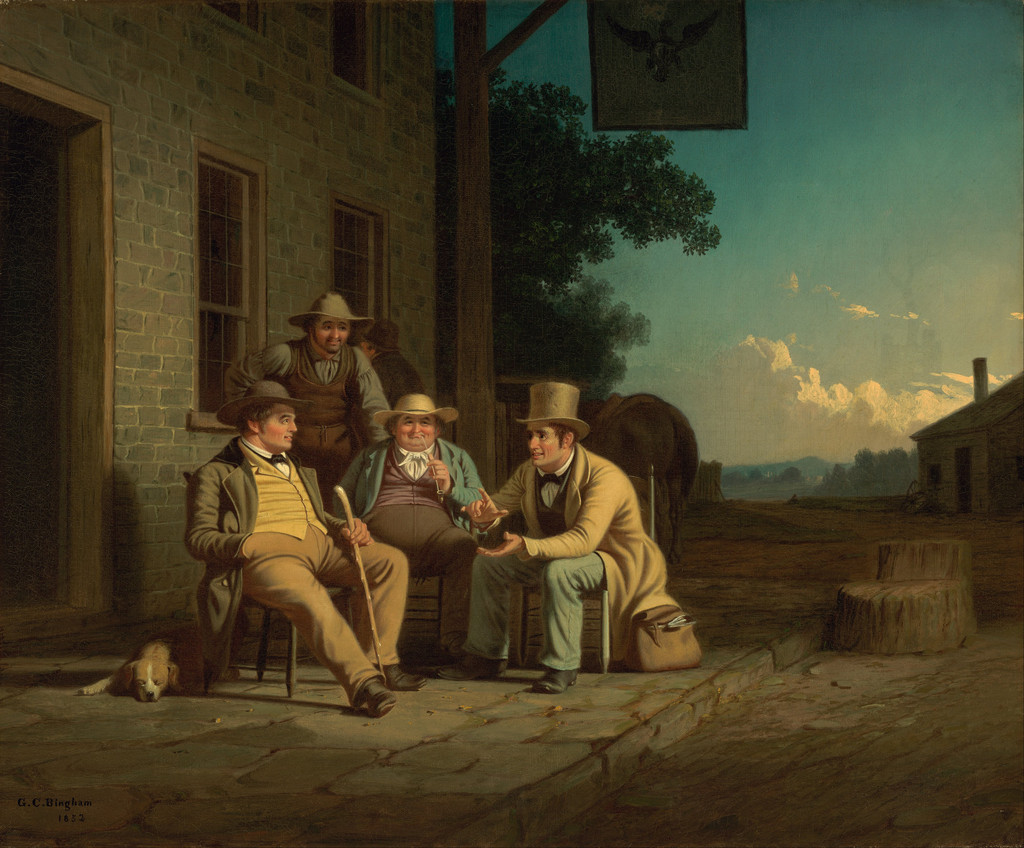
The broader practice includes political figures as well as boatmen. Conrads discusses changes and erasures in a Potential Voter study and the reworking of an earlier subject into Canvassing for a Vote . Revision could involve selecting a different figure type or moving a scene outdoors, as well as adjusting a hand or hat. [2]
Lines beneath the painted surface
The relationship between drawing and painting can be materially specific. For The Wood-boat , the 2015 exhibition described separate studies transferred to a primed canvas with a pointed stylus. Incised lines in the paper disclose tracing, while comparison with the painted figure shows a changed position for a pole. The act of transfer could refine the design rather than mechanically preserve every earlier decision. [3]
Loops and hatch marks helped carry information about fabric and shadows. Those marks belong to the preparation of a three-dimensional effect on a flat surface. A line could establish a boundary, but a series of marks could also help organise the darker areas through which a body would acquire weight. [3]
Registration marks make another part of the process visible. In drawings associated with The Trappers’ Return of 1851, arrows helped align figures with positions on the canvas. Impressions on the son’s sheet correspond with contour lines in the underdrawing. Paper and painting can therefore be compared through marks left by work, rather than through resemblance alone. [3]
The history of the sheets must remain attached to that evidence. The older trader’s drawing began with the 1845 Fur Traders and was reused for the 1851 composition, while Trapper’s Son was made for the later work. The survival of both sheets does not make them simultaneous preparation for the first painting. [3]
Such evidence is more revealing than a general description of Bingham as either spontaneous or painstaking. A work could begin with careful studies and still change during transfer and painting. Its resolved appearance is the result of those choices, rather than proof that no alternatives were considered.
Light, atmosphere and an open river
Fur Traders Descending the Missouri offers a different balance of precision and softness. The people, canoe and belongings occupy a low band within a much larger expanse of sky. Clothing and faces are comparatively distinct; trees in the distance lose their edges in haze. The contrast gives the boat a strong presence while allowing the landscape to remain spacious.
The water repeats that difference. The canoe establishes a long dark horizontal, but the reflected bodies spread into less clearly bounded patches of colour. Fine lines interrupt the surface. The scene can appear nearly motionless from a distance while remaining full of small changes when examined closely.
The Met’s 1994 catalogue records a debate about the work’s relationship with Luminism. Barbara Novak emphasised luminist qualities, Theodore Stebbins treated it as a precedent, and William H. Gerdts distinguished reflecting luminist interests from being a luminist landscape. The catalogue’s account preserves differences between those positions. It does not supply a unanimous stylistic classification. [6]
The comparison is useful because it directs attention towards light, clarity and suspended movement. Yet the faces and their relationship remain central. The atmosphere does not reduce them to small signs within a landscape. A later critical category can help describe the painting without explaining away the specificity of its subject.
Bingham also made river scenes in which light worked differently. The 2015 exhibition discussed the 1854 Watching the Cargo by Night , where campfire illumination and dark surroundings obscure parts of the narrative. A familiar group of workers and goods becomes less fully legible, allowing dramatic contrasts to carry more of the scene’s effect. The quiet daylight river is one solution within the work, rather than a formula for every painting. [3]
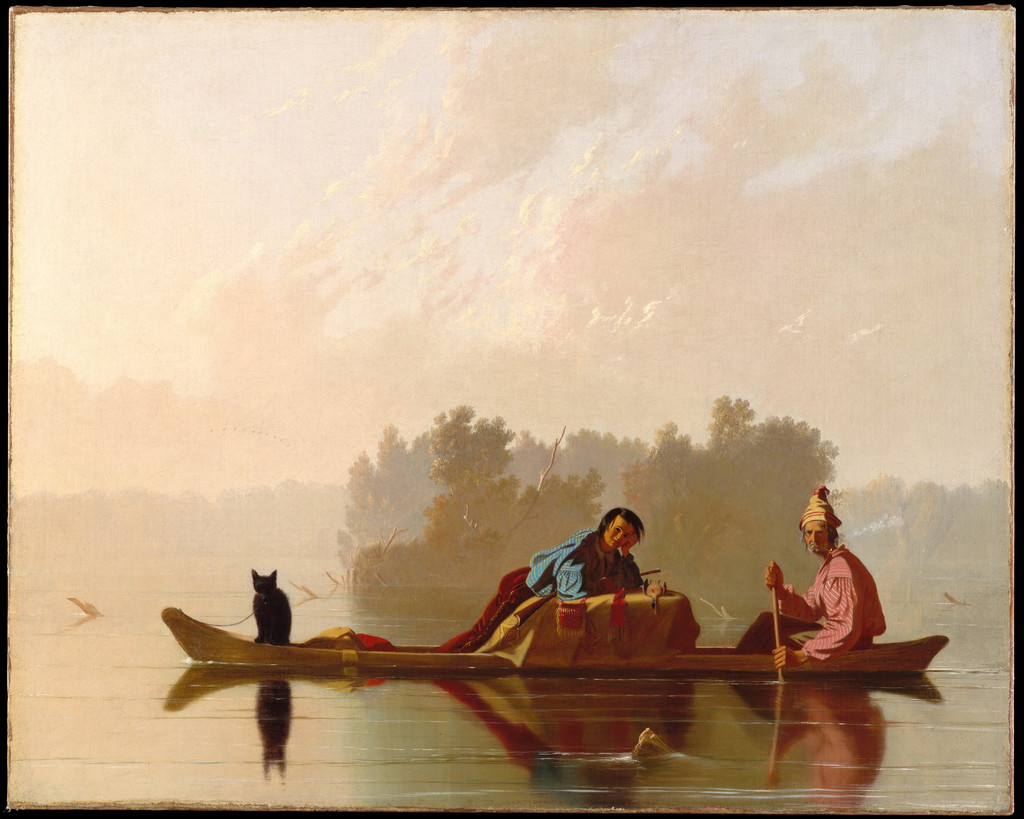
George Caleb Bingham, Fur Traders Descending the Missouri, 1845. Oil on canvas. The Metropolitan Museum of Art, Morris K. Jesup Fund, 1933, 33.61.
Image source
.
Public domain
.
Watch: George Caleb Bingham
Choose a film to explore the artist’s work, its interpretation and its wider setting.
Navigating the West: George Caleb Bingham and the River at the Amon Carter Museum of American Art
The Amon Carter Museum introduces an exhibition devoted to Bingham’s river paintings.
Watch on YouTubeColour and the definition of a body
Colour can organise a figure before the viewer begins to read an expression. In The Jolly Flatboatmen , pink and blue make the dancer visible against a pale sky. Around him, lighter shirts and darker trousers help separate bodies that sit close together. The contrast supports the arrangement of the group as well as the description of individual clothing.
Mississippi Boatman concentrates a related effect within one person. Red at the cap, yellow in the shirt and blue in the trousers give attention a sequence down the body. The surrounding barrels and box remain closer to the browns of the foreground. Bingham uses the difference to keep the worker distinct without removing him from his practical setting.
The fabric matters because it gives colour a direction. A sleeve folds around an arm, stripes turn across the chest and trouser folds describe a bent knee. The painted area is not simply a patch identifying a garment. It helps explain how that part of the body occupies space and connects with another part.
These visible effects should be described separately from a chemical account of the paint. A yellow shirt is an observation about appearance; naming the exact pigments requires different evidence. The paintings can be studied closely through colour and surface without inventing a materials analysis for objects whose published technical discussion addresses other questions.
Classical gravity in an ordinary subject
Kelly’s account of Mississippi Boatman extends the discussion of structure towards classical comparison. He suggests that the seated man’s pose and expression could have recalled John Vanderlyn’s representation of the defeated Roman general Marius, and connects that work with David’s Brutus. The comparison helps explain how a worker waiting beside cargo can acquire a gravity associated with history painting. [1]
Its value does not depend on identifying a directly copied prototype. A seated body, an inward tension and a carefully controlled encounter can operate in different kinds of subject. Working clothes and a pipe remain specific to the boatman’s world even when his bearing invites a more elevated art historical comparison.
The effect also depends on what Bingham leaves out. In the single-figure painting, companions do not provide an immediate social explanation for the man’s expression. The viewer encounters the weight of the body and the force of the gaze before assembling a possible story. That concentration makes the formal arrangement part of the subject’s seriousness.
The relation between everyday appearance and ordered form is consequently more useful than a simple opposition between realism and idealisation. The clothes can look worn while the body remains composed. The face can feel particular while the surrounding volumes give it a broader pictorial dignity.
When ordered groups become dramatic
The same concern with grouped bodies can sustain a much more agitated scene. In Order No. 11 , the upright elderly man forms a high point within a household surrounded by threat. Women cling, kneel, support or bend over the fallen. Repeated gestures create a network of appeals across the foreground.
Art historian Joan Stack’s discussion of the painting emphasises theatrical staging and the simultaneous presentation of events and consequences. The large figures at the left and the departure into the landscape at the right work together as an argument. The composition does not need to reproduce one complete instant seen at one house to make that argument intelligible. [7]
The contrast with the river gatherings shows how form can change its emotional purpose. A central upright body can organise a dance or a confrontation. A horizontal route can carry a boat through open water or displaced people away from home. Clear arrangement remains a means of directing attention, while the activity and relationships determine a different experience.
This is why Bingham’s style should not be summarised through calm alone. Order can make pleasure appear coherent, but it can also give suffering an emphatic public form. The painter’s control of the group is compatible with subjects that expose the loss of control within people’s lives.
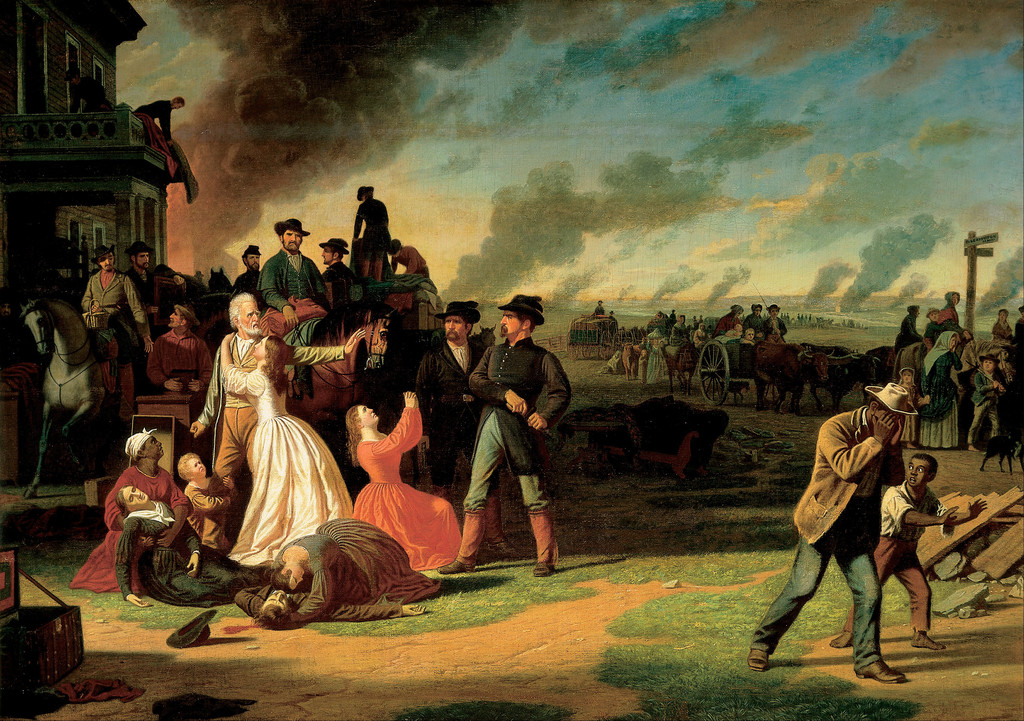
George Caleb Bingham, Order No. 11 (Martial Law), 1865–1868. Oil on canvas. Cincinnati Art Museum, The Edwin and Virginia Irwin Memorial, 1958.515.
Image source
.
Public domain
.
What examination can reveal
Technical examination adds information that ordinary looking cannot supply. The 2015 exhibition’s study of the small animal in Fur Traders used infrared evidence of rounded ears and stronger-light photography of the face to support the identification of a bear cub. The conclusion rests on particular observations of the object, rather than on the silhouette alone. [3]
The same exhibition also described a limit to infrared reflectography. Dark paint in the nocturnes concealed underdrawing even under that examination. Tracing impressions in a related sheet nevertheless supplied evidence that a figure had been transferred. The absence of a visible line in one technical image is therefore not automatically proof that no preparatory line existed. [3]
Different evidence answers different questions. A working mark can connect a drawing with a canvas; a changed face can show a revision; the final arrangement can explain how a viewer’s attention is directed. None of those observations alone establishes a complete political meaning or every circumstance of making.
A useful approach is to begin with the finished group, move towards one body and its objects, and then return to the preparation. The drawings and prints article follows that material record in greater detail. Looking in both directions makes the apparent ease of the paintings more interesting, because it reveals how many choices helped produce it.
Artworks directory
A documented selection discussed across these articles, including separate canvases, figure studies and reproductive impressions. Dates identify the particular object or study; collection and title distinctions follow museum records and the 2015 exhibition checklist. This is not a catalogue raisonné. Prints are grouped with works on paper in the Drawing filter.
| Name | Date | Medium |
|---|---|---|
| Fur Traders Descending the Missouri | 1845 | Painting — oil on canvas |
| The Jolly Flatboatmen | 1846; NGA canvas | Painting — oil on canvas |
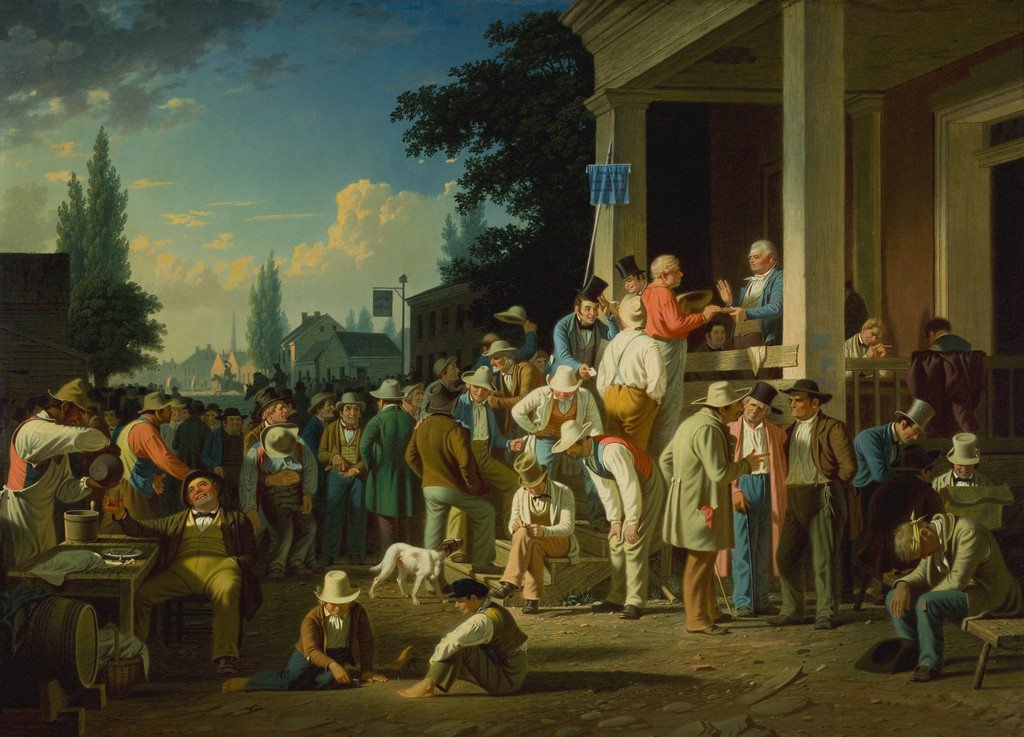
| The County Election (original) | 1851–52 | Painting — oil on canvas |
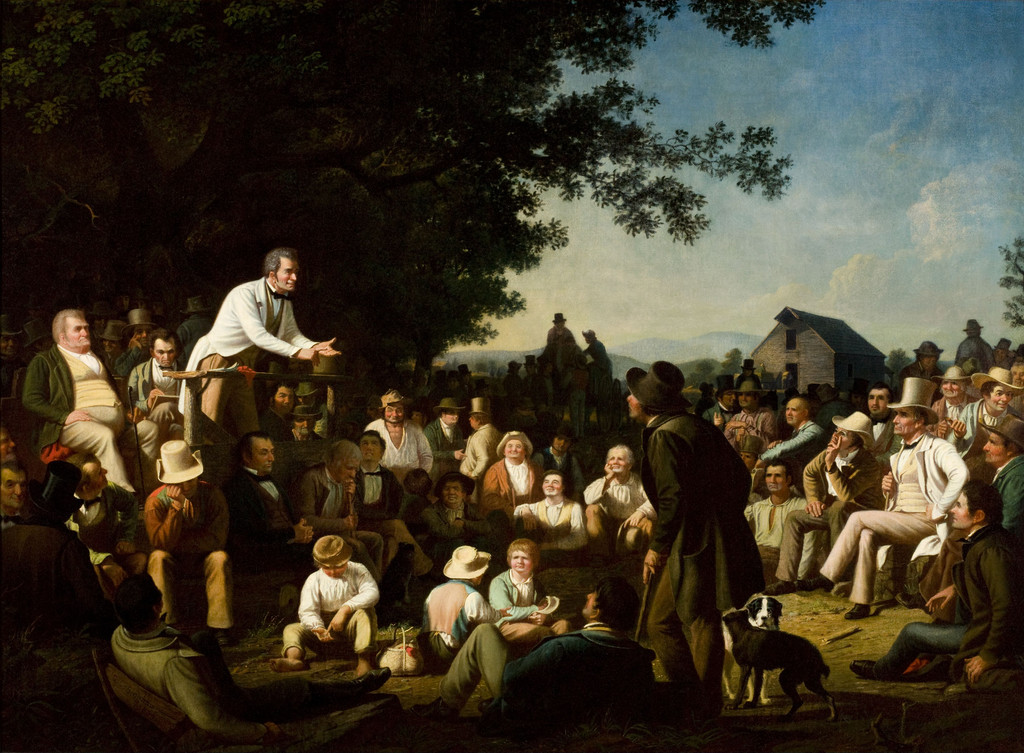
| Stump Speaking | 1853–54 | Painting — oil on canvas |
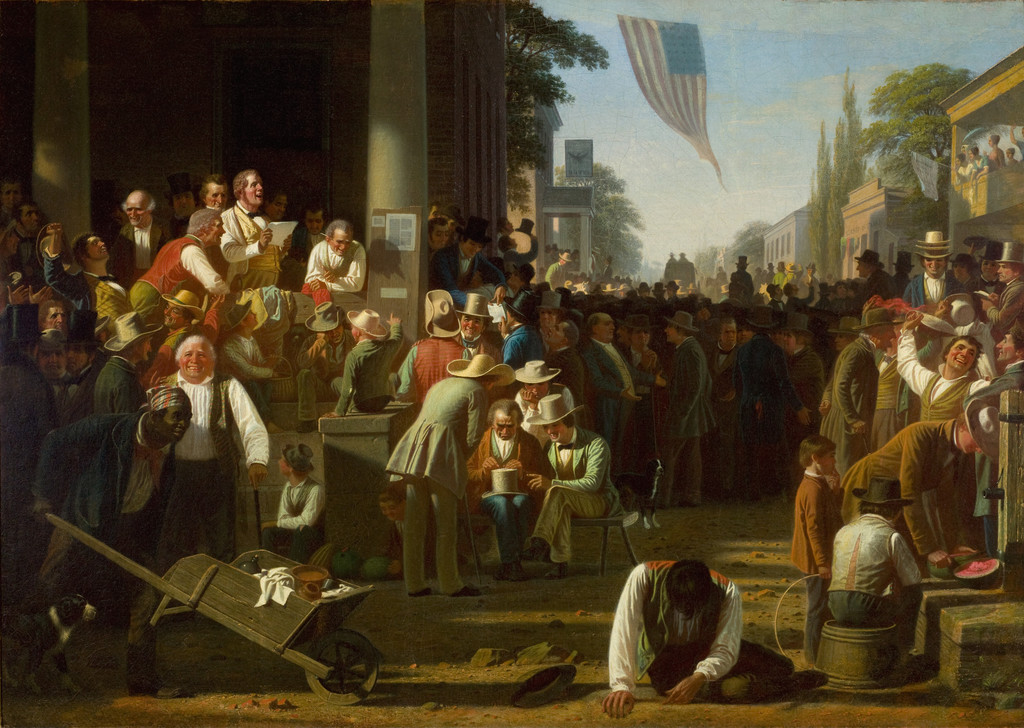
| The Verdict of the People | 1854–55 | Painting — oil on canvas |
| Order No. 11: Martial Law | 1865–68; Cincinnati original | Painting — oil on canvas |
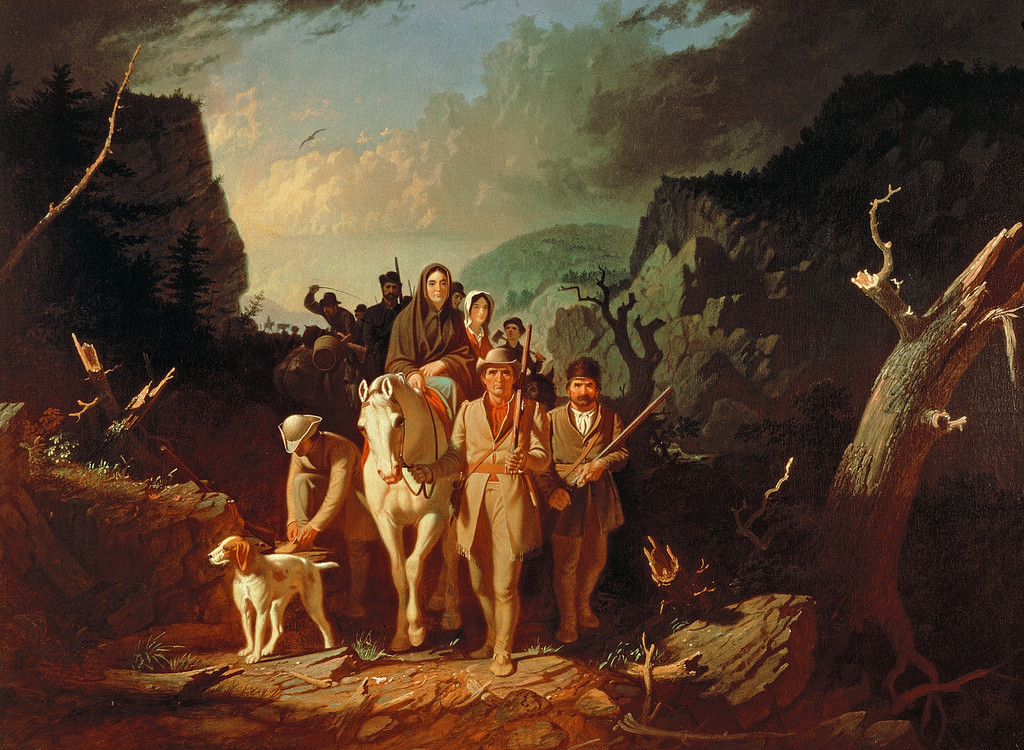
| Daniel Boone Escorting Settlers through the Cumberland Gap | 1851–52 | Painting — oil on canvas |
| Canvassing for a Vote | 1852; signed canvas | Painting — oil on canvas |
| Raftsmen Playing Cards | 1847 | Painting — oil on canvas |
| Mississippi Boatman | 1850 | Painting — oil on canvas |
| Jolly Flatboatmen in Port | 1857 | Painting — oil on canvas |
| The County Election (replica illustrated here) | 1852 | Painting — oil on canvas |
| Martial Law or Order No. 11 (Missouri replica) | 1870 | Painting — oil on canvas |
| The Jolly Flatboatmen (Terra canvas) | 1877–78 | Painting — oil on canvas |
| John Quincy Adams (later version) | about 1850, after an 1844 original | Painting — oil on canvas |
| Country Politician | 1849 | Painting — oil on canvas |
| The Trappers’ Return | 1851 | Painting — oil on canvas |
| The Concealed Enemy | 1845 | Painting — oil on canvas |
| The Wood-boat | 1850 | Painting — oil on canvas mounted on board |
| Lighter Relieving a Steamboat Aground | 1847 | Painting — oil on canvas |
| Watching the Cargo | 1849 | Painting — oil on canvas |
| In a Quandary | 1851 | Painting — oil on canvas |
| Boatmen on the Missouri | 1846 | Painting — oil on canvas |
| Self-Portrait (Saint Louis) | 1834–35 | Painting — oil on canvas |
| Self-Portrait (Nelson-Atkins) | about 1877 | Painting — oil on canvas |
| Mrs. David Steele Lamme and Son William Wirt | 1837 | Painting — oil on canvas |
| Portrait of Leonidas Wetmore | 1839–40 | Painting — oil on canvas |
| Fur Trader (study for Fur Traders Descending the Missouri) | 1845 | Drawing — brush, ink and wash over pencil |
| Skillet-beater (study for The Jolly Flatboatmen) | 1846 | Drawing — brush, ink and wash over pencil |
| Young Wood-boatman (study for The Wood-boat) | 1850 | Drawing — brush, ink and wash over pencil |
| Thomas Doney after Bingham: The Jolly Flat Boat Men (Met impression) | 1847 | Print — mezzotint and engraving with etching |
| Thomas Doney after Bingham: The Jolly Flat Boat Men (coloured Carter impression) | 1847 | Print — intaglio with applied watercolour |
| The Verdict of the People (lithographic proof) | ca. 1858–59 | Print — lithographic proof |
| Gautier after Bingham: Stump Speaking | 1856 | Print — etching and aquatint |
| Claude Regnier after Bingham: In a Quandary, Mississippi Raftsmen Playing Cards | 1852 | Print — hand-coloured lithograph |
Frequently Asked Questions
Yes. Surviving studies, incised outlines and registration marks provide evidence for the making of particular paintings. They show preparation and revision, although methods should be established object by object. [3]
Kelly’s account relates their structure to classical interests, clear volumes and arrangements of figures and objects. The examples here show how those relationships support different postures without losing the larger group. [1]
The relationship of Fur Traders to Luminism has been debated. The Met’s catalogue records several positions, from precedent to shared interests. The comparison is useful for describing the work’s light, but should not become an unqualified label for the entire career. [6]
Not necessarily. The 2015 exhibition explained that dark paint in Bingham’s nocturnes could conceal underdrawing even in infrared examination. Evidence from paper impressions could supply information unavailable in the painting’s technical image. [3]
Discussion
Look again at the images and ideas explored in George Caleb Bingham’s Style and Technique. These editorial prompts invite your observations.
Reader Insights
Which grouping seems most carefully balanced despite its informal subject?
What can a visible preparation line reveal that the finished surface conceals?
How does light contribute to the apparent stillness of the river pictures?
Join the Conversation
Share a detail, comparison or question about George Caleb Bingham’s Style and Technique below.
References
- Franklin Kelly , Bingham entry in American Masters from Bingham to Eakins: The John Wilmerding Collection , National Gallery of Art, 2004, pp. 32–37. Wilmerding’s account of geometry is discussed through this entry. View source
- Margaret C. Conrads , “Bingham@200: A Bicentennial Celebration”, Antiques & Fine Art , Spring 2011, pp. 193–199. View source
- Metropolitan Museum of Art , Navigating the West: George Caleb Bingham and the River , exhibition labels, 2015, especially pp. 7–12 and 17–19. View source
- National Gallery of Art , The Jolly Flatboatmen , 1846, 2015.18.1. Current object record. View source
- National Gallery of Art , Mississippi Boatman , 1850, 2004.66.1. Current object record. View source
- Metropolitan Museum of Art , American Paintings in the Metropolitan Museum of Art , volume I, 1994, Bingham entry, especially pp. 540–543. View source
- Joan Stack , “Toward an Emancipationist Interpretation of George Caleb Bingham’s General Order No. 11: The Reception History of the Painting and the Remembered Civil War in Missouri”, Missouri Historical Review 107(4), July 2013, pp. 203–221, especially pp. 211–214. View source
- Splash image source.
George Caleb Bingham, The Jolly Flatboatmen, 1846. Oil on canvas. National Gallery of Art, Washington, Patrons’ Permanent Fund, 2015.18.1. Public domain .
View source