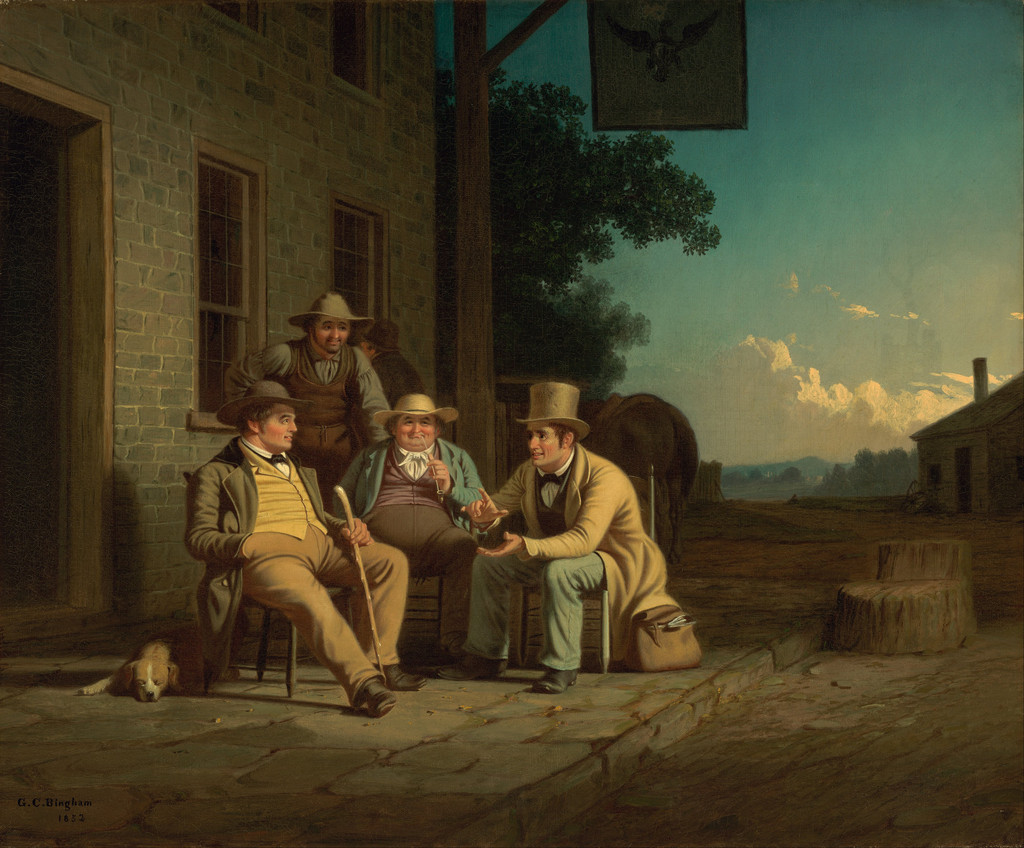
 by
Tom Gurney
Tom Gurney BSc (Hons) is an art history expert with over 20 years experience
Email:
tomgurney1@gmail.com
/ Phone:
+44 7429 011000
The County Election: Introduction
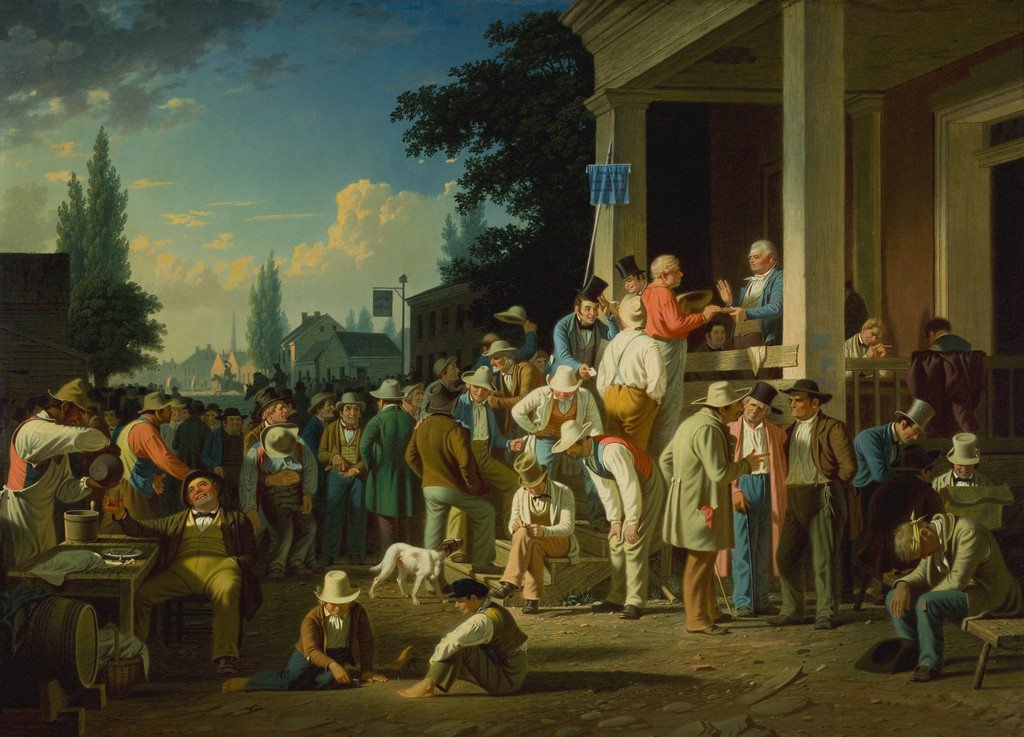
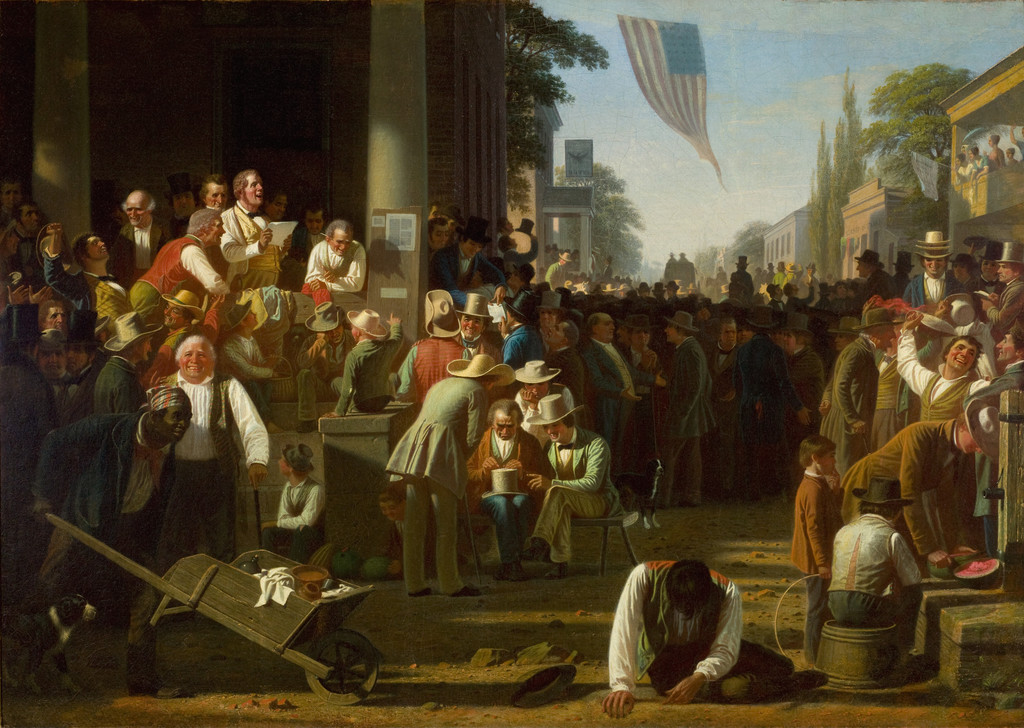
People crowd towards a polling place, but George Caleb Bingham’s The County Election gives the vote no simple ceremonial dignity. A candidate smiles at a prospective supporter, a man enjoys his drink, another needs help to remain upright and two boys occupy themselves on the ground. The act of choosing representatives takes place amid persuasion, distraction and ordinary human weakness.
Bingham made an original canvas in 1851–52, now in the Saint Louis Art Museum as object 124:1944. The museum also owns his 1852 replica, object 44:2001. Both concern the same election composition, but their dimensions and acquisition histories differ. The large illustration on this page shows the 1852 replica , whose details are discussed below; it should not be mistaken for the earlier original. [1] [2]
The two paintings belong to a larger investigation of political life. Bingham made campaigning, casting votes and receiving results into distinct subjects, each organized around a different relationship between individual behaviour and public action. The County Election concentrates on the procedure through which those individual actions are supposed to become a collective decision.
At a Glance
- Artist Original canvas: George Caleb Bingham; Illustrated replica: George Caleb Bingham
- Date Original canvas: 1851–52; Illustrated replica: 1852
- Medium Original canvas: Oil on canvas; Illustrated replica: Oil on canvas
- Dimensions Original canvas: 90 × 123.8 cm; Illustrated replica: 96.5 × 132.1 cm
- Collection Original canvas: Saint Louis Art Museum; Illustrated replica: Saint Louis Art Museum
- Credit Original canvas: Museum Purchase; Illustrated replica: Gift of Bank of America
- Object number Original canvas: 124:1944; Illustrated replica: 44:2001
The object facts in the two columns follow the museum’s separate records. [1] [2]
This work across George Caleb Bingham’s career
The Jolly Flatboatmen
1846; NGA canvasThe County Election (current article)
1851–52 original; 1852 replica illustratedCanvassing for a Vote
1852; signed canvasStump Speaking
1853–54The Verdict of the People
1854–55Order No. 11: Martial Law
1865–68; Cincinnati originalNotes and sources
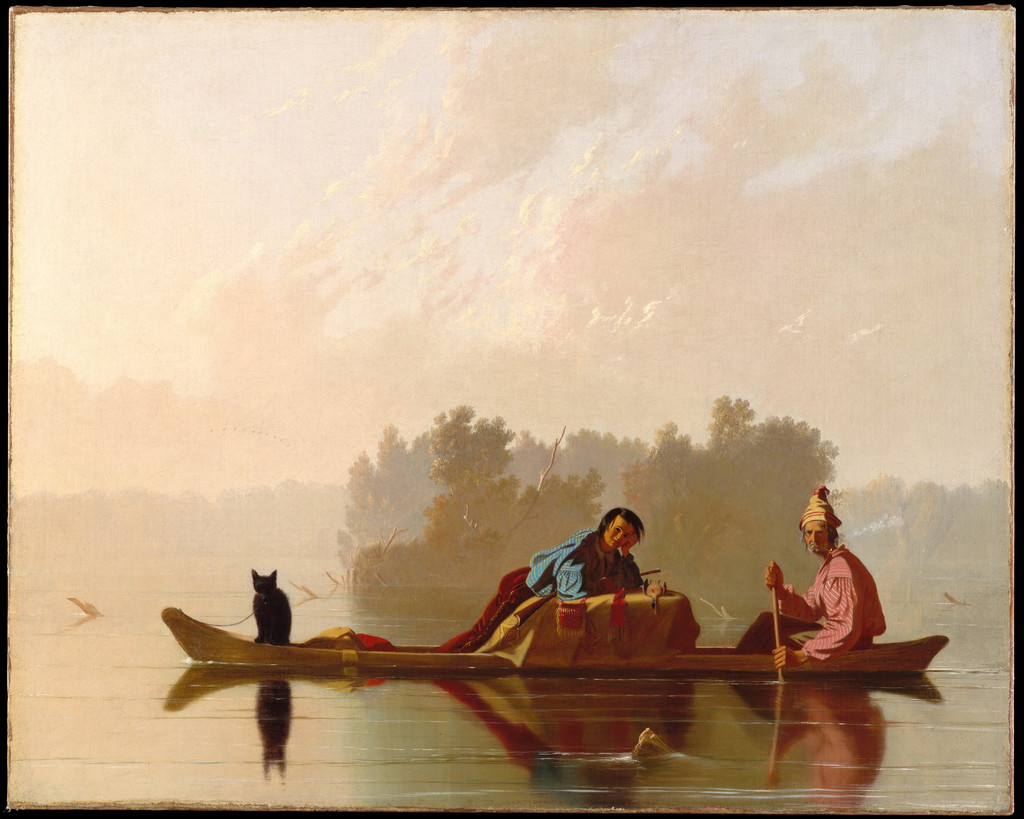
Fur Traders Descending the Missouri. Dates identify the canvas discussed in the article. [3]
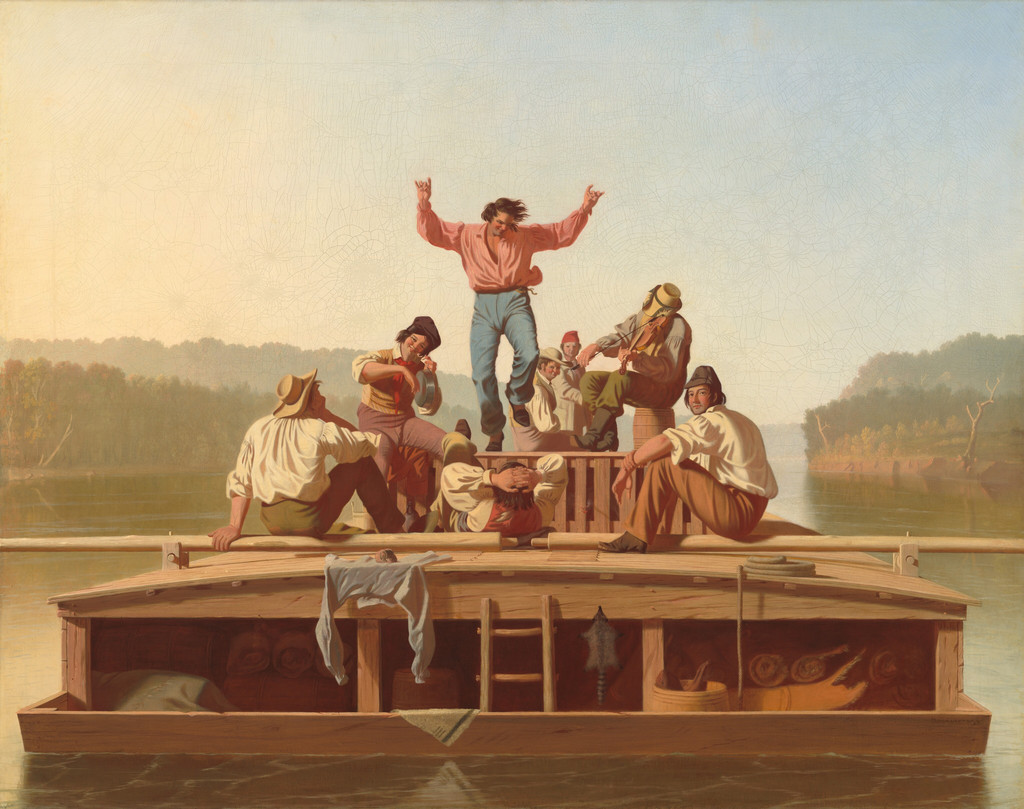
The Jolly Flatboatmen. Dates identify the canvas discussed in the article. [4]
Raftsmen Playing Cards. Dates identify the canvas discussed in the article. [5]
Mississippi Boatman. Dates identify the canvas discussed in the article. [6]
The County Election (current article). The original is 124:1944; the illustrated 1852 replica is 44:2001. Their dimensions and acquisition histories differ. [1] [2]
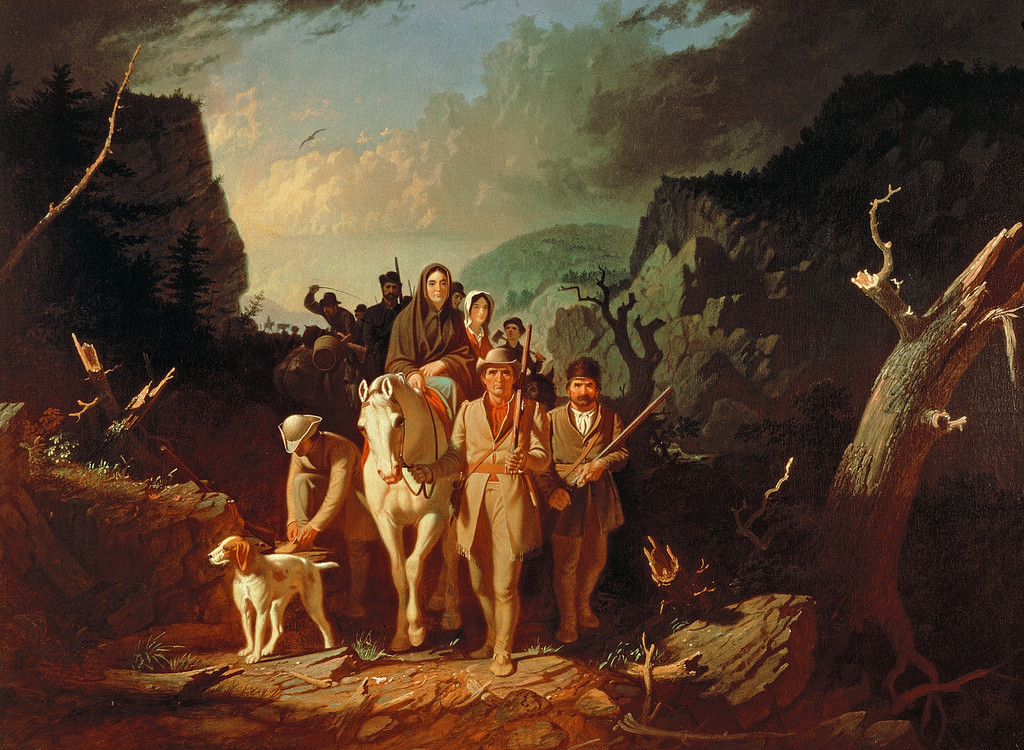
Daniel Boone Escorting Settlers through the Cumberland Gap. Dates identify the canvas discussed in the article. [7]
Canvassing for a Vote. Dates identify the canvas discussed in the article. [8]
Stump Speaking. Dates identify the canvas discussed in the article. [9]
The Verdict of the People. Dates identify the canvas discussed in the article. [10]
Jolly Flatboatmen in Port. Dates identify the canvas discussed in the article. [11]
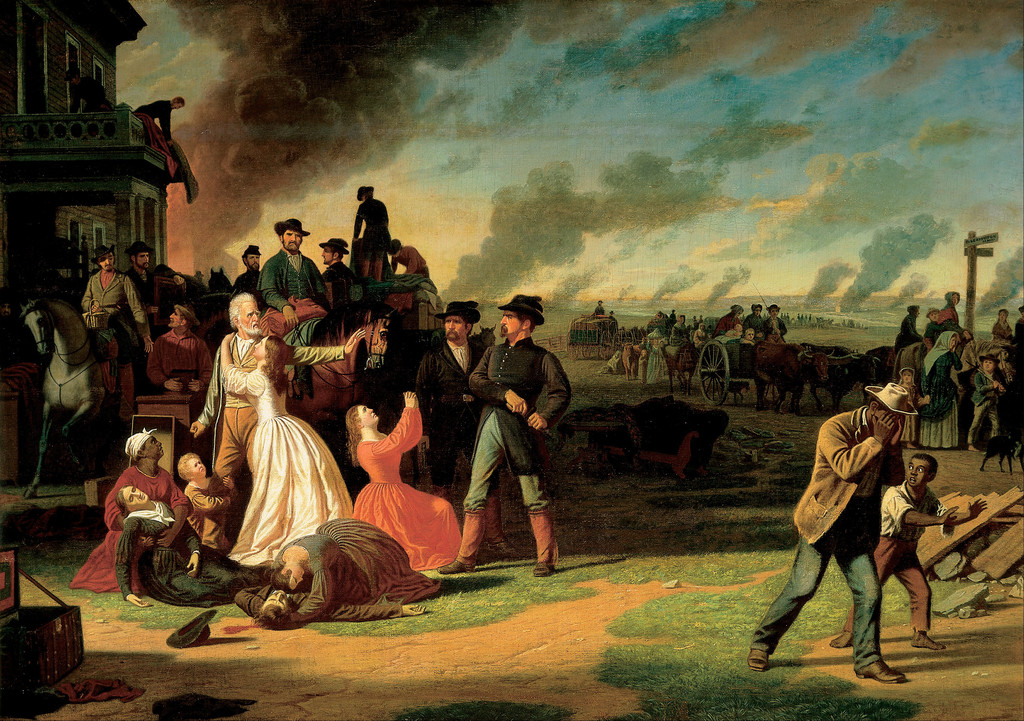
Order No. 11: Martial Law. Dates identify the canvas discussed in the article. [12]
Contents
- Following the crowd towards the poll
- Voting in public
- Drinking, disorder and the uses of humour
- Who appears, and who can vote?
- A crowded occasion made through drawing
- Sartain’s print and Bingham’s business plans
- A speech, a vote and a result
- Keeping ownership histories separate
- Looking again at the whole gathering
- Annotated details
Following the crowd towards the poll
In the illustrated replica, the polling place occupies the right side of the painting. Its porch and broad columns form a raised enclosure above the crowd. A man in a reddish-orange shirt stands near an official, his hand extended towards the proceedings. Behind and below him, other men wait, talk or attempt to influence those moving towards the platform.
The porch gives the voting a visible destination. People enter the composition from the left and middle distance, while the architecture offers a point at which their movement can become an official action. A street recedes past smaller buildings into the distance. The gathering seems part of a town’s ordinary fabric rather than an isolated allegorical assembly.
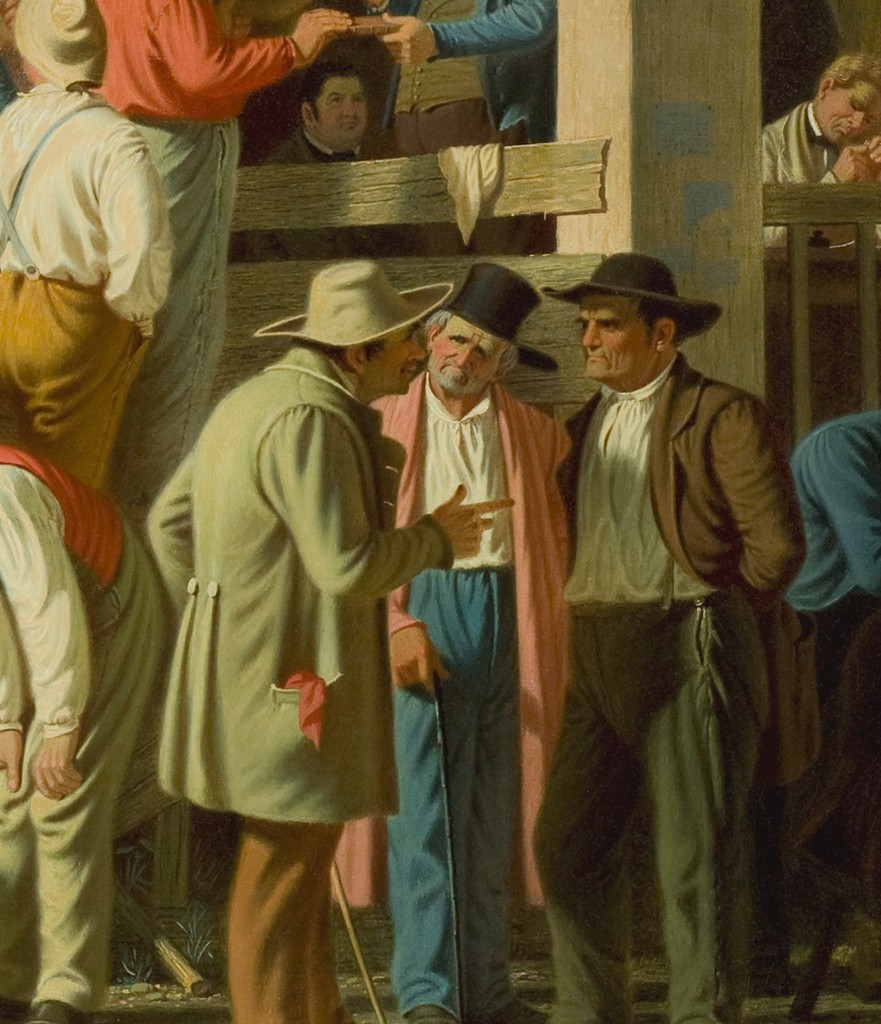
Near the steps, a man in blue leans forwards and offers a small piece of paper. His raised hat and inclined body make his appeal conspicuous. Another figure stands with his back towards us, partly blocking the approach to the porch. Bingham turns the route to the vote into a space in which encounters can occur, rather than leaving it as a clear ceremonial passage.
At the right, three standing men form a separate conversation. A hand opens between them, while their faces turn towards one another. Their relatively settled grouping contrasts with the people moving towards the officials. Political life includes discussion beside the procedure as well as the moment of participating in it.
The foreground is especially varied. A seated man near the steps looks down towards his hands; another bends beside him. Further right, a man rests his head low, with a hat near his feet. A dog moves through the open space, and two boys sit close to the front edge. The composition makes room for actions that do not all contribute directly to voting.
These interruptions are part of how Bingham holds our attention. The porch establishes the principal subject, but the smaller groups keep sending the eye sideways. We have to move between a public procedure and the people whose conduct surrounds it. The picture becomes more complicated as we discover how many different kinds of attention coexist within the crowd.
Annotated Details from The County Election
The numbered points identify visible features discussed in this article. Return from each detail to the whole composition. George Caleb Bingham, The County Election, 1852, replica. Oil on canvas, 96.5 × 132.1 cm. Saint Louis Art Museum, Gift of Bank of America, 44:2001. This is distinct from the museum’s 1851–52 original, 124:1944. Image source. Public domain. Numbers added to a separate overview. Detail images are crops of the source reproduction.
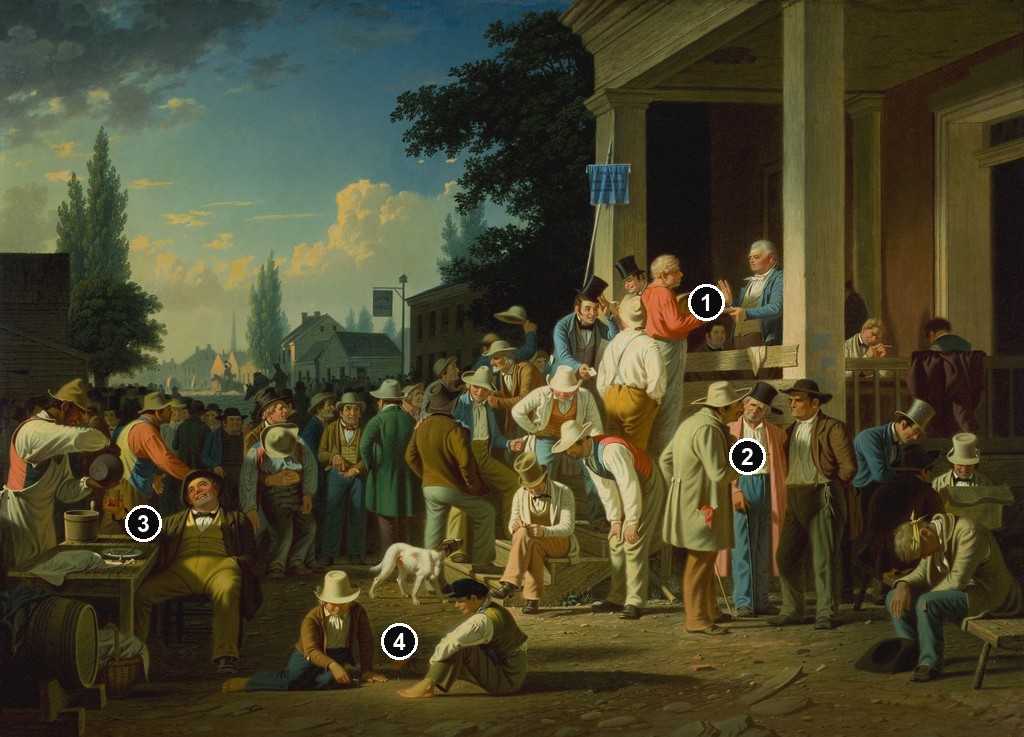
Details from THE COUNTY ELECTION
Compare the cropped details with the complete images above. Notice how their colours, shapes and positions contribute to the larger compositions.
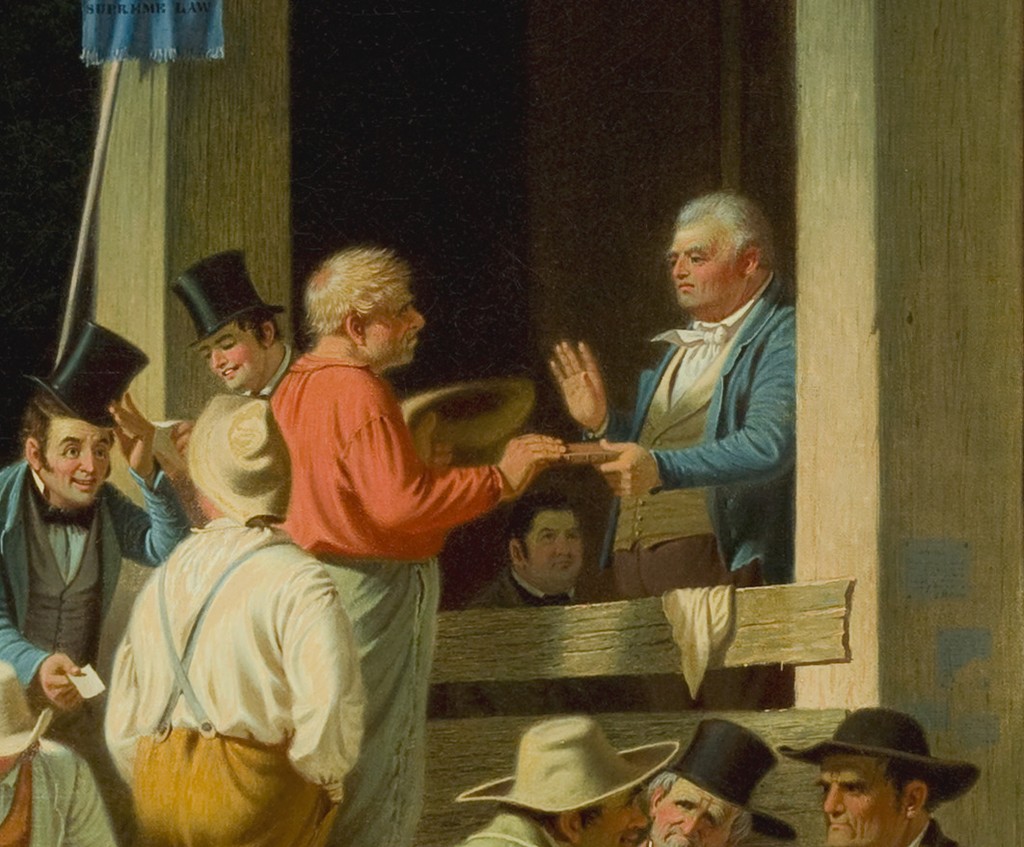
The raised hand at the poll
A raised palm and an extended hand meet across the small space between two men on the porch. The red shirt and blue coat distinguish this exchange from the surrounding crowd, while the columns give it an elevated setting.
Cards and conversation below the porch
Three standing figures lean into a close exchange beneath the polling place. Their different head directions and the small coloured cards interrupt the pale coats, making persuasion visible through modest gestures rather than one commanding action.
Drinking at the left edge
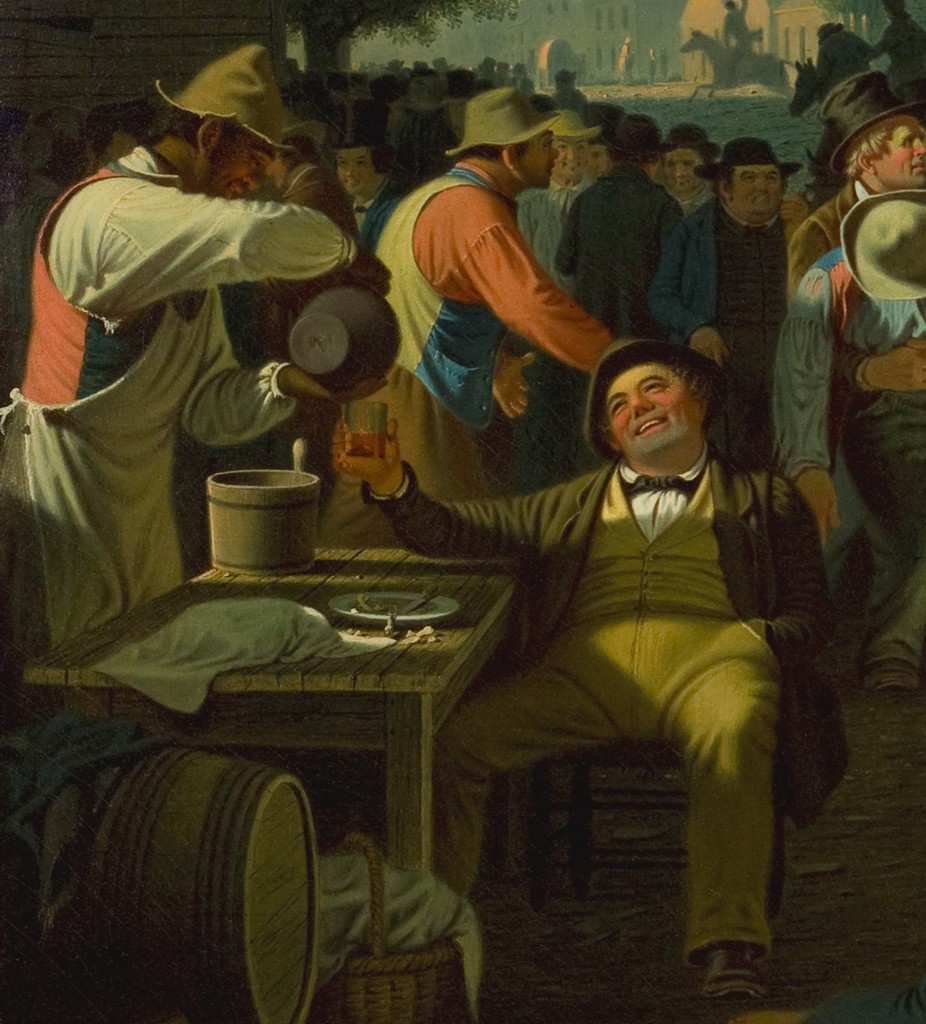
A tilted jug, a raised glass and a reclining body draw attention towards drink at the edge of the gathering. The bent and sloping postures break the rhythm of the more upright people moving towards the poll.
Children near the viewer
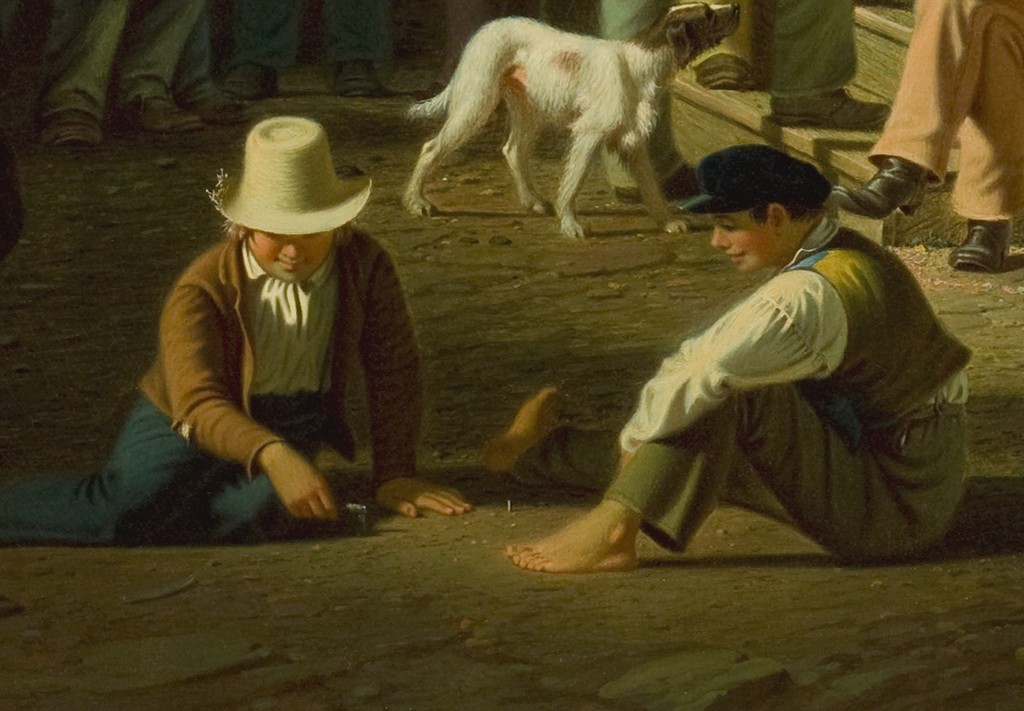
Two children sit low in the foreground with heads and hands directed towards the small space between them. Their activity establishes another centre of attention beneath the standing crowd and the elevated public proceeding.
Voting in public
The election scene belongs to a world in which a vote could be declared aloud. In its account of public voting, the National Endowment for the Humanities identifies Bingham’s painting as an image of a viva voce election. Its caption describes the red-shirted voter taking an eligibility oath and an election clerk recording votes in a poll book. The term refers to speaking the choice, rather than making a private mark in a booth. [13]
This context helps explain why the raised platform matters. The voter can be seen by the officials and by people nearby. Those people may include neighbours, acquaintances and campaigners. A declaration that enters a public record also takes place within a social gathering, where other people can observe the act and respond to it. [13]
The paper offered by the canvasser therefore should not automatically be read as a modern secret ballot. The museum describes campaigning politicians pressing party tickets upon prospective voters. The object can advertise or recommend a choice even where the formal act of voting is spoken. Different things happen within a small part of the canvas: persuasion, attestation and recording. [1]
Bingham makes those actions visible through relationships between bodies. The canvasser reaches towards a person who has not yet completed the process, while the official occupies a more protected position behind the porch rail. The separation between an appeal in the crowd and an official record at the platform is spatially clear, even though both belong to the same busy occasion.
The scene should not be treated as a complete statistical account of nineteenth-century elections. Its episodes were selected and arranged by a painter. They show what could be made vivid about public voting, not how frequently every episode occurred in every Missouri precinct. The procedure supplies the setting for an image of conduct, responsibility and vulnerability to influence.
Drinking, disorder and the uses of humour
At the left, a smiling man lifts his glass while a nearby server attends to drink. His comfortable seated body and cheerful face contrast with the strained figure behind him who needs support. The drinker has become one of the painting’s most memorable characters because pleasure is so openly displayed beside the solemn business of voting.
Katie Steiner’s Met essay interprets the drink as a likely voting inducement and the supported figure as electoral dysfunction. The canvas does not independently document a payment for each glass. [14]
The supported body creates a different kind of comedy from the smiling drinker. Its instability makes a civic act look physically absurd: someone who can barely proceed is still being moved towards the poll. Bingham lets the viewer notice a conflict between the dignity of participation and the condition in which one participant reaches it.
The museum’s interpretation identifies the boys’ activity as mumblety peg, a game involving a knife and increasing risk. Their position near the foreground connects the event with another generation, while their absorption in the game makes them indifferent to the adult procedure behind. The juxtaposition allows play and political judgement to occupy the same immediate space. [1]
Steiner describes relatively gentle humour and reports sympathetic historical responses through Elizabeth Johns’s scholarship. Her account concerns recognizable failings rather than uniformly vicious caricature; it does not establish that all viewers approved. [14]
The tonal balance matters. A viewer can enjoy the expressions and poses while recognizing serious weaknesses in the process. Humour keeps the people recognizable as members of a community, rather than turning the entire gathering into an enemy to be condemned. The picture’s interest rests partly on that uncomfortable proximity between amusement and criticism.
Who appears, and who can vote?
The central procedure is dominated by white men. Their clothing ranges from top hats and long coats to shirtsleeves and work clothes, making differences of appearance conspicuous within the group. Such variety can suggest a public wider than a small social elite, but it does not establish universal participation.
Steiner notes that women are absent and the Black figure serves a drink at the far left. She relates those positions to exclusion from voting. Presence as a worker does not confer the political rights exercised on the porch. [14]
The edge position is especially telling when we follow the composition. The server belongs to one of the most lively foreground episodes, yet the action carried out there is service to another person. The route towards the officials lies elsewhere. Bingham gives the figure a place in the picture without giving that place the same political function as the porch.
The boys introduce a further distinction between membership of a community and the immediate exercise of a vote. They occupy the same ground as the men, but their activity belongs to childhood. The image can include people who will vote later, people who cannot vote and people participating now. A crowd is therefore not a simple visual equivalent of an electorate.
These differences also complicate the image’s apparent breadth. Clothing, occupation, age and political status are separate questions. A diverse collection of hats does not erase the absence of women or the unequal role of the Black figure. Looking at the whole composition means holding its variety and its limits in view together.
A crowded occasion made through drawing
The apparent disorder was carefully prepared. In museum material for its 2007 exhibition The Making of The County Election , the Saint Louis Art Museum described eighteen related drawings and a sequence of pencil work, ink wash and dry brush. It presented their developed forms as evidence of an advanced stage of planning. [15]
The same exhibition material discussed underdrawing revealed through infrared examination of the painting. The lines on the prepared canvas were described as more schematic than the detailed studies on paper. That distinction gives the process an intermediate stage: a carefully considered figure could be translated into a simpler arrangement beneath the paint. [15]
Such preparation helps explain how the crowd can be busy without becoming illegible. Each person needs a plausible pose, but those poses must also work beside one another. A leaning canvasser must remain visible behind a waiting voter; seated figures have to occupy the steps without sealing off the approach. The finished scene depends on those intervals as much as on expressive faces.
The technical account does not allow every revision in the replica illustrated here to be reconstructed from the original canvas’s examination. The museum’s findings concern the work and evidence studied for that exhibition. A claim about the original’s underdrawing should remain attached to that original, rather than becoming an assertion that the same lines have been detected beneath both paintings.
Margaret C. Conrads’s account of Bingham’s political drawings offers a broader context. She shows how differences in pose, dress and features could create a varied public, and how figures could be revised or reused across compositions. The crowded election scene is therefore best approached as constructed social observation: a persuasive arrangement of people, not an unmediated snapshot. [16]
Watch: George Caleb Bingham
Choose a film to explore the artist’s work, its interpretation and its wider setting.
Navigating the West: George Caleb Bingham and the River at the Amon Carter Museum of American Art
The Amon Carter Museum introduces an exhibition devoted to Bingham’s river paintings.
Watch on YouTubeSartain’s print and Bingham’s business plans
An important account of the print project survives in Bingham’s letter to James S. Rollins of 7 November 1853. Writing from Philadelphia, he described John Sartain’s work on the plate after The County Election . The text consulted is a transcription by Rollins’s son, C. B. Rollins, rather than the original handwritten letter. [17]
Bingham reported that Sartain expected to finish in December. He had initially remembered a November deadline, but found on checking the contract that the agreed interval was fourteen months from receipt of the picture. This is unusually practical evidence of the time involved in moving a painted composition towards a printed audience. [17]
Printing also required capital and materials. Paper had been ordered from London, and Bingham asked Rollins for temporary financial help while he awaited subscription proceeds. He put Sartain’s total at $1,350, including money already received, and allowed another $300 for paper. These sums describe the print project’s obligations, not the sale price of either canvas. [17]
The letter links that work with County Canvass , the painting later called Stump Speaking . Bingham planned to exhibit the new picture as he distributed the earlier print and sought subscribers for the next project. The stages overlapped. The later election canvases should not be explained as something he began only after seeing the finished print become a commercial success. [17]
The museum’s 2007 exhibition brought engraving plates and trial impressions into the story of making the composition available more widely. These objects connect the finished painting with another set of skilled decisions. A printer and engraver had to make the image work in a reproducible form, while the painter had to organize the finance and audience for it. [15]
The subject and the means of circulation made a suggestive pairing. A picture of ordinary citizens participating in public life could be encountered by people who would never own the canvas. That wider availability does not make every published impression identical in date, condition or colouring. It gives The County Election a history across media, in which a painting and a print can share a composition while remaining different objects.
A speech, a vote and a result
Stump Speaking , painted in 1853–54, gives the campaign a different shape. A pale-coated orator rises above an outdoor audience, while a seated opponent prepares to respond. The museum’s interpretation connects named figures with Missouri political life but also stresses the more general democratic process represented. [9]
The comparison clarifies what The County Election does differently. Its central procedure is not an argument to be answered by another speaker. It involves people progressing towards an official act, while arguments and appeals continue around them. The structure accommodates several small episodes because a polling place gathers people at different stages of participation.
The Verdict of the People , dated 1854–55, brings the group towards the announcement of results. A reader on a raised porch becomes the common source of news, and different reactions spread through the street. The title names a collective outcome, while the painting keeps individual responses visible. [10]
Read together, the works offer a way to follow the public process without treating them as consecutive records of one actual election. The speech, the act of voting and the response to a result require different arrangements of attention. Bingham’s achievement lies in making those differences clear through figures and space, rather than simply repeating a generic political crowd.
His own experience belongs to the context, but it cannot settle every detail of intention. The Bingham biography follows his political career and the disputed legislative election of 1846. The paintings remain constructed works in which personal knowledge, recognizable types and artistic planning combine.
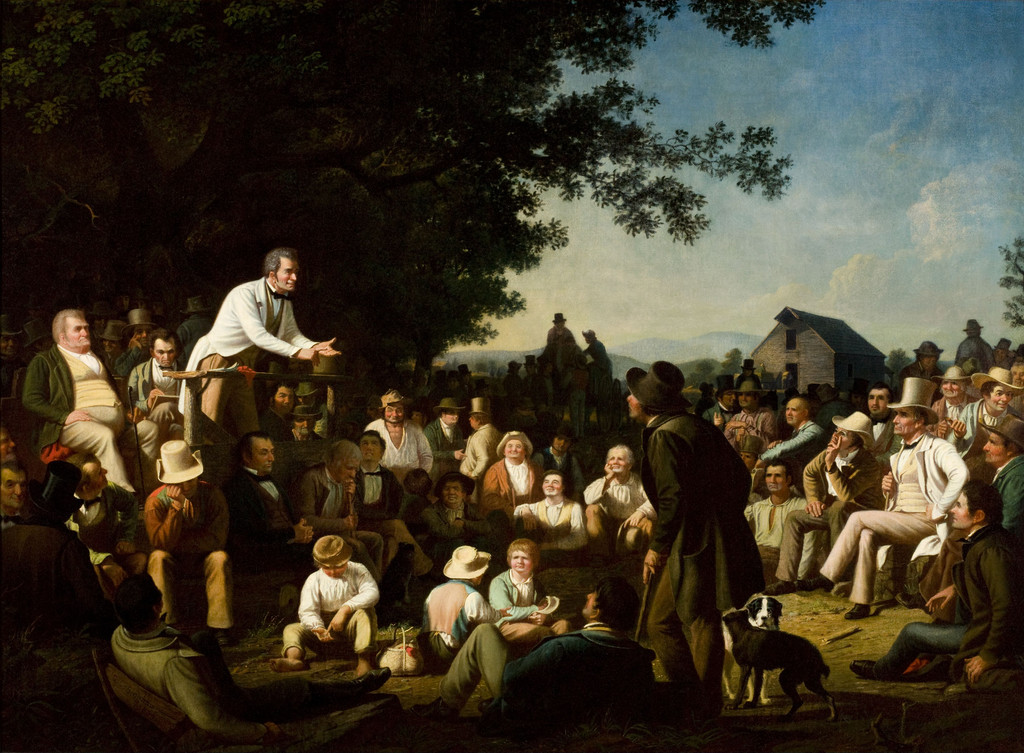
George Caleb Bingham, Stump Speaking, 1853–54. Oil on canvas. Saint Louis Art Museum, Gift of Bank of America, 43:2001.
Image source
.
Public domain
.
George Caleb Bingham, The Verdict of the People, 1854–55. Oil on canvas. Saint Louis Art Museum, Gift of Bank of America, 45:2001.
Image source
.
Public domain
.
Keeping ownership histories separate
The original painting’s museum provenance records an 1862 loan to the St. Louis Mercantile Library, followed by ownership associated with John How and John H. Beach. The library received the canvas as Beach’s gift in 1879, and the museum purchased it in 1944. The record leaves the circumstances of Beach’s acquisition unclear. [1]
The replica has a different modern collection credit: Gift of Bank of America, 44:2001. That accession should remain attached to the 1852 canvas illustrated here. The fact that both works are now in the same museum does not make their dimensions, credits or earlier ownership interchangeable. [2]
This distinction becomes useful whenever the image is reproduced. A caption can identify the composition correctly while still assigning the wrong date range or acquisition number to the particular canvas shown. Accurate looking begins with both parts: understanding the scene and knowing which physical work carries it.
Looking again at the whole gathering
After following the principal episodes, return to the space between them. The dog crosses an interval near the seated figures, the boys occupy open ground before the crowd and the street makes room for more people behind. Those passages prevent the many bodies from locking into one continuous wall. They let the eye move through a painting concerned with how people move towards a public act.
The result is neither a flawless ceremony nor an image in which every person behaves badly. Conversation, participation, indulgence and distraction remain close together. Bingham gives the democratic ideal a recognizable human setting, while the exclusions and competing pressures keep that setting from becoming a complete image of equality.
For the making and circulation of related images, see Bingham’s drawings and prints . The composition’s public meaning and its material history remain connected: a carefully prepared crowd reached audiences through canvases, studies and reproductive work, each requiring its own precise identification.
Artworks directory
A documented selection discussed across these articles, including separate canvases, figure studies and reproductive impressions. Dates identify the particular object or study; collection and title distinctions follow museum records and the 2015 exhibition checklist. This is not a catalogue raisonné. Prints are grouped with works on paper in the Drawing filter.
| Name | Date | Medium |
|---|---|---|
| Fur Traders Descending the Missouri | 1845 | Painting — oil on canvas |
| The Jolly Flatboatmen | 1846; NGA canvas | Painting — oil on canvas |
| The County Election (original) | 1851–52 | Painting — oil on canvas |
| Stump Speaking | 1853–54 | Painting — oil on canvas |
| The Verdict of the People | 1854–55 | Painting — oil on canvas |
| Order No. 11: Martial Law | 1865–68; Cincinnati original | Painting — oil on canvas |
| Daniel Boone Escorting Settlers through the Cumberland Gap | 1851–52 | Painting — oil on canvas |
| Canvassing for a Vote | 1852; signed canvas | Painting — oil on canvas |
| Raftsmen Playing Cards | 1847 | Painting — oil on canvas |
| Mississippi Boatman | 1850 | Painting — oil on canvas |
| Jolly Flatboatmen in Port | 1857 | Painting — oil on canvas |
| The County Election (replica illustrated here) | 1852 | Painting — oil on canvas |
| Martial Law or Order No. 11 (Missouri replica) | 1870 | Painting — oil on canvas |
| The Jolly Flatboatmen (Terra canvas) | 1877–78 | Painting — oil on canvas |
| John Quincy Adams (later version) | about 1850, after an 1844 original | Painting — oil on canvas |
| Country Politician | 1849 | Painting — oil on canvas |
| The Trappers’ Return | 1851 | Painting — oil on canvas |
| The Concealed Enemy | 1845 | Painting — oil on canvas |
| The Wood-boat | 1850 | Painting — oil on canvas mounted on board |
| Lighter Relieving a Steamboat Aground | 1847 | Painting — oil on canvas |
| Watching the Cargo | 1849 | Painting — oil on canvas |
| In a Quandary | 1851 | Painting — oil on canvas |
| Boatmen on the Missouri | 1846 | Painting — oil on canvas |
| Self-Portrait (Saint Louis) | 1834–35 | Painting — oil on canvas |
| Self-Portrait (Nelson-Atkins) | about 1877 | Painting — oil on canvas |
| Mrs. David Steele Lamme and Son William Wirt | 1837 | Painting — oil on canvas |
| Portrait of Leonidas Wetmore | 1839–40 | Painting — oil on canvas |
| Fur Trader (study for Fur Traders Descending the Missouri) | 1845 | Drawing — brush, ink and wash over pencil |
| Skillet-beater (study for The Jolly Flatboatmen) | 1846 | Drawing — brush, ink and wash over pencil |
| Young Wood-boatman (study for The Wood-boat) | 1850 | Drawing — brush, ink and wash over pencil |
| Thomas Doney after Bingham: The Jolly Flat Boat Men (Met impression) | 1847 | Print — mezzotint and engraving with etching |
| Thomas Doney after Bingham: The Jolly Flat Boat Men (coloured Carter impression) | 1847 | Print — intaglio with applied watercolour |
| The Verdict of the People (lithographic proof) | ca. 1858–59 | Print — lithographic proof |
| Gautier after Bingham: Stump Speaking | 1856 | Print — etching and aquatint |
| Claude Regnier after Bingham: In a Quandary, Mississippi Raftsmen Playing Cards | 1852 | Print — hand-coloured lithograph |
Frequently Asked Questions
The NEH account identifies the painting with viva voce , or oral, voting. An eligible voter declared his choice publicly, and a clerk entered the vote in a poll book. [13]
No. The picture includes boys and a Black figure serving a drink at the left. Steiner discusses that figure and the absence of women in relation to exclusions from voting. [14]
Discussion
Look again at the images and ideas explored in The County Election. These editorial prompts invite your observations.
Which episode most changes your view of the election: the conversation, the drinking, the supported voter or the boys’ game? Consider how Bingham places it in relation to the official act on the porch.
Reader Insights
How does the crowd direct your attention towards the public poll?
What changes when voting is understood as a spoken act rather than a private ballot?
Which details distinguish being present at the gathering from having the right to vote?
Join the Conversation
Share a detail, comparison or question about The County Election below.
References
- Saint Louis Art Museum , The County Election , 1851–52, 124:1944. Original canvas, object metadata, interpretation and provenance. View source
- Saint Louis Art Museum , The County Election , 1852, 44:2001. Separate replica, dimensions and collection credit. View source
- Metropolitan Museum of Art, Fur Traders Descending the Missouri. View source
- National Gallery of Art, The Jolly Flatboatmen. View source
- Saint Louis Art Museum, Raftsmen Playing Cards. View source
- National Gallery of Art, Mississippi Boatman. View source
- Kemper Art Museum, Washington University, Daniel Boone Escorting Settlers through the Cumberland Gap. View source
- Nelson-Atkins Museum of Art, Canvassing for a Vote. View source
- Saint Louis Art Museum , Stump Speaking , 1853–54, 43:2001. Campaign scene, named-figure interpretation and political sequence. View source
- Saint Louis Art Museum , The Verdict of the People , 1854–55, 45:2001. The election-results subject. View source
- Saint Louis Art Museum, Jolly Flatboatmen in Port. View source
- Cincinnati Art Museum, Order No.11 / Martial Law. View source
- Paula Wasley , “Back When Everyone Knew How You Voted,” Humanities , Fall 2016. NEH account, particularly the painting caption and explanation of oral voting and poll books. View source
- Katie Steiner , “Electing To Laugh,” Metropolitan Museum of Art, 4 November 2009. Humour, reception through Elizabeth Johns’s scholarship and franchise exclusions. View source
- Saint Louis Art Museum , George Caleb Bingham: The Making of The County Election , 2007 exhibition material. Museum-provided announcement and member-magazine material republished by Resource Library; drawings, underdrawing, plates and prints. View source
- Margaret C. Conrads , “Bingham@200: A Bicentennial Celebration,” Antiques & Fine Art , Spring 2011, pp. 193–199. Particularly p. 199, on constructed political figures and reuse. View source
- George Caleb Bingham to James S. Rollins , 7 November 1853. C. B. Rollins transcription, letter pages 1–2 and editorial notes on page 3; Sartain’s plate, paper, finance and overlapping work on County Canvass . View source
- Splash image source.
George Caleb Bingham, The County Election, 1852, replica. Oil on canvas, 96.5 × 132.1 cm. Saint Louis Art Museum, Gift of Bank of America, 44:2001. This is distinct from the museum’s 1851–52 original, 124:1944. Public domain .
View source