 by
Tom Gurney
Tom Gurney BSc (Hons) is an art history expert with over 20 years experience
Email:
tomgurney1@gmail.com
/ Phone:
+44 7429 011000
The Verdict of the People: Introduction
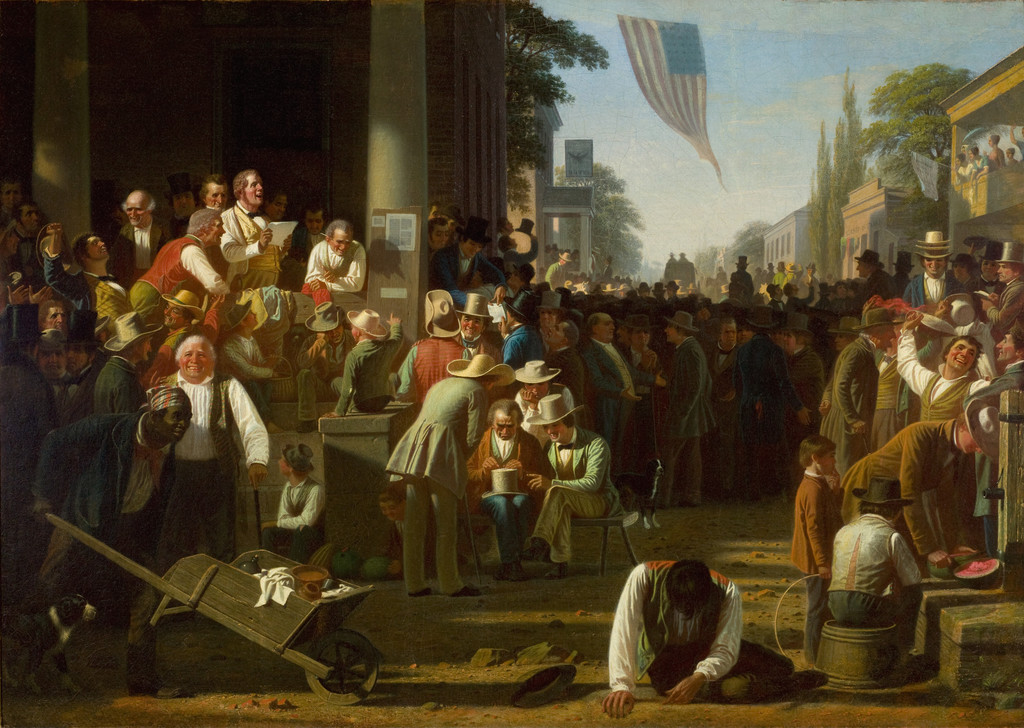
A man reads from a sheet on a raised porch, while a crowd fills the street below. Some people throw themselves into celebration; others bend together in serious conversation or turn away from the announcement. George Caleb Bingham’s The Verdict of the People makes an election result visible through the different responses it produces.
The painting dates from 1854–55 and belongs to the Saint Louis Art Museum, which received it as a gift from Bank of America in 2001. It completes the familiar group of election subjects that also includes The County Election and Stump Speaking . Here the persuasive appeal and the casting of votes give way to public news. [1]
Its title sounds collective, but its crowd is far from unanimous. Bingham gives the event a common focus without supplying everyone with the same emotion. He also includes people whose presence in the public scene must be distinguished from their ability to vote. That distance between a visible gathering and an electorate is central to looking at the picture. [1]
At a Glance
- Artist George Caleb Bingham.
- Date 1854–55.
- Medium Oil on canvas.
- Subject A crowd receiving the announcement of election results.
- Collection Saint Louis Art Museum.
- Collection credit Gift of Bank of America.
- Object number 45:2001. [1]
This work across George Caleb Bingham’s career
The Jolly Flatboatmen
1846; NGA canvasThe County Election
1851–52 original; 1852 replica illustratedCanvassing for a Vote
1852; signed canvasStump Speaking
1853–54Order No. 11: Martial Law
1865–68; Cincinnati originalNotes and sources
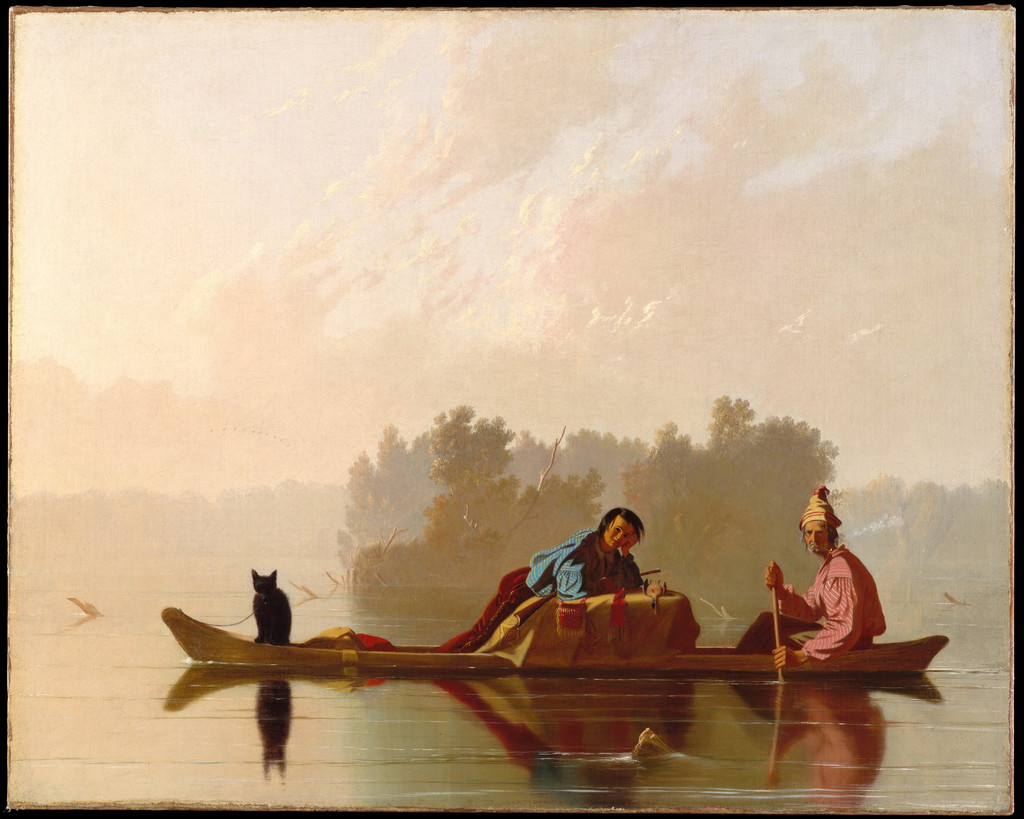
Fur Traders Descending the Missouri. Dates identify the canvas discussed in the article. [2]
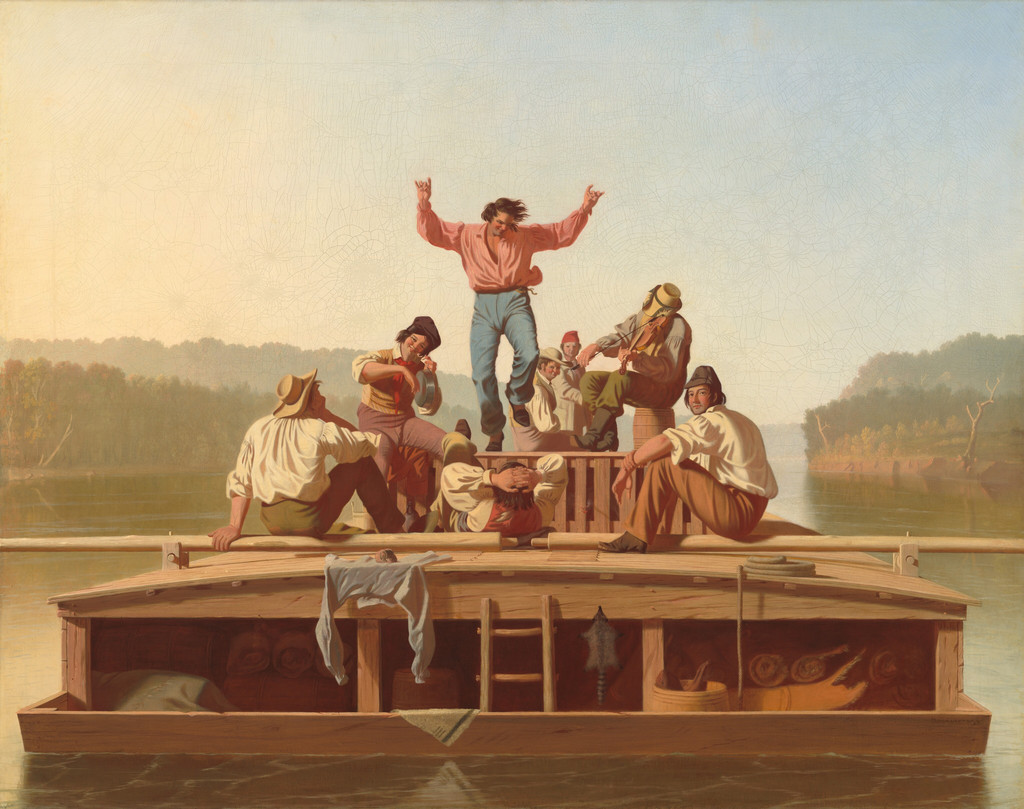
The Jolly Flatboatmen. Dates identify the canvas discussed in the article. [3]
Raftsmen Playing Cards. Dates identify the canvas discussed in the article. [4]
Mississippi Boatman. Dates identify the canvas discussed in the article. [5]
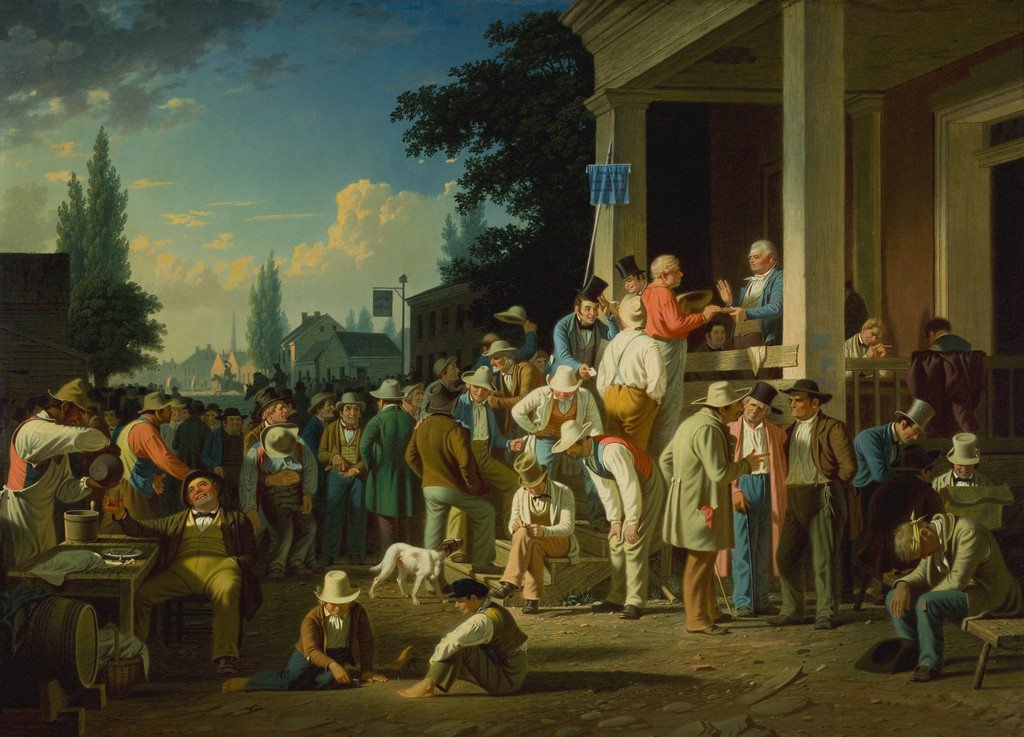
The County Election. The original is 124:1944; the illustrated 1852 replica is 44:2001. Their dimensions and acquisition histories differ. [6] [7]
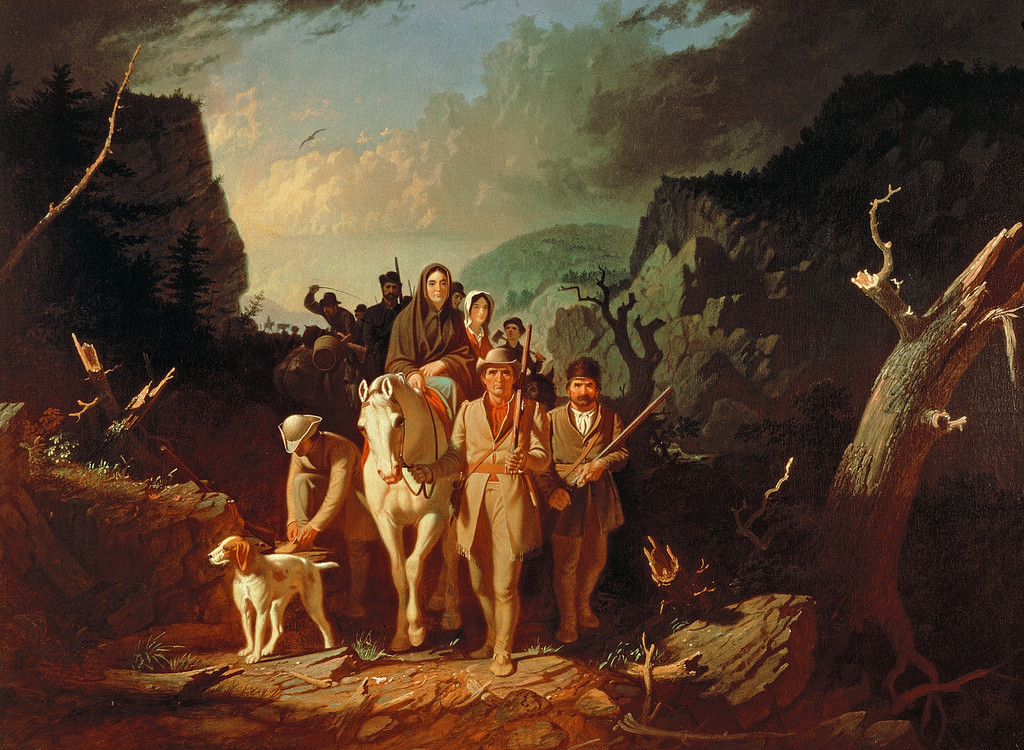
Daniel Boone Escorting Settlers through the Cumberland Gap. Dates identify the canvas discussed in the article. [8]
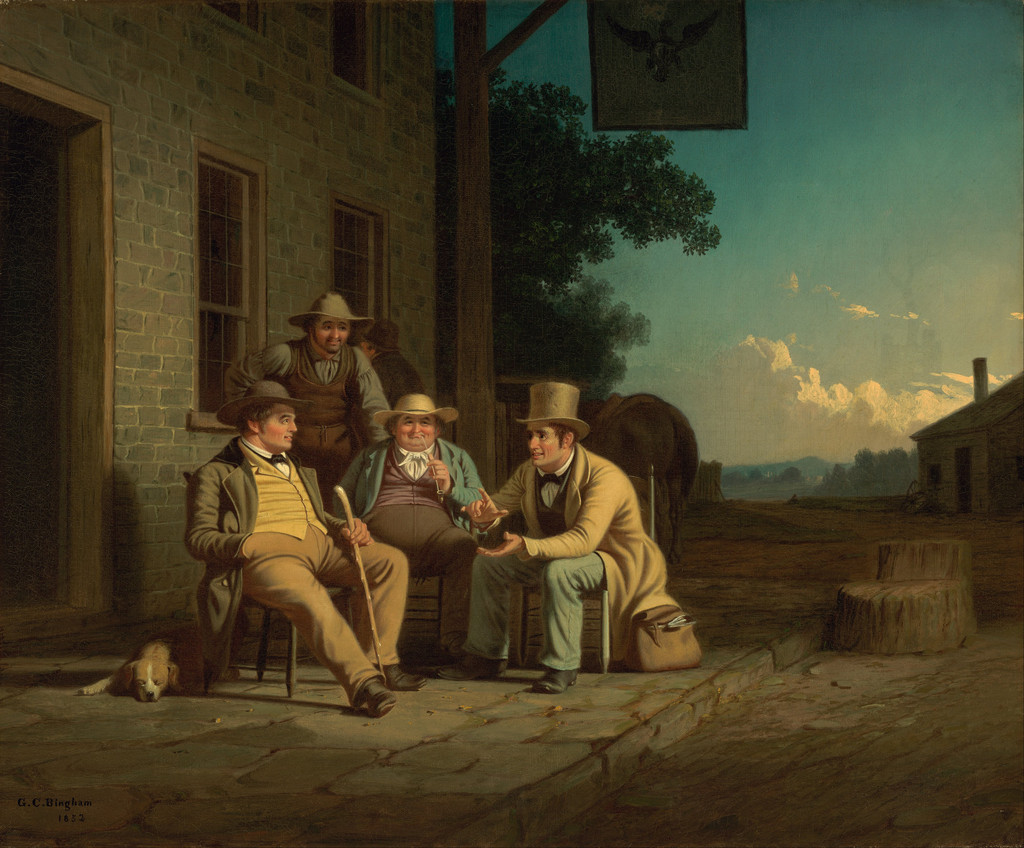
Canvassing for a Vote. Dates identify the canvas discussed in the article. [9]
Stump Speaking. Dates identify the canvas discussed in the article. [10]
The Verdict of the People (current article). Dates identify the canvas discussed in the article. [1]
Jolly Flatboatmen in Port. Dates identify the canvas discussed in the article. [11]
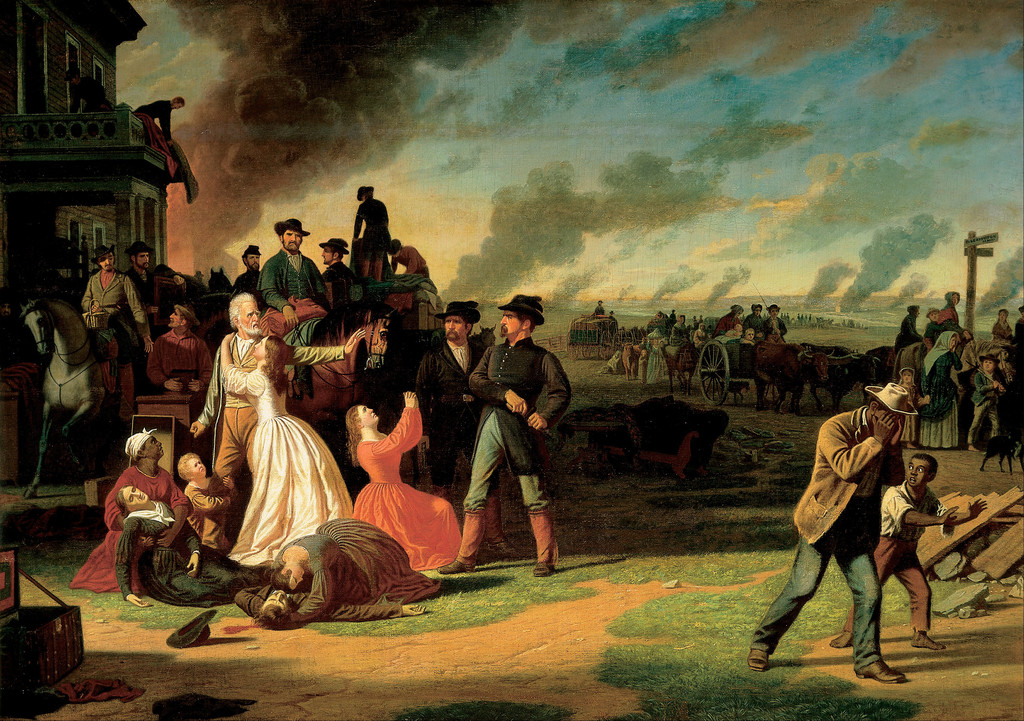
Order No. 11: Martial Law. Dates identify the canvas discussed in the article. [12]
Contents
- The announcement and the street
- Celebration has more than one rhythm
- Children, work and attention elsewhere
- Being present is different from having a vote
- Three subjects, three kinds of public action
- A lithographic proof after the painting
- Ownership and a later ceremonial audience
- Annotated details
The announcement and the street
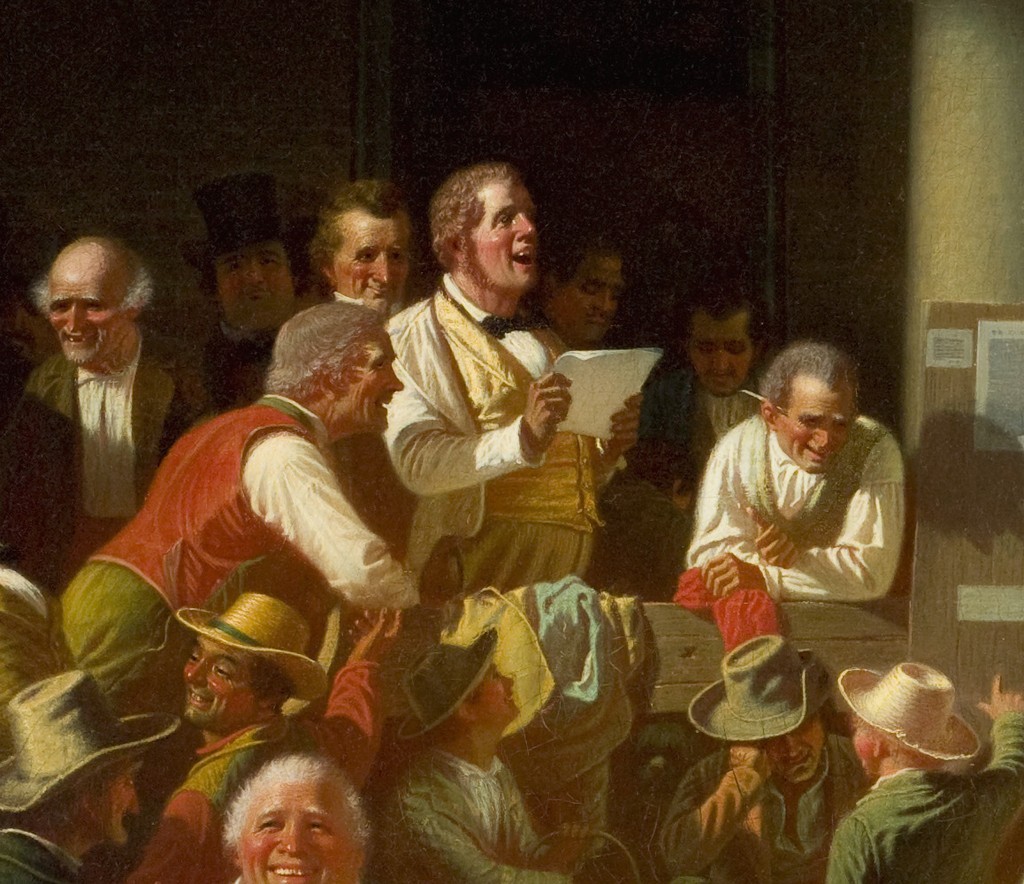
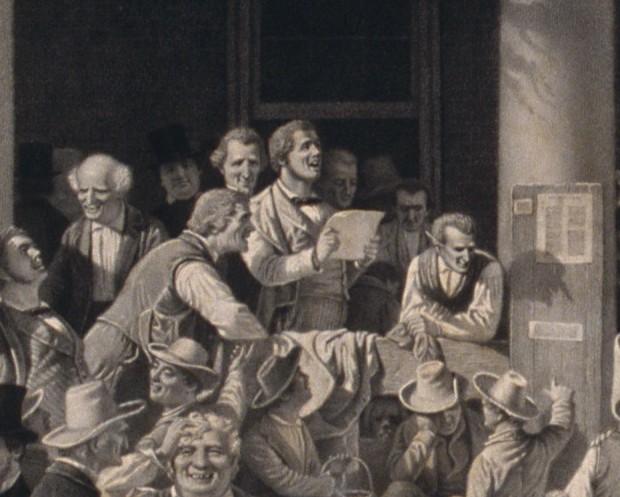
The reader stands towards the upper left, holding the paper where its light surface can be seen against the surrounding figures. The porch raises him above the street and gives the news a place from which to travel. Men cluster around him, some looking towards the sheet and others already responding to what has been announced.
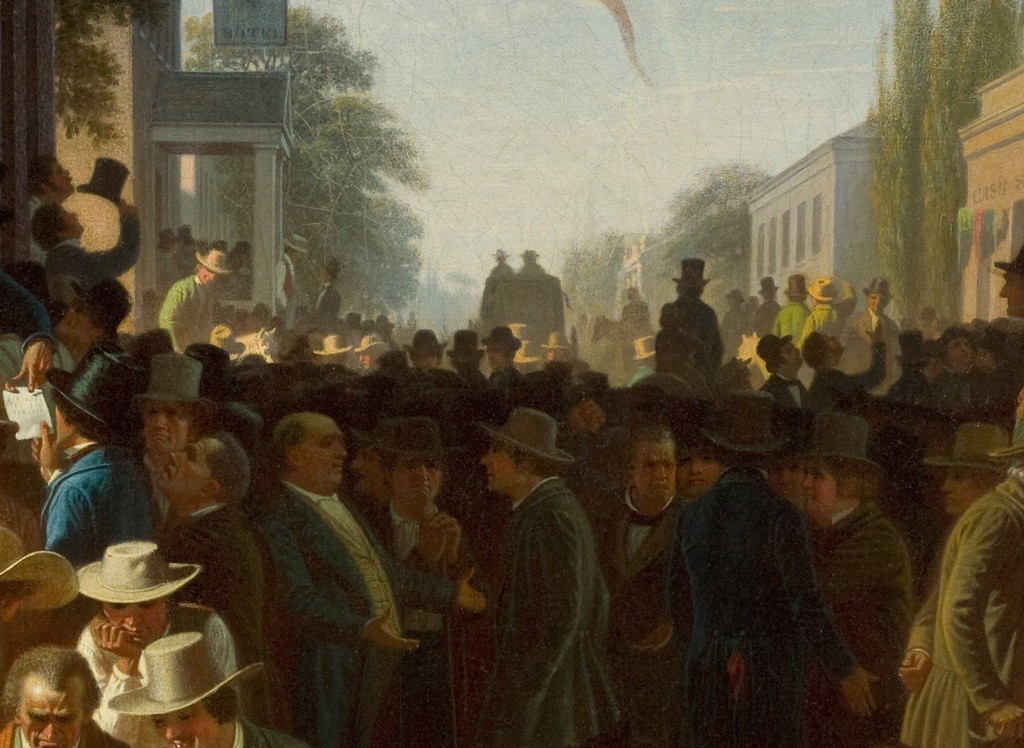
Architecture gives this gathering its shape. Columns and steps establish the porch as a distinct platform, while the street recedes through the centre towards a pale distance. The buildings at the right form a second edge to the crowd. Bingham leaves enough of the street visible to suggest a town extending beyond the event immediately before us.
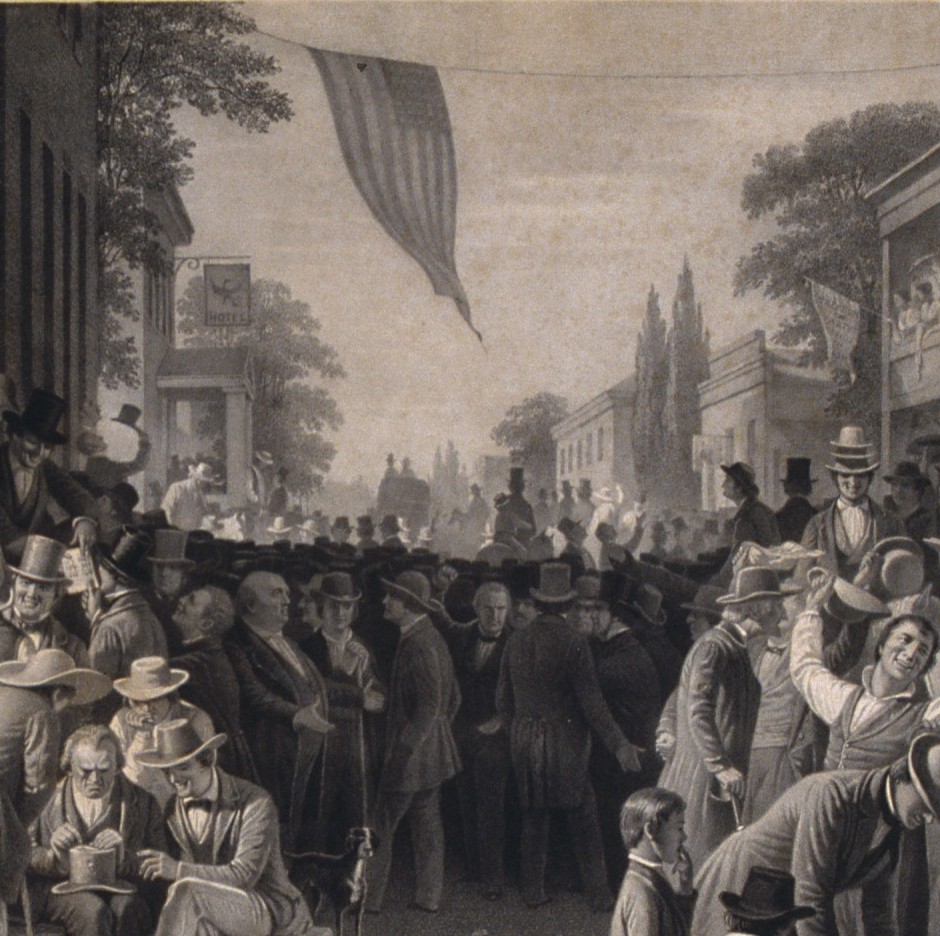
An American flag hangs above the scene, its broad folds occupying a space between the porch and open sky. It connects the local gathering with a national symbol without resolving the differences below. The flag supplies a common emblem; the people remain divided in what they do beneath it.
The crowd is densest near the announcement and across the middle ground. Hats overlap, bodies interrupt one another and some faces appear only through narrow gaps. At the front, individual actions become easier to follow. Bingham leads us from the mass of people towards smaller encounters rather than asking us to read every figure at once.
This is a different arrangement from a formal group portrait. People do not politely turn towards one viewing point. Some present their backs, others look across the street, and many are partly hidden. Those interruptions make the gathering feel public: each person occupies a position that does not exist solely for our convenience.
Annotated Details from The Verdict of the People
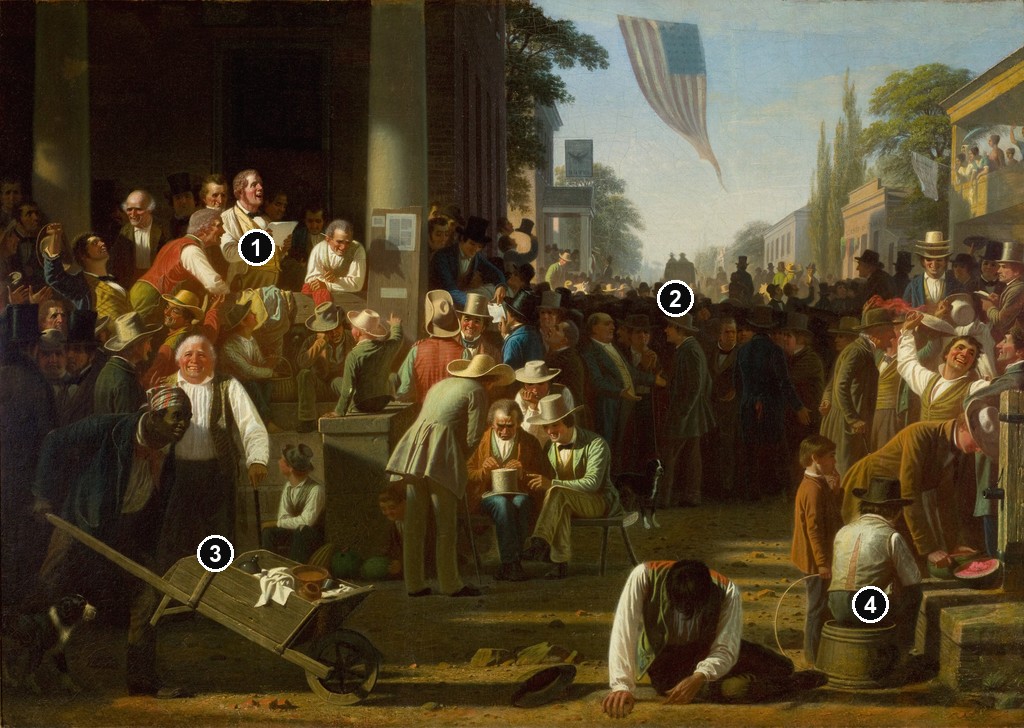
The numbered points identify visible features discussed in this article. Return from each detail to the whole composition. The captions keep each work’s identity, date and medium separate.
The Verdict of the People, 1854–55
George Caleb Bingham, The Verdict of the People, 1854–55. Oil on canvas. Saint Louis Art Museum, Gift of Bank of America, 45:2001. Image source. Public domain. Numbers added to a separate overview. Detail images are crops of the source reproduction.
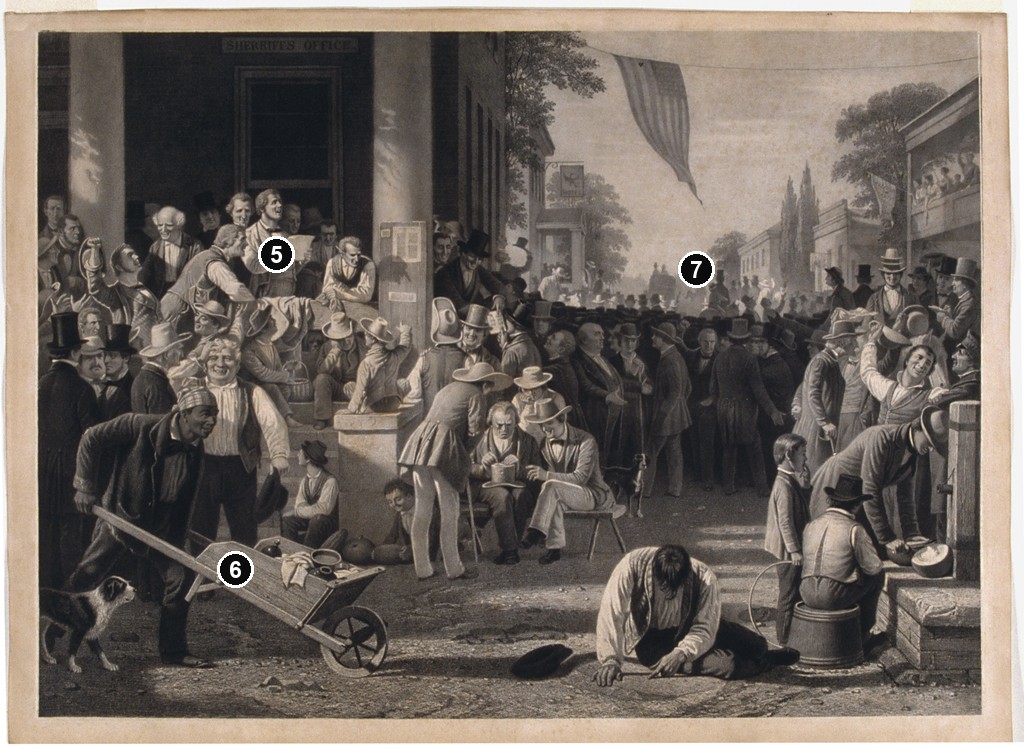
The Verdict of the People, lithographic proof, ca. 1858–59
The Verdict of the People, ca. 1858–59. Lithographic proof associated with George Caleb Bingham’s composition. Amon Carter Museum of American Art, Fort Worth, Texas, 1971.42. Image source. Public domain. Numbers added to a separate overview. Detail images are crops of the source reproduction; the whole supplied sheet remains visible in the overview.
Details from THE VERDICT OF THE PEOPLE
Compare the cropped details with the complete images above. Notice how their colours, shapes and positions contribute to the larger compositions.
The Verdict of the People, 1854–55
The paper and the announcement
The raised sheet and the reader’s open mouth make the announcement visible above the surrounding heads. Neighbours turn and gesture towards this small, elevated action, while the column gives the group a firm architectural boundary.
The gathering extends down the street
Dark heads and hats recede into the light of the long street. The broad mass of people breaks into smaller groups towards the horizon, extending the public occasion beyond the sharply described foreground.
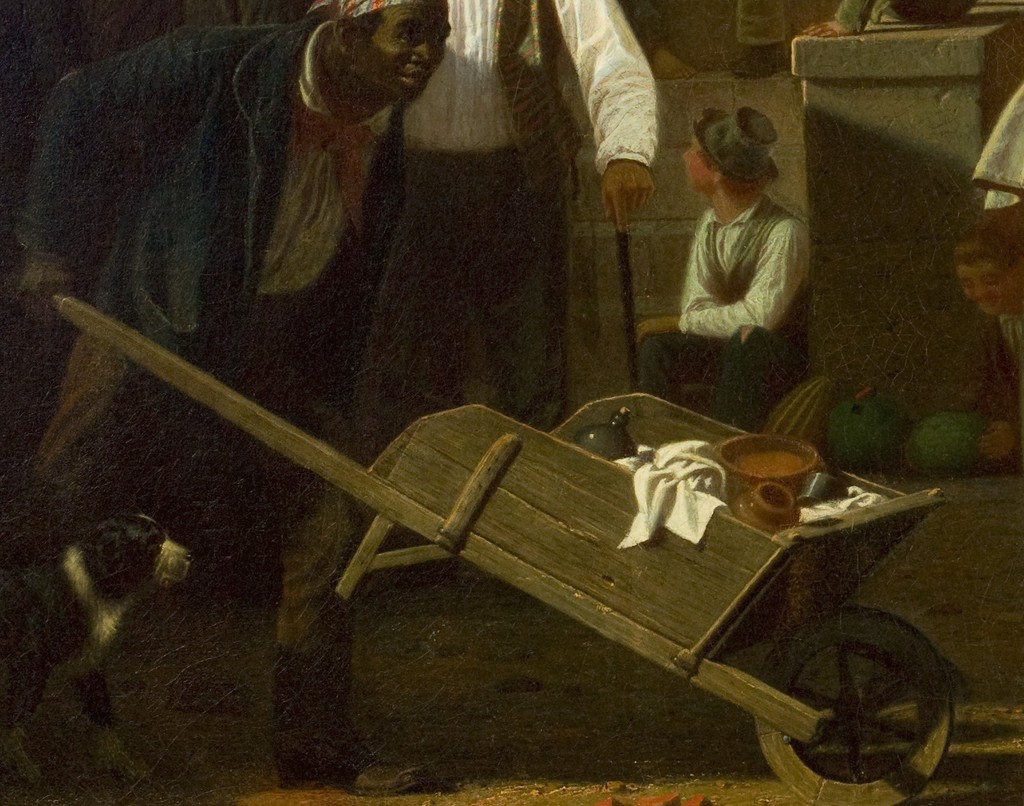
The handcart at the front
The figure holding the long handles and the tilted wooden frame draw a diagonal across the lower left. This foreground activity has its own weight and direction within the much larger crowd.
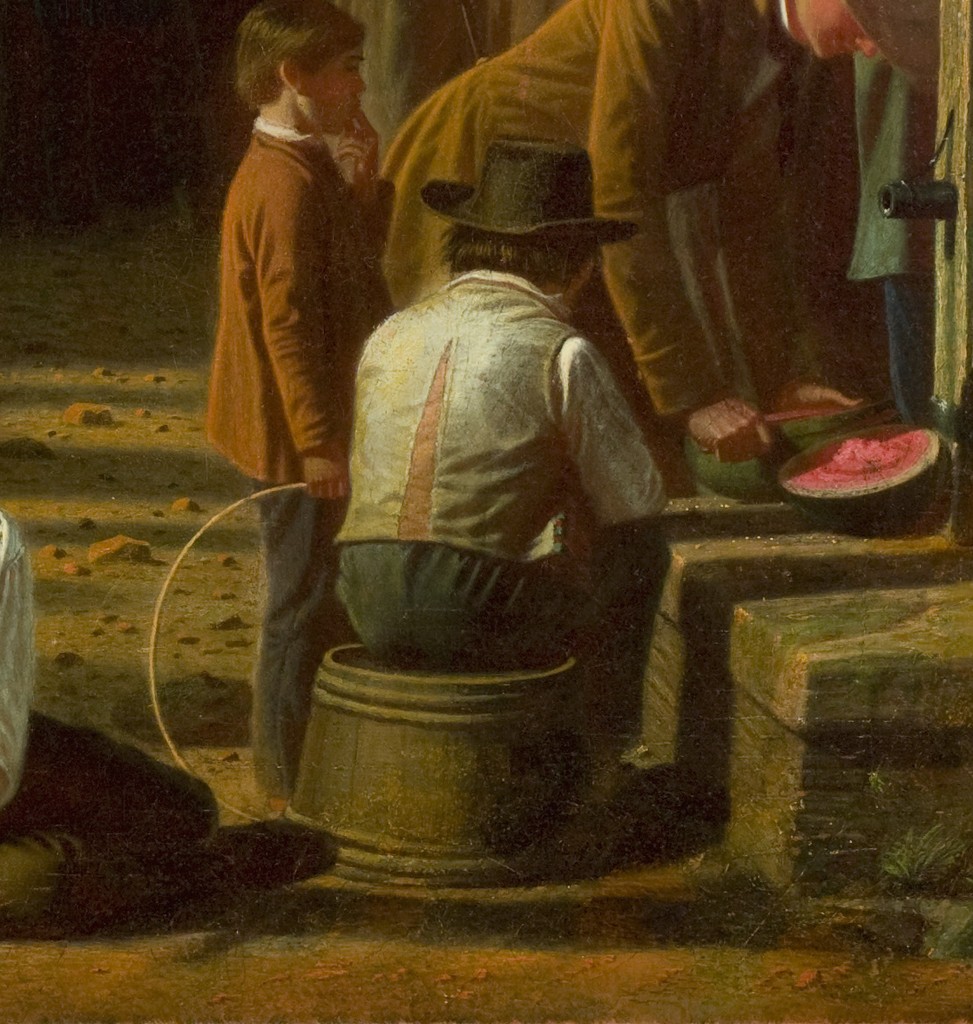
The melon and the seated child
The cut melon and the child seated on a barrel form a small scene at the right. Bent backs and lowered heads turn attention towards everyday activity beside the announcement and celebration.
The Verdict of the People, lithographic proof, ca. 1858–59
The reader and the pale notices
The light coat, white sheet and posted notices become distinct pale forms against the darker doorway. The reading group remains prominent when the painting’s colour is translated into shades of grey.
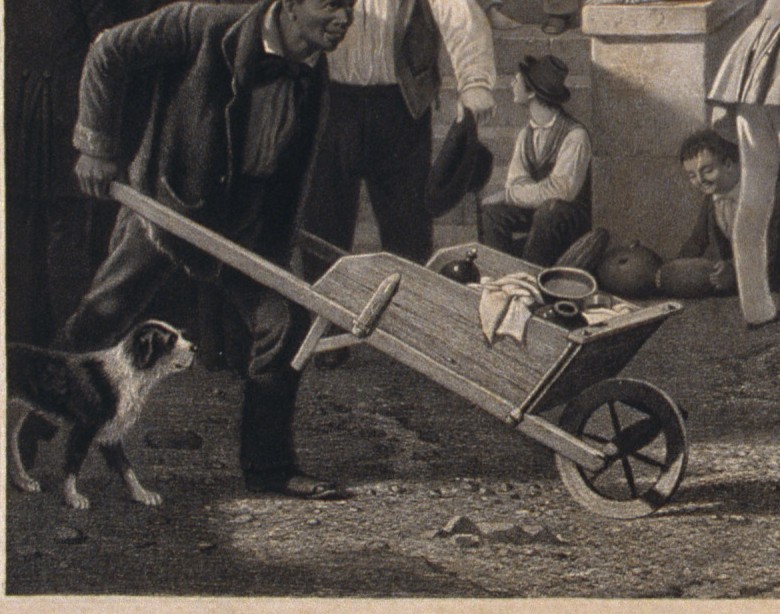
The cart in the printed foreground
Long handles, the tilted cart and the standing figure form a linked diagonal across the foreground. The clearer light-and-dark divisions make this activity easy to compare with the corresponding group in the canvas.
The flag above the receding crowd
The hanging flag and long street carry the eye above and beyond the foreground heads. Changes from dark coats to pale buildings keep the gathering legible without the painting’s red, green and blue accents.
Celebration has more than one rhythm
Near the porch, faces brighten and bodies lean into the event. The reader’s companions help create a pocket of animation above the rest of the crowd. Below them, a smiling man in a pale shirt is conspicuous among darker garments. Light and expression work together to make pleasure visible in a compressed area of the painting.
At the right, a man raises his hat and turns his face upwards. The lifted arm gives celebration a broader, more expansive form than the close exchange around the paper. Around him, other men lean together or look towards the action. The result travels through different gestures rather than producing one repeated sign of agreement.
In the lower centre-left, a group forms around seated men. Their faces and hands draw attention into a smaller conversation within the larger gathering. The arrangement slows the scene down. A public result may arrive at one announced moment, yet people still need to discuss, interpret or react to it in their own ways.
The figure low in the foreground makes an even stronger interruption. Bent towards the ground, with his hat lying nearby, he does not participate in the raised gestures around him. His position brings disorder into the most immediately visible part of the picture. It also prevents the crowd’s animation from becoming an uncomplicated scene of civic dignity.
We can identify differences of posture more securely than we can give every person a political allegiance. A smile may suggest satisfaction, and a withdrawn body may suggest disappointment, but the painting does not provide a named list of successful and defeated candidates. Its force depends on the range of reactions, rather than on our ability to assign every expression to a party.
Children, work and attention elsewhere
Children appear near the front and along the right side. Their presence broadens the event beyond the adult men most directly involved in the announcement. A boy beside the seated group looks towards an activity close at hand; at the right, another child occupies space beside an adult bending over a container of watermelon. These small episodes resist the claim of the political news to command everyone’s attention.
At the lower left, a wheelbarrow carries vessels and other goods. It brings an object of work and exchange into the same foreground as the voting public. The street is still a place where people carry things, sell or consume food and attend to ordinary needs. The political occasion has gathered a crowd within that environment rather than replacing it with a ceremonial stage.
These details also affect the painting’s pace. A raised hat can be understood quickly as an emphatic gesture. A child beside a chair or an item resting in a cart asks for a slower look. Bingham combines the immediate readability of an announcement with episodes that continue to emerge after the central subject is understood.
That variety does not require every object to stand for a separate doctrine. The wheelbarrow, hats, vessels and fruit first make a dense social setting credible. Further interpretations need evidence appropriate to the particular detail. Looking at the painting can begin with where an object is and how it connects people before deciding whether it carries an additional symbolic meaning.
Being present is different from having a vote
At the upper right, women watch from a balcony. The elevated position makes them visible while separating them from the men in the street. They can observe the news and its consequences without occupying the same space as the principal gathering. The museum draws attention to their exclusion from voting in the period represented. [1]
The painting also includes a Black figure at the lower left, close to the wheelbarrow. This person occupies a much darker area than the smiling man immediately behind. The figure is present within the scene’s foreground, yet the location and activity differ from those of the men celebrating near the porch. Bingham makes the public occasion broader than a gathering consisting only of enfranchised white men. [1]
That breadth should not be mistaken for equal political power. The presence of Black people and women in a picture of an election result does not mean that they were able to cast the ballots being counted. The museum’s interpretation places those exclusions beside the painting’s collective title. The word “people” raises a question about who can speak through an electoral result and who must live with its consequences. [1]
The locations matter visually as well as historically. The women’s balcony belongs to a small, relatively distant area, while the Black figure stands near a large foreground object. Neither position coincides with the reader’s raised platform. Bingham gives different people different access to the picture’s main action, and the viewer must move attention away from the loudest gestures to notice those relationships.
It is possible to describe that distribution without assigning the painter a simple modern position. Inclusion within an image, a person’s social role and a person’s legal rights are separate questions. Keeping them distinct helps the painting remain a demanding account of public life rather than an illustration of a single reassuring claim.
Watch: George Caleb Bingham
Choose a film to explore the artist’s work, its interpretation and its wider setting.
Navigating the West: George Caleb Bingham and the River at the Amon Carter Museum of American Art
The Amon Carter Museum introduces an exhibition devoted to Bingham’s river paintings.
Watch on YouTubeThree subjects, three kinds of public action
In The County Election , dated 1851–52 in the original canvas’s museum record, people gather around the procedure of voting. Persuasion, conversation and irresponsible behaviour coexist at the polling place. The work asks us to look at the conduct through which a collective decision is produced. [6]
Stump Speaking , painted in 1853–54, organizes a gathering around a candidate’s address. The speaker’s pale coat draws attention against a dark tree, while a varied audience occupies the surrounding ground. The Saint Louis Art Museum interprets the seated man with a tablet as an opponent preparing to reply. Political argument is still in progress. [10]
In The Verdict of the People , the sheet of results and the raised reader establish a different kind of authority. The public is receiving an outcome rather than hearing a candidate’s case. That change explains why the responses can spread so widely: the news has a common source, but its significance differs from person to person.
The three paintings can be read together without treating them as consecutive records of one actual election. Their settings and groups are constructed to make different stages understandable. Bingham’s control lies in giving a distinct structure to the speech, the vote and the result, while keeping the varied behaviour of a public at the centre of each.
Conrads’s study of his political drawings offers a useful perspective on that construction. She emphasizes the differentiation of costume, physical features and pose in the campaign pictures and traces the movement of figures between compositions. Her account reminds us that a crowd can feel particular because its parts have been carefully designed, rather than because the painter recorded everyone at a single witnessed event. [13]
The Bingham biography follows his own political career. Here that experience matters as context for his sustained attention to public encounters, but it does not turn every smiling or disappointed face into a securely identified personal ally or rival.
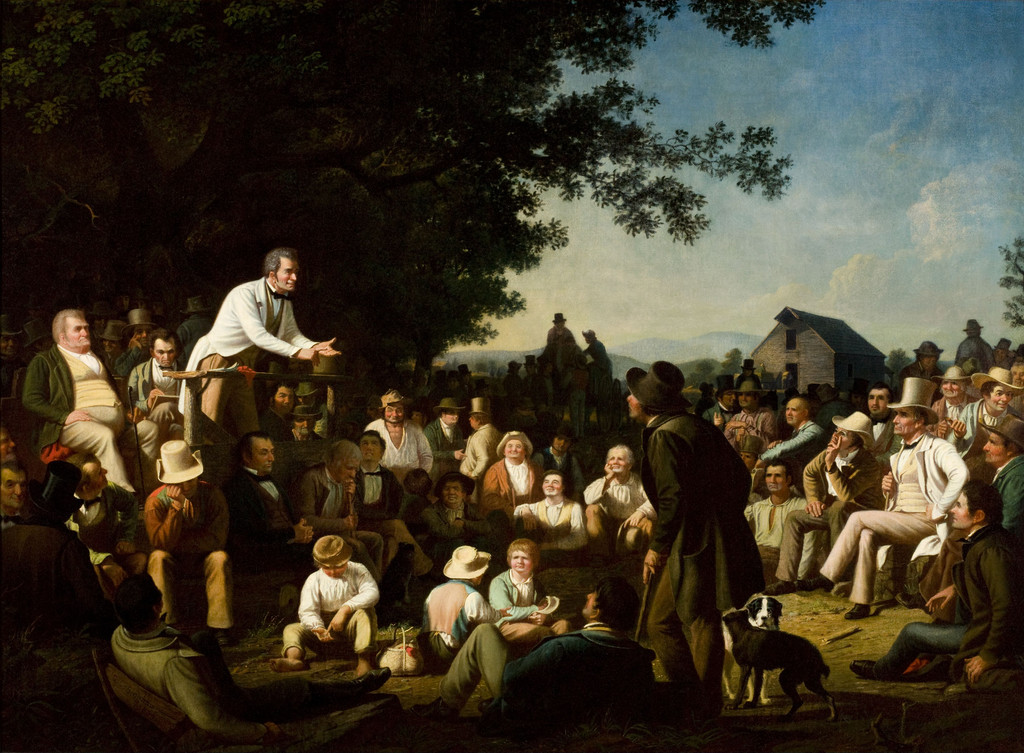
George Caleb Bingham, Stump Speaking, 1853–54. Oil on canvas. Saint Louis Art Museum, Gift of Bank of America, 43:2001.
Image source
.
Public domain
.
A lithographic proof after the painting
The Amon Carter Museum of American Art holds a different object with the same title: a lithographic proof dated about 1858–59. Its record identifies the medium as lithograph, the edition as proof and the accession as 1971.42. That later date belongs to a work on paper, rather than changing the 1854–55 date of the oil painting. [14]
The proof preserves the principal arrangement: the reader at the left, the flag above the street, the women on the balcony and the busy foreground. Seen beside the canvas, it shows how the gathering could be rendered through a different medium. Colour gives way to variations of tone, yet the crowded hats, open gestures and receding architecture remain easy to follow.
The paper itself is also part of the object. A pale margin surrounds the printed scene, with aged edges visible in the museum’s image. Keeping the whole sheet in view helps distinguish an actual historical impression from an illustration cropped only to the composition. Its surface and boundaries belong to a separate material history from the painted canvas.
The Carter record does not, by itself, establish the size of a commercial edition or the number of people who saw this particular impression. A proof is evidence of work in print, but circulation requires its own documentation. This distinction allows the image to enlarge the picture’s history without supplying an invented publishing success. It also makes a useful companion to Bingham’s broader drawings and prints , where the stages between a design and its audiences can be followed more closely.
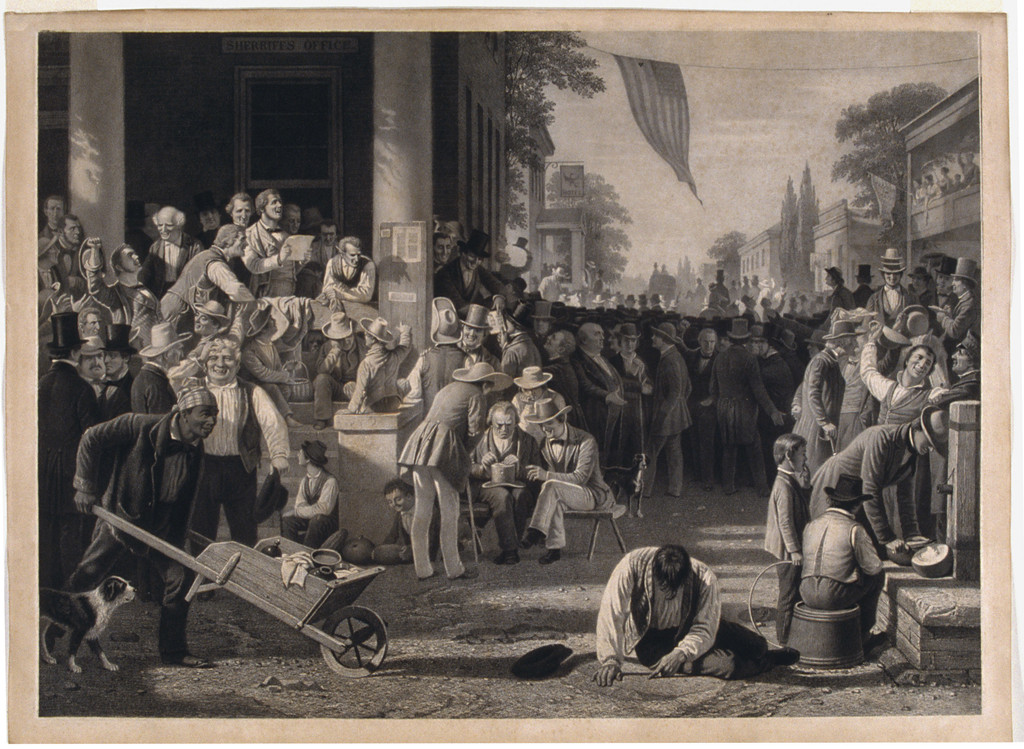
The Verdict of the People, ca. 1858–59. Lithographic proof associated with George Caleb Bingham’s composition. Amon Carter Museum of American Art, Fort Worth, Texas, 1971.42.
Image source
.
Public domain
.
Ownership and a later ceremonial audience
The Saint Louis Art Museum’s record follows the canvas through the St. Louis Mercantile Library and banking ownership before the Bank of America gift in 2001. Its notes place the painting’s completion in June 1855. Those dates belong to the nineteenth-century work and its later collection history, rather than to the date of any particular election result imagined within the scene. [1]
The painting acquired a new public setting in 2017. The United States Senate records that the museum loaned it for the inaugural luncheon for President Donald Trump and Vice President Michael Pence, where it was displayed above the head table. This is a documented later use of the canvas in a political ceremony, more than a century and a half after its making. [15]
The Senate’s accompanying text emphasizes the variety of people and emotions in Bingham’s crowd. That account describes the people present in the image, but its language of inclusiveness needs to be distinguished from the restricted nineteenth-century franchise. A later ceremonial setting can highlight one aspect of a painting without exhausting its historical tensions. [15] [1]
The loan also shows why the title continues to invite attention. A phrase such as The Verdict of the People can sound like a settled declaration when separated from the canvas. In the painting itself, it presides over celebration, discussion, disorder and exclusion. Looking closely restores those differences to the apparently singular verdict.
Artworks directory
A documented selection discussed across these articles, including separate canvases, figure studies and reproductive impressions. Dates identify the particular object or study; collection and title distinctions follow museum records and the 2015 exhibition checklist. This is not a catalogue raisonné. Prints are grouped with works on paper in the Drawing filter.
| Name | Date | Medium |
|---|---|---|
| Fur Traders Descending the Missouri | 1845 | Painting — oil on canvas |
| The Jolly Flatboatmen | 1846; NGA canvas | Painting — oil on canvas |
| The County Election (original) | 1851–52 | Painting — oil on canvas |
| Stump Speaking | 1853–54 | Painting — oil on canvas |
| The Verdict of the People | 1854–55 | Painting — oil on canvas |
| Order No. 11: Martial Law | 1865–68; Cincinnati original | Painting — oil on canvas |
| Daniel Boone Escorting Settlers through the Cumberland Gap | 1851–52 | Painting — oil on canvas |
| Canvassing for a Vote | 1852; signed canvas | Painting — oil on canvas |
| Raftsmen Playing Cards | 1847 | Painting — oil on canvas |
| Mississippi Boatman | 1850 | Painting — oil on canvas |
| Jolly Flatboatmen in Port | 1857 | Painting — oil on canvas |
| The County Election (replica illustrated here) | 1852 | Painting — oil on canvas |
| Martial Law or Order No. 11 (Missouri replica) | 1870 | Painting — oil on canvas |
| The Jolly Flatboatmen (Terra canvas) | 1877–78 | Painting — oil on canvas |
| John Quincy Adams (later version) | about 1850, after an 1844 original | Painting — oil on canvas |
| Country Politician | 1849 | Painting — oil on canvas |
| The Trappers’ Return | 1851 | Painting — oil on canvas |
| The Concealed Enemy | 1845 | Painting — oil on canvas |
| The Wood-boat | 1850 | Painting — oil on canvas mounted on board |
| Lighter Relieving a Steamboat Aground | 1847 | Painting — oil on canvas |
| Watching the Cargo | 1849 | Painting — oil on canvas |
| In a Quandary | 1851 | Painting — oil on canvas |
| Boatmen on the Missouri | 1846 | Painting — oil on canvas |
| Self-Portrait (Saint Louis) | 1834–35 | Painting — oil on canvas |
| Self-Portrait (Nelson-Atkins) | about 1877 | Painting — oil on canvas |
| Mrs. David Steele Lamme and Son William Wirt | 1837 | Painting — oil on canvas |
| Portrait of Leonidas Wetmore | 1839–40 | Painting — oil on canvas |
| Fur Trader (study for Fur Traders Descending the Missouri) | 1845 | Drawing — brush, ink and wash over pencil |
| Skillet-beater (study for The Jolly Flatboatmen) | 1846 | Drawing — brush, ink and wash over pencil |
| Young Wood-boatman (study for The Wood-boat) | 1850 | Drawing — brush, ink and wash over pencil |
| Thomas Doney after Bingham: The Jolly Flat Boat Men (Met impression) | 1847 | Print — mezzotint and engraving with etching |
| Thomas Doney after Bingham: The Jolly Flat Boat Men (coloured Carter impression) | 1847 | Print — intaglio with applied watercolour |
| The Verdict of the People (lithographic proof) | ca. 1858–59 | Print — lithographic proof |
| Gautier after Bingham: Stump Speaking | 1856 | Print — etching and aquatint |
| Claude Regnier after Bingham: In a Quandary, Mississippi Raftsmen Playing Cards | 1852 | Print — hand-coloured lithograph |
Frequently Asked Questions
The Saint Louis Art Museum dates it 1854–55; its provenance notes place completion in June 1855. [1]
Discussion
Look again at the images and ideas explored in The Verdict of the People. These editorial prompts invite your observations.
Which figure most complicates the title’s suggestion of a single public verdict? Consider both the direction of attention and the person’s position within the crowd.
Reader Insights
Which figures seem most absorbed by something other than the announcement?
How does the children’s activity complicate the larger celebration?
What becomes easier to notice in the lithographic proof?
Join the Conversation
Share a detail, comparison or question about The Verdict of the People below.
References
- Saint Louis Art Museum , The Verdict of the People , 45:2001. Object record, interpretation and provenance. View source
- Metropolitan Museum of Art, Fur Traders Descending the Missouri. View source
- National Gallery of Art, The Jolly Flatboatmen. View source
- Saint Louis Art Museum, Raftsmen Playing Cards. View source
- National Gallery of Art, Mississippi Boatman. View source
- Saint Louis Art Museum , The County Election , 1851–52, 124:1944. Original canvas and the conduct of voting. View source
- Saint Louis Art Museum, The County Election, 1852 replica, 44:2001. View source
- Kemper Art Museum, Washington University, Daniel Boone Escorting Settlers through the Cumberland Gap. View source
- Nelson-Atkins Museum of Art, Canvassing for a Vote. View source
- Saint Louis Art Museum , Stump Speaking , 1853–54, 43:2001. Campaign scene and interpretation of speaker and opponent. View source
- Saint Louis Art Museum, Jolly Flatboatmen in Port. View source
- Cincinnati Art Museum, Order No.11 / Martial Law. View source
- Margaret C. Conrads , “Bingham@200: A Bicentennial Celebration,” Antiques & Fine Art , Spring 2011, pp. 193–199. Particularly p. 199, on political figure differentiation and reuse. View source
- Amon Carter Museum of American Art , The Verdict of the People , ca. 1858–59, 1971.42. Lithographic proof, object metadata and complete sheet image. View source
- United States Senate , 2017 Inaugural Luncheon . Official record of the painting’s loan, display and accompanying interpretation. View source
- Splash image source.
George Caleb Bingham, The Verdict of the People, 1854–55. Oil on canvas. Saint Louis Art Museum, Gift of Bank of America, 45:2001. Public domain .
View source