 by Tom Gurney
Tom Gurney BSc (Hons) is an art history expert with over 20 years experience
Published on August 14, 2026 / Updated on August 14, 2026
Email: tomgurney1@gmail.com / Phone: +44 7429 011000
Introduction
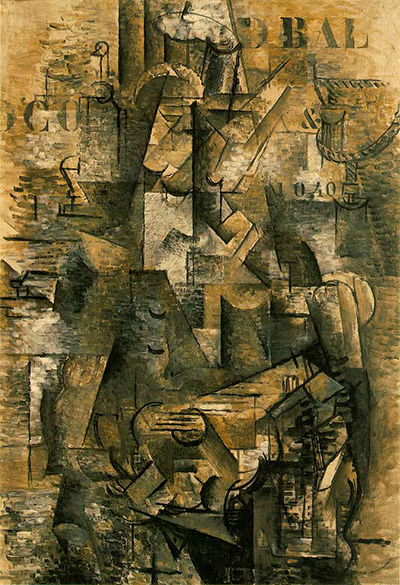
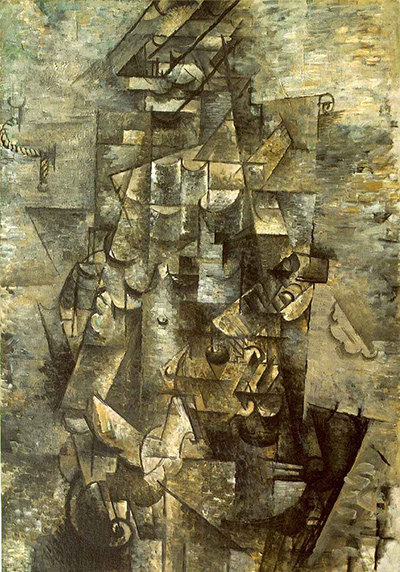
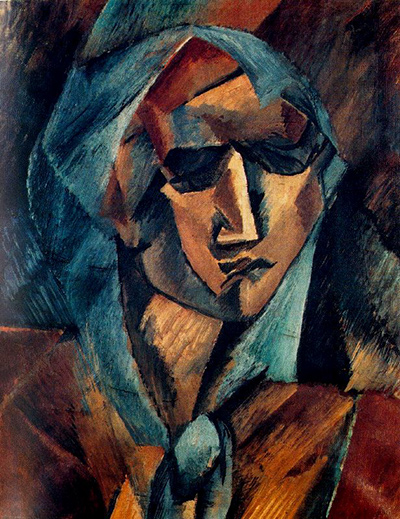
Two ordinary words—“woman” and “head”—carry an unusual amount of weight in Georges Braque’s Tête de femme. They preserve the category of the subject while leaving the sitter unnamed. They also give the viewer a stable idea to pursue as the conventions that usually make a head immediately readable yield to a Cubist construction of planes and facets.
That distinction is central to the painting. A portrait can offer several kinds of identity: the identity of the physical object, the identity of its maker and date, the identity of its subject, and the identity of the person represented. Here, the first three are secure at different levels. The Musée d’Art moderne de Paris catalogues a specific oil painting by Braque from 1909 under the title Tête de femme. The title establishes a woman’s head as its subject. The woman herself remains anonymous.[1]
Braque therefore makes recognition operate between certainty and incompleteness. The head survives as a human volume that viewers must construct, while the spare title and the museum history keep the painting from dissolving into a generic example of Cubism. Its accession number, signature and provenance belong to one object, even as its subject is rebuilt through a pictorial language developed in unusually close conversation with Pablo Picasso.
At a Glance
- ArtistGeorges Braque[1]
- TitleHead of a Woman (Tête de femme)[1]
- Date1909[1]
- MediumOil painting[1]
- Object typePainting[1]
- CollectionMusée d’Art moderne de Paris[1]
- InventoryAMVP 1129[1]
- SignificanceThe 1909 painted head as a problem of faceted volume without conflating it with repeated Cubist titles
Contents
- Introduction
- One painting behind a repeated title
- Why a head tests Cubist space
- A shared problem, two separate artists
- Picasso’s Fernande and the difference made by sculpture
- Another Braque head in 1912
- From Girardin’s collection to a travelling retrospective
- Identity held through reconstruction
One painting behind a repeated title
The Paris museum’s record identifies the work as inventory AMVP1129, an oil painting produced in 1909. It records the signature “Braque” at the upper right. The entry names no sitter and currently publishes no dimensions, so the documentary foundation is concise: title, artist, year, medium, signature, collection and accession.[1]
Those details matter because Tête de femme is a descriptive title shared by many modern works. Braque made a materially different work now catalogued under the English title Head of a Woman three years later. The phrase can consequently begin an identification, but it cannot complete one. Date, medium, collection and accession establish which object is under discussion.
The title’s modesty also shapes the experience of the painting. It supplies a category without a biography. “Head” directs attention toward volume, orientation and human recognition. “Woman” gives the figure a gendered designation while withholding a personal history. The work can engage the traditions of portraiture without promising the social information of a named likeness.
The signature performs a different task from the title. Tête de femme identifies the subject category; “Braque” identifies the maker. The accession number joins those facts to one physical object in a public collection. None of the three reveals the woman’s name, yet together they prevent anonymity of the sitter from becoming uncertainty about the painting itself.
This produces a productive division. Documentary evidence identifies the painting with precision; pictorial recognition remains an act of assembly. The signature reinforces authorship, while the unnamed sitter keeps the represented person outside a story that the surviving record cannot support.
Why a head tests Cubist space
A human head presents a demanding problem for a painter interested in breaking continuous form into planes. It is experienced as a rounded volume, yet painting begins with a flat support. Conventional modelling creates continuity through contour, shading and perspective. Cubist faceting can interrupt that continuity and distribute the sense of volume across adjoining units.
Guggenheim Bilbao’s account of the early collaboration between Braque and Picasso describes Cubist objects as decomposed through geometric planes, allowing several faces of a form to become available together. The same museum explicitly invites comparison between Braque’s 1909 Head of a Woman and Picasso’s early Cubist heads.[2] The invitation is useful because it frames the issue as a way of representing three-dimensional form, while leaving each painting’s exact identity intact.
With a bottle or a musical instrument, a title can direct attention toward familiar parts. A head engages a more immediate pattern of recognition. Viewers expect its parts to belong to a single living volume and to maintain intelligible relations. Faceting changes the terms of that expectation. Recognition can emerge from relations among planes before a continuous outer boundary has been restored.
The title assists this process without solving it. Once “head” is known, an angled unit may participate in an imagined turn of volume; a shift between adjoining areas may suggest projection or recession. Yet the title offers no complete diagram. It gives the viewer a hypothesis that the painting continually tests.
This is why faceted volume differs from a simple reduction to geometry. Geometry supplies a means of construction, while the human category remains active. The viewer moves between the painted surface and the volume it proposes, building coherence from discontinuity. The head persists through that activity, with its status as a person held open by the word “woman” and its personal identity left unresolved.
Picasso’s Fernande and the difference made by sculpture
Picasso’s Woman’s Head (Fernande) provides a particularly revealing comparison because it turns the problem into actual three-dimensional form. MoMA dates its bronze to fall 1909. Curator Ann Temkin explains that its small units catch light differently and prompt viewers to build the head mentally; conventional seamless likeness gives way to active reconstruction.[4]
The sculpture and Braque’s painting share a question about how separate facets can sustain the idea of a head. Their media make that question operate differently. Picasso begins with a physical volume that occupies space; its divided surface changes how that mass is understood. Braque works on a flat support, where volume must be proposed through painted relations. Sculpture can make a viewer move around an object. Painting can bring several spatial suggestions into one field.
The comparison ends at that structural level. Fernande Olivier belongs to Picasso’s work, and MoMA’s observations about her hair and the sculpture’s particular surface describe his object alone.[4] The Paris museum supplies no name for Braque’s woman. Assigning Fernande to both heads would convert artistic proximity into a fictional shared sitter.
Their independence makes the comparison stronger. Two separate objects, made in different media under conditions of close exchange, reveal how the same broad problem could move between painting and sculpture. Faceting becomes a way to activate recognition in each medium, while the physical means and represented identities remain distinct.
Another Braque head in 1912
The repeated title becomes even more instructive when Braque’s own later work enters the picture. The Metropolitan Museum of Art holds a separate Head of a Woman, made at Sorgues in autumn 1912. It combines charcoal with cut-and-pasted printed wallpaper and gouache on paper and carries the object number 2016.237.25.[5]
Three years separate that mixed-media work from the Paris oil, and its materials declare a changed procedure. In 1909, AMVP1129 constructs its subject within oil painting. In 1912, drawing meets a piece of manufactured wallpaper whose physical presence introduces a new relation between represented form and real material. The Met places the later sheet among Braque’s first papiers collés.[5]
The shared title describes a subject category across both objects. It supplies no evidence that the second is a revised version of the first. Their accessions, dates and media tell a more useful story: Braque returned to the idea of a woman’s head after his methods had changed. Identification through title alone would hide precisely the historical difference that makes the comparison valuable.
From Girardin’s collection to a travelling retrospective
The Paris painting’s later history provides a different kind of continuity. Paris Musées records its acquisition on 2 July 1953 through the bequest of Dr Maurice Girardin.[1] The 1964 MoMA catalogue already identified the 1909 oil with the Girardin collection, reinforcing that limited ownership link.[3] The bequest serves as a firm museum threshold, with the earlier ownership chain still open.
Six decades after that acquisition, Tête de femme travelled in the major Braque retrospective shown in Paris, Houston and Bilbao between 2013 and 2014.[1] The Museum of Fine Arts, Houston described its presentation as a career survey extending from the Fauvist paintings through the Cubist compositions and later still lifes and landscapes, organised with the Réunion des Musées Nationaux–Grand Palais and the Centre Pompidou.[6]
Within that long view, the 1909 head marks a concentrated early question. Braque had taken a deeply familiar subject and made its volume newly difficult. Later developments would bring pasted papers and manufactured materials into his work, as the 1912 head already indicates.[5] AMVP1129 belongs to the moment when oil painting itself carried the pressure of reconstruction.
Identity held through reconstruction
Head of a Woman gains its force from several identities that remain deliberately unequal. The physical work is precisely documented: a signed 1909 oil painting, AMVP1129, acquired through the Girardin bequest. Its subject is named with equal economy. Its sitter remains beyond the surviving identification.[1]
That economy suits the pictorial problem. A Cubist head can preserve humanity without delivering a seamless likeness. Facets turn volume into a relation that viewers assemble, and the title keeps the act of assembly directed toward a person. Comparison with Picasso reveals the intensity of the shared inquiry while the difference between painting and sculpture preserves separate solutions. Comparison with Braque’s 1912 sheet shows how the same title could survive a decisive change of material.
The painting’s stability therefore comes from more than one place. Museum record, signature and provenance secure the object. Title and painted construction secure the category of the subject. The anonymous woman remains present through a head that has to be built in the viewer’s understanding, one spatial relation at a time.
Related Pages
Frequently Asked Questions
Two ordinary words—“woman” and “head”—carry an unusual amount of weight in Georges Braque’s Tête de femme.
The Paris museum’s record identifies the work as inventory AMVP1129, an oil painting produced in 1909.
The painting’s stability therefore comes from more than one place.
Discussion
Two ordinary words—“woman” and “head”—carry an unusual amount of weight in Georges Braque’s Tête de femme.
Reader Insights
Two ordinary words—“woman” and “head”—carry an unusual amount of weight in Georges Braque’s Tête de femme.
The documentary facts preserve that distinction.
The painting’s stability therefore comes from more than one place.
Join the Conversation
Share the visible detail or source that most changed your reading.
References
- Paris Musées, “Tête de femme”
- Guggenheim Museum Bilbao, “Head of a Man (Tête d’homme), 1908” teacher guide
- Museum of Modern Art, Georges Braque exhibition catalogue
- Museum of Modern Art, “Pablo Picasso: Woman’s Head (Fernande)”
- Metropolitan Museum of Art, “Georges Braque: Head of a Woman”
- Museum of Fine Arts, Houston, “Georges Braque: A Retrospective”