 by
Tom Gurney
Tom Gurney BSc (Hons) is an art history expert with over 20 years experience
Email:
tomgurney1@gmail.com
/ Phone:
+44 7429 011000
The Death of General Montgomery by John Trumbull: Introduction
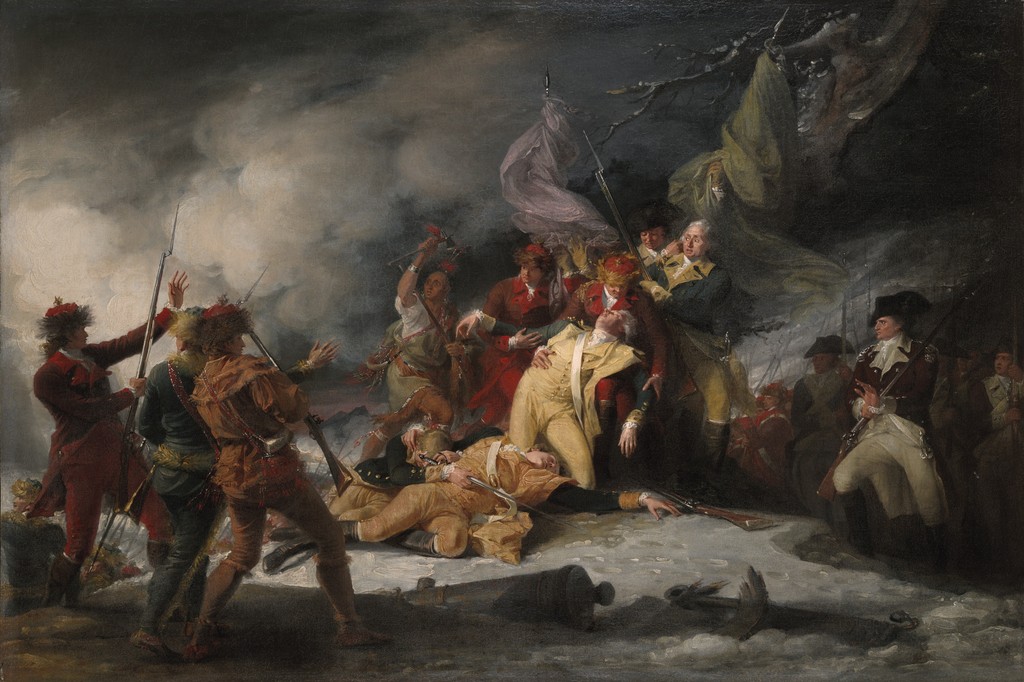
Richard Montgomery’s body falls backwards into the arms of his companions in John Trumbull’s The Death of General Montgomery in the Attack on Quebec, December 31, 1775 . Around him, men raise their hands, turn towards the fighting and support the general whose command has abruptly ended. Snow covers the ground, while the dark cliff and night sky close around the illuminated group.
Trumbull painted the Yale canvas in 1786, a decade after the failed American assault on Quebec. The work belongs to his early effort to give the Revolution a history in pictures. It honours a dead commander through the response of those around him, making military defeat the setting for an image of collective grief. [1] [2]
At a Glance
- Artist John Trumbull.
- Painting 1786; oil on canvas, 62.5 × 93.9 cm.
- Collection Yale University Art Gallery, 1832.2.
- Event failed assault on Quebec, 31 December 1775.
- Principal figure Richard Montgomery, killed during the attack.
- Portrait model Atiatoharongwen, also known as Colonel Louis Cook, studied for a central figure.
- Print engraving after Trumbull, catalogued under J. T. Clemens, 1798; Smithsonian American Art Museum, 1983.90.17.
This work across John Trumbull’s career
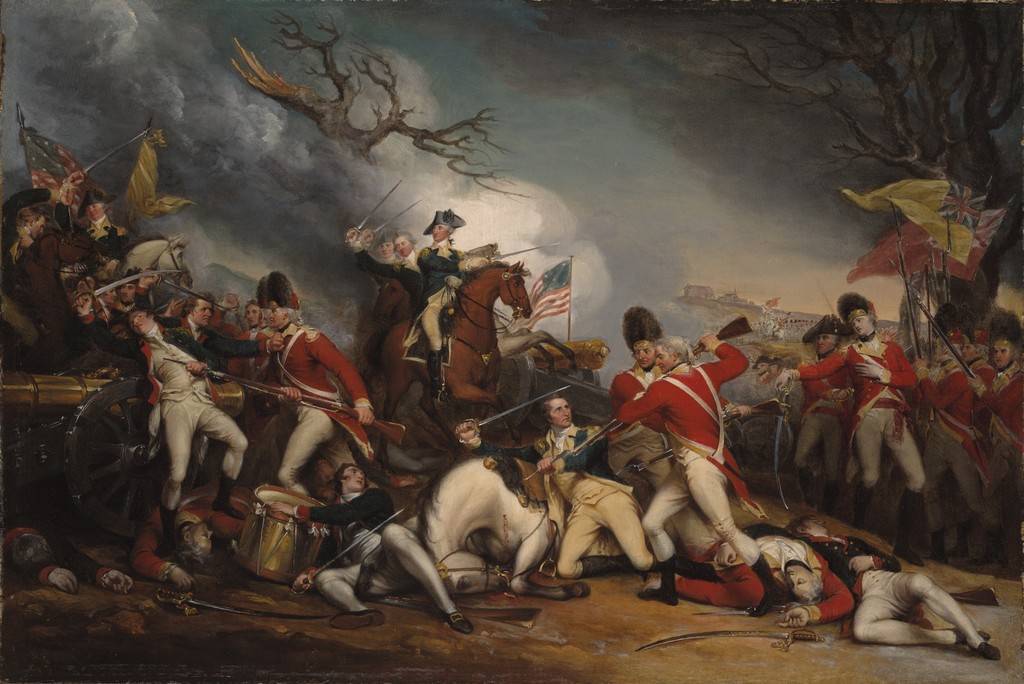
The Death of General Mercer at Princeton
about 1787–1831; principal Yale versionThe Sortie Made by the Garrison of Gibraltar
1789; Met versionGeorge Washington before the Battle of Trenton
about 1792–94; Met versionAlexander Hamilton
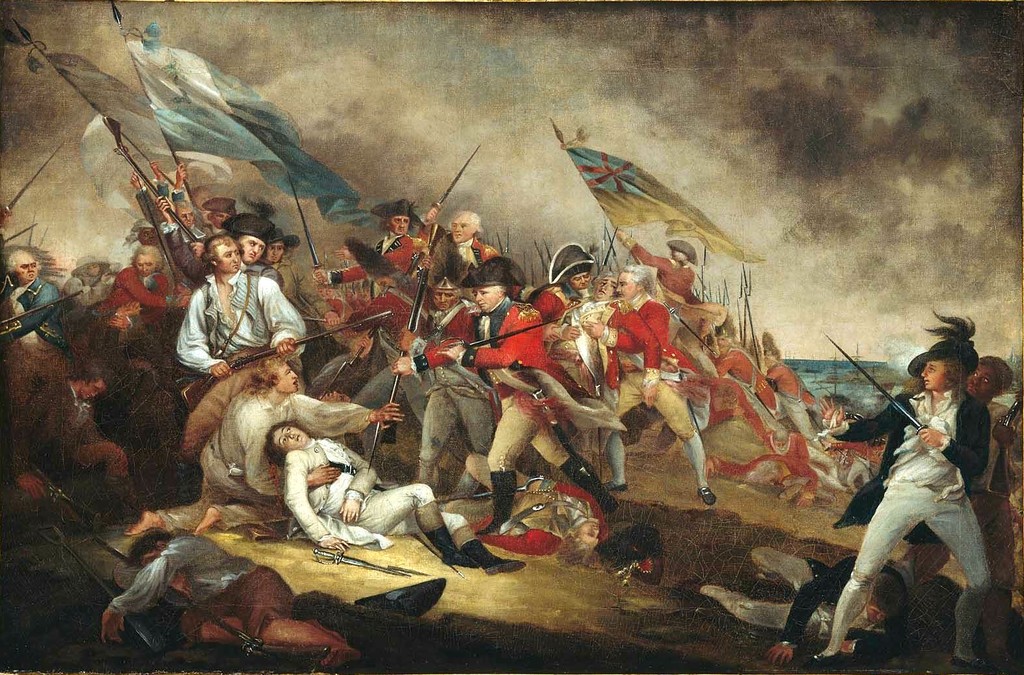
about 1792; likely early NGA replicaThe Death of General Warren at Bunker’s Hill
after 1815–before 1831; MFA versionDeclaration of Independence
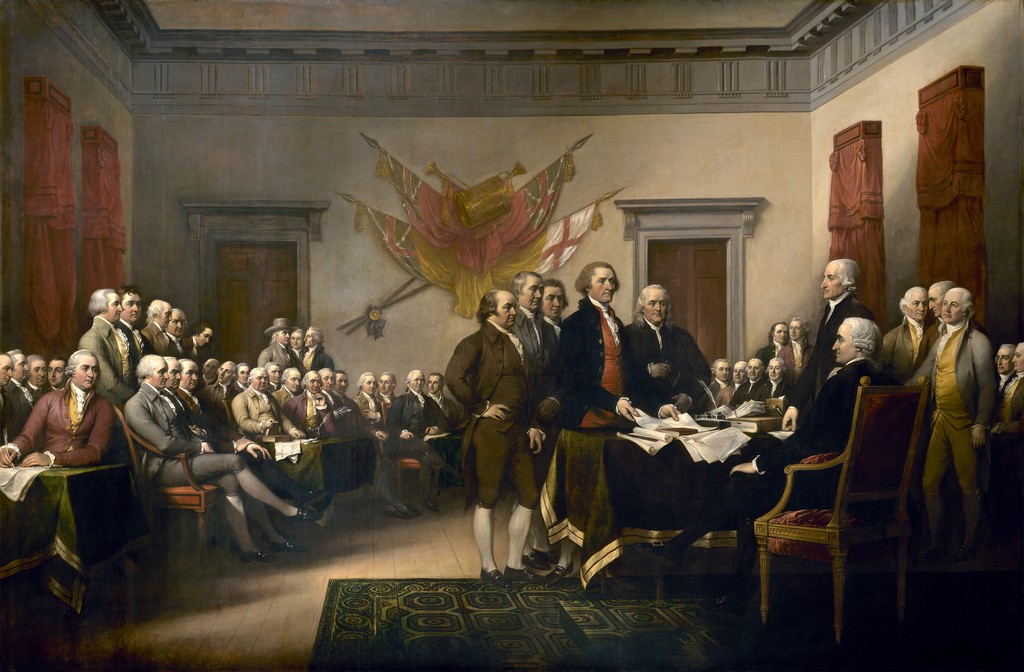
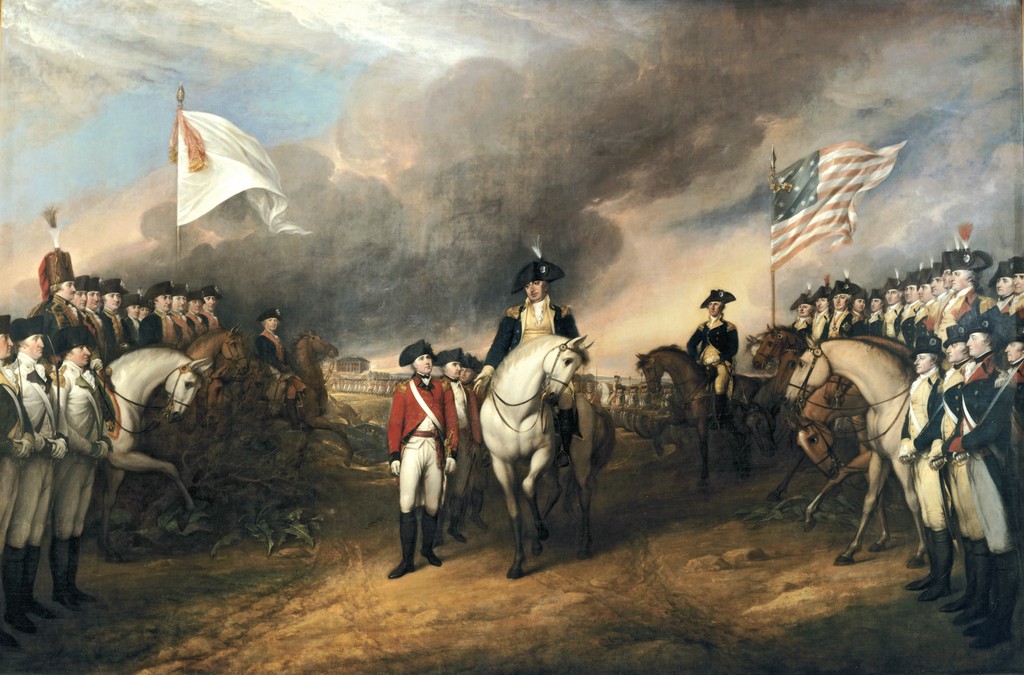
1817–18; Capitol canvasSurrender of Lord Cornwallis
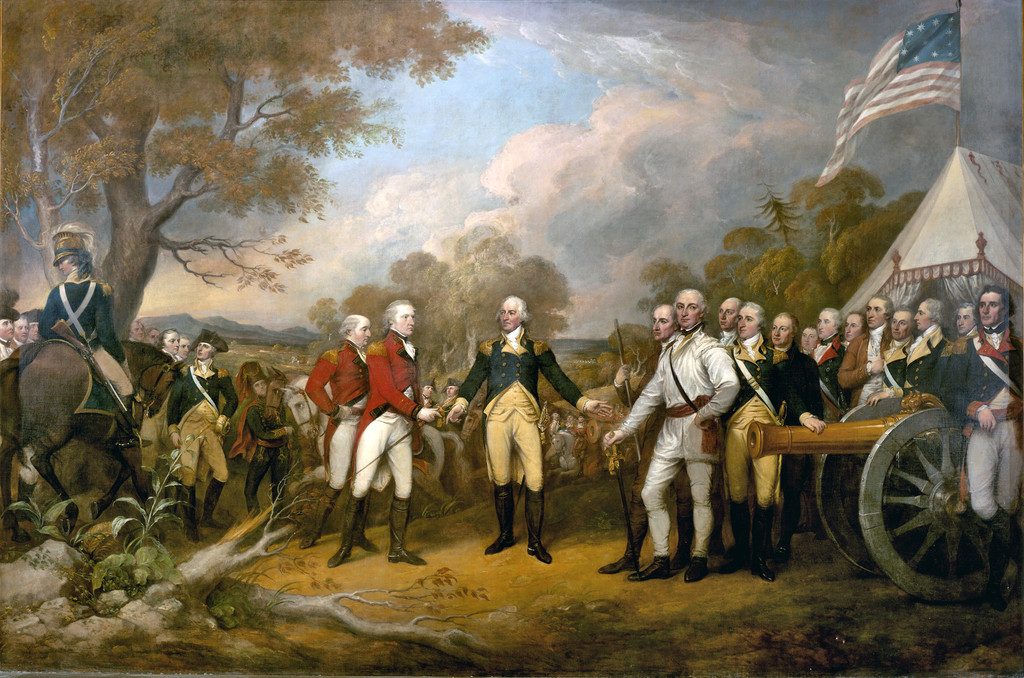
1819–20Surrender of General Burgoyne
1821; Capitol canvasNotes and sources
The Death of General Montgomery (current article). Dates identify the particular canvas discussed in the article. [1]
The Capture of the Hessians at Trenton. Dates identify the particular canvas discussed in the article. [3]
The Death of General Mercer at Princeton. Dates identify the particular canvas discussed in the article. [4]
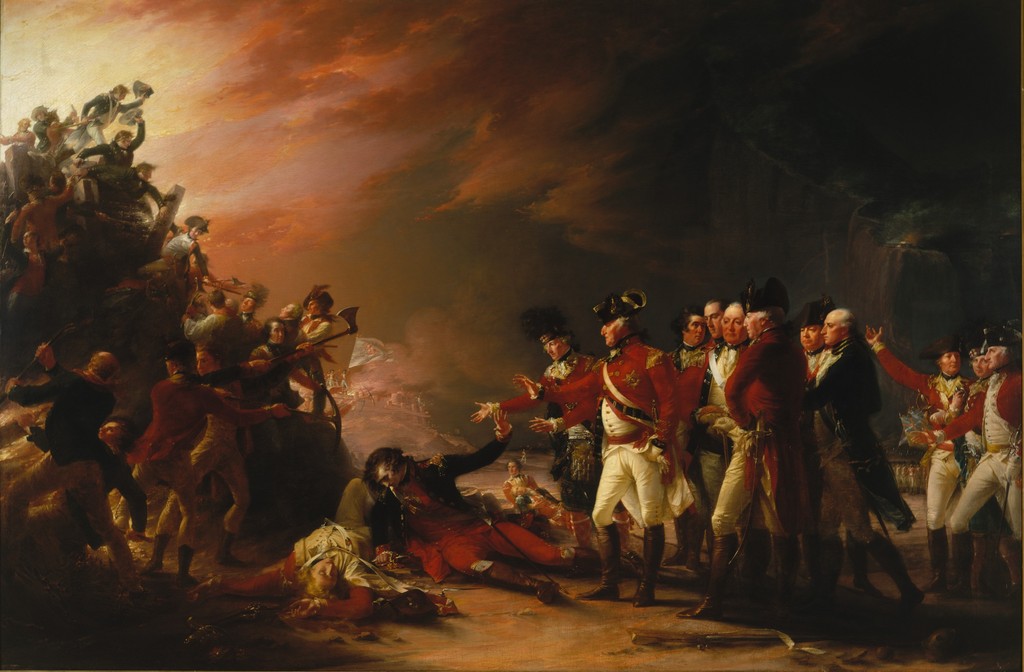
The Sortie Made by the Garrison of Gibraltar. Dates identify the particular canvas discussed in the article. [5]
George Washington before the Battle of Trenton. Dates identify the particular canvas discussed in the article. [6]
Alexander Hamilton. The NGA catalogue treats this as a likely early replica. [7] [8]
The Death of General Warren at Bunker’s Hill. Dates identify the selected later version. [9]
Declaration of Independence. Dates identify the particular canvas discussed in the article. [10]
Surrender of Lord Cornwallis. Dates identify the particular canvas discussed in the article. [11]
Surrender of General Burgoyne. Dates identify the particular canvas discussed in the article. [12]
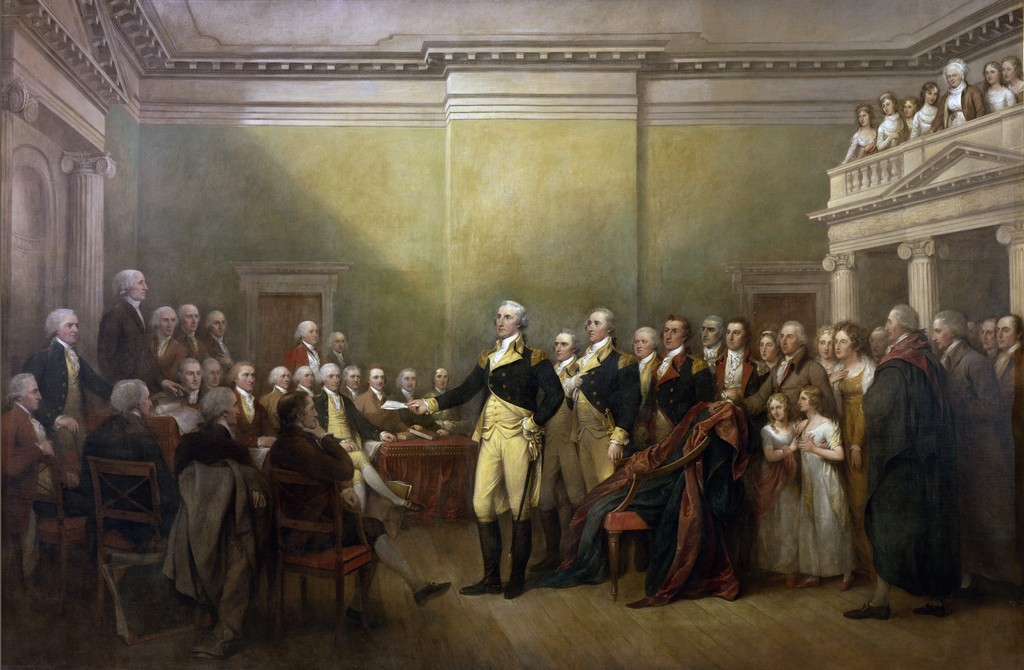
Washington Resigning His Commission. Dates identify the particular canvas discussed in the article. [13]
Contents
- A death beneath the cliff
- Light, snow and the central group
- Quebec and the failed assault
- The 1786 painting and the early series
- Atiatoharongwen and the use of models
- Grief, action and heroic composition
- The engraved afterlife
- Annotated details
A death beneath the cliff
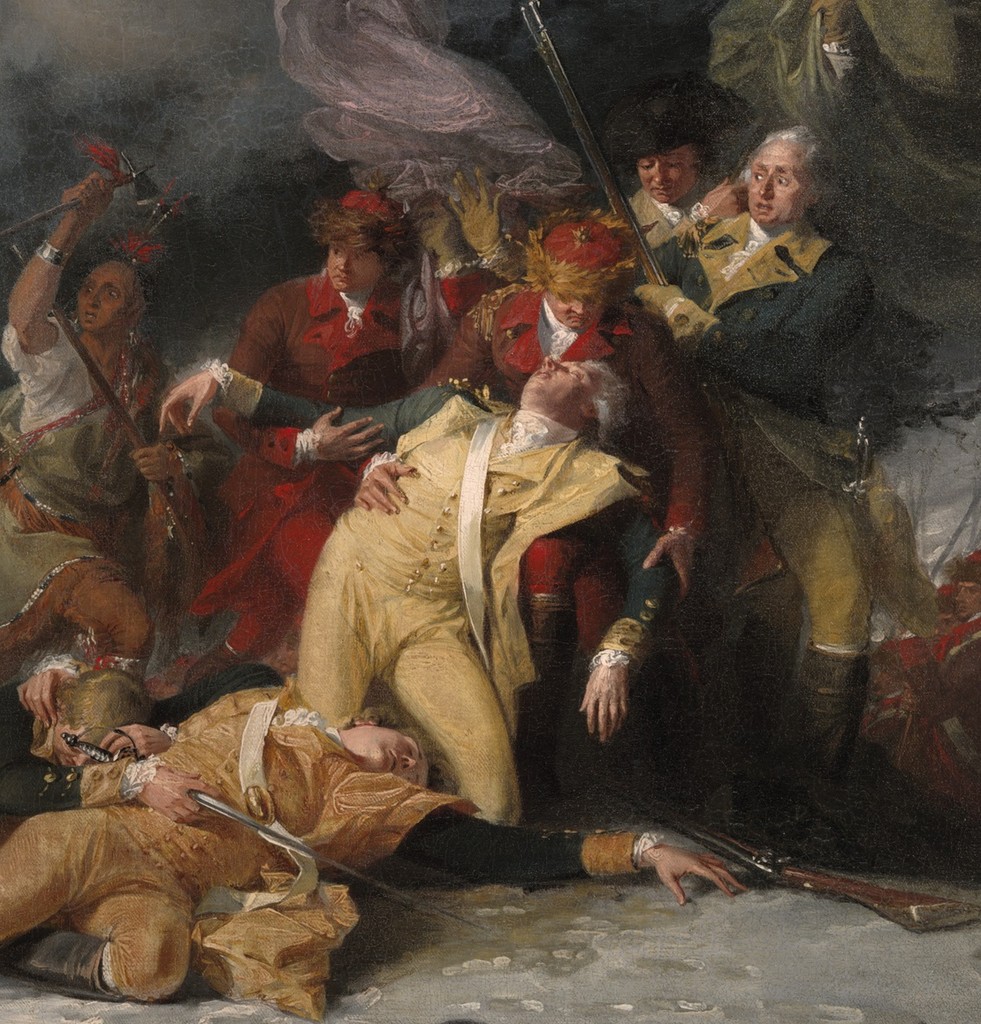
Montgomery occupies the centre, his pale waistcoat and breeches standing out against the darker figures supporting him. His head falls back and one arm hangs loosely towards the snow. The body remains upright only through the intervention of others. Its loss of independent movement gives the surrounding hands and arms a practical, emotional purpose.
Two fallen officers extend across the ground below. Their bodies carry the eye horizontally away from the general’s descending figure, widening the group’s exposure to the attack. Trumbull makes the loss of command inseparable from the other men struck down nearby. The viewer encounters the consequences of a sudden discharge through the bodies it has left behind.
In his catalogue, Trumbull describes Montgomery as expiring, supported by officers, after cannon fire killed him and his aides Major McPherson and Captain Cheesman. He identifies the chosen moment as the crisis that disrupted the assault and brought the column’s retreat. These names and actions explain the artist’s intended subject, rather than making the assembled group a literal record of every person’s position. [2]
The cliff at the right supplies a hard boundary beside the vulnerable bodies. Its steep mass leaves little sense of an open route around the group. Against that enclosing terrain, the men’s efforts to hold, signal or move become the principal signs of human activity.
Annotated Details from The Death of General Montgomery
The numbered points identify visible features discussed in this article. Return from each detail to the whole composition. John Trumbull, The Death of General Montgomery in the Attack on Quebec, December 31, 1775, 1786. Oil on canvas, 62.5 × 93.9 cm. Yale University Art Gallery, 1832.2. John Trumbull; Yale University Art Gallery, via Wikimedia Commons. Public domain. Image source. Public domain. Numbered markers added to a separate resized overview. Detail images are crops of the unchanged native source.
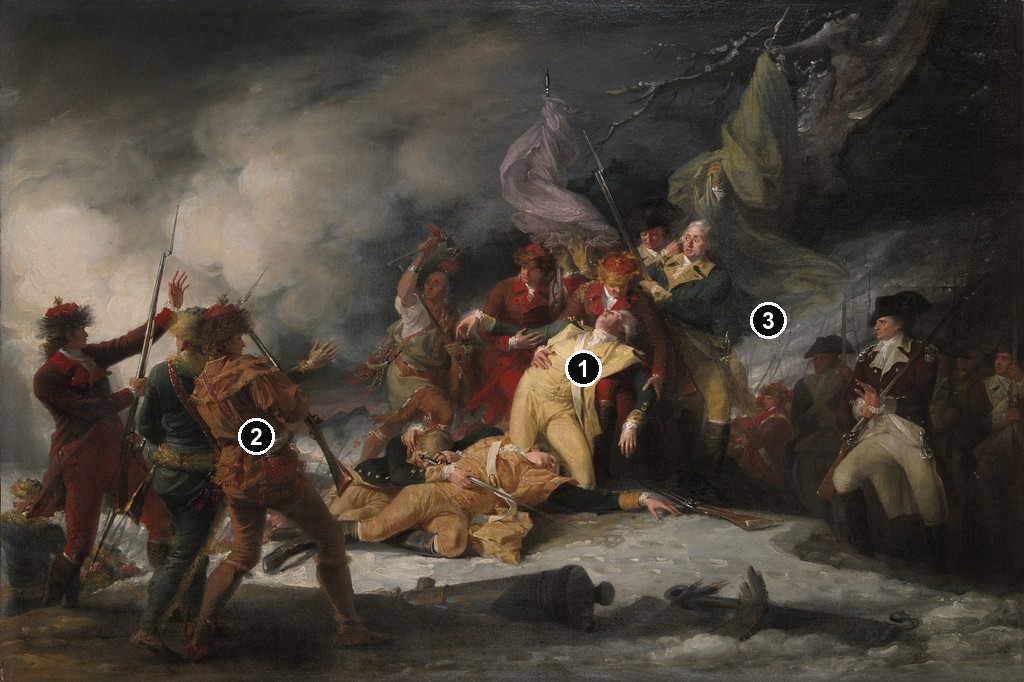
Details from THE DEATH OF GENERAL MONTGOMERY
Compare the cropped details with the complete images above. Notice how their colours, shapes and positions contribute to the larger compositions.
The supported general
The general’s head falls back while hands support his body from behind. Pale waistcoat and breeches stand out among the darker uniforms, making the loss of bodily control immediately visible.
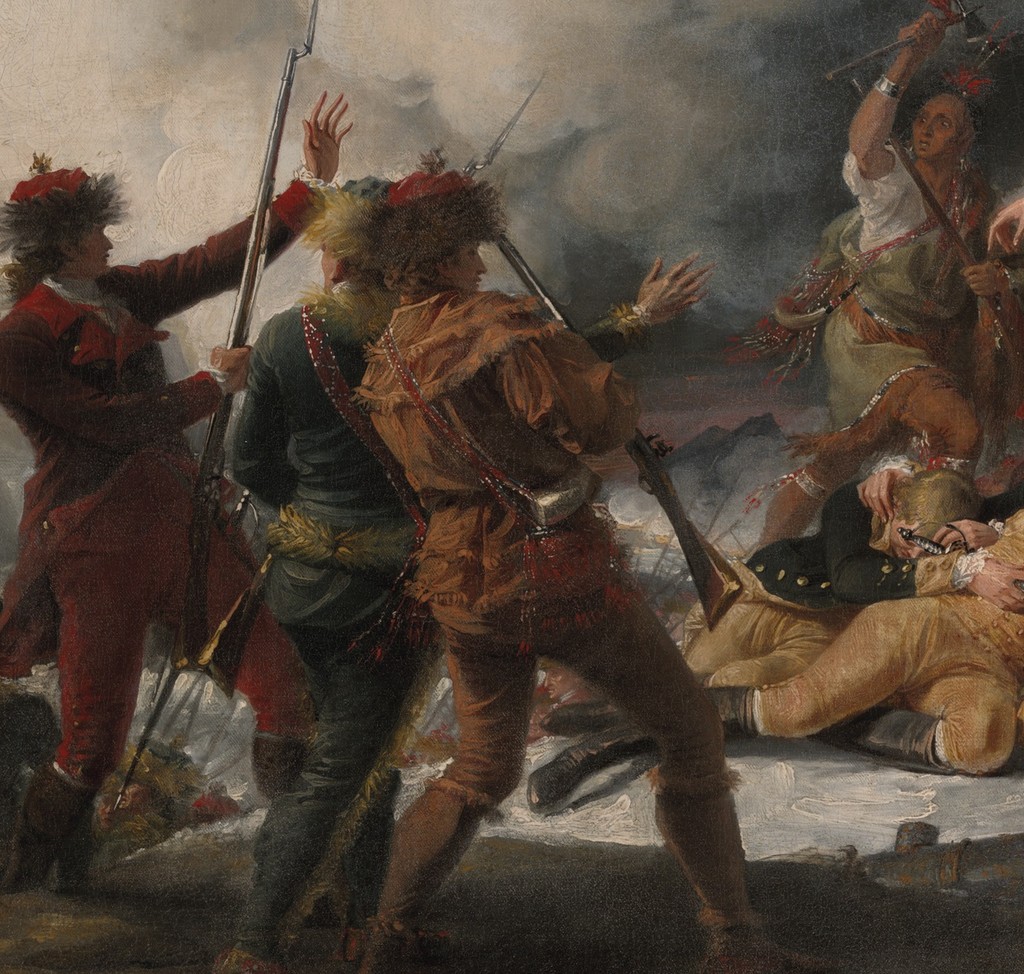
Reaching figures at the left
Arms reach in different directions as figures turn towards the fallen commander. Long weapons and a feathered headpiece give this side of the composition an uneven, agitated outline.
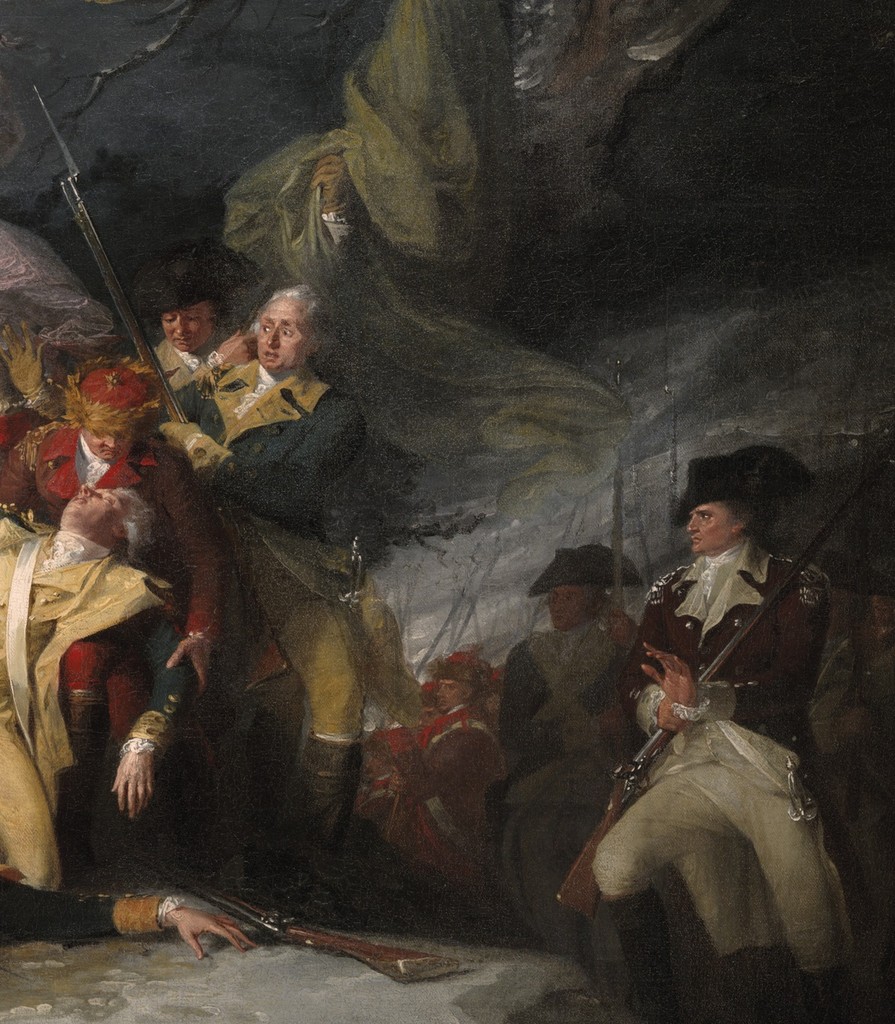
Flags, cliff and winter ground
A flag rises beside the dark cliff, while snow lies beneath the group. The hard setting presses close to the figures and leaves little sense of an easy passage through the scene.
Light, snow and the central group
The light concentrates on Montgomery’s pale clothing and the fallen figures in front. Red coats and warm yellow fabric interrupt the surrounding greys, browns and dark greens. These changes in brightness and colour guide attention through the group before the eye enters the less distinct figures at the sides.
Snow performs more than a descriptive role. Its pale surface separates boots, weapons, an overturned barrel and the bodies nearest the viewer. Irregular footprints and patches of exposed ground keep it from becoming an empty white stage. The cold surface carries the weight of the figures and the scattered material of the attack.
Above them, bare branches project from the cliff into the night. Flags rise behind the principal group, their folds less orderly than the upright bodies and weapons around them. The setting connects winter weather with the uncertainty of a battle whose intended movement has been interrupted.
Trumbull’s own description links snow, stripped trees and darkness with the melancholy character of the scene. That account confirms his interest in the setting’s emotional effect. The canvas does not simply place a death outdoors; it surrounds the central loss with a landscape and atmosphere that intensify the viewer’s response. [2]
Quebec and the failed assault
Montgomery and Benedict Arnold approached Quebec from different directions during the American invasion of 1775. Their forces joined before attempting to capture the fortified city. The final assault took place in darkness and a blizzard on the night of 30–31 December, with the two principal columns attacking the Lower Town by separate routes. [14]
Montgomery’s men advanced through a narrow passage between the cliff and the St Lawrence River towards Près-de-Ville. The defenders opened fire as he and several officers came forward, killing the general. His column withdrew. Elsewhere, Arnold was wounded, and the men who continued the attack eventually found themselves trapped and surrendered. [14]
This history gives the painted group its consequence. The officer’s fall changes the prospects of the men behind him, so that responses to a death and responses to a military emergency occur together. Trumbull’s catalogue makes the retreat part of the subject, connecting the loss of the commander with the failure of the attempt. [2]
The picture offers little view of the defending force. Instead, its effects enter through the fallen bodies and the alarm of the survivors. By keeping attention within the American group, Trumbull gives the defeat a particular emotional viewpoint. The viewer experiences the moment through those struck by the loss, rather than surveying the entire engagement from above.
The 1786 painting and the early series
The Yale painting, numbered 1832.2, measures 62.5 by 93.9 centimetres. Its 1786 date places it among Trumbull’s early Revolutionary history paintings, long before the four monumental works commissioned for the Capitol. The event in the title and the later creation of the canvas belong to different stages of that history. [1]
Trumbull described his ambition to commemorate the Revolution through a series preserving the appearance and conduct of its important participants. Montgomery and The Death of General Warren gave that undertaking two subjects centred on loss. Public significance could emerge from a commander’s death as well as from the successful conclusion of a campaign. [2]
The choice also required a painter to make events understandable to people who had not been present. Montgomery’s slackening body establishes the central fact; the reactions surrounding him make its effect visible. The design works through a concentrated group that can be read emotionally before its individual members are named.
The wider project included an ambition to circulate the compositions through engravings. In the memoir’s account, the format of the pictures and the requirements of the engraver were connected from an early stage. A scene first encountered as paint on canvas was intended to reach an audience through another medium. [2]
Watch: John Trumbull
Choose a film to explore the artist’s work, its interpretation and its wider setting.
Moment of Discovery: John Trumbull’s “Declaration of Independence”
Discovery Park of America looks closely at Trumbull’s Declaration of Independence.
Watch on YouTubeAtiatoharongwen and the use of models
A portrait study introduces another person’s history into the making of the picture. Trumbull sketched Atiatoharongwen, also known as Colonel Louis Cook, for a central figure in the composition. Benjamin Pokross’s National Park Service account identifies that connection and places Atiatoharongwen within the diplomacy and military choices of Indigenous communities during the Revolution. [15]
Atiatoharongwen was of Native and African descent and served as an officer in the Continental Army. His relationship with the American cause had its own political and military setting. He should therefore be understood as an individual whose likeness Trumbull studied, rather than merely as a type of figure available for a historical scene. [15]
The study’s use does not establish that its sitter occupied the position shown in the painting at Quebec. A model and a represented participant can have different relationships to the event. Trumbull could draw upon the appearance of someone he had observed while arranging a scene that he had to reconstruct.
That distinction connects Montgomery with the Mercer painting , for which the dead general’s son supplied a living model. The two cases show different ways that observed faces could enter historical art. The portraits article explores the movement between a sitter’s own identity and the demands of a larger composition.
Grief, action and heroic composition
The hands around Montgomery offer several responses to the catastrophe. Some support the body; others open towards the attack or rise above the gathering. The variety keeps the scene from becoming a single repeated expression of sorrow. Trumbull allows practical action and emotional reaction to occupy the same space.
At the left, a man turns towards the central group with his arm extended, while another raises an open hand farther back. These movements carry the consequences of the central fall outwards. At the right, the standing officer with a weapon remains separated from the intimate work of supporting the body, suggesting the continuing danger around the loss.
The principal body’s pale diagonal connects the upright men with those already on the ground. Faces and hands gather around it, then lead attention towards flags and weapons above. The painting makes Montgomery’s failure to stand the centre around which the standing figures acquire their meaning.
This concentration differs from the still active struggle in Mercer . Here the general’s body is already dependent on other people’s strength. The tension comes from the conflict between care for him and the urgent movement of a column whose attack can no longer proceed as intended. The heroic subject is carried by the group’s response as much as by the officer himself.
The engraved afterlife
Trumbull’s subscription proposal of 2 April 1790 paired prints of Warren and Montgomery . Subscribers would pay part of the price in advance and the remainder on delivery. The proposal shows how the two death scenes entered a practical plan for circulation, with a potential public extending beyond the owners and viewers of the canvases. [2]
The Smithsonian American Art Museum holds an engraving after the Montgomery composition, catalogued under J. T. Clemens and dated 1798. Printed on paper, it measures 65.1 by 86.4 centimetres and carries the accession 1983.90.17. Its survival supplies a specific object through which the design’s movement into print can be followed. [16]
The change of medium also broadens the history of the image. The painted scene, the subscription proposal and the later engraving belong to related activities: inventing the composition, seeking its audience and producing a form through which others could encounter it. The general’s death became a subject that could travel beyond the physical canvas.
What remains most immediate is the interrupted movement at the centre. Montgomery falls backwards, hands gather beneath and around him, and the attack continues to press upon the survivors. Trumbull gives a failed assault an enduring human focus by making the loss of one commander visible through the actions of the men who must respond.
Artworks directory
Works discussed in these articles, including distinct versions and reproductive prints. Dates identify the particular object; titles and attributions follow the cited collections. This is not a catalogue raisonné.
Frequently Asked Questions
He was killed during the American assault on Quebec on 31 December 1775.
In 1786, about a decade after the event.
At Yale University Art Gallery, accession 1832.2.
The scene is a historical composition assembled by Trumbull. Portrait models and represented people do not automatically establish attendance or exact positions.
Yes. A 1798 engraving after Trumbull is held by the Smithsonian American Art Museum.
Discussion
Look again at the images and ideas explored in The Death of General Montgomery by John Trumbull. These editorial prompts invite your observations.
Compare the hands supporting Montgomery with the raised and extended hands around him. How does Trumbull make a single scene hold grief, alarm and the need to act?
Reader Insights
How do the supporting hands and falling body organise the group?
What does the winter setting add to the response of the figures?
How does a portrait model differ from a verified participant in an event?
Join the Conversation
Share a detail, comparison or question about The Death of General Montgomery by John Trumbull below.
References
- Yale University Art Gallery, via Wikimedia Commons , The Death of General Montgomery in the Attack on Quebec, December 31, 1775 , 1786, 1832.2; painting identification, date, dimensions and image. View source
- John Trumbull , Autobiography, Reminiscences and Letters , 1841, subscription proposal p. 339, series account pp. 407–408 and catalogue no. 5, pp. 413–416; retrospective description, early project and intended prints. View source
- Yale University Art Gallery / Wikimedia Commons, The Capture of the Hessians at Trenton,December26,1776,1832.5,. View source
- Yale University Art Gallery via Wikimedia Commons, The Death of General Mercer at the Battle of Princeton, January3,1777,1832.6.1,. View source
- Metropolitan Museum of Art, The Sortie Made by the Garrison of Gibraltar,. View source
- Metropolitan Museum of Art, George Washington before the Battle of Trenton,. View source
- National Gallery of Art, Alexander Hamilton, c1792,. View source
- National Gallery of Art / Ellen G. Miles with Cynthia J. Mills and other contributors, American Paintings of the Eighteenth Century,1995,Trumbull entries,. View source
- Museum of Fine Arts, Boston, Death of General Warren at Bunker’s Hill,. View source
- Architect of the Capitol, Declaration of Independence,. View source
- Architect of the Capitol, Surrender of Lord Cornwallis,. View source
- Architect of the Capitol, Surrender of General Burgoyne,. View source
- Architect of the Capitol, General George Washington Resigning His Commission,. View source
- D. Peter MacLeod, Canadian War Museum , Revolution Rejected: Canada and the American Revolution, 1774–1791 ; the Quebec campaign and failed assault. View source
- Dr. Benjamin Pokross, National Park Service , General Washington in the Native Northeast ; Atiatoharongwen, Indigenous diplomacy and the portrait study used in Trumbull’s composition. View source
- Smithsonian American Art Museum , The Death of General Montgomery in the Attack of Quebec December 1775 , 1798, 1983.90.17; engraving after Trumbull, catalogued under J. T. Clemens. View source
- Splash image source.
John Trumbull, The Death of General Montgomery in the Attack on Quebec, December 31, 1775, 1786. Oil on canvas, 62.5 × 93.9 cm. Yale University Art Gallery, 1832.2. John Trumbull; Yale University Art Gallery, via Wikimedia Commons. Public domain. Public domain . Resized only; full supplied image retained. No appearance adjustment.
View source