 by
Tom Gurney
Tom Gurney BSc (Hons) is an art history expert with over 20 years experience
Email:
tomgurney1@gmail.com
/ Phone:
+44 7429 011000
John Trumbull Drawings and Prints: Introduction
John Trumbull's drawings and the engravings made after his paintings reveal two different stages in the life of a historical image. A small graphite study could help him give a face to a participant in the American Revolution. A large print could carry a completed composition to people who would never stand before the canvas. Between those objects lay decisions about likeness, action, scale and the translation of paint into lines.
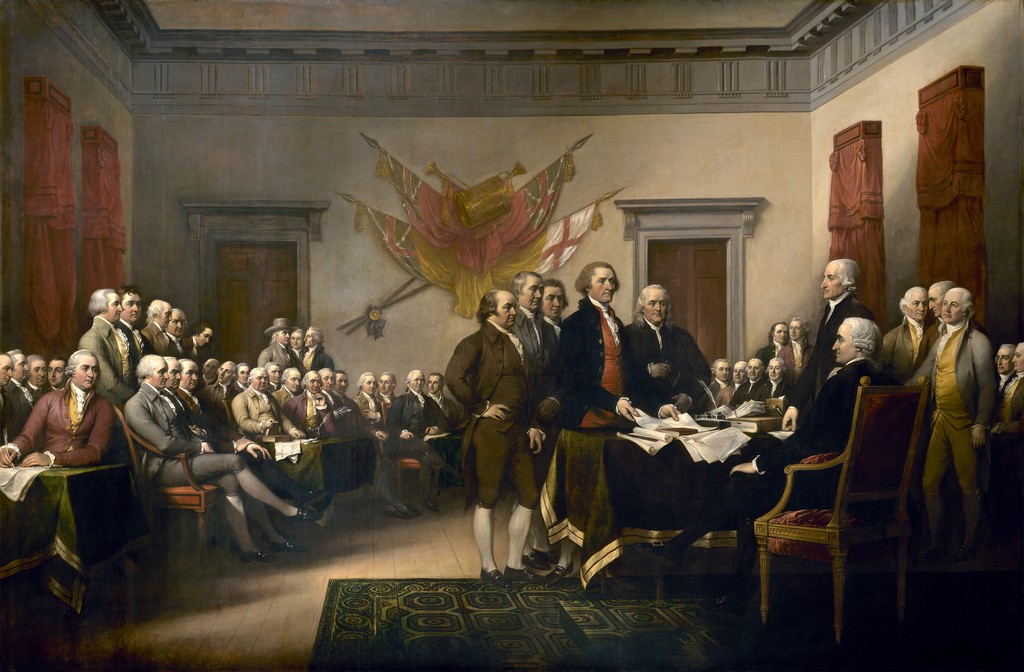
Two surviving works make that process especially clear: Trumbull's Hugh Mercer, Jr. , drawn in 1791, and Asher Brown Durand's engraving after Declaration of Independence , published in 1823. The drawing is by Trumbull; the print is by Durand after Trumbull. Their different authorship matters as much as their shared connection with the Revolutionary paintings. [1] [2]
Selected portrait study and reproductive engraving
At a Glance
- Artist John Trumbull, 1756–1843
- Illustrated drawing Hugh Mercer, Jr. , 1791
- Drawing materials Graphite on off-white laid paper
- Drawing collection Metropolitan Museum of Art, 06.1346.2
- Illustrated print The Declaration of Independence of the United States of America, July 4, 1776
- Print maker Asher Brown Durand, after John Trumbull
- Print publication 1823; the inscription includes an earlier copyright date
- Illustrated impression Metropolitan Museum of Art, 24.90.1514, sixth state of six
Contents
- A face before a battle painting
- Hugh Mercer Jr. as a model
- Portrait evidence and historical reconstruction
- Drawing a composition
- Durand and the Declaration engraving
- Copyright, publication and print states
- Montgomery and the international print trade
A face before a battle painting
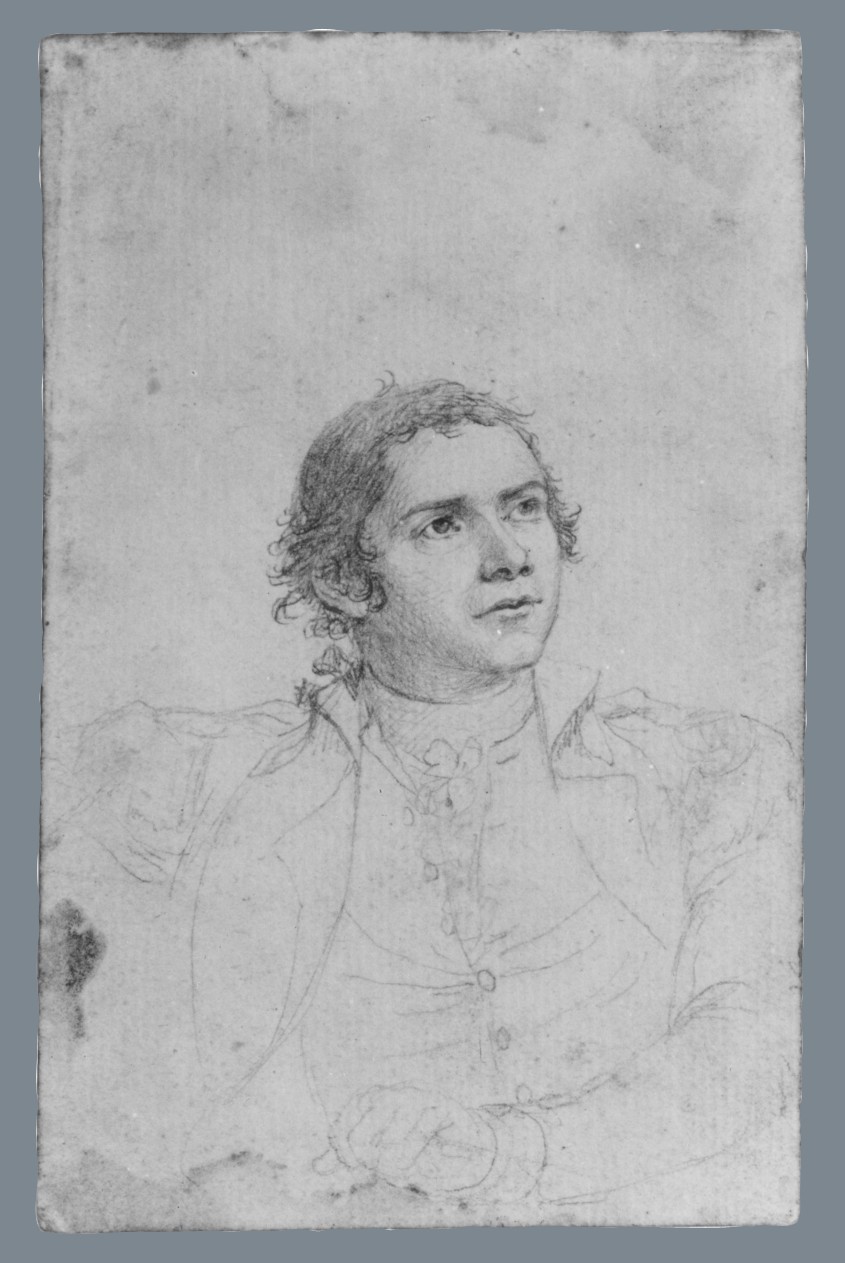
The most emphatic part of Hugh Mercer, Jr. is the head. Dark graphite marks articulate the hair, eyes, nose and mouth, while lighter shading turns the cheek towards the neck. The young man's gaze rises to the right. Below, the coat, shoulders and buttons remain much more lightly indicated. The difference directs attention towards the face without requiring the rest of the figure to be fully finished.
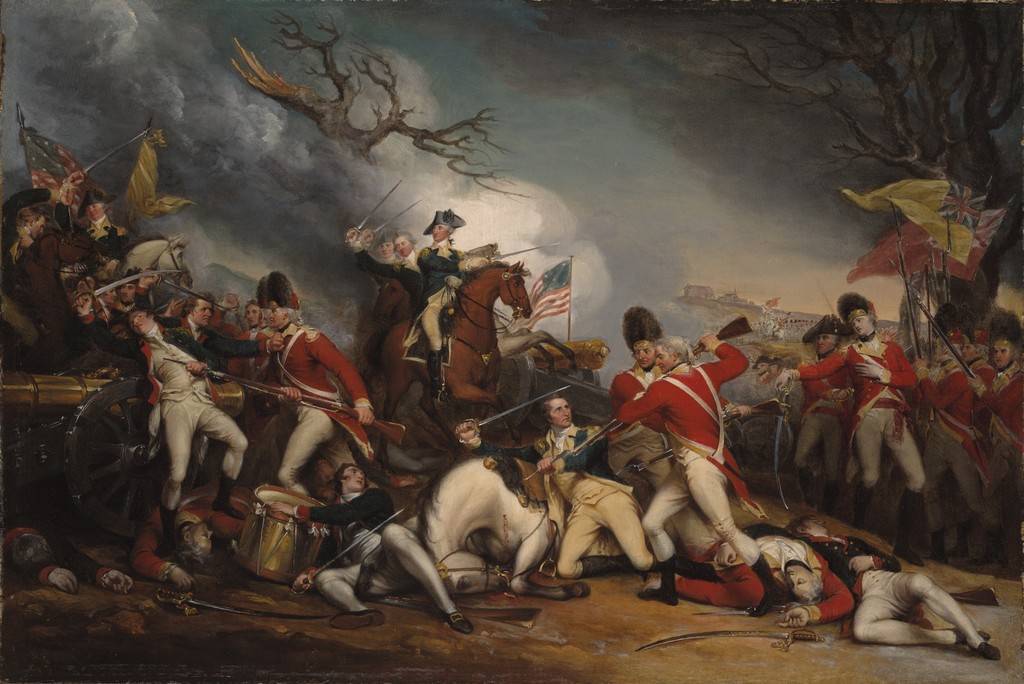
The sheet measures only 12.5 by 7.9 centimetres. Its small scale suits concentrated observation, and the surviving marks allow the viewer to follow the painter's attention across a particular likeness. Yet this portrait also belonged to a larger undertaking. The Met connects it with The Death of General Mercer at the Battle of Princeton , where the features of an individual had to function within a complicated military scene. [1]
The connection changes the way the drawing is read. Its unfinished clothing does not prevent it from serving a precise purpose. The face could supply information that a surrounding battle composition needed, while leaving questions of costume, movement and the figure's eventual position to other stages of work.
Hugh Mercer Jr. as a model
The sitter's name contains an essential qualification. Trumbull drew the general's son, not the general himself. Hugh Mercer had died after the Battle of Princeton in 1777. According to the Met, the artist twice sketched the younger Mercer in Fredericksburg, Virginia, in April 1791, using him as a model for his deceased father. The museum identifies the drawing as one of thirteen surviving studies for the painting. [1]
This was a solution to a problem that historical painters repeatedly faced: the subject to be represented could no longer sit for a portrait. A living relative offered a possible connection with that person's appearance. The resulting study records an encounter with the son, while its intended use points backwards towards the father.
The distinction is visible in the difference between the two images. The drawing concentrates on a young man's head and lightly outlined torso. The finished painting places a threatened officer within a crowded foreground of bodies, weapons and horses. Recognition and dramatic action have to work together there. The sheet helps explain one source of the likeness without making the painted death an eyewitness record.
Portrait evidence and historical reconstruction
Trumbull's concern with individual faces was central to his Revolutionary project. His memoir describes seeking portraits of the people who would appear in his pictures, and the artist's travels brought that work into contact with the political and military networks of the new republic. His history paintings consequently assembled information obtained at different times and in different places. [3]
A portrait study could preserve something observed directly, but its use in a historical composition involved further choices. The painter still had to determine where a figure stood, how that person turned and what action or response became legible. A likeness gathered years afterwards did not supply the entire setting or sequence of a past event.
Kevin J. Avery's account of eighteenth-century American drawing places Trumbull's Mercer study within this relationship between portraiture and preparation for narrative painting. The face and the acting figure were closely connected problems. A sheet could help the artist make a historical person recognisable while developing the bodily expression required by the scene. [4]
Drawing a composition
The movement from a study to a painting was also a movement between scales of attention. A face demands scrutiny of relatively small differences. A battle picture must remain intelligible through much larger relationships: one group against another, a central action against surrounding turmoil, a bright figure against a dark background. The style and technique page considers how Trumbull organised those relationships in paint.
John F. Weir's early account describes Trumbull's training with Benjamin West and the importance of drawing and copying within his education. It also records the encouragement to have the Revolutionary compositions engraved. Preparation and reproduction were connected to the ambition of the project, rather than activities that happened only after a painting was finished. [5]
The distinction between a likeness and a composition remains useful when looking at the paintings. A sharply characterised face can establish the presence of an individual; a turn of the body or an extended arm can connect that person with the picture's action. Neither task alone accounts for the whole scene.
Durand and the Declaration engraving
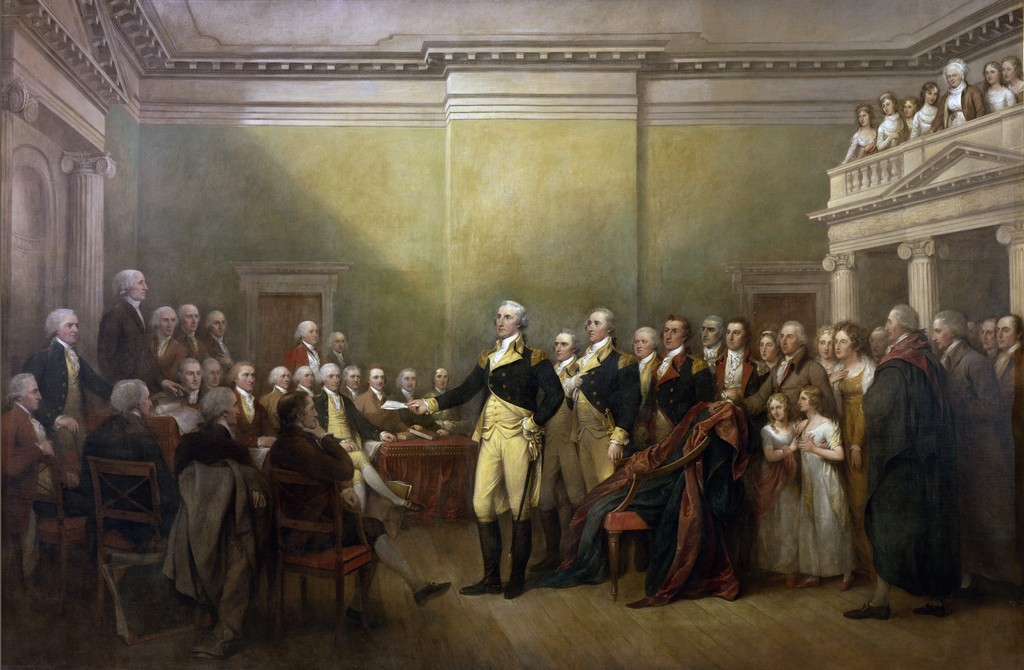
Durand's Declaration offers a much more crowded object for comparison. The committee occupies the central foreground, with delegates distributed across the room and John Hancock seated at the right. Fine lines describe faces, clothing, chairs and the architecture. Areas of different density separate the dark coats from pale stockings, papers and illuminated faces.
Here, the engraver had to sustain both the broad arrangement and a multitude of small distinctions. The crowd must read as an assembled Congress, while individual faces retain their place within the scene. The eye moves between the committee and the surrounding sitters, following contrasts that organise the image on paper.
The Met records that Trumbull commissioned Durand to engrave the plate for $3,000. Its account connects the choice with Durand's ability, his American identity and a lower fee than the British engraver James Heath had requested. The commission therefore joined an artistic judgment to the practical costs of reproducing a complex image. [2]
The illustrated Met impression preserves lettering beneath the scene. Those margins form part of the printed object: the title and maker information help explain what the image claims to represent and whose work brought it into this medium. The familiar composition belongs to Trumbull, but the engraved surface embodies Durand's labour. The Declaration article follows the history of the paintings and the scene they depict.
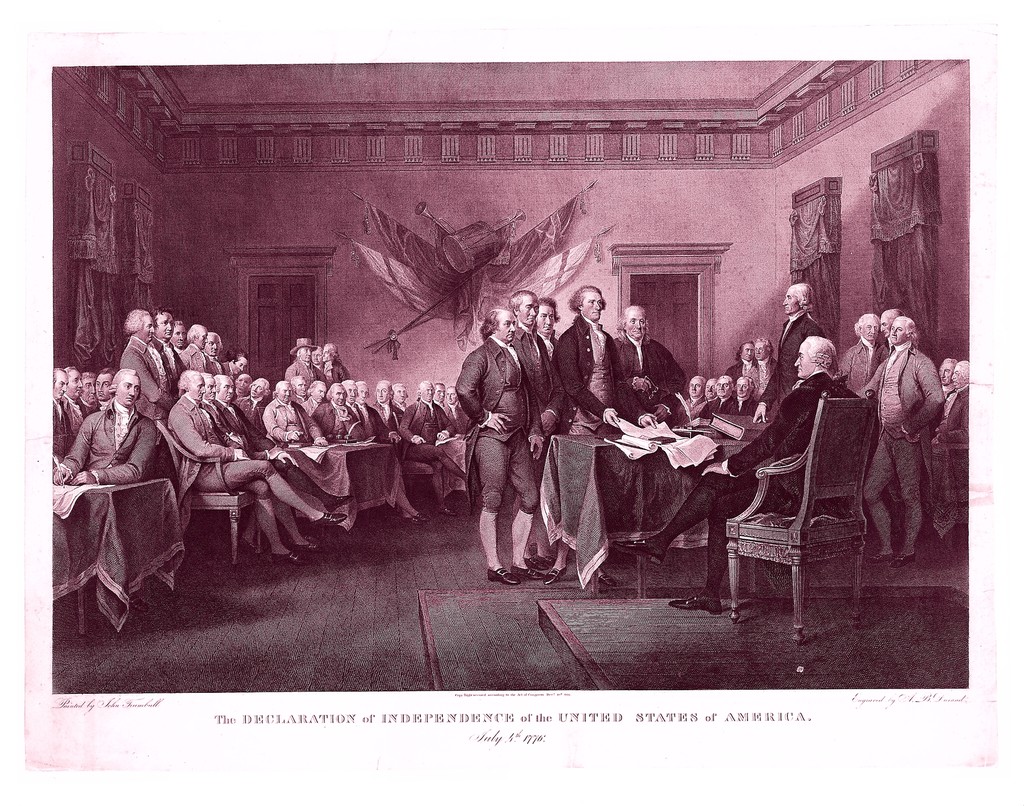
Asher Brown Durand after John Trumbull, The Declaration of Independence of the United States of America, July 4, 1776, published 1823. Engraving, sixth state of six. Metropolitan Museum of Art, 24.90.1514. Bequest of Charles Allen Munn, 1924. The Metropolitan Museum of Art, CC0.
Image source
.
CC0 / Public domain
. Resized only; full supplied image retained. No appearance adjustment.
Watch: John Trumbull
Choose a film to explore the artist’s work, its interpretation and its wider setting.
Moment of Discovery: John Trumbull’s “Declaration of Independence”
Discovery Park of America looks closely at Trumbull’s Declaration of Independence.
Watch on YouTubeCopyright, publication and print states
An inscription can also create confusion about dates. The Met explains that the Declaration engraving carries a copyright date of December 20, 1820, although Durand's work took three years and the print was published late in 1823. Trumbull's October 1823 letter to Lafayette, reproduced in his memoir, refers to sending a proof before the lettering was added. These dates describe different stages of the undertaking. [2] [3]
The illustrated impression is catalogued as the sixth state of six. Another Met impression, accession 2022.29, is identified as the fifth state. A state records a stage in the plate's development; it should not be treated as a different original painting. Nor does the existence of several states establish, without further evidence, the exact changes between every surviving impression. [2] [6]
Measurements likewise belong to particular objects. Catalogues may distinguish the printed image, the plate and the sheet. The additional paper around a composition can carry lettering, marks or evidence of the impression's later history. Looking beyond the scene to its edges helps restore the physical character of an image often encountered as a tightly cropped reproduction.
For the illustrated sixth-state impression, the Met gives an image measuring 51.3 by 76.7 centimetres on a sheet measuring 60.6 by 81.3 centimetres. The fifth-state record gives separate image, plate and sheet measurements, with a larger sheet of 65 by 91.8 centimetres. A difference in the surrounding paper does not mean that the historical scene has acquired a larger painted original. It identifies a difference between the particular printed objects being compared. [2] [6]
Montgomery and the international print trade
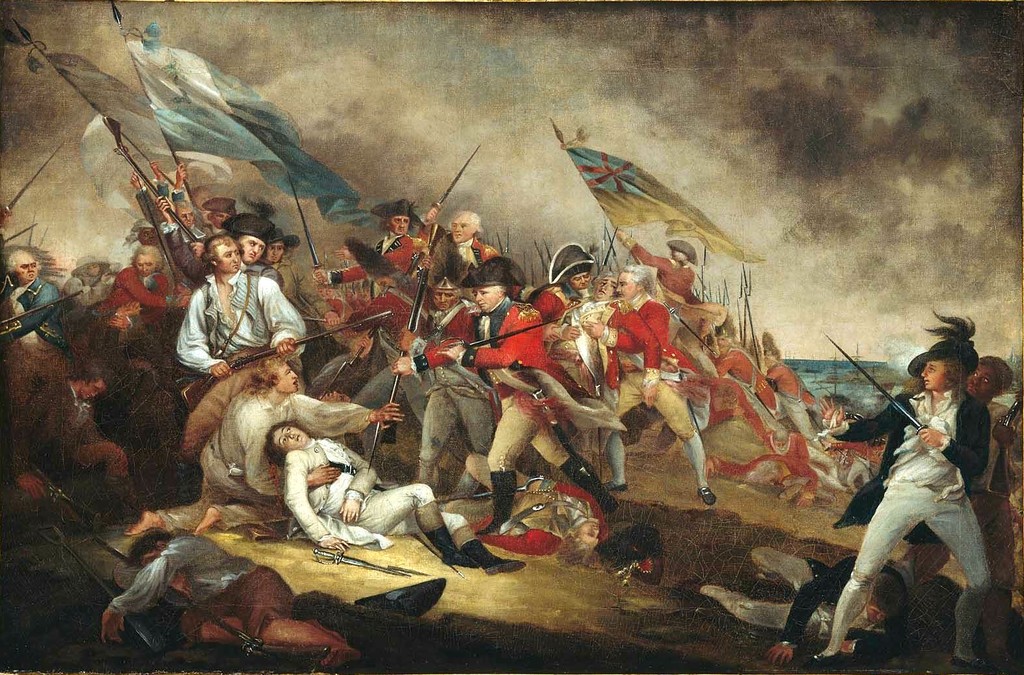
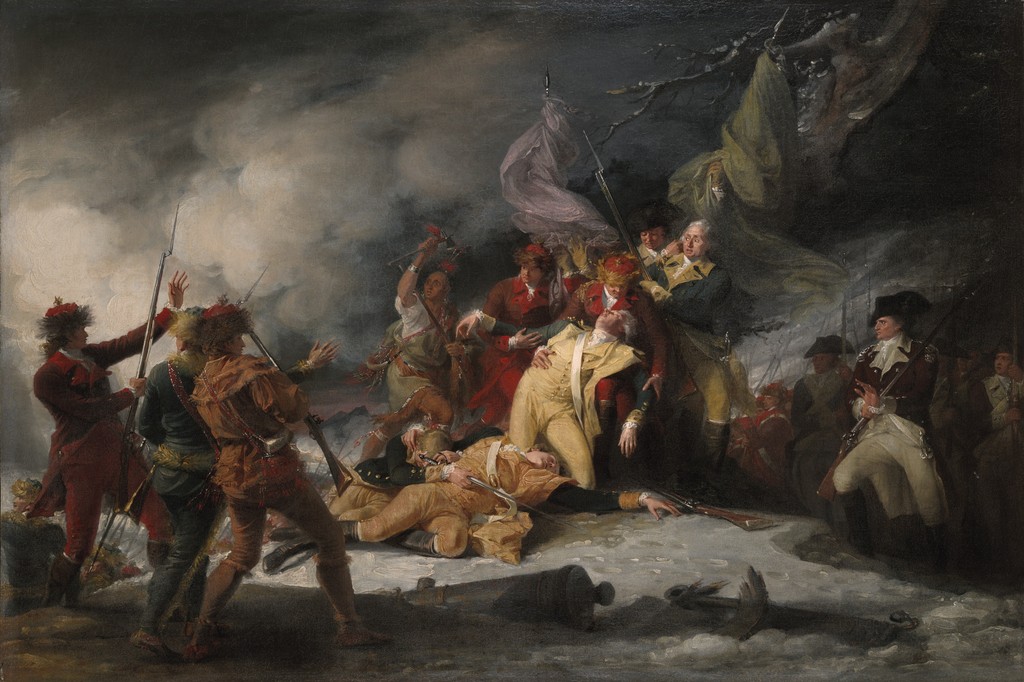
The Declaration was part of a longer engagement with reproductive engraving. Weir describes Trumbull's dealings with European engravers and his efforts to obtain subscribers for prints after the early Revolutionary pictures. His account names Müller in Stuttgart in connection with Bunker Hill and Clemens in connection with the Quebec subject. The enterprise required specialised work and a market as well as a painted design. [5]
A surviving collection record gives that international activity a concrete form. The Smithsonian American Art Museum catalogues an engraving after The Death of General Montgomery in the Attack of Quebec , dated 1798, accession 1983.90.17. Its medium is engraving on paper. The object is a reproductive print after Trumbull, rather than another oil painting by him. [7]
Together, the Mercer study and the Declaration print show how differently paper could serve Trumbull's historical ambition. One concentrates information about a face before its incorporation into a painted scene. The other translates an elaborate composition through another artist's skill. Reading the maker, medium and individual object alongside the image opens a more precise view of Trumbull's paintings and their wider life.
Artworks directory
Works discussed in these articles, including distinct versions and reproductive prints. Dates identify the particular object; titles and attributions follow the cited collections. This is not a catalogue raisonné.
Frequently Asked Questions
The illustrated 1791 drawing represents Mercer's son, Hugh Mercer Jr. Trumbull used the son as a model for the deceased general.
Asher Brown Durand made the important engraving published in 1823 after Trumbull's composition.
That is its copyright date. The Met distinguishes it from the print's publication late in 1823.
No. It is a separate printed object made after his painted design, and its caption should identify the engraver's role.
Discussion
Look again at the images and ideas explored in John Trumbull Drawings and Prints. These editorial prompts invite your observations.
Compare the concentrated face in the Mercer drawing with the crowded room in Durand's engraving. Where do you see the clearest decisions about what must remain sharp, what can be lightly indicated and how a viewer's attention should move?
Reader Insights
Where is the Mercer study most fully developed?
How does the drawn head relate to the painted historical figure?
What can copyright, publication and plate state tell us about a print?
Join the Conversation
Share a detail, comparison or question about John Trumbull Drawings and Prints below.
References
- Metropolitan Museum of Art , Hugh Mercer, Jr. , 1791, 06.1346.2; object interpretation, materials, dimensions and provenance. View source
- Metropolitan Museum of Art , Asher Brown Durand after John Trumbull, The Declaration of Independence of the United States of America, July 4, 1776 , 1823, 24.90.1514; sixth state of six. View source
- John Trumbull , Autobiography, Reminiscences and Letters , 1841, pp. 402–408; the Lafayette letter and introduction to the gallery catalogue. View source
- Kevin J. Avery, Metropolitan Museum of Art , “Late Eighteenth-Century American Drawings,” 2003; portrait studies and preparation for narrative painting. View source
- John F. Weir , John Trumbull: A Brief Sketch of His Life , 1901, especially the discussion of London training, engravers and subscriptions, pp. 13–27. View source
- Metropolitan Museum of Art , Asher Brown Durand after John Trumbull, Declaration of Independence , 1820–23, 2022.29; fifth state of six. View source
- Smithsonian American Art Museum , The Death of General Montgomery in the Attack of Quebec December 1775 , 1798, 1983.90.17; collection record for the engraving after Trumbull. View source
- Splash image source.
John Trumbull, Hugh Mercer, Jr., 1791. Graphite on off-white laid paper, 12.5 × 7.9 cm. Metropolitan Museum of Art, 06.1346.2. Gift of Robert W. de Forest, 1906. The Metropolitan Museum of Art, CC0. CC0 / Public domain . Resized only; full supplied image retained. No appearance adjustment.
View source