


 by
Tom Gurney
Tom Gurney BSc (Hons) is an art history expert with over 20 years experience
Email:
tomgurney1@gmail.com
/ Phone:
+44 7429 011000
John Trumbull: Introduction
John Trumbull (1756–1843) gave the American Revolution some of its most enduring images. His paintings gather recognisable people around consequential acts: a document presented to Congress, an army surrendered, a commander dying or military authority returned to a civilian body. The stories become visible through the relationships between faces, bodies and gestures.
An American painter with military experience and extensive European training, Trumbull built his historical work across years of travel and portrait gathering. Four monumental canvases in the United States Capitol gave that undertaking a lasting public setting. Smaller paintings, independent portraits and surviving studies reveal the longer career behind those familiar images. [1] [2]
His pictures reward attention to the difference between remembering an event and recording it literally. Experience and identifiable likenesses mattered to him, but so did arrangement, emphasis and the moral meaning of an encounter. Looking closely at those choices makes the artist more interesting than the idea of a witness simply copying history onto canvas.
At a Glance
- Born 6 June 1756, Lebanon, Connecticut.
- Died 10 November 1843, New York City.
- Principal subjects here Revolutionary history, military conduct and portraiture.
- Major teacher Benjamin West.
- Capitol commission four paintings commissioned in 1817 and installed in 1826.
- Yale agreement 1831, in exchange for an annuity.
- Looking reminder historical experience and gathered likenesses do not make every scene a literal eyewitness record.
John Trumbull in context
Bars show approximate historical periods. c. means circa (about).
Neoclassicism
c. 1760–1830 [23]Romanticism
c. 1800–1850 [24]Notes and sources
Neoclassicism. Later eighteenth-century context. West belonged to the first generation of Neoclassical painters. His teaching connects Trumbull with that wider world of formal historical composition. [3] [2]
Romanticism. Around 1800 and the early nineteenth century. Romanticism’s emphasis on imagination and emotion offers a comparison for the drama of historical painting. The movement developed after Trumbull’s first Revolutionary designs; this context does not make every work Romantic. [4]
Each bar runs from the artist’s birth to their death.
Benjamin West
1738–1820 · Birth–death [25]Asher Brown Durand
1796–1886 · Birth–death [26]Notes and sources
Benjamin West. London training from 1780; resumed in 1784. Trumbull’s teacher in London; the first period of study was interrupted by imprisonment. [2] [1]
Asher Brown Durand. Declaration engraving, 1820–23. Durand translated the Declaration composition into engraving. Copyright registration in 1820 preceded publication in late 1823. [5]
The Death of General Mercer at Princeton
about 1787–1831; principal Yale versionThe Sortie Made by the Garrison of Gibraltar
1789; Met versionGeorge Washington before the Battle of Trenton
about 1792–94; Met versionAlexander Hamilton
about 1792; likely early NGA replicaThe Death of General Warren at Bunker’s Hill
after 1815–before 1831; MFA versionDeclaration of Independence
1817–18; Capitol canvasSurrender of Lord Cornwallis
1819–20Surrender of General Burgoyne
1821; Capitol canvasNotes and sources
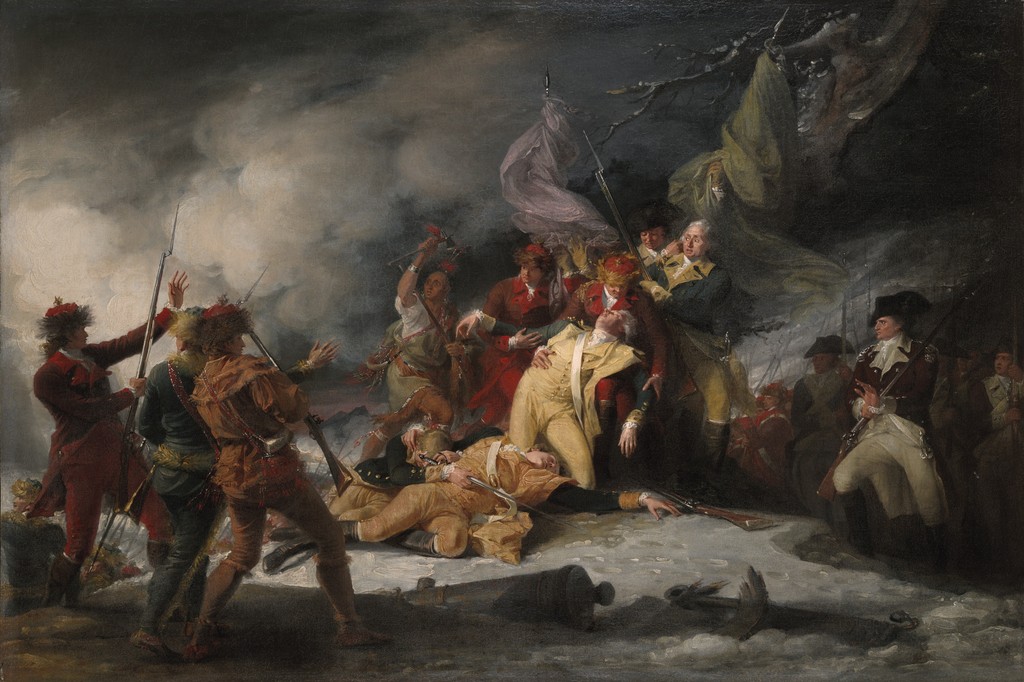
The Death of General Montgomery. Dates identify the particular canvas discussed in the article. [6]
The Capture of the Hessians at Trenton. Dates identify the particular canvas discussed in the article. [7]
The Death of General Mercer at Princeton. Dates identify the particular canvas discussed in the article. [8]
The Sortie Made by the Garrison of Gibraltar. Dates identify the particular canvas discussed in the article. [9]
George Washington before the Battle of Trenton. Dates identify the particular canvas discussed in the article. [10]
Alexander Hamilton. The NGA catalogue treats this as a likely early replica. [11] [12]
The Death of General Warren at Bunker’s Hill. Dates identify the selected later version. [13]
Declaration of Independence. Dates identify the particular canvas discussed in the article. [14]
Surrender of Lord Cornwallis. Dates identify the particular canvas discussed in the article. [15]
Surrender of General Burgoyne. Dates identify the particular canvas discussed in the article. [16]
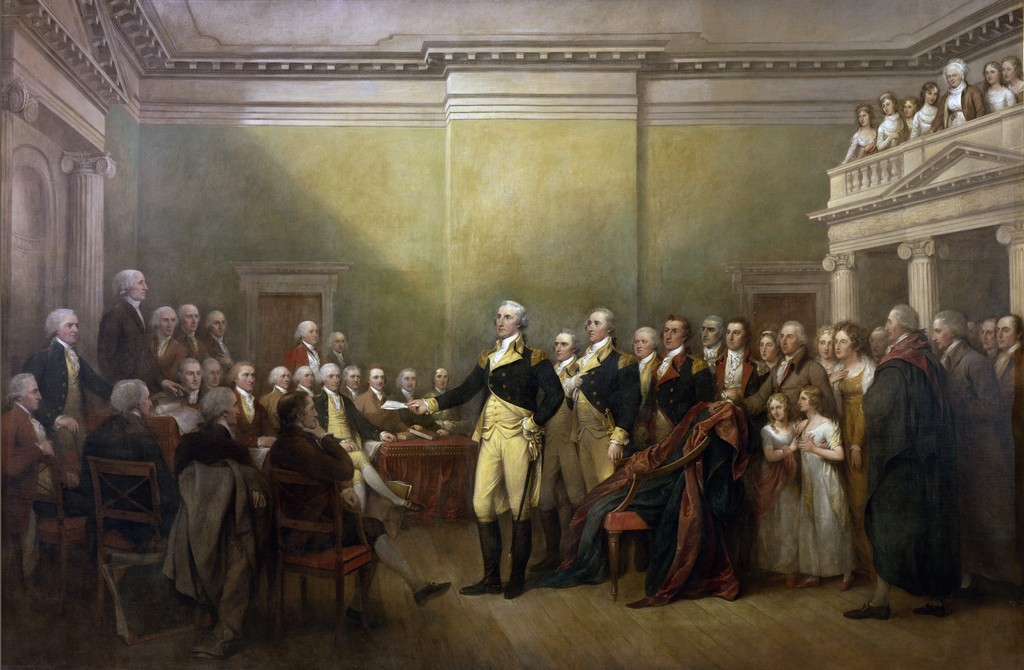
Washington Resigning His Commission. Dates identify the particular canvas discussed in the article. [17]
Contents
- A painter of the Revolution
- Military experience and London training
- Portraits assembled across the Atlantic
- The Capitol commission
- Small paintings and large public images
- Portraiture beyond the battle scenes
- Yale and the making of a legacy
A painter of the Revolution
Trumbull’s historical project grew from an ambition to preserve important people and events of the Revolution. In his memoir, he describes a connected series in which the appearance of participants would remain central. The works were conceived for an audience that could recognise public significance through particular individuals rather than through an entirely allegorical cast. [18]
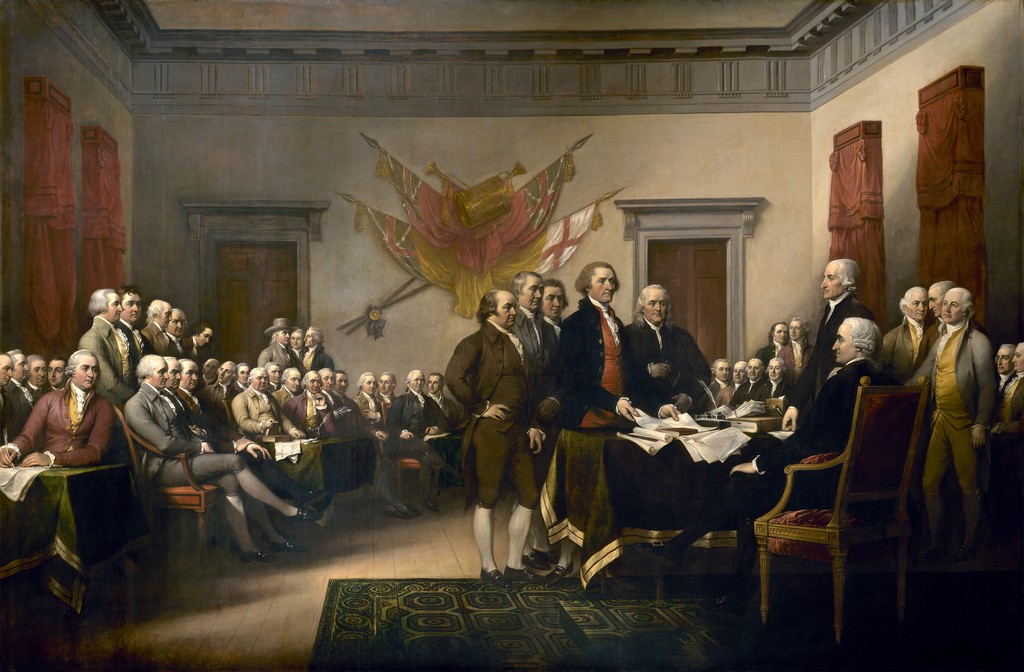
The Declaration of Independence gives that ambition a quiet form. A committee approaches the president of Congress with a draft, while the surrounding assembly attends to the act. Its fame can obscure the subject: the painting represents a presentation, rather than a gathering of all the signers putting their names to the document at once.
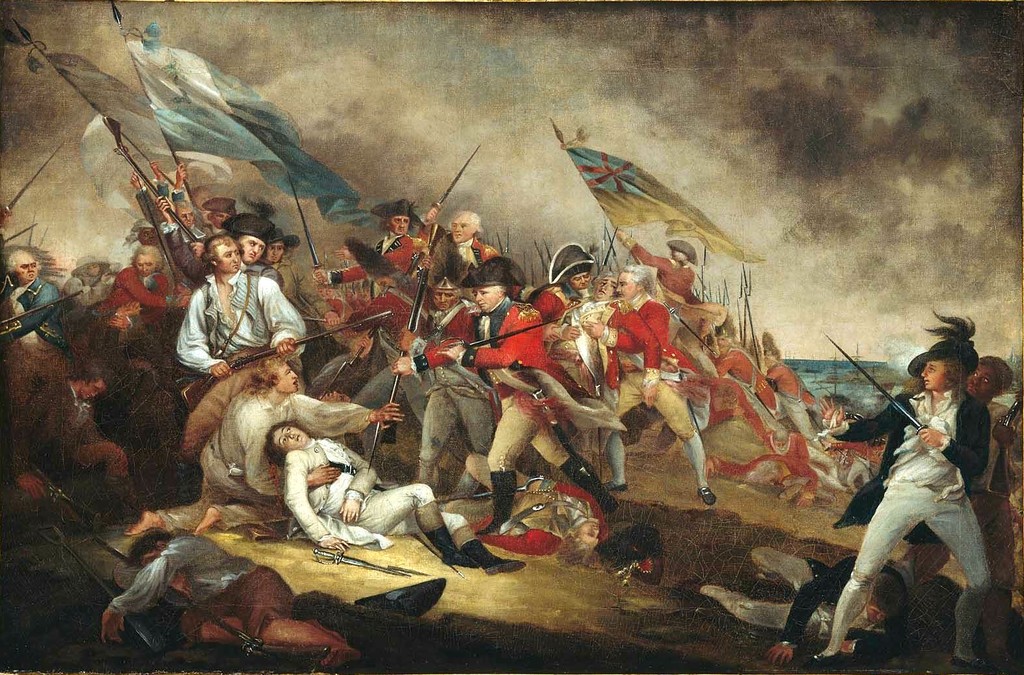
Other subjects reveal the importance he attached to conduct. In The Death of General Warren , an attempt to restrain a weapon gives compassion a place within battle. In The Capture of the Hessians , the victor’s relationship to a wounded opponent becomes the centre of attention. Trumbull wanted military history to preserve examples of behaviour as well as outcomes. [18]
The choice of an encounter makes large events manageable as pictures. A whole campaign cannot be taken in at a glance, but a hand extended, a fallen body supported or a paper delivered can be made immediately legible. Trumbull gives the viewer a human action through which to approach the wider history.
That method leaves room for interpretation. The figures may represent people who took part in an event, yet their grouping and gestures belong to the painter’s design. The paintings selection introduces the different subjects and versions, allowing a formal ceremony, a battle and an independent portrait to be considered together.
Four stages of John Trumbull’s career
These periods group related developments; painting, travel and local work overlap across their boundaries.
Family, military service and first London study
Born in Lebanon and educated at Harvard, Trumbull served in the Continental Army. His first study with Benjamin West began in 1780 and was interrupted by imprisonment. [1]
European study and American likenesses
Further London training, work in Paris and portrait sittings in America helped establish the Revolutionary paintings. Small studies and independent portraits supplied different parts of the undertaking. [2]
Diplomacy, travel and portraiture
Diplomatic employment, travel between Britain and America and independent portrait commissions overlapped. This period included work in New York as well as years abroad. [12]
The Capitol and Yale
Congress’s four-canvas commission gave the Revolutionary project a monumental setting. The later Yale agreement preserved a collection of paintings and studies in exchange for an annuity. [1]
Military experience and London training
Trumbull was born in Lebanon, Connecticut, in 1756 and graduated from Harvard in 1773. His early interest in art developed alongside the expectations of a prominent family. The Revolution then brought him into military service, including a period on Washington’s staff, before sustained professional training took him abroad. [1] [2]
The relationship between experience and representation needs care. Trumbull had served within the army whose history he later painted, and knew people connected with its events. That background gave the project personal substance. It did not mean that he had stood close to every scene or witnessed each encounter he would eventually arrange.
His account of the Battle of Bunker Hill is a useful example. He saw the action from Roxbury at a distance. The close view of Warren’s dying body and the surrounding figures was created later, through a painter’s choice of subject and composition. The distinction preserves the value of his involvement without turning every picture into an eyewitness report. [18]
In London, Benjamin West provided a major point of artistic formation. Trumbull’s studies there began in 1780, though imprisonment interrupted that first period. Later returns to Europe gave him further contact with paintings, artists and the professional circumstances of historical art. His career developed through repeated journeys rather than one uninterrupted residence in either Britain or America. [2] [12]
The detailed biography follows those movements and the changing opportunities around them. For the paintings, the important connection is between a recent American subject and the skills, ambitions and pictorial traditions he encountered abroad. Military memory supplied material that artistic training helped him shape.
Portraits assembled across the Atlantic
The historical groups were built through a dispersed search for likenesses. Trumbull recalled painting Adams in London, Jefferson in Paris and other participants in American cities. An encounter in one place could supply a face for a composition set somewhere else, years earlier. The finished scene gathered those separate observations into a shared room or battlefield. [18]
This process gave portraiture a practical role within the historical undertaking. A small study could preserve the appearance of someone who would later enter a larger design. It also created difficulties when the person was dead, unavailable or represented by an existing image whose use required judgment.
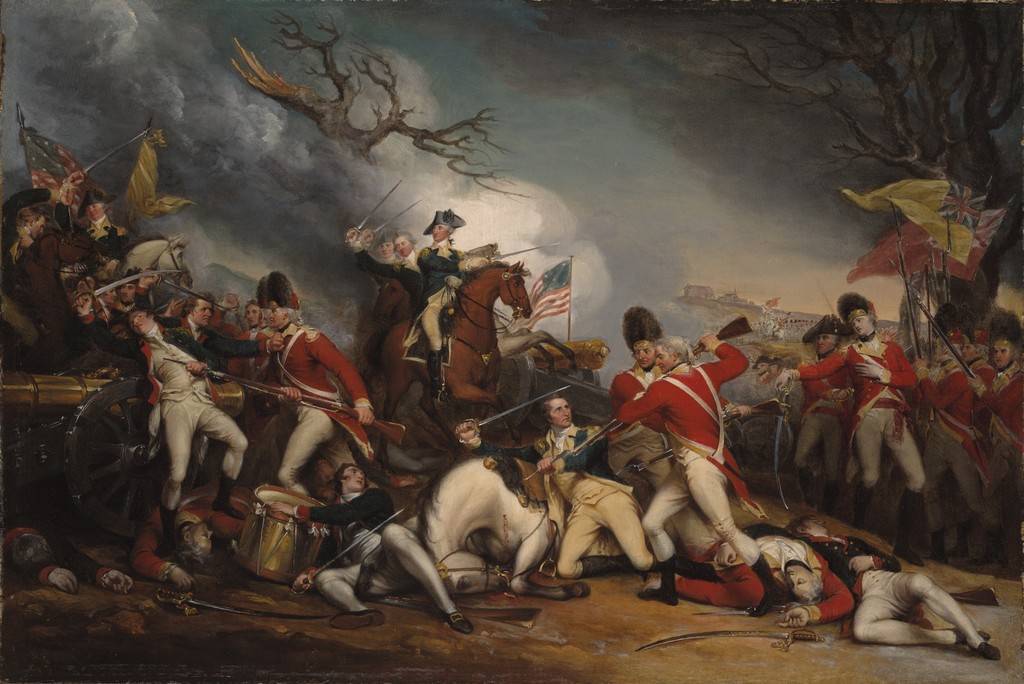
The Met’s study of Hugh Mercer Jr. makes the problem visible. Trumbull used the general’s son as a model for his deceased father, sketching him in 1791 for the Princeton painting. The drawing records an actual sitter, but the person observed and the historical individual represented were different. [19]
Likeness was only one part of the work. A head had to belong convincingly to a body, and that body to the larger action. Trumbull had to reconcile individually observed features with the poses, spaces and directions of attention needed for the composition to function.
The portraits article explores the different forms of evidence behind those faces. The drawings and prints article follows the works on paper and reproductive processes around them. Together they show how a familiar public image could depend on many small objects and separate encounters.
The Capitol commission
Congress commissioned four monumental paintings in 1817. Trumbull’s Declaration , the surrenders of Burgoyne and Cornwallis, and Washington Resigning His Commission were installed in the Rotunda in 1826. Their subjects place political action, military success and the relinquishing of command within a connected account of the Revolution. [1]
The commission brought earlier designs into a new physical and institutional setting. Trumbull had already been developing the Revolutionary project for decades. The large canvases gave selected subjects a scale suited to public architecture and an audience beyond the people who could inspect a small painting or private portrait. [18]
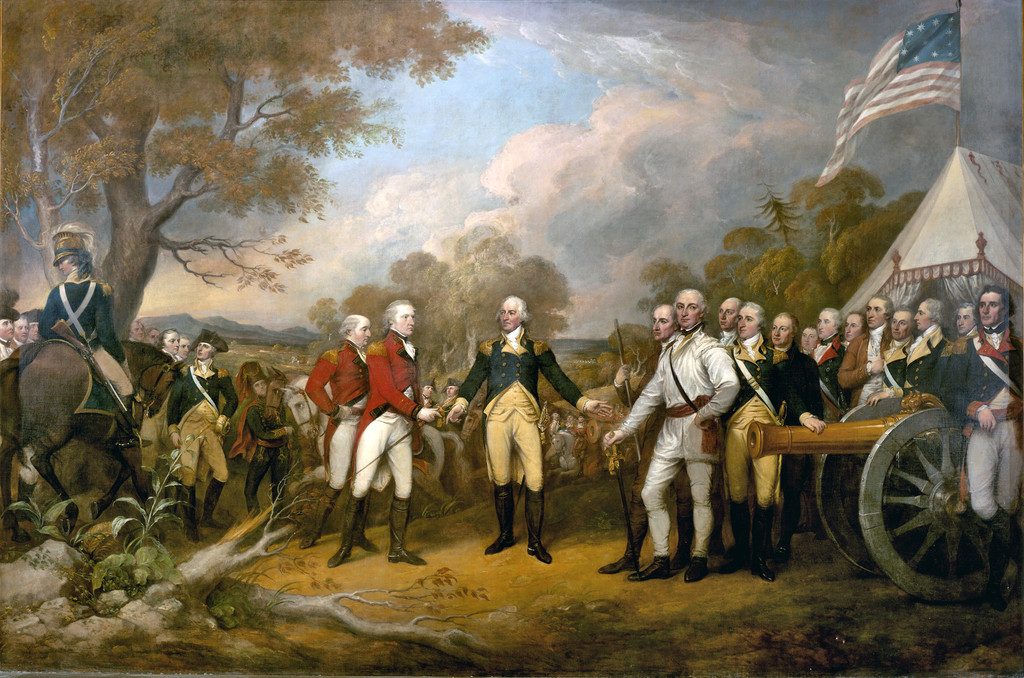
Each subject has its own way of making authority visible. The Burgoyne surrender places a meeting of commanders before gathered officers and an army in the distance. The Cornwallis painting gives the allied forces a strong presence on either side of a ceremony conducted by subordinate officers.
Washington Resigning His Commission returns the action to a legislative room. Its principal gesture is the delivery of a paper, establishing a relationship with the Declaration at the beginning of the group. The same broad arrangement of standing and seated figures can carry a different kind of public meaning.
The physical scale also affects the way the paintings can be read. From a distance, an open patch of ground or the height of a standing group establishes the principal action. Closer inspection reveals a face, a hand or the relationship between neighbouring figures. The public setting gives the design more than one level of attention, joining a broad historical statement to the particular people through whom it is expressed.
The series is more varied than the shared monumental format initially suggests. Two scenes take place outdoors among armies; two depend upon the attention of a civilian assembly. Trumbull finds points of concentration in each, allowing the audience to move between the immediate gesture and the larger event it represents.
Watch: John Trumbull
Choose a film to explore the artist’s work, its interpretation and its wider setting.
Moment of Discovery: John Trumbull’s “Declaration of Independence”
Discovery Park of America looks closely at Trumbull’s Declaration of Independence.
Watch on YouTubeSmall paintings and large public images
The monumental works do not exhaust the histories of their subjects. The small Yale Declaration , dated 1786–1820, developed across a much longer period than the large Capitol version. The dates overlap because the project continued through different objects, with their own scales and stages of completion. [20]
Scale affects what a viewer notices. A small painting invites close inspection of heads and details within a compact field. A great canvas must also hold together across a room, using the disposition of bodies, light and open space to keep its principal act clear. A shared composition can serve both encounters without making them identical.
Engravings offered another kind of audience. Trumbull’s memoir explains his intention to circulate the historical subjects through prints, connecting the pictures’ making with the requirements of reproductive work. The history of the image consequently extends from an artist’s study and painted surface to a form that could travel on paper. [18]
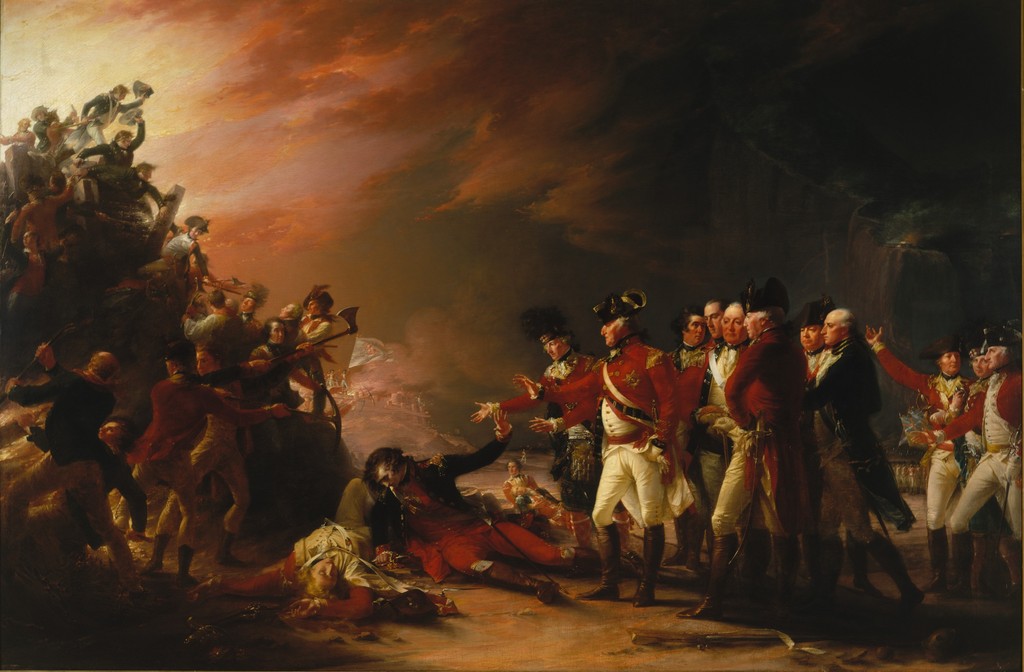
His range also extended beyond American subjects. The Sortie of Gibraltar depicts a British military encounter and the treatment of a wounded enemy. The Met holds the large 1789 canvas, one version in the subject’s development. Its night setting and concentrated foreground provide a different atmosphere from the formal surrenders. [9]
These differences reward looking across the collection. A quiet room, an outdoor ceremony and a dark battle can all centre upon significant conduct, yet they require different relationships between bodies and setting. The style and technique article examines such choices alongside the object-specific evidence available for particular works.
John Trumbull, The Sortie Made by the Garrison of Gibraltar, 1789. Oil on canvas, 180.3 × 271.8 cm. Metropolitan Museum of Art, 1976.332. The Metropolitan Museum of Art, CC0.
Image source
.
CC0 / Public domain
. Frame removed by cropping the original source photograph to the painting rectangle; no colour, contrast, retouching or perspective alteration. Original master retained.
Portraiture beyond the battle scenes
Independent portraits give the sitter a different relationship to the viewer. Instead of finding a face within an assembly or military group, we meet a person whose pose, expression and dress occupy the picture’s principal field. The reduced number of figures gives small changes of direction or emphasis greater weight.
The Hamilton portraits show why those works also need precise histories. The NGA’s early portrait, about 1792, is treated in its 1995 catalogue as a likely early replica. A later version belongs to another sequence of likenesses. A familiar sitter does not make every painting of him the same object or guarantee that each was taken directly from life. [12]
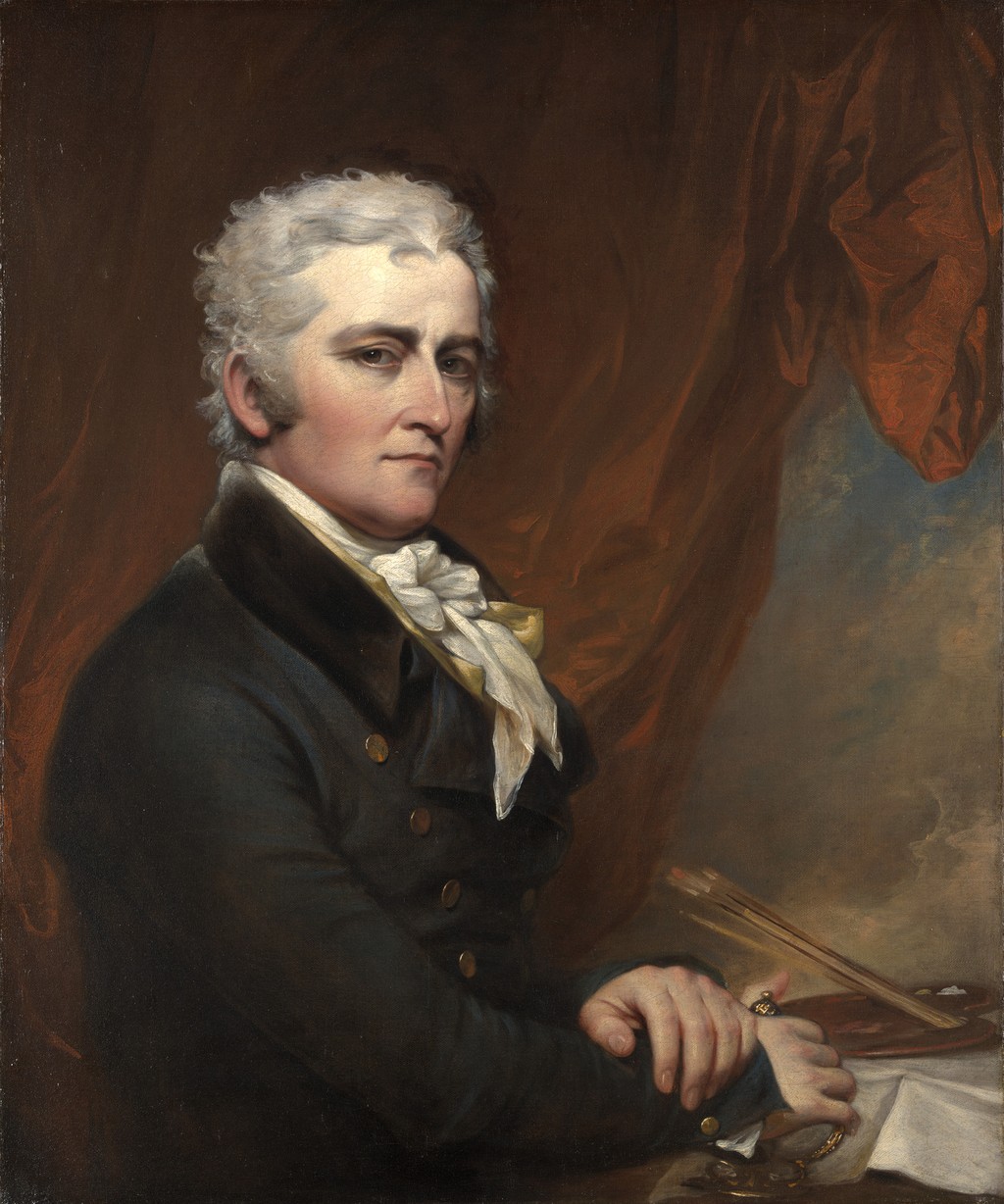
Trumbull’s self-portrait of about 1802 presents another aspect of the artist. He wears a dark coat and white cravat against red drapery, with painting materials at the right. The palette and brushes give professional work a place beside the carefully presented face. This is an image of the painter among the tools of his practice. [21]
The red curtain forms a broad, warm field around the dark coat, while the white cravat draws attention back towards the head. At the lower edge, the hands lead the eye towards the table and painting materials. The brushes are present without turning the portrait into a busy account of someone applying paint. Dress, setting and tools work together to present an artist whose professional identity can be recognised within a formal likeness.
The composition invites a different pace from the battle scenes. Attention rests on the turn of the head, the hands and the objects beside the figure. The face is given room to remain the centre, while the studio materials explain something of the activity through which he wished to be seen.
The self-portrait also helps reconnect the famous histories with the person who made them. The public scenes can become so familiar that their design appears inevitable. Seeing the artist with his materials restores a sense of choice and labour: those assemblies, gestures and remembered people had to be brought into pictorial form.
John Trumbull, Self-Portrait, about 1802. Oil on canvas, 75.5 × 62.3 cm. Yale University Art Gallery, 1981.129.1. Gift of Marshall H. Clyde, Jr. Yale University Art Gallery; faithful public-domain reproduction via Wikimedia Commons.
Image source
.
Public domain
. Resized only; full supplied image retained. No appearance adjustment.
Yale and the making of a legacy
In 1831, Trumbull transferred many of his works to Yale in exchange for an annuity. The arrangement preserved a substantial group of historical paintings, portraits and studies within an institutional collection. A gallery he designed gave that part of his career a place alongside the monumental public works in Washington. [1]
The collection makes connections possible that a single celebrated canvas cannot provide. A portrait study can be considered beside a historical group, an earlier design beside a later version, or a small picture beside the memory of its enlarged public form. The subjects become parts of an undertaking rather than isolated illustrations of famous events.
Trumbull died in New York on 10 November 1843. He was buried beneath the Yale gallery, and his paintings and remains were moved to the new gallery building in 1867. His physical memorial and the collected work were closely connected in the institution’s account of his legacy. [1]
The enduring questions around the paintings belong to that legacy too. What is preserved when a face is copied? How does an assembly acquire dignity? What happens when a gesture of care interrupts a battle? The works provide different answers through their particular people, objects and arrangements.
The best route into Trumbull begins with looking closely at one of those actions, then following the studies, versions and histories around it. The familiar image of the Revolution becomes the product of an artist who collected evidence, made consequential choices and sought a public form for the recent past.
Essential John Trumbull works
Declaration of Independence
1817–18; Capitol canvas · The committee presents a draft to Congress; the scene does not show a collective signing.
The Death of General Warren at Bunker’s Hill
after 1815–before 1831; MFA version · A later MFA version gives an act of restraint a place within the battle.
The Death of General Montgomery
1786 · Hands support a fallen commander within a dark winter assault.
The Death of General Mercer at Princeton
about 1787–1831; principal Yale version · The general’s mortal wounding and Washington’s intervention share a layered field.
Surrender of General Burgoyne
1821; Capitol canvas · A meeting of commanders gives victory the form of a courteous exchange.
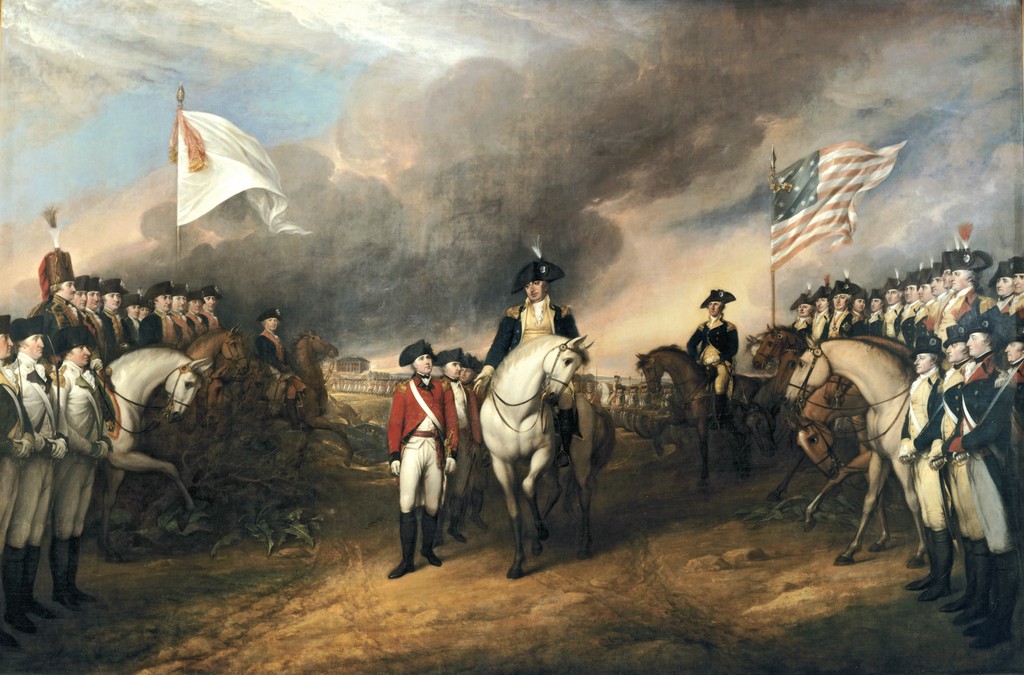
Surrender of Lord Cornwallis
1819–20 · O’Hara and Lincoln conduct a surrender named for the absent Cornwallis.
Washington Resigning His Commission
1822–24 · A paper delivered to Congress makes the relinquishing of command visible.
The Sortie Made by the Garrison of Gibraltar
1789; Met version · The treatment of a wounded enemy gives a British subject its emotional centre.
Artworks directory
Works discussed in these articles, including distinct versions and reproductive prints. Dates identify the particular object; titles and attributions follow the cited collections. This is not a catalogue raisonné.
Frequently Asked Questions
His historical paintings of the American Revolution, especially the four monumental works in the Capitol Rotunda.
Yes. His service included a period on Washington’s staff before his sustained artistic training abroad.
It represents presentation of the draft to Congress. The full artwork article distinguishes that action from adoption and signing.
Yes. Independent portraits and studies of individual faces are important both in their own right and in relation to the historical groups.
The artist transferred a substantial collection to Yale in 1831 in exchange for an annuity.
Discussion
Look again at the images and ideas explored in John Trumbull. These editorial prompts invite your observations.
Begin with a gesture in one painting: a paper offered, a weapon restrained or a body supported. How does that small action guide your understanding of the much larger event around it?
Reader Insights
Which small gesture gives a historical scene its meaning?
How does the self-portrait differ from a face within an assembly?
What changes when a design moves from a small painting to a public canvas?
Join the Conversation
Share a detail, comparison or question about John Trumbull below.
Explore the wider art history
Explore the wider history of American artists, with portraits, landscapes and changing approaches to modern art.
References
- Architect of the Capitol , John Trumbull ; early life, four commissioned subjects, installation, Yale arrangement and death. View source
- John Caldwell and Oswaldo Rodriguez Roque, with Dale T. Johnson , American Paintings in the Metropolitan Museum of Art , volume I, 1994, pp. 199–200; scholarly biography, military service and artistic formation. View source
- Cybele Gontar, Metropolitan Museum of Art, Neoclassicism, October 2003,. View source
- Kathryn Calley Galitz, Metropolitan Museum of Art, Romanticism, October 2004,. View source
- Metropolitan Museum of Art, Durand after Trumbull,Declaration,1823,24.90.1514,. View source
- Yale University Art Gallery via Wikimedia Commons, Death of General Montgomery,1786,1832.2,. View source
- Yale University Art Gallery / Wikimedia Commons, The Capture of the Hessians at Trenton,December26,1776,1832.5,. View source
- Yale University Art Gallery via Wikimedia Commons, The Death of General Mercer at the Battle of Princeton, January3,1777,1832.6.1,. View source
- The Metropolitan Museum of Art , The Sortie Made by the Garrison of Gibraltar , 1789, 1976.332; large version, subject and setting. View source
- Metropolitan Museum of Art, George Washington before the Battle of Trenton,. View source
- National Gallery of Art, Alexander Hamilton, c1792,. View source
- National Gallery of Art , American Paintings of the Eighteenth Century , 1995, John Trumbull entries, pp. 298–312; training, travel and Hamilton portraits. View source
- Museum of Fine Arts, Boston, Death of General Warren at Bunker’s Hill,. View source
- Architect of the Capitol, Declaration of Independence,. View source
- Architect of the Capitol, Surrender of Lord Cornwallis,. View source
- Architect of the Capitol, Surrender of General Burgoyne,. View source
- Architect of the Capitol, General George Washington Resigning His Commission,. View source
- John Trumbull , Autobiography, Reminiscences and Letters , 1841, especially pp. 262–266 and 407–420; historical project, commission, likenesses, distant battle view and artistic interpretation. View source
- The Metropolitan Museum of Art , Hugh Mercer, Jr. , 1791, 06.1346.2; son-model study for the Princeton painting. View source
- Yale Center for British Art / Yale University Art Gallery , The Declaration of Independence, July 4, 1776 , 1786–1820, 1832.3; smaller canvas and continuing project. View source
- Yale University Art Gallery, via Wikimedia Commons , Self-Portrait , about 1802, 1981.129.1; portrait identification and image. View source
- Splash image source.
John Trumbull, Declaration of Independence, painted August 1817–September 1818. Oil on canvas, 12 × 18 feet. United States Capitol Rotunda. The scene represents presentation of the draft to Congress, associated with 28 June 1776. John Trumbull; Architect of the Capitol, via Wikimedia Commons. Public domain. Public domain . Resized only; full supplied image retained. No appearance adjustment.
View source - Smarthistory, Neoclassicism period guide: c. 1760–1830. View source
- Kathryn Calley Galitz, “Romanticism”, Metropolitan Museum of Art (2004). Emergence around 1800 and flourishing until mid-century. View source
- Smithsonian American Art Museum, Benjamin West: 1738–1820. Artist life dates. View source
- Smithsonian American Art Museum, Asher Brown Durand: 1796–1886. Artist life dates. View source