 by
Tom Gurney
Tom Gurney BSc (Hons) is an art history expert with over 20 years experience
Email:
tomgurney1@gmail.com
/ Phone:
+44 7429 011000
George Washington before the Battle of Trenton by John Trumbull: Introduction
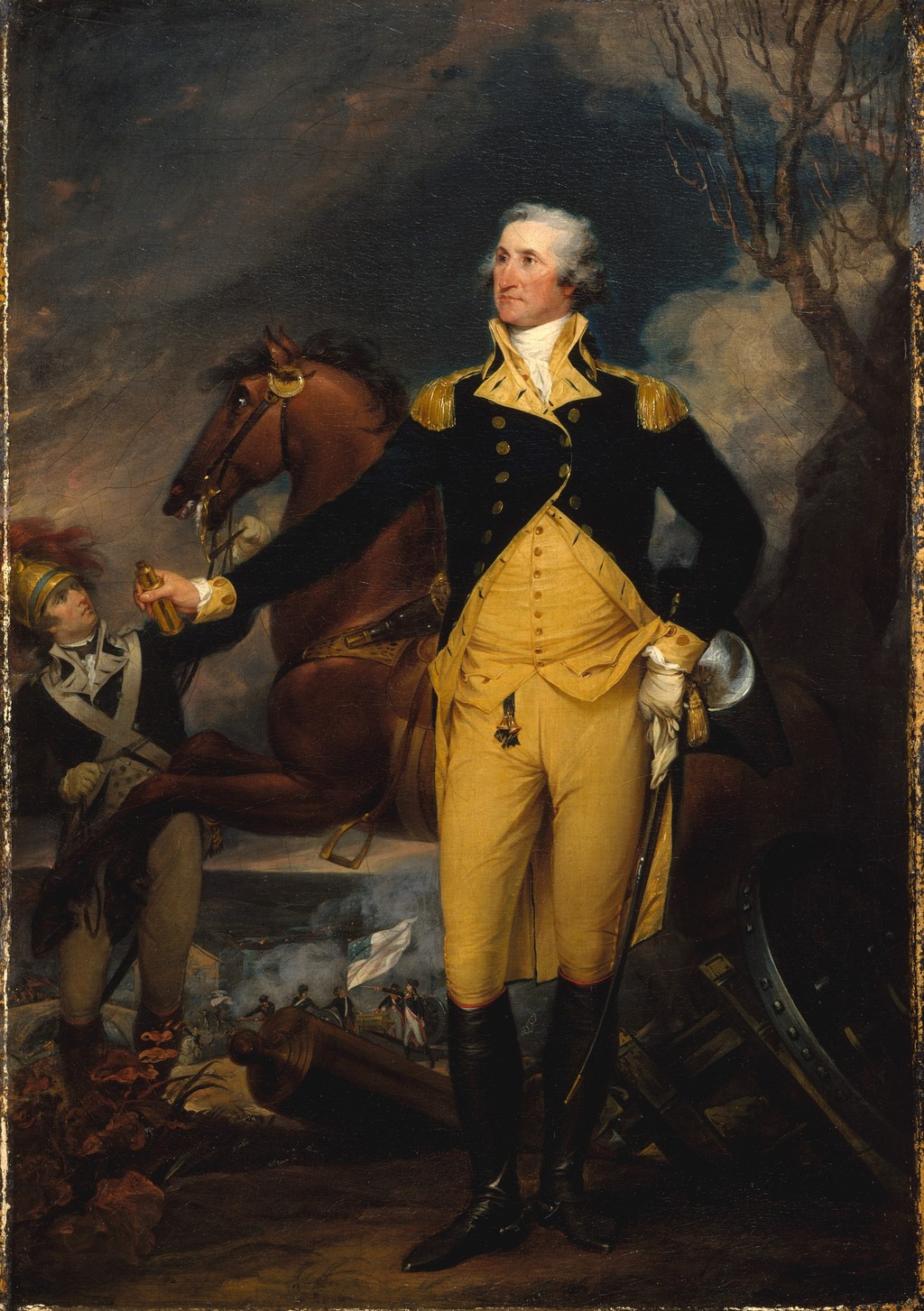
John Trumbull's George Washington before the Battle of Trenton makes a portrait carry the drama of a military crisis. Washington stands in the foreground, brightly dressed against a troubled sky, while a horse and attendant introduce movement beside him. The troops appear far below his commanding figure. His expression and bearing ask the viewer to consider the general's capacity to act when circumstances seem threatening.
The Metropolitan Museum of Art's painting, dated about 1792–94, is a smaller version of the full-size portrait at Yale made in 1792. Its history begins with a commission for Charleston that did not produce quite the image its representative wanted. Following the larger canvas, the requested replacement and the smaller Met picture reveals how differently a painter and a patron could understand the purpose of an official likeness. [1] [2]
At a Glance
- Artist John Trumbull.
- Main version discussed Metropolitan Museum of Art, 22.45.9, about 1792–94.
- Medium and dimensions oil on canvas, 67.3 × 47 cm.
- Credit Bequest of Grace Wilkes, 1922.
- Related larger portrait Yale University Art Gallery, 1792, approximately 235 × 160 cm.
- Commission history the first military design was retained by Trumbull; a separate portrait was supplied for Charleston.
This work across John Trumbull’s career
The Death of General Mercer at Princeton
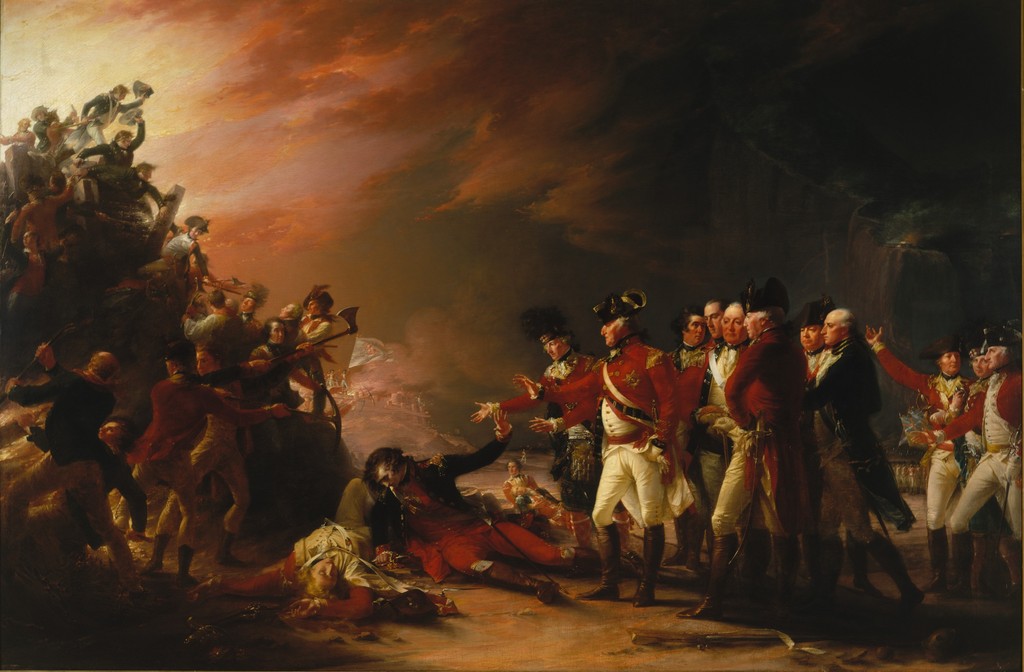
about 1787–1831; principal Yale versionThe Sortie Made by the Garrison of Gibraltar
1789; Met versionGeorge Washington before the Battle of Trenton (current article)
about 1792–94; Met versionAlexander Hamilton
about 1792; likely early NGA replicaThe Death of General Warren at Bunker’s Hill
after 1815–before 1831; MFA versionDeclaration of Independence
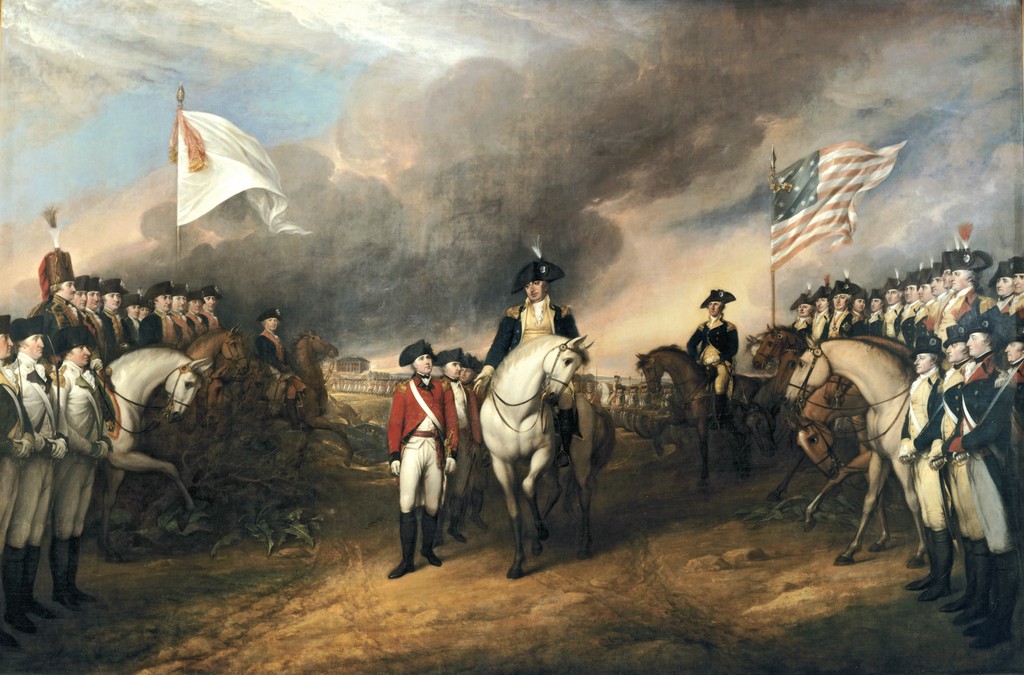
1817–18; Capitol canvasSurrender of Lord Cornwallis
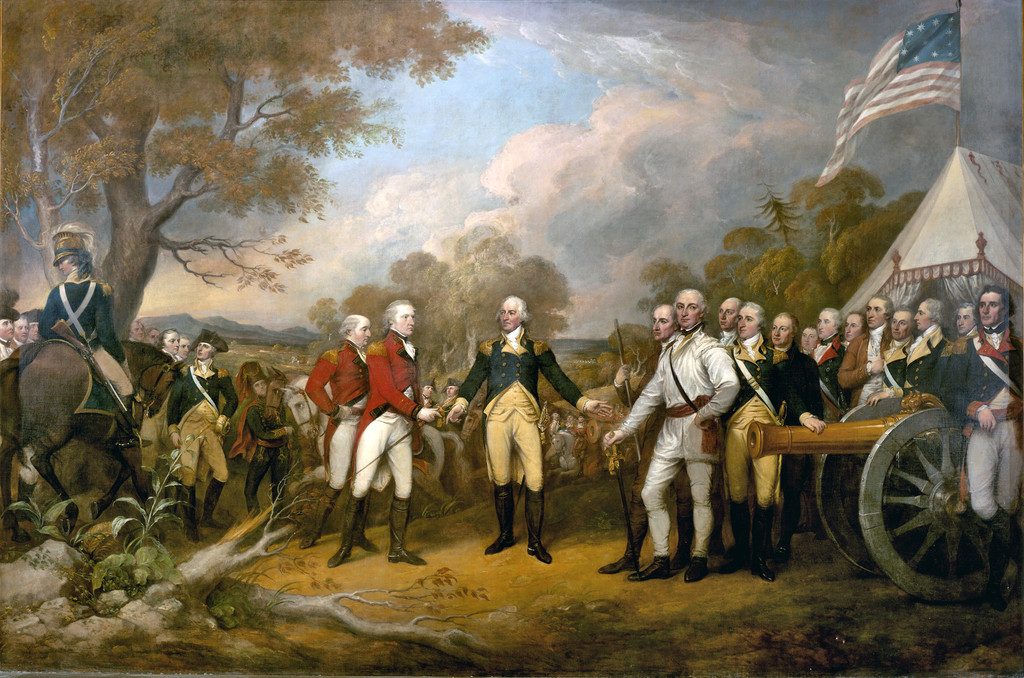
1819–20Surrender of General Burgoyne
1821; Capitol canvasNotes and sources
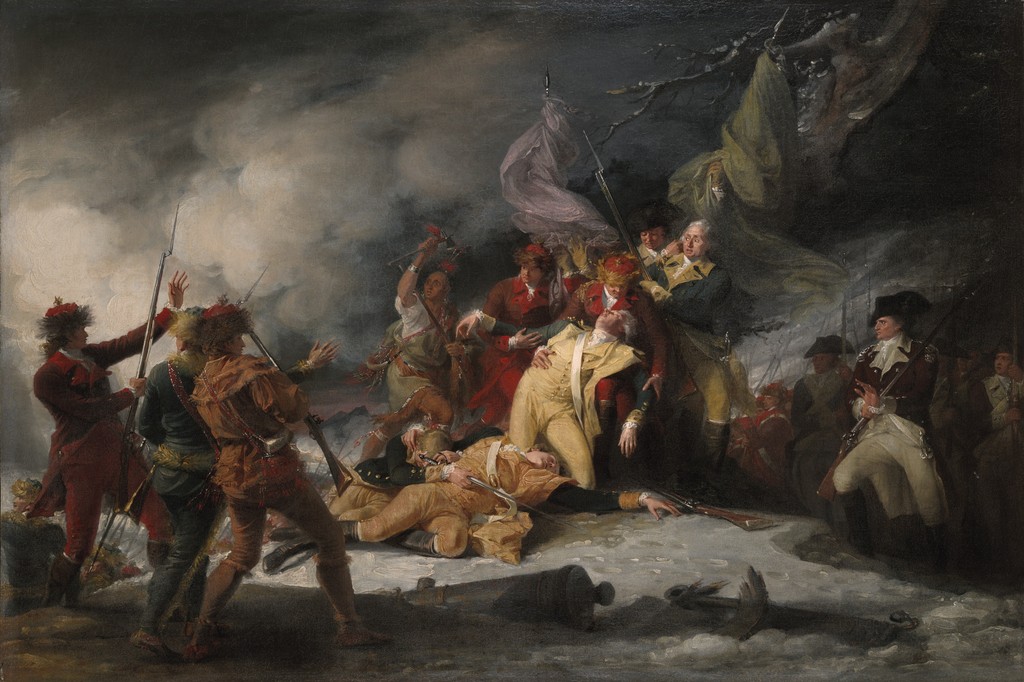
The Death of General Montgomery. Dates identify the particular canvas discussed in the article. [3]
The Capture of the Hessians at Trenton. Dates identify the particular canvas discussed in the article. [4]
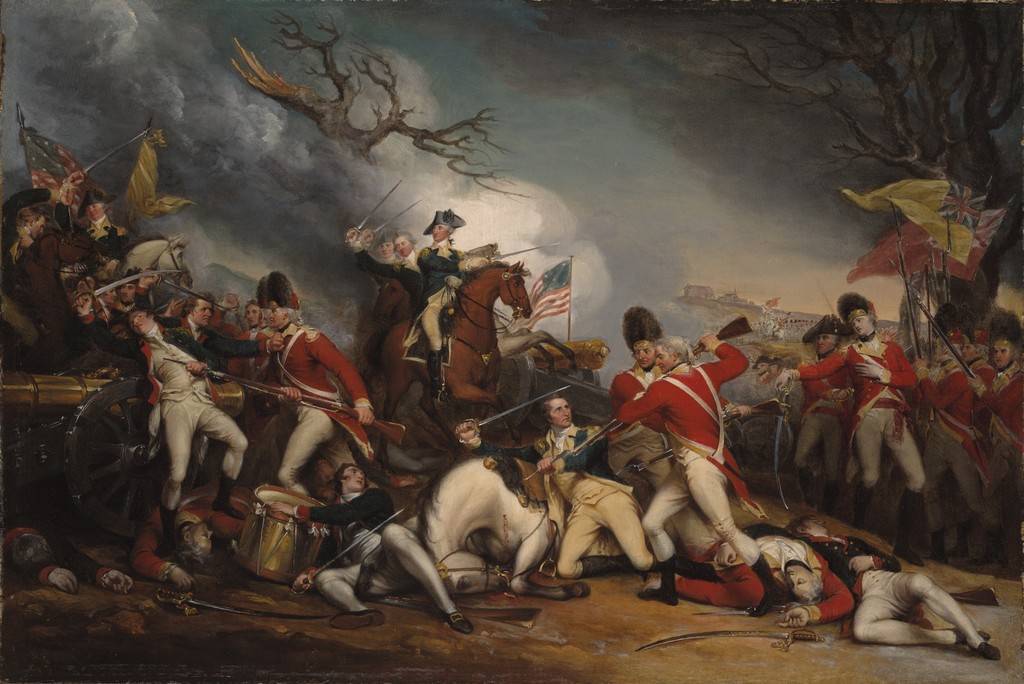
The Death of General Mercer at Princeton. Dates identify the particular canvas discussed in the article. [5]
The Sortie Made by the Garrison of Gibraltar. Dates identify the particular canvas discussed in the article. [6]
George Washington before the Battle of Trenton (current article). Dates identify the particular canvas discussed in the article. [1]
Alexander Hamilton. The NGA catalogue treats this as a likely early replica. [7] [8]
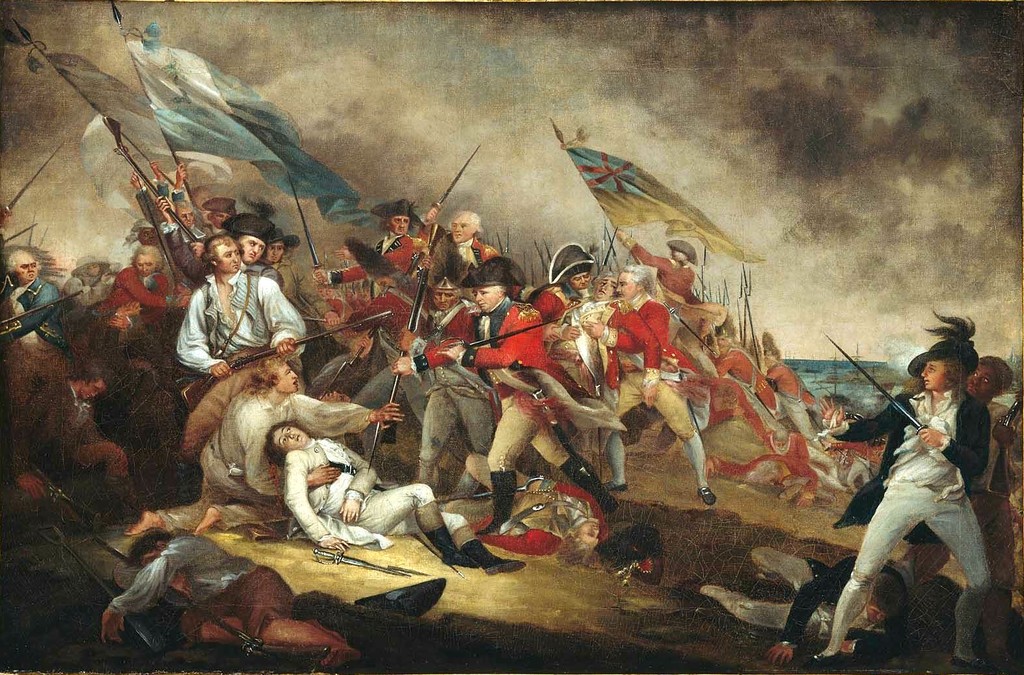
The Death of General Warren at Bunker’s Hill. Dates identify the selected later version. [9]
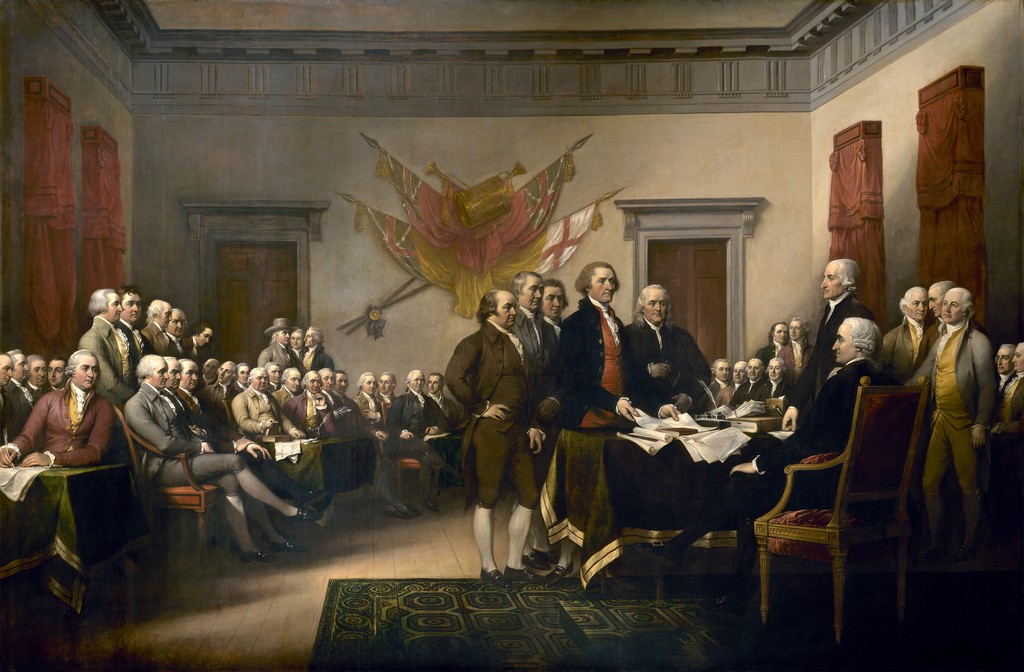
Declaration of Independence. Dates identify the particular canvas discussed in the article. [10]
Surrender of Lord Cornwallis. Dates identify the particular canvas discussed in the article. [11]
Surrender of General Burgoyne. Dates identify the particular canvas discussed in the article. [12]
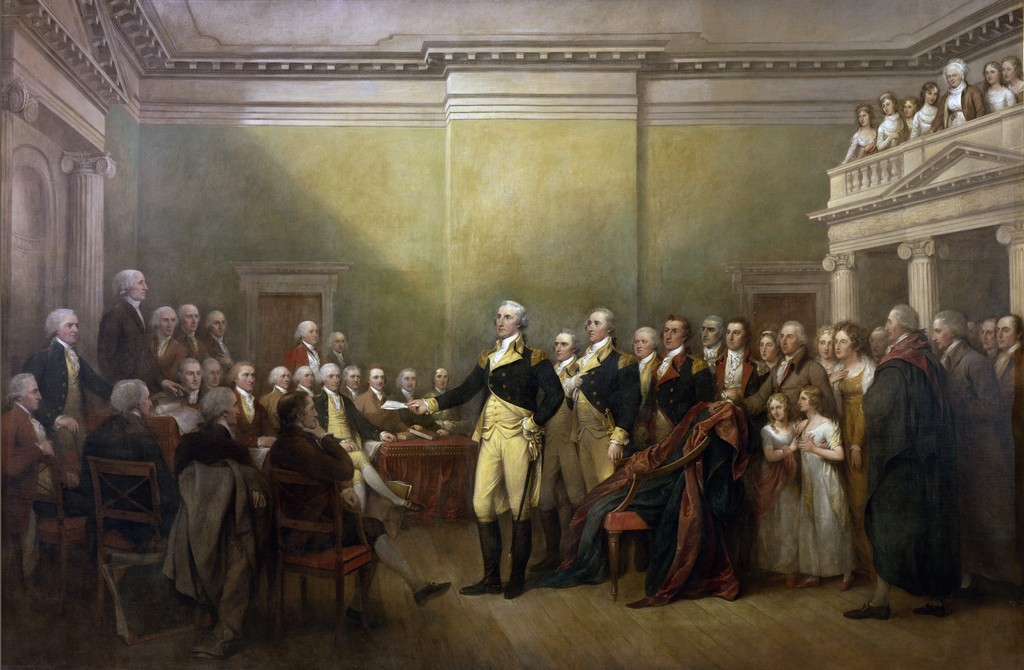
Washington Resigning His Commission. Dates identify the particular canvas discussed in the article. [13]
Contents
- Washington, the horse and the coming battle
- The Charleston commission
- The full-size Yale portrait
- The smaller Met version
- Changes in tree, horse and landscape
- Trenton and the Princeton wording
- The image of a commander
Washington, the horse and the coming battle
Washington occupies most of the painting's height. The yellow waistcoat and breeches form a continuous bright area beneath the dark blue coat, and the gold epaulettes give breadth to his shoulders. The long black boots anchor the figure against the foreground. His body seems steady even as the surrounding forms suggest agitation, from the horse's raised head to the disturbed shapes of the sky.
His head turns upwards and towards the left of the image. One arm extends in that direction, crossing the space in front of the horse, while the other hand remains close to his hip. The pose gives the figure two kinds of emphasis: the face draws attention towards thought, and the outstretched arm opens the body towards action. The general does not simply present his uniform to the viewer.
The attendant looks upwards from a lower position beside the horse. His role in controlling the animal gives the left side of the composition a visible task, while Washington remains the dominant still figure. The Met's account identifies the attendant as a soldier groom. His presence helps make the horse's energy part of the portrait's drama without diverting the principal attention from the commander. [1]
Distant soldiers, smoke and a flag establish a military setting at a much smaller scale. The contrast allows an army's activity to appear within the portrait while leaving the general's figure clear. The picture presents leadership through the relationship between one conspicuous body and the events unfolding around and below it.
The Charleston commission
The portrait's origins lie in a commission from the city of Charleston, represented by Congressman Smith. Washington sat for Trumbull in Philadelphia in 1792. The opportunity allowed the artist to construct an ambitious military image around a likeness observed at first hand. It did not mean that the entire battlefield setting or the depicted moment was painted from direct observation. [1] [2]
In his autobiography, Trumbull described wanting to represent Washington at a moment of exceptional military difficulty. He recalled discussing the situation with the sitter and believed that the resulting expression captured the commander's resolve. This is the painter's retrospective account of the encounter, written long after the portrait. It explains what he wanted the image to achieve while also revealing his pride in the result. [14]
Washington was already president when these sittings took place. Trumbull's account repeatedly calls him the President while explaining the earlier military character he wanted to evoke. The living sitter and the historical role occupied different moments: an encounter in Philadelphia supplied the likeness for a scene imagined within the Revolutionary campaign. [14]
The Charleston representative preferred something calmer. According to Trumbull's account, Smith admired the picture but thought the city would be better pleased by a more familiar, peaceful likeness. The disagreement was therefore about the kind of Washington appropriate to a civic portrait. A painting intended to convey an extraordinary crisis could differ from the public image a patron hoped to display. [14]
Trumbull recalled asking Washington for further sittings and receiving permission to keep the first composition and finish it according to his own preference. A second portrait was made for Charleston, with a view of the city in the background. That replacement is a separate painting, rather than another name for either the large Yale canvas or the smaller Met version. [14]
The full-size Yale portrait
The larger military portrait remained with Trumbull after the change of commission. The Met's catalogue identifies it as the 1792 canvas at Yale and gives dimensions of approximately 235 by 160 centimetres. Its scale made Washington's standing figure a substantial public presence, even though the picture did not go to the patron for whom it had first been conceived. [2]
The composition combines portraiture with devices familiar from Trumbull's historical scenes. A major figure stands amid overlapping forms, agitated movement and expressive weather. The setting supplies pressure against which the commander's composure can be understood. The full-length format gives clothing, stance and gesture room to participate in that meaning, rather than leaving character to the face alone.
Trumbull valued the picture particularly highly. His memoir presents it as a successful expression of Washington's heroic military character. That judgment belongs to the artist's own assessment; the commission history shows that another viewer could admire the work and still want a different kind of portrait. The contrast preserves two responses to the same image without requiring either to stand for every contemporary spectator. [14]
The Yale canvas is the essential starting point for understanding the Met version. Their shared design connects them, but their physical size and differences of detail make them distinct objects. A reproduction can easily obscure that difference by placing both within the same small screen or printed page. The original dimensions help restore a sense of what changed when Trumbull repeated the composition.
The smaller Met version
The Met painting measures 67.3 by 47 centimetres. It retains a full-length standing Washington within a canvas less than a third of the larger picture's height. The figure's dominance survives the reduction because the relationship between body, horse and landscape remains strongly organised. A smaller object can preserve the design's grandeur while offering a much more intimate viewing distance. [1]
The museum's catalogue considers the picture likely to have been painted for Trumbull's friend Charles Wilkes, a New York banker, before the artist returned to England in 1794. The proposed original commission remains qualified. Its subsequent descent in the Wilkes family and the bequest of Grace Wilkes, through which it entered the museum in 1922, belong to the documented ownership history. [2]
The smaller canvas also demonstrates that repetition need not mean complete identity. Washington's pose provides continuity, while the surrounding choices alter how that pose is experienced. The result remains a dramatic military portrait, yet it allows a different balance between the commanding figure and the threatening environment.
Its place among Trumbull's portraits is consequently different from that of a head study made to supply a historical scene. Here, an already developed full-length composition became the basis for a smaller independent painting. The image's circulation depended on a new object with its own probable patron and later family history.
Watch: John Trumbull
Choose a film to explore the artist’s work, its interpretation and its wider setting.
Moment of Discovery: John Trumbull’s “Declaration of Independence”
Discovery Park of America looks closely at Trumbull’s Declaration of Independence.
Watch on YouTubeChanges in tree, horse and landscape
The Met catalogue describes several changes between the Yale portrait and the smaller version. A blasted tree gives way to a living one, foreground rocks become shrubbery, the sky lightens and the pale horse becomes brown. The catalogue interprets the cumulative effect as a reduction in the composition's romantic intensity. These differences belong to separate canvases. [2]
The brown horse is conspicuous in the Met painting. Its head emerges beside Washington's shoulder, with the reddish coat creating a warm area behind the extended arm. Its colour connects it more closely with the dark surroundings than a pale horse would be. Washington's yellow clothing remains the strongest continuous passage of brightness in the standing figures.
At the upper right, the tree brings irregular vertical and branching forms against the sky. Below, plants and scattered equipment complicate the ground around the commander's boots. These details keep the space active without shifting the centre of attention. His upright figure remains clear amid shapes that bend, overlap or lie at angles.
The changes show how much a portrait's character can depend on its surroundings. Washington's identity and principal pose remain recognisable, while the tree, horse and sky affect the atmosphere in which he appears. Trumbull's style and technique involved these decisions about a whole composition as well as the handling of an individual face.
Trenton and the Princeton wording
The Met titles its picture George Washington before the Battle of Trenton and describes the general on the evening before the battle in late 1776. Trumbull's autobiography gives a different wording for his intended subject: the evening before Princeton, with Washington contemplating a night march around the enemy. The museum's 1994 catalogue notes the Princeton wording while interpreting the scene as Trenton. [1] [2] [14]
The military sequence helps explain why that difference matters. The first victory at Trenton occurred on 26 December 1776. Fighting at the Assunpink Creek, also called the Second Battle of Trenton, followed on 2 January 1777. Washington's army moved towards Princeton during the night, before the battle there on 3 January. The Princeton Battlefield Society distinguishes these events and captions the Yale portrait as Washington at Trenton on the night of 2 January. [15]
The title consequently provides a familiar name for a picture whose intended moment has been described in different ways. In the memoir, Washington's projected night march belongs to the movement towards Princeton, after the first Trenton victory. The late-1776 setting of the current Met label does not encompass that later episode. [14] [15]
The central subject remains Washington's military judgment. Trumbull painted the portrait years after the campaign, constructing an image of decision under pressure. Its emotional weather and concentrated pose can convey that purpose without supplying an unambiguous calendar date for every detail of the scene.
The image of a commander
The Met catalogue relates Washington's extended arm to the classical gesture of a magistrate addressing others. It also compares the horse and groom with ancient horse-tamer imagery. These are scholarly interpretations of the design's visual language, rather than evidence that Trumbull copied one specific monument. They help explain how a contemporary American commander could be given the authority associated with older traditions of public representation. [2]
The same catalogue connects the composition more directly with Trumbull's own battle paintings, including the Hessians at Trenton and the death of General Mercer . Their overlapping forms and dramatic actions offered resources for a portrait centred on one person. The general's likeness could remain individual while the surrounding design gave it historical weight. [2]
The design also entered print. Among the related works, the Met catalogue lists Thomas Cheesman's General Washington , an engraving of 1796, followed by other engraved versions. Such reproductions gave the standing figure another form of circulation, beyond the rooms in which the paintings were displayed. Their relationship with the composition does not establish that the Met canvas itself was the engraver's immediate model. The broader drawings and prints article considers the role of reproduction in Trumbull's career. [2]
The commission's outcome leaves that achievement open to an especially useful comparison. Charleston received a calmer image, while the original military design survived and generated smaller versions. The disagreement did not simply extinguish the artist's first conception. It helped create a group of portraits through which the purposes of civic likeness, heroic narrative and personal collecting can be considered together.
Artworks directory
Works discussed in these articles, including distinct versions and reproductive prints. Dates identify the particular object; titles and attributions follow the cited collections. This is not a catalogue raisonné.
Frequently Asked Questions
No. The Met's smaller canvas dates to about 1792–94 and repeats the design of the full-size portrait painted in 1792.
His memoir says the city's representative preferred a calmer, more familiar likeness. Trumbull retained the original military composition.
Trumbull's memoir names the evening before Princeton, whereas the Met title and label refer to Trenton. The related military events occurred on different dates.
The Met catalogue describes a brown horse, living tree, shrubbery and lighter sky, compared with the pale horse, blasted tree, rocks and darker sky of the larger picture.
Discussion
Look again at the images and ideas explored in George Washington before the Battle of Trenton by John Trumbull. These editorial prompts invite your observations.
How do the horse, weather and small distant soldiers affect your reading of Washington's expression? Consider whether a calmer background would preserve the same impression of leadership.
Reader Insights
How do the tree and horse frame the standing commander?
What changes between an independent military portrait and a crowded battle?
How does the commission’s history affect your reading of the selected version?
Join the Conversation
Share a detail, comparison or question about George Washington before the Battle of Trenton by John Trumbull below.
References
- Metropolitan Museum of Art , George Washington before the Battle of Trenton , about 1792–94, 22.45.9; object record, sitting, interpretation, dimensions and credit. View source
- John Caldwell and Oswaldo Rodriguez Roque, with Dale T. Johnson , American Paintings in the Metropolitan Museum of Art , volume I, 1994, pp. 216–217; commission, versions, visual comparisons, classical imagery and provenance. View source
- Yale University Art Gallery via Wikimedia Commons, Death of General Montgomery,1786,1832.2,. View source
- Yale University Art Gallery / Wikimedia Commons, The Capture of the Hessians at Trenton,December26,1776,1832.5,. View source
- Yale University Art Gallery via Wikimedia Commons, The Death of General Mercer at the Battle of Princeton, January3,1777,1832.6.1,. View source
- Metropolitan Museum of Art, The Sortie Made by the Garrison of Gibraltar,. View source
- National Gallery of Art, Alexander Hamilton, c1792,. View source
- National Gallery of Art / Ellen G. Miles with Cynthia J. Mills and other contributors, American Paintings of the Eighteenth Century,1995,Trumbull entries,. View source
- Museum of Fine Arts, Boston, Death of General Warren at Bunker’s Hill,. View source
- Architect of the Capitol, Declaration of Independence,. View source
- Architect of the Capitol, Surrender of Lord Cornwallis,. View source
- Architect of the Capitol, Surrender of General Burgoyne,. View source
- Architect of the Capitol, General George Washington Resigning His Commission,. View source
- John Trumbull , Autobiography, Reminiscences and Letters , 1841, pp. 166–167; the artist's retrospective account of the commission, intended military subject and replacement. View source
- Princeton Battlefield Society , The Battle of Princeton ; the sequence of the two Trenton battles, the night march and Princeton. View source
- Splash image source.
John Trumbull, George Washington before the Battle of Trenton, about 1792–94. Oil on canvas, 67.3 × 47 cm. Metropolitan Museum of Art, 22.45.9. Bequest of Grace Wilkes, 1922. The Metropolitan Museum of Art, CC0. CC0 / Public domain . Frame removed by cropping the original source photograph to the painting rectangle; no colour, contrast, retouching or perspective alteration. Original master retained.
View source