by
Tom Gurney
Tom Gurney BSc (Hons) is an art history expert with over 20 years experience
Email:
tomgurney1@gmail.com
/ Phone:
+44 7429 011000
John Trumbull Biography: Introduction
John Trumbull (1756–1843) made the American Revolution the central undertaking of a career spent on both sides of the Atlantic. He served in the Continental Army, trained in London, travelled to gather likenesses and worked in diplomacy before receiving the commission for four great canvases in the United States Capitol. His familiar images emerged through years of preparation, interrupted employment and attempts to find an audience for ambitious historical painting.
His life also connects two different scales of artistic work. Small portrait studies preserved faces for larger compositions; enormous public paintings brought selected episodes before a national audience. Prints carried those compositions beyond their original settings. The journey between these forms explains more about his career than the idea of a soldier who simply recorded what he had seen.
Trumbull's autobiography, published in 1841, remains an important account of his experiences. It is also a late recollection shaped by the author whose reputation it describes. Museum scholarship helps place its anecdotes beside the paintings, patronage and institutional history. Read together, these sources reveal an artist repeatedly negotiating between the history he wanted to paint and the practical conditions under which he could work. [1]
At a Glance
- Born 6 June 1756, Lebanon, Connecticut.
- Died 10 November 1843, New York City.
- Education Harvard College, graduated 1773; later artistic training in London.
- Principal teacher Benjamin West.
- Major public commission four Capitol Rotunda paintings, commissioned 1817.
- Collection Yale agreement in 1831; gallery opened 1832.
John Trumbull in context
Bars show approximate historical periods. c. means circa (about).
Neoclassicism
c. 1760–1830 [24]Romanticism
c. 1800–1850 [25]Notes and sources
Neoclassicism. Later eighteenth-century context. West belonged to the first generation of Neoclassical painters. His teaching connects Trumbull with that wider world of formal historical composition. [2] [1]
Romanticism. Around 1800 and the early nineteenth century. Romanticism’s emphasis on imagination and emotion offers a comparison for the drama of historical painting. The movement developed after Trumbull’s first Revolutionary designs; this context does not make every work Romantic. [3]
Each bar runs from the artist’s birth to their death.
Benjamin West
1738–1820 · Birth–death [26]Asher Brown Durand
1796–1886 · Birth–death [27]Notes and sources
Benjamin West. London training from 1780; resumed in 1784. Trumbull’s teacher in London; the first period of study was interrupted by imprisonment. [1] [4]
Asher Brown Durand. Declaration engraving, 1820–23. Durand translated the Declaration composition into engraving. Copyright registration in 1820 preceded publication in late 1823. [5]
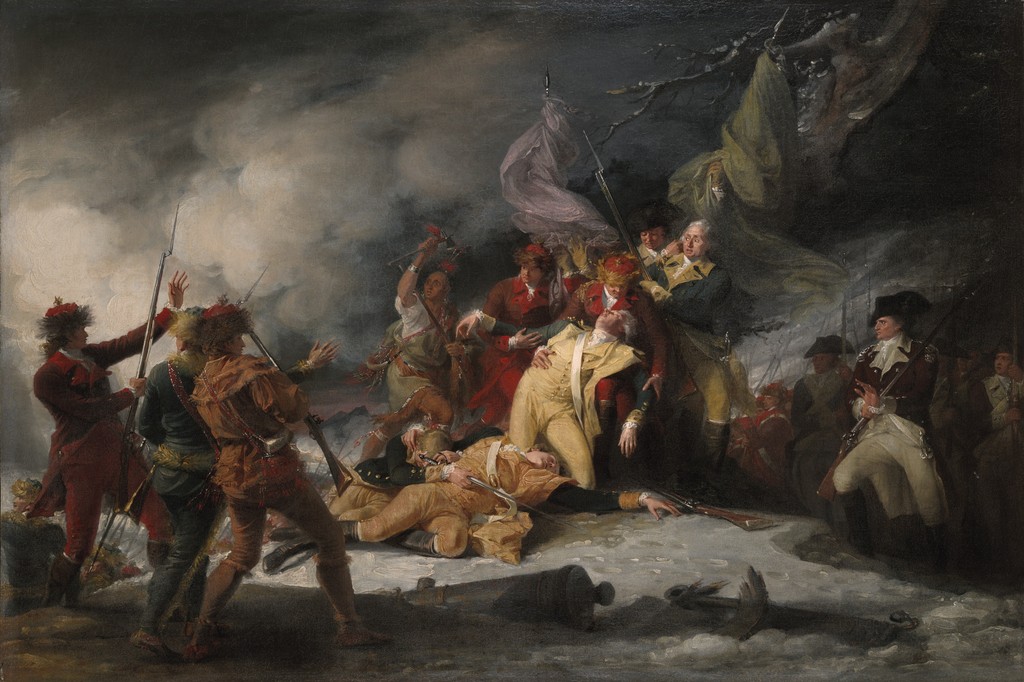
The Death of General Mercer at Princeton
about 1787–1831; principal Yale versionThe Sortie Made by the Garrison of Gibraltar
1789; Met versionGeorge Washington before the Battle of Trenton
about 1792–94; Met versionAlexander Hamilton
about 1792; likely early NGA replicaThe Death of General Warren at Bunker’s Hill
after 1815–before 1831; MFA versionDeclaration of Independence
1817–18; Capitol canvasSurrender of Lord Cornwallis
1819–20Surrender of General Burgoyne
1821; Capitol canvasNotes and sources
The Death of General Montgomery. Dates identify the particular canvas discussed in the article. [6]
The Capture of the Hessians at Trenton. Dates identify the particular canvas discussed in the article. [7]
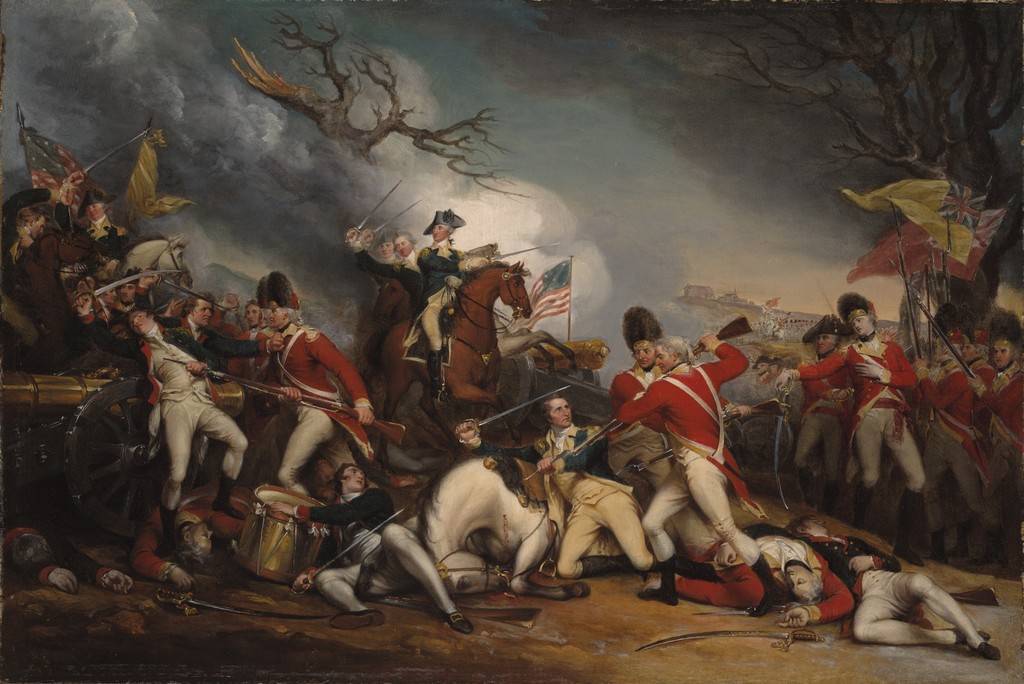
The Death of General Mercer at Princeton. Dates identify the particular canvas discussed in the article. [8]
The Sortie Made by the Garrison of Gibraltar. Dates identify the particular canvas discussed in the article. [9]
George Washington before the Battle of Trenton. Dates identify the particular canvas discussed in the article. [10]
Alexander Hamilton. The NGA catalogue treats this as a likely early replica. [11] [12]
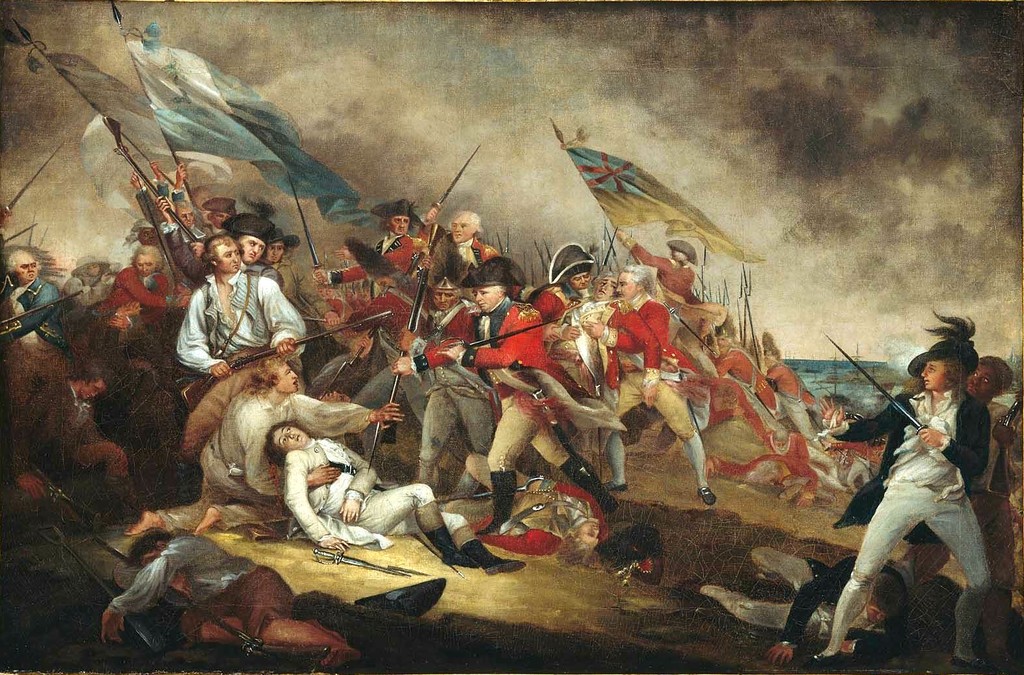
The Death of General Warren at Bunker’s Hill. Dates identify the selected later version. [13]
Declaration of Independence. Dates identify the particular canvas discussed in the article. [14]
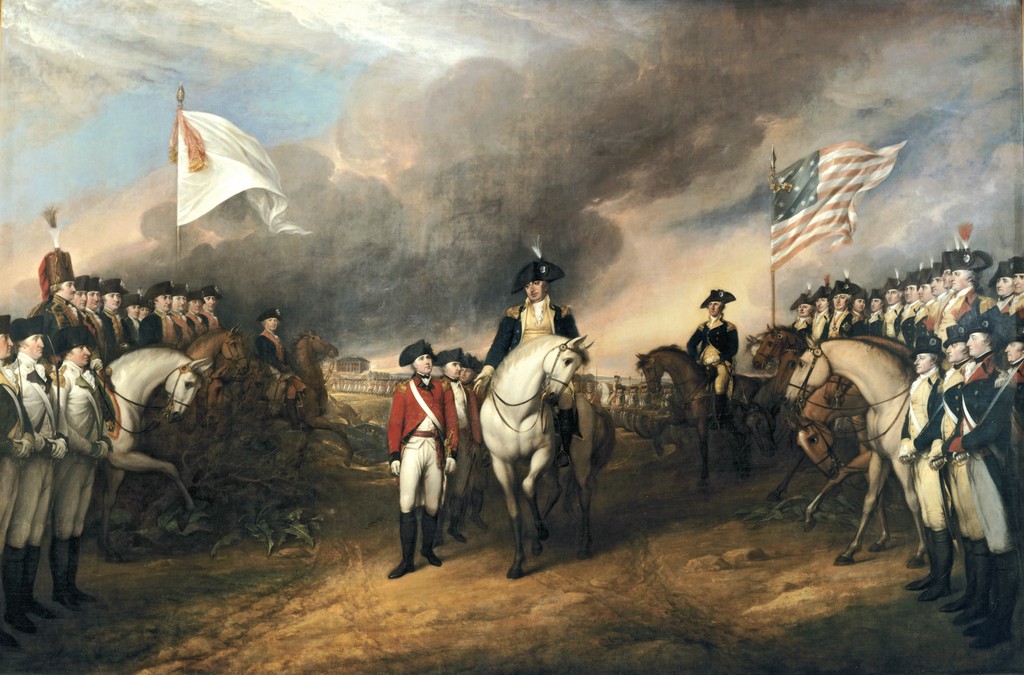
Surrender of Lord Cornwallis. Dates identify the particular canvas discussed in the article. [15]
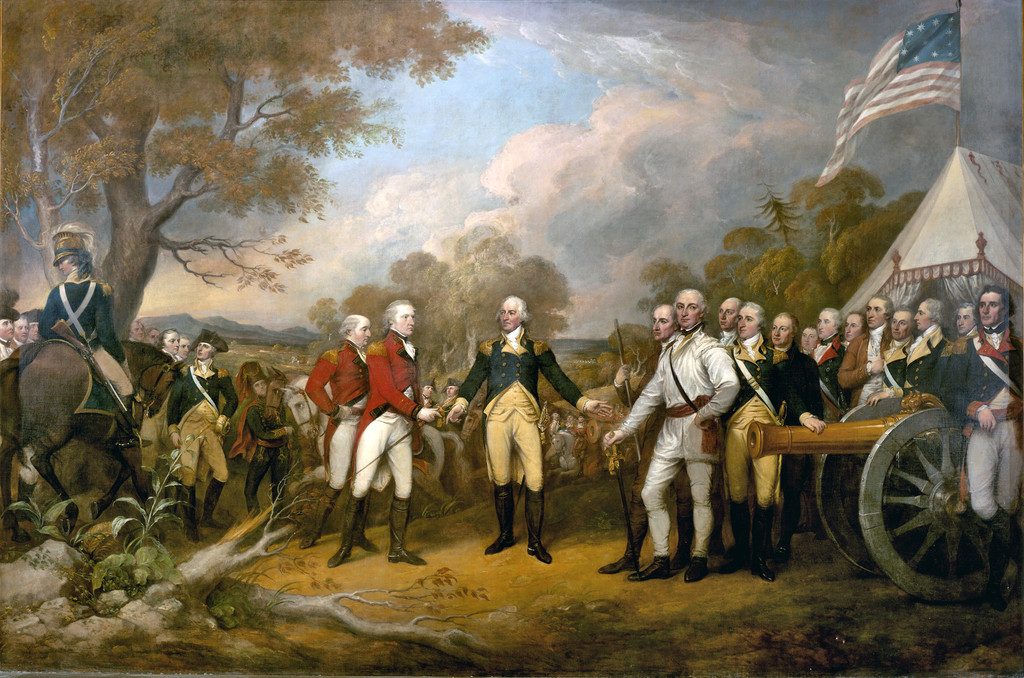
Surrender of General Burgoyne. Dates identify the particular canvas discussed in the article. [16]
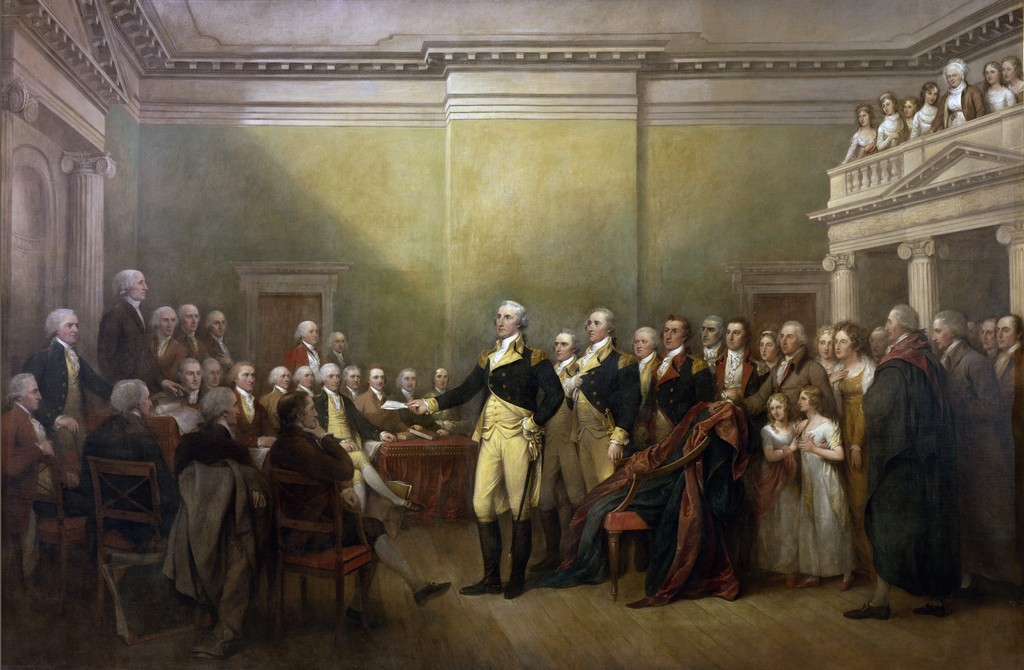
Washington Resigning His Commission. Dates identify the particular canvas discussed in the article. [17]
Contents
- Lebanon, family and Harvard
- Military drawing and the Revolution
- West, imprisonment and the return to painting
- Paris and the Revolutionary series
- Collecting likenesses and selling prints
- Diplomatic work and transatlantic disruption
- Four canvases for the Capitol
- The Academy, Yale and the last years
Lebanon, family and Harvard
Trumbull was born on 6 June 1756 in Lebanon, Connecticut, to Jonathan Trumbull and Faith Robinson Trumbull. His father became Connecticut's governor, and the household connected the future painter with education and public affairs. These circumstances gave him opportunities that many aspiring artists lacked, while also creating expectations about an appropriate profession. His family's position helped open doors; painting still required a deliberate choice. [1]
A classical education preceded formal artistic training. Trumbull studied locally before attending Harvard College, from which he graduated in 1773. The Met's catalogue describes his father's preference for a career in law or the ministry and the young man's persistence in reading about art, drawing and copying engravings. Learning to paint involved finding examples wherever they were available, rather than entering a fully established local system of professional instruction. [1]
His own account gives the women of the household a place in that education. In the opening pages of his memoir, Trumbull recalled his sisters' embroidery and his elder sister Faith's drawings and oil paintings. He described these pictures as early models for imitation. The recollection brings the beginnings of his art into the domestic interior: looking at a familiar picture and attempting to repeat it came before the later studios and academies. [18]
This passage also complicates a simple story of effortless childhood genius. Trumbull himself stressed imitation in explaining the growth of his interest. His recollections of extraordinary early learning should be read as retrospective autobiography, but his emphasis on examples offers a useful connection with his subsequent practice. Throughout his career, existing pictures, portrait types and reproductions supplied material that he could study and adapt.
Boston provided another education. John Singleton Copley's portraits offered an example of what an American painter could achieve, and works associated with John Smibert gave Trumbull access to further models. The Met records his later use of rooms formerly occupied by Smibert, where paintings, copies, casts and engravings remained. These resources expanded the young artist's visual experience without requiring that every lesson come through direct personal instruction. [1]
Four stages of John Trumbull’s career
These periods group related developments; painting, travel and local work overlap across their boundaries.
Family, military service and first London study
Born in Lebanon and educated at Harvard, Trumbull served in the Continental Army. His first study with Benjamin West began in 1780 and was interrupted by imprisonment. [4]
European study and American likenesses
Further London training, work in Paris and portrait sittings in America helped establish the Revolutionary paintings. Small studies and independent portraits supplied different parts of the undertaking. [1]
Diplomacy, travel and portraiture
Diplomatic employment, travel between Britain and America and independent portrait commissions overlapped. This period included work in New York as well as years abroad. [12]
The Capitol and Yale
Congress’s four-canvas commission gave the Revolutionary project a monumental setting. The later Yale agreement preserved a collection of paintings and studies in exchange for an annuity. [4]
Military drawing and the Revolution
The outbreak of war changed Trumbull's immediate direction. He joined the Connecticut forces in 1775 and served for a time as an aide to George Washington. His ability to draw had practical value in military work, where a useful representation of positions or terrain could communicate information. The Architect of the Capitol's biography connects his service with sketches of people and places that later mattered to his historical project. [4]
Military service supplied acquaintance with officers, uniforms and the organisation of an army. It also placed him within the networks from which he would later seek sitters and information. Those connections are part of the authority his pictures claimed. They do not make every painted incident a direct record of his personal observation, or prove that the people in a composition stood together exactly as he showed them.
Accounts of his departure from the army describe a dispute over the dating of his commission and his standing relative to other officers. His service also included appointments under Horatio Gates, extending his experience beyond Washington's immediate staff. The lasting consequence was his decision to return to art during the war, rather than continue towards the military career that his early appointments might have suggested. Weir's account follows the dispute through Trumbull's own recollections, which need to retain that source distinction. [19]
The war would nevertheless remain the subject through which he sought professional distinction. In his later battle pictures, the wounded body, the responding officer and the interruption of combat became ways of making an event comprehensible. A large military action could be brought into focus through a few figures. The painter chose an episode that could carry the wider meaning he wanted the scene to possess.
The Death of General Warren at the Battle of Bunker's Hill and The Death of General Montgomery in the Attack on Quebec belong to this developing project. Their attention to loss made Revolutionary history available as a subject of serious painting, alongside victory and ceremony. Trumbull's service helped shape his commitment to the subject, but the finished scenes also depended on training acquired after his time in uniform. [19]
The distinction is central to his biography. Experience gave him a relationship with the Revolution; it did not remove the work of composition. He needed to turn remembered people, collected likenesses and accounts of events into arrangements that would hold the attention of viewers who had not shared those experiences.
West, imprisonment and the return to painting
In 1780 Trumbull travelled to Europe and reached London, where he entered the circle of Benjamin West. West's position offered access to a professional world of studios, exhibitions and academic training. For an artist hoping to paint recent history on an ambitious scale, London provided both instruction and visible examples of how such pictures could be presented to the public. [1]
His studies were abruptly interrupted by arrest and imprisonment later that year. A supporter of the American cause living in wartime Britain occupied a vulnerable position, whatever the purpose of his visit. He remained imprisoned for months before his release and eventual return to America. The episode broke the continuity of his training and made the political division underlying his intended subjects a personal experience. [1]
It did not end his ambition to study abroad. By 1784 he was again working in London, beginning the sustained period that the National Gallery of Art's catalogue identifies as especially formative. The years through 1789 brought his early Revolutionary compositions, further contact with European art and the development of his abilities as a painter of figures. His professional formation was therefore a sequence of returns, rather than one uninterrupted apprenticeship. [12]
Weir describes work in West's studio and drawing at the academy. Such practice helped connect the observation of an individual figure with the design of a whole scene. A painter needed bodies that could act convincingly, gestures that carried meaning and an arrangement that made the principal incident visible. The presence of numerous figures increased the need for control over their relationships. [19]
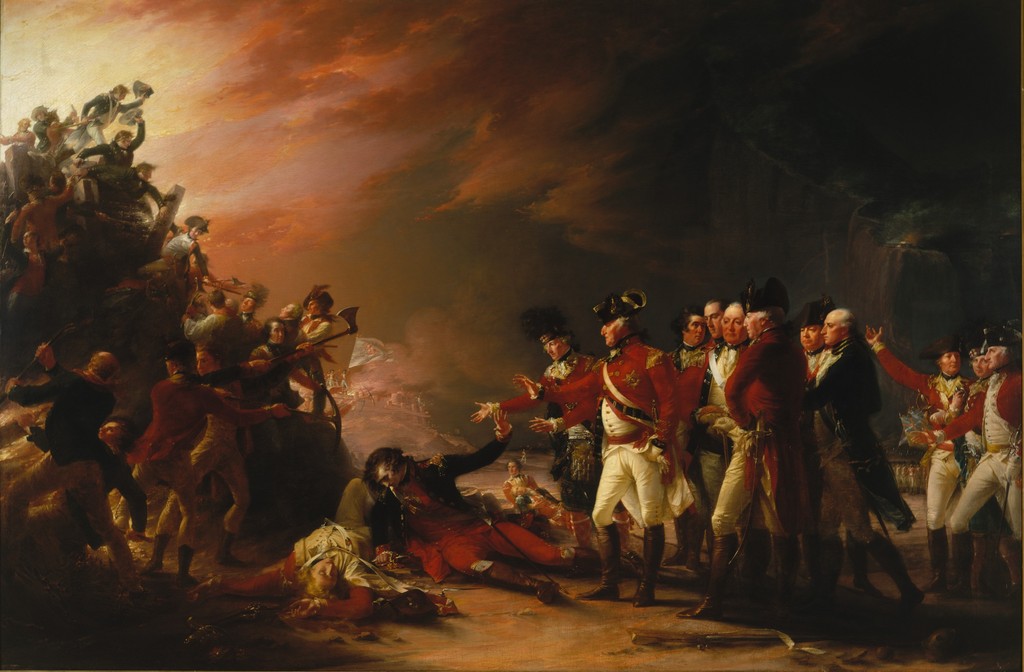
The Sortie Made by the Garrison of Gibraltar shows how broadly Trumbull applied these ambitions. The subject came from a British military action, rather than the American Revolution. In the Met's 1789 canvas, armed conflict, a dying adversary and the response of officers occupy connected parts of the same dramatic field. Its centre of interest extends beyond the identification of the victorious side. [9]
The picture survives in different early versions, which should not be treated as one object with interchangeable dates. The Met's example is a large 1789 canvas, distinct from the earlier versions discussed in its catalogue. Following those changes reveals the artist developing an idea through repeated work. His European training helped supply a language in which both British and American modern history could become substantial pictorial subjects. [1] [9]
Paris and the Revolutionary series
Trumbull's visit to Paris in 1786 brought him into contact with Thomas Jefferson and gave a decisive new direction to his Revolutionary project. He began the composition that would become the Declaration of Independence . The NGA catalogue also records encounters with Jacques-Louis David and Jean-Antoine Houdon and visits to private collections. Paris enlarged the artistic setting in which his American subjects were taking shape. [12]
The proposed series required more than a succession of battlefield victories. Deaths, surrenders, political deliberation and the relinquishing of command offered different ways to describe the Revolution. Each demanded a different arrangement of bodies and attention. A battlefield could concentrate on urgent physical action; a legislative chamber had to make quieter acts and exchanges of papers carry historical weight.
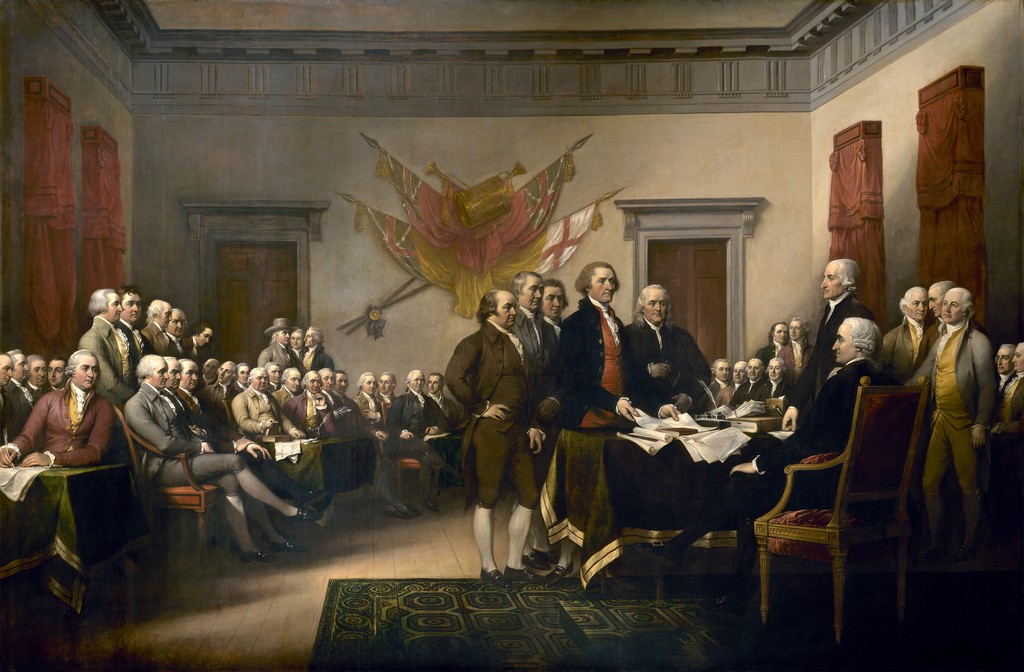
The Declaration developed over a long period. Its eventual Capitol version represents the presentation of the draft to Congress on 28 June 1776. It does not depict a collective signing on 4 July. Trumbull arranged recognisable individuals around a central committee, assembling an image of political participation that cannot be read as an unaltered record of attendance at a single moment. [14]
A central challenge was to make the people legible within a collective undertaking. The committee advances while the seated figures provide the surrounding assembly. Differences of pose and direction animate the room without dissolving its order. The composition allows a viewer to recognise particular men and then return to the action that connects them. Its biography is inseparable from the time spent finding and adapting their likenesses.
The interior also shows the limits of reconstruction. The Architect of the Capitol explains that Trumbull altered architectural features, furnishings and decoration. Jefferson's recollected information contributed to the design, but the resulting room was a pictorial setting shaped for the subject. His effort to preserve faces coexisted with decisions that made the assembly more imposing and more easily read. [14]
This balance between documentation and arrangement runs through Trumbull's paintings . He wanted identifiable people and meaningful historical subjects, while working within the demands of a composed picture. The ambition was larger than illustrating a written account. He sought scenes through which viewers could retain an image of the Revolution's leaders, sacrifices and public acts.
John Trumbull, The Sortie Made by the Garrison of Gibraltar, 1789. Oil on canvas, 180.3 × 271.8 cm. Metropolitan Museum of Art, 1976.332. The Metropolitan Museum of Art, CC0.
Image source
.
CC0 / Public domain
. Frame removed by cropping the original source photograph to the painting rectangle; no colour, contrast, retouching or perspective alteration. Original master retained.
Collecting likenesses and selling prints
After returning to the United States in 1789, Trumbull travelled along the East Coast in search of the portraits needed for his historical paintings. The NGA catalogue places this work beside small oils, sketches and full-length portraits. Gathering evidence and earning a living belonged to the same period of activity. A historical project could advance through individual encounters even when its final public destination remained uncertain. [12]
Access mattered. A sitter's availability, the survival of an existing portrait and the possibility of an introduction all affected what he could obtain. In his memoir's gallery catalogue, Trumbull explained the pursuit of likenesses as a major part of the undertaking. That account gives the project a history of travel and negotiation, alongside the studio labour visible in the finished compositions. [18]
Not every sought likeness could be taken from the intended subject. In 1791 Trumbull drew Hugh Mercer Jr., using the son as a model for his father in the painting of the general's death at Princeton. The Met identifies this small graphite study and its purpose. It offers concrete evidence of preparation while establishing a limit: the living sitter was a different person from the deceased officer represented in the history picture. [20]
His independent portraits also developed during these years. They could answer a client's need for a likeness or present public authority through a figure, costume and setting. In Washington before Trenton , the military environment becomes part of the portrait's meaning. The same concern with an identifiable individual could thus support either a self-contained picture or one component of a larger narrative. [1]
Print publication offered a way to give the historical subjects a wider audience. Trumbull envisaged reproductions as part of the project, rather than treating them as an incidental consequence of completed paintings. Subscriptions and the employment of skilled engravers required further organisation and expenditure. The drawings and prints article follows these different stages of preparation and circulation. [18] [19]
The long route to Asher Brown Durand's engraving of the Declaration illustrates the timescale involved. The Met dates the publication to 1823 and distinguishes it from the 1820 copyright. Years separated the early development of the composition from this major engraved form. Reproduction made the design portable and repeatable, but its eventual visibility should not obscure the financial demands and delays through which Trumbull pursued it. [5]
Watch: John Trumbull
Choose a film to explore the artist’s work, its interpretation and its wider setting.
Moment of Discovery: John Trumbull’s “Declaration of Independence”
Discovery Park of America looks closely at Trumbull’s Declaration of Independence.
Watch on YouTubeDiplomatic work and transatlantic disruption
In 1794 Trumbull accompanied John Jay to London as his secretary. Diplomatic employment took him back into the world of Anglo-American relations and interrupted the pattern of travel through American sitters. His political connections could provide work beyond painting, but that work also claimed time from the historical series. The Revolution's aftermath shaped his livelihood as well as the subjects he hoped to commemorate. [12]
This part of his career resists a simple division between an artist's life and a public life. The same networks could connect officials, potential patrons and people whose portraits belonged in historical scenes. Yet an appointment did not guarantee the large commissions he wanted. Diplomatic service and business ventures appear beside painting in the Met's account, showing the range of activities through which he tried to maintain his position. [1]
Trumbull married Sarah Hope Harvey in 1800. They returned to the United States in 1804 and settled in New York, where portraiture offered an immediate field of work. The NGA catalogue describes his consideration of Boston and his decision to avoid direct competition there with Gilbert Stuart. Choosing a city meant assessing available patronage and the presence of other established painters, as well as personal preference. [12]
The portraits of this period belong within his professional story. Public officials, merchants and families could commission likenesses even when support for monumental history painting was uncertain. Such work connected him with New York's civic and private patrons. It also brought repeated practical decisions about scale, format and presentation, the same variables that distinguish a small head study from a public full-length portrait.
Economic conditions weakened that business. The NGA catalogue connects the consequences of the 1807 Embargo Act with the disruption of his New York practice. Another journey to London followed. Accounts differ in assigning the departure and arrival to 1808 or 1809, but agree on the renewed residence abroad. The period also brought concern over his eyesight. The NGA catalogue connects the journey with a search for treatment, adding a personal difficulty to the economic disruption of his American practice. [12]
Trumbull came back after the War of 1812 and resumed the effort to secure American patronage. Returning meant finding support for subjects first developed when the events were much more recent; the intended audience and the nation itself had changed during his absences. By the time Congress commissioned the Capitol paintings in 1817, the historical undertaking had already passed through decades of travel, negotiations and other employment. The commission answered an ambition that had survived repeated changes of circumstance. [1] [12] [18]
Four canvases for the Capitol
The 1817 commission gave Trumbull's Revolutionary subjects a monumental public setting. In his autobiography he recalled an agreement for four paintings, each twelve by eighteen feet, at eight thousand dollars apiece. These dimensions required a transformation of scale: designs associated with smaller pictures would now address visitors within the Capitol's Rotunda. The contract supplied a destination and income, while imposing a demanding new stage of production. [18]
The subjects were the Declaration of Independence , the Surrender of General Burgoyne , the Surrender of Lord Cornwallis and General George Washington Resigning His Commission . Together they connected political foundation, military surrender and the return of command to civilian authority. Their sequence offered an account of the Revolution through selected public acts, rather than attempting to include every campaign or every stage of the struggle. [19]
The enormous Declaration was painted in 1817–18 and exhibited before its installation. The Architect of the Capitol records showings in several American cities beginning in 1818. The picture therefore had a public life beyond the room for which it was commissioned. Viewers encountered the assembly as an exhibited painting before the completed Rotunda arrangement made it part of a larger architectural programme. [14]
Trumbull completed the four canvases by 1824; installation in the Rotunda followed in 1826. This interval matters when identifying reproductions. A date of execution, a public exhibition and permanent placement describe different events in a painting's history. Nor are the small Yale pictures and Capitol canvases interchangeable, even where a title and principal arrangement are shared. Each version belongs to a particular stage of his work. [12] [4]
The commission brought a measure of institutional recognition, but it did not produce an unlimited succession of public orders. Trumbull failed to secure the remaining Rotunda commissions. The difference between securing four great paintings and securing a stable future is important to his later biography. Public prominence could coexist with financial uncertainty, especially for an artist whose most ambitious project had required so much preparatory labour. [12]
The separate pages on Burgoyne , Cornwallis and Washington's resignation examine the people and actions in these scenes. Within his life, their shared significance lies in bringing a project formed in the 1780s into the central public building of the nation whose founding it described.
John Trumbull, Declaration of Independence, 1817–18. Oil on canvas, 12 × 18 feet. United States Capitol Rotunda. The scene represents the presentation of the draft on 28 June 1776. John Trumbull; Architect of the Capitol; Wikimedia Commons. Public domain.
Image source
.
Public domain
. Resized only; full supplied image retained. No appearance adjustment.
The Academy, Yale and the last years
Trumbull also sought to shape artistic institutions. His long involvement with the American Academy of Fine Arts in New York included roughly two decades as president. Teaching, access to examples and the standing of the profession belonged to the same wider question as public patronage: how could artists work and develop in the United States? His institutional activity extended his ambitions beyond the production of his own pictures. [12] [21]
His authority became contested. The Met's catalogue discusses the younger artists' break with the Academy and the formation of the National Academy of Design in 1826. Later accounts differ sharply in their assessment of his leadership. The disagreement belongs to the history of competing ideas about artistic education and professional control; the hostile character descriptions in some biographies do not need to become a diagnosis of the man. [1]
A lasting arrangement emerged at Yale. In 1831 the college acquired his collection in exchange for an annuity, recorded by Weir as one thousand dollars a year. The gallery opened in 1832. The agreement gave financial support to the ageing artist and a permanent institutional setting to pictures whose future had concerned him. Benjamin Silliman helped bring the arrangement into being, connecting family relationships with the establishment of a collection. [1] [12] [19]
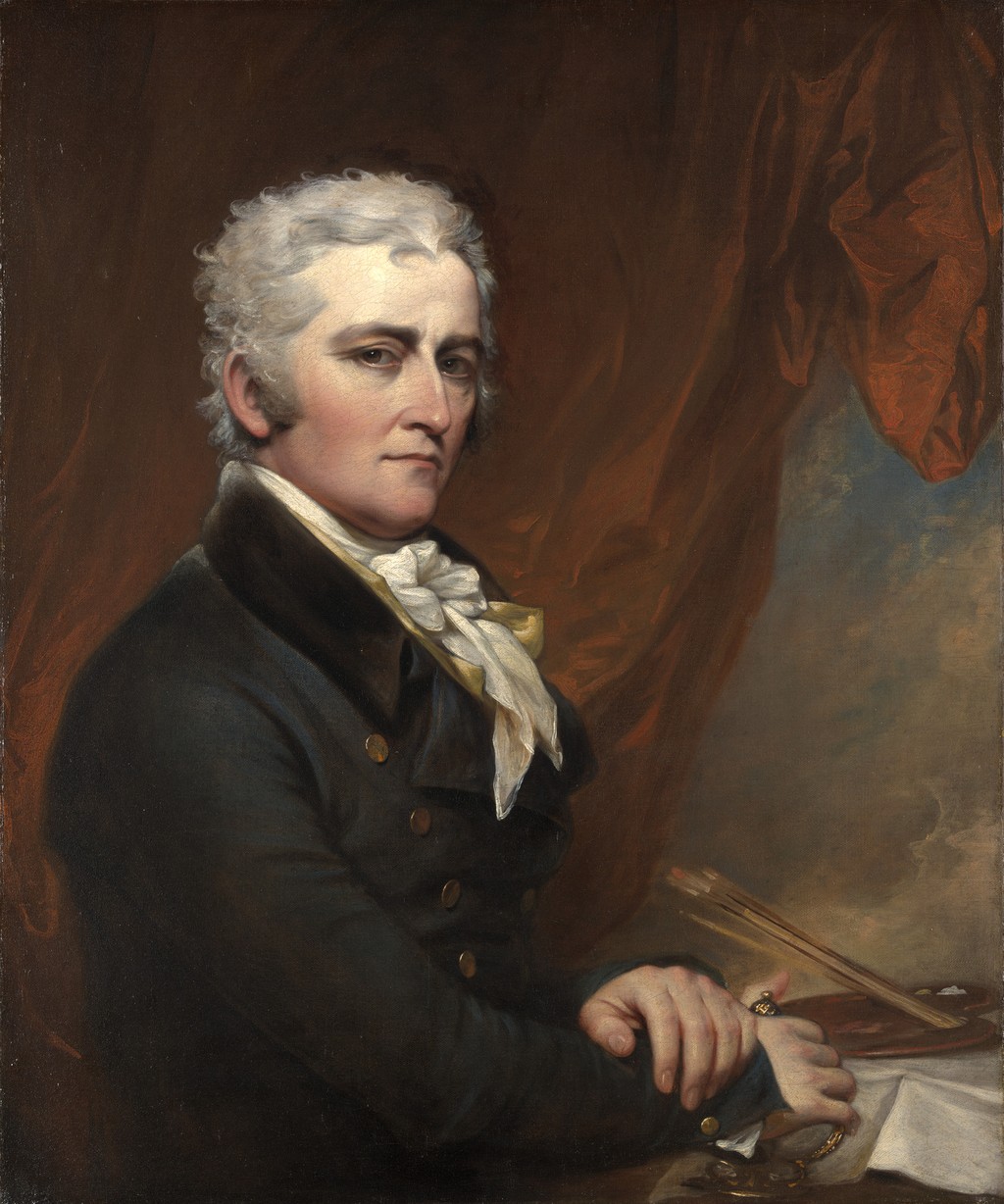
His self-portrait of about 1802 presents the professional identity behind these efforts. Brushes and a palette accompany the figure; books and drapery give the working painter an assured setting. Seen after the history of his commissions and institutions, the image has a particular resonance. Trumbull wanted the practice of painting, and the painter himself, to possess a recognised public place. [22]
Trumbull died in New York on 10 November 1843, aged eighty-seven. He was buried beside his wife beneath the Yale gallery he had designed. His paintings and remains were later moved to the new gallery building in 1867. The collection preserved different parts of his long undertaking together: historical pictures, portraits and studies through which the familiar public compositions can be understood as the work of an entire career. [4]
Artworks directory
Works discussed in these articles, including distinct versions and reproductive prints. Dates identify the particular object; titles and attributions follow the cited collections. This is not a catalogue raisonné.
Frequently Asked Questions
He served in the Continental Army during the Revolution, including a period as Washington's aide, before pursuing sustained artistic training in Europe.
His pictures combine experience, gathered likenesses, accounts of events and artistic arrangement. They should not all be read as direct records of scenes he personally witnessed.
London offered instruction with Benjamin West, academic training and access to an established professional art world. Trumbull returned there at different stages of his career.
Congress commissioned four canvases in 1817. They were completed by 1824 and installed in the Rotunda in 1826.
In 1831 Yale acquired his collection in exchange for an annuity. A gallery opened the following year.
Discussion
Look again at the images and ideas explored in John Trumbull Biography. These editorial prompts invite your observations.
Consider the differences between a small portrait study, an engraved historical composition and a great public canvas. How does following the movement between these forms change your understanding of the artist's career?
Reader Insights
Which image best connects the painter with his work?
How do the military subjects and independent portraits reflect different parts of the career?
How did travel and portrait sittings help build the historical project?
Join the Conversation
Share a detail, comparison or question about John Trumbull Biography below.
References
- John Caldwell and Oswaldo Rodriguez Roque, with Dale T. Johnson , American Paintings in the Metropolitan Museum of Art , volume I, 1994, pp. 199–200, with the Gibraltar and Washington entries; scholarly biography and context. View source
- Cybele Gontar, Metropolitan Museum of Art, Neoclassicism, October 2003,. View source
- Kathryn Calley Galitz, Metropolitan Museum of Art, Romanticism, October 2004,. View source
- Architect of the Capitol , John Trumbull ; military drawing, Capitol subjects, Yale and death. View source
- Metropolitan Museum of Art , Asher Brown Durand after John Trumbull, The Declaration of Independence of the United States of America, July 4, 1776 , 1823, 24.90.1514; publication and copyright dates. View source
- Yale University Art Gallery via Wikimedia Commons, Death of General Montgomery,1786,1832.2,. View source
- Yale University Art Gallery / Wikimedia Commons, The Capture of the Hessians at Trenton,December26,1776,1832.5,. View source
- Yale University Art Gallery via Wikimedia Commons, The Death of General Mercer at the Battle of Princeton, January3,1777,1832.6.1,. View source
- Metropolitan Museum of Art , The Sortie Made by the Garrison of Gibraltar , 1789, 1976.332; object identification, subject and relationship with earlier versions. View source
- Metropolitan Museum of Art, George Washington before the Battle of Trenton,. View source
- National Gallery of Art, Alexander Hamilton, c1792,. View source
- Ellen G. Miles, with contributions by Cynthia J. Mills and others, National Gallery of Art , American Paintings of the Eighteenth Century , 1995, pp. 298–299; training, travel, patronage and later career. View source
- Museum of Fine Arts, Boston, Death of General Warren at Bunker’s Hill,. View source
- Architect of the Capitol , Declaration of Independence ; depicted event, composed interior, execution and exhibition history. View source
- Architect of the Capitol, Surrender of Lord Cornwallis,. View source
- Architect of the Capitol, Surrender of General Burgoyne,. View source
- Architect of the Capitol, General George Washington Resigning His Commission,. View source
- John Trumbull , Autobiography, Reminiscences and Letters , 1841, especially pp. 1–6, 260–266 and 402–408; attributed childhood recollections, Capitol contract and historical project. View source
- John F. Weir , John Trumbull: A Brief Sketch of His Life , 1901, especially pp. 3–39 and 44–68; training, military account, prints and Yale arrangement. View source
- Metropolitan Museum of Art , Hugh Mercer, Jr. , 1791, 06.1346.2; the general's son as a model for his father. View source
- Smithsonian American Art Museum , John Trumbull ; artistic career and institutional involvement. View source
- Image source: Yale University Art Gallery, via Wikimedia Commons , Self-Portrait , about 1802, 1981.129.1; object identification and public-domain reproduction. View source
- Splash image source.
John Trumbull, Self-Portrait, about 1802. Oil on canvas, 75.5 × 62.3 cm. Yale University Art Gallery, 1981.129.1. Gift of Marshall H. Clyde Jr. John Trumbull; Yale University Art Gallery; Wikimedia Commons. Public domain. Public domain . Resized only; full supplied image retained. No appearance adjustment.
View source - Smarthistory, Neoclassicism period guide: c. 1760–1830. View source
- Kathryn Calley Galitz, “Romanticism”, Metropolitan Museum of Art (2004). Emergence around 1800 and flourishing until mid-century. View source
- Smithsonian American Art Museum, Benjamin West: 1738–1820. Artist life dates. View source
- Smithsonian American Art Museum, Asher Brown Durand: 1796–1886. Artist life dates. View source