 by
Tom Gurney
Tom Gurney BSc (Hons) is an art history expert with over 20 years experience
Email:
tomgurney1@gmail.com
/ Phone:
+44 7429 011000
Washington Resigning His Commission by John Trumbull: Introduction
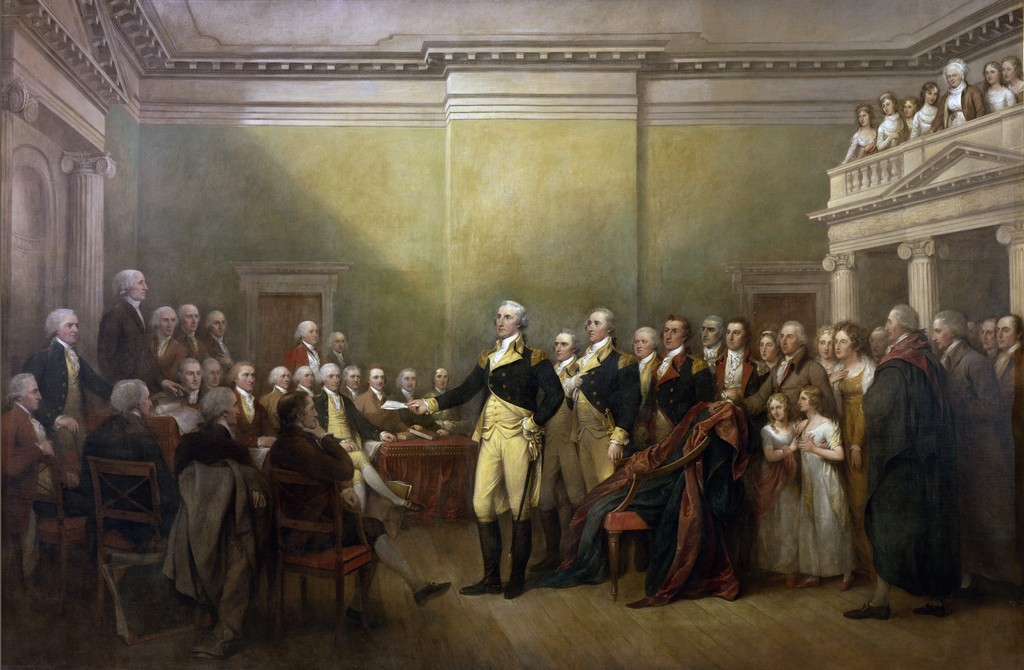
John Trumbull’s General George Washington Resigning His Commission places a small piece of paper at the centre of a consequential public act. Washington stands before Congress and returns the commission under which he has commanded the Continental Army. The painting represents his resignation at Annapolis on 23 December 1783, when military victory was followed by the voluntary relinquishing of military authority. [1]
Painted between 1822 and 1824 for the United States Capitol, the canvas completed Trumbull’s four monumental Revolutionary subjects. Its principal action is quieter than a battle or the surrender of an army. A standing officer, seated legislators and an attentive audience give the return of power a visible form. [1]
At a Glance
- Artist John Trumbull.
- Capitol painting 1822–24, completed April 1824; oil on canvas, 12 × 18 feet.
- Event Washington resigns his military commission, 23 December 1783.
- Historical location Senate Chamber, Maryland State House, Annapolis.
- Recipient Congress, presided over by Thomas Mifflin.
- Added figures include James Madison, Martha Washington and her grandchildren.
- Later small version completed 1828; Yale University Art Gallery.
This work across John Trumbull’s career
The Death of General Mercer at Princeton
about 1787–1831; principal Yale versionThe Sortie Made by the Garrison of Gibraltar
1789; Met versionGeorge Washington before the Battle of Trenton
about 1792–94; Met versionAlexander Hamilton
about 1792; likely early NGA replicaThe Death of General Warren at Bunker’s Hill
after 1815–before 1831; MFA versionDeclaration of Independence
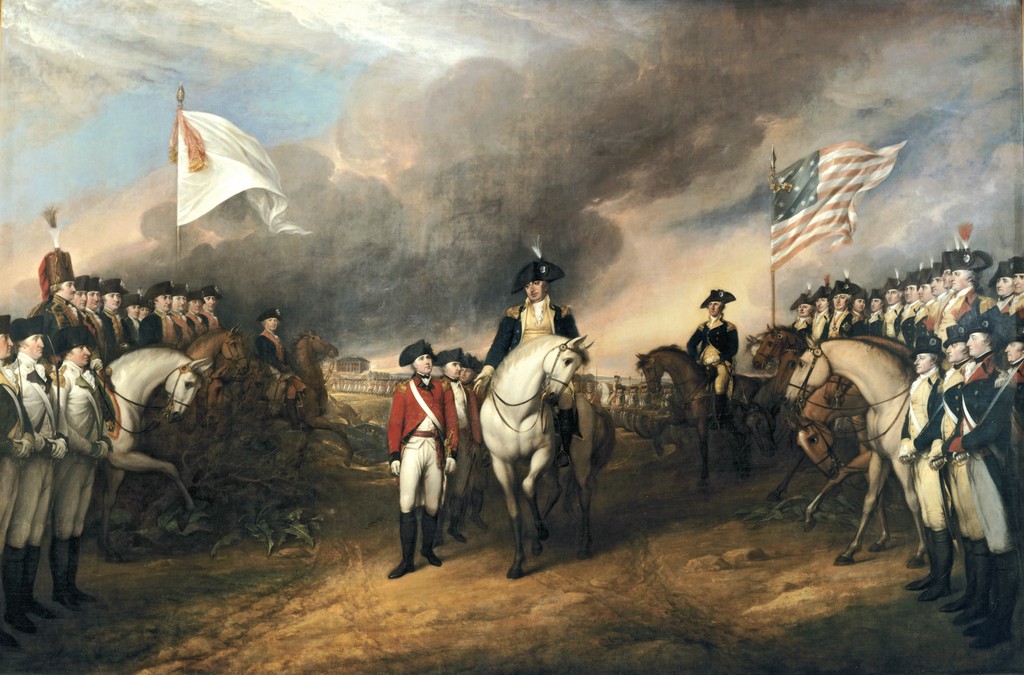
1817–18; Capitol canvasSurrender of Lord Cornwallis
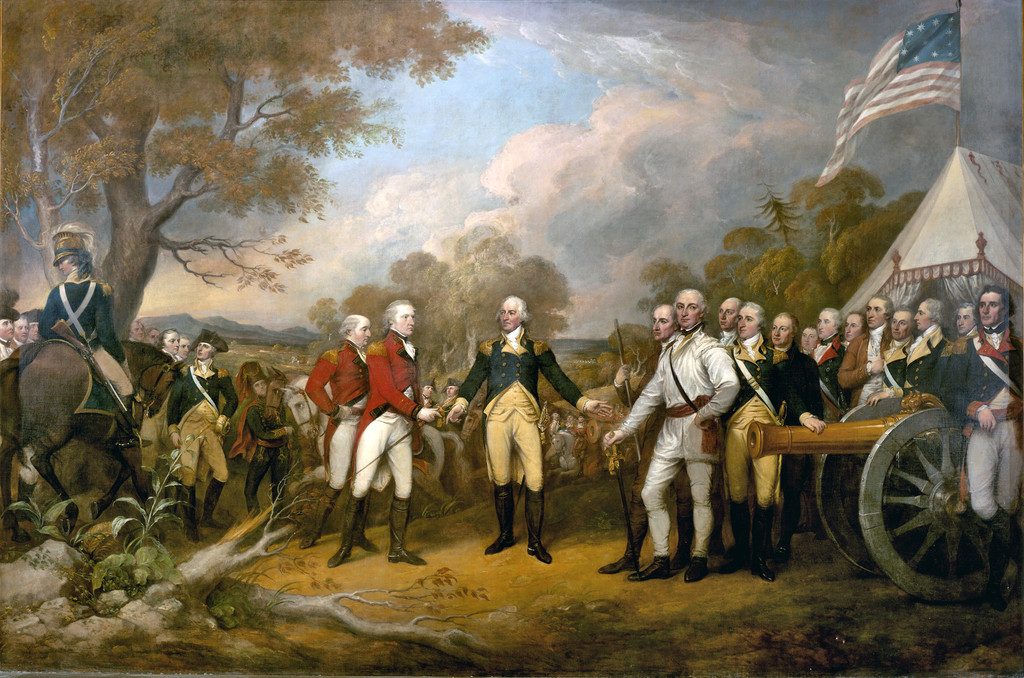
1819–20Surrender of General Burgoyne
1821; Capitol canvasNotes and sources
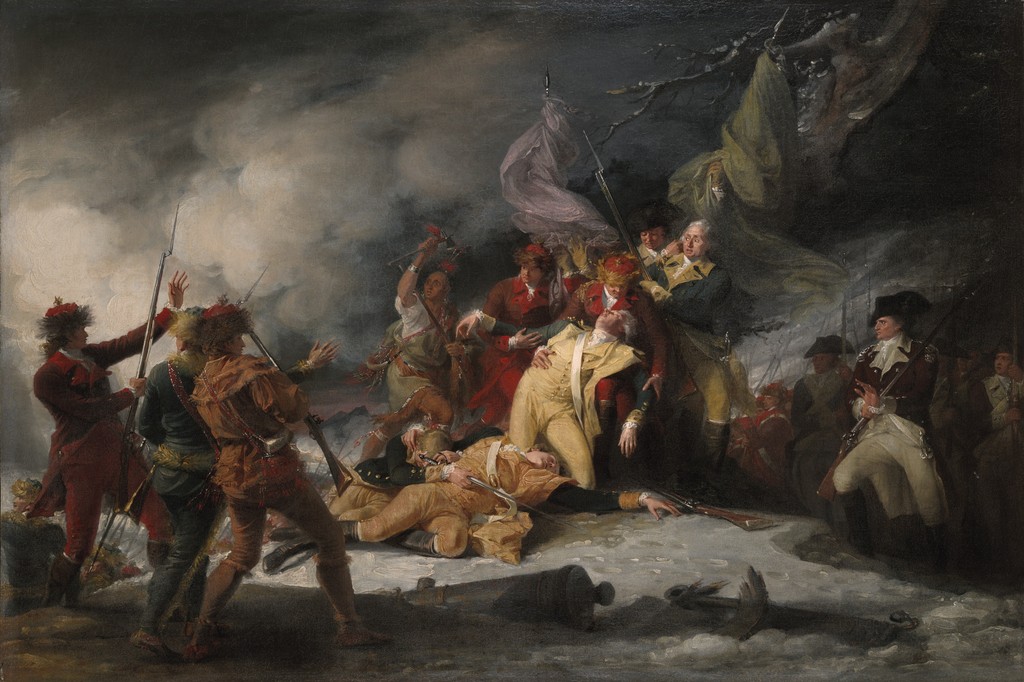
The Death of General Montgomery. Dates identify the particular canvas discussed in the article. [2]
The Capture of the Hessians at Trenton. Dates identify the particular canvas discussed in the article. [3]
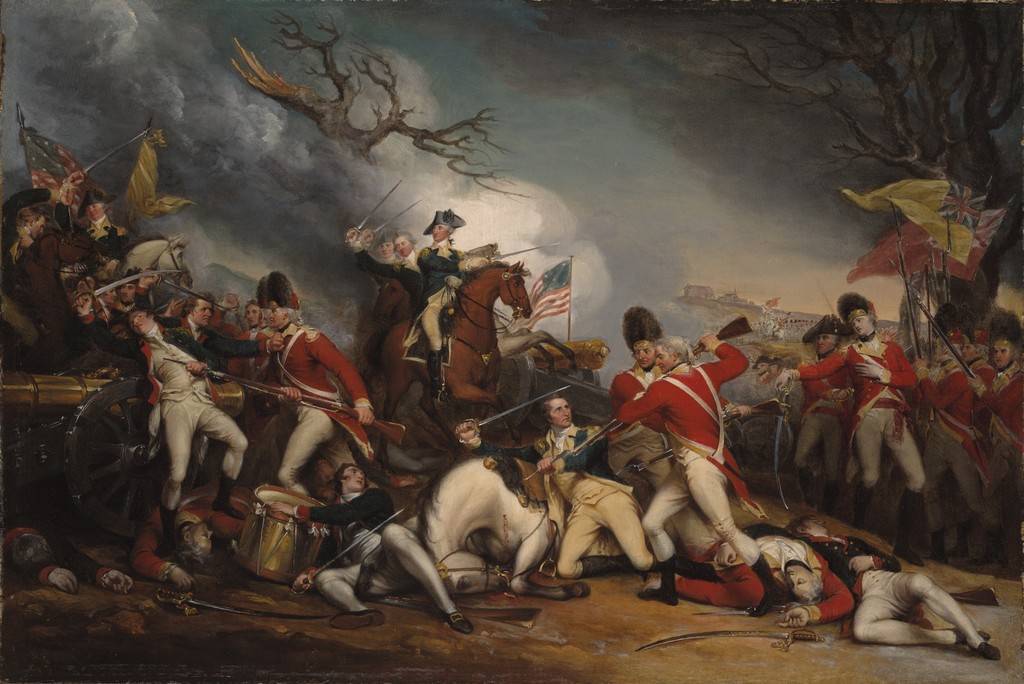
The Death of General Mercer at Princeton. Dates identify the particular canvas discussed in the article. [4]
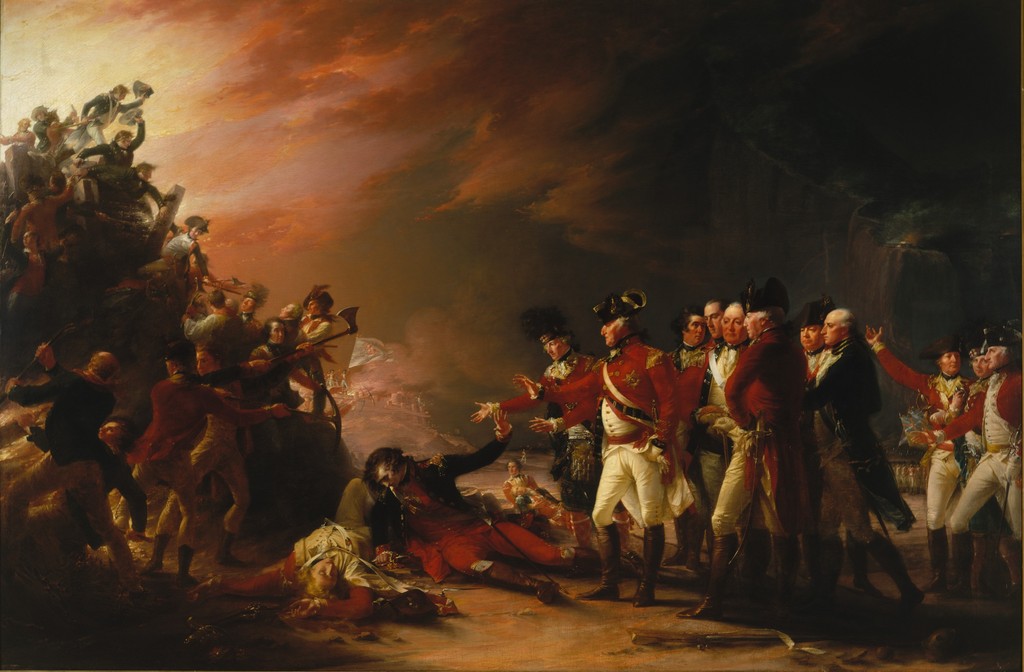
The Sortie Made by the Garrison of Gibraltar. Dates identify the particular canvas discussed in the article. [5]
George Washington before the Battle of Trenton. Dates identify the particular canvas discussed in the article. [6]
Alexander Hamilton. The NGA catalogue treats this as a likely early replica. [7] [8]
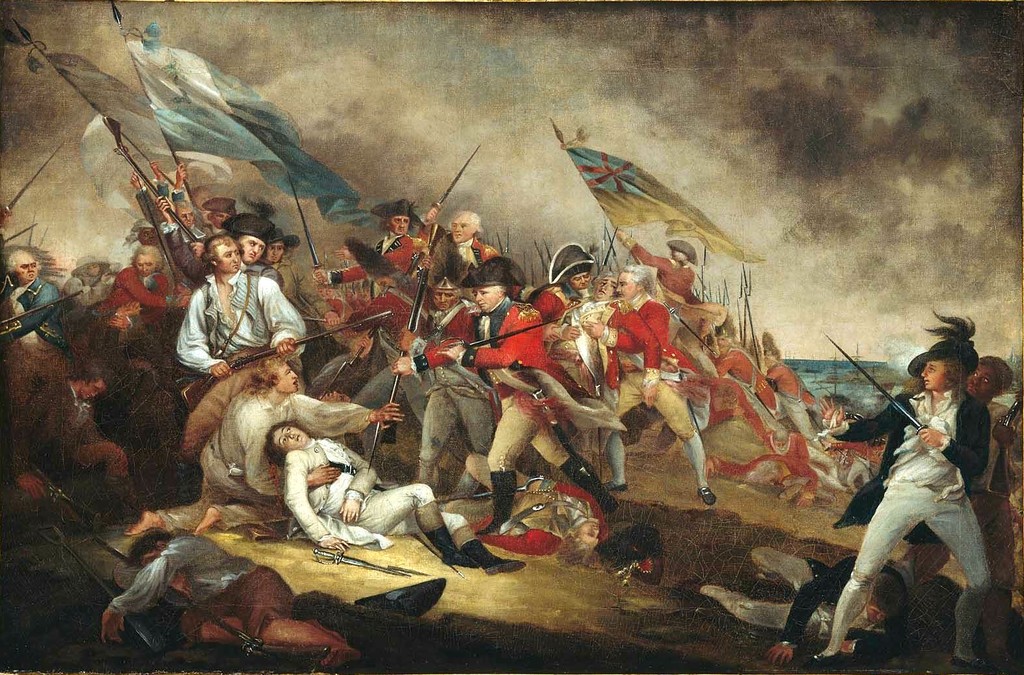
The Death of General Warren at Bunker’s Hill. Dates identify the selected later version. [9]
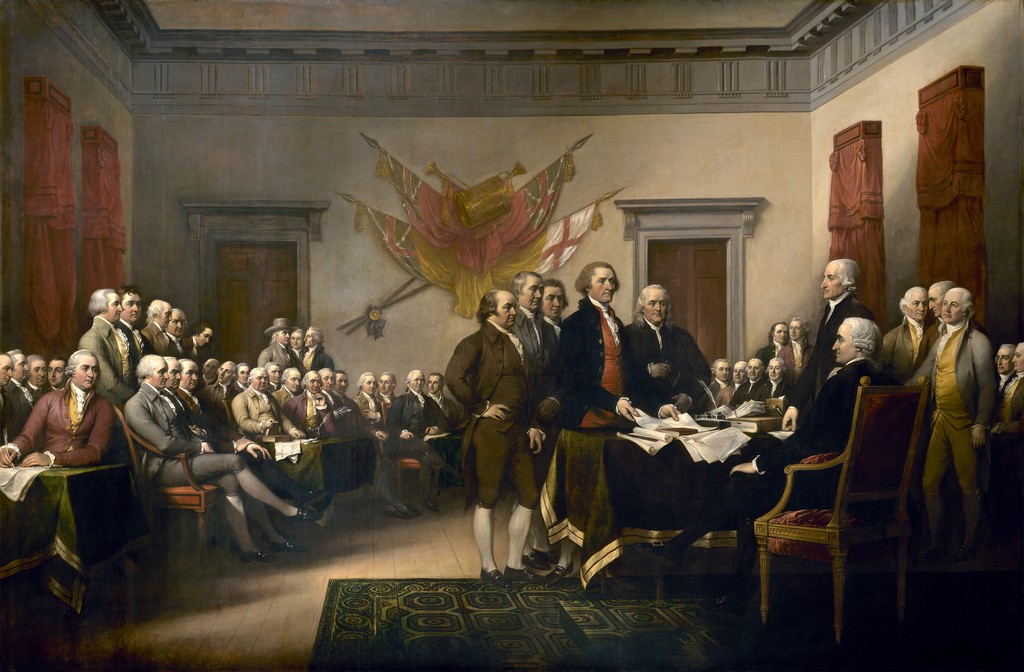
Declaration of Independence. Dates identify the particular canvas discussed in the article. [10]
Surrender of Lord Cornwallis. Dates identify the particular canvas discussed in the article. [11]
Surrender of General Burgoyne. Dates identify the particular canvas discussed in the article. [12]
Washington Resigning His Commission (current article). Dates identify the particular canvas discussed in the article. [1]
Contents
- Washington offers the commission
- Annapolis, 23 December 1783
- Mifflin, Congress and the civilian audience
- The gallery and the added spectators
- Choosing the fourth Capitol subject
- The 1822–24 painting and the later Yale version
- Uniform, gesture and republican authority
- Reading it beside the military surrenders
Washington offers the commission
Washington’s extended right arm reaches towards the assembled delegates. The pale paper is small beside the uniformed figure presenting it, yet its position gives the gesture a clear direction. Light falls across his face, buff waistcoat and breeches, separating him from the men standing immediately behind. His figure remains open to view from head to foot.
The space before him is equally important. It allows the arm to extend without disappearing into a crowd, and gives the seated men room to receive his action. The floorboards lead towards the table and the legislative gathering, while Washington’s upright body provides a firm vertical near the centre. His stillness makes the movement of the hand more apparent.
The meaning of the paper comes from the address Washington delivered to Congress. He described the appointment as a trust placed in his hands and now returned, with independence secured. His closing words offered the commission and announced his withdrawal from public employment. The document gives the painted gesture a political meaning beyond the exchange of an object. [13]
Trumbull brings that meaning into a room occupied by witnesses. Congress receives the resignation, while aides and spectators observe it. The act is personal in its decision and public in its consequences: the victorious commander acknowledges the body under whose authority he has served.
Annapolis, 23 December 1783
The ceremony took place in the Senate Chamber of the Maryland State House at Annapolis. Congress was meeting there when Washington came to resign. The setting in Trumbull’s picture is therefore a legislative interior associated with the ending of his command, rather than a military headquarters or a room in the later federal Capitol. [1]
On 20 December, Washington notified Congress of his arrival and asked how it wished to receive his resignation. Congress arranged a public audience for noon on the 23rd. Mary Wigge’s account for the Washington Papers project follows this sequence through the correspondence and congressional journal: Washington was admitted, took his place and rose to address the assembly. [14]
His address thanked his countrymen and acknowledged those officers who had served close to him. He recommended the remaining aides to Congress’s attention before taking leave. Gratitude and the ending of an appointment run together through the short speech, giving the withdrawal from command the character of a completed responsibility. [13]
The date depicted belongs to the end of the Revolutionary War, several decades before Trumbull painted the Capitol canvas. The room, faces and furniture consequently had to be assembled through later study and surviving likenesses. The work preserves the subject of the ceremony while also revealing the painter’s choices about how a later public should see it.
Mifflin, Congress and the civilian audience
Thomas Mifflin, the president of Congress, receives Washington before the delegates. Trumbull makes the civilian body substantial through the group at the left: seated men fill the foreground, others stand behind, and faces turn towards the general. The viewer sees an assembly with its own weight and presence, rather than a few figures added to accompany a commanding portrait. [1]
The contrast in posture gives the transaction its shape. Washington stands in the open, while the delegates remain gathered around their place of business. Their seated positions need not diminish their authority. The officer comes before them to return an appointment, and their attention acknowledges the significance of what he is doing.
In his memoir, Trumbull noted a personal connection between the men in the scene and his own early service. Mifflin had been Washington’s first aide-de-camp in 1775, and Trumbull his second. The former aide now presided over Congress as Washington resigned. The artist included that relationship in his account of why the subject interested him. [15]
Trumbull also reproduced the congressional response to the address in his catalogue. It praised Washington’s conduct and his regard for civil authority through the war. Read alongside the picture, the exchange of speeches helps explain why the respectful attention of the assembly is central to the subject. The resignation involves both the surrender of command and its formal acceptance. [15]
The gallery and the added spectators
At the upper right, spectators lean towards the room from a raised gallery. Their elevated faces extend the audience beyond the figures standing on the floor. The balustrade and supporting columns give them a distinct architectural place, while their direction of attention joins them to the event below.
The gathering includes people who were not present at the historical ceremony. The Architect of the Capitol identifies James Madison among the additions, together with Martha Washington and her grandchildren in the gallery. Their inclusion makes the painting a constructed commemoration, bringing important people into the public memory of the event without establishing that they witnessed it. [1]
The picture’s architecture also combines observation with reconstruction. Trumbull visited and sketched the chamber in 1822, but the furnishings used in 1783 were gone. He adapted the chairs already represented in his Declaration of Independence instead of copying the later furniture he found associated with the room. [1]
Maryland State Archives records the later furniture commission in December 1796 and the delivery of John Shaw’s chairs in 1797. That chronology helps explain the problem faced by a painter returning in 1822: surviving furniture in an old room need not belong to the historical moment represented. The painted setting offers an intelligible legislative chamber, with details selected to serve a scene from an earlier period. [16]
Choosing the fourth Capitol subject
Trumbull remembered discussing the choice of subjects with President James Madison after Congress authorised four paintings in 1817. In the memoir’s account, he argued for the two great military surrenders, the Declaration and Washington’s resignation. The last subject allowed him to present the relinquishing of command as one of the Revolution’s exemplary actions. [15]
His explanation was strongly moral. He contrasted Washington with rulers who had retained power for personal ambition, presenting restraint after victory as a form of greatness. This is the artist’s retrospective interpretation of the event. It explains his enthusiasm for the subject without requiring a claim that military dictatorship was a certain alternative or that every soldier would have supported it. [15]
The choice gives the four paintings a broader range than a sequence of battles. Two surrender scenes show defeated armies submitting to the victors. The Declaration of Independence establishes a political claim, while the resignation shows a commander returning authority to a civilian body. Their subjects make military success part of a larger account of public responsibility. [17]
Within that arrangement, the quiet room acquires a particular force. Trumbull could honour Washington without showing him conquering, issuing an order or receiving a defeated enemy. The concluding action depends on what the commander gives up, and on the continuing authority of the people before whom he stands.
Watch: John Trumbull
Choose a film to explore the artist’s work, its interpretation and its wider setting.
Moment of Discovery: John Trumbull’s “Declaration of Independence”
Discovery Park of America looks closely at Trumbull’s Declaration of Independence.
Watch on YouTubeThe 1822–24 painting and the later Yale version
The Capitol canvas was the last of the four works Trumbull completed under the commission. He painted it between 1822 and 1824, finishing in April 1824. A tour during the rest of that year took it to Boston, Providence, Hartford, Albany, Philadelphia and New York. It therefore reached audiences beyond its eventual architectural setting. [1]
Its numerous portraits required more than a single kind of evidence. Trumbull drew upon his earlier miniatures, portraits made by other artists and likenesses sought through members of Congress. He based Washington on one of his own previous portraits. The resulting assembly combines direct knowledge accumulated earlier with other records of the people represented. [1]
That process connects the work with the practices explored in the portraits article . A likeness might begin as a separate study and later enter a larger composition. The historical painter had to make the collection of faces appear to inhabit a common space, attending to the same gesture under the same light.
At twelve by eighteen feet, the Capitol canvas makes the gathering almost architectural in its extent. The long cornice binds the room together above the figures, while the gallery carries the audience upwards. Washington remains visible within that broad structure through the light on his clothes and the open ground around his feet. The scale gives a restrained gesture room to register across a large public interior.
The four Capitol paintings were installed in the Rotunda in 1826. Trumbull completed a separate, smaller Washington Resigning in 1828, now at Yale University Art Gallery. The smaller painting and the monumental canvas belong to the continuing life of the design, but their different dates and locations identify distinct objects. [1] [17]
Uniform, gesture and republican authority
Washington wears military uniform throughout the act of returning his commission. Trumbull does not need to show him changing clothes or leaving the room to make the withdrawal understandable. The general retains the visible signs of his service while the paper and the direction of his gesture indicate that the appointment is ending.
Beside him, an empty chair is partly covered by a cloak. Its curved, elevated back and rich drapery give it a different character from the plainer chairs occupied by the delegates. The Architect of the Capitol interprets the vacant seat as suggestive of a throne and the cloak as recalling a royal robe, connecting the unoccupied chair with Washington’s renunciation of power. [1]
The chair also works within the arrangement of the figures. Its drapery makes a dark, curved mass beside Washington’s pale clothing, while its empty seat leaves a conspicuous absence near the principal action. A viewer can notice that emptiness before knowing its proposed symbolic meaning. The object becomes part of the scene’s contrast between a place that might be occupied and a responsibility being returned.
Washington’s aides, Benjamin Walker and David Humphreys, stand immediately behind him. Their uniforms and upright positions extend his presence into a small military group facing Congress. The organisation of the bodies makes the relationship between service and civil authority visible across the room. [1]
Reading it beside the military surrenders
In the Surrender of General Burgoyne and Surrender of Lord Cornwallis , officers and armies gather outdoors around a military result. The resignation moves inside and replaces the approach of defeated troops with the attention of a legislative assembly. The open floor takes the place of the broad space between the armies.
The object exchanged also changes. A sword makes submission readable in a military encounter; the commission records the authority under which Washington has acted. He returns it voluntarily after successful service. The continuity of restrained gestures across the pictures allows their different kinds of surrender to speak to each other.
There is another close relationship with the Declaration . Both scenes centre upon the presentation of papers before a civilian legislature, surrounded by seated and standing figures. The similar chairs reinforce that relationship. One document announces a political undertaking, while the other marks the completion of a commander’s part in defending it. [1]
Trumbull gives the ending a public audience and an enduring architectural home. The spectators watch Washington’s hand, and the delegates receive the paper. The painting asks the viewer to recognise a successful exercise of authority in the decision to relinquish it, making restraint the concluding action of the Revolutionary series.
Artworks directory
Works discussed in these articles, including distinct versions and reproductive prints. Dates identify the particular object; titles and attributions follow the cited collections. This is not a catalogue raisonné.
Frequently Asked Questions
His military commission, returning the authority under which he commanded the Continental Army.
In the Senate Chamber of the Maryland State House at Annapolis on 23 December 1783.
Congress, with Thomas Mifflin serving as its president.
No. Trumbull added her and her grandchildren to the gallery in the painting.
The Architect of the Capitol interprets the cloaked chair as throne-like, reinforcing Washington’s voluntary retirement from power.
Discussion
Look again at the images and ideas explored in Washington Resigning His Commission by John Trumbull. These editorial prompts invite your observations.
How does the empty chair affect the space beside Washington? Compare the role of the commission here with the swords in Trumbull’s surrender scenes, considering what each object makes visible about authority.
Reader Insights
How do the paper and empty chair guide attention around Washington?
Compare this gesture with the military surrender paintings.
How do added spectators affect your understanding of historical attendance?
Join the Conversation
Share a detail, comparison or question about Washington Resigning His Commission by John Trumbull below.
References
- Architect of the Capitol , General George Washington Resigning His Commission ; owning record, composition, added figures, furnishings, symbolism, portraits, versions and tour. View source
- Yale University Art Gallery via Wikimedia Commons, Death of General Montgomery,1786,1832.2,. View source
- Yale University Art Gallery / Wikimedia Commons, The Capture of the Hessians at Trenton,December26,1776,1832.5,. View source
- Yale University Art Gallery via Wikimedia Commons, The Death of General Mercer at the Battle of Princeton, January3,1777,1832.6.1,. View source
- Metropolitan Museum of Art, The Sortie Made by the Garrison of Gibraltar,. View source
- Metropolitan Museum of Art, George Washington before the Battle of Trenton,. View source
- National Gallery of Art, Alexander Hamilton, c1792,. View source
- National Gallery of Art / Ellen G. Miles with Cynthia J. Mills and other contributors, American Paintings of the Eighteenth Century,1995,Trumbull entries,. View source
- Museum of Fine Arts, Boston, Death of General Warren at Bunker’s Hill,. View source
- Architect of the Capitol, Declaration of Independence,. View source
- Architect of the Capitol, Surrender of Lord Cornwallis,. View source
- Architect of the Capitol, Surrender of General Burgoyne,. View source
- George Washington , Address to Congress Resigning his Commission , 23 December 1783, The Papers of Thomas Jefferson , vol. 6, pp. 411–412, via Founders Online; edited text of the address. View source
- Mary Wigge, The Washington Papers , George Washington’s Resignation Address to the Continental Congress , 19 February 2014; documentary context and sequence of the audience. View source
- John Trumbull , Autobiography, Reminiscences and Letters , 1841, pp. 262–263 and catalogue no. 31, pp. 429–432; remembered selection of subjects, retrospective interpretation and reproduced congressional proceedings. View source
- Maryland State Archives , Senate President’s Armchair , MSA SC 1545-0748; later furniture commission and delivery. View source
- Architect of the Capitol , John Trumbull ; four commissioned subjects and installation in 1826. View source
- Splash image source.
John Trumbull, General George Washington Resigning His Commission, 1822–24, completed April 1824. Oil on canvas, 12 × 18 feet. United States Capitol Rotunda. The scene represents Annapolis, 23 December 1783. John Trumbull; Architect of the Capitol, via Wikimedia Commons. Public domain. Public domain . Resized only; full supplied image retained. No appearance adjustment.
View source