 by
Tom Gurney
Tom Gurney BSc (Hons) is an art history expert with over 20 years experience
Email:
tomgurney1@gmail.com
/ Phone:
+44 7429 011000
Surrender of Lord Cornwallis by John Trumbull: Introduction
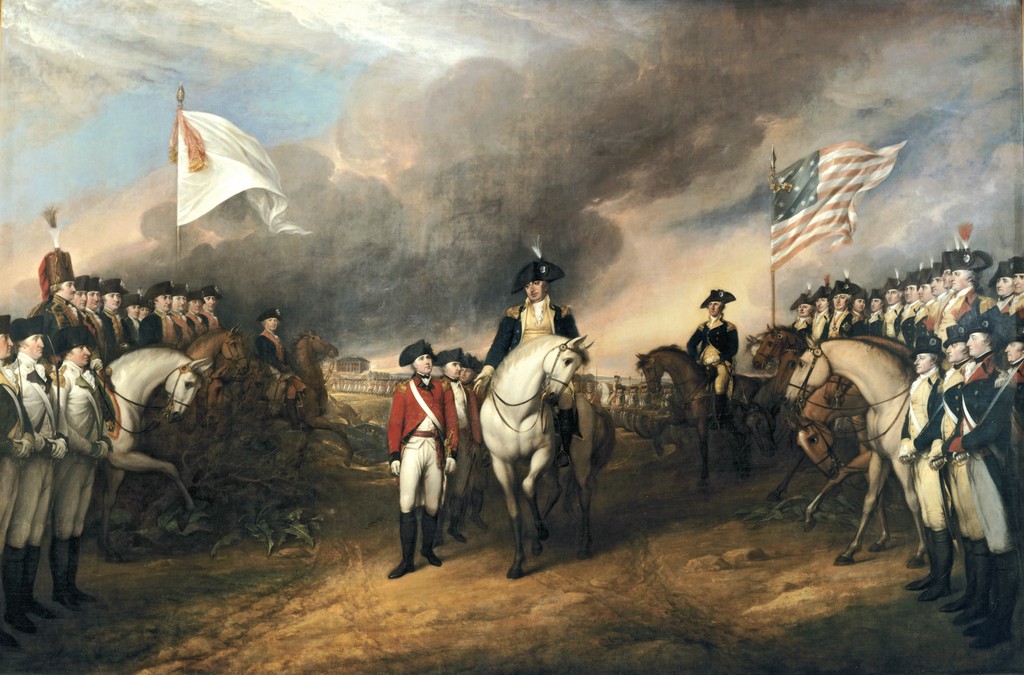
A surrender takes place at the centre of John Trumbull’s Surrender of Lord Cornwallis , but the commander named in the title does not appear. Cornwallis remained away from the ceremony at Yorktown, citing illness. His subordinate Charles O’Hara conducted the surrender, while the American general Benjamin Lincoln received it. Trumbull makes their encounter the opening through which the viewer enters a scene of allied victory. [1] [2]
The great canvas in the United States Capitol was painted in 1819–20, following a design developed decades earlier. French officers occupy the left, Americans the right, and the defeated troops approach between them. The painting combines the formality of military ceremony with individual portraiture, presenting victory as an event shared by allied armies. [1]
At a Glance
- Artist John Trumbull.
- Principal painting 1819–20; oil on canvas, 12 × 18 feet; United States Capitol Rotunda.
- Event surrender of the British army at Yorktown, 19 October 1781.
- Central figures Charles O’Hara on foot and Benjamin Lincoln on a white horse.
- Cornwallis absent from the ceremony.
- Washington on a brown horse farther back on the American side.
- Small version completed about 1828; Yale University Art Gallery.
This work across John Trumbull’s career
The Death of General Mercer at Princeton
about 1787–1831; principal Yale versionThe Sortie Made by the Garrison of Gibraltar
1789; Met versionGeorge Washington before the Battle of Trenton
about 1792–94; Met versionAlexander Hamilton
about 1792; likely early NGA replicaThe Death of General Warren at Bunker’s Hill
after 1815–before 1831; MFA versionDeclaration of Independence
1817–18; Capitol canvasSurrender of General Burgoyne
1821; Capitol canvasNotes and sources
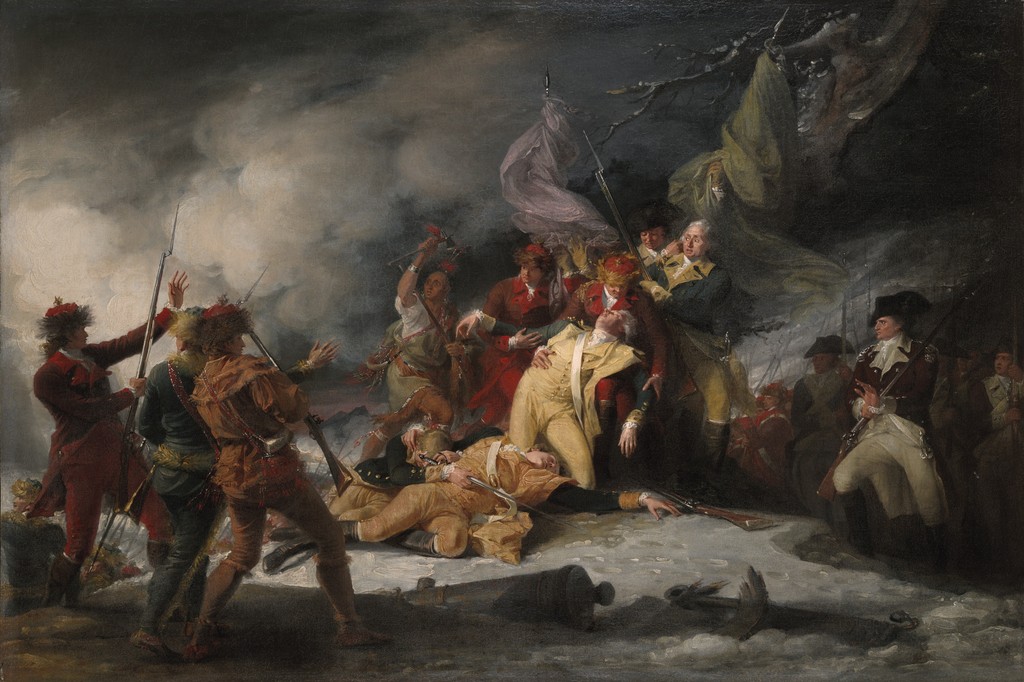
The Death of General Montgomery. Dates identify the particular canvas discussed in the article. [3]
The Capture of the Hessians at Trenton. Dates identify the particular canvas discussed in the article. [4]
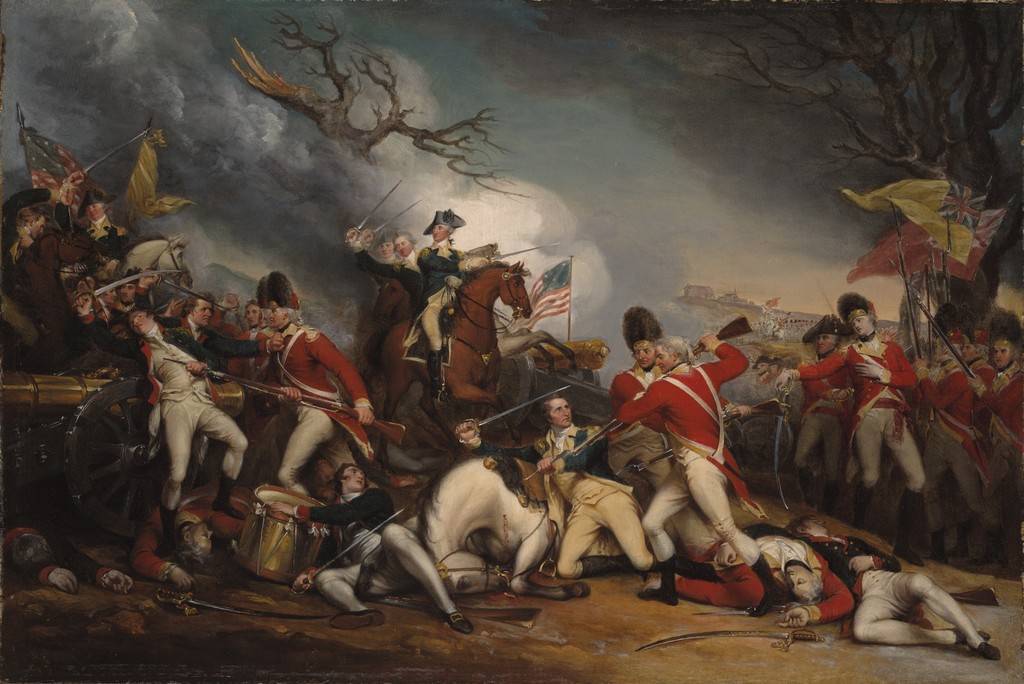
The Death of General Mercer at Princeton. Dates identify the particular canvas discussed in the article. [5]
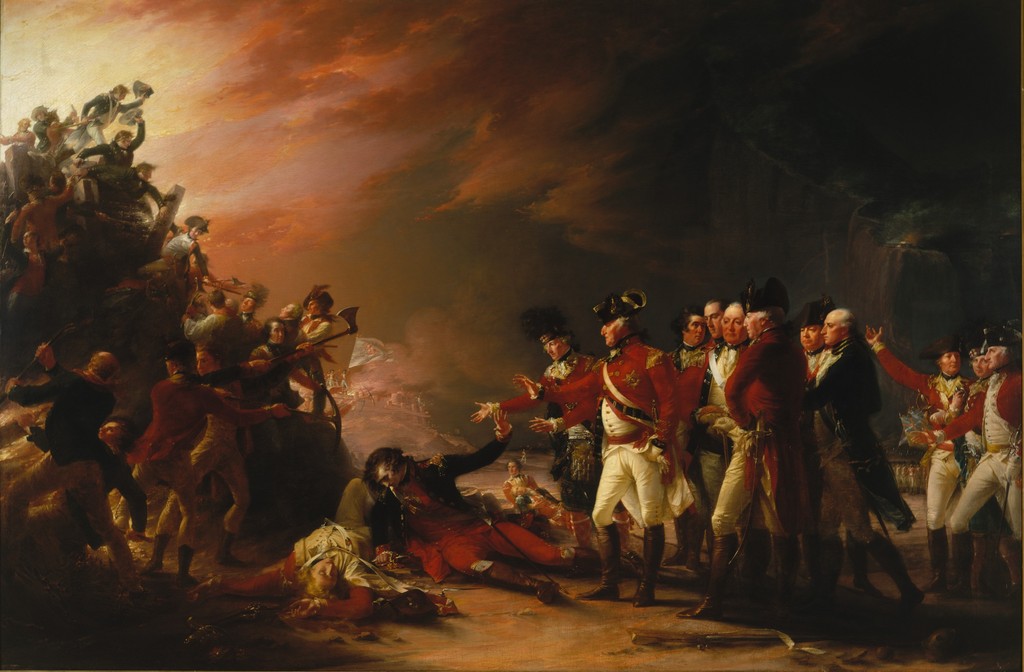
The Sortie Made by the Garrison of Gibraltar. Dates identify the particular canvas discussed in the article. [6]
George Washington before the Battle of Trenton. Dates identify the particular canvas discussed in the article. [7]
Alexander Hamilton. The NGA catalogue treats this as a likely early replica. [8] [9]
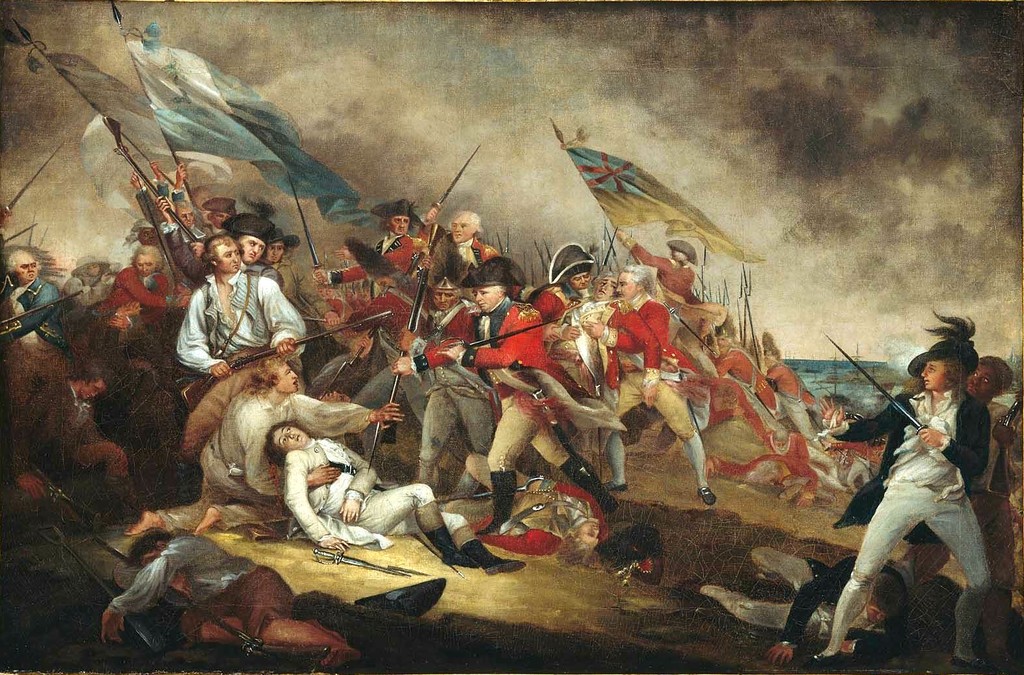
The Death of General Warren at Bunker’s Hill. Dates identify the selected later version. [10]
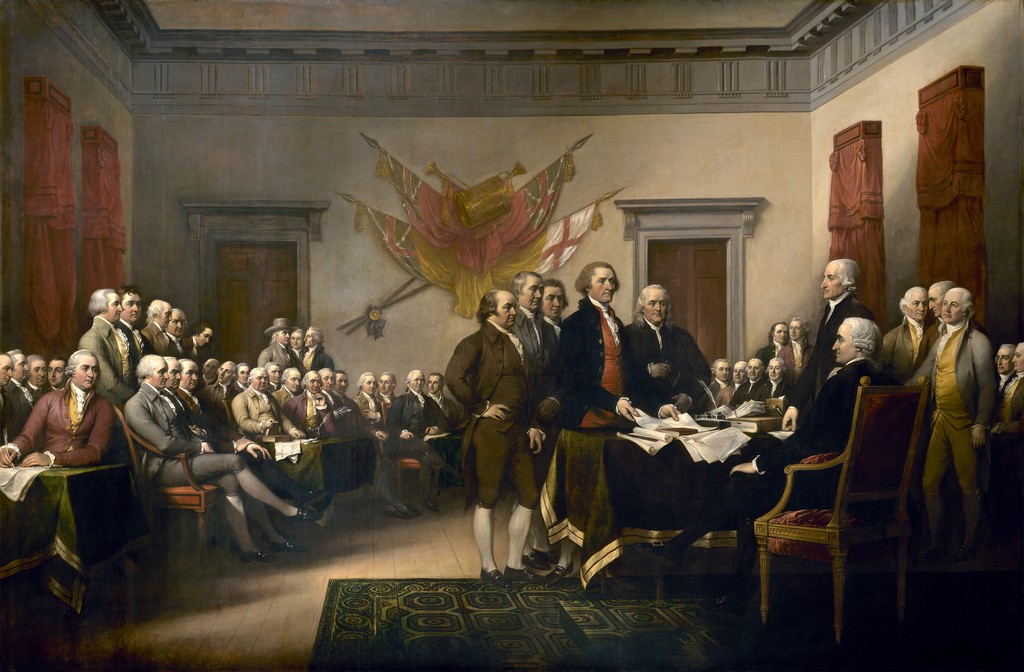
Declaration of Independence. Dates identify the particular canvas discussed in the article. [11]
Surrender of Lord Cornwallis (current article). Dates identify the particular canvas discussed in the article. [1]
Surrender of General Burgoyne. Dates identify the particular canvas discussed in the article. [12]
Washington Resigning His Commission. Dates identify the particular canvas discussed in the article. [13]
Contents
- O’Hara and Lincoln at the centre
- The absent Cornwallis
- French and American armies
- Washington’s position
- From the early design to the Capitol canvas
- Portrait collection and the Yale version
- Ceremony and the representation of victory
O’Hara and Lincoln at the centre
Lincoln’s white horse dominates the foreground. Its pale body stands out against the earth and the darker horses behind, carrying the American general above the standing British officer. Lincoln sits upright, his blue coat opening over a buff waistcoat. The horse’s head turns slightly across his body, giving the central group movement within an otherwise carefully controlled arrangement.
O’Hara stands to the horse’s left in a red coat, pale breeches and long dark boots. The small space separating the two men makes their exchange legible against the approaching troops. Lincoln’s extended arm directs attention towards the British officer and the sword. This is a ceremony conducted through restrained movement, with meaning concentrated in the relationship between the figures. [1] [2]
The encounter also establishes a hierarchy. A mounted officer receives a man on foot, while officers of the victorious armies watch from their places. Trumbull gives O’Hara enough space and visual clarity to remain a substantial presence. His red coat answers the blue of the American commander, allowing the opposed positions to remain visible without a scene of physical struggle.
In the catalogue appended to his memoir, Trumbull describes Lincoln conducting the principal British officers past the French and American commanders towards the lines of allied troops. The arrangement brings the senior figures of three nations close enough together for recognisable portraits. The ceremony thus provides both a historical action and a structure capable of holding many individual likenesses. [14]
The absent Cornwallis
The title names the commander whose army surrendered, rather than the officer shown carrying out the ceremony. Cornwallis’s absence creates an understandable trap for a viewer who begins by looking for him among the leading figures. The central British officer is O’Hara; Lincoln, rather than Washington, is the mounted American receiving him. [2]
The National Park Service recounts that O’Hara first approached the French commander Rochambeau, who referred him to Washington. Washington in turn directed him to Lincoln. Trumbull’s picture concentrates these movements into the encounter between the two officers at the front. Cornwallis’s reported illness explains his stated reason for remaining away; the painting cannot establish his private feelings about the defeat. [2]
Lincoln’s role also recalled an earlier reversal of fortunes. He had surrendered Charleston to the British in 1780. Trumbull’s memoir connects the terms imposed there with those required of the defeated British army at Yorktown. The National Park Service likewise relates Washington’s refusal of the customary honours of war to the treatment of the Americans at Charleston. [2] [14]
For a reader familiar with that history, Lincoln’s prominent position carries an additional meaning. The general who had experienced defeat now supervises the submission of an opposing army. Yet the visible expression of that reversal remains formal. Neither his posture nor the orderly gathering around him turns the British officer into an object of ridicule.
French and American armies
The two groups open like the sides of a broad passage. French officers and horses gather on the left beneath a pale Bourbon banner; American officers occupy the right beneath the Stars and Stripes. Both flags rise above the heads and hats, making the allied divisions readable across the full width of the painting. [1]
The pale French uniforms create a different rhythm from the blue coats on the American side. Each group includes standing and mounted men, so that the ranks remain varied in height and depth. The similarities in their arrangement bind the two sides together, while differences in dress and flags keep their separate identities visible.
Beyond the principal figures, the British column approaches through a narrow opening in the distance. Trumbull’s catalogue describes the captured troops marching from the town between the allied lines, then laying down their arms and returning unarmed to their quarters. The moving column gives the central exchange its wider military consequence: an army, as well as an officer, is surrendering. [14]
The victory depended on cooperation beyond this field. French naval control of the Chesapeake helped prevent relief by sea, while American and French forces conducted the siege on land. The surrender followed the capture of two redoubts on 14 October, a request for a truce on the 17th and negotiations on the 18th. The army marched out on 19 October 1781. [15]
The picture converts that coordinated campaign into an arrangement a viewer can take in at once. The allies face each other across a shared space, and the British advance into it. Their relative positions explain the outcome even before the individual officers have been identified.
Washington’s position
Washington sits on a brown horse farther back on the American side. His figure is clearly separated from Lincoln’s bright central mount, yet remains visible within the opening between the nearest officers and the approaching troops. The commander’s presence supplies authority without taking over the action conducted in front of him. [1]
This placement changes the usual expectation that the most famous person must occupy the centre. Lincoln’s horse and O’Hara’s red coat attract the first glance. Washington becomes apparent as the viewer follows the ceremony into the depth of the picture, discovering how the central action relates to the command behind it.
The empty ground plays a part in this movement of attention. It gives the foreground encounter room to stand out, then narrows towards the distant army. Washington occupies that recession, close enough to participate in the meaning of the surrender but sufficiently removed to preserve Lincoln’s immediate responsibility. The result distinguishes command from the performance of a particular ceremonial duty.
Compared with Trumbull’s George Washington before Trenton , the difference is striking. There the standing commander fills the picture and directs its meaning through his own bearing. At Yorktown, he belongs to a larger assembly. His authority is expressed through his relationship to other officers and the disciplined action taking place under their supervision.
Watch: John Trumbull
Choose a film to explore the artist’s work, its interpretation and its wider setting.
Moment of Discovery: John Trumbull’s “Declaration of Independence”
Discovery Park of America looks closely at Trumbull’s Declaration of Independence.
Watch on YouTubeFrom the early design to the Capitol canvas
Trumbull’s memoir describes the difficulty of making this subject into a compelling picture. The ground was level, the occasion governed by etiquette and the principal officers of three nations had to remain recognisable. He recalled drawing the composition repeatedly before arriving at an arrangement that could receive the portraits. [14]
Those constraints help explain the finished design. The heights of horses and standing men supply variety where the terrain offers little. The rows of heads remain sufficiently regular to suggest military order, while their changing levels prevent the composition from becoming one uninterrupted horizontal strip. The broad foreground leaves the principal transaction clear.
The design developed through the 1780s; Trumbull studied the Yorktown landscape in 1791. He showed the still unfinished small picture in Washington in January 1817, before receiving the commission for four monumental Capitol paintings. The large Cornwallis , made in 1819–20, was the second of those canvases he completed. [1]
The commission transformed the scale of the problem. A design devised to combine many portraits within a small canvas now had to hold its own across twelve by eighteen feet. The central white horse, opposing flags and opening between the armies give a distant viewer strong points of orientation, while the surrounding faces offer detail to someone looking more closely.
After exhibitions in New York, Boston and Baltimore, the painting reached the Capitol in late 1820. The four works were installed in the Rotunda in 1826. Delivery and final installation therefore belong to different stages of the work’s public history. [1] [16]
Portrait collection and the Yale version
The assembled faces emerged from a process extending across countries and years. Trumbull recalled painting French officers from life at Thomas Jefferson’s house in Paris in 1787. Writing much later, he singled out these small likenesses for particular praise. The memoir places portrait painting within the practical work of building the historical composition. [14]
The faces also guide the eye across the scene. Officers along the left turn towards the open ground, while the group at the right looks back towards the surrender. Their attention makes the space between the armies feel occupied by an event worth watching.
The gathering on the canvas consequently brings together observations made on separate occasions. A sitting in Paris supplied a face for a ceremony in Virginia, while the Yorktown study supplied information about the setting. The completed painting draws those materials into a shared light and space, allowing individuals to appear as participants in one coherent action.
Trumbull did not finish the small version before painting the Capitol canvas. According to the Architect of the Capitol, the smaller work was completed around 1828 and is now at Yale University Art Gallery. Its early conception and later completion show why a simple sequence of an original followed immediately by a copy would misrepresent the project’s development. [1]
The long undertaking also helps explain the importance of portrait studies to his practice. They made a person available for later inclusion, even when the painter and sitter could no longer meet. The portraits article examines that relationship between the individual likeness and the historical group. In Cornwallis , the distinctive faces remain subordinate to a design that must first make the ceremony intelligible.
Ceremony and the representation of victory
Dark clouds hang above the gathering, and damaged artillery occupies the lower left. Those elements recall the violence preceding the surrender. The foreground action has nevertheless moved beyond combat: no one charges, fires or struggles for possession of the ground. The open passage and controlled gestures turn attention towards the acceptance of an established outcome.
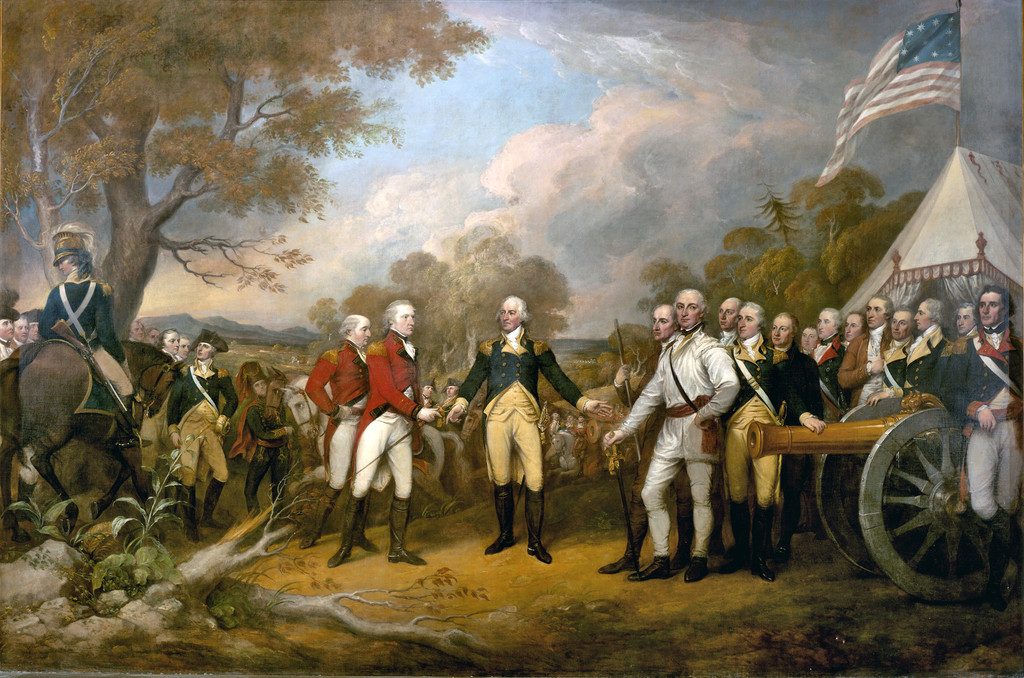
Trumbull’s Surrender of General Burgoyne offers a useful comparison. There two commanders meet directly, and Gates’s invitation directs the defeated officer towards hospitality. Here the principal commander is absent, and the conduct of the ceremony falls to subordinate officers. The two paintings give different forms to the moment when organised resistance ends.
Yorktown did not bring a peace treaty on the day of the ceremony. Negotiations and further political developments followed; the final treaty recognising American independence was signed in 1783. Trumbull’s scene presents a decisive military result within that longer conclusion to the war. [15]
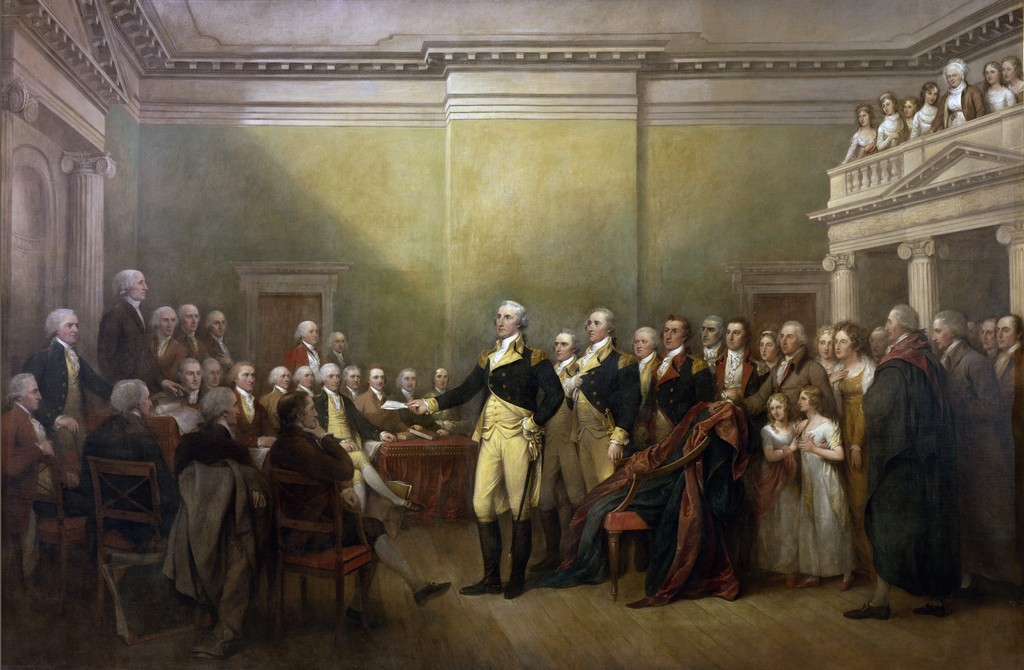
In the Rotunda series, the surrender stands alongside the Declaration of Independence and Washington Resigning His Commission . Read together, the pictures connect the assertion of independence, its defence and the relationship between military and civilian authority. Cornwallis gives the alliance a prominent place within that national account. [16]
The central encounter remains small in gesture but large in consequence. A hand extends, a sword is offered, and two armies hold their places around the defeated column. By making those restrained actions clear, Trumbull finds a way to give the formality he initially found difficult a lasting pictorial force.
Artworks directory
Works discussed in these articles, including distinct versions and reproductive prints. Dates identify the particular object; titles and attributions follow the cited collections. This is not a catalogue raisonné.
Frequently Asked Questions
He is absent. Charles O’Hara conducted the surrender on his behalf.
Benjamin Lincoln, the American general receiving the surrender.
O’Hara was referred to Lincoln to conduct the ceremony. Trumbull places Washington farther back while Lincoln occupies the central action.
They occupy the left beneath the Bourbon banner. The American group is on the right beneath the Stars and Stripes.
In 1819–20. He had developed the small composition much earlier and completed that smaller painting around 1828.
Discussion
Look again at the images and ideas explored in Surrender of Lord Cornwallis by John Trumbull. These editorial prompts invite your observations.
How does Washington’s position affect your understanding of the surrender? Compare the first impression made by Lincoln’s white horse with the way the two flags and distant column organise the wider scene.
Reader Insights
How does Lincoln’s white horse establish the principal action?
How do the flags and two allied groups structure the scene?
What changes when you recognise that Cornwallis himself is absent?
Join the Conversation
Share a detail, comparison or question about Surrender of Lord Cornwallis by John Trumbull below.
References
- Architect of the Capitol , Surrender of Lord Cornwallis ; owning record, composition, principal figures, development, versions and exhibition history. View source
- National Park Service , Charles Cornwallis , updated 12 March 2025; Cornwallis’s absence, O’Hara, Lincoln and the Charleston context. View source
- Yale University Art Gallery via Wikimedia Commons, Death of General Montgomery,1786,1832.2,. View source
- Yale University Art Gallery / Wikimedia Commons, The Capture of the Hessians at Trenton,December26,1776,1832.5,. View source
- Yale University Art Gallery via Wikimedia Commons, The Death of General Mercer at the Battle of Princeton, January3,1777,1832.6.1,. View source
- Metropolitan Museum of Art, The Sortie Made by the Garrison of Gibraltar,. View source
- Metropolitan Museum of Art, George Washington before the Battle of Trenton,. View source
- National Gallery of Art, Alexander Hamilton, c1792,. View source
- National Gallery of Art / Ellen G. Miles with Cynthia J. Mills and other contributors, American Paintings of the Eighteenth Century,1995,Trumbull entries,. View source
- Museum of Fine Arts, Boston, Death of General Warren at Bunker’s Hill,. View source
- Architect of the Capitol, Declaration of Independence,. View source
- Architect of the Capitol, Surrender of General Burgoyne,. View source
- Architect of the Capitol, General George Washington Resigning His Commission,. View source
- John Trumbull , Autobiography, Reminiscences and Letters , 1841, pp. 148, 150–151 and catalogue no. 29, pp. 428–429; retrospective account of composition, French portraits, ceremony and arrangement. View source
- National Park Service, Yorktown Battlefield , History of the Siege ; allied campaign, surrender sequence and the later peace. View source
- Architect of the Capitol , John Trumbull ; four commissioned subjects and Rotunda installation. View source
- Splash image source.
John Trumbull, Surrender of Lord Cornwallis, 1819–20. Oil on canvas, 12 × 18 feet. United States Capitol Rotunda. Charles O’Hara conducts the surrender to Benjamin Lincoln; Cornwallis is absent. John Trumbull; Architect of the Capitol, via Wikimedia Commons. Public domain. Public domain . Resized only; full supplied image retained. No appearance adjustment.
View source