 by
Tom Gurney
Tom Gurney BSc (Hons) is an art history expert with over 20 years experience
Email:
tomgurney1@gmail.com
/ Phone:
+44 7429 011000
The Sortie Made by the Garrison of Gibraltar by John Trumbull: Introduction
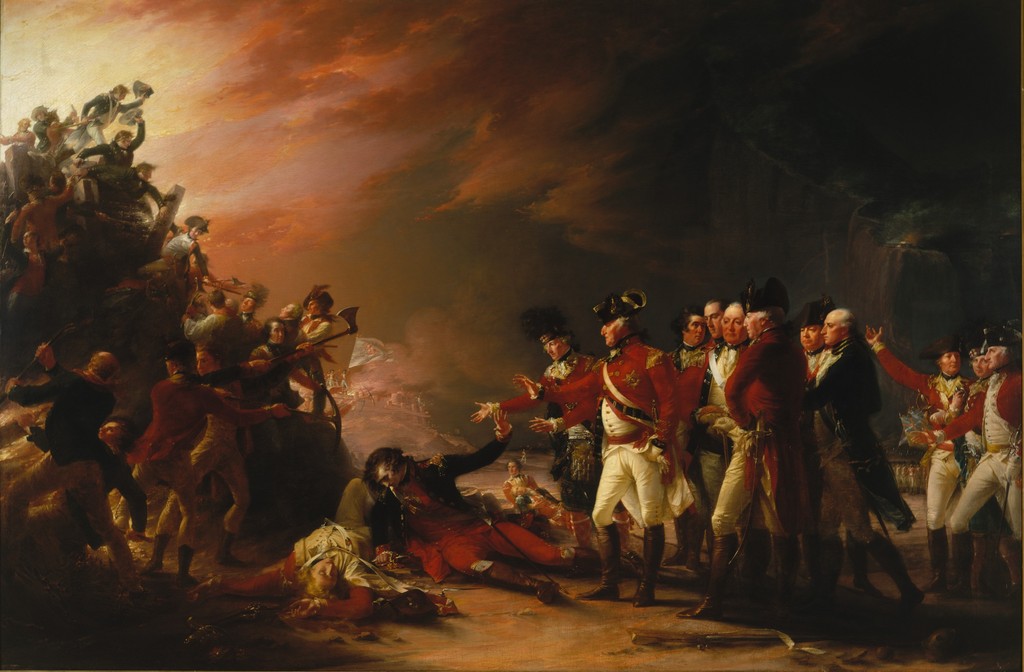
John Trumbull's The Sortie Made by the Garrison of Gibraltar turns a British military success into a scene centred on a dying Spanish officer. Flames illuminate the attack at the left, while British officers approach from the right. Between them, Don José de Barboza rejects assistance. The painting asks the viewer to follow the destruction of an enemy position and then pause over the fate of an individual enemy. [1]
The Metropolitan Museum of Art's canvas, completed in 1789, is the largest of three early versions. Measuring 180.3 by 271.8 centimetres, it gave an American painter working in London an opportunity to demonstrate his command of ambitious historical painting. Its development through drawings and smaller oils reveals how carefully he worked to balance action, pity, pride and the public presentation of victory. [1] [2]
At a Glance
- Artist John Trumbull.
- Principal painting 1789, Metropolitan Museum of Art, 1976.332.
- Medium and dimensions oil on canvas, 180.3 × 271.8 cm.
- Depicted action the British sortie against the Spanish siege works overnight on 26–27 November 1781.
- Central encounter Don José de Barboza refusing assistance from General Eliott.
- Related early paintings the NGA's 1787 study and the Cincinnati version of 1788.
This work across John Trumbull’s career
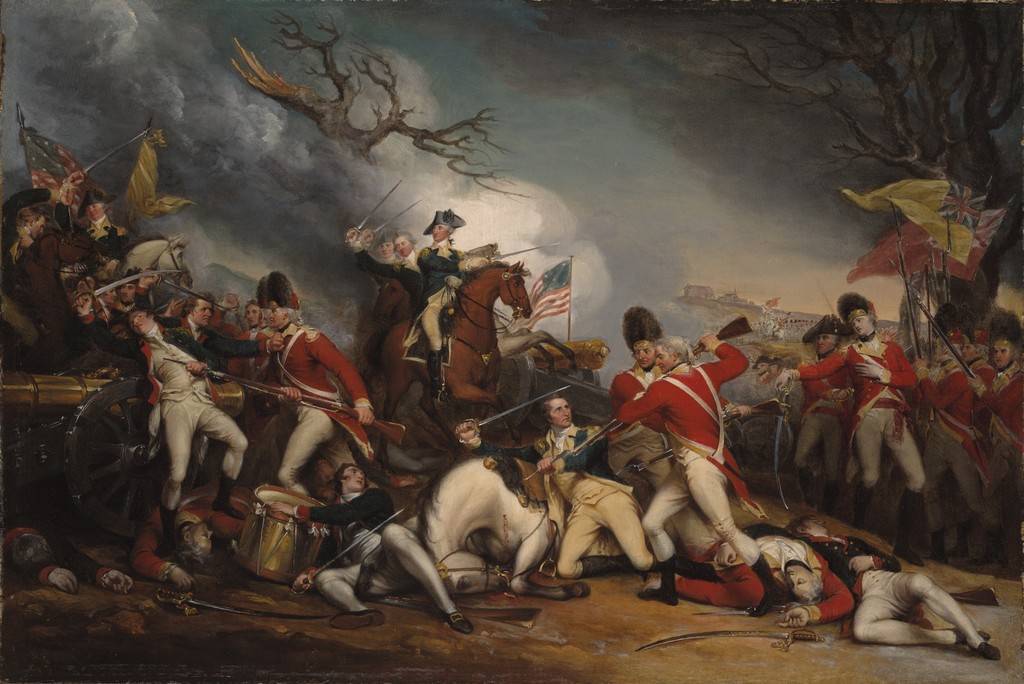
The Death of General Mercer at Princeton
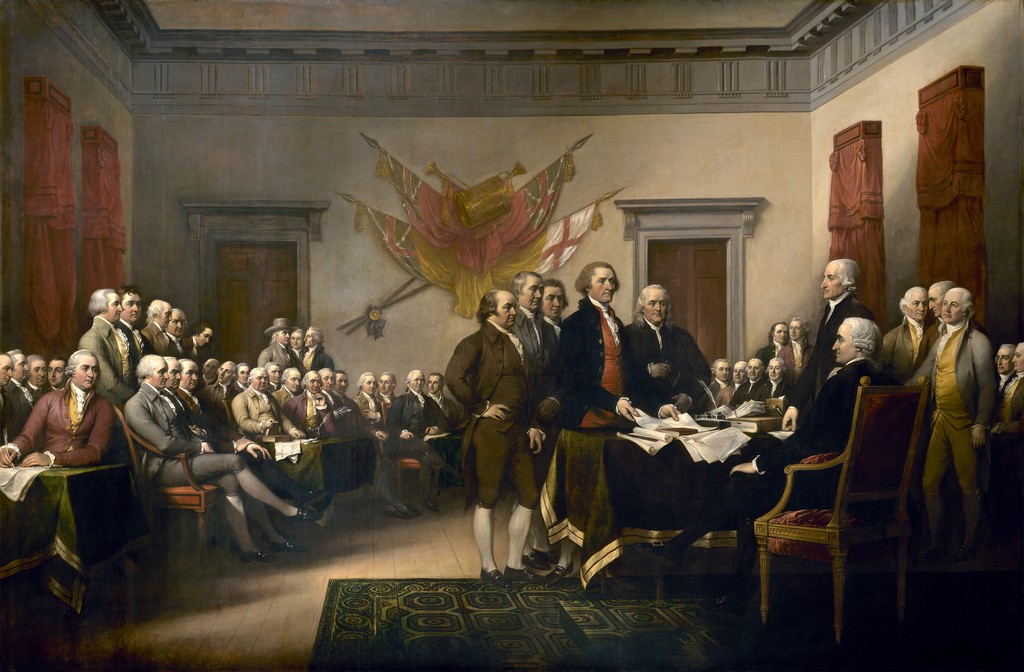
about 1787–1831; principal Yale versionThe Sortie Made by the Garrison of Gibraltar (current article)
1789; Met versionGeorge Washington before the Battle of Trenton
about 1792–94; Met versionAlexander Hamilton
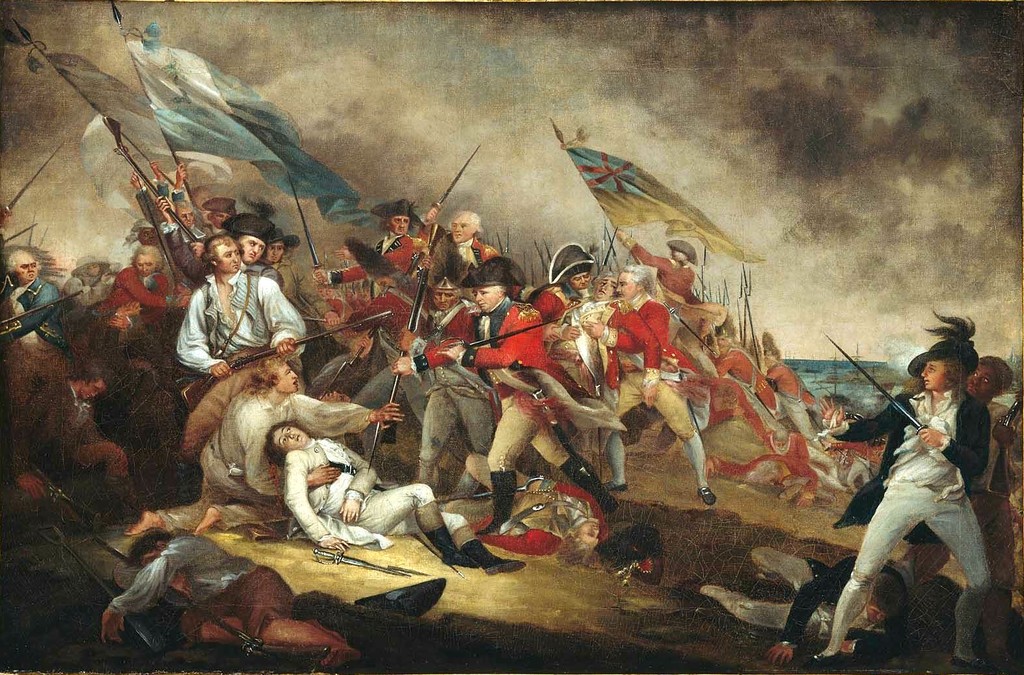
about 1792; likely early NGA replicaThe Death of General Warren at Bunker’s Hill
after 1815–before 1831; MFA versionDeclaration of Independence
1817–18; Capitol canvasSurrender of Lord Cornwallis
1819–20Surrender of General Burgoyne
1821; Capitol canvasNotes and sources
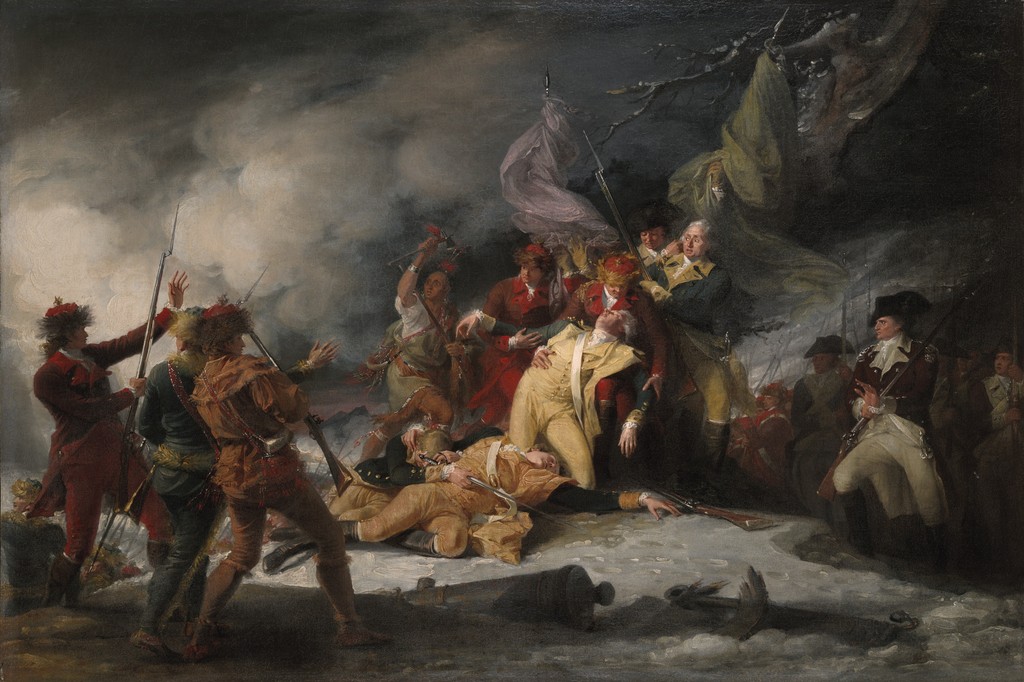
The Death of General Montgomery. Dates identify the particular canvas discussed in the article. [3]
The Capture of the Hessians at Trenton. Dates identify the particular canvas discussed in the article. [4]
The Death of General Mercer at Princeton. Dates identify the particular canvas discussed in the article. [5]
The Sortie Made by the Garrison of Gibraltar (current article). Dates identify the particular canvas discussed in the article. [1]
George Washington before the Battle of Trenton. Dates identify the particular canvas discussed in the article. [6]
Alexander Hamilton. The NGA catalogue treats this as a likely early replica. [7] [8]
The Death of General Warren at Bunker’s Hill. Dates identify the selected later version. [9]
Declaration of Independence. Dates identify the particular canvas discussed in the article. [10]
Surrender of Lord Cornwallis. Dates identify the particular canvas discussed in the article. [11]
Surrender of General Burgoyne. Dates identify the particular canvas discussed in the article. [12]
Washington Resigning His Commission. Dates identify the particular canvas discussed in the article. [13]
Contents
- Fire, rescue and the dying Spaniard
- The sortie of November 1781
- Eliott, Barboza and humane victory
- West's advice and the London project
- The three early versions
- Preparatory changes and the central group
- Lawrence, classical models and the 1789 canvas
- Copley's different Gibraltar subject
- Exhibition, ownership and changing critical opinion
- Annotated details
Fire, rescue and the dying Spaniard
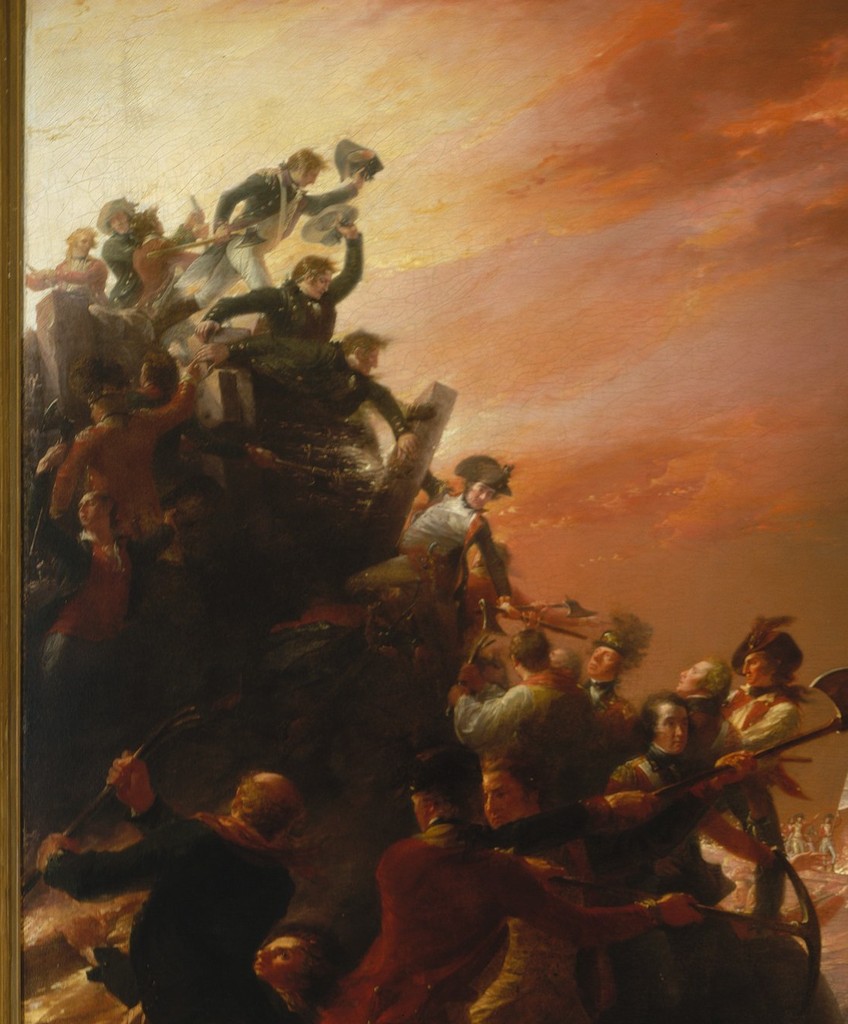
The composition opens towards the brightness at the upper left. Soldiers climb and strike at the enemy works, their gestures carrying the eye upwards through a crowded mass of bodies. Light from the fire breaks across clothing and weapons, while smoke spreads into the sky. This part of the painting makes the attack visible as an energetic collective undertaking, with one movement continuing through several figures.
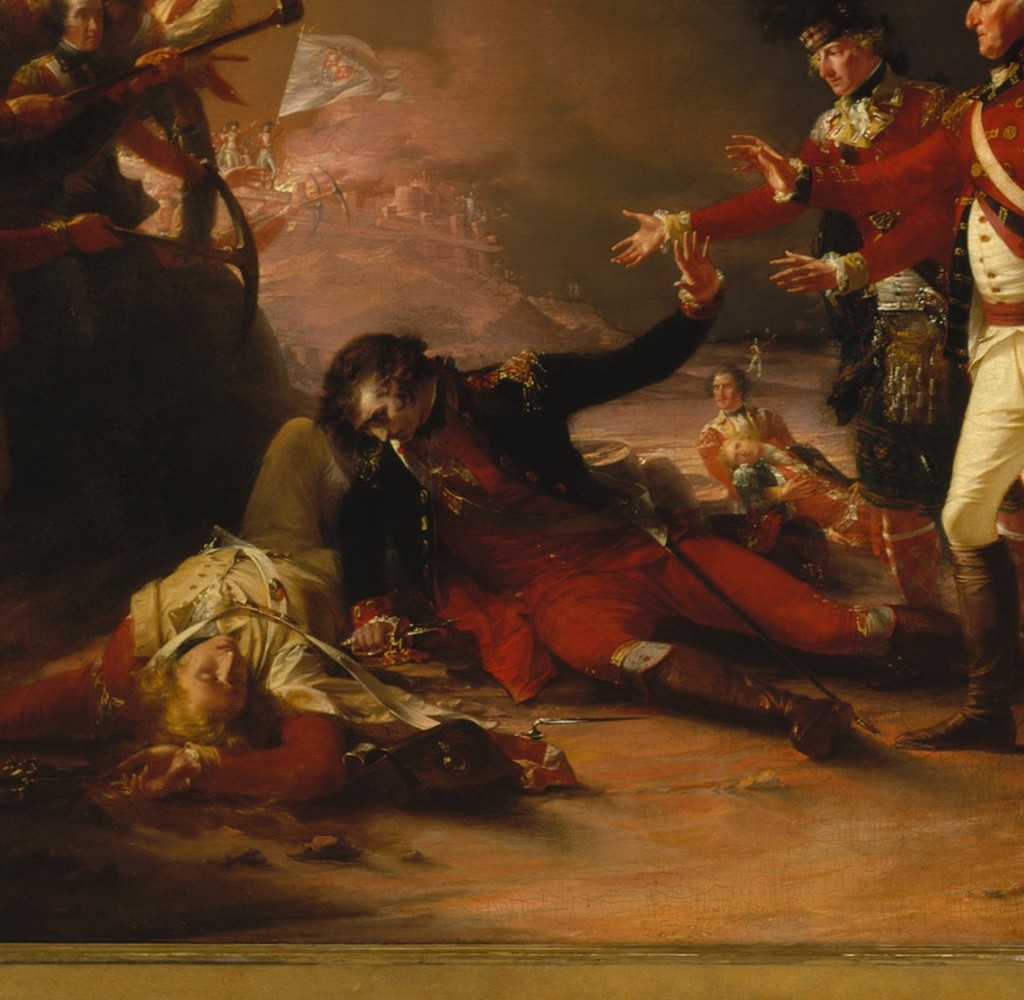
Near the centre, the movement slows. Barboza lies low on the ground, his body extended towards the British group and an arm raised between himself and the approaching officers. The gesture interrupts the possibility of rescue. The Met identifies the subject as the Spanish officer's refusal of help after he had been mortally wounded defending his position. His resistance continues even when his physical strength is failing. [1]
Another fallen man occupies the foreground, his head close to the viewer and his body angled away. His stillness makes the living figures' gestures more conspicuous. The different positions of the two bodies establish separate responses to battle: one figure has become entirely unresponsive, while the other can still determine how he receives the attention offered to him.
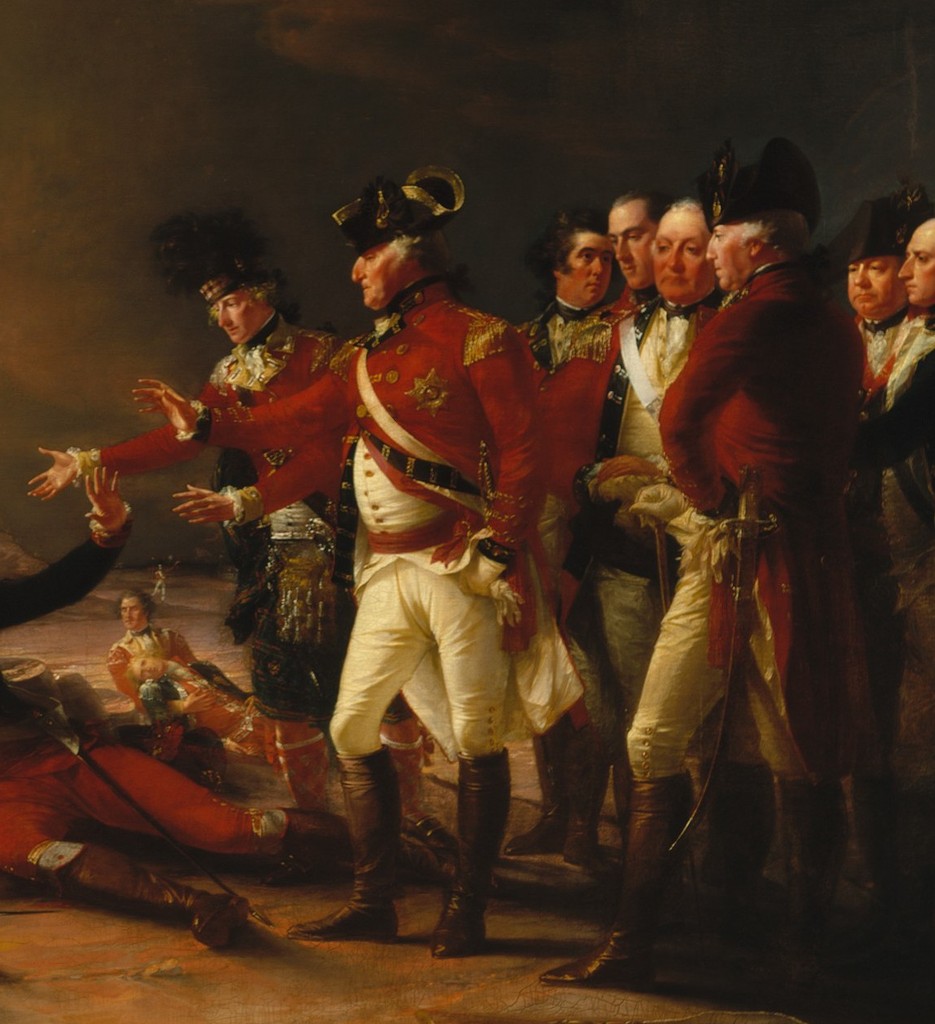
The officers at the right bring a third rhythm. Upright figures gather in a comparatively ordered group, their faces and hands turned towards the encounter. The long line of uniforms creates a counterweight to the rising confusion at the left. The painting's breadth allows all three areas to remain distinct, while the warm light connects the attack, the dying man and those who approach him.
Annotated Details from The Sortie Made by the Garrison of Gibraltar
The numbered points identify visible features discussed in this article. Return from each detail to the whole composition. John Trumbull, The Sortie Made by the Garrison of Gibraltar, 1789. Oil on canvas, 180.3 × 271.8 cm. Metropolitan Museum of Art, 1976.332. The Metropolitan Museum of Art, CC0. Image source. CC0 / Public domain. Numbers added to a separate resized view of the original source photograph; its surrounding frame is retained. Detail images are crops of that original photograph.
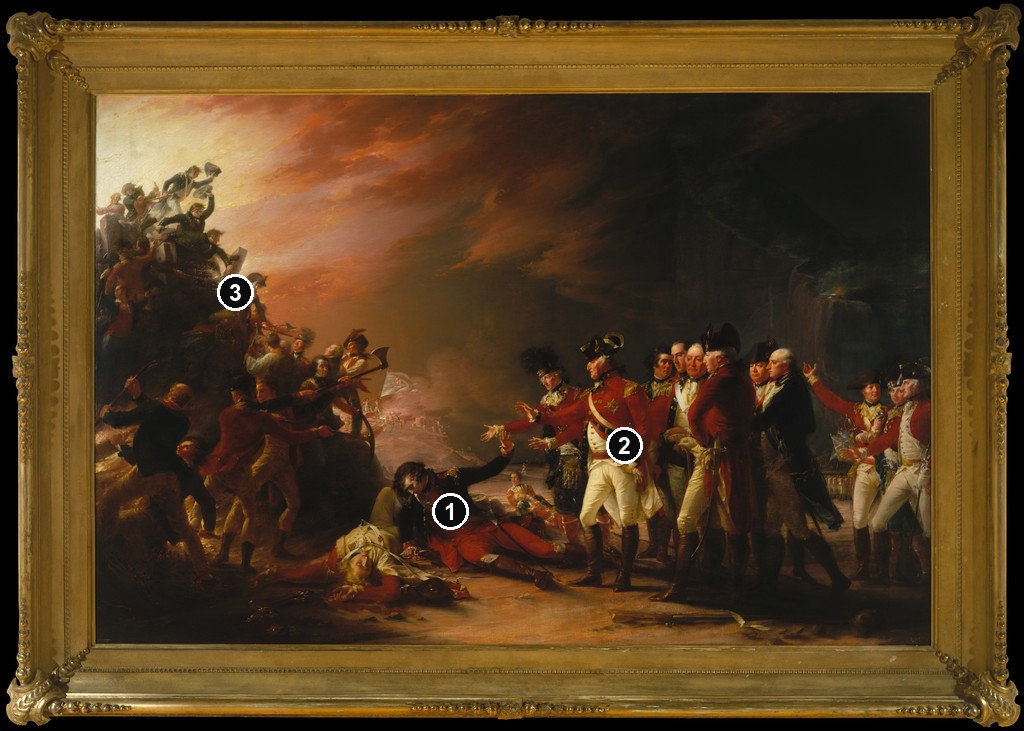
Details from THE SORTIE MADE BY THE GARRISON OF GIBRALTAR
Compare the cropped details with the complete images above. Notice how their colours, shapes and positions contribute to the larger compositions.
The wounded officer’s raised arm
The seated wounded man raises one arm into the space between himself and the standing officers. The hand interrupts the approach from the right and makes a small gesture carry much of the encounter’s meaning.
The standing officers
Red coats, pale breeches and overlapping heads gather into an upright group. Hands extend towards the wounded man, linking the formal height of command with the low foreground bodies.
Fire and action at the left
Figures climb and lean through an area of fiery light. Long diagonal weapons and the bright opening in the smoke give this side of the picture an energy that differs from the concentrated meeting at the centre.
The sortie of November 1781
A sortie is an attack made outwards from a defended position. During the Great Siege of Gibraltar, the British garrison faced Spanish and French forces attempting to take the fortress. Enemy engineers advanced trenches and batteries across the isthmus, bringing their artillery closer. The raid represented in Trumbull's picture aimed to destroy these threatening works and reduce the pressure on the defenders. [14]
The action took place overnight on 26–27 November 1781. The Gibraltar National Museum describes the departure on the evening of the 26th; the Ministry for Heritage's account and the title of the later engraving identify the early hours of the 27th. These descriptions locate the same operation across a night and morning. The burning works in the painting give that military objective a spectacular pictorial form. [14] [15]
The local account distinguishes command of the operation from the governor's role. Brigadier Ross led the attacking troops; General George Augustus Eliott followed as an observer. Trumbull makes Eliott's encounter with the wounded Spaniard central to the painted story. The arrangement concentrates on the exchange through which the governor's humanity can be displayed, alongside the military action carried out by others. [15]
A much later photograph offers a different kind of encounter with Gibraltar. William Herman Rau's 1903 stereograph shows the Rock and town across the water, framed by a ship's rigging and rail. Its paired views record a developed harbour more than a century after the siege. The photograph supplies geographical context while making the distance between an actual later view and Trumbull's composed night scene apparent. [16]
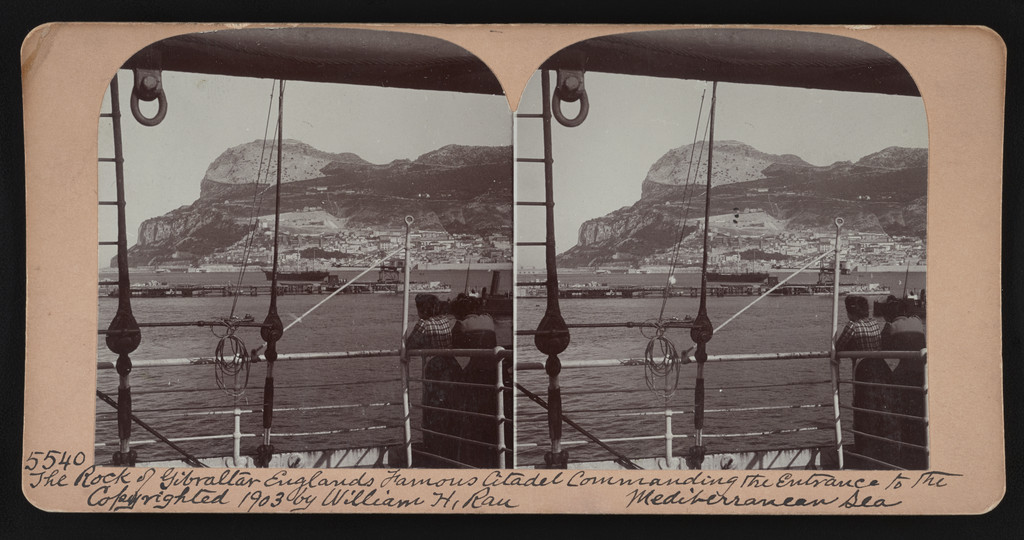
William Herman Rau, The Rock of Gibraltar, 1903. Photograph in stereograph format. Library of Congress, Prints and Photographs Division, LC-DIG-stereo-1s25636. A later view of the Rock and town across the water. William Herman Rau; Library of Congress. Public domain; no known restrictions on publication recorded by the Library.
Image source
.
Public domain
. Resized; full stereograph card, mount and handwritten title retained.
Eliott, Barboza and humane victory
Barboza's place in the picture prevents the opposing army from appearing only as an obstacle overcome. The individual Spanish officer becomes the emotional centre of the British victory. His low position invites attention to vulnerability, yet the raised arm gives him an active part in the encounter. He remains able to refuse what is being offered.
The British officers' response gives their success another meaning. Their approach suggests that victory can include concern for a courageous opponent. The painting consequently presents two forms of distinction: military superiority in the destroyed batteries and generosity towards the wounded man. These ideas meet within the central space, where an outstretched hand encounters a gesture of rejection.
Trumbull's memoir explains the subject through his desire to honour noble conduct across national divisions. He recalled that his American Revolutionary pictures had offended some viewers in Britain and described the Gibraltar undertaking as a way to demonstrate a broader purpose. That account places the scene of British generosity beside the artist's own wish to be recognised by a British audience. [17]
The painting does not resolve the encounter through a completed rescue. Its dramatic force depends on aid remaining possible and being refused. Barboza's courage and the officers' compassion can both be presented within the same suspended exchange. The scene therefore gives a defeated opponent a dignity that complicates a straightforward celebration of the attackers' achievement.
West's advice and the London project
Benjamin West helped direct Trumbull towards Gibraltar as a subject. The Met catalogue cites a letter to the artist's brother dated May 1786, in which Trumbull associated the proposal with West and the possibility of establishing his reputation. The project belonged to a professional environment in which an ambitious modern history could attract attention through exhibition and reproduction as well as a private commission. [2]
Trumbull's later account gives Antonio di Poggi an important role in telling him the story. He recalled a conversation during a London walk and the rapid making of a small sketch afterwards. This is a vivid account of an idea taking shape, but its date requires care: the memoir places the conversation in 1787, whereas the catalogue documents preparatory drawings and the letter from 1786. The surviving sequence begins earlier than that retrospective origin story. [2] [17]
The difference is useful because it reveals the distance between a remembered moment of inspiration and the more extended development of a painting. A compelling story could be recalled as one conversation, while dated studies show decisions accumulating over time. The Sortie required more than choosing a heroic incident. The artist had to discover a form in which its different actions and emotions could coexist.
West's example also helped define the scale of the ambition. Trumbull wanted to work within the highly regarded field of history painting , where the representation of significant actions required control over numerous figures. The Gibraltar picture gave his London training a public test. An American subject was not essential to that test; a British event could offer an equally demanding occasion for the painter's skill.
The three early versions
The first small oil is dated 1787 and now belongs to the National Gallery of Art's Corcoran Collection. It measures 38.26 by 56.04 centimetres and was presented to West in 1788. The present location matters when following older publications, which identify it with the Corcoran Gallery rather than the NGA. This canvas is an early stage of the project, separate from the large Met painting. [18]
In his memoir, Trumbull connected the making of another version with a mistake in Barboza's uniform: he had used white and scarlet when he should have used blue and scarlet. He recalled deciding to paint afresh rather than alter the first work. The second early version, identified in the Met catalogue with the Cincinnati Art Museum, dates to 1788 and measures 50.8 by 76.2 centimetres. [2] [17]
His dissatisfaction then concerned expression and balance as well as costume. Trumbull thought the Spaniard had become too fierce and that parts of the arrangement were insufficiently balanced. The third canvas allowed those problems to be reconsidered at a much larger scale. In the memoir, he described wanting principal figures approximately half life-size, giving their gestures and faces a stronger presence before an audience. [17]
The 1789 Met painting was the result of that enlargement and revision. Its dimensions change the encounter with the dying figure and the surrounding officers, but greater size was only part of the transformation. The placement of the figures, the atmosphere and the degree of restraint also developed. The catalogue records still later replicas from around 1840, so the three early versions do not represent every subsequent return to the subject. [2]
Watch: John Trumbull
Choose a film to explore the artist’s work, its interpretation and its wider setting.
Moment of Discovery: John Trumbull’s “Declaration of Independence”
Discovery Park of America looks closely at Trumbull’s Declaration of Independence.
Watch on YouTubePreparatory changes and the central group
The Met catalogue follows the design through a group of preparatory drawings associated with the Boston Athenaeum. It describes repeated attempts to settle the relationship between the attack, the wounded Spaniard and the officers. In one arrangement, the British group occupied the centre; in others, the dying figure became more directly opposed to it. The question was where the viewer should first experience the encounter's emotional force. [2]
Changes in the support of Barboza's body affected the meaning of his gesture. A figure helped sustain him in one stage before disappearing from later arrangements. The movement of the wounded man could then carry refusal more independently. These decisions show that narrative clarity depended on the space and bodily relationships around the principal figure, as well as on the expression assigned to his face. [2]
In the final painting, Barboza's position gives his arm a clear route towards the approaching men. His body lies within the open foreground rather than disappearing into the rising attack. The nearby dead soldier deepens that space and makes the viewer conscious of a body much closer to the picture's edge. The two figures create an interval between the spectator and the formal group of officers.
Above them, the sky provides a large area in which the figures' smaller movements can remain legible. Darkness gathers behind the officers, while the left side opens into firelit smoke. The arrangement ties illumination to the different kinds of activity. Trumbull's style and technique involved this control of the whole field, with light directing attention from collective action towards a personal exchange.
Lawrence, classical models and the 1789 canvas
Trumbull recalled using his friend Thomas Lawrence as the model for Barboza's head. The future portrait painter supplied a living face for a Spanish officer who had died years earlier. The example exposes the different forms of evidence within a historical composition: a carefully studied head could serve a person other than the model who sat for it. Likeness and represented identity did not always coincide. [17]
The artist also connected the body with a classical dying-warrior pose. The memoir's reference to a dying gladiator and the catalogue's discussion of the Dying Gaul place the figure within an established language of defeated courage. This association helped make the opponent's suffering worthy of sustained attention. It gave the central figure a formal dignity that could be recognised beyond the particular circumstances of the siege. [2] [17]
The contrast with the upright officers sharpens that effect. Their group suggests continuity, order and the capacity to offer assistance; Barboza's extended body registers the physical cost of defeat. The figures therefore carry different kinds of authority within the composition. The soldier who cannot rise can still command the viewer's attention through the clarity of his pose and gesture.
The Met catalogue describes the final version as more restrained and formally ordered than its predecessors. It also relates the officers to West's example and Roman relief grouping, while acknowledging the difficulty of establishing one precise ancient source. Such comparisons explain a visual tradition available to Trumbull without supplying a record of one specific act of copying. In the painting itself, the composed group remains set against the agitation of the attack. [2]
Copley's different Gibraltar subject
John Singleton Copley was also developing a major Gibraltar painting in London. His subject concerned the attack involving floating batteries in September 1782, a different episode from the land sortie of November 1781. The distinction separates two events that could both be described broadly as part of the siege. It also explains how artists could address a shared public interest without necessarily depicting the same action. [2] [14]
The Met catalogue discusses rivalry and West's possible interest in having a pupil complete a Gibraltar subject before Copley. That proposed motive belongs to the scholarly interpretation of the circumstances. Trumbull's own Sortie can be understood through the choices visible in its development: the focus on a dying opponent, the division into three related areas and the repeated effort to make the encounter compelling. [2]
The larger setting also distinguishes this painting from Trumbull's Revolutionary battle scenes . Gibraltar offered a British subject to an artist whose American loyalties were already known. Its public purpose could accommodate admiration for the defenders and respect for a Spanish adversary, while giving the painter a composition through which to demonstrate his own professional ambition.
Exhibition, ownership and changing critical opinion
Trumbull exhibited the large painting at Spring Gardens in London in 1789. In his memoir, he recalled interest from military viewers and reported extravagant praise from Horace Walpole. He also recounted a hostile intervention by Lord Moira that discouraged officers from attending. These stories form part of the artist's later explanation of his reception; they do not provide a complete independent record of what every audience or critic thought. [17]
His account also describes refusing a substantial offer because he expected exhibition receipts, an engraving and eventual sale to produce more. He later judged that calculation mistaken. The episode reveals how the painting's different possible sources of income were connected in his thinking. A single object could be exhibited for an audience, generate a reproducible design and eventually pass into a collection. [17]
The engraved form has its own surviving record. The Met holds William Sharp's etching and engraving after the composition, published on 1 January 1799, with Trumbull, Sharp and Poggi named as publishers. Its title specifies the morning of 27 November 1781. The print documents the project reaching another medium, though the existence of an edition alone cannot establish how profitable that venture proved. [19]
The large canvas was purchased by the Boston Athenaeum in 1828. The Met catalogue records its long deposit at the Museum of Fine Arts, Boston, from 1876 to 1976, before its acquisition by the Metropolitan Museum in 1976. These changes of setting gave a London exhibition picture a continuing American institutional history. The painting's subject and the artist's nationality could acquire different emphasis within those successive collections. [2]
Its emotional structure remains central to that history. Trumbull gave the destruction of the batteries sufficient energy to communicate victory, then made the treatment of an enemy the focus of a much quieter encounter. The viewer moves between those claims through a scene developed over several years and versions. The Sortie brings his study of figures, ambition for public recognition and interest in exemplary conduct into one unusually expansive composition.
Artworks directory
Works discussed in these articles, including distinct versions and reproductive prints. Dates identify the particular object; titles and attributions follow the cited collections. This is not a catalogue raisonné.
Frequently Asked Questions
A sortie is an attack made outwards from a defended position. Here it refers to the garrison's raid against the approaching Spanish siege works.
The Met holds the large canvas of 1789. The smaller early versions belong to separate collections and stages of the project.
His refusal of help creates the central personal encounter, giving the defeated opponent courage and dignity within a picture of British victory.
Trumbull recalled using Lawrence as the model for Barboza's head. The person supplying the likeness was different from the historical figure represented.
Copley's subject concerned the floating-battery attack in September 1782. Trumbull's land sortie occurred in November 1781.
No. Rau's stereograph dates to 1903 and provides later geographical context. It does not document the battle or Trumbull's sources.
Discussion
Look again at the images and ideas explored in The Sortie Made by the Garrison of Gibraltar by John Trumbull. These editorial prompts invite your observations.
Follow the movement from the attack at the left to the wounded man and then to the officers. How does the change in pace affect your understanding of the painting's idea of victory?
Reader Insights
How do the light and central bodies concentrate the drama?
What does the later Gibraltar photograph show that the painting does not?
How does the treatment of a wounded enemy connect this British subject with other works?
Join the Conversation
Share a detail, comparison or question about The Sortie Made by the Garrison of Gibraltar by John Trumbull below.
References
- Metropolitan Museum of Art , The Sortie Made by the Garrison of Gibraltar , 1789, 1976.332; subject, dimensions, date and position among the early versions. View source
- John Caldwell and Oswaldo Rodriguez Roque, with Dale T. Johnson , American Paintings in the Metropolitan Museum of Art , volume I, 1994, pp. 205–208 and 212–214; preparatory development, versions, comparisons and collection history. View source
- Yale University Art Gallery via Wikimedia Commons, Death of General Montgomery,1786,1832.2,. View source
- Yale University Art Gallery / Wikimedia Commons, The Capture of the Hessians at Trenton,December26,1776,1832.5,. View source
- Yale University Art Gallery via Wikimedia Commons, The Death of General Mercer at the Battle of Princeton, January3,1777,1832.6.1,. View source
- Metropolitan Museum of Art, George Washington before the Battle of Trenton,. View source
- National Gallery of Art, Alexander Hamilton, c1792,. View source
- National Gallery of Art / Ellen G. Miles with Cynthia J. Mills and other contributors, American Paintings of the Eighteenth Century,1995,Trumbull entries,. View source
- Museum of Fine Arts, Boston, Death of General Warren at Bunker’s Hill,. View source
- Architect of the Capitol, Declaration of Independence,. View source
- Architect of the Capitol, Surrender of Lord Cornwallis,. View source
- Architect of the Capitol, Surrender of General Burgoyne,. View source
- Architect of the Capitol, General George Washington Resigning His Commission,. View source
- Gibraltar National Museum , The Great Siege of Gibraltar ; the siege works, November sortie and separate floating-battery attack. View source
- HM Government of Gibraltar, Ministry for Heritage , The Sortie of 27th November 1781 ; operation, Ross's command and the commemorative account of Barboza and Eliott. View source
- Library of Congress, Prints and Photographs Division , William Herman Rau, The Rock of Gibraltar , 1903, LC-DIG-stereo-1s25636; photograph, creator, date, format and rights record. View source
- John Trumbull , Autobiography, Reminiscences and Letters , 1841, pp. 148–150; attributed recollections of the subject, versions, Lawrence and public reception. View source
- National Gallery of Art , The Sortie Made by the Garrison of Gibraltar , 1787, 2014.136.100; current location, dimensions and provenance of the early study. View source
- Metropolitan Museum of Art , William Sharp after John Trumbull, The Sortie Made by the Garrison of Gibraltar in the Morning of the 27th November 1781 , published 1 January 1799, 2006.265; engraving and publisher metadata. View source
- Splash image source.
John Trumbull, The Sortie Made by the Garrison of Gibraltar, 1789. Oil on canvas, 180.3 × 271.8 cm. Metropolitan Museum of Art, 1976.332. The Metropolitan Museum of Art, CC0. CC0 / Public domain . Frame removed by cropping the original source photograph to the painting rectangle; no colour, contrast, retouching or perspective alteration. Original master retained.
View source