


 by
Tom Gurney
Tom Gurney BSc (Hons) is an art history expert with over 20 years experience
Email:
tomgurney1@gmail.com
/ Phone:
+44 7429 011000
John Trumbull Paintings: Introduction
John Trumbull’s paintings range from intimate portraits to monumental scenes of the American Revolution. The most familiar subjects gather people around a decisive act: a report reaches Congress, a defeated officer offers a sword, or a wounded commander receives help. Looking across the works reveals how often their force depends on relationships between individual figures.
The paintings also survive through different versions and formats. A small composition could develop for decades, enter a large public commission or circulate through an engraving. This selection introduces the principal works and the connections between them, with attention to the particular canvases and portraits represented.
Selected John Trumbull paintings
At a Glance
- Main subjects in this selection Revolutionary history, military conduct and portraiture.
- Four Capitol works Declaration, Burgoyne, Cornwallis and Washington Resigning.
- Important collections United States Capitol, Yale University Art Gallery, Metropolitan Museum of Art, National Gallery of Art and Museum of Fine Arts, Boston.
- Version reminder the date of an event is not necessarily the date of the canvas.
- Other formats drawings and reproductive engravings are discussed separately.
Contents
- Small Revolutionary histories
- Heroic deaths and acts of mercy
- The four Capitol canvases
- The portraits within history painting
- Independent portraits
- Gibraltar and a British audience
- Versions, dates and collections
Small Revolutionary histories
Trumbull’s Revolutionary project began before the commission for the United States Capitol. He wanted to preserve the appearance of important participants and give recent events the scale of serious historical art. The paintings joined the gathering of likenesses to the arrangement of actions through which an audience could understand a subject. His memoir describes that ambition as a connected undertaking. [1]
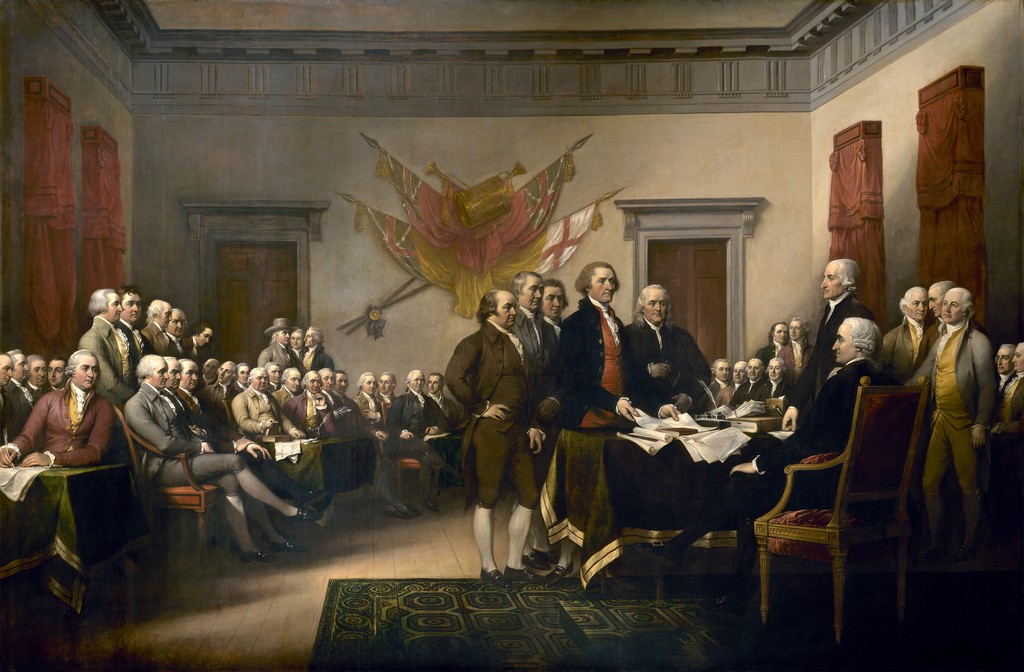
The Declaration of Independence makes the process particularly clear. Trumbull began the smaller design in Paris, with Jefferson’s assistance, and gathered faces over a long period. The later Capitol canvas transforms the arrangement into a monumental public image. The subject was established well before that enlargement, even though work on the small picture continued. [2]
Other scenes concentrate attention on a more urgent physical encounter. A fallen man, the direction of a sword or an effort to support a body can give a crowded battle a readable centre. The composition does not have to explain every movement of the armies to make the crisis apparent.
That concentration also served the prospect of reproduction. In the memoir’s account, Trumbull connects the scale of his early historical designs with the engravings he hoped would circulate them. Painting and printmaking were parts of a wider effort to bring the subjects before a public, rather than entirely separate ambitions. [1]
The small histories should therefore receive attention in their own right. Their importance does not depend solely on whether a subject later appeared in the Capitol. They preserve different kinds of action and different stages in the artist’s effort to give the Revolution a visual history.
Heroic deaths and acts of mercy
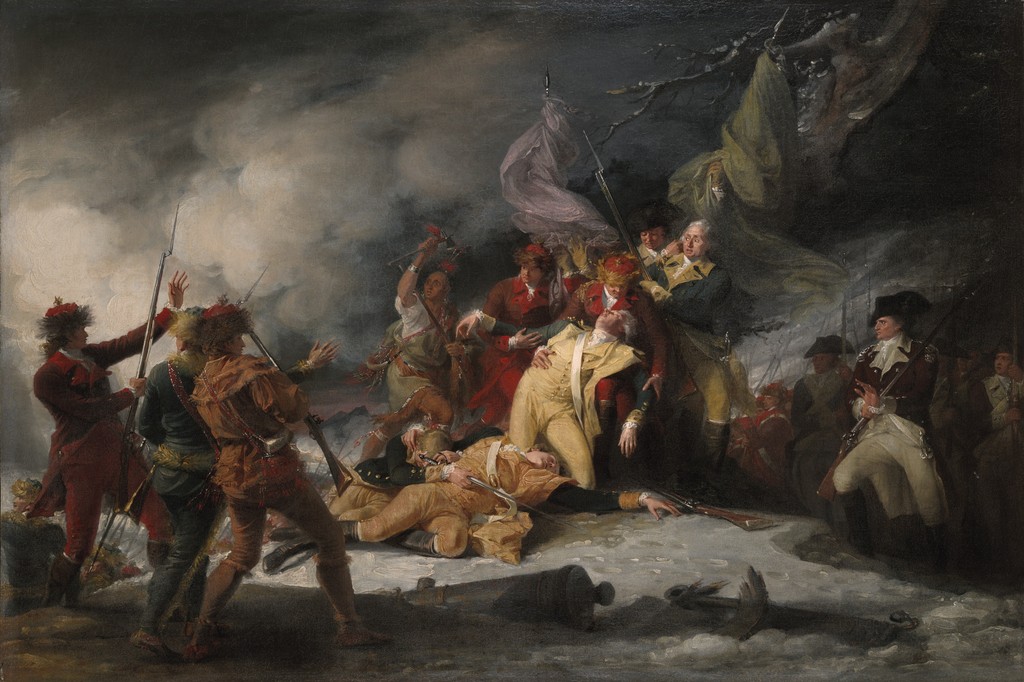
The Death of General Warren and The Death of General Montgomery show Trumbull finding important subjects within military defeat. A dying commander gathers the response of those around him. The paintings make support, alarm and the attempt to act into visible measures of a loss.
In Warren , the British officer John Small attempts to restrain a weapon directed towards the wounded American. The gesture gives an opposing officer an act of humanity within a violent advance. The illustrated MFA canvas is a later version, dated after 1815 and before 1831, rather than the original composition completed in 1786. [3]
Montgomery places the supported body within a dark winter setting. Hands gather around the general while others respond to the attack that has brought him down. The scene’s emotional force comes from the different demands upon the survivors: caring for a man, understanding a catastrophe and responding to continuing danger.
The Death of General Mercer changes the relationship again. Mercer’s struggle beside a fallen horse occupies the nearest ground, while Washington appears above and farther back. The picture joins the endangered officer with an intervention that belongs to the battle’s wider outcome. Its layers allow several related actions to remain visible together.
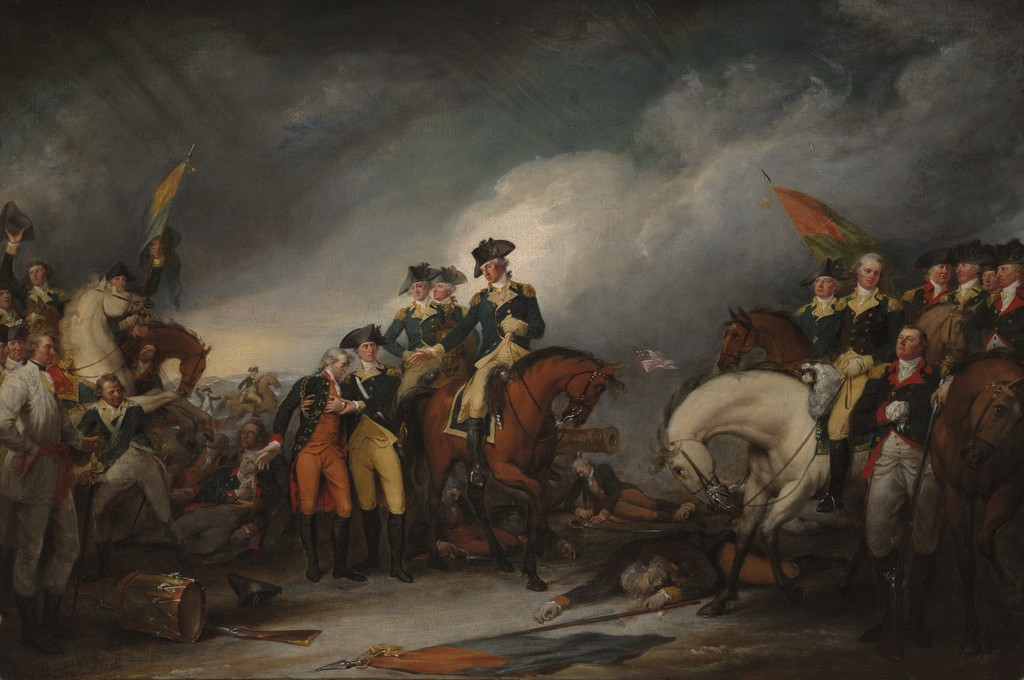
The Capture of the Hessians turns attention towards the conduct of a victor after resistance. Trumbull’s memoir explains his interest in mercy towards a wounded enemy. Read alongside the death scenes, the painting shows how a historical subject could become an occasion for considering behaviour as well as remembering a military result. [1]
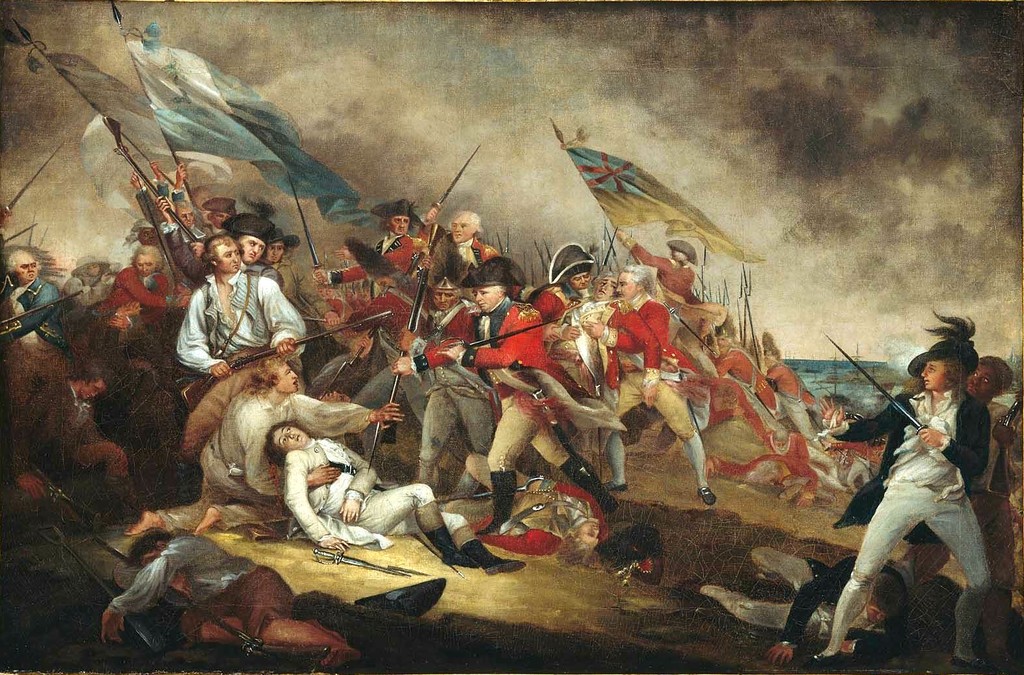
John Trumbull, The Death of General Warren at the Battle of Bunker’s Hill, 17 June, 1775, after 1815–before 1831. Oil on canvas, 50.16 × 75.56 cm. Museum of Fine Arts, Boston, 1977.853; Gift of Howland S. Warren. Later version of the composition first completed in 1786. John Trumbull; Museum of Fine Arts, Boston, via Wikimedia Commons. Public domain.
Image source
.
Public domain
. Frame removed by cropping the original source photograph to the painting rectangle; no colour, contrast, retouching or perspective alteration. Original master retained.
The four Capitol canvases
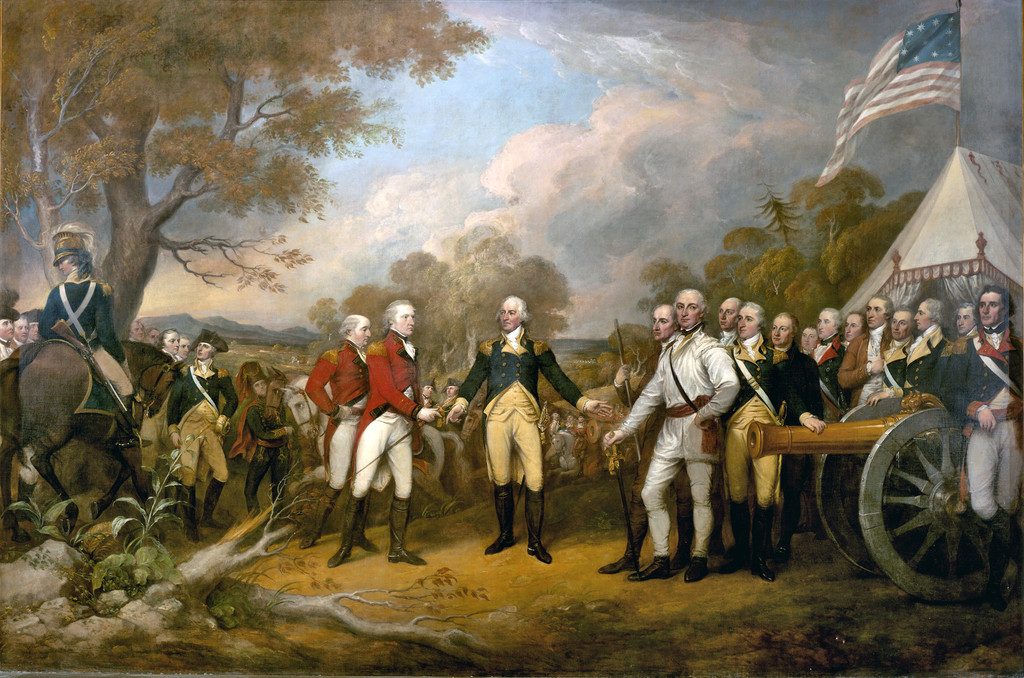
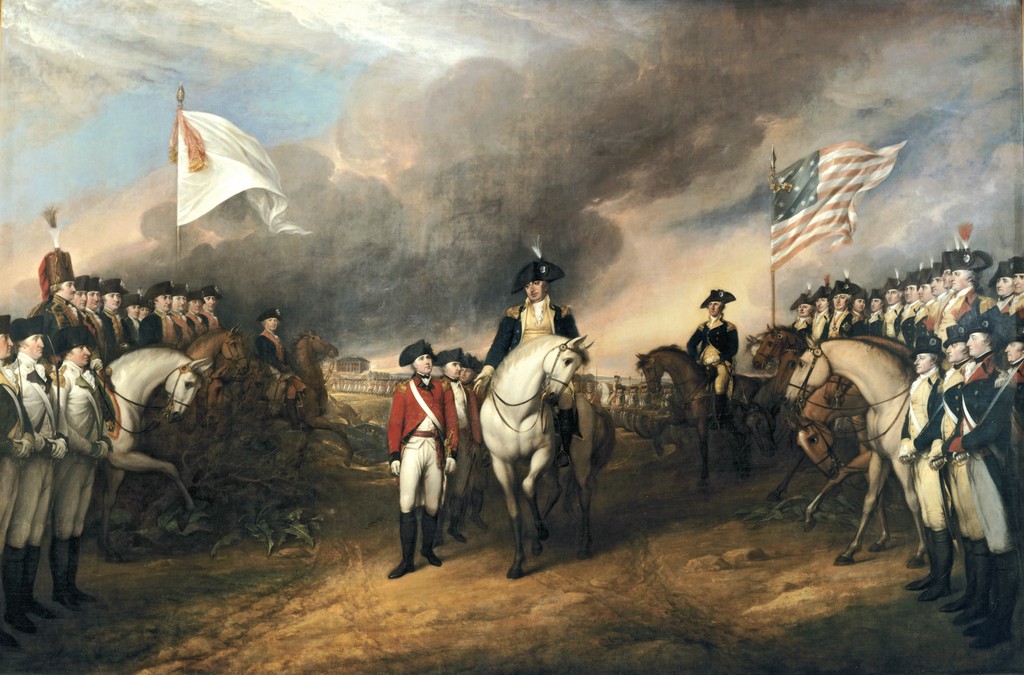
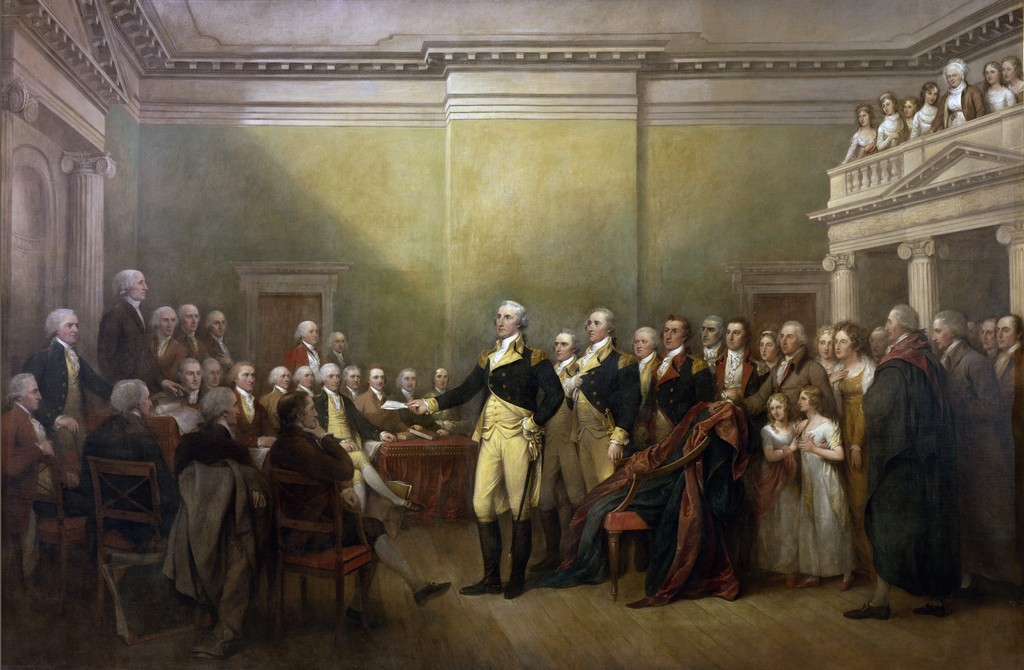
Congress’s 1817 commission selected four subjects for a monumental setting: the Declaration, the surrenders of Burgoyne and Cornwallis, and Washington’s resignation. Their choice gave Trumbull’s work a permanent place within the Capitol. The group brings political foundation, military success and the return of military authority into a connected public account. [4]
The Declaration represents the submission of a draft to Congress, rather than a queue of delegates signing the finished document. Trumbull places the committee before the seated president and gives their small movement of paper an open foreground. A quiet legislative act becomes clear through the attention of the assembled people. The open floor gives the committee room that the struggling foreground figures in the battle paintings cannot command. [2]
In the Surrender of General Burgoyne , two commanders meet before officers and a receding army. The central exchange carries the outcome into an image of formal respect. The landscape has a larger role than in the Declaration, joining the foreground gathering with the men moving through the distance.
The Surrender of Lord Cornwallis gives the allied forces conspicuous places on opposite sides of the surrendering column. Its title names an absent commander; O’Hara conducts the surrender to Lincoln while Washington remains farther back. The detailed article explains the different responsibilities represented by their positions.
Washington Resigning His Commission returns the series to a legislative interior. Like the Declaration, it centres on the presentation of papers before a civilian body. The visual relationship gives the commission a conclusion grounded in the relinquishing of power, allowing a restrained gesture to carry consequences as large as those of the outdoor ceremonies.
The portraits within history painting
The large scenes depend on individual likenesses, but the portraits were not all made in the settings represented. Trumbull travelled to obtain sittings and consulted existing images where people had died or were unavailable. His memoir describes faces gathered in different cities and brought into a common composition. The paintings turn that dispersed work into the appearance of a shared event. [1]
The surviving study of Hugh Mercer Jr. makes the method tangible. The Met identifies the son as the model for his dead father in the Princeton picture. Trumbull sketched him twice at Fredericksburg in April 1791. A particular living sitter could thus supply material for a historical figure whose presence had to be reconstructed. [5]
The drawing also shows that likeness and action posed different problems. A face could be studied closely on a small sheet, while the body’s position and the surrounding encounter belonged to the later composition. The historical painter needed both a convincing individual and a readable place for that person within the event.
The Met’s 1788 Thomas Jefferson offers another connection between individual portraiture and the larger histories. The small oil on mahogany preserves a likeness associated with Trumbull’s treatment of the statesman. Its scale and independent format invite a different kind of attention from Jefferson’s full-length role in the Declaration. [6]
The portraits article follows those relationships in more detail. Faces should be read as both representations of people and elements within a larger design. The effort to preserve identity did not remove the need to select a gesture, adjust a body or bring separately studied individuals together.
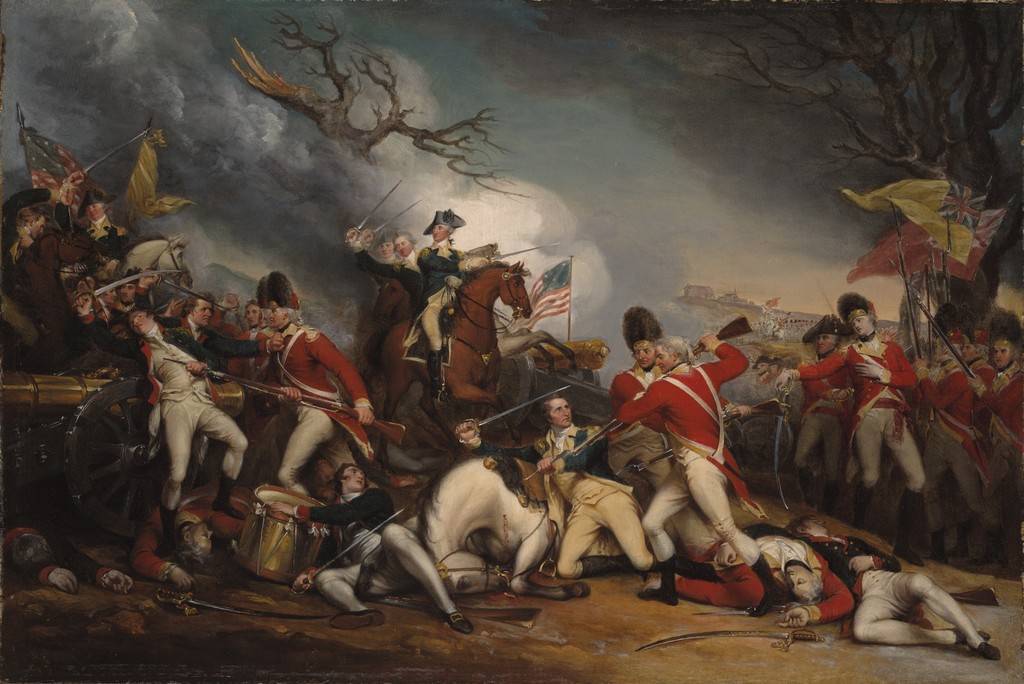
John Trumbull, The Death of General Mercer at the Battle of Princeton, January 3, 1777, about 1787–1831. Oil on canvas, 51.1 × 75.9 cm. Yale University Art Gallery, 1832.6.1. Mercer died on 12 January 1777. John Trumbull; Yale University Art Gallery, via Wikimedia Commons. Public domain.
Image source
.
Public domain
. Resized only; full supplied image retained. No appearance adjustment.
Watch: John Trumbull
Choose a film to explore the artist’s work, its interpretation and its wider setting.
Moment of Discovery: John Trumbull’s “Declaration of Independence”
Discovery Park of America looks closely at Trumbull’s Declaration of Independence.
Watch on YouTubeIndependent portraits
Trumbull’s independent portraits offer a useful change of pace after the crowded histories. Attention can settle on a face, the turn of a body and the relationship between figure and background. The sitter does not have to compete with a whole assembly for visibility, and small differences of pose or expression can carry more of the picture’s meaning.
The Alexander Hamilton portraits reveal why even a familiar likeness needs careful identification. The early NGA portrait, dated about 1792, is treated in the museum’s 1995 catalogue as a likely early replica. It should not automatically be presented as the original painted directly from Hamilton’s life. [7]
A later NGA Hamilton, about 1806, belongs to a different sequence connected with Trumbull’s full-length portrait and the sculpted likeness associated with it. The two pictures share a sitter but have separate dates, sources and object histories. Comparing them is more useful than assigning every repeated likeness a single uncomplicated origin. [7]
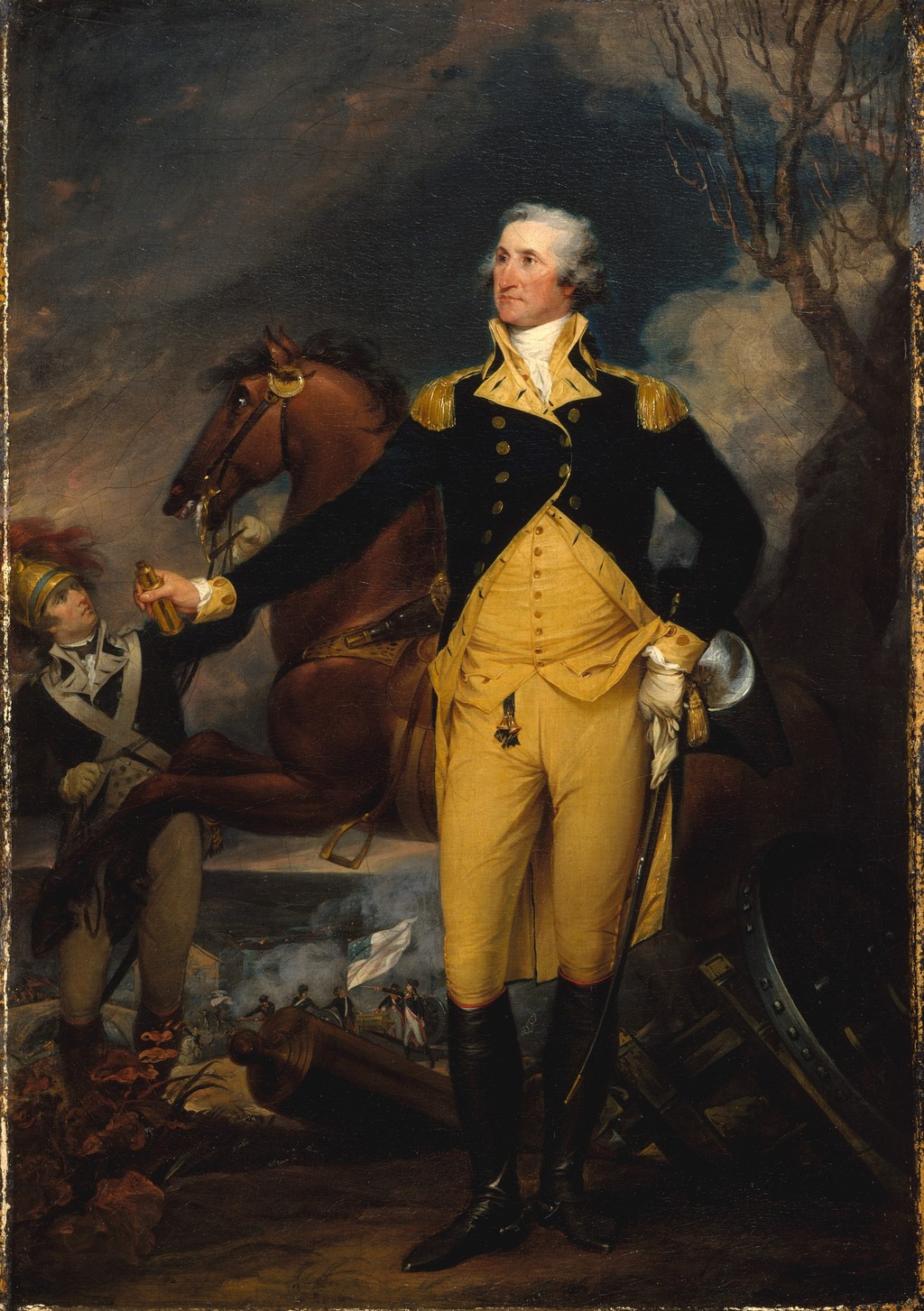
George Washington before Trenton places the commander within a military setting while giving his figure the commanding presence of a portrait. It offers a bridge between the concentration on an individual and the wider historical field. The detailed page distinguishes the smaller Met painting from the large Yale portrait.
Looking at the portraits also helps explain the histories’ formal variety. An individual can appear imposing through isolation, while a public scene must distribute attention among many people. Trumbull’s work moves between these demands, preserving the recognisable person while finding a shape appropriate to a different kind of picture.
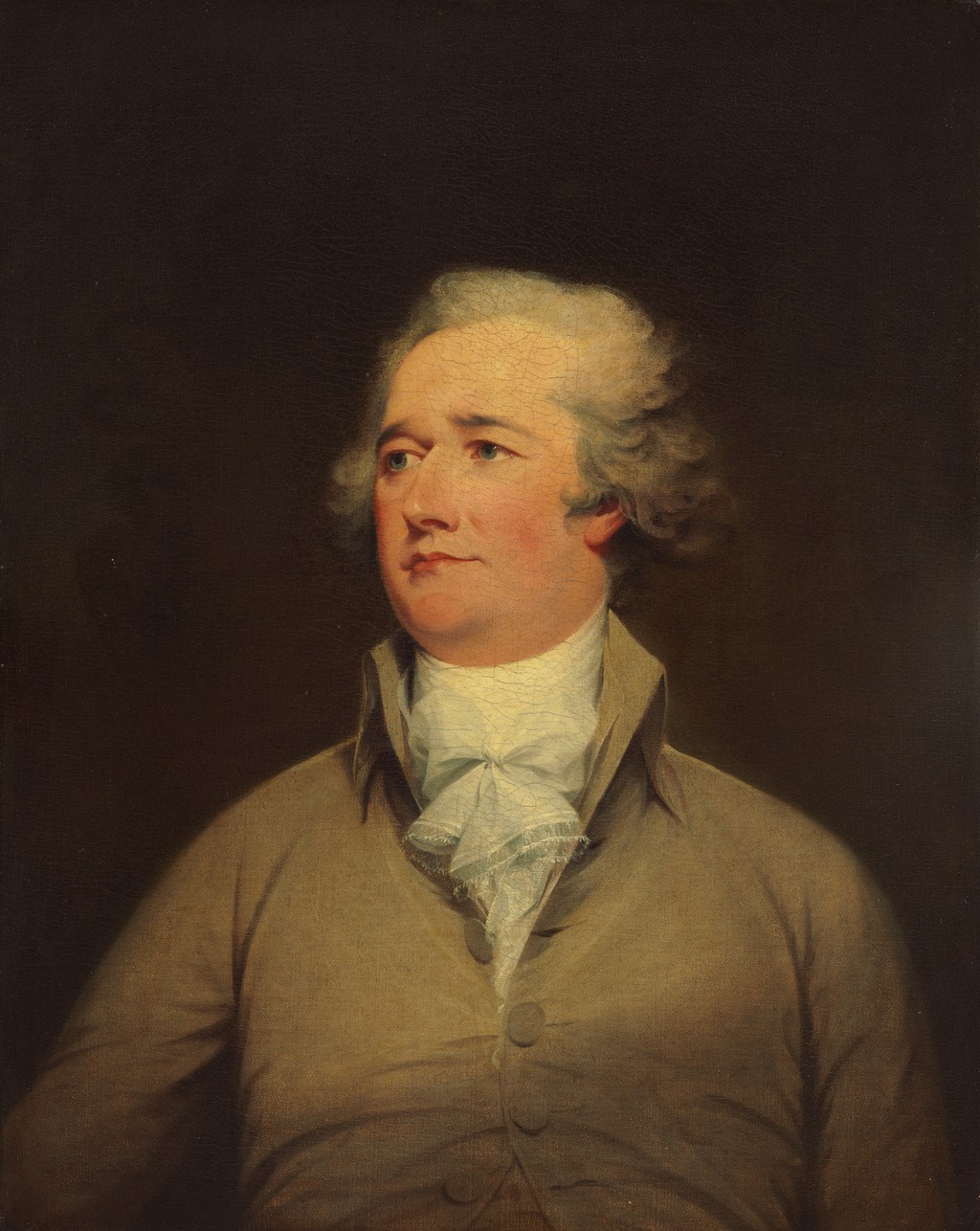
John Trumbull, Alexander Hamilton, about 1792. Oil on canvas, 76.2 × 60.5 cm. National Gallery of Art, Washington, 1952.1.1. Gift of the Avalon Foundation. Courtesy National Gallery of Art, Washington, CC0.
Image source
.
CC0 / Public domain
. Resized only; full supplied image retained. No appearance adjustment.
Gibraltar and a British audience
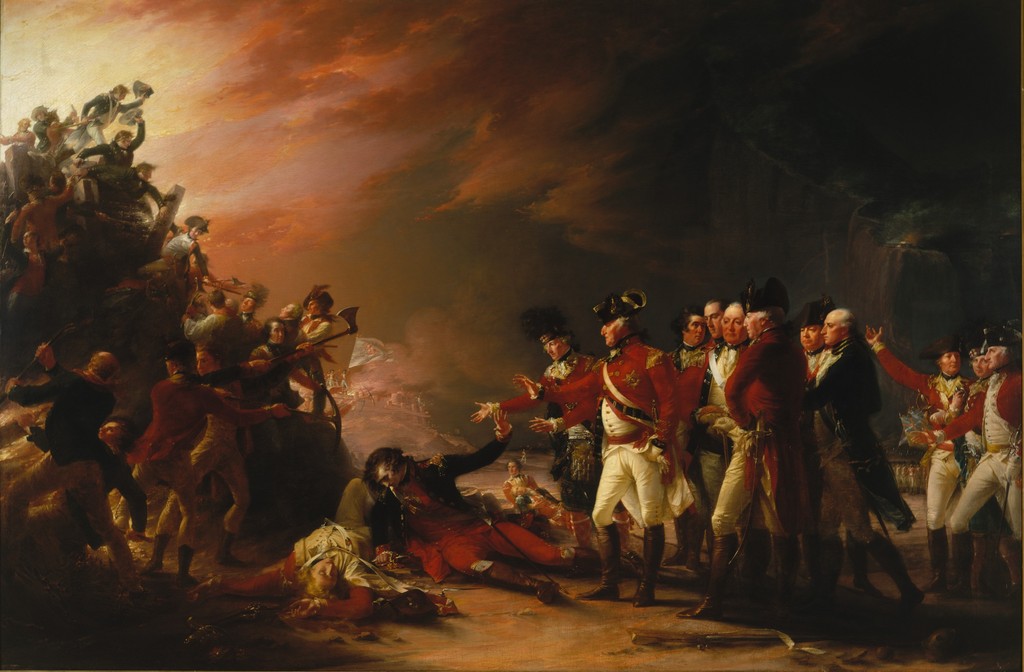
The Sortie of Gibraltar places a British military subject beside the Revolutionary paintings. Its foreground encounter draws attention to the treatment of a wounded enemy, while the night setting and distant fire give it a different visual atmosphere from the daylight surrenders and legislative interiors.
The Met’s large 1789 canvas is a specific version of a design also developed in earlier paintings. Its scale allows the crowded foreground and the distant action to have considerable physical presence. The museum identifies it as the third and largest of the early versions, rather than the first attempt at the subject. [8]
The composition demonstrates the reach of Trumbull’s interest in exemplary conduct. A gesture of assistance can become important whether the story belongs to American independence or to another theatre of the period’s warfare. The subject’s British context broadens the range of people and audiences involved in his historical practice.
Its darkness also brings different pictorial resources into play. Fire, smoke, overlapping figures and the vulnerable body create a close drama whose emotional reading precedes the identification of every person. Compared with the stillness of the Declaration, the scene shows how far Trumbull could vary the atmosphere surrounding a concentrated human encounter.
The style and technique article considers those differences alongside documented object-specific evidence. They should not be reduced to one method applied uniformly across all the paintings. A night battle, an independent portrait and a public assembly make different demands upon figure, light and setting.
Versions, dates and collections
The most useful starting point for a Trumbull painting is the particular object in front of us. The event date in a title may precede the canvas by many years. A design might exist as a small painting, a larger version, a later repetition and an engraving. Each can have a distinct role in the history of the image.
The Warren canvas illustrated here is a good example. It is the MFA’s 1977.853, made after 1815 and before 1831 for the Warren family. Calling the composition an early Revolutionary subject is appropriate; captioning that particular canvas simply as 1786 would erase its later history. [3]
Likewise, the Capitol Declaration belongs to 1817–18 even though the smaller design began in 1786. The early Hamilton requires a qualified account of its status as a likely replica, while the Met Gibraltar is a large 1789 version. These distinctions add to the paintings’ interest by showing how subjects continued through different objects and settings. [2] [7] [8]
The principal collections offer different parts of that story. The Capitol presents the four monumental histories together; Yale preserves important smaller compositions; and the Met, NGA and MFA hold paintings and studies that make the relationships between portraits, versions and public subjects more visible.
Reading across the works reveals a consistent concern without making them identical. Trumbull repeatedly asks a group of figures to give an event its human meaning. The differences between a supported body, a courteous surrender, a face studied alone and a document offered to Congress explain the range of his achievement.
Artworks directory
Works discussed in these articles, including distinct versions and reproductive prints. Dates identify the particular object; titles and attributions follow the cited collections. This is not a catalogue raisonné.
Frequently Asked Questions
The Declaration, the surrenders of Burgoyne and Cornwallis, and Washington resigning his commission.
No. His independent portraits and the British subject The Sortie of Gibraltar are important parts of the selection presented here.
A historical subject can survive in different paintings and prints. Its depicted event, original design and later versions have separate dates.
No. Trumbull also consulted other portraits and used models, including Mercer’s son for the deceased general.
Discussion
Look again at the images and ideas explored in John Trumbull Paintings. These editorial prompts invite your observations.
Choose a death scene, a formal ceremony and an independent portrait. How does Trumbull guide your attention differently in each, and what can a single gesture achieve within the larger picture?
Reader Insights
Where does your eye settle first in a death scene?
How does a legislative scene guide attention differently from a battle?
What does identifying a particular version add to your understanding?
Join the Conversation
Share a detail, comparison or question about John Trumbull Paintings below.
References
- John Trumbull , Autobiography, Reminiscences and Letters , 1841, pp. 407–408 and catalogue entries; early Revolutionary project, engravings, likenesses and moral interpretation. View source
- Architect of the Capitol , Declaration of Independence ; Capitol canvas, design, represented action and dates. View source
- Museum of Fine Arts, Boston , The Death of General Warren at the Battle of Bunker’s Hill , 1977.853; current date, interpretation and family provenance. View source
- Architect of the Capitol , John Trumbull ; 1817 commission and four monumental subjects. View source
- The Metropolitan Museum of Art , Hugh Mercer, Jr. , 1791, 06.1346.2; son-model and portrait study. View source
- The Metropolitan Museum of Art , Thomas Jefferson , 1788, 24.19.1; independent portrait and connection with the historical likeness. View source
- National Gallery of Art , American Paintings of the Eighteenth Century , 1995, John Trumbull entries, pp. 298–312; Hamilton versions, attribution assessment and sources. View source
- The Metropolitan Museum of Art , The Sortie Made by the Garrison of Gibraltar , 1789, 1976.332; large early version and subject. View source
- Splash image source.
John Trumbull, Declaration of Independence, painted August 1817–September 1818. Oil on canvas, 12 × 18 feet. United States Capitol Rotunda. The scene represents presentation of the draft to Congress, associated with 28 June 1776. John Trumbull; Architect of the Capitol, via Wikimedia Commons. Public domain. Public domain . Resized only; full supplied image retained. No appearance adjustment.
View source