 by
Tom Gurney
Tom Gurney BSc (Hons) is an art history expert with over 20 years experience
Email:
tomgurney1@gmail.com
/ Phone:
+44 7429 011000
Surrender of General Burgoyne by John Trumbull: Introduction
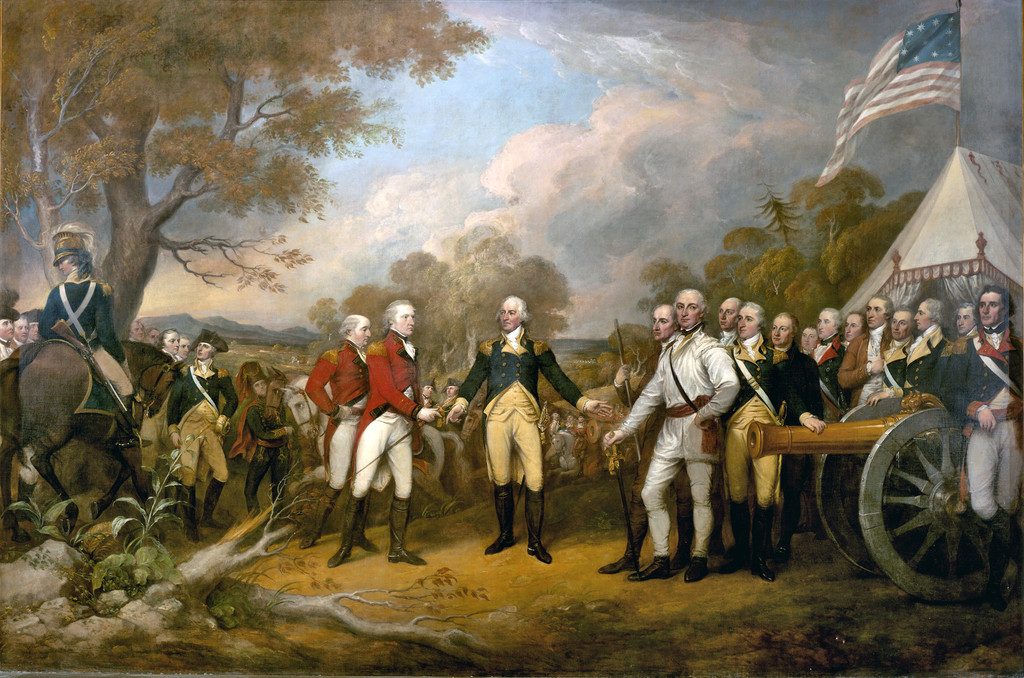
John Trumbull's Surrender of General Burgoyne presents the end of a military campaign through an encounter between two commanders. The British general offers his sword, while the American Horatio Gates declines to take it and directs him towards hospitality. Officers watch from either side, and the surrendered army extends into the landscape behind them. The victory is made visible through courtesy and order after fighting has ceased. [1]
The monumental canvas in the United States Capitol was completed in December 1821. A later, smaller version at Yale repeats the principal design with differences in its figures and setting. Following both paintings reveals how Trumbull combined gathered likenesses, studied topography and a carefully arranged public ceremony. It also requires keeping the historical event, the large painting and its later version distinct. [1]
At a Glance
- Artist John Trumbull.
- Principal canvas completed December 1821; oil on canvas, 12 × 18 feet; United States Capitol Rotunda.
- Depicted event Burgoyne's surrender at Saratoga, 17 October 1777.
- Central figures John Burgoyne and Horatio Gates.
- Later version about 1822–32; oil on canvas, 53.7 × 77.8 cm; Yale University Art Gallery, 1832.7.
- Title distinction the Yale picture retains 16 October within its historical title.
This work across John Trumbull’s career
The Death of General Mercer at Princeton
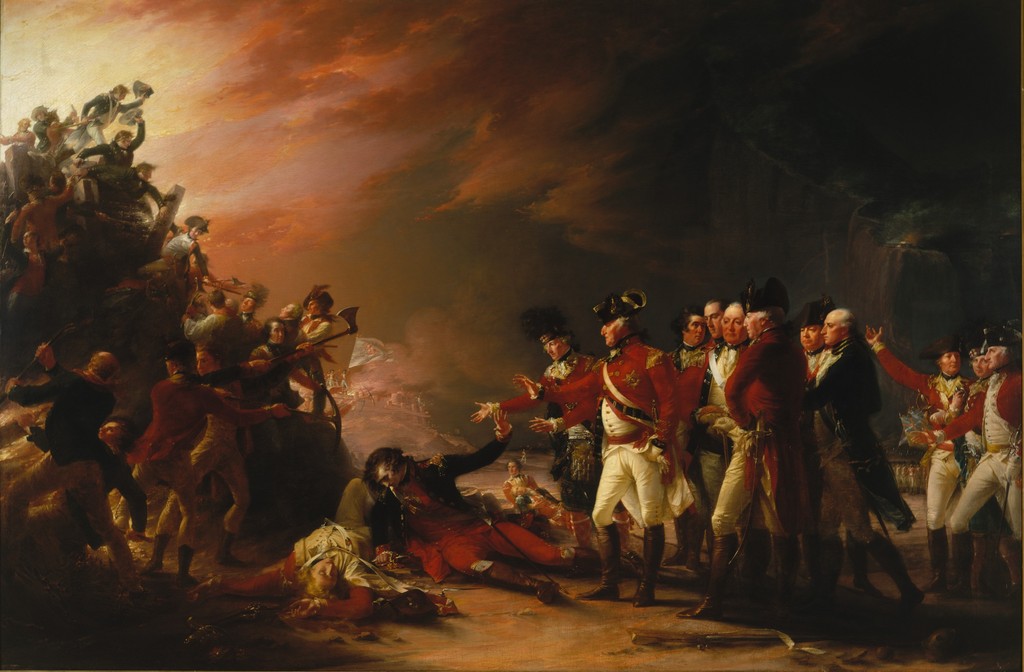
about 1787–1831; principal Yale versionThe Sortie Made by the Garrison of Gibraltar
1789; Met versionGeorge Washington before the Battle of Trenton
about 1792–94; Met versionAlexander Hamilton
about 1792; likely early NGA replicaThe Death of General Warren at Bunker’s Hill
after 1815–before 1831; MFA versionDeclaration of Independence
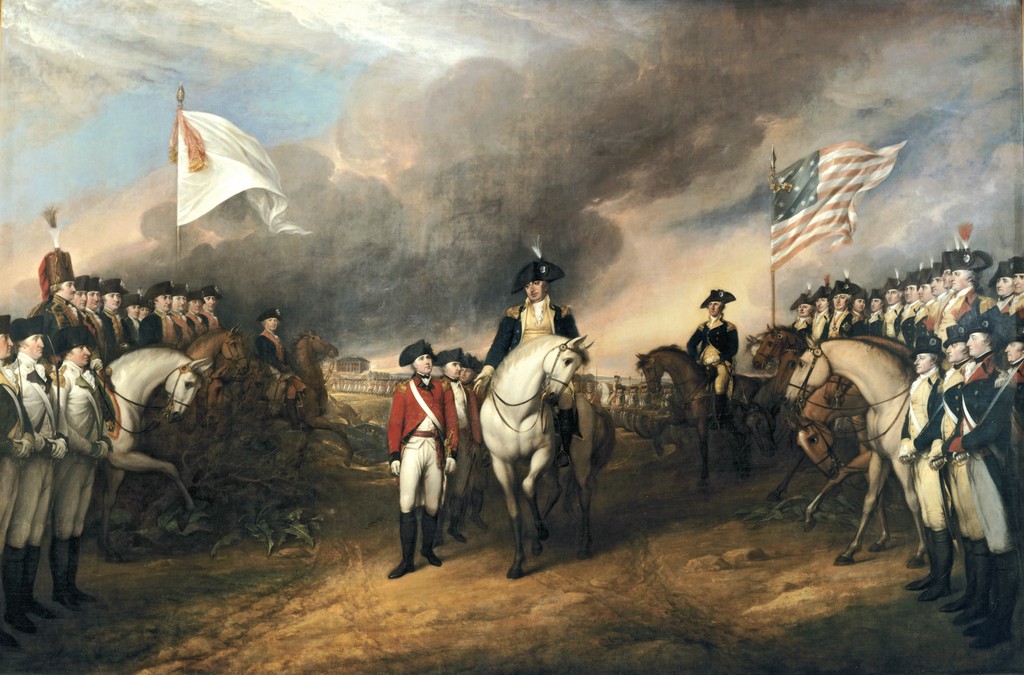
1817–18; Capitol canvasSurrender of Lord Cornwallis
1819–20Surrender of General Burgoyne (current article)
1821; Capitol canvasNotes and sources
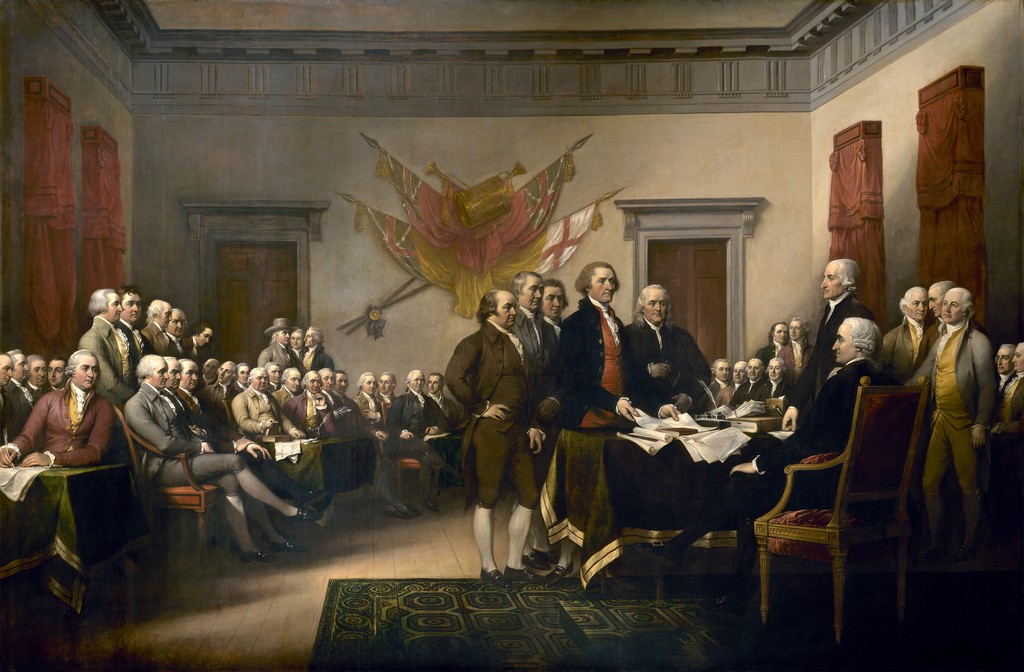
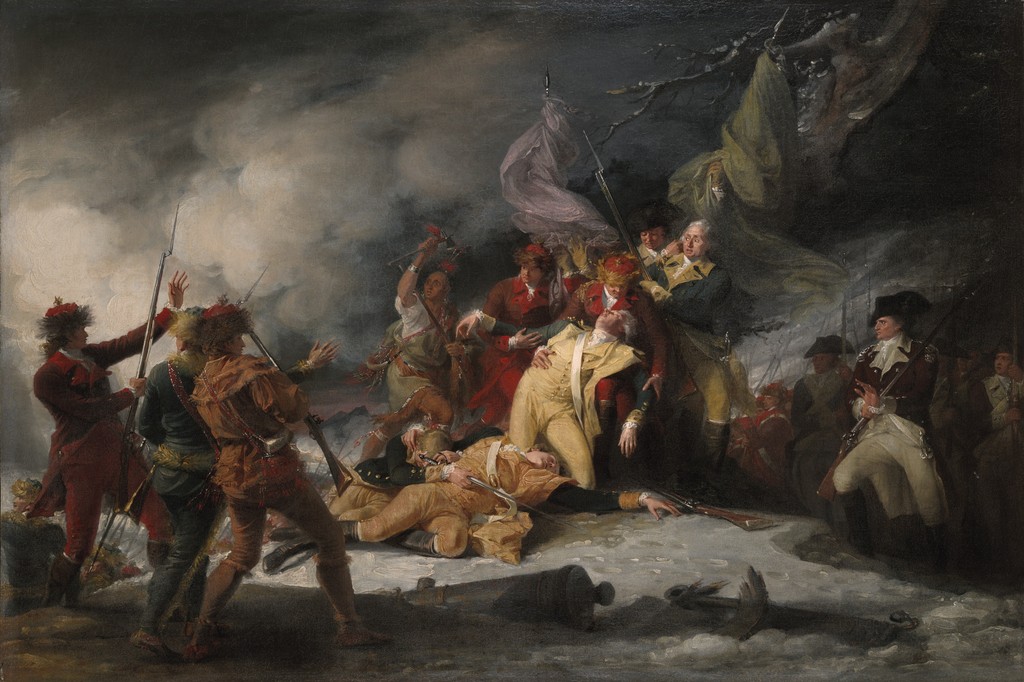
The Death of General Montgomery. Dates identify the particular canvas discussed in the article. [2]
The Capture of the Hessians at Trenton. Dates identify the particular canvas discussed in the article. [3]
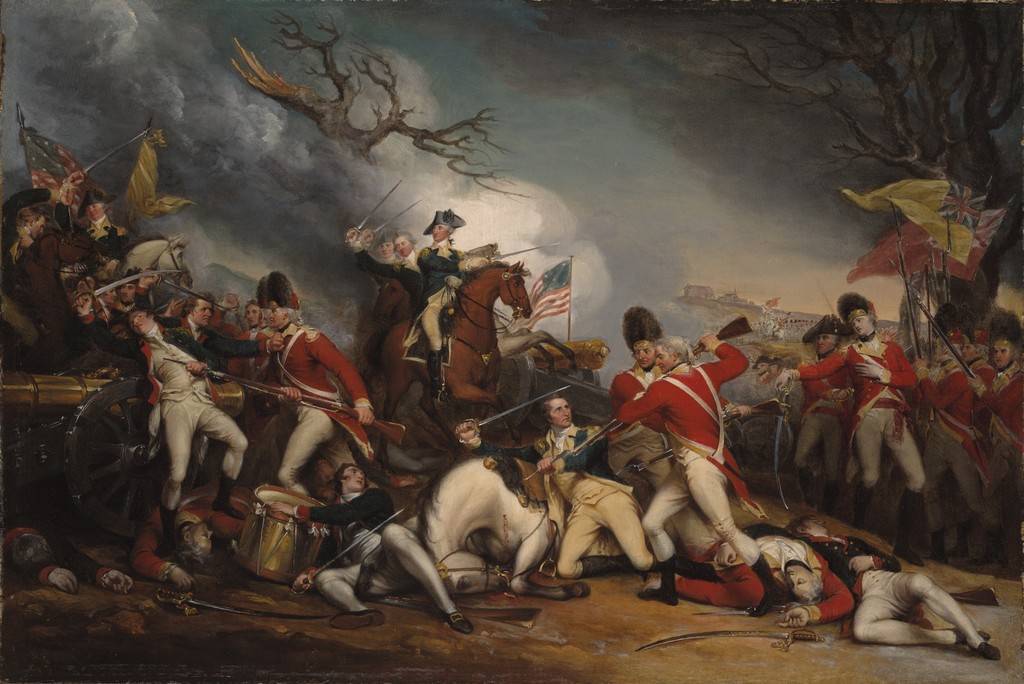
The Death of General Mercer at Princeton. Dates identify the particular canvas discussed in the article. [4]
The Sortie Made by the Garrison of Gibraltar. Dates identify the particular canvas discussed in the article. [5]
George Washington before the Battle of Trenton. Dates identify the particular canvas discussed in the article. [6]
Alexander Hamilton. The NGA catalogue treats this as a likely early replica. [7] [8]
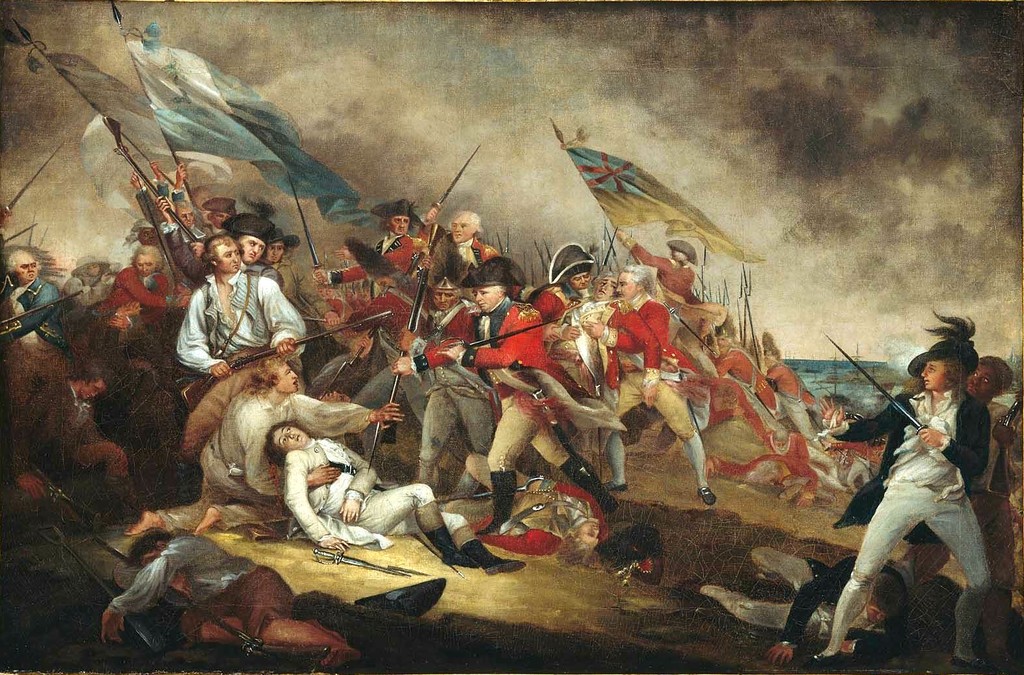
The Death of General Warren at Bunker’s Hill. Dates identify the selected later version. [9]
Declaration of Independence. Dates identify the particular canvas discussed in the article. [10]
Surrender of Lord Cornwallis. Dates identify the particular canvas discussed in the article. [11]
Surrender of General Burgoyne (current article). Dates identify the particular canvas discussed in the article. [1]
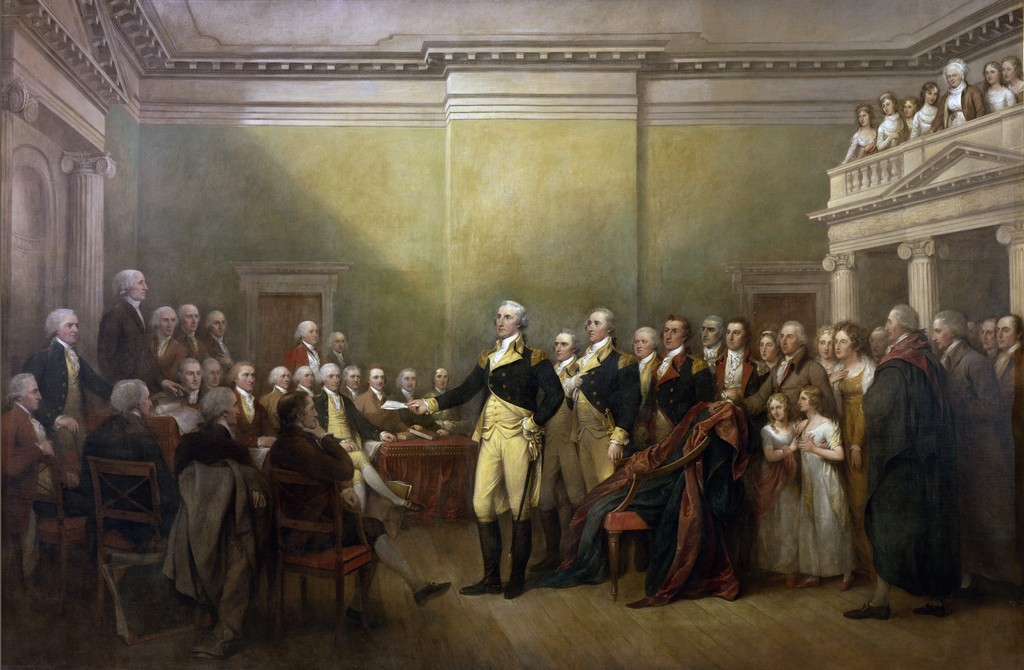
Washington Resigning His Commission. Dates identify the particular canvas discussed in the article. [12]
Contents
- Gates and Burgoyne
- Saratoga and the surrender
- A landscape that gathers the armies
- Portraits, uniforms and distant soldiers
- The Capitol commission and the 1821 canvas
- The later Yale version
- Exhibition, damage and public display
Gates and Burgoyne
Burgoyne advances towards Gates just left of the centre of the Capitol painting. His red coat, pale breeches and long boots form a clear standing figure against the landscape. Gates faces him in blue and buff, with space opening between the commanders and the groups around them. Their meeting occupies an area sufficiently uncluttered for small movements of the hands to carry meaning.
Trumbull described the encounter in the catalogue included in his memoir. Burgoyne and General Phillips have dismounted and approached Gates's marquee. Gates steps forward, declines the offered sword and invites the officers to take refreshments. The passage explains how an act associated with surrender becomes a demonstration of respect towards those who have lost. [13]
The arrangement makes the terms of the encounter understandable through bodies and gestures. Burgoyne's forward movement brings him towards the American commander; Gates opens the meeting towards the tent and the assembled officers. The generals remain conspicuous without being isolated from the men whose different positions give the event its significance.
The absence of wounded bodies from this central exchange gives the scene a different character from Trumbull's Capture of the Hessians . Here, the defeated commander stands before the victor with formal dignity. The consequences of fighting appear through the gathering and movement of armies, while the immediate subject is how opponents meet after the outcome has been settled.
Saratoga and the surrender
Burgoyne's campaign aimed to advance south from Canada and cut communications between New England and the other American colonies. His army's progress became increasingly difficult, and battles near Saratoga in September and October 1777 left it weakened and unable to force its way south. The second major engagement, on 7 October, was followed by retreat and a tightening American position around the British force. [14]
Negotiations preceded the surrender on 17 October 1777. The National Park Service distinguishes the discussion of terms during the preceding days from the actual laying down of arms at Saratoga, now Schuylerville, New York. The agreement became known as a convention, and the surrendered British and German troops as the Convention Army. The ceremony followed a military result established through fighting and negotiation. [14]
Trumbull selected the meeting of the commanders from this wider sequence. In his memoir's account, the terms and the disposition of the troops provide the circumstances for the courteous encounter. The picture concentrates attention on the visible conduct of the officers, bringing the campaign towards a comprehensible conclusion without attempting to represent all its stages. [13]
The distinction between ceremony and subsequent events also matters. The Convention Army's later march and confinement were more complicated than the invitation offered within the painting. The National Park Service follows the surrendered soldiers beyond Saratoga towards Cambridge. Trumbull's composed moment of hospitality gives the event a particular emphasis within a longer history. [14]
A landscape that gathers the armies
The great tree at the left spreads its branches above mounted and standing officers. Its trunk and exposed roots establish the nearest ground, while the space beyond opens into a broad, receding country. The tent at the right supplies another boundary. Between these two substantial forms, the commanders' meeting can appear both as a clear foreground incident and as part of an extensive military setting.
The large tree also shelters a mounted figure seen from behind at the extreme left. His turned body directs attention inward, helping the viewer enter the encounter from the British side.
The landscape also carries the surrendered army into the composition. In his own description, Trumbull explains the distant movement around Fish Creek and the North River, the Hudson. Troops cross the creek and meadows, disappear behind trees and reappear nearer the principal figures. Mounted officers connect the far column with the men already gathered in front. [13]
Those interrupted lines of movement give the background a narrative role. A viewer can pass from the exchange of the generals to the small figures beyond them and then back towards the nearer officers. The army is present as a continuing procession, rather than a separate illustration placed behind a row of portraits. Its scale reinforces the public consequences of the meeting.
Trumbull had studied the site in 1791. The Architect of the Capitol records his use of the large foreground tree and other topographical features, together with added trees and autumnal foliage. Observation supplied material for the setting, while the final arrangement answered the needs of the picture. The landscape's contribution to meaning lies in both its connection with Saratoga and the way it gathers the different parts of the event. [1]
Portraits, uniforms and distant soldiers
The officers gathered beside the tent form a compact row of individual faces. Differences in hair, features, dress and the direction of attention keep them from becoming an anonymous military crowd. The figures share the space of the ceremony, but the painter gives the viewer repeated opportunities to notice one person and then return to the whole group.
Colonel Daniel Morgan stands prominently in white near the front of this gathering, identified in the Architect of the Capitol's account. His clothing gives the right side a particularly bright figure beside the quieter tones of other uniforms. The large cannon below the officers reinforces their military setting, although its silence belongs to the painting's atmosphere of settled conflict. [1]
In the distance, the much smaller soldiers carry another aspect of the event. Their number and movement suggest the army whose surrender has brought the officers together. Trumbull's memoir identifies Colonel Lewis directing that movement and explains how the procession passes through the landscape. The named commander and the less distinct troops connect individual responsibility with the collective result. [13]
The Architect of the Capitol relates most of the principal figures to portrait studies Trumbull made from life in the early 1790s. The finished gathering was assembled long after the surrender, using likenesses obtained separately. The portraits article considers this movement between the study of a person and that person's place within a historical design. [1]
Watch: John Trumbull
Choose a film to explore the artist’s work, its interpretation and its wider setting.
Moment of Discovery: John Trumbull’s “Declaration of Independence”
Discovery Park of America looks closely at Trumbull’s Declaration of Independence.
Watch on YouTubeThe Capitol commission and the 1821 canvas
Congress's 1817 commission gave four of Trumbull's Revolutionary subjects a monumental public setting. Burgoyne joined the Declaration of Independence , the Surrender of Lord Cornwallis and Washington Resigning His Commission . Their selection linked political foundation, military victory and the relinquishing of command within the Capitol's programme. [15]
The Burgoyne canvas measures twelve by eighteen feet. At this scale, the row of officers and the space between the generals become substantial physical presences before a viewer. The small portrait studies and landscape information gathered over preceding decades had to serve a picture encountered within a large architectural interior.
Its completion in December 1821 came many years after the subject first entered Trumbull's plans. The Architect of the Capitol traces his interest in Saratoga back to the Revolutionary series proposed in the 1780s. The final commission therefore brought an existing undertaking into a new format and destination, rather than initiating the subject from nothing. [1]
The outdoor setting also adds variety to the four works. The tent, trees and moving army allow a surrender to be staged through an open landscape. Within the larger series, this picture's particular statement rests on the meeting of opponents, with the dignity of both commanders maintained as American success is made public.
The later Yale version
Trumbull returned to the design in a smaller canvas made between about 1822 and 1832, now at Yale University Art Gallery. That painting, 1832.7, measures 53.7 by 77.8 centimetres. Its dimensions offer a very different encounter from the Rotunda canvas, even though the arrangement of the commanders, tent and officers remains recognisably related. [16]
The Architect of the Capitol identifies changes to faces and expressions, the flag's arrangement and the topography. In the two reproductions, the main group remains clear while the tree shapes, spaces and details invite comparison. These repetitions show the design continuing through another painting with individual decisions, rather than becoming a single fixed arrangement repeated without variation. [1]
The Yale picture's historical title includes October 16, 1777 , although the surrender itself occurred on 17 October. The same discrepancy appears within Trumbull's memoir: the catalogue heading gives the 16th, while the narrative identifies the 17th. The different dates are part of the work's recorded history; they do not change the event's established date. [13] [14] [16]
The negotiation of the convention before the surrender provides a wider chronology, but does not by itself establish why Trumbull used the 16th in the title. The historical event, the title and the creation of each painting remain separate facts. Clear identification also prevents details of the later Yale version from being mistaken for features or physical history of the Capitol canvas.
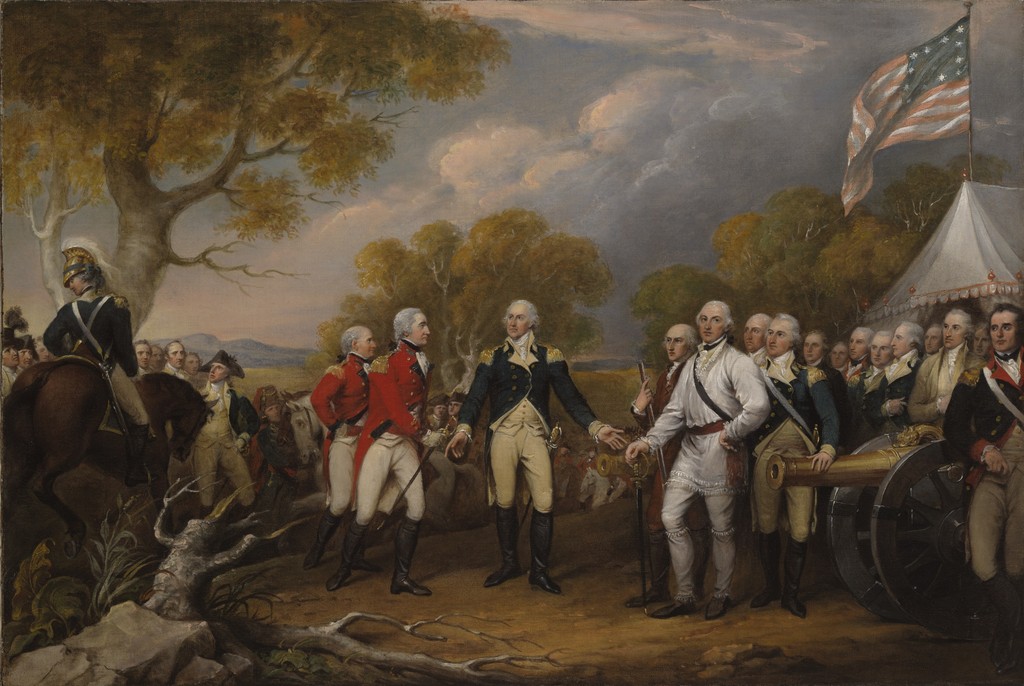
John Trumbull, The Surrender of General Burgoyne at Saratoga, October 16, 1777, about 1822–32. Oil on canvas, 53.7 × 77.8 cm. Yale University Art Gallery, 1832.7. The surrender occurred on 17 October 1777. John Trumbull; Yale University Art Gallery, via Wikimedia Commons. Public domain.
Image source
.
Public domain
. Resized only; full supplied image retained. No appearance adjustment.
Exhibition, damage and public display
Before its permanent installation, the large painting was exhibited in New York from January to March 1822. It entered public view as an exhibited picture before becoming part of the completed Rotunda arrangement in 1826. The sequence distinguishes the making of the work, its first audience and its lasting architectural setting. [1] [15]
The canvas also acquired a history of damage and repair. The Architect of the Capitol records that Morgan's painted right foot had been cut from the picture with a sharp instrument, probably a penknife. Trumbull repaired that damage in 1828. The affected foot belonged to the painted figure: the incident concerns the physical canvas and its treatment after public display. [1]
During the same period, Trumbull cleaned and revarnished the Rotunda works and applied wax to their backs to protect against dampness. Later treatment continued through the nineteenth and twentieth centuries. The AOC also records cleaning in 2008. These dated interventions describe the care of a painting exposed to a long public life, rather than an unchanged surface surviving directly from the artist's studio. [1]
The Capitol composition reached another audience through its appearance on a United States one-dollar postage stamp in 1994. Its public significance consequently extends beyond the room containing the original. Reproduction, smaller painted versions and display in the Rotunda have brought the central encounter to audiences in different places and at different scales. [1]
The painted meeting remains the point around which those histories gather. Gates's gesture, Burgoyne's approach and the assembled officers give a military result an image of formal respect. Trumbull allows the viewer to recognise the surrender without making humiliation its governing emotion. The scene belongs to his wider interest in exemplary conduct, here expressed through courtesy between commanders after the battle has ended.
Artworks directory
Works discussed in these articles, including distinct versions and reproductive prints. Dates identify the particular object; titles and attributions follow the cited collections. This is not a catalogue raisonné.
Frequently Asked Questions
Trumbull presents the refusal as an act of respect, followed by an invitation to take refreshment at the tent.
December 1821. It was exhibited in New York in early 1822 and installed in the Rotunda in 1826.
No. It is a smaller, later version with differences in its figures, flag and landscape.
The surrender occurred on 17 October. The 16th remains part of the Yale painting's historical title and also appears in Trumbull's catalogue heading.
The AOC records damage to the painted right foot of Colonel Morgan, repaired by Trumbull in 1828.
Discussion
Look again at the images and ideas explored in Surrender of General Burgoyne by John Trumbull. These editorial prompts invite your observations.
How do the open foreground, the silent cannon and the direction of Gates's gesture affect your reading of the surrender? Consider how the scene would change if the encounter were presented through humiliation rather than hospitality.
Reader Insights
How does Gates’s gesture shape the central meeting?
What differences can you see between the Capitol and Yale versions?
How does the distant army connect the two commanders with a wider event?
Join the Conversation
Share a detail, comparison or question about Surrender of General Burgoyne by John Trumbull below.
References
- Architect of the Capitol , Surrender of General Burgoyne ; principal canvas, interpretation, studies, completion, later version, display and conservation history. View source
- Yale University Art Gallery via Wikimedia Commons, Death of General Montgomery,1786,1832.2,. View source
- Yale University Art Gallery / Wikimedia Commons, The Capture of the Hessians at Trenton,December26,1776,1832.5,. View source
- Yale University Art Gallery via Wikimedia Commons, The Death of General Mercer at the Battle of Princeton, January3,1777,1832.6.1,. View source
- Metropolitan Museum of Art, The Sortie Made by the Garrison of Gibraltar,. View source
- Metropolitan Museum of Art, George Washington before the Battle of Trenton,. View source
- National Gallery of Art, Alexander Hamilton, c1792,. View source
- National Gallery of Art / Ellen G. Miles with Cynthia J. Mills and other contributors, American Paintings of the Eighteenth Century,1995,Trumbull entries,. View source
- Museum of Fine Arts, Boston, Death of General Warren at Bunker’s Hill,. View source
- Architect of the Capitol, Declaration of Independence,. View source
- Architect of the Capitol, Surrender of Lord Cornwallis,. View source
- Architect of the Capitol, General George Washington Resigning His Commission,. View source
- John Trumbull , Autobiography, Reminiscences and Letters , 1841, catalogue entry no. 25, pp. 424–427; retrospective narrative, sword and hospitality, landscape, army and the differing dates. View source
- National Park Service, Saratoga National Historical Park , Campaign Timeline ; campaign, convention negotiations, surrender on 17 October 1777 and the Convention Army's subsequent movement. View source
- Architect of the Capitol , John Trumbull ; the four Rotunda commissions and installation in 1826. View source
- Yale University Art Gallery, via Wikimedia Commons , The Surrender of General Burgoyne at Saratoga, October 16, 1777 , about 1822–32, 1832.7; image carrier, date, dimensions and identification of the separate Yale painting. View source
- Splash image source.
John Trumbull, Surrender of General Burgoyne, completed December 1821. Oil on canvas, 12 × 18 feet. United States Capitol Rotunda. John Trumbull; Architect of the Capitol, via Wikimedia Commons. Public domain. Public domain . Resized only; whole supplied painting including narrowirregularpictureedgepreserved;noappearanceadjustments.
View source