 by Tom Gurney
Tom Gurney BSc (Hons) is an art history expert with over 20 years experience
Published on June 19, 2020 / Updated on November 6, 2025
Email: tomgurney1@gmail.com / Phone: +44 7429 011000
Michelangelo’s Poetry
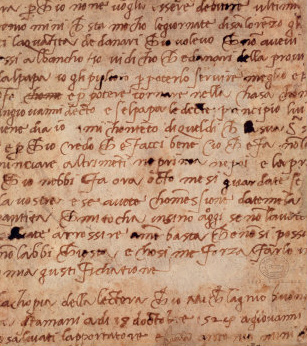
Michelangelo’s words survive much as his drawings do: revised, crossed out, recopied, given away and gathered after the event. A sonnet can share paper with a sketch or a letter. One version may remain in his hand while another survives through a friend. The poems do not offer a sealed diary hidden behind the marbles and frescoes. They reveal another practice of making—one in which stone, fire, beauty, captivity, failure and grace become instruments of thought.
More than 300 poems survive in Italian, ranging from finished sonnets and madrigals to fragments and rough drafts.[1][4] Michelangelo wrote across decades, with exceptional productivity between about 1536 and 1546.[8] Love for men, friendship with women, artistic ambition, religious longing, age and death all enter the corpus. So do jokes, epitaphs, public occasions and political grief. Its seriousness lies in that breadth and in the labour of revision visible behind any polished English version.
At a Glance
- LanguageSixteenth-century vernacular Italian
- ExtentMore than 300 surviving poems, including drafts and fragments[4][16]
- Principal formsSonnets, madrigals, epitaphs, occasional poems and shorter lyric pieces
- ChronologyFrom Michelangelo’s earlier adulthood into his final years
- Most prolific decadeApproximately 1536–46[8]
- Recurring concernsLove, beauty, desire, artistic making, friendship, civic life, faith, guilt, grace, age and death
- Key relationshipsTommaso de’ Cavalieri, Vittoria Colonna, Luigi del Riccio and Donato Giannotti
- Important holdingsThe Buonarroti Archive in Florence and Vatican Apostolic Library, Vat. lat. 3211[2][5]
- Lifetime circulationAutograph gifts, letters, copies among friends and discussion in literary circles
- Unfinished collectionPrepared with del Riccio and Giannotti in the 1540s but never completed[7]
- Early public recognitionBenedetto Varchi discussed a sonnet and reproduced nearly thirty compositions in 1547[13]
- First substantial printed collectionEdited by Michelangelo Buonarroti the Younger in 1623, with significant alterations[10]
- Modern reading ruleIdentify Italian text, textual state, editor and translator before quoting
Contents
- A Corpus, Not One Book
- The Buonarroti Archive
- Vatican Codex Vat. lat. 3211
- Writing as a Form of Making
- Sonnets, Madrigals and Fragments
- Tuscan Language and Rough Music
- Revision as Visible Thought
- The Peak Years in Rome
- Love as Bond and Ascent
- Tommaso de’ Cavalieri
- Age, Difference and Durable Friendship
- Vittoria Colonna
- Colonna and the Language of Reform
- Faith, Sin and Grace
- Christian Mysticism and Its Many Lineages
- Poetry and Drawing on the Same Paper
- Sculptural Metaphors
- Fire, Ice, Captivity and Flight
- Civic, Comic and Occasional Voices
- Poem and Letter Are Not the Same
- Addressees Beyond Two Famous Names
- The Unfinished Publication Project
- Benedetto Varchi and Lifetime Reputation
- Vasari and the Poet-Artist
- The 1623 Edition
- Nineteenth-Century Recovery
- Translation Changes the Poem
- How to Cite a Poem Responsibly
- Reading Desire Without Erasure or Overreach
- Reading Faith Without a Final System
- The Lyric “I” and Michelangelo
- Reputation and Mortality
- Artist Up Close
- How to Begin Reading
A Corpus, Not One Book
Michelangelo did not leave a final volume arranged and authorised for publication. What is called his poetry has been reconstructed from papers with different purposes and histories.
Some works survive as autograph drafts with cancellations and replacements. Some were copied neatly for a recipient. Others are known through transcriptions made by friends. A fragment may consist of a few lines whose final destination is unknown.
“More than 300 poems” therefore describes the extent of a recovered literary corpus, not 300 equally polished units with original titles.[4]
Editors decide where one fragment ends, which revision to print, how to order undated works and whether related states receive separate numbers. Differences among editions need not imply carelessness. They disclose the difficult work of turning dispersed writing into readable sequence.
The absence of one authorised book is not a deficiency to be repaired invisibly. It is part of the poetry’s history.
The Buonarroti Archive
Casa Buonarroti preserves the family archive through which much of Michelangelo’s practical and literary life can be studied. It includes contracts, incoming letters, drafts of outgoing correspondence, accounts and poetic papers.[2]
The collection extends to 169 volumes and more than 25,000 documents accumulated by Michelangelo and his descendants.[3] A recent conservation initiative addressed 342 autograph letters, a number referring to that project rather than to the poems.[3]
This vast ordinary record changes the image of poetry. Verse did not exist in a separate chamber reserved for inspiration. It lived among family business, commissions, money, friendship and daily obligation.
A surviving poem in Michelangelo’s hand confirms his engagement with its wording. It does not always prove a date, recipient or wish to publish.
Archive and poem answer different questions: one supplies material context; the other demands literary attention.
Vatican Codex Vat. lat. 3211
One of the central volumes is Vatican Apostolic Library, Vat. lat. 3211. A catalogue based on the Vatican Film Library microfilm describes a paper codex of 103 leaves.[5]
The first twenty-two leaves contain poems transcribed by Luigi del Riccio and Donato Giannotti. Leaves twenty-three to 103 contain autograph poems and letters by Michelangelo, along with a signature and informal sketches.[5]
Several hands and genres therefore coexist inside one binding. The codex is not an autograph book from first leaf to last.
Its structure makes collaboration visible. Friends who copied and organised texts participated in their survival and possible publication.
The sketches matter too, but not because they decode every poem. They show that verbal and visual marks belonged to one material culture of paper.
Writing as a Form of Making
Michelangelo’s visual fame once encouraged treatment of the poetry as an eccentric sideline. The scale, duration and revision of the corpus make that judgement untenable.
Writing offered problems distinct from carving or fresco. A sonnet required compression across fourteen lines; a madrigal permitted different movement; rhyme and syntax forced thought into audible structure.
Yet Michelangelo carried material intelligence into language. The mind conceives, the hand attempts, stone resists, fire consumes or purifies, an image entraps the beholder, and beauty promises ascent while producing bondage.
These are metaphors, not workshop instructions. Their force depends on his experience as a maker, but they transform material practice into emotional and philosophical argument.
Poetry becomes another medium in which intention meets resistance.
Sonnets, Madrigals and Fragments
The sonnet provided a familiar Renaissance structure: octave and sestet, proposition and turn, pressure gathered through rhyme. Michelangelo could use it to set earthly beauty against divine aspiration or to reverse the relation between lover and beloved.
Madrigals allowed a more flexible lyric length and intricate rhyme. Epitaphs compressed memory and praise around death. Occasional pieces answered specific people or events.
Fragments preserve thought before formal settlement. Their broken syntax may be accidental incompletion, deliberate compression or both.
It is misleading to judge every surviving text by the polish expected of courtly publication. Some are working states Michelangelo never chose to display.
At the same time, difficulty should not be excused automatically as draft. His finished poetry often values dense construction, ambiguity and sudden reversal.
Tuscan Language and Rough Music
Michelangelo wrote in the Tuscan vernacular rather than building a Latin literary monument.
His Italian can be knotted. Syntax folds back on itself; puns depend on words carrying artistic, erotic and religious senses at once; rhyme compresses what prose would unfold.
Readers sometimes encounter him through an English version smoothed into dignified Victorian lyric. That can conceal the abrasive energy of the Italian.
Roughness does not mean absence of learning. Dante and Petrarch stand behind his vocabulary and forms, while Neoplatonic and Christian traditions shape the movement from visible beauty towards invisible good.[12]
Michelangelo inherits these languages without sounding like a professional imitator. He makes lyric thought strain as his bodies strain.
Revision as Visible Thought
Cancellations and substitutions show that immediacy was worked for. A first-person cry may feel spontaneous after repeated adjustment.
Revision can change the gender of a pronoun, sharpen a sculptural metaphor or redirect a final spiritual turn. It may also leave several plausible readings unresolved.
This is why the voice cannot be treated as speech captured without mediation. Michelangelo constructs a speaker through form.
Autobiographical pressure remains real. Desire, bereavement, anxiety and faith belong to the life as well as the poems. But lyric convention shapes how they become language.
The strongest reading holds both truths: artifice does not cancel feeling, and feeling does not cancel artifice.
The Peak Years in Rome
The Metropolitan Museum identifies roughly 1536–46 as Michelangelo’s most prolific poetic period.[8]
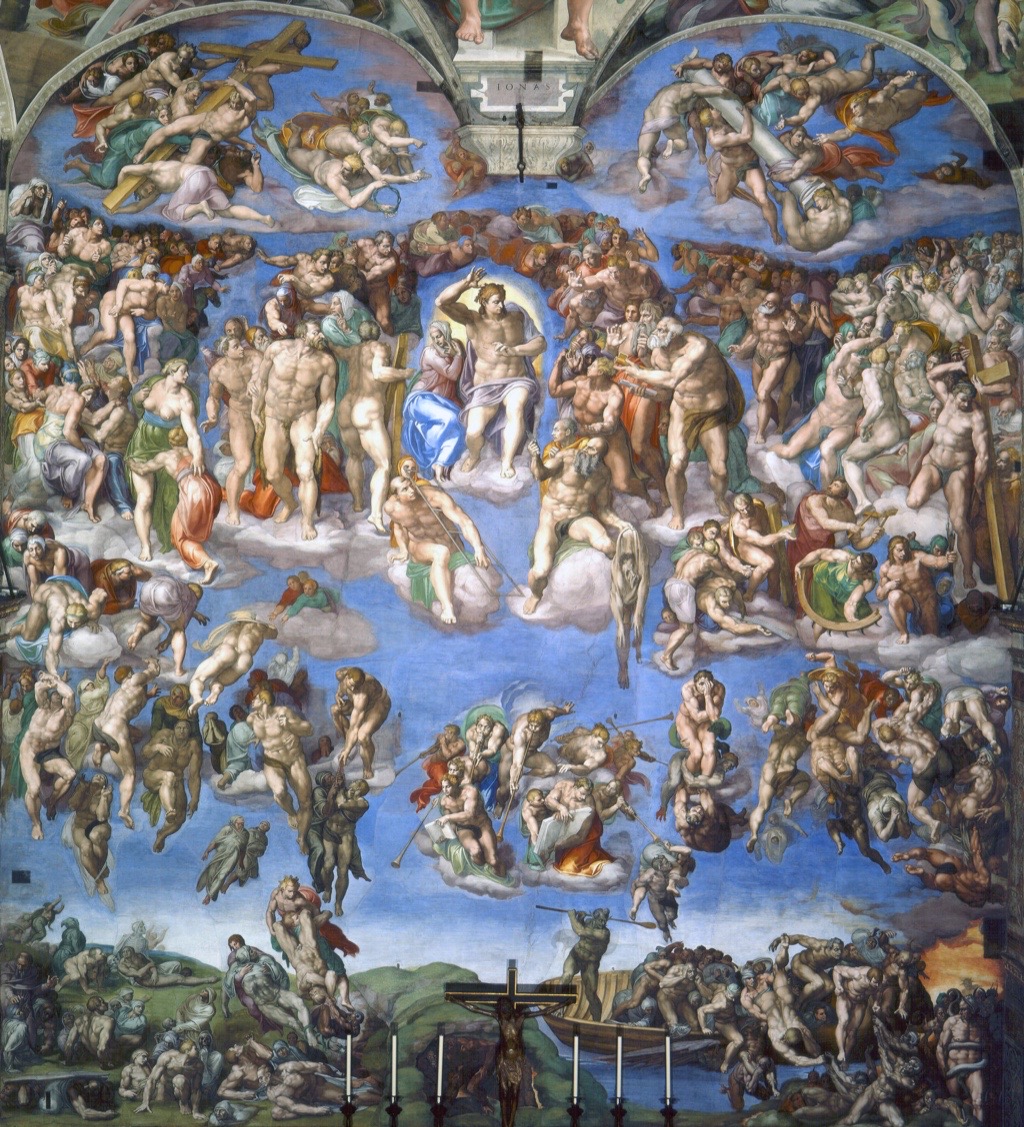
These years followed his permanent move to Rome and overlapped with the Last Judgement, the Pauline Chapel, major friendships and growing involvement in architecture.
The concentration should not reduce every poem to late Roman events. Dating remains uncertain for some texts, and writing extends before and after this decade.
Still, the convergence is significant. Public commissions of enormous scale coexisted with intimate sheets circulated among a close network.
The artist who filled the Sistine altar wall also revised the pressure of one word against another.
Love as Bond and Ascent
Michelangelo’s love poems return to captivity, fire, wounds, mirrors, eyes and upward movement.
Beauty can imprison the speaker while also revealing a path towards divine beauty. Desire may be degrading, purifying or impossible to classify cleanly as either.
These contradictions are inherited partly from Petrarchan lyric and Neoplatonic thought. Michelangelo intensifies them with the language of making.
The beloved becomes an image formed within the lover, yet the lover may feel carved, bound or destroyed by that image.
No stable theory governs every poem. At times spiritual ascent appears possible; elsewhere bodily longing overwhelms philosophical consolation.
The poetry’s honesty lies less in confession of facts than in refusal to make desire simple.
Tommaso de’ Cavalieri
Michelangelo met the Roman nobleman Tommaso de’ Cavalieri in 1532. Their relationship generated passionate letters, poems and celebrated drawings.[9][10]
Among the presentation gifts were Tityus, The Rape of Ganymede, The Fall of Phaethon and A Children’s Bacchanal. Their myths explore punishment, pride, ascent, physical appetite and different kinds of love.[9]
The poems connected with Cavalieri use intense male-directed language. James Saslow places them firmly within the history of homoerotic poetry and the evidence for Michelangelo’s desire for men.[10]
That evidence should neither be neutralised into generic friendship nor made to document acts it does not record. Poetry establishes desire, address and emotional imagination; it cannot reconstruct private conduct.
Nor can a modern identity label be assigned as though Michelangelo had chosen it within contemporary categories.
Age, Difference and Durable Friendship
Cavalieri was far younger and belonged to a Roman patrician family. Michelangelo was already world-famous.
The asymmetry of age and reputation forms part of the relation’s historical reality. So does Cavalieri’s active engagement. He wrote appreciatively about the drawings and remained close to Michelangelo until the artist’s death.[9]
He should not appear merely as a beautiful surface upon which genius projected itself.
The friendship endured beyond the earliest flood of gifts. Cavalieri later helped preserve Michelangelo’s memory and attended him in his final period.
Long duration complicates any reading based solely on the first passionate texts.
Vittoria Colonna
Vittoria Colonna was an acclaimed poet and aristocrat in her own right. She belonged to the spirituali, a reform-minded circle concerned with inward faith and Christ’s saving sacrifice.[11]
Her friendship with Michelangelo involved letters, poems, devotional thought and religious drawings. She gave him a handwritten sequence of her spiritual verse, and he owned a printed volume bearing his inscription.[7]
Michelangelo’s compositions for her included a Crucifixion. Word and image moved through the same exchange without becoming interchangeable.
The Metropolitan Museum describes his love for Colonna as deep but not romantic and associates their bond with a personal relation to God.[8]
Her influence was substantial, but she did not invent Michelangelo’s religious concern. Decades of Christian subjects, papal service and mortality preceded their meeting.
Colonna and the Language of Reform
The religious atmosphere around Colonna valued grace, scripture, inner renewal and Christ’s sacrifice. In the tense 1540s, such concerns could overlap with Catholic reform while drawing scrutiny from ecclesiastical authority.[11]
It is too simple to label every related poem Protestant, heretical or fully representative of official doctrine.
Michelangelo’s verse combines traditions: Dante and Petrarch, Augustinian thought, Neoplatonism, popular devotion and reform discourse.[12]
Colonna supplied a learned partner through whom these concerns intensified. Her death in 1547 deepened the poetry of loss and salvation.
The friendship should be understood as intellectual and spiritual exchange between two poets, not as a master accompanied by a passive muse.
Faith, Sin and Grace
Late poems repeatedly ask whether artistic achievement matters before judgement. Fame, beauty and labour appear fragile beside the need for grace.
The speaker confesses inadequacy, turns towards Christ’s sacrifice and distrusts powers once celebrated.
These texts have sometimes been treated as Michelangelo’s total rejection of art. His continuing work contradicts so simple a conclusion. He designed architecture, drew Crucifixions, advised builders and recut the Rondanini Pietà into his final years.[6][12]
The poems measure art against salvation; they do not prove that making ceased.
Their tension is sharper because the maker has achieved so much. Worldly immortality becomes least convincing to the person most likely to receive it.
Christian Mysticism and Its Many Lineages
Sarah Rolfe Prodan interprets Michelangelo’s spirituality through intersecting traditions rather than one doctrinal label.[12]
Dante provides a model of desire educated towards God. Petrarch offers inward conflict. Neoplatonic language relates visible beauty to higher form. Augustine supplies confession and divided will. Catholic reform emphasises grace and renewal.
Popular devotional practice and the institutional life of the Church remain equally important.
Not every poem combines all these strands. The value of the layered account lies in resisting reduction.
Michelangelo was neither an abstract Neoplatonist who happened to be Christian nor a reform partisan whose art can be read as coded doctrine. The poems move through several languages of spiritual need.
Poetry and Drawing on the Same Paper
Vat. lat. 3211 contains poetry, letters and sketches; Casa Buonarroti preserves verse drafts among practical documents.[2][5]
Physical proximity encourages comparison. A line can be revised with the same hand that searches for a shoulder or architectural profile.
But simultaneity does not make words captions. A sketch beside a poem may arise at another moment, answer another problem or simply use empty space.
The most dependable connection is procedural. Both drawing and poetry externalise thought, preserve alternatives and permit correction.
Paper is where Michelangelo can change his mind without the destruction demanded by recutting marble.
Sculptural Metaphors
Michelangelo’s verse often imagines the artist discovering or releasing a form in stone. Mind, hand and material negotiate what becomes visible.
The metaphor can shift rapidly. The beloved may be the ideal already present within the lover; the lover may be raw material shaped by another; failure may lie in the hand unable to realise a noble concept.
These poems illuminate how sculptural language functioned in Michelangelo’s imagination. They do not prove one universal theory of carving.
In particular, they should not be attached indiscriminately to every unfinished statue. The Slaves, Saint Matthew, Bandini Pietà and Rondanini Pietà have distinct commissions and physical histories.
A metaphor can deepen an object without replacing its evidence.
Fire, Ice, Captivity and Flight
The poetry’s recurring oppositions create emotional mechanics.
Fire can signify erotic passion, spiritual purification or destructive appetite. Ice may resist love or describe the self unable to respond. Chains bind the lover, yet devotion can become chosen service. Wings promise ascent while Phaethon and Icarus warn against uncontrolled ambition.
Because the same image changes across contexts, motif dictionaries are dangerous. Fire does not have one fixed Michelangelesque meaning.
The poems produce significance through relation—what burns, who is bound, where ascent leads and whether the final turn changes the image.
Reading one famous line apart from its whole composition destroys that movement.
Civic, Comic and Occasional Voices
Love and devotion dominate modern selections, but the corpus is broader. Michelangelo wrote epitaphs, satirical complaints, responses to friends and works touched by Florentine politics.
Comic or rough verse complicates the solemn prophet imagined from late portraits. Bodily discomfort, bad lodgings, professional irritation and social exchange can enter poetry.
Occasional writing also reminds us that verse performed actions. It thanked, mocked, mourned, answered and circulated.
Not every composition sought timeless philosophical weight. Literary seriousness includes recognising the uses of wit.
A complete Michelangelo is stranger than an anthology of elevated sonnets.
Poem and Letter Are Not the Same
Michelangelo’s poems and letters often survive in the same archives, travel through the same friendships and touch the same concerns. They must nevertheless be read as different kinds of utterance.
A letter ordinarily addresses an immediate circumstance: a payment, a family worry, a commission, an illness or a request. Even when carefully phrased, it remains tied to an exchange. A lyric can begin from such an occasion and then alter it through metre, rhyme, reversal and inherited convention.
That distinction protects both forms. A love poem should not be flattened into a factual report, while a practical letter should not be forced into symbolic autobiography. Where the two converge, they establish a field of pressure rather than a perfect equivalence.
The surviving papers also expose Michelangelo’s range of registers. The brusque manager of household and workshop affairs could become a lyric speaker immobilised by beauty, chastened by age or dependent upon grace. These voices belong to one person without being identical performances of self.
Comparisons are strongest when they are precise. A dated letter may establish that a friendship was active; a poem may disclose how that relationship was imaginatively shaped. Neither document should be made to say what only the other can support.
Addressees Beyond Two Famous Names
Tommaso de’ Cavalieri and Vittoria Colonna dominate modern accounts because the surviving exchanges are rich and their importance is genuine. The poetic world, however, was wider.
Michelangelo wrote for, to and around relatives, Florentine exiles, Roman friends, fellow writers and patrons. Luigi del Riccio was not merely a copyist in the abandoned publication project. He was a trusted friend and recipient whose bereavement prompted a sequence of epitaphs for the young Cecchino Bracci.[7]
Those epitaphs show invention under social obligation. Repetition does not empty them of feeling; it reveals Michelangelo testing how praise, grief, wit and commemoration can be compressed into brief forms. Their multiplicity also warns against imagining every poem as a solitary confession composed outside exchange.
Donato Giannotti connected poetry to learned conversation and Florentine civic memory. Benedetto Varchi turned one sonnet into the subject of an academy lecture, placing Michelangelo within public literary culture while the artist was alive.[13]
Names attached by later editors require caution. An address can be secure, probable or conjectural, and an undated sheet can migrate between proposed episodes. The most responsible account preserves those degrees of certainty.
What emerges is a social map of verse: gift, answer, consolation, competition, memorial and spiritual conversation. The poems are intimate, but intimacy has more than one form.
The Unfinished Publication Project
During the 1540s, Michelangelo worked with Luigi del Riccio and Donato Giannotti towards a collection of his verse.[7]
The project demonstrates literary ambition. Friends copied, selected and corrected texts; a Vatican sheet preserves poems associated with Cavalieri and Colonna within this activity.[7]
The collection never reached completion. Reasons cannot be reduced to one cause without firmer evidence.
Its failure leaves a double lesson. Michelangelo did consider organised publication, so the poems were not purely secret. Yet he never fixed a complete authorial sequence, so later editors inherited unusual power.
The codex records preparation without supplying the book that might have resulted.
Benedetto Varchi and Lifetime Reputation
In 1547 Benedetto Varchi delivered lectures at the Florentine Academy. The second examined one of Michelangelo’s sonnets and reproduced nearly thirty compositions wholly or in part.[13]
This was an early anthology and public act of criticism during Michelangelo’s lifetime.
Varchi’s attention shows that the sculptor’s literary reputation had entered learned Florentine culture. Verse circulated beyond one-to-one gifts.
Public discussion does not mean Michelangelo had authorised a final corpus. It means the boundary between private writing and literary fame was already porous.
The poems became part of the divino artist’s public identity before the 1623 edition.
Vasari and the Poet-Artist
Giorgio Vasari’s biography praised Michelangelo across the arts and helped create the image of universal genius.[14]
His testimony is indispensable because he knew the artist’s world and wrote within Michelangelo’s lifetime. It is also rhetorically shaped praise, not neutral transcript.
When Vasari describes beauty, reluctance, inspiration or exceptional ability, he contributes to reputation as much as to fact.
The same caution applies to biographical readings of poems. Early witnesses can preserve circumstances while fitting them into an exemplary life.
Michelangelo’s poetry survives between person and legend from the beginning.
The 1623 Edition
Michelangelo Buonarroti the Younger, the artist’s grandnephew, published a substantial collection in 1623.
The edition preserved works and promoted family legacy, but it also changed male-directed poems. Pronouns were altered, phrases revised, words omitted and allegorical explanations supplied so that desire could appear heterosexual or impersonal.[10]
These interventions shaped interpretation for centuries. They did not merely modernise spelling.
The editor worked within social, moral and dynastic pressures different from Michelangelo’s first circulation.
The volume is therefore both a crucial act of preservation and a history of censorship.
Nineteenth-Century Recovery
Later scholars returned to manuscripts and exposed differences between autograph texts and the 1623 printing.[10]
Recovery restored male pronouns and other readings, making homoerotic address harder to evade.
It did not produce an unmediated original voice. Manuscripts themselves include variants, damage, uncertain dates and friendly copies.
Modern editors still decide punctuation, order and preferred state. Their work can be more faithful without becoming invisible.
Textual recovery is a disciplined reconstruction, not removal of every layer.
Specialist study continues through archives, critical editions and publication series such as Casa Buonarroti’s Buonarrotiana.[15] Each new collation can refine a reading without turning a difficult textual history into a simple one.
Translation Changes the Poem
English Michelangelo is created partly by translators. Joseph Tusiani’s version appears with Italian in a modern University of Toronto Press edition.[4] John Frederick Nims produced another complete English translation for the University of Chicago Press.[16]
The two editions make different choices about rhyme, syntax, tone and the pressure of Michelangelo’s Italian.
A translator may preserve a sonnet’s scheme while altering natural word order, or open the syntax while surrendering sound. Gendered pronouns can become especially consequential.
An English title may be supplied later, derived from an opening line rather than Michelangelo’s own naming.
No translated line should float free of translator and edition.
How to Cite a Poem Responsibly
A reliable citation identifies the composition by critical-edition number or Italian opening, then names editor, translator and printed location. For an argument about a handwritten state, shelfmark and folio may also matter.
The textual state should be clear: draft, fair copy, friendly transcription or later print.
Long English quotation requires attention to the translator’s copyright, even though Michelangelo’s Italian is centuries old.
Paraphrase is often safer when a translation’s reuse status is unclear.
This discipline does not make poetry inaccessible. It prevents one modern rendering from being mistaken for Michelangelo’s unaltered English voice.
Reading Desire Without Erasure or Overreach
The poems addressed to men must remain male-directed where the text is male-directed. Replacing that fact with abstract “friendship” repeats the logic of the 1623 alterations.[10]
At the same time, poetry is not surveillance. It cannot prove physical relationships or settle a modern identity category.
Renaissance frameworks of friendship, beauty, Neoplatonic ascent and Christian morality shaped expression, but they do not cancel erotic force.
Responsible reading can hold literary convention, historical difference and desire together.
The goal is neither sanitisation nor sensational disclosure. It is fidelity to what survives and humility about what does not.
Reading Faith Without a Final System
Michelangelo’s religious poems should likewise resist doctrinal simplification.
They reveal recurring dependence on Christ, fear of judgement and distrust of earthly achievement. They also contain uncertainty, self-accusation and unresolved longing.
Poetry stages spiritual struggle. It is not a catechism arranged into propositions.
Colonna, Catholic reform, Dante, Petrarch and Augustine provide contexts, not one decoding key.[11][12]
Contradiction may be the most truthful theological form available to the speaker: faith is needed precisely because self-mastery fails.
The Lyric “I” and Michelangelo
The first person makes these poems feel exceptionally close. It speaks of desire, frustration, ageing, artistic failure and fear before God. Yet the grammatical “I” is not a transparent window through which the historical Michelangelo can be watched without mediation.
Renaissance lyric inherited situations, vocabularies and turns from Petrarch and from the longer Italian tradition. To call the beloved cruel, to describe oneself as burning or frozen, or to imagine sight as a wound was to enter a shared language. Michelangelo’s individuality lies partly in how violently he recombines that language.
Biographical knowledge can sharpen a composition. A male pronoun preserved in an early state matters; a friendship’s chronology matters; old age alters the stakes of bodily and spiritual complaint. But an event does not exhaust a poem built through analogy, contradiction and sound.
The reverse error is equally limiting. Convention is not proof that emotion was unreal. Formal language is the instrument through which feeling becomes communicable, memorable and revisable.
Michelangelo’s lyric self is therefore made rather than fabricated. It is anchored in a life and transformed by art. That double status explains why the poems can feel confessional without surrendering all their meanings to biography.
Reputation and Mortality
Few artists had more reason than Michelangelo to expect earthly fame. Vasari’s praise, Varchi’s lectures and the circulation of drawings and poems made exceptional status visible during his lifetime.[13][14]
The late verse nevertheless distrusts reputation. Artistic mastery cannot correct a misspent life, delay judgement or purchase grace. The anxiety is not generic modesty: it comes from a maker whose achievements had already become public monuments.
Age changes the body that performs creation. Eyes, hands and strength decline; friends die; projects outlast their first patrons; the artist contemplates works that other people will finish, move, print or reinterpret. Poetry can register this condition with a directness unavailable to an institutional commission.
Michelangelo’s response is not simple renunciation. He continues to design, advise, draw and carve while questioning what those acts finally secure. Labour remains necessary even when salvation cannot be earned through labour.
This unresolved relation between work and grace gives the late poems their severity. Fame preserves a name among people, but Christian hope concerns a fate no human audience controls. The poet stands between the two forms of afterlife and refuses to pretend they are the same.
Artist Up Close
Michelangelo’s poems return us to the hand. It draws, writes, carves, fails, trembles with age and asks whether skill can rescue the soul.
No other part of his work preserves revision so verbally. A cancelled word exposes a decision whose equivalent in marble may have been cut away forever.
The poetry also corrects the lonely-genius myth. Friends copy lines, propose order, exchange gifts, lecture on sonnets and alter texts after death.
Michelangelo is the author, but authorship unfolds inside relationships.
His literary voice is most powerful when it admits that making cannot guarantee possession—not of beauty, another person, reputation or salvation.
How to Begin Reading
Start with a bilingual critical edition rather than an unattributed quotation collection. Check the Italian even if only to notice names, repeated words and line breaks.
Ask six questions:
1. What form is this—sonnet, madrigal, epitaph, occasional piece or fragment? 2. In whose hand does it survive? 3. Is it a draft, copy or fair state? 4. Is the recipient documented, proposed or unknown? 5. Which editor established the Italian? 6. Who translated the English?
Then read across themes without turning them into biography too quickly. Compare love and devotional poems; set a finished work beside a fragment; notice how one sculptural word changes function.
The poetry rewards patience because it preserves Michelangelo thinking against his own first answer.
Frequently Asked Questions
Discussion
How does a poem’s meaning change when it is read as a revised manuscript rather than as a timeless quotation?
Reader Insights
What can intense first-person lyric reveal without becoming literal diary evidence?
How should Renaissance spiritual-love language be read beside the homoerotic force of poems addressed to men?
What is gained—and what is lost—when a translator preserves rhyme instead of syntax?
Join the Conversation
How do poems and presentation drawings operate differently within Michelangelo’s friendships?
References
- The Metropolitan Museum of Art, Michelangelo: Divine Draftsman and Designer,, View source.
- Fondazione Casa Buonarroti, Buonarroti Archive,, View source.
- Fondazione Casa Buonarroti, The Restoration of 342 Autograph Letters of Michelangelo Buonarroti,, View source.
- University of Toronto Press, The Complete Poems of Michelangelo: Joseph Tusiani’s Classic Translation,, View source.
- METAscripta / Knights of Columbus Vatican Film Library, Le poesie, scritto di mano sua,” Vat. lat. 3211,, View source.
- British Museum, Michelangelo: The Last Decades,, View source.
- British Museum, Michelangelo: The Last Decades—Large Print Guide,, View source.
- The Metropolitan Museum of Art, Michelangelo: Divine Draftsman and Designer—Exhibition Galleries,, View source.
- Royal Collection Trust, Michelangelo’s ‘Presentation Drawings’,, View source.
- The Metropolitan Museum of Art, James M. Saslow on Sensuality and Spirituality in Michelangelo’s Poetry,, View source.
- British Museum, Between Faith and Heresy: Michelangelo in the 1540s,, View source.
- Cambridge University Press, Sarah Rolfe Prodan, Michelangelo’s Christian Mysticism: Spirituality, Poetry, and Art in Sixteenth-Century Italy,, View source.
- Treccani, Benedetto Varchi,” Dizionario Biografico degli Italiani,, View source.
- J. Paul Getty Museum / Getty Publications, Giorgio Vasari: The Life of Michelangelo,, View source.
- Fondazione Casa Buonarroti, Buonarrotiana,, View source.
- University of Chicago Press, The Complete Poems of Michelangelo, translated by John Frederick Nims,, View source.