


 by Tom Gurney
Tom Gurney BSc (Hons) is an art history expert with over 20 years experience
Published on June 19, 2020 / Updated on November 6, 2025
Email: tomgurney1@gmail.com / Phone: +44 7429 011000
Prints after Michelangelo
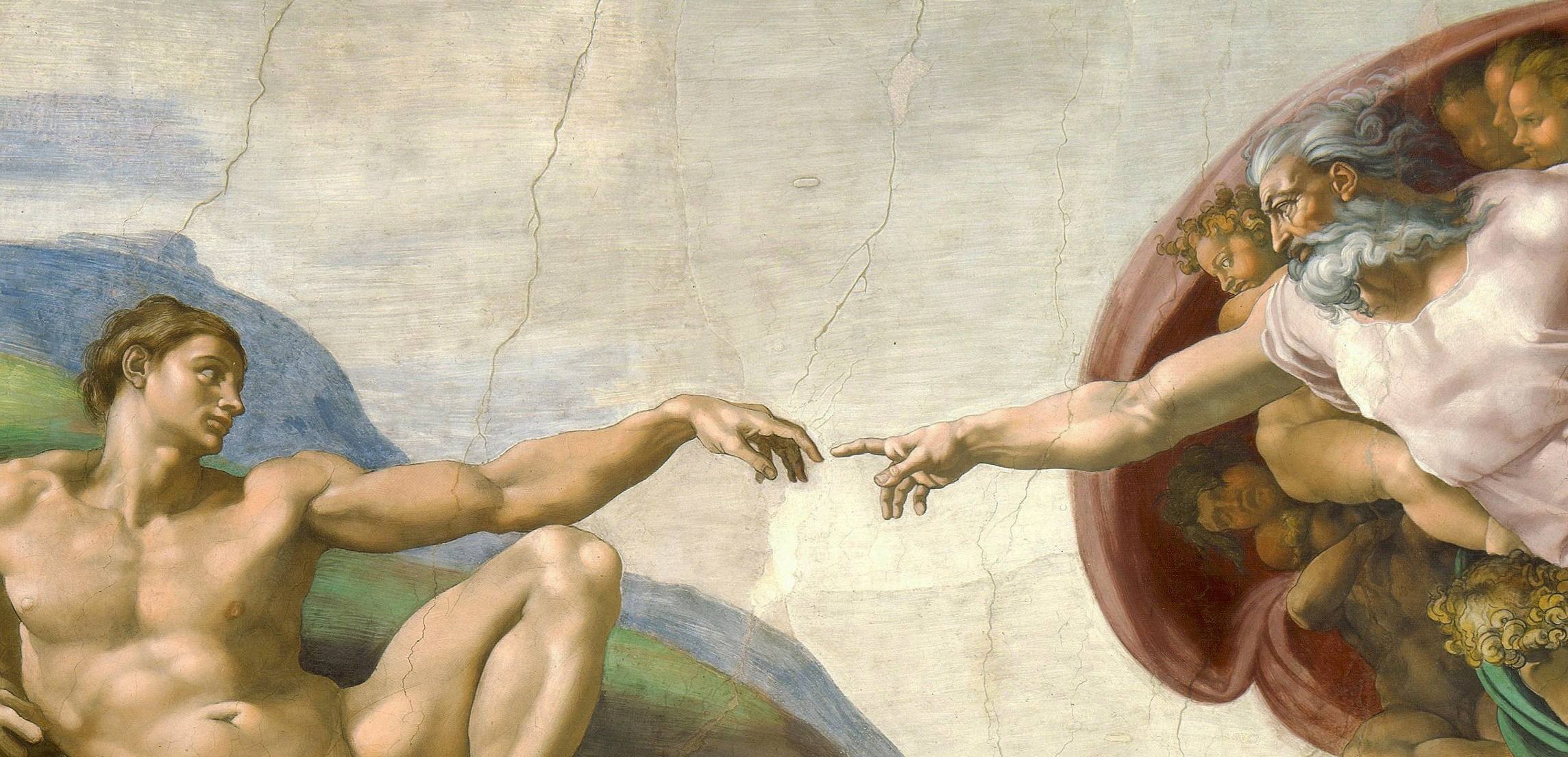
Most sixteenth-century Europeans could never enter the Sistine Chapel, inspect a presentation drawing in a Roman collection or see Michelangelo’s lost Leda. Prints carried those inventions to them. Engravers translated fresco, chalk, marble and wooden models into systems of black lines that could be inked and impressed repeatedly on paper.
These sheets were not made by Michelangelo. Museum catalogues use the phrase “after Michelangelo” to separate the inventor of the source design from the printmaker who cut the plate. That distinction is the foundation of this history. Reproductive prints spread Michelangelo’s fame, preserved lost or altered works, and changed his art through reversal, selection, enlargement, reduction and interpretation.
At a Glance
- SubjectEngravings and other prints reproducing works or designs by Michelangelo
- Michelangelo’s roleSource artist or inventor; not normally the printmaker
- Principal sixteenth-century printmakersGiorgio Ghisi, Giulio Bonasone, Niccolò della Casa, Adamo Scultori, Nicolas Beatrizet, Cornelis Bos and others
- Major reproduced worksSistine Ceiling, Last Judgment, Leda and the Swan, presentation drawings, sculpture and architectural projects
- Key term“After Michelangelo” means based on his work or design
- Primary techniqueEngraving on copper, with later combinations including etching
- Central functionsDissemination, study, collecting, documentation and commerce
- TransformationsScale change, reversal, cropping, recombination, tonal translation and interpretive alteration
- Important cautionA print may document an earlier state without being a neutral record
- Authorship ruleName the printmaker, designer, publisher and source object separately whenever known
Contents
- What “After Michelangelo” Means
- Michelangelo Was Not a Reproductive Printmaker
- How Engraving Translates an Image
- Reversal Is Not a Minor Detail
- The Sistine Ceiling Becomes Portable
- Adamo Scultori’s Seventy-Three-Part Series
- The Woman with Scissors
- The Last Judgment as a Printing Challenge
- Giorgio Ghisi’s Three-Plate Last Judgment
- Ghisi’s Detail Series
- Giulio Bonasone’s Selective Summary
- Niccolò della Casa’s Multi-Sheet Solution
- Before and After the Painted Draperies
- Prints and Controversy
- Cornelis Bos and the Lost Leda
- A Print Cannot Recover Lost Colour
- Nicolas Beatrizet and Tityus
- Architecture Preserved by Print
- Publishers, Plates and Markets
- Inscriptions Create Authority
- Privilege and Control
- Intermediate Drawings
- States and Impressions
- Prints as Workshop Tools
- Michelangelo Beyond Italy
- The Printed Face of Michelangelo
- Reproduction and the Cult of Genius
- Prints as Collectable Objects
- The Problem of Cropping
- Later Reproductive Campaigns
- Photography Changes the Function, Not the Value
- How to Read a Print after Michelangelo
- Artist Up Close
What “After Michelangelo” Means
In a museum record, “print made by Giorgio Ghisi; after Michelangelo” assigns two different creative roles. Michelangelo supplied the underlying composition. Ghisi engraved the plate.
The formula does not mean Michelangelo authorised, supervised or even saw every print. Nor does “after” automatically imply a late copy: some engravings were made during his lifetime.
It also does not diminish the printmaker into a machine. Translating colour and modelling into line required selection, technical mastery and interpretation. Accurate attribution honours both invention and mediation.
Michelangelo Was Not a Reproductive Printmaker
No accepted body of engravings or etchings made by Michelangelo survives. His graphic practice centred on drawing: pen, chalk, stylus, wash and the full-size cartoons needed for painting or architecture.
Print culture nonetheless became essential to his reception. Other artists and publishers recognised that his designs could command an international market.
The phrase “Michelangelo print” is therefore potentially misleading. It may mean an engraving after his art, not a plate cut by his hand.
How Engraving Translates an Image
An engraver cuts lines into a copper plate with a burin. Ink is worked into those recesses, the surface is wiped, and damp paper is pressed against the plate under great pressure.
Dense hatching creates shadow; open paper produces light; swelling lines suggest bodily volume. Colour must be reinvented as black, white and interval.
Every impression reverses the plate. If the engraver copied a source directly onto copper, the printed image normally appears reversed relative to that source unless an intermediate reversed drawing compensated for the process.
Reversal Is Not a Minor Detail
Michelangelo often organised bodies through directional movement—an arm thrusts one way, a torso twists another, a group rises towards a particular edge. Reversal changes that movement.
Some prints circulated in both orientations because plates were copied or because engravers worked from already reversed intermediaries. The British Museum’s Cornelis Bos engraving of Leda and the Swan, for example, belongs to a history of versions in differing directions.[1]
A reversed print remains valuable evidence, but it cannot be treated as a transparent view of the original.
The Sistine Ceiling Becomes Portable
The Sistine Ceiling was public in fame but difficult in access and viewing. Its great height made individual figures hard to study closely.
Small engravings isolated prophets, sibyls, ignudi, ancestors and narrative groups. A collector could hold a single figure in the hand, compare poses and pass the image to a workshop student.
Isolation changed meaning. A body designed as one element in a vast theological and architectural system could become an autonomous anatomy lesson or model of style.
Adamo Scultori’s Seventy-Three-Part Series
Adamo Scultori produced a numbered series consisting of a title print and seventy-two engravings after paintings on the Sistine Ceiling. The Rijksmuseum records one seated nude as number 5 of 73 and dates its impression around 1585.[2]
At approximately 14.5 by 10.5 centimetres, that ignudo is drastically reduced from the fresco. The series replaces colour with controlled line and converts a ceiling experienced spatially into a sequence read leaf by leaf.
Numbering creates order, but it also makes Michelangelo’s complex vault resemble a portable visual inventory.
The Woman with Scissors
The Metropolitan Museum of Art holds Scultori’s Seated Woman with Children and a Man, Holding Scissors, number 73 in a series of studies from the ceiling. The museum credits Scultori as engraver and Michelangelo as the artist “after” whom it was made.[3]
The descriptive title avoids imposing a disputed biblical identification on the Salmon spandrel family. It directs attention to visible action: woman, children, man, scissors.
On the printed sheet, details difficult to inspect from the chapel floor become the subject itself. Reproduction acts as interpretation through selection.
The Last Judgment as a Printing Challenge
Michelangelo’s Last Judgment covers an enormous altar wall with hundreds of figures. Reproducing it demanded decisions about scale, legibility and whether to show the whole or divide it into parts.
Printmakers adopted several strategies. Some condensed the entire composition onto one sheet. Others used multiple plates or printed detailed sections intended to be assembled or studied in sequence.
The result was never simply “the fresco on paper.” It was a new visual system built to manage overwhelming information.
Giorgio Ghisi’s Three-Plate Last Judgment
Around 1545 Giorgio Ghisi engraved the Last Judgment on three plates. The Metropolitan Museum’s assembled example has an irregular overall sheet size of roughly 64.8 by 71.4 centimetres.[4]
Multiple plates allowed greater detail than a small single-sheet summary, but seams and plate boundaries reorganised the wall. The print could be bound, mounted or encountered in parts.
Ghisi’s work helped establish the Last Judgment as an image that circulated independently of its chapel location.
Ghisi’s Detail Series
The British Museum preserves an album containing ten irregularly sized engravings by Ghisi, lettered A to L, after details of the Last Judgment. It also includes a small engraving of the whole fresco by Sebastiano Fulcaro and Ghisi’s portrait of Michelangelo after Marcello Venusti.[5]
The album demonstrates several layers of mediation in one object. Michelangelo’s fresco appears through Ghisi and Fulcaro; Michelangelo’s face appears through Venusti and Ghisi; a later publisher, Giovanni Giacomo de’ Rossi, participates in the object’s circulation.
Authorship is a network, not a single line.
Giulio Bonasone’s Selective Summary
Giulio Bonasone engraved the Last Judgment in the late 1540s. The British Museum explains that he aimed chiefly to describe the overall composition and simplified the figures, conveying pose and shape without fully translating Michelangelo’s anatomy.[6]
Contemporary or near-contemporary viewers did not necessarily accept such simplification. The writer and artist Domenicus Lampsonius later judged the print severely and hoped for a more adequate engraved account of the Sistine works.[6]
The criticism proves that reproduction was understood as interpretation whose quality could be debated.
Niccolò della Casa’s Multi-Sheet Solution
Niccolò della Casa engraved large sections of the Last Judgment in 1548 as parts of a set intended to fit together. A Met sheet showing angels carrying the Column of the Flagellation and saints below measures approximately 83.2 by 64.8 centimetres.[7]
At that scale, figures could retain far more anatomical and expressive detail. The viewer could study one region while imagining assembly into a monumental paper wall.
Multi-sheet reproduction turns the act of looking into reconstruction.
Before and After the Painted Draperies
Prints made before Michelangelo’s death can preserve aspects of the Last Judgment before Daniele da Volterra and later painters covered or modified some nudity under ecclesiastical orders.
That documentary value is real. An early engraving may show a figure before alteration and assist the reconstruction of the fresco’s earlier appearance.[8]
Yet the print is never a photograph. A difference may reflect the fresco’s former state, or it may result from simplification, misunderstanding, reversal or the engraver’s own correction. Evidence must be tested figure by figure.
Prints and Controversy
The Last Judgment attracted both admiration and criticism for its nudity, theological departures and physical intensity. Prints multiplied the audience for those debates.
A controversial body once high on a restricted chapel wall could appear in a book, workshop or private collection. Reproduction loosened control over context.
It also extended the life of criticism: viewers who never saw the original could form opinions through an engraver’s version.
Cornelis Bos and the Lost Leda
Michelangelo’s painted Leda and the Swan is lost. Copies and prints are therefore central to reconstructing its composition.
The British Museum holds an engraving by Cornelis Bos showing Leda entwined with Jupiter in the form of a swan, with a large egg at lower left. It is catalogued as after Michelangelo and dated broadly between 1530 and 1556.[1]
Because the original is absent, every reproductive transformation matters more. Bos’s sheet preserves knowledge while participating in a genealogy of reversed and copied versions.
A Print Cannot Recover Lost Colour
The lost Leda was a painting, but engraving retains no direct record of its palette, paint surface or tonal temperature. Hatching can suggest light and shadow, not hue.
Copies in paint may preserve possible colour relationships, yet they too vary and depend upon intermediate sources.
Print evidence is strongest for pose, outline and compositional arrangement. It becomes more uncertain when used to reconstruct colour, handling or exact finish.
Nicolas Beatrizet and Tityus
Michelangelo’s presentation drawing of The Punishment of Tityus also entered reproductive culture. Nicolas Beatrizet produced an early engraving after the design, and related versions circulated in other media.[9]
The British Museum’s rock-crystal intaglio by Giovanni Bernardi is likewise recorded as after Michelangelo, showing how a drawing could move not only into paper print but into carved luxury material.[9]
Reproduction crossed techniques. “After Michelangelo” might identify the source for an engraving, gem, bronze relief or painting, each with different forms of translation.
Architecture Preserved by Print
Prints also record Michelangelo’s unbuilt or altered architecture. Valérien Regnard’s engraving of the lost wooden model for San Giovanni dei Fiorentini is the best surviving evidence for the project’s exterior.[8]
Here reproduction does more than spread a famous object. It becomes a substitute for an object no longer extant.
The evidentiary chain remains indirect: Michelangelo’s design, a model made within his project, and a later engraver’s rendering. Precision of credit protects the history the print preserves.
Publishers, Plates and Markets
Copperplates could survive their makers, pass to new owners and be reprinted with altered inscriptions. Publishers assembled series, added title pages and sold impressions to changing audiences.
A print’s date may therefore refer to the plate’s invention, while a particular impression was pulled much later. States record changes made to the plate—new lettering, retouching, publisher addresses or modified imagery.
The image’s history continues after the first printing.
Inscriptions Create Authority
Lettering beneath or within a print can identify subject, source artist, engraver, publisher, dedication and privilege. These words shape how the image is understood.
An inscription naming Michelangelo increases authority and market recognition, but it is a historical claim rather than self-proving evidence. Cataloguers compare signatures, plate histories and source compositions before accepting the attribution.
Lettering can also rename an uncertain image. A mythological figure, ancestor or architectural view may enter later literature under the title a publisher chose.
Privilege and Control
Sixteenth-century print privileges could grant limited protection to a maker or publisher within a jurisdiction. They did not create modern international copyright, nor did they give Michelangelo automatic control over every image derived from his work.
Successful plates were copied, adapted and republished across political boundaries. An unauthorised reproduction could still become influential.
The history of prints after Michelangelo is therefore also a history of contested ownership: who possessed the plate, who could profit from the design, and whose name carried value.
Intermediate Drawings
An engraver did not always work directly before the original. A drawing could be made from a fresco, then squared, reversed or clarified for transfer to copper. A painted copy could stand between lost original and plate.
Every intermediary creates another opportunity for change. Contours may be regularised, damaged details supplied and spatial relations compressed.
When a print differs from Michelangelo, the cause may lie with the engraver, an unknown draughtsman or an already altered source.
States and Impressions
A “state” is a deliberately altered condition of a plate. An “impression” is one printed sheet taken from it. Two impressions of the same state can still differ through ink, wiping, pressure, paper or wear.
Early impressions often preserve sharper lines before repeated printing wears the copper. Later retouching can strengthen fading passages while changing the original cutting.
Object-level catalogue data is therefore essential. A generic image title cannot tell a collector which material version is under discussion.
Prints as Workshop Tools
Artists used prints to study poses, anatomy and composition. A small sheet could travel where a fresco could not, becoming part of workshop memory across Italy and northern Europe.
Copying from prints created further transformations. A painter might reverse the composition again, extract one body, dress a nude figure, change the subject or combine Michelangelo with other sources.
Influence travelled through fragments as often as through whole works.
Michelangelo Beyond Italy
Cornelis Bos’s Leda demonstrates that reproduction crossed artistic regions. Northern European printmakers and collectors encountered Michelangelo through portable sheets even when they had not travelled to Rome.[1]
Engraved bodies entered new visual traditions, sometimes acquiring different landscapes, costumes or subjects. Michelangelo’s anatomy could be admired, corrected, moralised or parodied.
European fame was not the passive enlargement of an Italian original. It was produced through repeated local acts of use.
The Printed Face of Michelangelo
Portrait engravings spread the artist’s likeness alongside his works. The Ghisi album includes a portrait engraved after Marcello Venusti, creating a chain from painted likeness to copperplate to bound collection.[5]
Such images helped form the public figure of the aged, bearded master. Readers could connect a face with the terrifying scale of the Last Judgment and the growing literature of Michelangelo’s life.
Print culture transmitted not only a canon of artworks but the idea of their exceptional author.
Reproduction and the Cult of Genius
The availability of repeated images appears democratic, yet it could intensify singular fame. Dozens of printmakers became agents of one celebrated name.
Their labour made “Michelangelo” recognisable as a style: massive bodies, difficult turns, compressed power and grand invention. At the same time, catalogues often allowed the source artist’s name to eclipse theirs.
Reading maker roles restores the collective work required to manufacture individual genius.
Prints as Collectable Objects
Engravings were not merely cheap substitutes for paintings. Fine impressions attracted connoisseurs who judged cutting, paper, state and condition.
Albums could arrange Michelangelo’s works into personal sequences. Mounting, trimming and binding altered the sheets physically while creating new intellectual categories.
The British Museum’s Last Judgment album shows how prints become a curated archive of another artist’s fame.[5]
The Problem of Cropping
Many early prints survive trimmed close to the image, sometimes losing plate marks, inscriptions or publisher information. Cropping can make maker and source harder to identify.
It can also disguise whether a sheet was once part of a numbered series. A figure that appears autonomous may have been one leaf in a larger publishing project.
Margins are historical evidence. Their loss affects interpretation even when the central image remains beautiful.
Later Reproductive Campaigns
Michelangelo’s print afterlife did not end in the sixteenth century. Eighteenth-century projects such as Gavin Hamilton’s Schola Italica Picturae reproduced canonical Italian compositions for collectors and artists. Antonio Capellan’s 1772 plate after the Temptation and Expulsion combines engraving and etching.[10]
Such later prints belong to a different market and theory of art. They helped define Michelangelo as a central master within an organised history of Italian painting.
Reproduction did not only transmit his canon; it helped create it.
Photography Changes the Function, Not the Value
Photography eventually offered a more mechanically consistent record of fresco and sculpture. It did not make early engravings obsolete.
Prints preserve historical states, reception, selection and interpretation. Their departures tell us what an engraver or publisher considered important and what period viewers expected reproduction to achieve.
A photograph may answer “What does the object look like now?” An early print can answer “How was this object translated and known then?”
How to Read a Print after Michelangelo
Begin with the catalogue roles: printmaker, “after” artist, publisher and date. Identify the source—a surviving fresco, lost painting, drawing, sculpture or model. Check orientation, scale and whether the sheet belongs to a set.
Then ask what changed. Has colour become hatching? Is the whole reduced or a detail enlarged? Are figures omitted? Does lettering introduce a subject or interpretation? Is the impression early or late?
The best comparison respects both objects. The print is evidence of Michelangelo’s design and an artwork by another maker.
Artist Up Close
Michelangelo’s fame became reproducible through other people’s hands.
Ghisi divided the Last Judgment across plates. Bonasone simplified its multitude. Della Casa enlarged sections. Scultori turned the ceiling into a numbered portable sequence. Bos carried the lost Leda into a shifting chain of reversals.
None of these sheets is Michelangelo’s original. Together they reveal something no original can show alone: how his art left its site, crossed borders, entered collections and became a shared visual language.
Frequently Asked Questions
Discussion
What details, sources or comparisons stand out to you in Michelangelo Prints?
Reader Insights
Which formal detail changes how the work reads?
Which documented source or collection history feels most useful?
Which related Michelangelo work should readers compare next?
Join the Conversation
Add a source-led observation, comparison or question for other readers.
References
- British Museum, Cornelis Bos, Leda and the Swan, after Michelangelo,, View source.
- Rijksmuseum, Adamo Scultori, Seated Nude, number 5 from the Sistine series,, View source.
- Metropolitan Museum of Art, Adamo Scultori, Seated Woman with Children and a Man, Holding Scissors,, View source.
- Metropolitan Museum of Art, Giorgio Ghisi, Last Judgment; after Michelangelo’s fresco in the Sistine Chapel,, View source.
- British Museum, Giorgio Ghisi and Sebastiano Fulcaro, album of prints after the Last Judgment,, View source.
- British Museum, Giulio Bonasone, The Last Judgment, after Michelangelo,, View source.
- Metropolitan Museum of Art, Niccolò della Casa, Angels Carrying Pillar with Saints Below,, View source.
- British Museum, Michelangelo: The Last Decades—Large Print Guide,, View source.
- British Museum, Giovanni Bernardi, Prometheus or Tityus, rock-crystal intaglio after Michelangelo,, View source.
- Metropolitan Museum of Art, Antonio Capellan, The Temptation and Expulsion from Eden, from Schola Italica Picturae,, View source.
- Michael Bury, The Print in Italy 1550–1620, British Museum Press, 2001.